The iconic emblem of the Wieliczka Salt Mine welcomes visitors to one of Poland's most famous historic and UNESCO-listed attractions.
The Salt Mines - Wieliczka
3th August
After resting for a day, I went to Wieliczka which is about 30 mins from where I was staying to go to the salt mines there. They have been used for more than 700 years, since the Middle Ages and only about 2% of the mines can be visited now due to parts of it being neglected over the years.
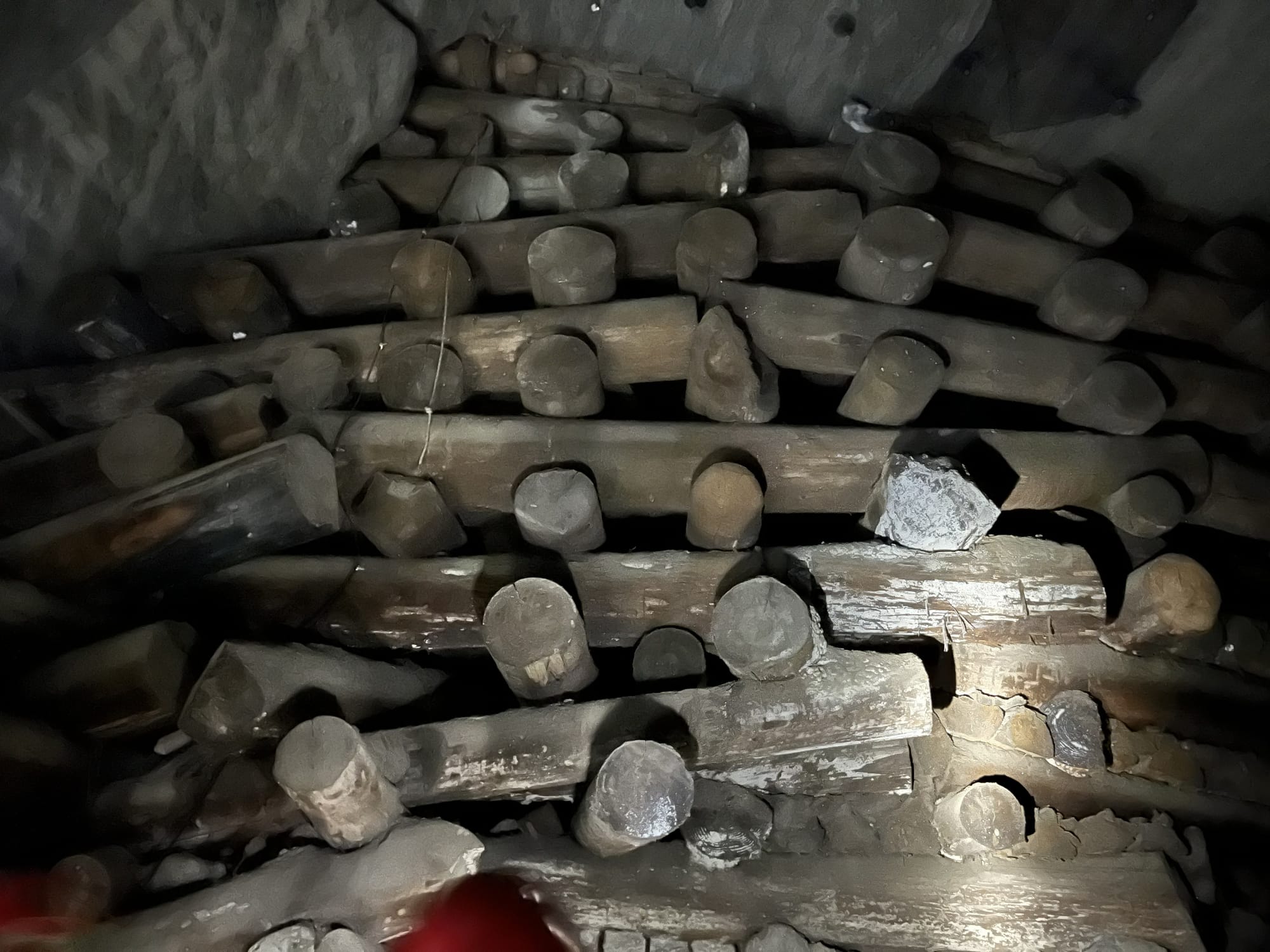
Now some differences between salt mines, compared to coal mines is that you don't get loads of flammable coal dust everywhere, which is an explosion waiting to happen, but unlike coal mines where you can use metal to strengthen mine shafts/drifts, you can't in a salt mine, due to the salt corroding anything metal. This meant that they had to use wooden logs but interconnected in such a way that they didn't require metal nails.
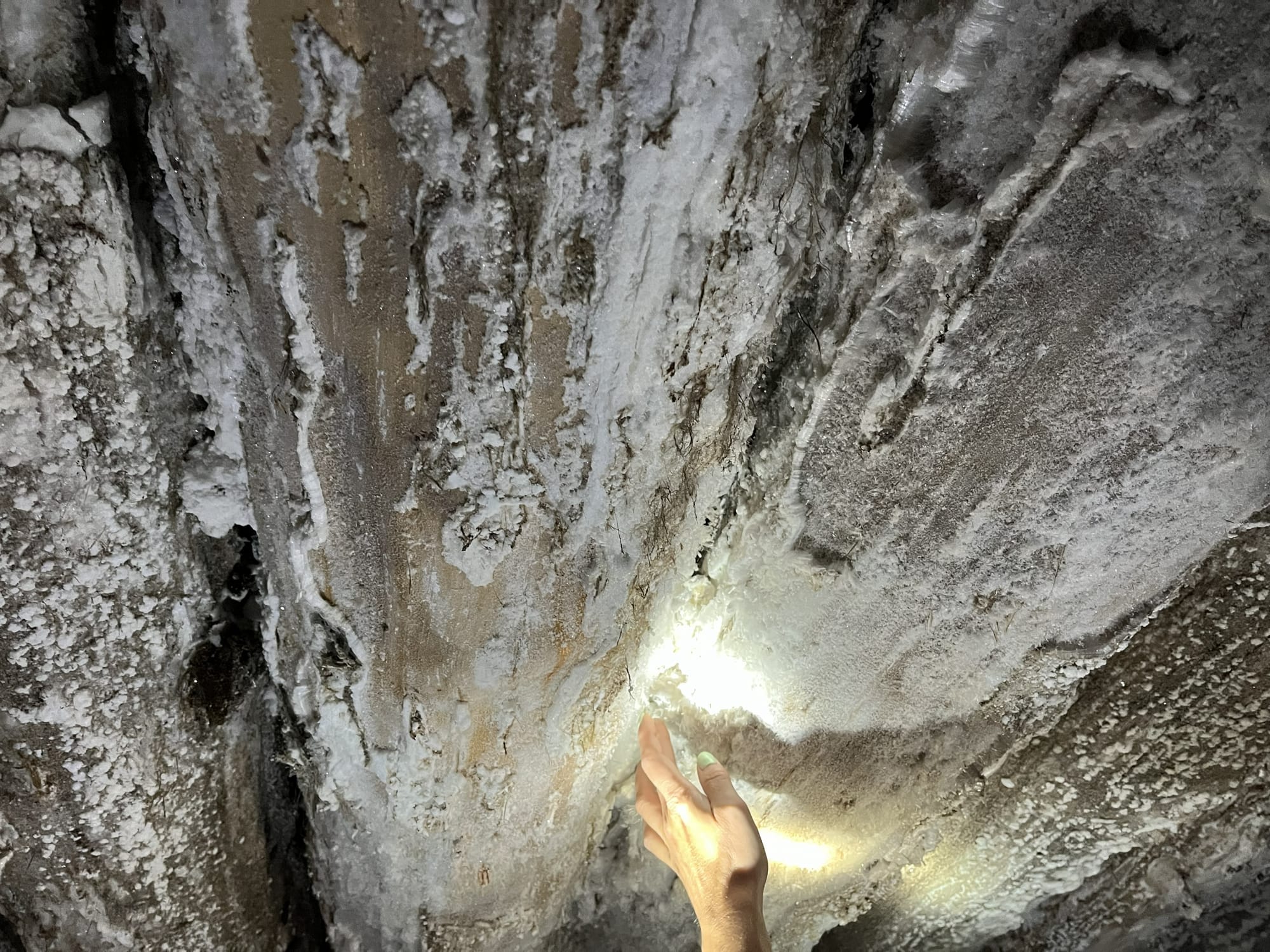
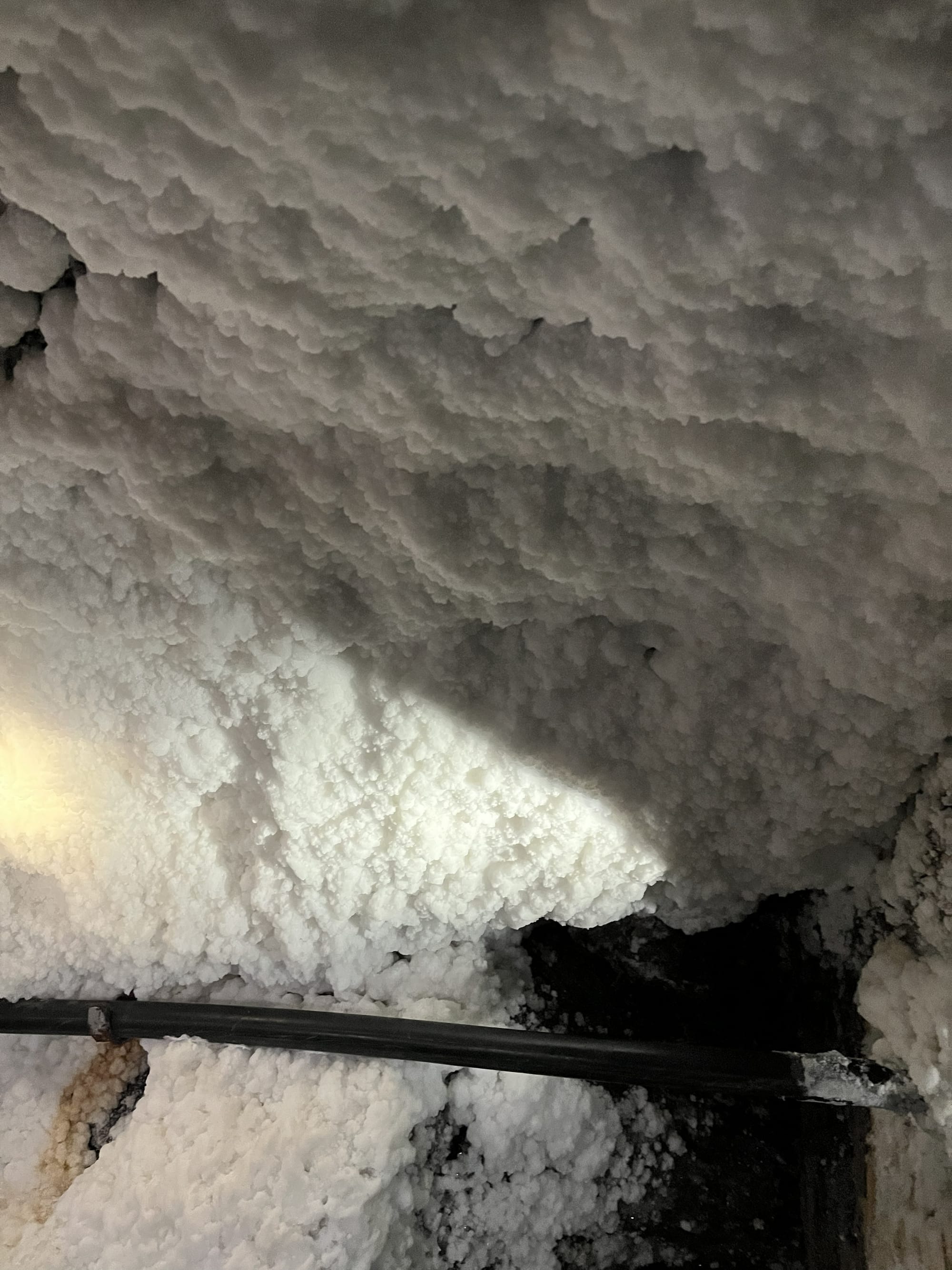
Historic wooden supports preserved within the Wieliczka Salt Mine show how miners reinforced underground chambers while extracting salt over centuries.A close-up of the salt-rich walls of the Wieliczka Salt Mine, where visitors can see and touch the mineral deposits that formed over millions of years.Dense salt deposits line the underground walls of the Wieliczka Salt Mine, forming striking natural crystal formations created by centuries of mineral-rich water seepage.
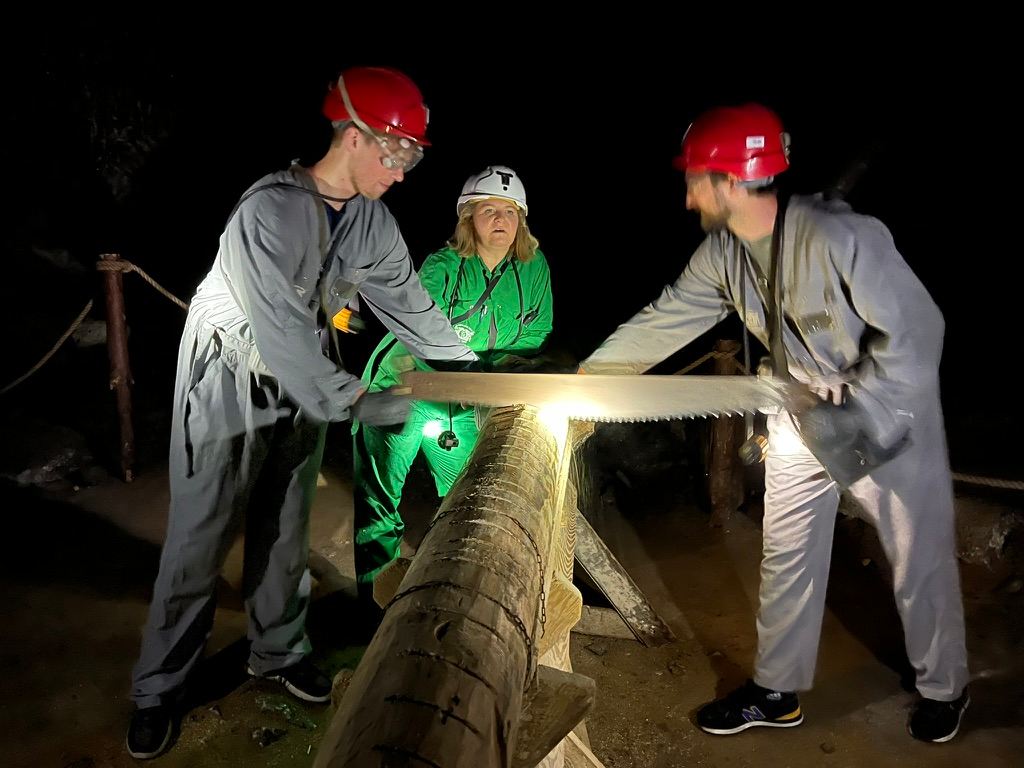
There are currently two paths available in the mine, the tourist route, where you can admire loads of different salt related structures, or the miners’ route, where we got to discover some of the activities that the miners would have undertaken in as part of their daily activities. I decided on the miners’ route as it looked more appealing to me.
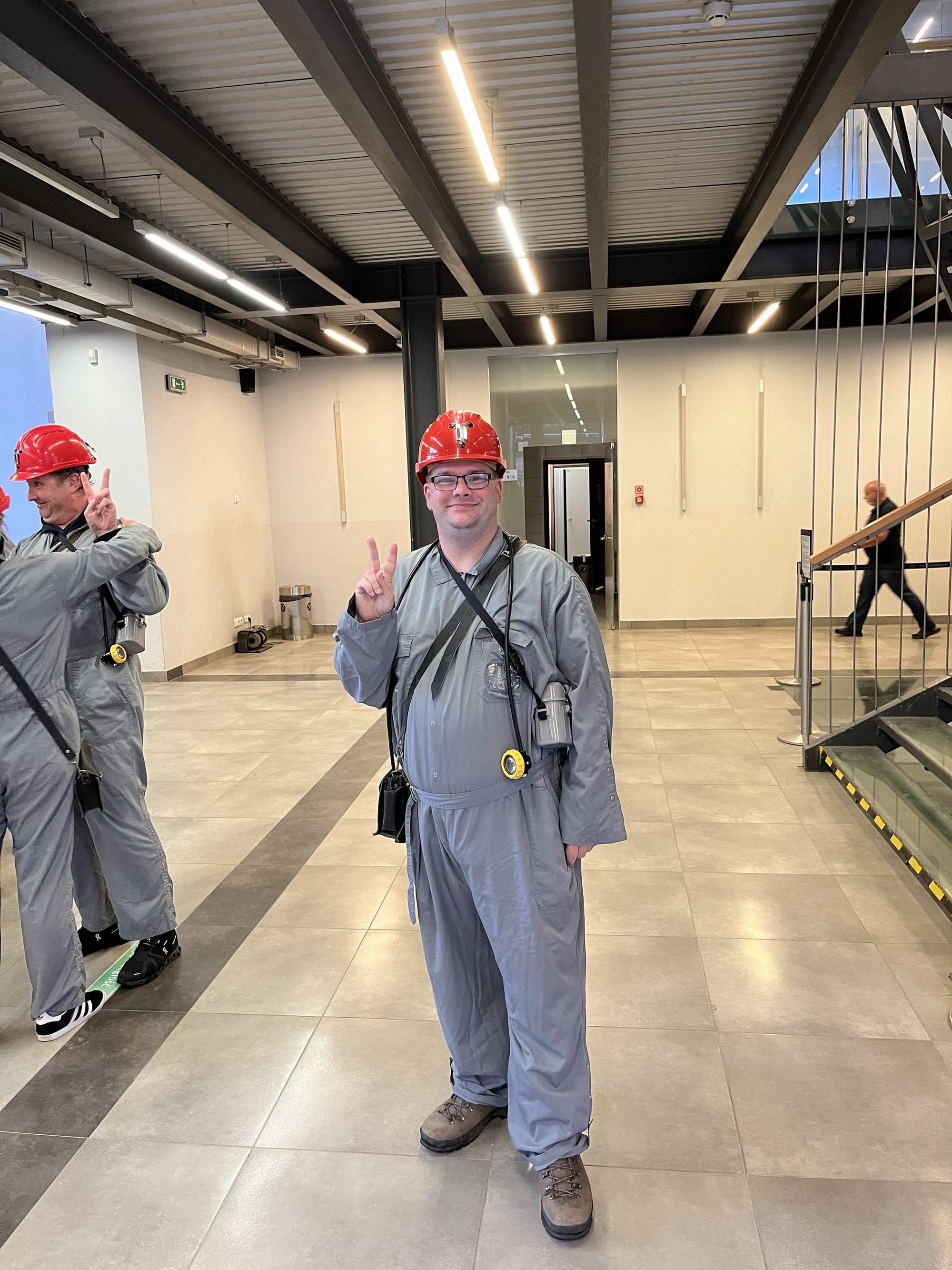
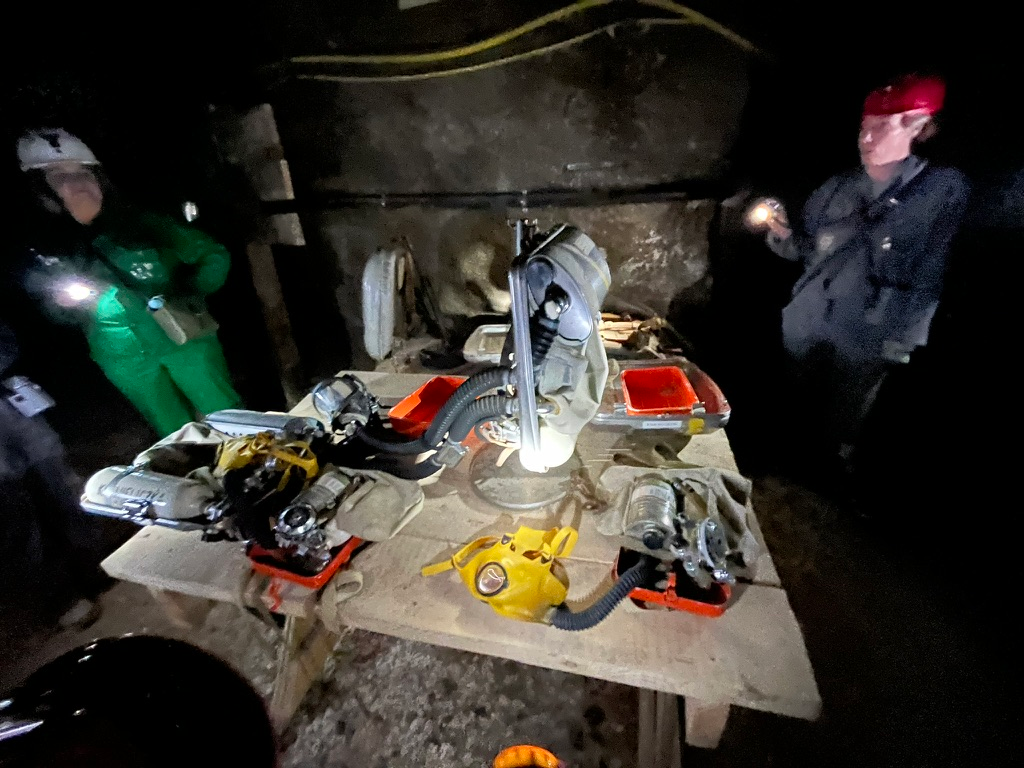
Dressed in protective mining gear before descending into the Wieliczka Salt Mine for an underground exploration of the historic workings.Participants try traditional mining-era woodworking techniques during an interactive experience deep within the Wieliczka Salt Mine.A collection of mining and rescue equipment used underground at the Wieliczka Salt Mine highlights the tools and safety gear that supported generations of miners.
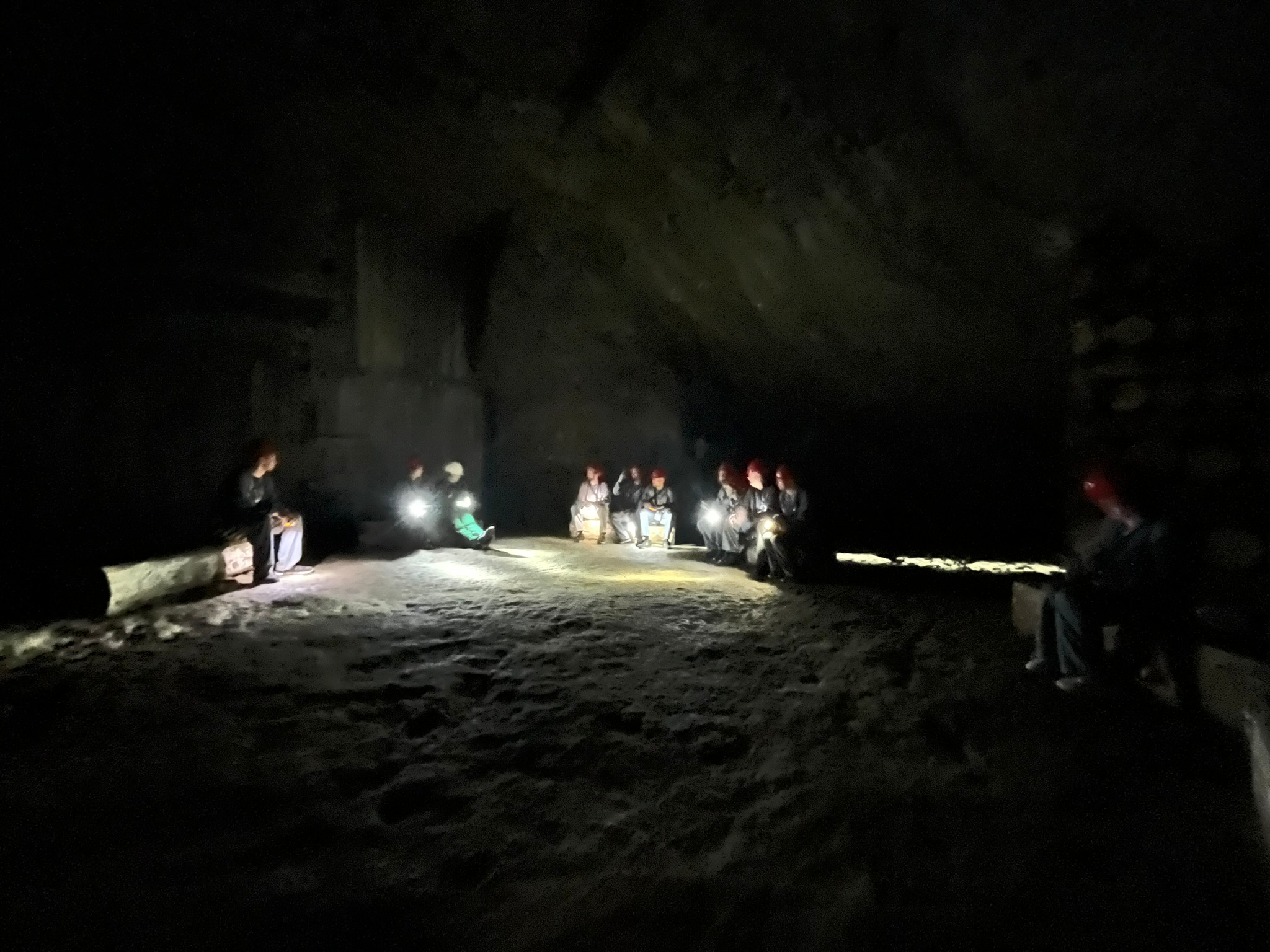
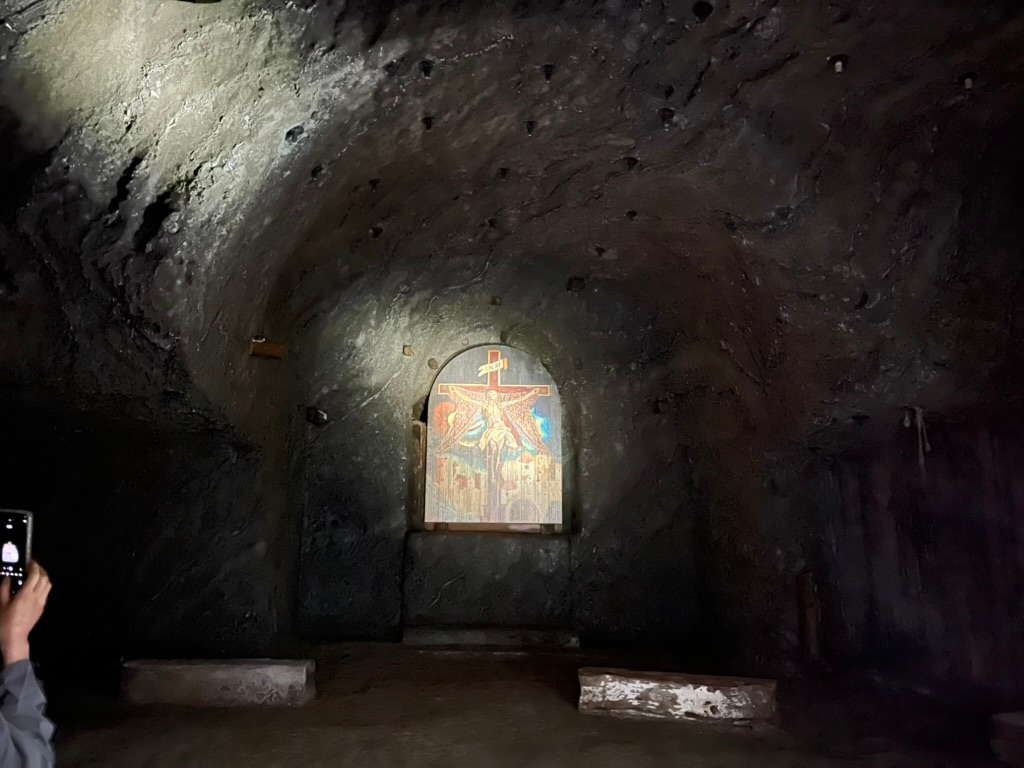
We also visited the chapel, which was quite good to see, especially after we all turned out headlamps off and turn off the main lights. Sat there in complete darkness, with the sounds of water dripping in the distance and the odd piece of wood creaking, was quite unnerving, but immense as we don't really stop to listen any more in this noise polluted world.
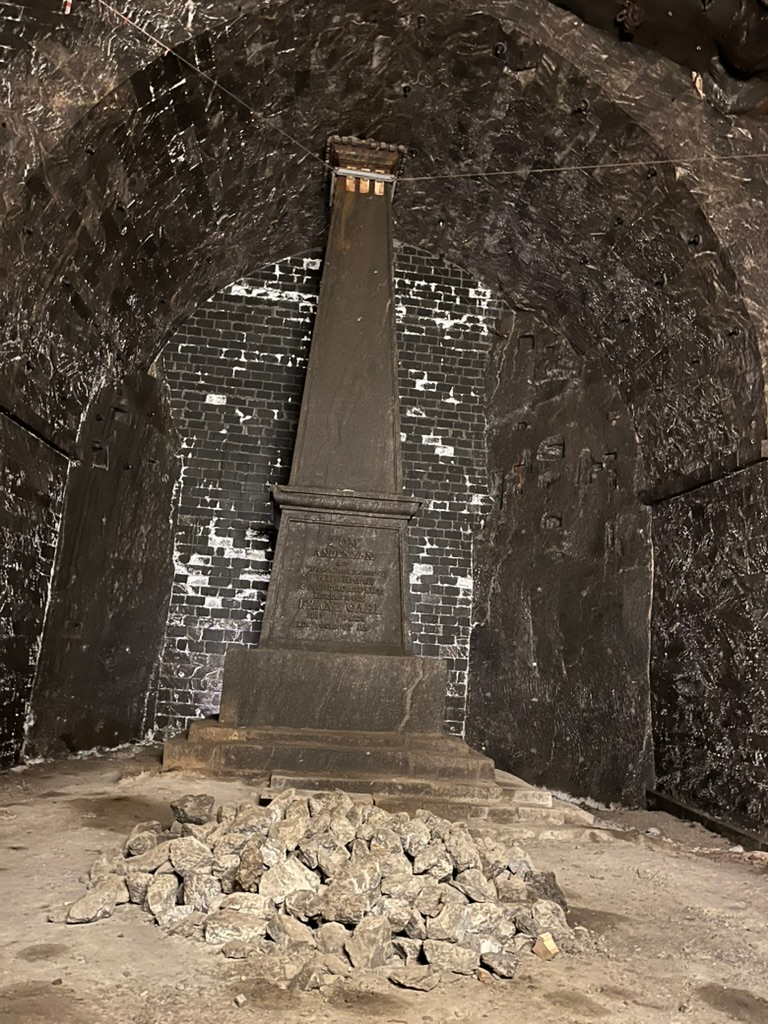
Participants pause in a vast subterranean chamber during an underground mining experience at the Wieliczka Salt Mine, relying on headlamps to navigate the historic workings.A sacred artwork set into the salt-rock walls of the Wieliczka Salt Mine reflects the strong religious traditions and spiritual heritage of generations of Polish miners.An historic memorial deep within the Wieliczka Salt Mine commemorates figures associated with the mine's long history, set within one of the site's excavated underground chambers.A selfie beneath one of the Wieliczka Salt Mine's famous chandeliers, crafted from salt crystals and displayed within the mine's spectacular underground chambers.
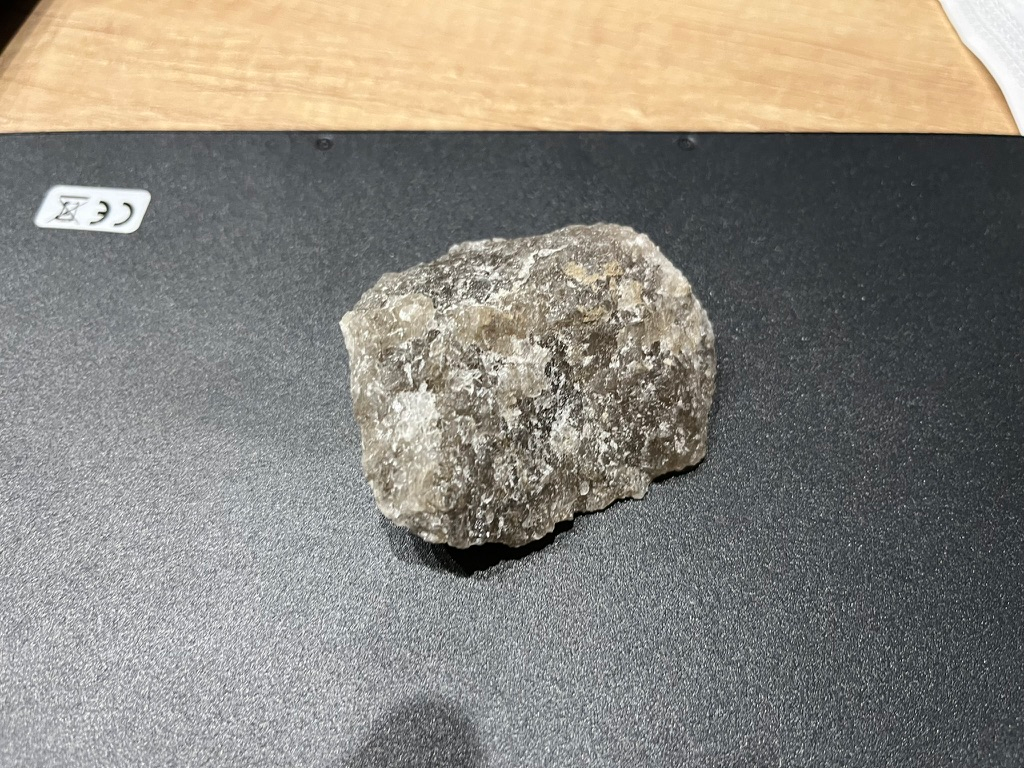
We each got a souvenir salt crystal from there, that we had to forage for in piles of salt, which was a good reminder of what we did.
A souvenir piece of rock salt from the Wieliczka Salt Mine, revealing the crystalline mineral that has been extracted from the site for centuries.
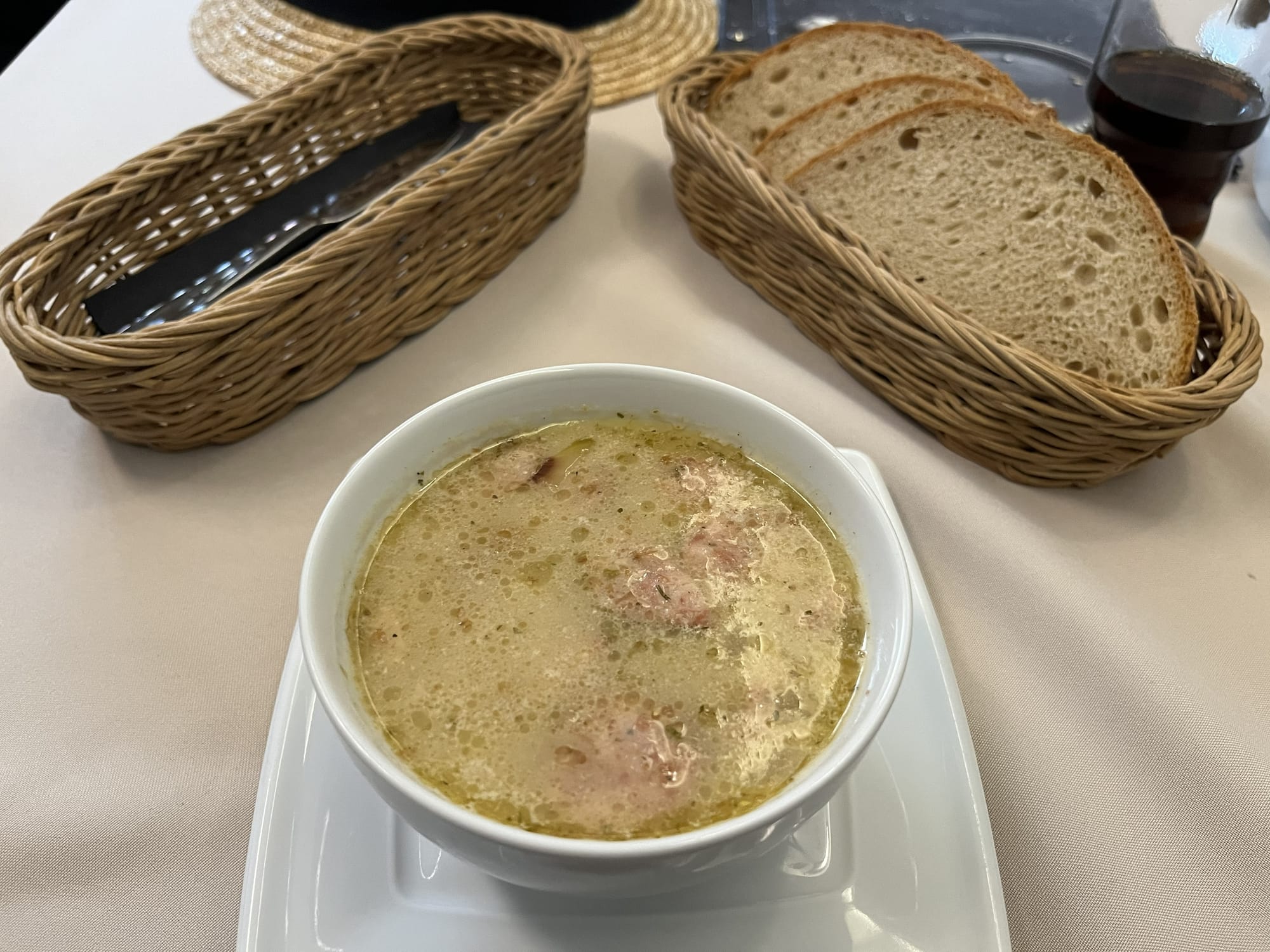
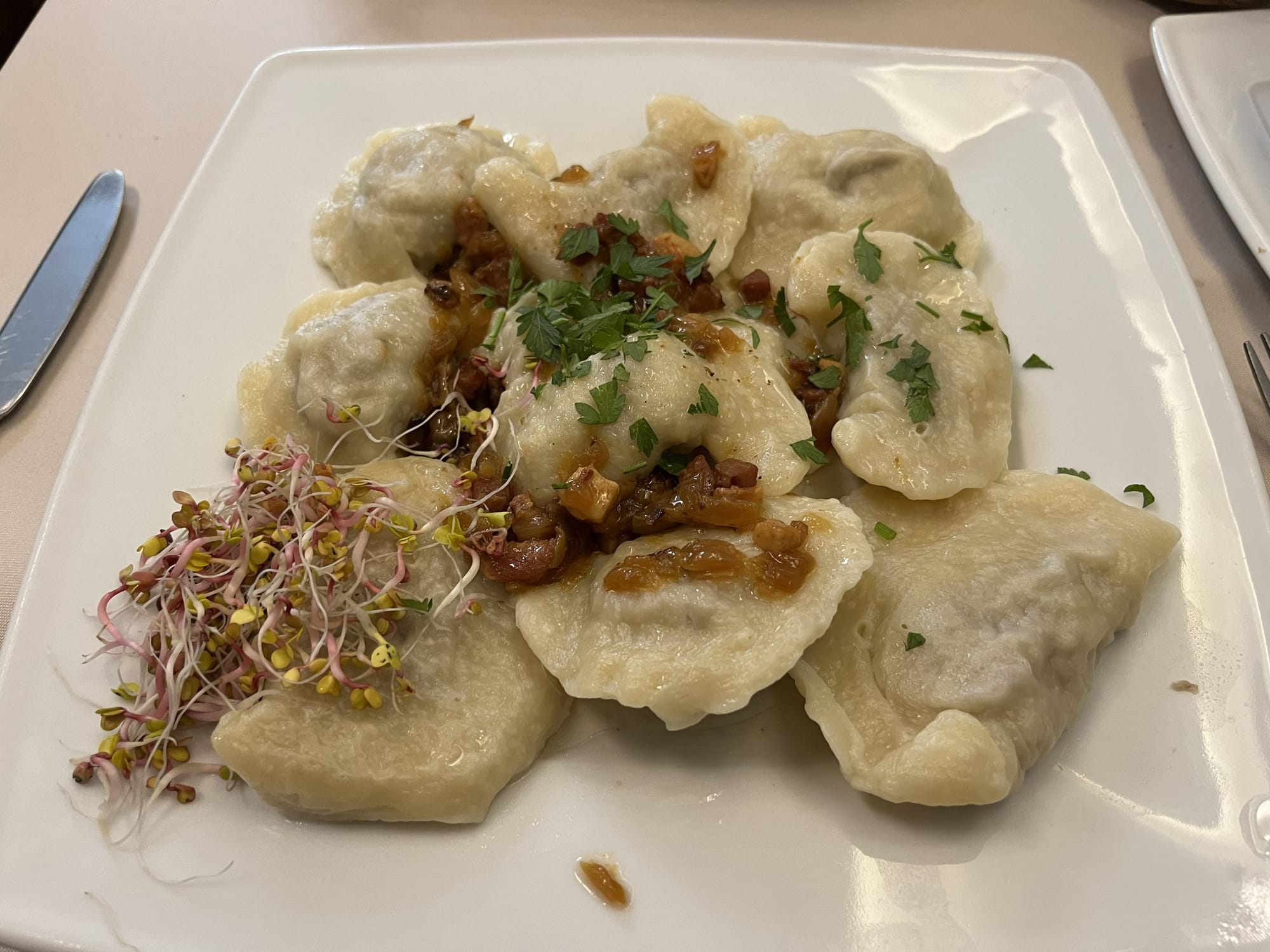
Afterwards, I went to get some lunch and got some Zurek, which is a Polish sour Rye soup with egg and sausage in it and some pork perogies.
Traditional Polish żurek, a hearty sour rye soup with sausage, served with fresh bread on the side.Traditional Polish pierogi served with caramelised onions and herbs, showcasing one of Poland's most popular and comforting dishes.