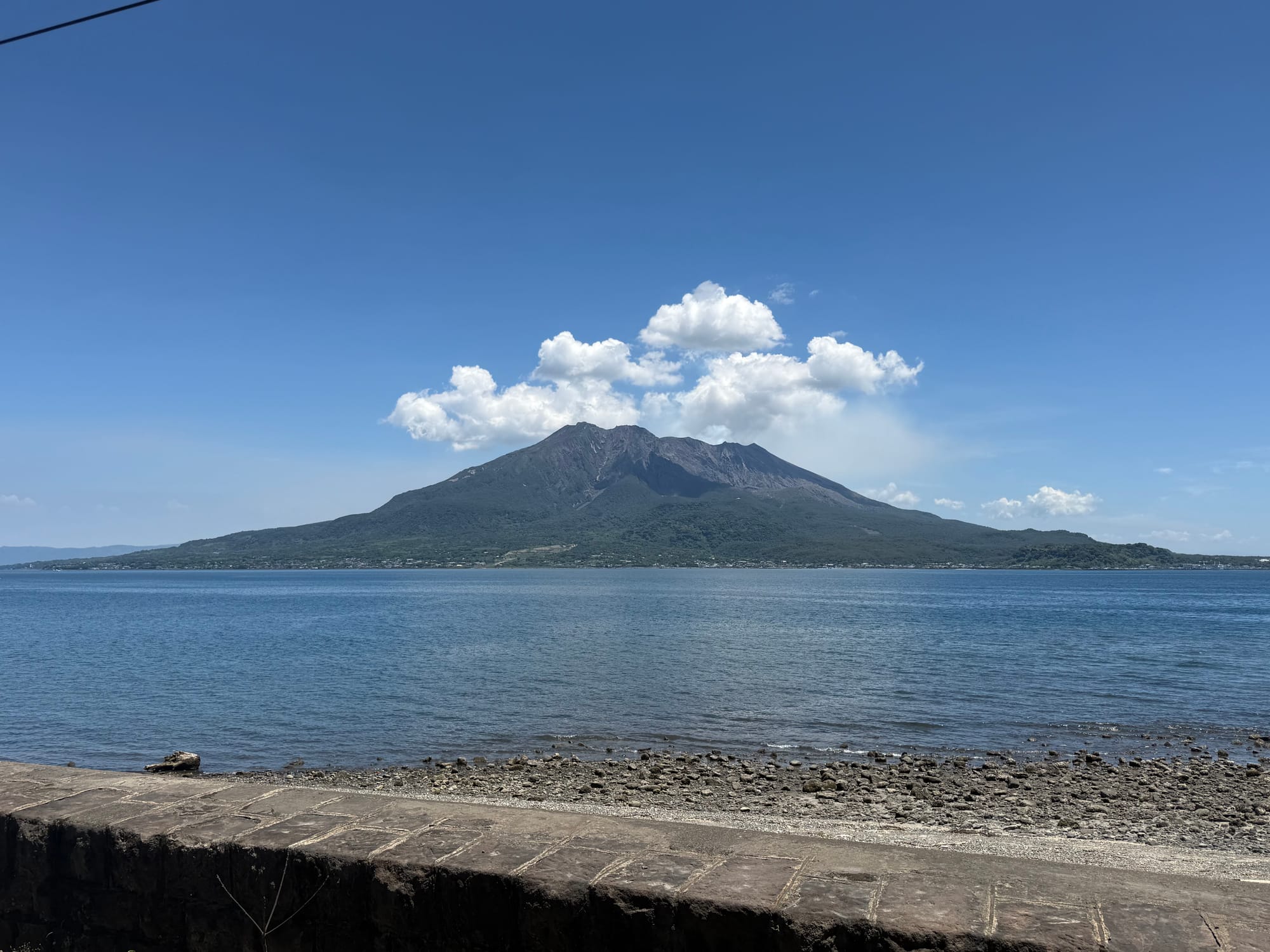
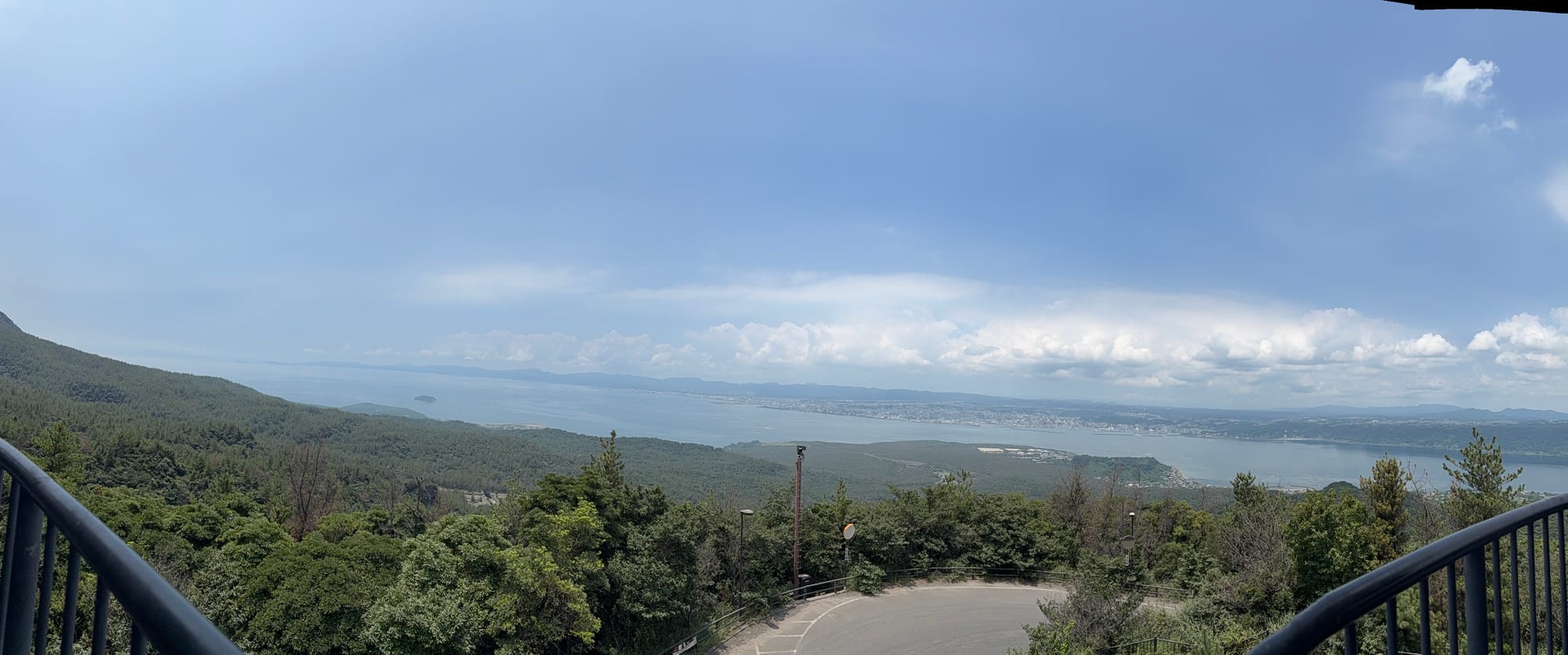
Sakurajima dominates the view across Kagoshima Bay, its active volcanic peak forming one of Japan's most recognisable landscapes and a constant presence in the city skyline.
Kagoshima is the capital city of Kagoshima Prefecture and has a rich samurai history, including having the last samurai called Saigō Takamori, who Ken Watanabe's character Katsumoto in the 2003 film, The Last Samurai is based on. It also has Japans most active volcano across the bay called Sakurajima
Moving to Kagoshima day
22nd July
Today was a nice easy journey to get to Kagoshima-chuo station. First i needed to get to Osaka station, which at this point, I found a nice easy air conditioned way to get there, with most of the 10 min walk being underground. After arriving at Osaka station, i needed to board to subway, to go across the (insert river name here) to Shin-Osaka station. Now if you were following my earlier blogs, you might remember that Shin-Osaka station stands for 'New Osaka' station, which is where the bullet train lines are, whereas Osaka station was the first Osaka station built.
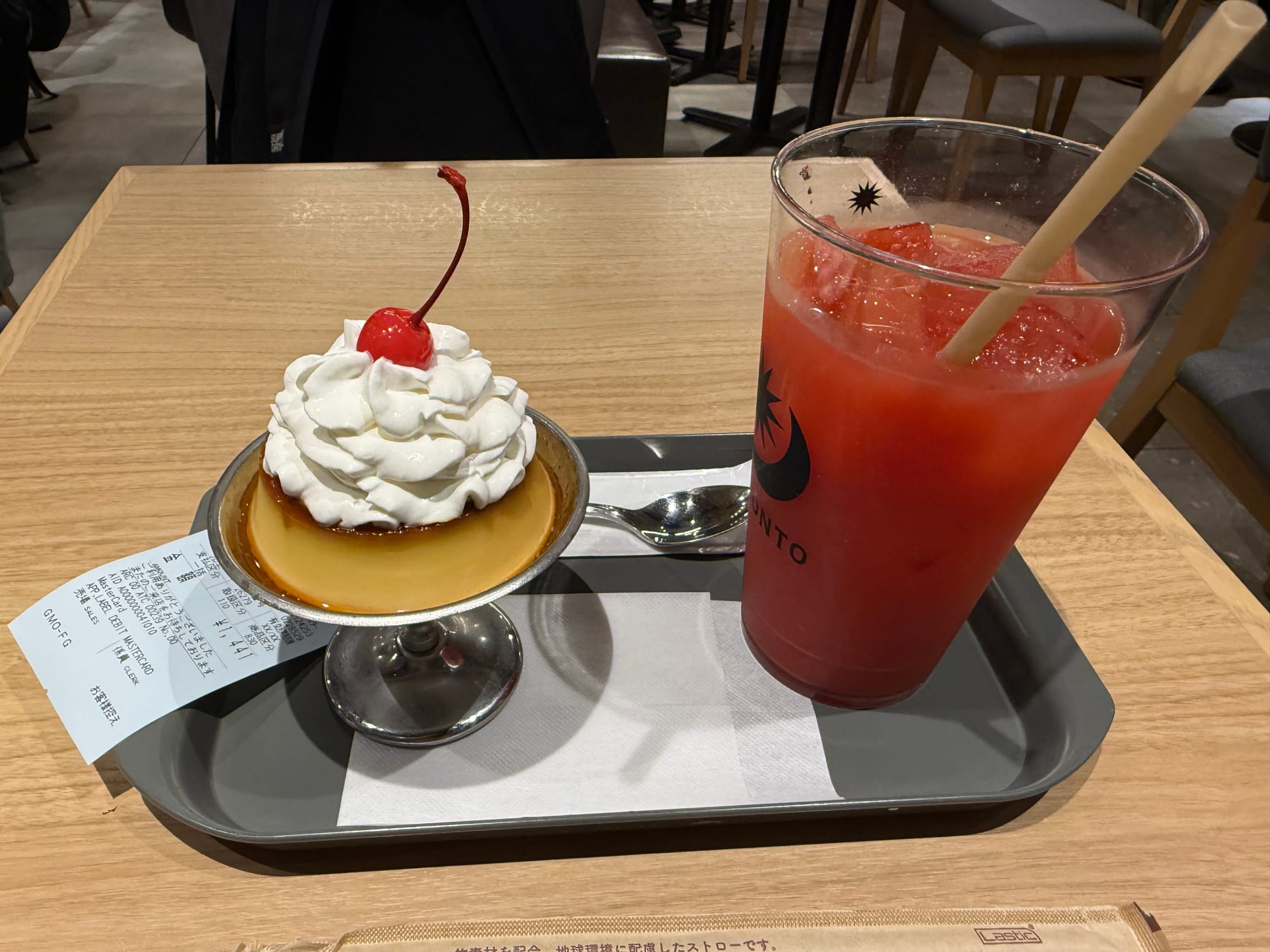
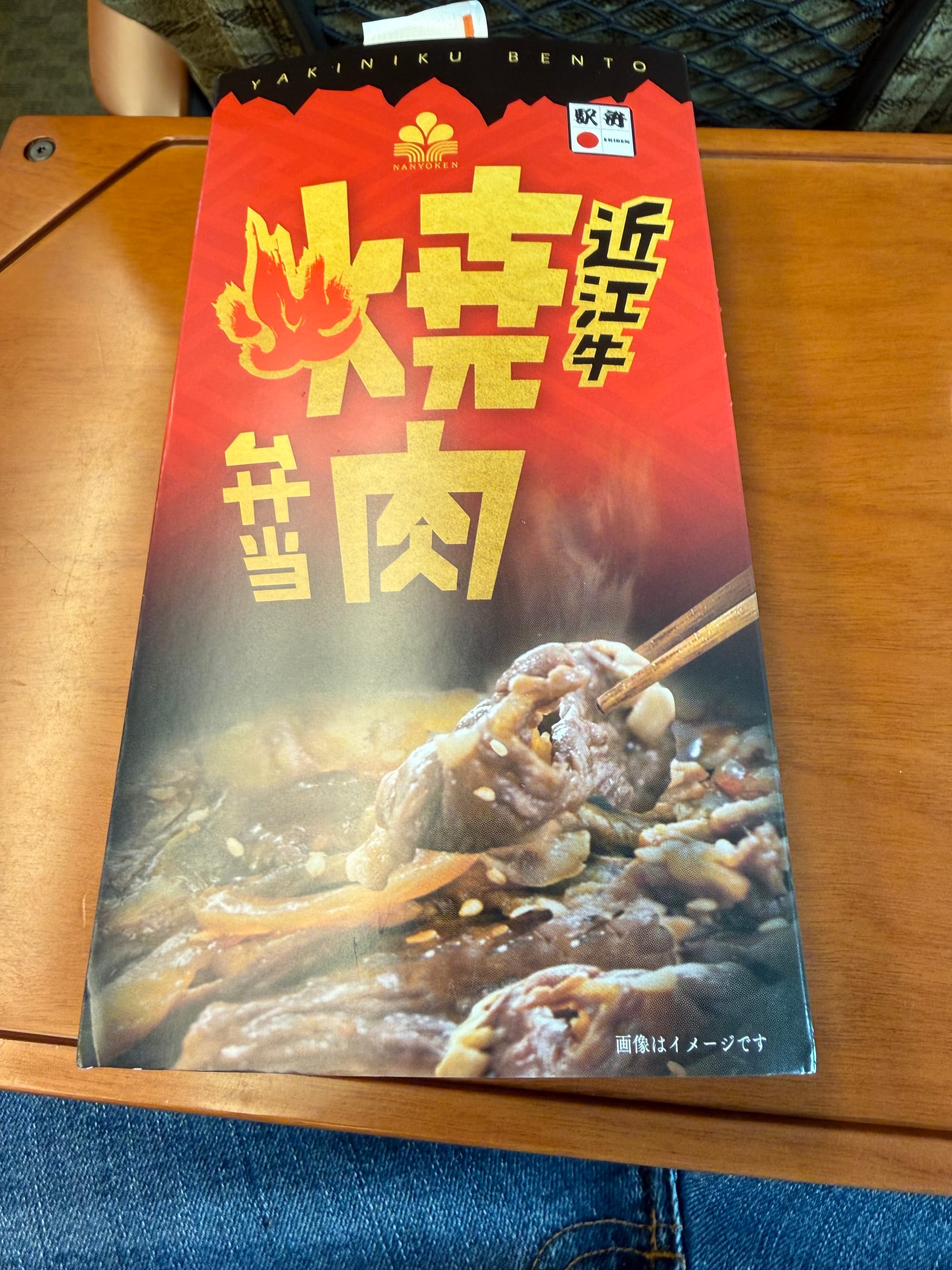
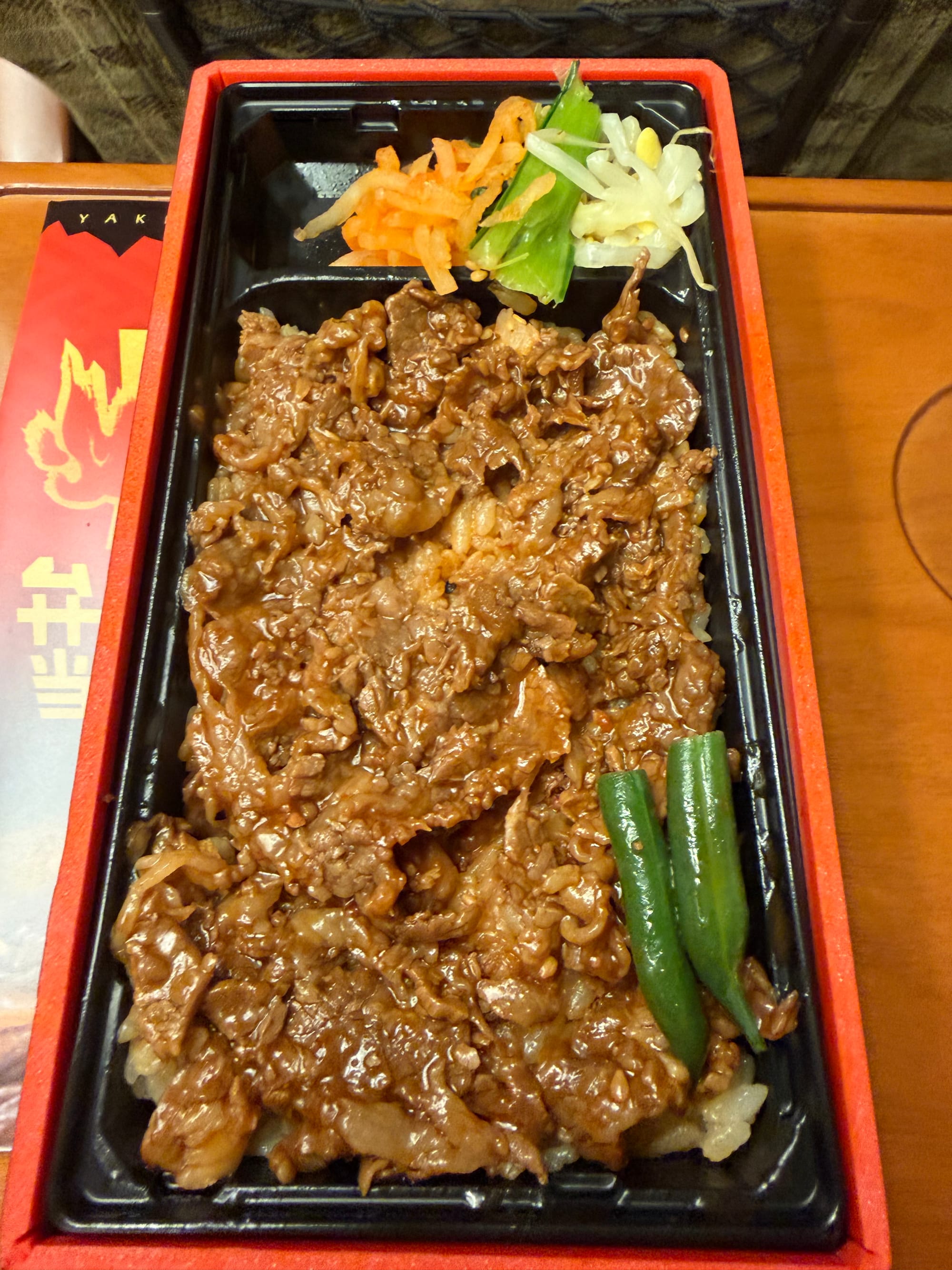
I had about 1 hour to kill before my bullet train was due, so sat down in a cafe in the station for 30 mins before heading up to find the Shinkansen gates and get some Ekiben on the way.
A refreshing stop at Shin-Ōsaka Station, whilst waiting for the Shinkansen, featuring a classic Japanese-style pudding topped with whipped cream and cherry alongside an iced watermelon drink.A yakiniku ekiben enjoyed on the Shinkansen, featuring grilled beef and rice, purchased before departure as part of the classic Japanese rail travel experience.A yakiniku ekiben enjoyed while travelling on the Shinkansen, combining tender grilled beef, rice and pickled vegetables as part of a classic Japanese rail journey.
The bullet train journey is just over 4 hours from Shin-Osaka to Kagoshima-Chuo (Kagoshima Central) and was nice, easy and efficient, in fact we didn't really go off schedule at all, which is no surprise for Japan, who prides themselves on about 99.9% of all trains being on time.
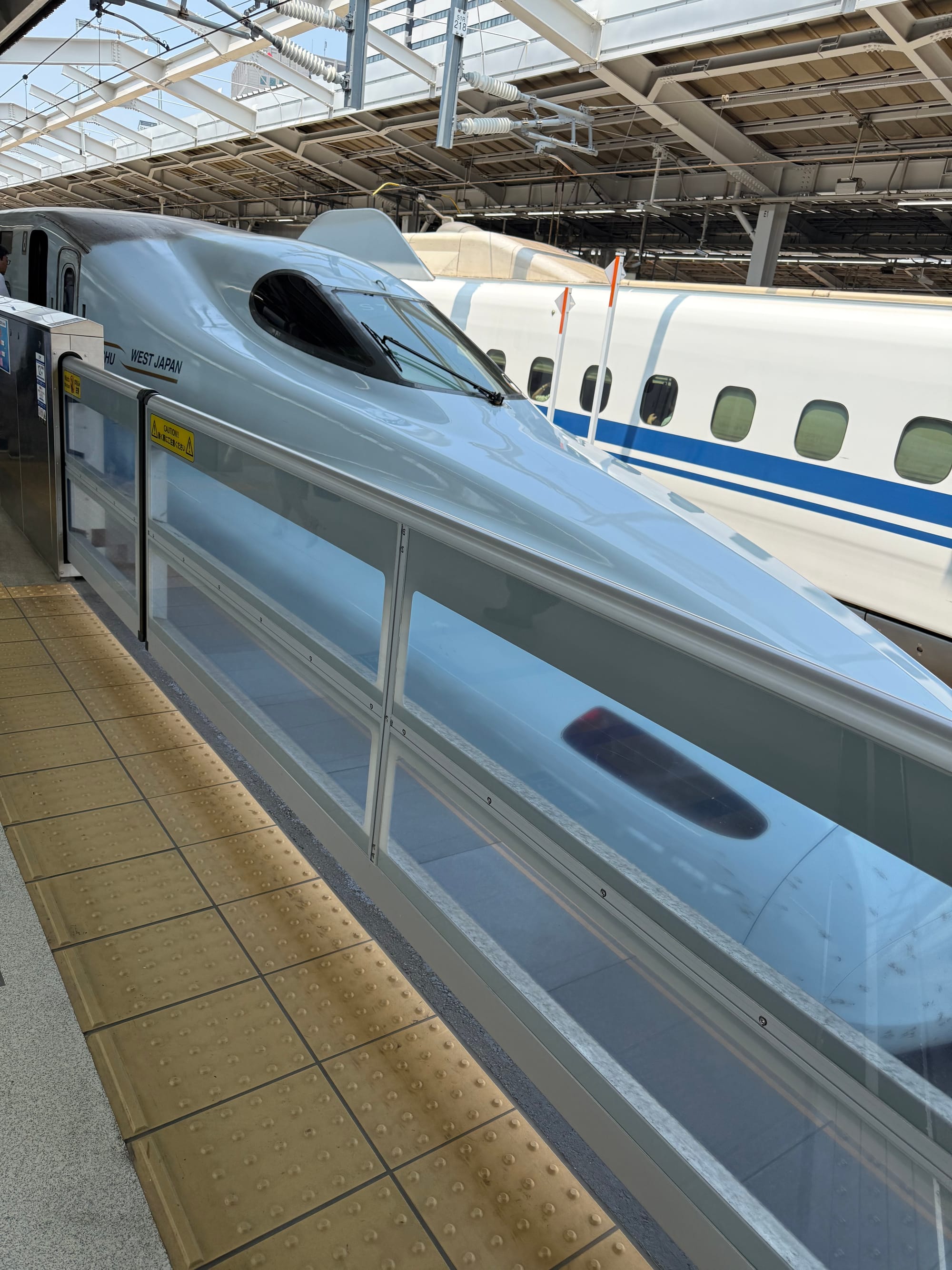
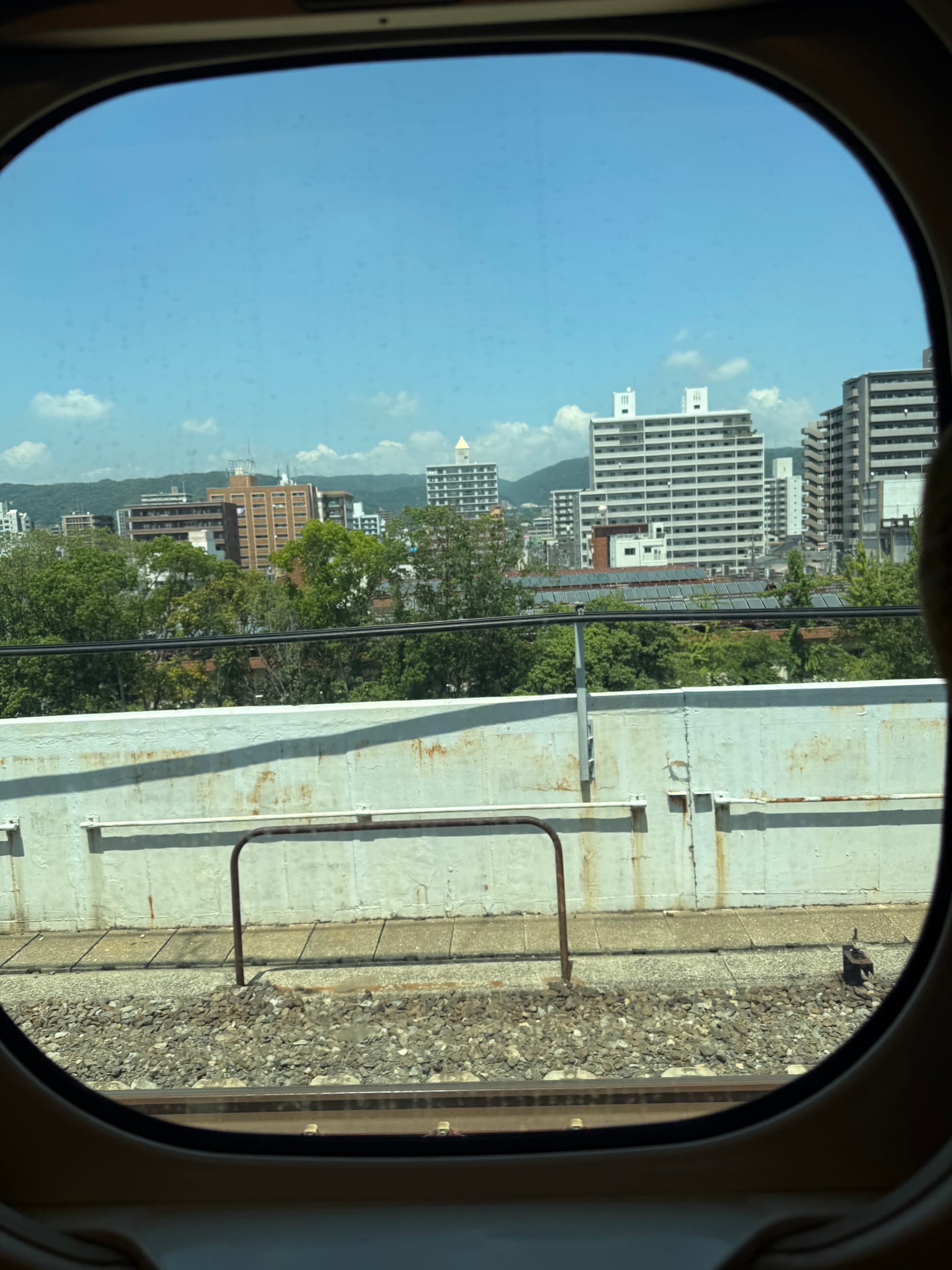
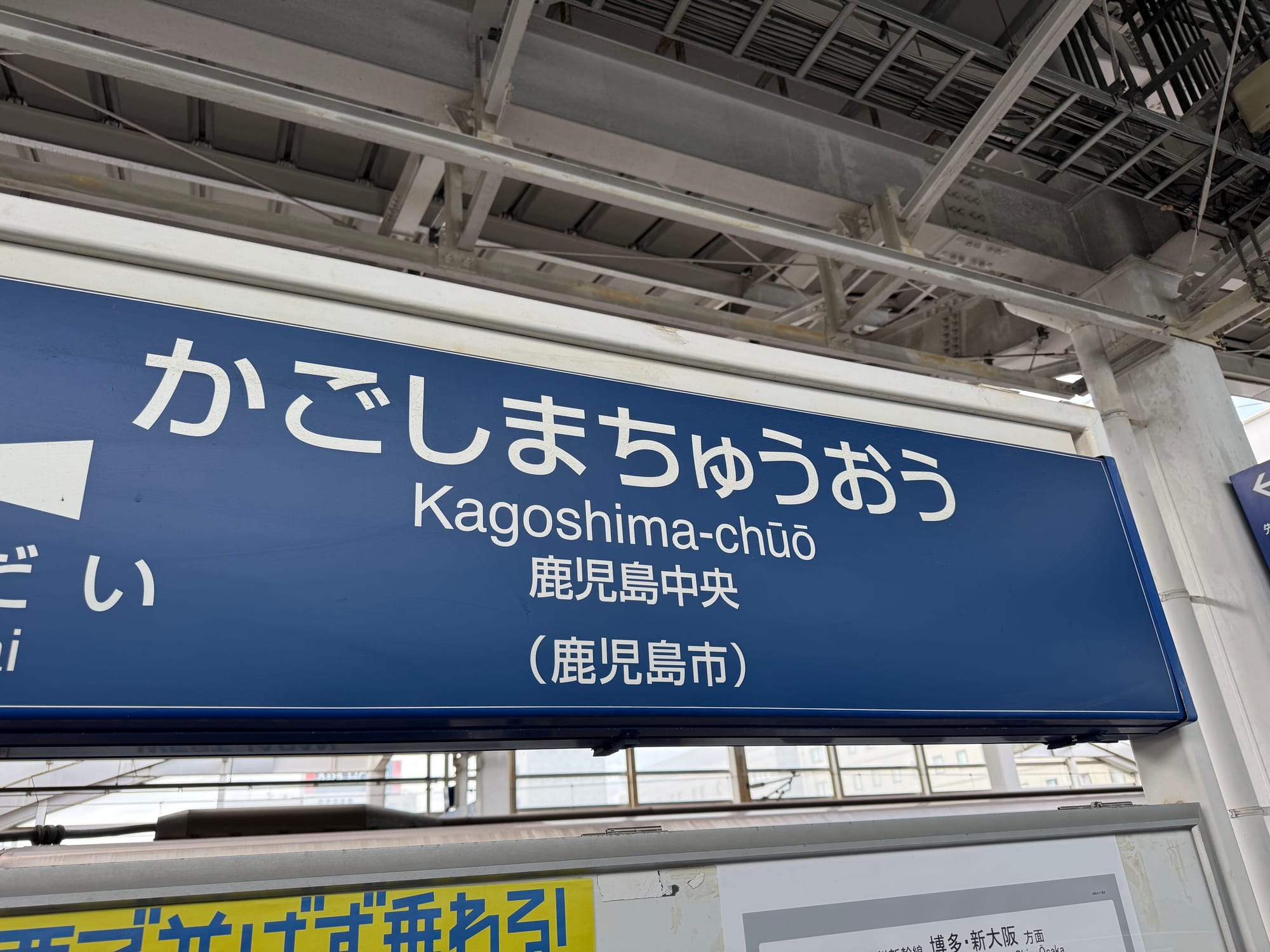
A JR West N700 Series Shinkansen waits at the platform, showcasing the sleek design and advanced engineering that have made Japan's high-speed rail network renowned worldwide.Travelling by Shinkansen through Japan, taking a quick selfie as another high-speed rail journey got underway.Checking my speed on the Shinkansen, with the GPS speedometer showing 161 mph as the train sped across western Japan toward its next destination.Looking out from the Shinkansen as the landscape of western Japan speeds by, with city buildings, greenery and distant hills visible beyond the tracks.Arrived at Kagoshima-Chūō Station after a journey on the Kyushu Shinkansen, reaching the gateway to southern Kyushu and one of Japan's southernmost major cities.
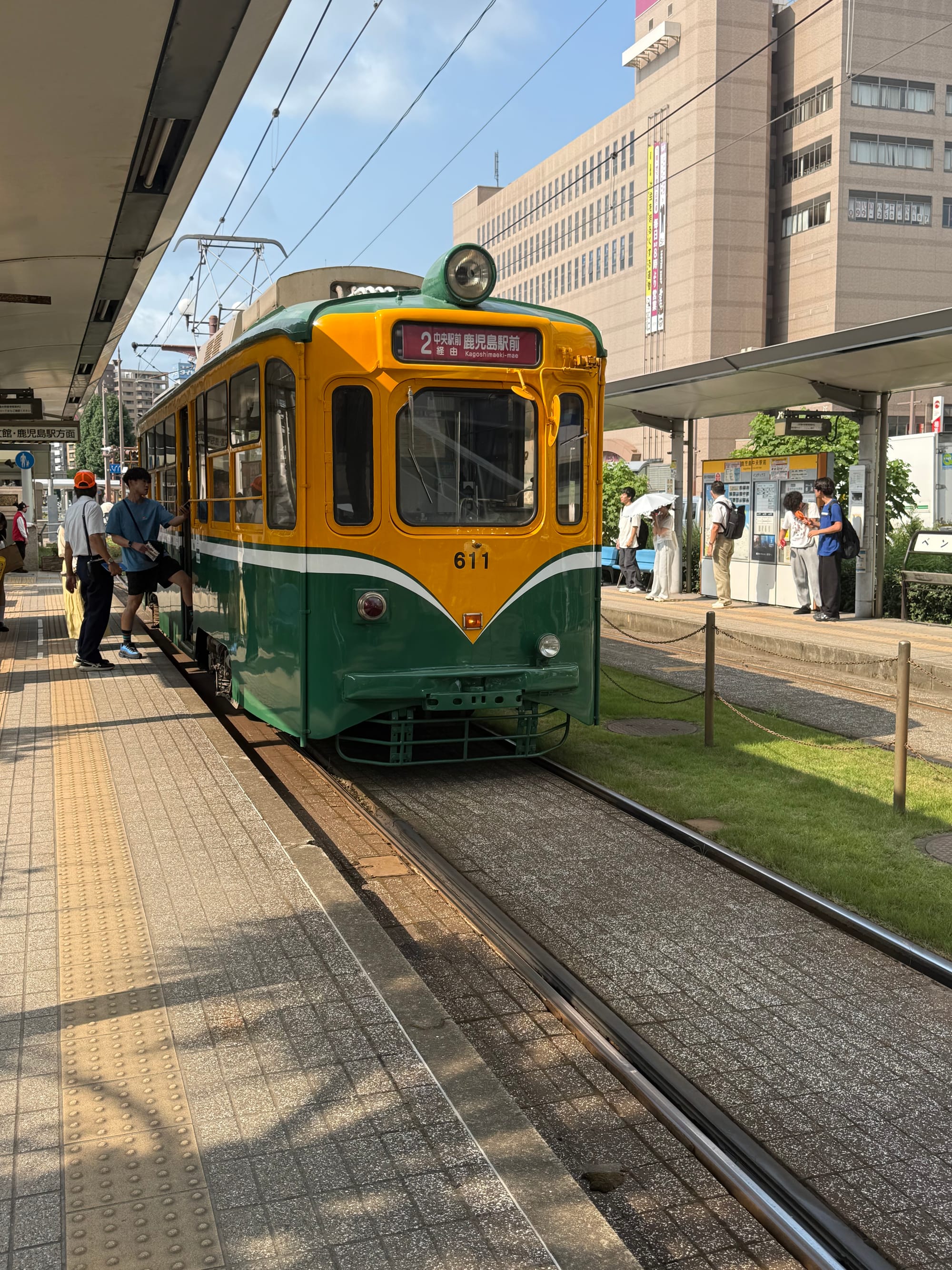
Finally arriving at Kagoshima-Chuo, I got the local tram from here to my new hotel for the next few days called 'Hotel Hokke Club Kagoshima'.
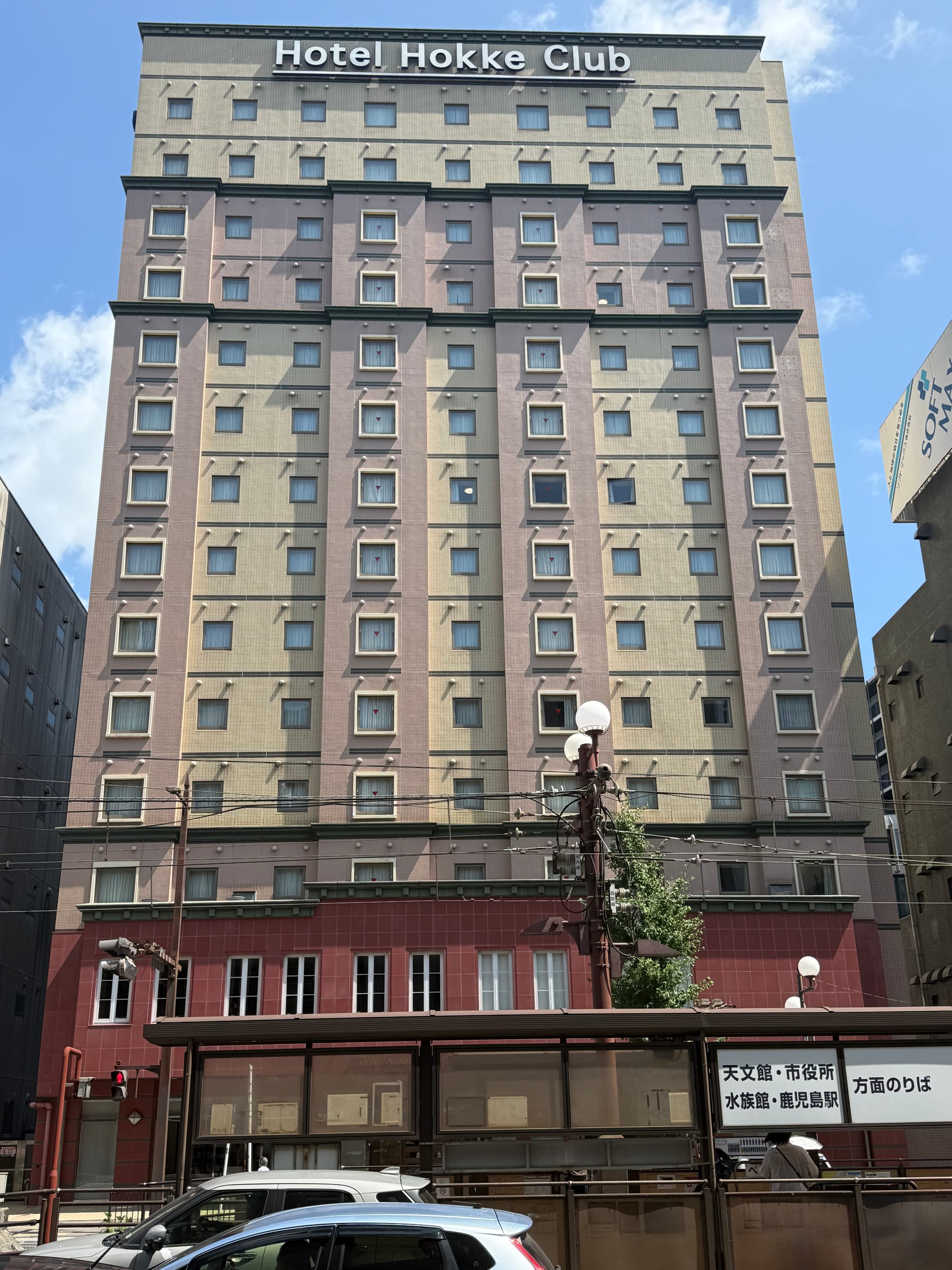
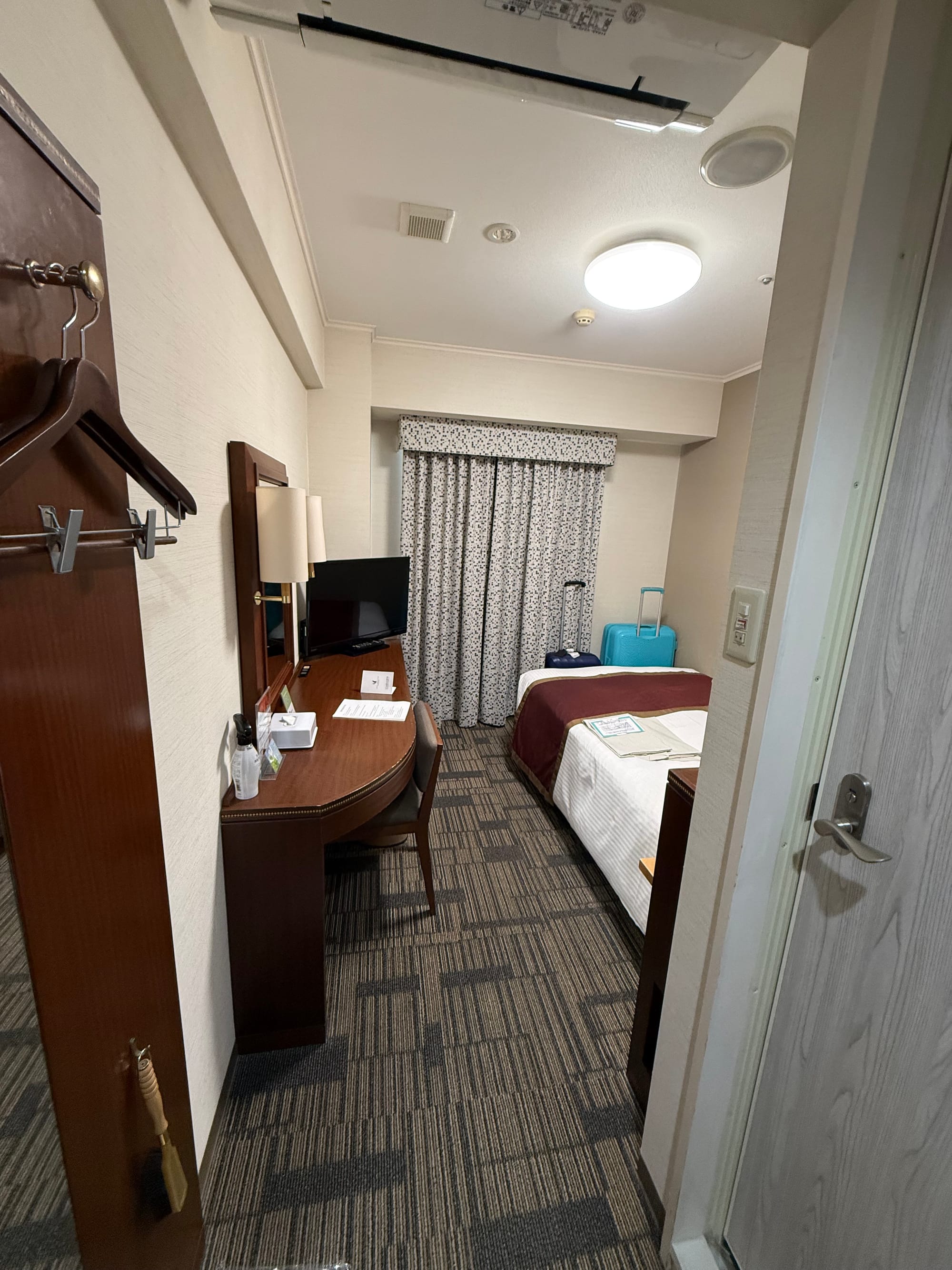
A classic Kagoshima City Tram outside Kagoshima-Chūō Station, providing a convenient way to explore the city and travel between many of Kagoshima's major attractions, including my Hotel.Hotel Hokke Club Kagoshima served as my base while exploring the city, offering a convenient location close to public transport, shopping areas and views of Sakurajima.My hotel room in Kagoshima provided a comfortable and practical base for exploring southern Kyushu, with everything needed for an overnight stay close to the city centre.
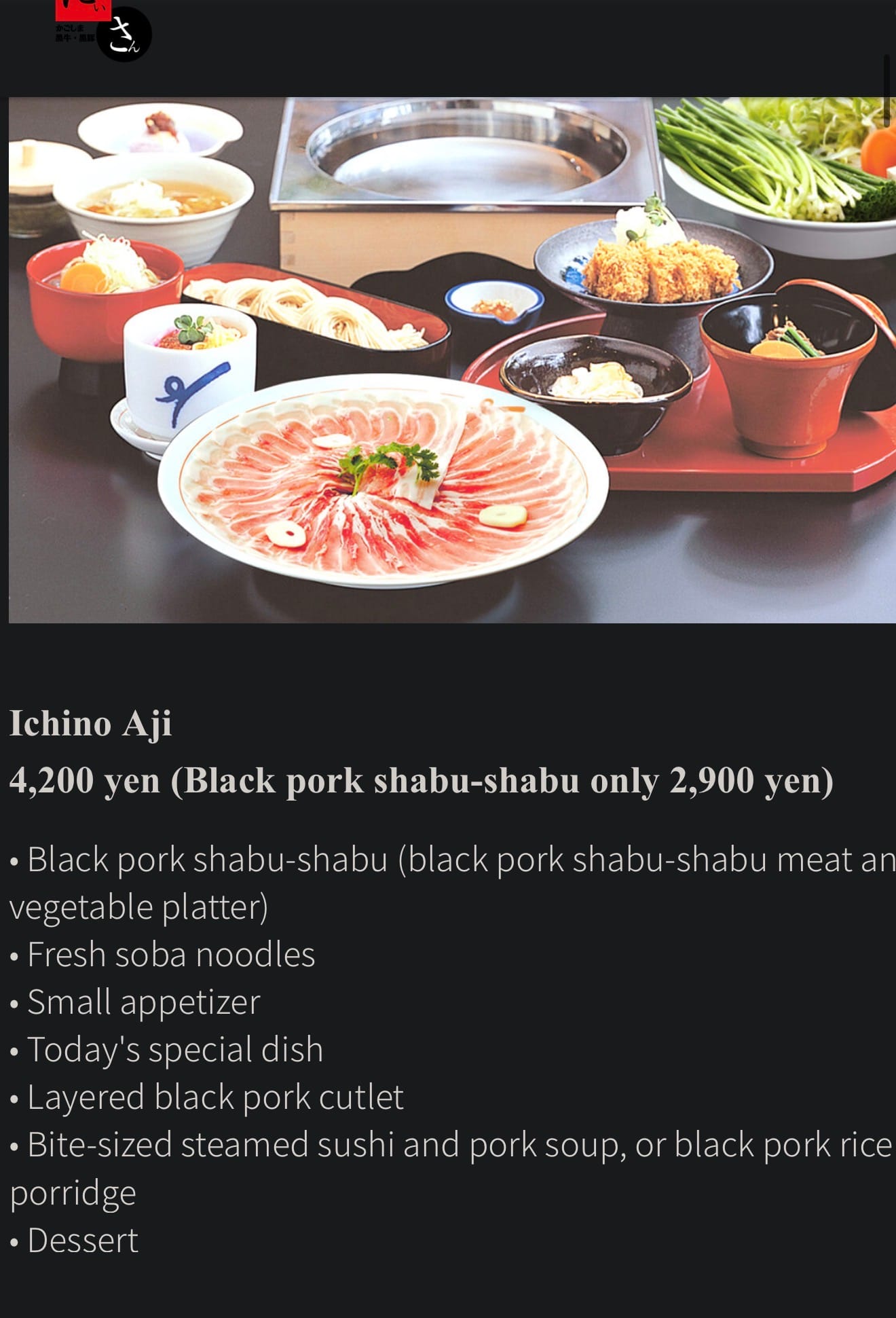
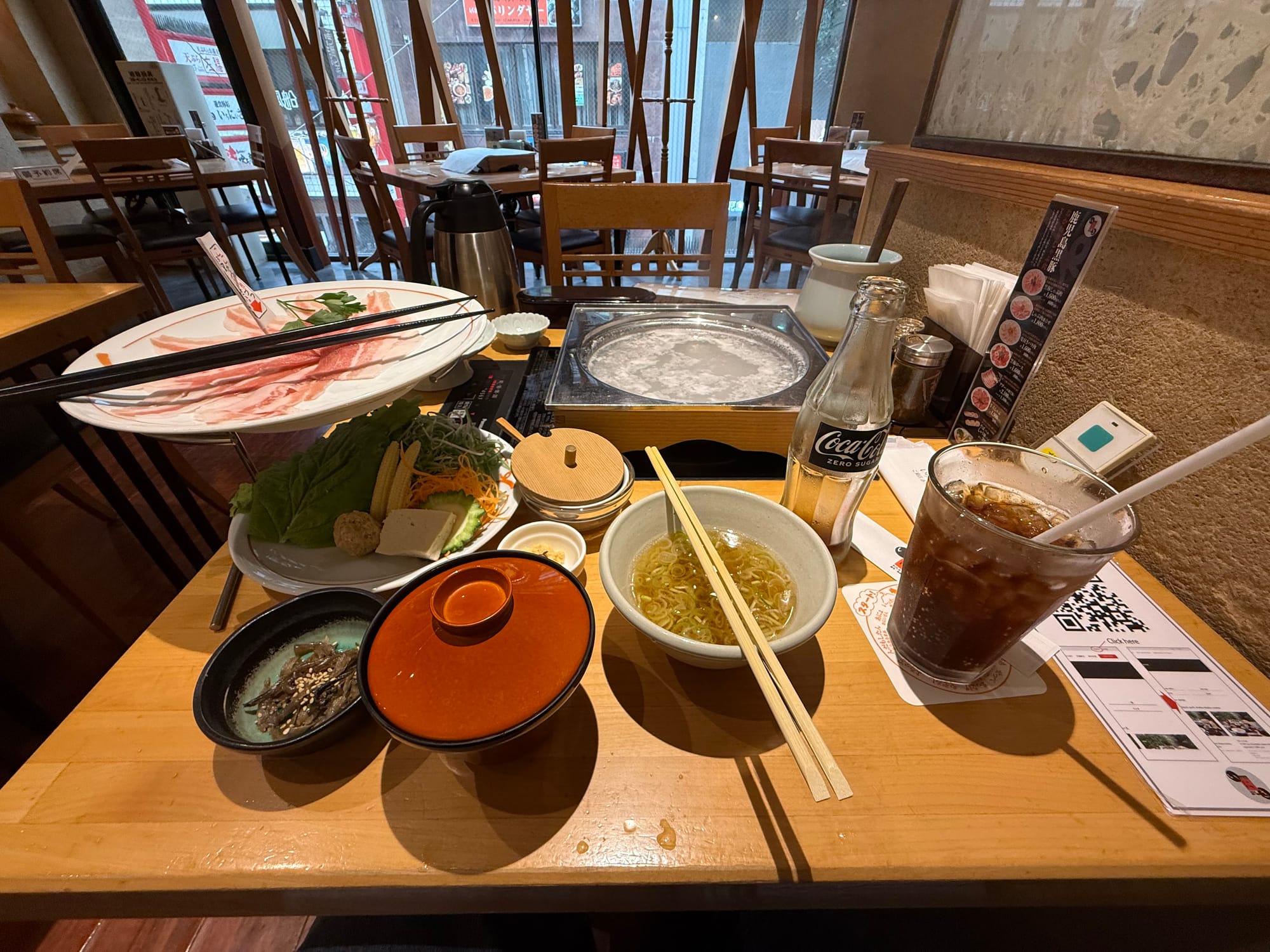
After getting settled, it was time to go and get some dinner, which i went to a restaurant called Ichiniisan, where I got to try a very delicious local speciality called 'black pork'
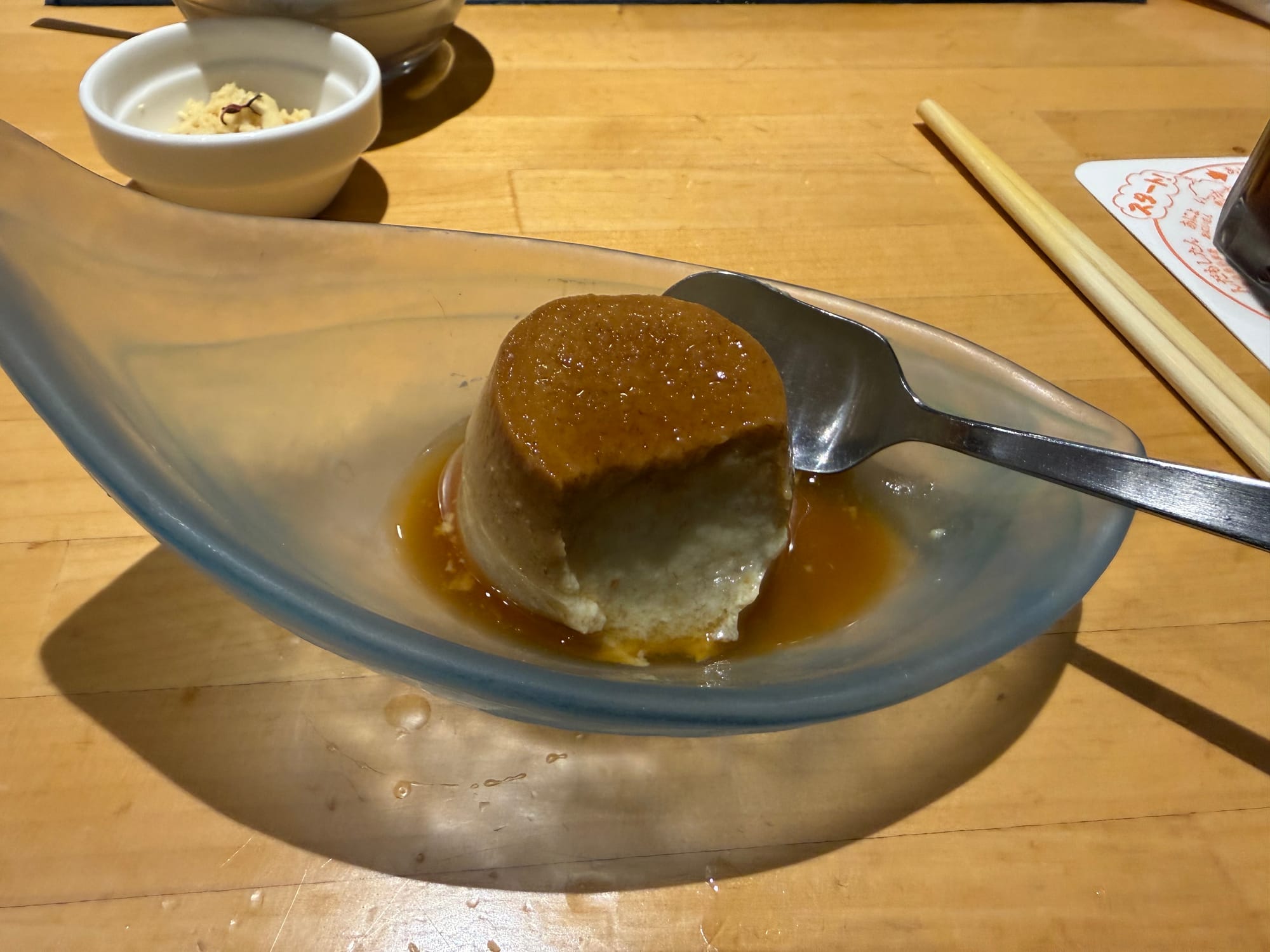
Choosing dinner in Kagoshima, with a menu showcasing the region's famous black pork (kurobuta) served as shabu-shabu alongside soba noodles, pork cutlet and other local specialities.Dinner in Kagoshima featuring the region's famous kurobuta (black pork) shabu-shabu, served with fresh soba noodles, vegetables and a selection of traditional side dishes.A banana-flavoured pudding with caramel sauce provided a sweet finish to a Kagoshima dinner, rounding off a meal centred on the region's famous black pork specialities.
Time to go to Sakurajima
23rd July
Today it was time to catch a ferry to Japans most active volcano called Sakurajima.
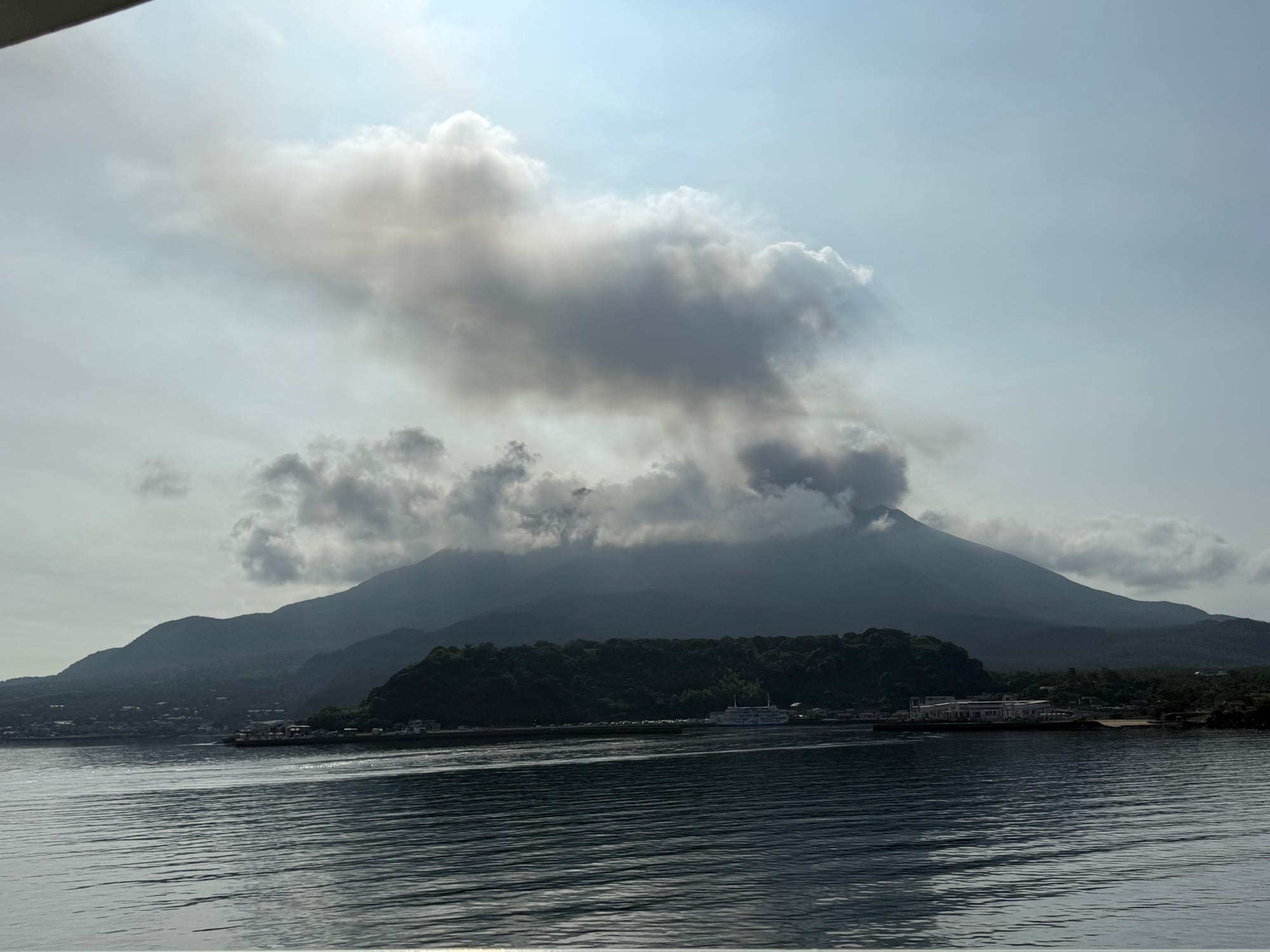
Sakurajima dominates the landscape as volcanic clouds drift above the summit, a powerful reminder that one of Japan's most active volcanoes lies just across the bay from Kagoshima.
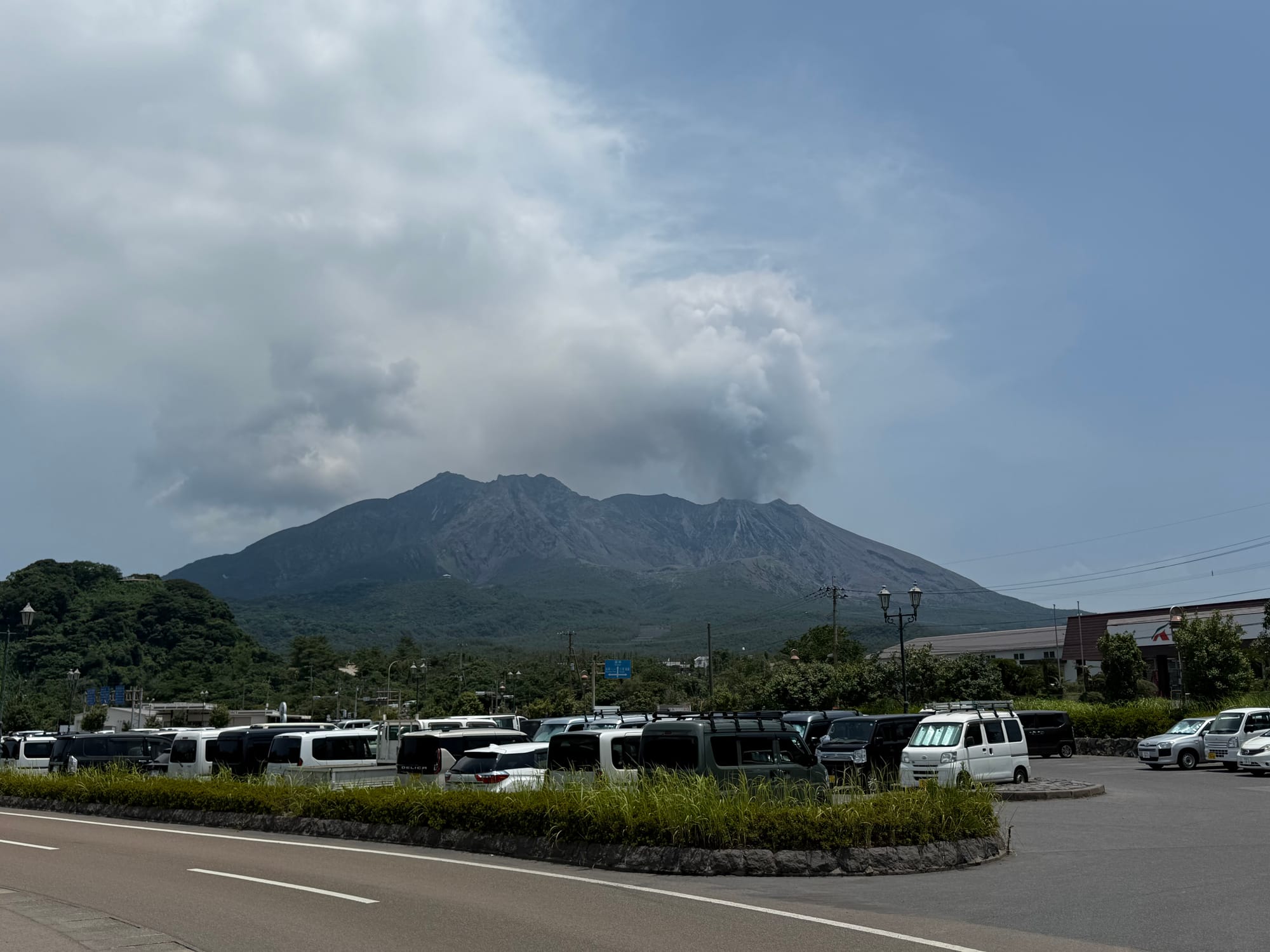
This volcano is actually sitting on the edge of Aira Caldera which created the inland bay on which Sakurajima sits a long time ago! This volcano is also the most active as it averages 200 eruptions per year, with the most active year recently being 2011, when it erupted 1,355 times in the year. That is ~3.7 times per day!!
A close-up view of Sakurajima reveals volcanic ash rising from the active crater, highlighting the power of one of Japan's most active and closely monitored volcanoes.
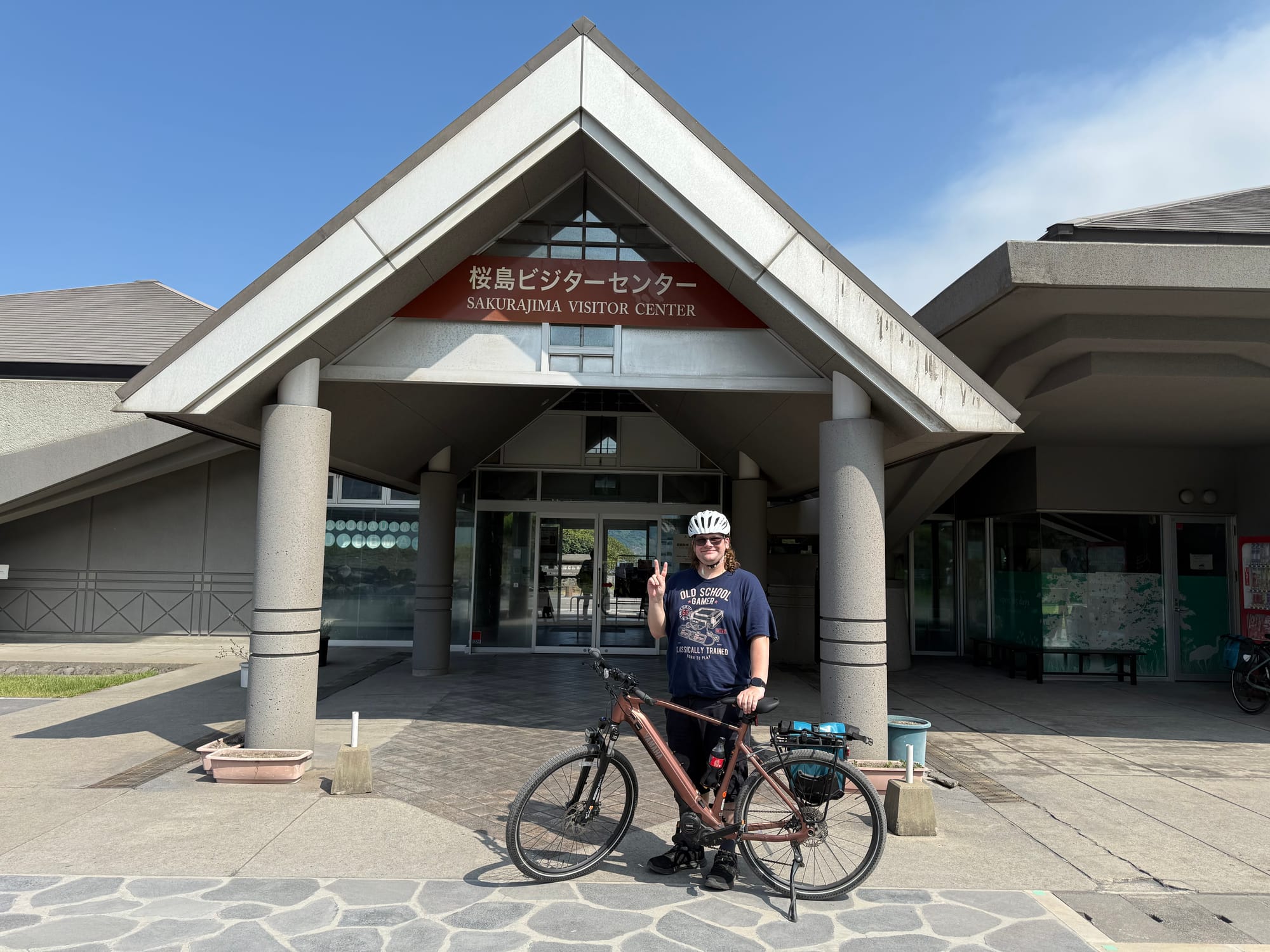
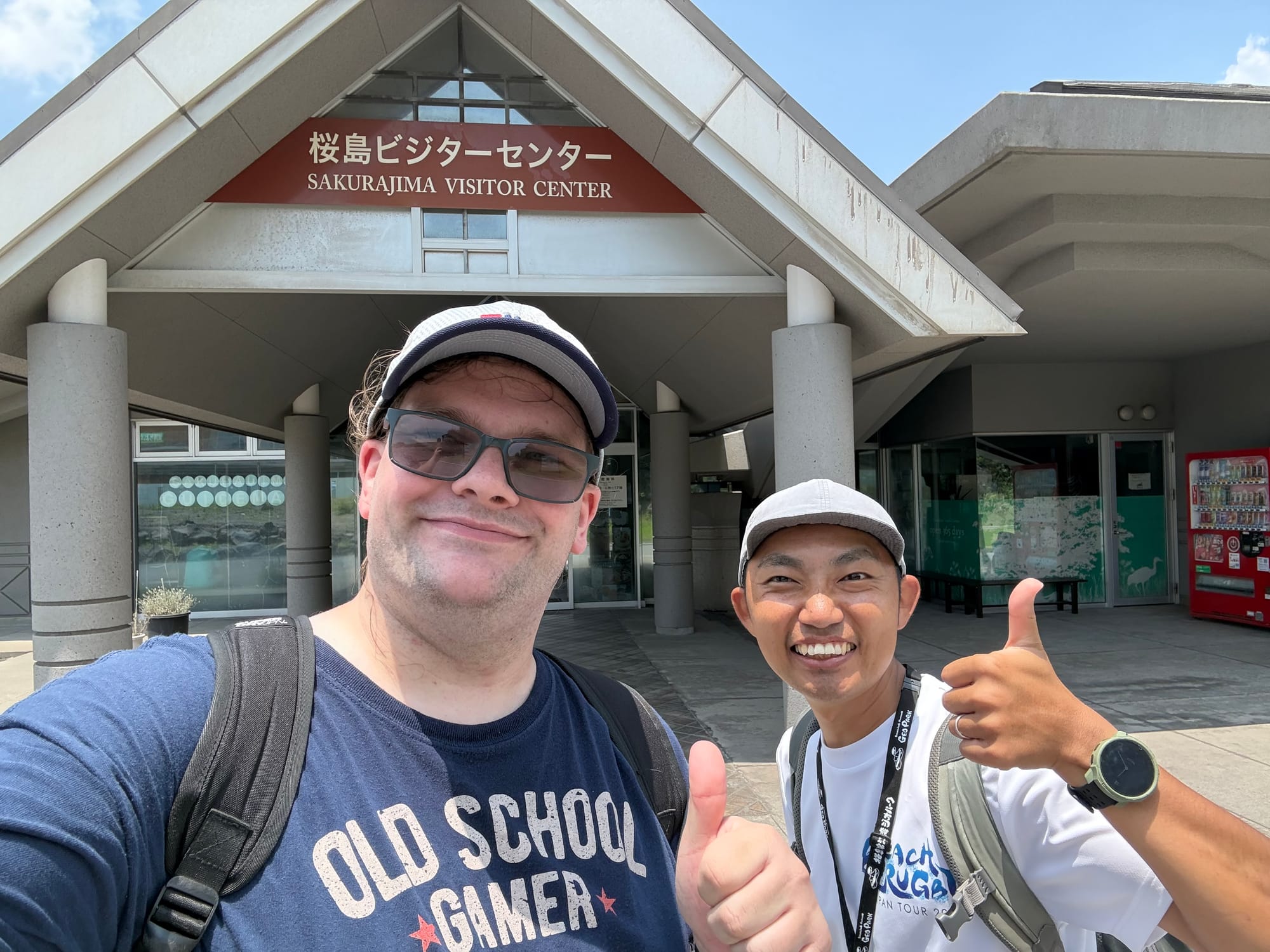
I had booked a cycling tour thought trip advisor and it was only me on the tour, which was good for me as I was able to ask more questions than I probably would if there were others on the tour and I think i surprised my guide Rento on some of my Japanese history and Vulcanology knowledge.
Ready to begin a cycling tour of Sakurajima, outside the Sakurajima Visitor Centre with the bike that would be used to explore the island's volcanic landscapes.
Luckily for me the bikes were electric assisted as it would have been a very hard climb otherwise and I’d have probably died on the way up. It was quite fun though, especially as I also got to see the rare Japanese badger, which I wasn‘t able to get a photo of.
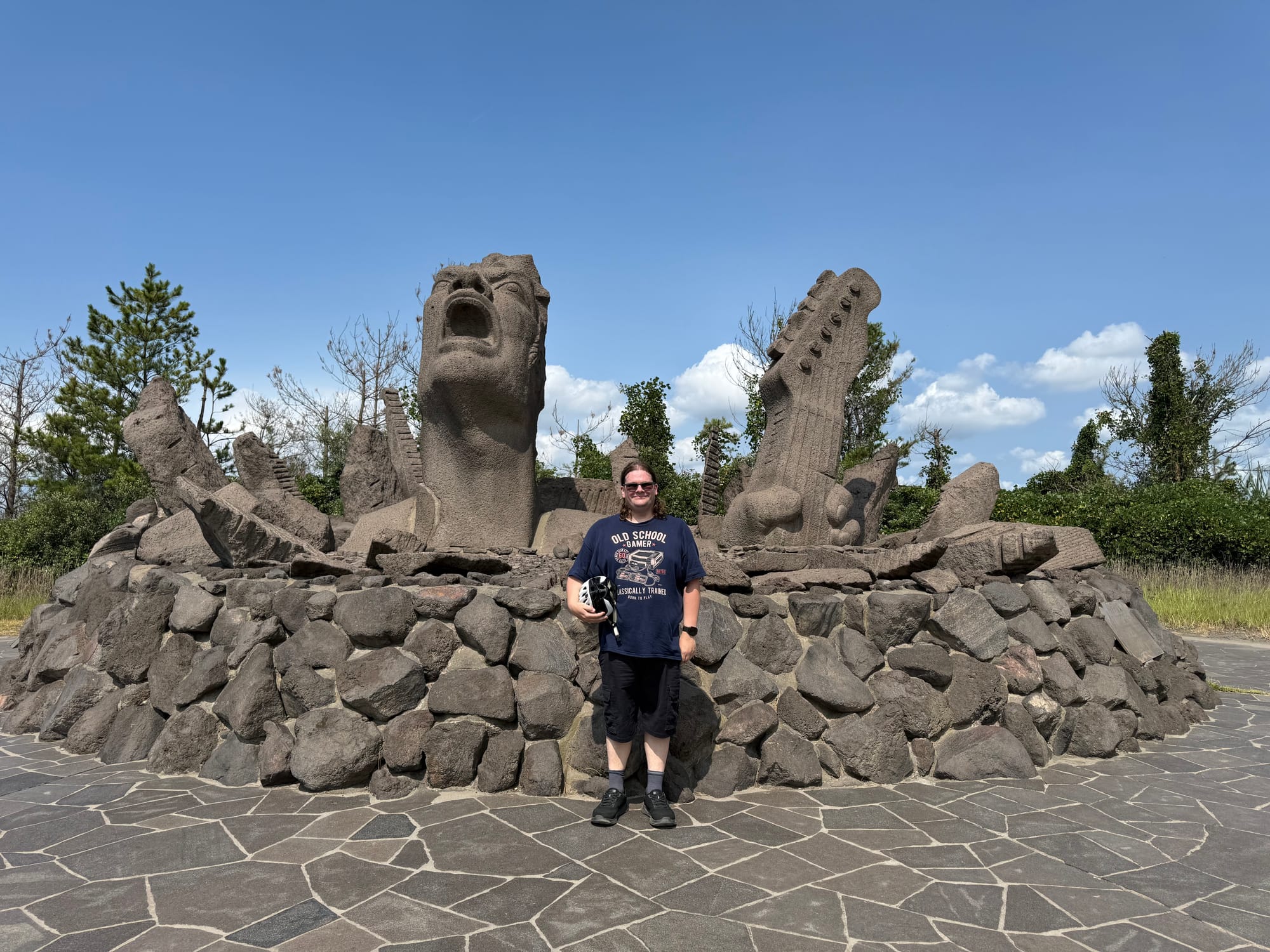
There was also a monument to a famous Japanese artist from Sakurajima known as the ‘Portrait of scream’. It is make from lava rocks and was put up to remember local singer/songwriter Tsuyoshi Nagabuchi who held an all-night rock concert there with an attendance of 75,000 people.
Posing with Portrait of Scream, one of Sakurajima's best-known lava sculptures, created from volcanic rock and inspired by the island's powerful relationship with its active volcano.
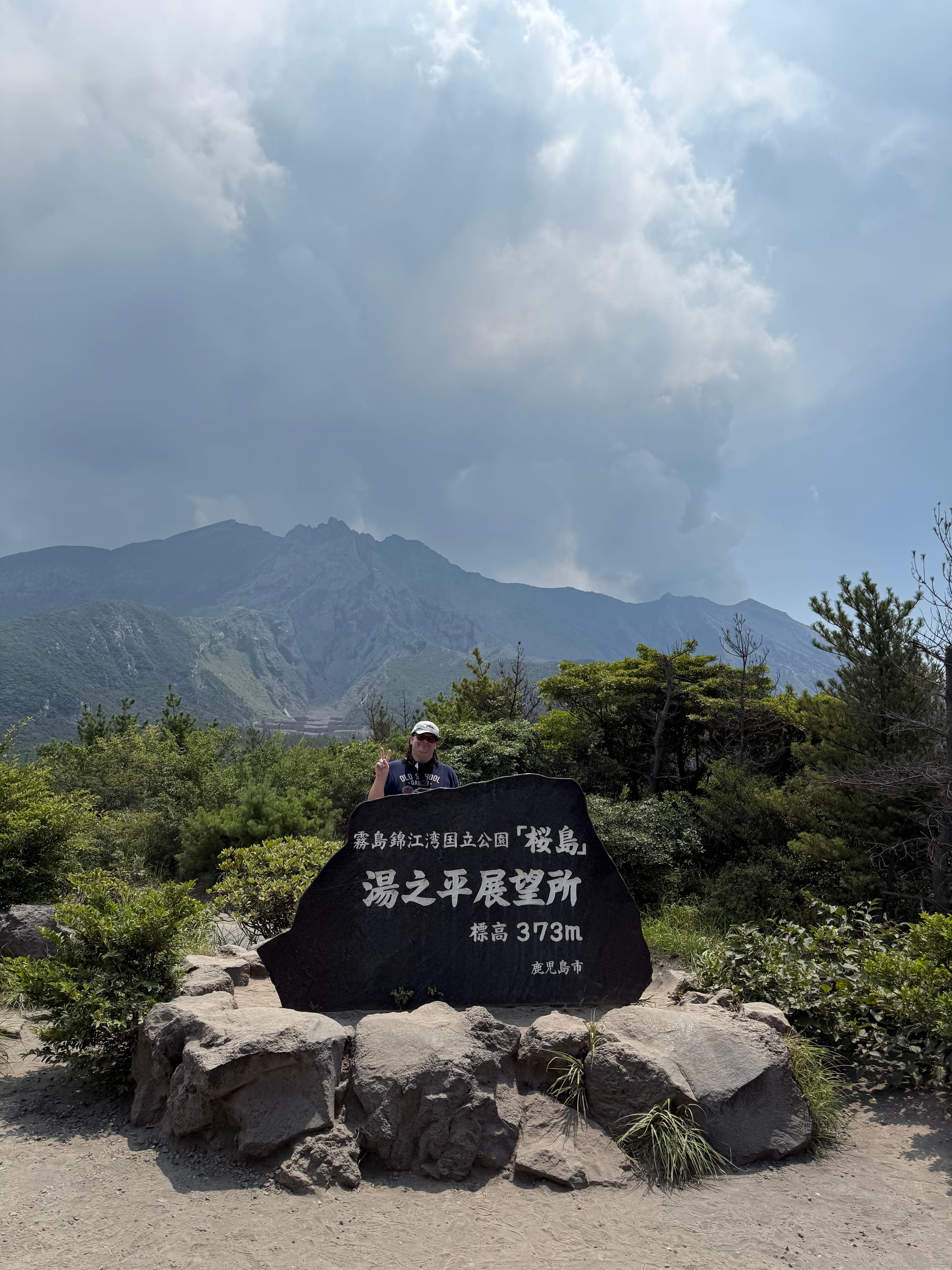
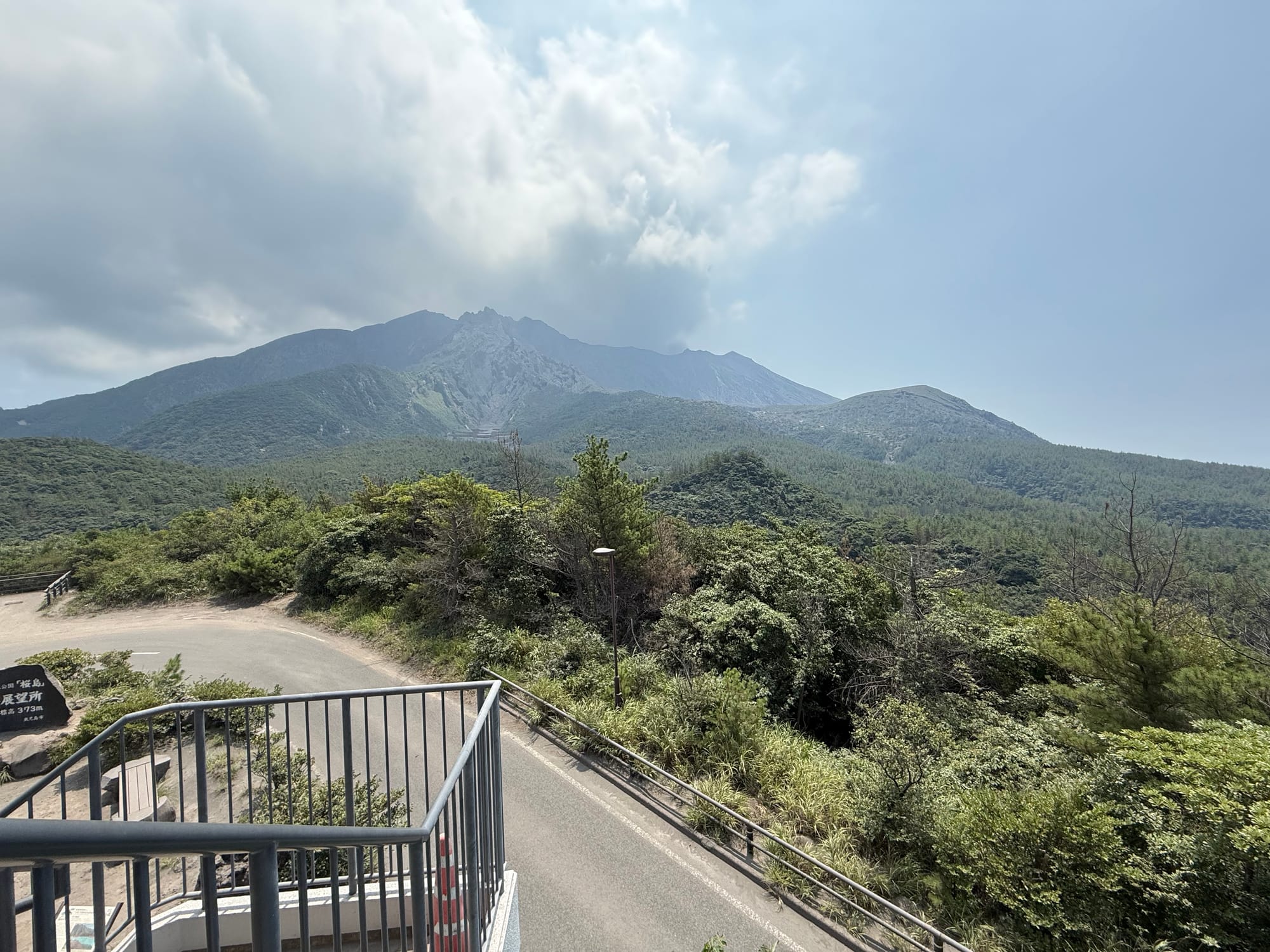
It was a steepish climb up to the observation platform, but it was well worth it as we had very good views of Sakurajima near the 2km exclusion zone.
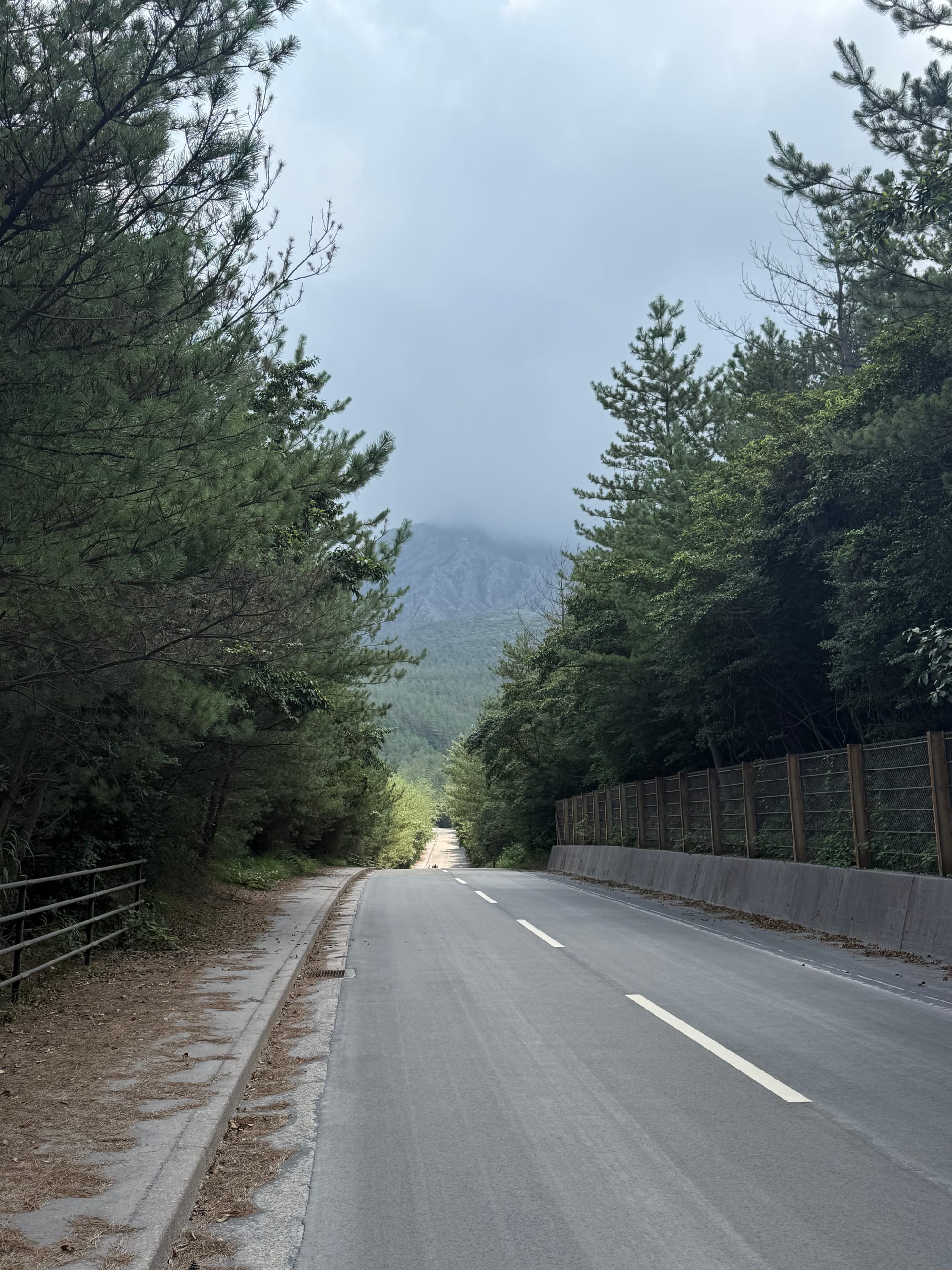
Cycling through Sakurajima's forests, with the road leading towards the volcano while cloud and volcanic haze drift across the upper slopes of the mountain.At Yunohira Observatory, the highest viewpoint accessible on Sakurajima, with dramatic views of the volcano's upper slopes and crater area shaped by ongoing volcanic activity.
Fun Fact: Sakurajima is a complex volcano as it actually has three peaks! The northern peak is called 'Kita-dake' and is the tallest sitting at 1,117 metres high, but this peak if currently inactive as well as it is the oldest. The central peak is called 'Nake-dake' and has an active vent, but doesn't really erupt much. The southern peak is called 'Minami-dake' and has the most active vent that erupts almost constantly.
The view from Yunohira Observatory offers one of the closest public vantage points of Sakurajima's crater area, with forests, lava-shaped slopes and volcanic activity dominating the landscape.The view from Yunohira Observatory stretches across Kagoshima Bay towards the city of Kagoshima, contrasting Sakurajima's rugged volcanic landscape with the urban skyline beyond.
Because of living next to the volcano, the locals who live on the island are used to the ash fall that can happen a fair bit and there is even local government scheme where the locals clean up the ash, put it is bag that are given to them for free and then it is disposed of by the local government, again for free. Additionally, because of the volcano, the island has 2 famous agricultural products, one is the Sakurajima Komikan Oranges, which the cycling host Rento gave a bottle to me, which was really refrashing and delicious and Sakurajima Daikon Radishes, of which the biggest one grew to weight ~30kg.
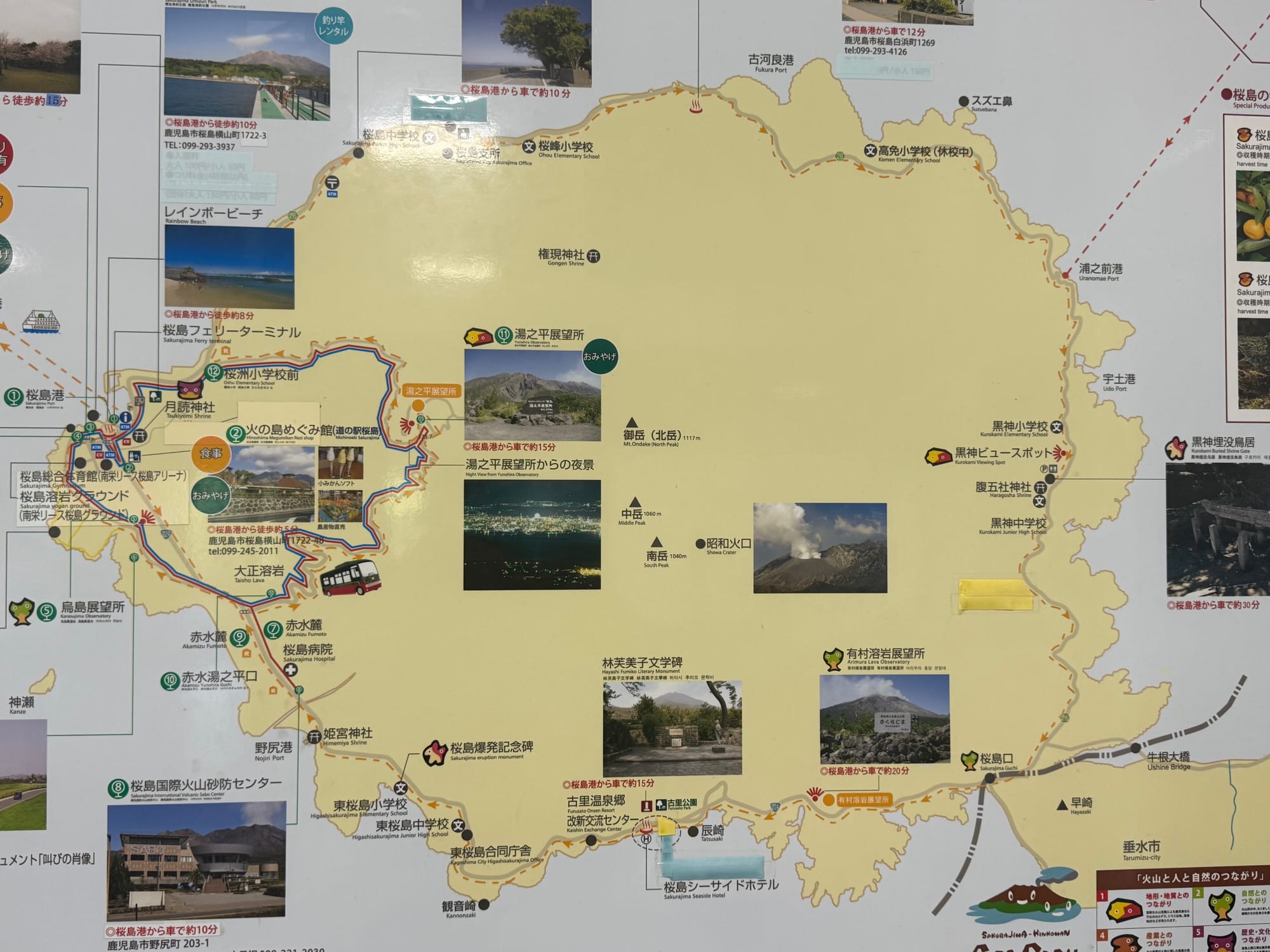
A photo with Rento, my cycling tour guide on Sakurajima, outside the Sakurajima Visitor Centre after exploring the island and learning about its volcanic landscape.A visitor map of Sakurajima highlights the island's roads, observation points and attractions, helping visitors explore one of Japan's most active volcanic landscapes.
The blue line on the map above is the route we took and if you want to go on this amazing 3 hour experience yourself then please click the link: Sakurajima Century Lava Climb Journey with E-bike. It was well worth it and it only cost me £62.58, which is well worth it for the knowledge and everything you get on the journey.
Volcanic ash collected along a roadside on Sakurajima, a reminder of the island's active volcano and the regular ash fall experienced by local residents.
Looking at the picture above, you might be thinking that the ground is discoloured, but in face it is actually some black ash, which is a reminder of how far the volcano can reach.
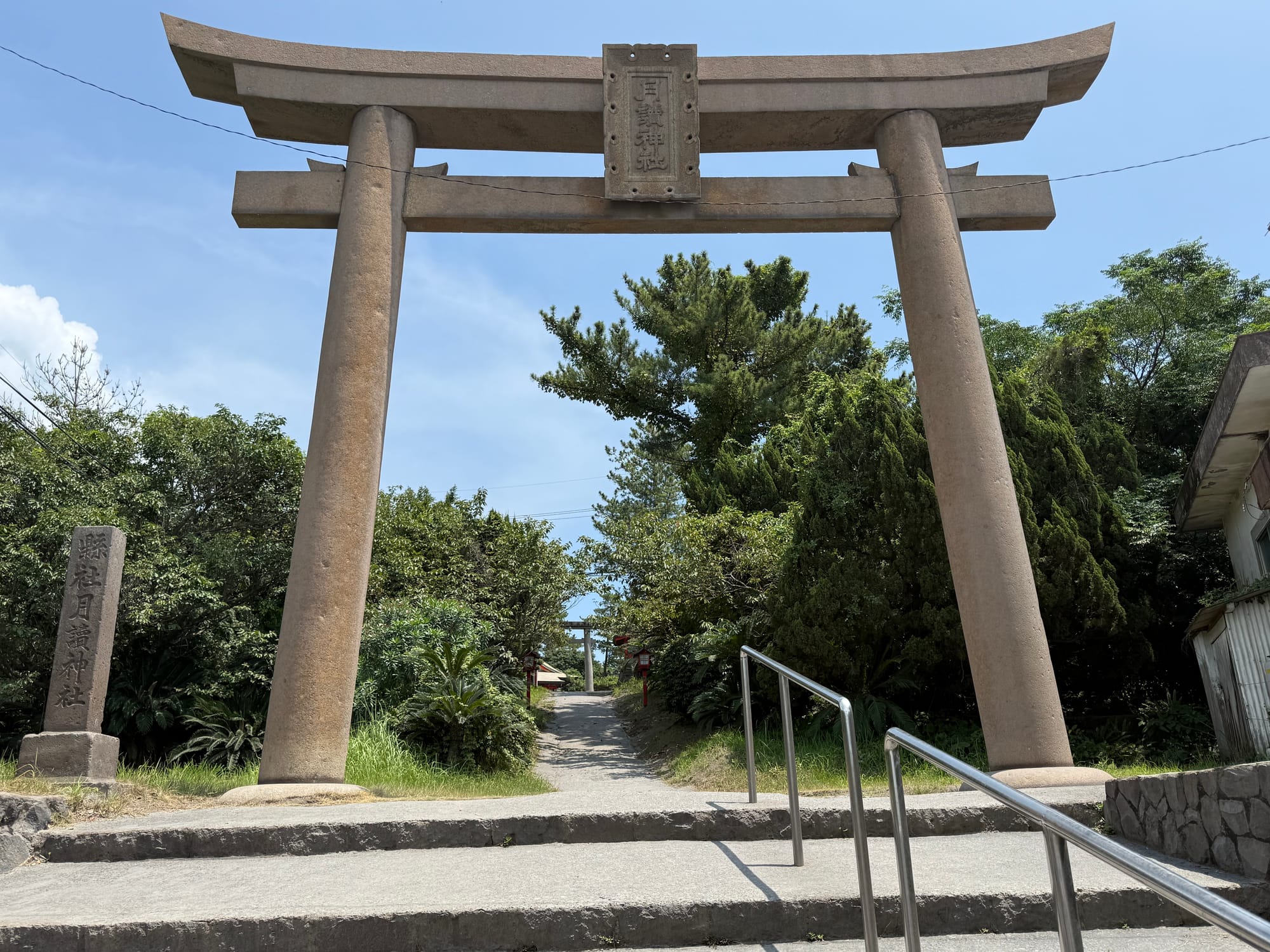
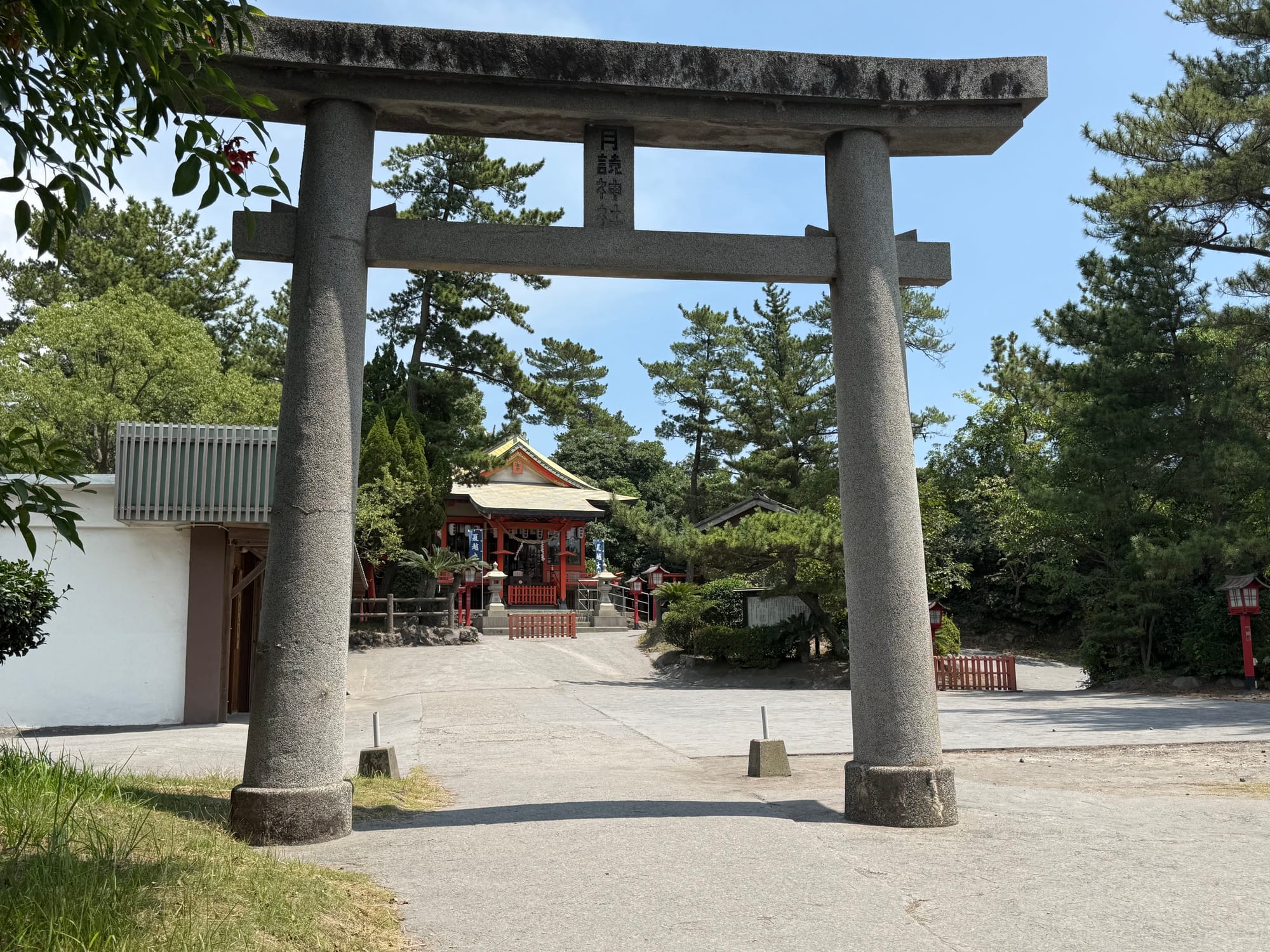
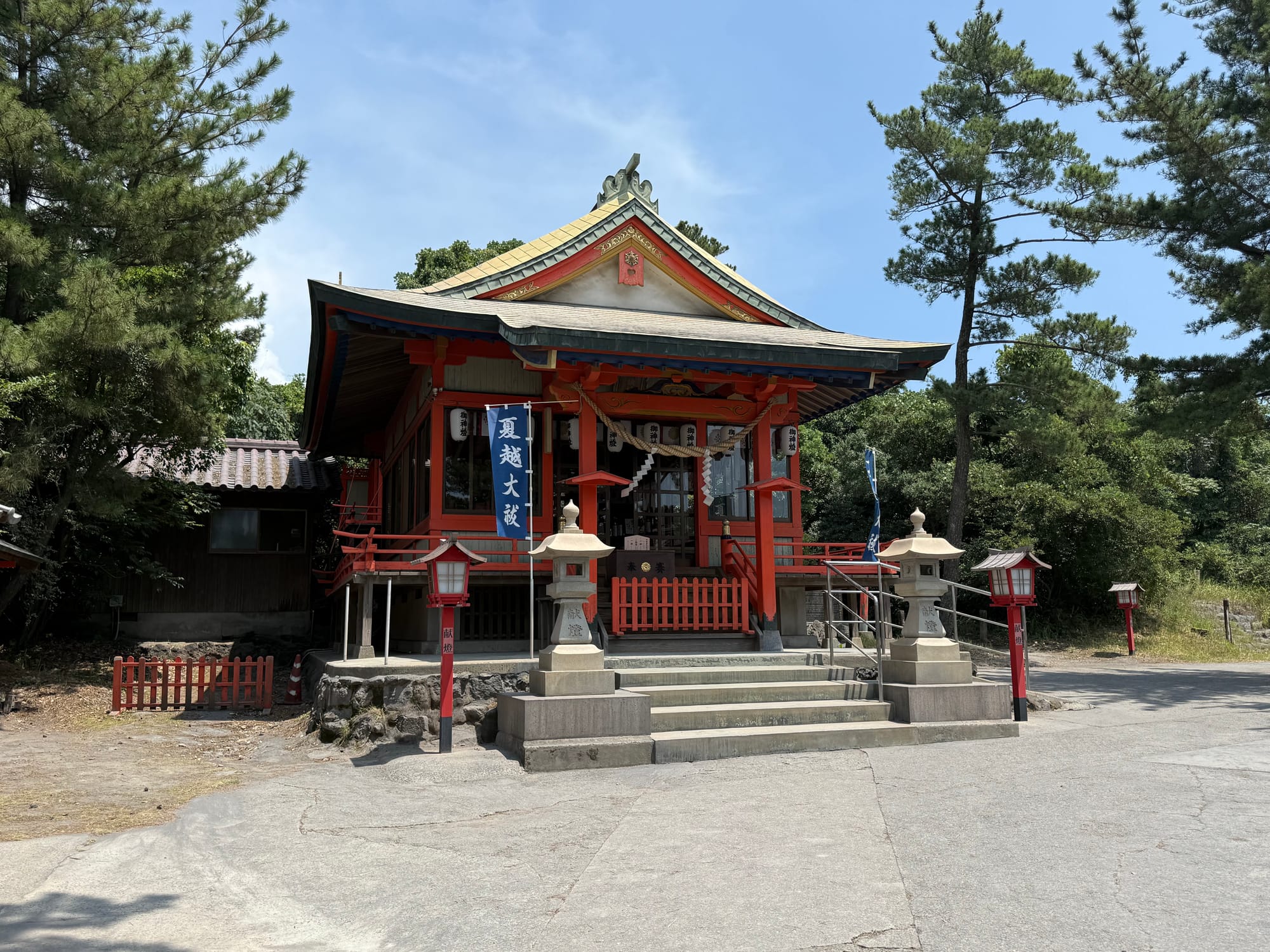
My next stop was the Tsukiyomi shrine, which has been moved a number of times over the years and found its current stop in 1940 (15th year of the Showa period), especially after their sacred treasure was buried in lava back in 1914 (3rd year of the Taisho period).
The entrance torii of Tsukiyomi Shrine on Sakurajima marks the approach to one of the island's most important Shinto shrines, set among lush greenery at the foot of the volcano.Looking through a torii gate towards the main buildings of Tsukiyomi Shrine, a historic Shinto shrine on Sakurajima that has served the local community for centuries.The main hall of Tsukiyomi Shrine on Sakurajima stands among pine trees and traditional stone lanterns, serving as an important place of worship on the volcanic island.
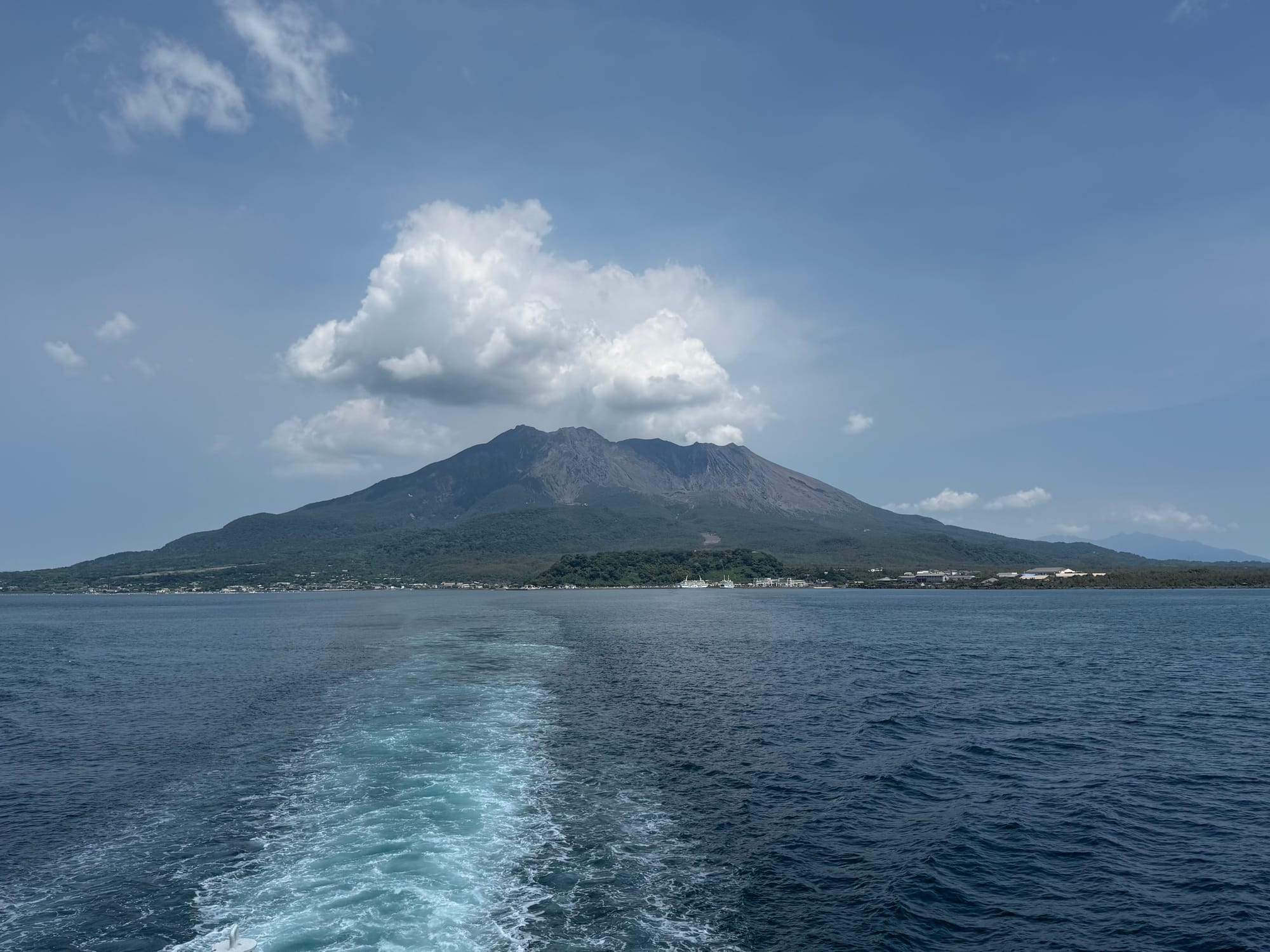
After this it was time to catch the ferry back to Kagoshima, which runs 24 hours a day 7 days a week and is a way for residents of Sakurajima island to evacuate in case of a major eruption.
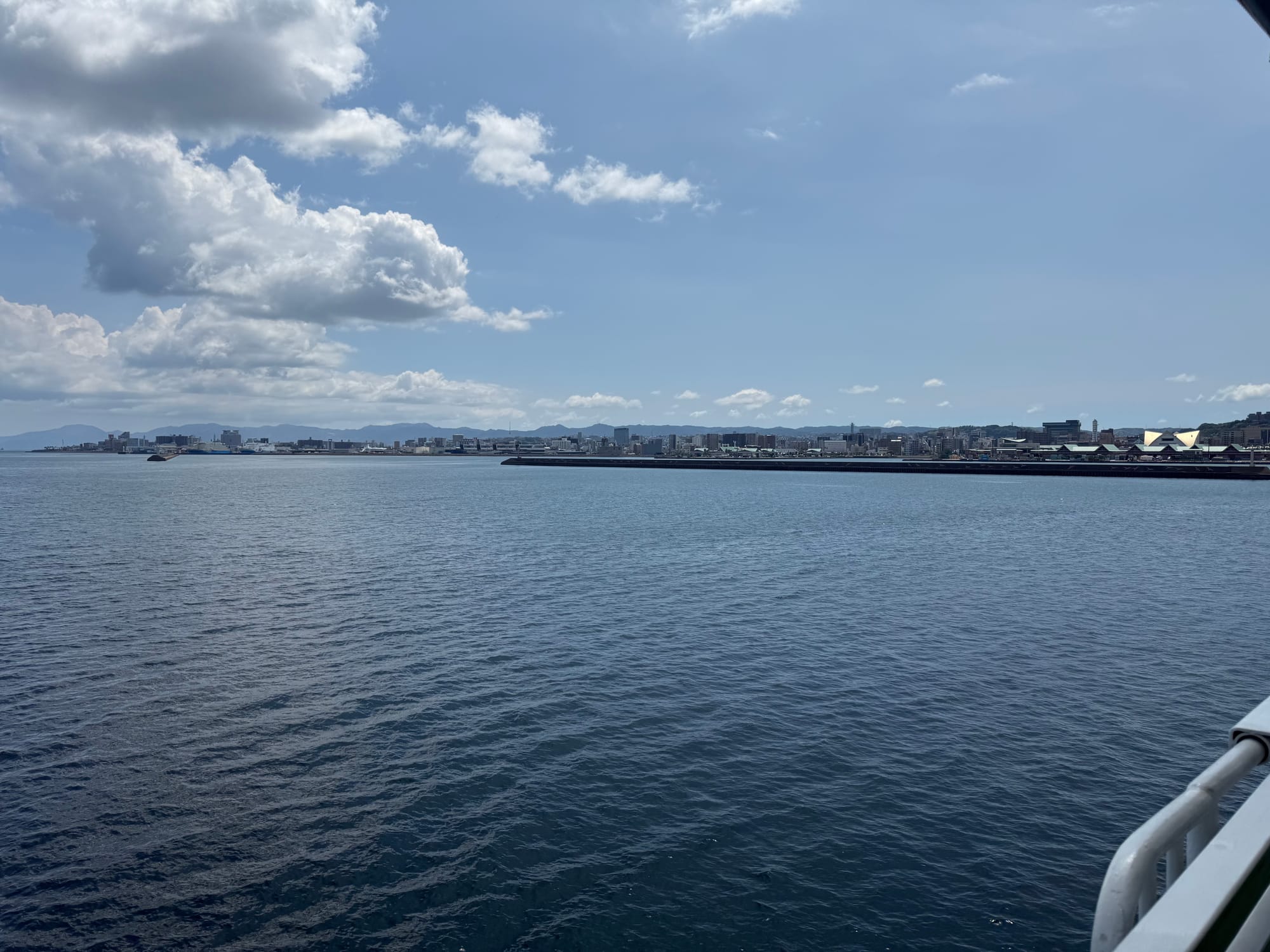
Leaving Sakurajima by ferry, with a final view of the volcano rising above Kagoshima Bay after a day spent exploring the island's dramatic volcanic landscapes.Crossing Kagoshima Bay by ferry, with the city skyline coming into view after a day exploring Sakurajima and its remarkable volcanic landscape.
Spirit of the Samurai
24th July
Today was based on the legend of the last samurai, now you might be thinking of Ken Watanabe and Tom Cruise right now, well the film 'The Last Samurai', is loosely based on the real last Samurai who is called Saigō Takamori, but first, some breakfast
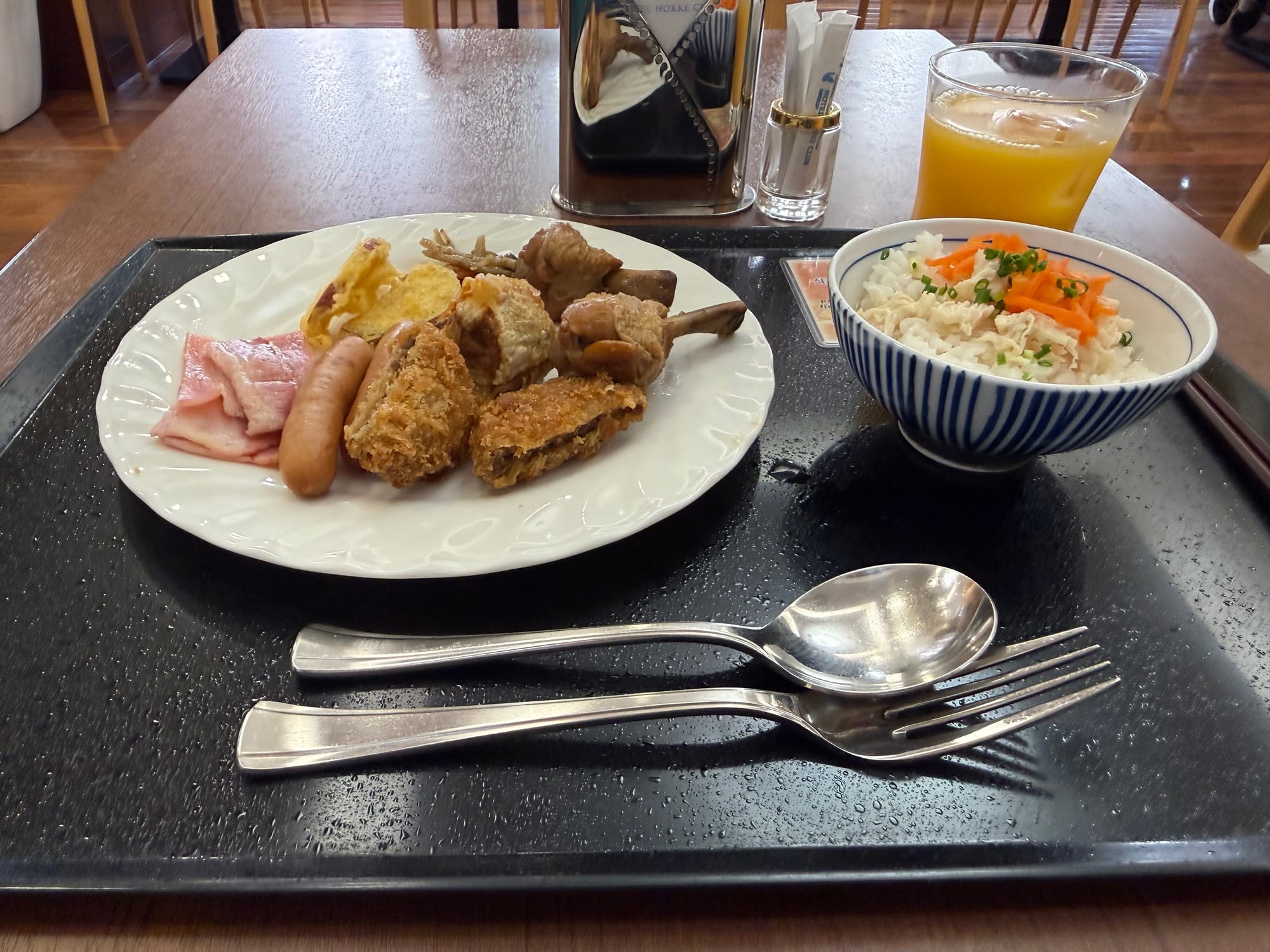
A hearty breakfast at Hotel Hokke Club Kagoshima, sampling a mix of Japanese and Western-style dishes before another day of exploring southern Kyushu.
There is bacon, hot dog sausages, sweet potato tempura, daikon at the back, pork cutlet, chicken drumsticks and rice with a soup that I can't remember (it isn't Miso) and some chicken, green onion and carrot on top. There was also chocolate mouse for desert.
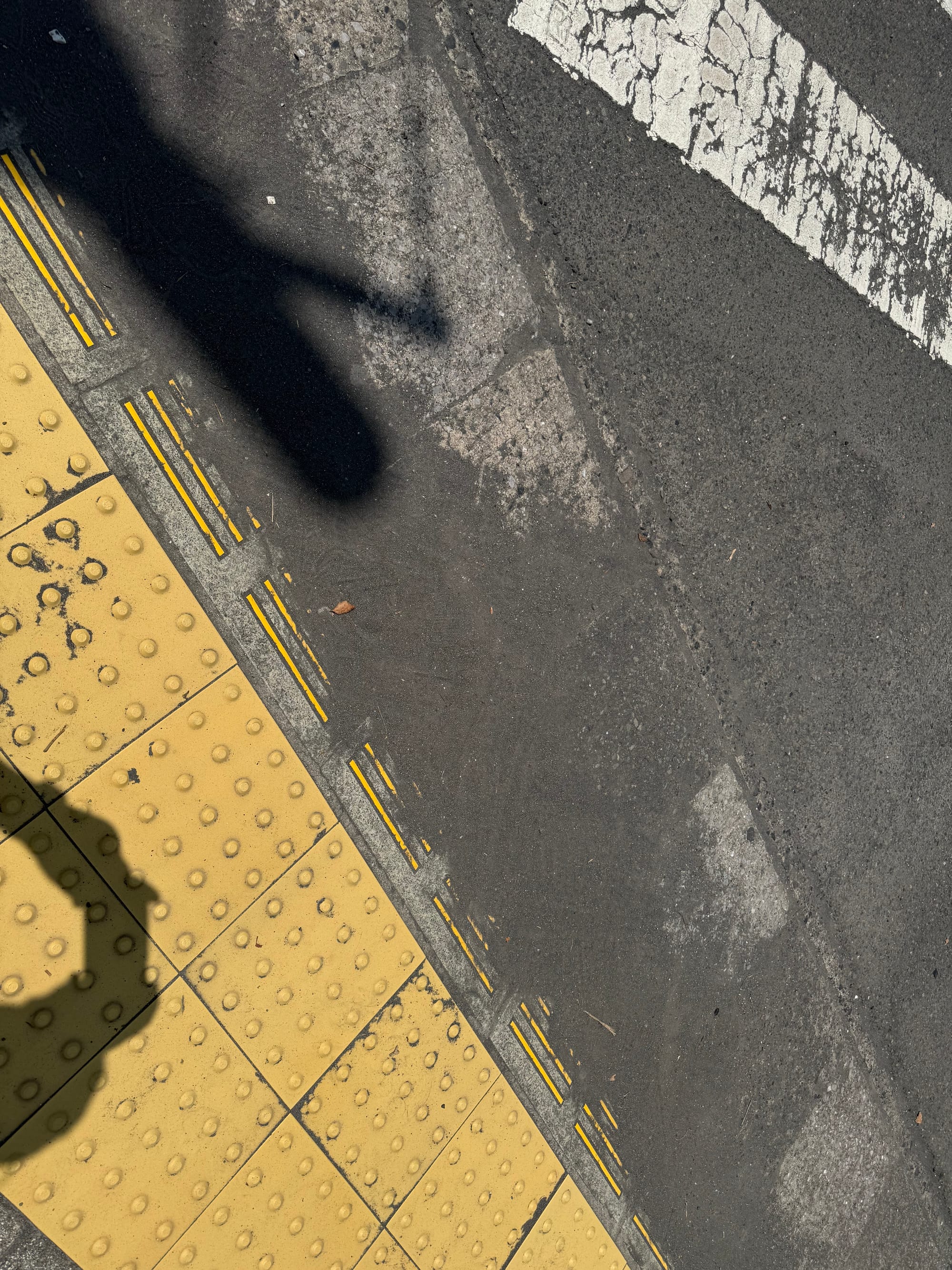
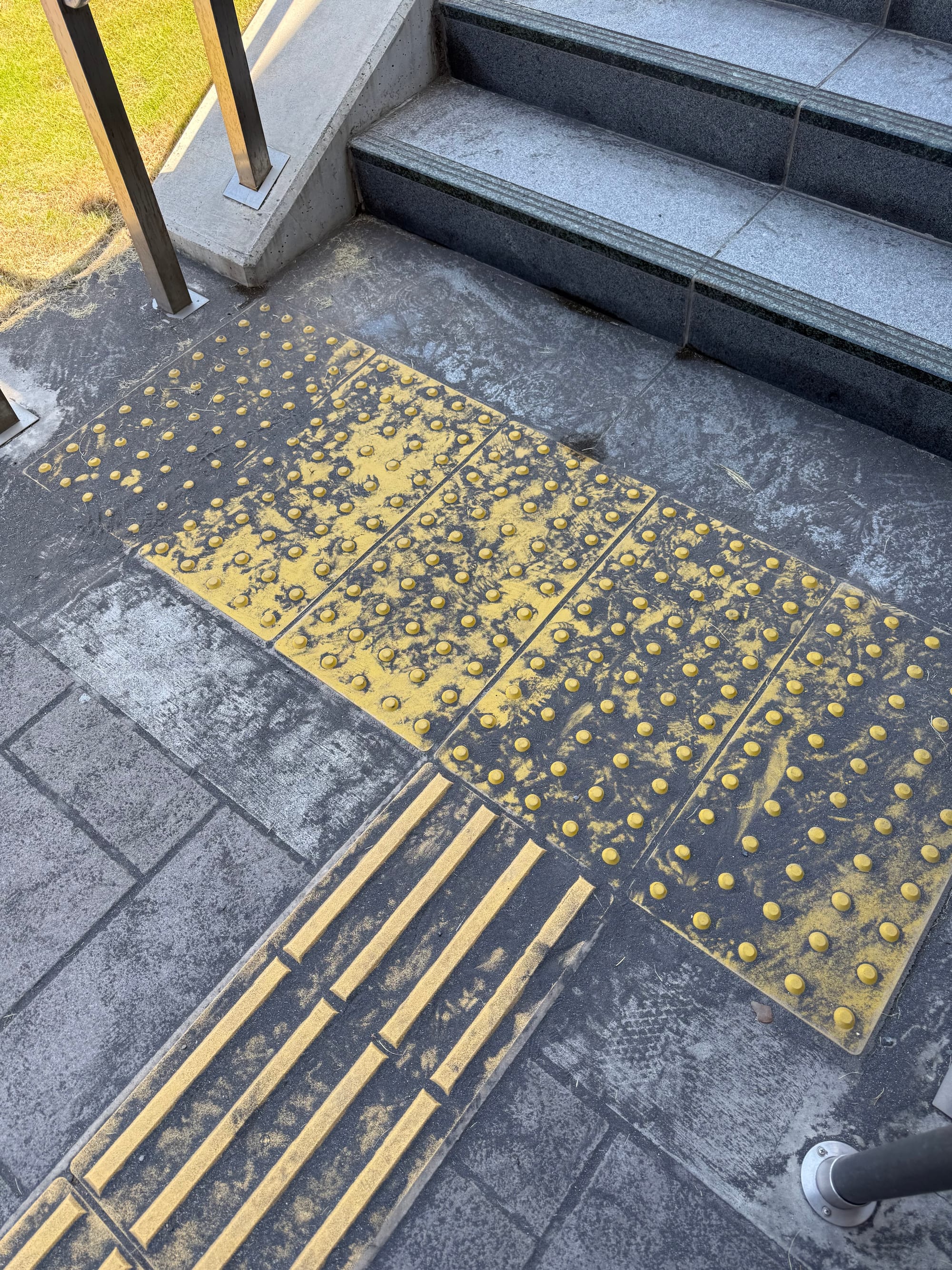
A quick reminder of the ash from yesterday, but it is also here as well.
Volcanic ash from nearby Sakurajima settles on the tactile paving outside Sengan-en Station, providing a visible reminder of the volcano's constant influence on daily life in Kagoshima.
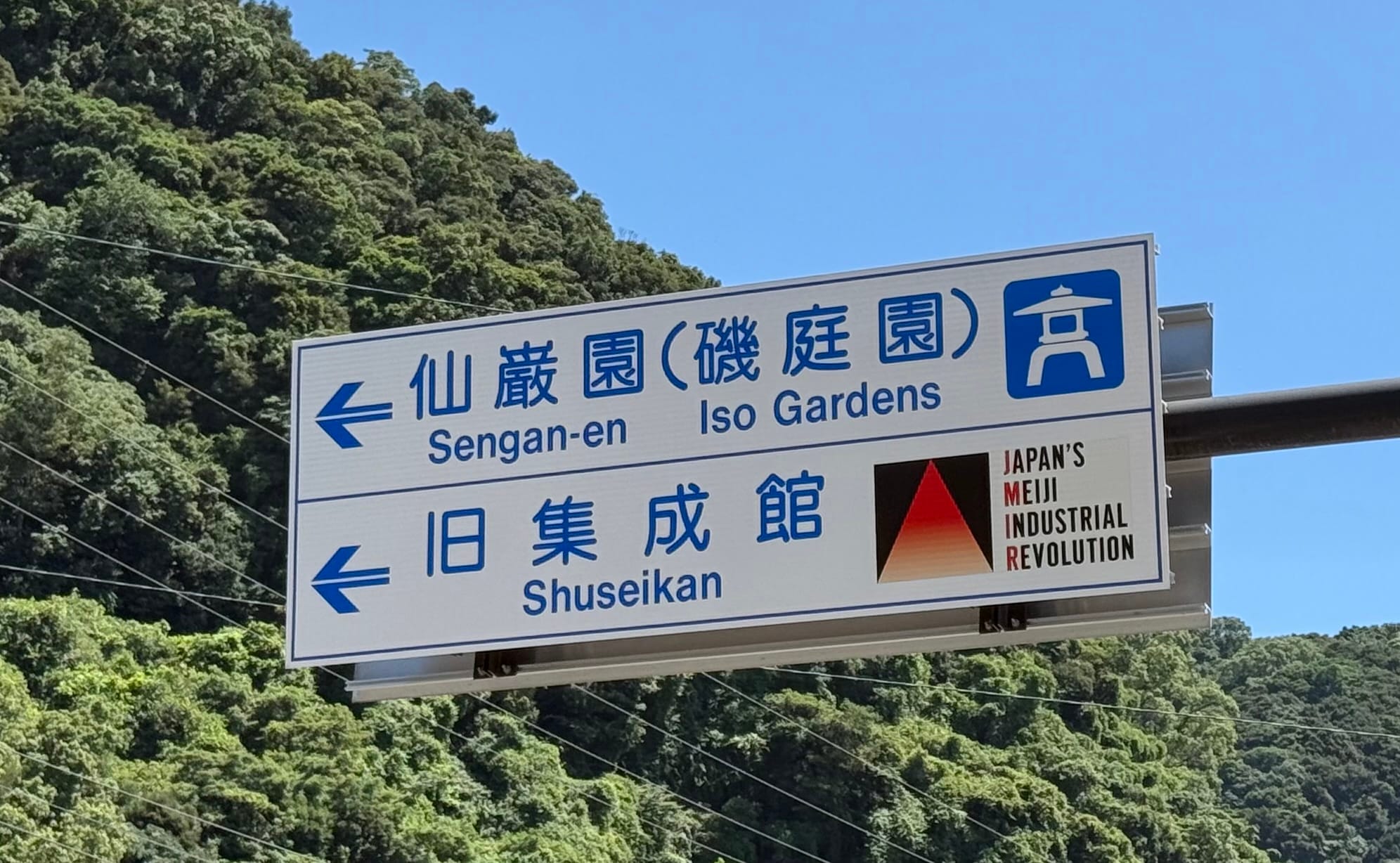
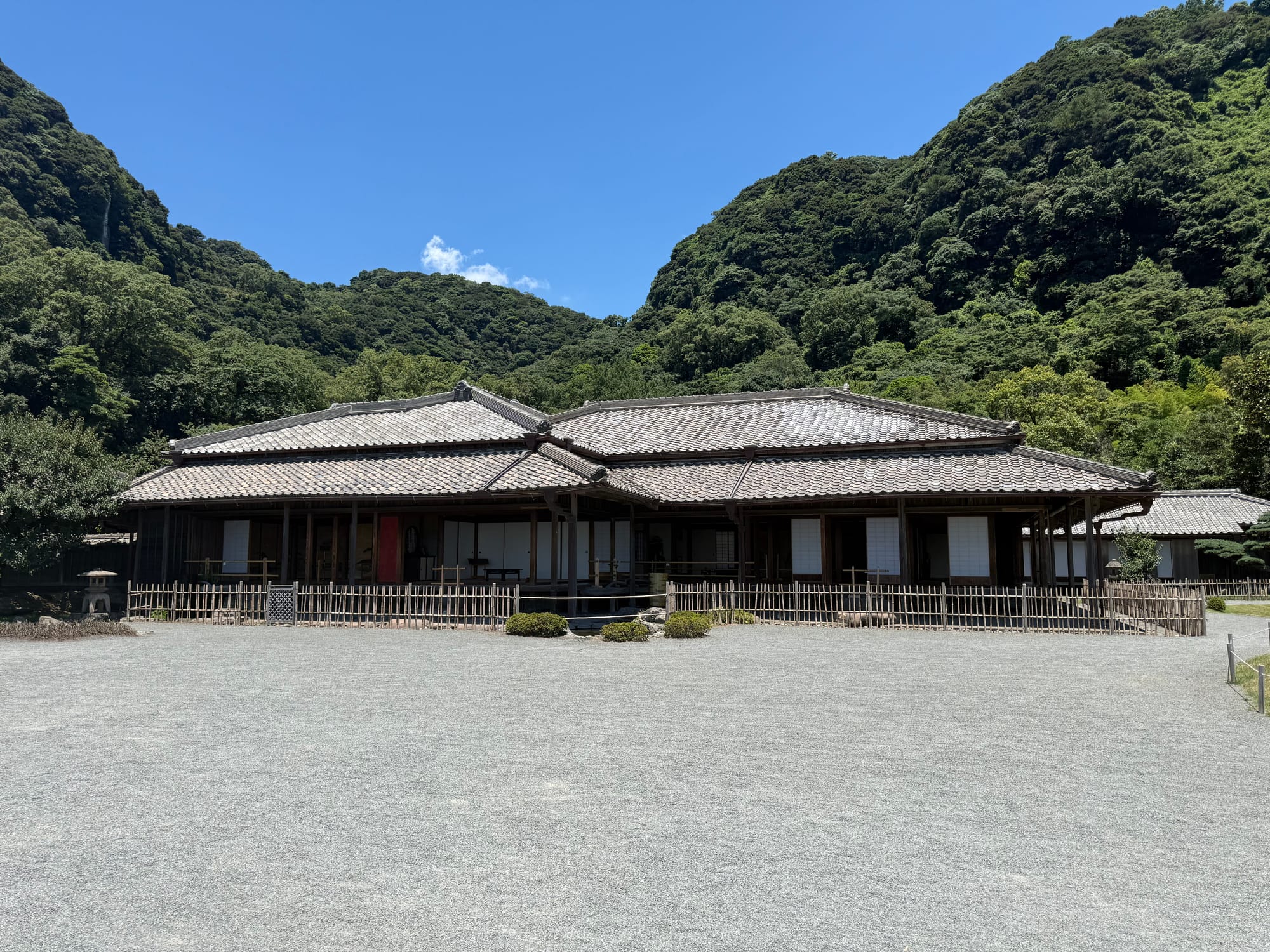
My first port of call is a place called Sengan-en. This is the former residence of the Shimazu Clan. It is also a UNSECO World Heritage Site as it was a key player in the Meiji industrial revolution
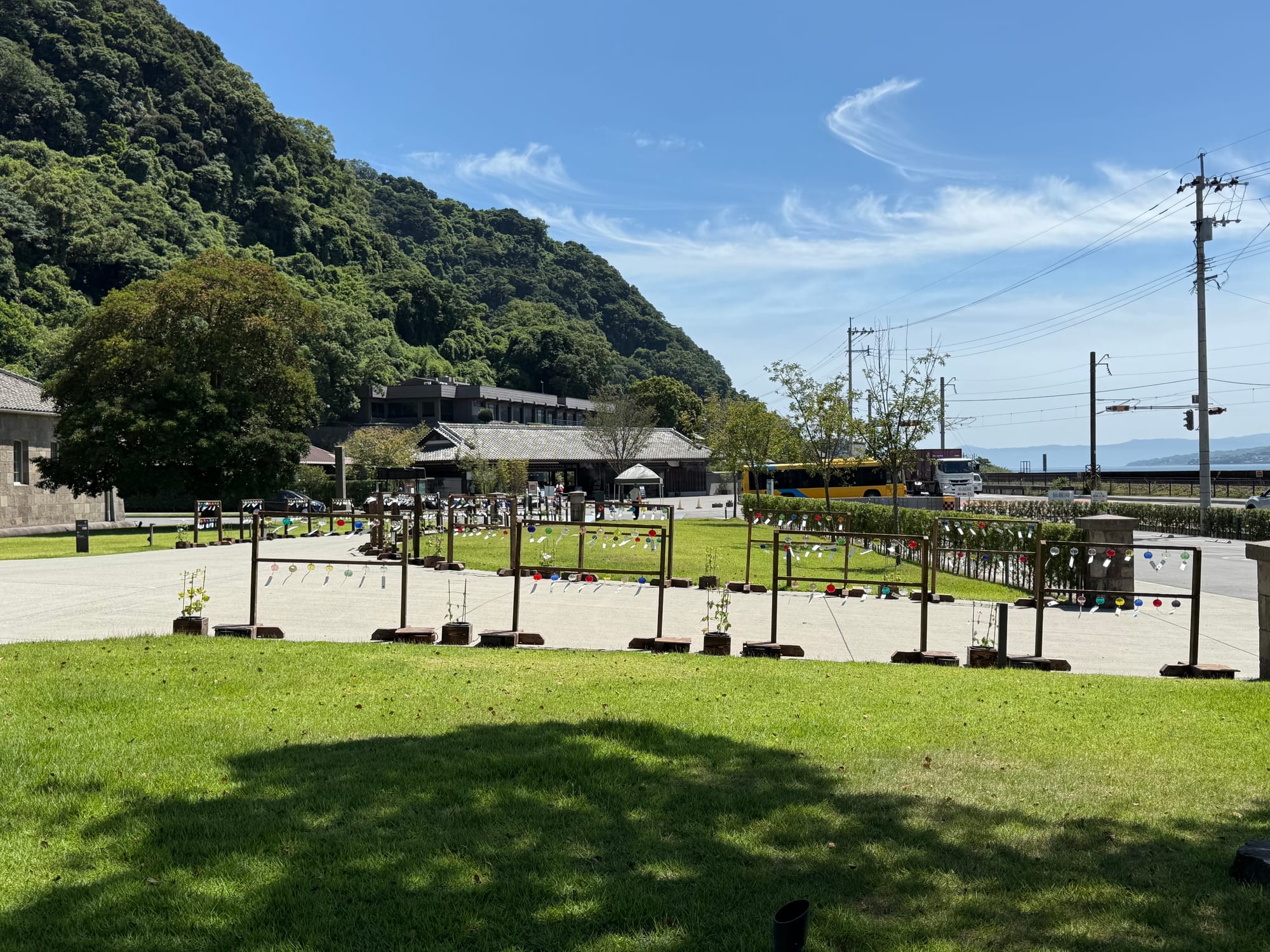
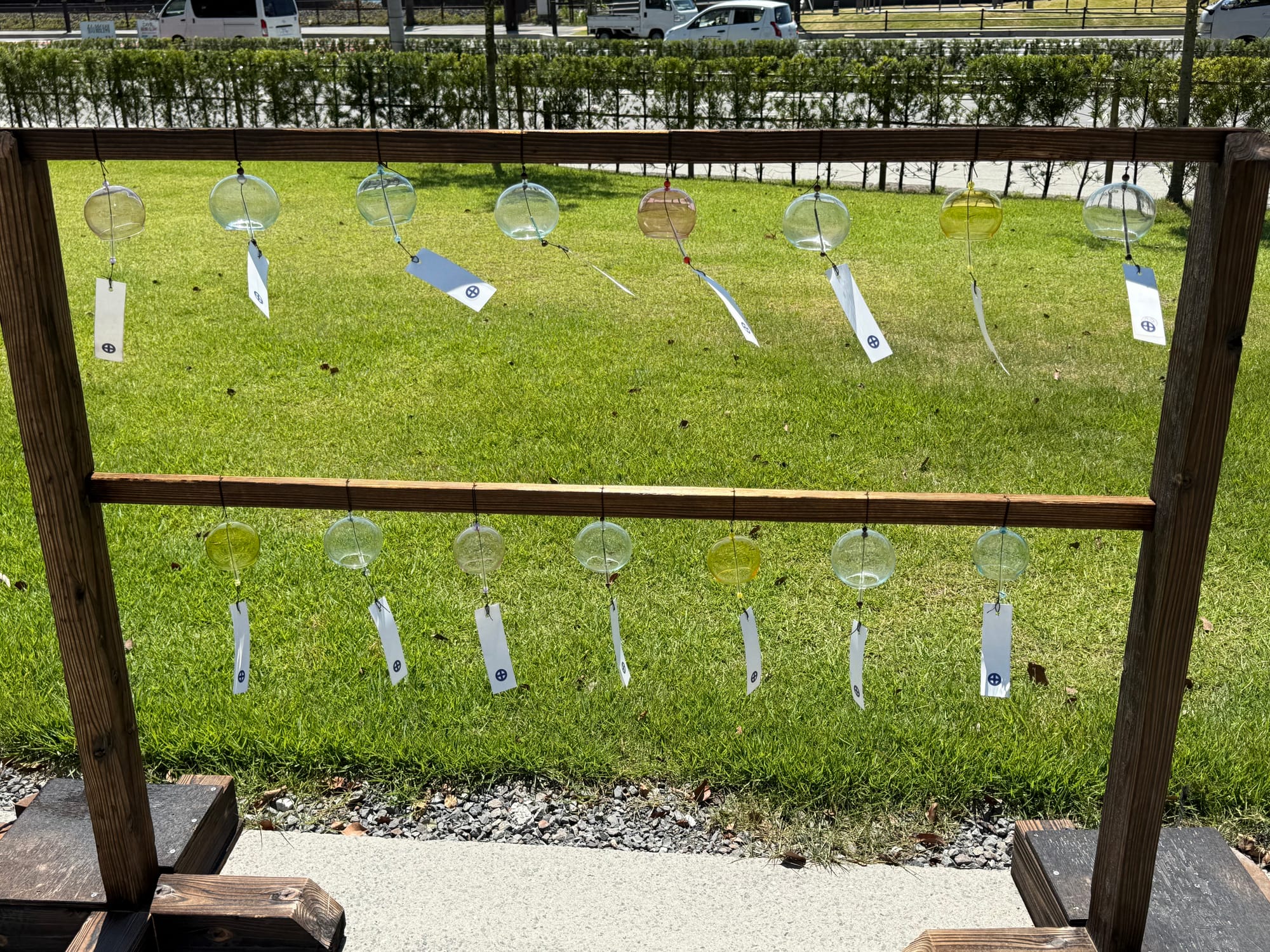
A sign points the way to Sengan-en and the Shuseikan museum, part of the UNESCO-listed Sites of Japan's Meiji Industrial Revolution in Kagoshima.The grounds outside Sengan-en combine landscaped gardens, historic buildings and views across Kagoshima Bay, set against the lush hills surrounding this famous estate.Delicate glass wind chimes at Sengan-en add colour and gentle sound to the gardens, reflecting a traditional Japanese symbol of summer.
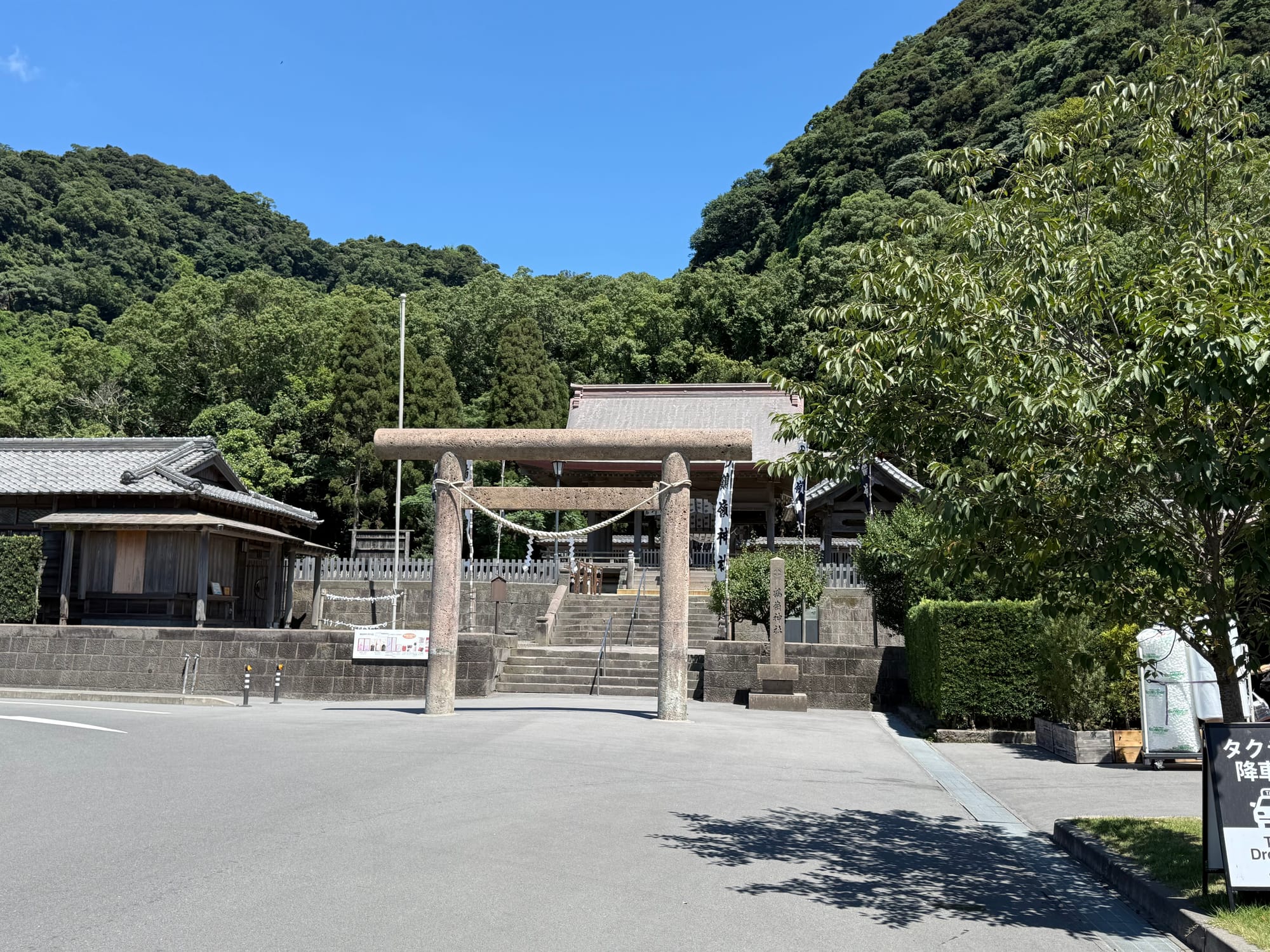
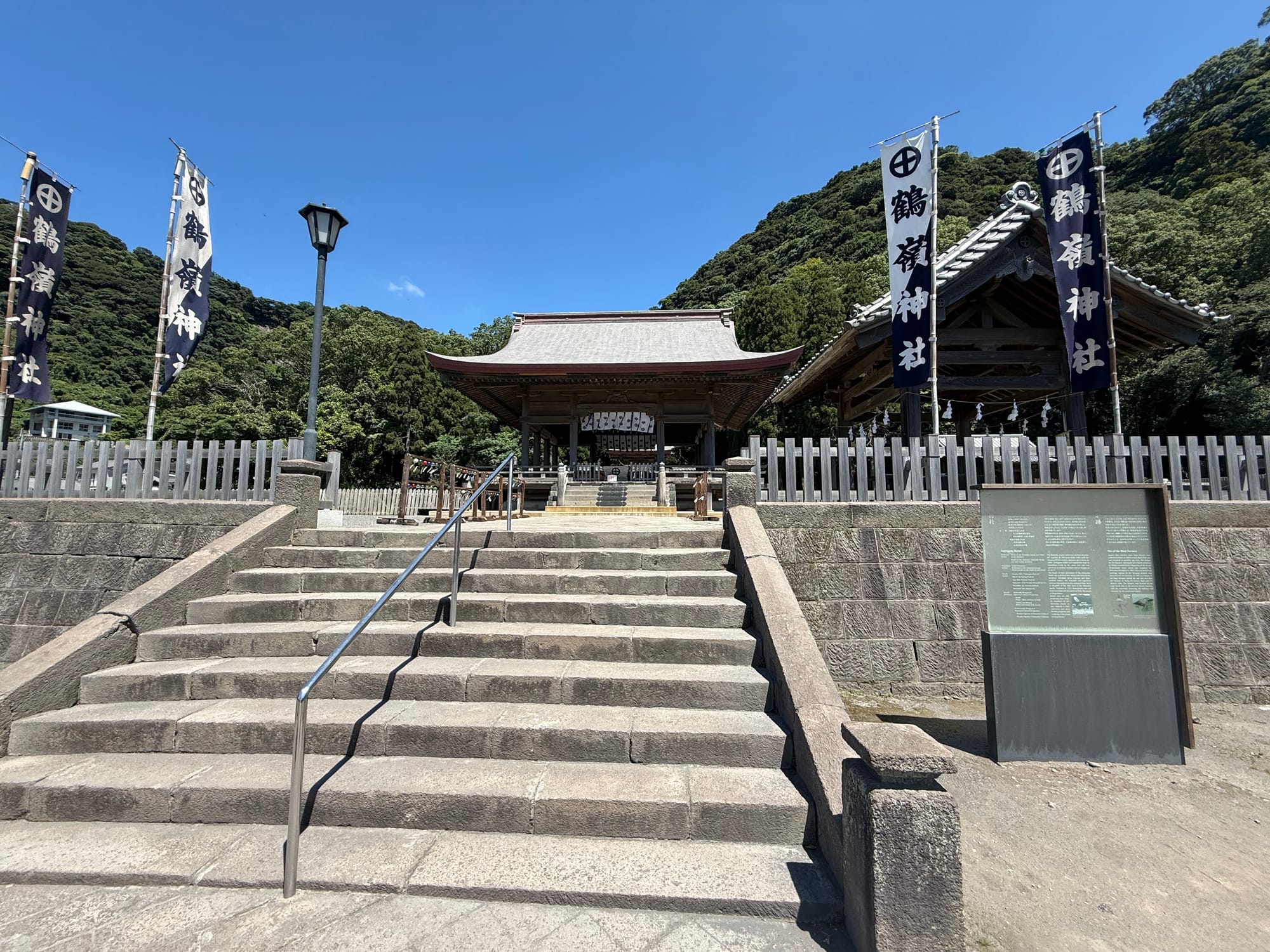
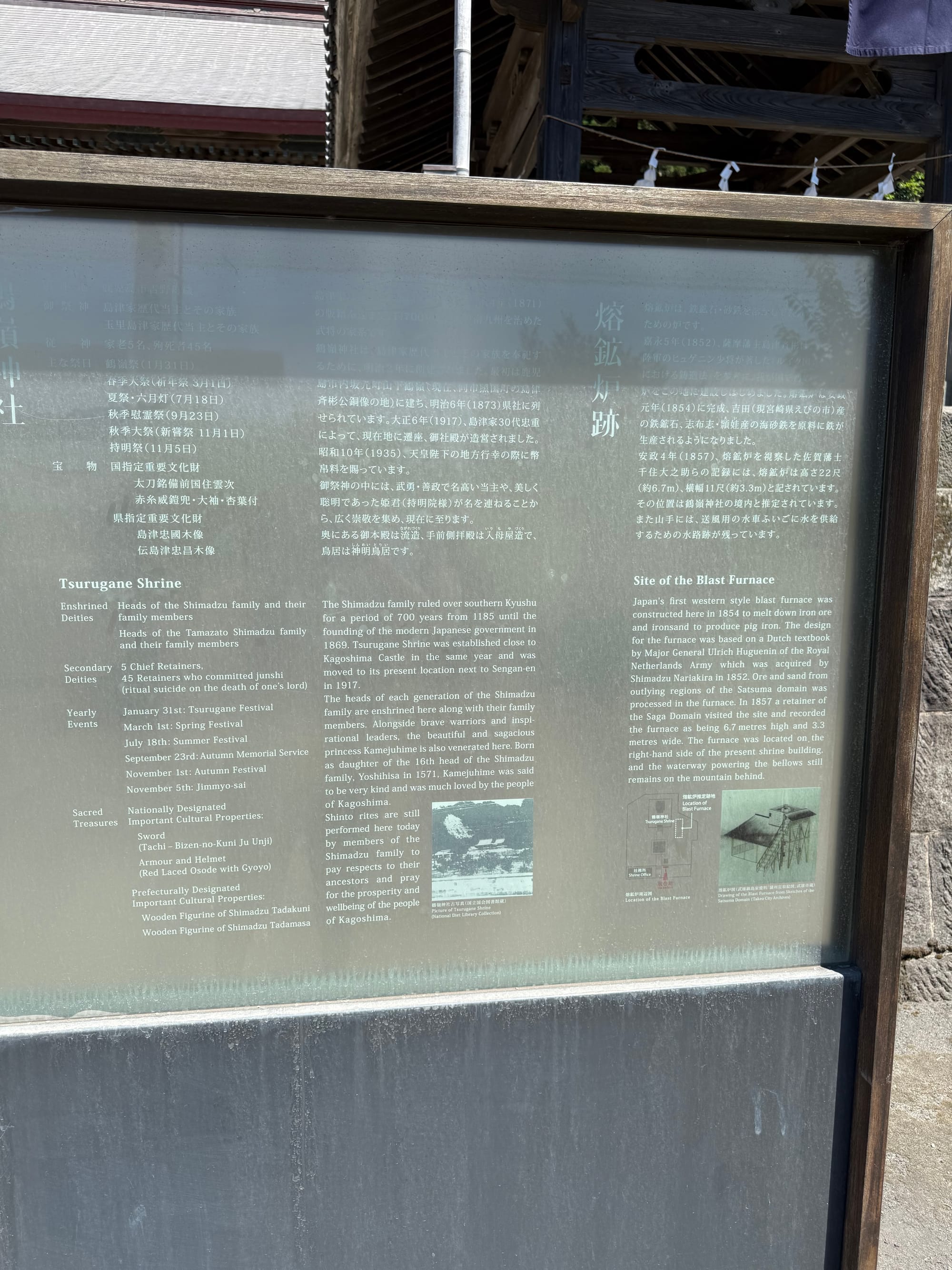
Before entering, I decided to take a quick visit to the local shrine, and right next to it is where Japans first western style blast furnace was placed
A torii gate marks the entrance to a Shinto shrine within the Sengan-en estate, where traditional architecture sits against the lush hills overlooking Kagoshima Bay.Tsurugane Shrine stands within the Sengan-en estate in Kagoshima, surrounded by lush hills and traditional architecture that reflect the region's rich cultural and spiritual heritage.An information display at Tsurugane Shrine outlines the shrine's connection to the Shimadzu family and highlights the nearby remains of Japan's first Western-style blast furnace, part of Kagoshima's industrial heritage.
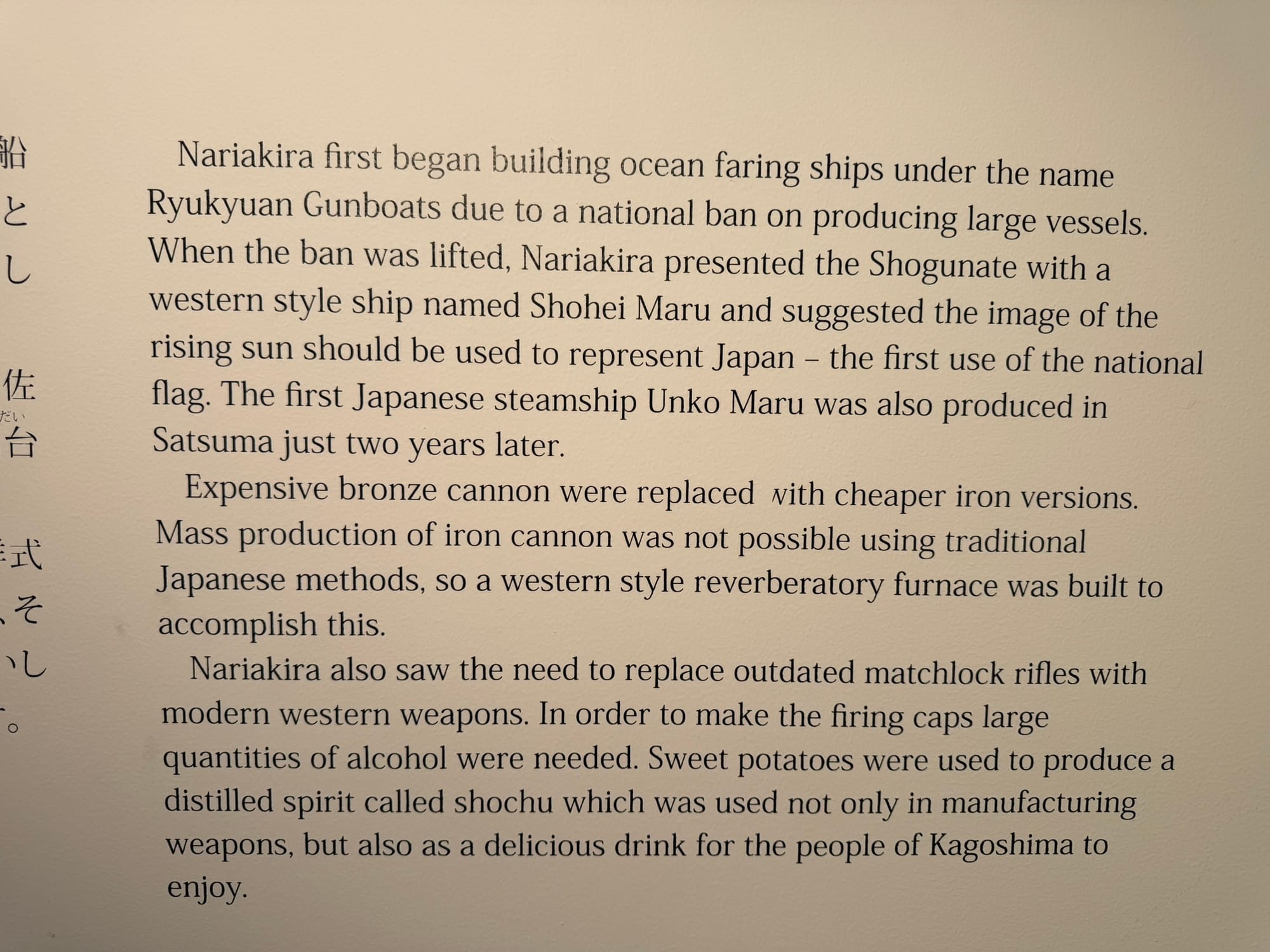
After entering Sengan-en, which cost ¥1600, I entered the first building which went over some of the history. It is quite interesting how they saw how powerful the western forces were in the Opium wars in China and were afraid that the same was going to happen to them, so they invited people from western nations across to learn from them and make more powerful weapons to defend themselves.
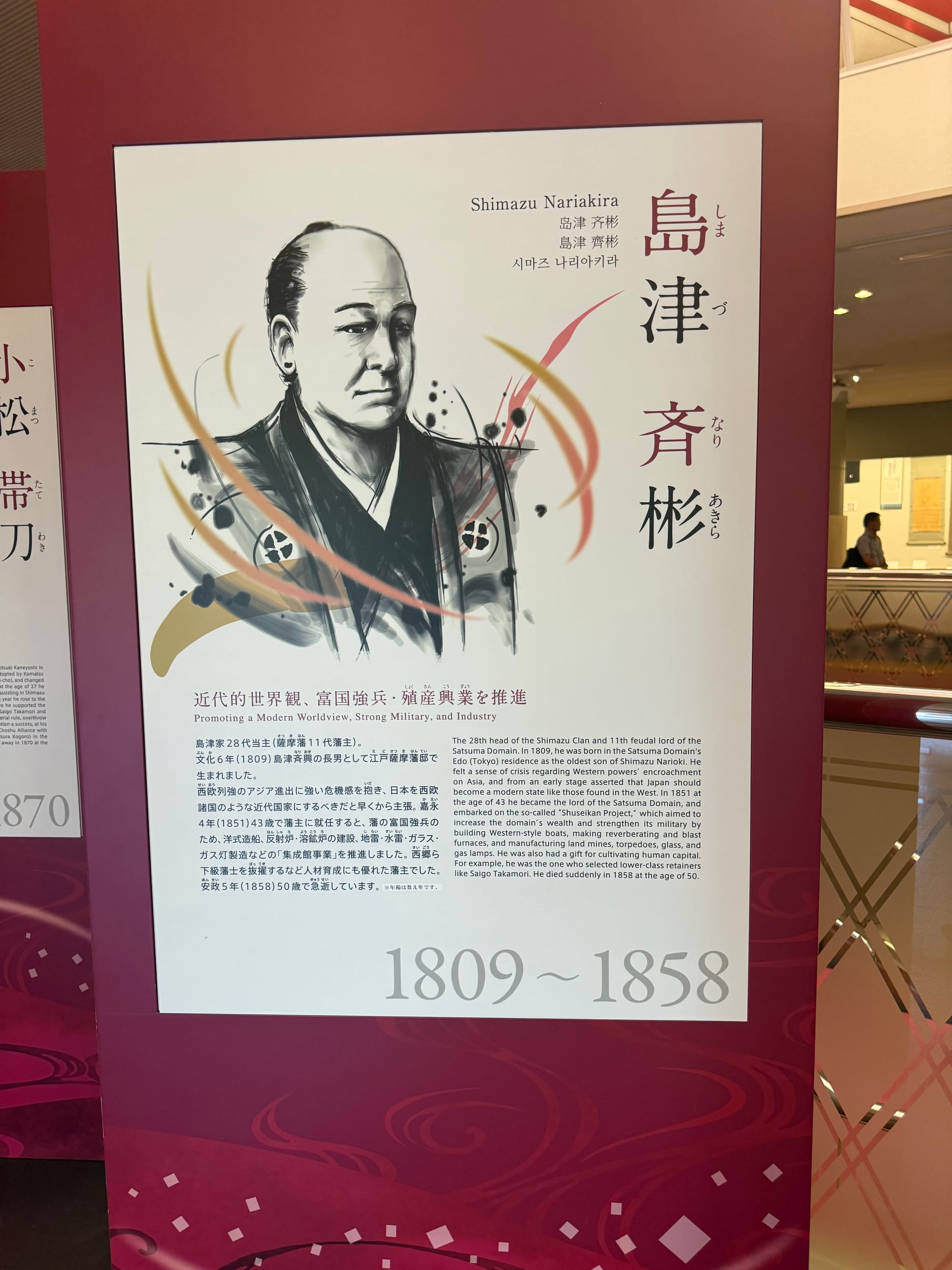
An exhibit at Sengan-en highlights the industrial innovations of Shimazu Nariakira, whose modernisation efforts helped shape Kagoshima's role in Japan's Meiji-era transformation.
I also find it quite funny that Shochu, which is a popular drink in Japan, was made in vast quantities, not only to address rice shortages, but also to make alcohol for firing caps.
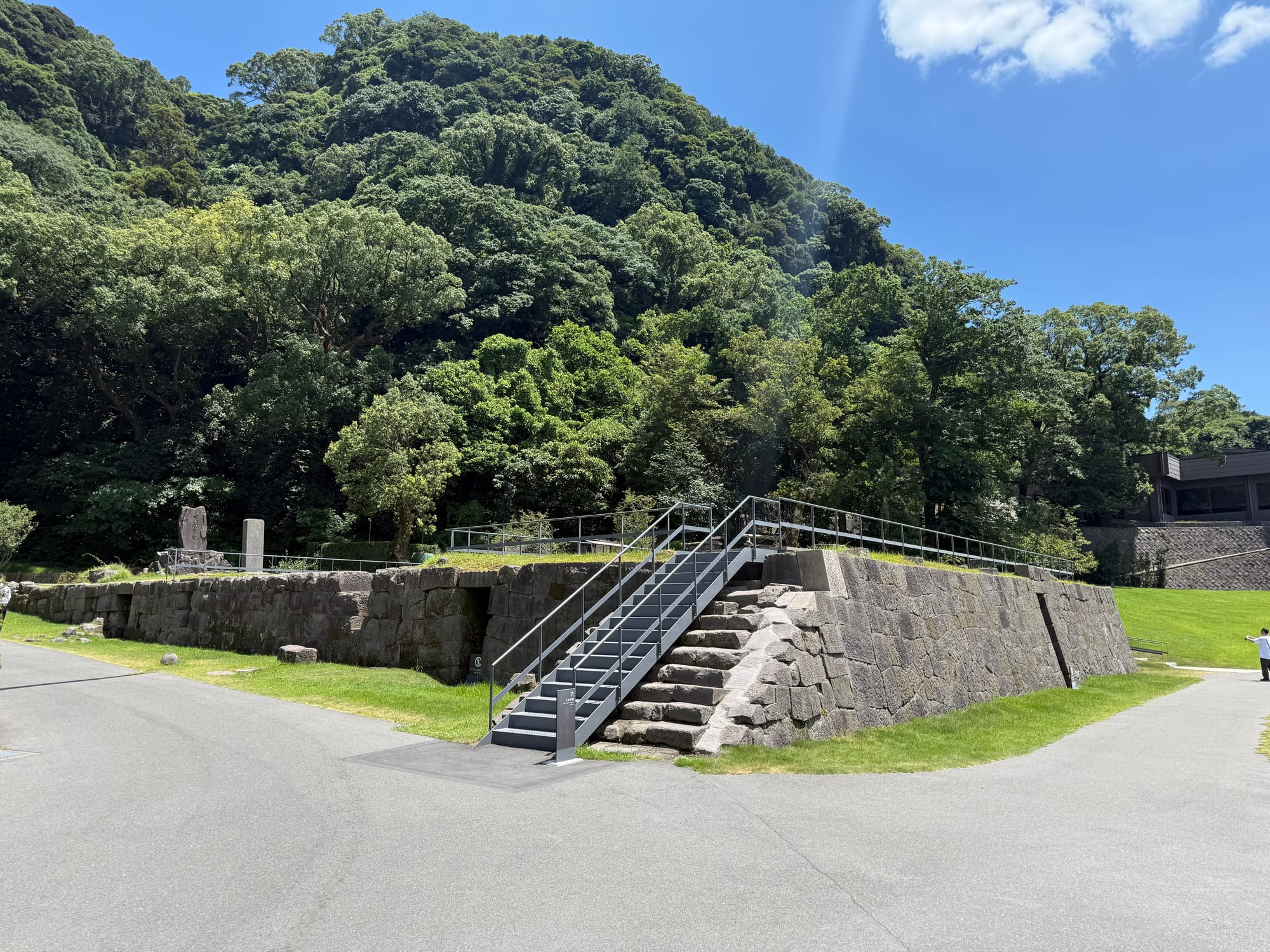
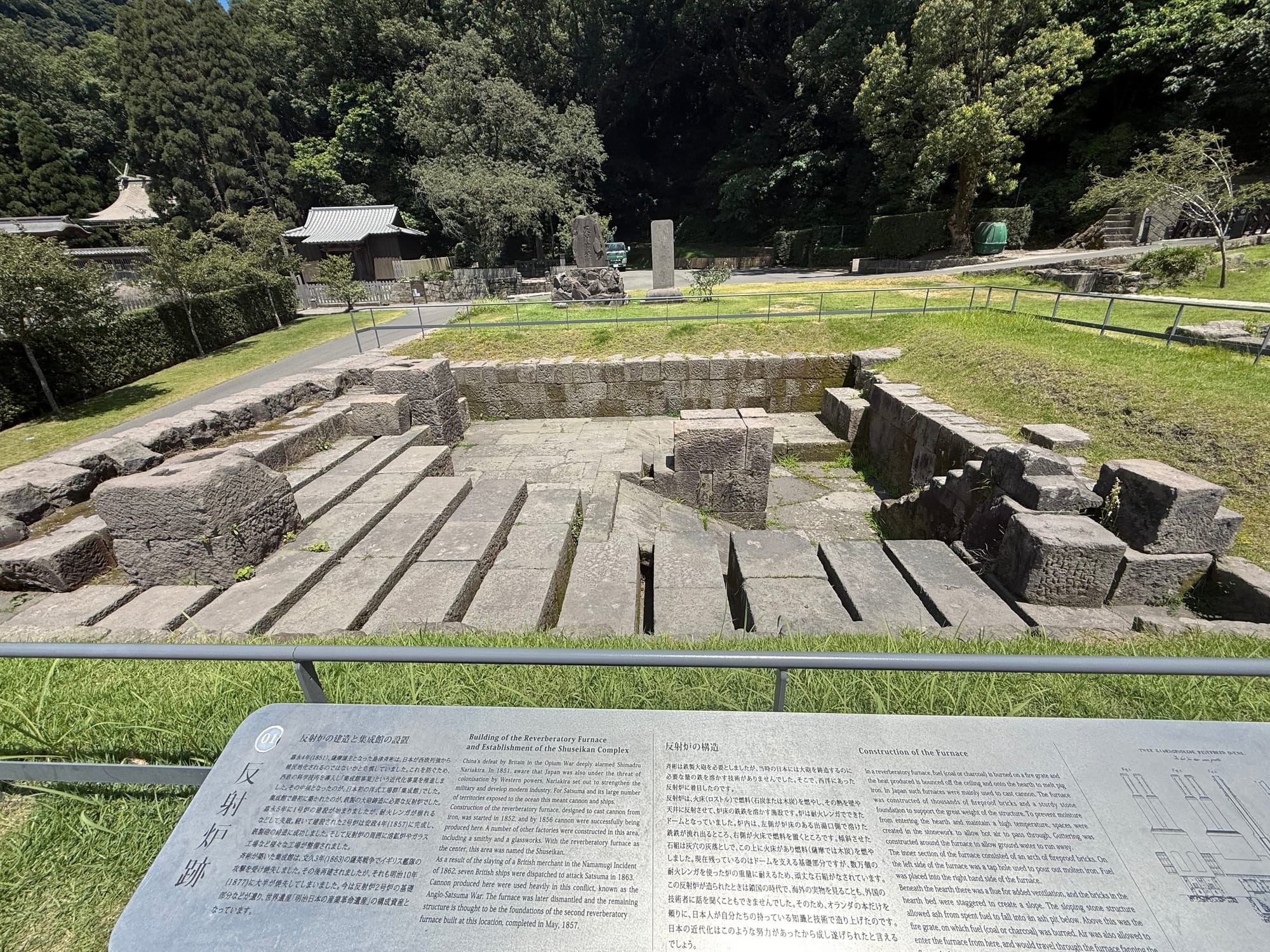
Now going back to the blast furnace, the first one failed as the humidity was too high and it started to sink into the ground, but instead of giving up Nariakira Shimazu learned from the failure and made a second one, but using firebricks and using small passages to let the humidity out, which made it work.
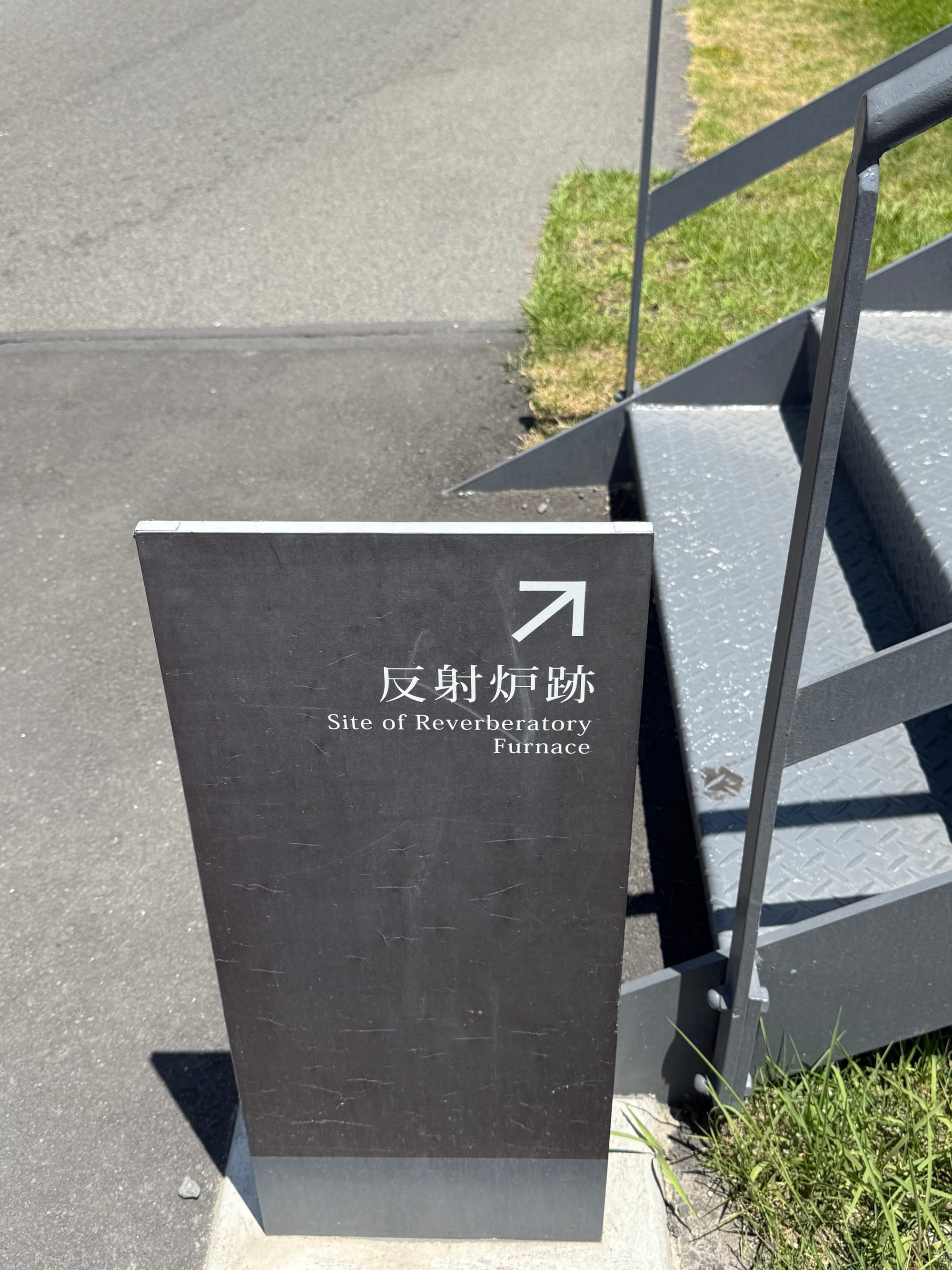
A marker at Sengan-en points to the site of the reverberatory furnace, an important part of Kagoshima's industrial heritage and Japan's early efforts at modernisation during the late Edo period.The remains of the reverberatory furnace at Sengan-en highlight Kagoshima's role in Japan's early industrialisation, where Western technology was adopted to produce iron cannon during the late Edo period.The preserved remains of Sengan-en's reverberatory furnace highlight Kagoshima's role in Japan's industrial modernisation, where Western technology was adopted to manufacture iron cannon during the late Edo period.
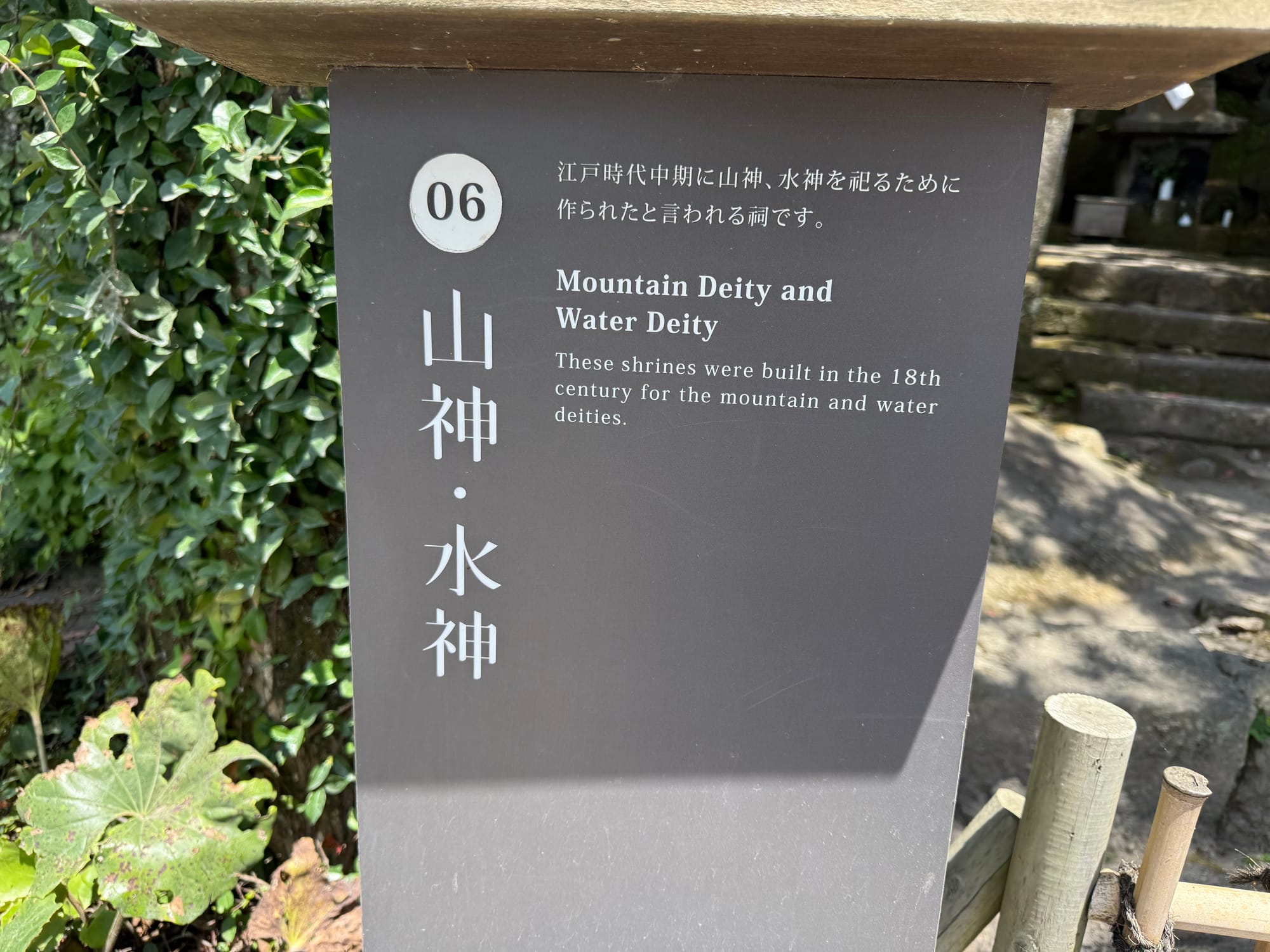
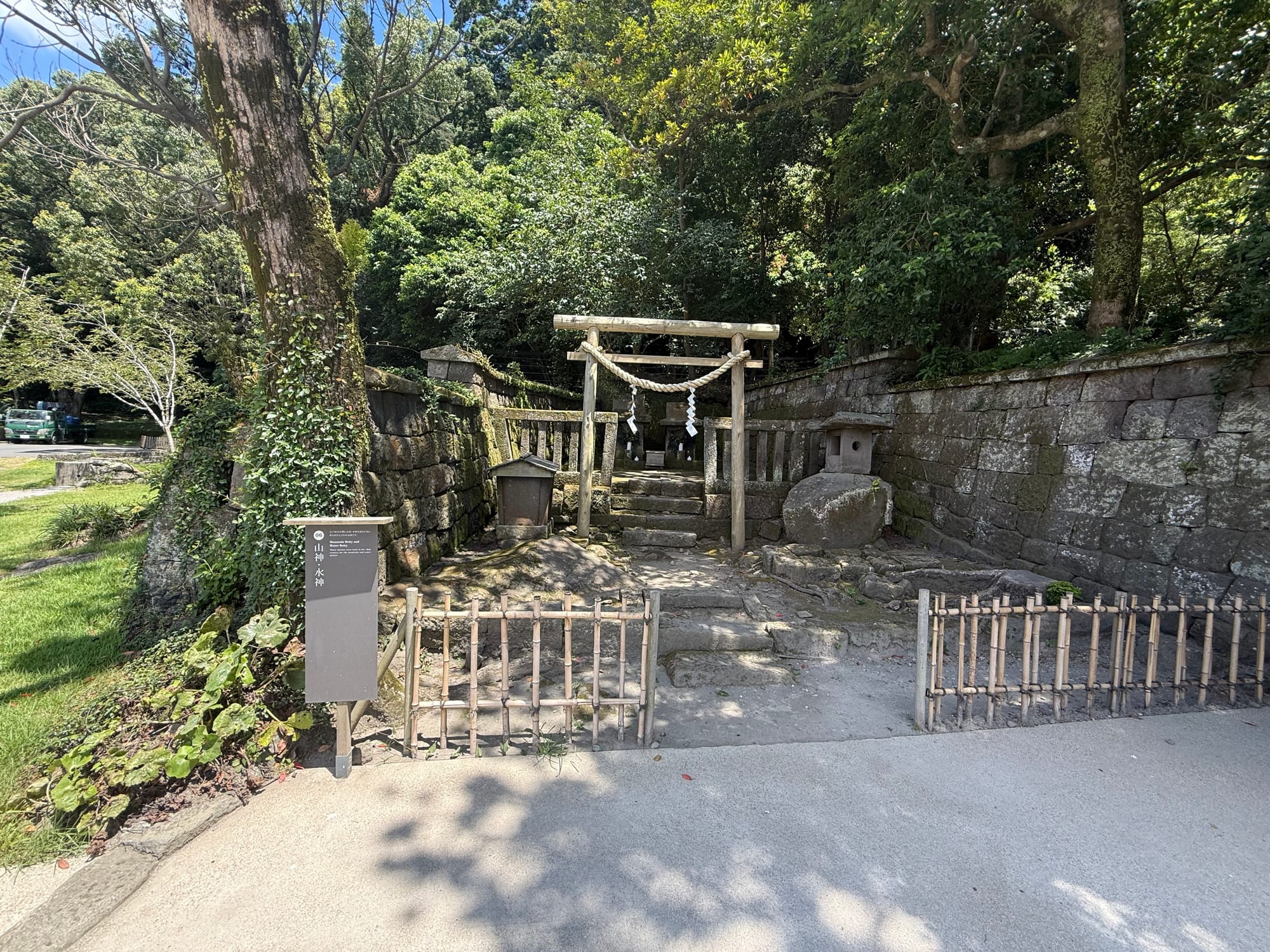
There was also shrines dedicates to the maintain and water deities to help make sure the furnace continues to function, especially as they used a leat (canal) coming down from the mountain, which then turned waterwheels that powers the blast furnace bellows, cannon drilling machine, etc...
This was because they has no coal or steam engines at the time.
An information panel at Sengan-en explains the Mountain Deity and Water Deity shrines, which were established in the eighteenth century to honour the natural forces that shaped life in Kagoshima.A modest shrine dedicated to mountain and water deities sits within the grounds of Sengan-en, reflecting the importance of nature and spiritual beliefs in traditional Japanese culture.
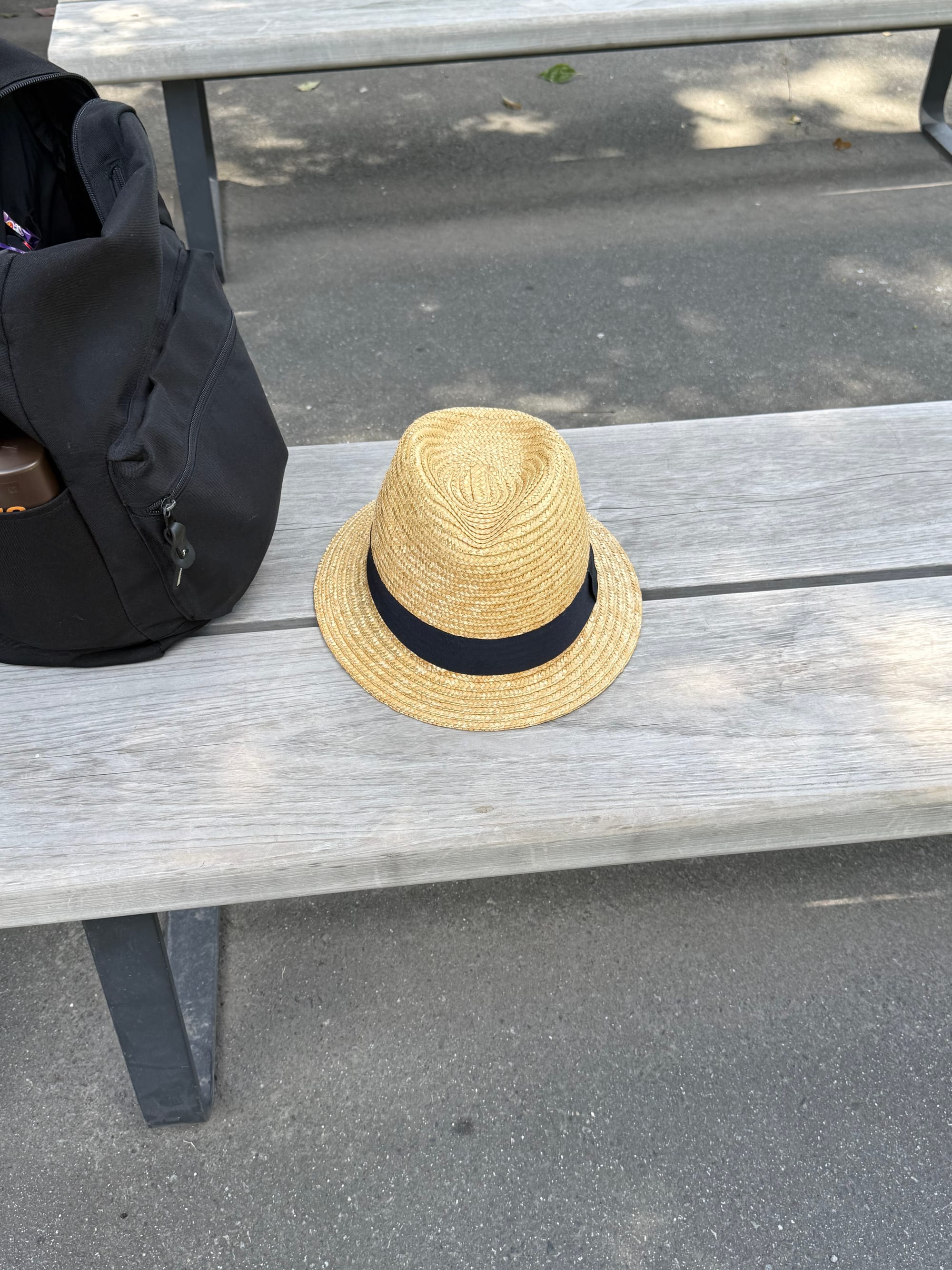
As the sun was starting to hit quite badly, it was time to sit down and have a quick rest.
Mr Hat takes a well-earned rest at Sengan-en, enjoying a quiet break in the shade before continuing the day's exploration of Kagoshima.
Now as Sangen-en was home to the samurai Lord Shimazu Nariakira and this was the estate where he could host dignitaries. Saigo Takamori was a retainer of his and was from a poor, low ranked samurai family, but both him and his lord saw how Japan needed to adapt and end its isolationist policies as they could not feasibly repel foreign invaders, which was made more apparent in the Anglo-Satsuma incident, when the British navy bombarded Kagoshima out or range of the Kagoshima castle cannons. Lets have a look at the residence although it is a fair bit smaller than it used to be.
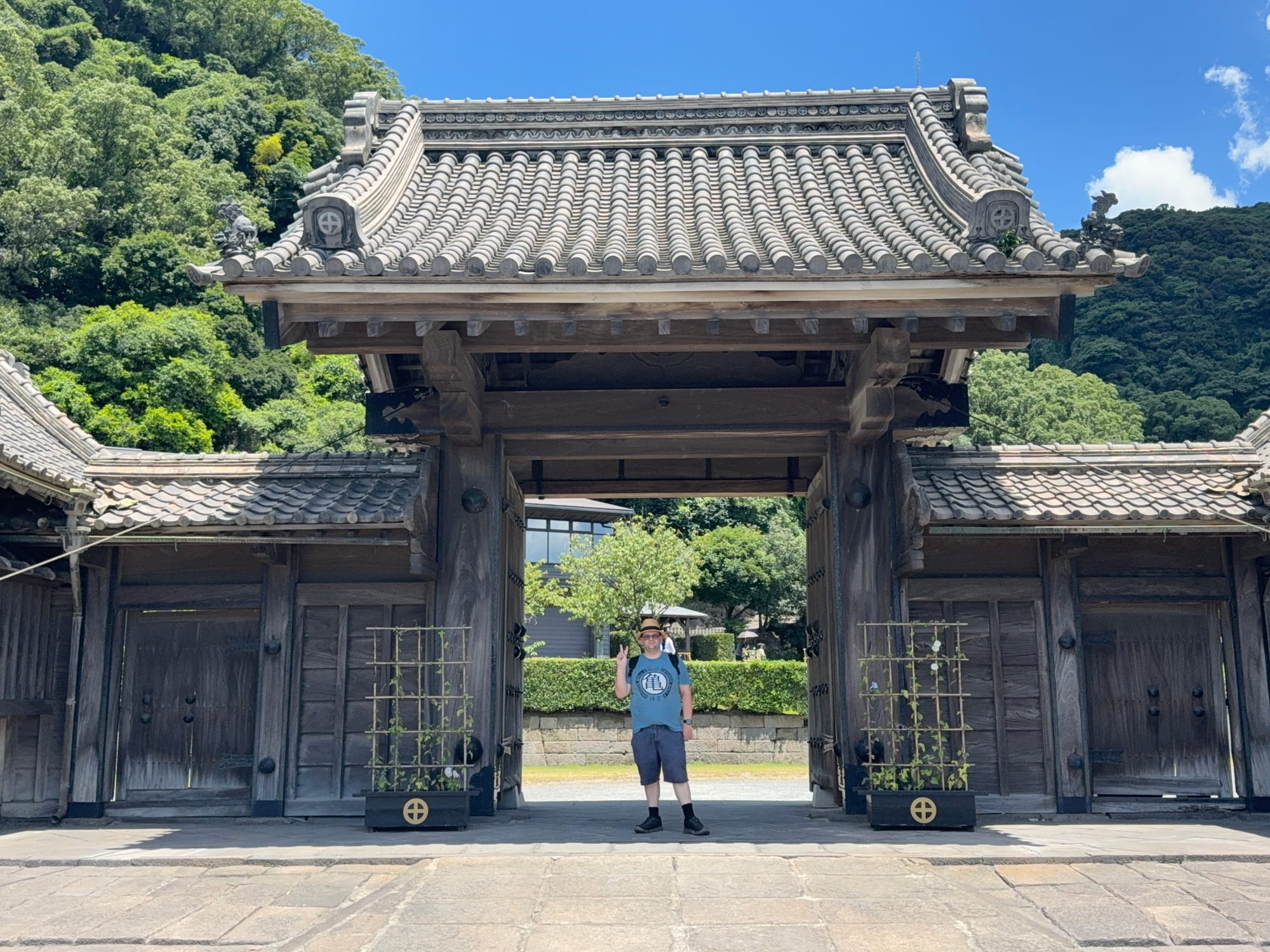
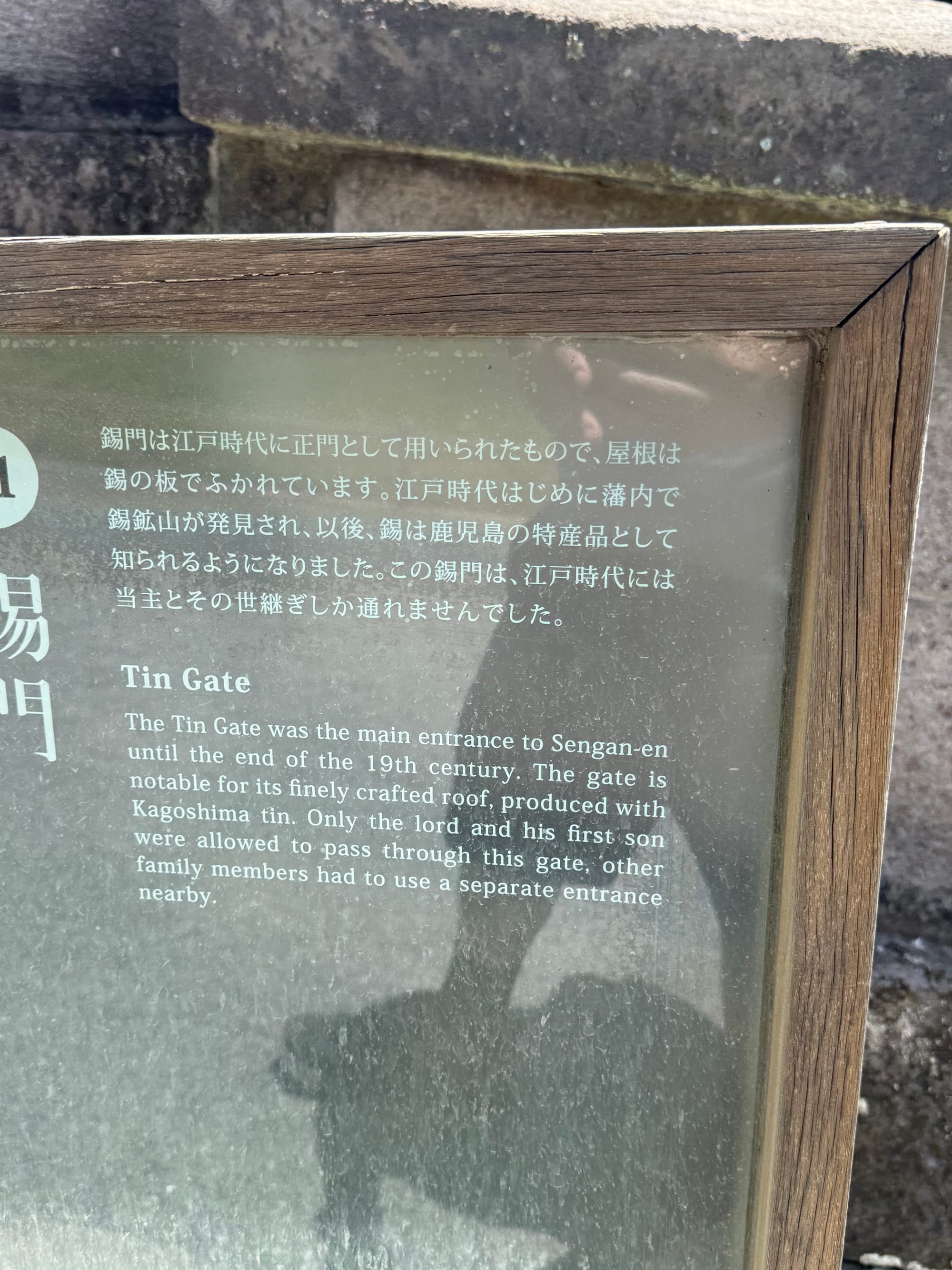
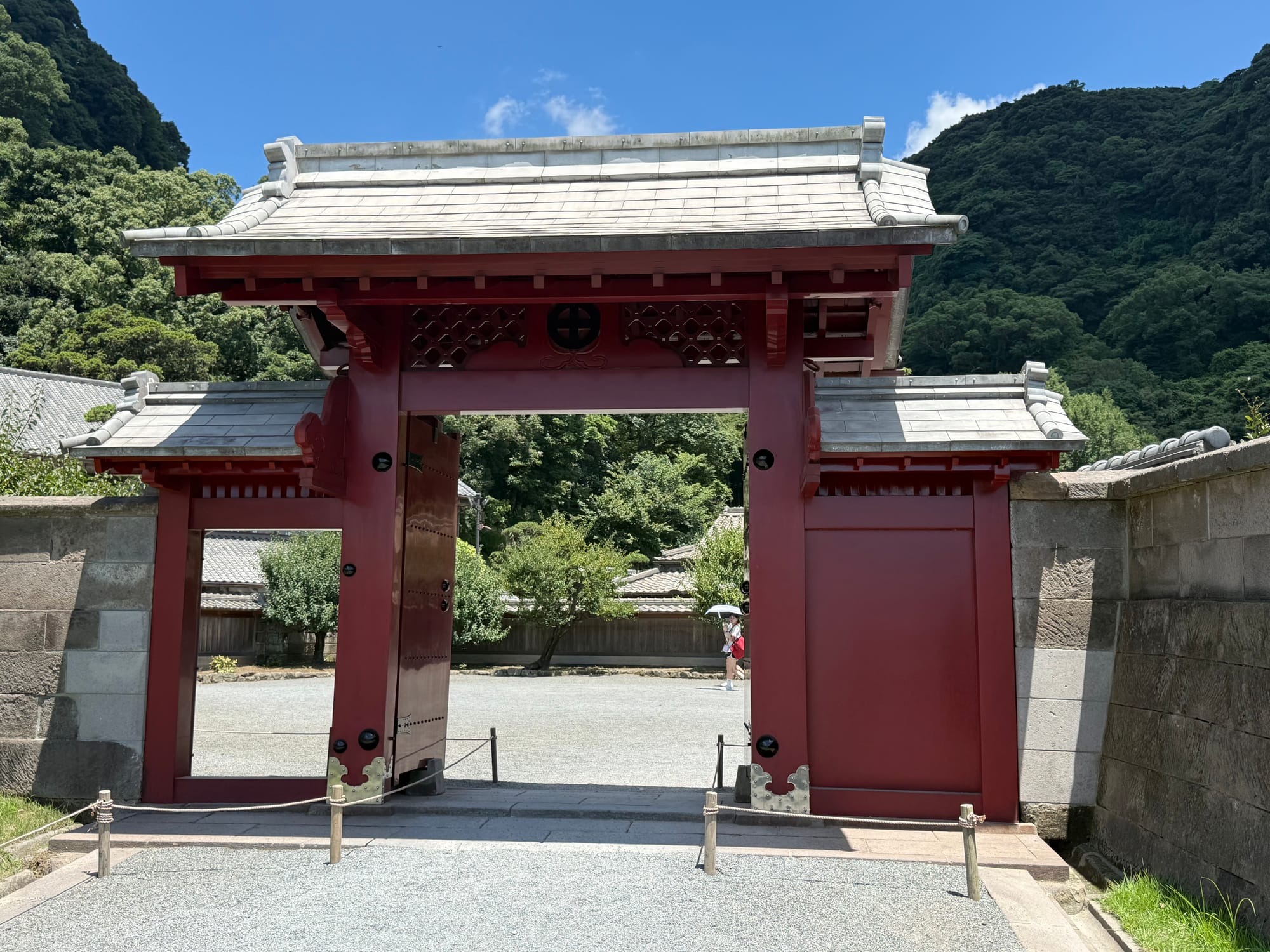
Posing beneath one of Sengan-en's historic gates, surrounded by traditional architecture and the lush hillside scenery that forms part of this celebrated Kagoshima estate.An information display at Sengan-en explains the history of the Tin Gate, once the estate's principal entrance and reserved for the Shimazu lord and heir during the Edo period.The striking red gate at Sengan-en forms an impressive entrance to the historic estate, combining traditional architecture with the dramatic natural setting of Kagoshima's surrounding hills.
The residence was visited by quite a few foreign dignitaries over the years, including Tsar Nicolas the 2nd and King Edward VIII.
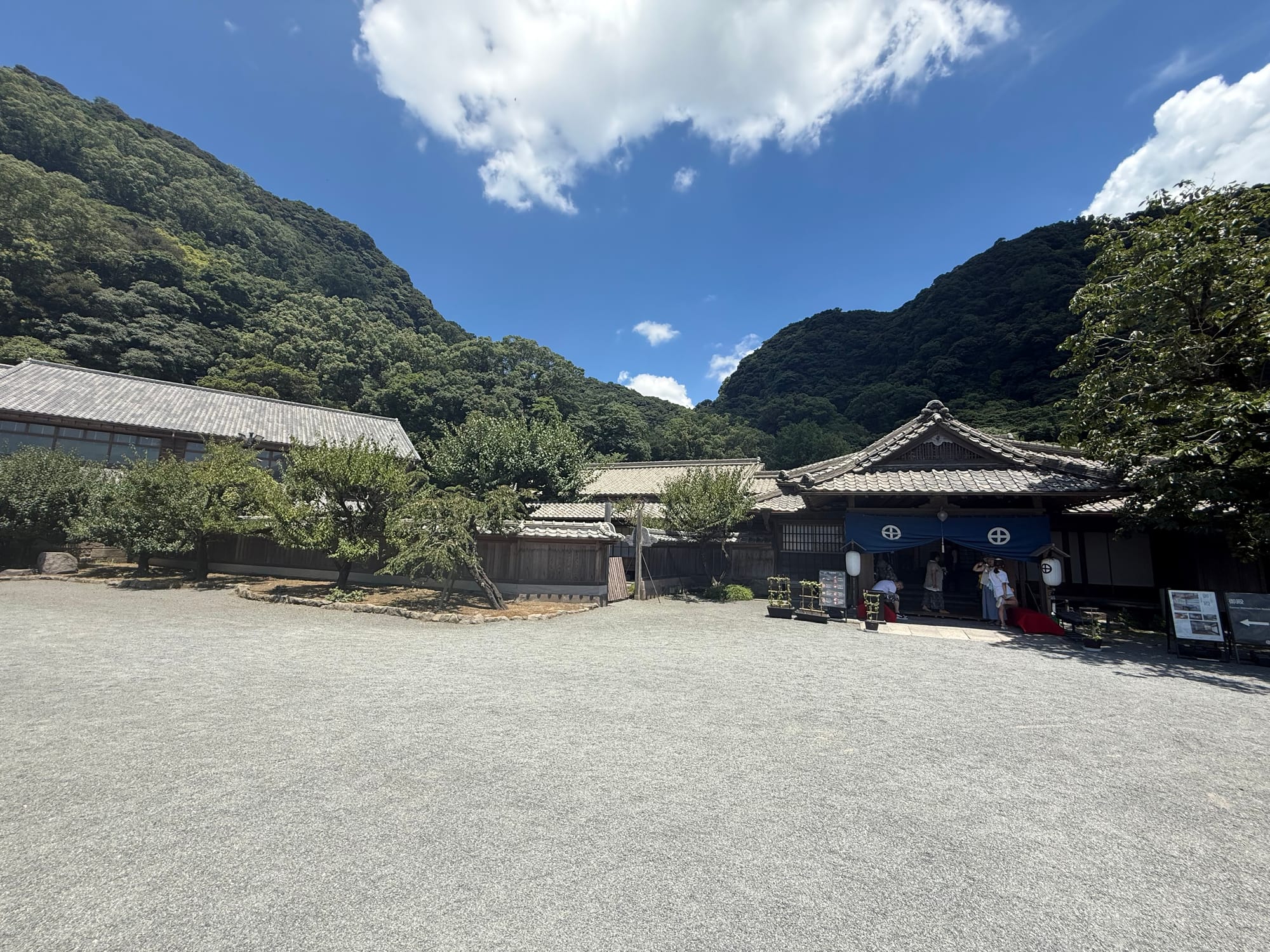
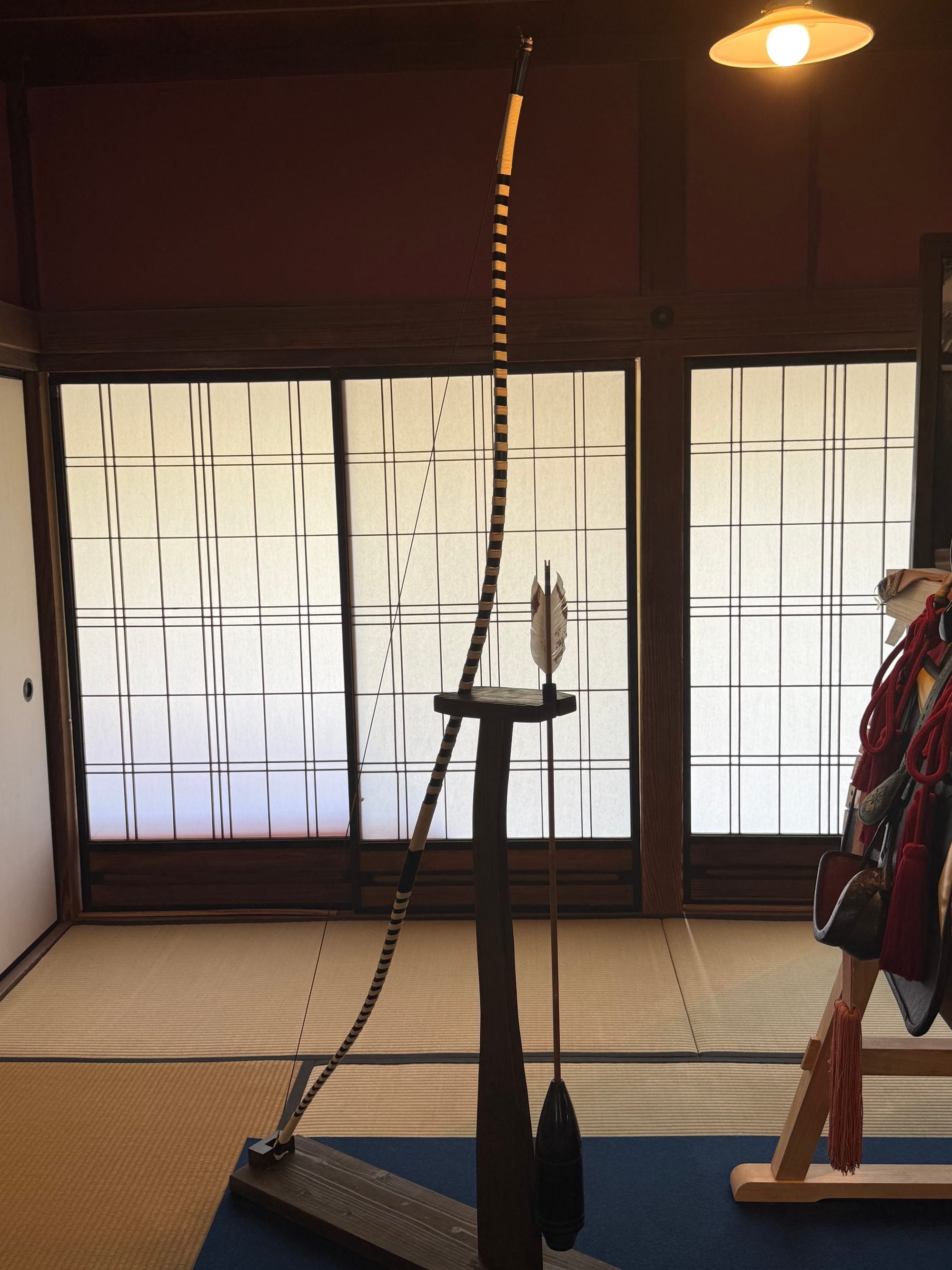
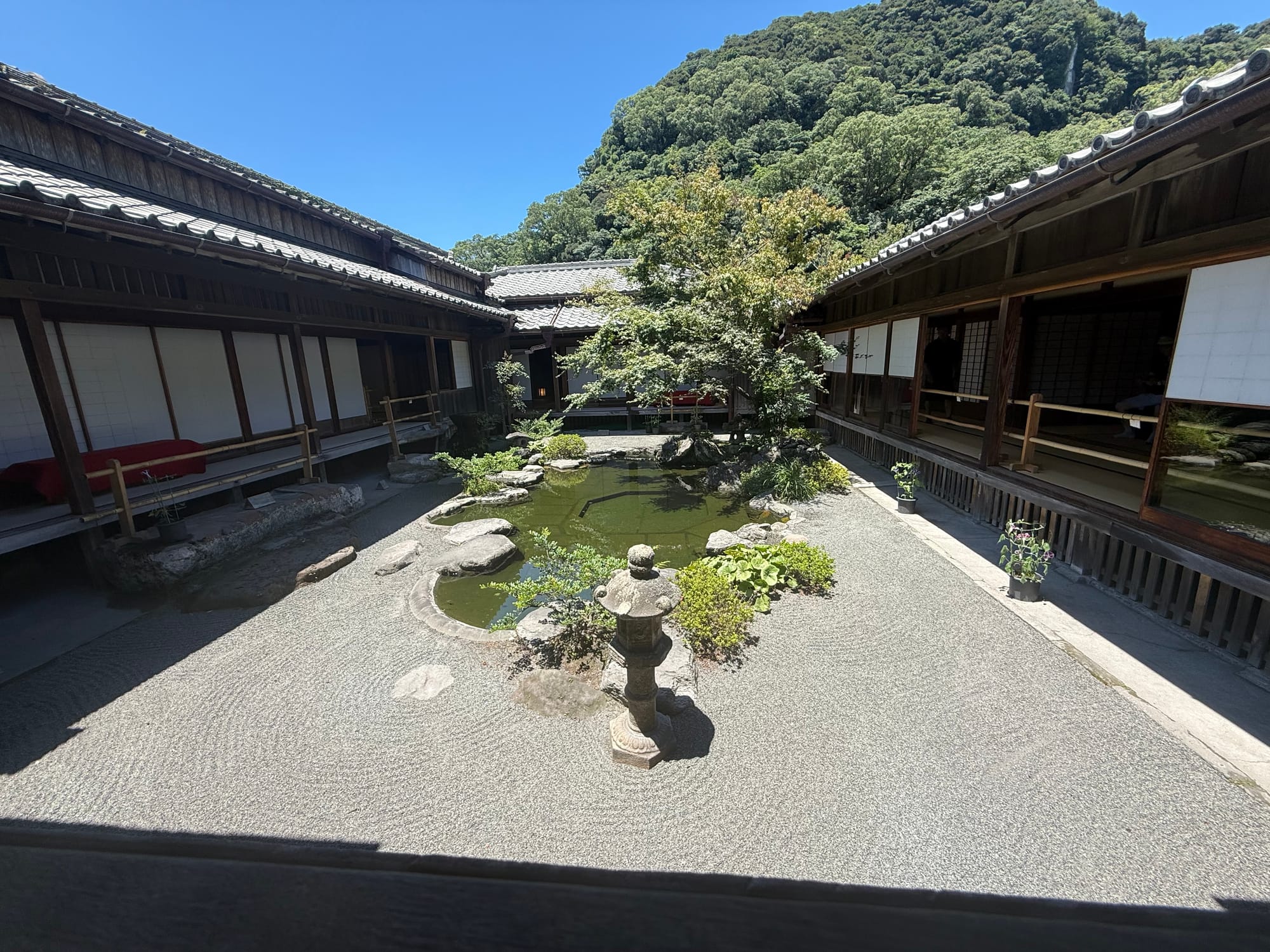
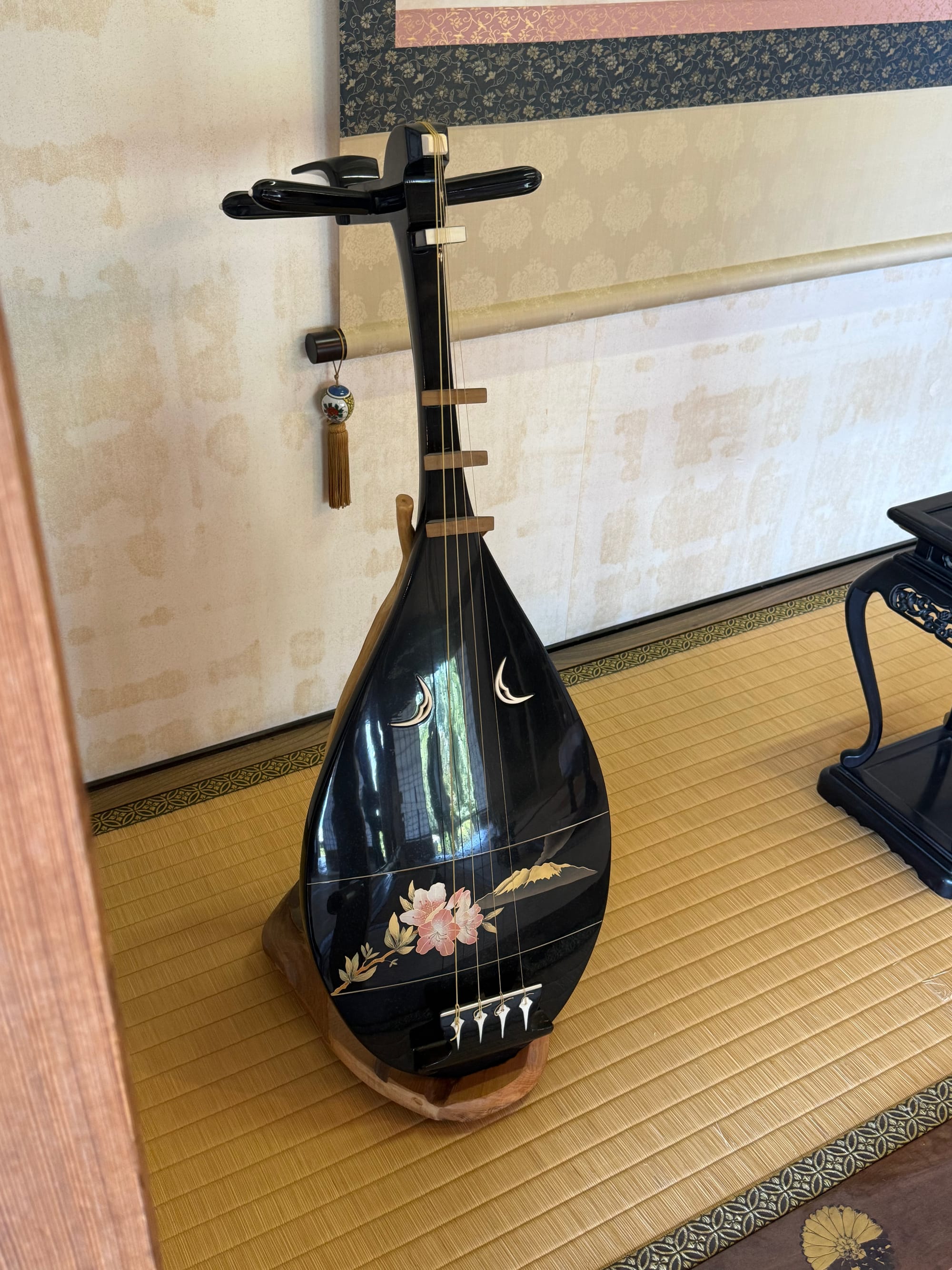
The historic heart of Sengan-en, where traditional buildings and landscaped grounds sit beneath the wooded hills that frame this celebrated Kagoshima estate.A traditional Japanese yumi longbow on display at Sengan-en, illustrating the weaponry and martial traditions associated with Japan's samurai heritage.A peaceful courtyard garden within Sengan-en combines traditional architecture, carefully arranged stonework and a reflective pond, creating a tranquil retreat in the heart of the historic estate.A beautifully decorated biwa on display at Sengan-en, highlighting the traditional Japanese lute that has been used for centuries in storytelling, poetry and court music.
One of the women from the Shimazu line also married into the Shogunate, by marrying Tokugawa Iesada, the 13th Tokugawa Shogun. She never returned to Satsuma, even after her husband died as she remained loyal to the Shogunate.
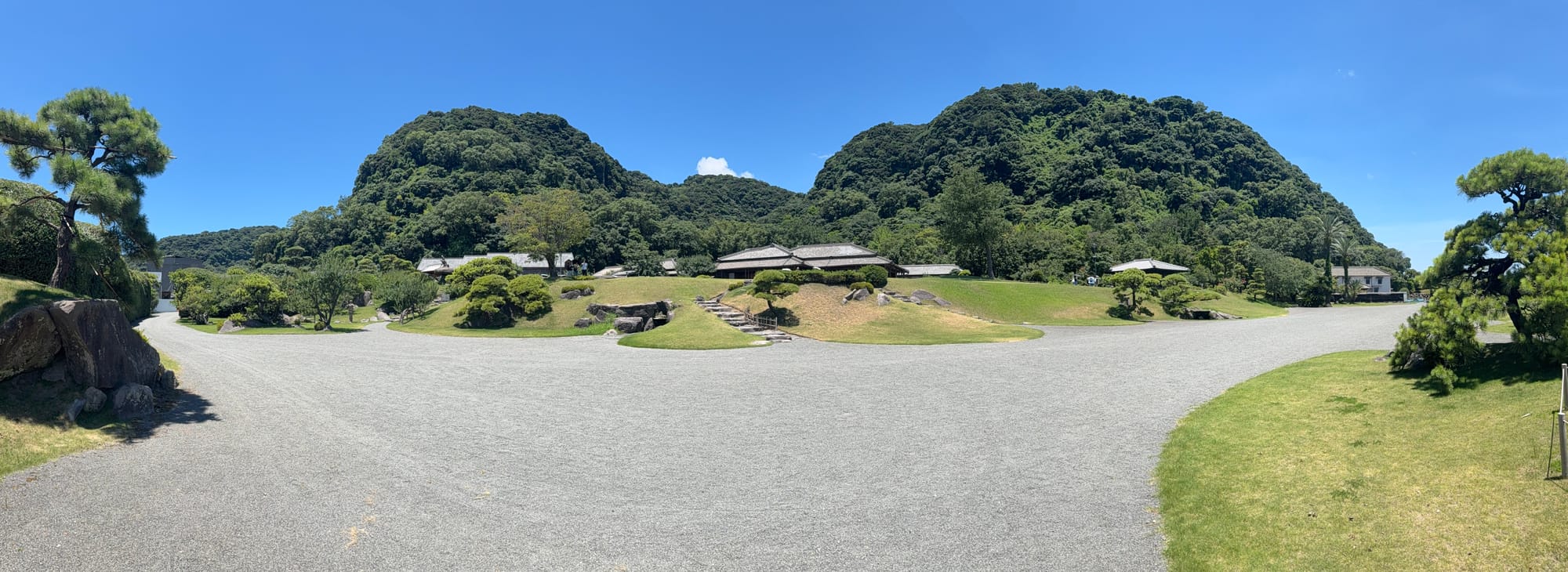
A panoramic view across the grounds of Sengan-en, where landscaped gardens and historic buildings are framed by the lush hills that surround this celebrated Kagoshima estate.One of the principal buildings at Sengan-en, the historic residence of the Shimazu clan, set against the lush hills that form part of the estate's distinctive landscape in Kagoshima.
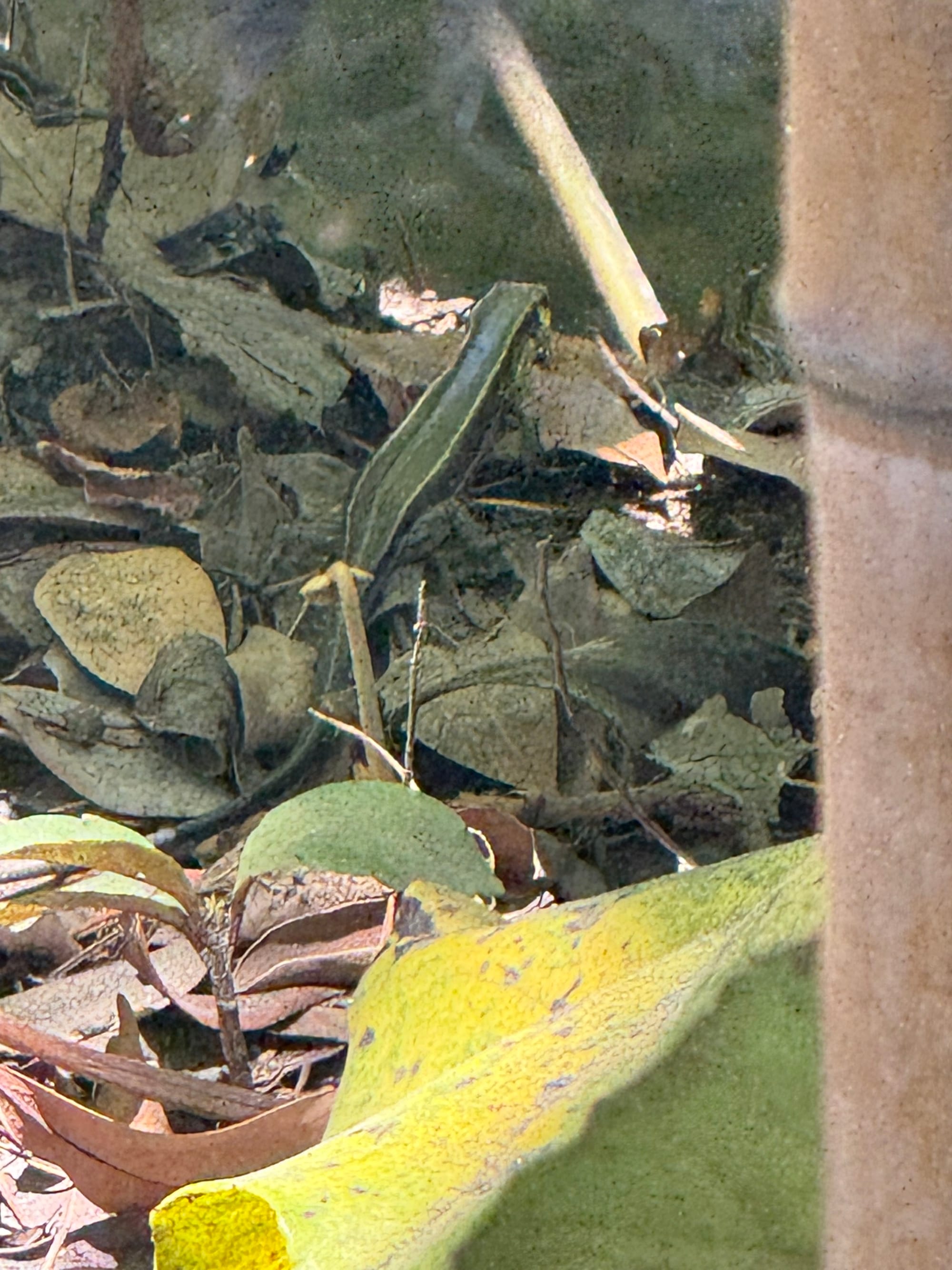
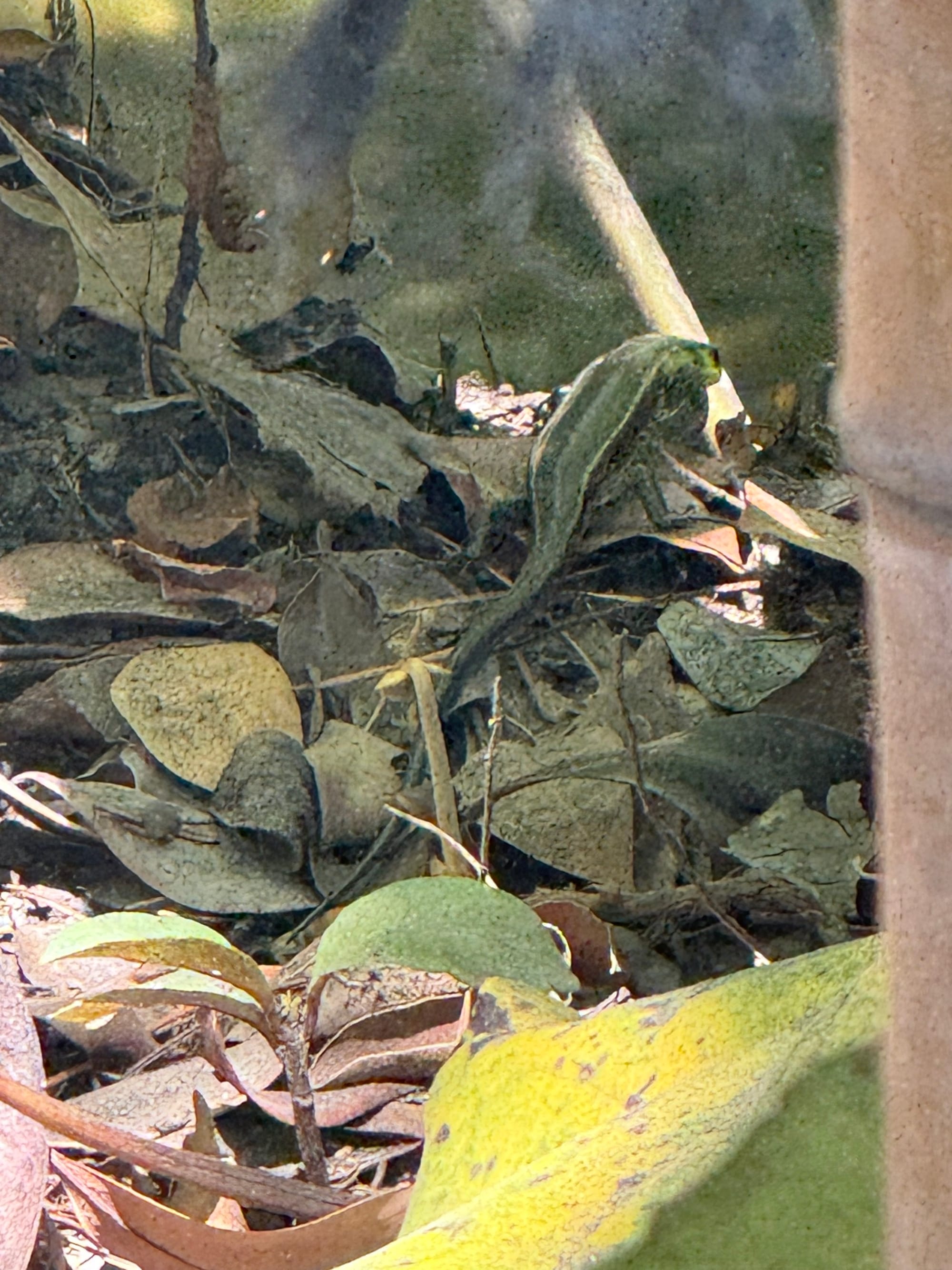
After leaving the house and carrying on round the main route, I came across some gardens next to a river, which I had a quick look around and found a Japanese Grass Lizard.
A Japanese grass lizard blends into the leaf litter at Sengan-en, demonstrating the natural camouflage that helps these small reptiles remain hidden among the gardens and woodland areas.A Japanese grass lizard pauses among the leaf litter at Sengan-en, demonstrating the excellent camouflage that helps these small reptiles remain hidden within the estate's gardens and woodland areas.
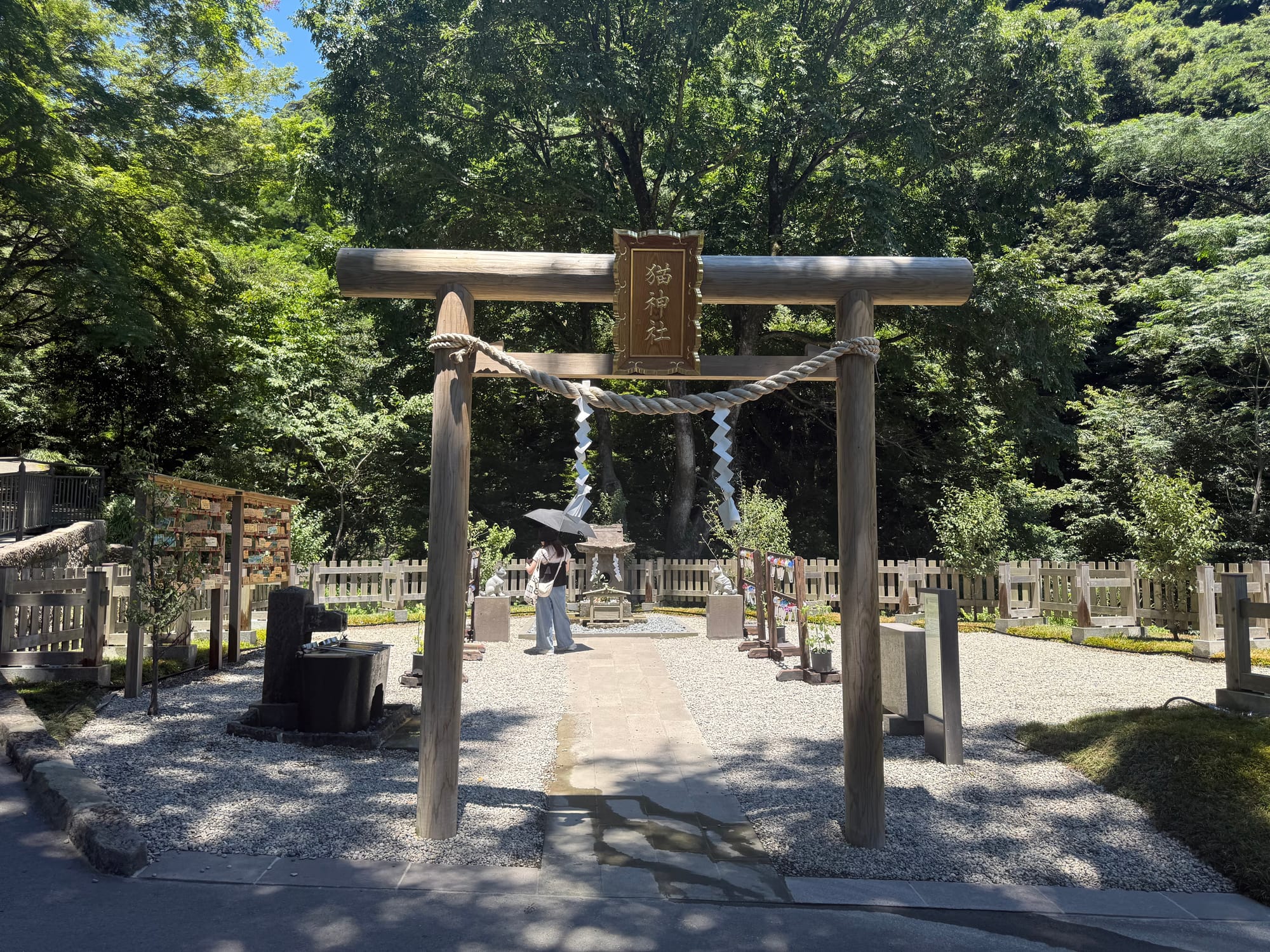
There is even a cat shrine as well. The story behind this is that Shimazu Yoshihiro, 17th lord of the Satsuma domain, took 7 cats with him to the invasion of Korea and enshrined the two that survived when he came back.
The Cat Shrine at Sengan-en honours the seven cats that accompanied the Shimazu clan during the invasion of Korea, reflecting a distinctive chapter in Kagoshima's history and folklore.
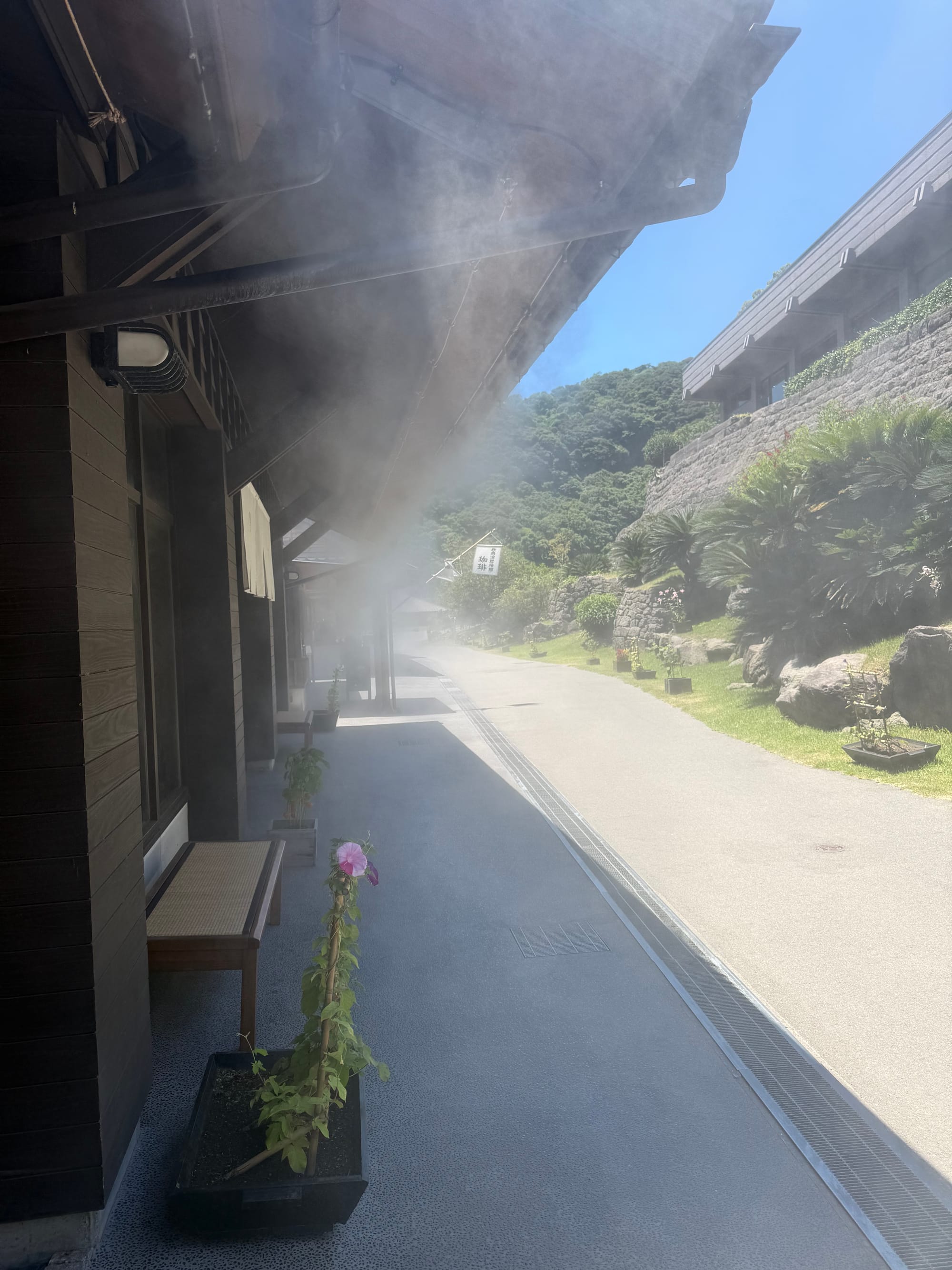
There is also a lovely water mist when walking through the grounds.
Cooling mist sprays along a path at Sengan-en, helping visitors escape the intense Kagoshima summer heat while exploring the historic estate and gardens.
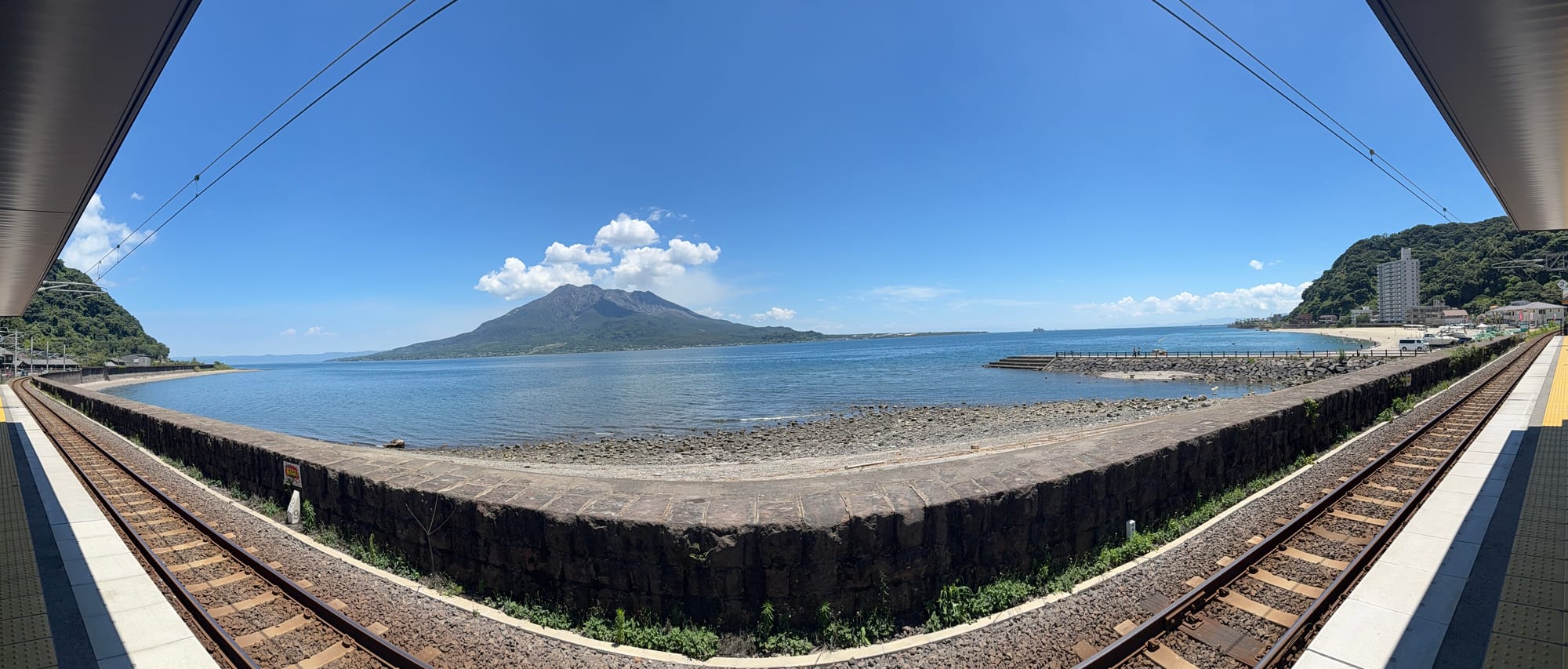
After this I went back to the station and whilst waiting for the train, got a very good view of Sakurajima as the station was right next to the sea.
The spectacular view from Sengan-en Station, where railway tracks frame Kagoshima Bay and Sakurajima, offering one of Japan's most dramatic station panoramas.
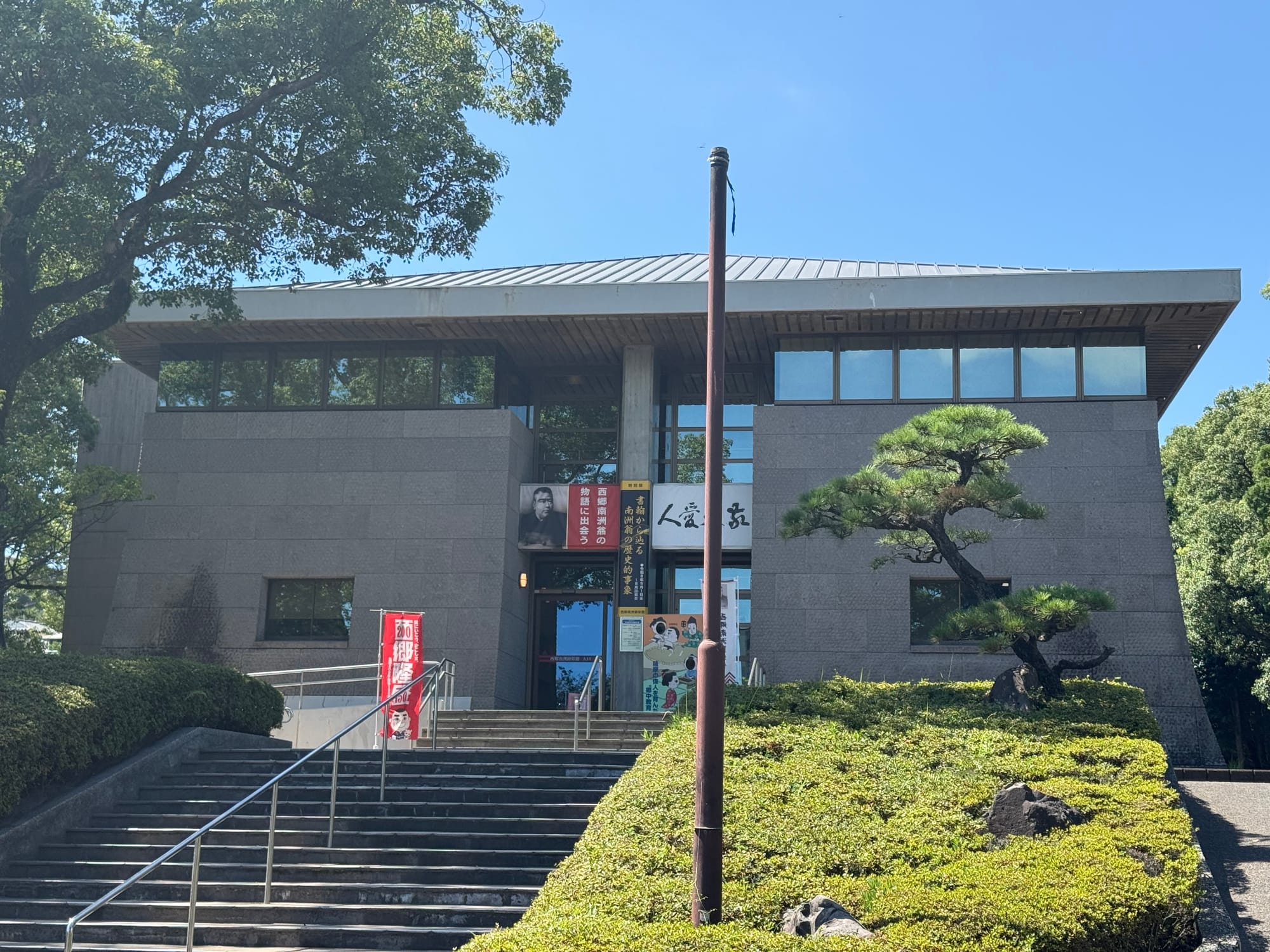
After this it was a longish walk to get to the next destination which was the Saigo Nanshu Kensho Kan (Saigo Nanshu Memorial Museum), which is dedicated to the life of Saigo Takamori.
The Saigo Nanshu Memorial Museum in Kagoshima explores the life and legacy of Saigō Takamori, one of the key figures in Japan's Meiji Restoration and the Satsuma Rebellion.
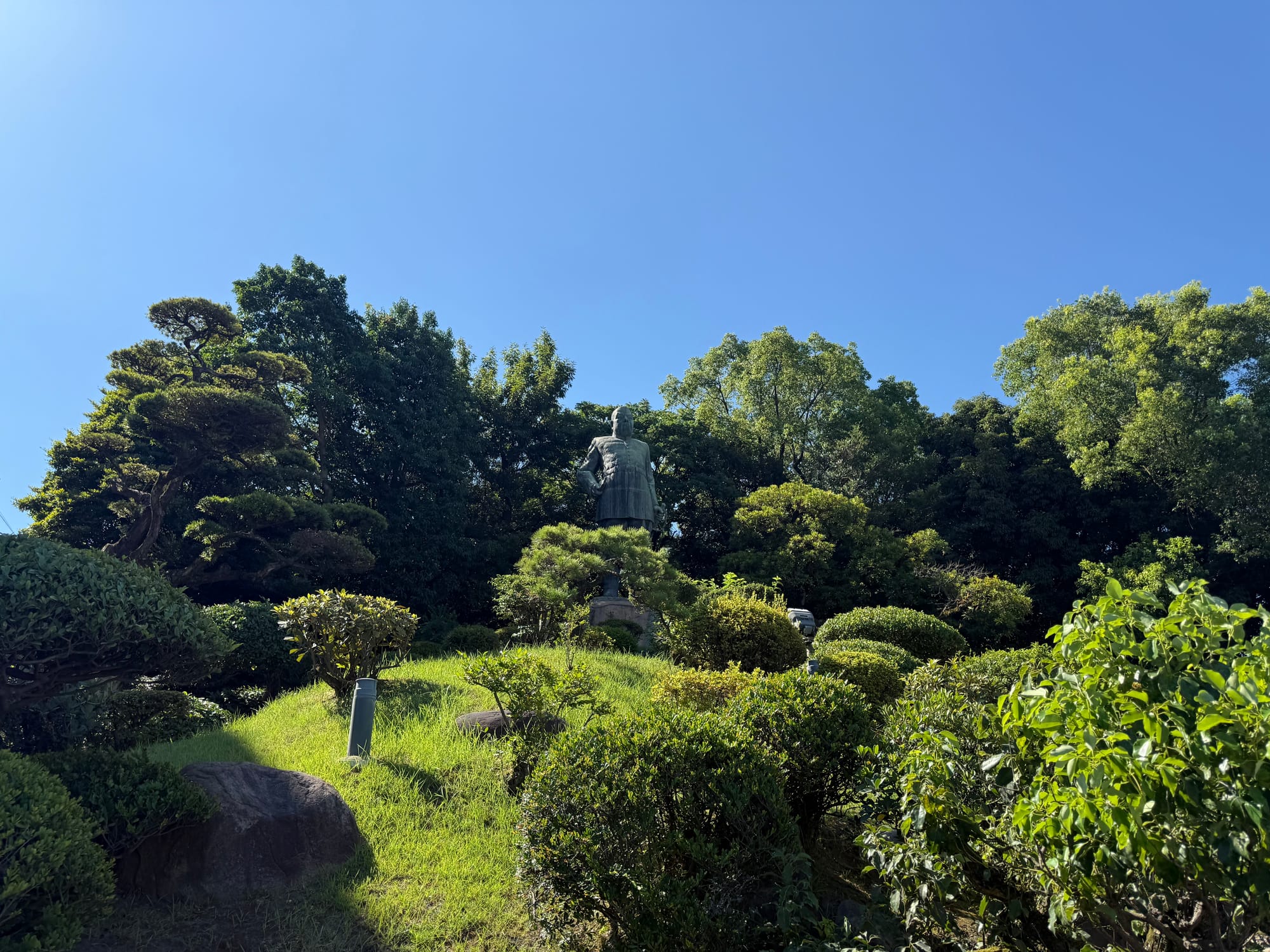
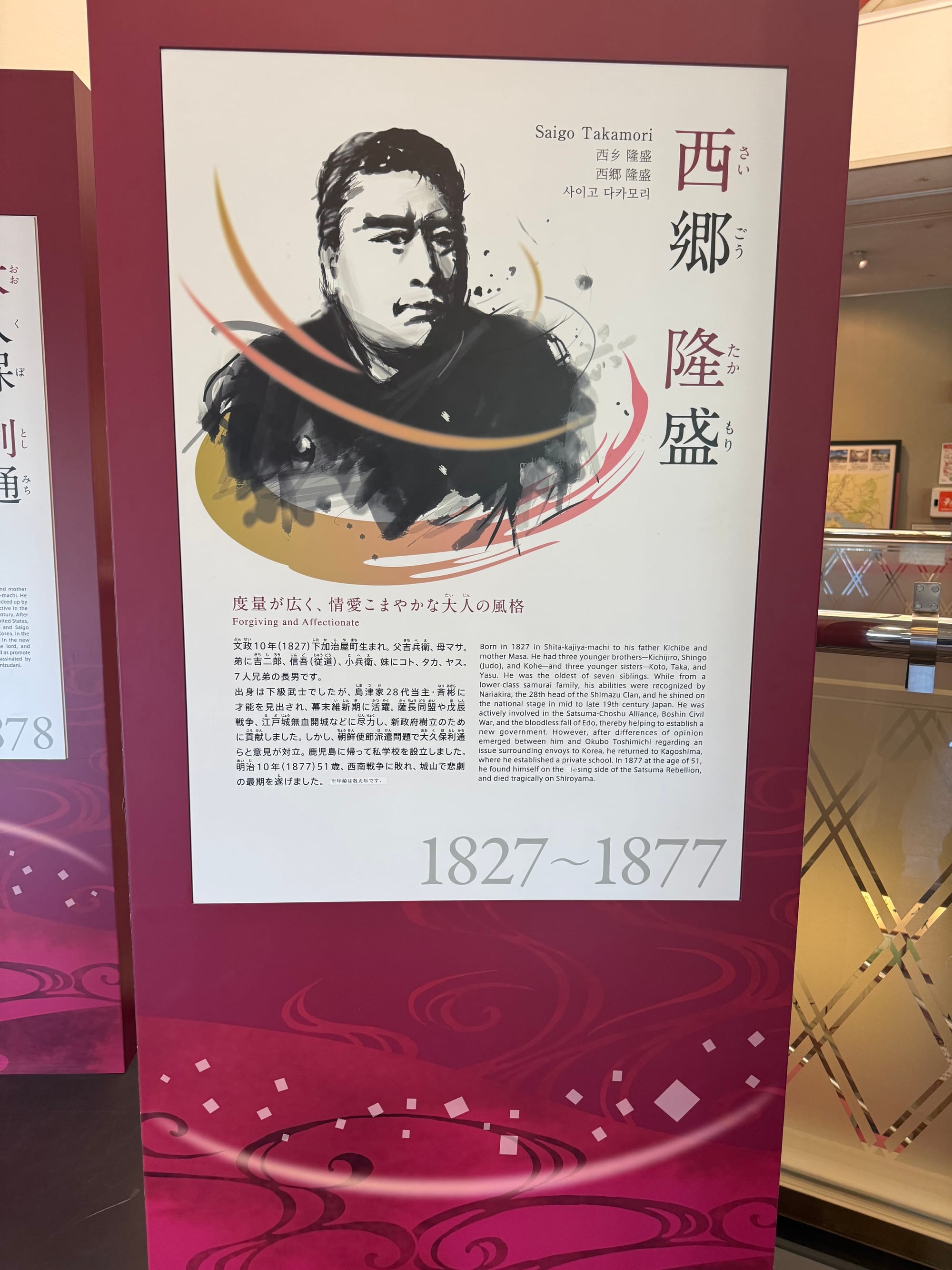
Saigo Takamori, was a retainer of the Shimazu Lord at the time and rose to be quite high up. He was exiled twice, commanded imperial forces against the shogunate forces, negotiated the peaceful surrender of Edo castle, so that the 1+ million people living in Edo (Now Tokyo) would be spared bloodshed. He was also promoted to be the first Commander of the Armies for the newly formed Japanese Imperial army. After a few disagreements with the new Meiji governments direction, he retired and returned to Satsuma, where he opened up a system of private schools for people to learn and they provided military training based on the samurai ways as well.
A statue of Saigō Takamori overlooks the gardens near the Saigo Nanshu Memorial Museum, commemorating the influential samurai leader often remembered as the "Last Samurai" of Japan.
As tensions rose, the Meiji government was becoming concerned with the stockpiling of weapons in Satsuma and Edo spies were also ordered to assassinate Saigo. This put his students in an uproar and as much as he didn't want to go to battle with the Meiji government, he led them in what was known as the Satsuma rebellion. The imperial army has double the soldiers and also more advance tactics and weapons, so as you can imagine, they were the victorious side.
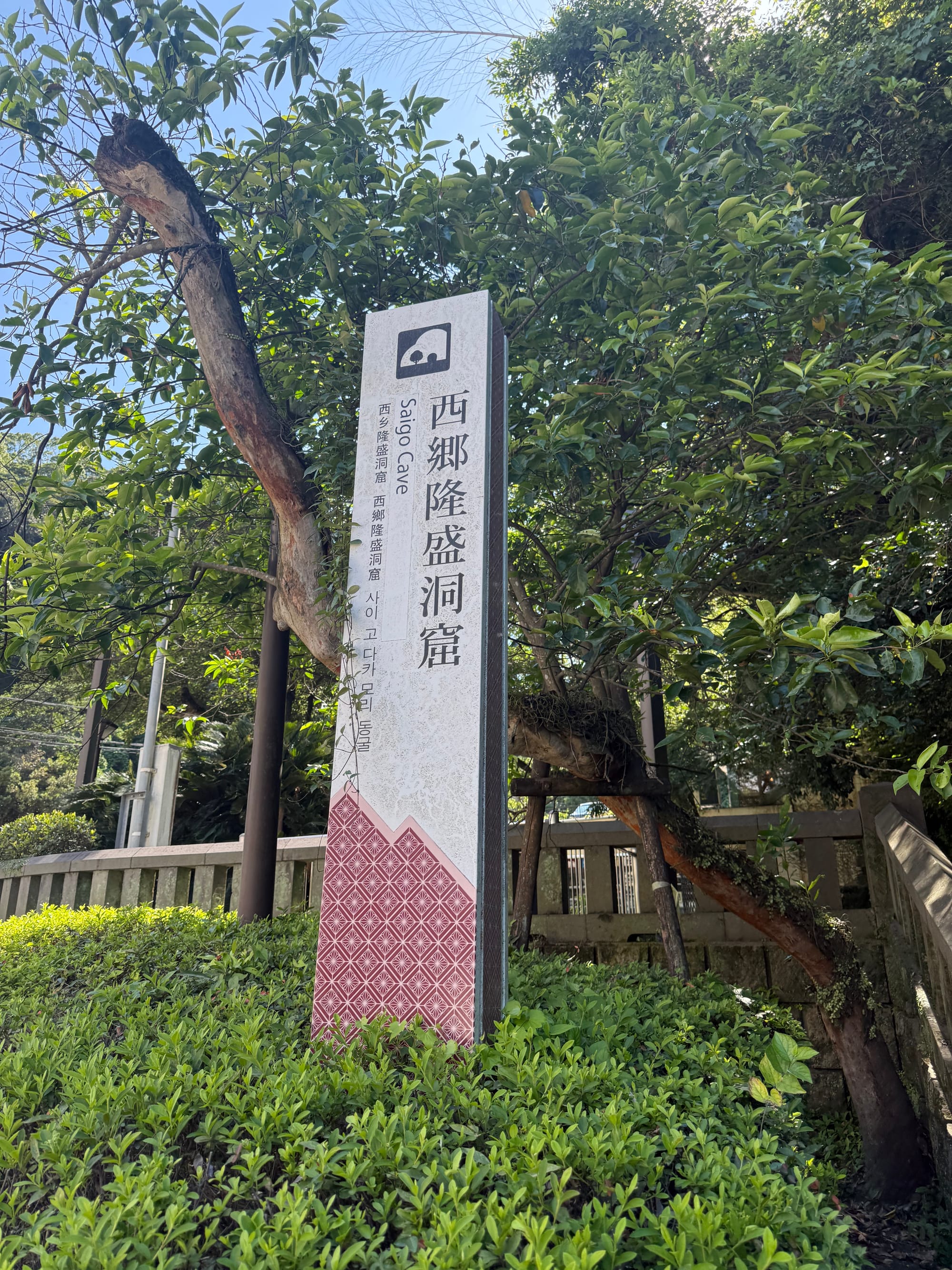
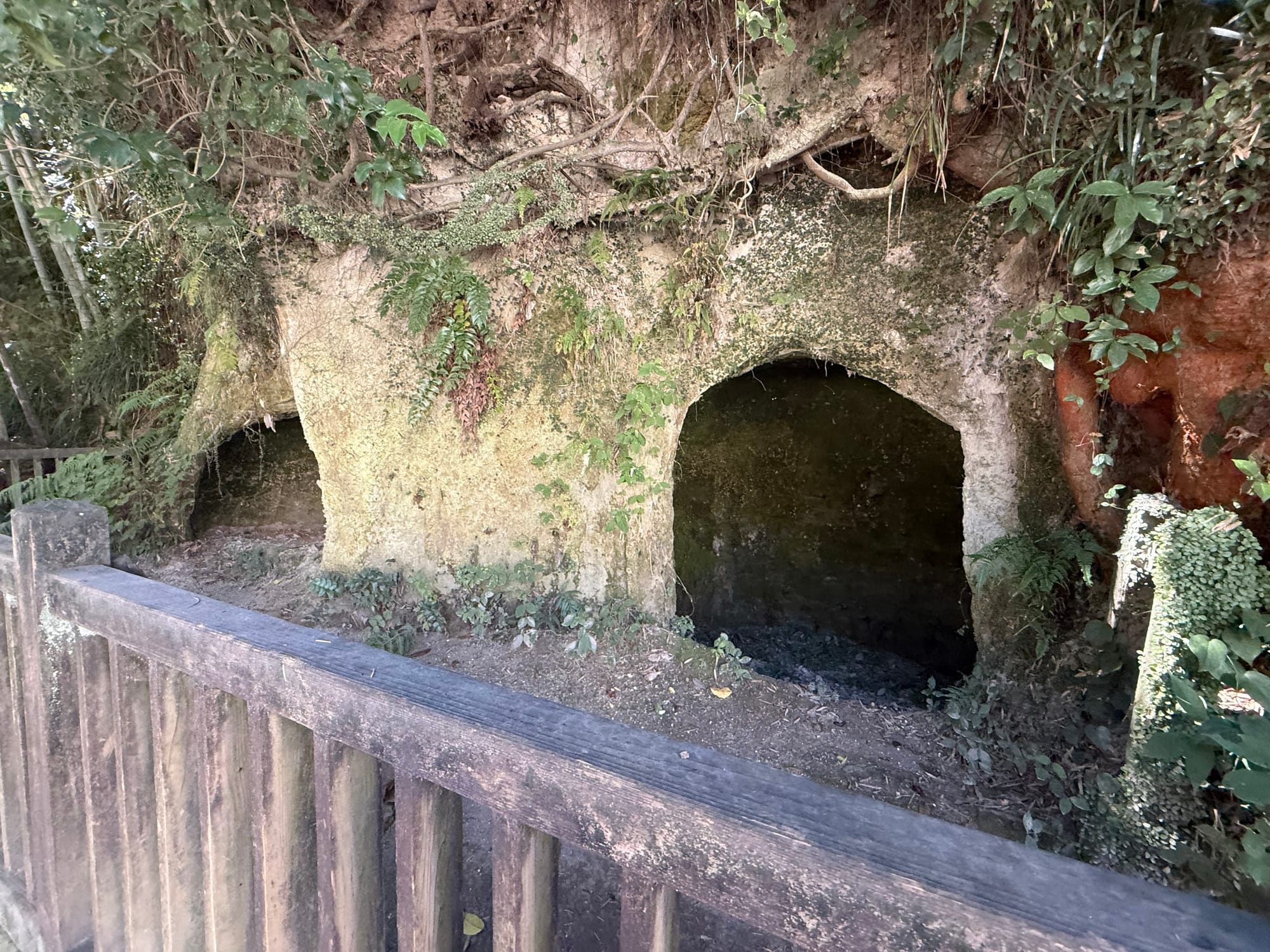
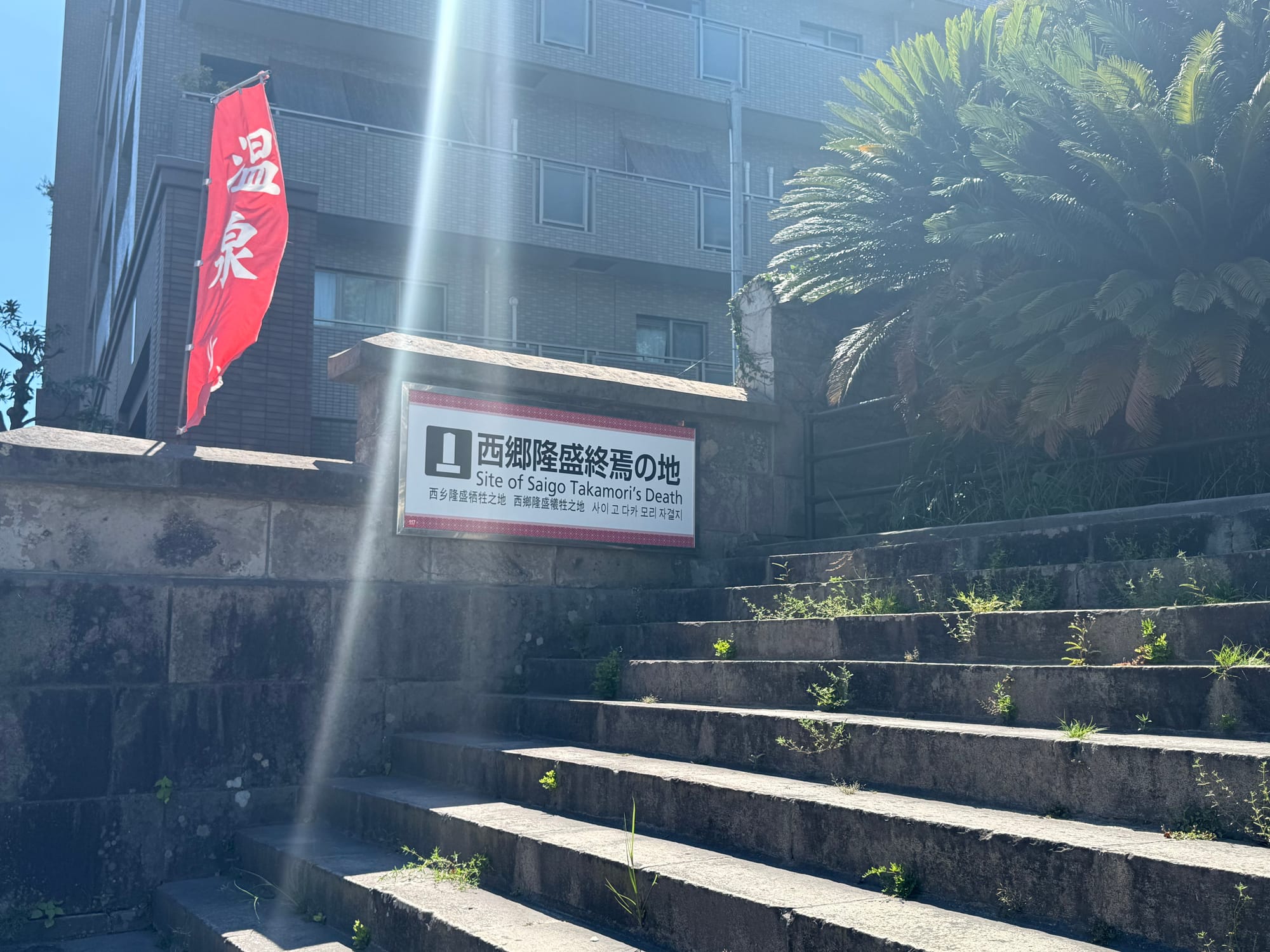
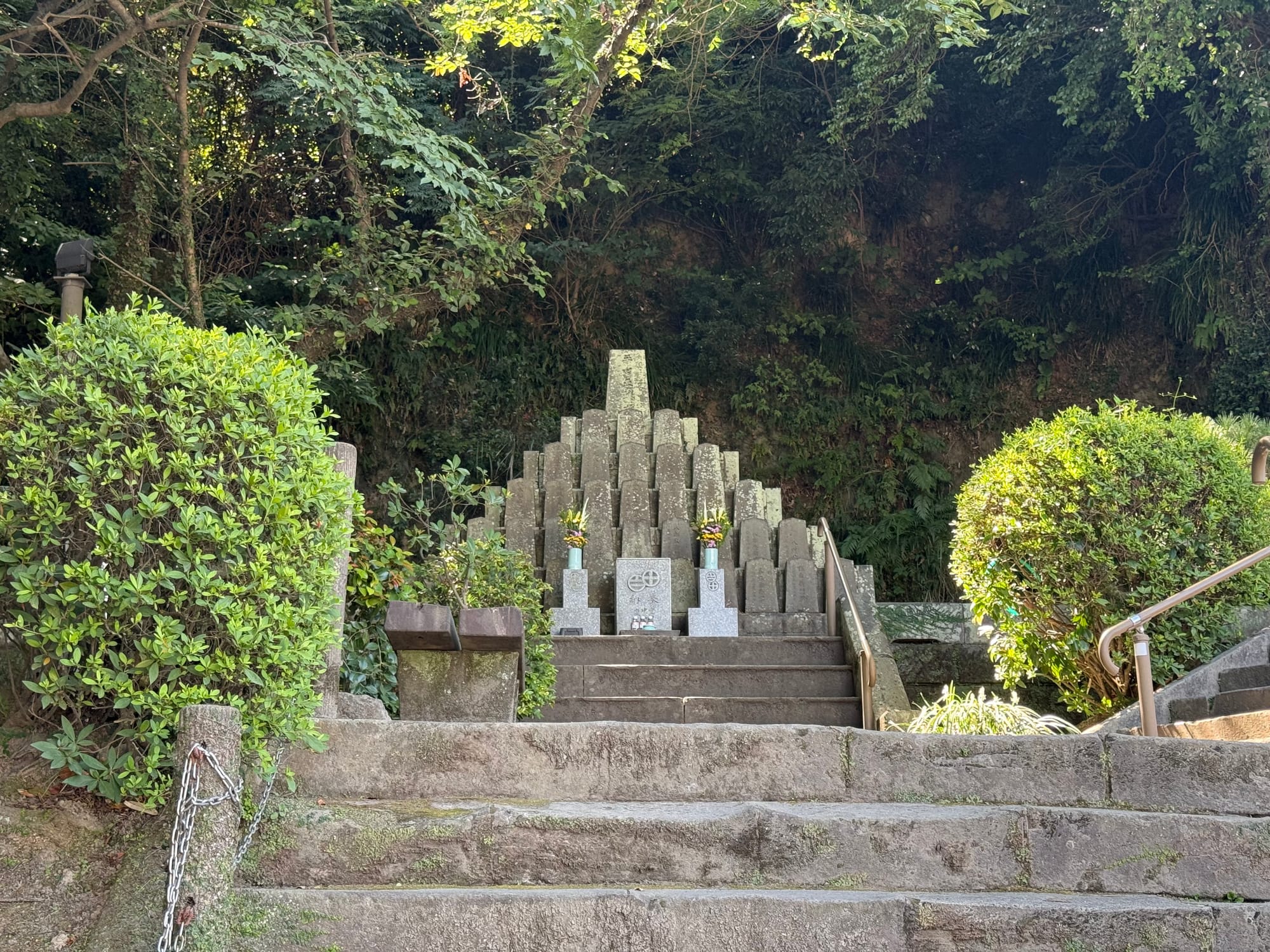
During the day, I visited the caves that the rebels hid in in Kagoshima and also the death place of Saigo.
The sign for Saigō Cave marks the place where Saigō Takamori is said to have taken refuge shortly before the end of the Satsuma Rebellion in 1877, a pivotal event in modern Japanese history.Saigō Cave, where Saigō Takamori is said to have taken refuge during the final days of the Satsuma Rebellion in 1877, remains one of Kagoshima's most significant historic sites.The site where Saigō Takamori was mortally wounded during the final stages of the Satsuma Rebellion in 1877, marking the end of one of the most significant figures in modern Japanese history.A memorial near the site of Saigō Takamori's final stand commemorates Saigō and his followers who lost their lives during the Satsuma Rebellion of 1877, one of the defining conflicts of modern Japanese history.
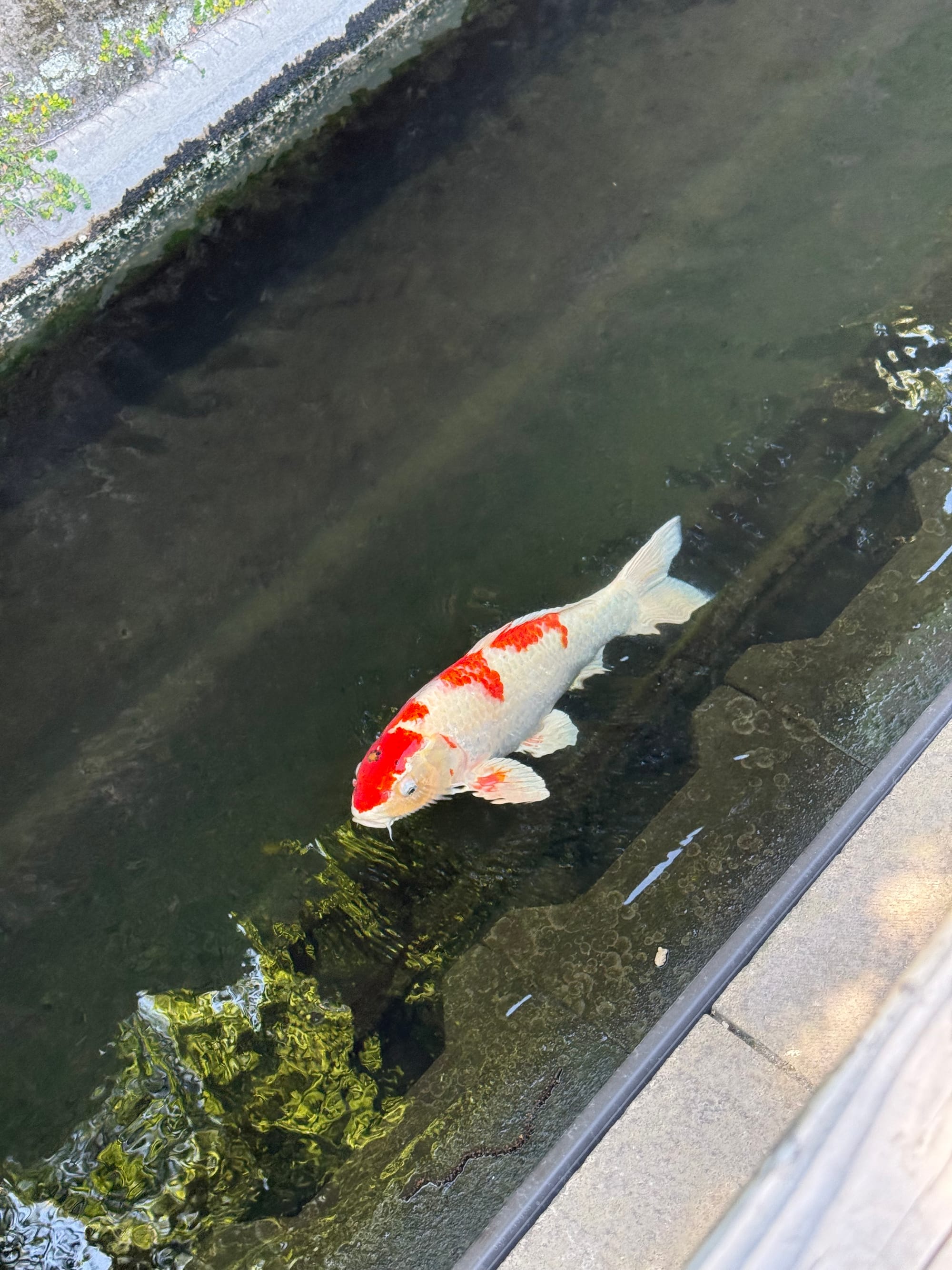
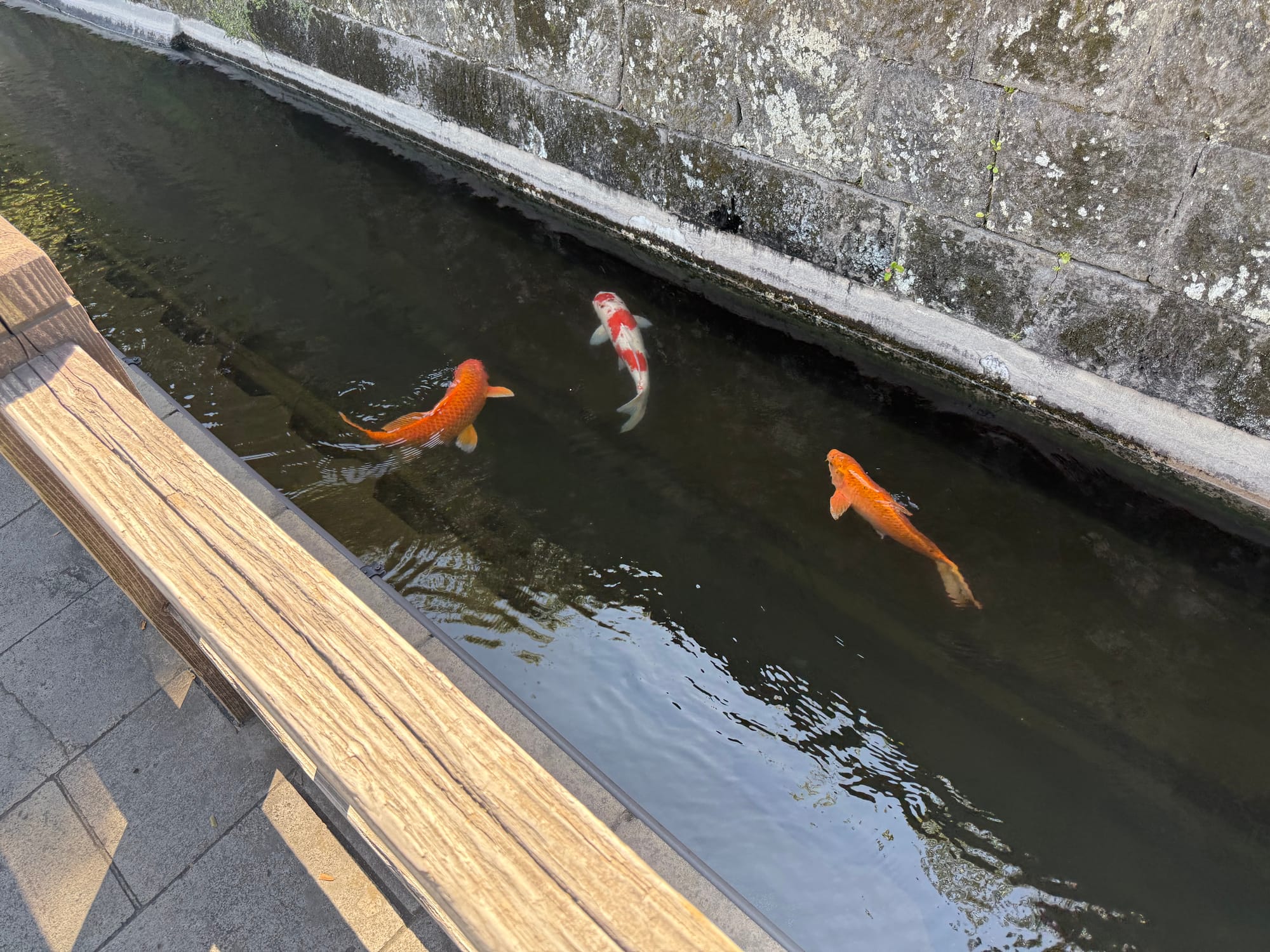
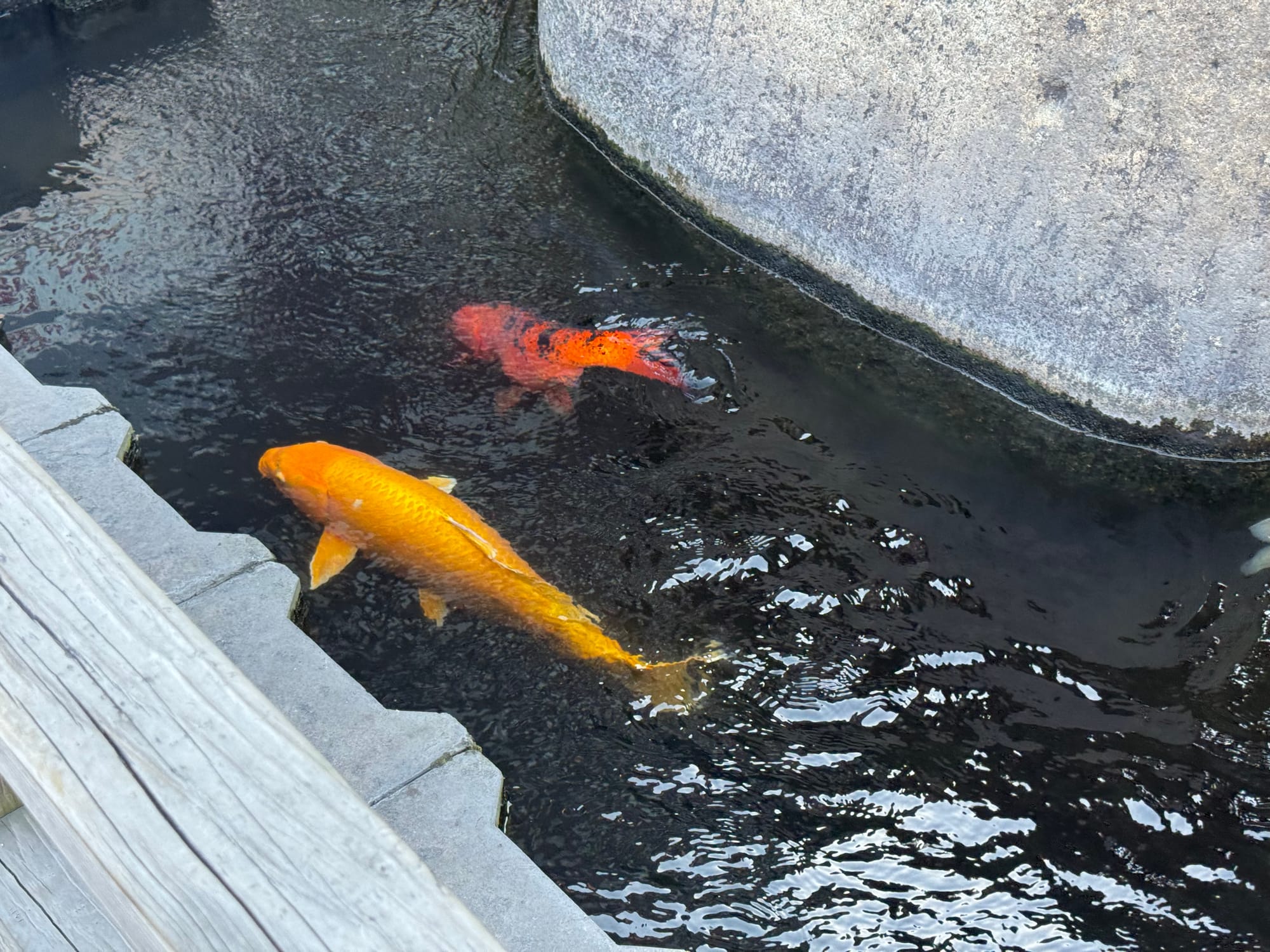
One nice little treat is that as I was walking along the pavement, I noticed a little stream/cannal next to me and I was shocked to actually see Koi in it.
A colourful koi carp swims through a canal alongside a street in Kagoshima, an unexpected sight that brings a touch of tranquillity to the city environment.Several colourful koi carp swim through a canal in central Kagoshima, transforming an ordinary city waterway into an unexpectedly picturesque urban feature.Large koi carp glide through a canal in central Kagoshima, turning an everyday urban waterway into a surprisingly colourful and tranquil city feature.
After a long day walking about, it was time to have a nice refreshing snack of grape flavoured ice.
A refreshing ICE BOX giant grape ice drink from Morinaga, enjoyed in Kagoshima as a welcome way to cool down during the city's hot and humid summer weather.
Exploring more of Kagoshima
25th July
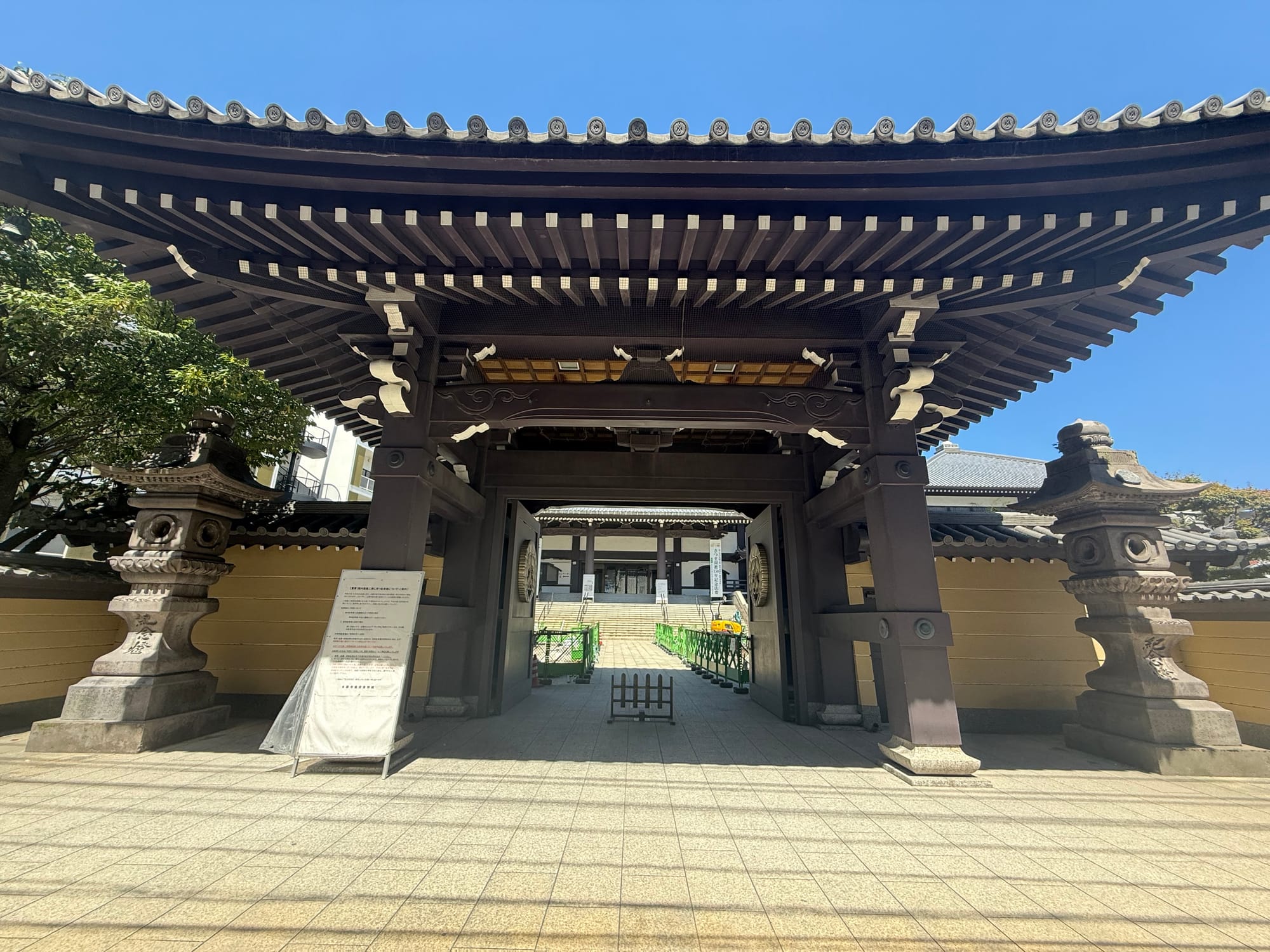
Today was a bit more of an adventurous day exploring bits of Kagoshima that wouldn't really fit into the last couple of days, so first I went to the nearby temple called Nishi-Hongwanji, but it was having construction work done on it, so i decided to leave it and head to my next destination.
Main gate of Nishi Hongwanji Temple in Kagoshima, featuring traditional wooden architecture, stone lanterns and a view towards the temple buildings beyond.
Now it was time to go to my next destination, which was the Museum of the Meiji Restoration. It was partly dedicated to Saigo Takamori and other influential figures from the Meiji restoration period.
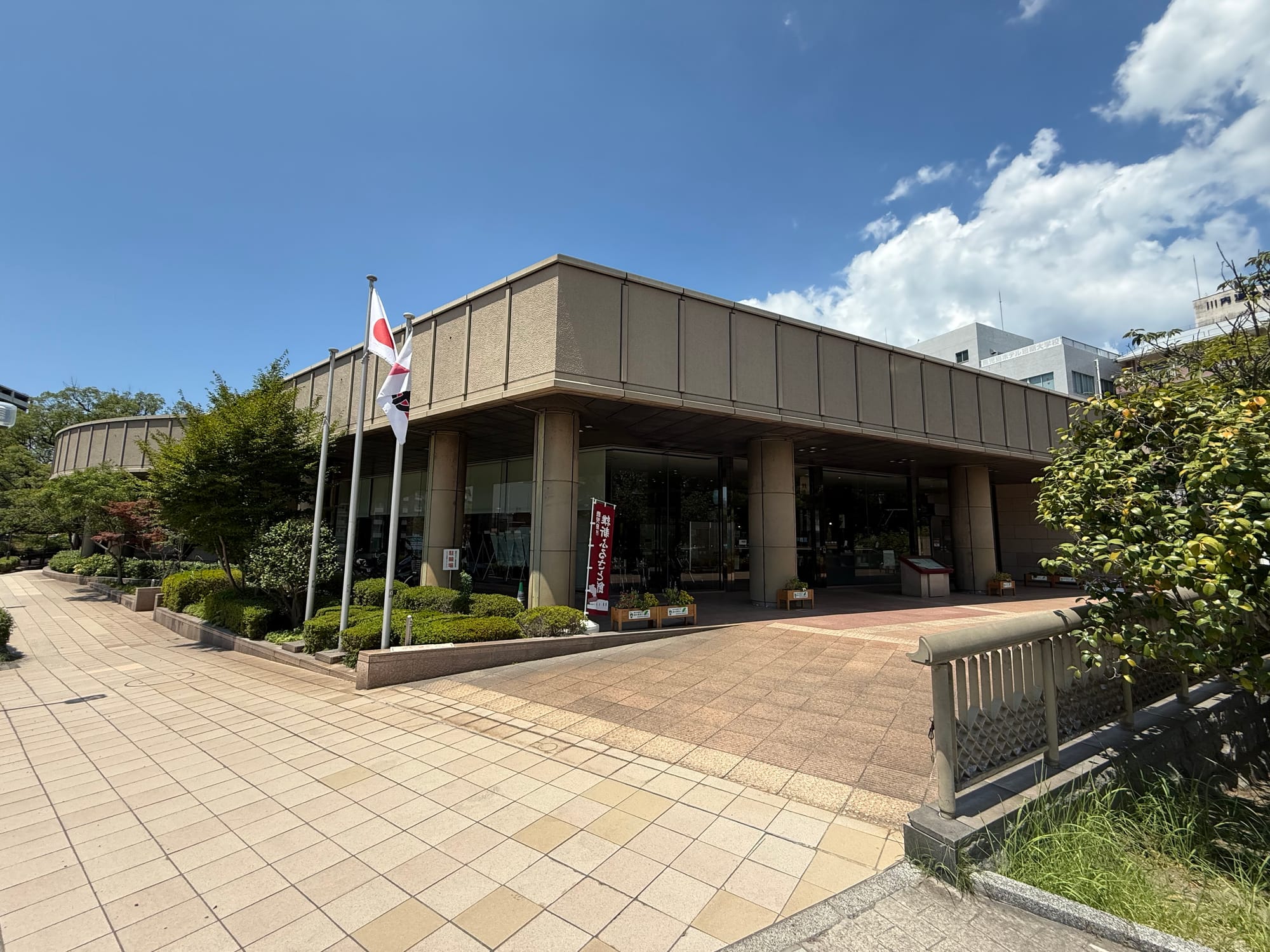
The Museum of the Meiji Restoration in Kagoshima explores the dramatic events that transformed Japan in the nineteenth century, highlighting the pivotal role played by Satsuma and its leading figures.An exhibit on Saigō Takamori at the Museum of the Meiji Restoration in Kagoshima explores the life of one of the key figures of the Meiji Restoration and the leader of the Satsuma Rebellion.An exhibit on Shimazu Nariakira at the Museum of the Meiji Restoration highlights the visionary Satsuma leader whose industrial and political reforms helped lay the foundations for Japan's modernisation.
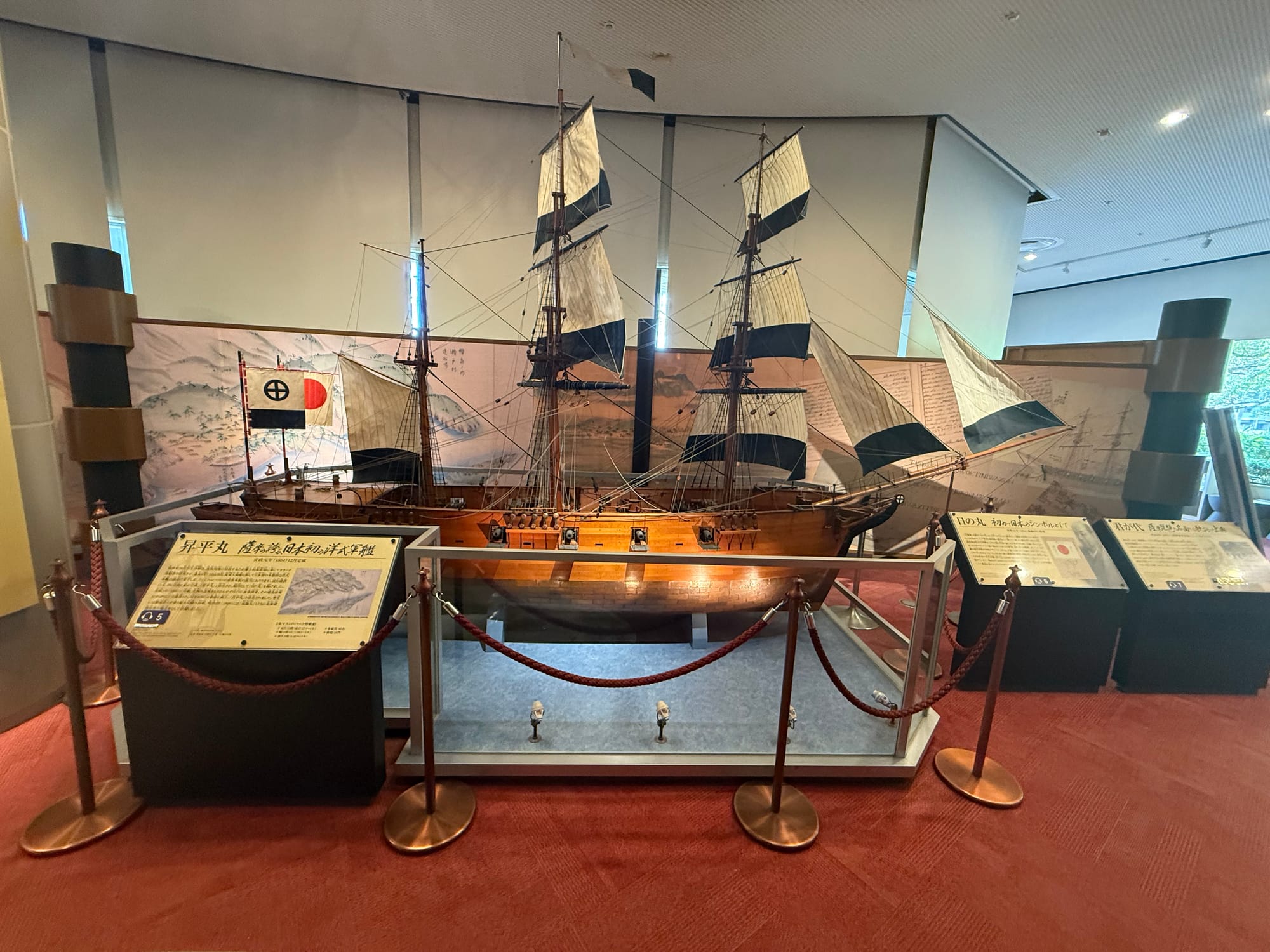
There was a big model of the first western style warship that the Satsuma clan built called the Shōhei Maru. It was also the first ship to hoist the Hinomaru, which is now the national flag of Japan.
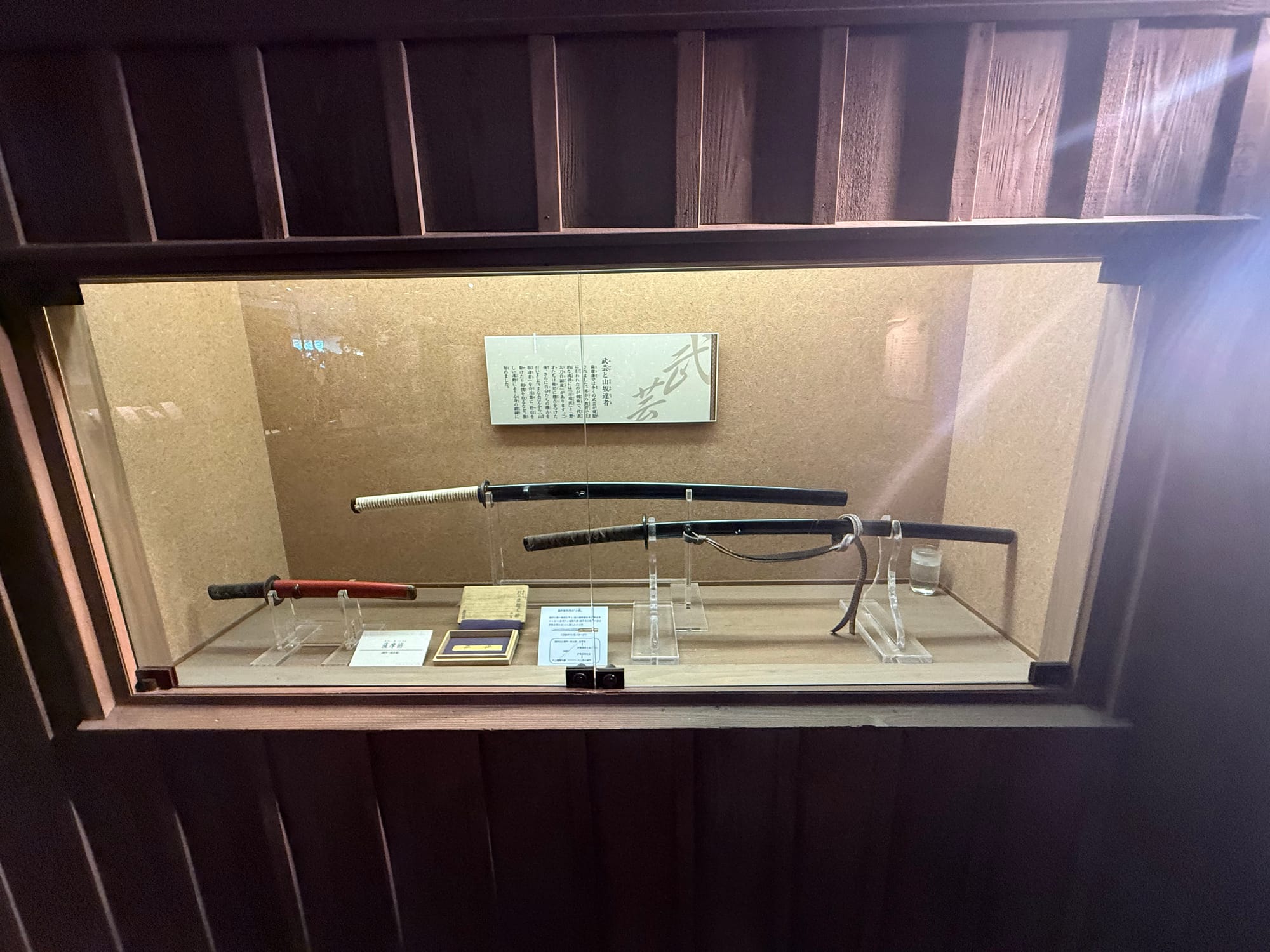
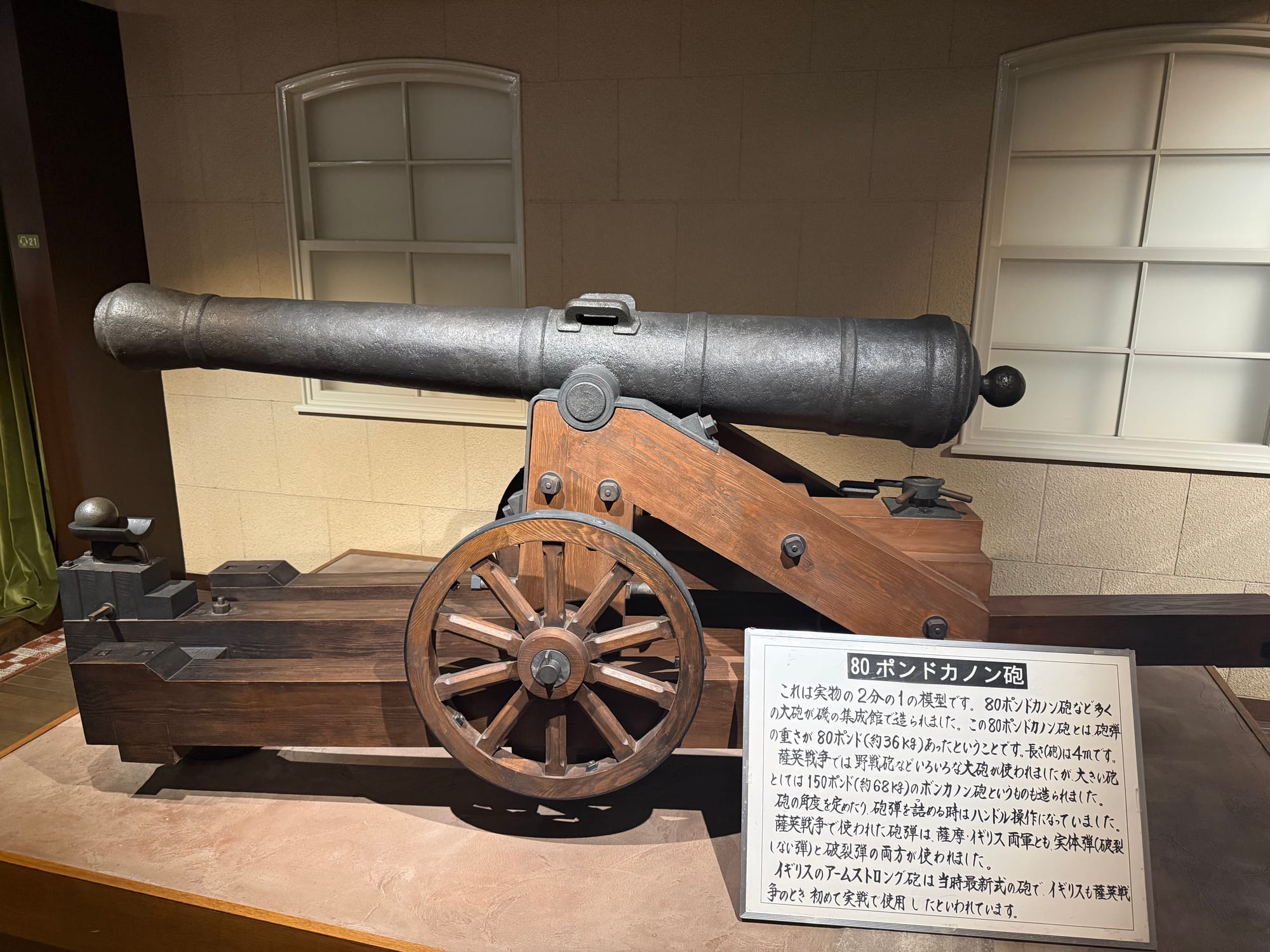
A model of the Shūhei Maru, one of Japan's earliest Western-style warships, displayed at the Museum of the Meiji Restoration and illustrating Satsuma's role in the country's modernisation.Photo by engin akyurt / UnsplashA display of traditional Japanese swords at the Museum of the Meiji Restoration highlights the weapons associated with the samurai class during the final decades of the Tokugawa shogunate and the Meiji Restoration.A scale model of an 80-pound cannon at the Museum of the Meiji Restoration illustrates the powerful artillery adopted by the Satsuma Domain as it modernised its military during the closing years of the Edo period.
There was also a theatre there that had 2 different interactive films. One was about the life of Saigo Takamori and his life and role in the Meiji restoration and the Satsuma rebellion. There second was titled Satsuma students, head west.
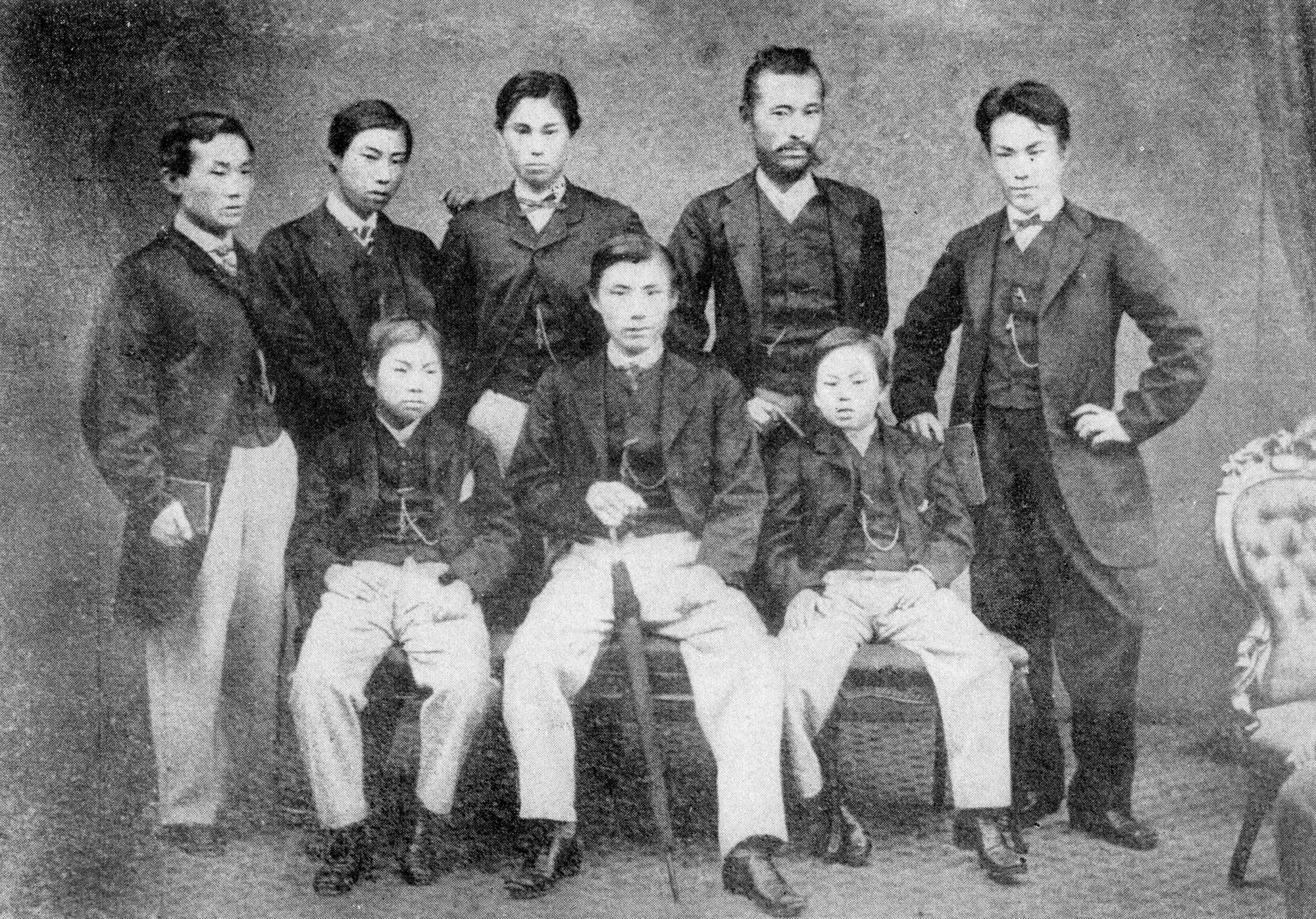
A historic photograph of the Satsuma Students, a group of young men secretly sent to Britain in 1865 to study Western science, engineering and industry, later playing important roles in Japan's modernisation.
Now i didn't realise that people from the Satsuma domain travelled to England to learn about western culture, technology and politics. This was done during Japans isolationist period and if it was found out by the Shogunate that they were leaving Japan, they would be sentenced to death. This happened after the Anglo-Satsuma war where Shimazu realised how advanced English technology was. The students were amazed at the technology on their way to England, including the gas lit lamps and the size of the ships they were sailing on. There were also amazed that the British were building the Suez canal, which connects the Mediterranean and the Red Sea. They managed to pick up English at an astonishing rate of 2 months and helped to improve technologies. Most eventually returned to Japan and implemented what they learned in the new Meiji government.
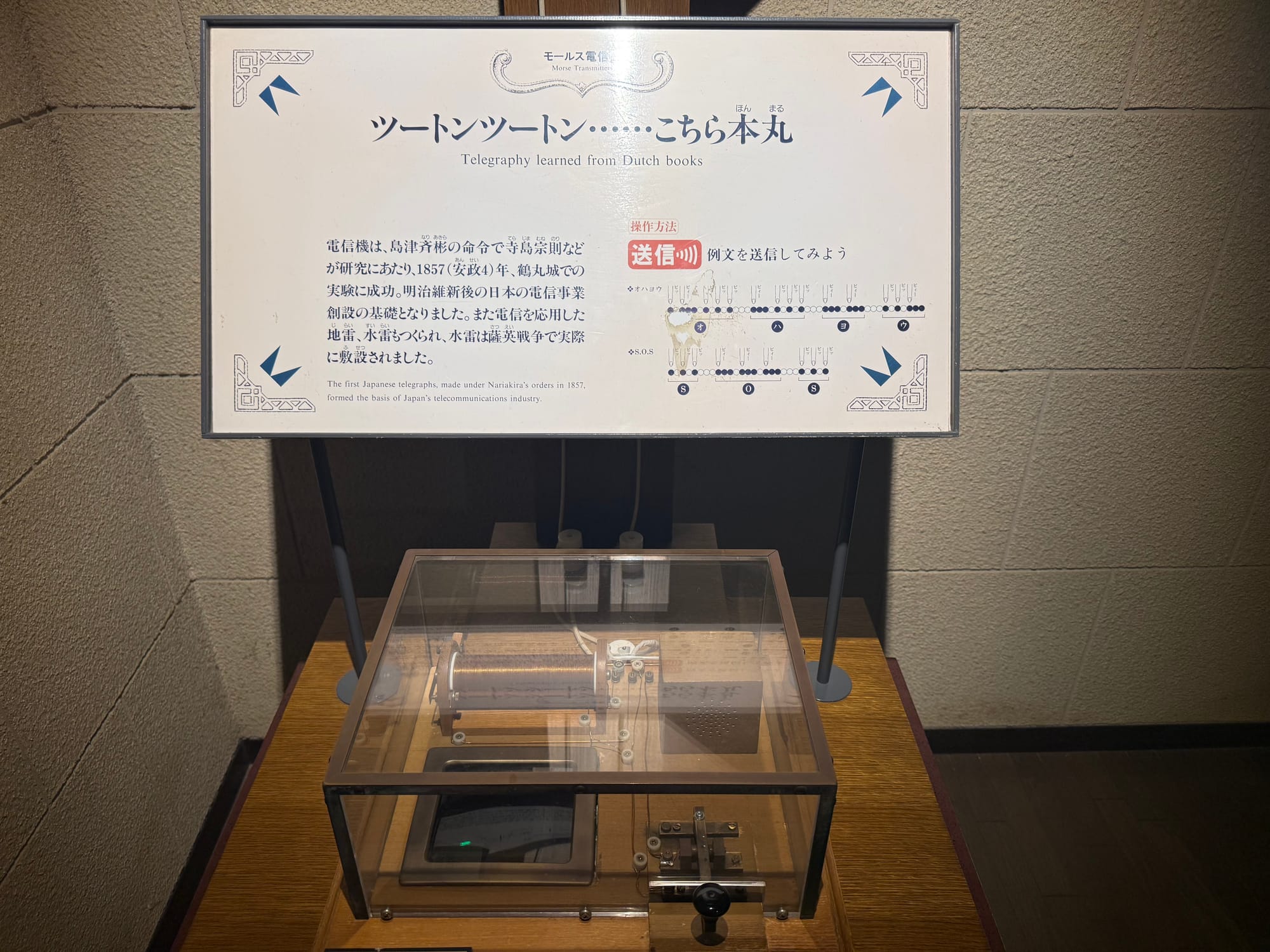
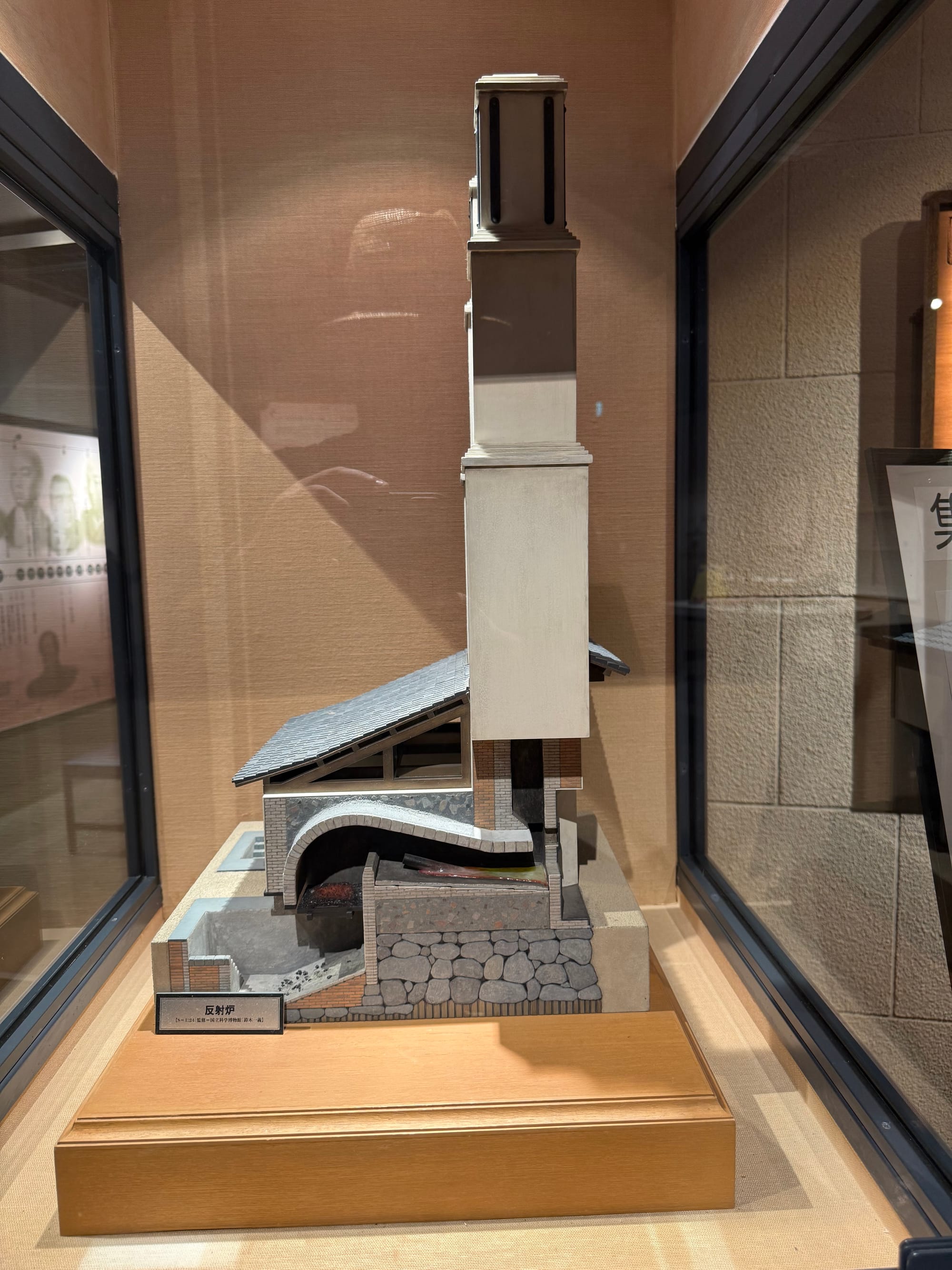
An exhibit on early telegraph technology at the Museum of the Meiji Restoration highlights how Shimazu Nariakira's experiments helped lay the foundations for Japan's modern telecommunications network.A model of a reverberatory furnace at the Museum of the Meiji Restoration illustrates the technology introduced by the Satsuma Domain to cast iron cannon, playing an important role in Japan's early industrialisation.
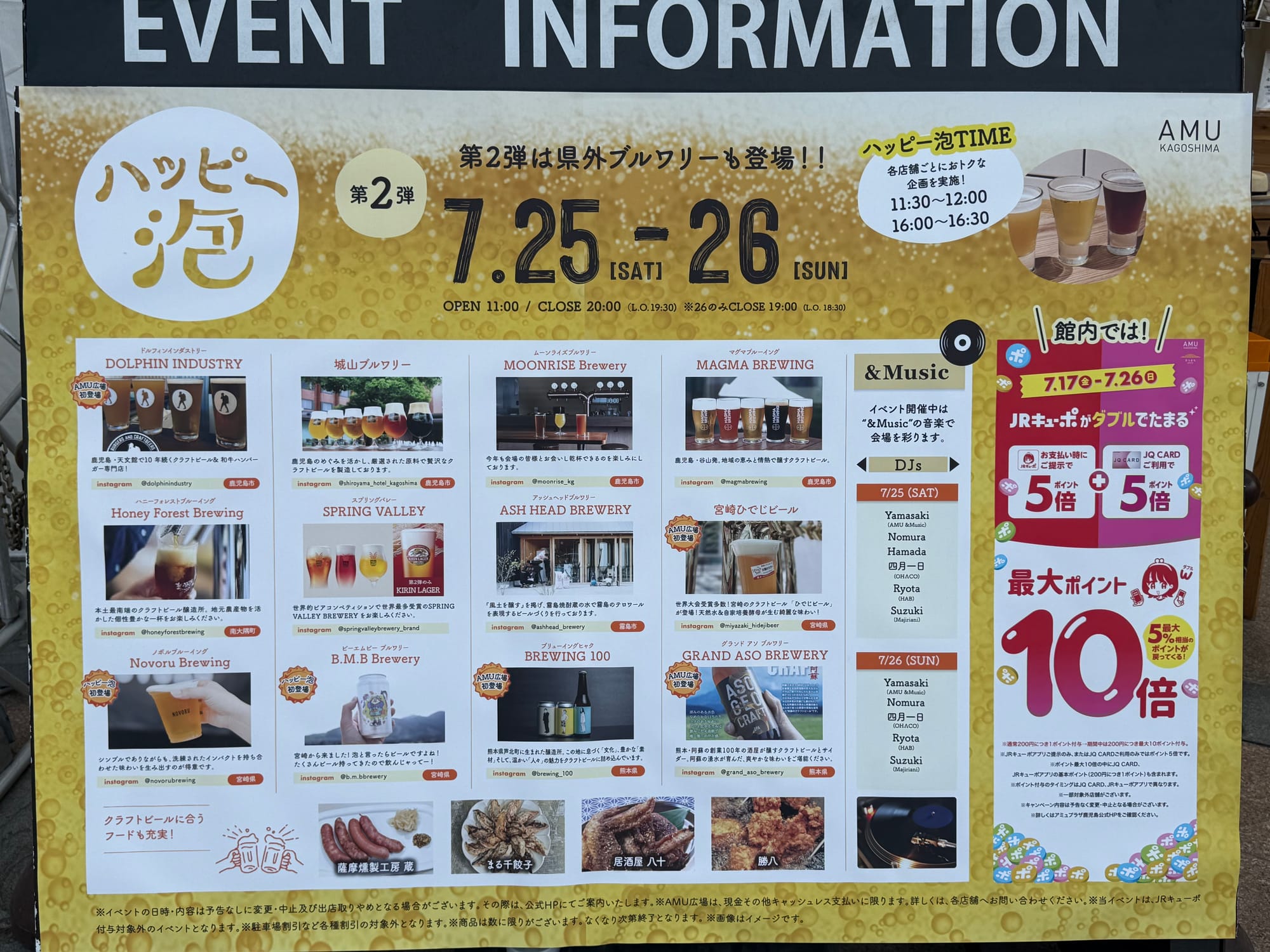
After this I headed towards Kagoshima-chuo and saw that they were having a mini beer/craft ale festival in front of the station of all things.
A poster promoting a craft beer festival in Kagoshima, showcasing breweries from across the region alongside food stalls, live music and tasting events at AMU Plaza.
After having quick look, it was time to carry on to my next destination, called Jigenji park, which i got recommended to go to, especially for the somen.
The train took about 15 mins to the nearest station, followed by a bit of a hill climb as the park is on a hill.
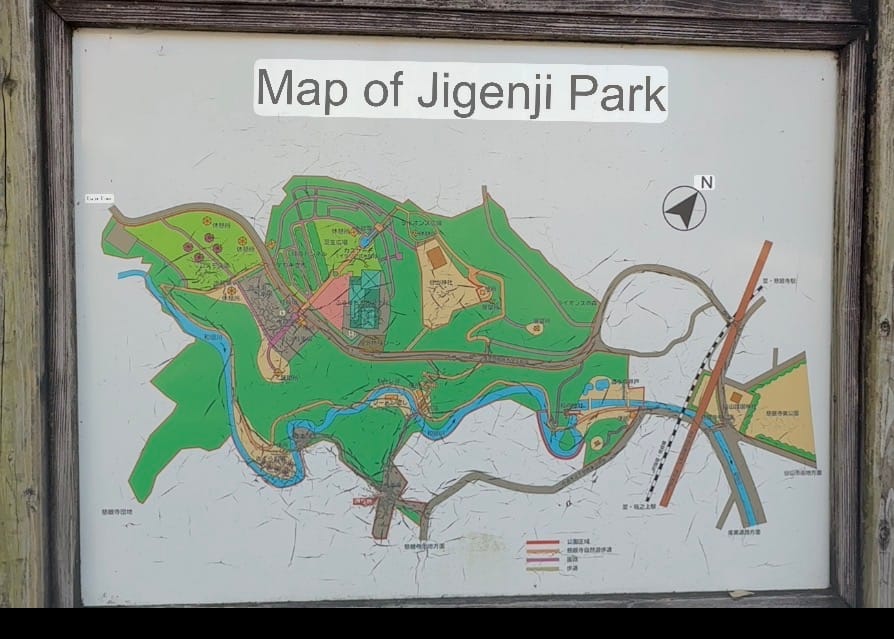
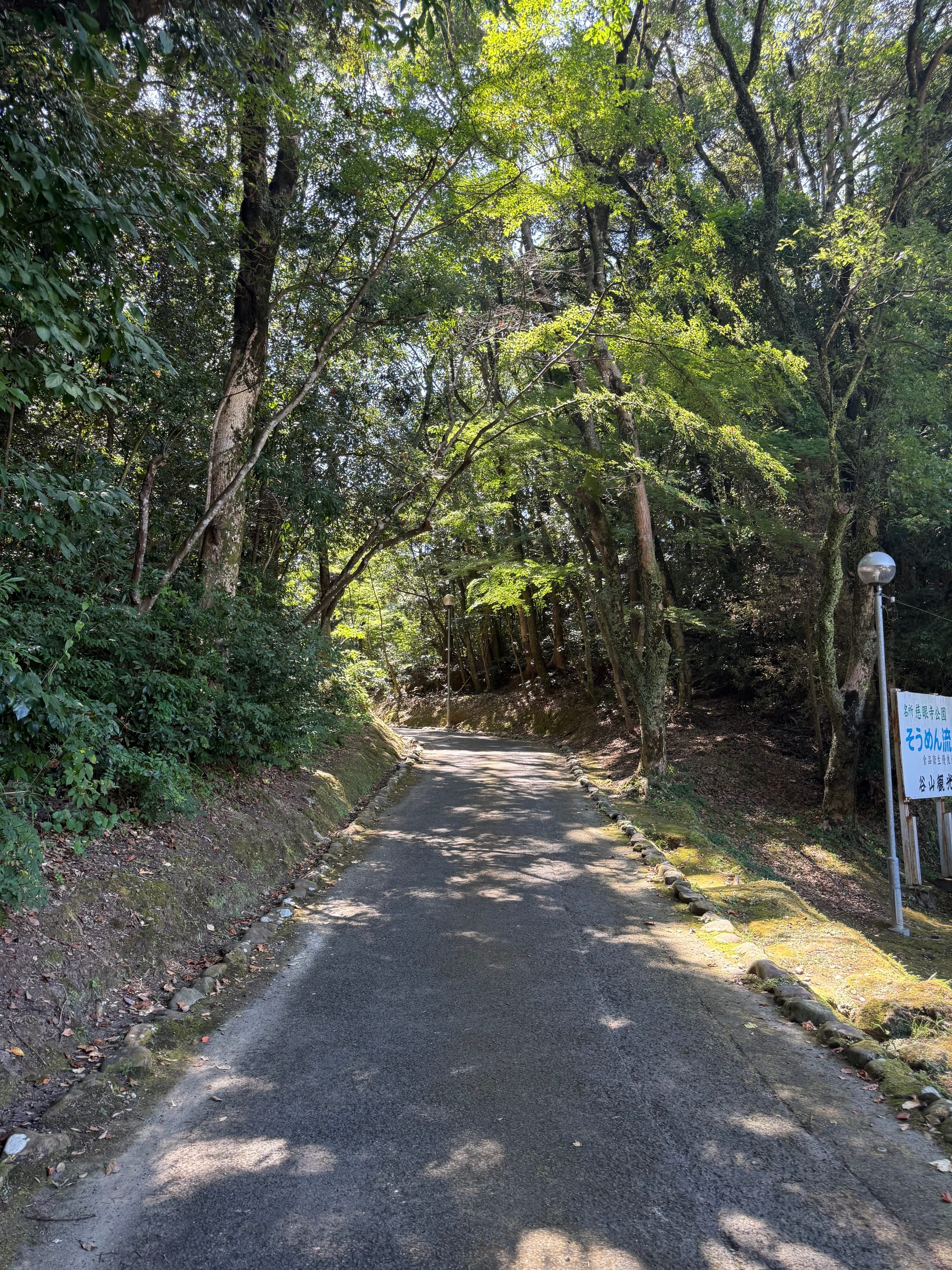
An information board at Jigenji Park helps visitors explore the park's walking routes, streams and natural attractions, one of Kagoshima's most popular green spaces.A peaceful path through Jigenji Park in Kagoshima, where mature trees provide welcome shade and a tranquil escape from the city's summer heat.
After having a little bit of a wonder, I came across a stream, where many kids parents, teenagers were cooling off and because it was about 36c at this point, i thought, why not, so sat there for about 10 mins with my feet in the water.
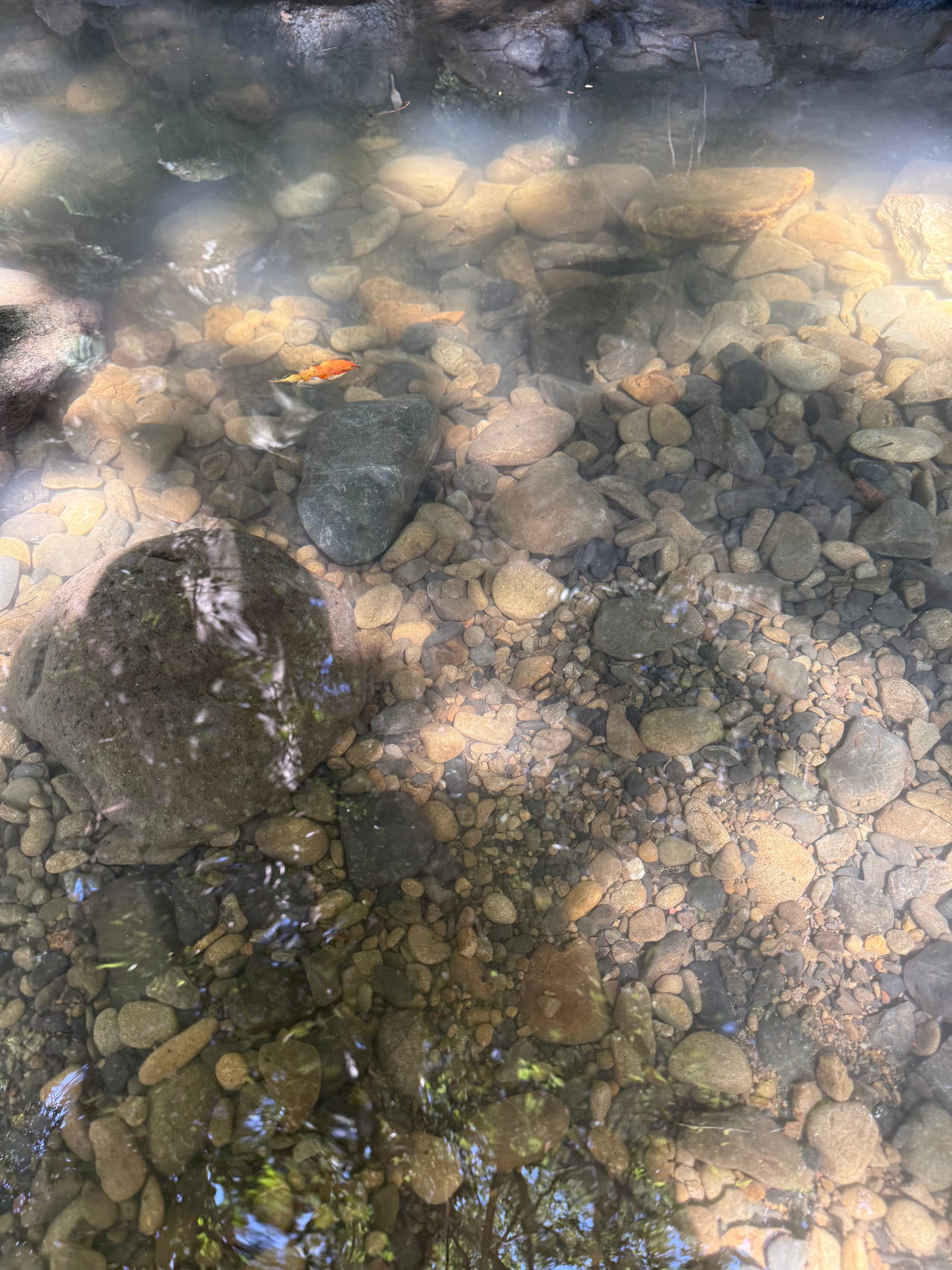
Crystal-clear water in Jigenji Park reveals the rocky streambed below, with a small fish gliding through the current beneath the shade of the surrounding woodland.
Afterwards I carried on round the path and thought for a second that i was going to be spirited away by the looks of the forest, but luckily I wasn't.
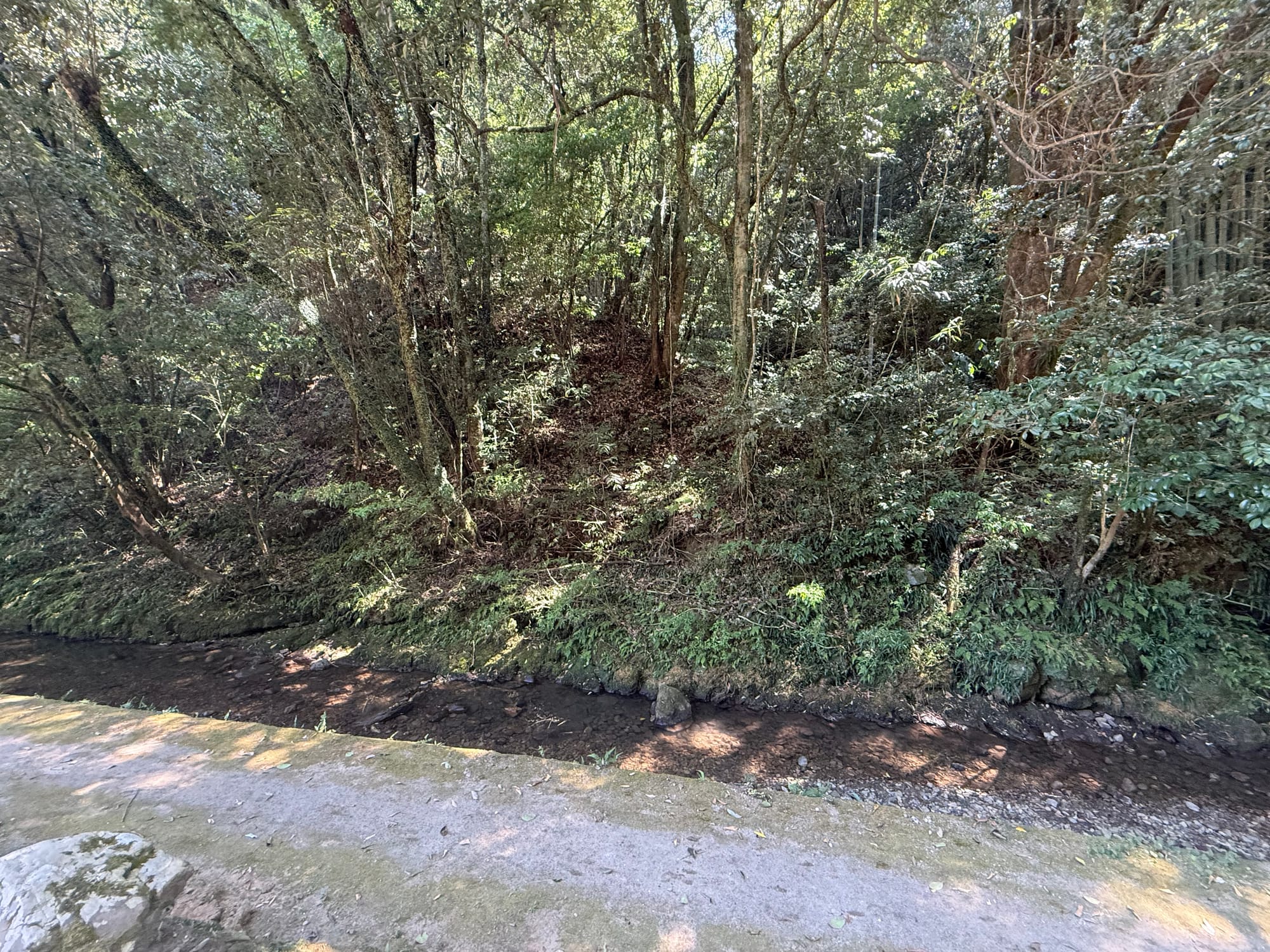
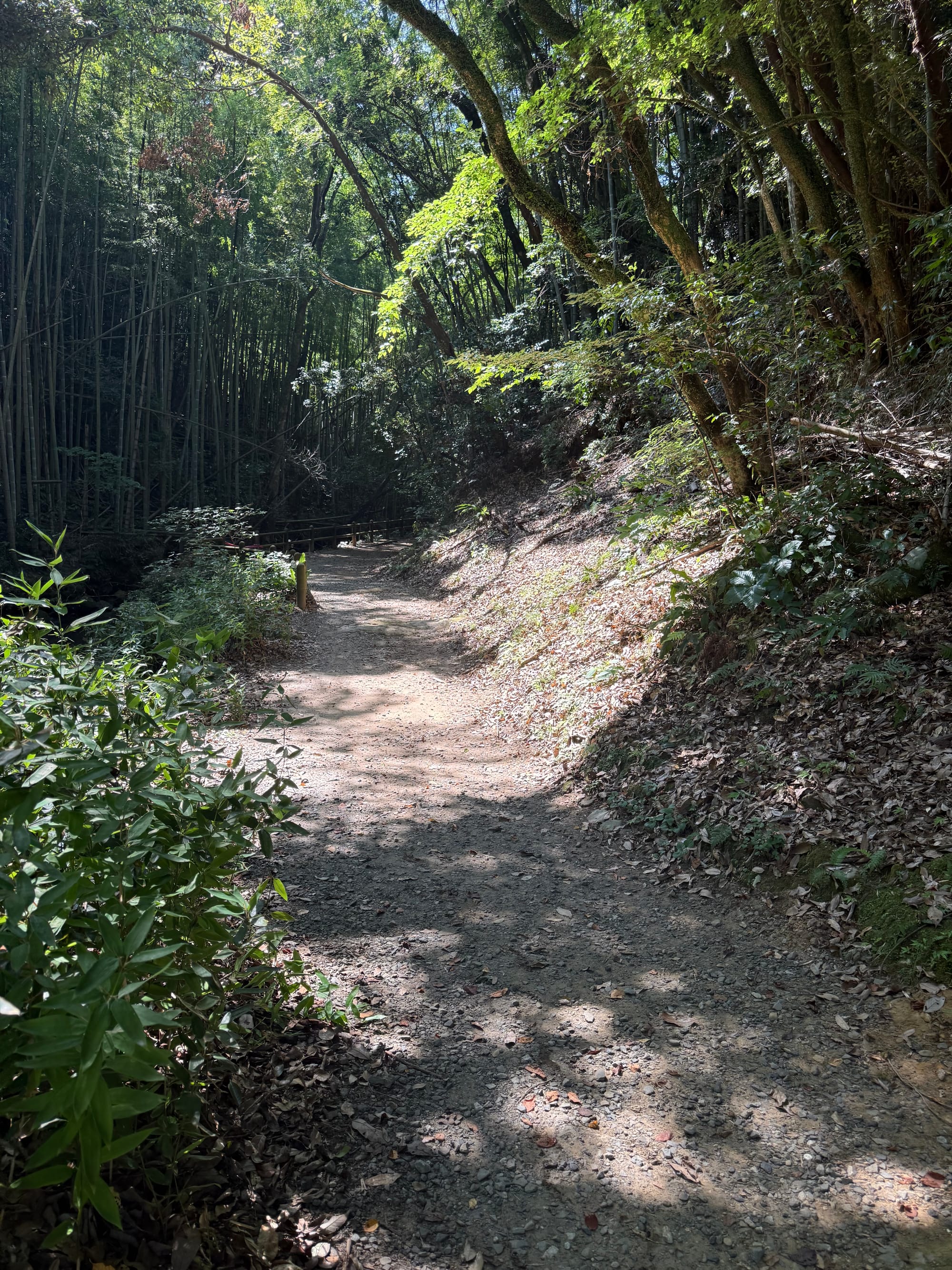
A tranquil stream winds through Jigenji Park in Kagoshima, where clear water, dense woodland and abundant greenery create a peaceful natural retreat within the city.A shaded woodland trail in Jigenji Park leads through bamboo groves and native forest, offering a peaceful escape into nature on the outskirts of Kagoshima.
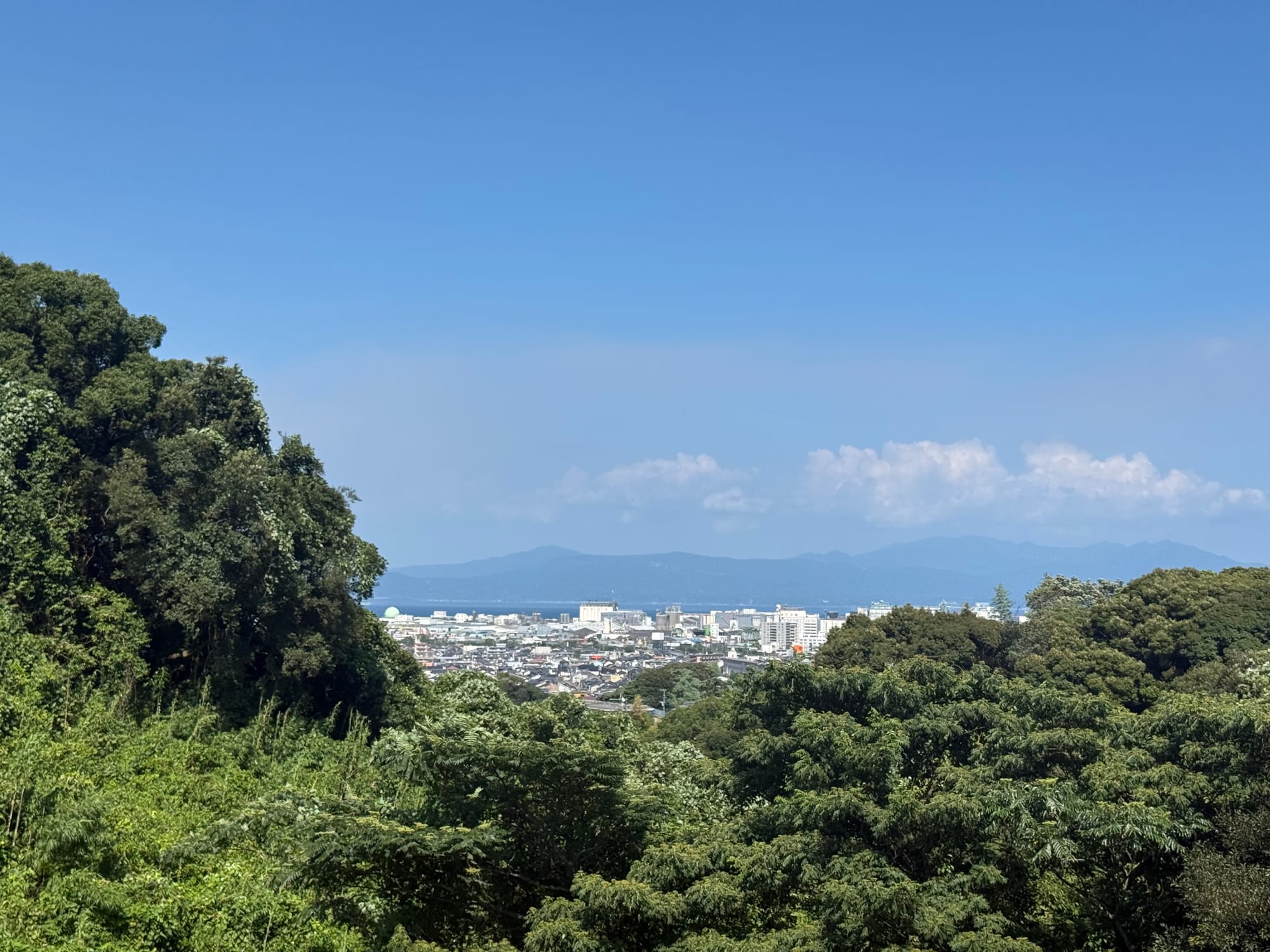
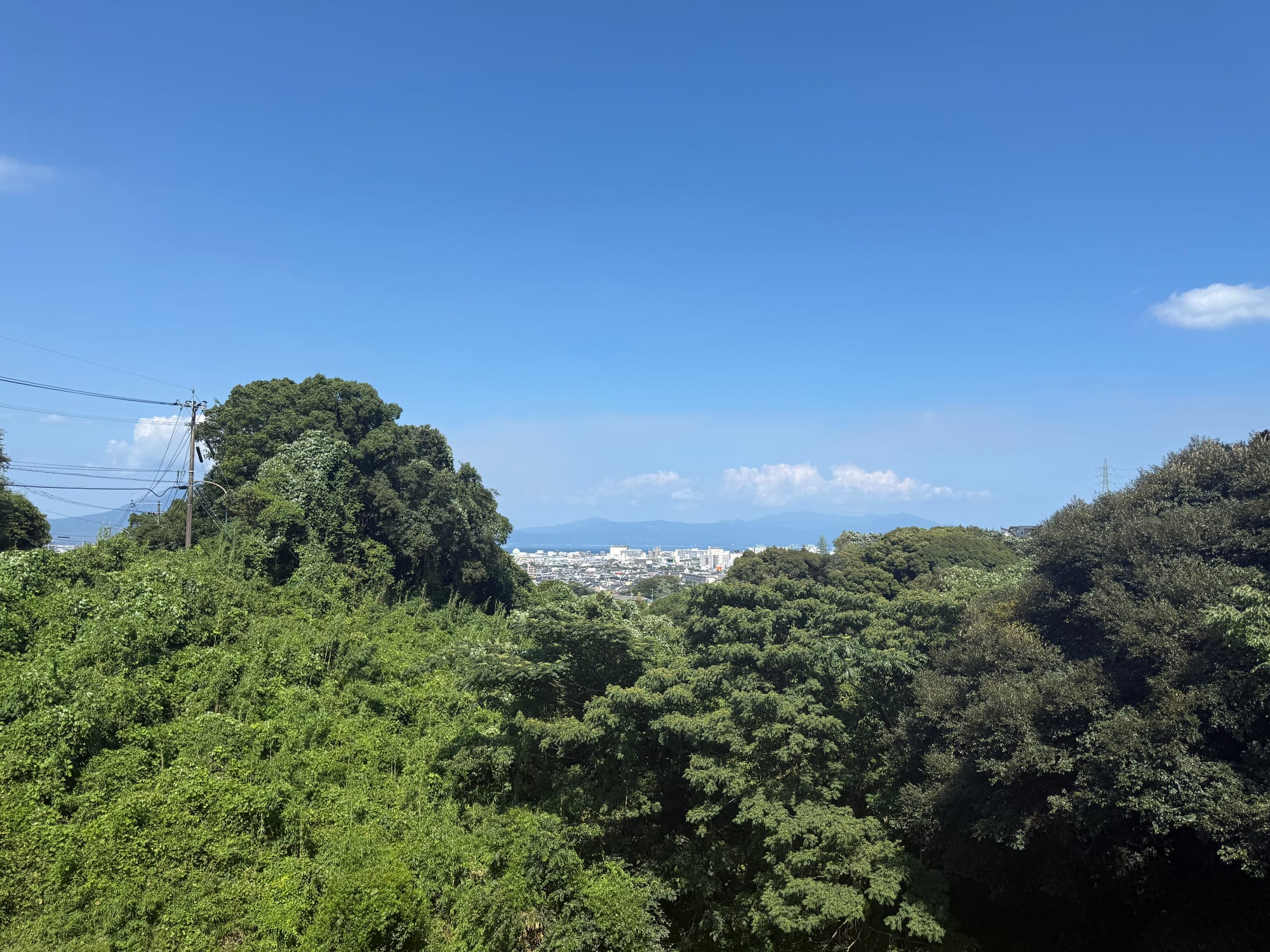
After emerging from the forest area, I got a really good view of Kagoshima and the bay from the top. I could just about see Sakurajima, but it was hard to get a good angle that didn't include tree being in the way.
A scenic viewpoint in Jigenji Park overlooks Kagoshima, where the city spreads out beyond the surrounding forest with distant mountains forming a dramatic backdrop.Looking out from Jigenji Park, the forested hills give way to views of Kagoshima and the mountains beyond, showcasing the contrast between the city's urban landscape and surrounding nature.
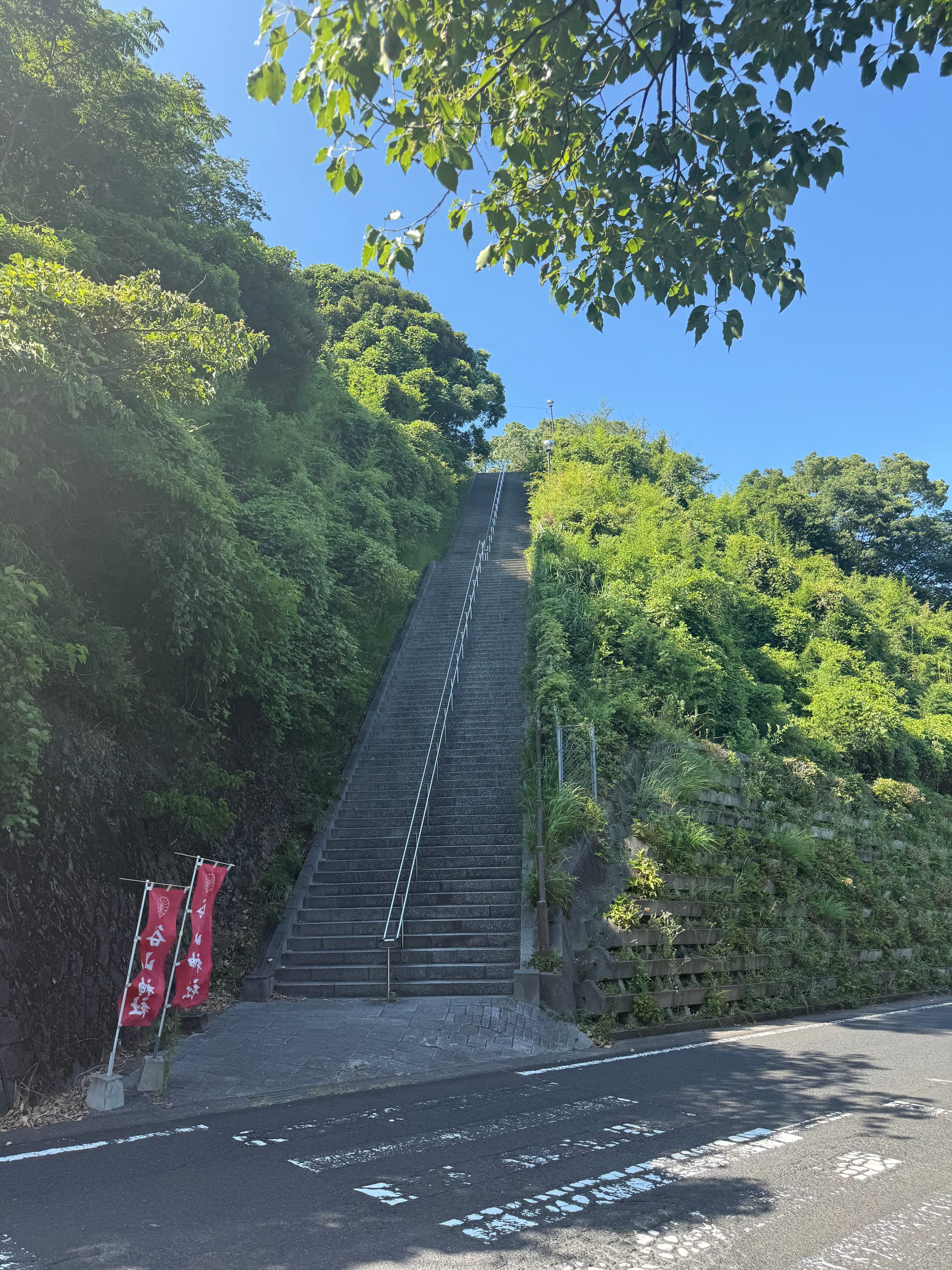
After this, it was time to start heading down to Jigenji Somen noodle in the park, but just to give you an idea of how steep the hill is, this is one of the staircases, which i was level with about 1 minute before i started walking down the footpath next to the road.
A seemingly endless staircase climbs the hillside near Jigenji Park, offering access to higher viewpoints above Kagoshima and a challenging ascent in the summer heat.
Now when I got to the Jigenji somen noodle place, i didn't really fancy anything off the menu, so retired for the day and headed back to the hotel.
See you all next time in my adventures where I will be renting out a Kei car in the hot spring town of Beppu!!!