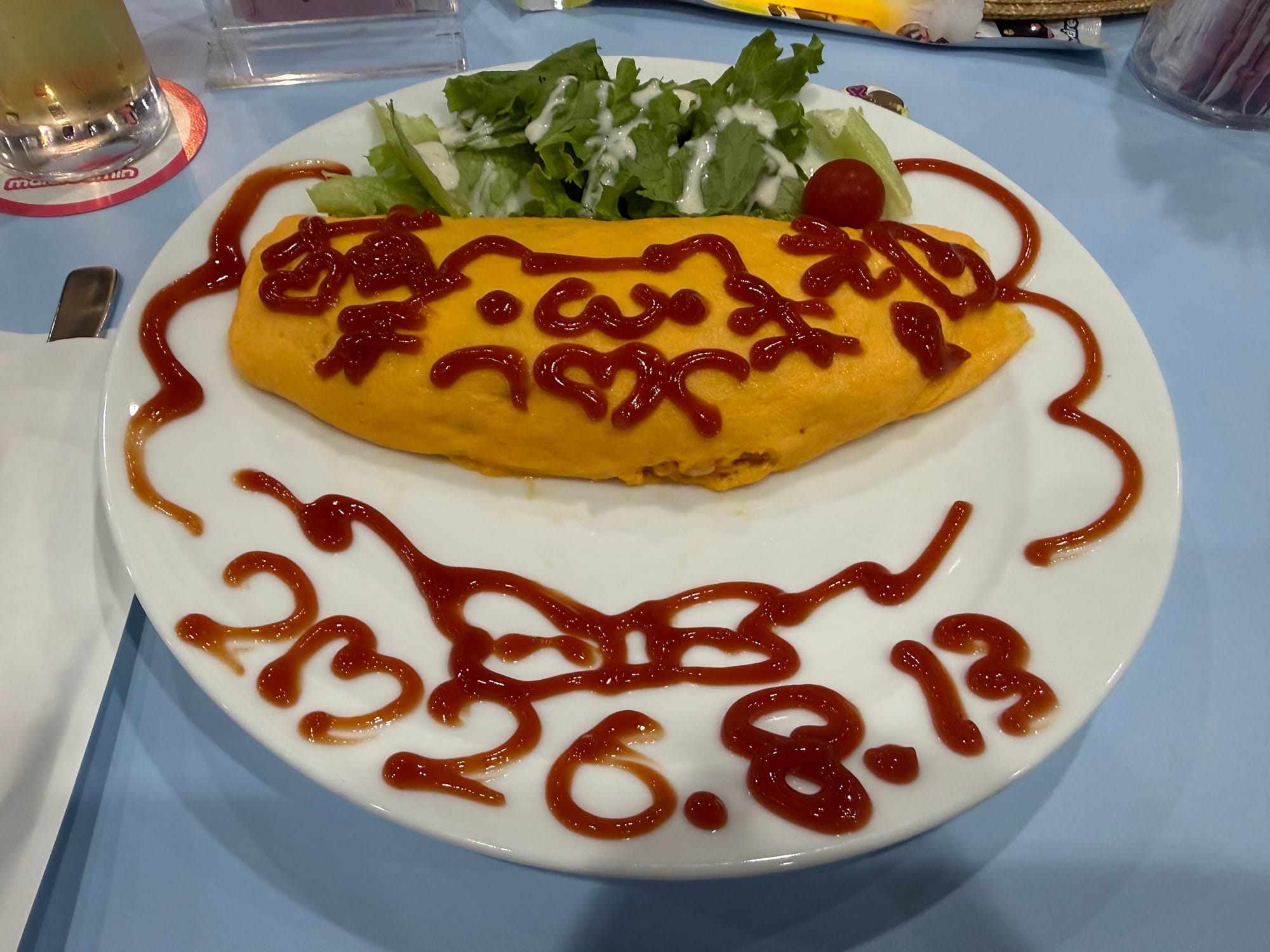
An omurice at maidreamin Namba, decorated with ketchup artwork prepared by the café staff. Creative food presentation and personalised designs are a signature part of the maid café experience.
Hey everyone, welcome back, this blog is of my first few days in Osaka, including getting back there, a day out in Kyoto and then going to a maid cafe.
Going Back to Osaka
11th August
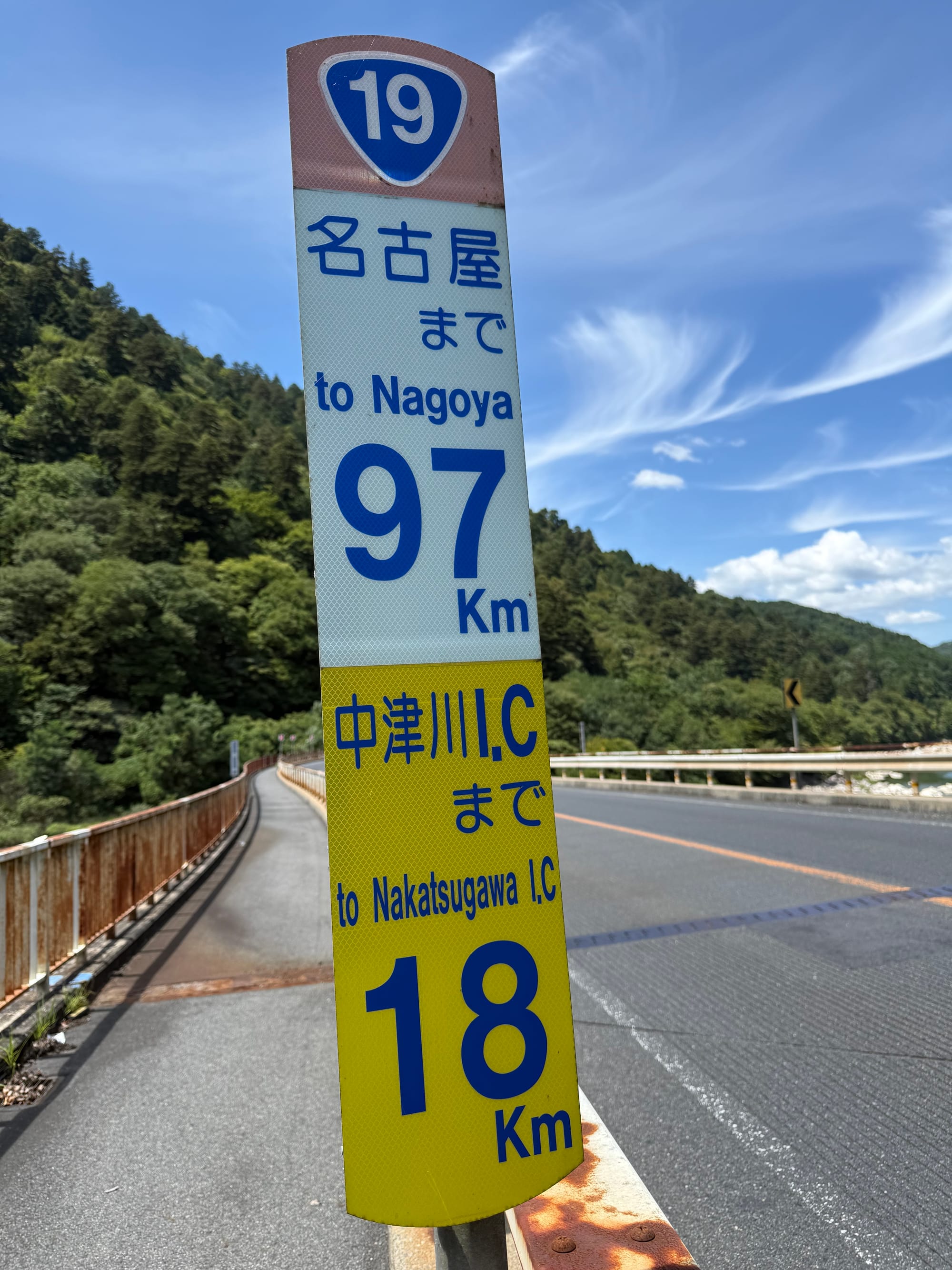
Now getting back to was a bit of a convoluted path, as I needed to take the car back to Nagoya, but return it to a different branch as the original one was closed. I could take the expressway the whole way, which could cost about 5000 yen (~£23.20) and take 2.5 hours or I could just take the local roads, which would be free, but slower at 4.5 hours to go about 198 KM (123 miles).
A distance marker on National Route 19 during the drive back to Nagoya, indicating 97 kilometres remaining to the city and 18 kilometres to Nakatsugawa Interchange in the Kiso Valley.
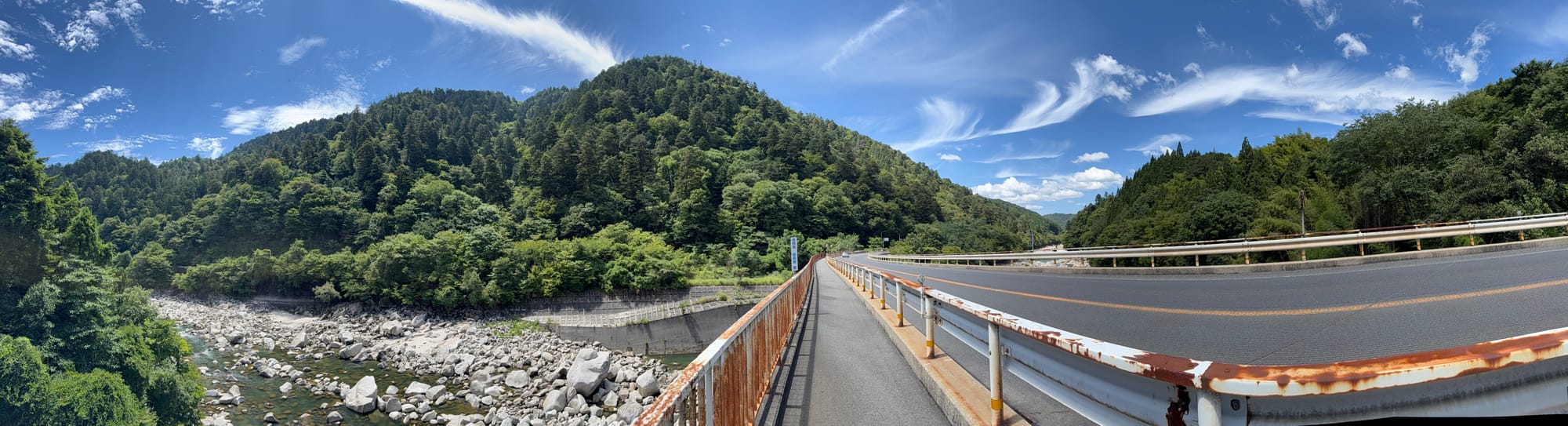
As I woke up early enough, I decided to take the local roads first and then jump on the expressway if needed. Along the way I did need a kip about half way through. I am also sure there was a small earthquake as when going through one of the tunnels, the car started shaking quite a bit left and right, either that or the tunnel floor was really uneven.
A scenic stretch of National Route 19 in the Kiso Valley, where the road follows mountain rivers through forested landscapes on the journey back toward Nagoya.
I left Suwa at about 8:10 and dropped the car off at Nagoya station at about 13:20. My train from Nagoya to Osaka is the same as the one the other day and left Nagoya at 14:00, which game me some time to get some Ekiben.
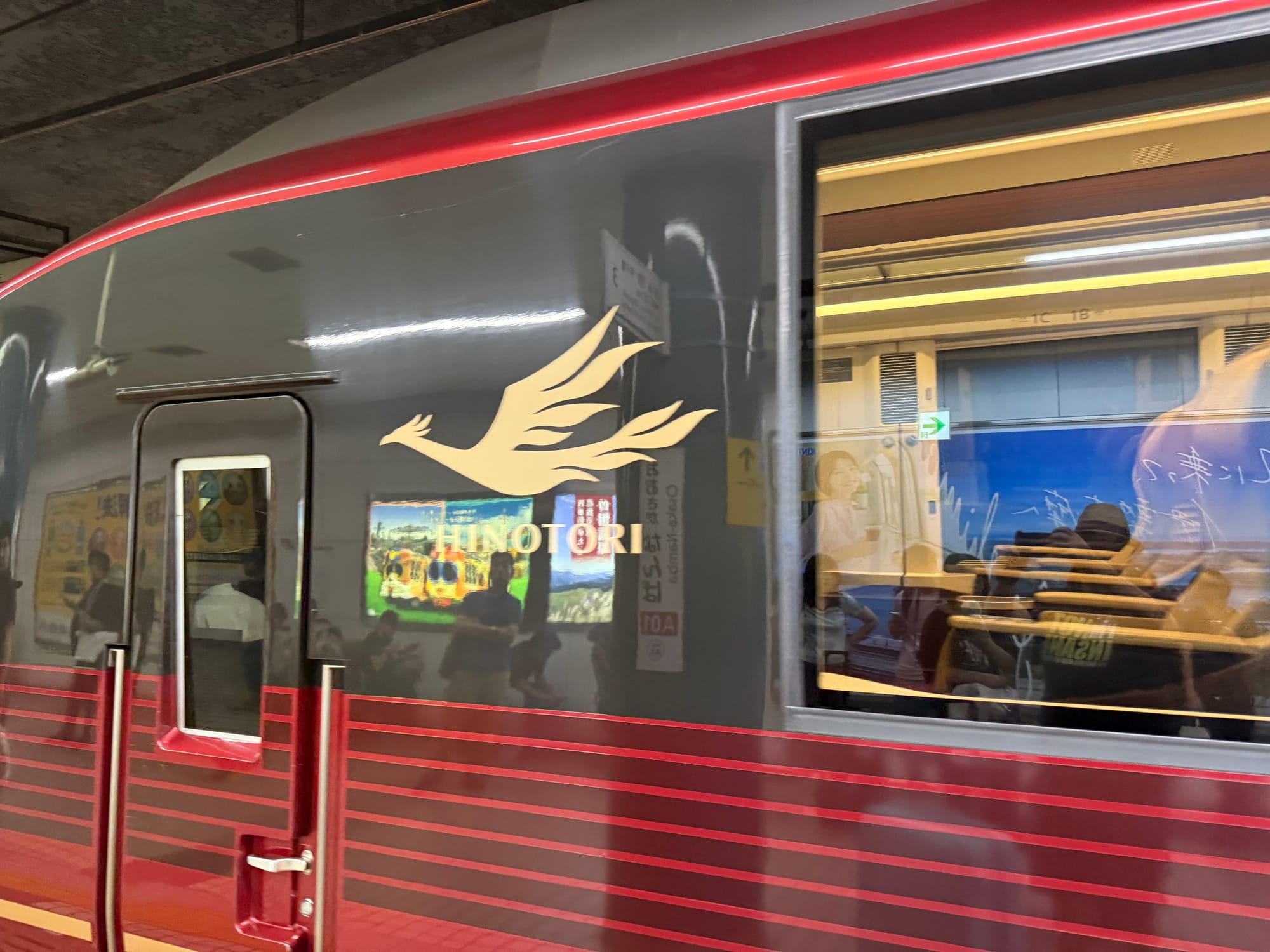
The Hinotori limited express train at Nagoya Station. Operated by Kintetsu, the premium service connects Nagoya with Osaka and is known for its distinctive red livery and comfortable long-distance seating.Relaxing aboard a Kintetsu Hinotori limited express train on the journey back to Osaka. The train's premium seating and modern interior are designed to provide a comfortable long-distance travel experience.
Which included the luxurious premium class again, where the seats recline quite a bit.
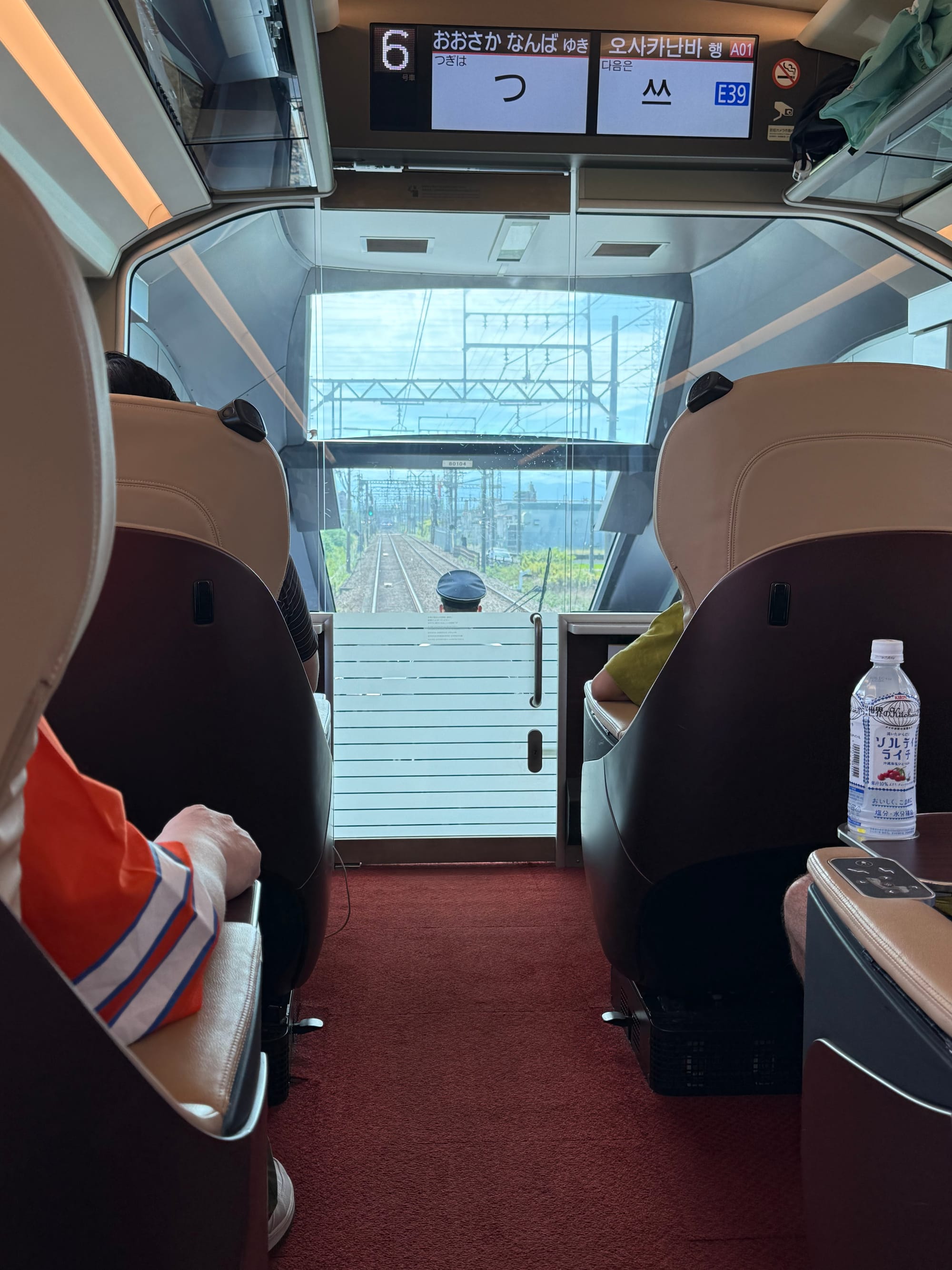
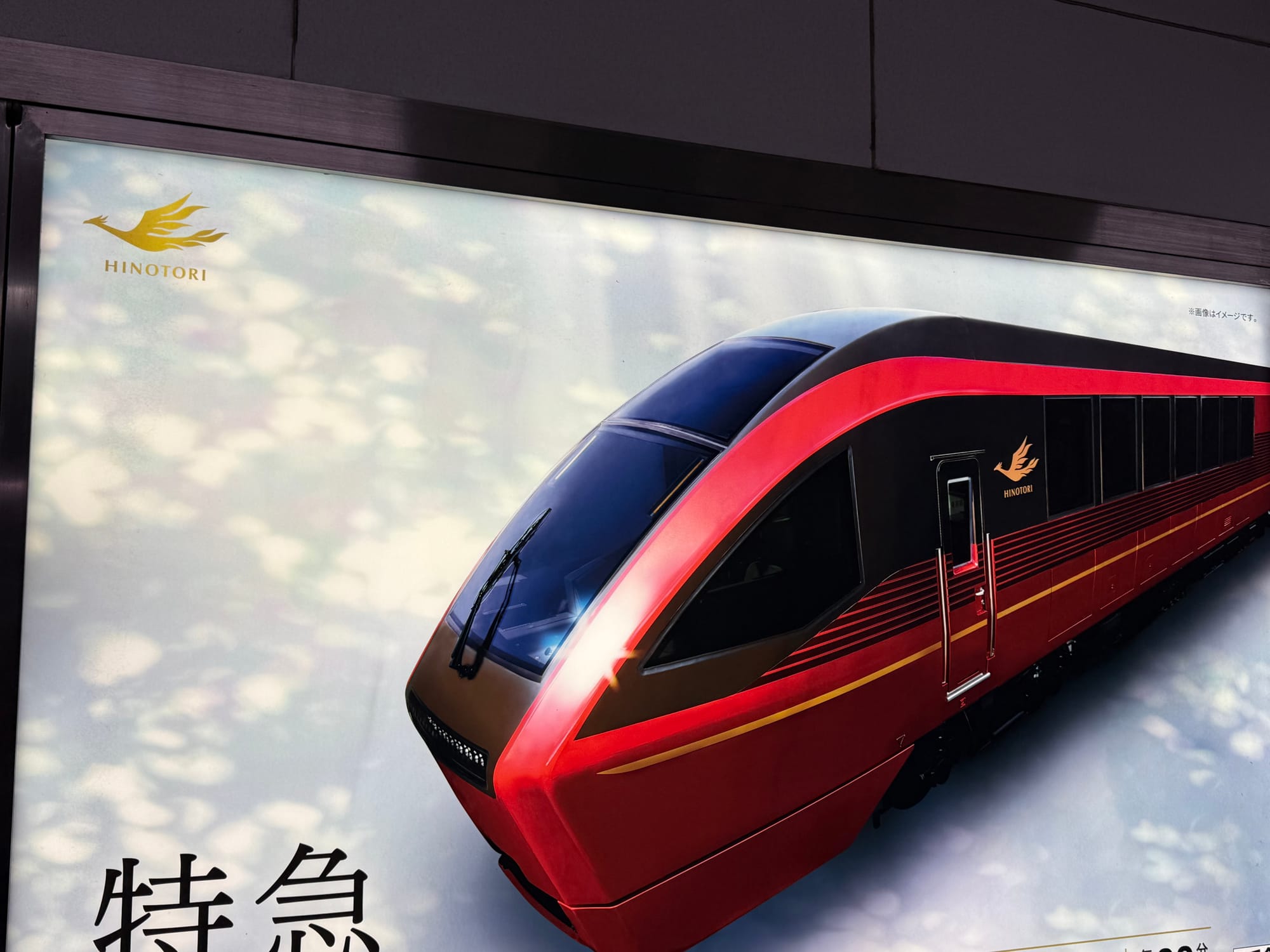
The front observation section of a Kintetsu Hinotori limited express train, offering passengers a forward-facing view of the line while travelling between Nagoya and Osaka.A promotional display for Kintetsu's Hinotori limited express train. Introduced in 2020, the premium service connects Nagoya and Osaka with distinctive styling, spacious seating and enhanced passenger comfort.
I am staying in the same hotel that I stayed at during the beginning of my Holiday in Japan, the APA Hotel & Resort Osaka Umeda Eki Tower, but I didn't get there till about 16:50, due to having to transfer at Osaka Namba to Osaka Umeda.
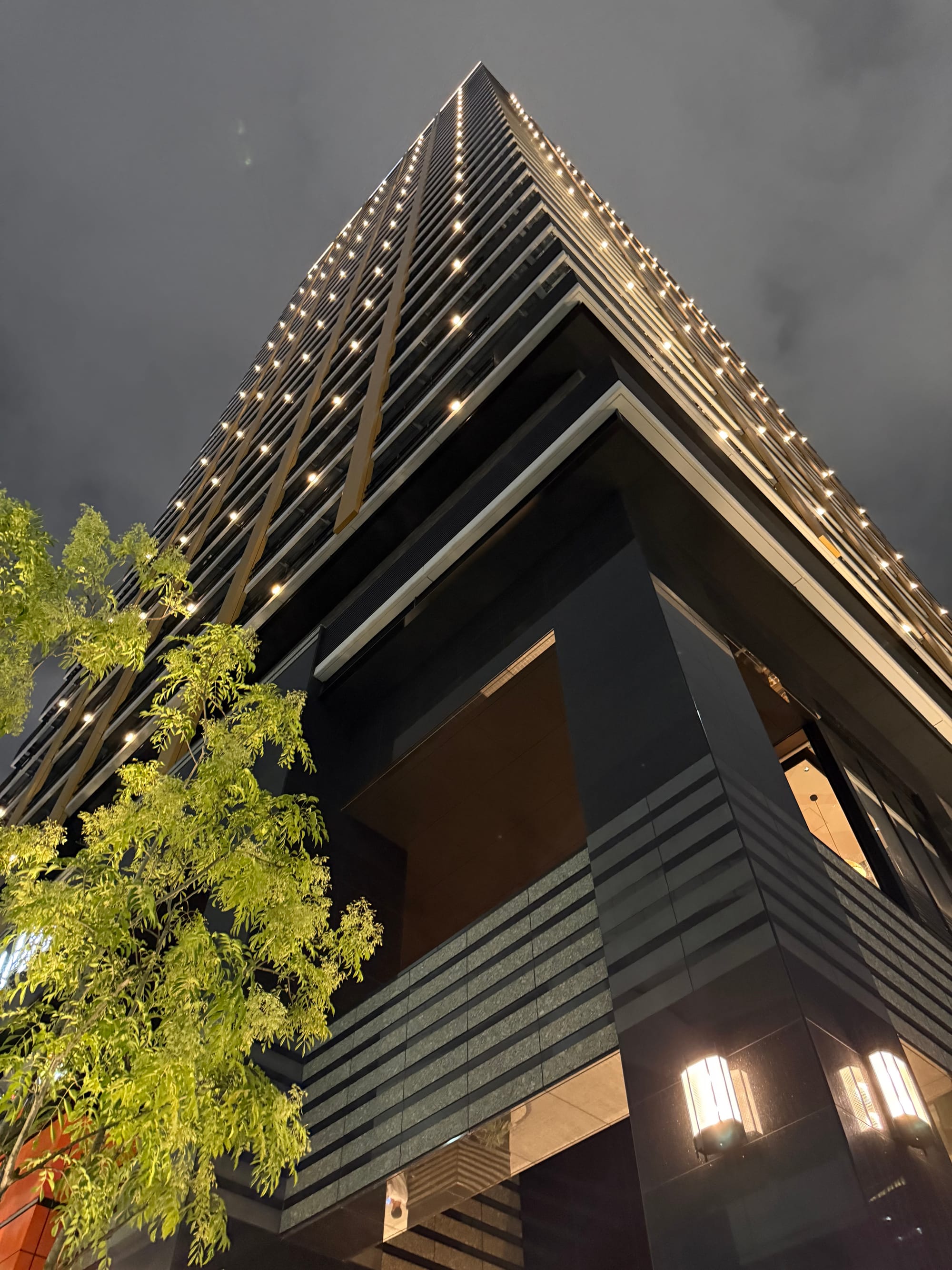
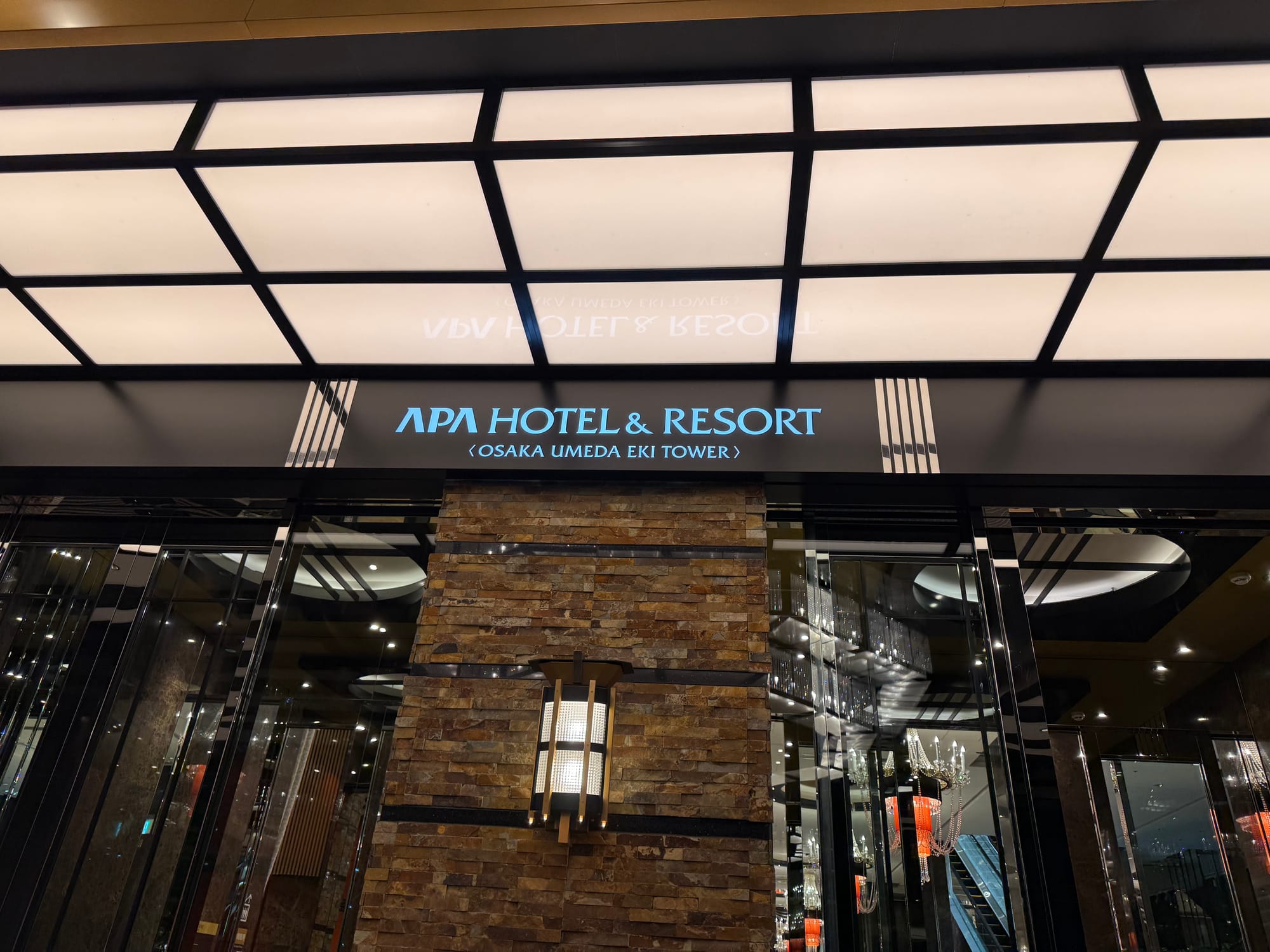
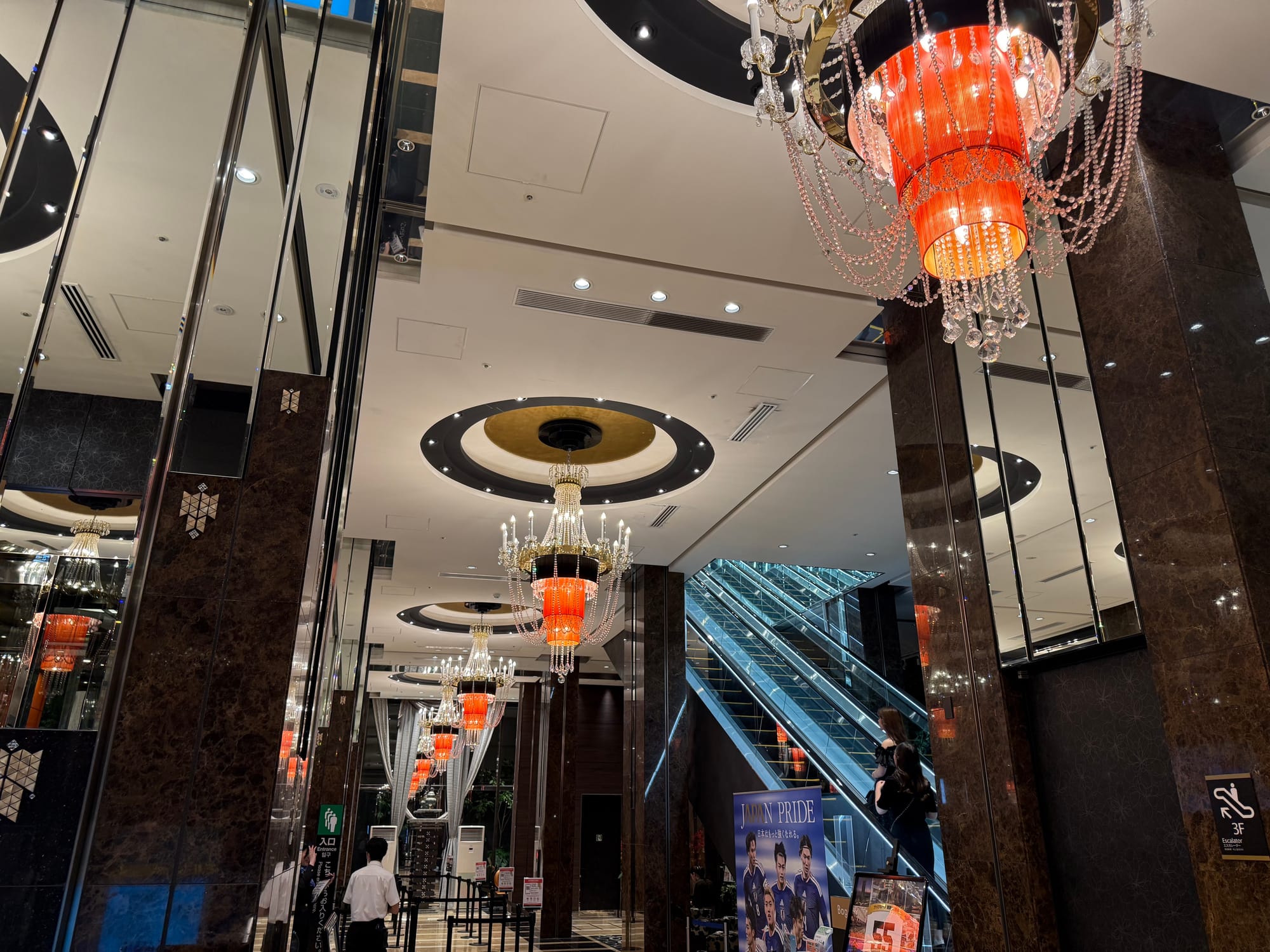
My hotel in Osaka, photographed at night. The illuminated tower rises above the city streets, marking the end of a journey through the mountains, lakes and historic towns of central Japan.The entrance to APA Hotel & Resort Osaka Umeda Eki Tower at night. Opened in 2023, the hotel is one of Osaka's largest accommodation complexes and is conveniently located near Osaka Station and Umeda.The lobby of APA Hotel & Resort Osaka Umeda Eki Tower features a dramatic interior with chandeliers, mirrors and high ceilings, reflecting the scale of one of Osaka's largest hotel complexes.
Day Out in Kyoto
12th August
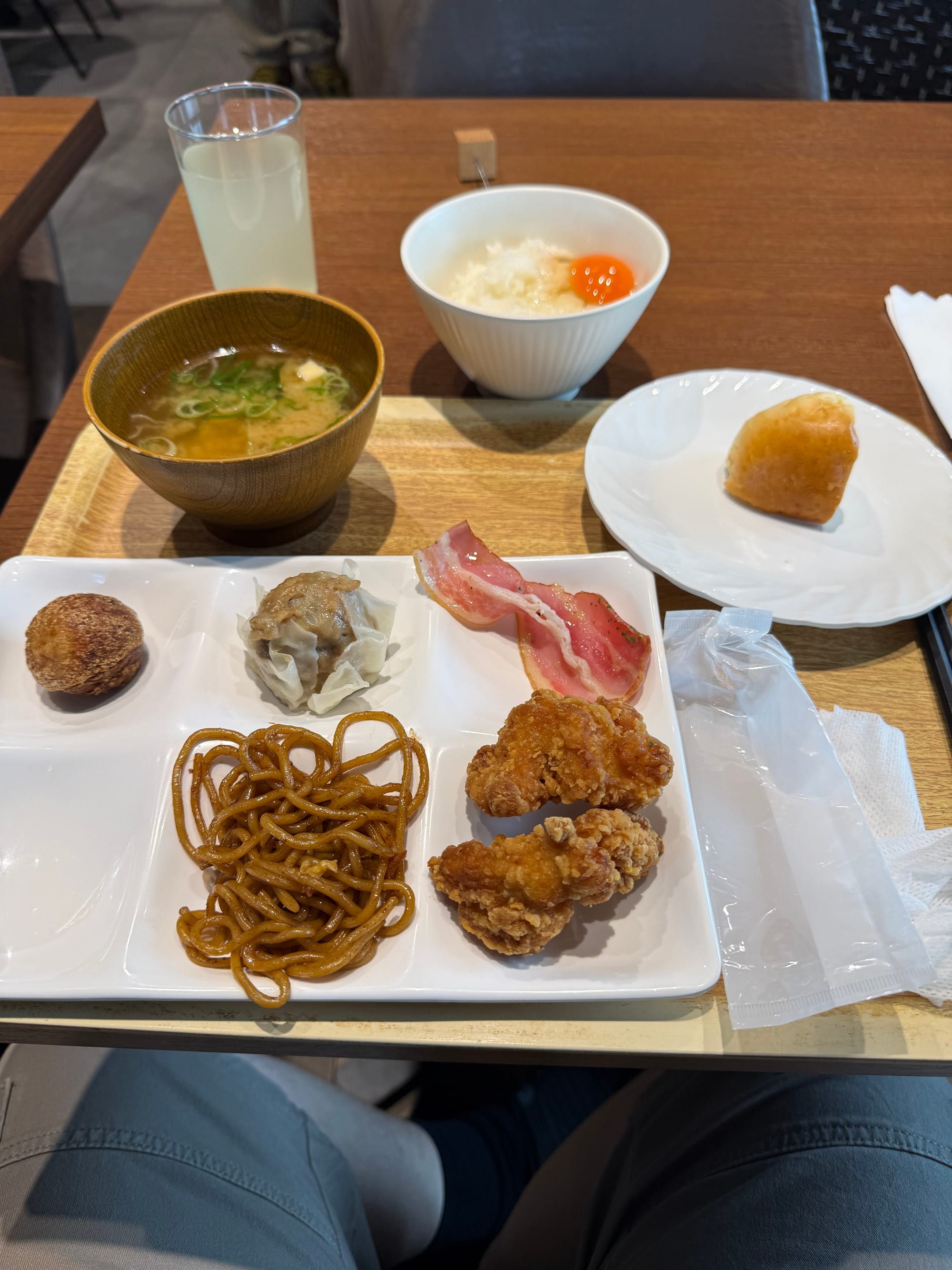
Today was my day out in Kyoto and I had a bit planned such as going to the Fushimi Inari Shrine, which is famous for it's 1000 torii gates, a samurai and kendo experience and Teamlab Kyoto: biovortex, which is a museum. Before that through, it was time to help myself to the buffet breakfast. Here we have yakisoba, chicken karaage,, bacon, sui mai, takoyaki, miso soup, bread and rice with a raw egg.
Breakfast at APA Hotel & Resort Osaka Umeda Eki Tower, including tamago kake gohan (raw egg mixed with rice), a popular Japanese breakfast dish served alongside a variety of hot and cold buffet items.
Yes you heard right, a raw egg, Japans strict hygiene laws for raw poultry actually make it possible to eat both raw eggs and raw chicken, which reduces the salmonella bacteria levels so low that they are pretty much non existent.
It was very strange having the raw egg, but it was also very nice mixed in with the rice.
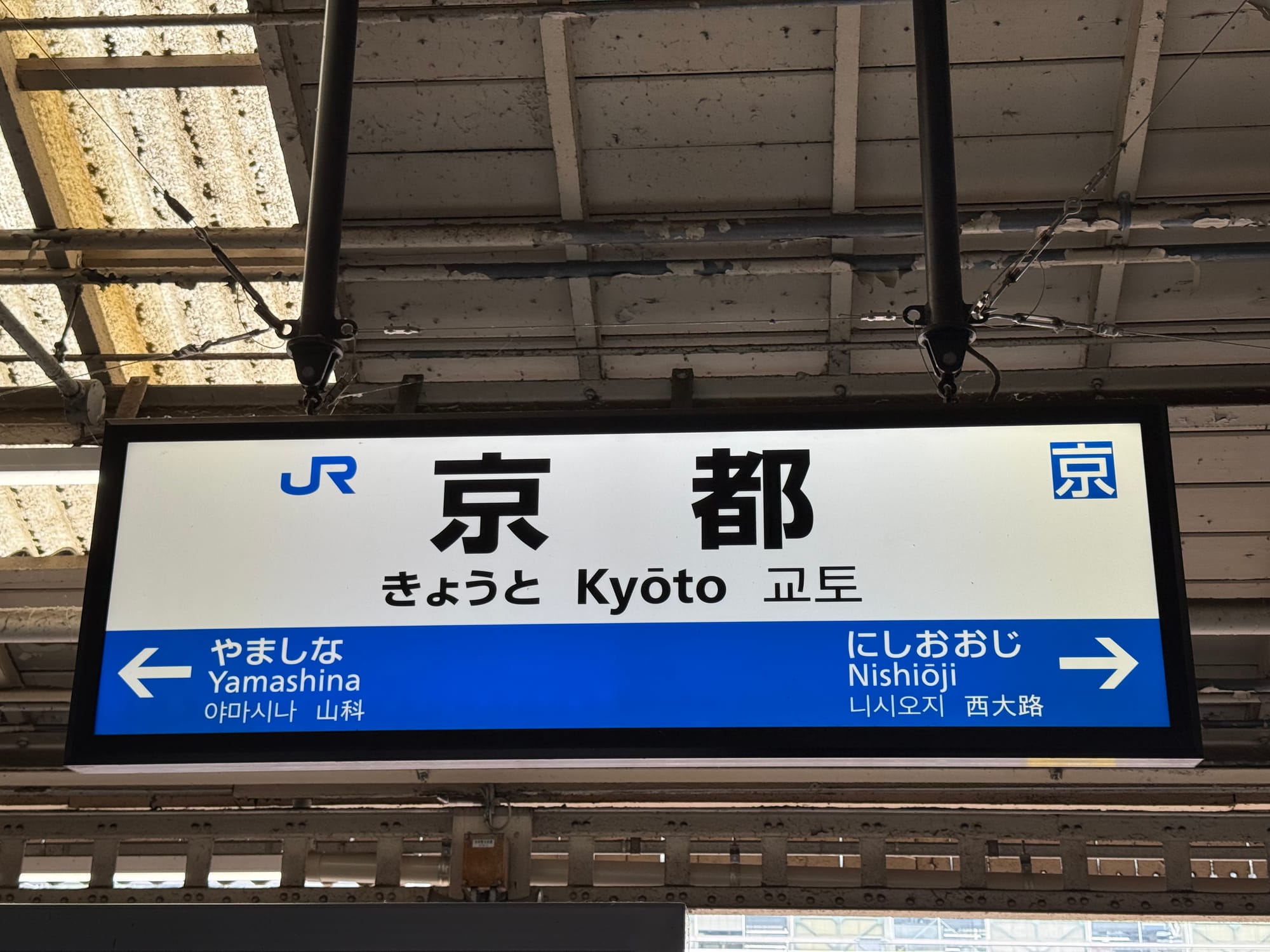
Arriving at Kyoto Station, one of Japan's busiest railway hubs. The station serves as a major gateway to the historic city and a key interchange on the JR network and Tokaido Shinkansen line.
Fushimi Inari Shrine
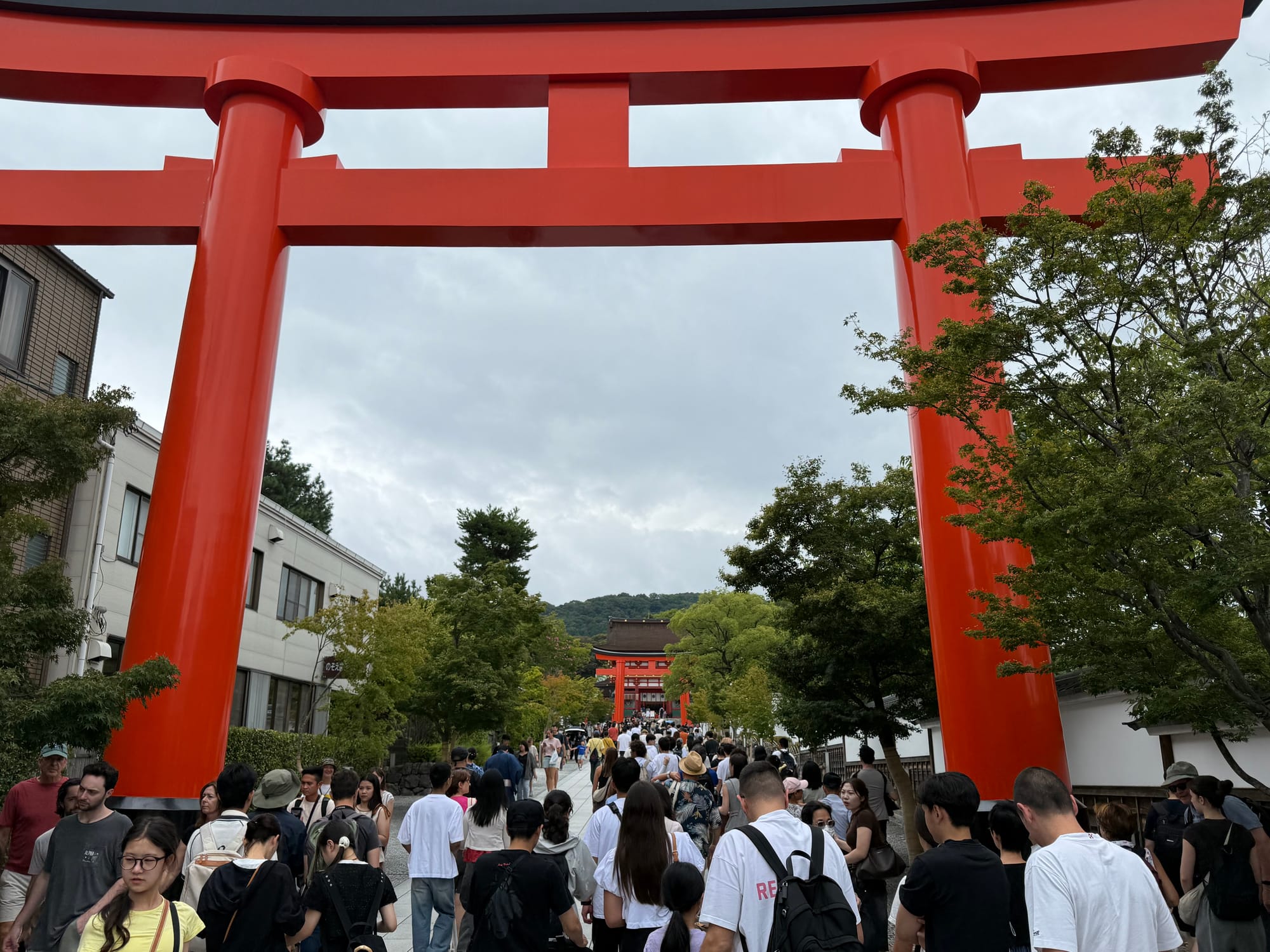
First was the shrine, but as I went a bit later than originally planned, it was absolutely packed with tourists, so I didn't really spend much time there, especially as I also wanted to go to the Samurai and Kendo Experience.
Visitors pass beneath the great torii gate of Fushimi Inari Taisha, one of Kyoto's most famous Shinto shrines. Dedicated to Inari, the deity of rice and prosperity, the shrine is renowned for its thousands of vermilion torii gates.
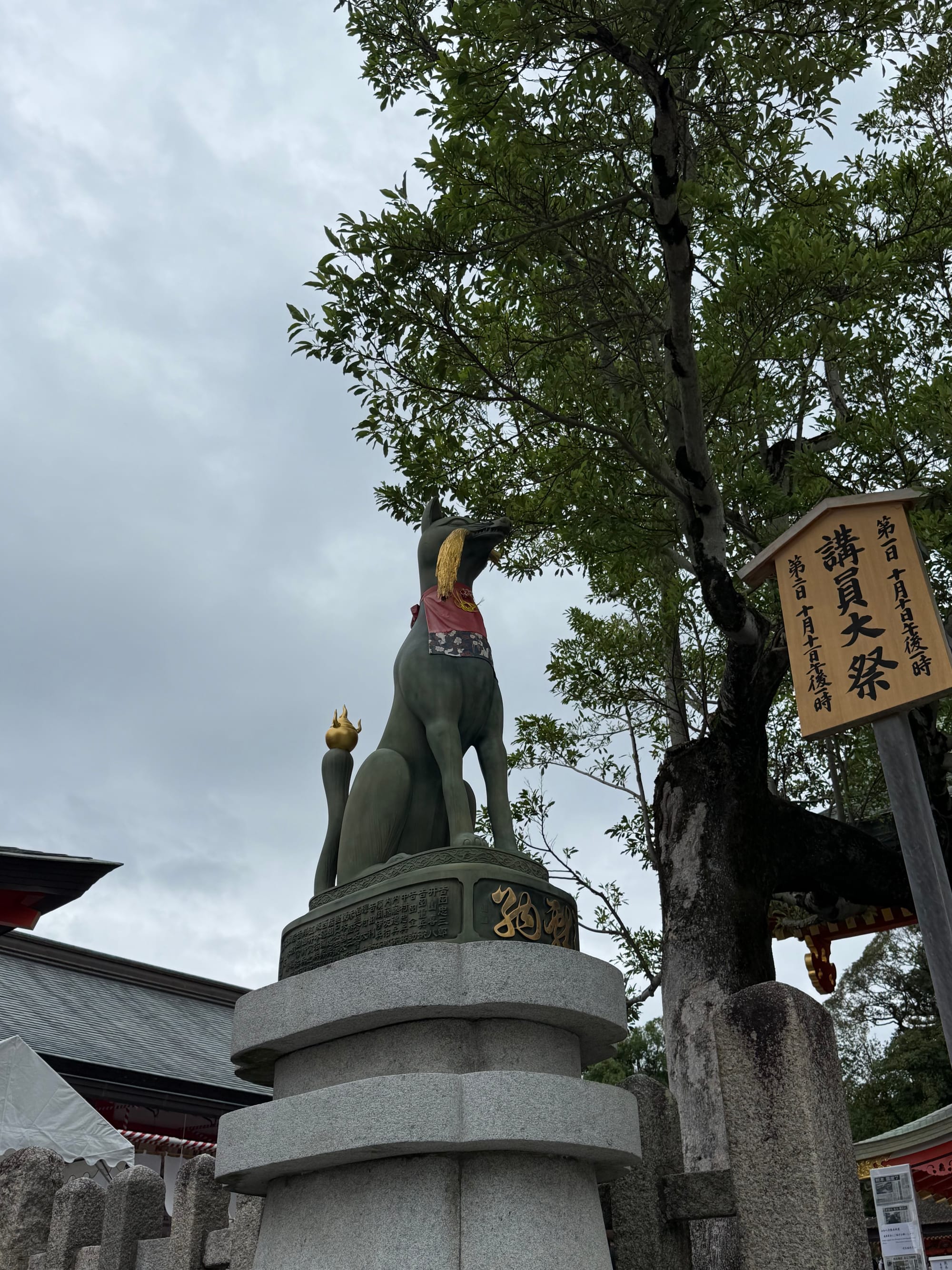
Inari Okami was first enshrined here in 711, duing the Nara period and celebrated the 1300 year anniversary back in 2011. Inari Okami is the shinto god of rice, fertility, business prosperity and foxes, which is why you might have hear about foxes being messengers of the gods, especially in some games or anime.
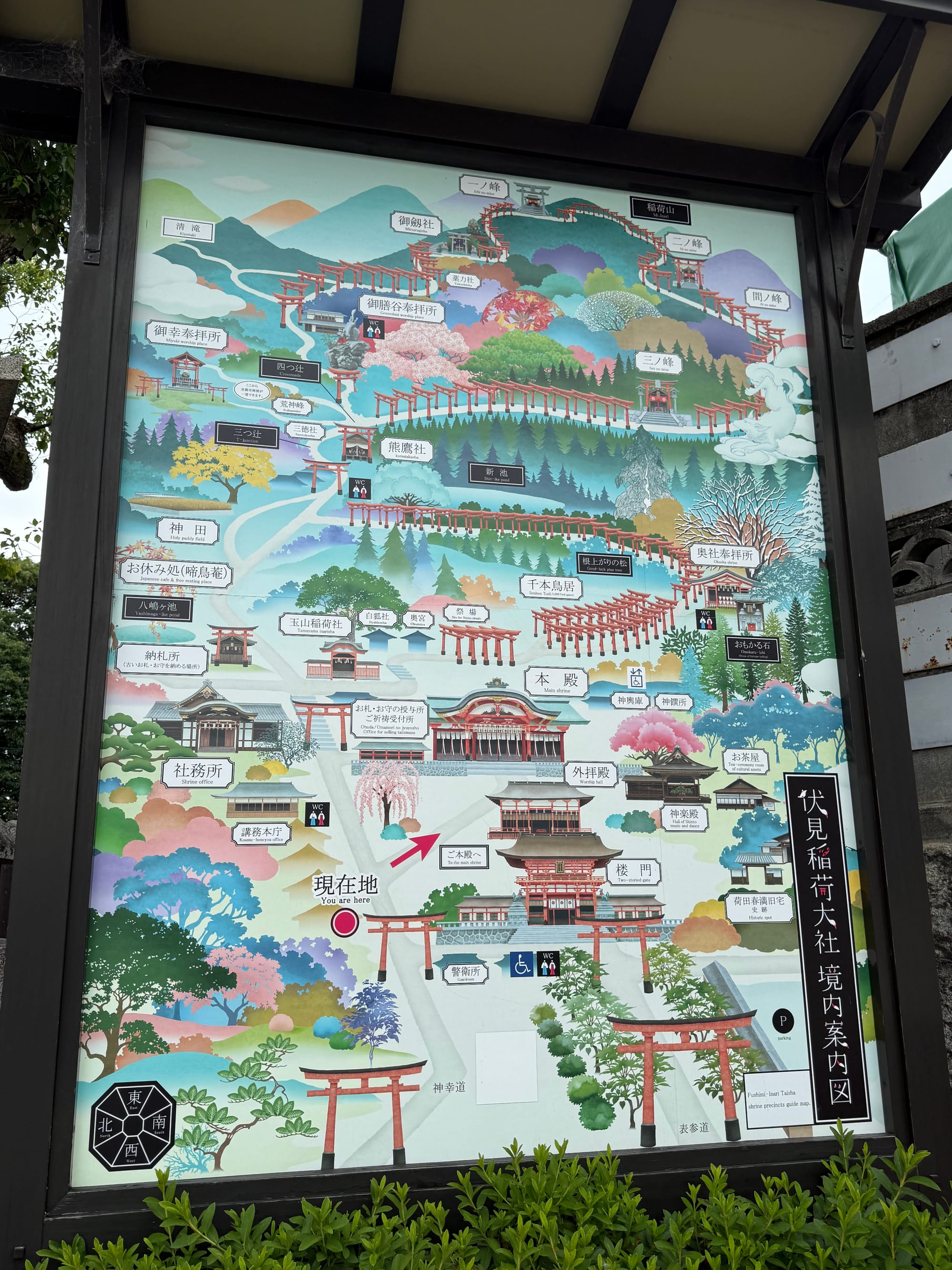
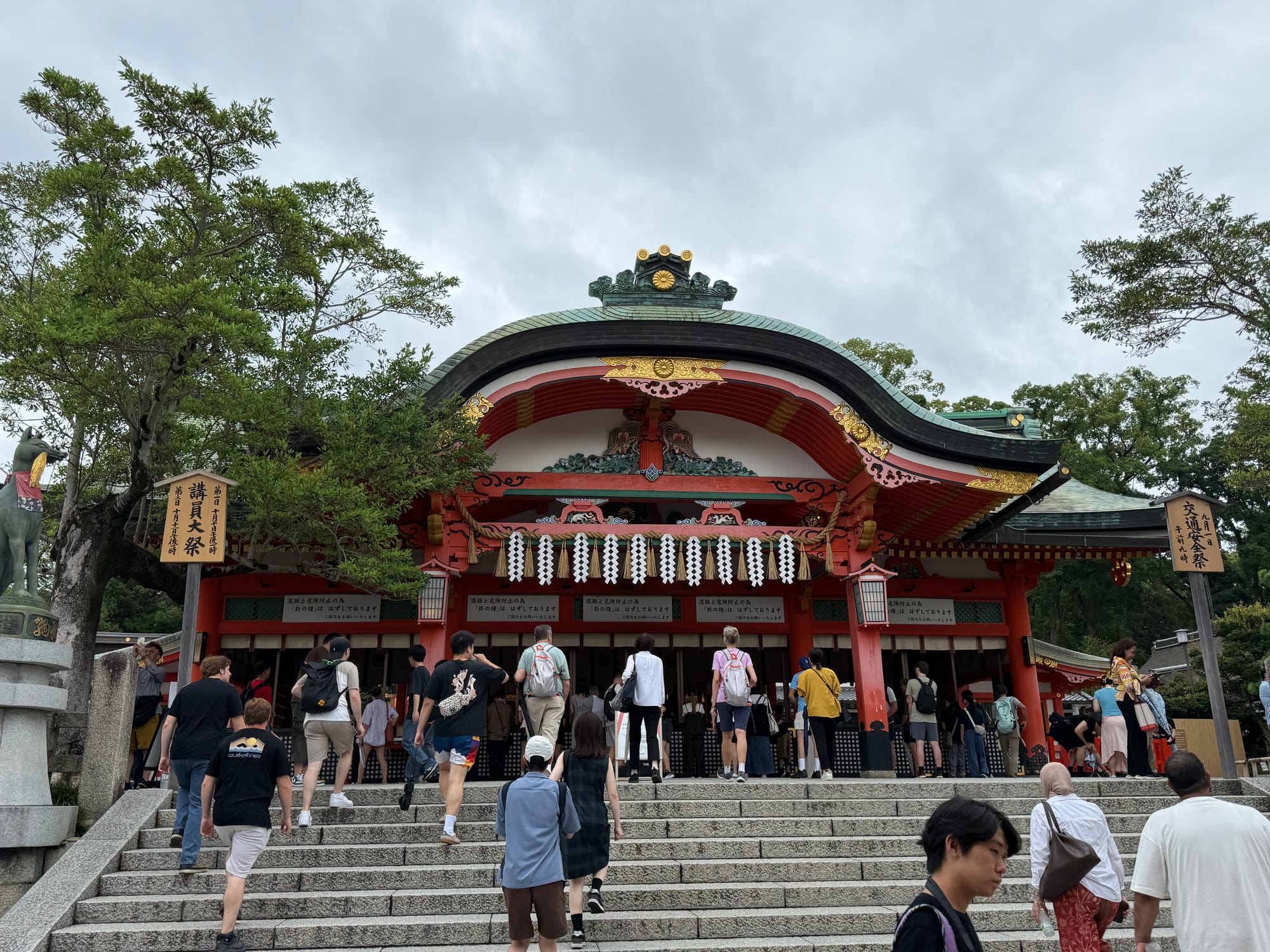
A visitor map of Fushimi Inari Taisha, outlining the network of shrine buildings and torii-lined trails that wind up Mount Inari. The route leads through a series of smaller shrines, viewpoints and sacred sites spread across the mountainside.A fox statue at Fushimi Inari Taisha, the most important shrine dedicated to Inari. Foxes (kitsune) are regarded as the messengers of Inari and are a defining symbol of the shrine throughout its grounds.The main worship hall of Fushimi Inari Taisha, Kyoto's most famous Inari shrine. Visitors gather here to offer prayers before exploring the shrine's extensive network of torii-lined trails across Mount Inari.
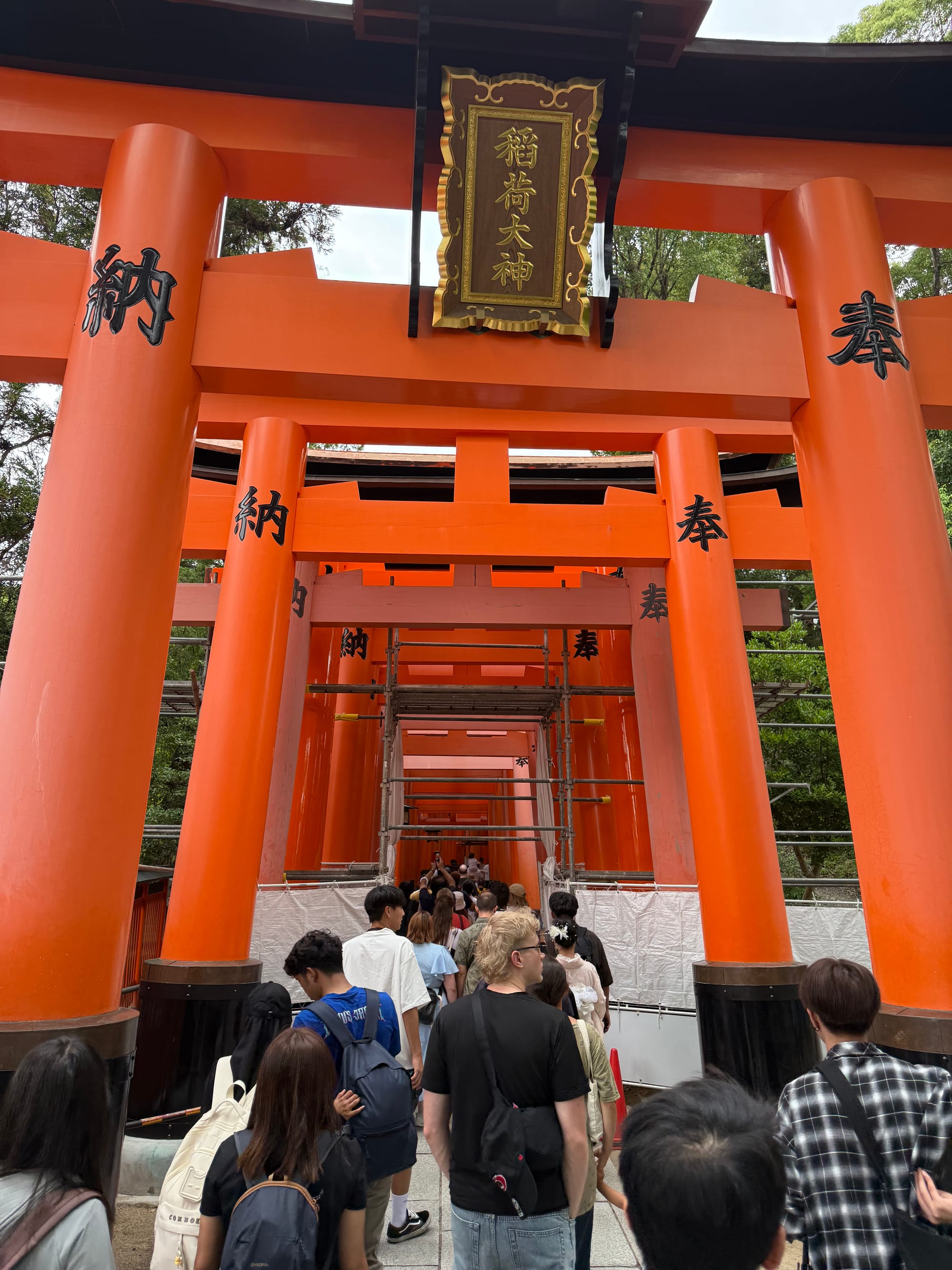
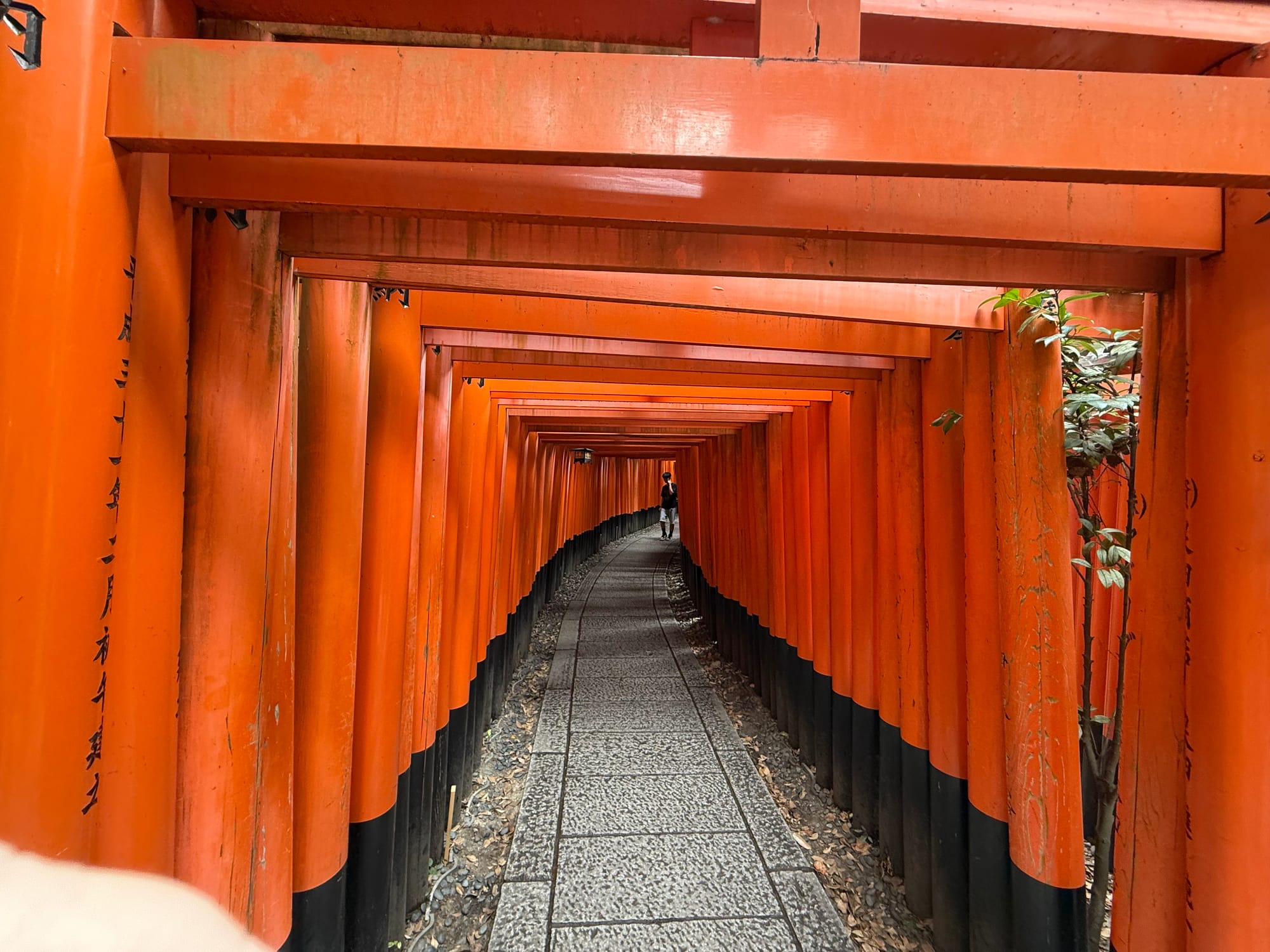
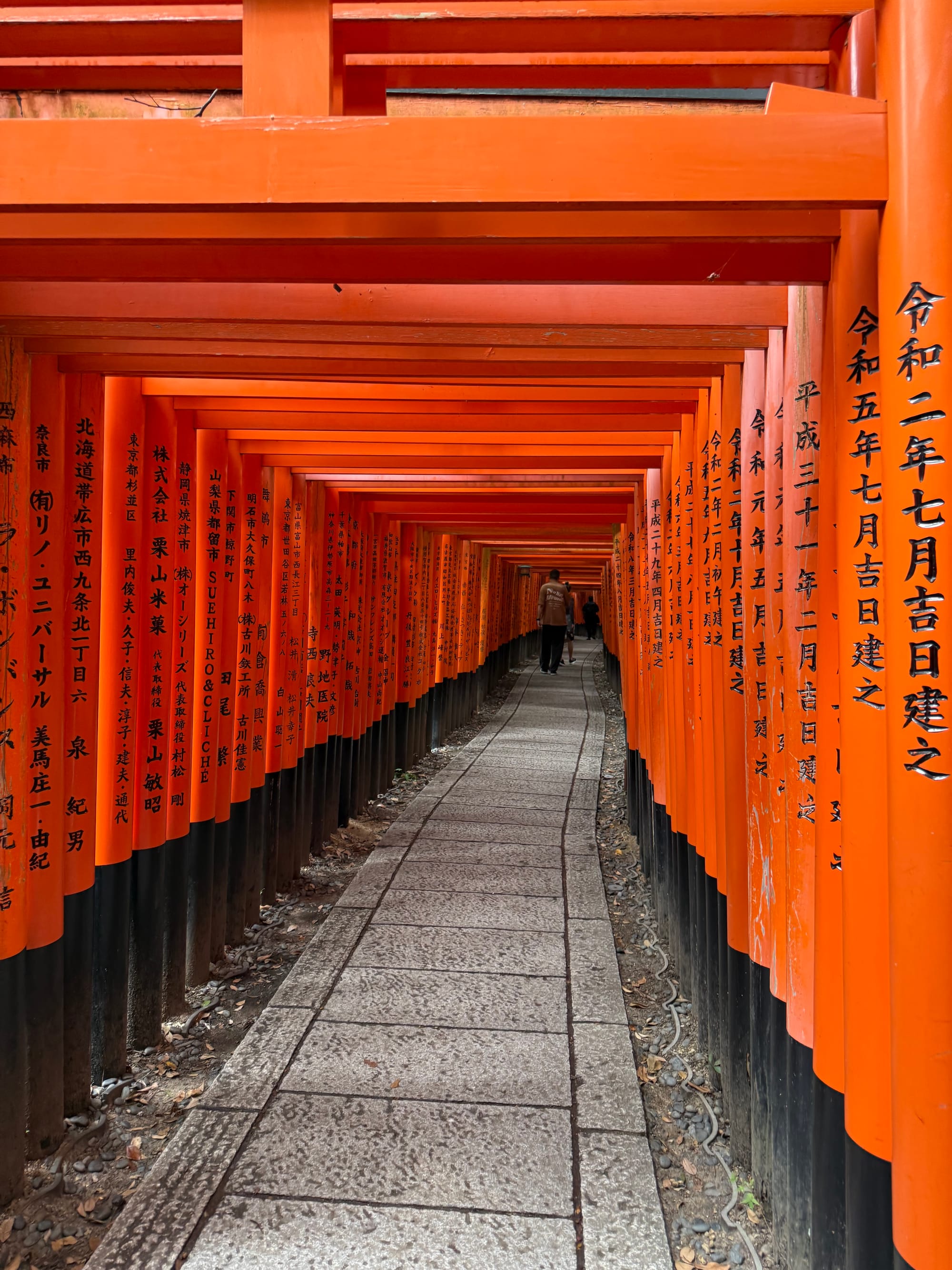
Since the Edo period (1603 -1868), worshippers have donated red vermilion torii gates, to express their prayers and appreciation. They are now lined up and form a kind of torii gate tunnel, also know as "Senbon Torii" or "Thousand Torii" gateway.
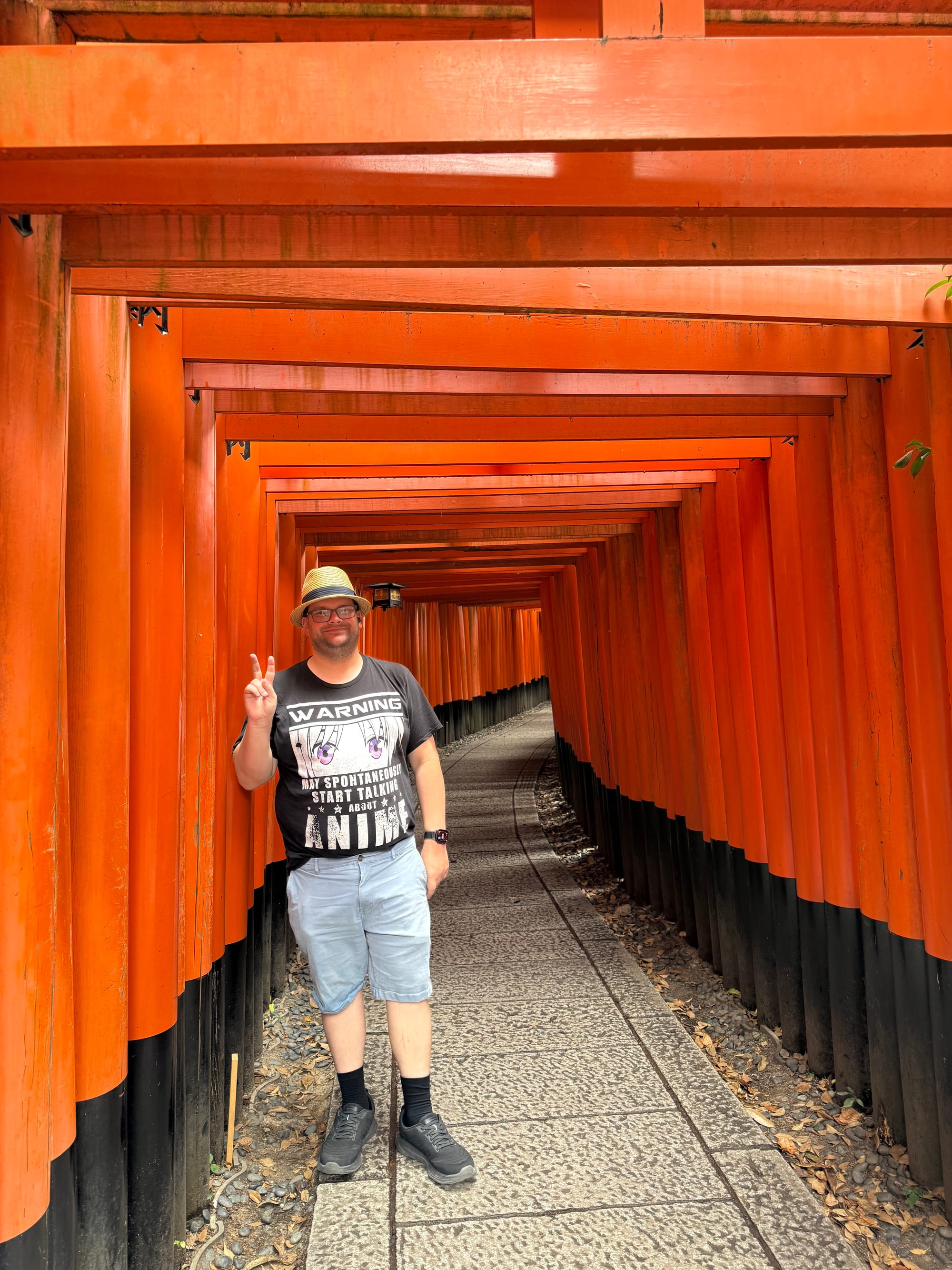
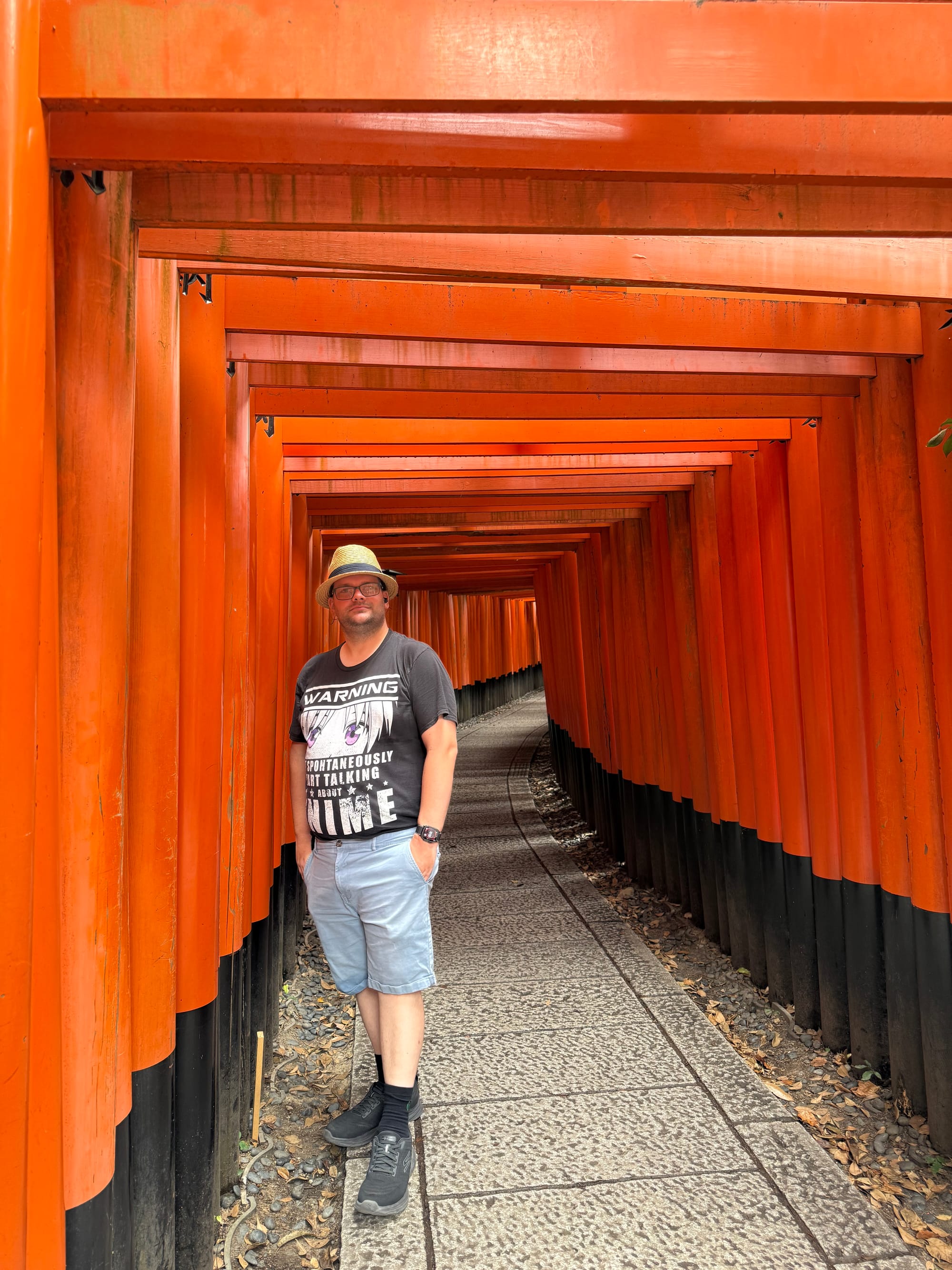
Visitors enter the Senbon Torii at Fushimi Inari Taisha, the shrine's most famous pathway. The seemingly endless rows of vermilion torii gates, donated by worshippers and businesses, wind their way up the slopes of Mount Inari.The famous torii gate pathway at Fushimi Inari Taisha. Thousands of vermilion gates donated by individuals and businesses form winding tunnels that climb the sacred slopes of Mount Inari.Posing beneath the famous torii gates of Fushimi Inari Taisha. The thousands of vermilion gates that line the trails of Mount Inari are among Kyoto's most iconic and photographed landmarks.Standing beneath the famous torii gates of Fushimi Inari Taisha. The seemingly endless tunnels of vermilion gates are among Kyoto's most iconic sights and continue up the slopes of sacred Mount Inari.Rows of vermilion torii gates form one of the most iconic sections of Fushimi Inari Taisha. Each gate has been donated by an individual or business, with the donor's name and dedication date inscribed on its pillars.
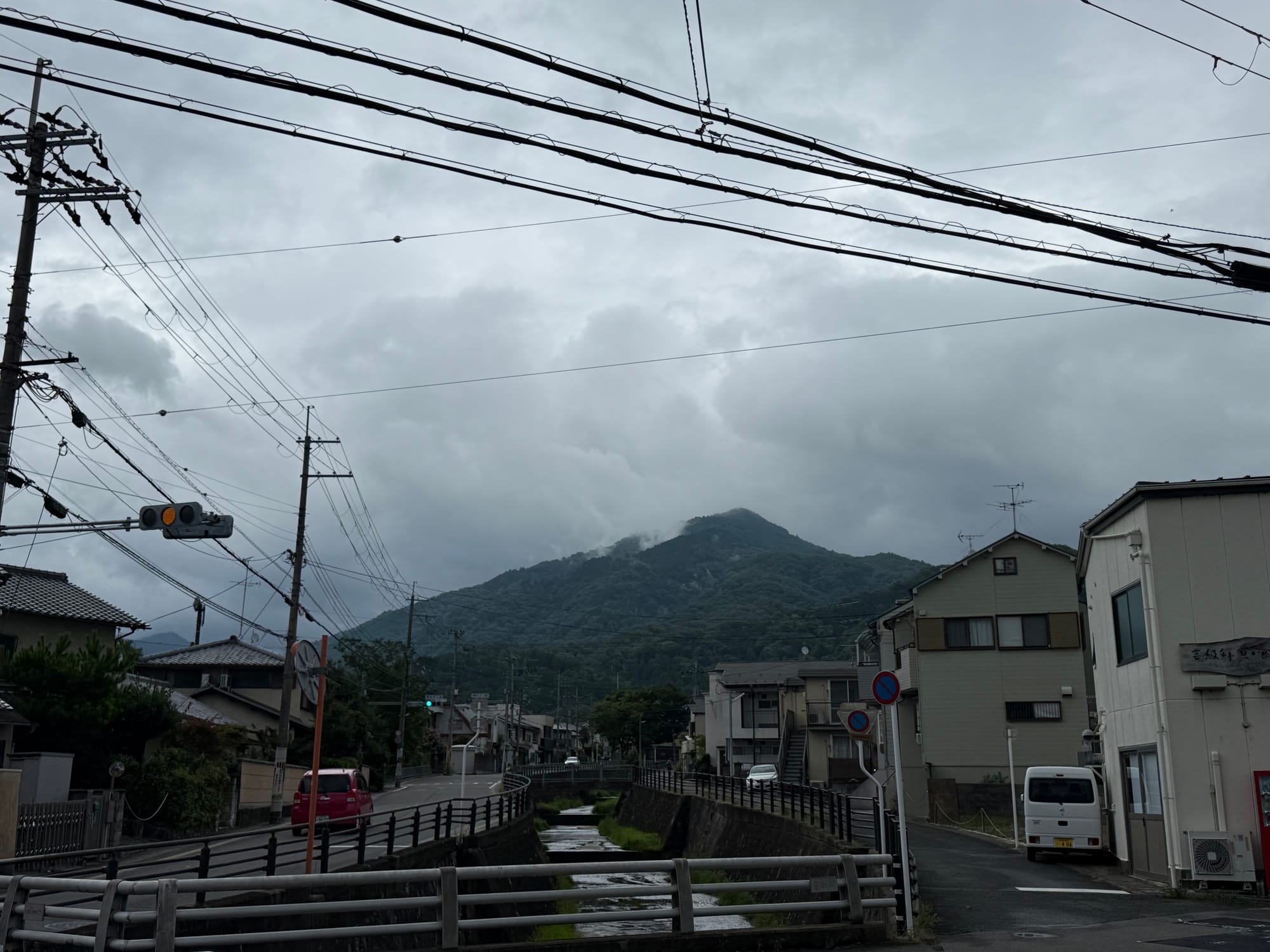
As the crowds were getting bigger and bigger, plus time was getting on, I decided to start slowly making my way back towards the station and catch the train to the Samurai and Kendo experience. The clouds were starting to not look nice, but luckily the rain held off till I made it there.
Rain clouds gather over Mount Hiei north of Kyoto, viewed across residential neighbourhoods and a canal after a summer shower. The mountain forms a prominent backdrop to the city and is renowned as the home of the historic Enryaku-ji temple complex.
Samurai and Kendo Experience
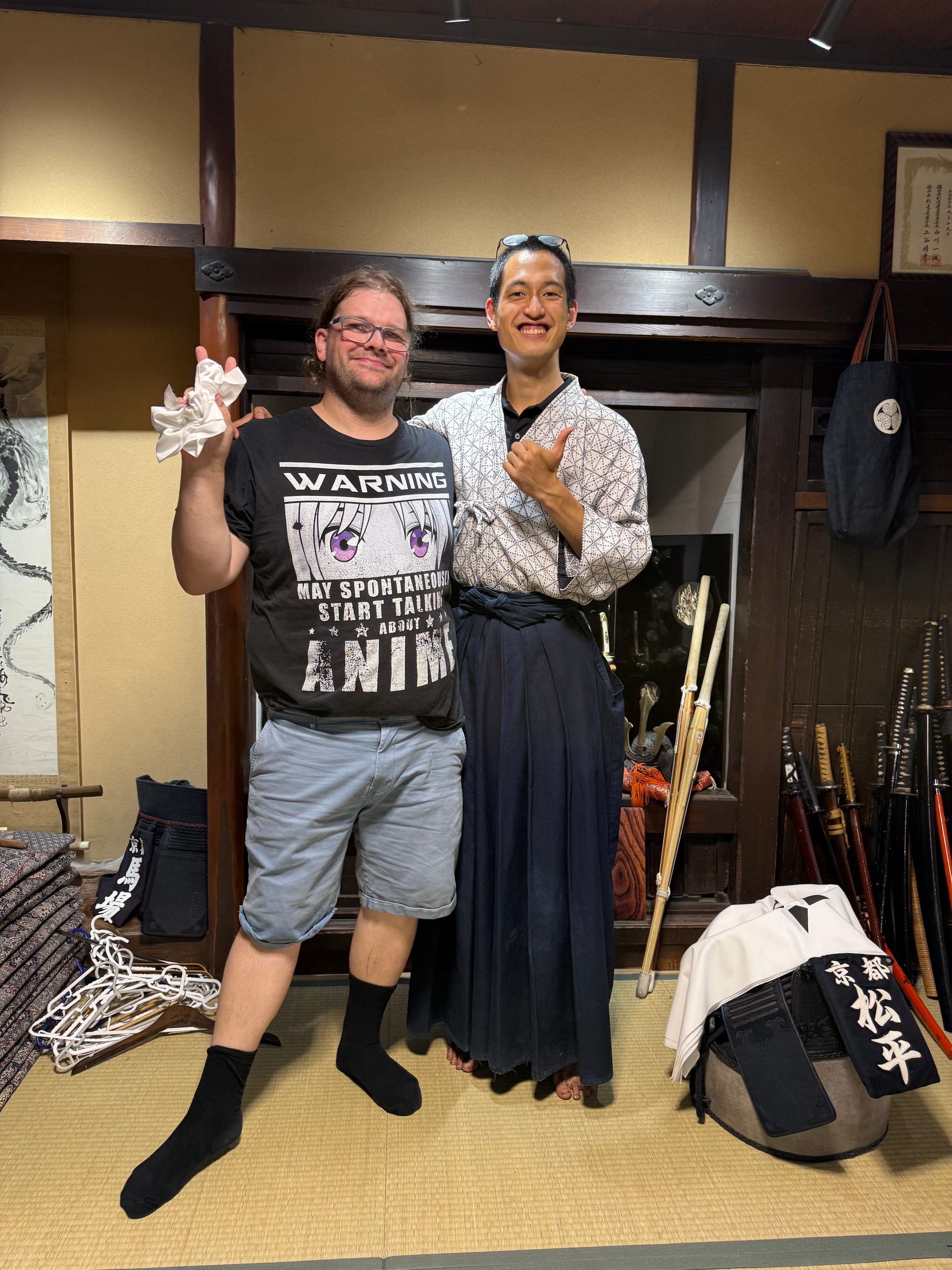
Our host was a guy called Taka who was amazing and even has ancestors dating back to the shogunate about 500 years ago, which was quite cool.
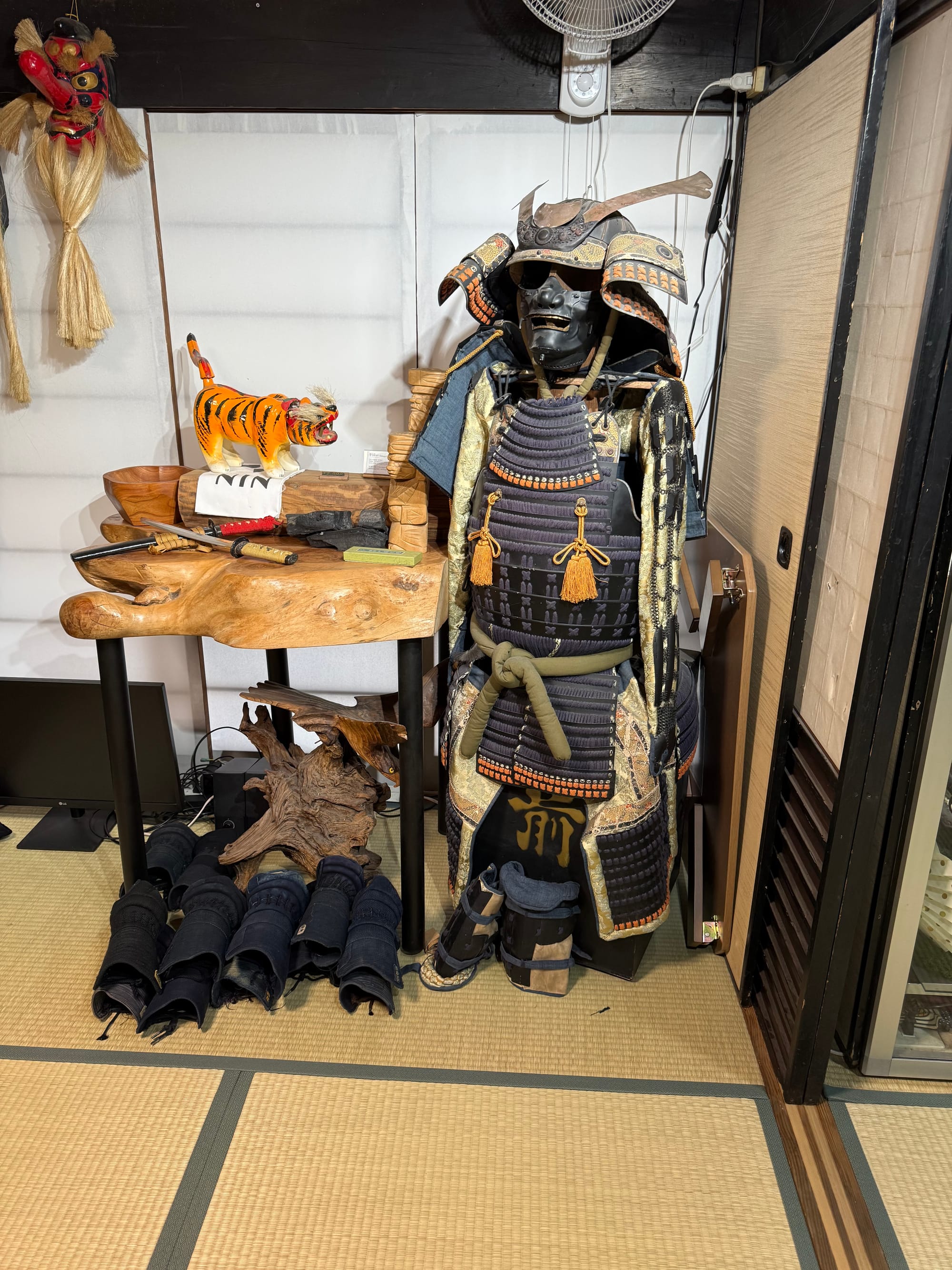
A souvenir photo after a cultural experience in Kyoto, posing with an instructor in a traditional Japanese room surrounded by kendo equipment and martial arts artefacts.A display of samurai armour and martial arts equipment in a traditional Kyoto setting. The collection includes armour, practice weapons and kendo gear, highlighting aspects of Japan's warrior heritage and martial traditions.
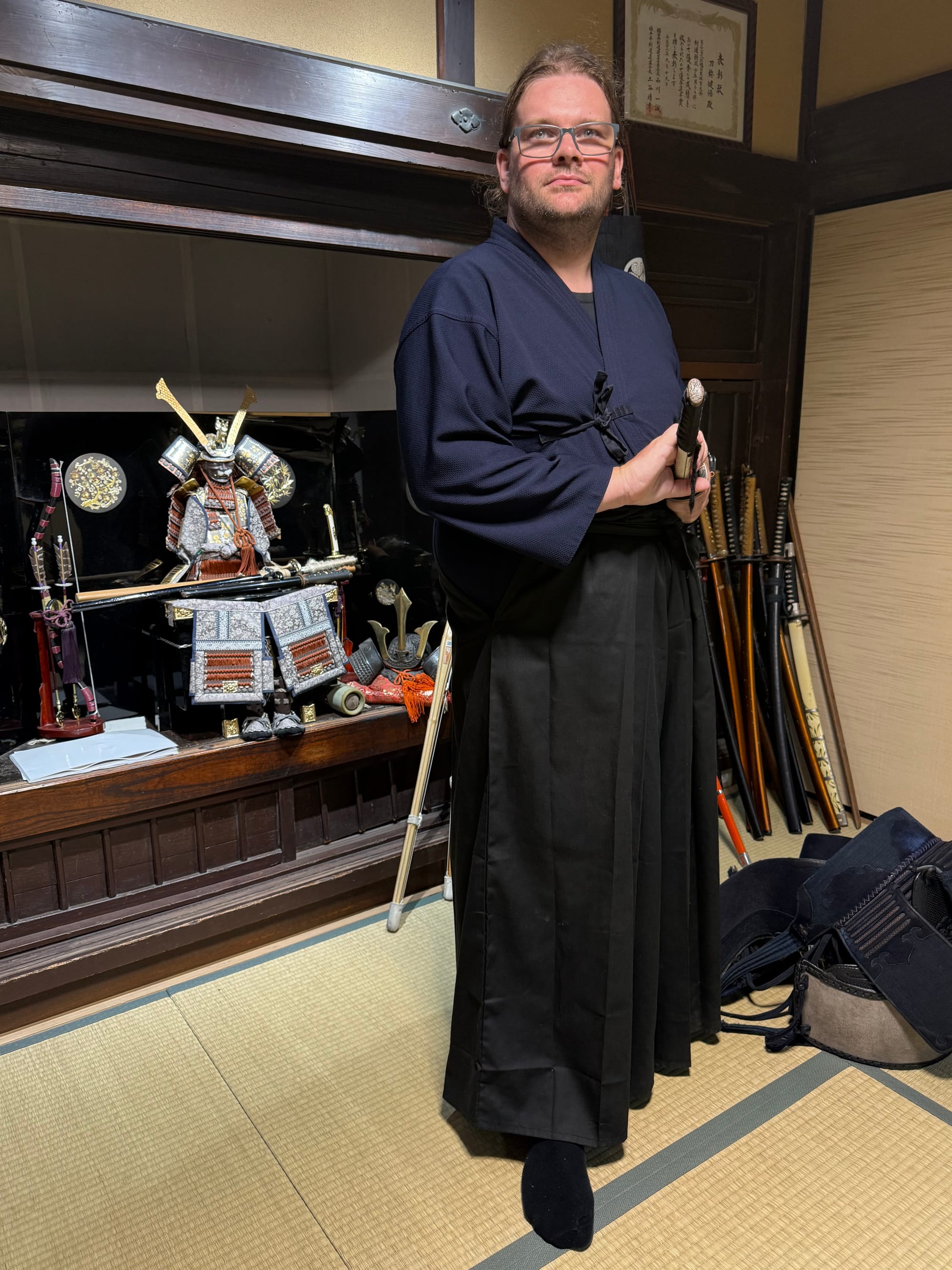
The experience was on for 2 hours and cost £76.84, which was well worth it as he went over the history of the samurai and how they lived. we also got to dress up in samurai attire (Kimono and Hakama). The Katana BTW, isn't a replica, but it is also dull, so it won't cut. It was amazing to actually hold one as well.
Participating in a traditional Japanese swordsmanship experience in Kyoto. Dressed in martial arts attire and learning basic techniques, visitors gain an introduction to the culture and traditions associated with the samurai.Posing with a katana during a traditional Japanese swordsmanship experience in Kyoto. The session provided an introduction to the handling, etiquette and history of the iconic Japanese sword in a traditional setting.
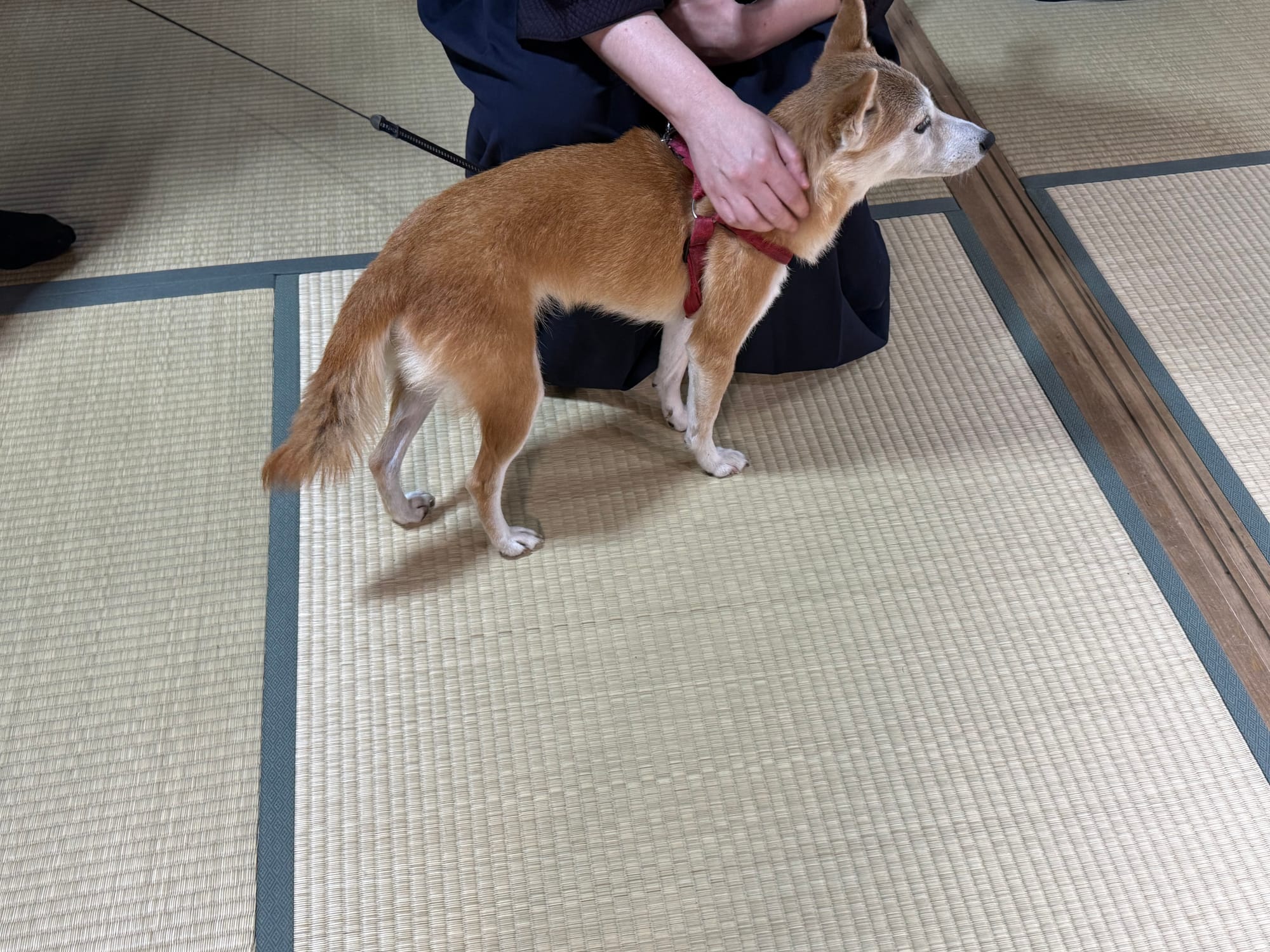
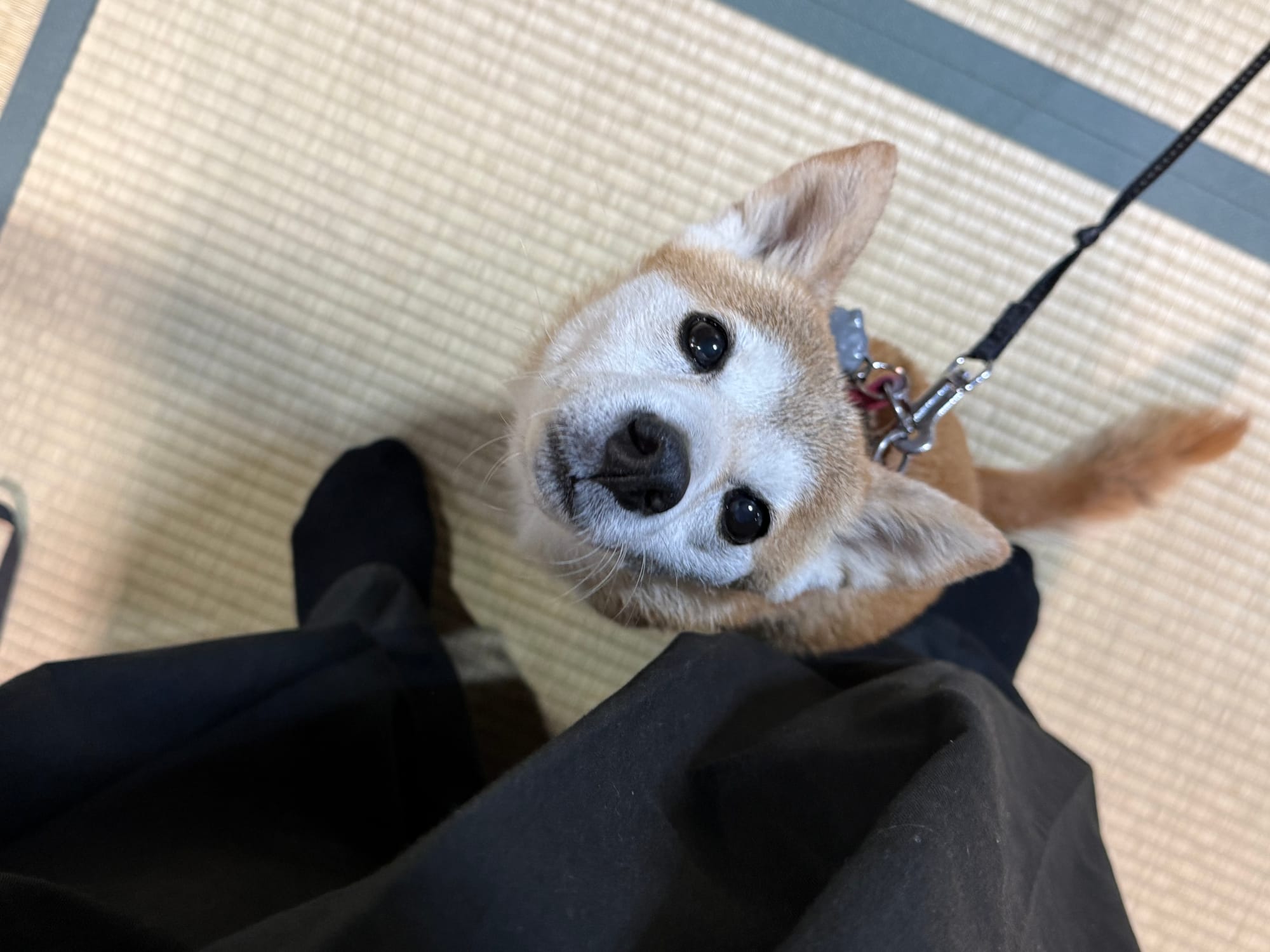
During the 10 minute break between the samurai and kendo blocks, we took pictures for each other and got to pet the really cute Japanese Shiba Inu dog.
The owner's Shiba Inu greets visitors during a traditional swordsmanship experience in Kyoto, becoming a memorable part of the experience alongside the martial arts training and cultural activities.The owner's Shiba Inu looks up expectantly during a swordsmanship experience in Kyoto, seeming to ask, "Why did you stop petting me?" after receiving plenty of attention from visitors.
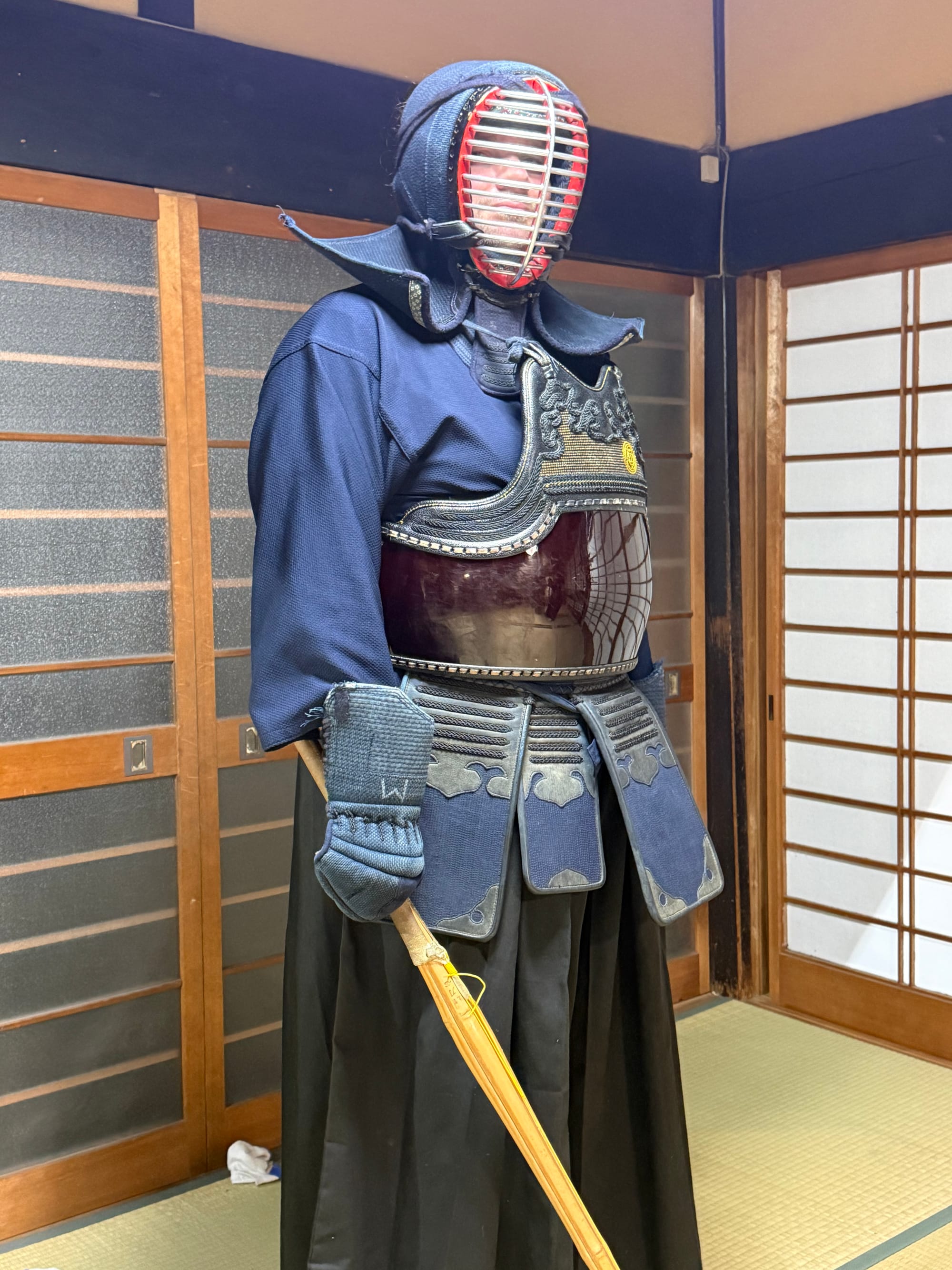
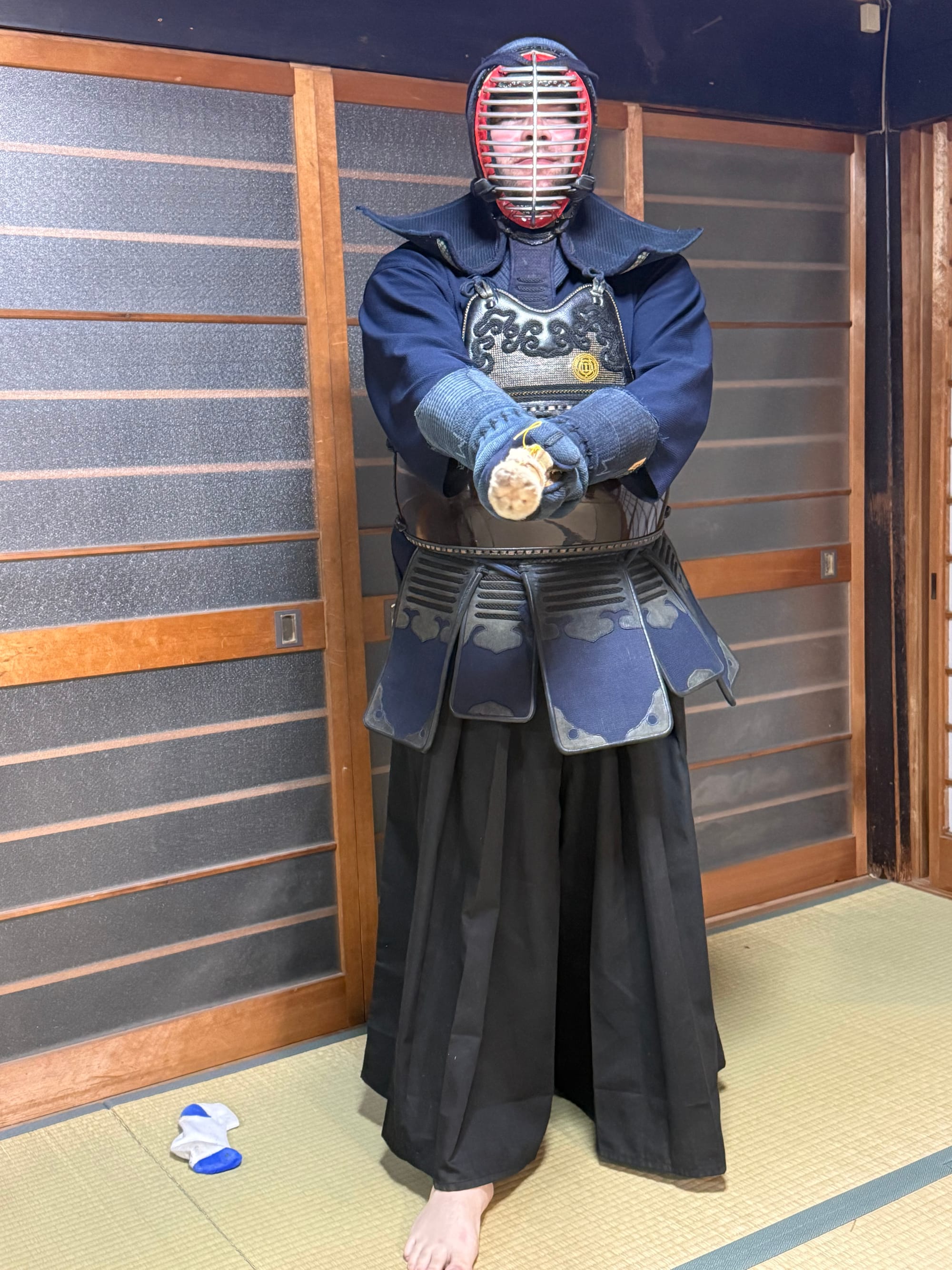
After the 10 minutes it was time to start learning some of the Kendo rules and moves. Kendo has quite a few to be honest and is where you attack your opponent with a bamboo sword to either the top of the head, wrist, side of the torso or throat. Today we only practiced the head (Men), wrist (Kote) and torso (do). to score a point you need to say the word as you land your hit, which made it even more fun to try and remember.
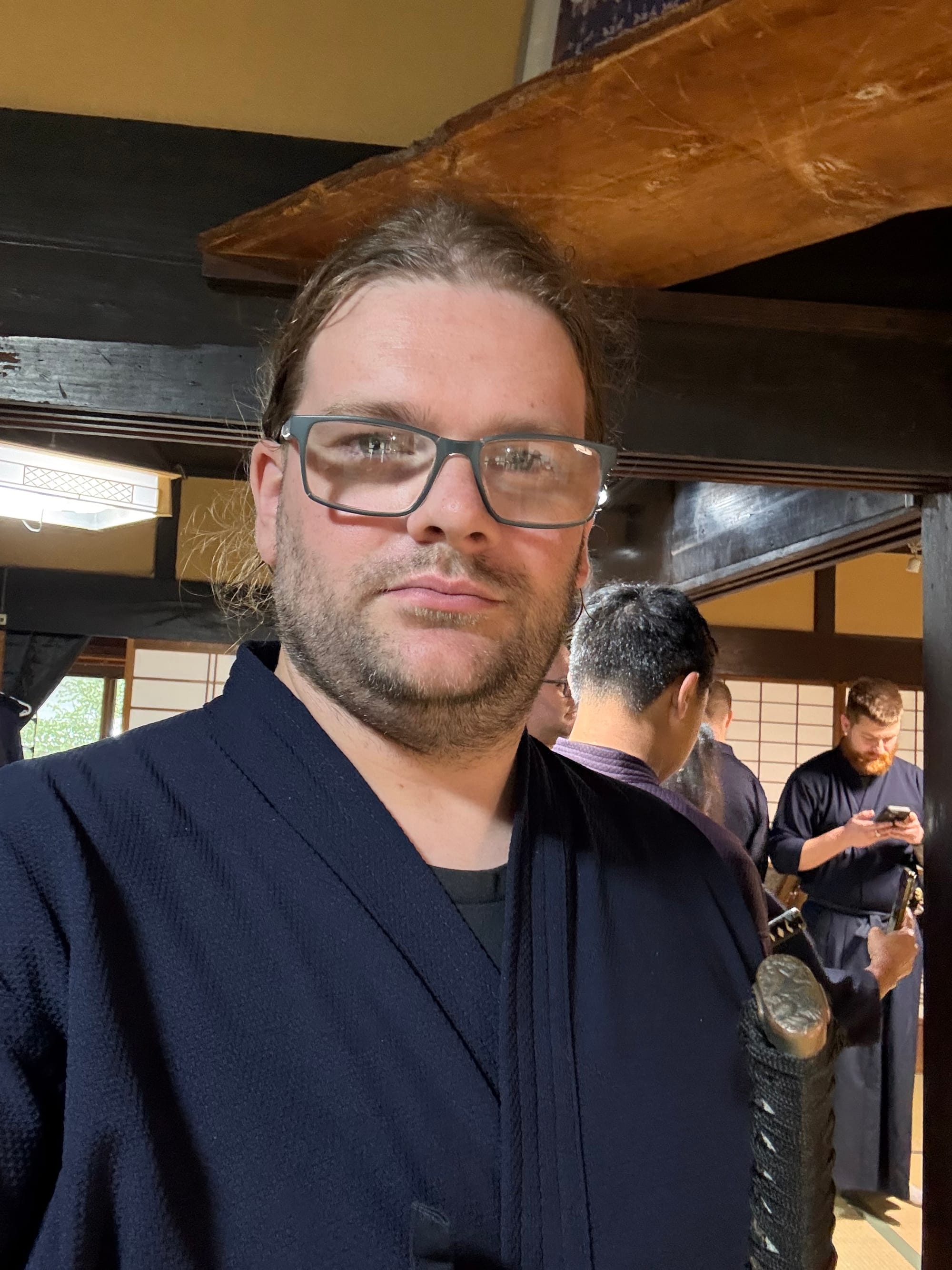
Wearing full kendo armour during a traditional martial arts experience in Kyoto. The protective equipment includes the helmet, body armour and gloves used in the modern Japanese martial art of kendo.
In kendo as well, because the idea is that you are both trying to kill each other, you score points by landing a hit and saying the correct word, but a point can be taken from you if you are judged to not be concentrating, like doing a fist bump or anything like that.
Trying on full kendo armour during a traditional martial arts experience in Kyoto. Equipped with a shinai and protective gear, visitors can gain a firsthand appreciation of the equipment used in modern Japanese kendo training.
After this, we were given the option of fighting in a 1.5 minute bout with one of our fellow participants and of course I said yes. I was even able to get the video of the match off my opponent whose phone was used.
0:00
/1:56
Video of my sparing match vs. my opponent who was another solo traveller.
Teamlab Kyoto: Biovortex
Next was Teamlab Kyoto: Biovortex! Now you may remember that back in 2023, when I was in Tokyo, I went to Teamlab Tokyo Planets, which is done by the same company, so I had high expectations for this one, and it did not disappoint.
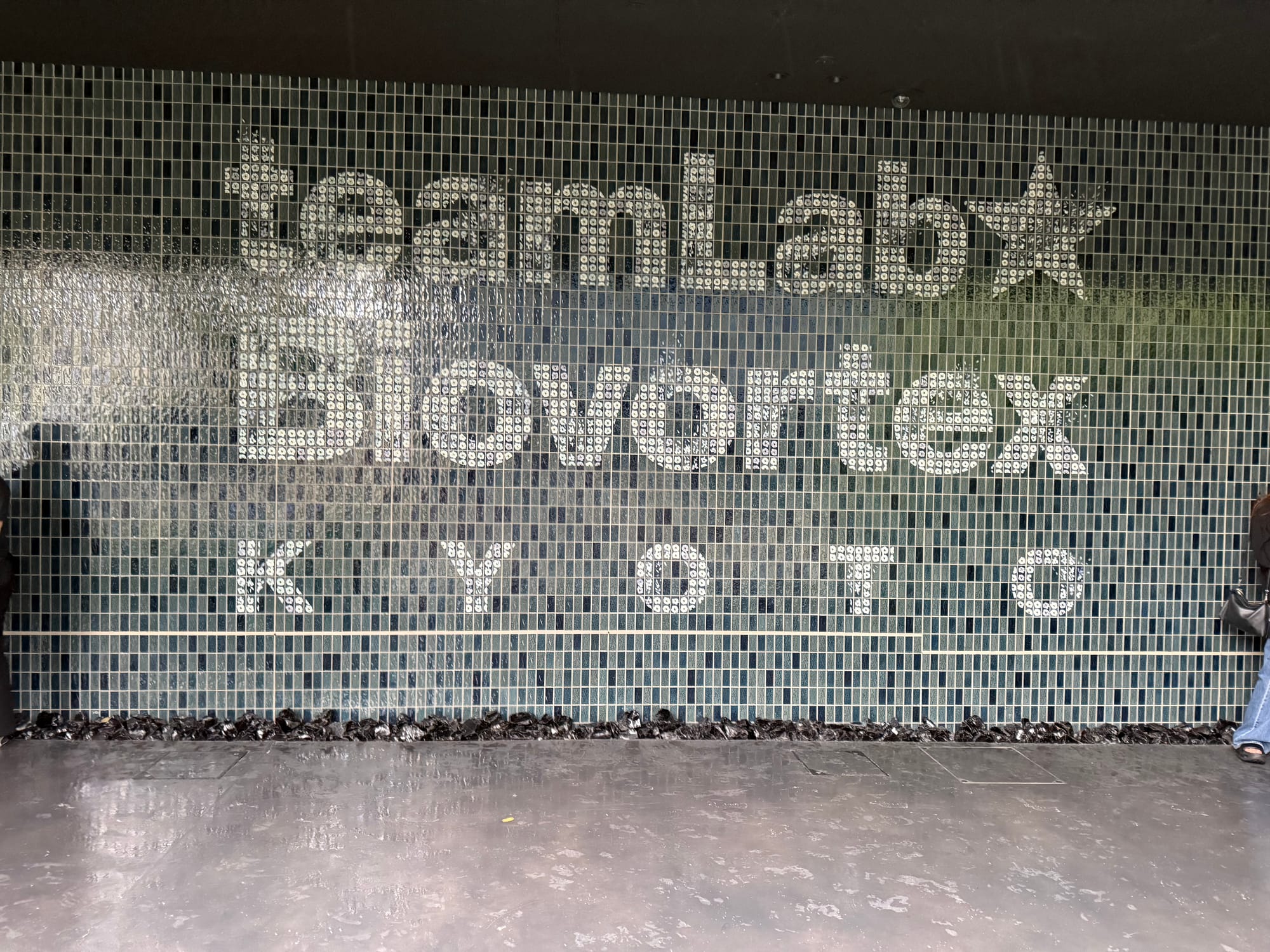
The entrance to teamLab Biovortex Kyoto, an immersive digital art museum combining light, water and interactive installations to create ever-changing sensory experiences.
They have quite a few exhibits in the place, there is actually no map for the place and exhibits change as well over time, plus some can be interacted with.
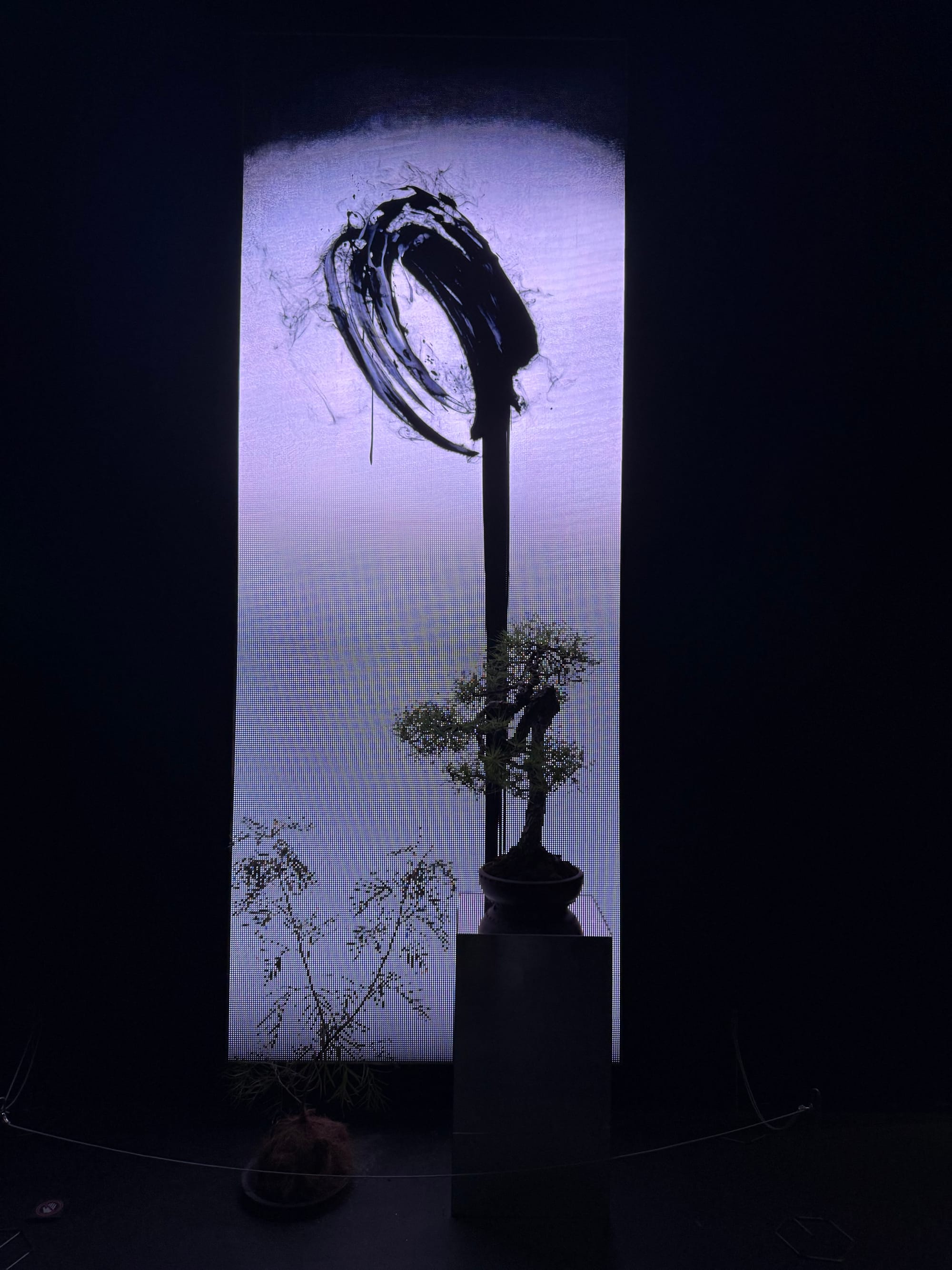
A living bonsai tree displayed alongside a digital calligraphic artwork at teamLab Biovortex Kyoto, blending traditional Japanese aesthetics with the museum's immersive contemporary art installations.
You might also be able to see the entrance I can in through, if you look closely enough at the photo below.
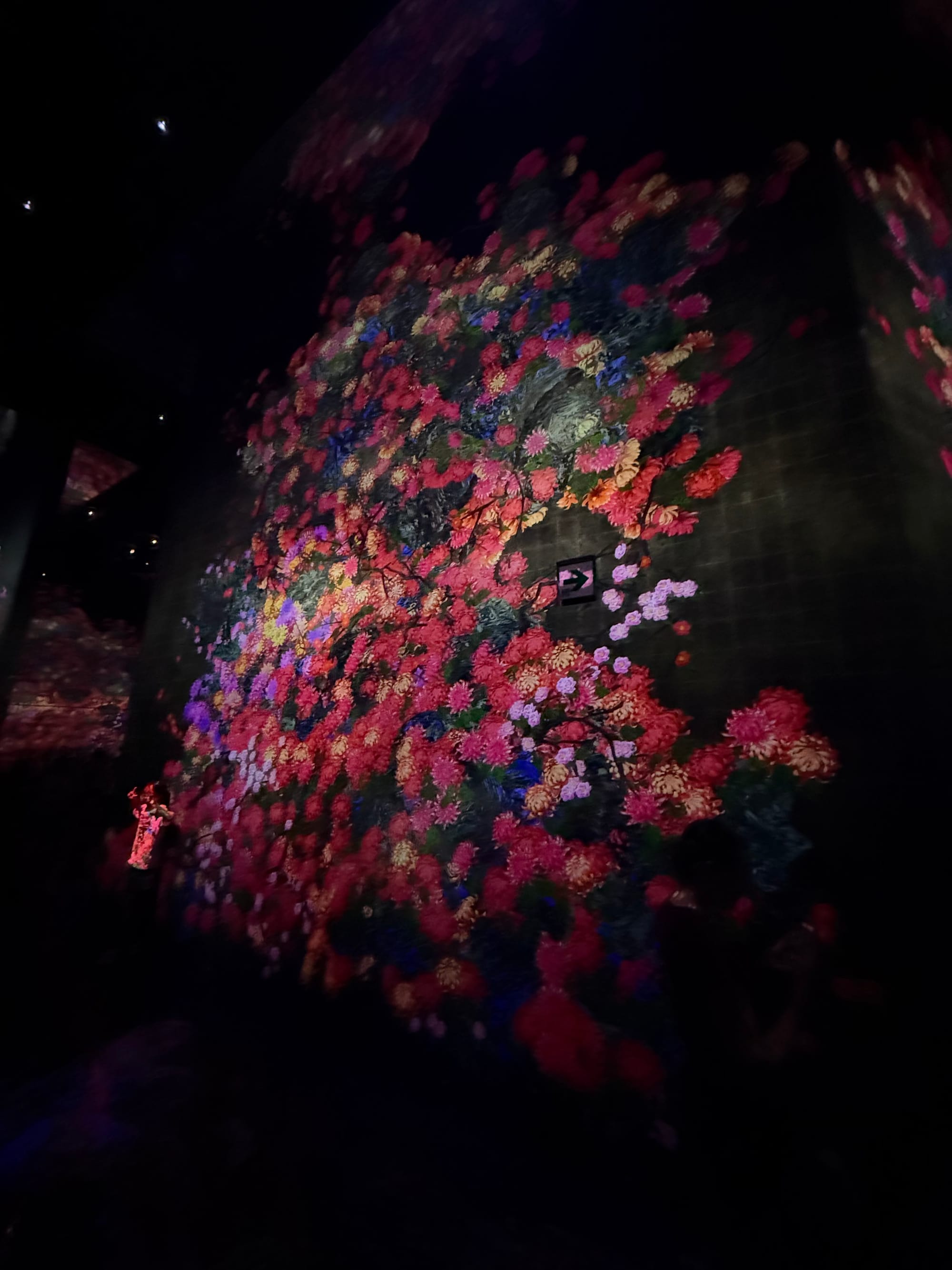
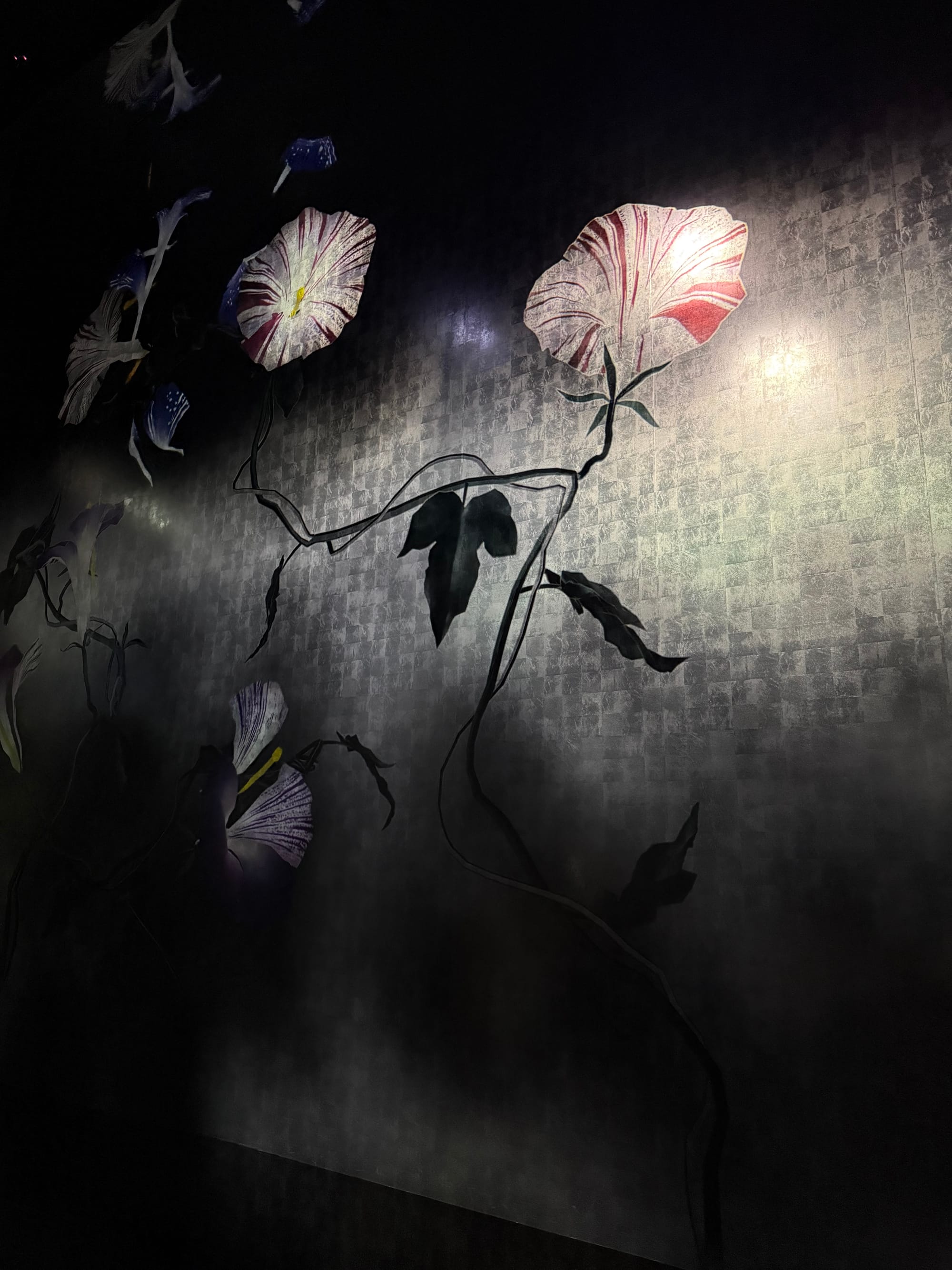
An immersive installation at teamLab Biovortex Kyoto surrounds visitors with constantly evolving digital imagery. Flowing forms, light and colour transform the gallery into a dynamic, ever-changing artistic environment.A floral digital artwork at teamLab Biovortex Kyoto fills the gallery with constantly changing blooms. The interactive installation evolves over time, creating an ever-shifting landscape of colour, light and movement.A digital floral installation at teamLab Biovortex Kyoto, where oversized morning glories and trailing vines appear to grow across the gallery space, blending natural forms with immersive digital art.
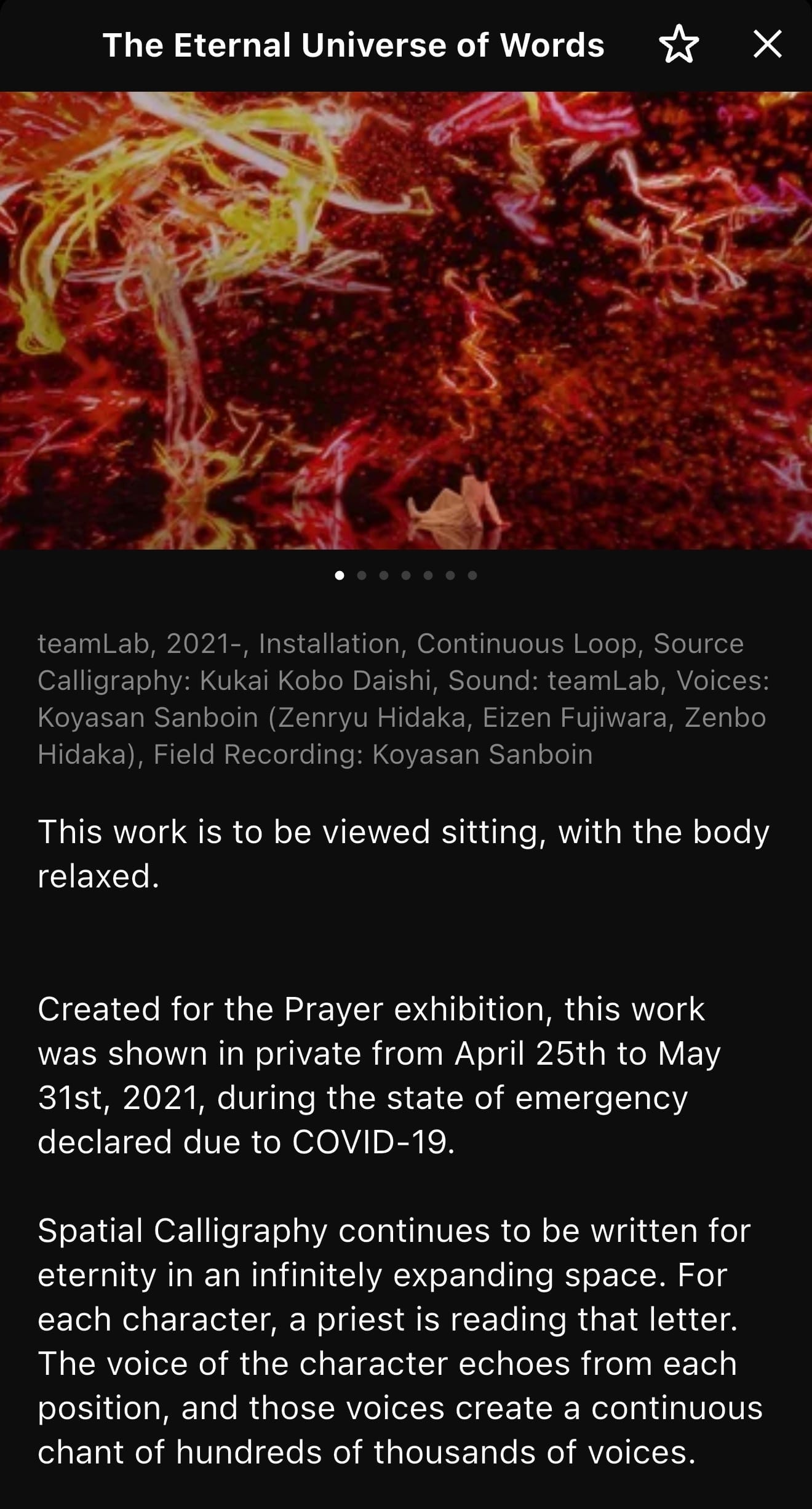
Exhibits like the one above do actually move, which is quite good to watch, but even more fun is the one below, which is where you sit or stand in a room and the who room is one bit exhibit, which can throw your senses, especially as you are still, but the whole room seems like it is moving.
Information about The Eternal Universe of Words, an immersive teamLab installation inspired by the calligraphy of Kūkai (Kōbō Daishi). The work combines continually generated characters, sound and chanting to create an ever-evolving digital space.
0:00
/0:27
Video of the immersive display 'The Eternal Universe of Words', which is an almost 360 display.
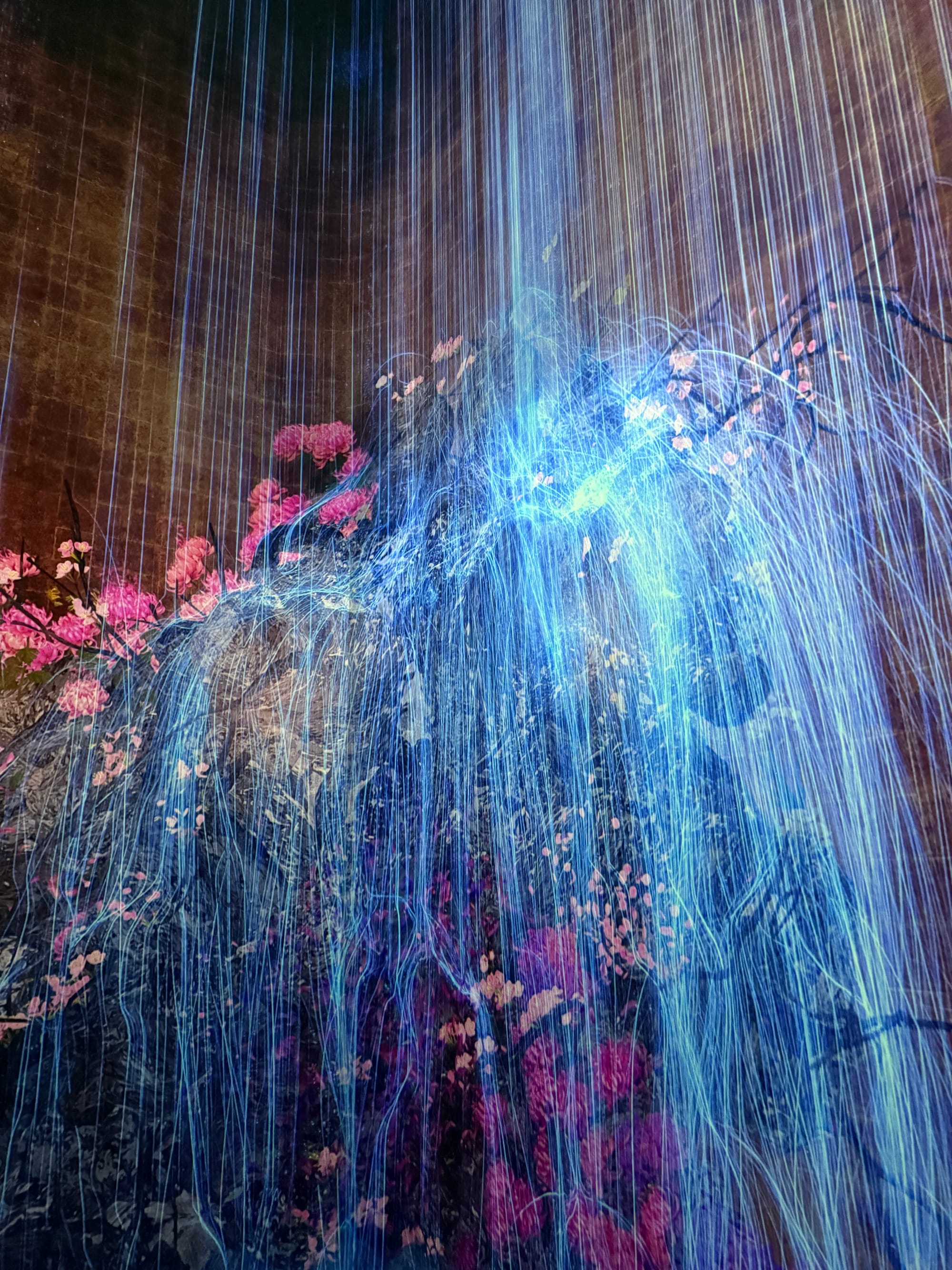
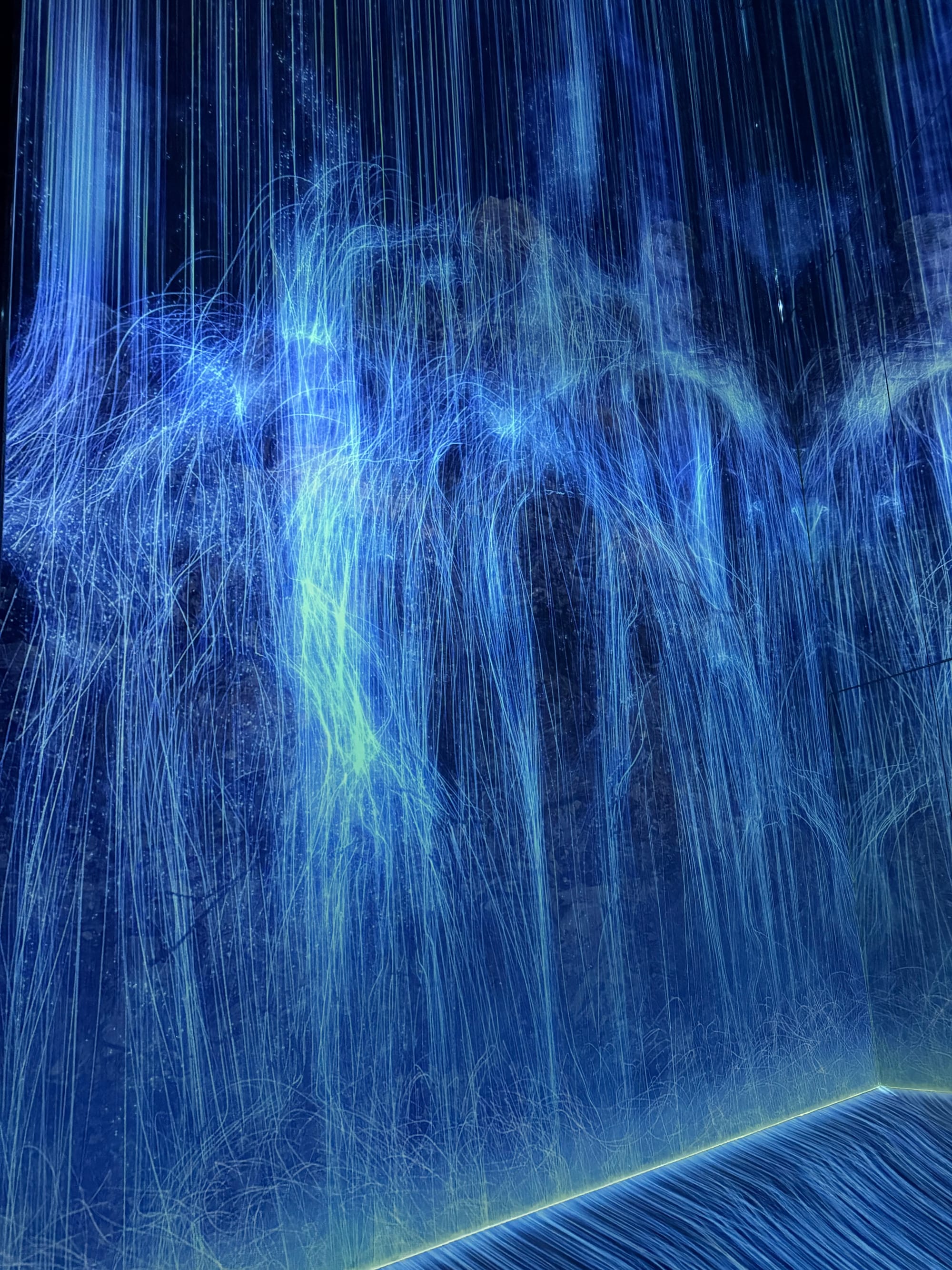
The next artwork changed quite a bit, which it looks like rain coming down, but it does actually change to look like heavy rain over time.
A digital artwork at teamLab Biovortex Kyoto combines flowing streams of light with blooming flowers, creating the illusion of water cascading through a constantly evolving landscape of colour and motion.A waterfall-like digital installation at teamLab Biovortex Kyoto uses flowing lines of light to create the illusion of cascading water, transforming the gallery into a constantly changing landscape of movement and colour.
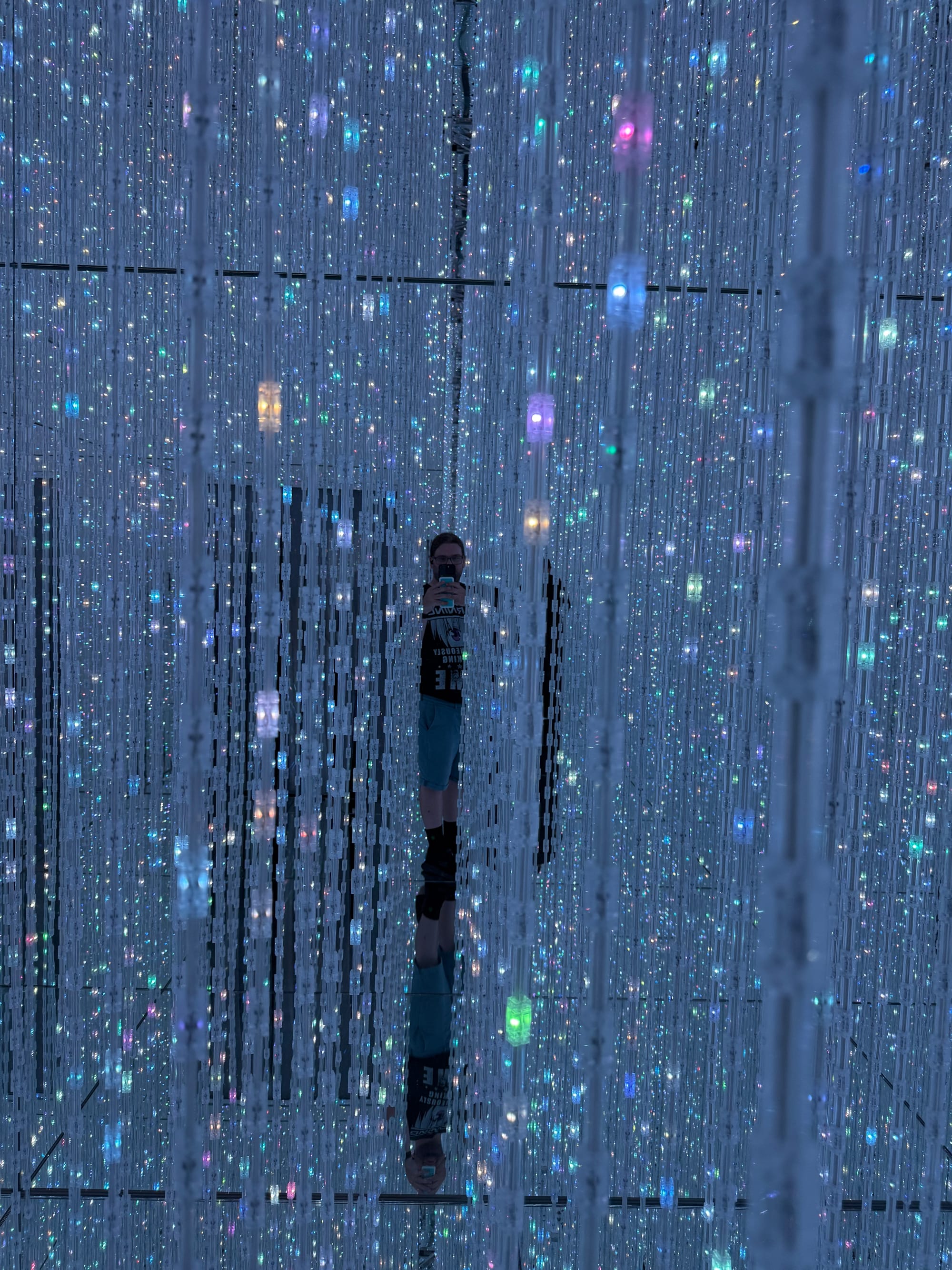
There was also an old classic where was in the planets exhibition back in Tokyo, called Infinite Crystal World, which is where thousands of LED light are all around the place and light up the who exhibit. You can also influence them, if you can find the control panel in the maze of LEDs.
An immersive light installation at teamLab Biovortex Kyoto surrounds visitors with countless suspended points of light and reflections, creating the illusion of an infinite, ever-changing space.
0:00
/1:14
Video of the immersive light installation called 'Infinite Crystal World' with thousands of suspended lights creating the illusion of an infinite, ever-changing space.
Next was the Morphing Continuum, where you go into a room and the artwork is a bunch of balls that fly around the room, including becoming a tornado.
Morphing Continuum at teamLab Biovortex Kyoto immerses visitors in a shifting environment of floating forms, reflections and light. The installation continuously changes shape and appearance as people move through the space.
0:00
/0:38
Video of the Morphing Continuum where us visitors are in a ever shifting environment of floating forms, reflections and light.
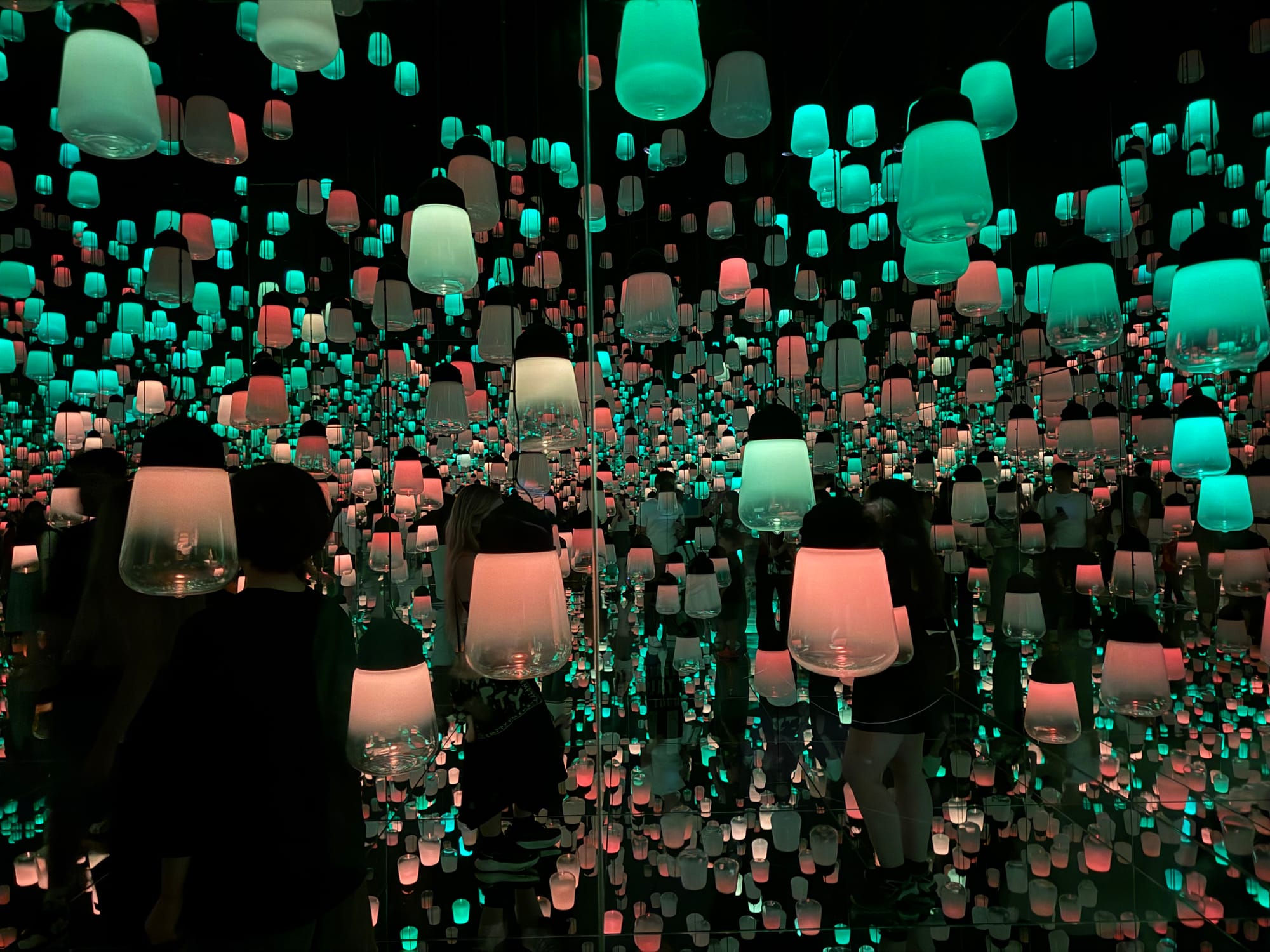
There was also a bit of a weird one called 'Forest of Resonating Lamps', I didn't get the idea of this one originally, but basically if you stand next to a lamp, it turns on. It it mathematically calculated that a line will then be drawn to its neighbour until it reaches the lamps at the furthest part of the room and the light from that one lamp that started the process, will have passed through every other lamp. This is to show that we are all interconnected with each other.
Forest of Resonating Lamps surrounds visitors with hanging lamps that change colour in response to nearby lights and movement. Reflections in the mirrored room create the illusion of an infinite forest of glowing lanterns.
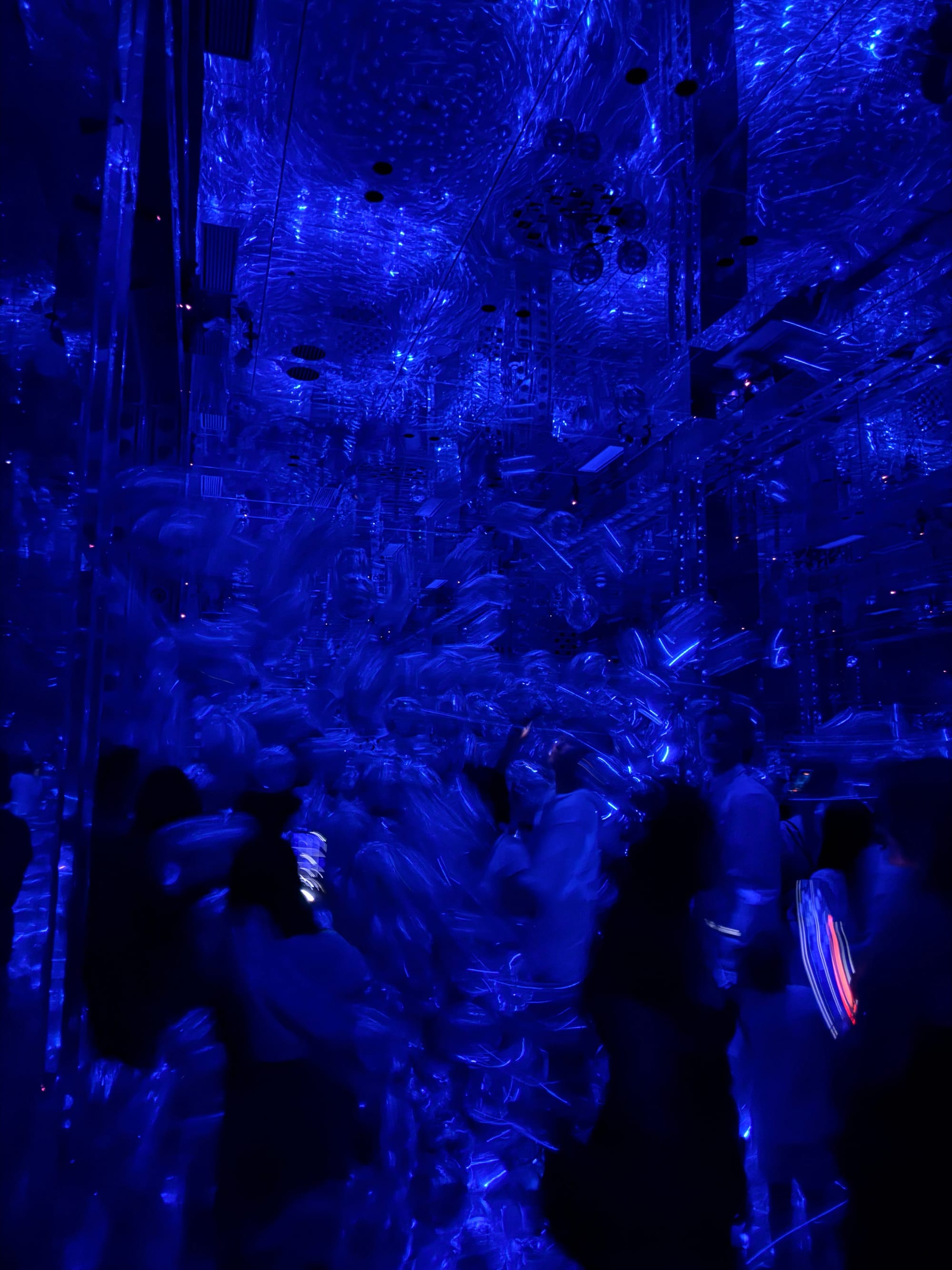
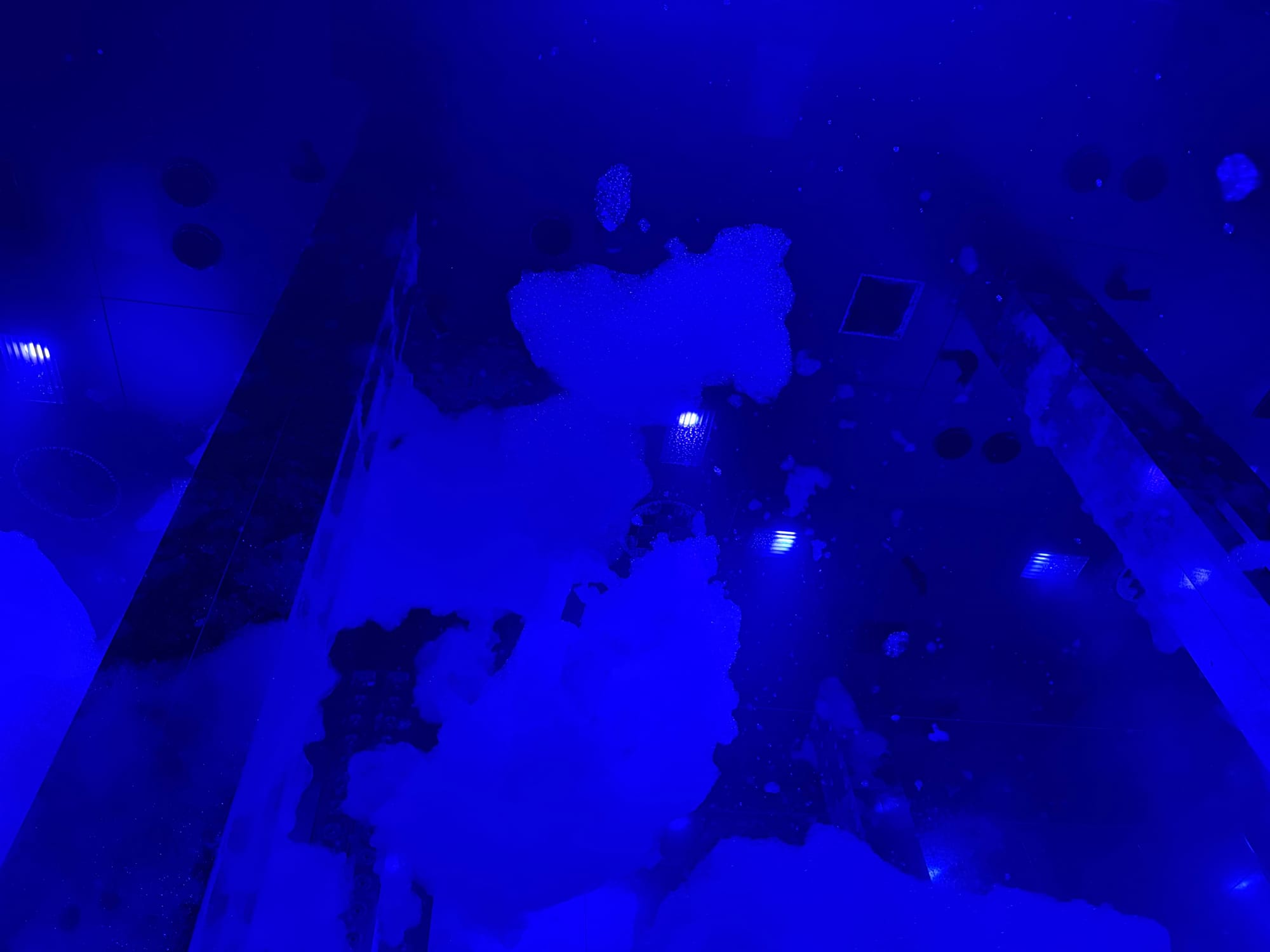
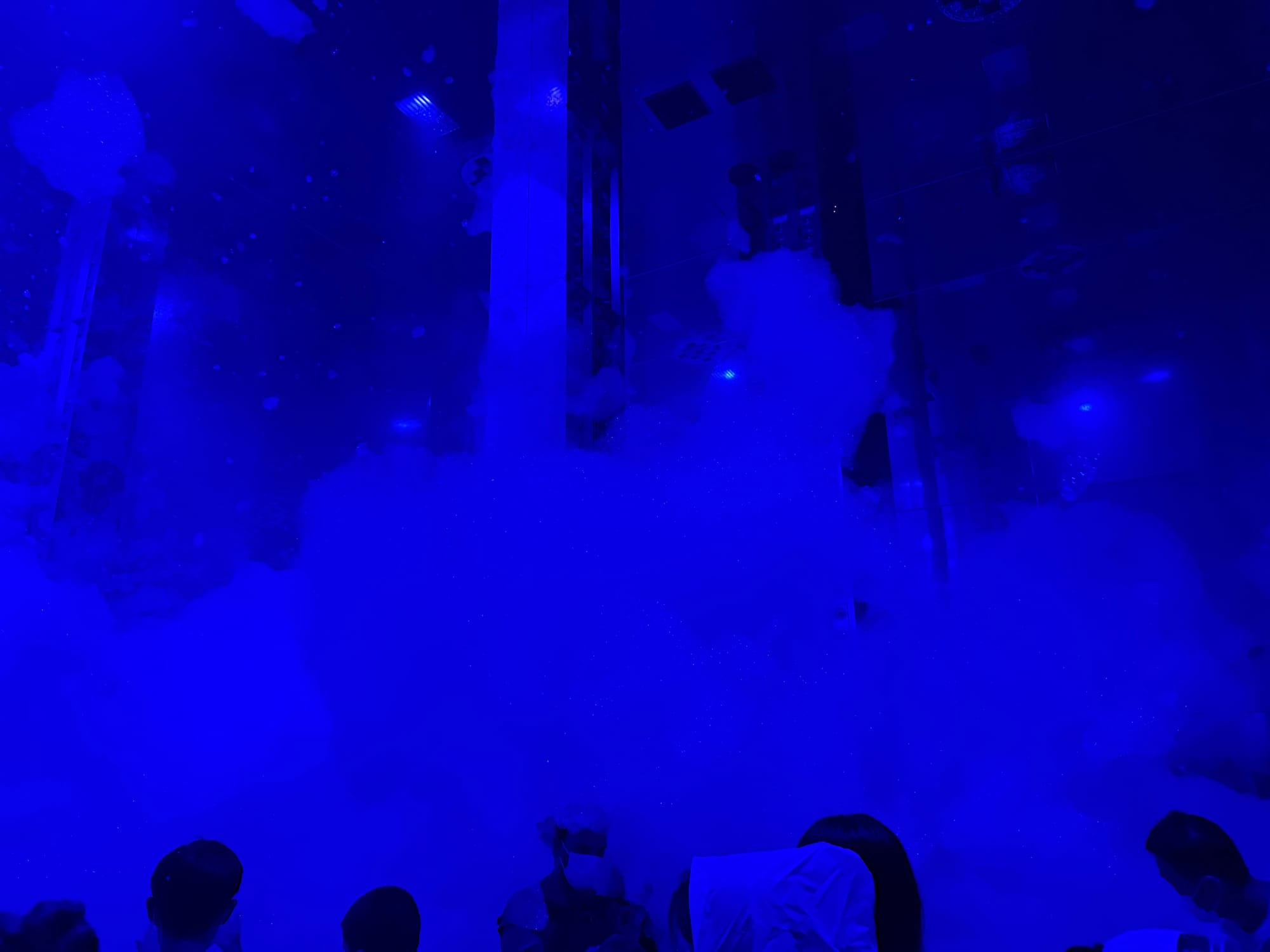
Another one that was weird, but good was the 'Massless Amorphous Sculpture', where you go into a room with a facemask on because there is a load of soap bubbles in the exhibit, in actual fact, it is the exhibit.
Massless Amorphous Sculpture is an interactive installation at teamLab Biovortex Kyoto. Composed of floating, cloud-like forms that continuously shift and respond to their surroundings, the artwork challenges conventional ideas of sculpture, space and physical boundaries.
The soap bubbles form massless clouds and are floating around the room and to be honest, it is quite good fun and also fun to watch as you can interact with the soap. Don't worry, there are taps at the exit to wash your hands and that, plus someone with a blow-dryer to get any out of your hair, plus you can rent a full poncho for about 300 yen.
Visitors experience Massless Amorphous Sculpture at teamLab Biovortex Kyoto. The floating, cloud-like artwork continuously changes shape and position, creating an immersive environment that blurs the boundaries between sculpture, light and space.
0:00
/1:54
Video of the Massless Amorphous Sculpture, which is a floating, cloud-like artwork that continuously changes shape and position, which creates an immersive environment.
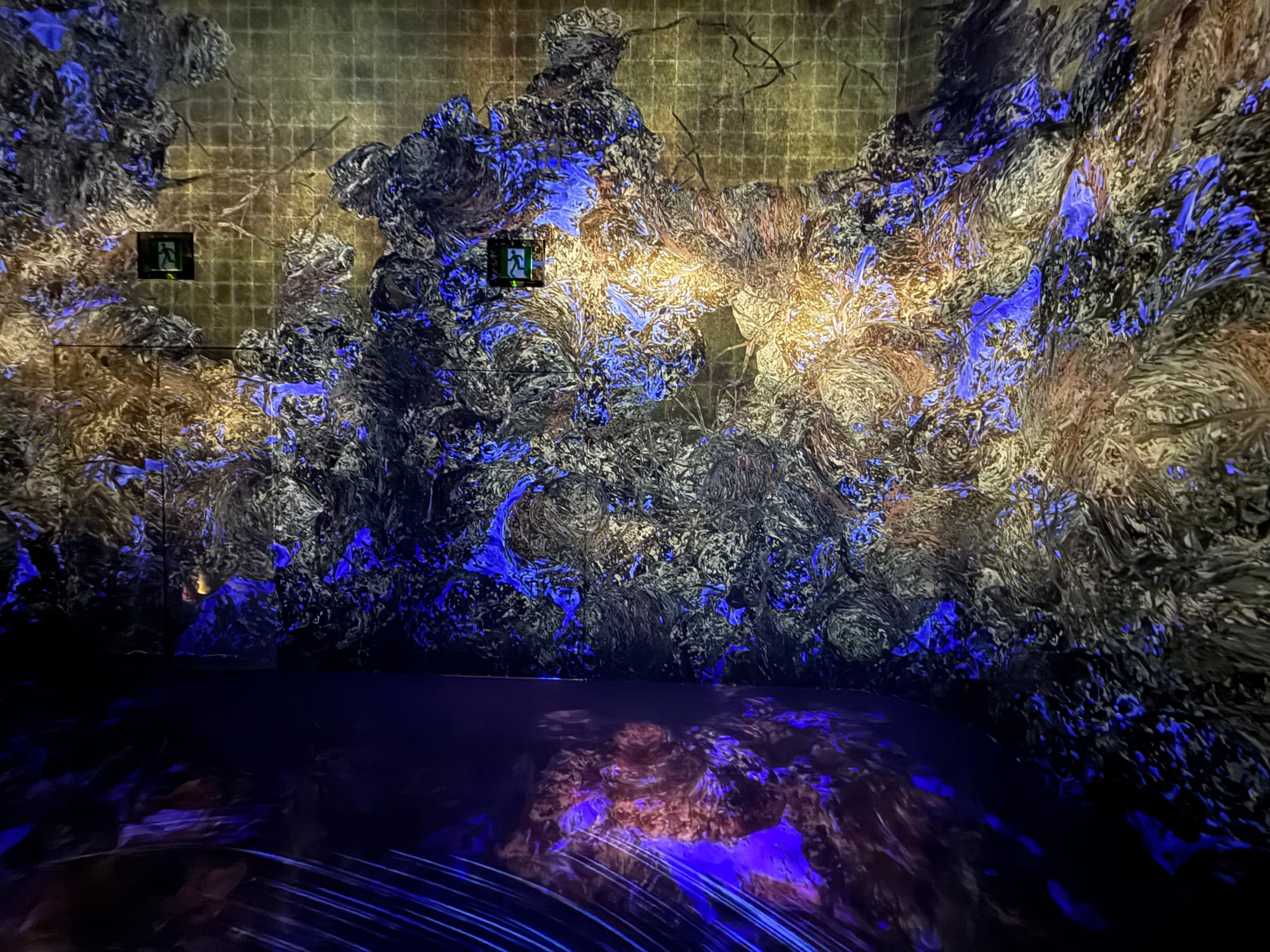
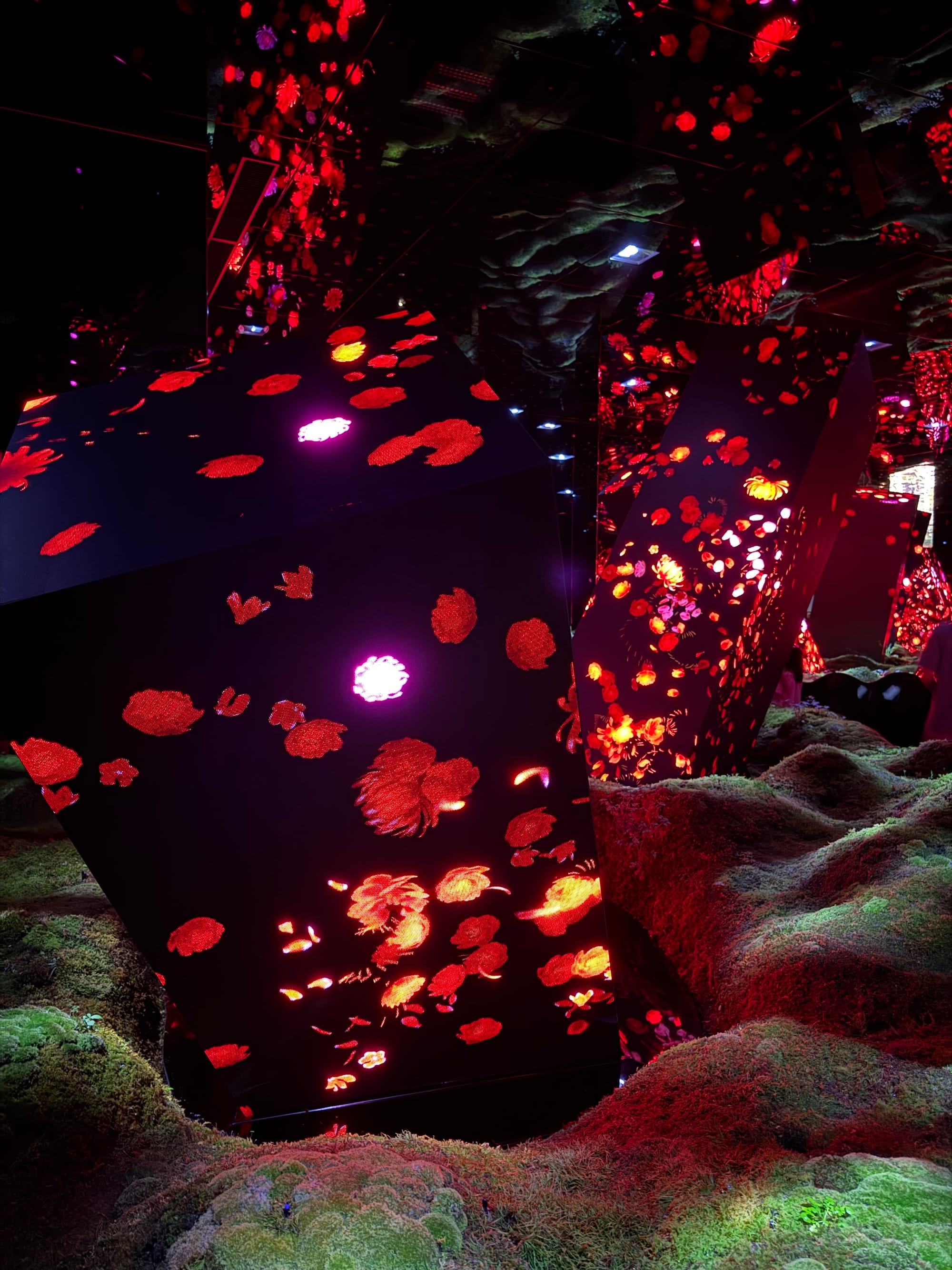
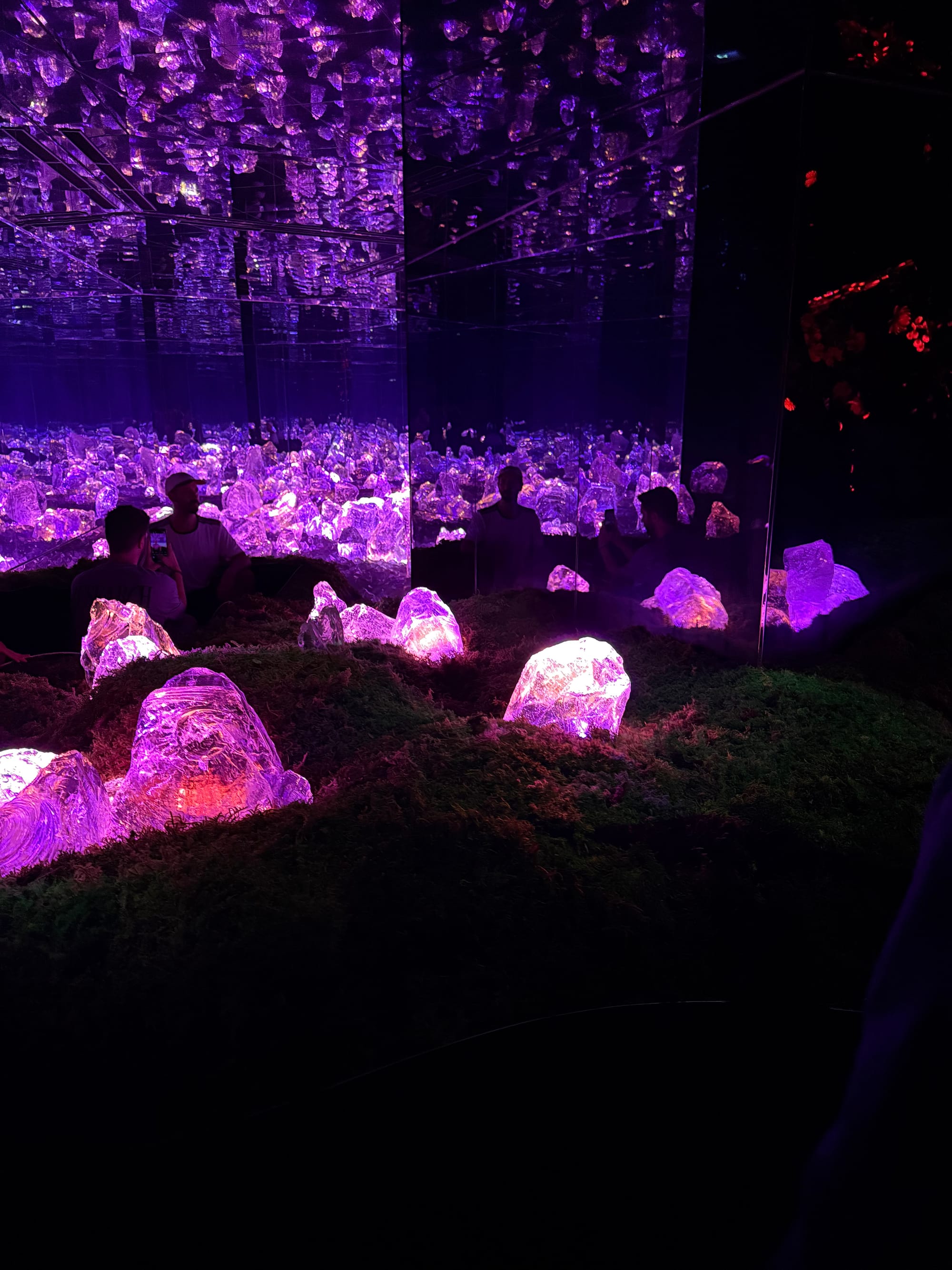
This next 0ne was a bit of a weird one, but also really good. It is called "Megaliths in the Open Universe". The whole idea behind it is to connect digital megaliths with nature and as we move about and cast shadows on the megaliths, the artwork on them changes. That isn't all though, as they are surrounded by a living breathing garden that gets watered regularly as you can see in the video below.
Megaliths in the Open Universe transforms mirrored structures into luminous surfaces covered with evolving flowers and light. The installation merges digital imagery, reflection and landscape-like forms to create a continuously changing environment.
0:00
/2:06
Video showing Megaliths in the Open Universe, with digital structures that change with people and shadows near them and a living moss garden that gets watered regularly.
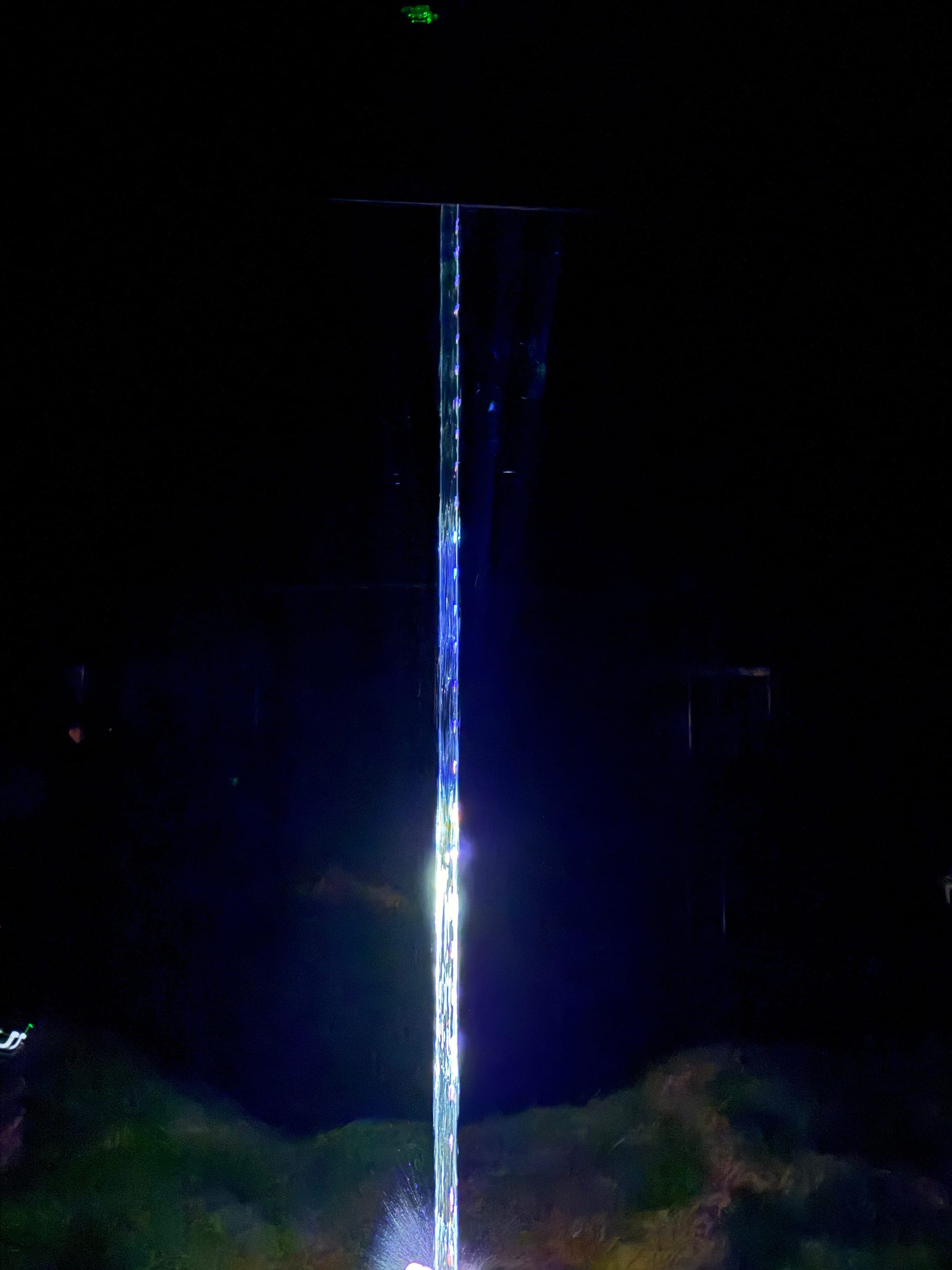
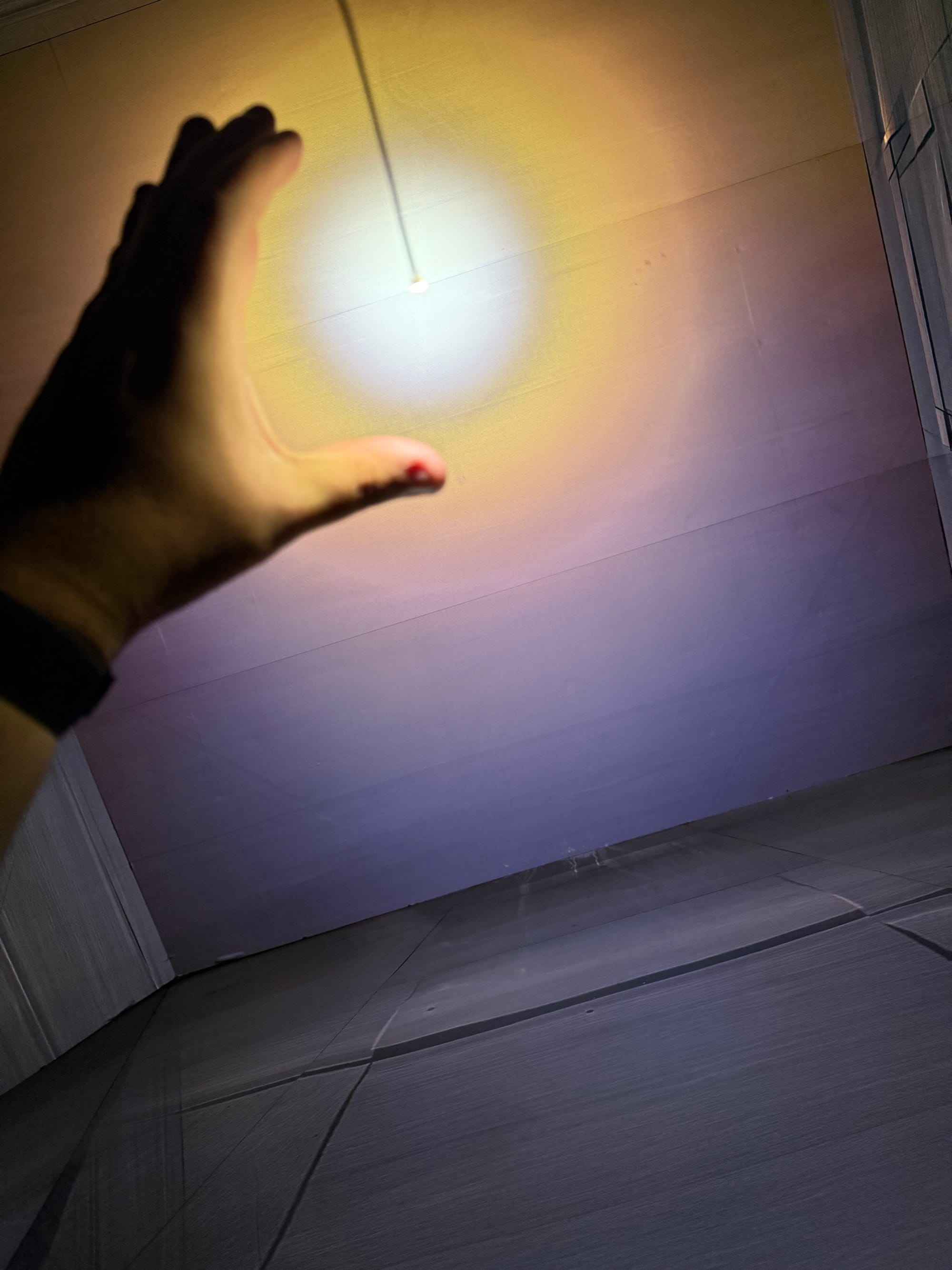
Another one that I quite liked is called Ephemeral Crystallised Drop, which is free flowing water falling down, but through light, it can make it look like the water drops are just hanging there, which you can see more clearly in the video below.
Ephemeral Crystallized Drop transforms a single column of light into a luminous, jewel-like form that appears to emerge from the ground. The installation explores the relationship between light, matter and perception within teamLab's immersive digital environment.
0:00
/0:24
Ephemeral Crystallised Drop which shows a single column of light looking like water drops just hanging there.
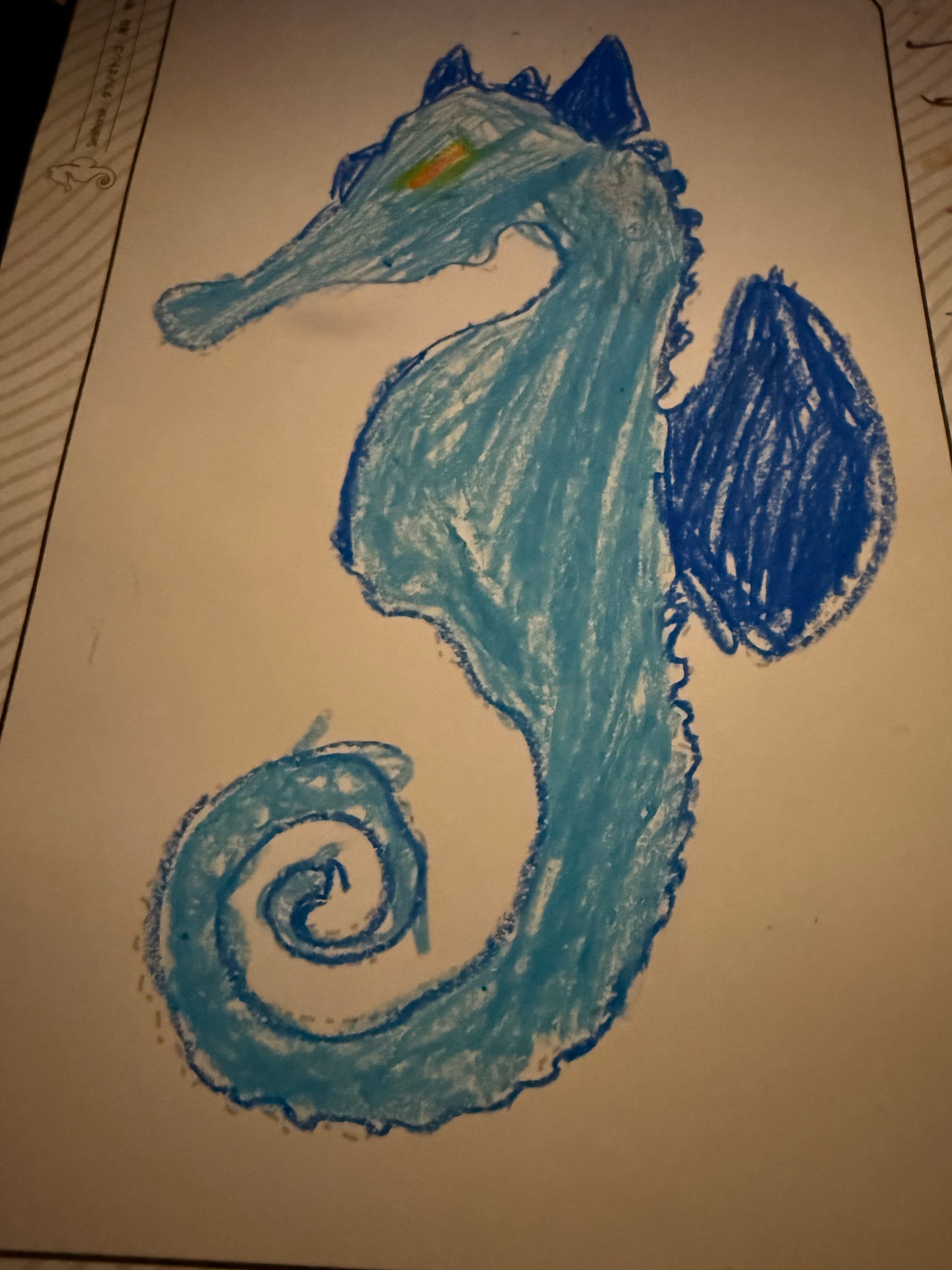
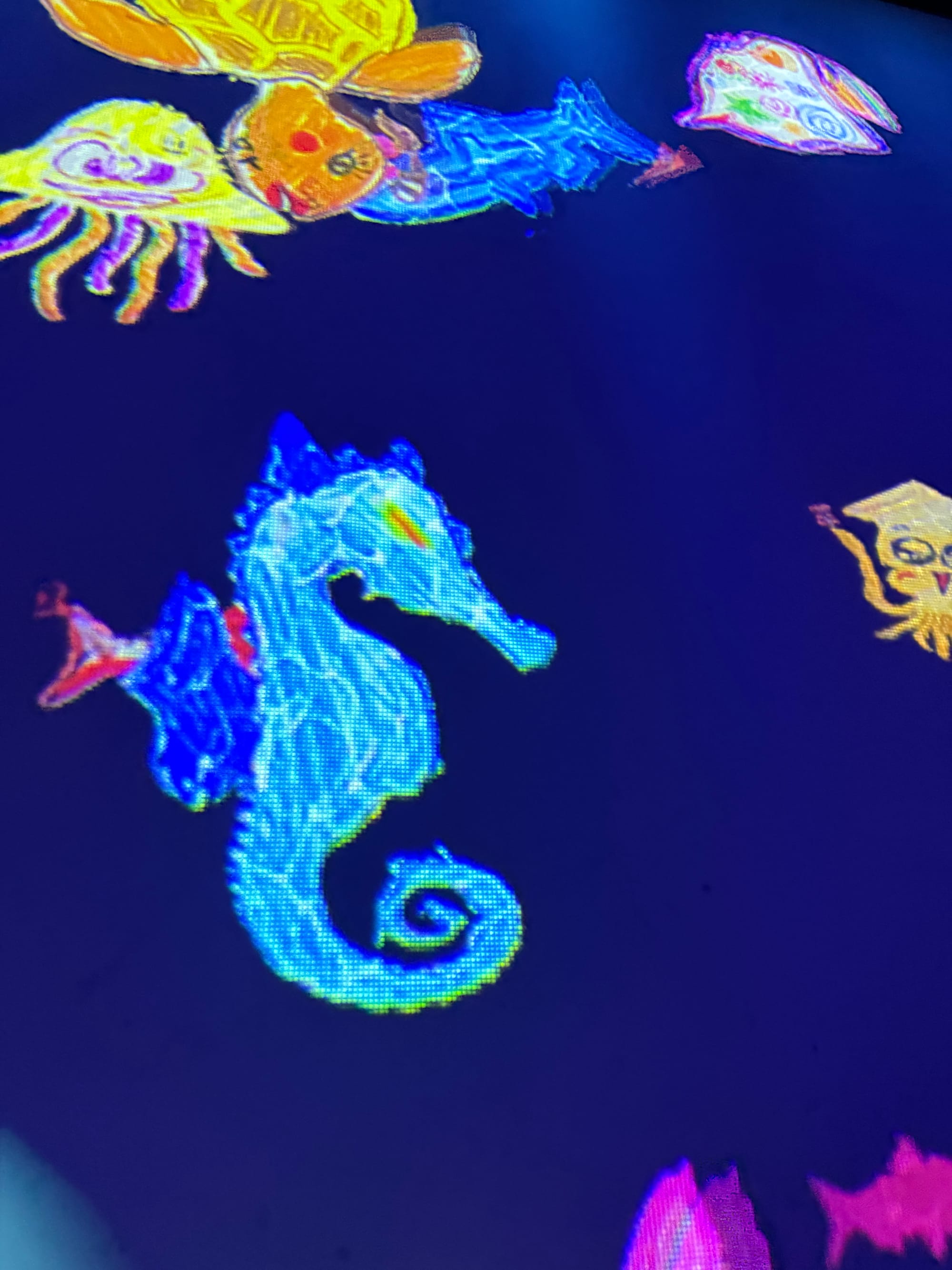
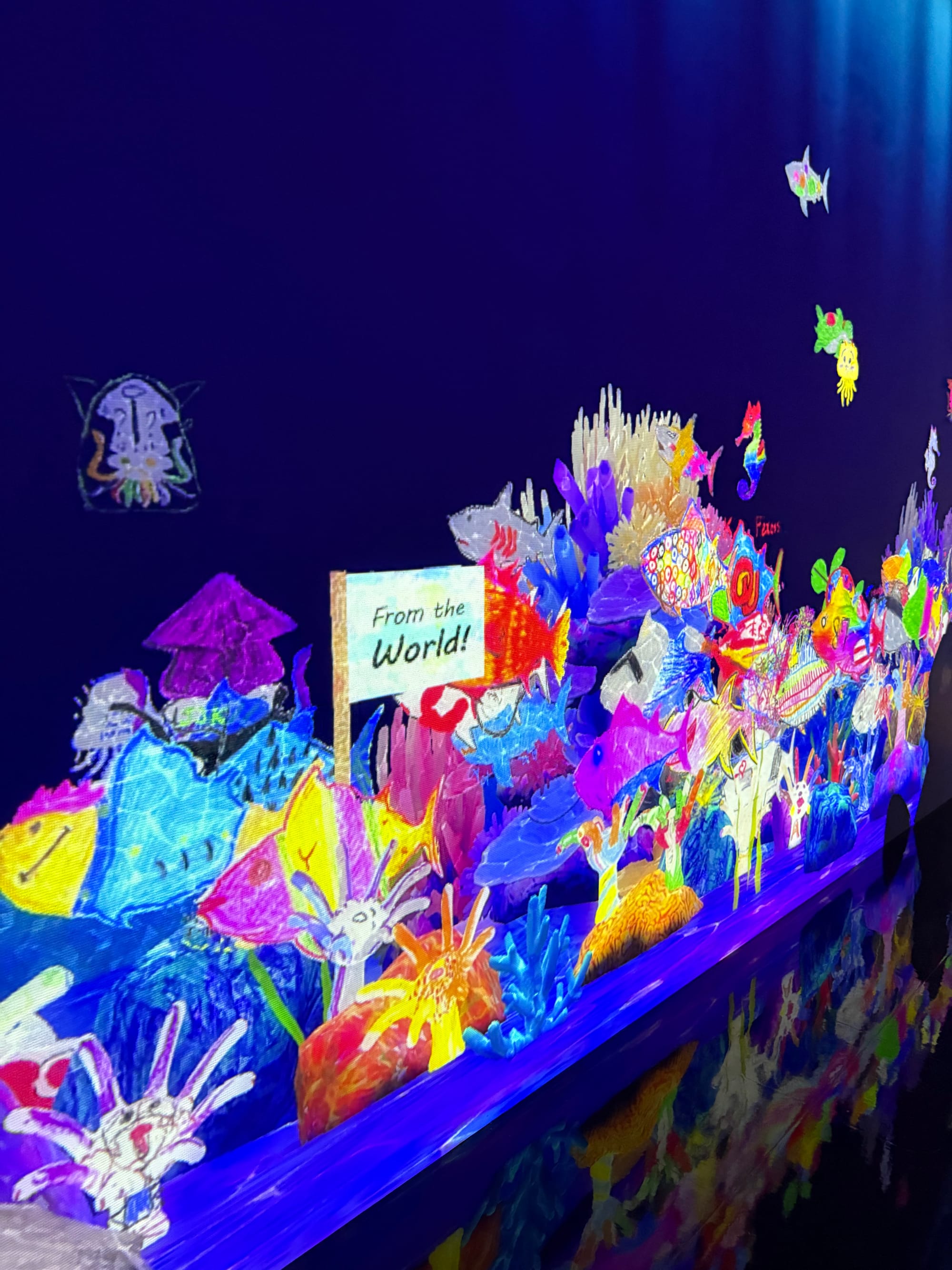
Another one that was good was The Future Park, where you can be really creative and draw a sea creature, which then gets scanned digitally and then appears on the wall. I'm not the best at drawing, but I did give it a go and drew a seahorse.
My hand-drawn dragon created at teamLab Future Park. Visitors can design their own creatures, which become part of interactive digital artworks that blend creativity, technology and play.My hand-drawn dragon comes to life in teamLab Future Park, swimming through a digital ocean alongside other visitors' creations as part of the interactive artwork.The collaborative digital aquarium at teamLab Future Park brings visitors' drawings to life as animated sea creatures. Creations from around the world swim together through a colourful virtual ocean, creating a constantly evolving underwater ecosystem.
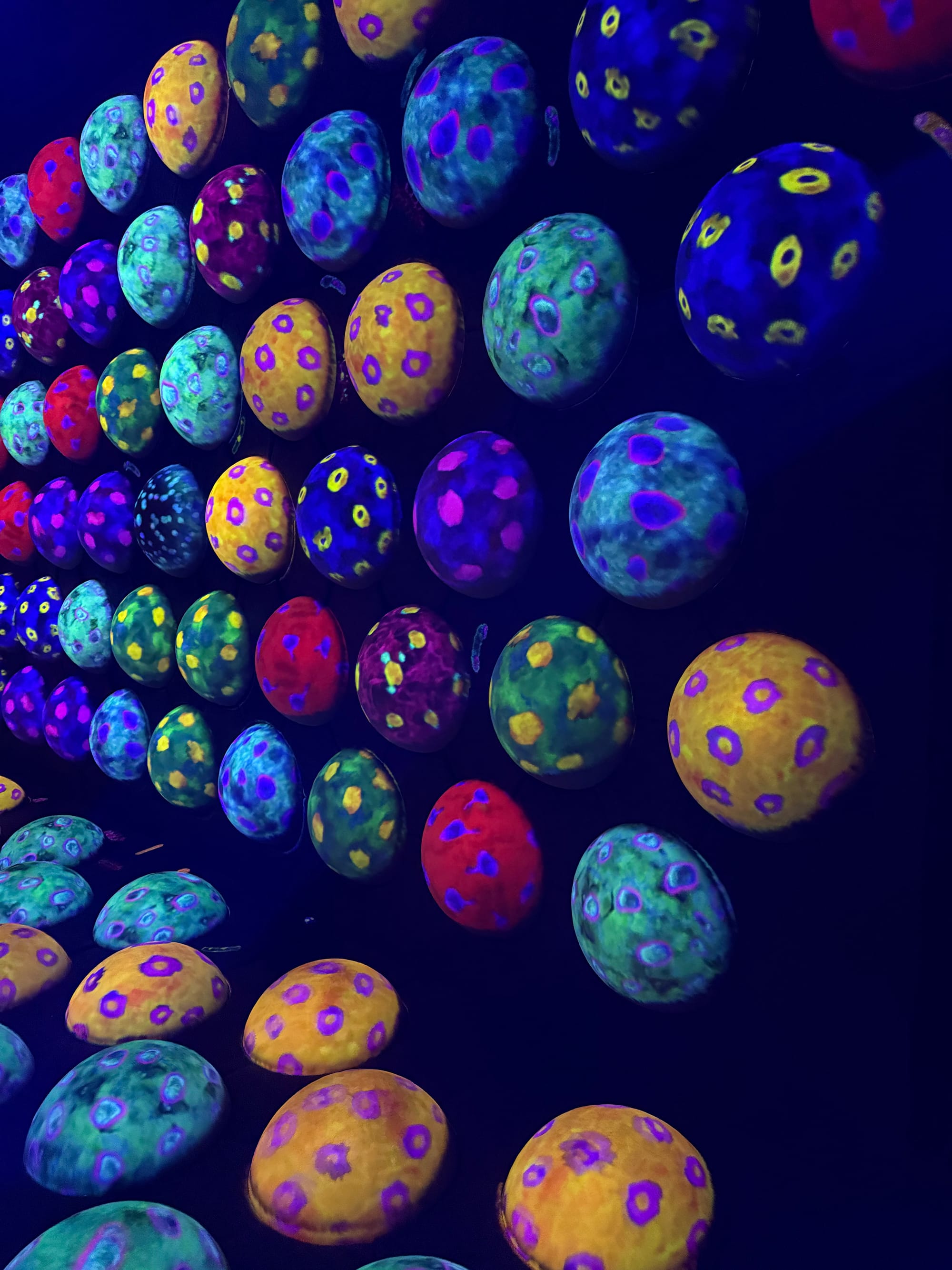
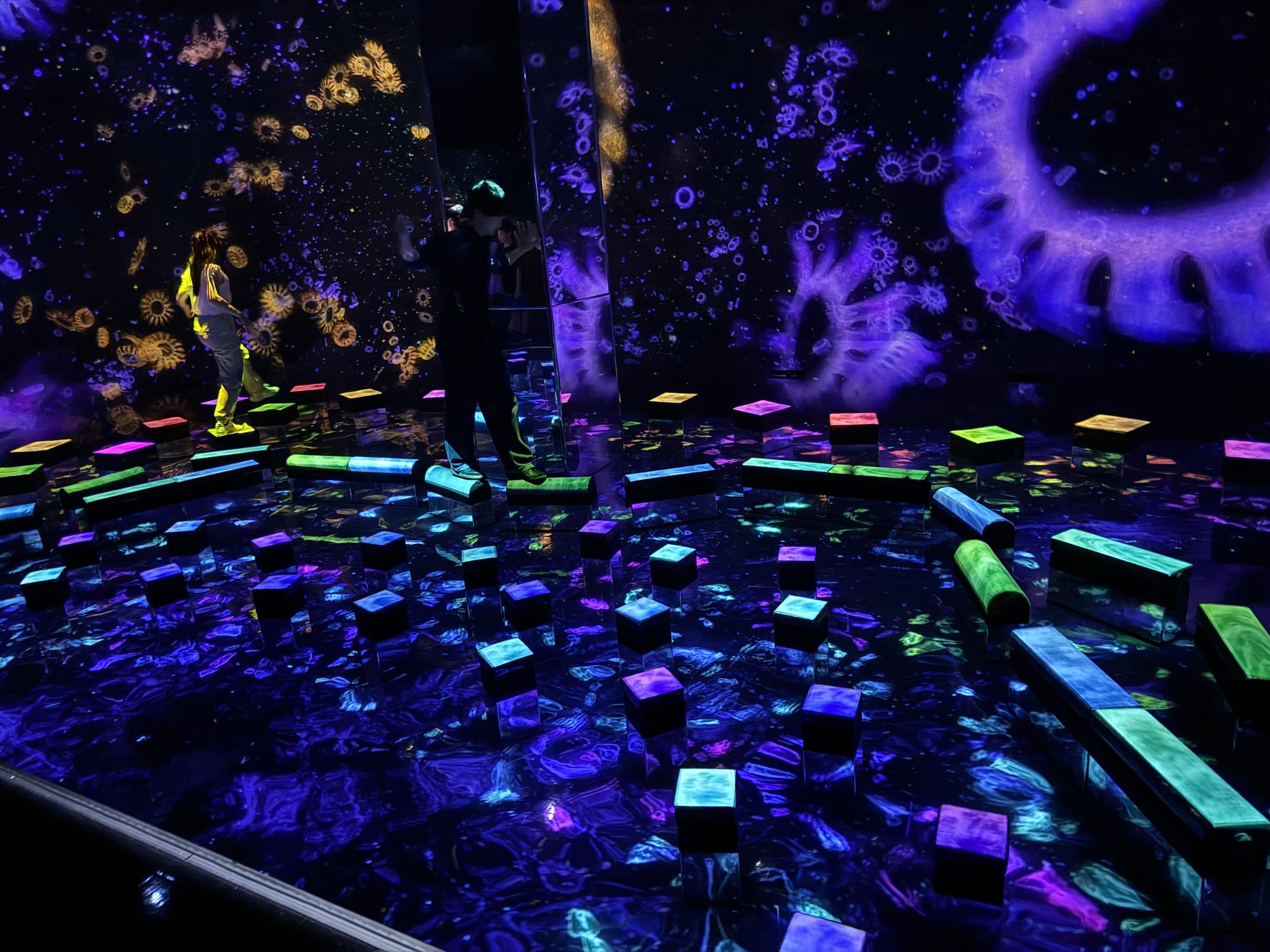
There were also many other displays there and it was a genuinely awesome time to be honest and it took me about 2.5 hours to get around everything. Here are some photos of the other displays that I haven't mentioned:
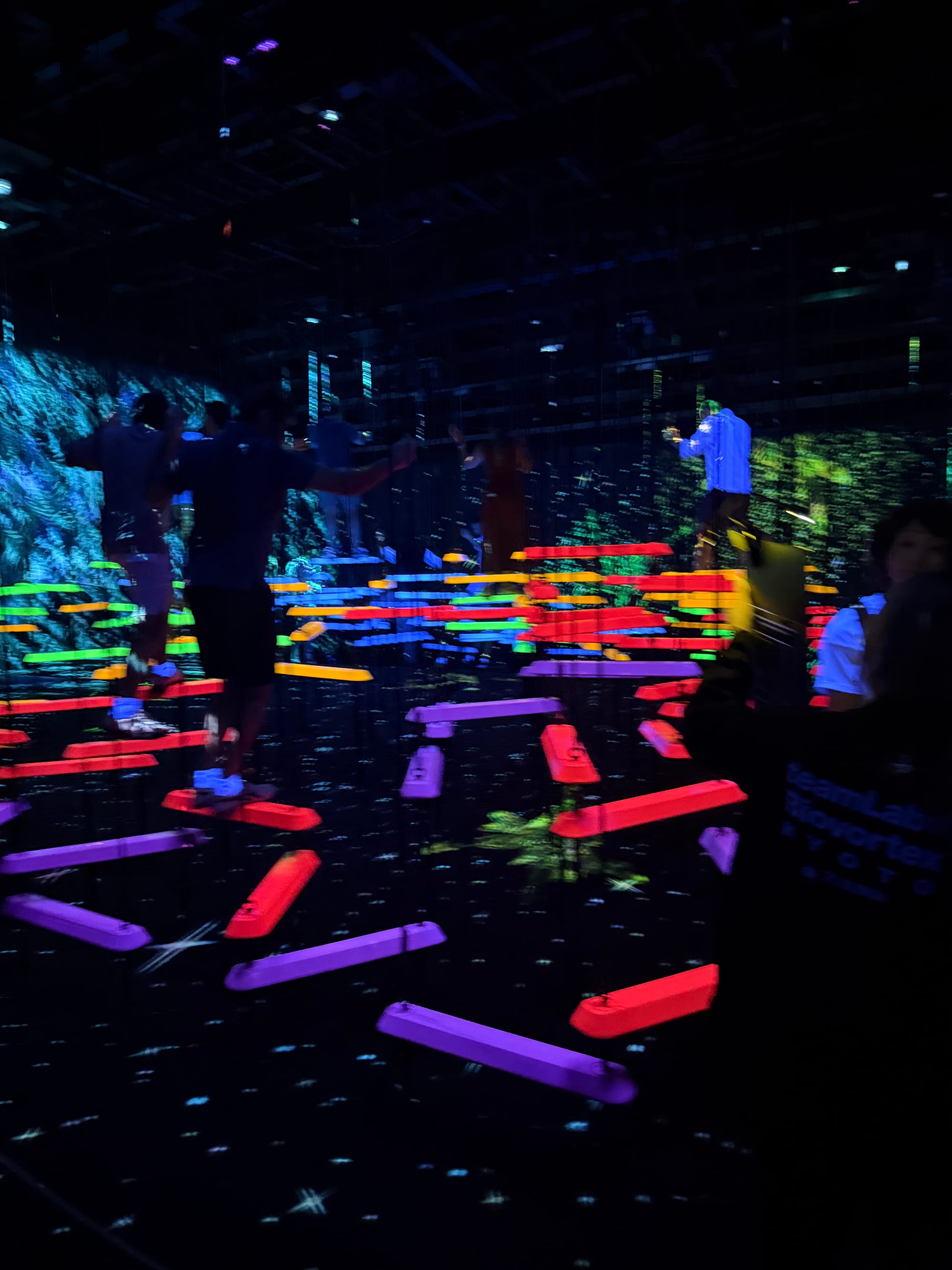
An interactive digital aquarium at teamLab Future Park, where visitors' drawings become animated sea creatures that swim through a shared underwater world. The artwork continuously evolves as new creations are added by participants.A luminous installation at teamLab Biovortex Kyoto fills the space with glowing crystal-like forms and mirrored reflections. The interplay of light, colour and reflection creates the illusion of an infinite landscape stretching in every direction.An interactive installation at teamLab Biovortex Kyoto responds to visitors' actions, allowing light and colour to change through touch. The artwork transforms simple interactions into a shared experience shaped by everyone in the space.A room filled with colourful illuminated spheres at teamLab. The interactive installation responds to touch and movement, encouraging visitors to explore, play and shape the artwork through their interactions.An interactive play installation at teamLab challenges visitors to balance, climb and move across illuminated platforms. As people interact with the space, colourful digital imagery responds and transforms around them.Visitors navigate a maze of illuminated balancing beams at teamLab. The interactive installation combines physical movement with responsive digital art, encouraging play, cooperation and exploration.
Food
After the Exhibit, it was getting late, so I made my way back to Kyoto station, where I had to get something to eat soon, as the restaurants usually close for about 11 and last order is usually 30 mins to an hour before it.
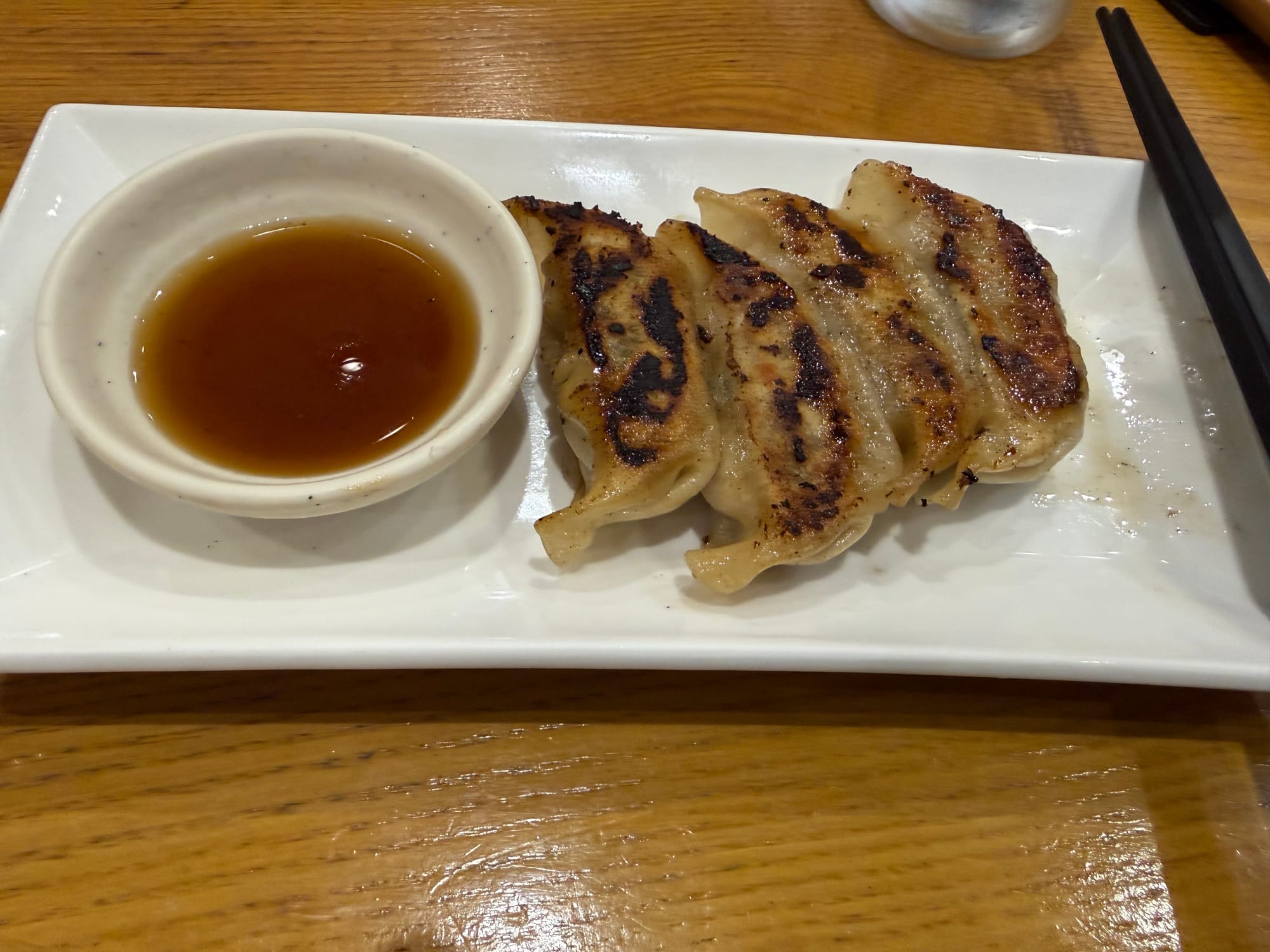
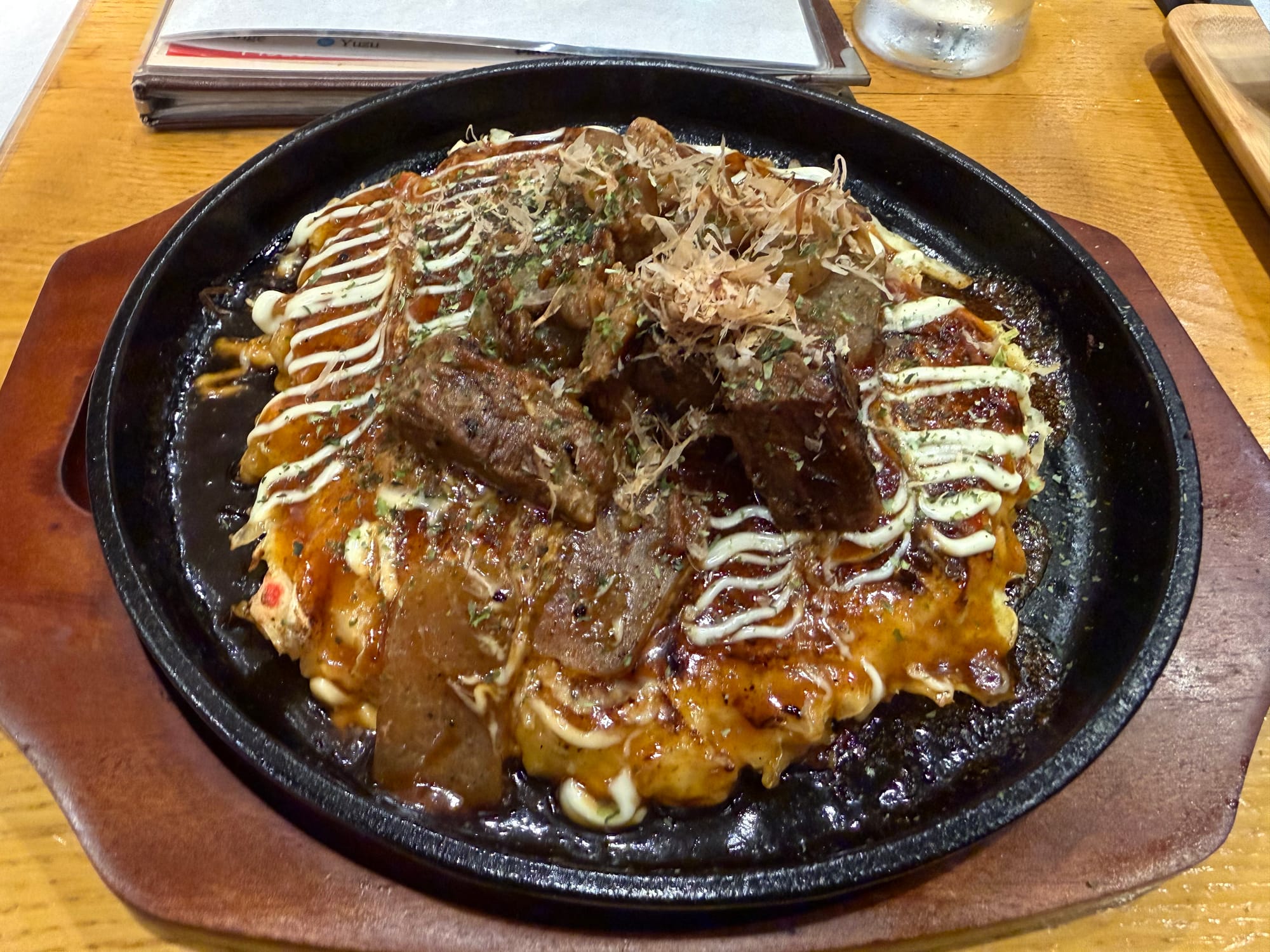
I was able to find somewhere in time and got some beef tendon Okonomiyaki and Gyoza before catching the train back to Osaka at about 10:50pm.
Freshly cooked gyoza served with a dipping sauce, featuring crisp pan-fried skins and a savoury filling. A simple but classic accompaniment to an evening meal in Japan.A beef tenderloin okonomiyaki topped with grilled steak, savoury sauce, mayonnaise and dancing bonito flakes. This hearty variation combines Osaka's famous savoury pancake with tender cuts of beef.
Rest Day/Maid Cafe
13th August
Today, I was planning on going out to Solawina Onsen as well as the maid cafe, but instead I had a lie in, changed Solawina Onsen for the day I fly home and just went to the maid cafe.
Maid Cafe
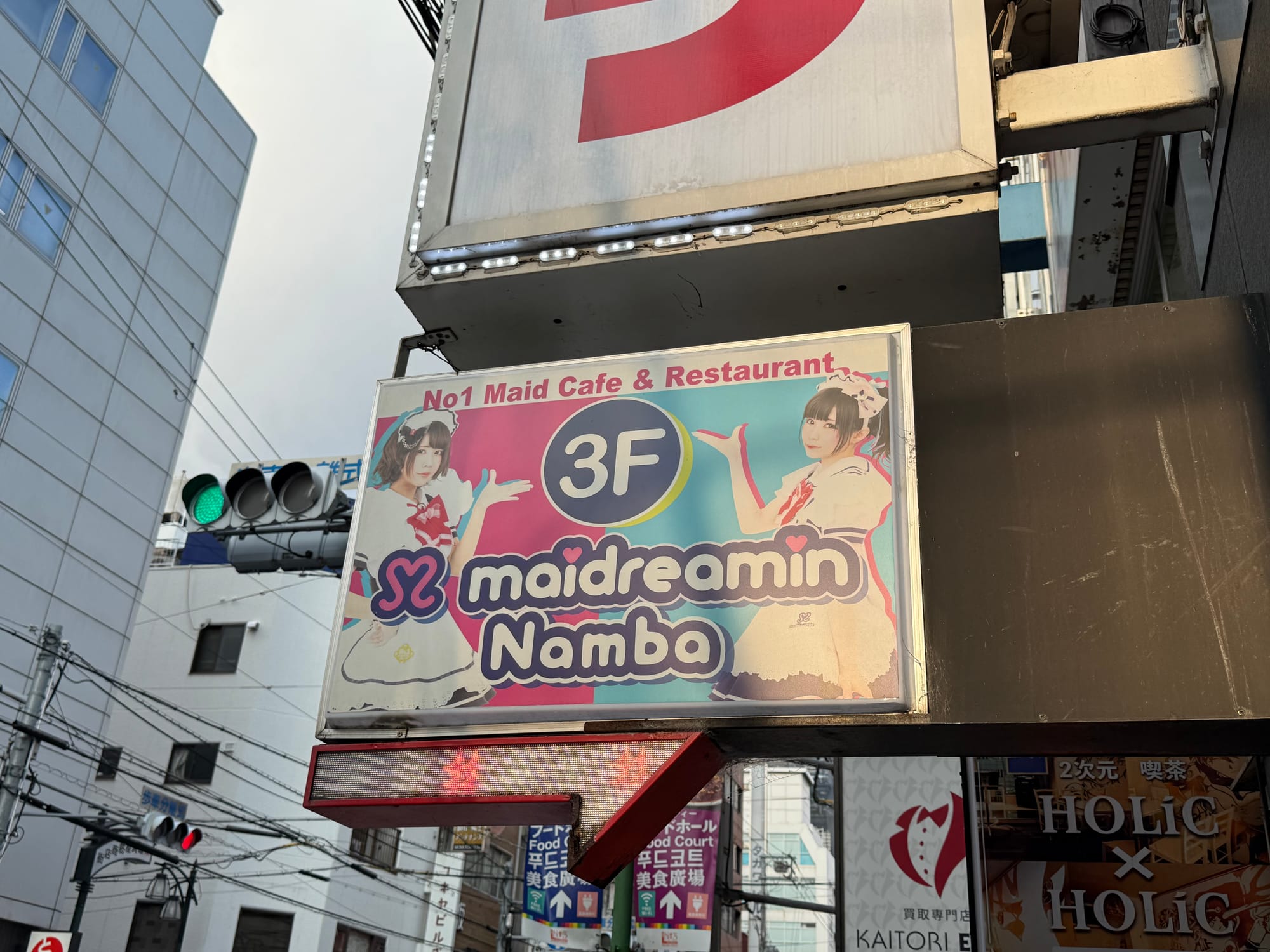
Now if any of you have watched slice of life anime’s, chances are that you probably have come across a maid cafe being in one of them. I chickened out last time I was in Japan, but this time I was determined to go to one. The one I went to was maidreamin Namba, which is only about 30 mins from my hotel via walking and the train.
A sign for maidreamin Namba in Osaka's Namba district. Maid cafés are a distinctive part of Japanese pop culture, combining themed dining, entertainment and character-based customer service in a uniquely Japanese setting.
I didn't really know what to expect, as in anime that I have watched, you get greeted by girls dressed as maids saying "Welcome home, master", which did happen and I did get seated as well. Now I know what you are thinking, girls dressed as maids? Well there wasn't anything sexual about it or at least that was the vibe I got and it was a really weird, but fun time out to be honest.
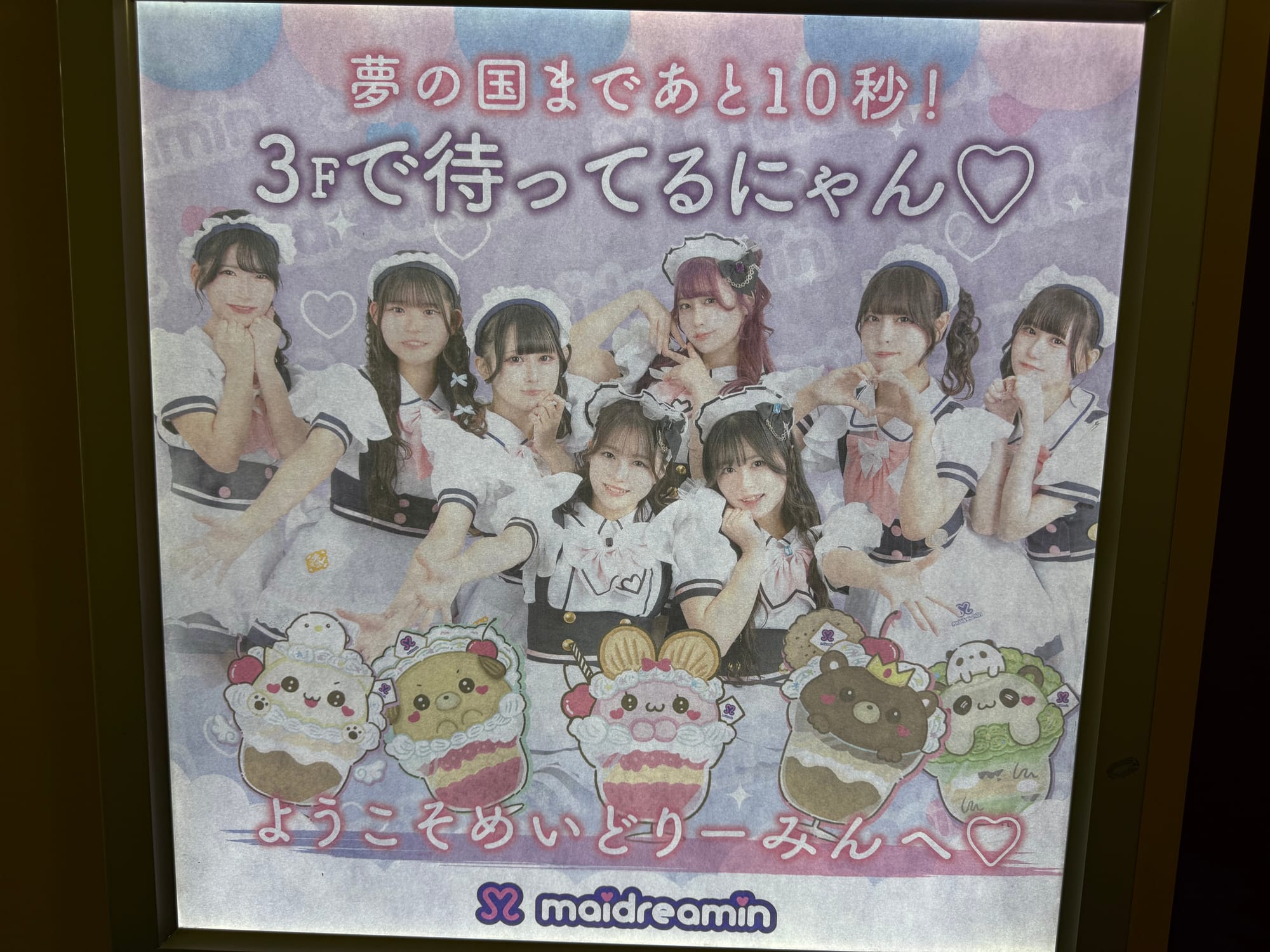
A promotional display for maidreamin Namba, one of Osaka's best-known maid cafés. The café combines themed dining, live performances and interactive entertainment, making it a popular destination in the Namba area.
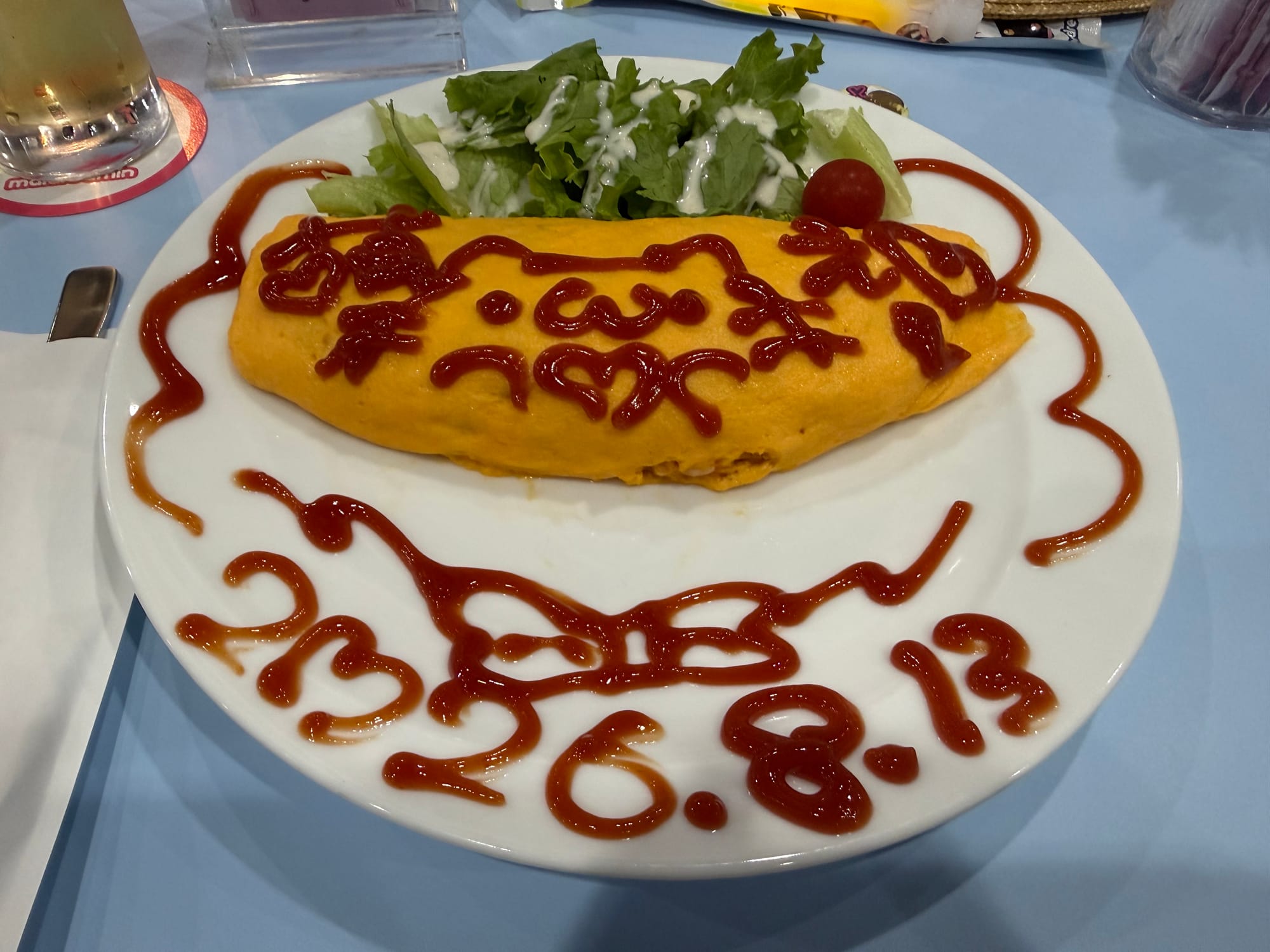
I went for the deal when I got Omelette rice, a drink, photo (which I lost on the train before I was able to see it properly) and a headband. So the maid who was looking after me was called Misa and she brought over my Omelette rice and started drawing a cat on it for me, which was amazing to see.
An omurice at maidreamin Namba, decorated with ketchup artwork prepared by the café staff. Creative food presentation and personalised designs are a signature part of the maid café experience.
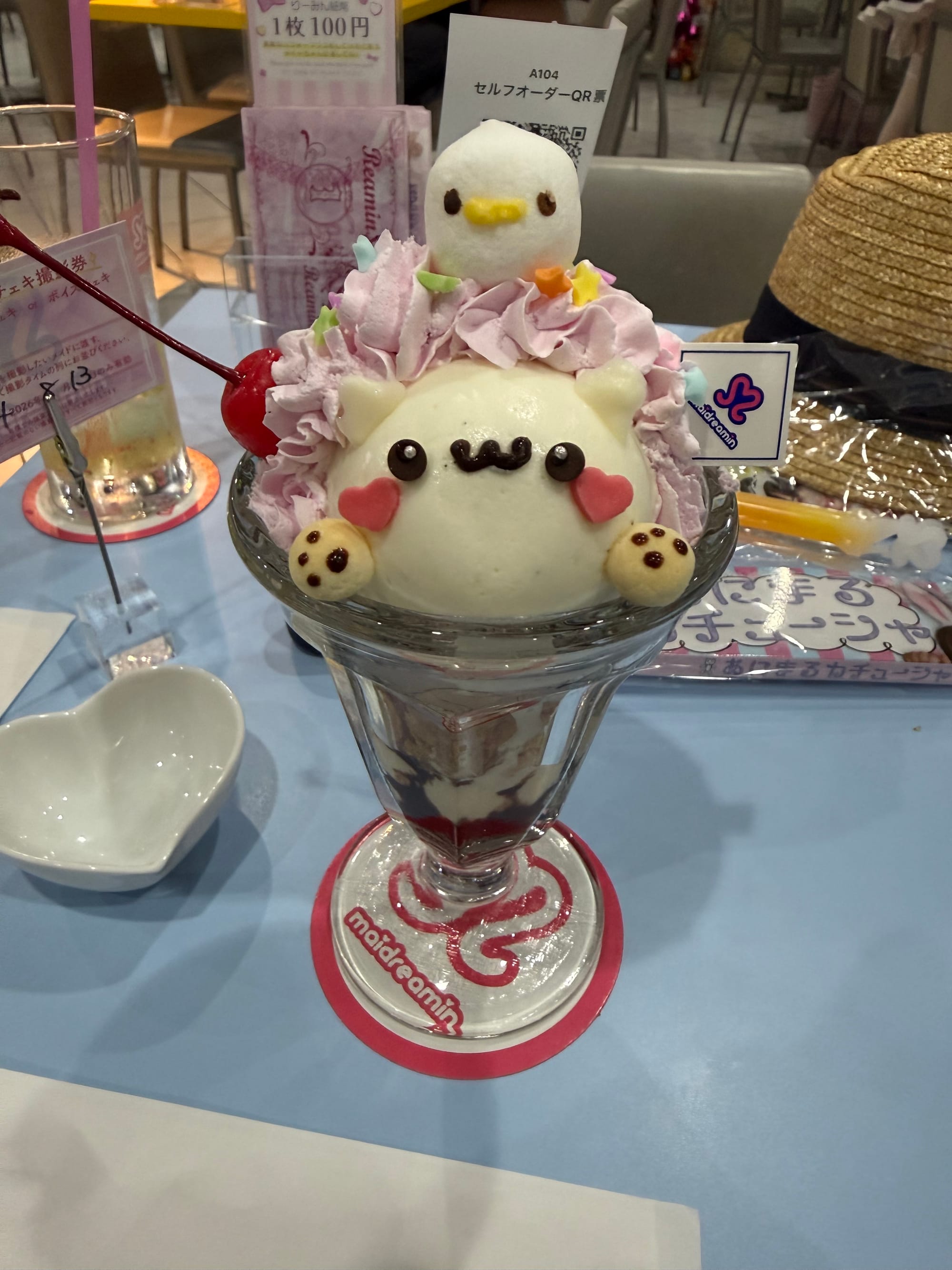
I also ordered a kitty parfait and it was both delicious and like a work of art.
A character-themed parfait at maidreamin Namba, decorated with colourful sweets, whipped cream and edible artwork. Creative desserts like this are a signature part of the maid café experience, combining food with playful presentation.
Well that is if for now with my trip being back in Osaka, please join me next time as I got to universal studios and Kobe, until then!