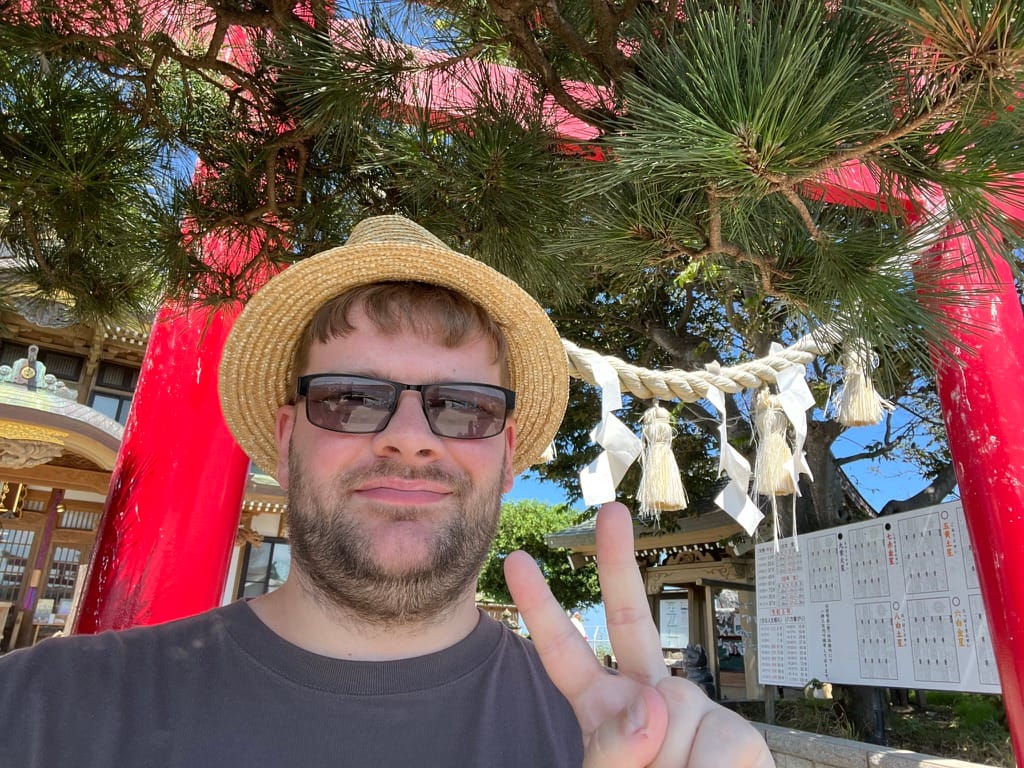
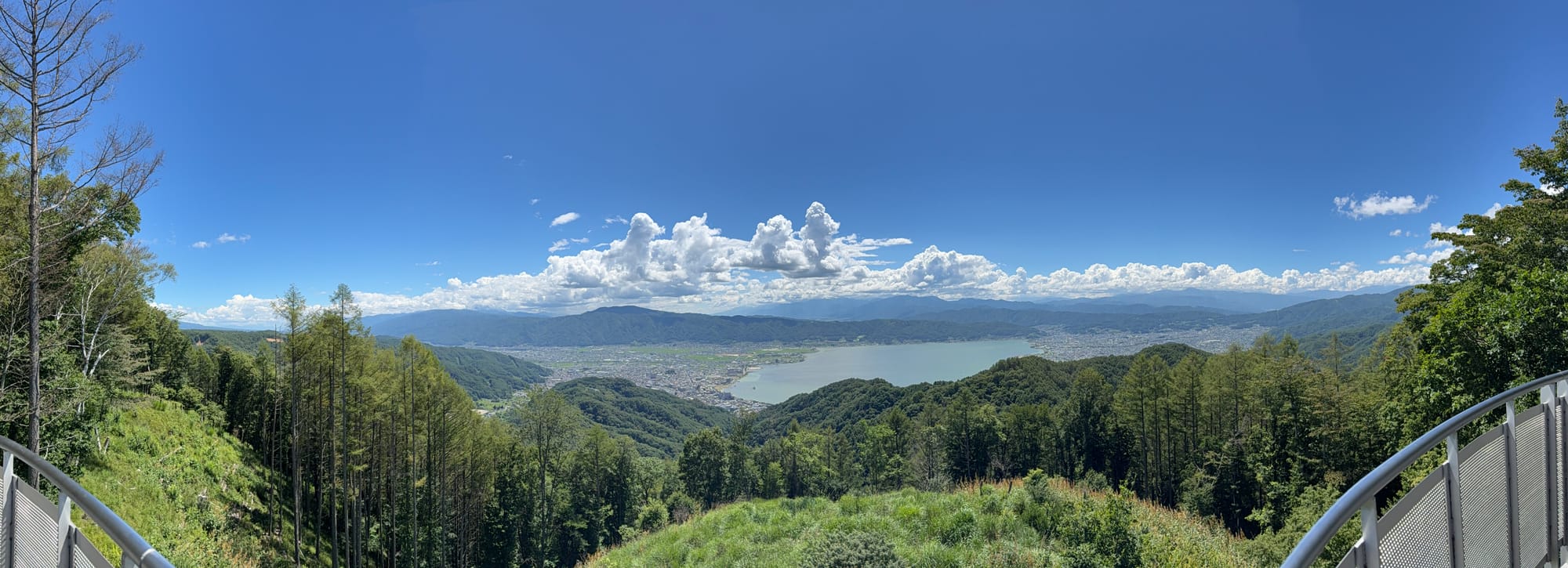
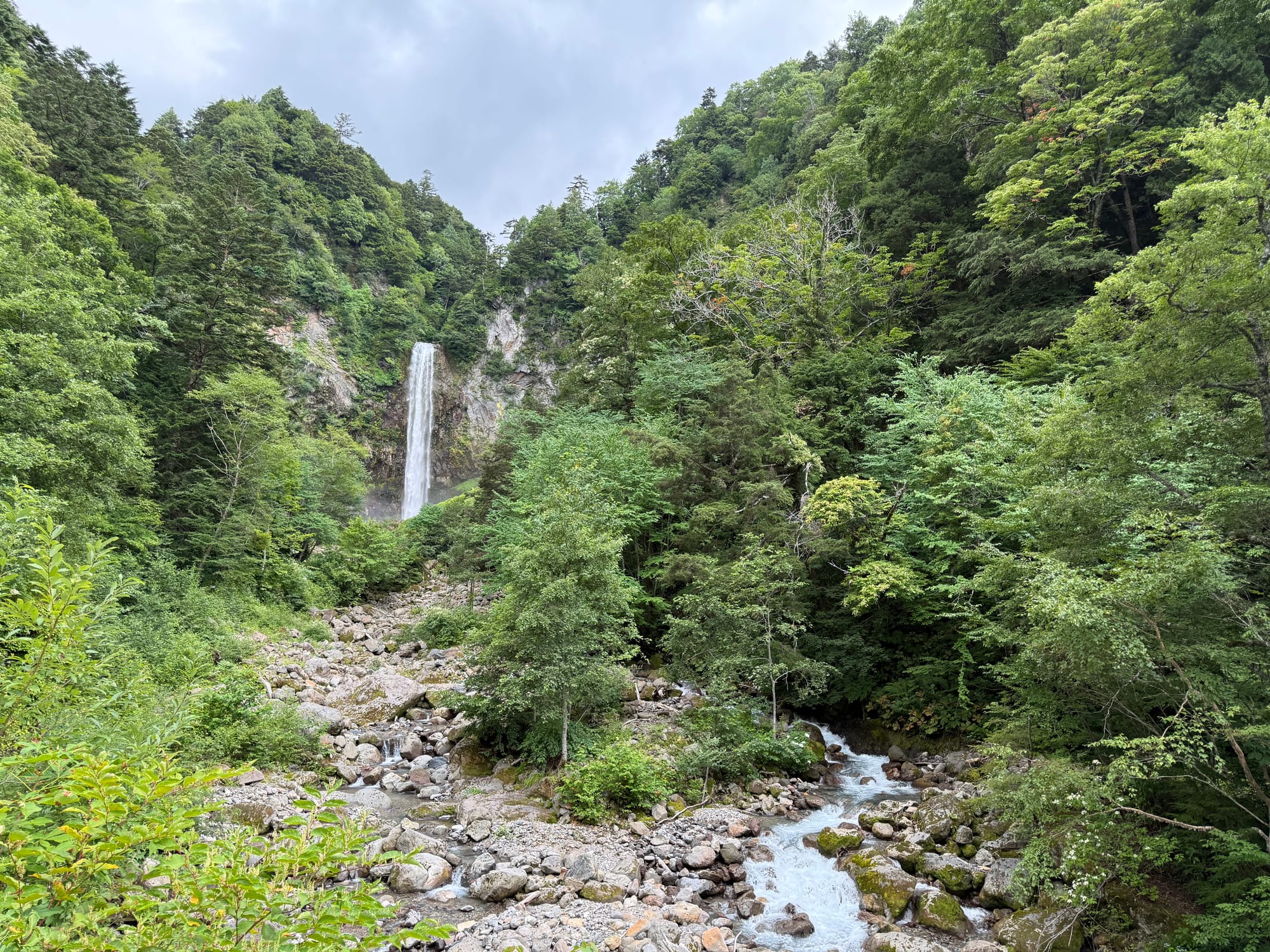
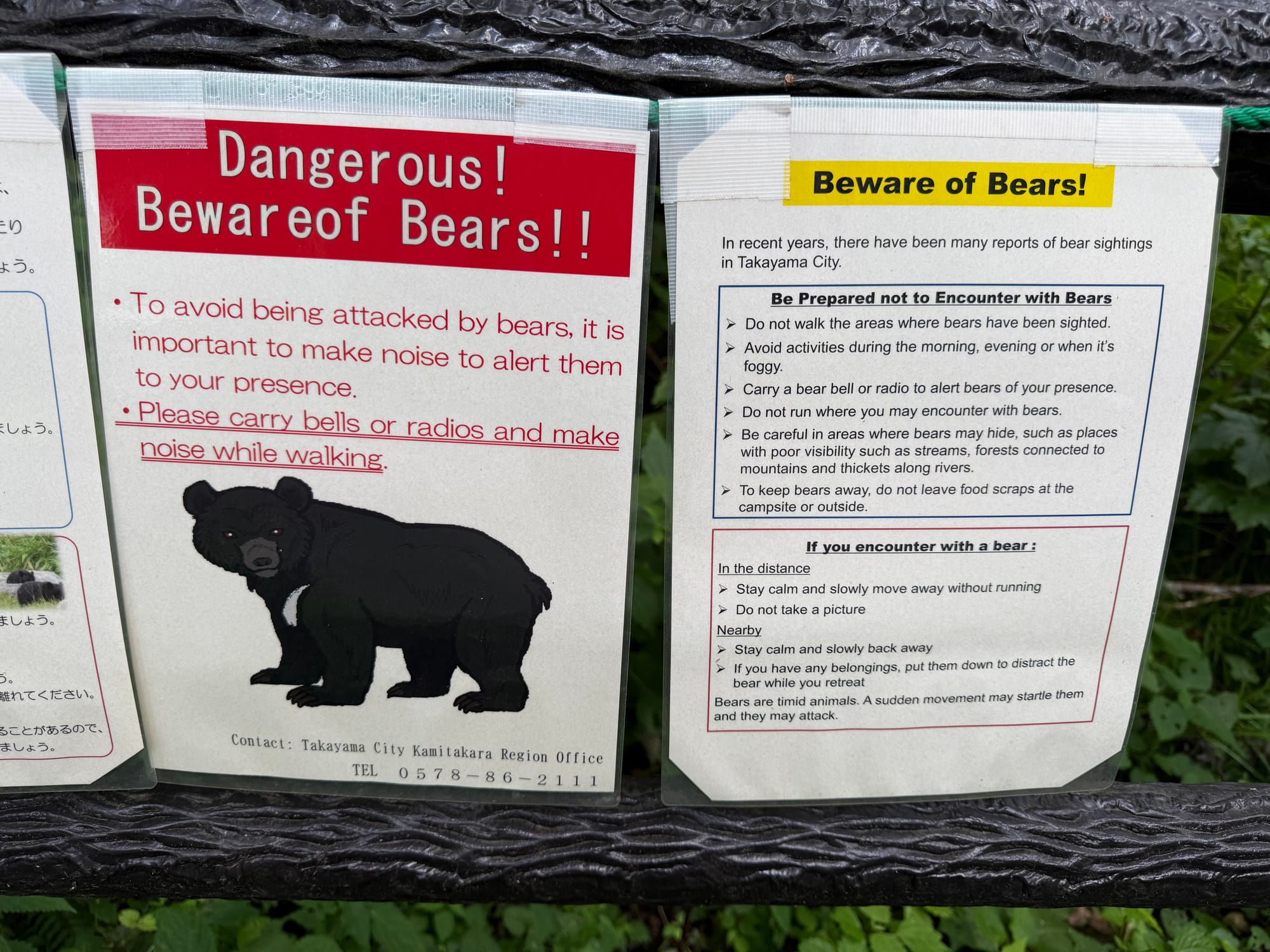
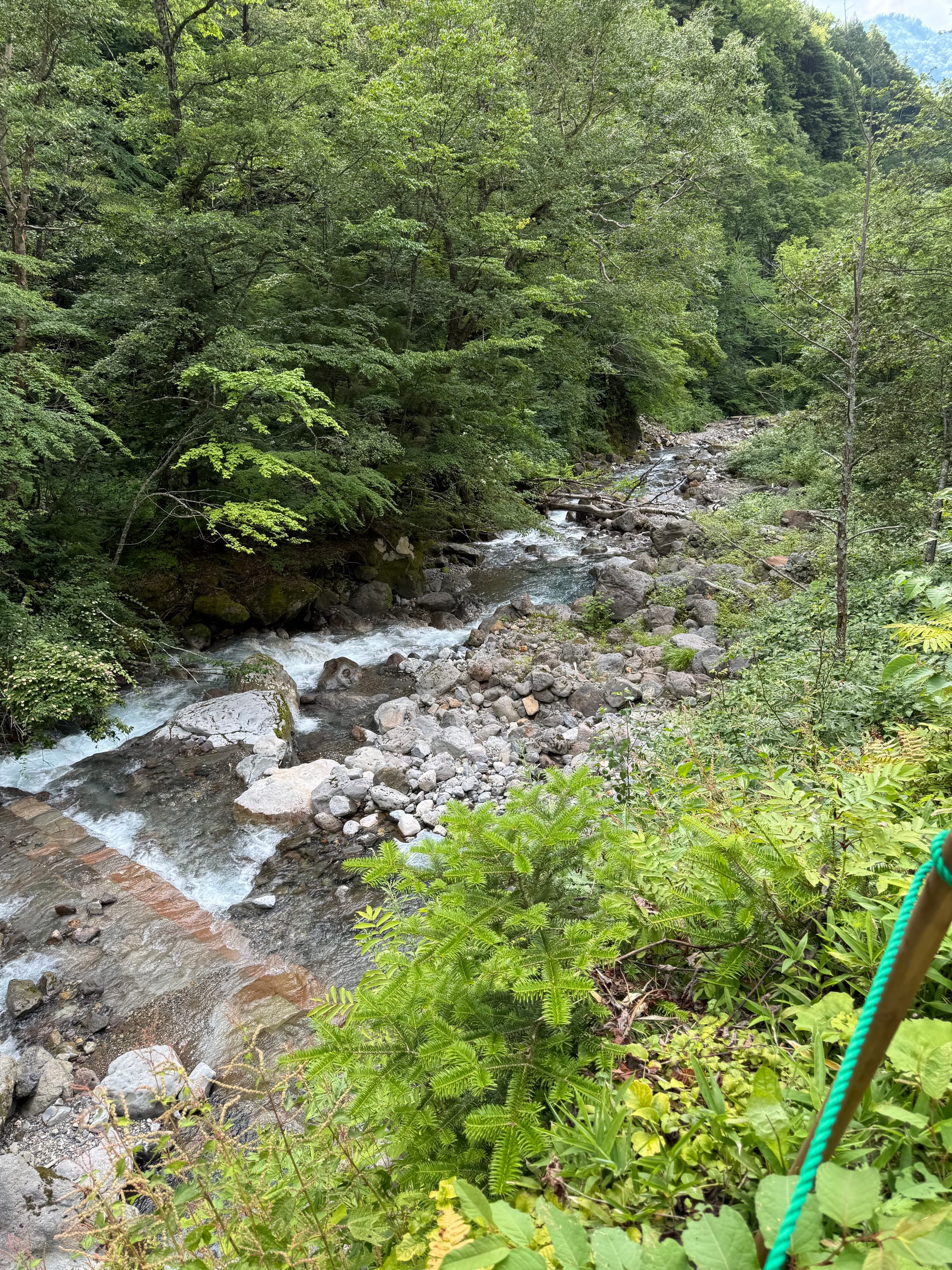
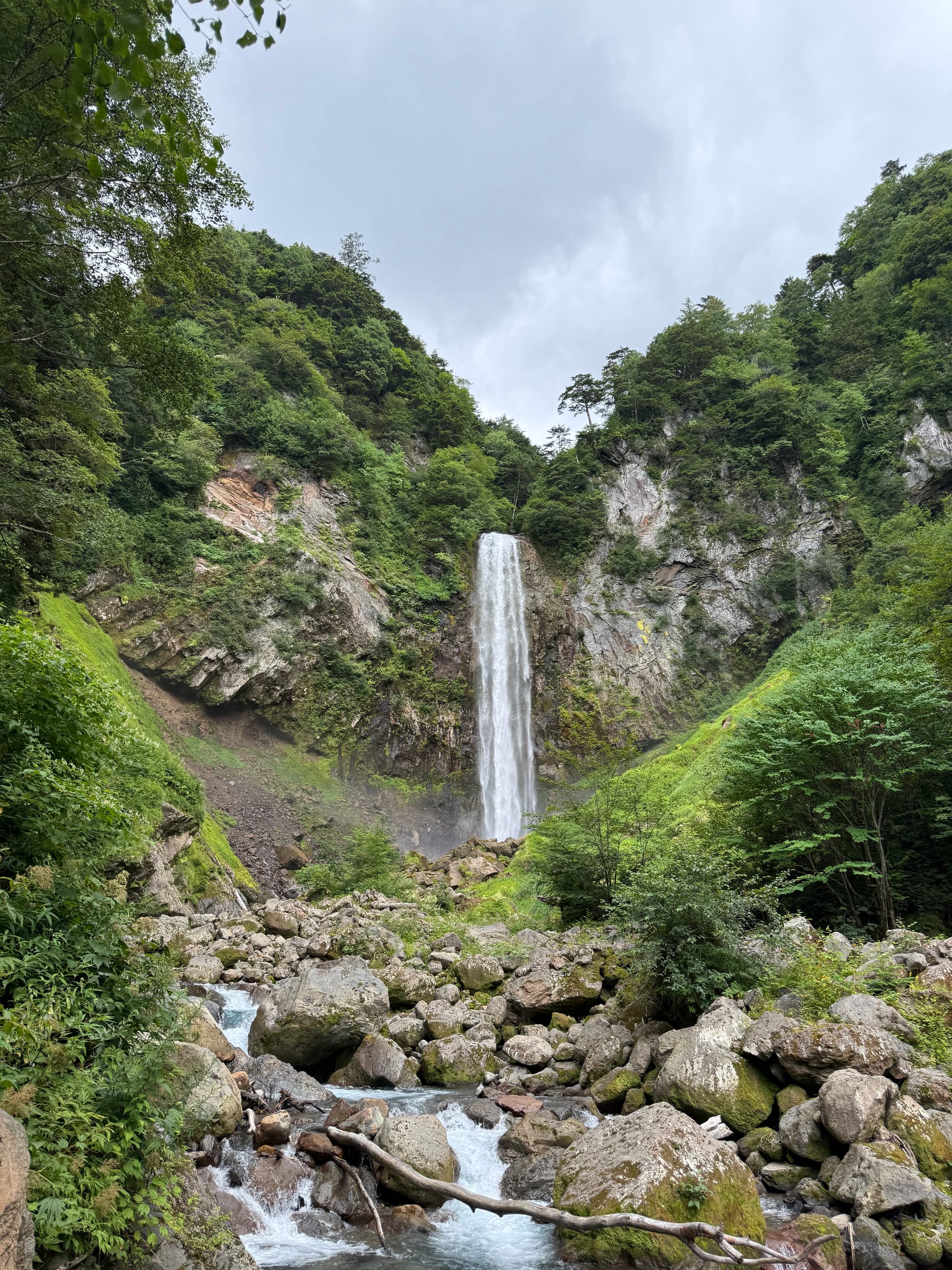
Lake Suwa stretches across central Nagano Prefecture, surrounded by mountains and resort towns. The lake is famous for its scenic beauty, hot springs and the winter phenomenon known as the omiwatari ice ridge.
Now it it time to stop getting around via train and trade tracks for wheel for the next few days.
Here is fun little face for you about the lake. It is a tectonic lake creates by tectonic movements in the earths crust. The lake is in a depression creates by two major faults: the Itoigawa-Shizuoka Tectonic Line (ISTL) and the Median Tectonic Line (MTL). The ISTL is also one of the fastest moving onshore faults in Japan, moving at a rate of 8-10mm each year.
So why Suwa, you might be thinking, well part of it is anime related from a film called "Your Name". The lake is actually based on the lake from small town of Itomori in the film.
After the FUJI Nagoya Science Museum, it was time to go back to the hotel to pick up my luggage and then pick up my car for the next 6 days.
Picking Up My Sweet New Ride!!
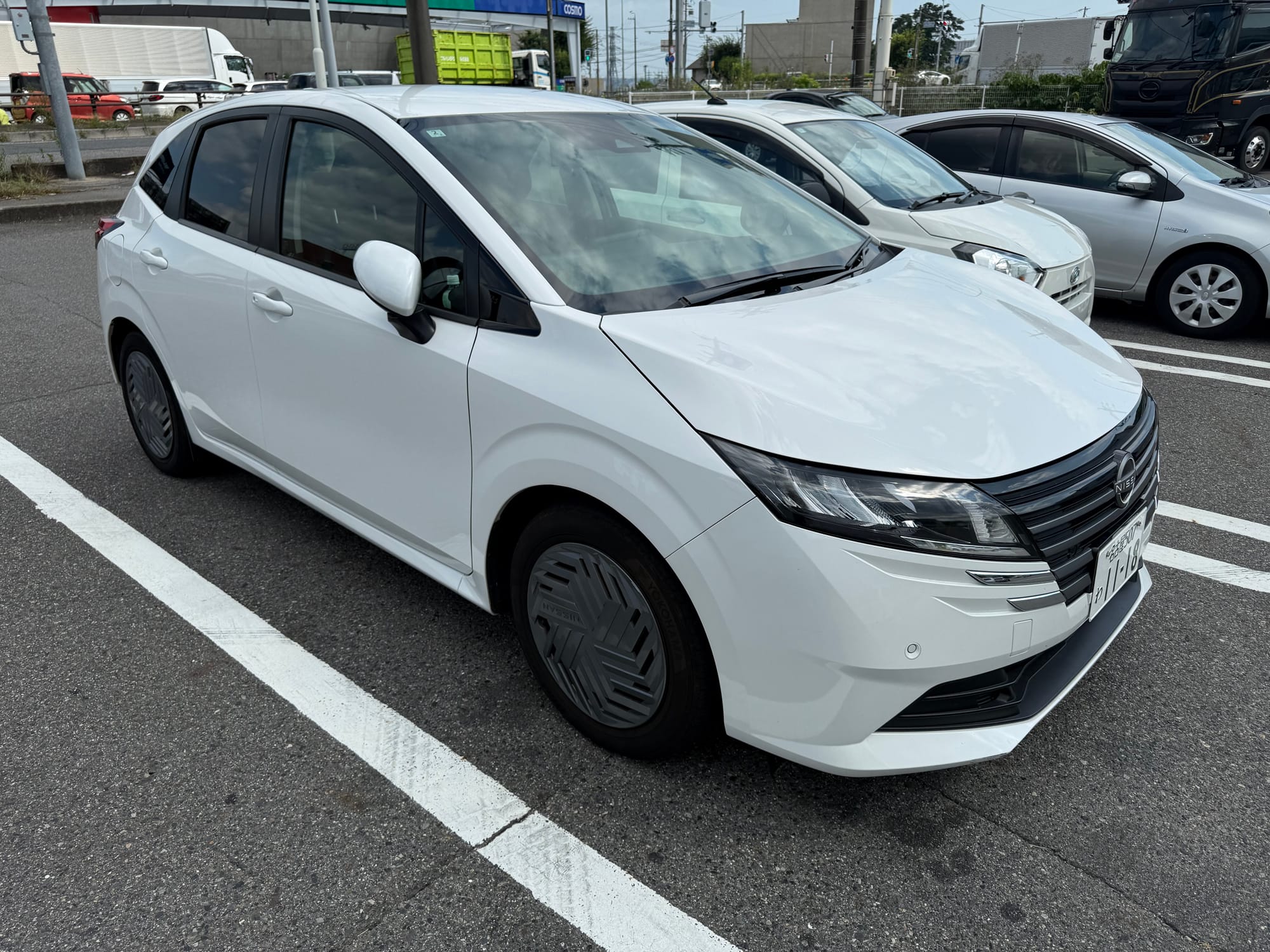
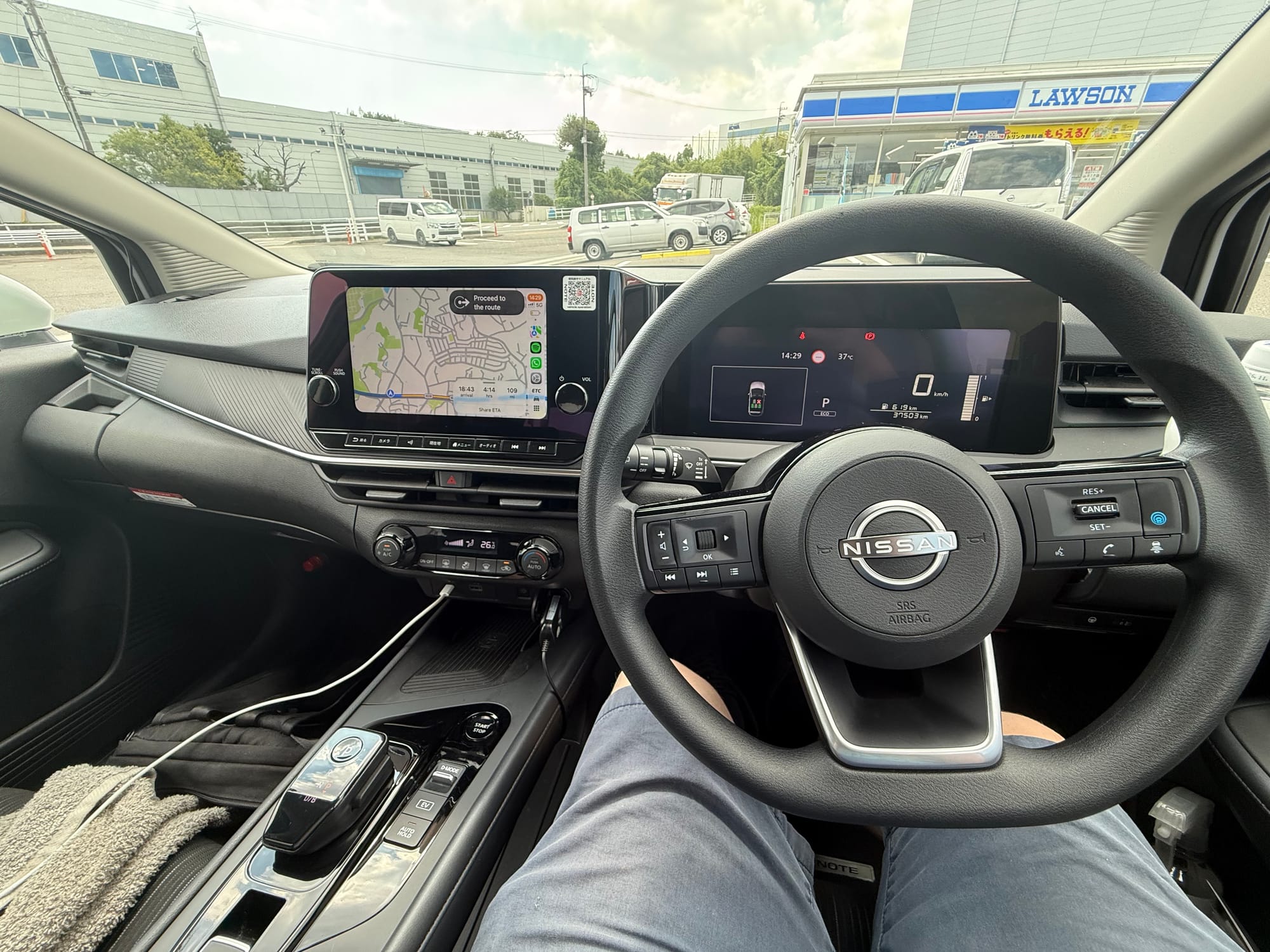
And here it is, the Nissan Note E-Power 3rd gen (E13). So you might be thinking 'E-Power, isn't that an electric car?' well yes and no. It has an electric motor driving the front wheels generating up to 134BHP and drives pretty much like an electric car. This is connected to a small 1.57KWh battery, which wouldn't get you very far without the 1.2 litre engine acting as a generator for the car. It is pretty much like a hybrid car, but the engine is not connected to any of the wheels and it gets really good MPG between 55 to 65 in the real world.
A Nissan Note e-POWER parked in Nagano Prefecture. The hybrid hatchback uses an electric motor to drive the wheels, with a petrol engine generating electricity for the battery system.A Nissan Note e-POWER parked during a trip through Nagano Prefecture. The compact hatchback uses Nissan's e-POWER system, combining electric drive with a petrol-powered generator.The cabin of a Nissan Note e-POWER features a digital instrument cluster, touchscreen navigation system and controls designed around Nissan's electric-drive hybrid technology.
Anyway, I was off to Suwa which is 120 miles from where I am in Nagoya and it took a while to get there, especially because of speed limits. National speed limits on a normal road in Japan are only 60KPH (37MPH), but even then, most of the time they are posted for 50kph, due to how twisty they can be and trust me on that, the roads can be worse than Scottish roads. Expressways can be anywhere from 80KPH (50MPH) to 120KPH (75MPH) and the one I was on was 80KPH, cause it is very twisty going through the Japanese Alps
So I decided to take the Expressway, which in Japan is a toll road and cost me about £23 to cut the journey time down from 4.5 hours to 2.5 hours. The scenery is amazing as I head to Suwa in the Japanese Alps, plus also went through a few tunnels, including one that was 8.5km long and by the time I came out the other side, I had got used to the dark and was blinded a bit by the light.
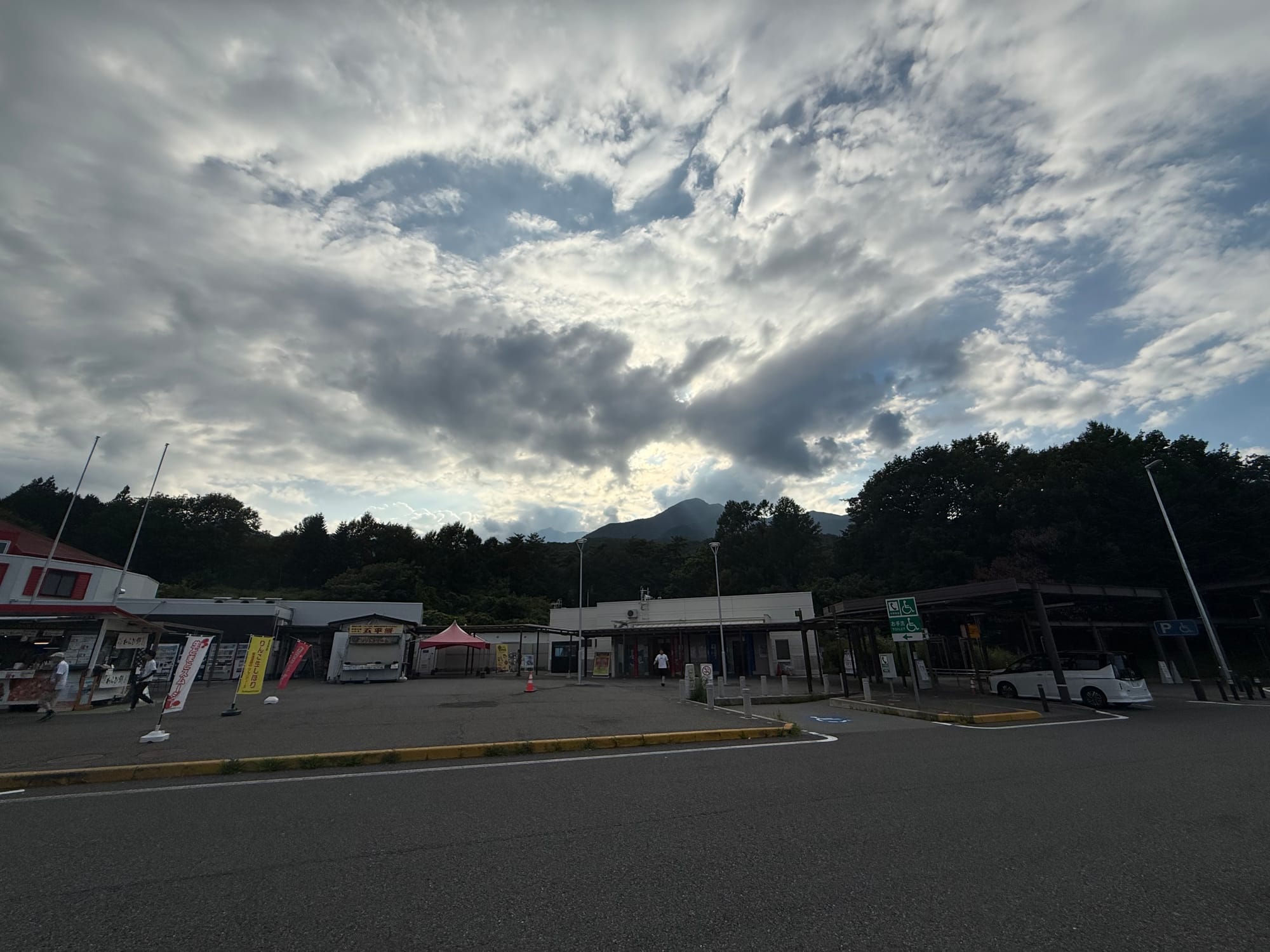
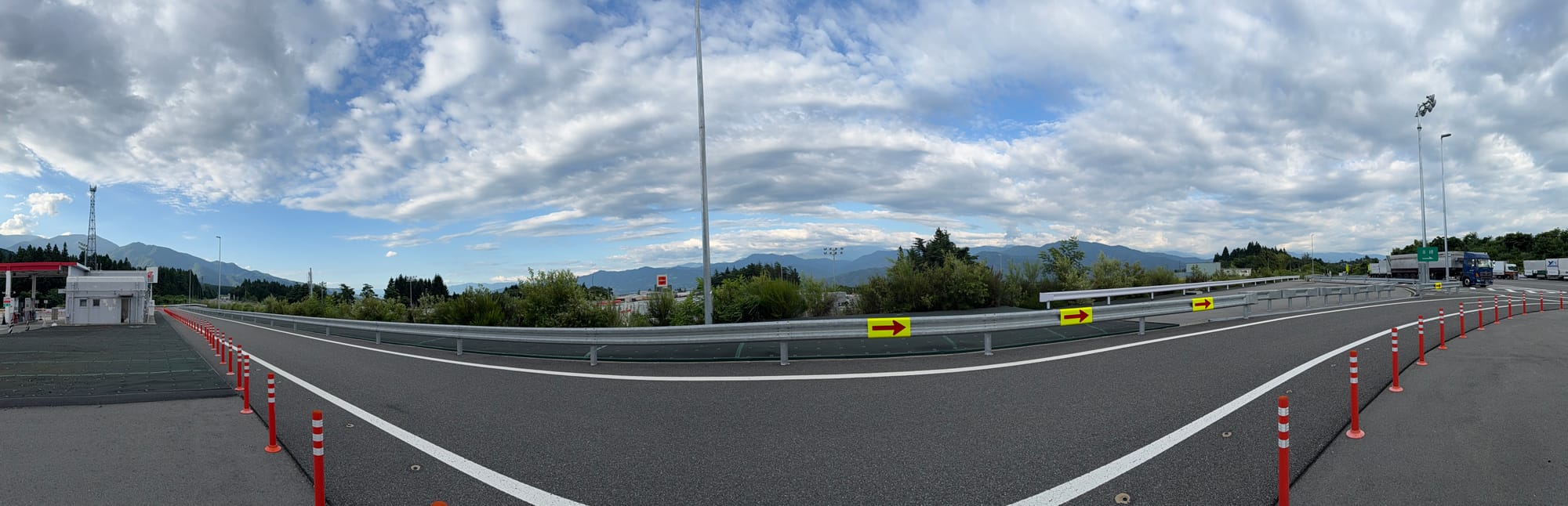
A view from a service area along the Chuo Expressway, where mountains and changing weather create a striking backdrop for travellers crossing central Japan.A wide view from a service area along the Chuo Expressway, overlooking the mountains of central Nagano Prefecture beneath a striking late-afternoon sky.
After a few hours on the road, including a kip at the services, I finally made it to Suwa.
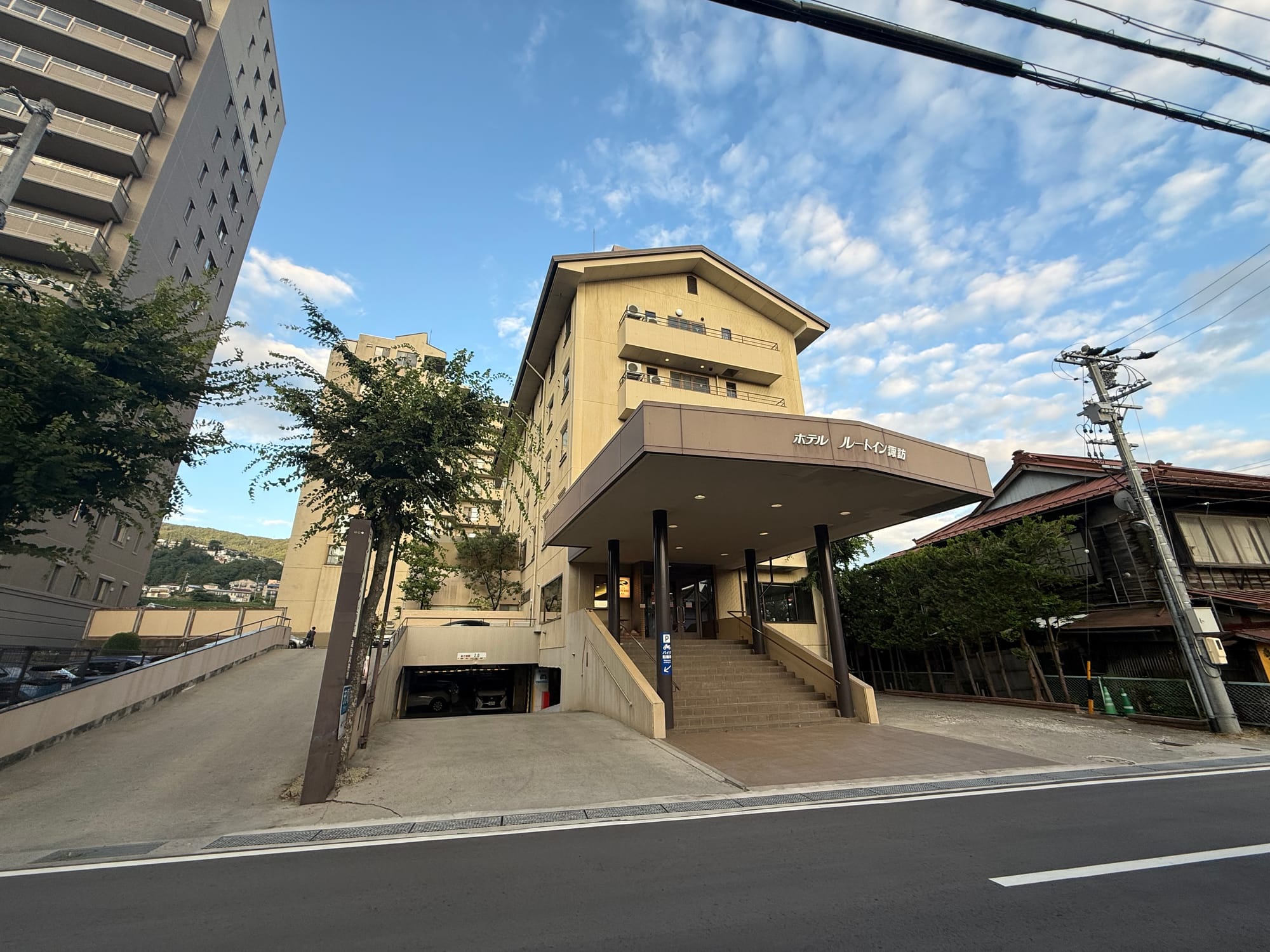
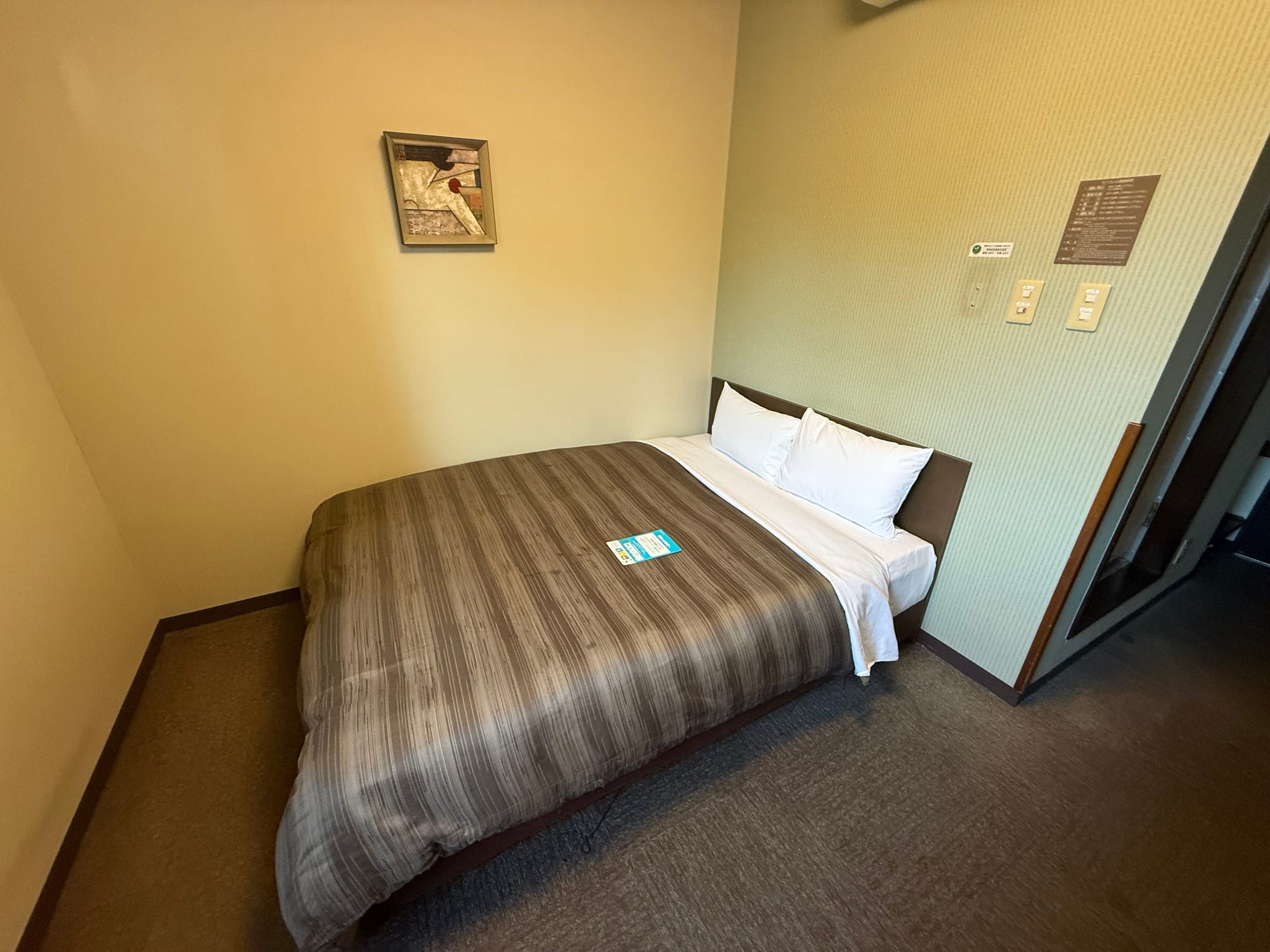
The hotel I am staying at is called 'Hotel Route-Inn Kamisuwa', which is a 5 minute walk from the shores of lake suwa. It is also mad to think that I am ~755 metres above sea level (the air is a bit thin up here 🤣).
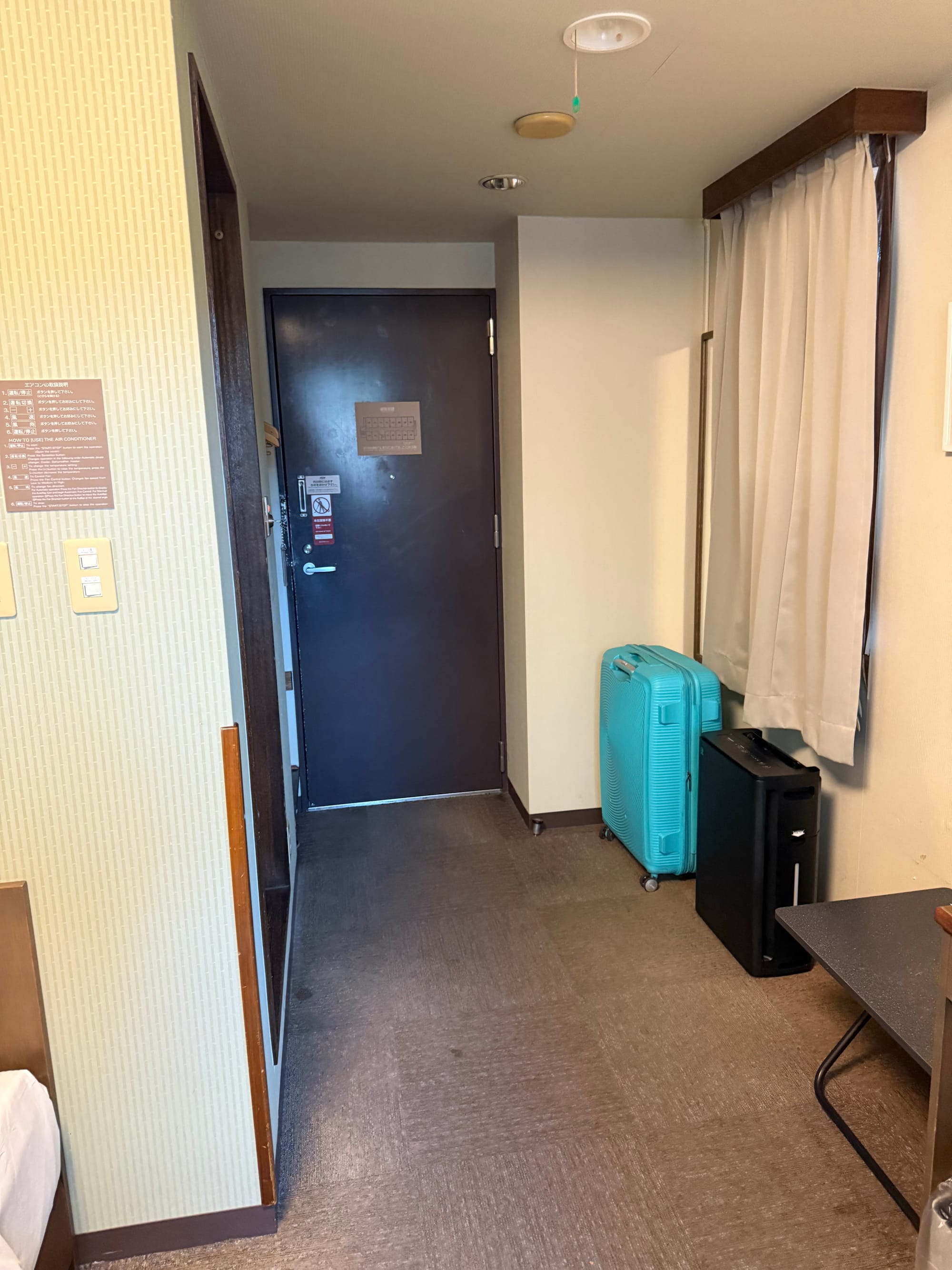
It does look a bit dated, but it is a nice hotel and the buffet breakfast was nothing to sneeze at. It was also the same brand of hotel that I stayed in back in Beppu.
Hotel Route-Inn Kamisuwa is a business hotel near the shores of Lake Suwa, providing convenient accommodation for travellers exploring Suwa and central Nagano Prefecture.The entrance area of a guest room at Hotel Route-Inn Kamisuwa, featuring the practical layout and amenities typical of business hotels in Japan.A guest room at Hotel Route-Inn Kamisuwa, offering comfortable and practical accommodation for travellers visiting Lake Suwa and the surrounding region.
Tateishi Park
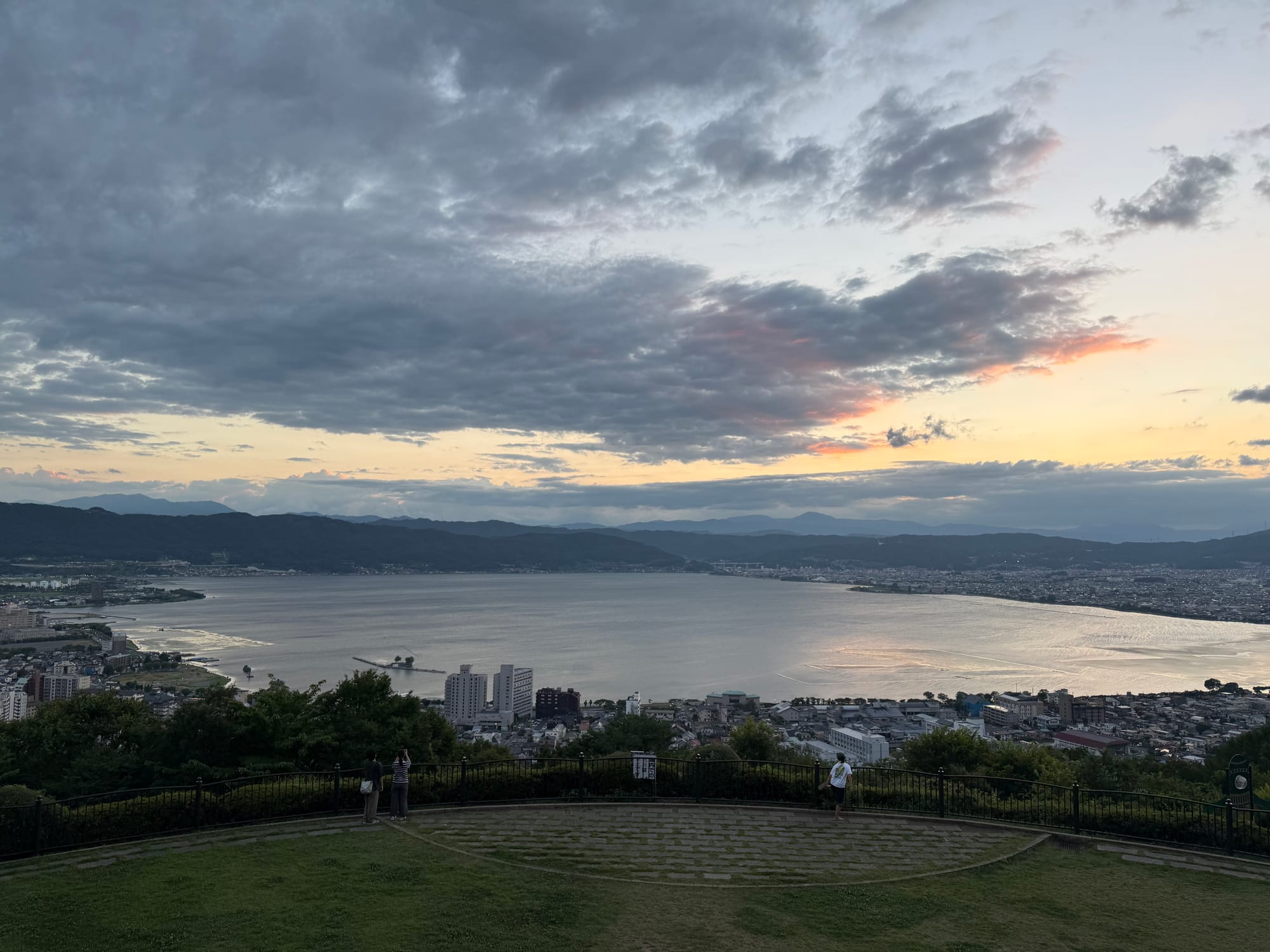
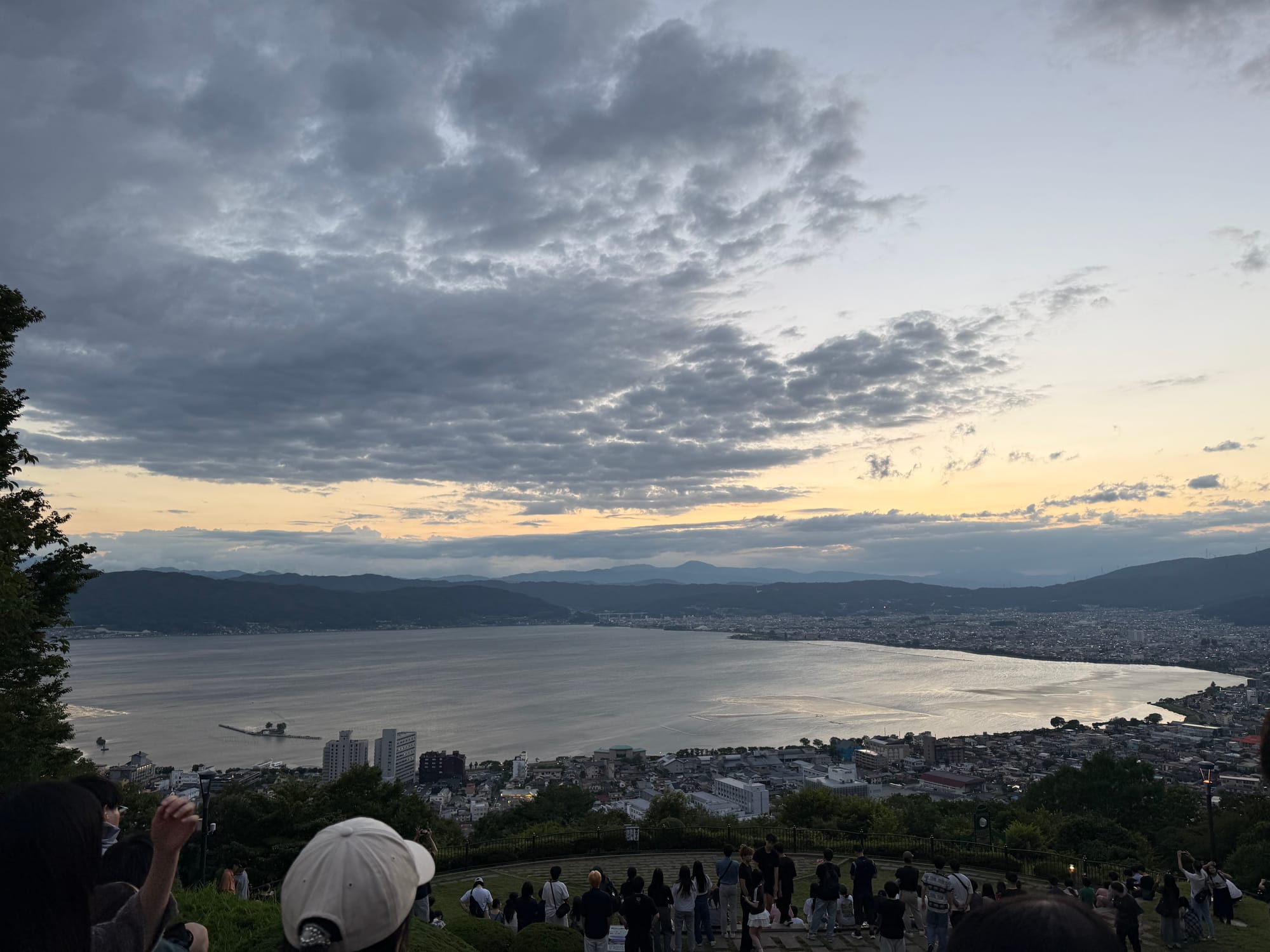
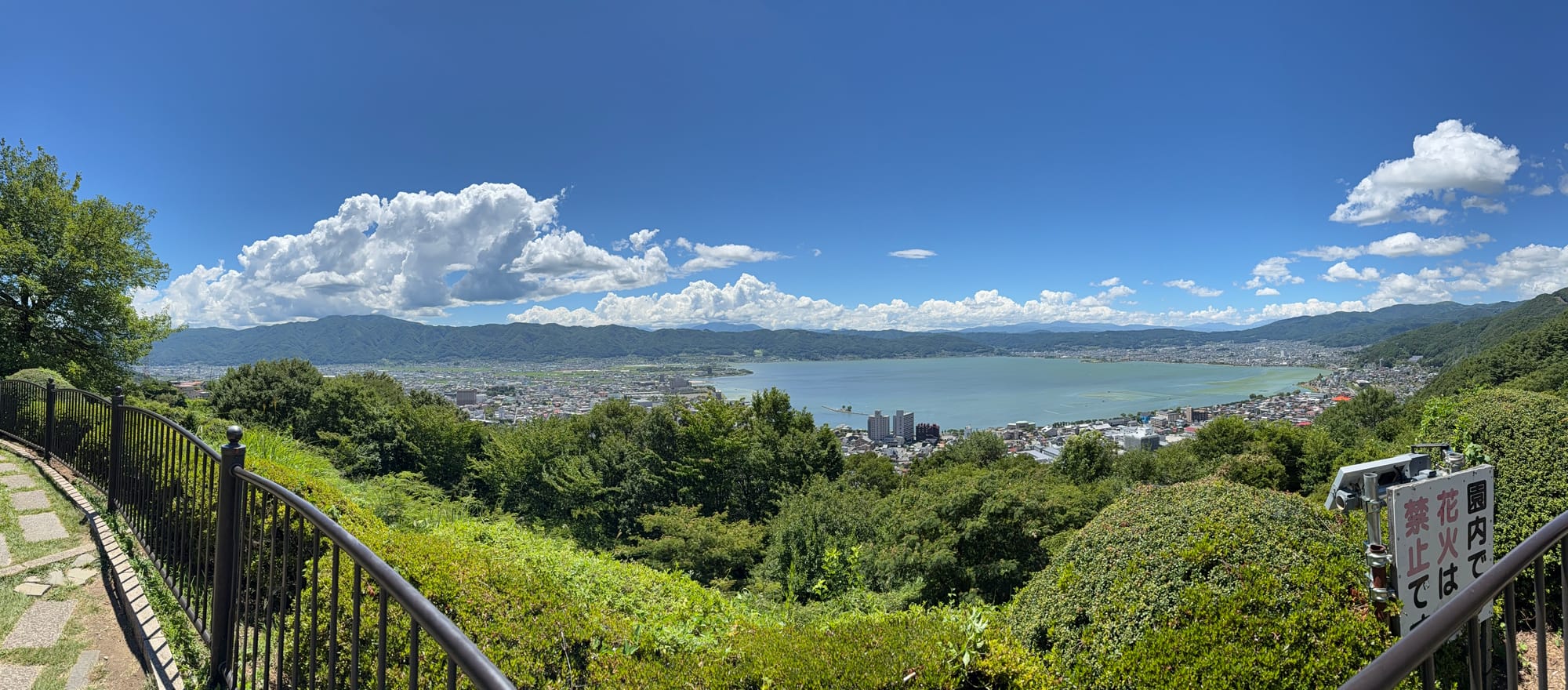
This viewpoint sits about 300 metres above Suwa and is one of the best sunset spots in Japan as it overlooks the lake. As you can Imagine it was a bit crowded and people were queuing up to park their cars, well I say queuing up, I mean leaving them on the side of the road parked up. The view was amazing regardless.
Tateishi Park offers one of the most famous views of Lake Suwa, overlooking the lakeside towns and surrounding mountains from a hillside viewpoint above the lake.Visitors watch the evening light fade over Lake Suwa from Tateishi Park, a popular viewpoint known for its sweeping panorama of the lake, surrounding towns and mountains.
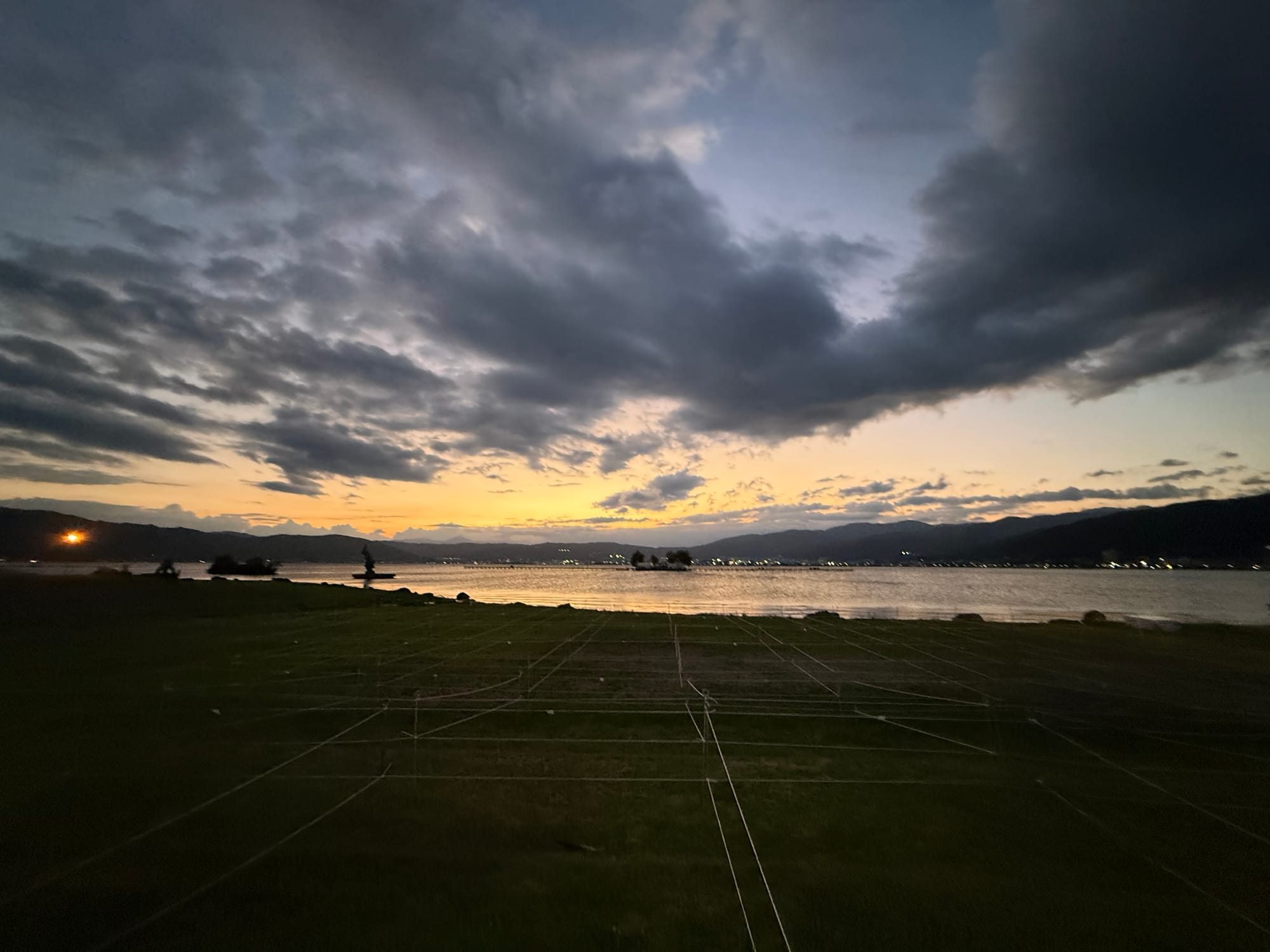
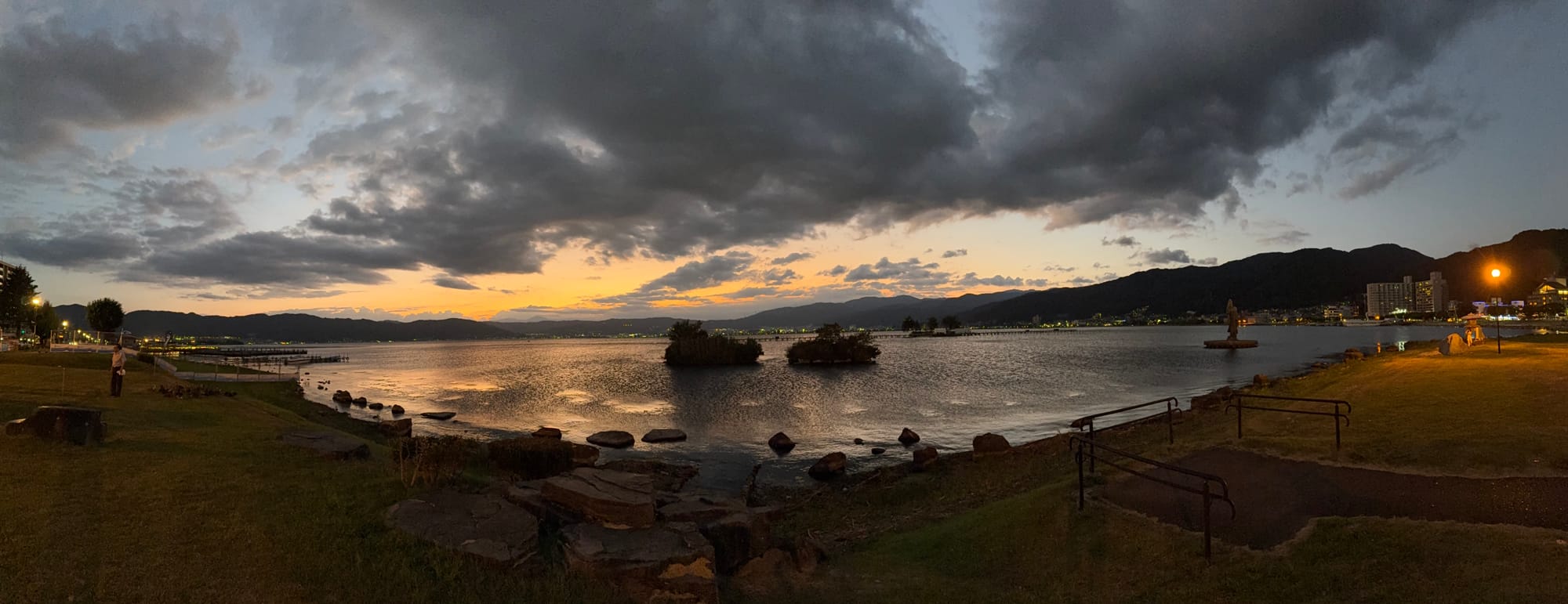
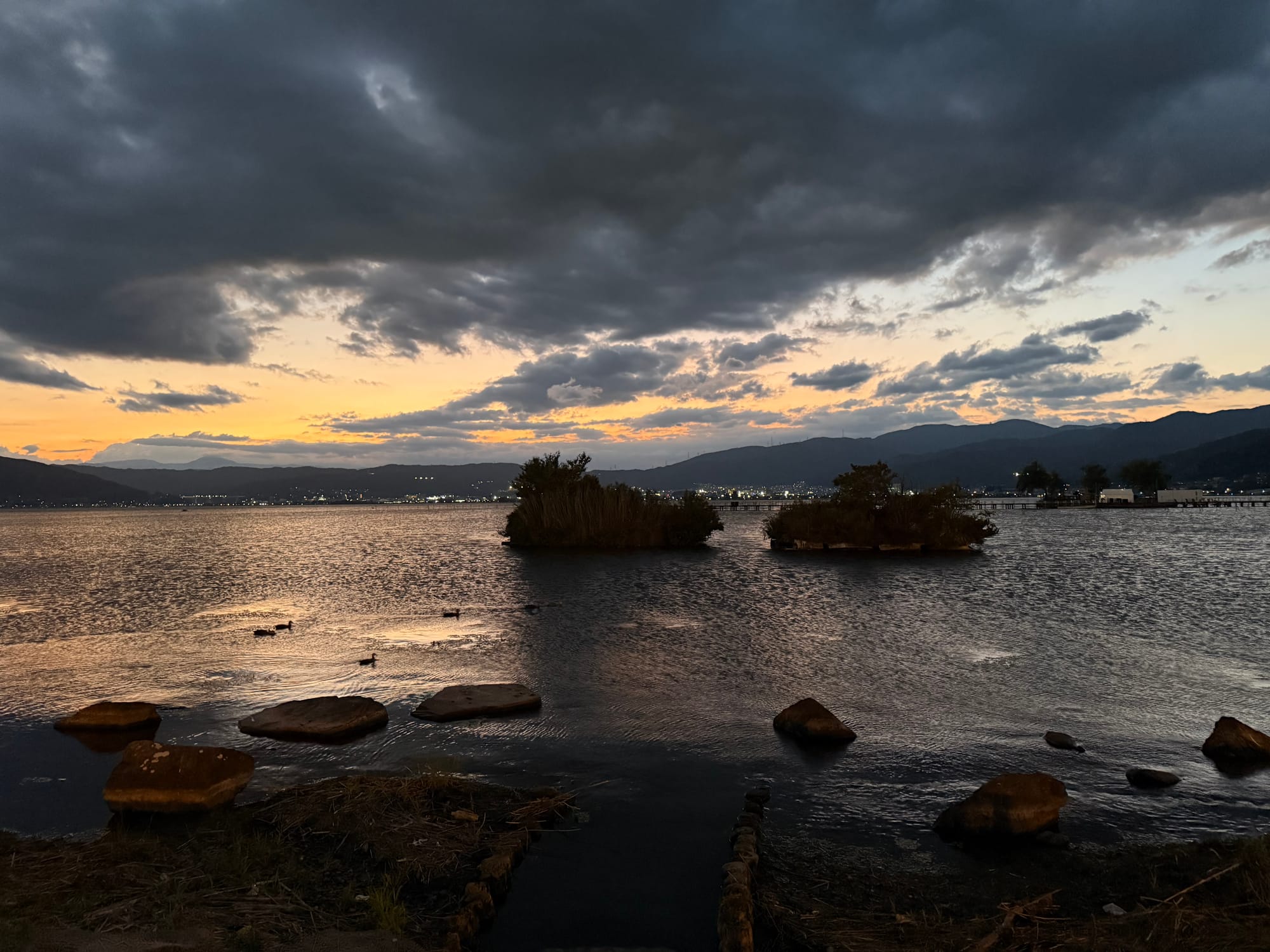
I also took some photos from the front of Lake Suwa as well, as it is only about 5 mins walk from my hotel.
Evening falls over Lake Suwa as sunlight fades behind the surrounding mountains, creating a dramatic sky above the lakeside park and waterfront.Twilight settles over Lake Suwa as the last light of day reflects across the water. Viewed from Suwa Lakeside Park, the scene captures the lake's tranquil atmosphere and surrounding mountain landscape.Small reed-covered islets sit just offshore in Lake Suwa as twilight deepens over the lake. The fading sunset and dramatic clouds create a striking evening scene along the waterfront.
Mini Fireworks Festival
Later in the evening I went back to the Lakefront as there was a mini fireworks festival going on and it happens each night up till the 15th August, which is when they do the full fireworks display with about 40,000 fireworks going off that night. It makes me sad to think that I will be back in Osaka at that point and it is the day before I am due to fly back 😢.
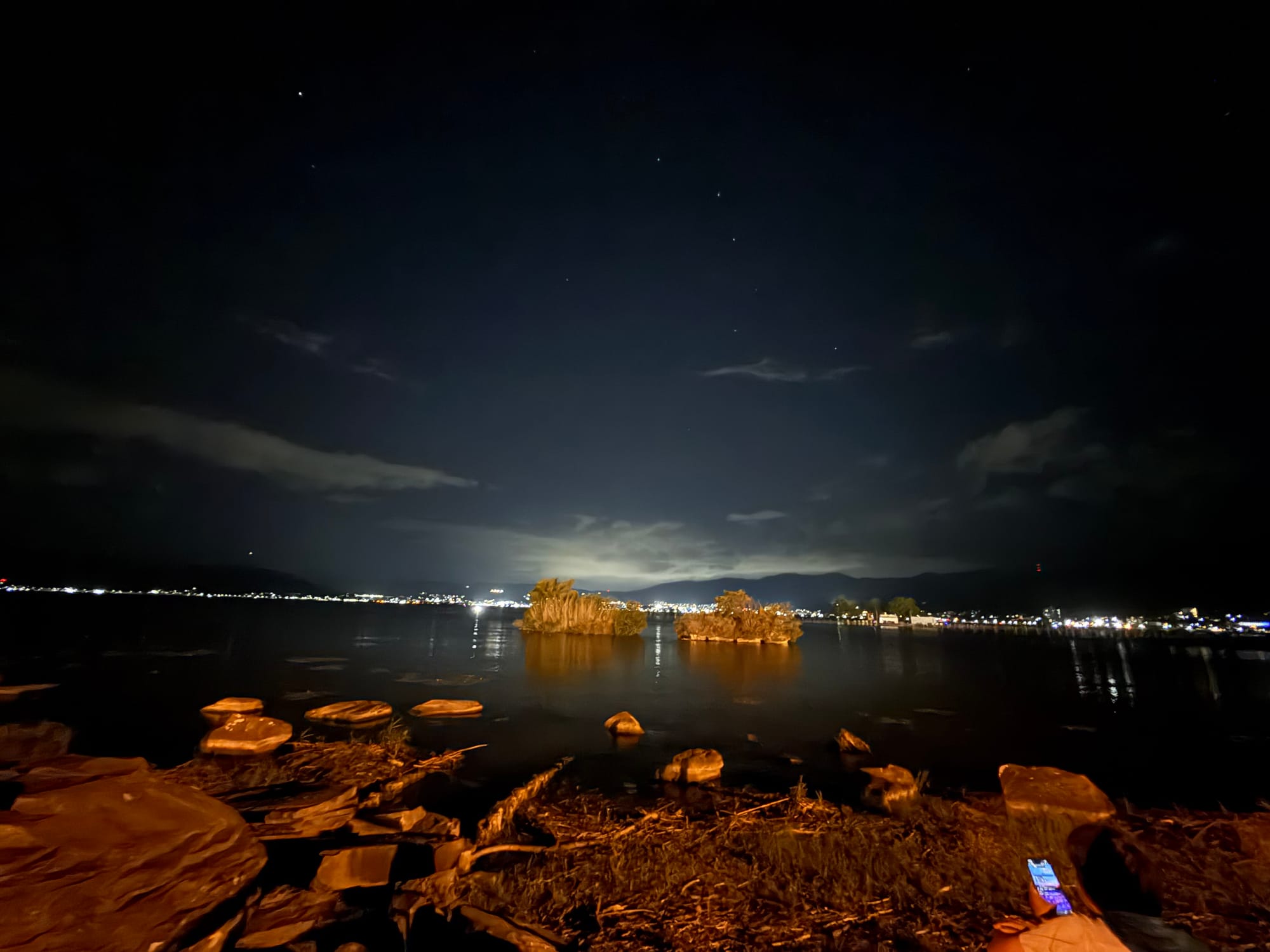
Nonetheless, I went to the lakefront to get a good seat for the festivities.
Visitors gather along the shore of Lake Suwa awaiting the start of a fireworks display, as lights from lakeside towns reflect across the calm water under a dramatic night sky.
0:00
/1:50
Video of the fireworks display - part 1
0:00
/7:12
Video of the fireworks display - part 2
Exploring Suwa Part 1
6th August
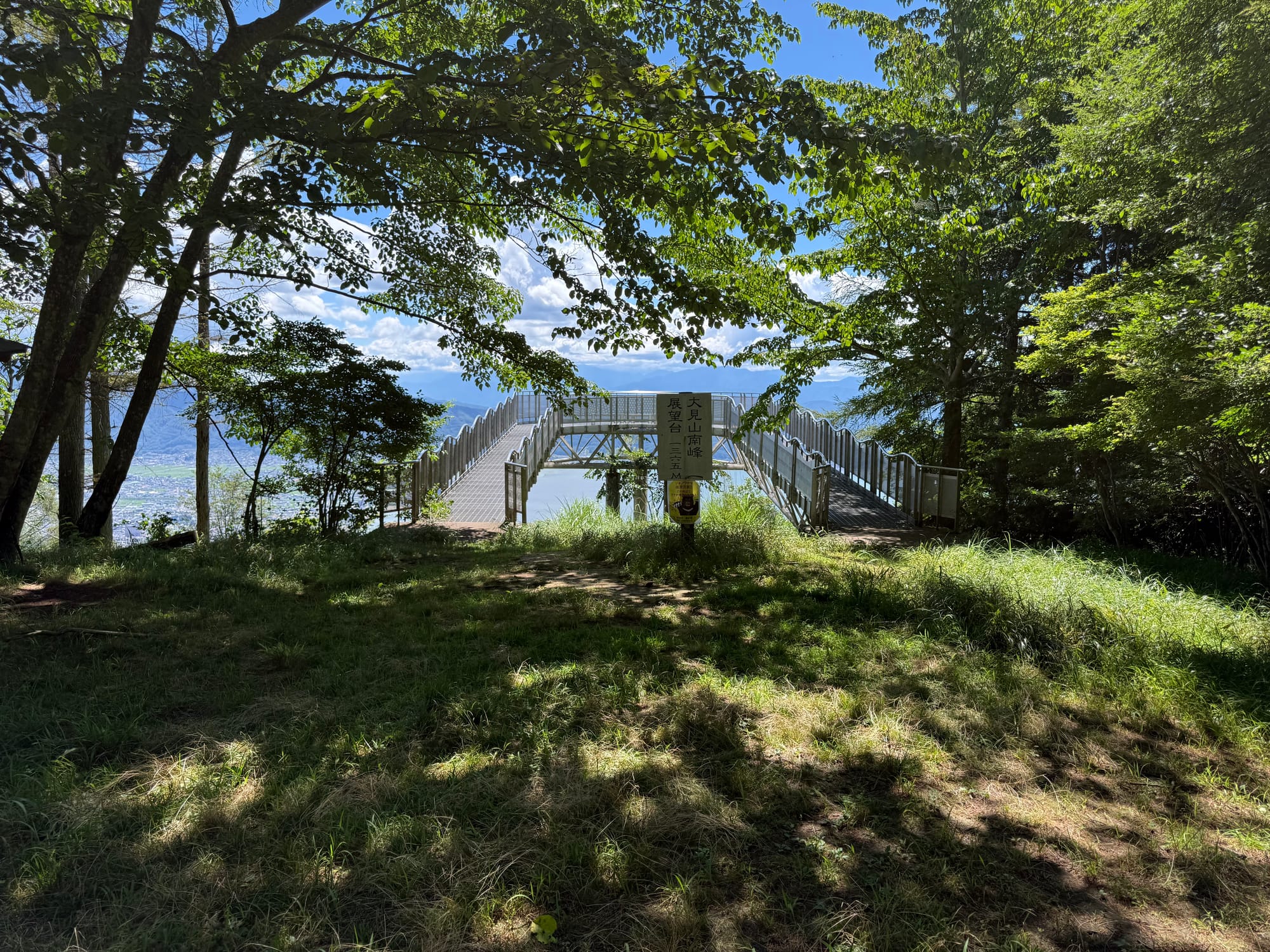
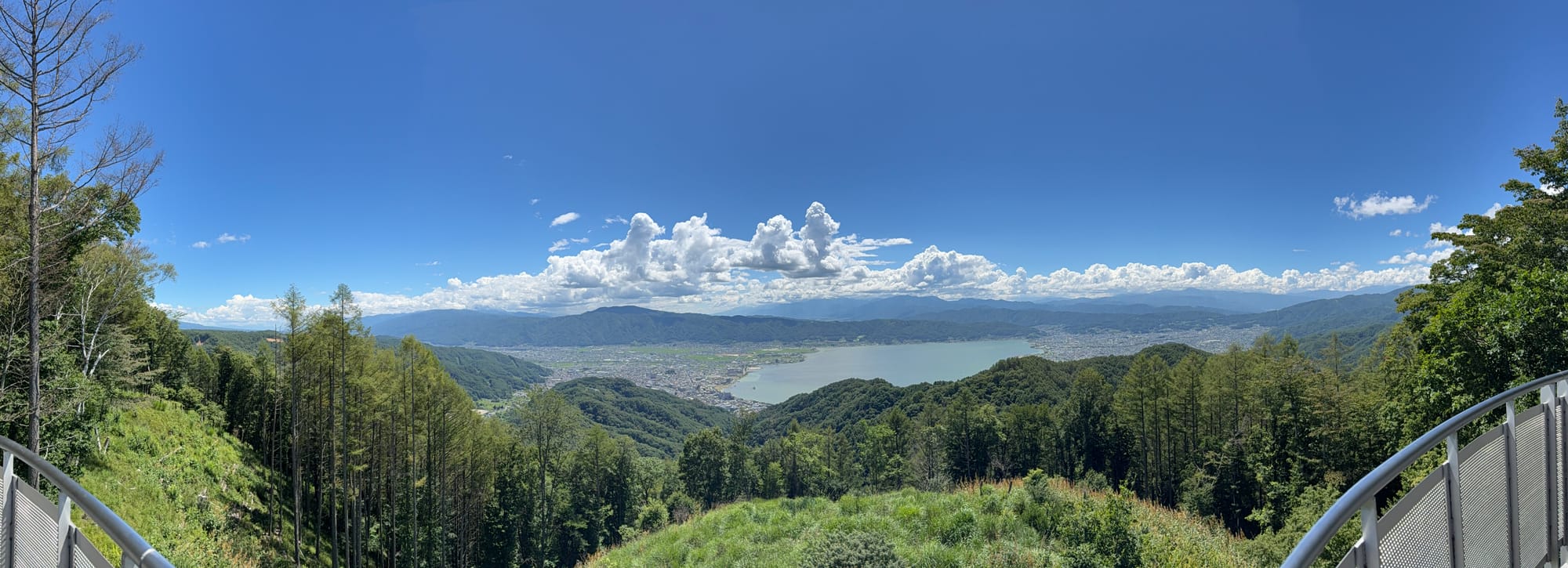
Today I did a bit of running around Suwa, visiting the 4 great shrines, Tateishi park again for pictures during the day and also going up to Oniyama observation point.
Now no one really knows where the four shrines of Suwa came from, but according to some ancient documents, Suwa was already considered to be the main shrine of Shinano (which is the old name for Nagano Prefecture), back in the Heian period (794-1185).
All four of the main shrines makes up the Suwa shrine and each have their own purpose, plus they are split into two sites.
The first two are the Kamisha group, which means Upper Shrine and this is split into the following two:
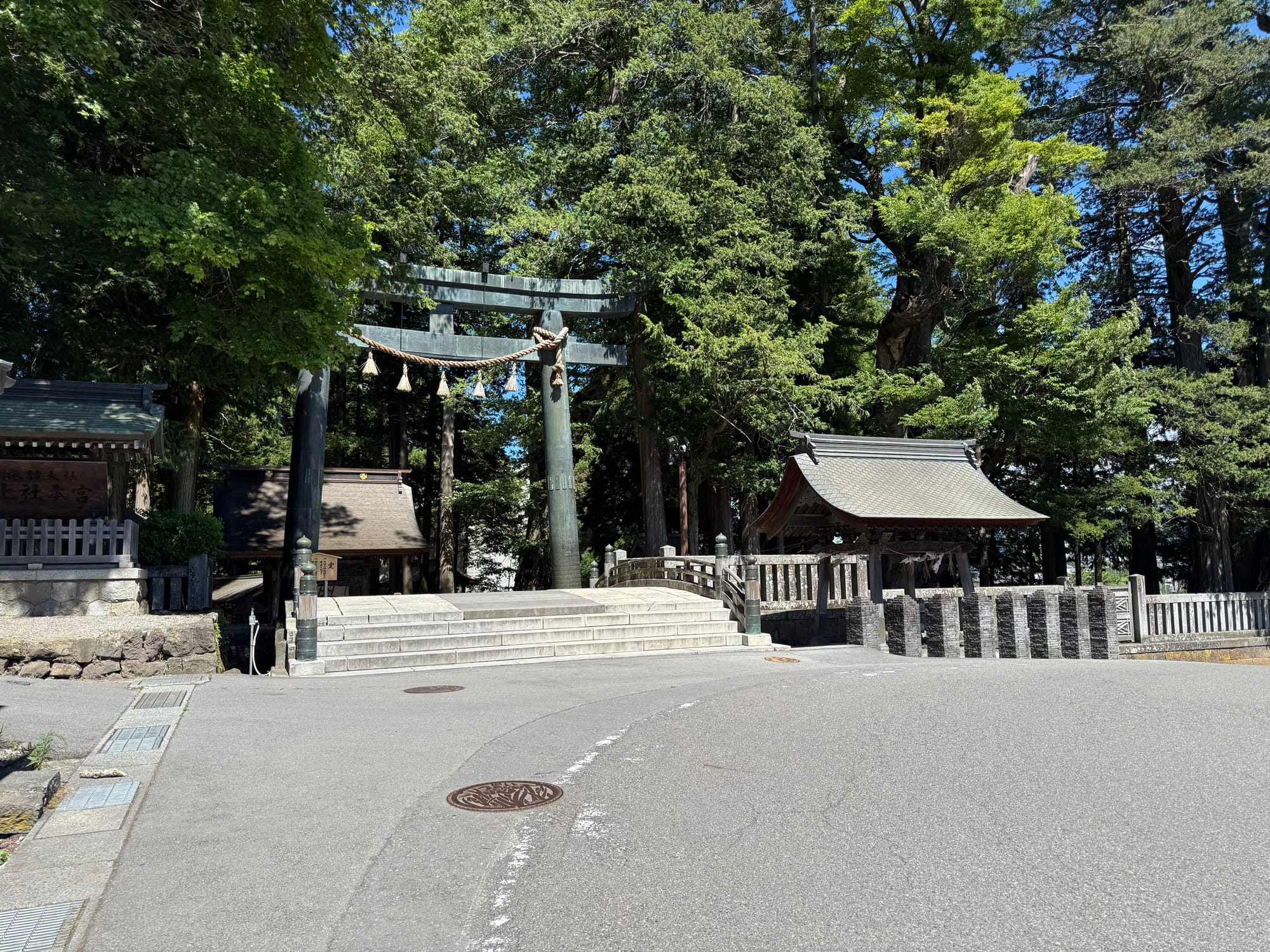
Suwa Taisha Kamisha Honmiya
First I visited the Kamisha Honmiya shrine. Honmiya means Main Shrine, which currently houses Takeminakata-no-kami and every 6 years one of the builds for the shine is rebuilt. This shrine was also burned down by the warlord Oda Nobunaga in 1582, before being fully rebuilt in 1617.
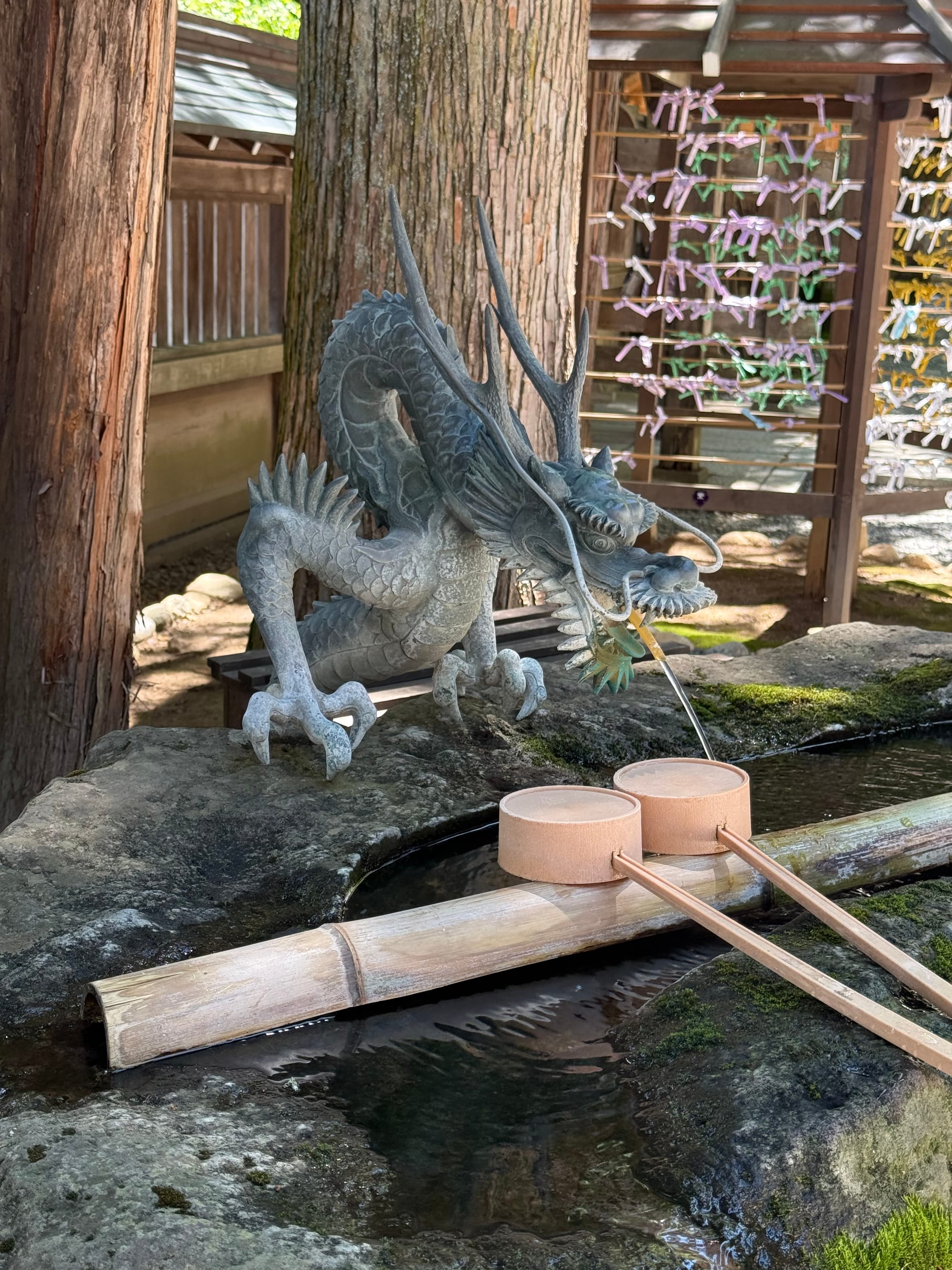
Suwa Taisha Kamisha Honmiya is one of the four shrines that make up Suwa Grand Shrine, one of Japan's oldest Shinto shrine complexes and an important spiritual centre in Nagano Prefecture.A dragon fountain at Suwa Taisha Kamisha Honmiya provides water for ritual purification before prayer, reflecting the shrine's long-standing connection to nature and Shinto tradition.
0:00
/0:12
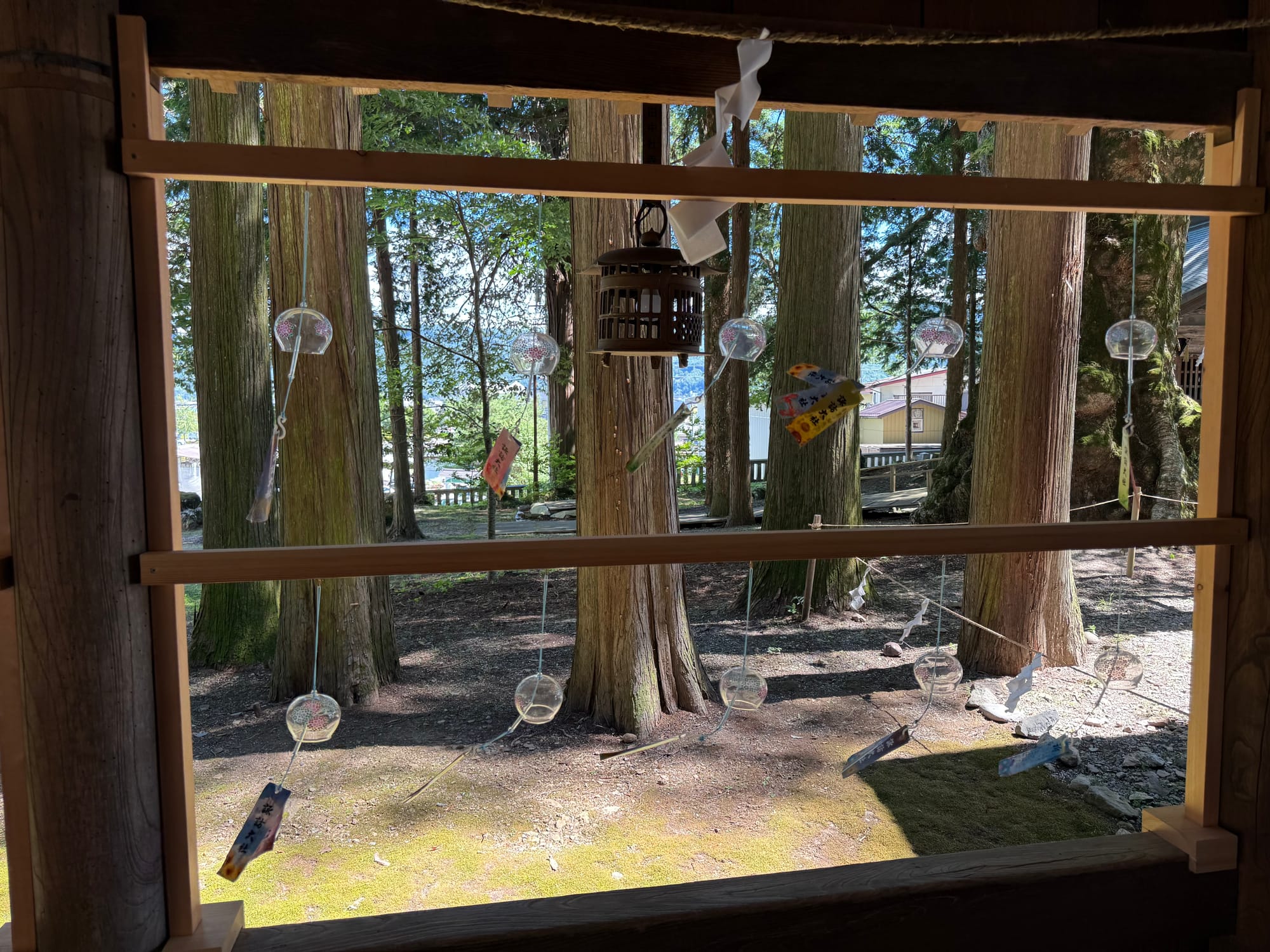
The wind chime corridor at Suwa Taisha Kamisha Honmiya
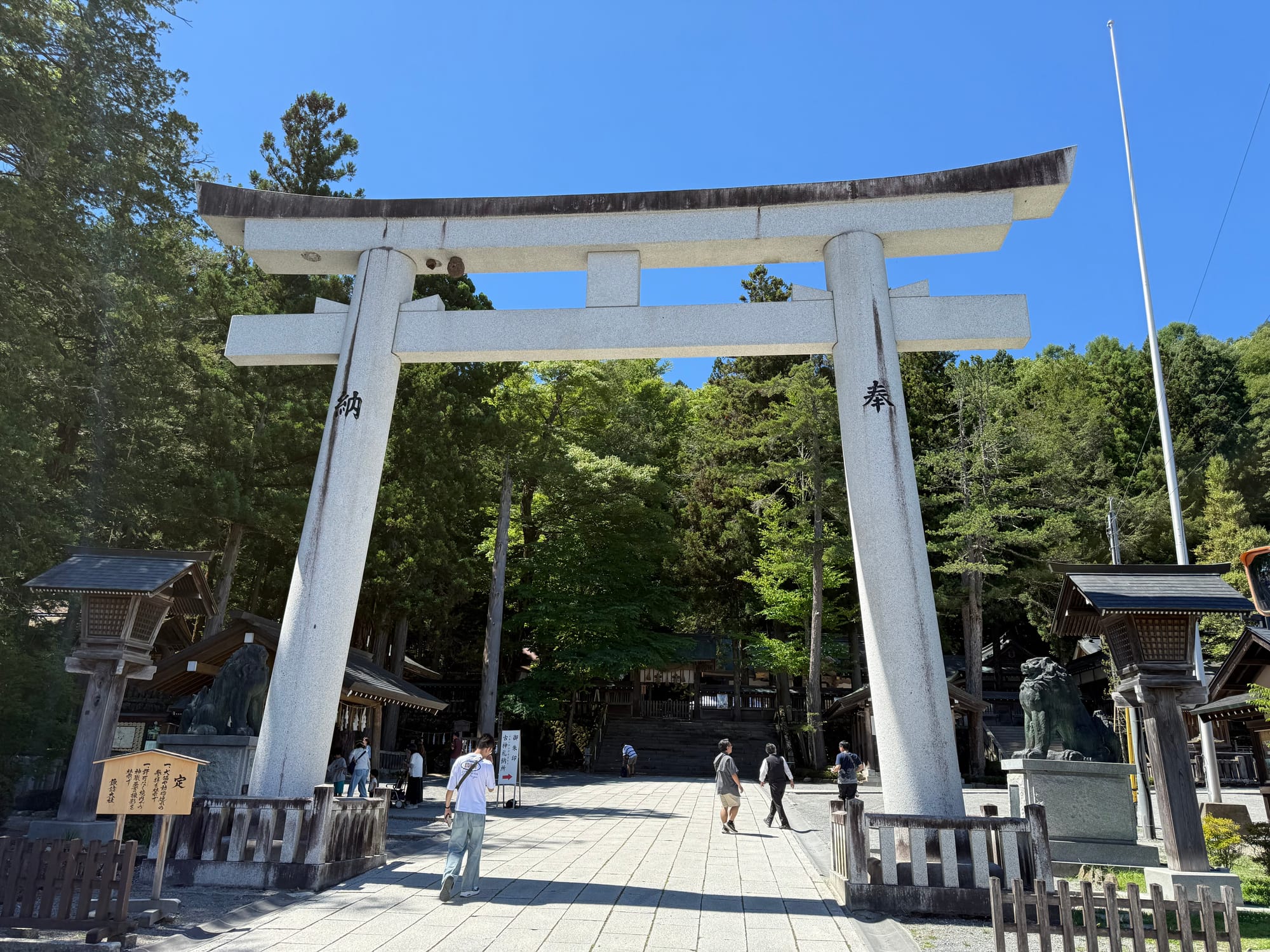
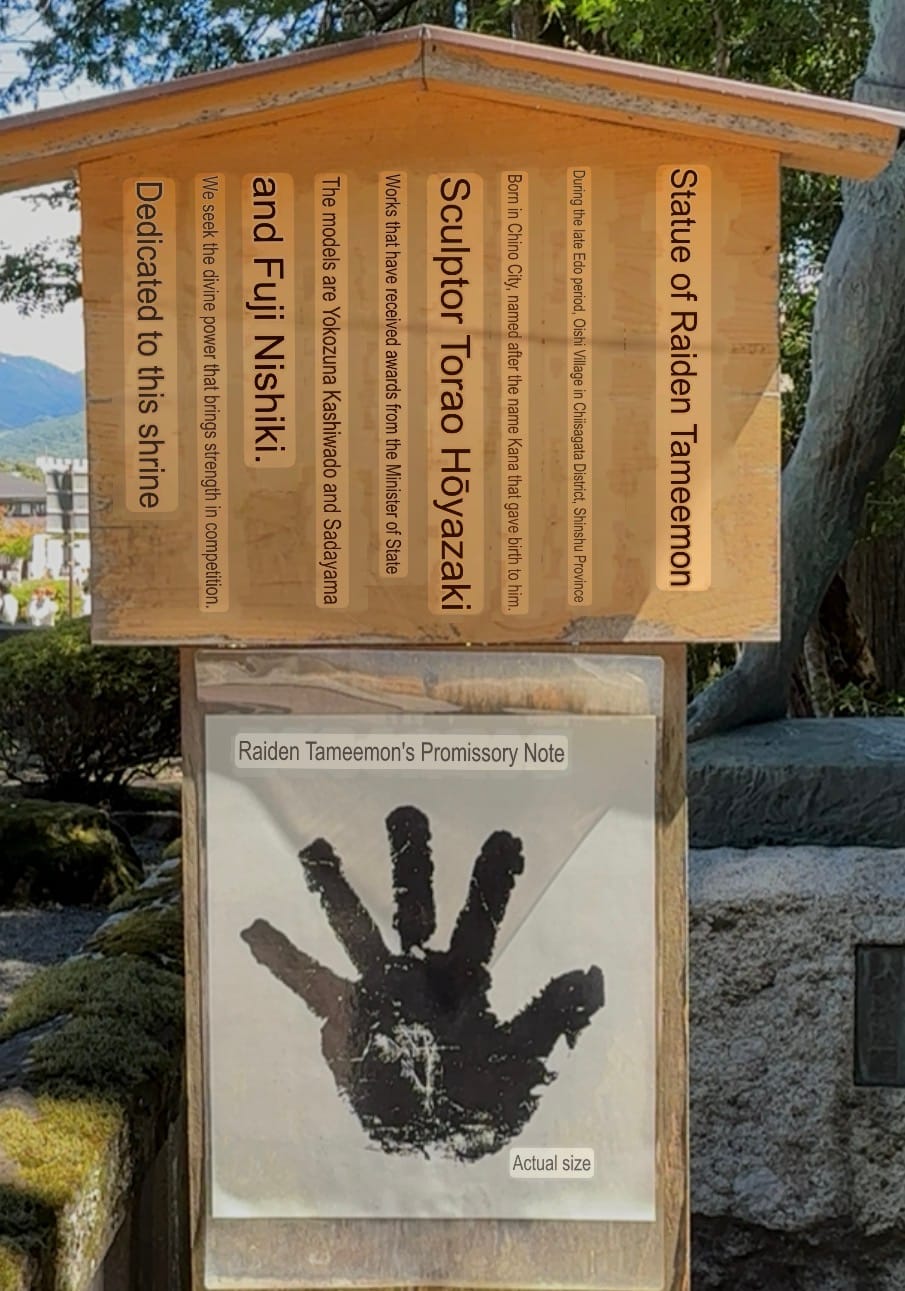
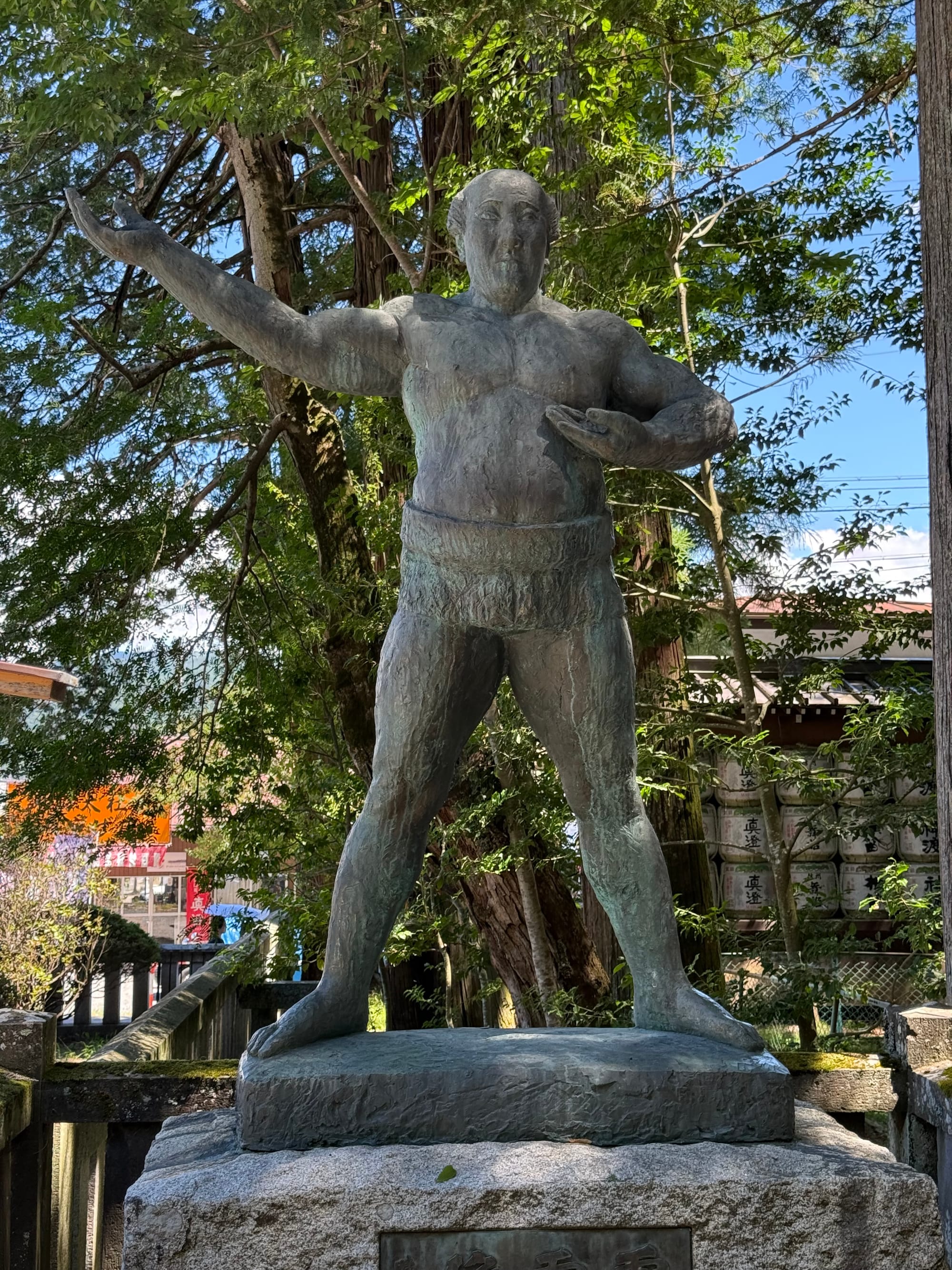
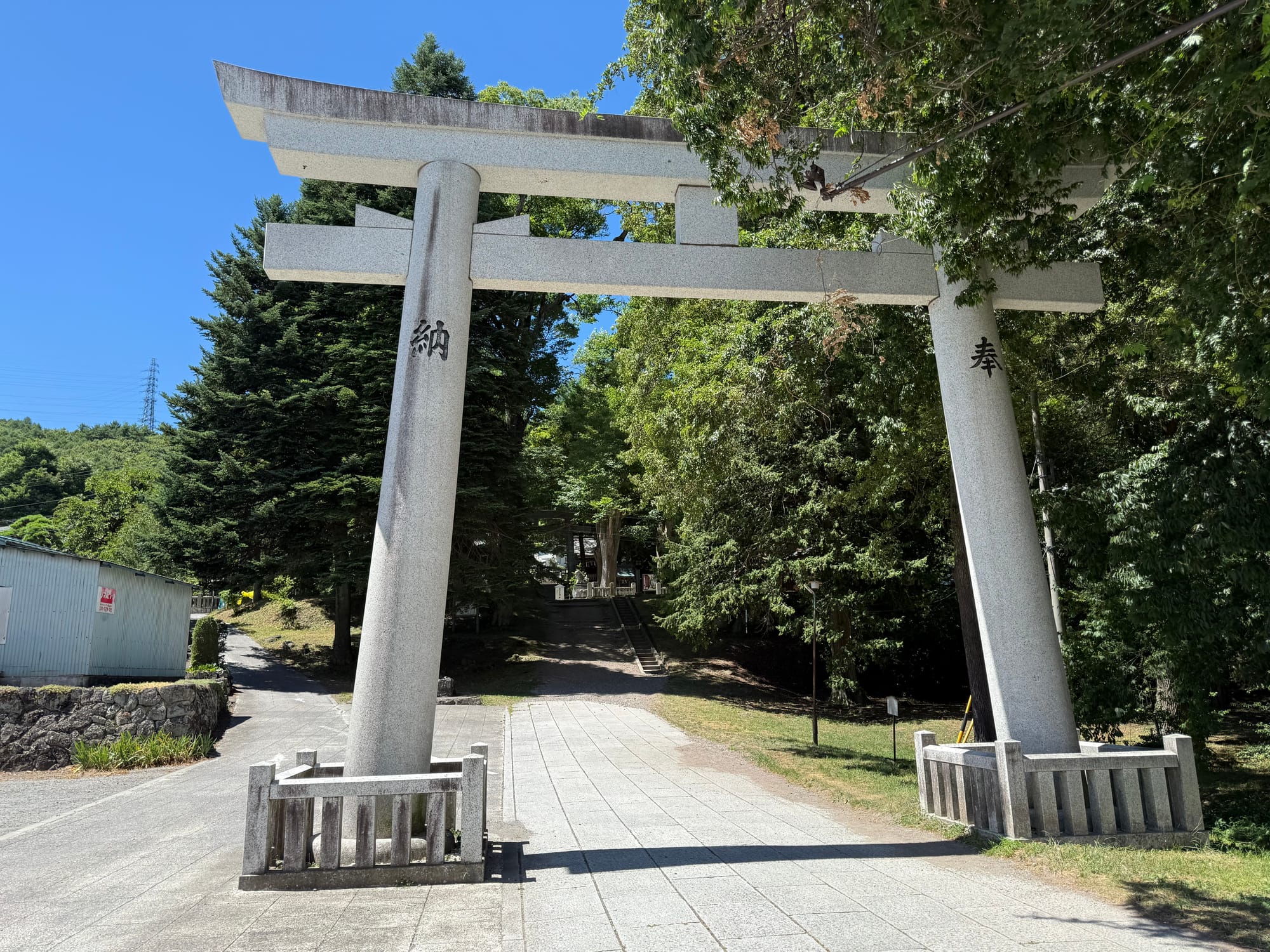
Colourful wind chimes hang within the grounds of Suwa Taisha Kamisha Honmiya, adding a seasonal touch to the shrine's tranquil forest environment during summer.The entrance to Suwa Taisha Kamisha Honmiya, marked by a prominent stone torii gate. The shrine is one of the principal sanctuaries of Suwa Grand Shrine, a religious site with a history spanning many centuries.An exhibit at Suwa Taisha Kamisha Honmiya commemorates Raiden Tameemon, a legendary Edo-period sumo wrestler from Shinano Province, renowned as one of the greatest rikishi in Japanese history.A statue of Raiden Tameemon stands within the grounds of Suwa Taisha Kamisha Honmiya. Born in nearby Shinano Province, Raiden is remembered as one of the greatest sumo wrestlers in Japanese history.
Suwa Taisha Kamisha Maemiya
Afterwards I moved on to the Kamisha Maemiya shrine. Maemiya means Former Shrine, which is where Takeminakata-no-kami first settled in Suwa.
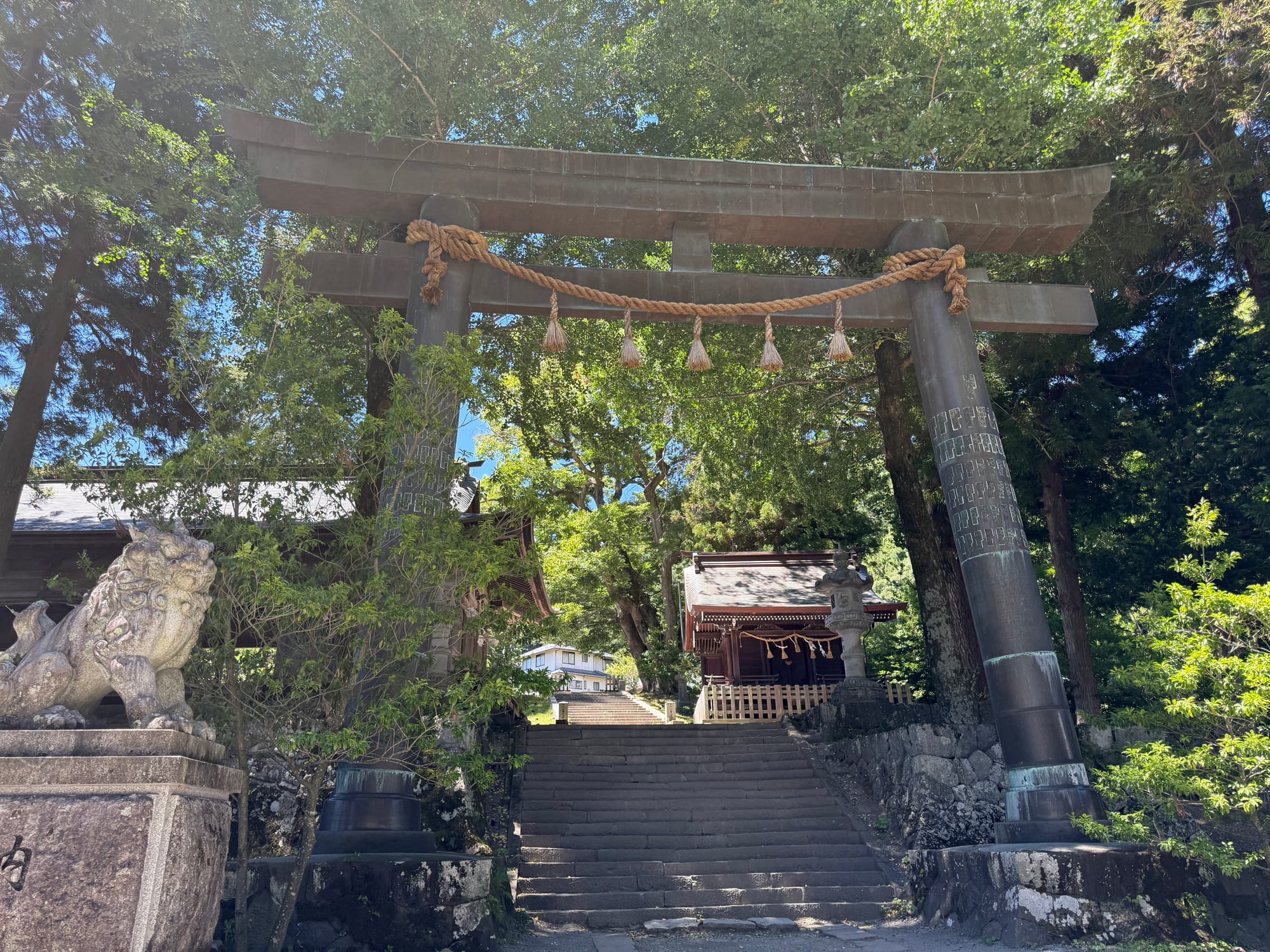
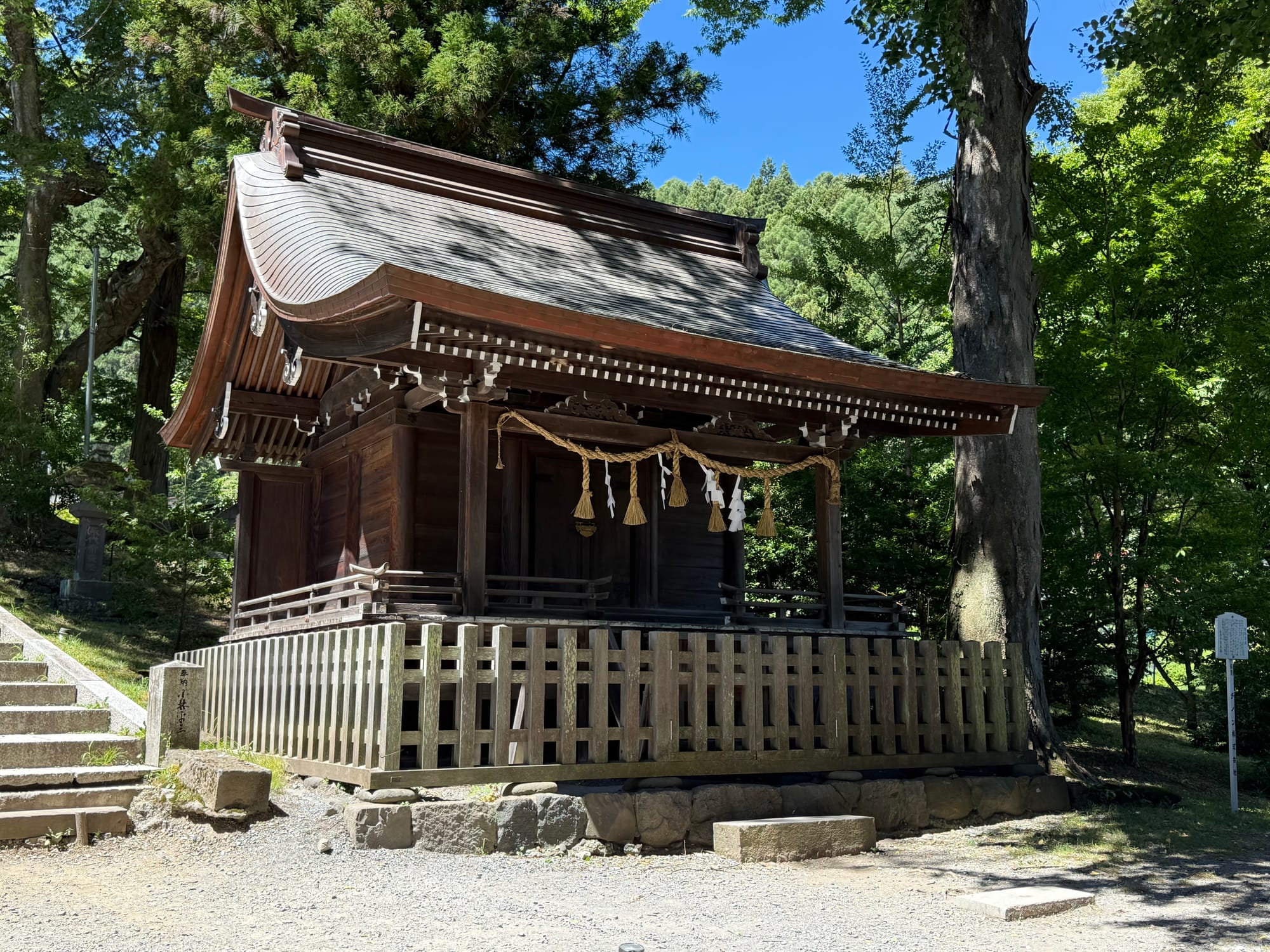
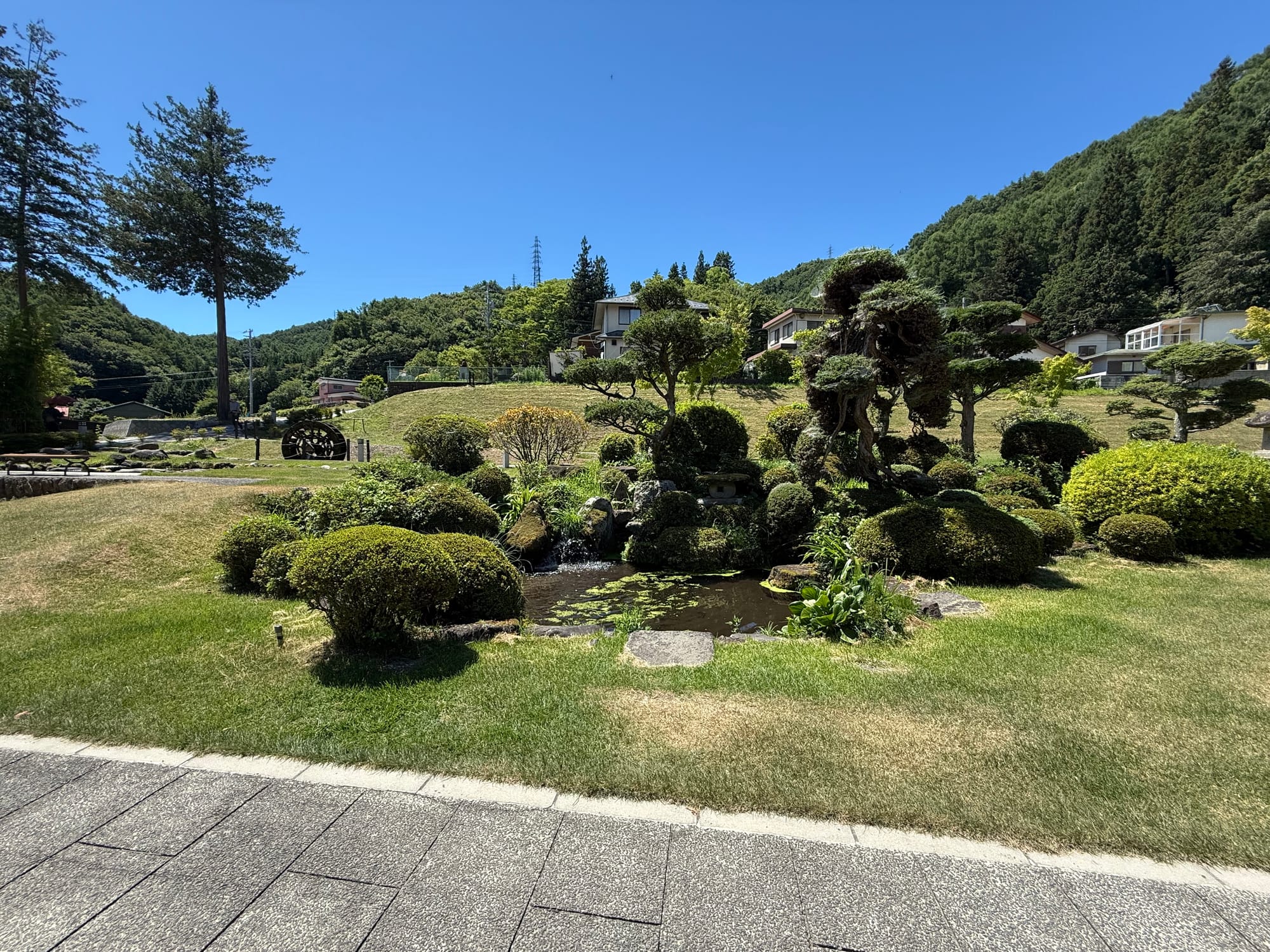
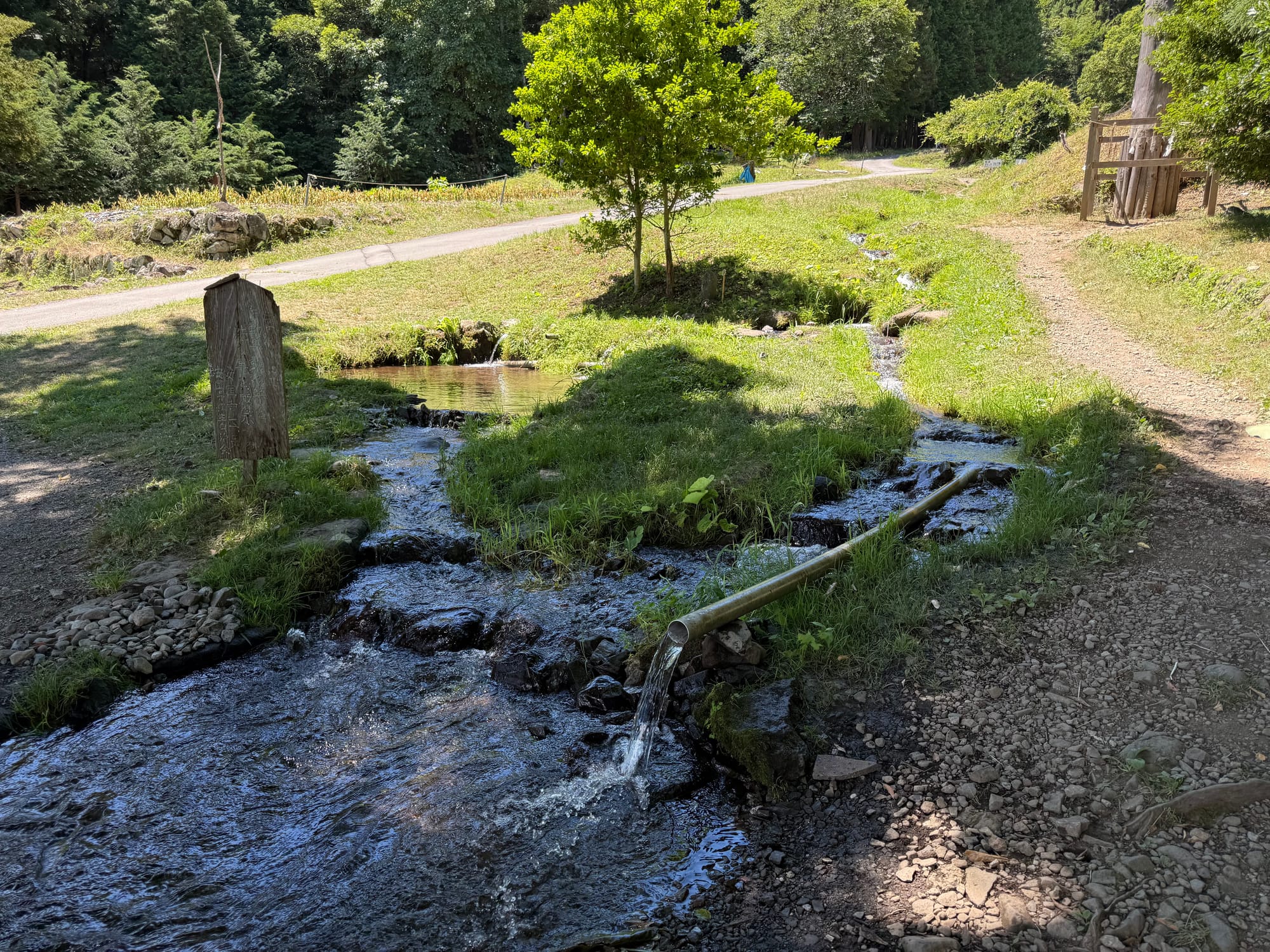
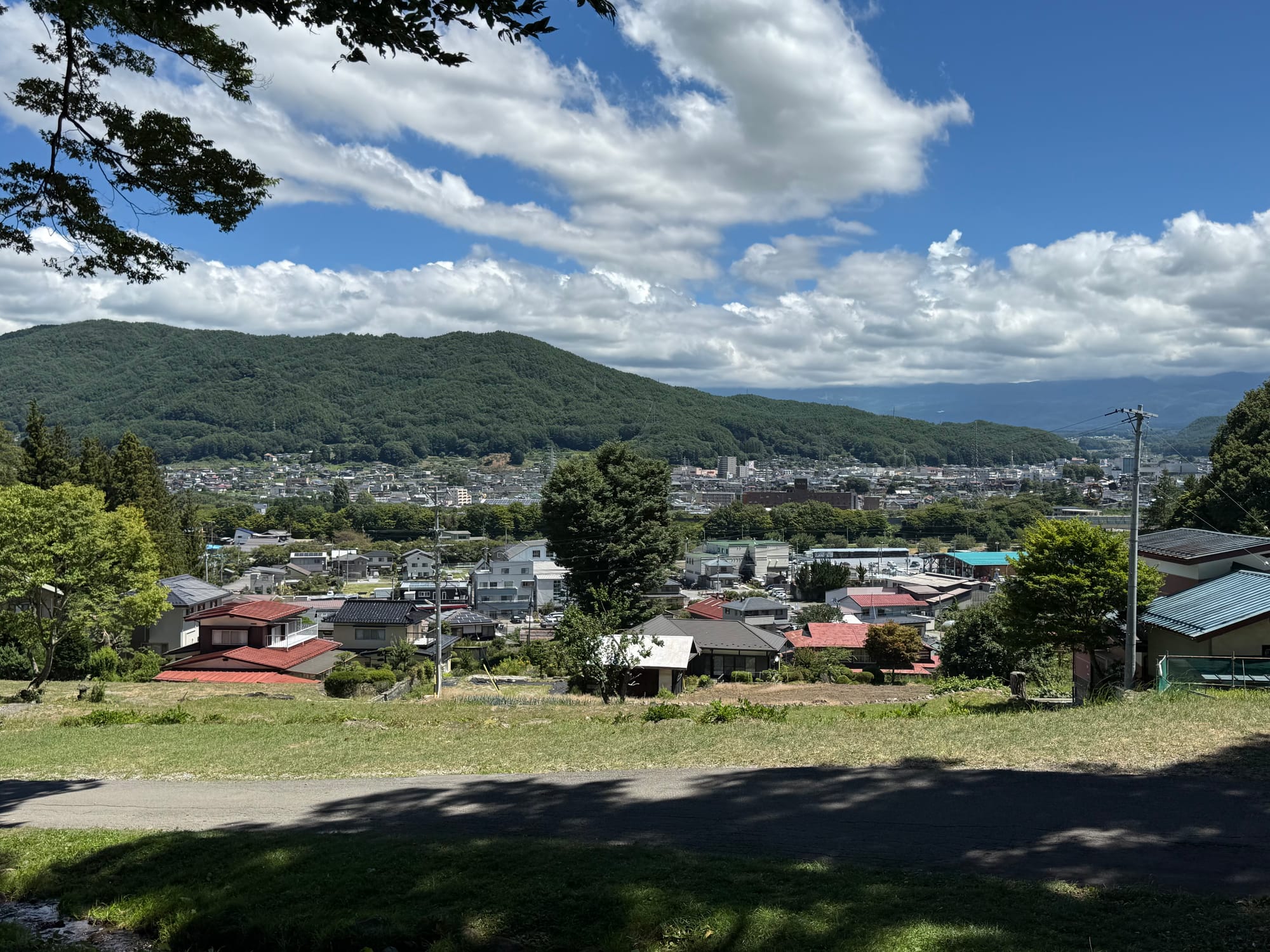
Suwa Taisha Kamisha Maemiya is considered the oldest of the four shrines that make up Suwa Grand Shrine. Set on a forested hillside, it preserves strong connections to the region's ancient religious traditions.A bronze torii gate marks the entrance to Suwa Taisha Kamisha Maemiya. Considered the oldest of the four Suwa Grand Shrine sanctuaries, the shrine is set within a peaceful forested landscape.A historic shrine building at Suwa Taisha Kamisha Maemiya. Nestled among towering trees, the sanctuary reflects the shrine's deep connection to nature and ancient Shinto traditions.A traditional Japanese garden featuring a pond and sculpted trees, with the surrounding mountains of the Suwa region providing a scenic natural backdrop.A spring-fed stream flows through the historic grounds of Suwa Taisha Kamisha Maemiya, reflecting the shrine's long association with natural landscapes and sacred water.A view from the grounds of Suwa Taisha Kamisha Maemiya across the Suwa Basin, showcasing the region's towns, forests and mountain landscape.
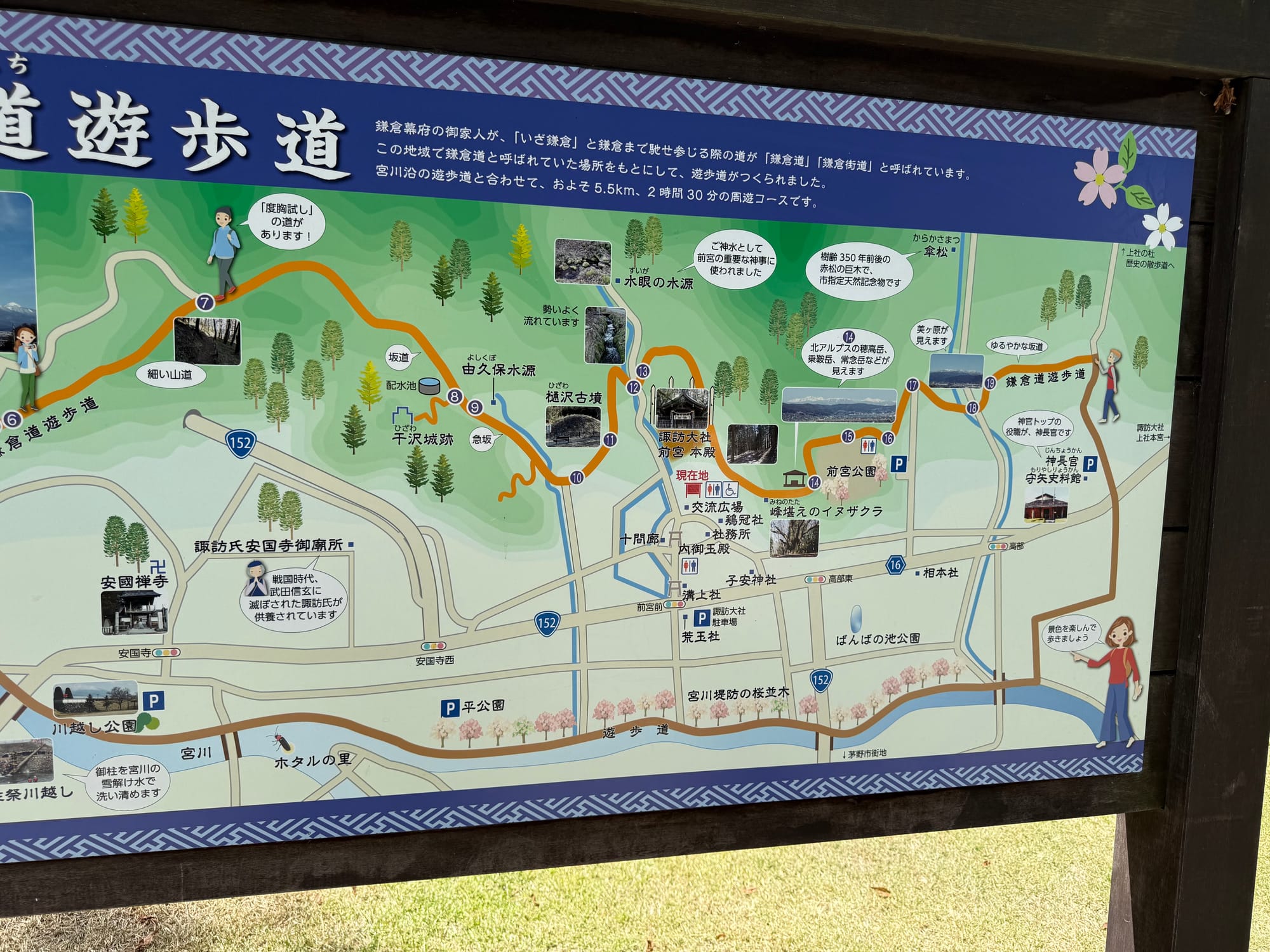
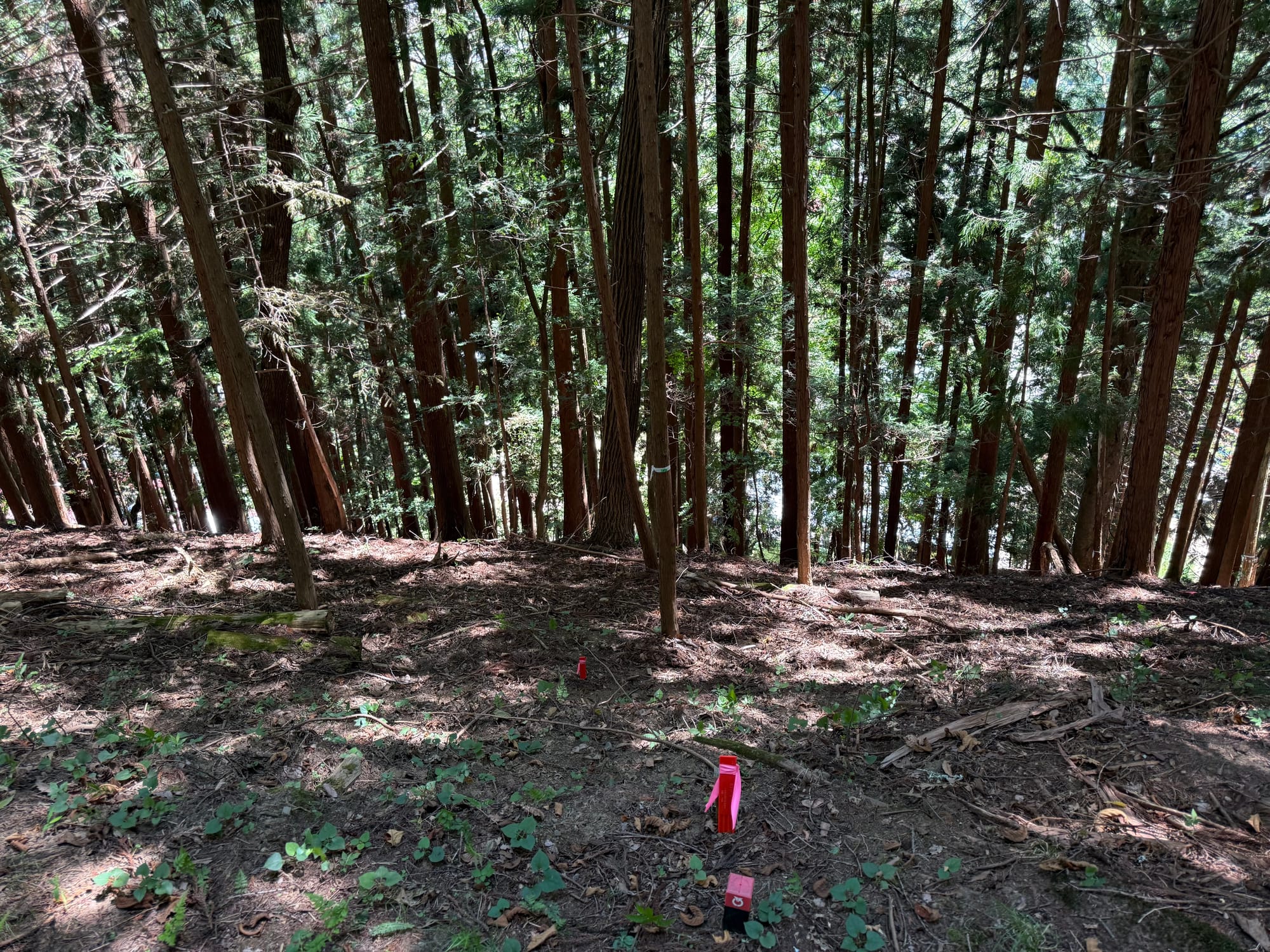
I also went for a small walk up the hill to see the lovely viewpoint at 14 on the map below, but there was a problem with that, someone left a bunch of trees in the way, oh well.
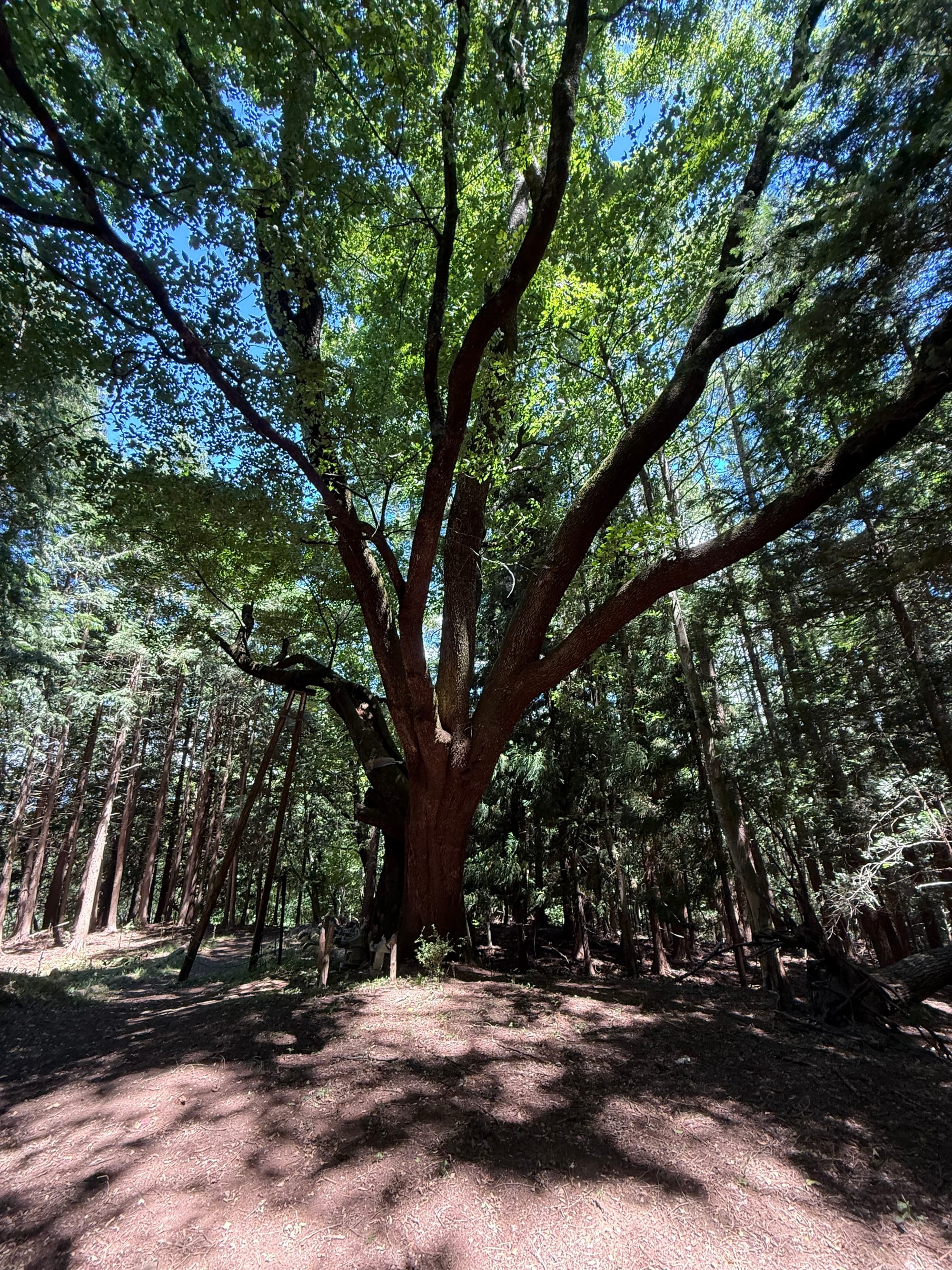
A visitor information map outlines walking routes around Suwa Taisha Kamisha Maemiya, highlighting nearby shrines, historical landmarks, natural springs and scenic viewpoints.A cedar forest on the grounds of Suwa Taisha Kamisha Maemiya, reflecting the shrine's long-standing connection to the natural landscape of the Suwa region.A venerable sacred tree stands within the forest of Suwa Taisha Kamisha Maemiya, reflecting the shrine's enduring connection to nature and the worship of natural features in Shinto tradition.
Tateishi Park
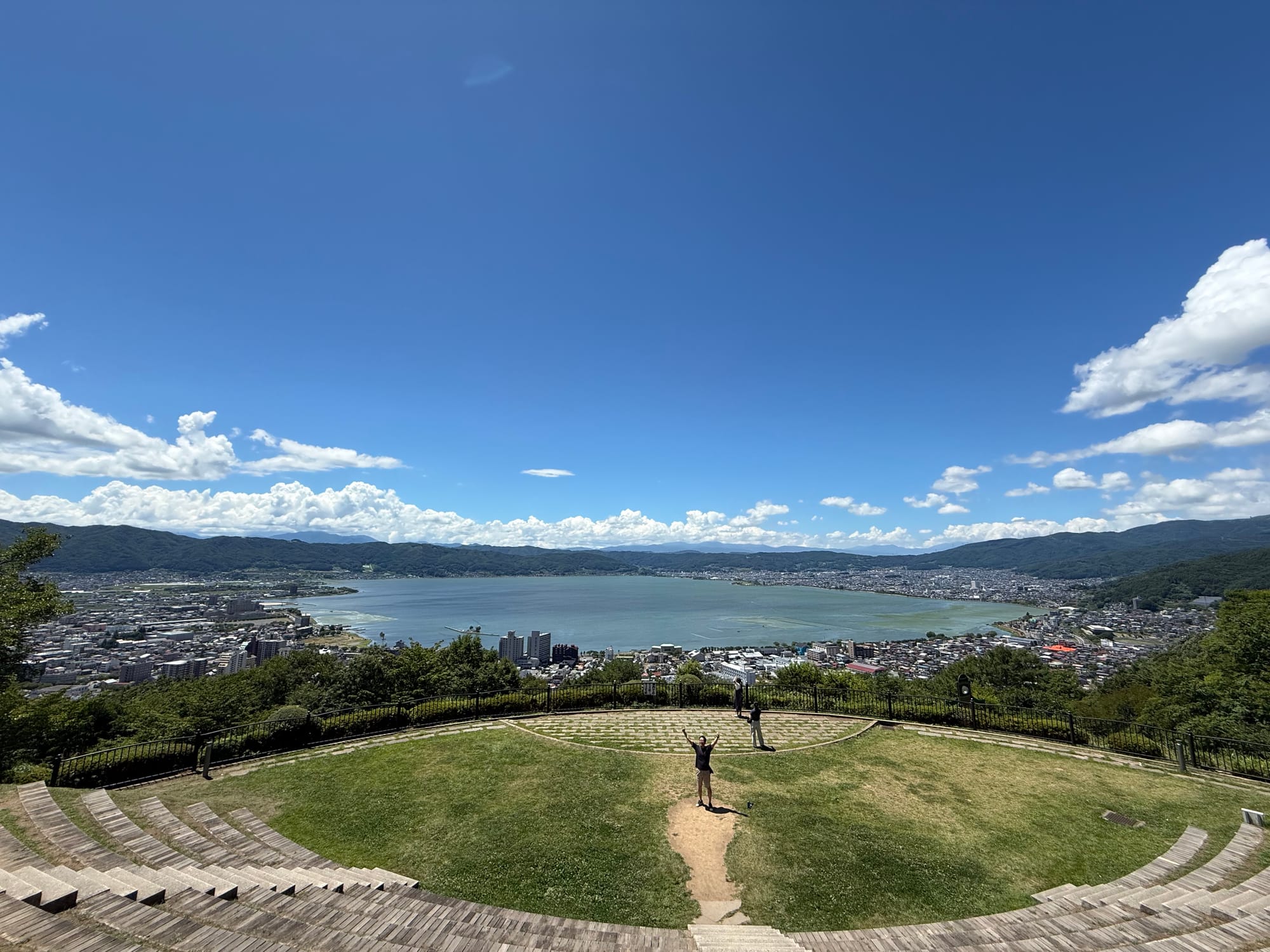
Then I went back up to the park that I went to the night before and lo and behold, it wasn't as crowded as the night before.
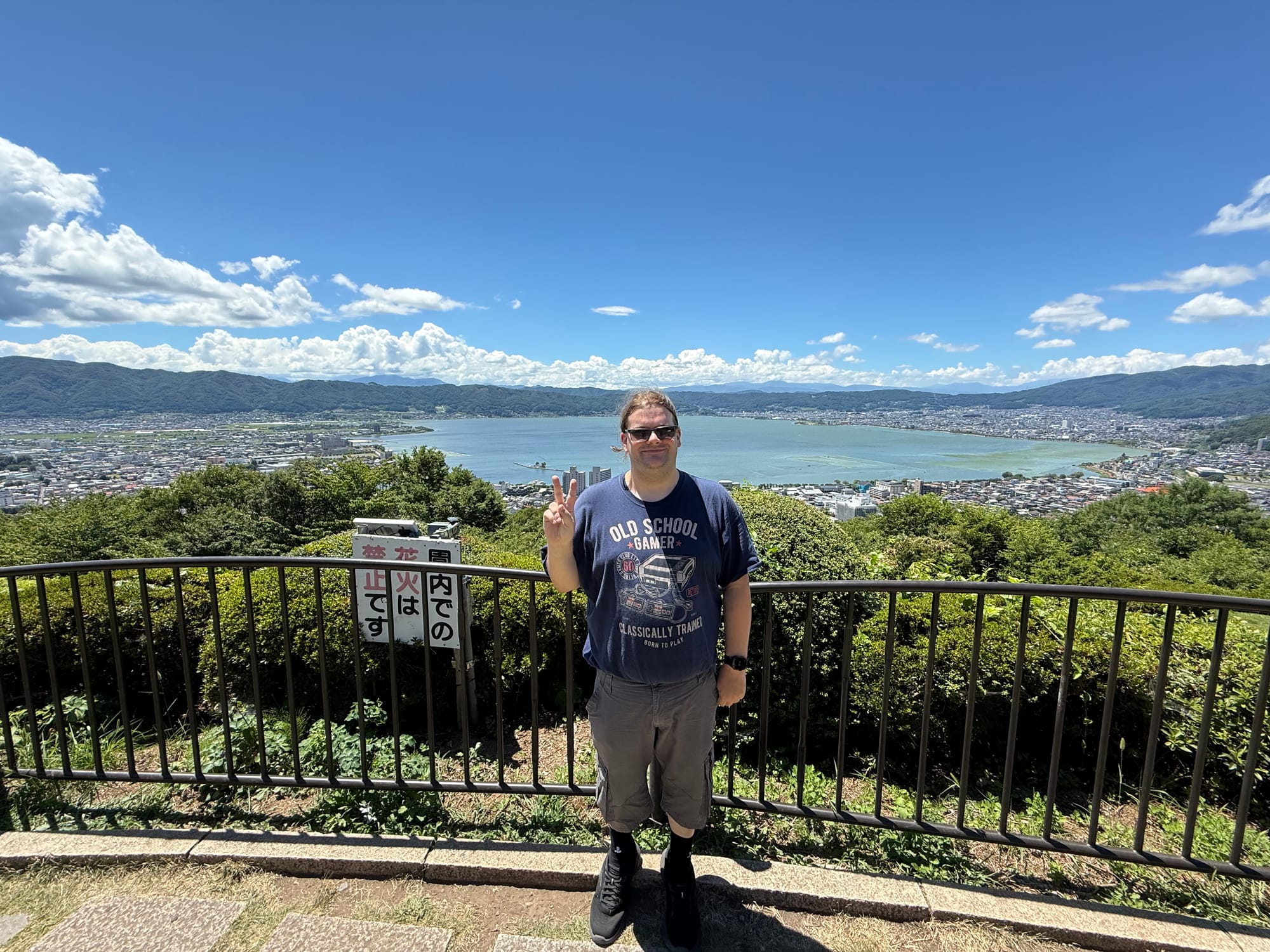
The view from Tateishi Park overlooks Lake Suwa and the surrounding towns of the Suwa Basin. The hillside viewpoint is one of the region's most celebrated scenic overlooks and is especially popular at sunset.The observation terrace at Tateishi Park offers sweeping views across Lake Suwa and the surrounding basin, making it one of the region's most popular scenic lookouts.
The photo below was taken by a guy out with his family after i asked and we started talking in broken English, until he got his daughter involved to help translate. He asked me where I was from, what I enjoy about Japan, do I enjoy the hot springs, is this my first time to Japan and is this my first time at Suwa. He seemed a bit surprised that it was my second time in Japan and that I was travelling round for 1 month, but it was good to talk to someone.
A visitor enjoys the panoramic view from Tateishi Park, one of the most popular viewpoints overlooking Lake Suwa and the surrounding Suwa Basin.
Oniyama Observation Point
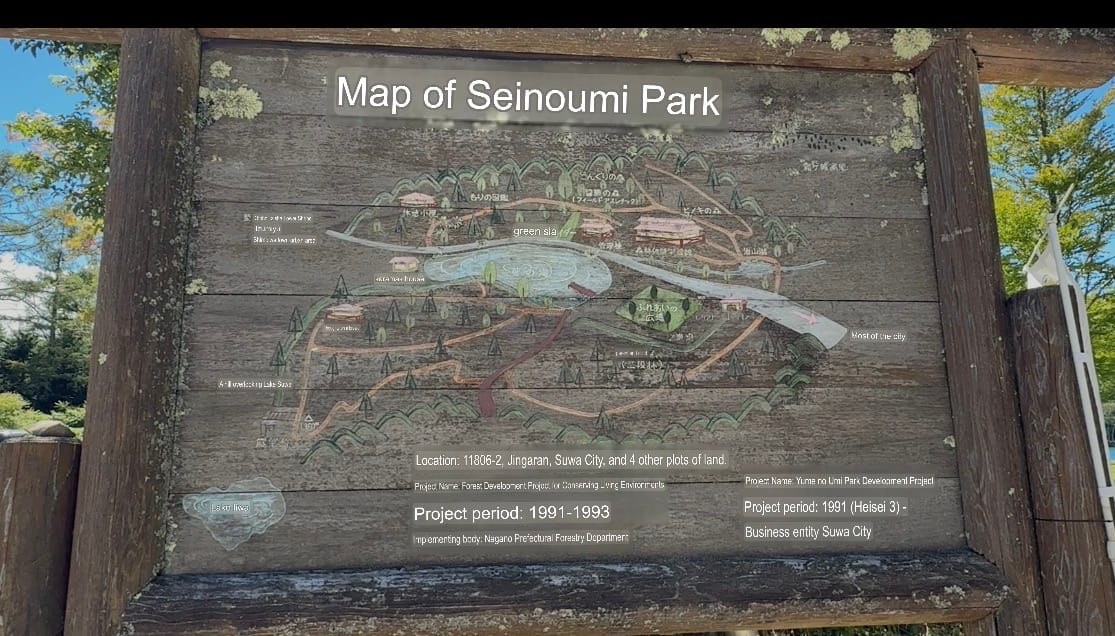
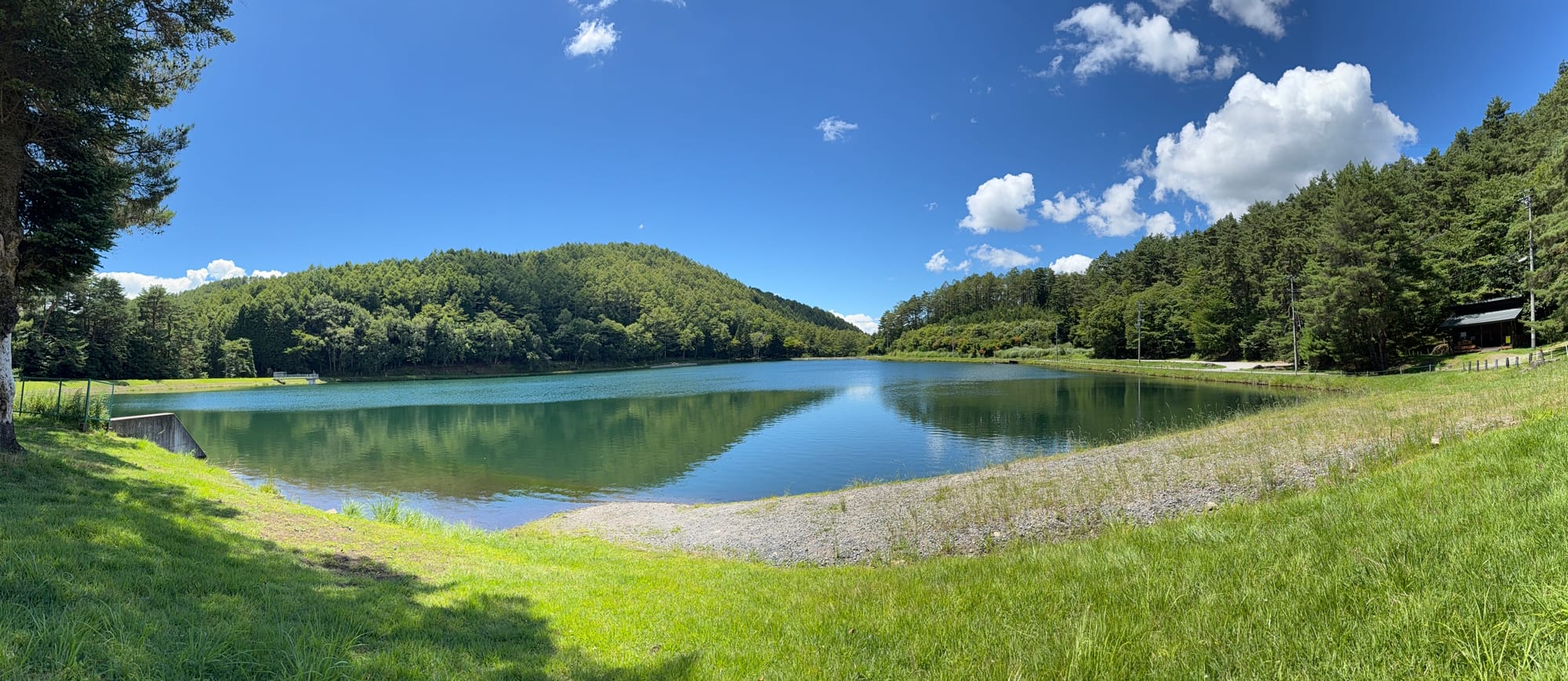
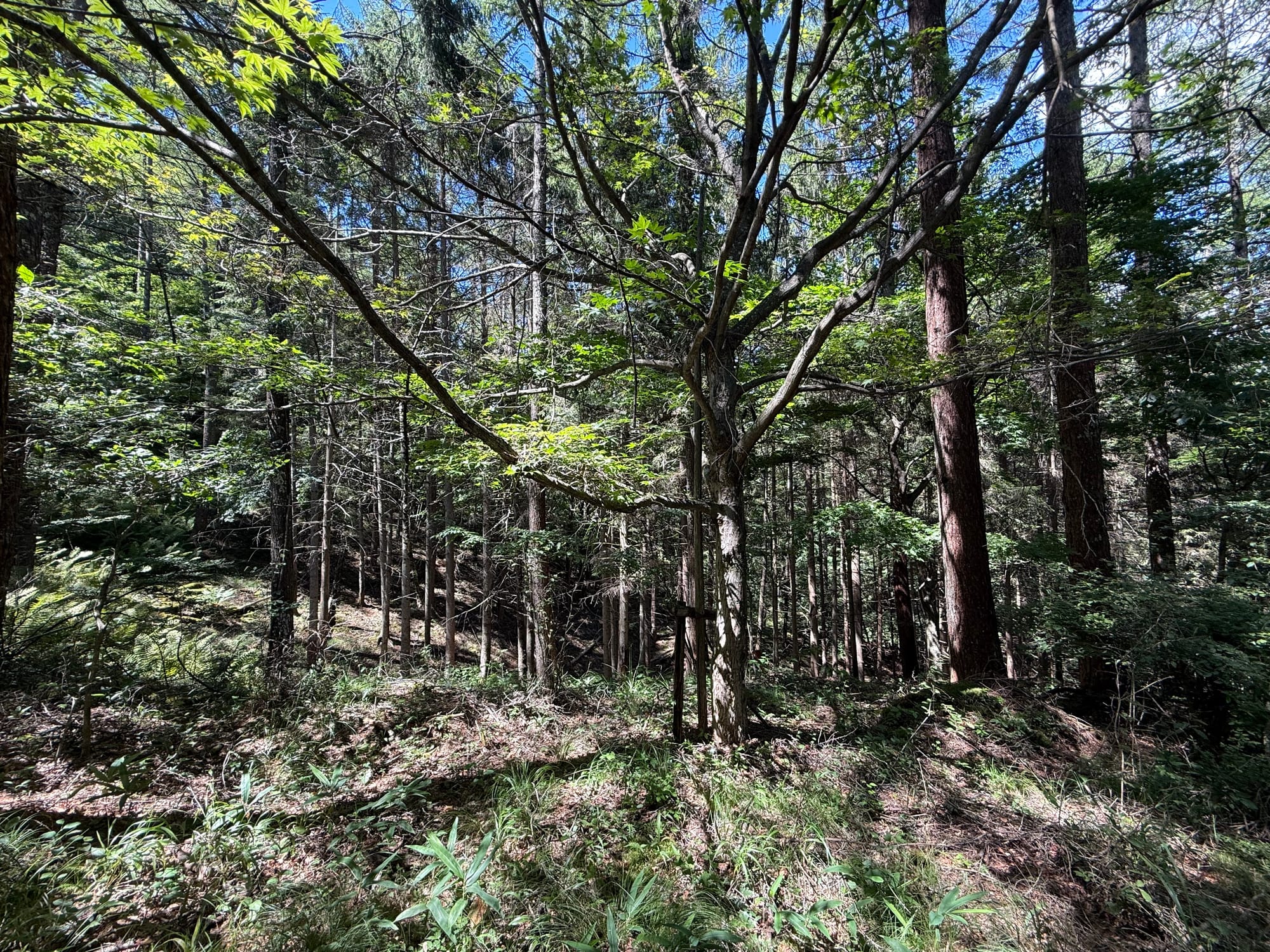
After this, I saw that on my map, there was an observation point higher up the mountain, so I got back in the car and started to head up. I parked at Seinoumi Park, which was breathtaking before heading to the observation point.
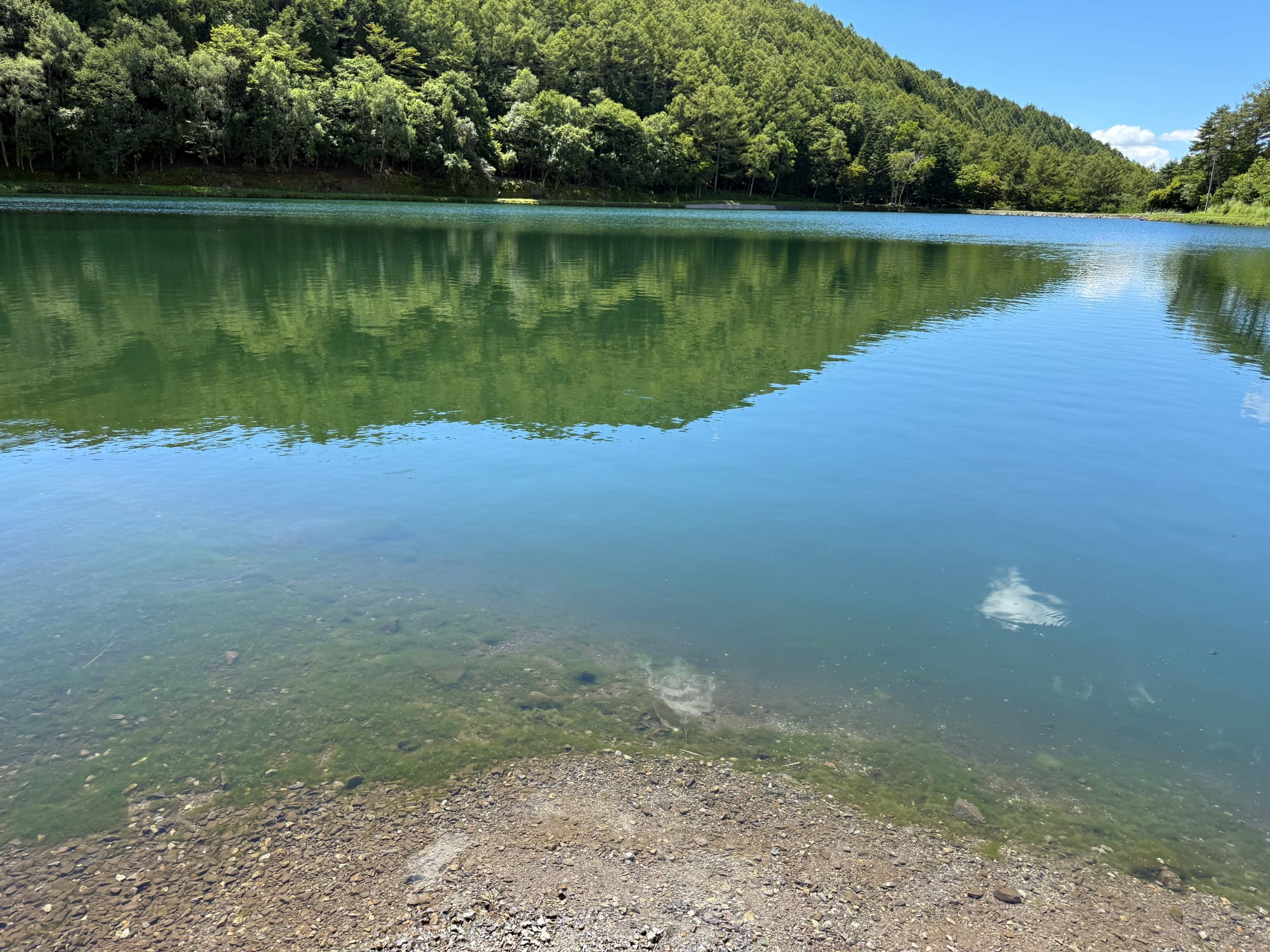
A park map along the walking route to Oniyama Observation Point helps visitors navigate the trails, viewpoints and facilities of Seinoumi Park.Tatenoumi Pond is a scenic feature of Seinoumi Park, surrounded by forested hills and offering a peaceful setting along the route to Oniyama Observation Point.The calm waters of Tatenoumi Pond reflect the surrounding forest and hills, creating a peaceful scene within Seinoumi Park on the slopes above Lake Suwa.
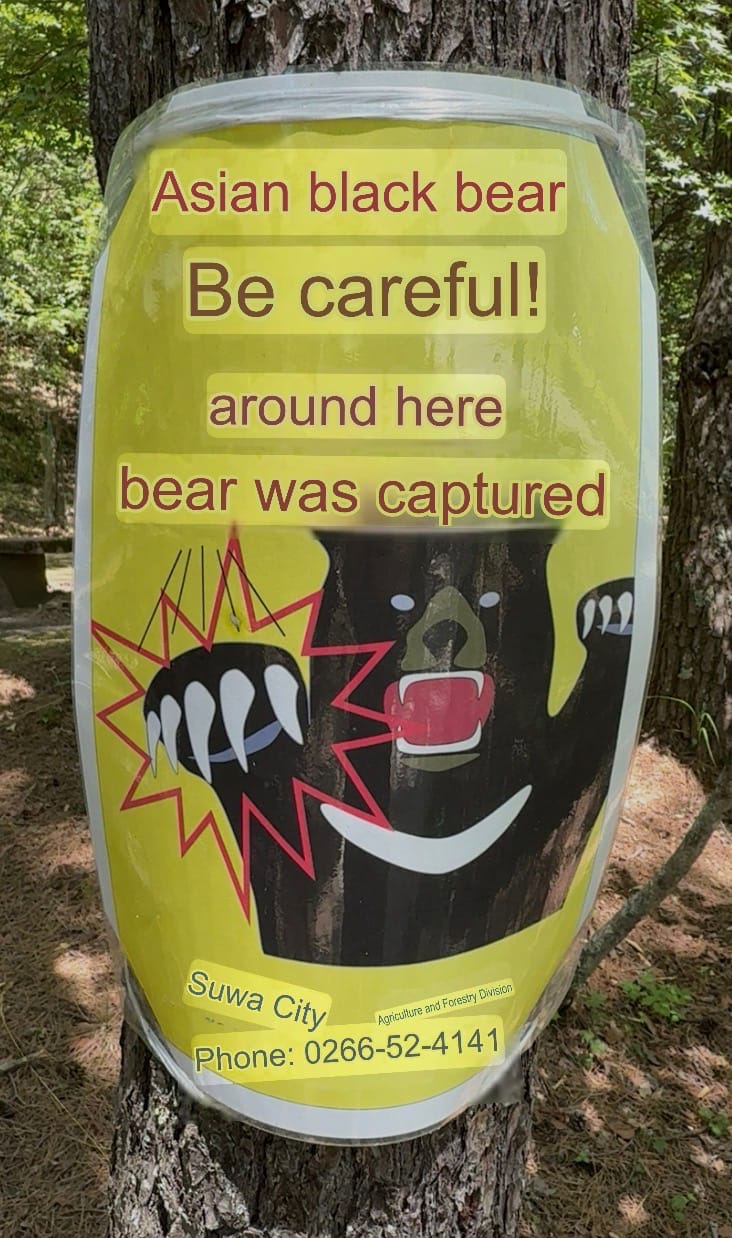
After taking this in, it was time to start heading up to the observation point and on my way there, I got a stark reminder that I was in bear country!
A warning sign in Seinoumi Park alerts visitors to the presence of Asian black bears in the area, reflecting the wildlife that inhabits the forests surrounding Lake Suwa.
Asian Black Bears are normally quite timid and will try to stay away from us Humans, but if we startle one, they could attack and as I was going up by myself, I decided it was a good idea to make some noise by blasting out some Skillet from my phone, especially as there was no one else about. I wouldn't recommend this if there are other people around as they will throw daggers at you with their eyes in Japan.
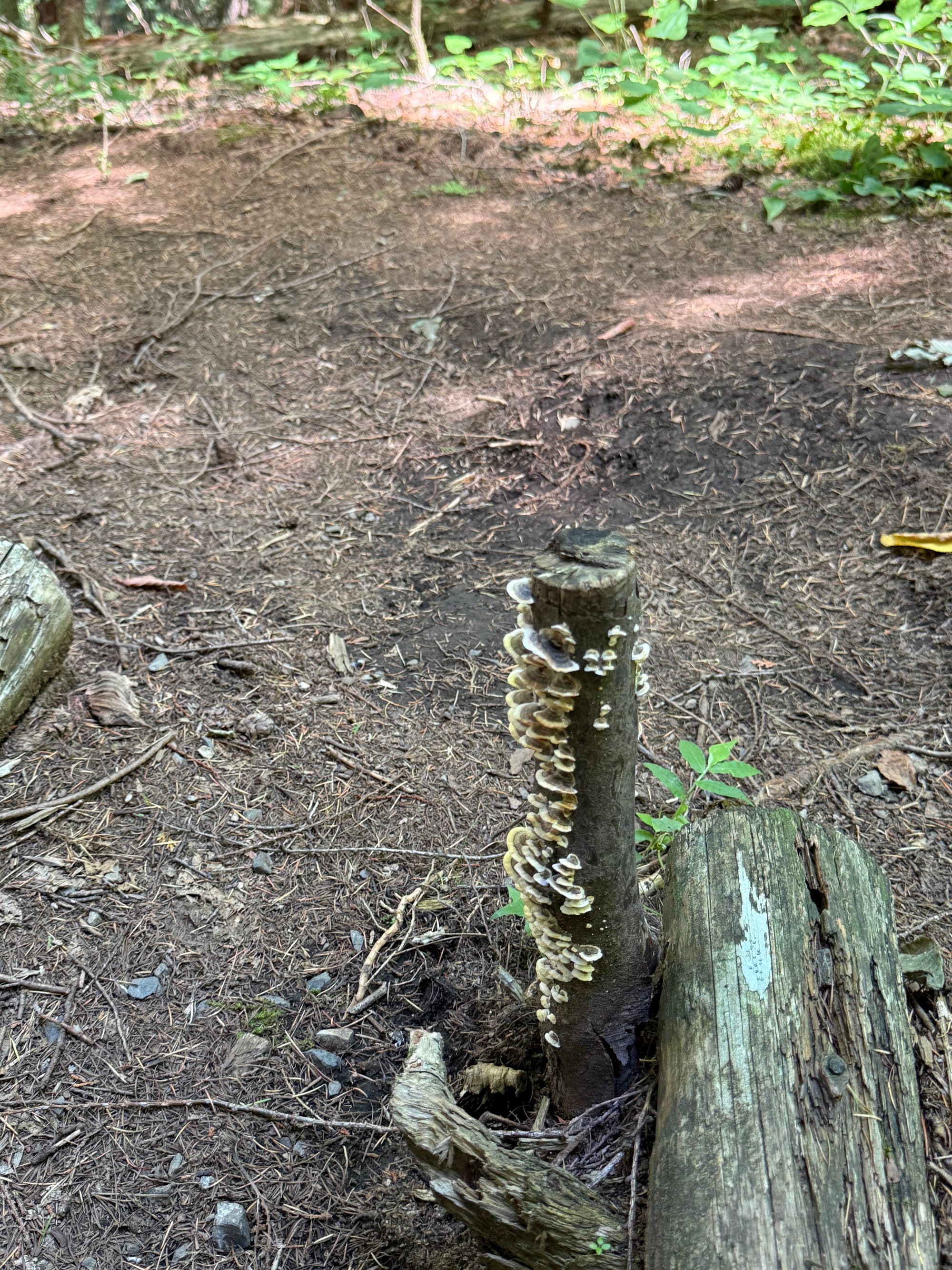
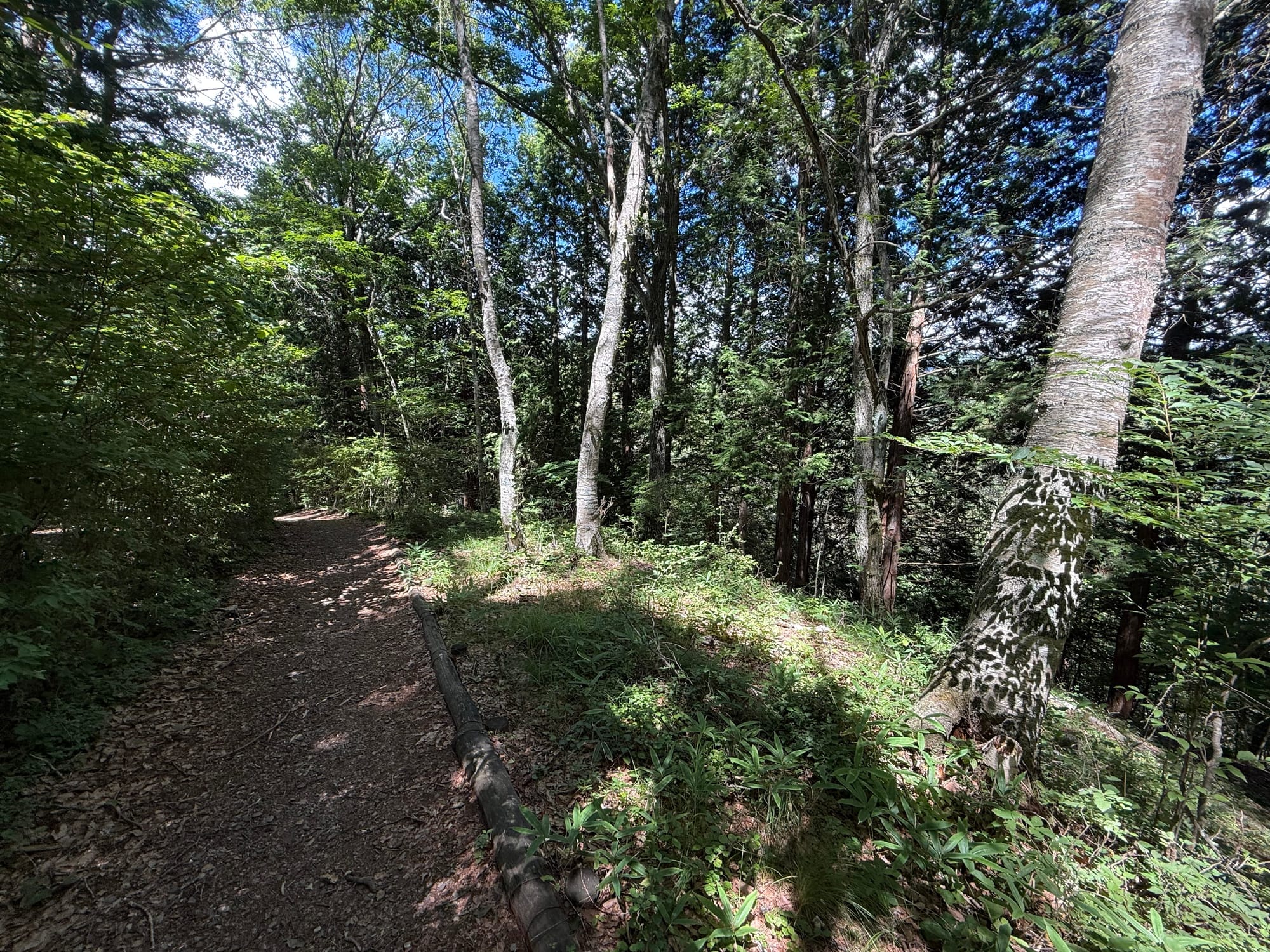
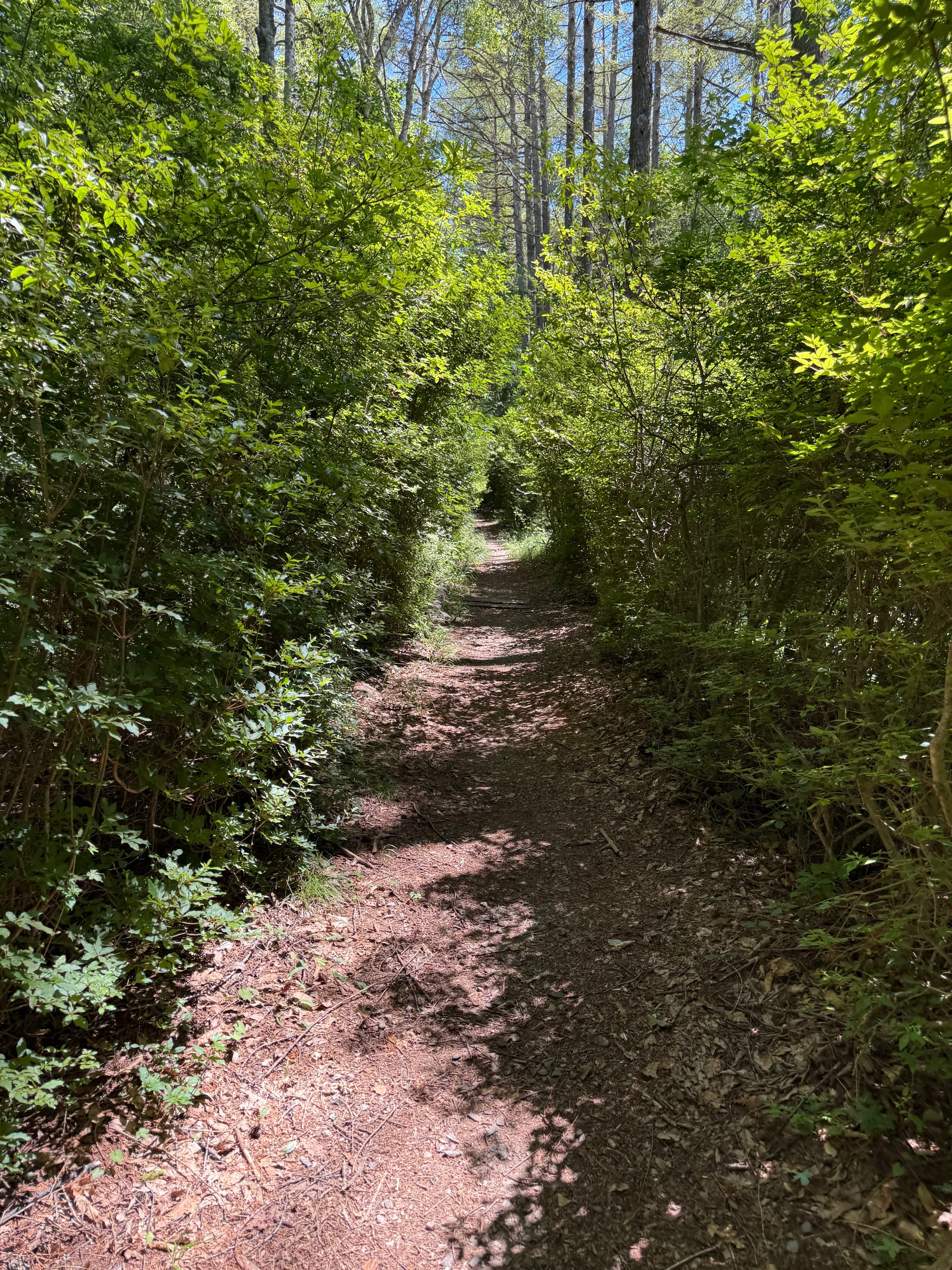
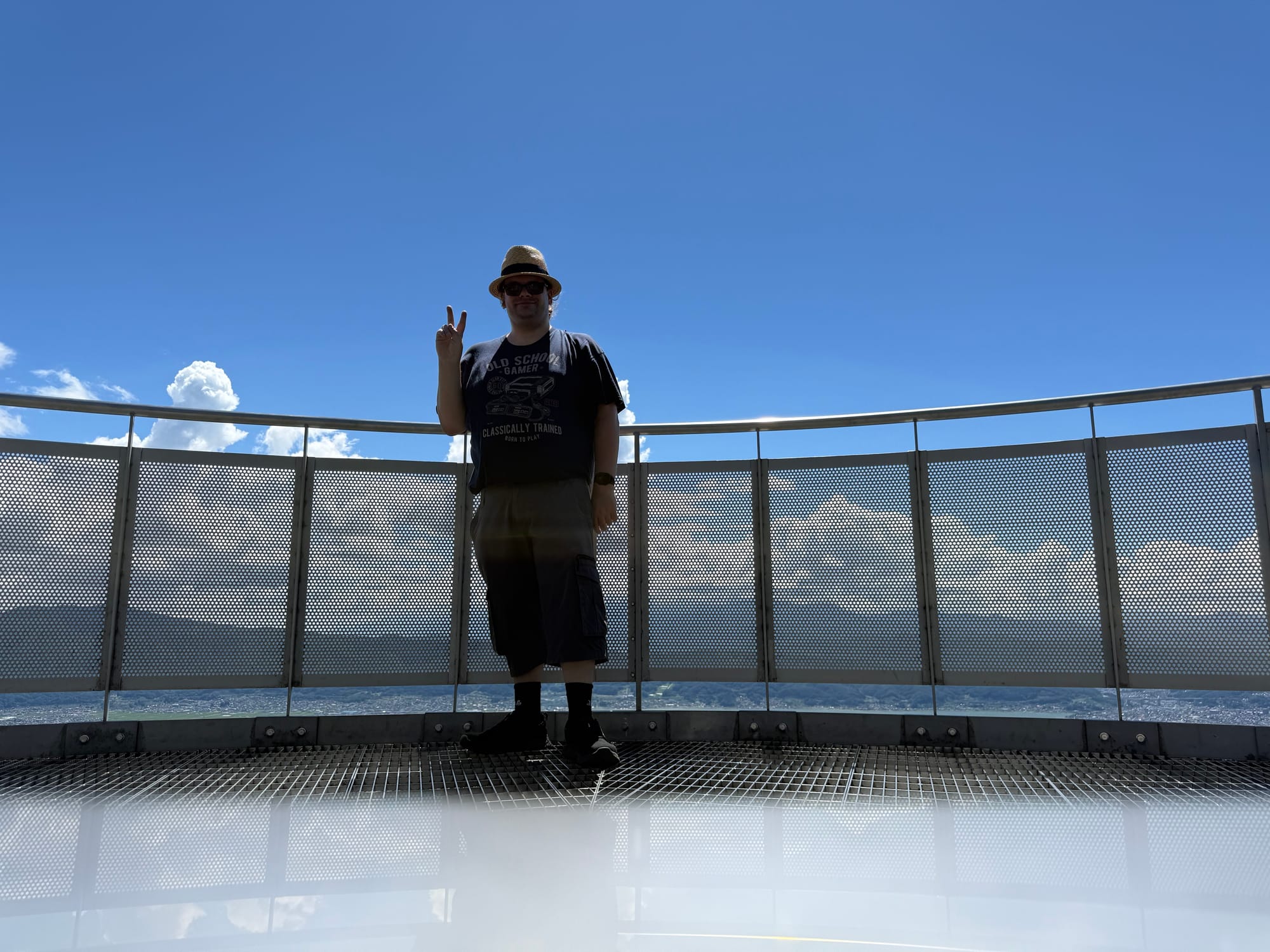
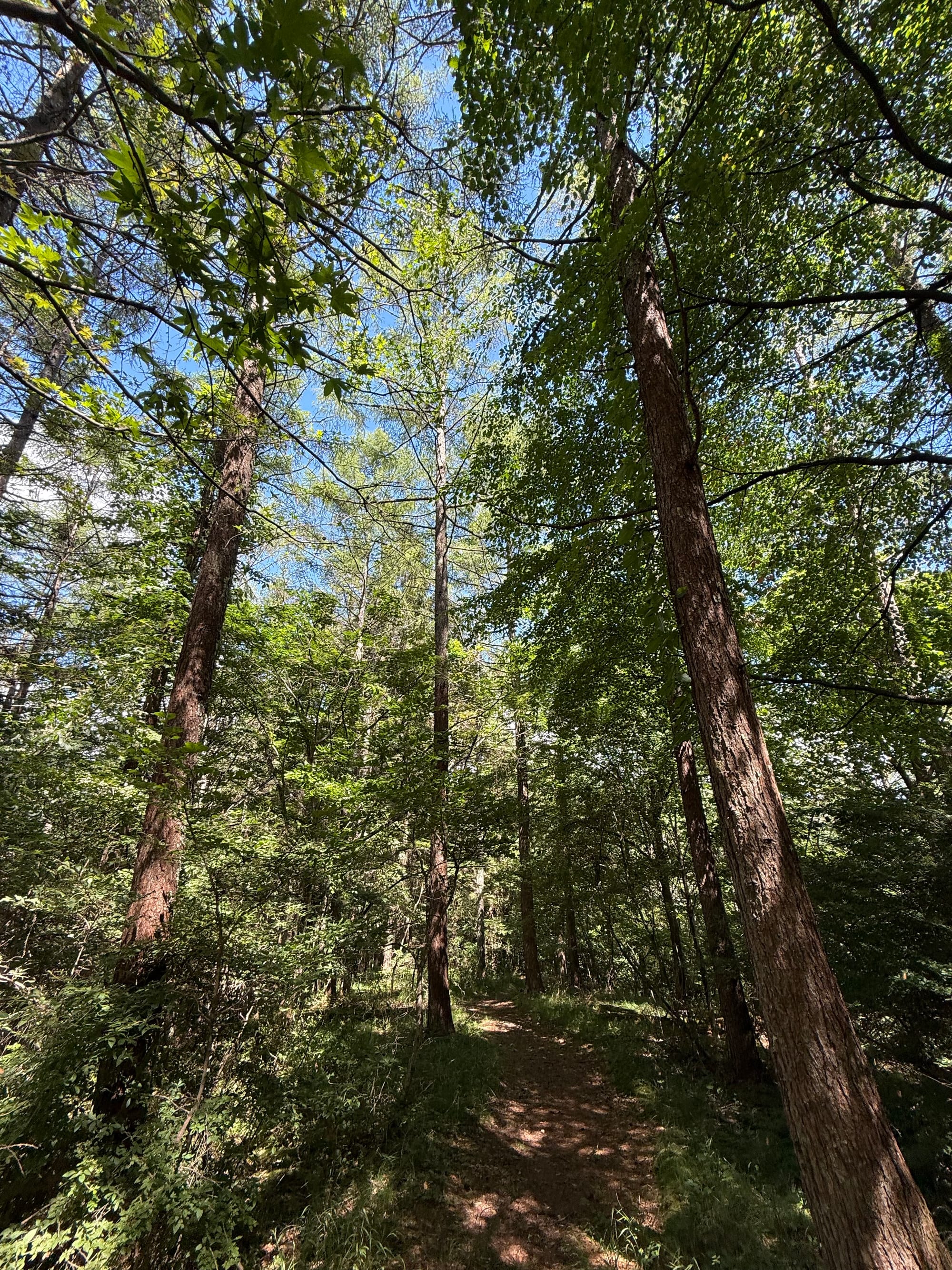
Bracket fungi grow on a decaying tree stump in the forests around Oniyama Observation Point, illustrating the important role of fungi in breaking down dead wood and recycling nutrients in woodland ecosystems.A shaded forest path in Seinoumi Park leads toward Oniyama Observation Point, passing through the woodland landscape that surrounds Tatenoumi Pond and the hills above Lake Suwa.A woodland trail in Seinoumi Park winds through dense forest on the way to Oniyama Observation Point, offering a peaceful walk through the natural landscape above Lake Suwa.Oniyama Observation Point viewing platform in Seinoumi Park, seen through surrounding trees, with Lake Suwa and the mountains of the Suwa Basin visible beyond.The view from Oniyama Observation Point stretches across Lake Suwa, the surrounding towns and the mountains of central Nagano Prefecture, offering one of the region's highest viewpoints.A visitor on the observation deck at Oniyama Observation Point, overlooking Lake Suwa and the surrounding mountains from one of the highest viewpoints in the Suwa region.
The Observation point is about 1,335 metres above sea level, which is higher that Snowdon the highest mountain in Wales back home, but not quite as high as Ben Nevis in Scotland at 1,345 metres high.
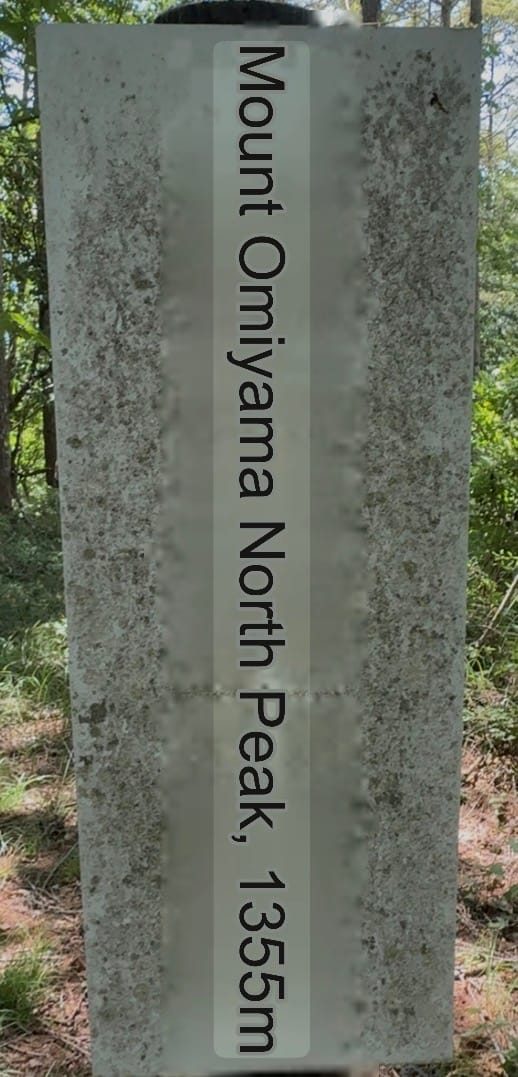
After this I decided to also tag the top of Mt. Oni-yama, which was only about 5 mins walk from the observation post, but as I could see bits of possible bear activity about, I decided to climb back down quickly after reaching the top, not that there was anything to see apart from the cairn stone.
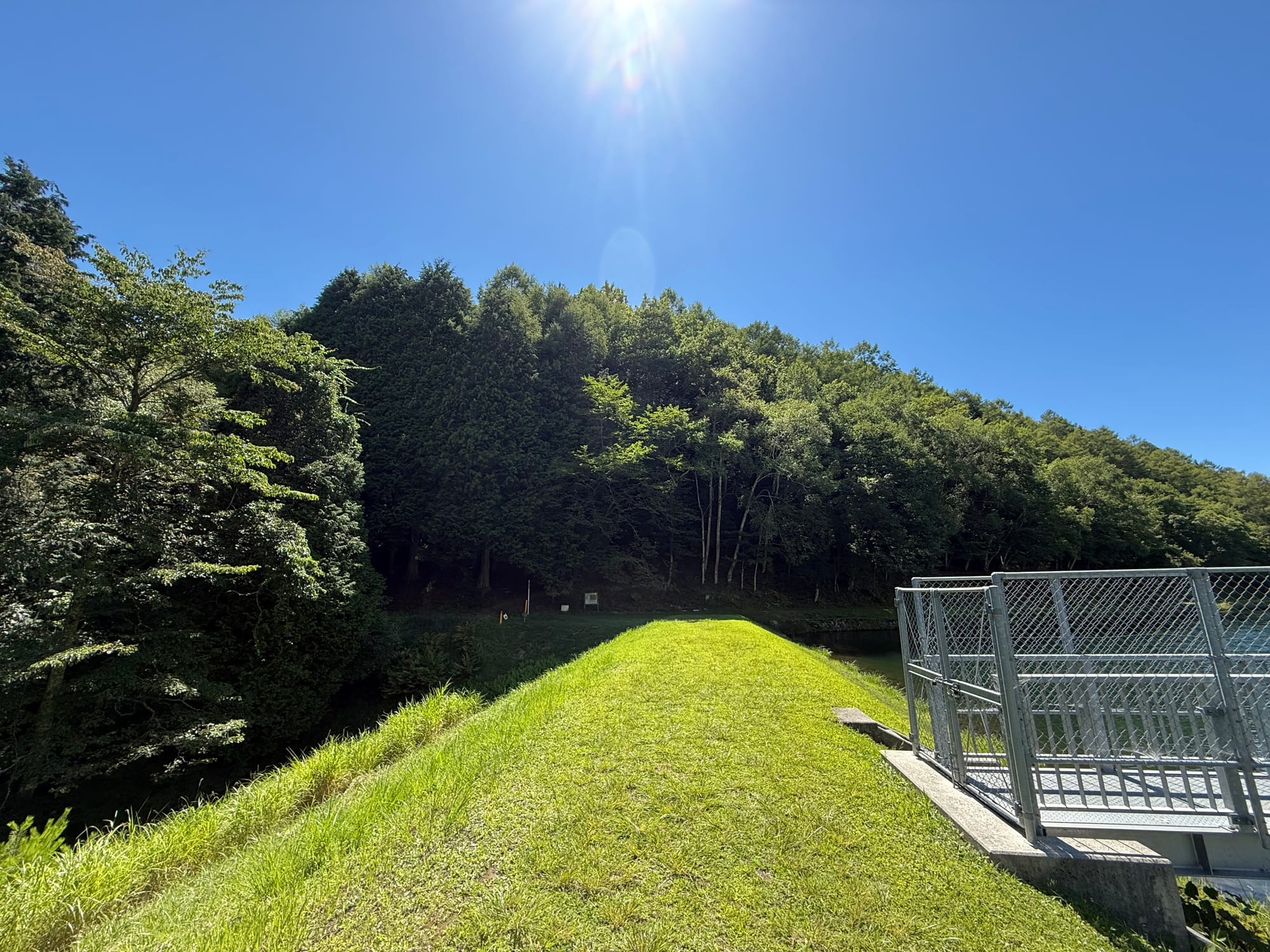
The summit marker for Mount Oniyama North Peak (1,355 m), located near Oniyama Observation Point in the forested highlands overlooking Lake Suwa.Woodland scenery along the return walk from Mount Oniyama North Peak, passing through the forests that cover the mountains above Lake Suwa.A shaded section of trail on the return walk from Mount Oniyama North Peak, winding through the forests of Seinoumi Park above Lake Suwa.The dam embankment at Tatenoumi Pond provides views across the water and surrounding forest, marking the return route from Mount Oniyama North Peak through Seinoumi Park.
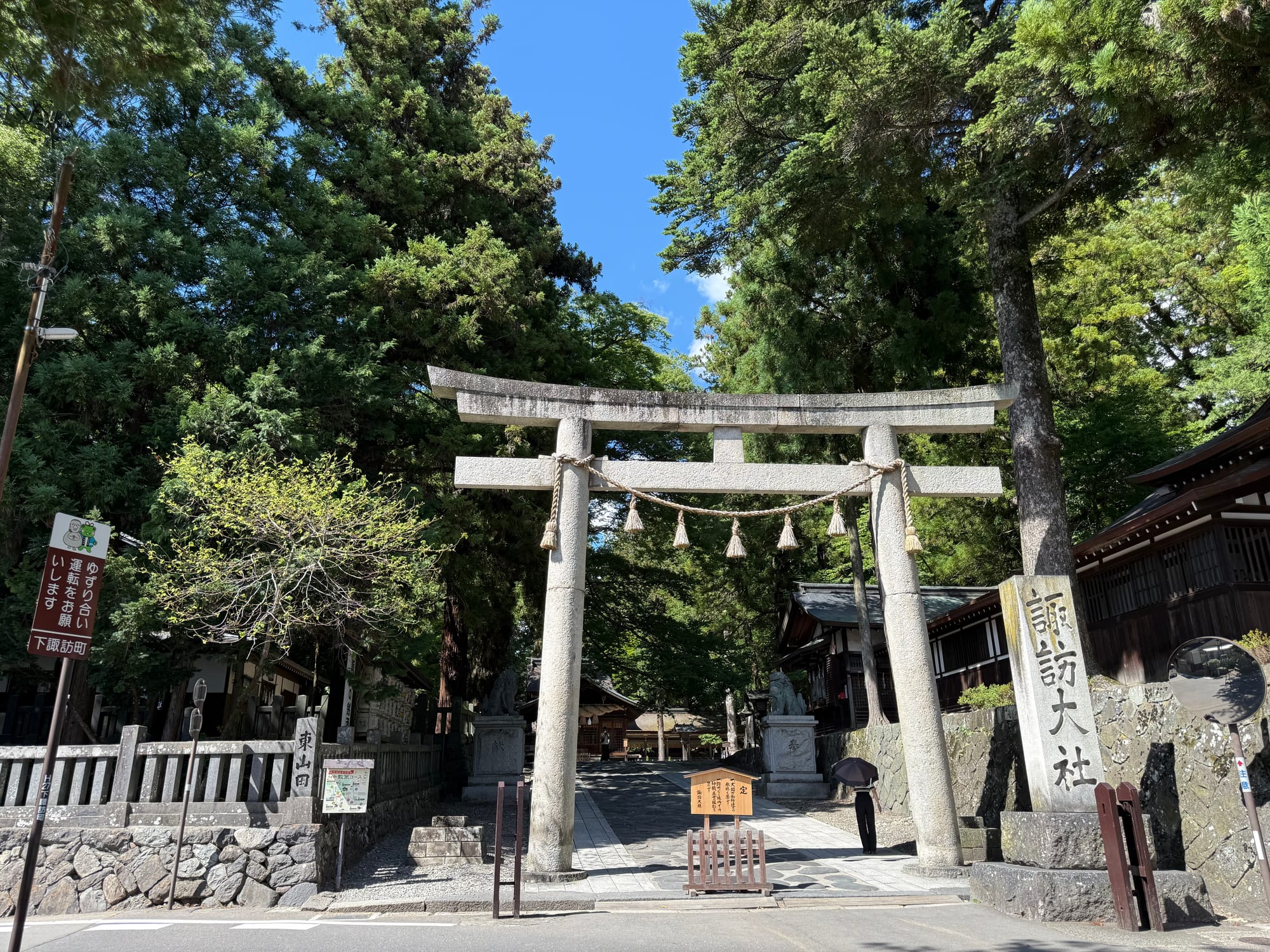
After I got back to my car, it was time to head back down the mountain and go to the Shimosha group of Suwa shrines, which mean Lower Shrine. The goddess Yasakatome-no-kami resides in the lower shrine and is the wife of Takeminakata-no-kami from the upper shrine
Suwa Taisha Shimosha Harumiya
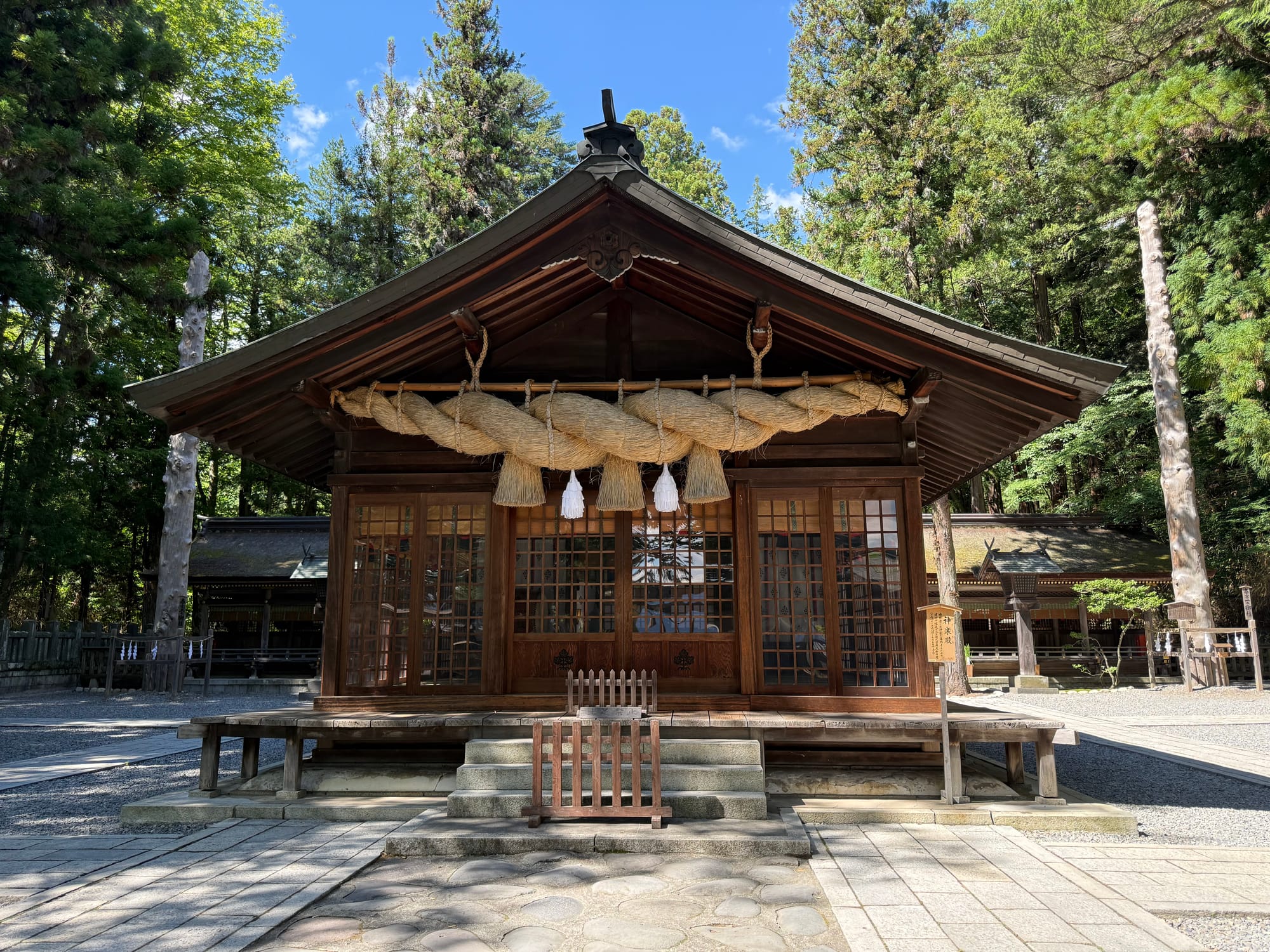
Next up was the Shimosha Harumiya shrine. Harumiya means Spring Shrine which is where the goddess Yasakatome-no-kami lives from 1st February.
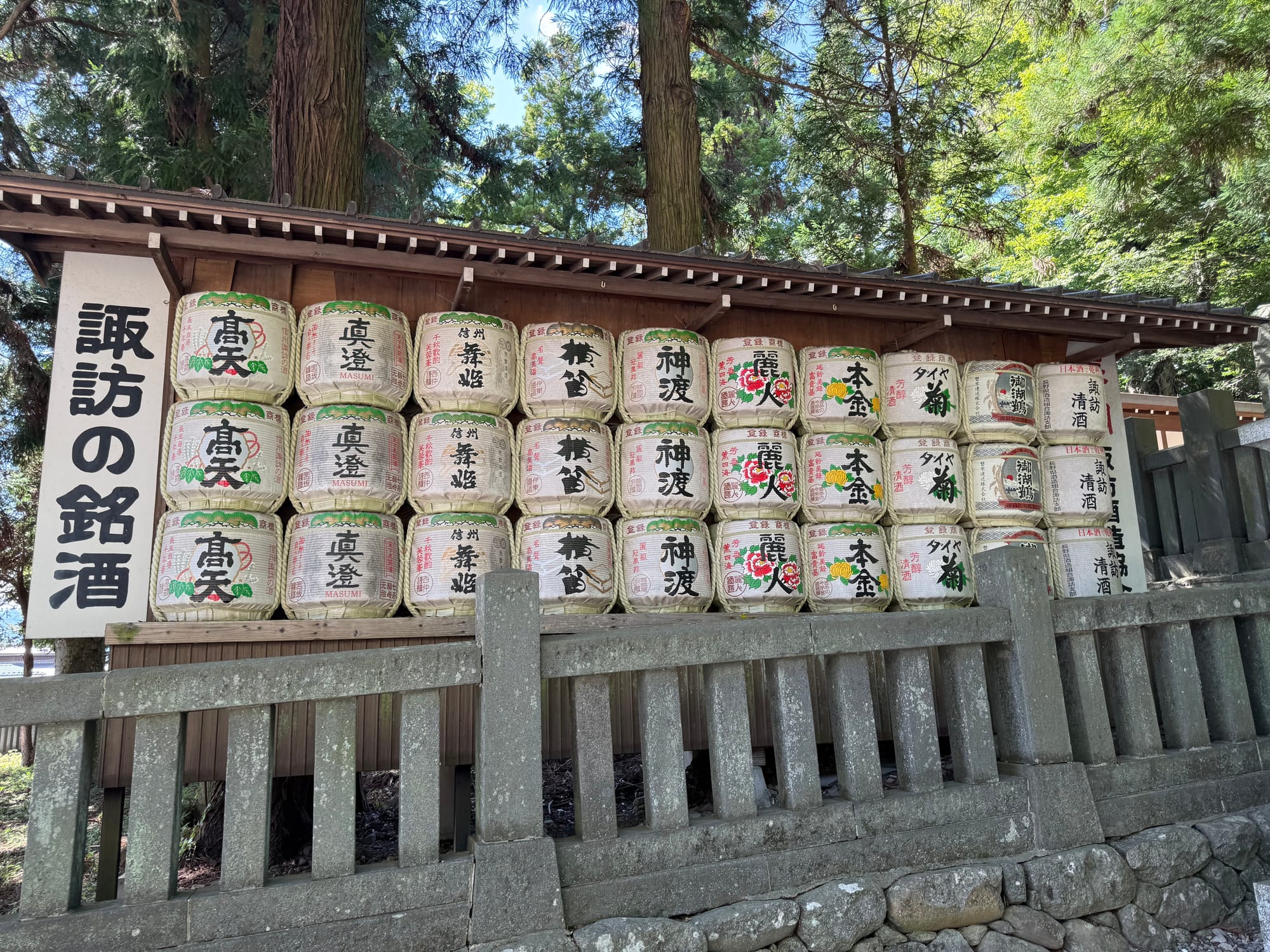
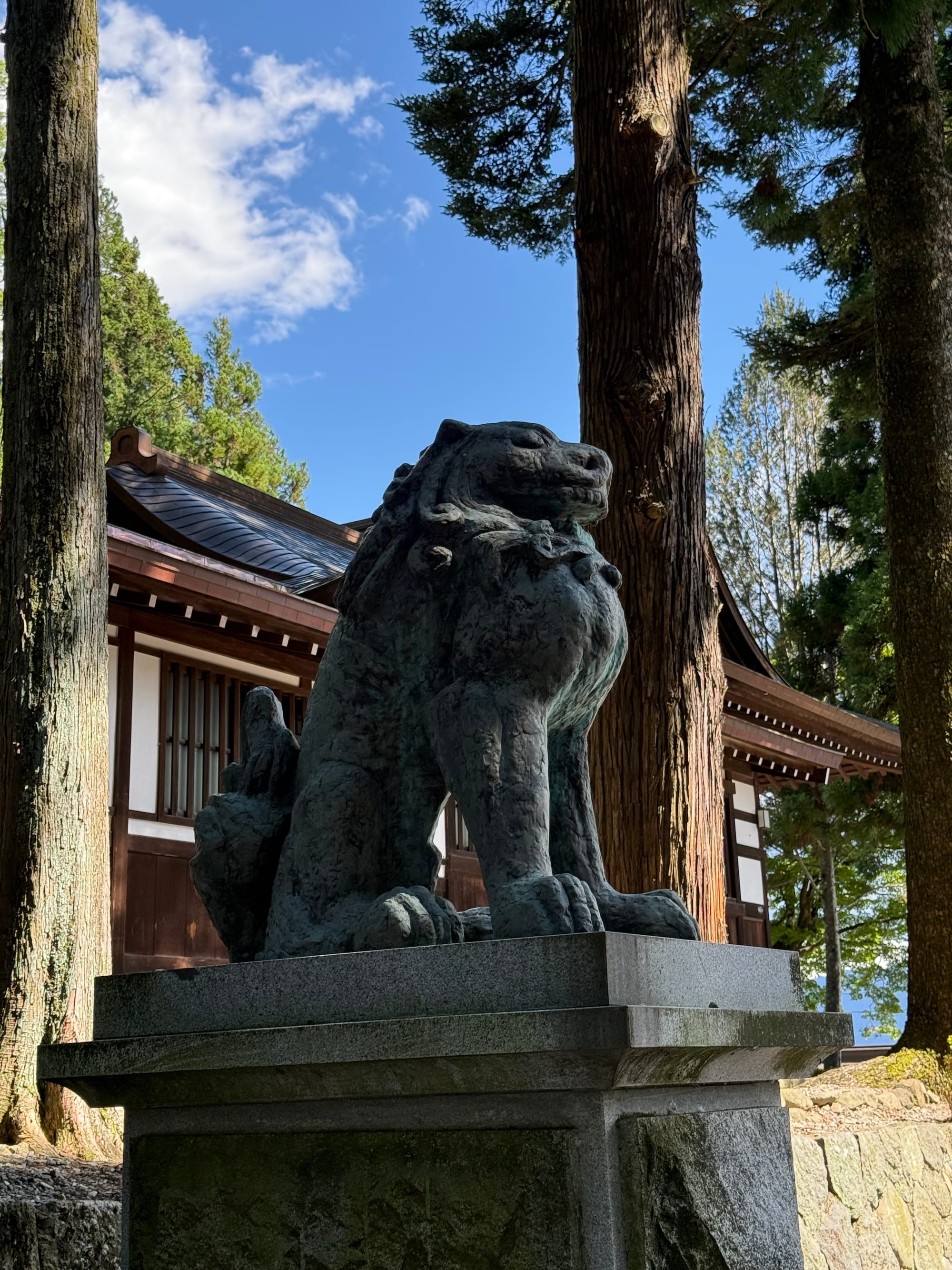
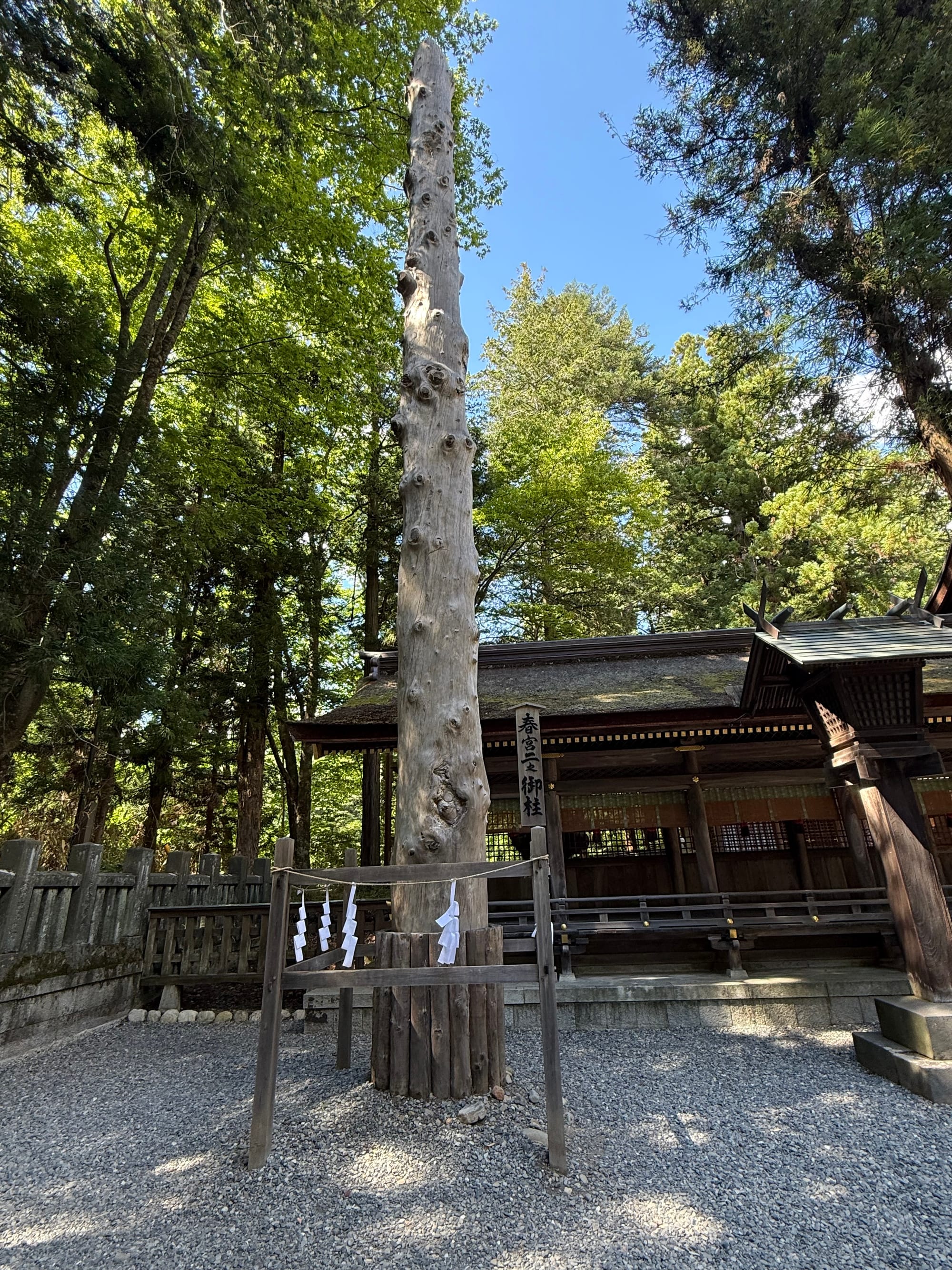
Suwa Taisha Shimosha Harumiya is one of the four shrines of Suwa Grand Shrine. Surrounded by towering trees, it serves as the spring residence of the shrine's deity according to local tradition.Decorative sake barrels donated by breweries from the Suwa region are displayed at Suwa Taisha Shimosha Harumiya, reflecting the area's long tradition of sake production and its connection to the shrine.A bronze komainu guardian stands watch at Suwa Taisha Shimosha Harumiya. These lion-dog statues are traditionally placed at Shinto shrines to protect sacred spaces from harmful influences.A shrine building at Suwa Taisha Shimosha Harumiya adorned with a massive shimenawa rope, a sacred Shinto symbol marking the site's spiritual significance.An Onbashira sacred pillar at Suwa Taisha Shimosha Harumiya. These massive logs are a distinctive feature of the Suwa Grand Shrine and are traditionally replaced during the Onbashira Festival, held every six years.
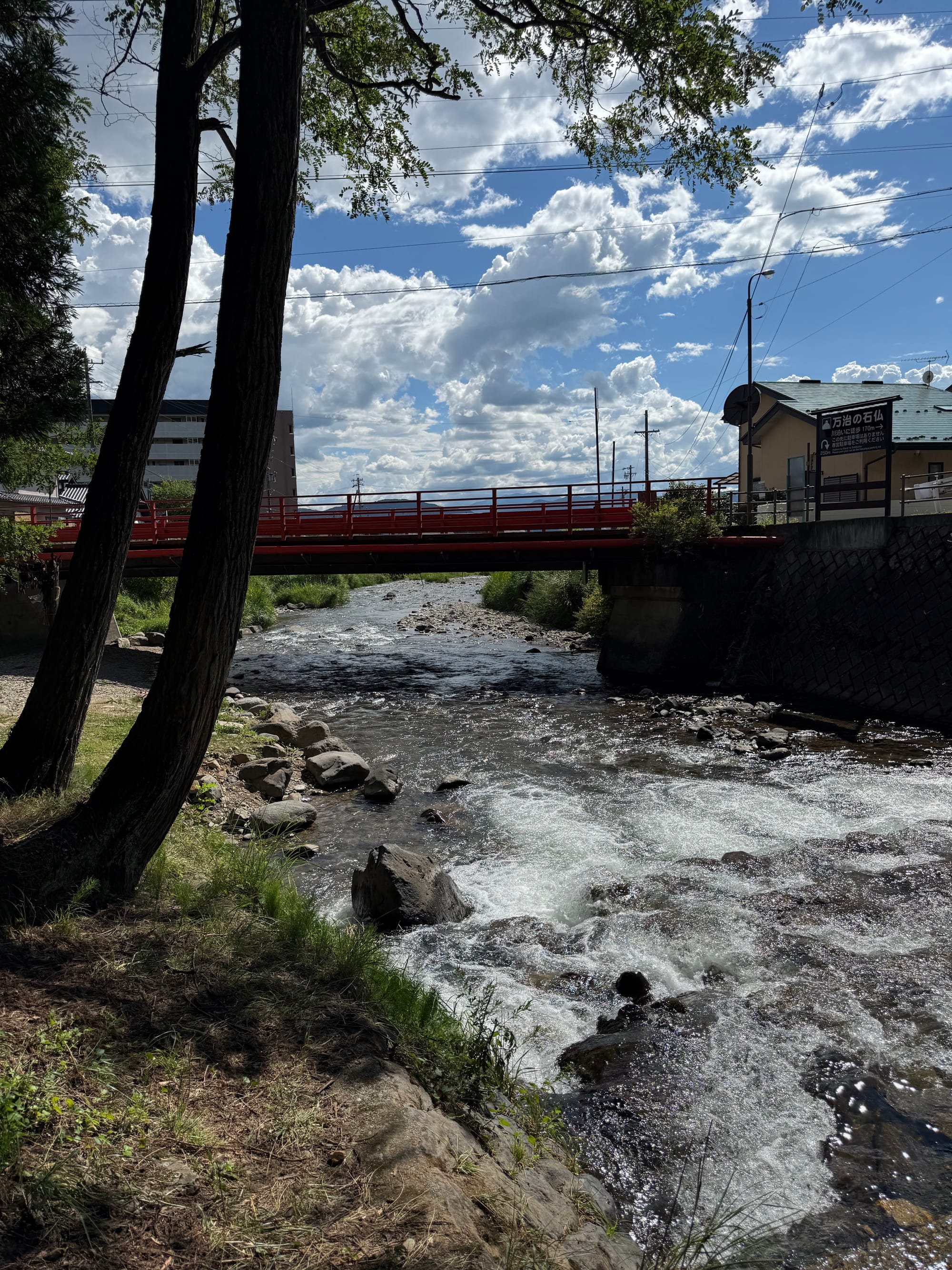
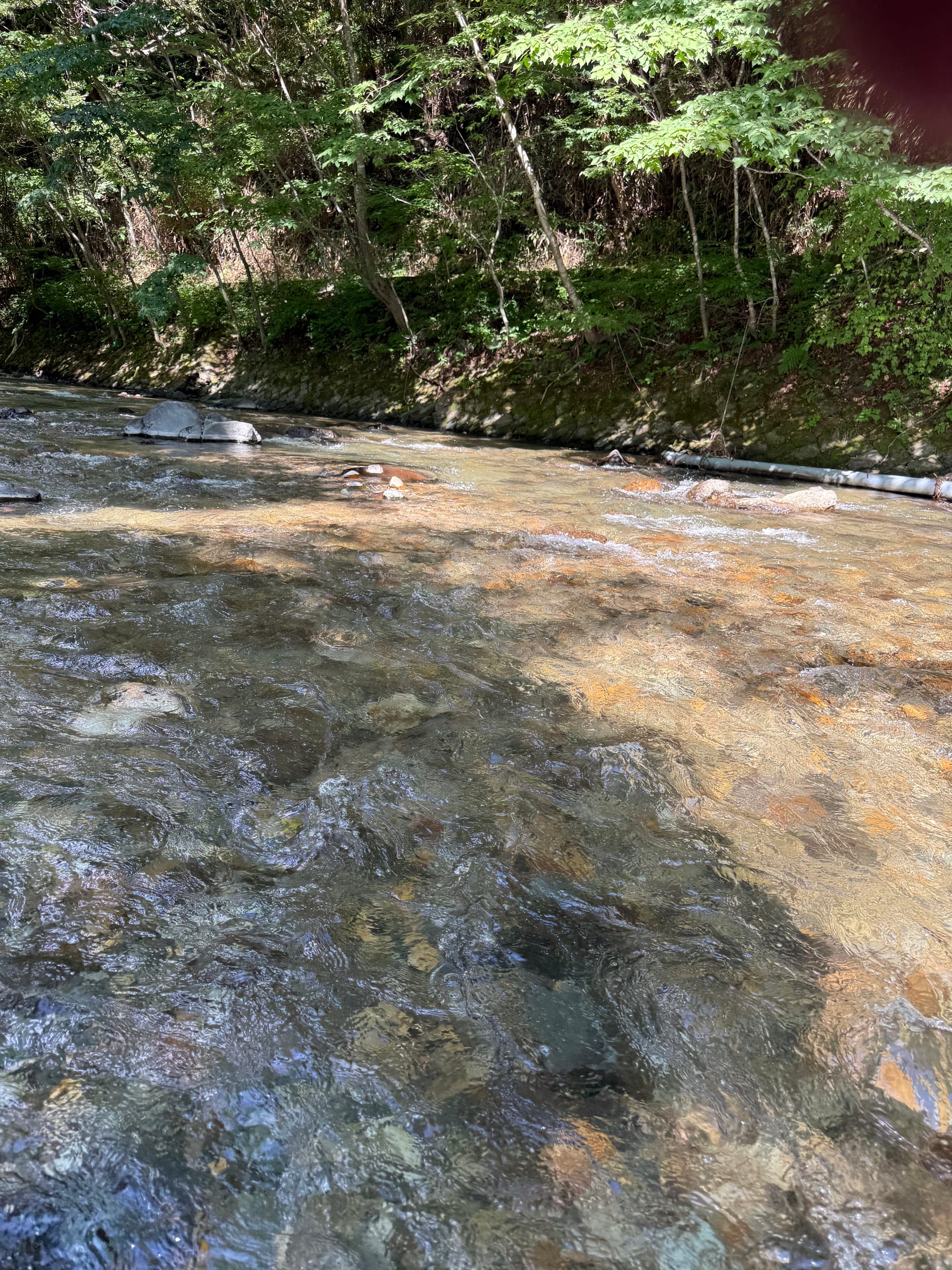
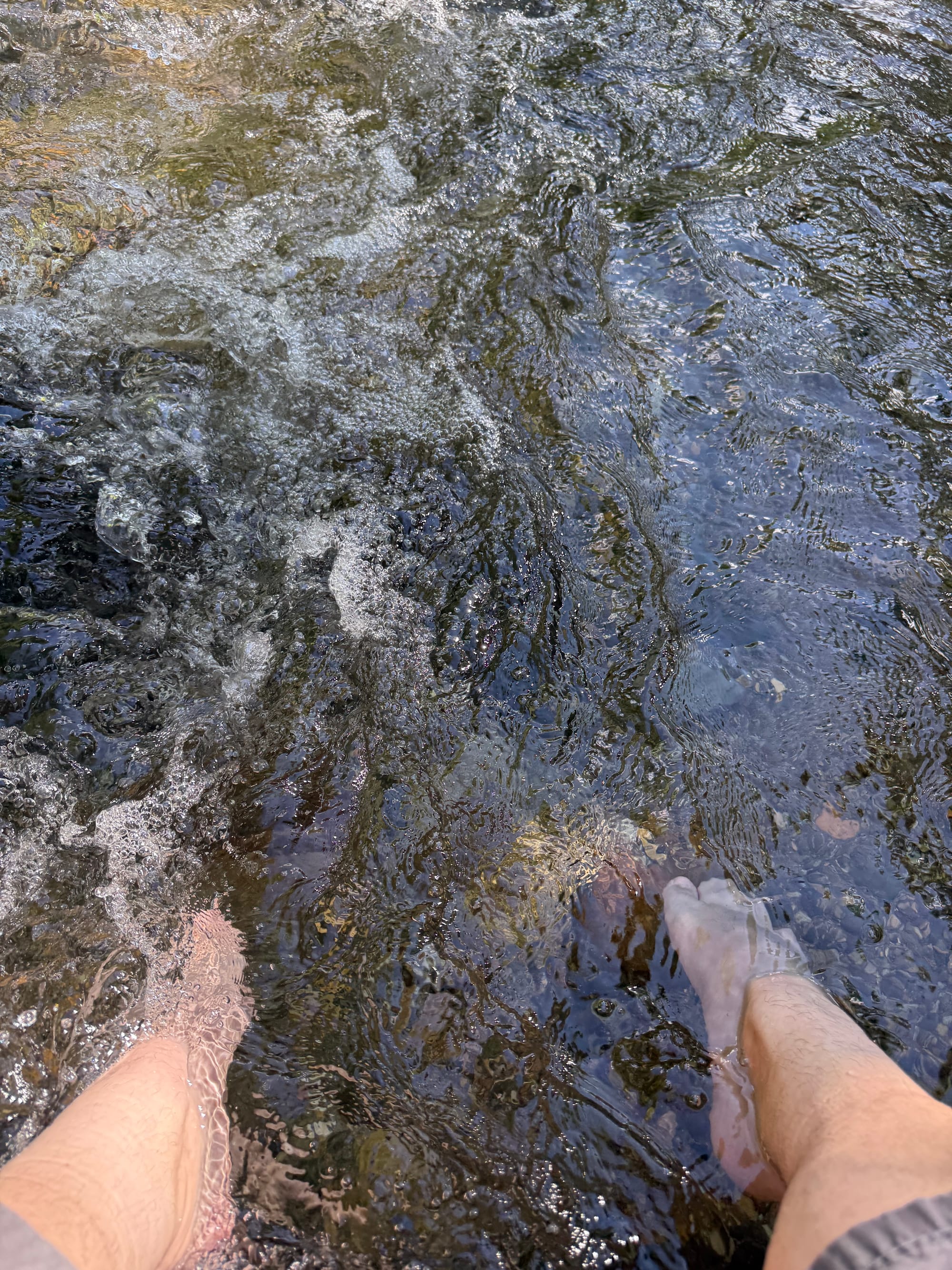
After exploring around the shrine, it was time to have a bit of a rest and there is a river nearby, where people were playing and just relaxing, so i decided to dip my feet in the lovely cool water, which was nice and refreshing.
A stream near Suwa Taisha Shimosha Harumiya flows beneath a distinctive red bridge, adding to the scenic surroundings of the historic shrine and the nearby streets of Shimosuwa.A clear mountain stream near Suwa Taisha Shimosha Harumiya flows through a shaded forest setting, reflecting the natural landscape that surrounds the historic shrine.Cooling off in the clear waters of a mountain stream near Suwa Taisha Shimosha Harumiya on a hot summer afternoon in Shimosuwa.
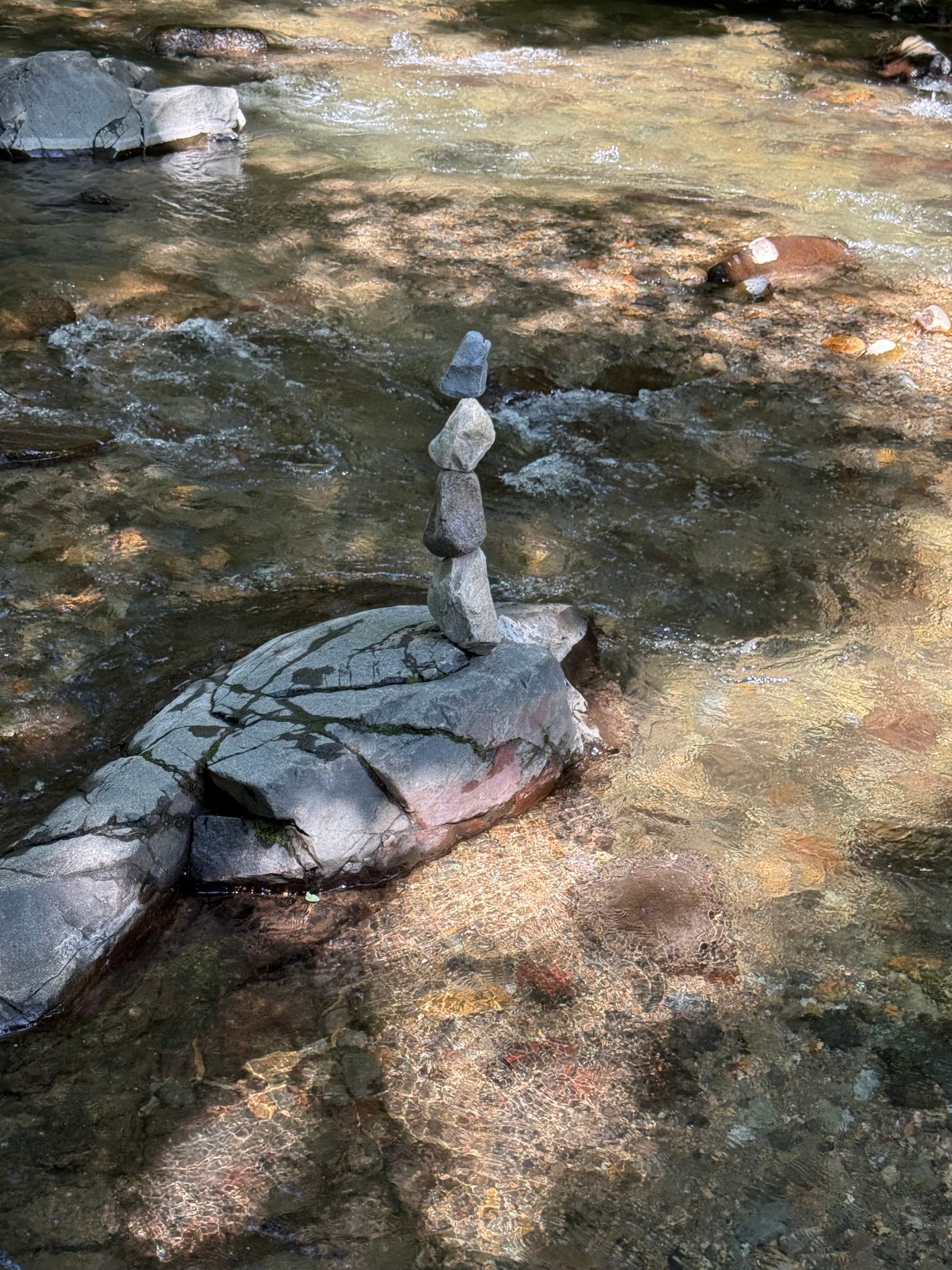
There was a guy also stacking rocks on each other, which you might think they used superglue to do it, but no, it was just skill and the right rocks.
A small cairn of carefully balanced stones stands in a clear mountain stream near Suwa Taisha Shimosha Harumiya, illuminated by sunlight filtering through the surrounding forest.
Suwa Taisha Shimosha Akimiya
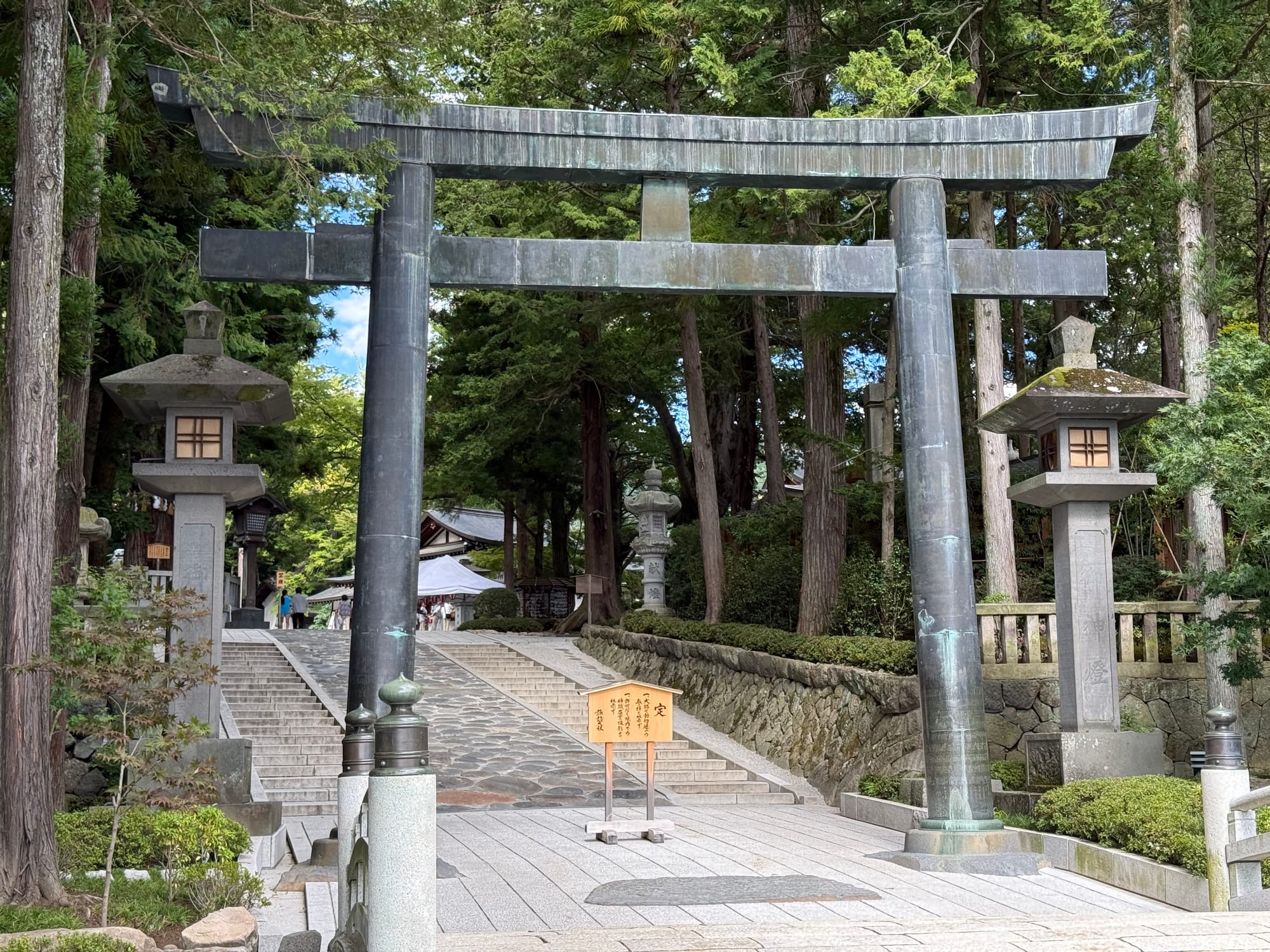
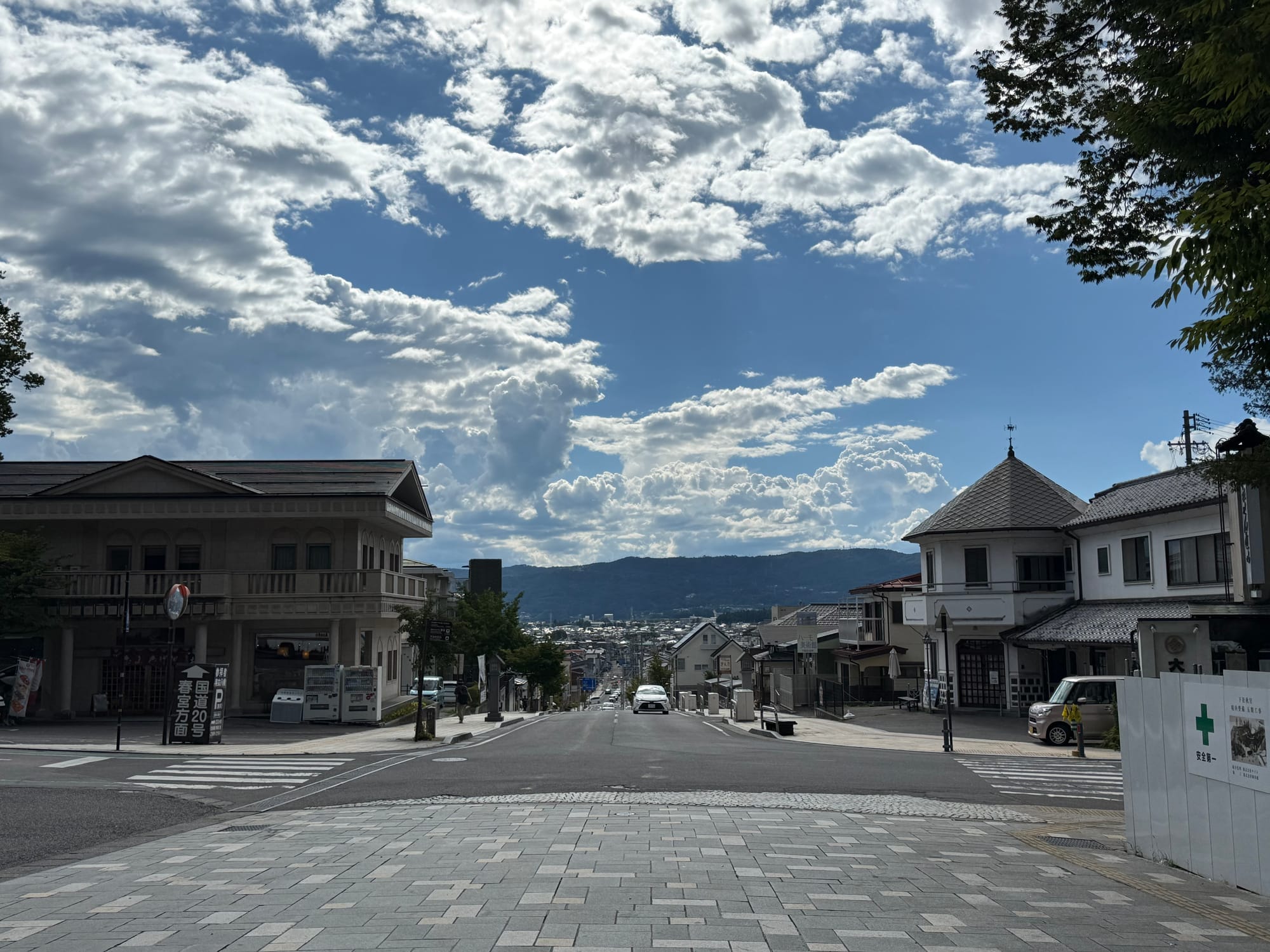
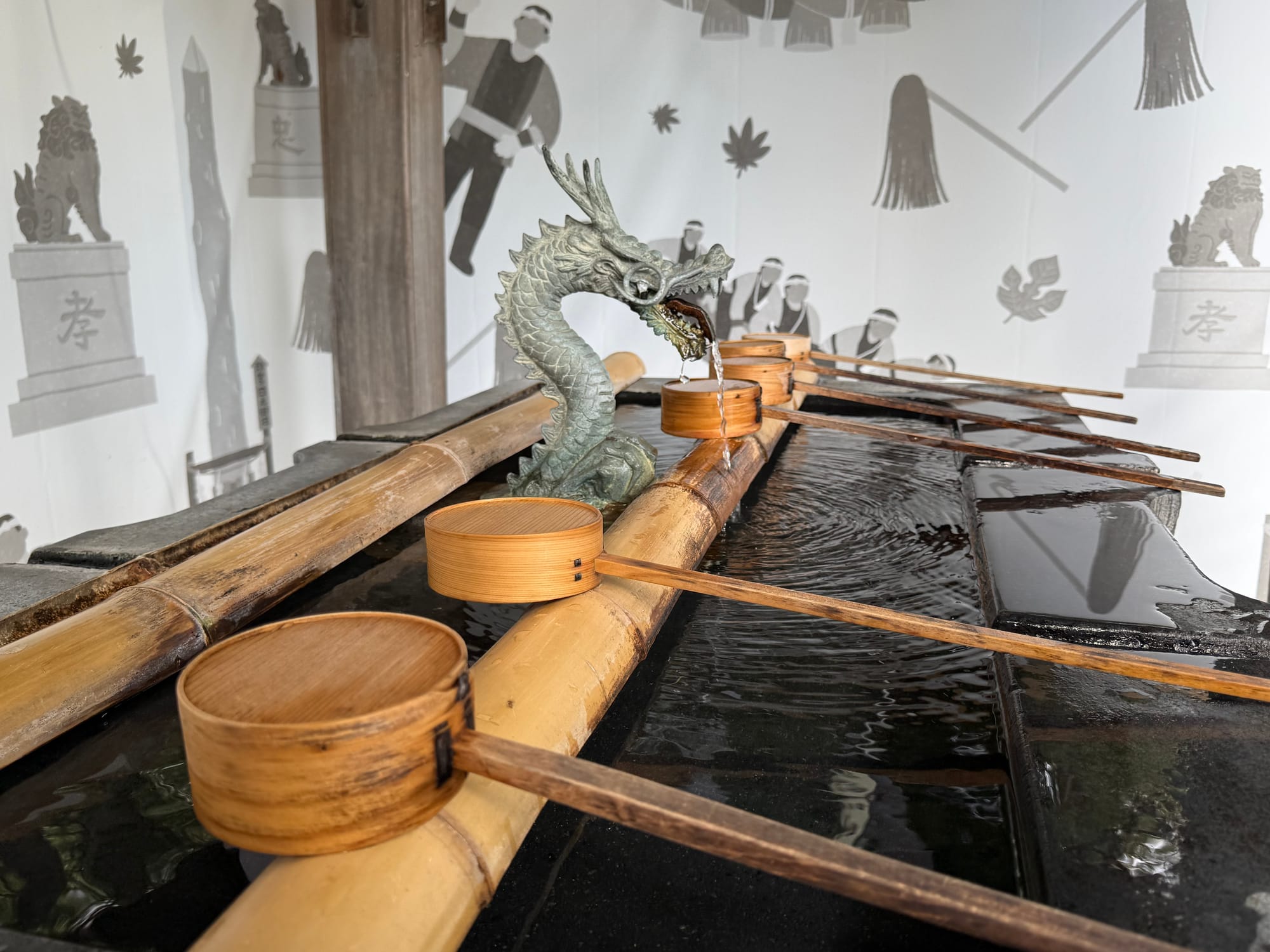
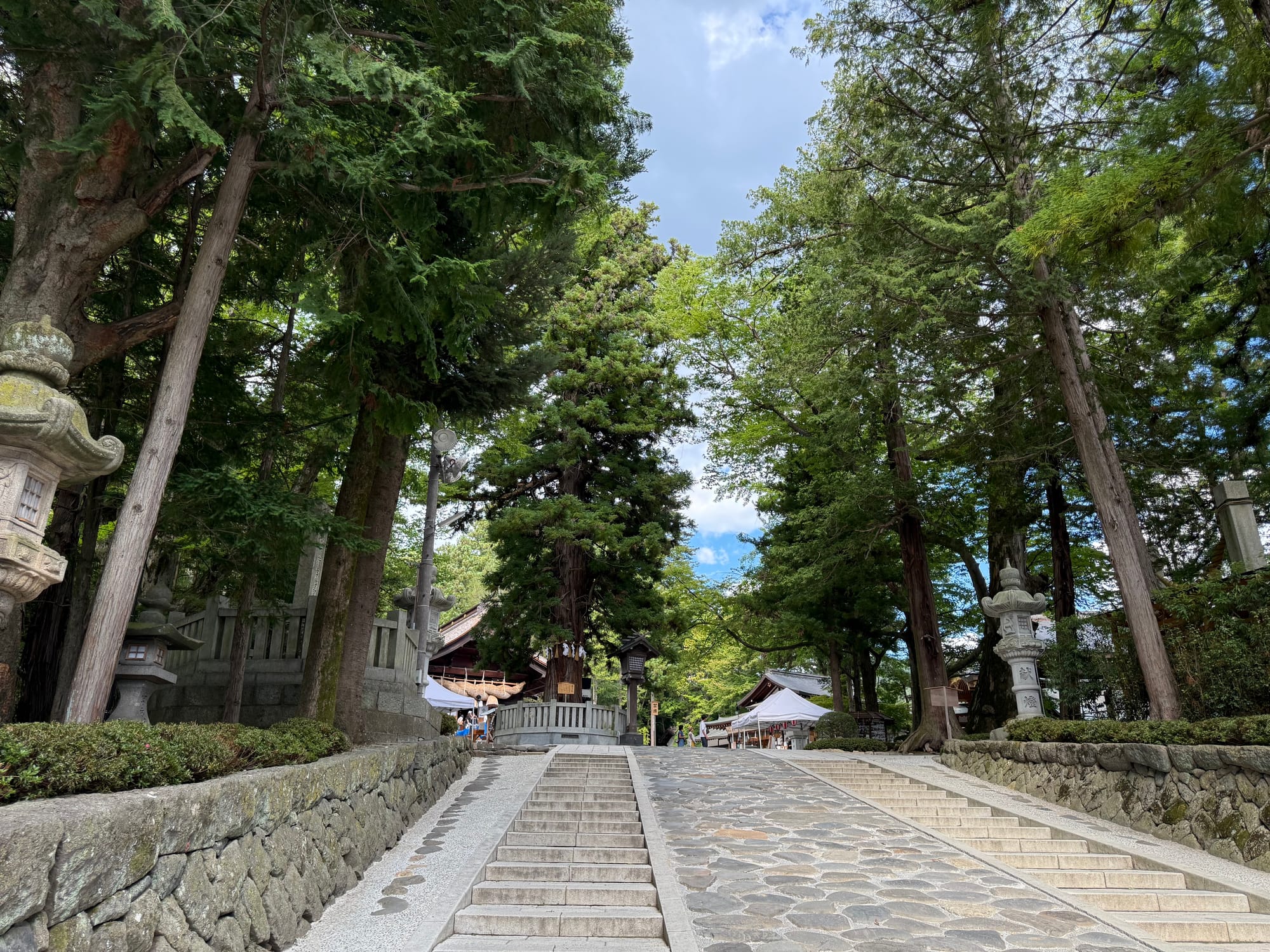
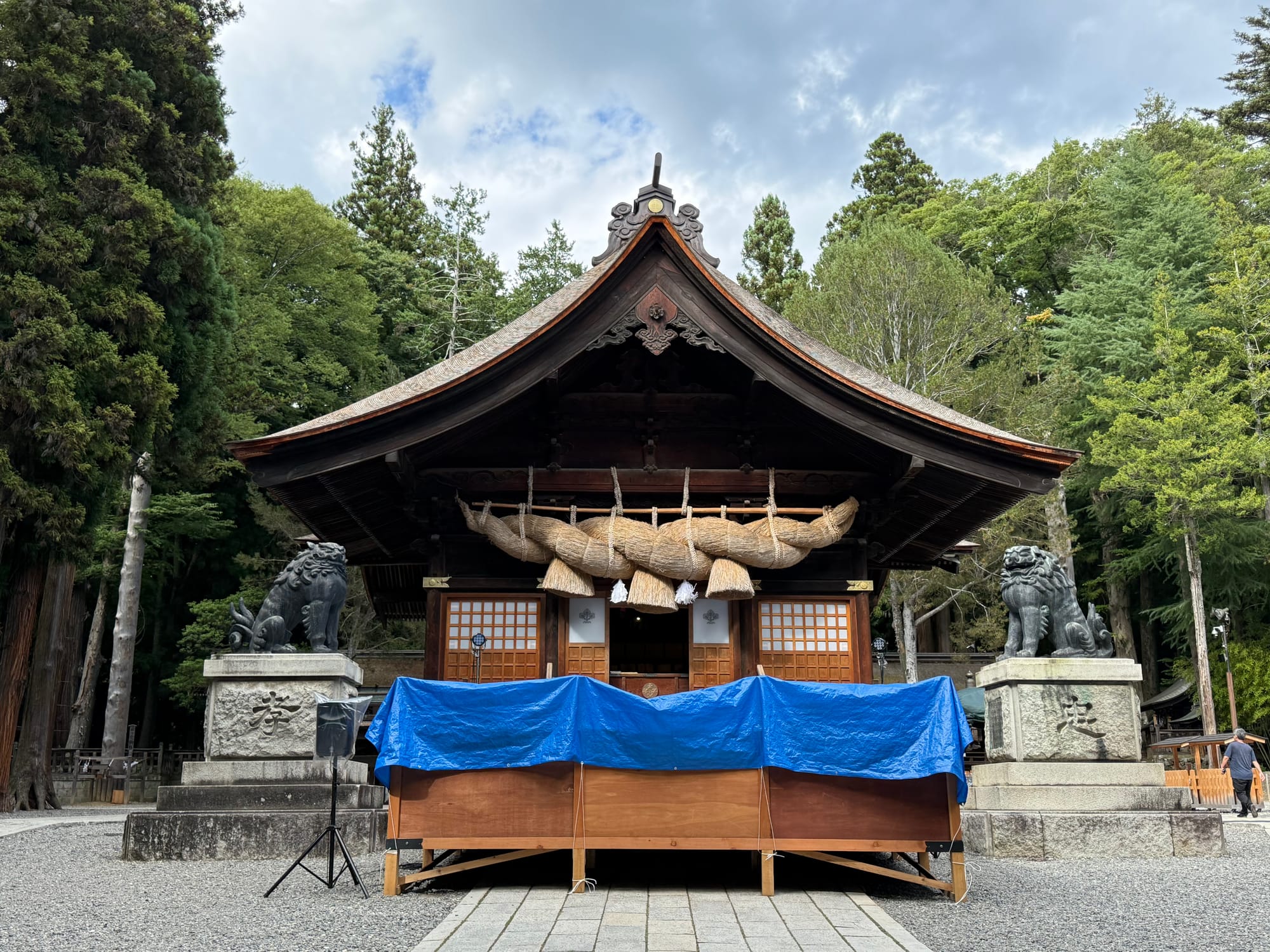
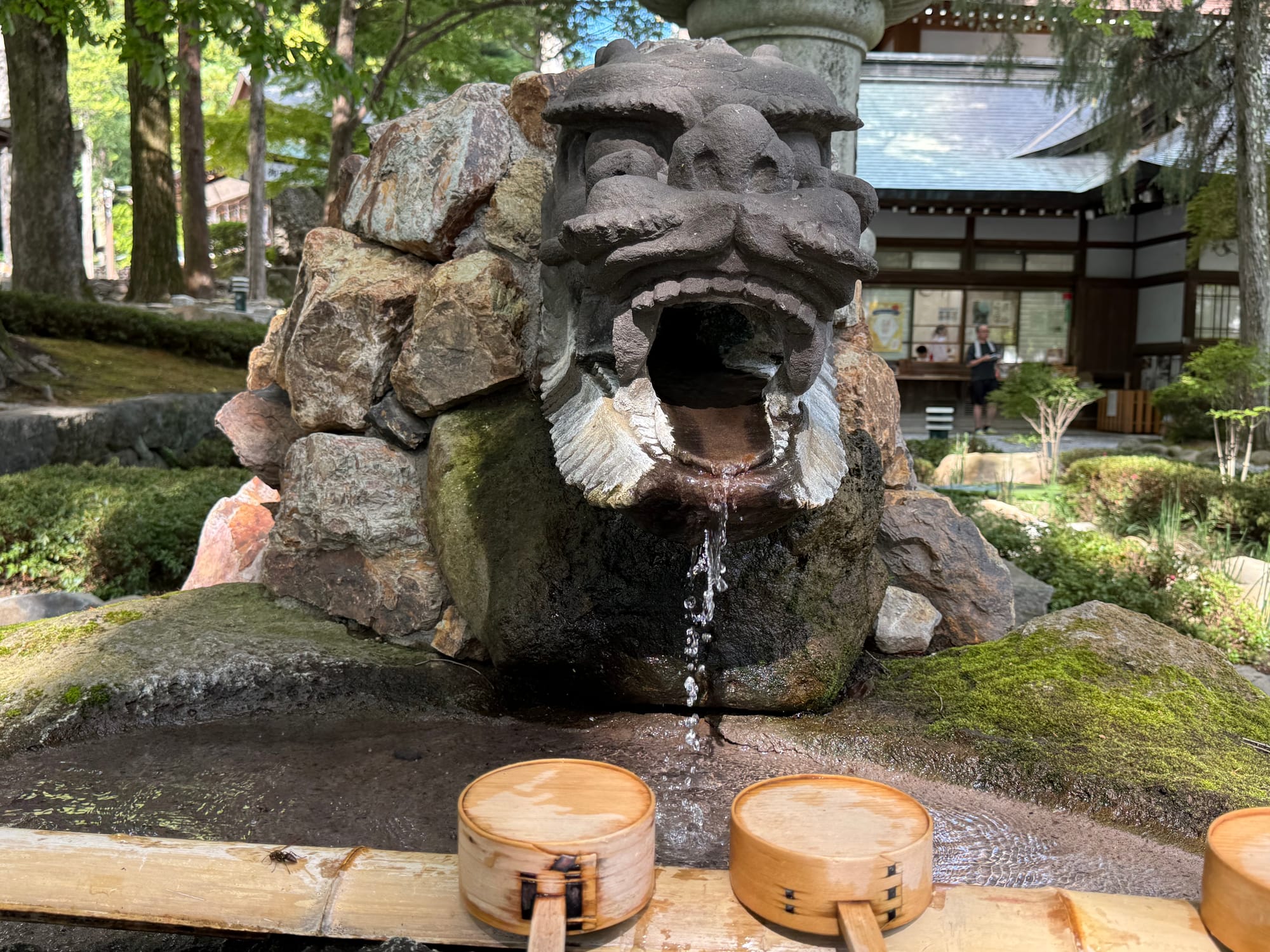
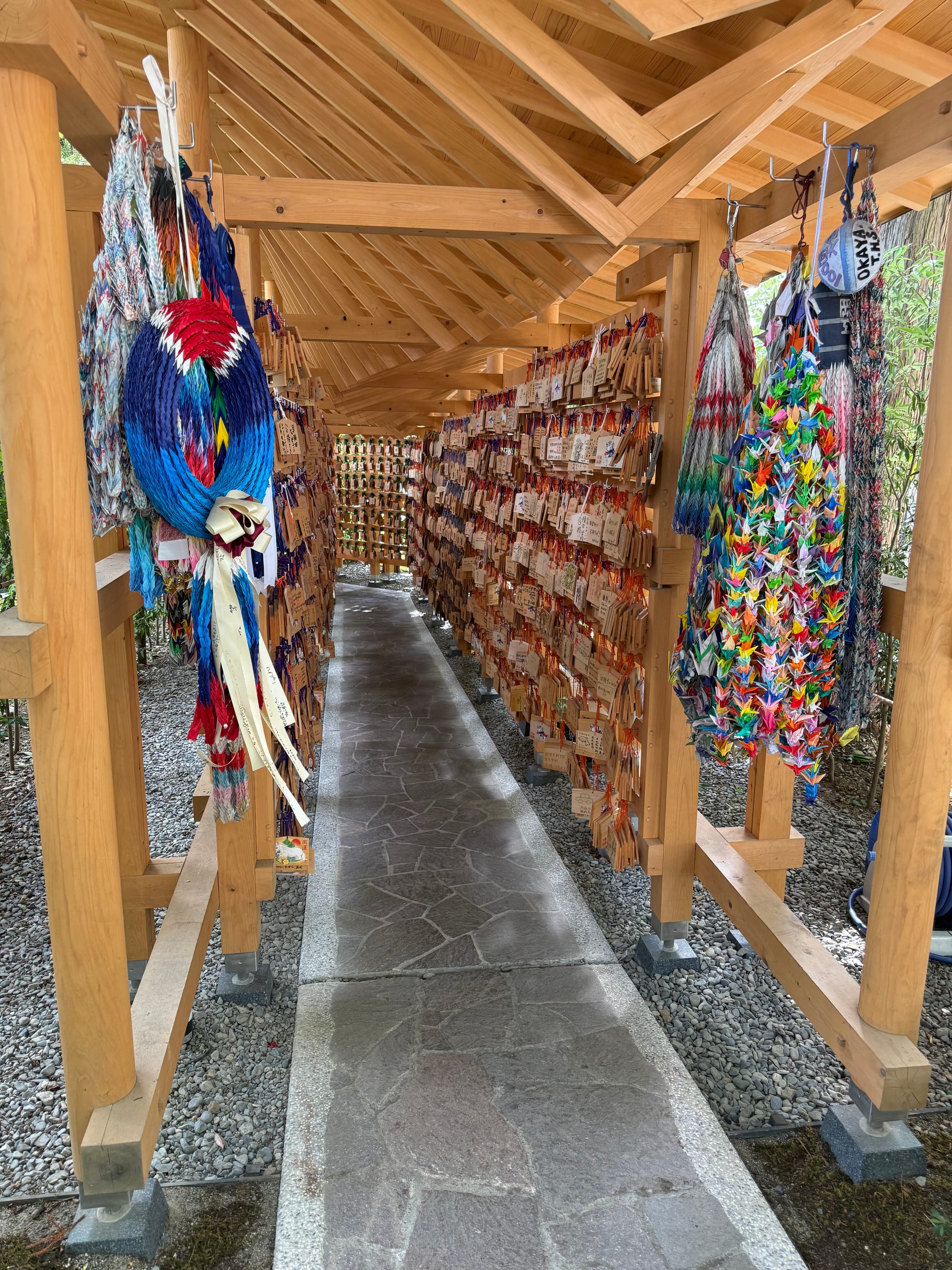
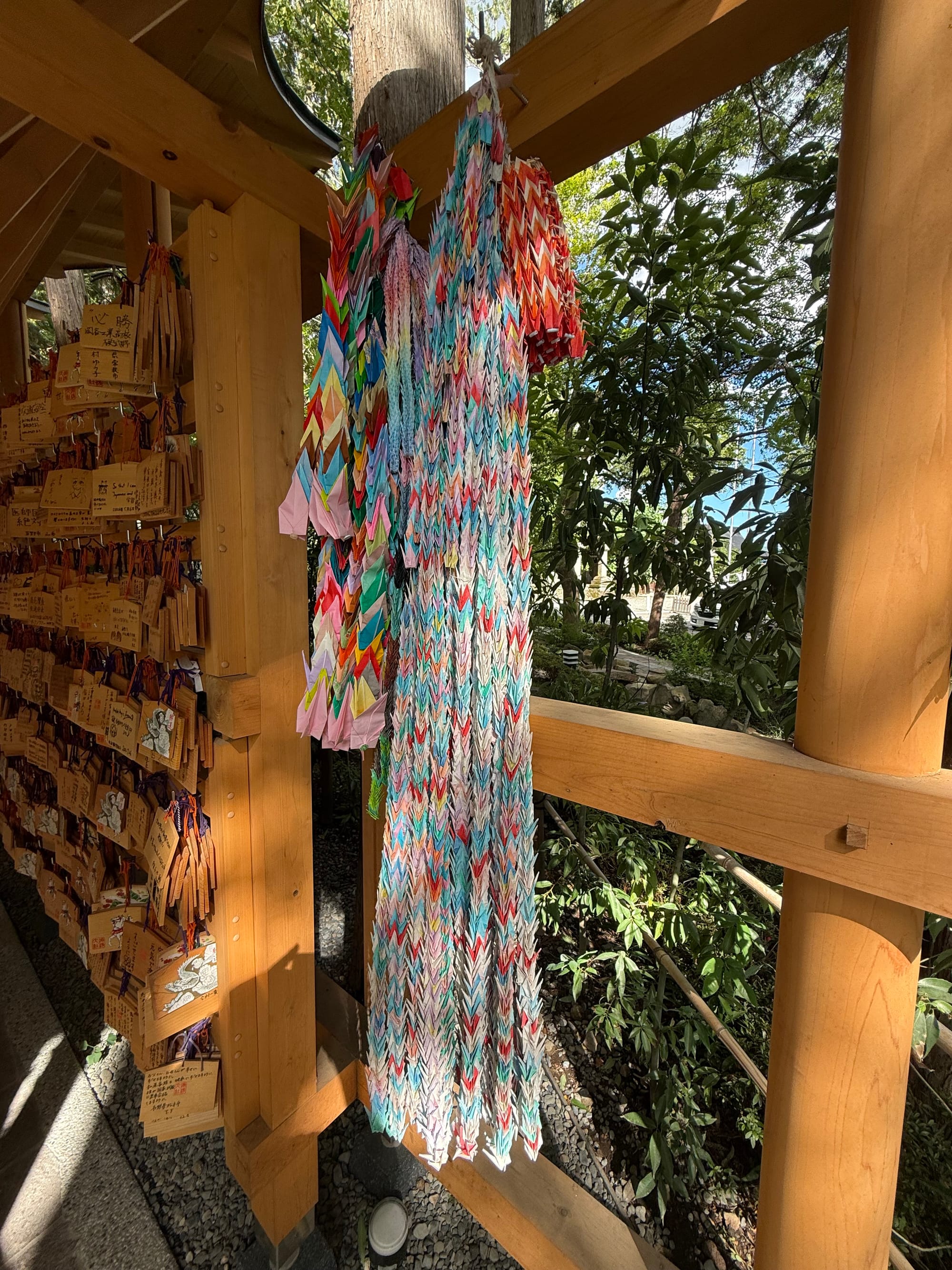
Finally was the Shimosha Akimiya shrine. Akimiya means Autumn Shrine which is where the goddess Yasakatome-no-kami lives from 1st August.
Suwa Taisha Shimosha Akimiya is one of the four shrines of Suwa Grand Shrine. According to local tradition, the shrine's deity resides here during the autumn and winter months.The view from the entrance of Suwa Taisha Shimosha Akimiya looks across Shimosuwa toward the mountains beyond, framed by a sky filled with towering summer clouds.A dragon fountain at Suwa Taisha Shimosha Akimiya provides water for ritual purification before worship, following a long-standing tradition at Shinto shrines across Japan.The approach to Suwa Taisha Shimosha Akimiya passes beneath towering cedar trees and stone lanterns, creating a grand entrance to one of the four shrines of Suwa Grand Shrine.The main worship hall of Suwa Taisha Shimosha Akimiya is distinguished by its enormous shimenawa rope, one of the shrine's most recognizable features and a symbol of its sacred status.A lion-shaped temizuya fountain at Suwa Taisha Shimosha Akimiya provides water for ritual purification before worship, set among the shrine's historic grounds and towering trees.A walkway filled with ema prayer plaques and folded-paper crane displays at Suwa Taisha Shimosha Akimiya, showcasing wishes and offerings left by visitors to the shrine.Thousands of folded paper cranes hang beside visitors' prayer plaques at Suwa Taisha Shimosha Akimiya, representing wishes, gratitude and prayers offered at the shrine.
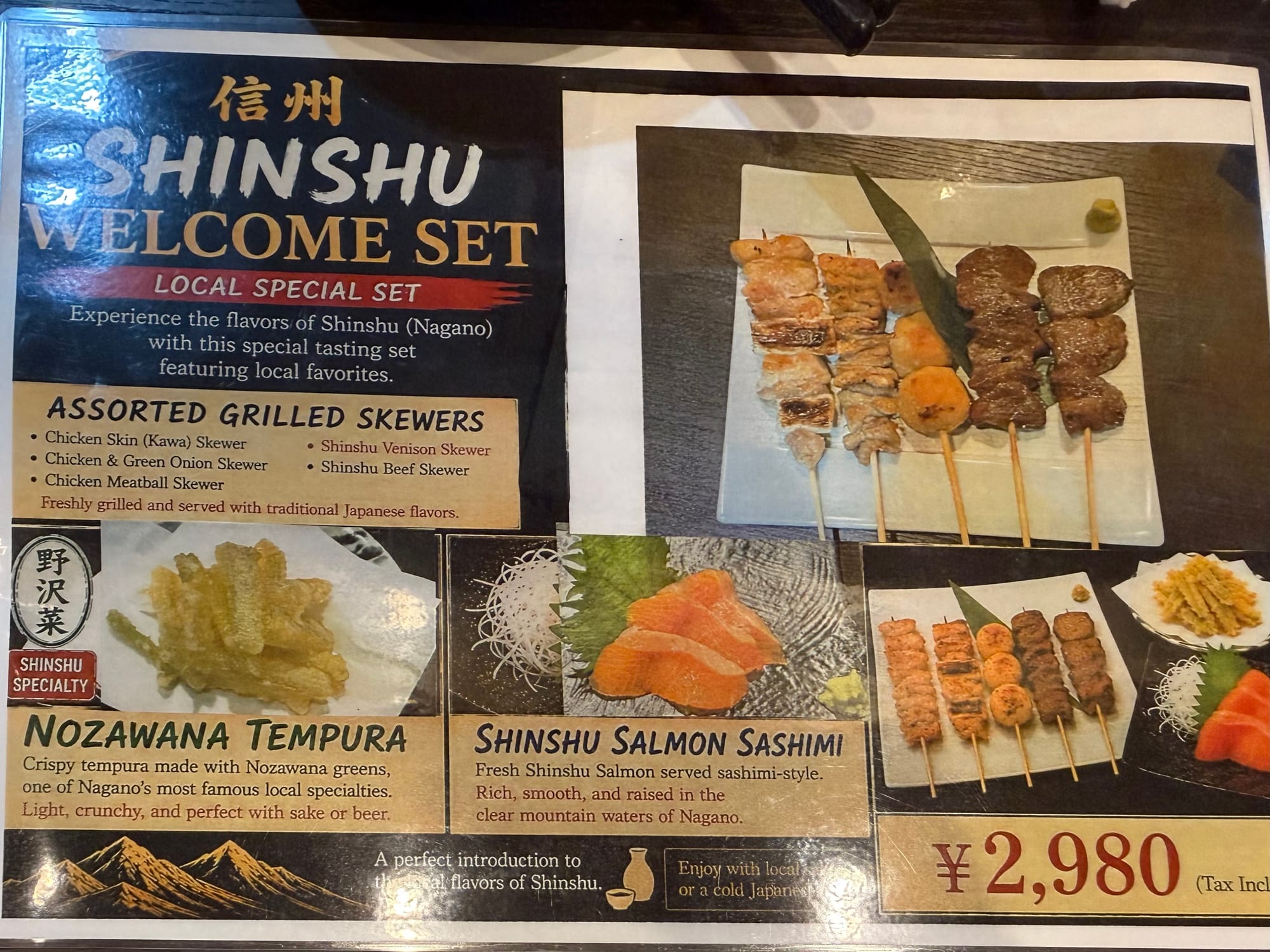
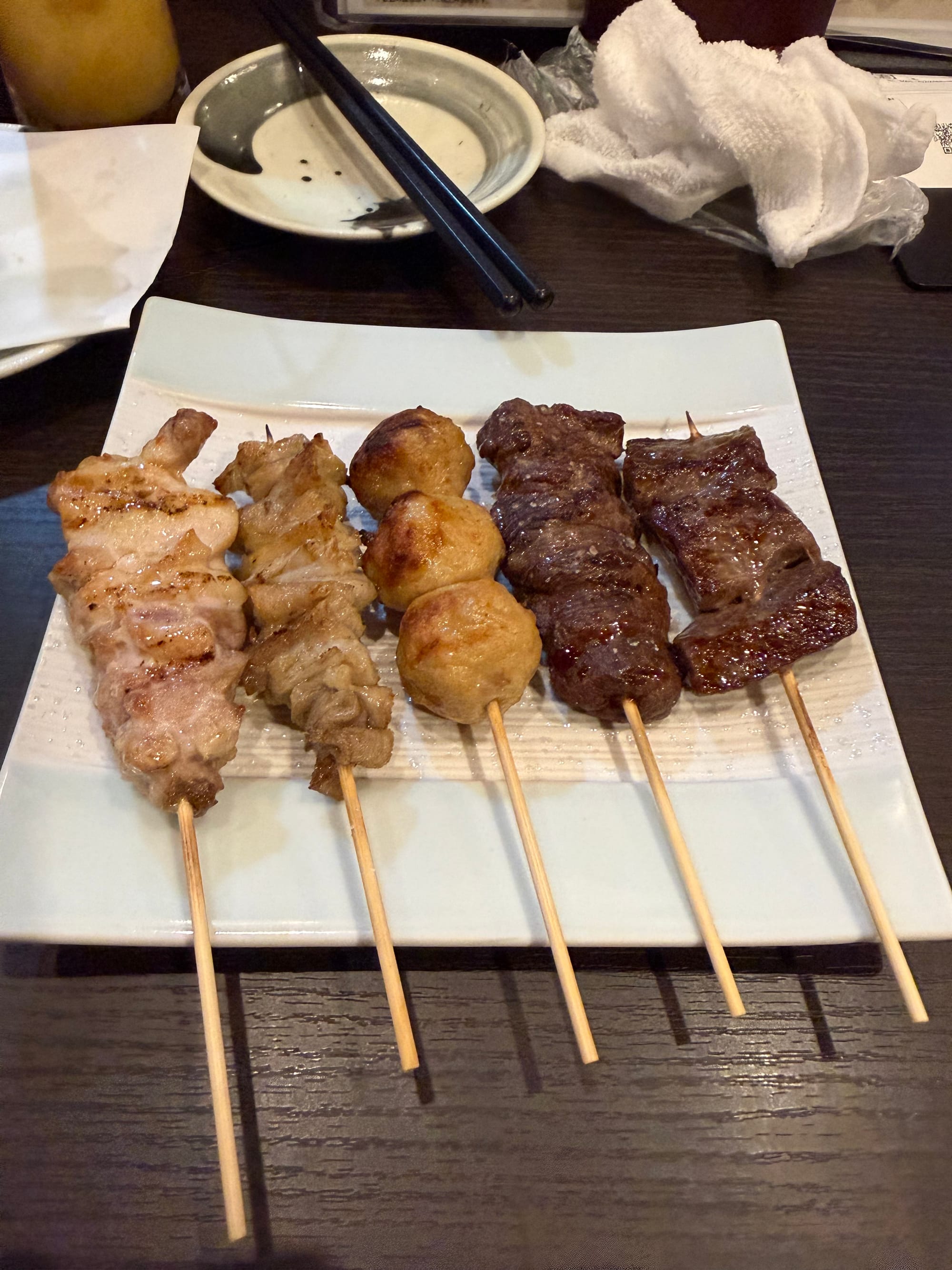
That night I went to an Izakaya called Toriume Yakitori Corner Suwako, which I also went to the night before, but this time, I got a set meal and it was Oishī (Japanese for delicious). I didn't get photos of the salmon sashimi or the nozawana tempura, but turn me it was all really nice. This and a drink cost me about £16, which was well worth it.
A restaurant menu showcasing the Shinshu Welcome Set, a selection of local Nagano specialities including grilled skewers, Nozawana tempura and Shinshu salmon sashimi.Assorted grilled skewers from a Shinshu Welcome Set, showcasing regional specialities including chicken, venison and Shinshu beef as part of a Nagano-themed meal.
Takayama and bits
7th August
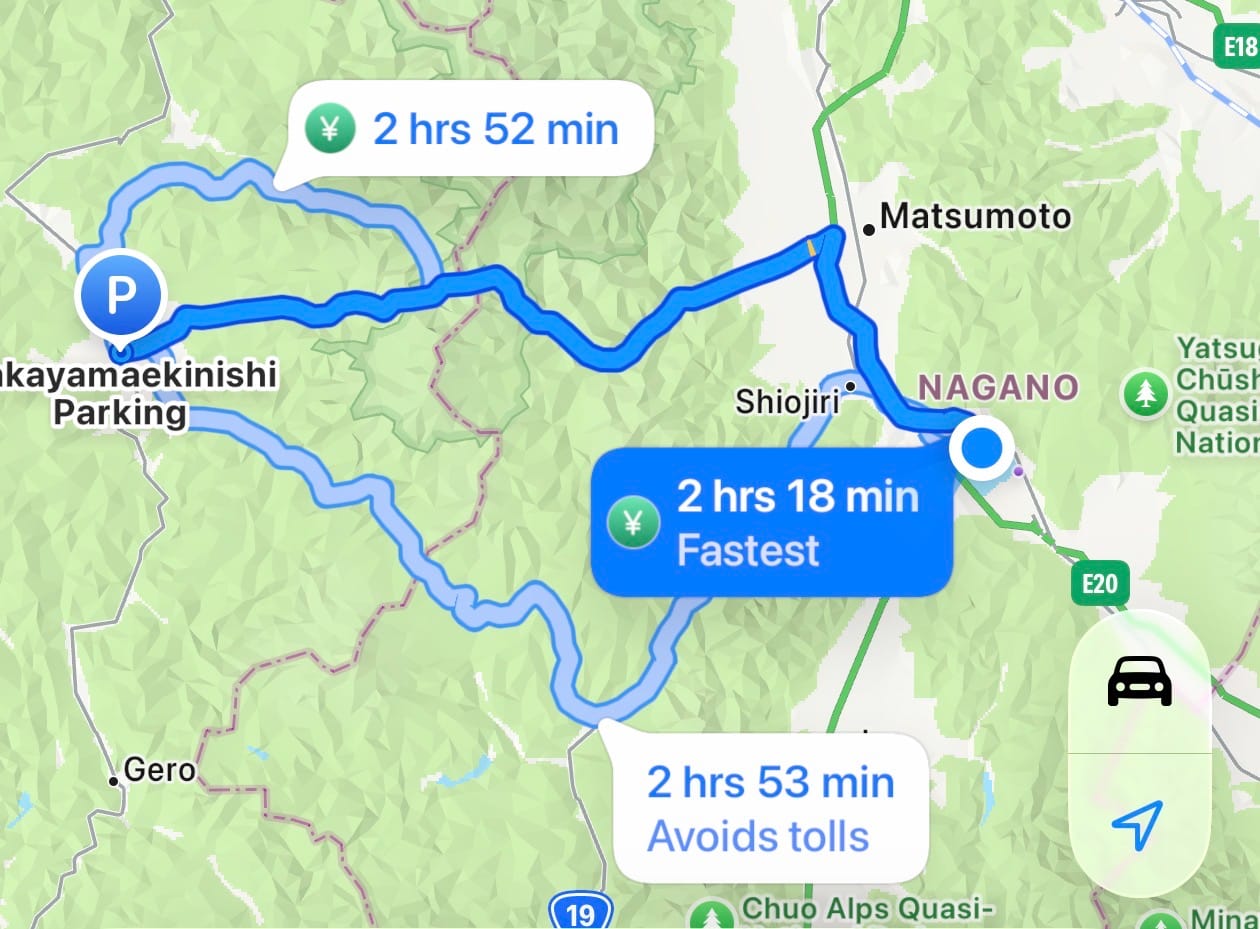
Today I went to Takayama, which is a historic city in the Hida Mountains about 2.5 hours from my hotel in Suwa. It is famous for being a place when you step back into the Edo period (1603-1868), with its historic look of the houses back from that period.
Navigation map showing the drive from the Suwa region to Takayama, crossing the mountains of central Japan on the journey from Nagano Prefecture to Gifu Prefecture.
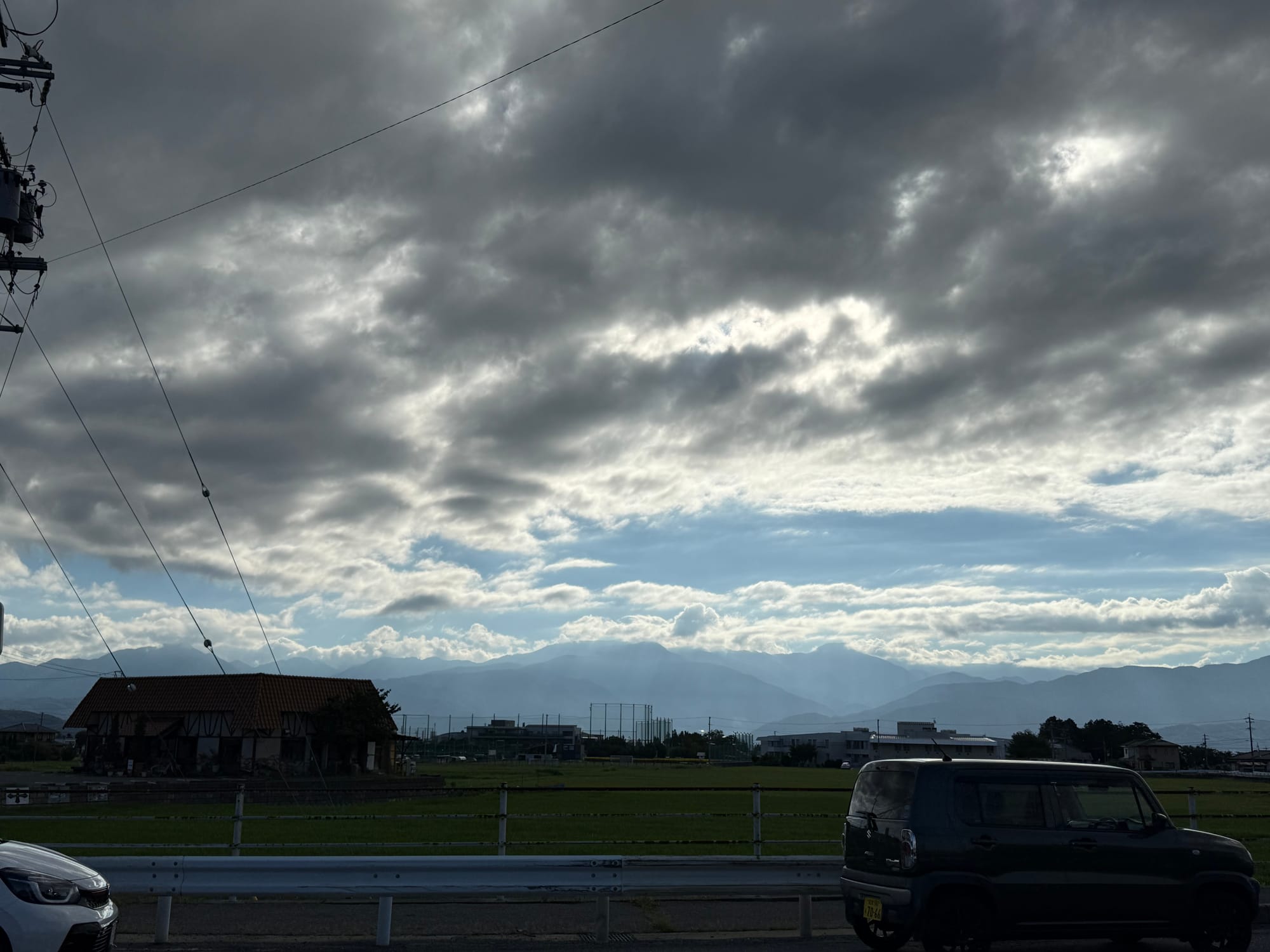
I did stop at a Konbini in Matsumoto after I got off the express way to have a stretch and get a drink and the views were amazing.
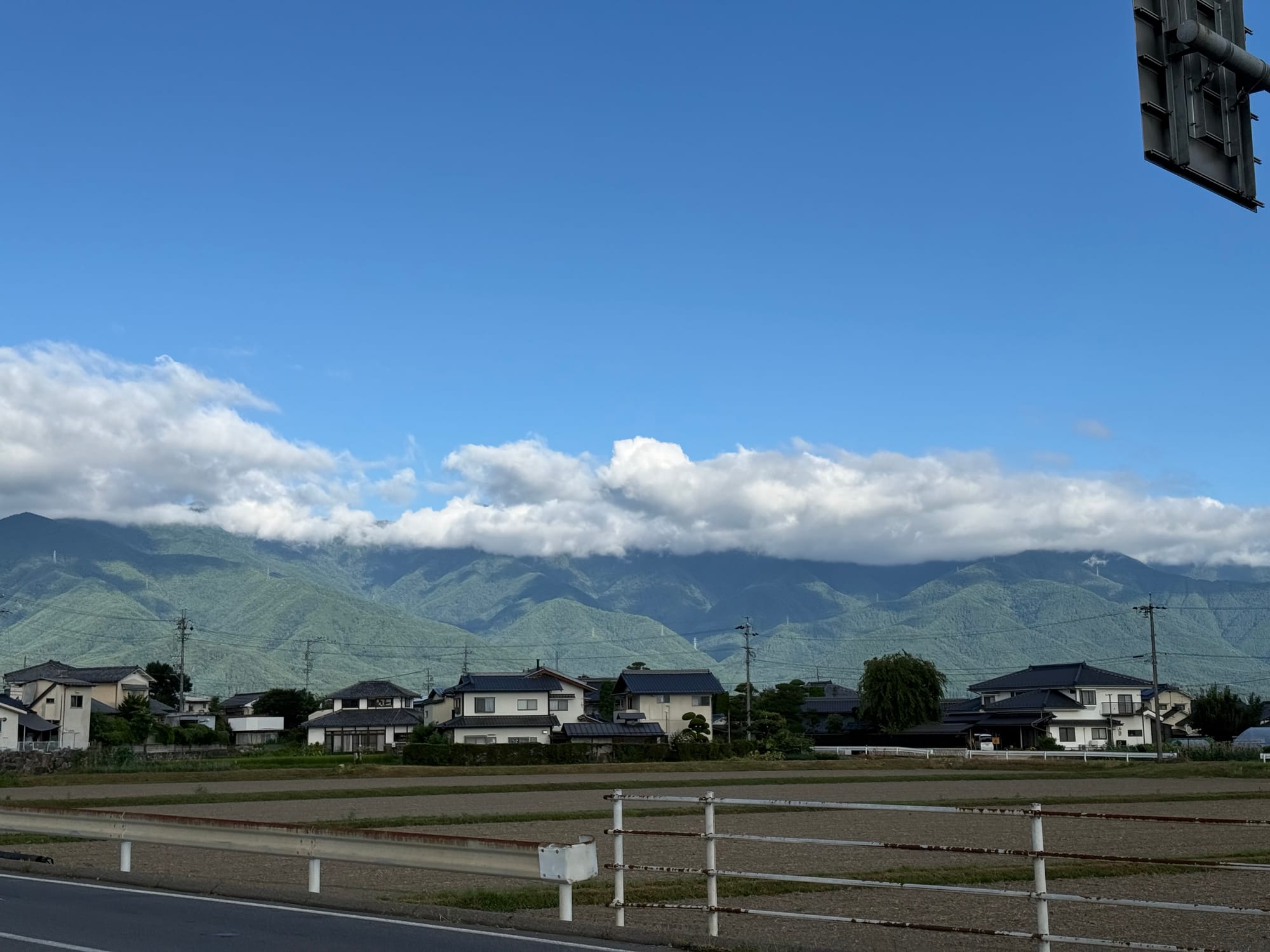
A dramatic sky hangs over the mountains near Matsumoto, where breaks in the clouds allow shafts of sunlight to illuminate the landscape beyond the city.Low clouds cling to the mountains near Matsumoto, creating a striking contrast between the sunlit slopes, rural farmland and clear blue sky during the journey toward Takayama.
Takayama
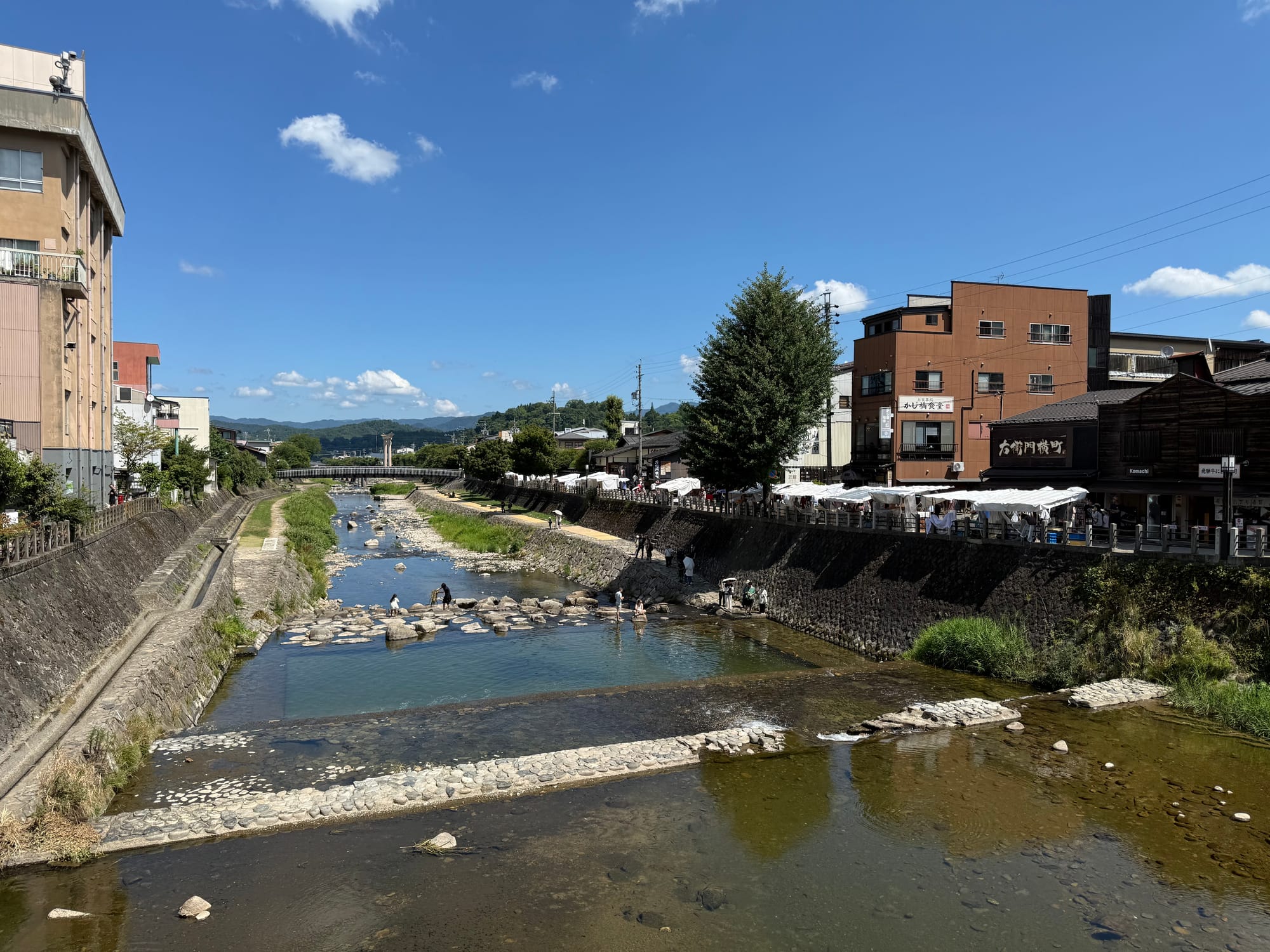
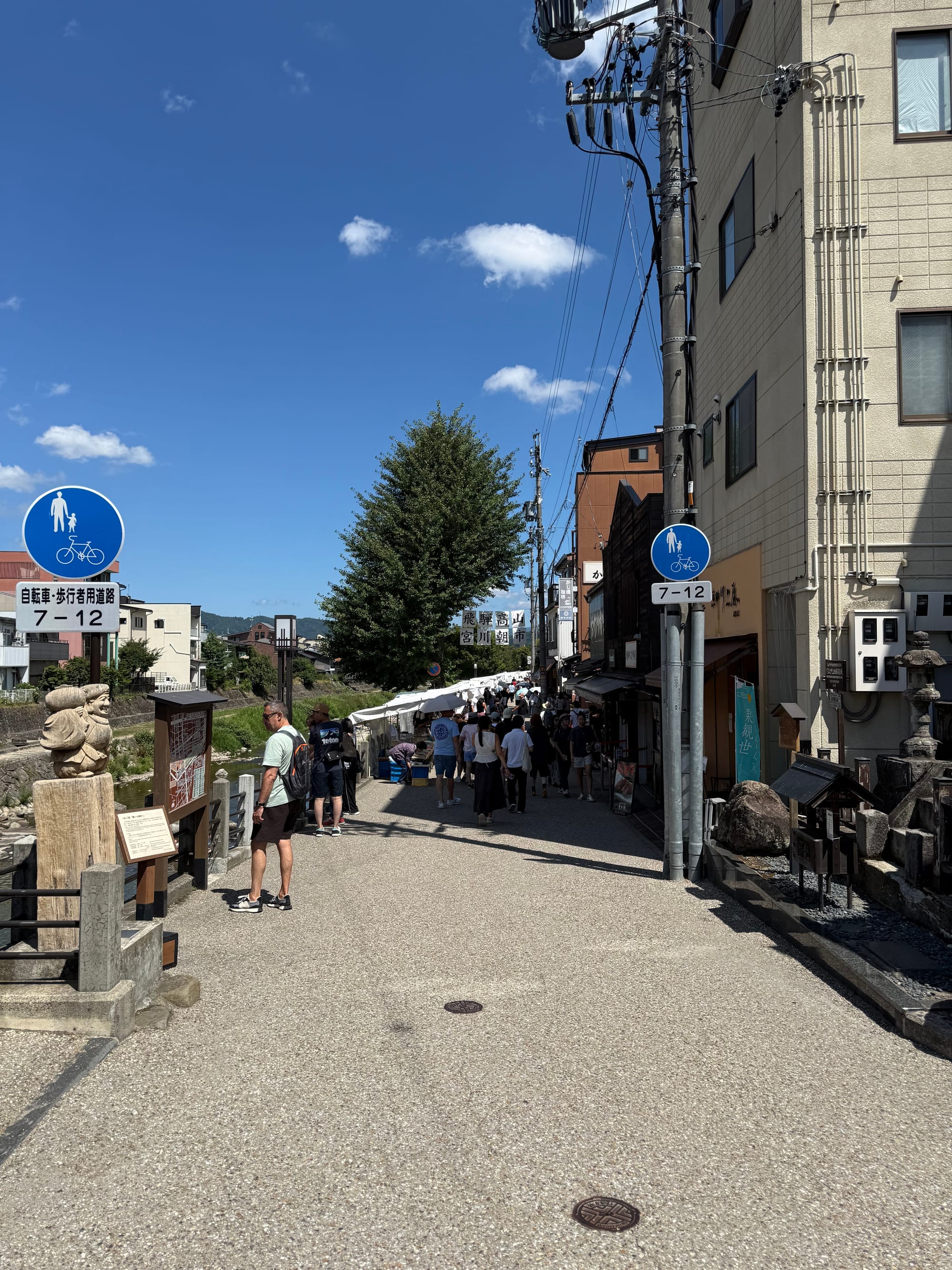
I finally made it to Takayama, parked the car up and went to the morning markets, which was famous for having many different things to buy. I did buy a souvenir from there as well.
The Miyagawa River runs through the heart of Takayama, with riverside walkways, historic streets and mountain scenery contributing to the city's distinctive character.Visitors explore the Miyagawa Morning Market in Takayama, where local vendors sell fresh produce, regional specialities and handmade crafts along the banks of the Miyagawa River.
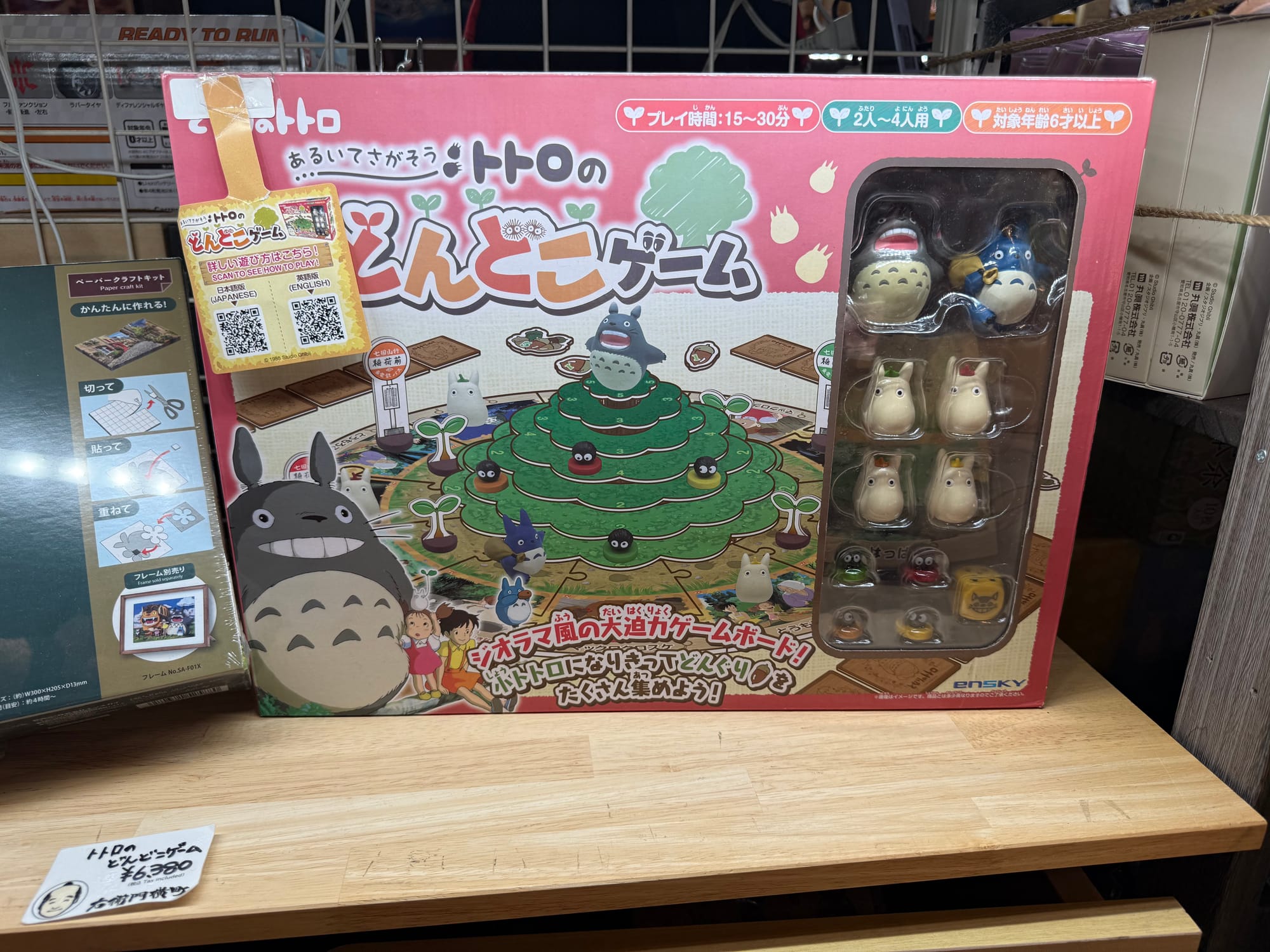
I even found in one of the stores that the is a My Neighbour Totoro game, which was 6,380 yen (£~30), but unfortunately I’d have no way of transporting it back to the UK with the space I have left in my suitcases, plus also money.
A My Neighbour Totoro themed board game on display in a Takayama game shop, featuring character pieces and artwork inspired by Studio Ghibli's beloved animated film.
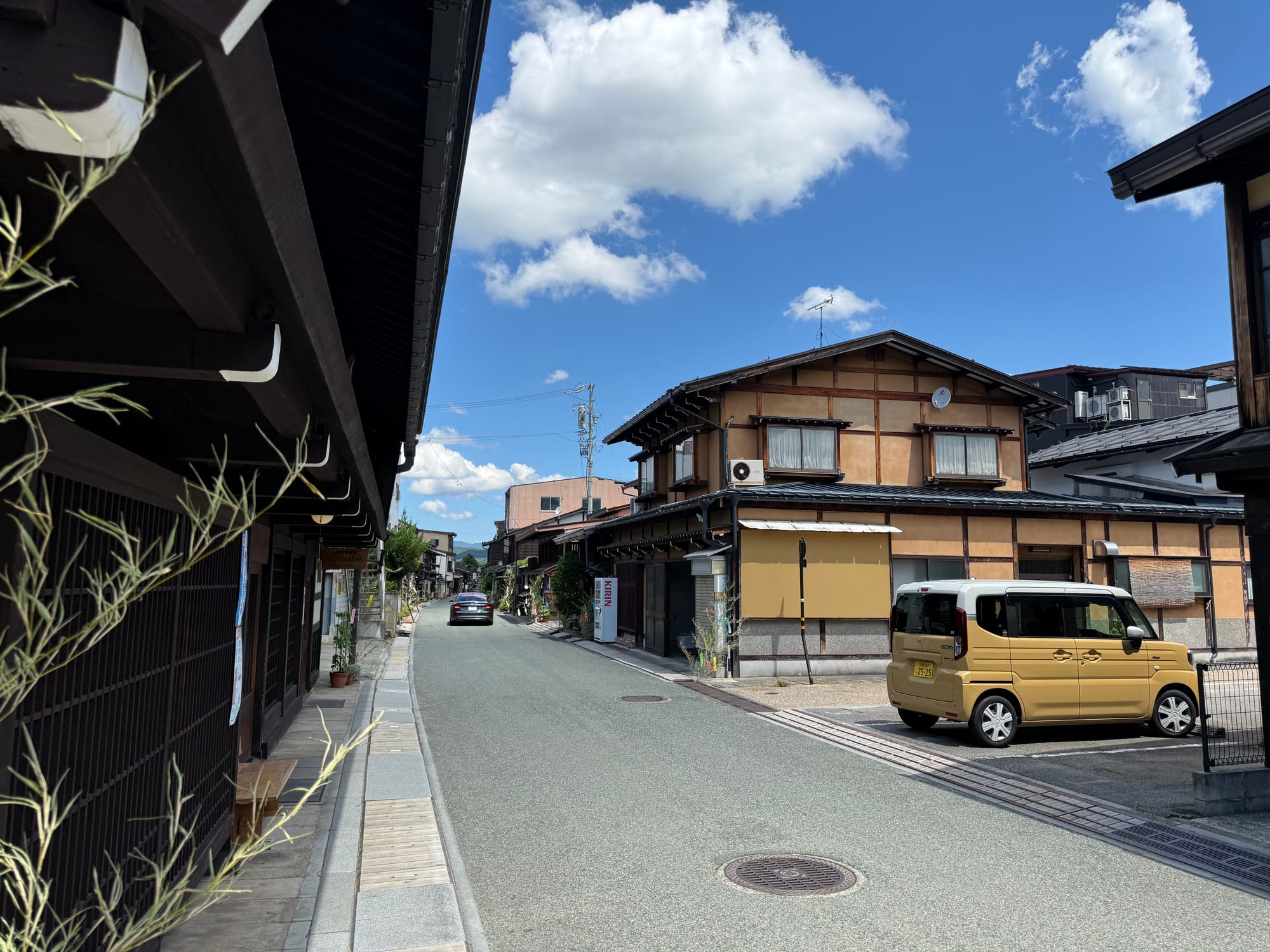
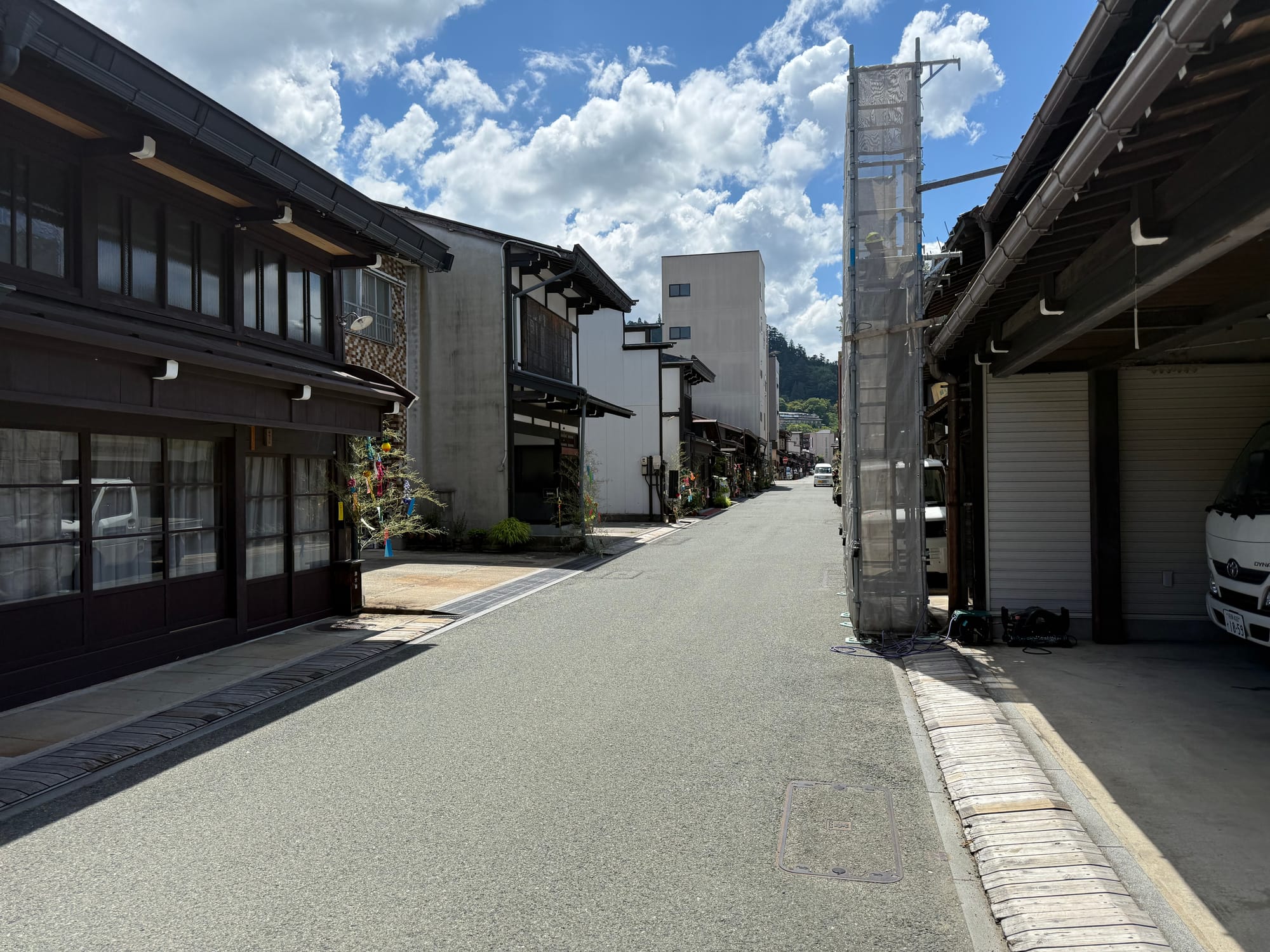
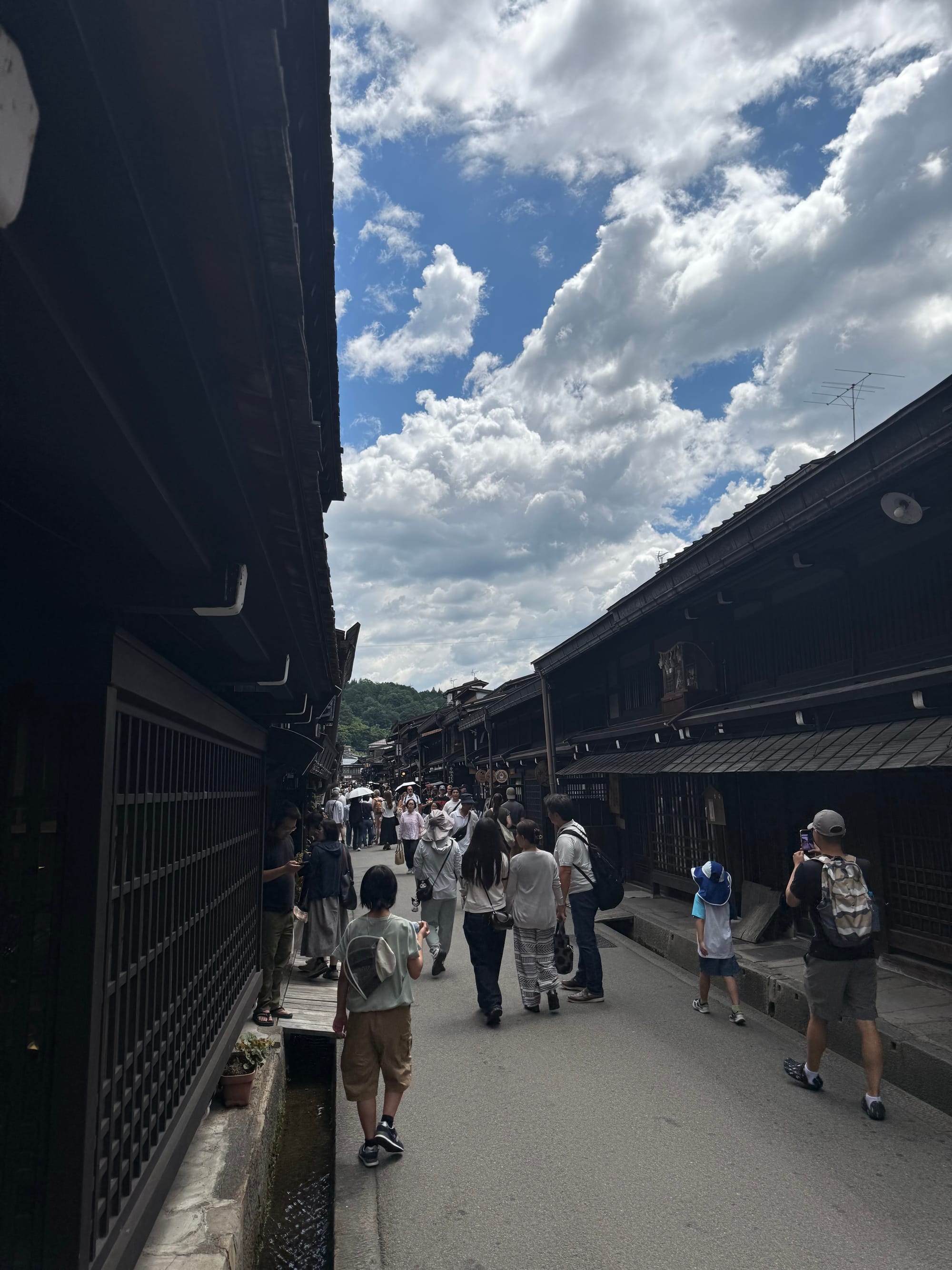
Here are some pictures show some of the old streets in Takayama
A quiet street in Takayama's preserved old town, where traditional wooden buildings reflect the city's history as an important merchant centre in the Hida region.A quiet street in Takayama's old town, where preserved merchant houses and traditional architecture reflect the historic character of the Hida region.
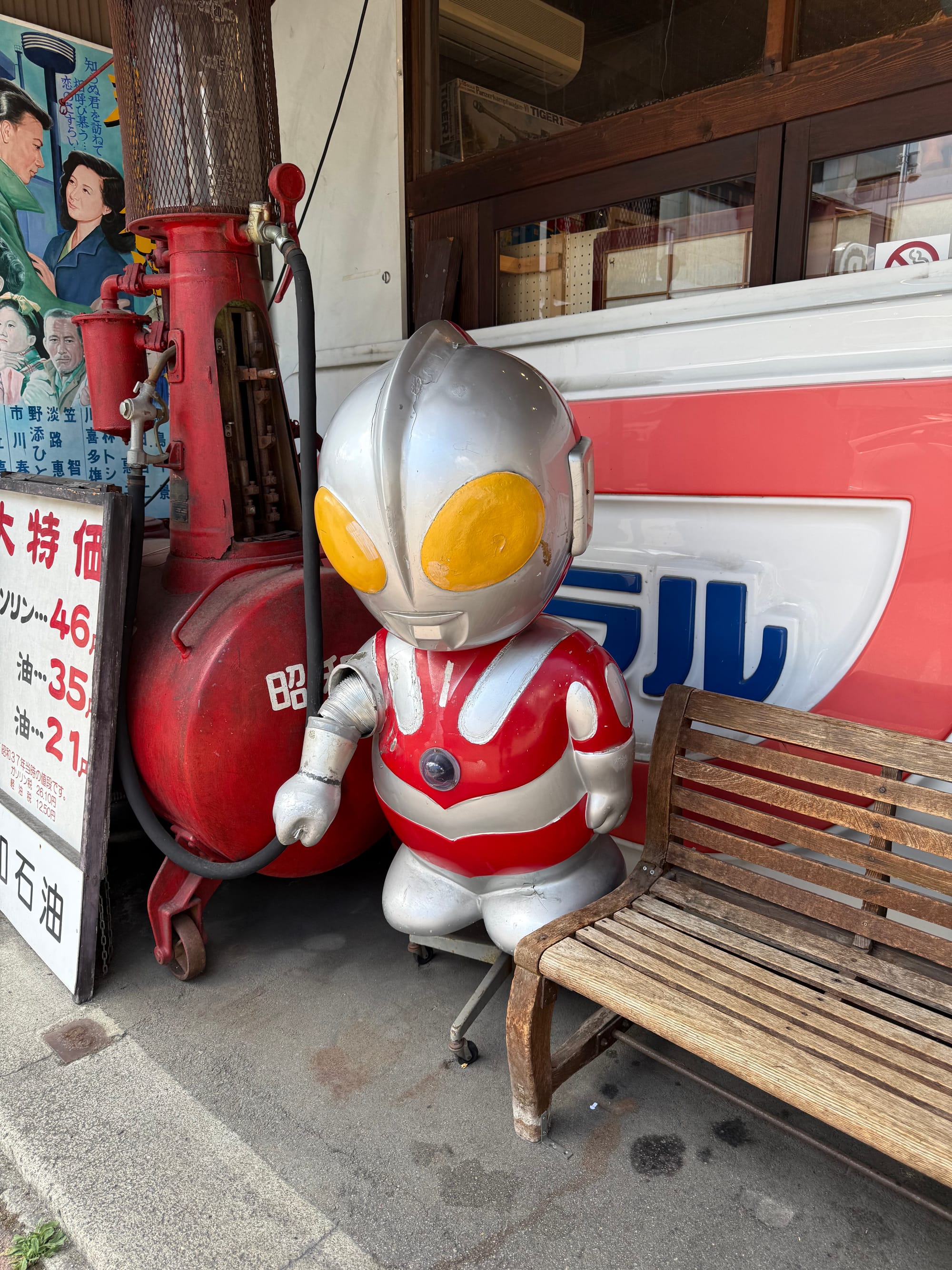
After a little wondering, I finally made it to my next location, which is the Takayama Showa-kan Museum, where the who place is basically just one big poster for the Showa period of Japan (1926 - 1989).
An Ultraman statue welcomes visitors to the Takayama Showa-kan Museum, where nostalgic displays recreate everyday life, popular culture and consumer products from Japan's Showa era.
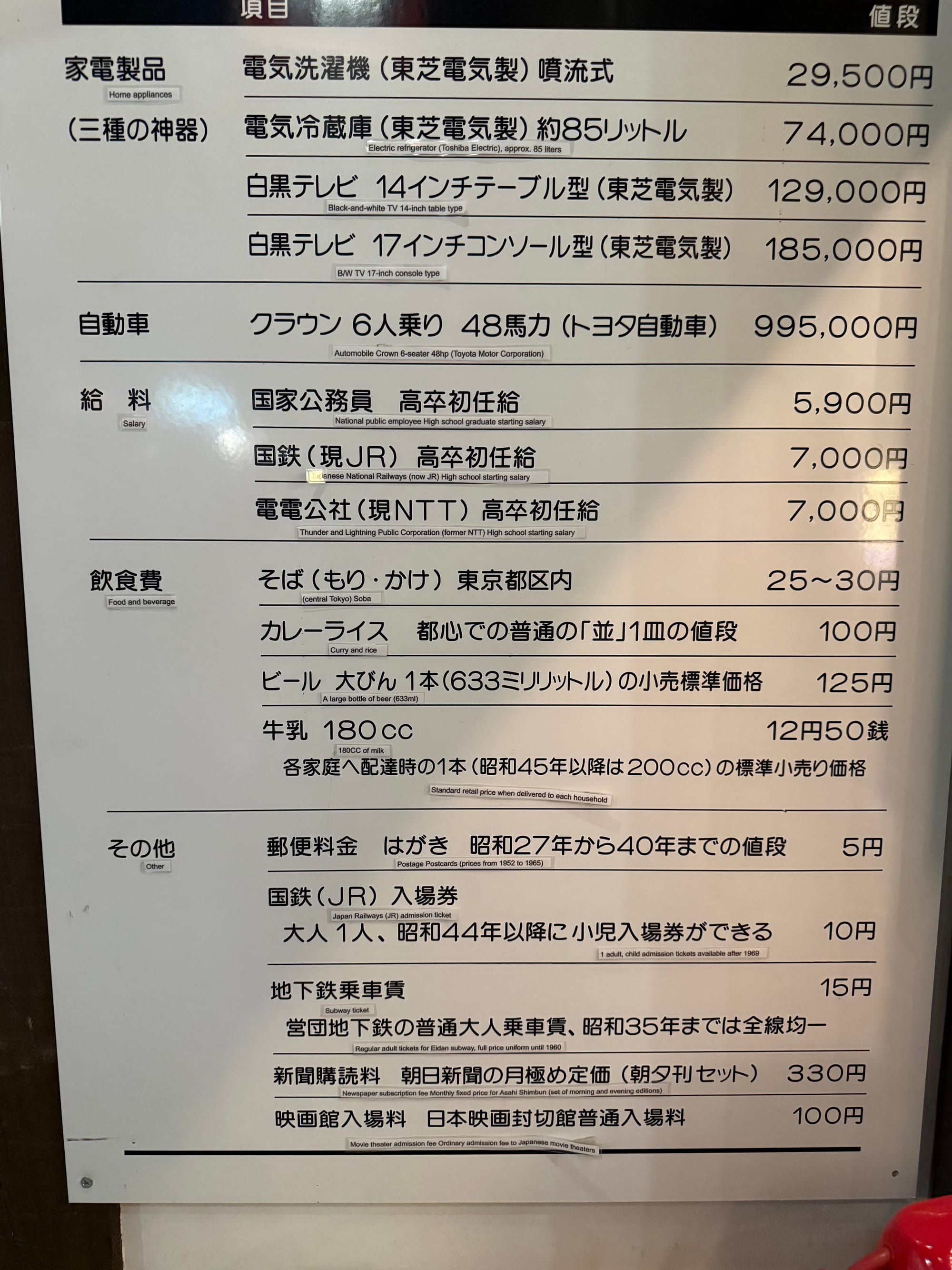
They have a list of how much things cost in ~1955.
A display at the Takayama Showa-kan Museum compares the cost of everyday items and wages during the Showa era, providing insight into daily life and the changing value of money in post-war Japan.
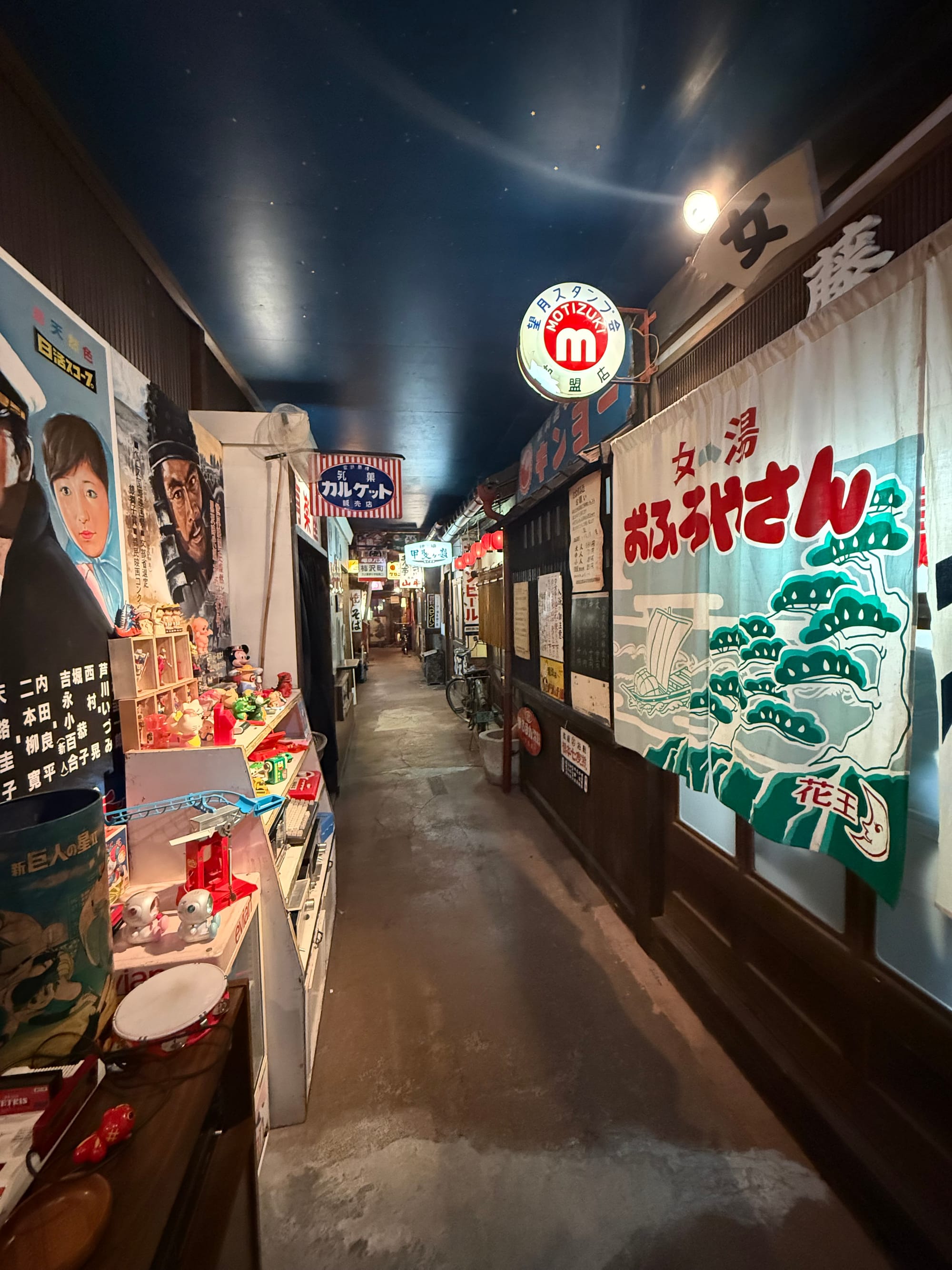
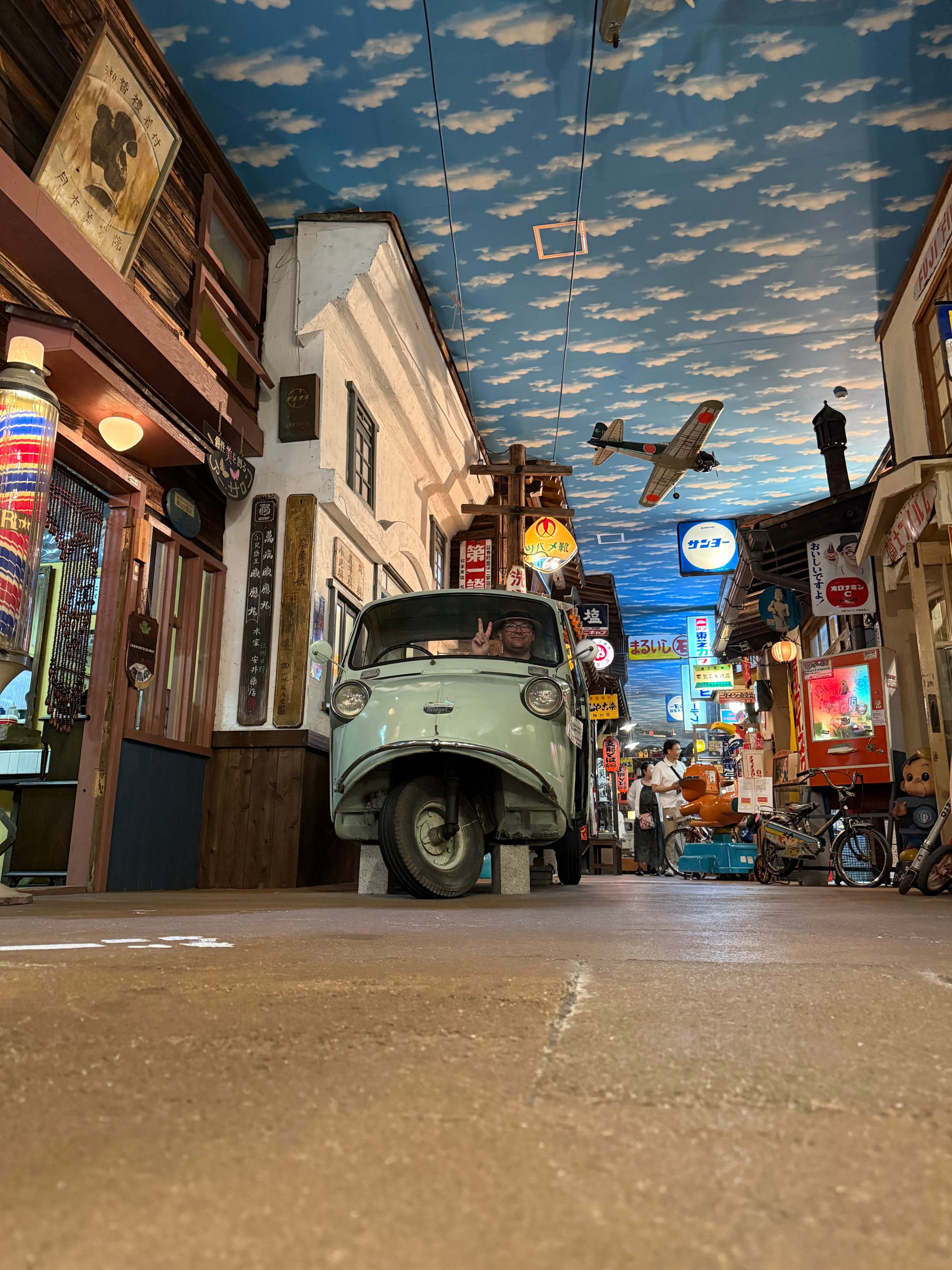
They had a mock-up of how and alleyway from that period would have looked.
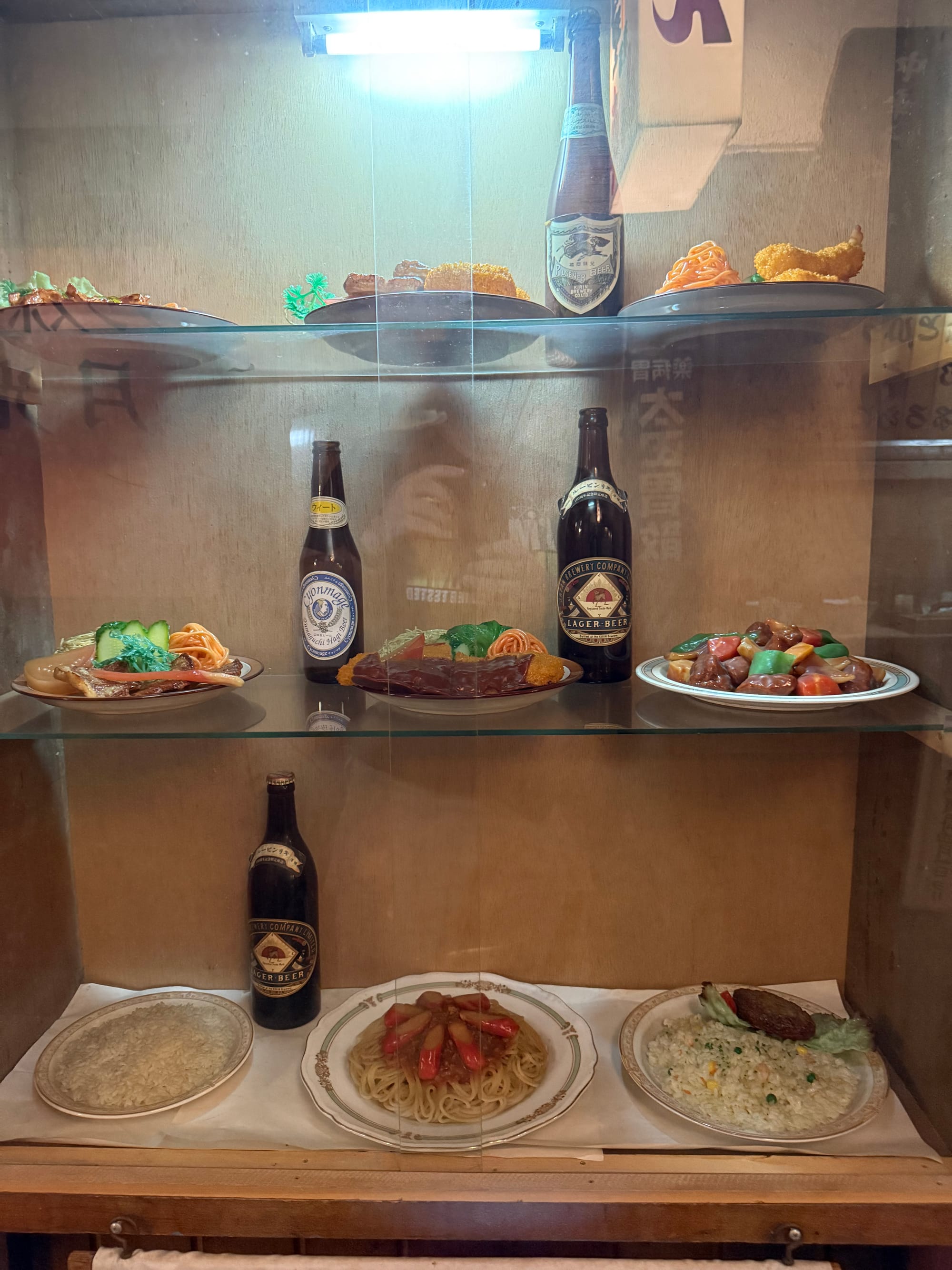
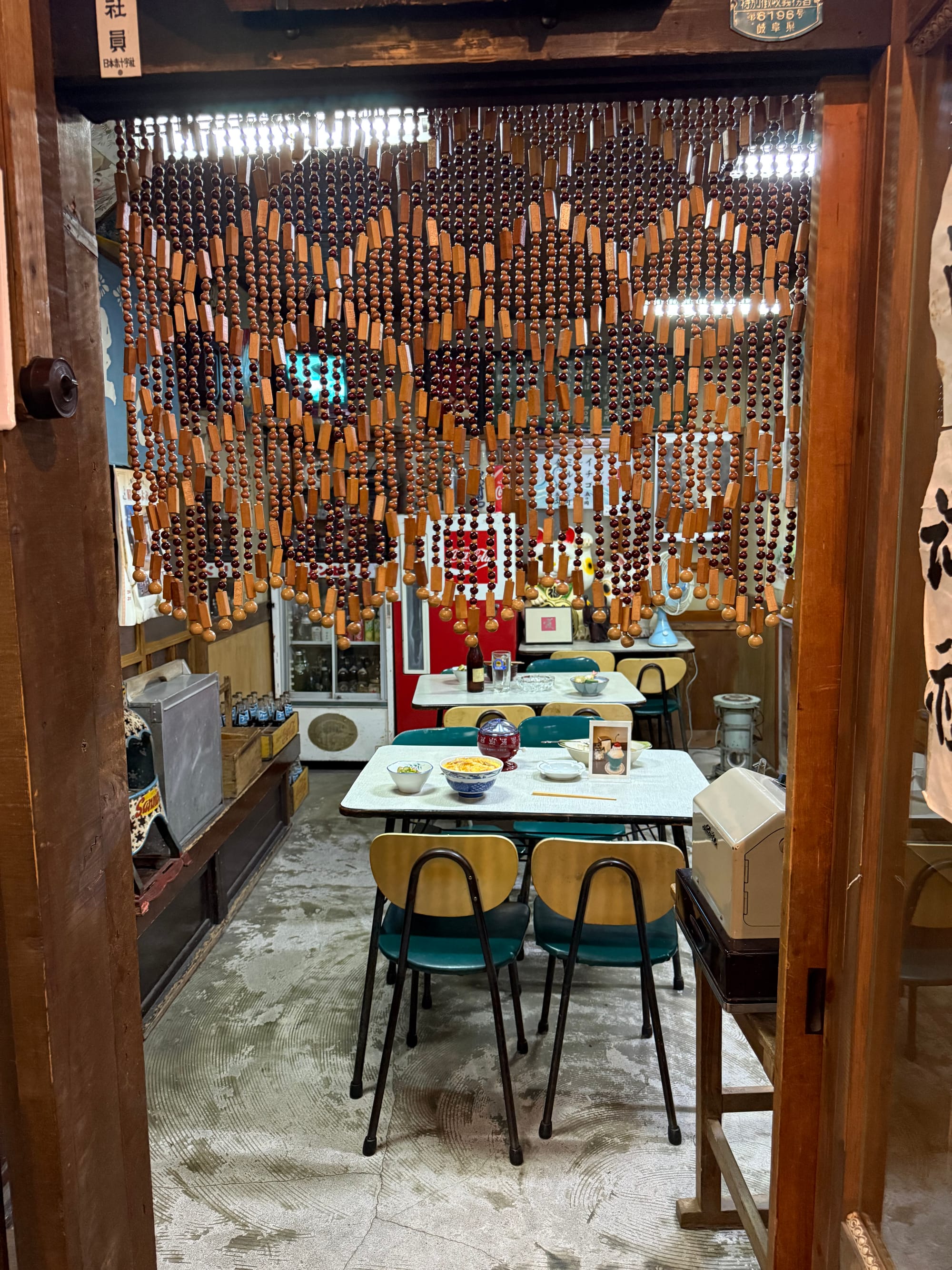
A recreated Japanese street from the Showa era inside the Takayama Showa-kan Museum, immersing visitors in the sights, products and everyday atmosphere of post-war Japan.A collection of plastic food samples recreates the restaurant displays once common throughout Japan during the Showa era, showcasing popular dishes and dining culture of the period.A recreated neighbourhood diner at the Takayama Showa-kan Museum captures the atmosphere of everyday dining in Japan during the Showa era, complete with retro furnishings and decorations.
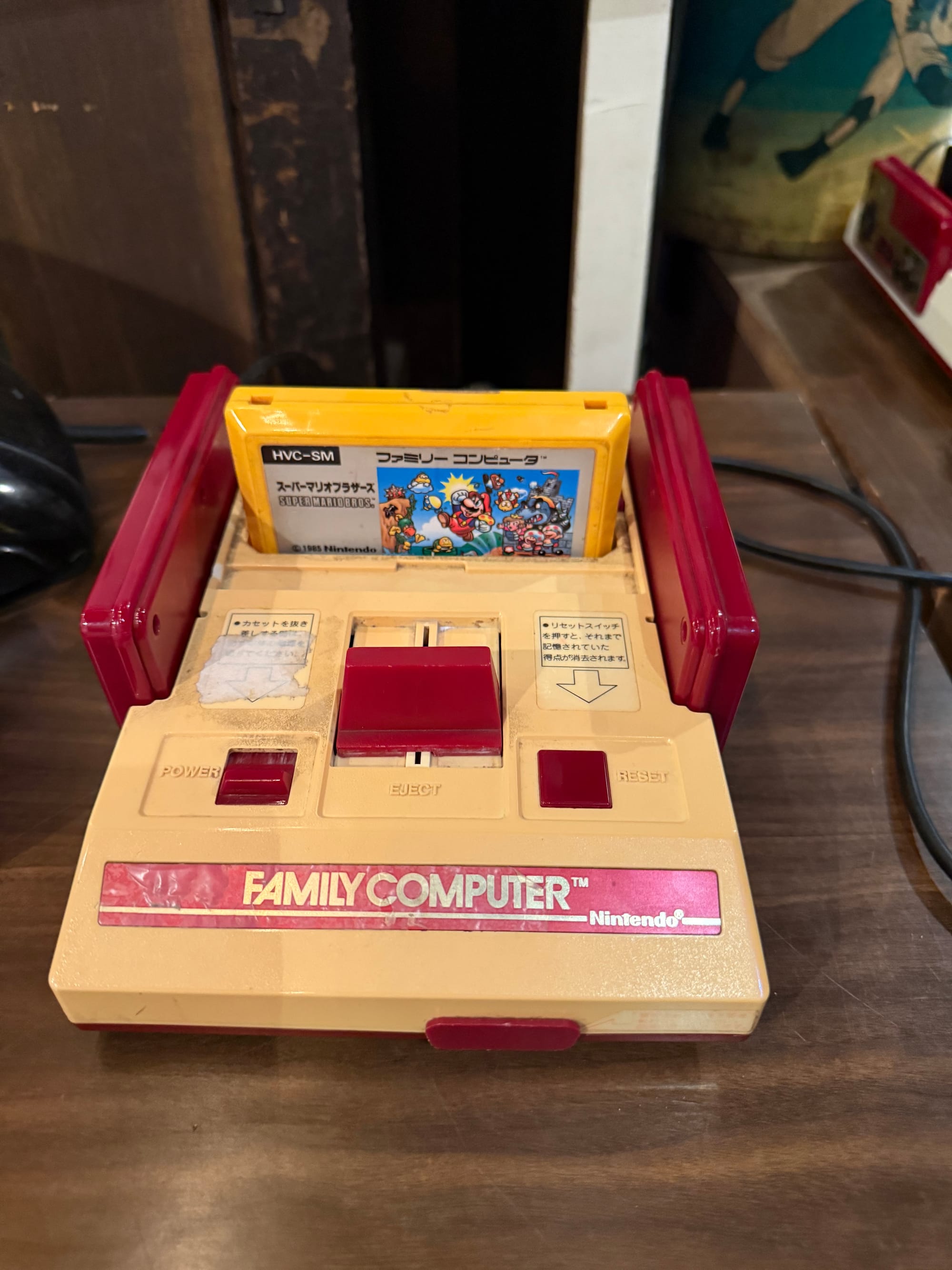
They even had Ninendo's first console, which was not the NES, it was the Famicom, which was released in 1983. This consoles later on became the NES in international markets, which releases worldwide between 1985-1987, but was a bit of a downgrade from the Famicom due to the striking design it had, a microphone in the second controller and also a better sound chip.
A Nintendo Family Computer (Famicom) with a Super Mario Bros. cartridge, representing the home video game boom that transformed Japanese popular culture during the 1980s.
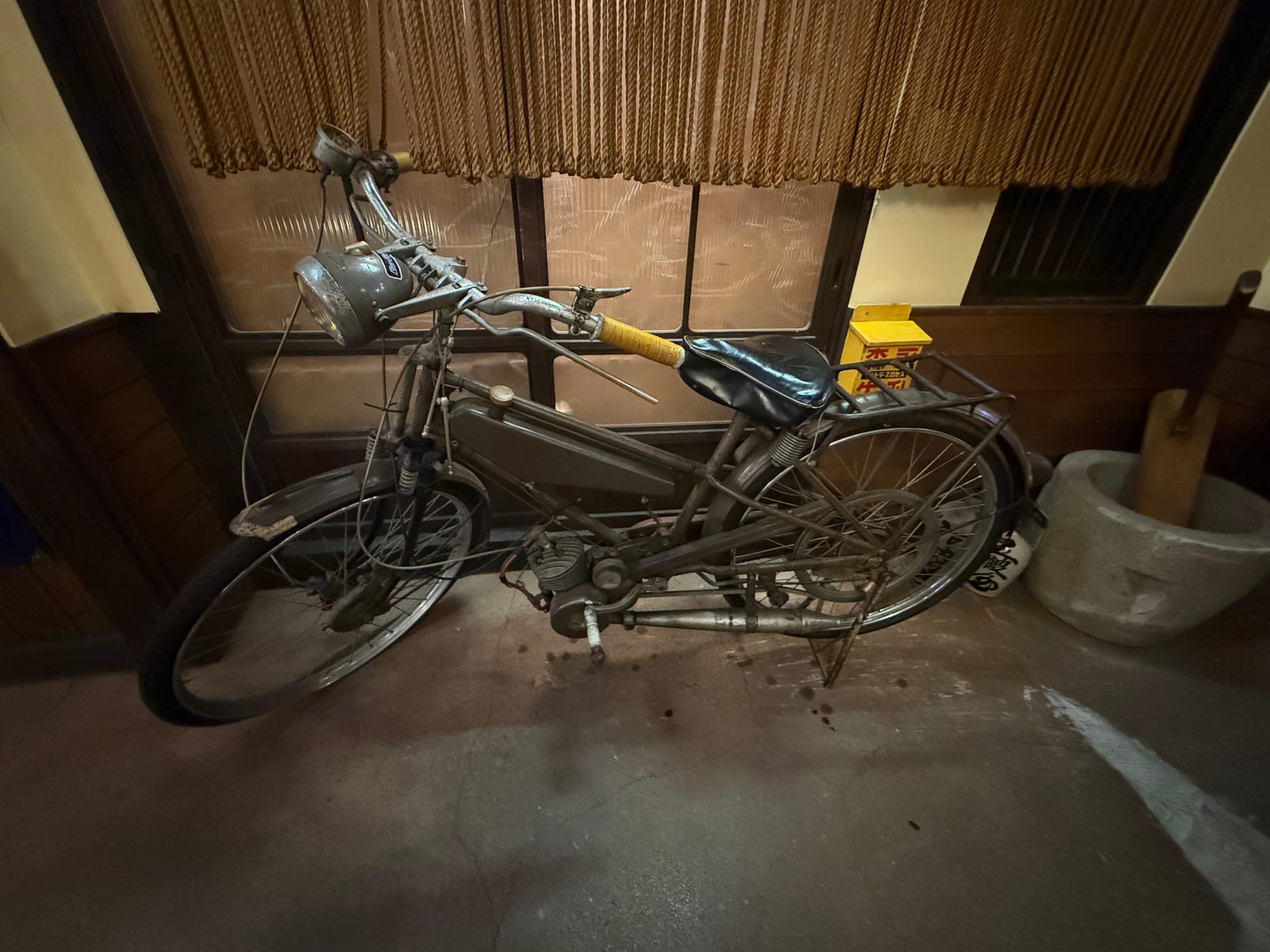
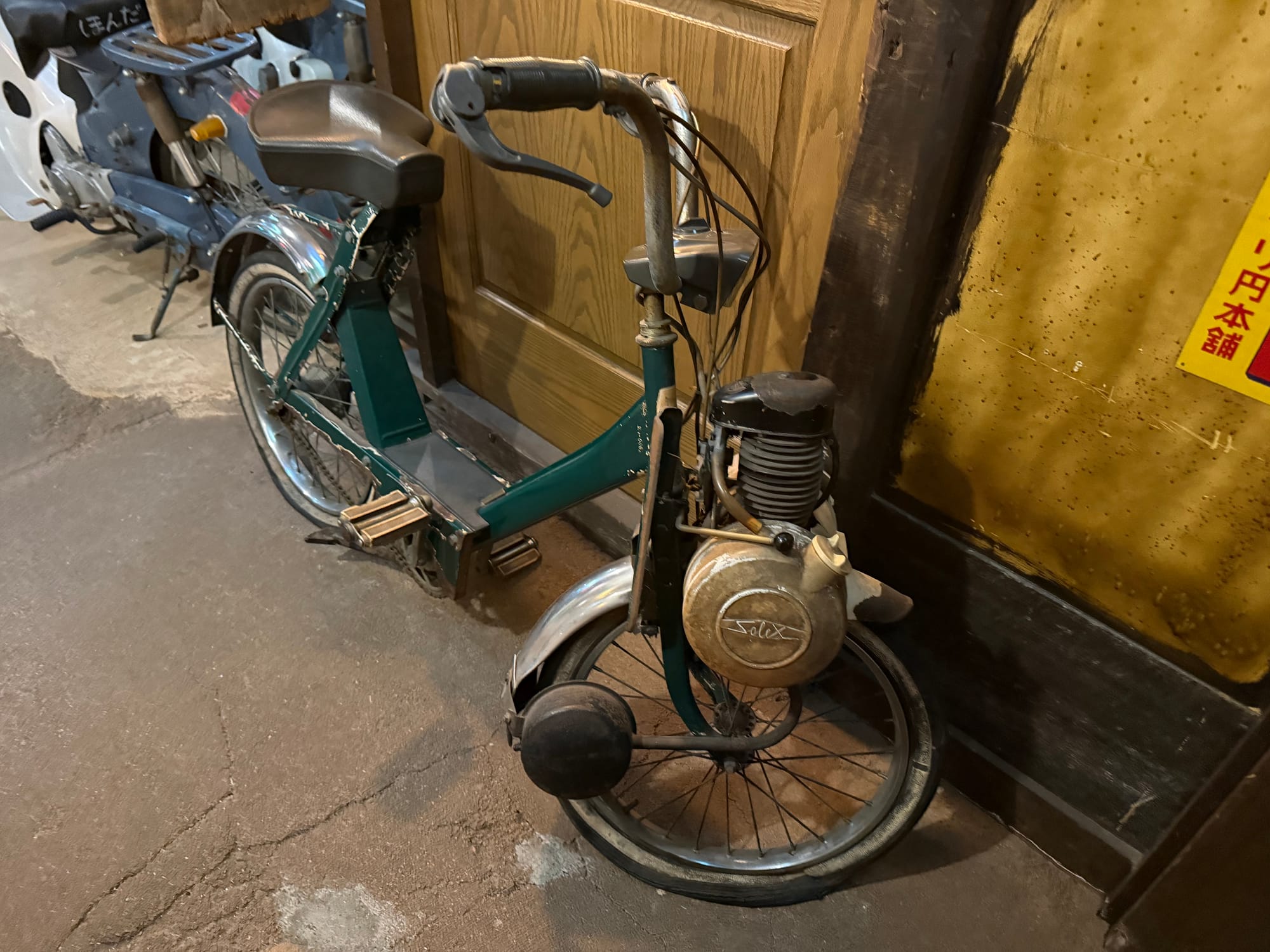
They also had a few motorbikes for that era, which were basically push bikes with a small motor attached.
A motorised bicycle on display at the Takayama Showa-kan Museum, representing an affordable form of personal transportation used in Japan during the early post-war Showa era.A VéloSoleX motorised bicycle on display at the Takayama Showa-kan Museum. Popular in post-war Europe and Japan, it combined pedal power with a small front-mounted engine for economical personal transport.
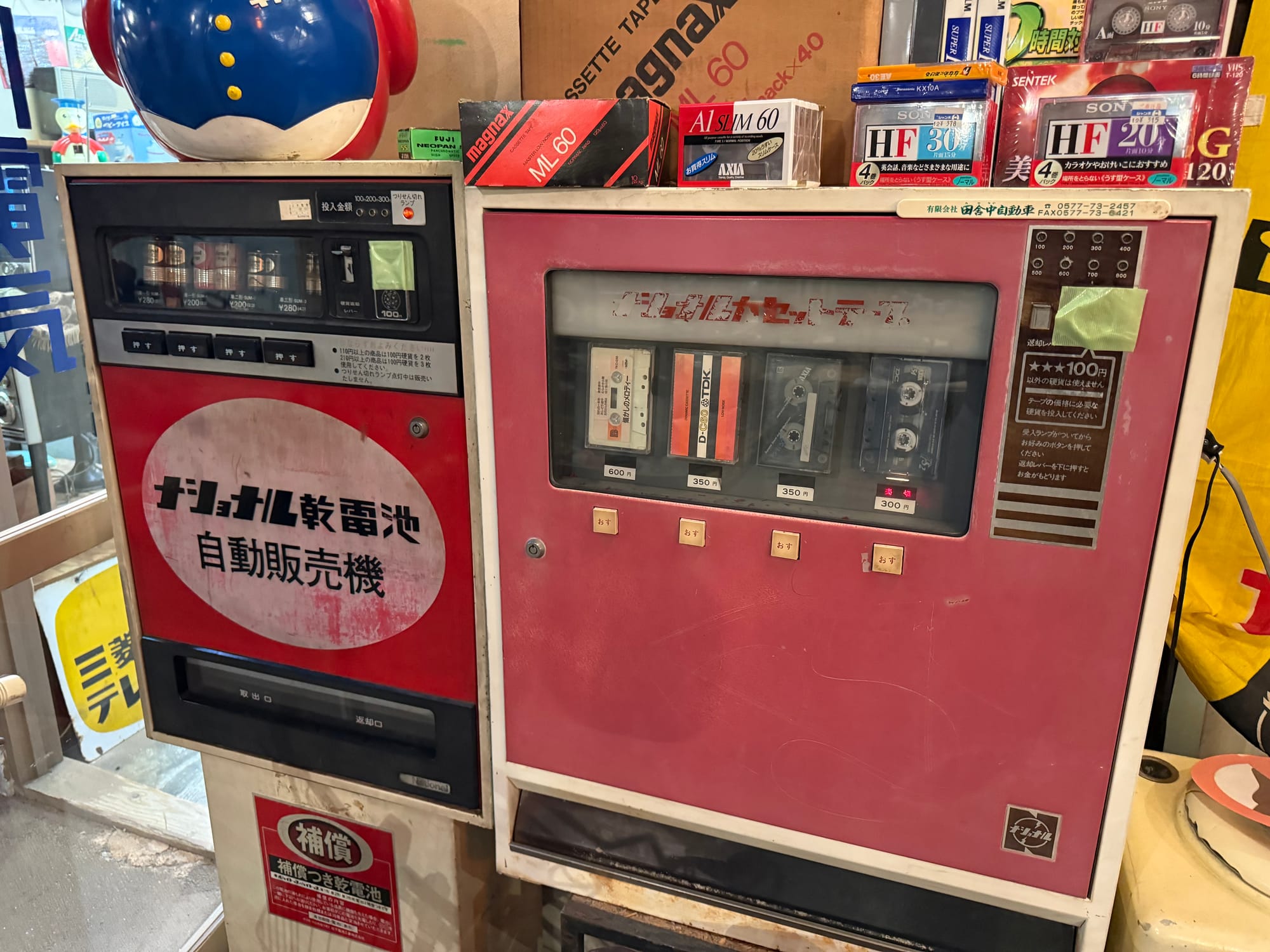
There was also a couple of old vending machines, which sold camera film and blank cassette tapes.
Retro vending machines at the Takayama Showa-kan Museum showcase everyday consumer goods from Japan's Showa era, including cassette tapes, batteries and other once-common items.
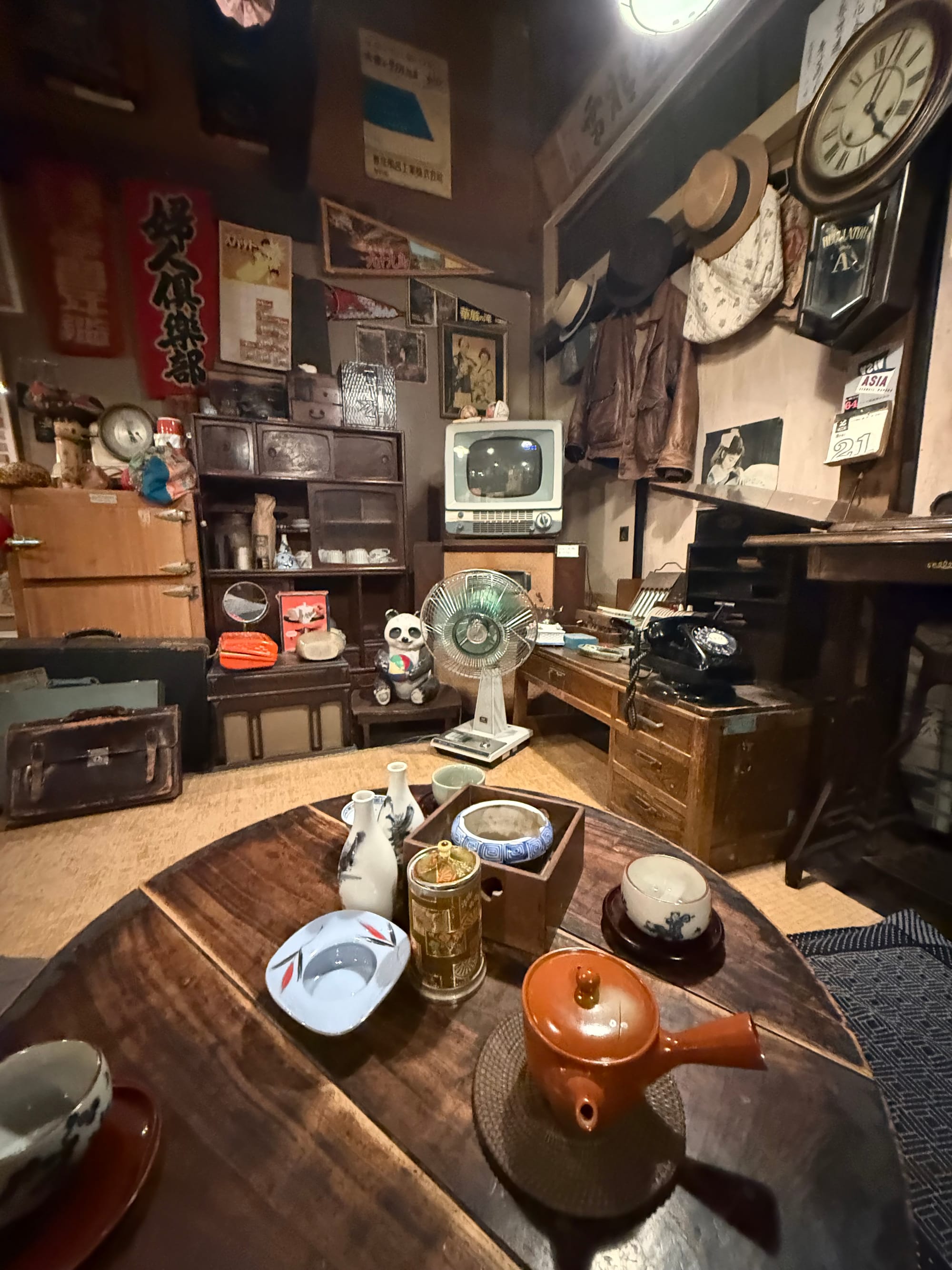
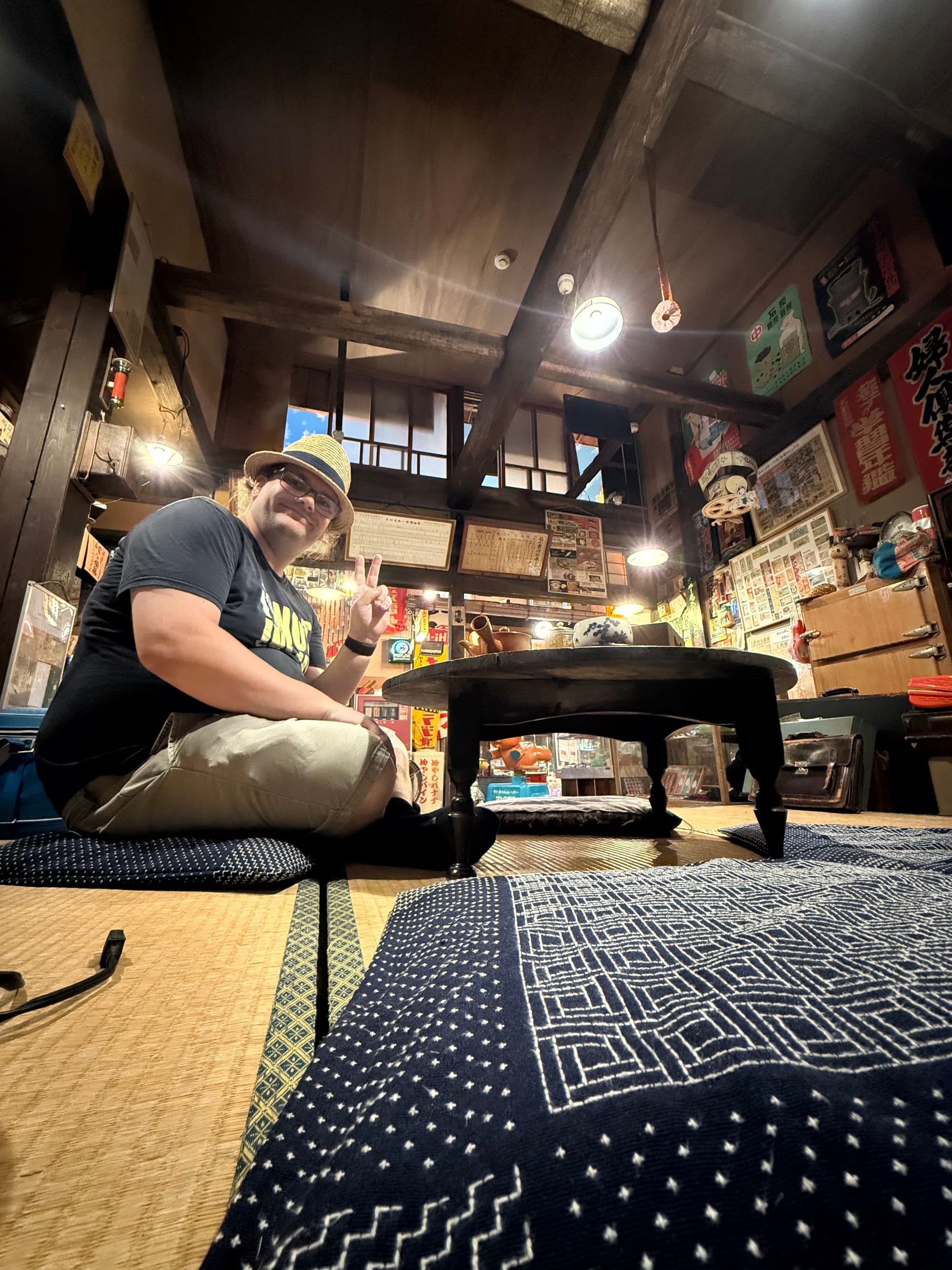
Plus what would have been an old house layout, which you are able to go into and sit down.
A recreated family living room at the Takayama Showa-kan Museum, illustrating everyday domestic life in Japan during the Showa era through authentic furnishings, appliances and household items.Experiencing a recreated Showa-era family living room at the Takayama Showa-kan Museum, surrounded by the furnishings and atmosphere of everyday life in post-war Japan.
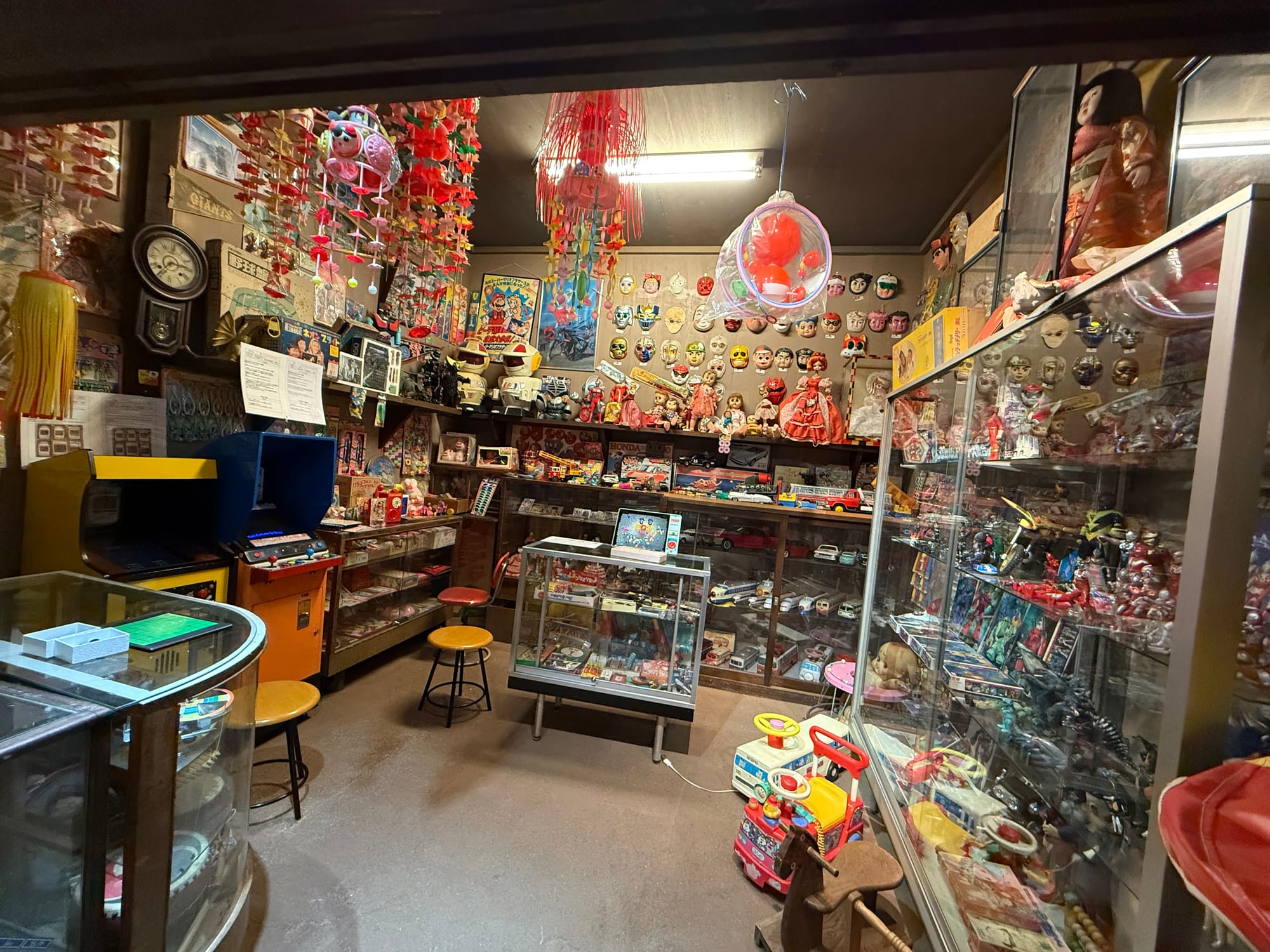
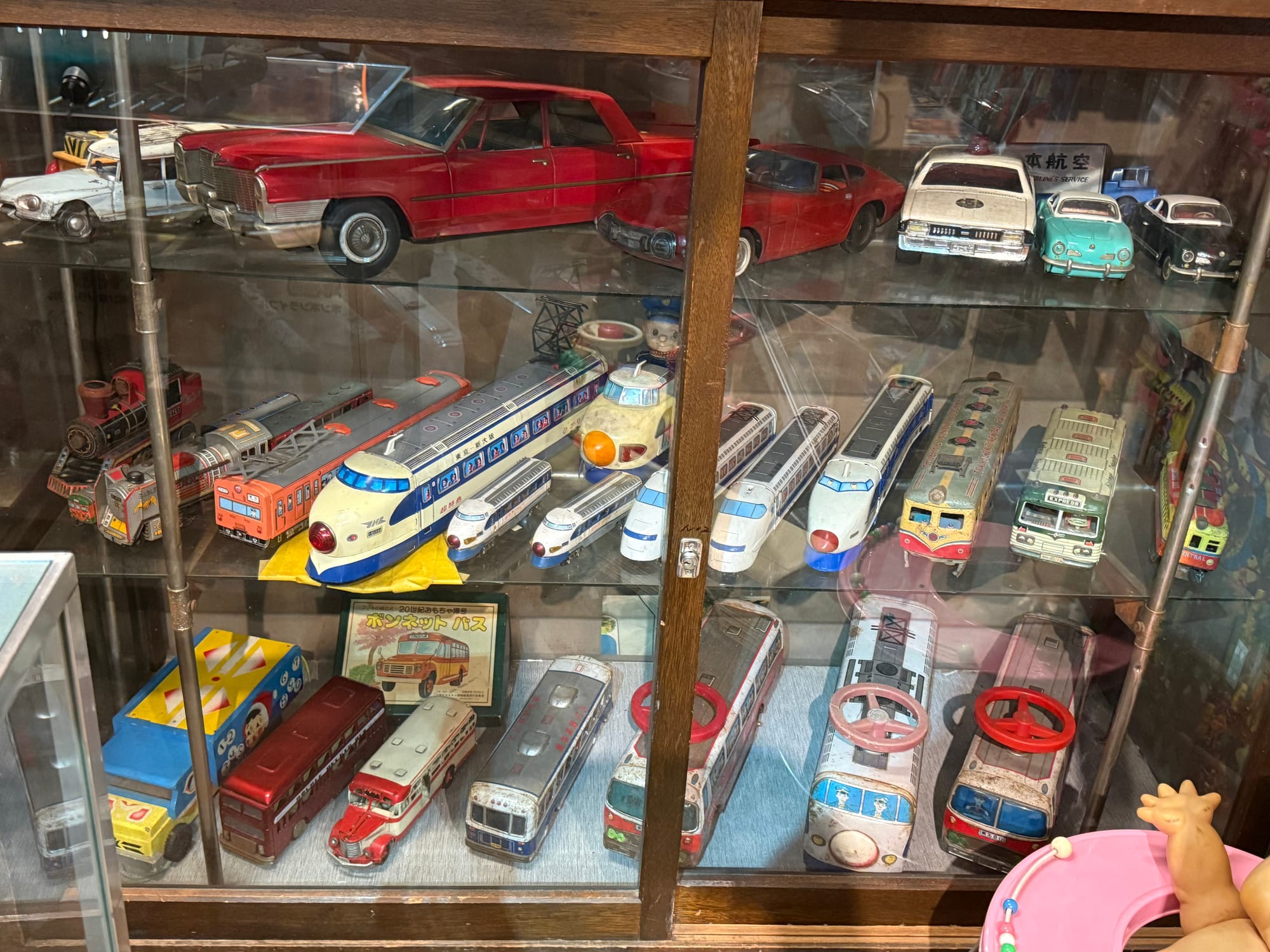
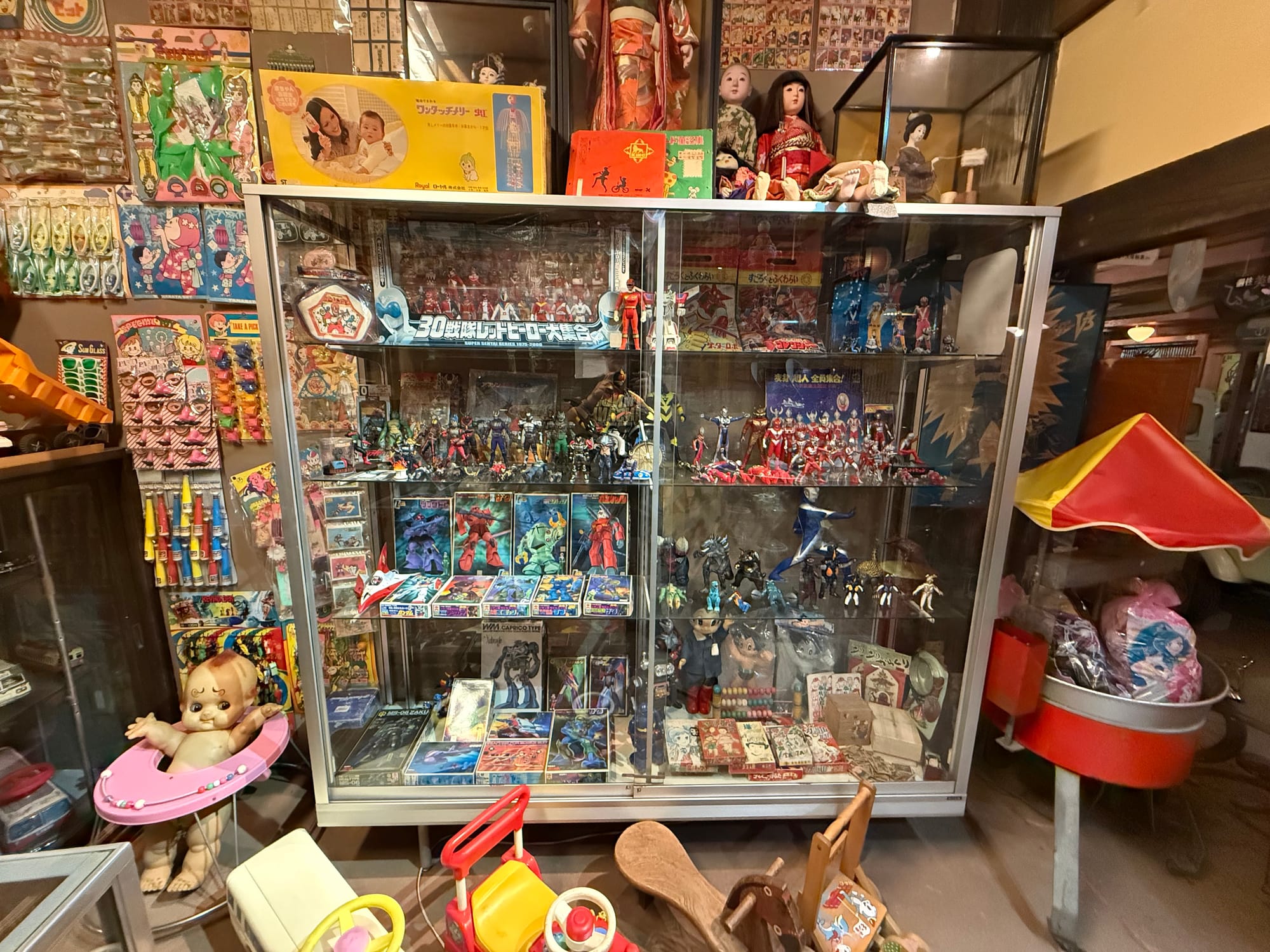
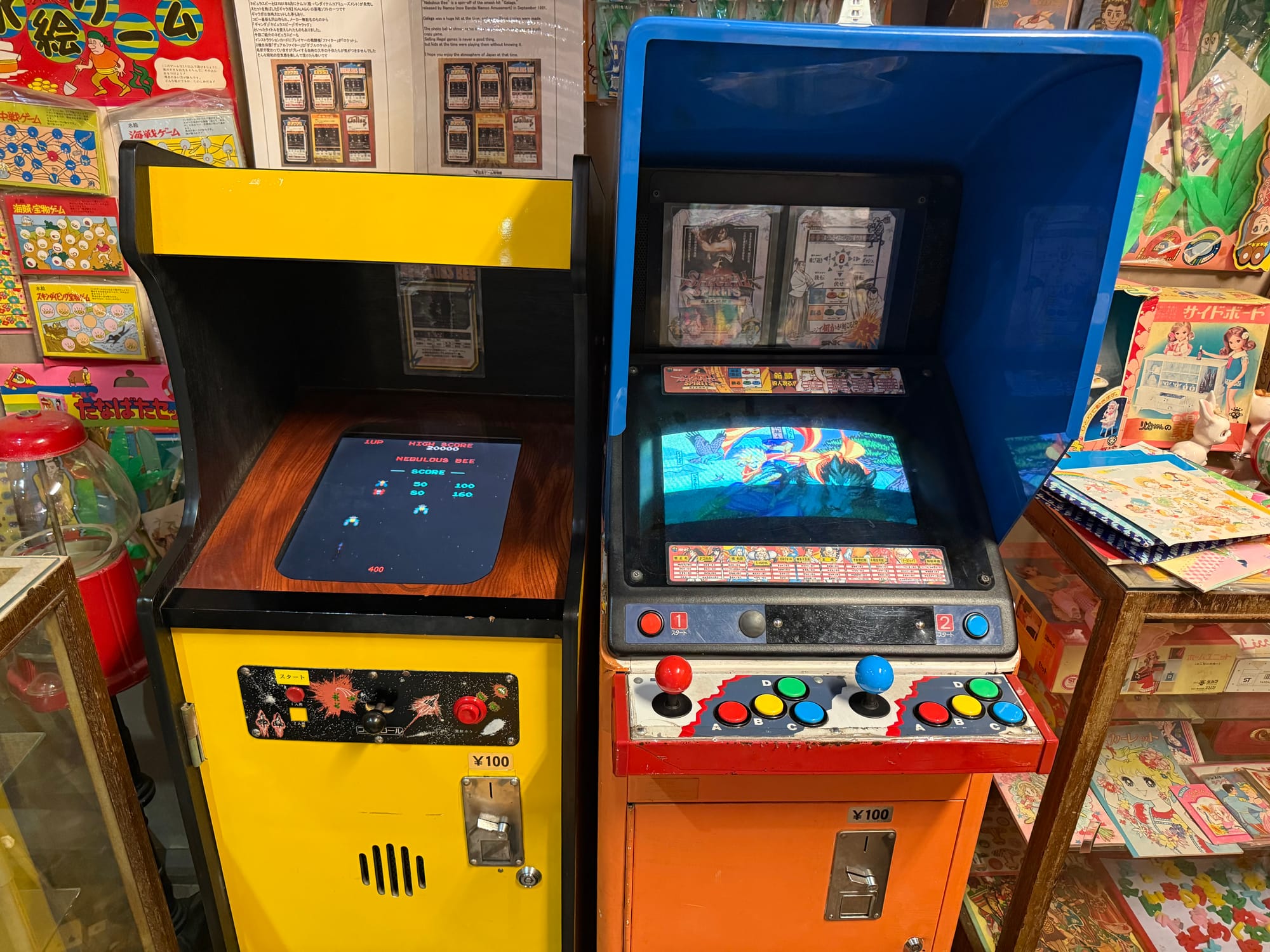
They also had mock-up of an old toy shop there, which has loads of different toys in it and also a couple of arcade games
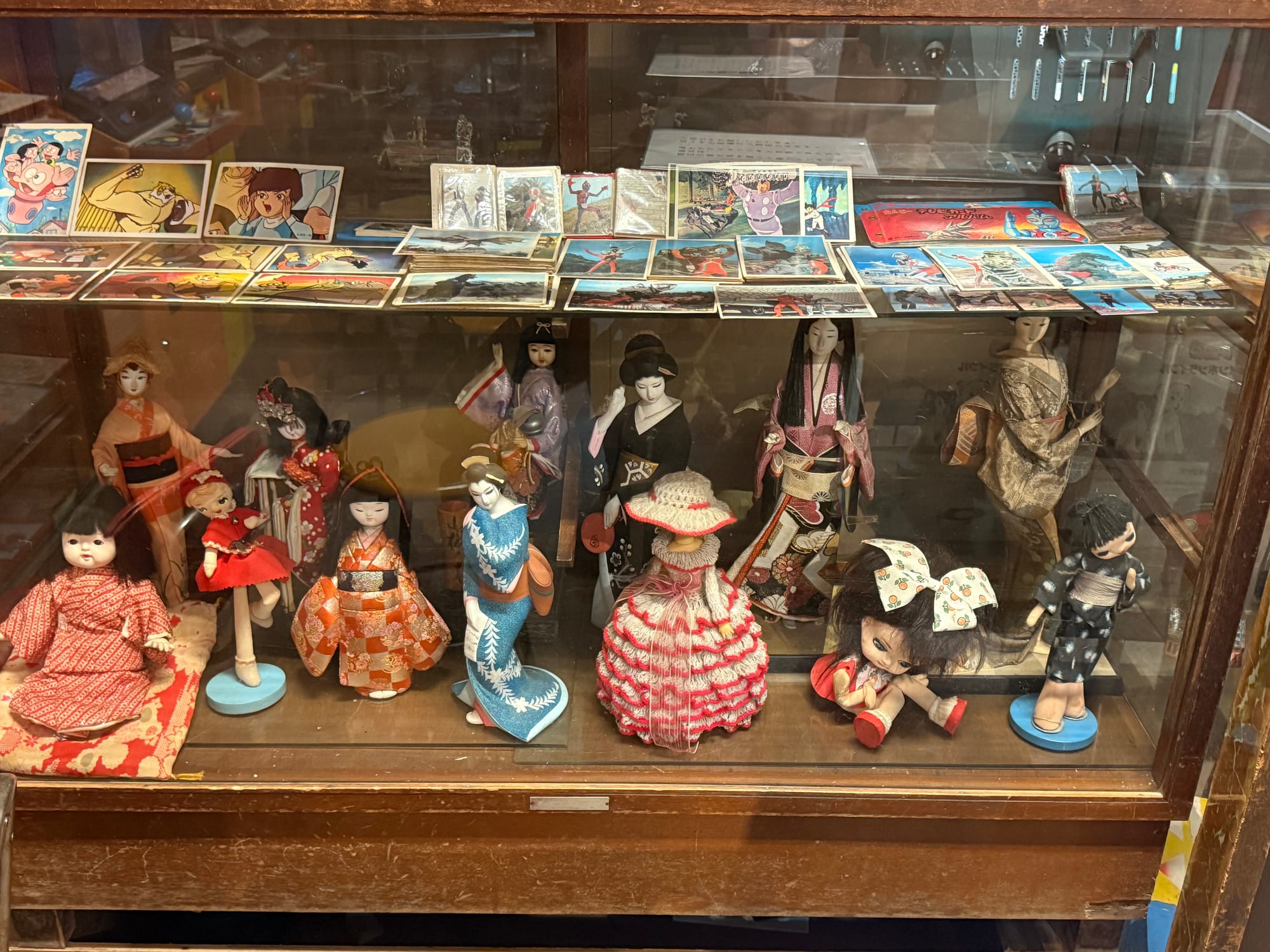
A collection of toys, dolls, arcade machines and popular culture memorabilia at the Takayama Showa-kan Museum, highlighting childhood entertainment and everyday life during Japan's Showa era.A collection of toy trains, buses and cars at the Takayama Showa-kan Museum highlights the vehicles that captured the imagination of children during Japan's Showa era.A display of toys, dolls and popular culture memorabilia at the Takayama Showa-kan Museum, showcasing the characters and entertainment that shaped childhood during Japan's Showa era.A collection of traditional dolls and popular collectibles at the Takayama Showa-kan Museum, reflecting both everyday childhood toys and cultural pastimes of the Showa era.Retro arcade machines at the Takayama Showa-kan Museum recall the early days of video gaming in Japan, when arcades were a popular part of Showa-era entertainment culture.
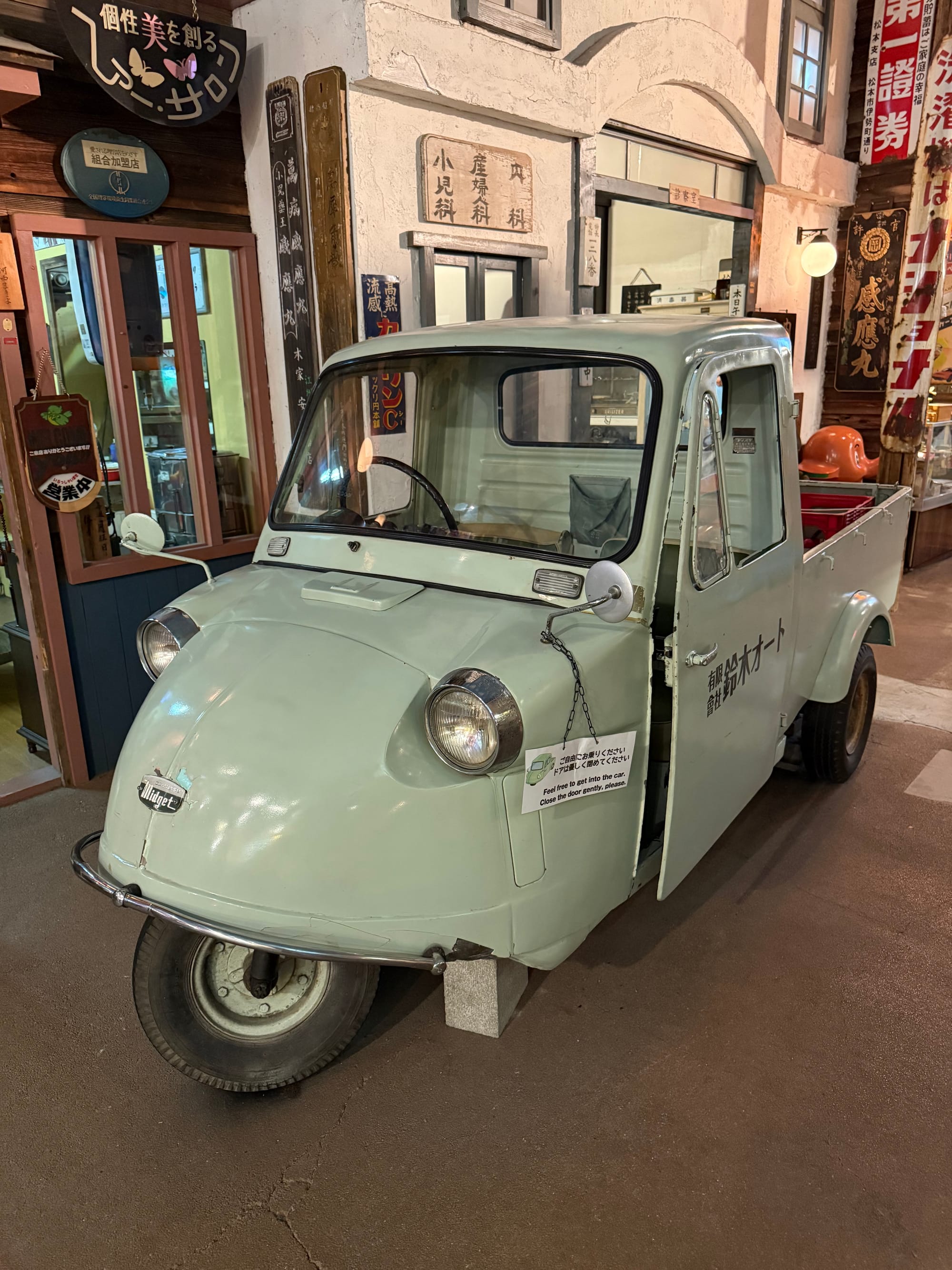
There was also a 1962 Daihatsu Midgit MP5 three-wheeler car there, which has a 305cc two-stroke engine that produced 12HP and was on sale until 1972. Even though it is called the Midjit, I could fit in it quite nicely.
A Daihatsu Midjet three-wheeled utility vehicle, a familiar sight on Japanese streets during the Showa era. Its compact size and practical cargo bed made it popular with small businesses and local deliveries.A Daihatsu Midjet sits on a recreated Showa-era streetscape at the Takayama Showa-kan Museum, helping bring the atmosphere of mid-20th-century Japan to life through vehicles, shops and period advertisements.
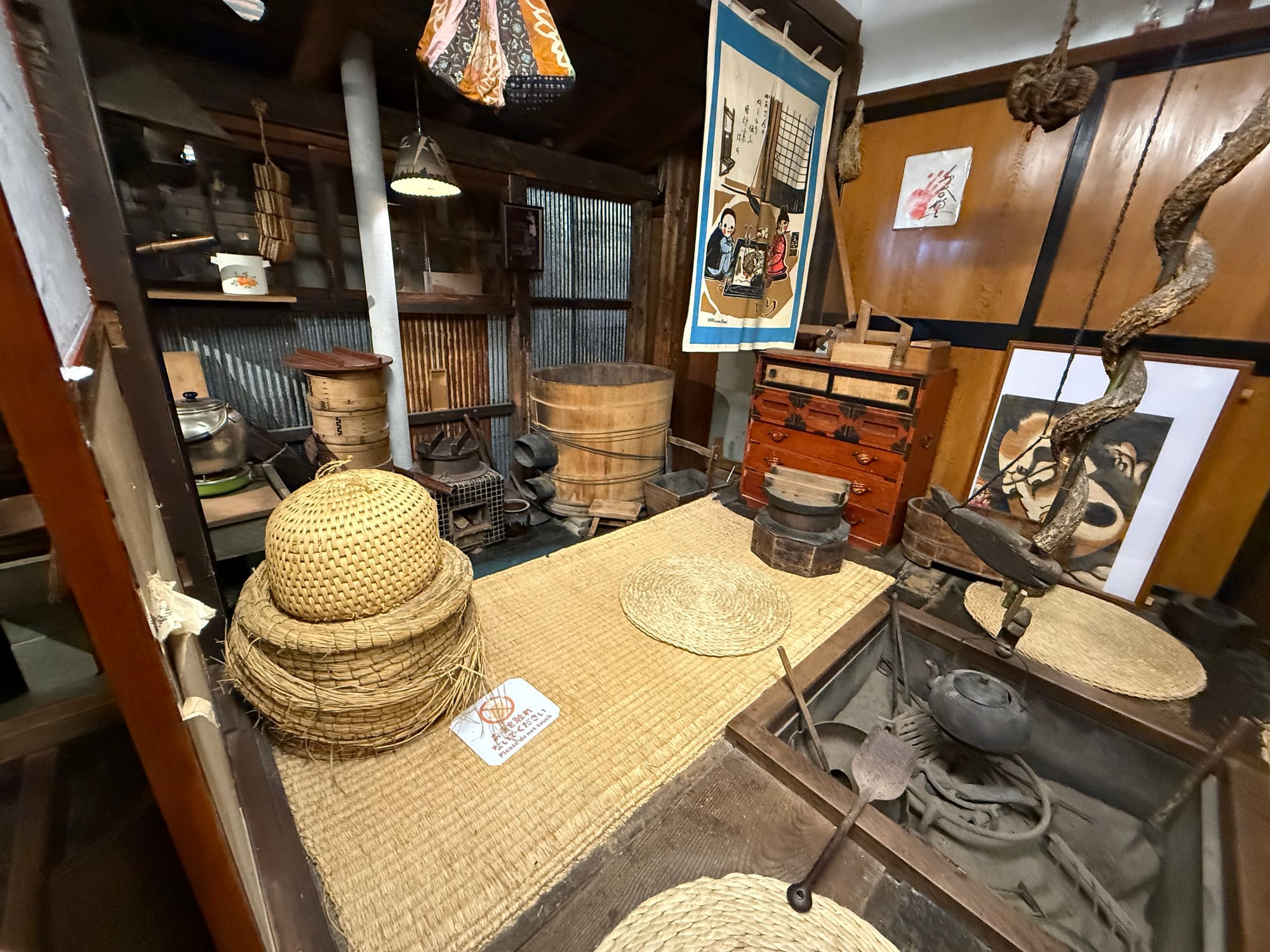
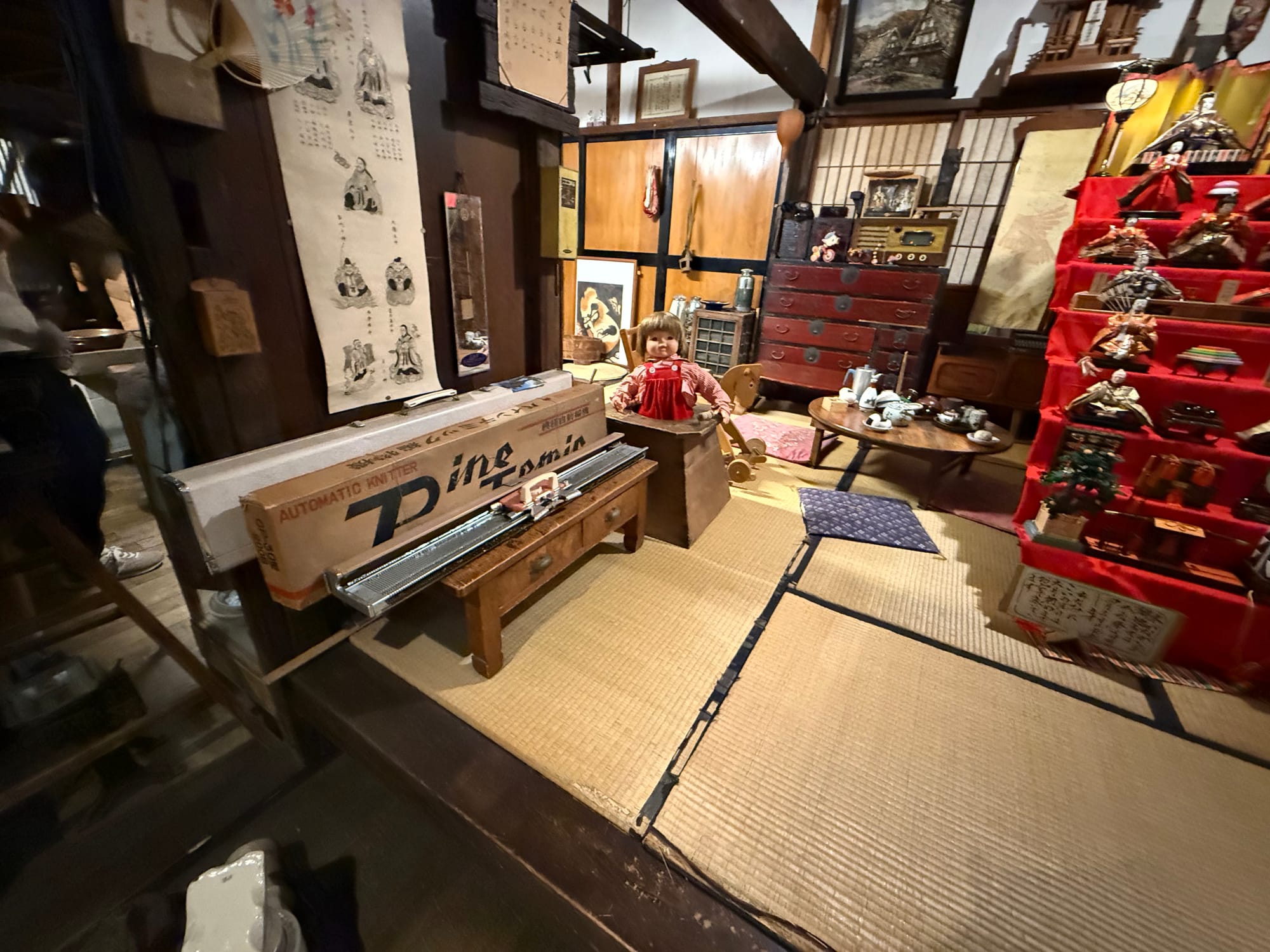
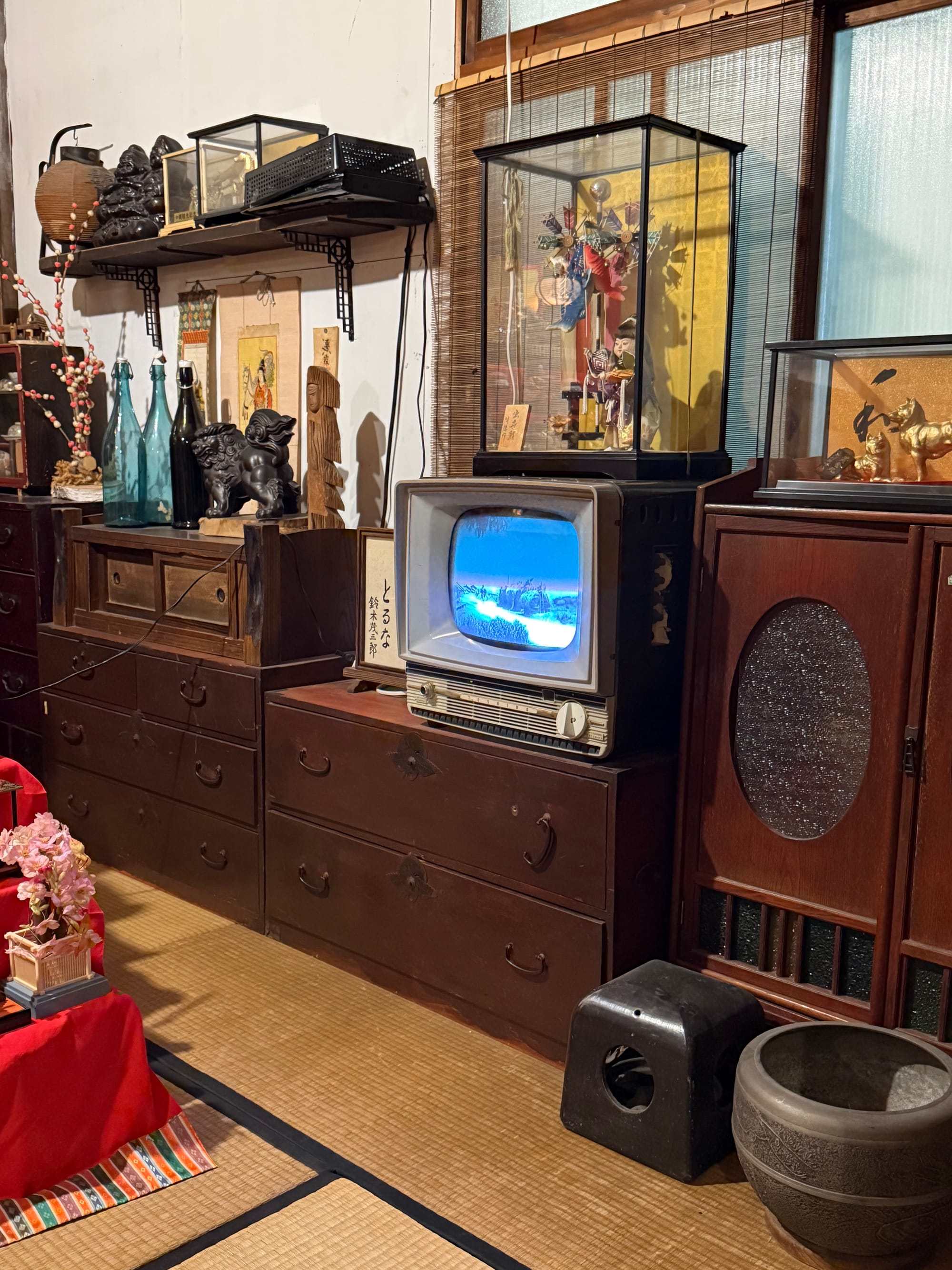
Upstairs they had more stuff, which included a more rural style house living room would look like.
A recreated traditional Japanese home at the Takayama Showa-kan Museum, showing the furnishings, cooking equipment and household items that were once part of everyday life in rural Japan.A recreated family room at the Takayama Showa-kan Museum, furnished with household items, dolls and everyday possessions that reflect domestic life during Japan's Showa era.A recreated Showa-era living room at the Takayama Showa-kan Museum, showcasing the television, furniture and household décor that formed the centre of family life in post-war Japan.
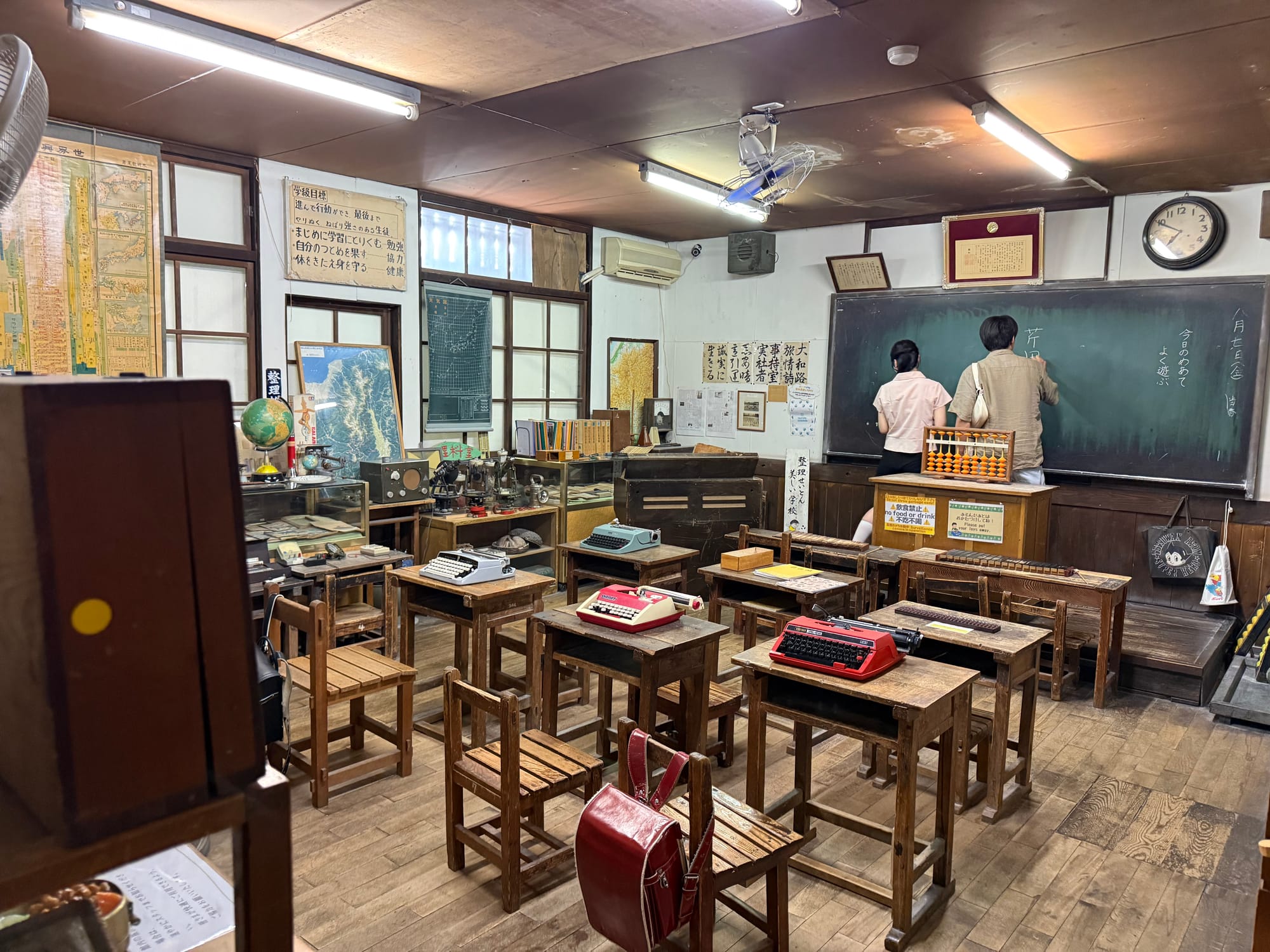
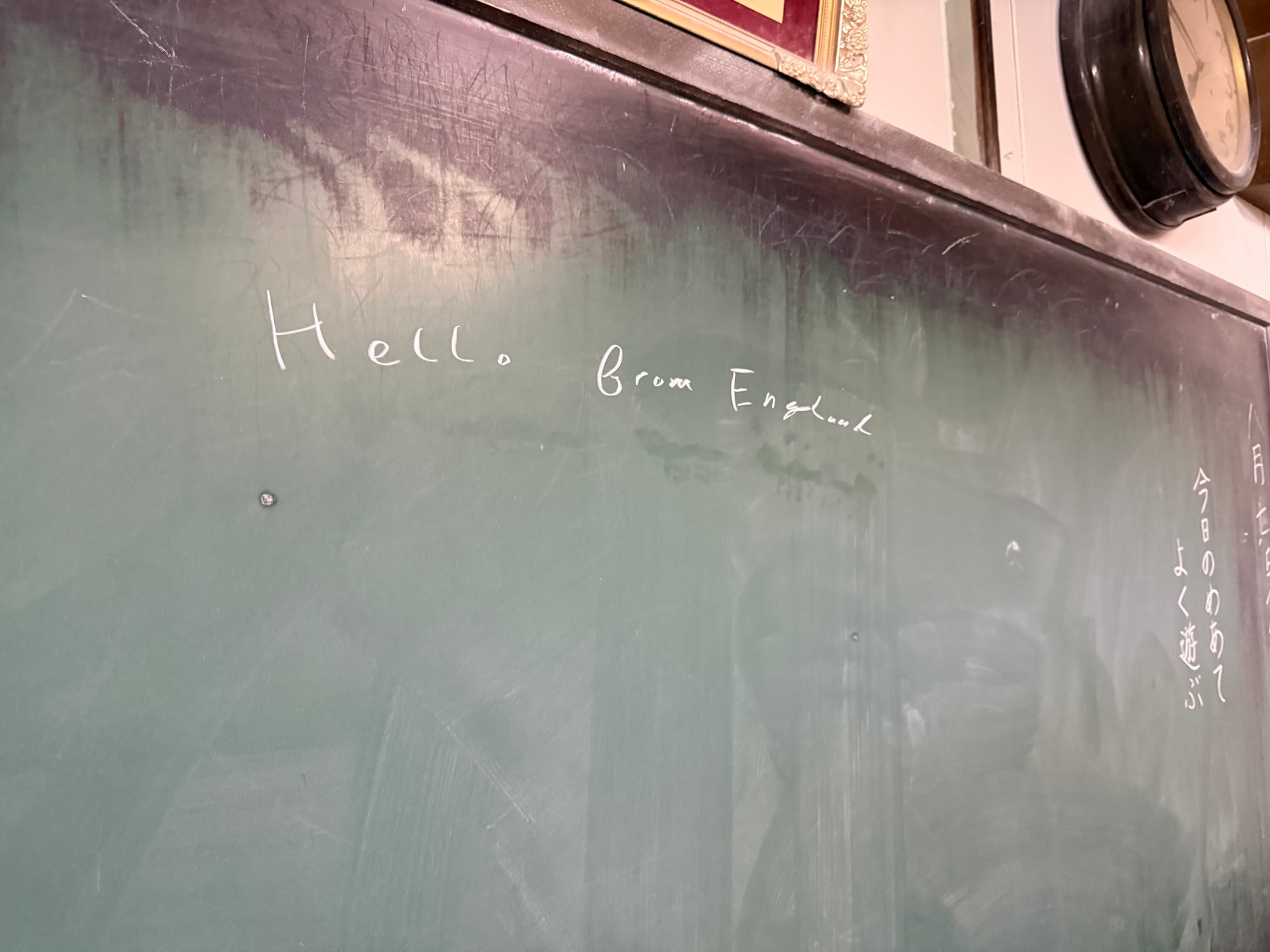
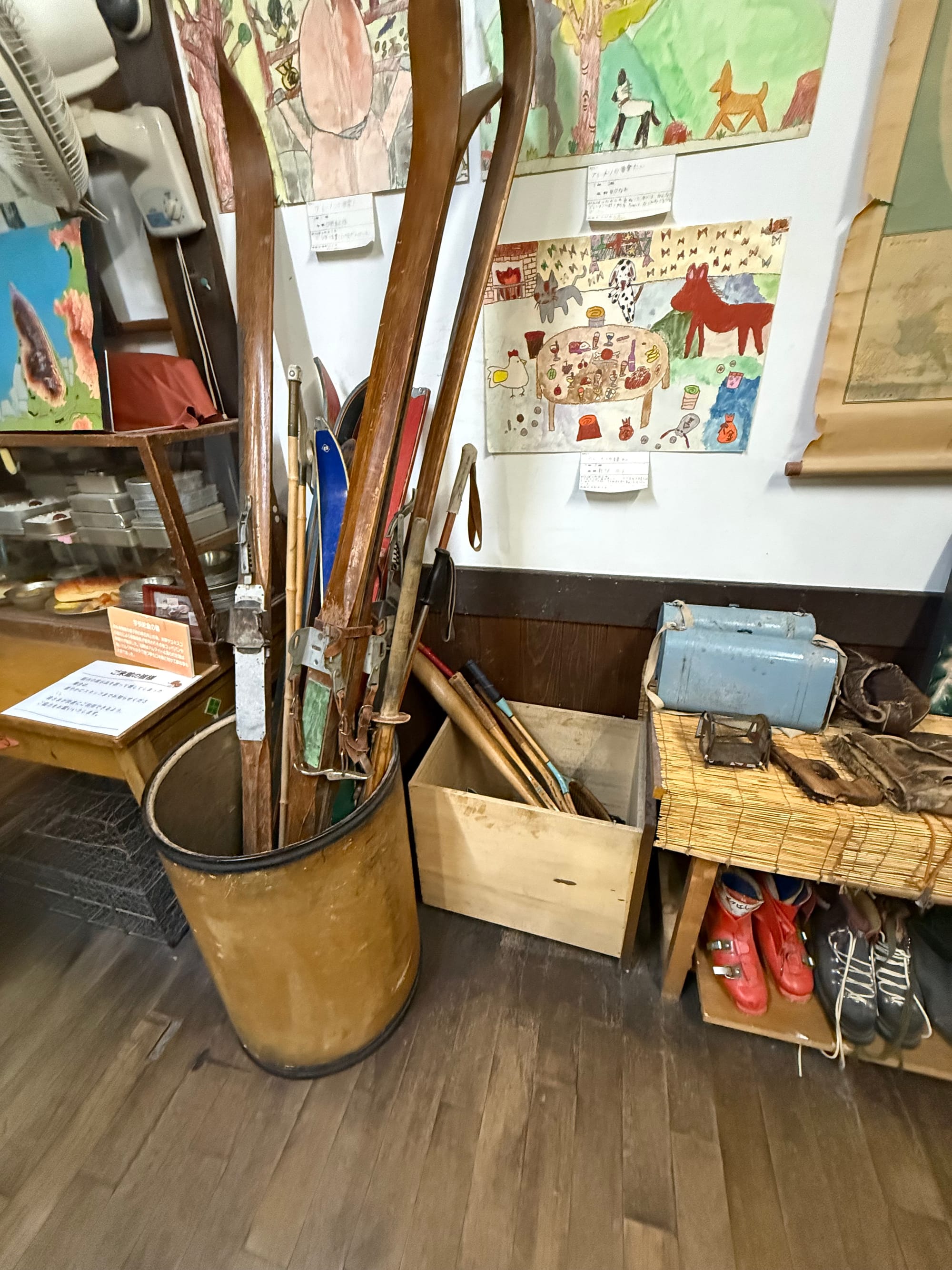
And also a a mock-up of an old classroom as well with different rooms typewriters and chalk-board.
A recreated classroom at the Takayama Showa-kan Museum, showcasing the desks, teaching aids and educational tools used by Japanese students during the Showa era.Visitor messages written on the blackboard of a recreated Showa-era classroom at the Takayama Showa-kan Museum, where guests can interact with the historic schoolroom display.A display of traditional skiing equipment and school belongings at the Takayama Showa-kan Museum, reflecting winter recreation and student life in rural Japan during the Showa era.
I also started to type a letter home, but then realised there was no paper 😅
A Brother Valiant typewriter on display in the recreated Showa-era classroom at the Takayama Showa-kan Museum, representing office and school technology of the mid-20th century.
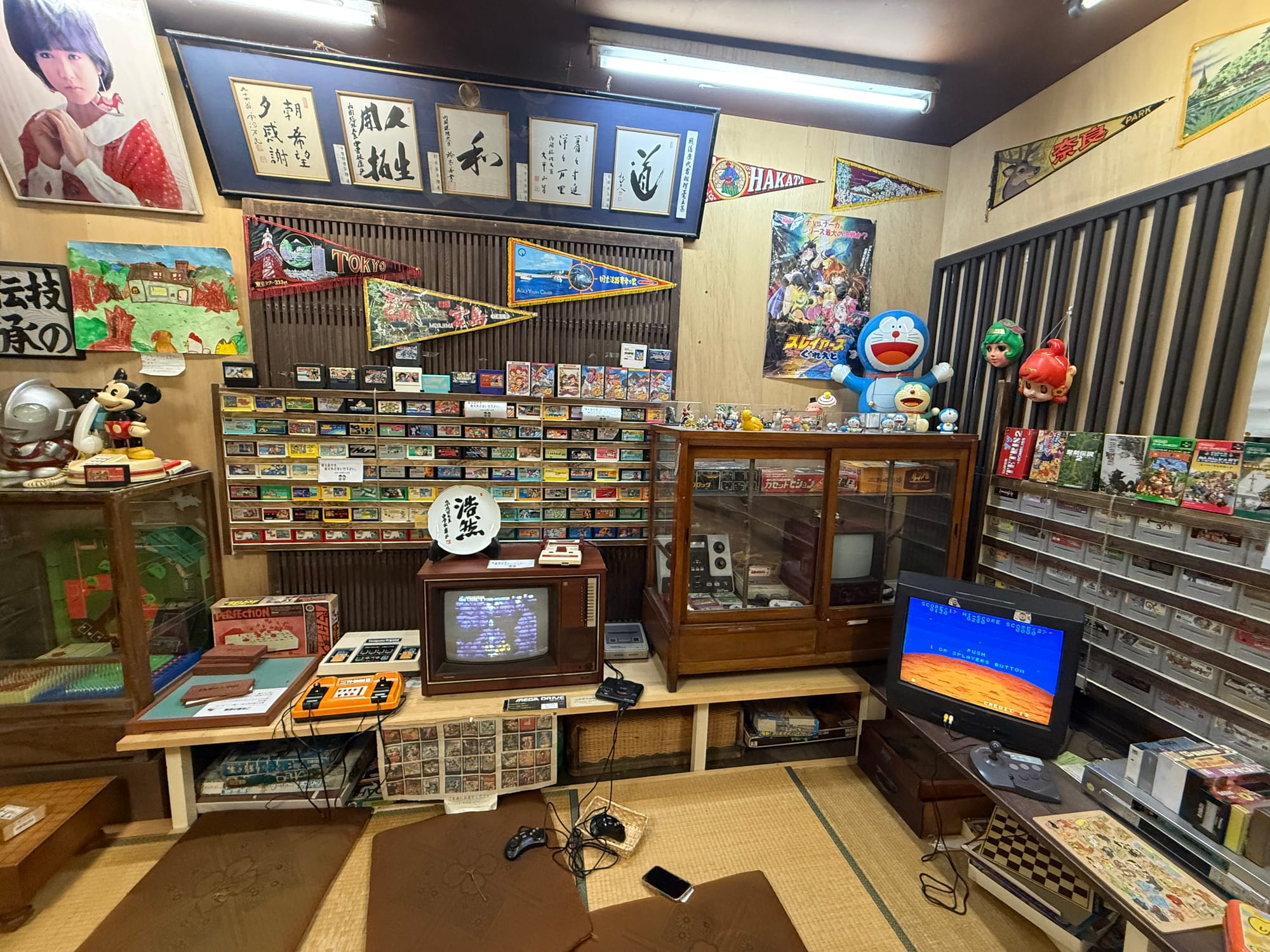
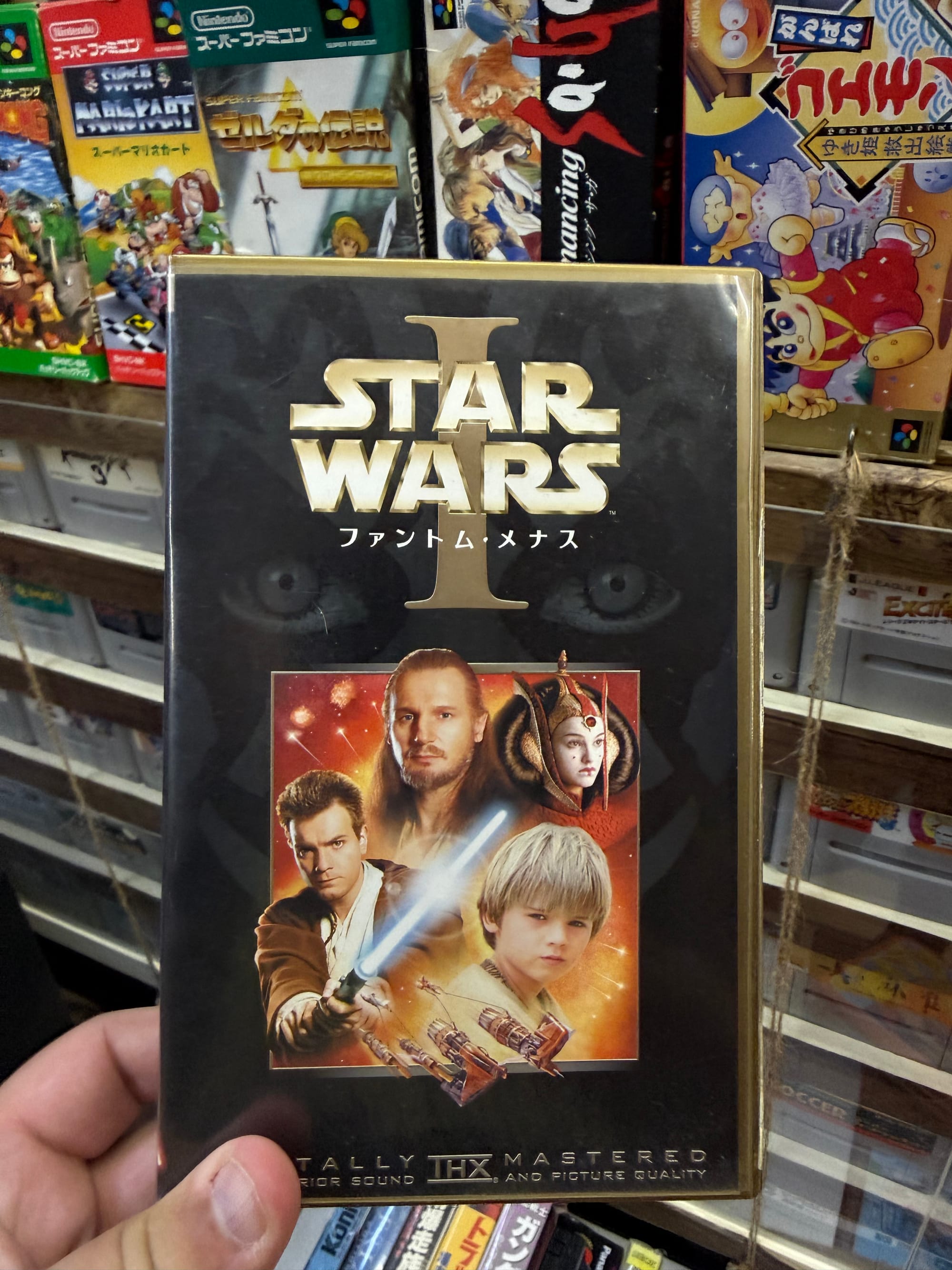
Going further round there was also what an old style bedroom might look like with some more modern conveniences and you could also play the video games.
A nostalgic display of video games, toys and popular culture at the Takayama Showa-kan Museum, showcasing the entertainment that shaped childhood and leisure time in Japan during the late Showa era.A Japanese VHS edition of Star Wars Episode I: The Phantom Menace displayed among vintage games and entertainment memorabilia at the Takayama Showa-kan Museum, highlighting the home media culture of the late 1990s and early 2000s.
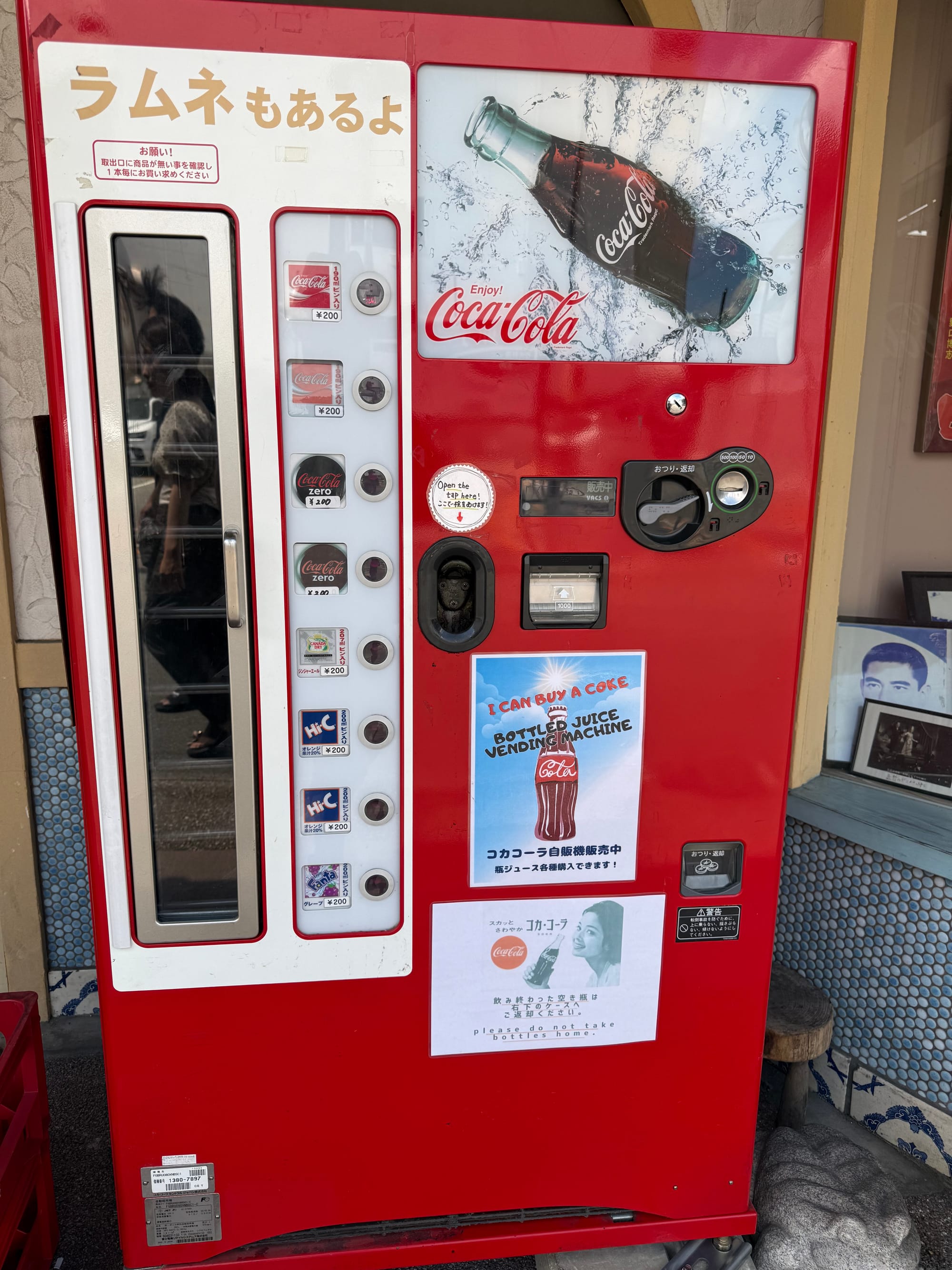
They also had an old style vending machines outside that still works, although it was already empty.
A retro Coca-Cola bottle vending machine at the Takayama Showa-kan Museum, recalling the era when glass-bottle soft drinks were a familiar sight on streets across Japan.
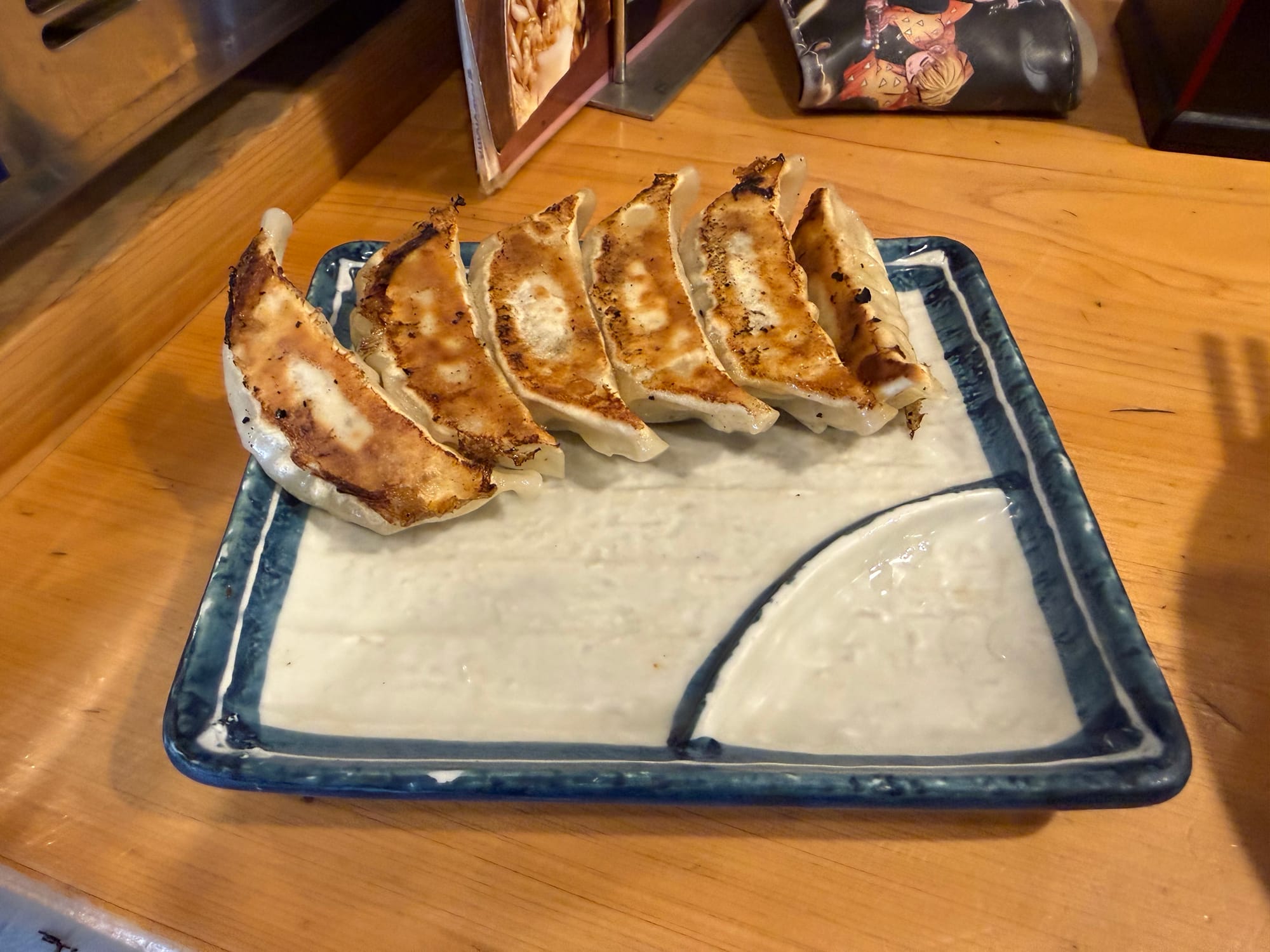
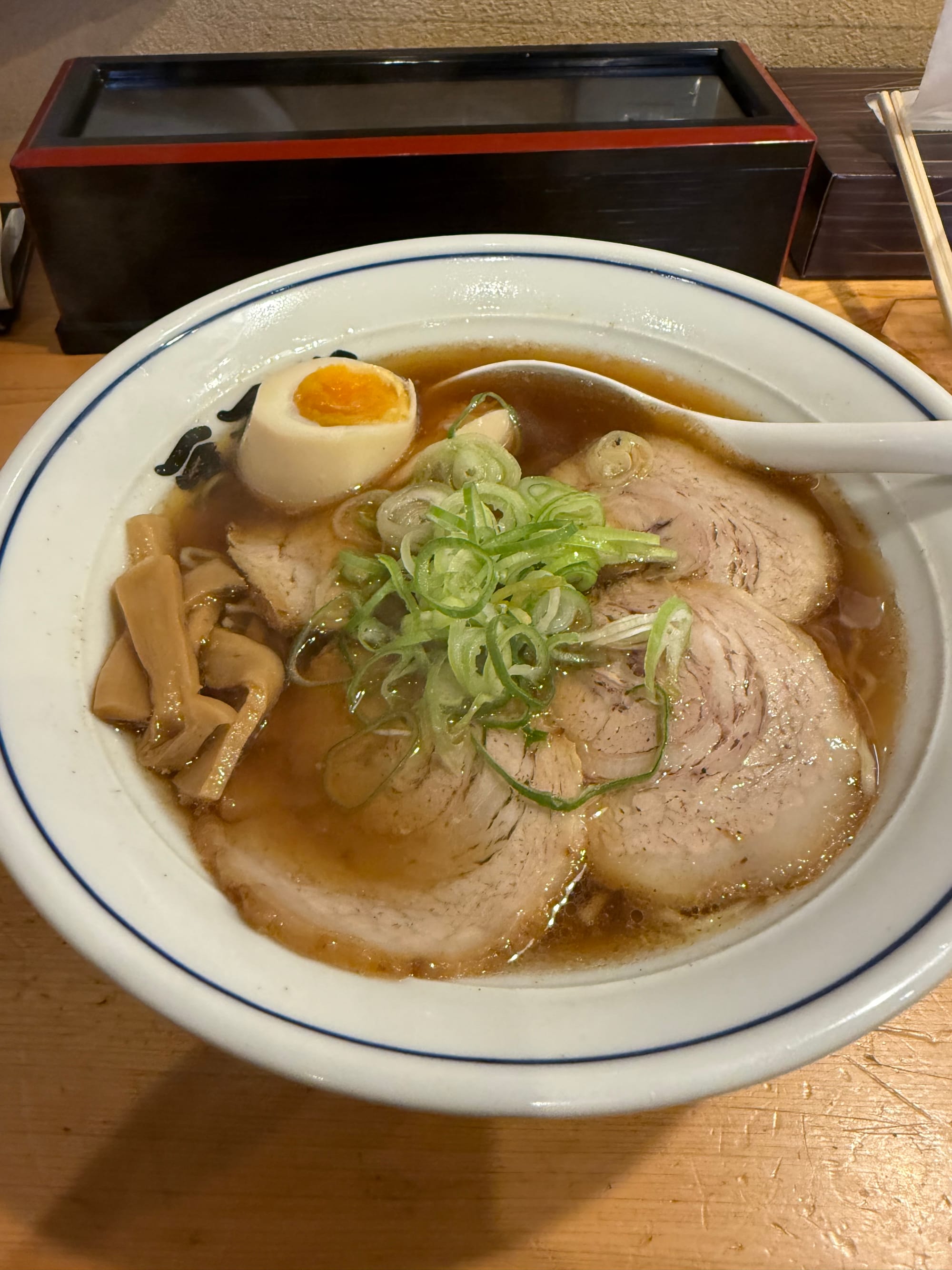
As I was starting to get hungry I decided to go and get some gyoza and ramen from a nearby restaurant.
A serving of freshly cooked gyoza in Takayama, with crisp golden-brown skins and a traditional pan-fried finish.A bowl of Takayama ramen, a regional speciality known for its light soy-based broth and thin curly noodles, served with chashu pork, bamboo shoots and spring onions.
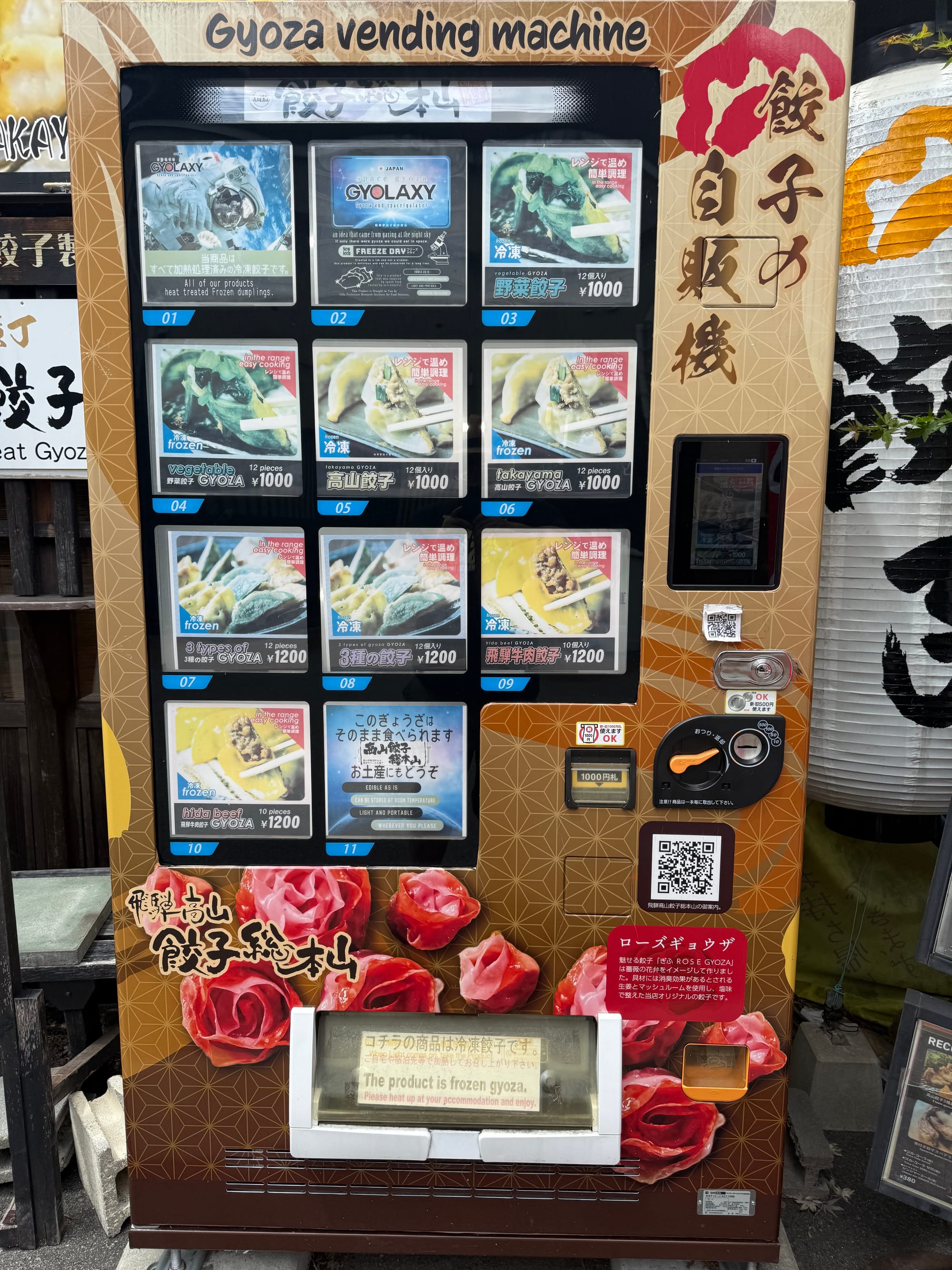
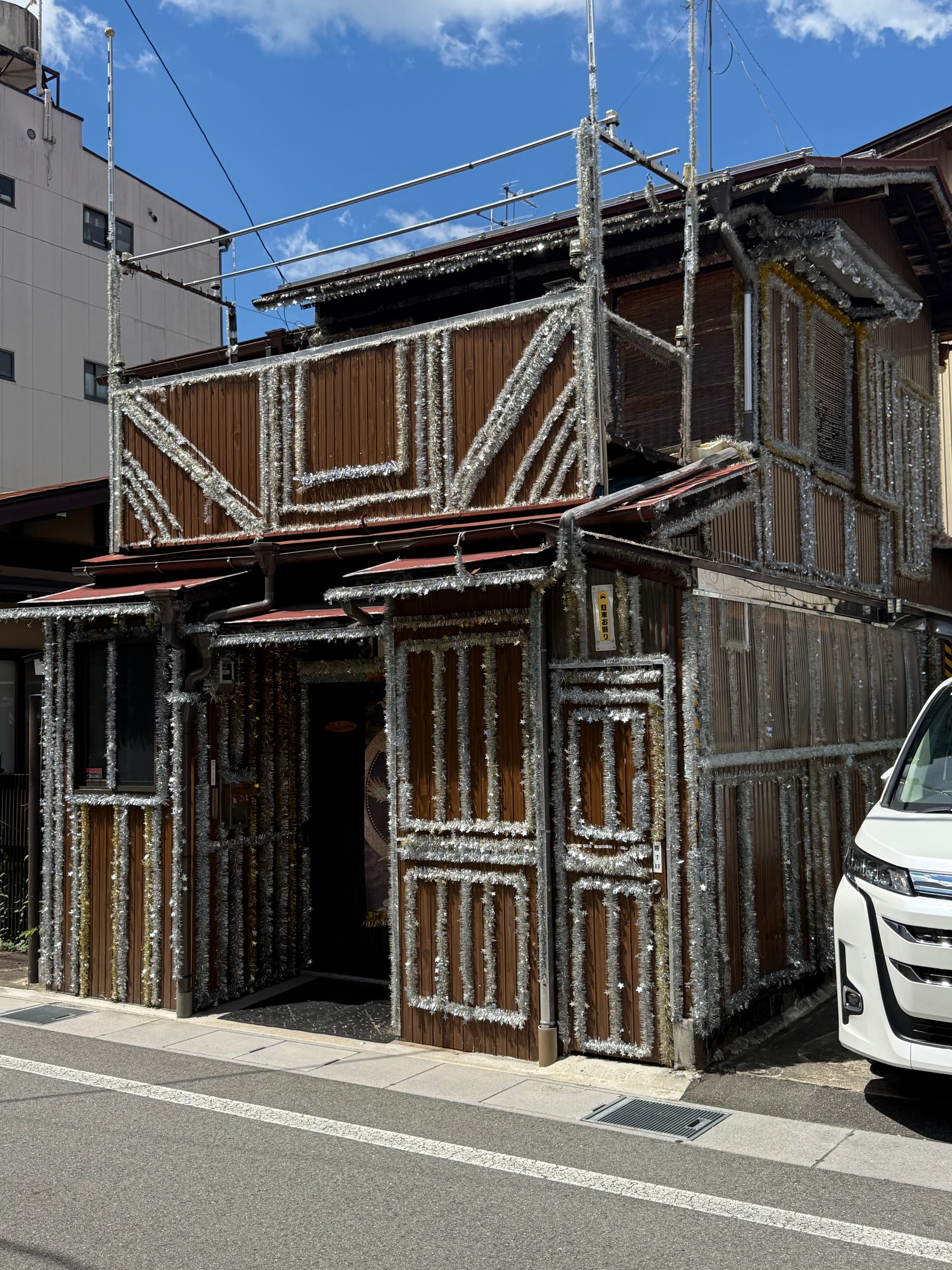
On my way to the Hida Kokubun-ji temple, I encountered a few things, an old street showcasing the Edo style buildings, a vending machine that gives out Gyoza and a house decorated with tinsel.
Visitors explore Takayama's historic old town, where preserved wooden merchant houses and narrow streets offer a glimpse into the city's rich heritage as a centre of trade in the Hida region.Frozen gyoza vending machine in Takayama, offering a variety of dumplings including vegetable, Hida beef and local specialities, with touchscreen ordering and Japanese signage.A striking building in Takayama covered in silver tinsel decorations, creating an unusual and eye-catching feature among the city's traditional streetscape.
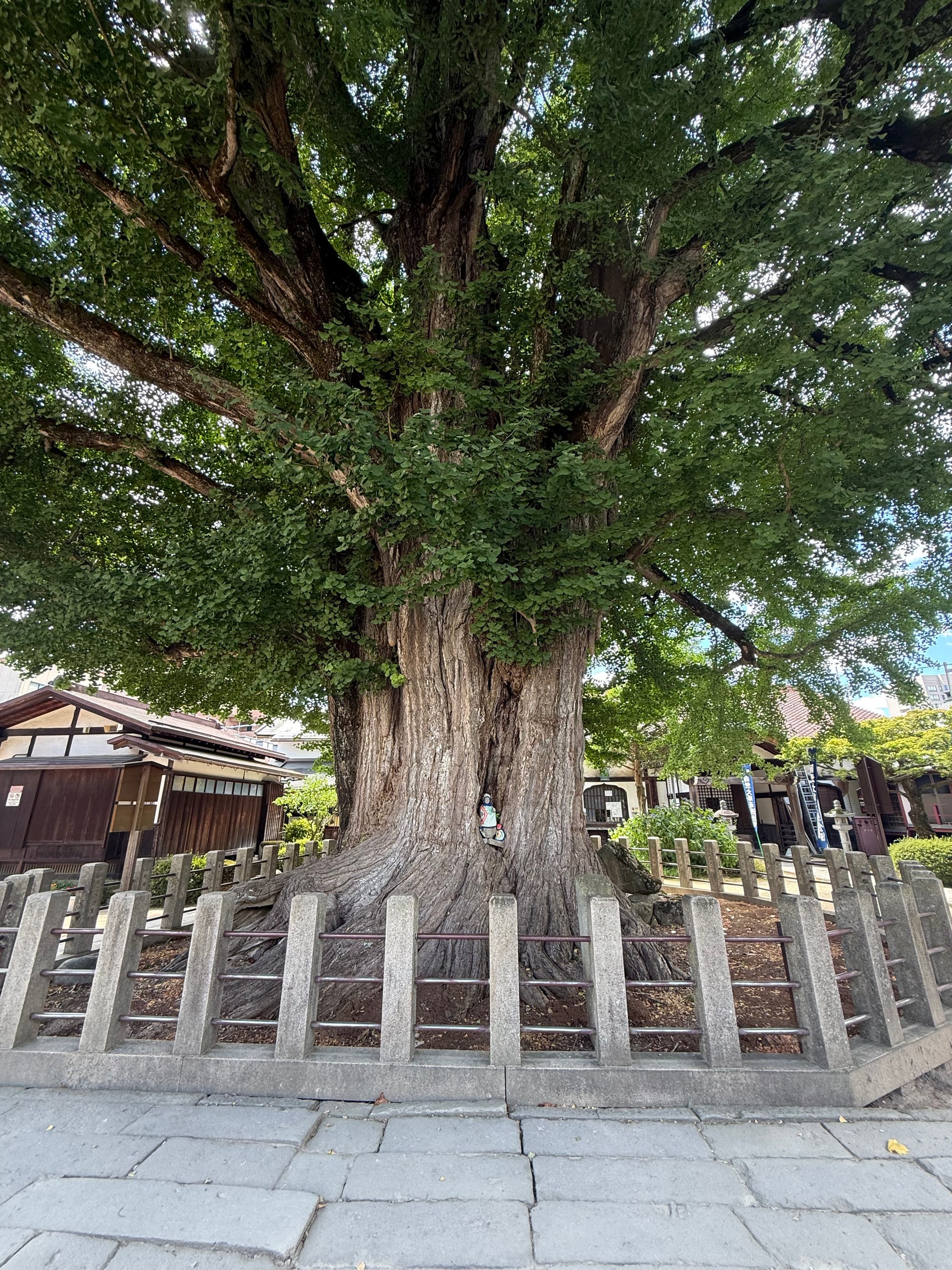
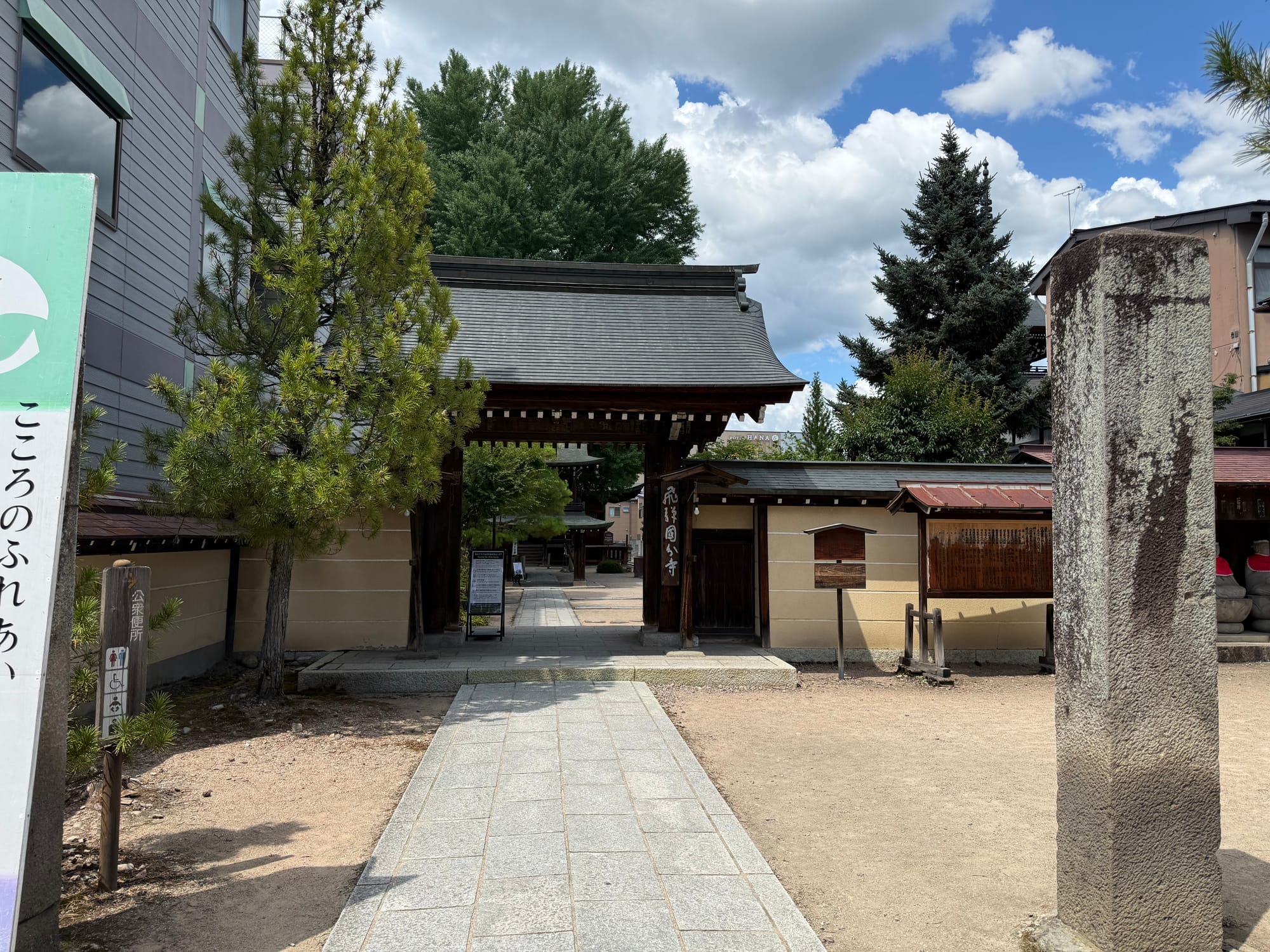
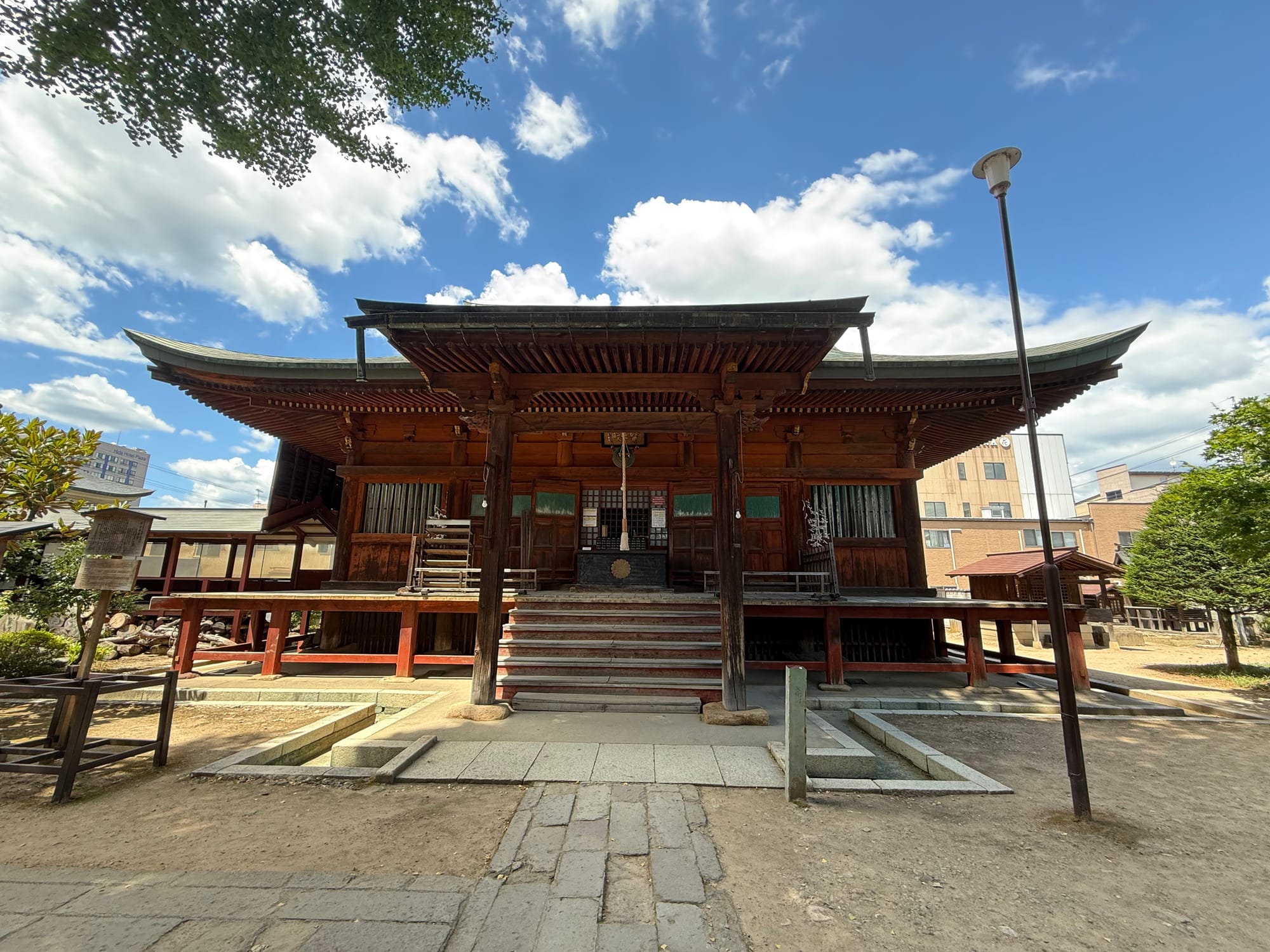
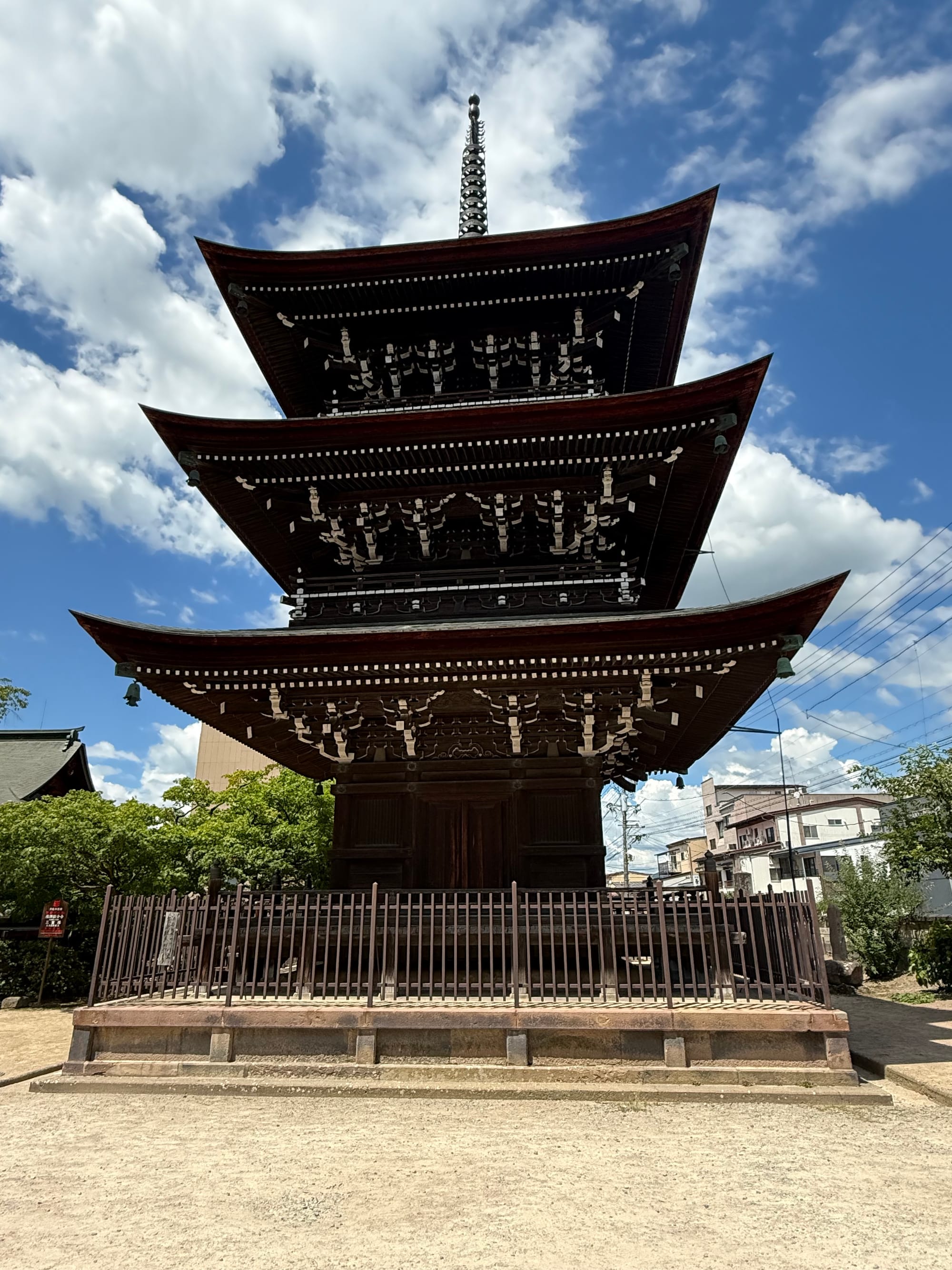
I finally made my way to the Hida Kokubun-ji temple, which is the oldest Temple in the city and was established in the Nara Period (710-794).
A giant ginkgo tree stands within the grounds of Hida Kokubun-ji Temple. Estimated to be more than 1,200 years old, it is one of Takayama's most celebrated natural and historic landmarks.The entrance to Hida Kokubun-ji Temple, the oldest temple in Takayama. Founded in the eighth century, it is best known for its historic buildings and ancient ginkgo tree.The main hall of Hida Kokubun-ji Temple, one of Takayama's oldest religious sites. The temple was founded in the eighth century as part of a network of provincial temples established across Japan.The three-storey pagoda at Hida Kokubun-ji Temple is one of Takayama's most important historic structures. Built in 1820, it is the only pagoda in the Hida region and a symbol of the temple's long history.
Hirayuo Great Falls
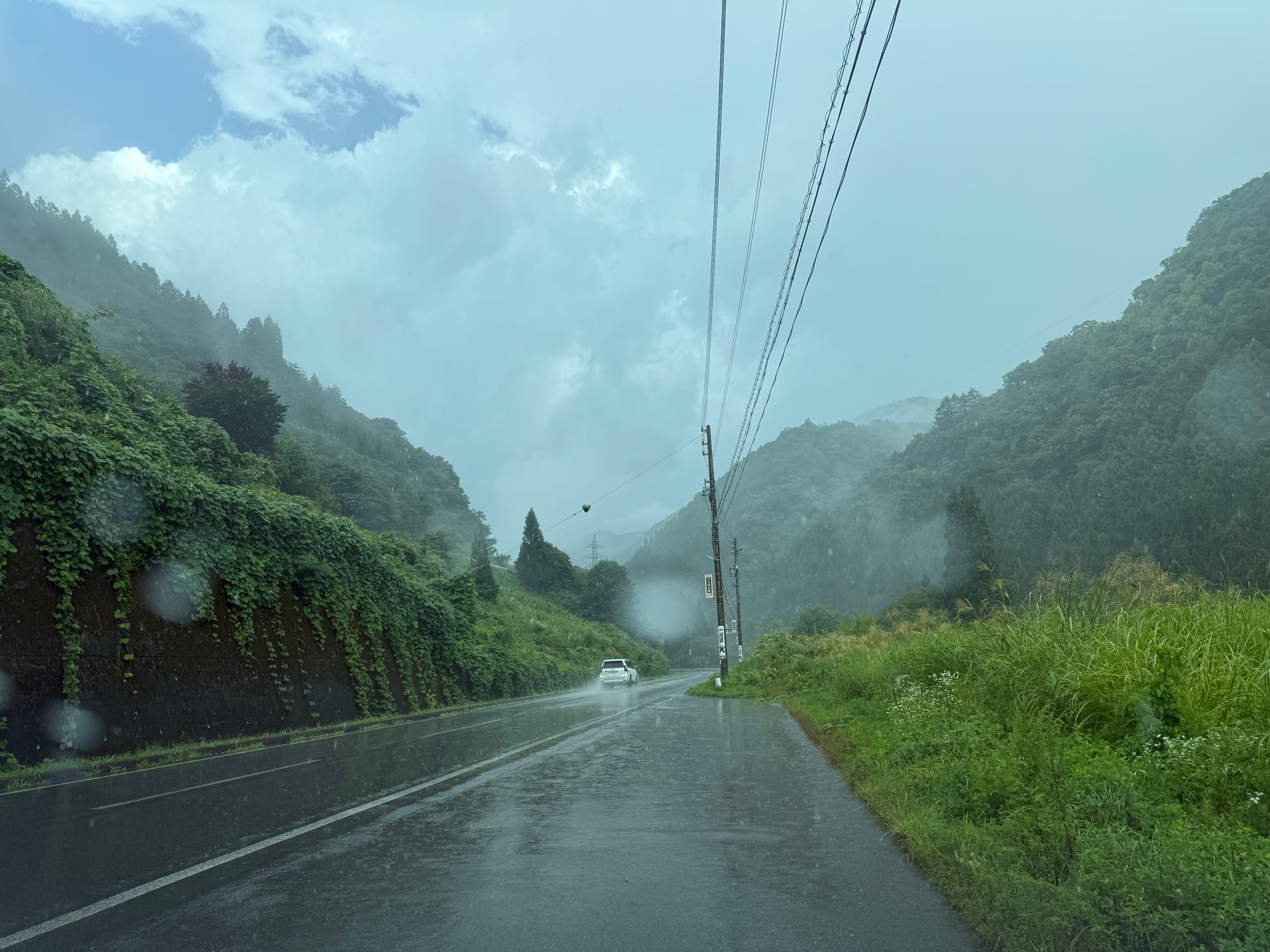
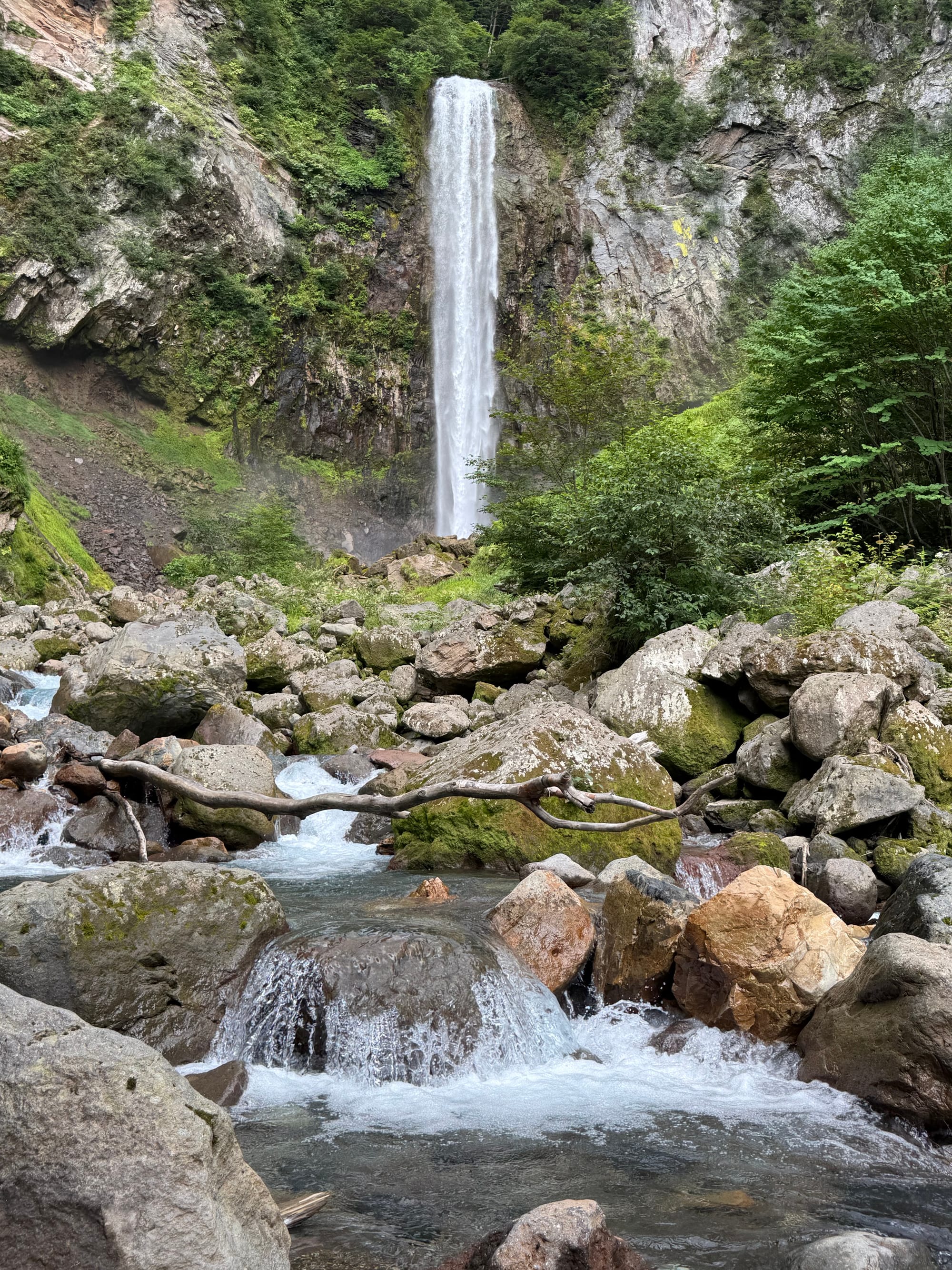
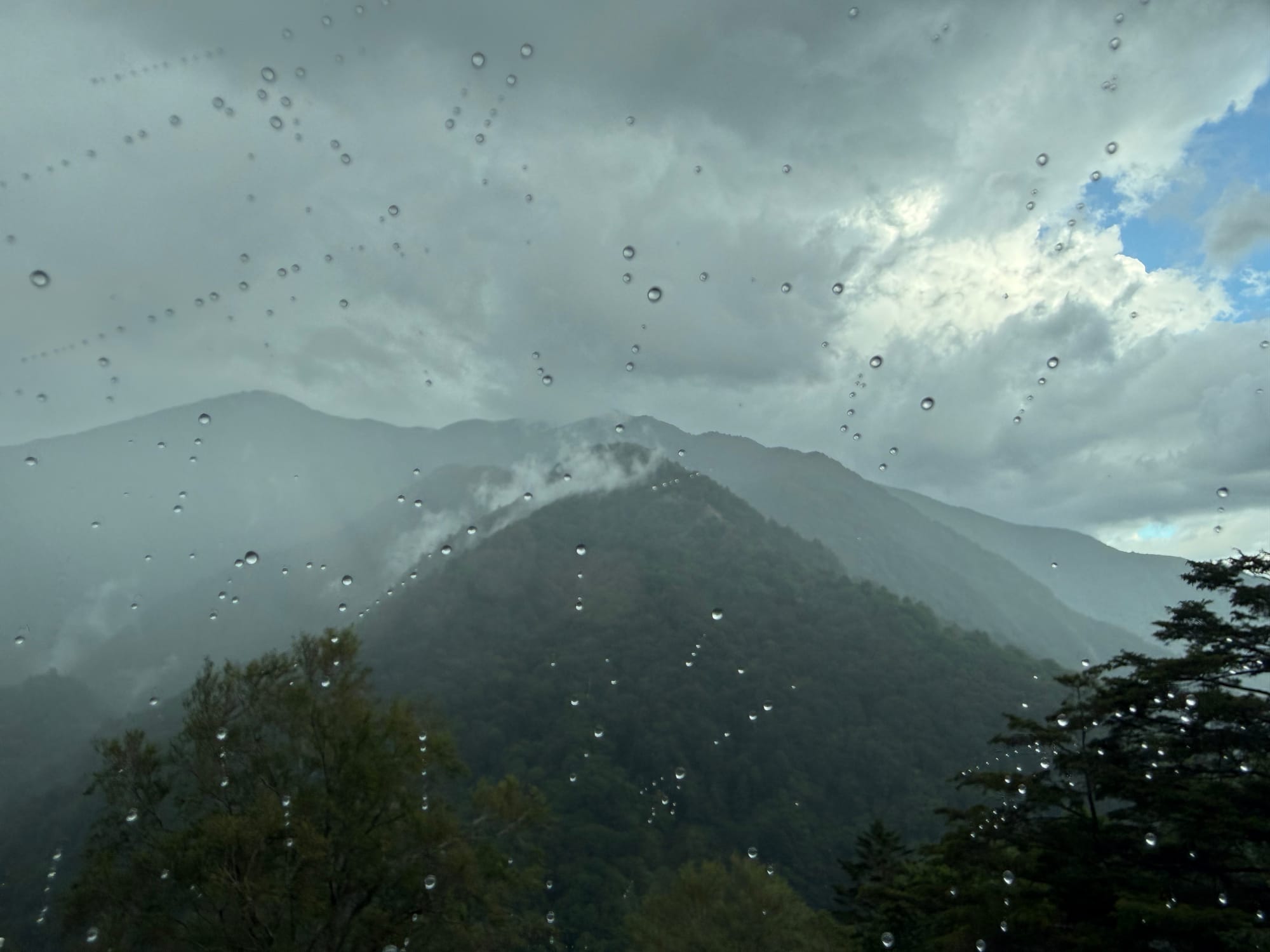
After this, I didn’t really have much planned, so on the way back, decided to stop by the Hirayuo Great Falls, which I saw a sign for on the way to Takayama. I was half and half on if I was going to be able to go here due to the rain and thunderstorms, but luckily the weather stopped being a pain for me to be able to stop there.
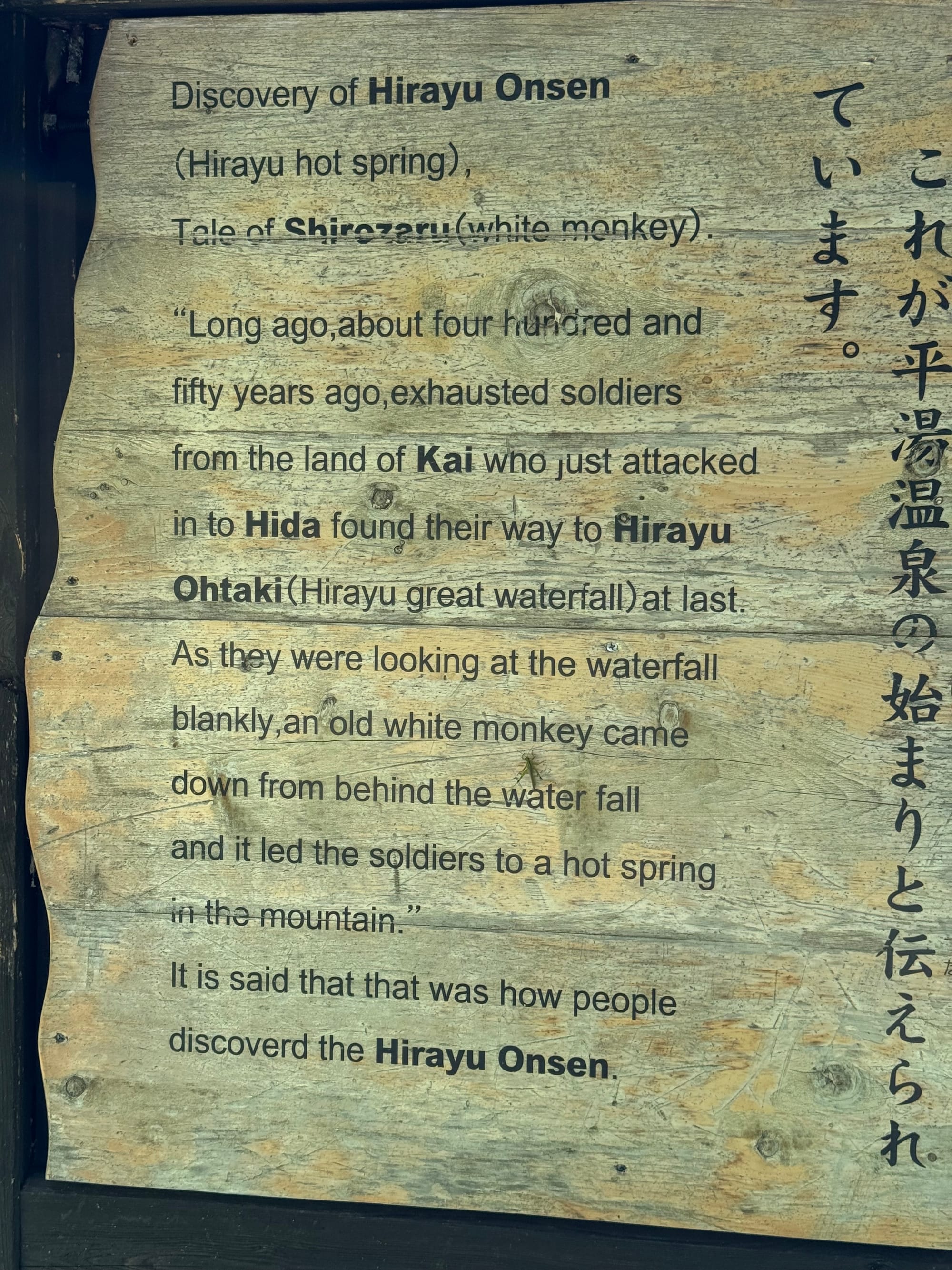
A sudden summer downpour drenches a mountain road between Takayama and the surrounding highlands, with rain and low cloud briefly transforming the scenic landscape.An interpretive sign at Hirayu Great Falls recounts the local legend of the discovery of Hirayu Onsen, in which a white monkey is said to have led weary soldiers to a hot spring hidden in the mountains.Hirayu Great Falls is one of the largest waterfalls in the Northern Japan Alps, dropping 64 metres through a forested mountain valley near the hot spring resort of Hirayu Onsen.
There was also a sign that warned about bears that could be about.
Warning signs near Hirayu Great Falls advise visitors about Asian black bears that inhabit the surrounding forests, providing guidance on staying safe while hiking in the area.A mountain stream flows through the forest below Hirayu Great Falls, carrying water from the waterfall through a boulder-strewn valley in the Northern Japan Alps.Hirayu Great Falls drops 64 metres into a forested valley in the Northern Japan Alps. A short walking trail leads visitors to the base of the waterfall, where the full scale and power of the cascade can be appreciated.
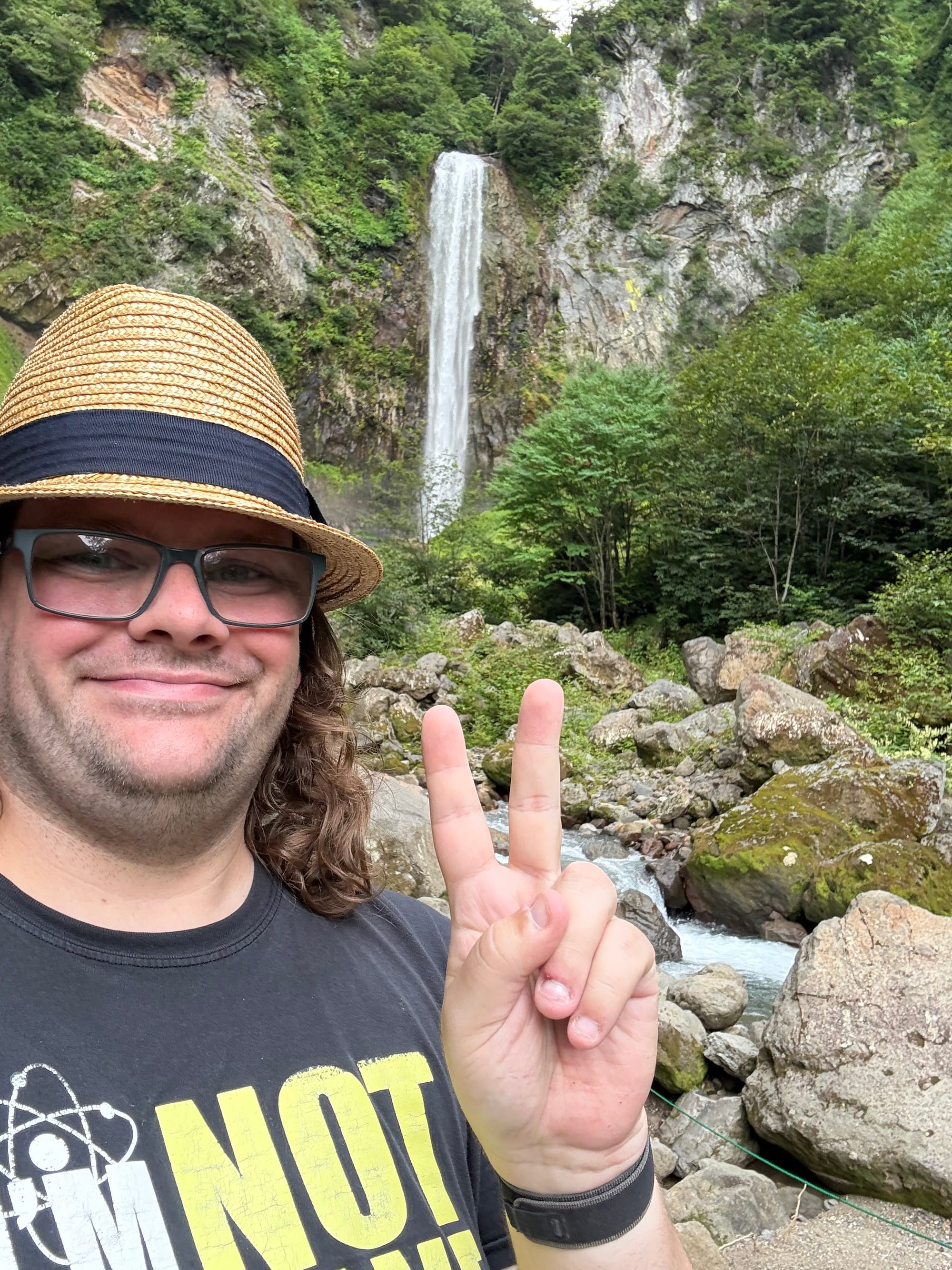
The waterfall was amazing to look at and it was a really nice place to just relax for a bit before hitting the road again.
Hirayu Great Falls crashes into a boulder-strewn valley at the foot of the waterfall, where visitors can experience the scale, sound and power of one of the Northern Japan Alps' most impressive cascades.At the base of Hirayu Great Falls, one of the largest waterfalls in the Northern Japan Alps, surrounded by towering cliffs, forest and rushing mountain streams.
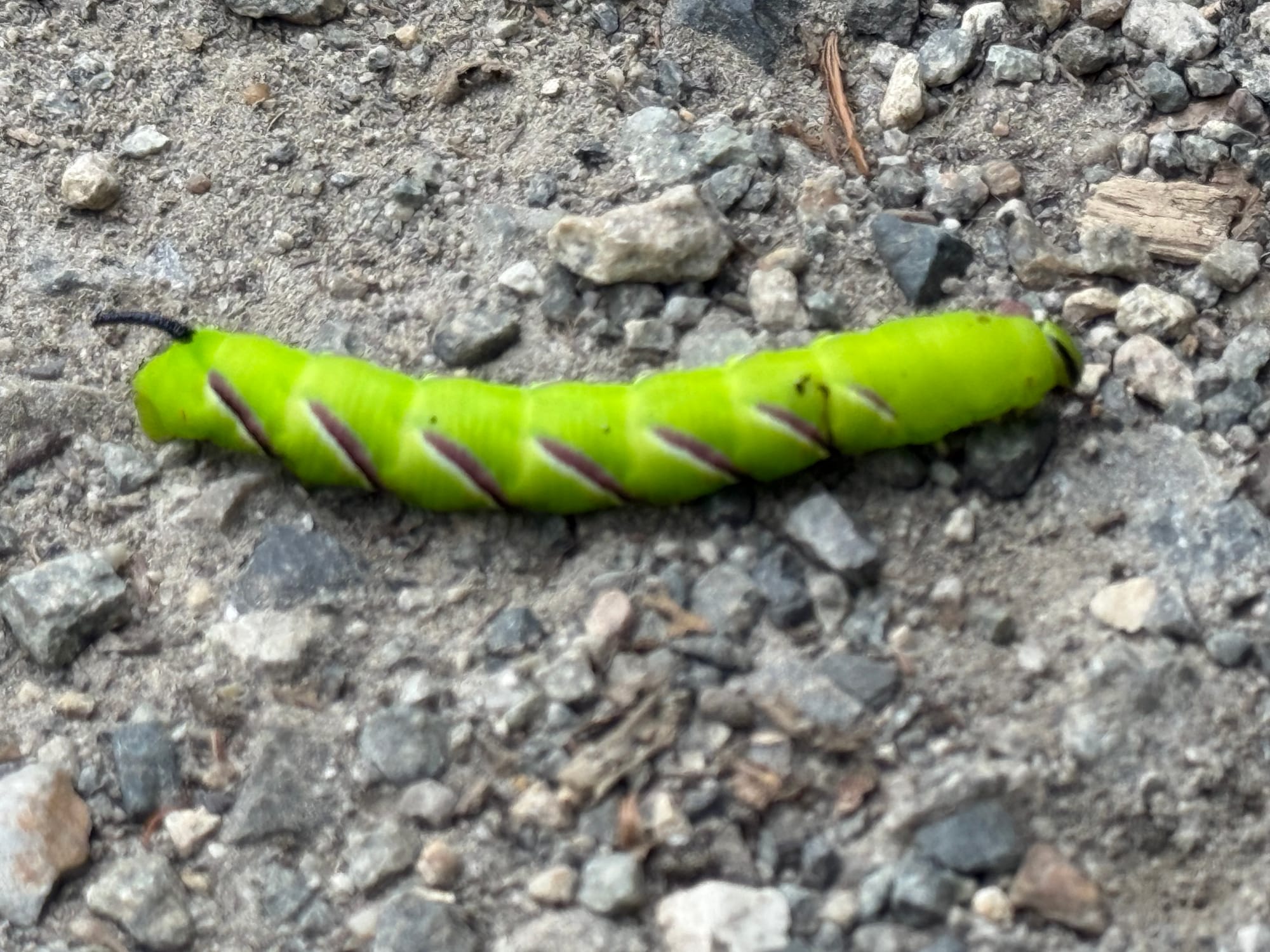
I also saw this little fellow which is a Hawk Moth Caterpillar.
A hawk moth caterpillar on a forest trail near Hirayu Great Falls. Its bright green body, diagonal markings and rear horn are characteristic features of many hawk moth larvae.
Abo Pass
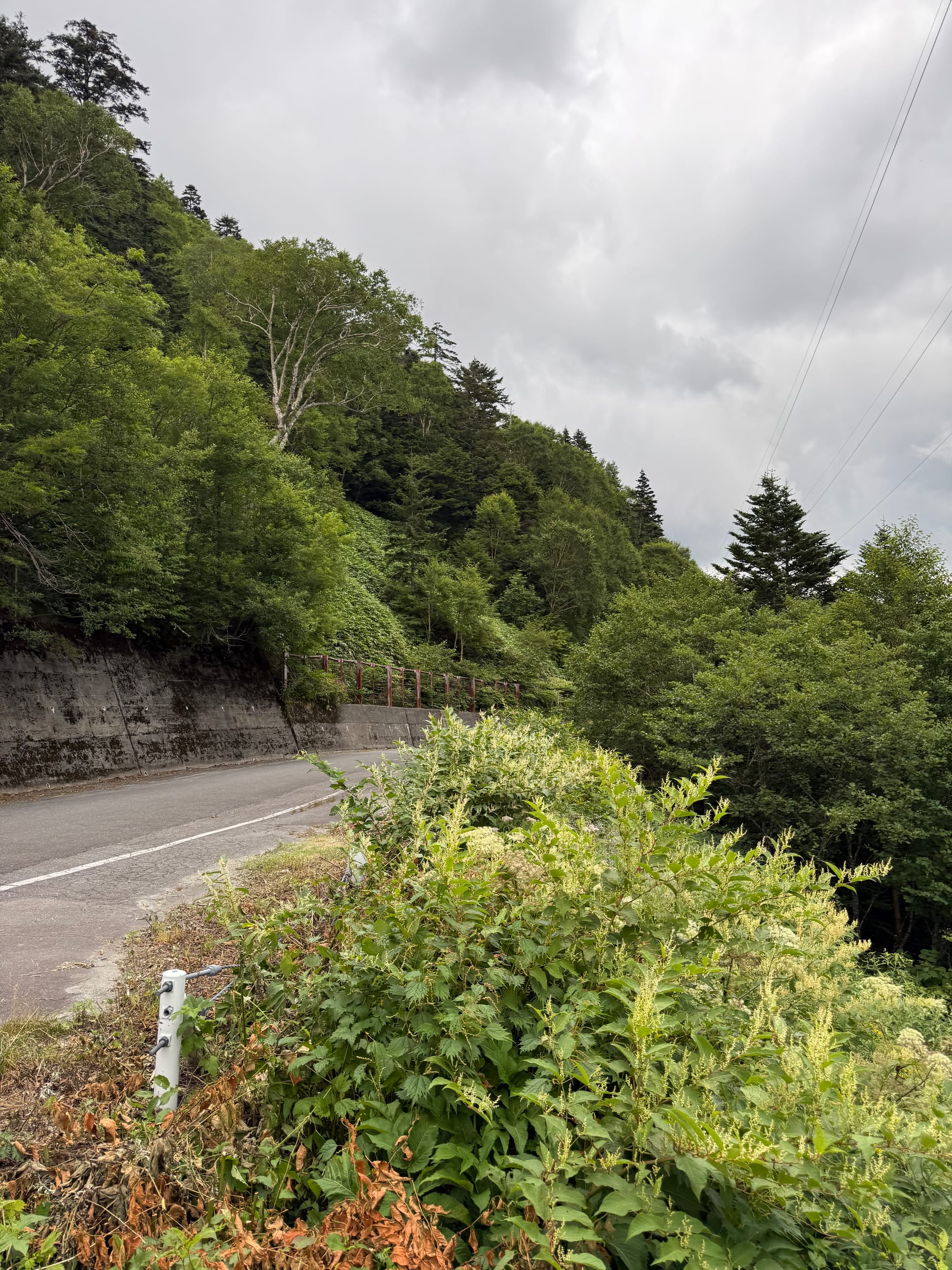
Afterwards I had a choice to make, take the express way back though the mountain or go on some fun twisty roads over the mountain, guess which one I did.
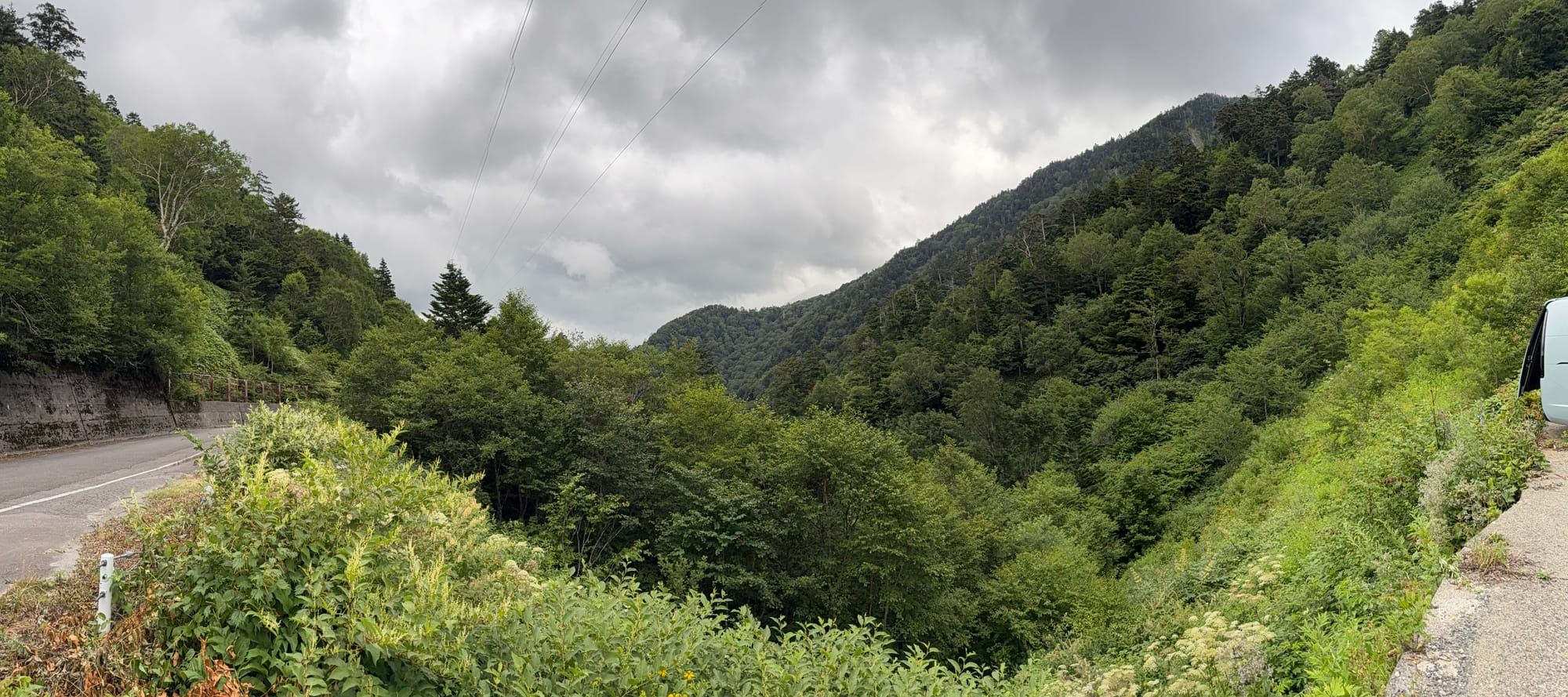
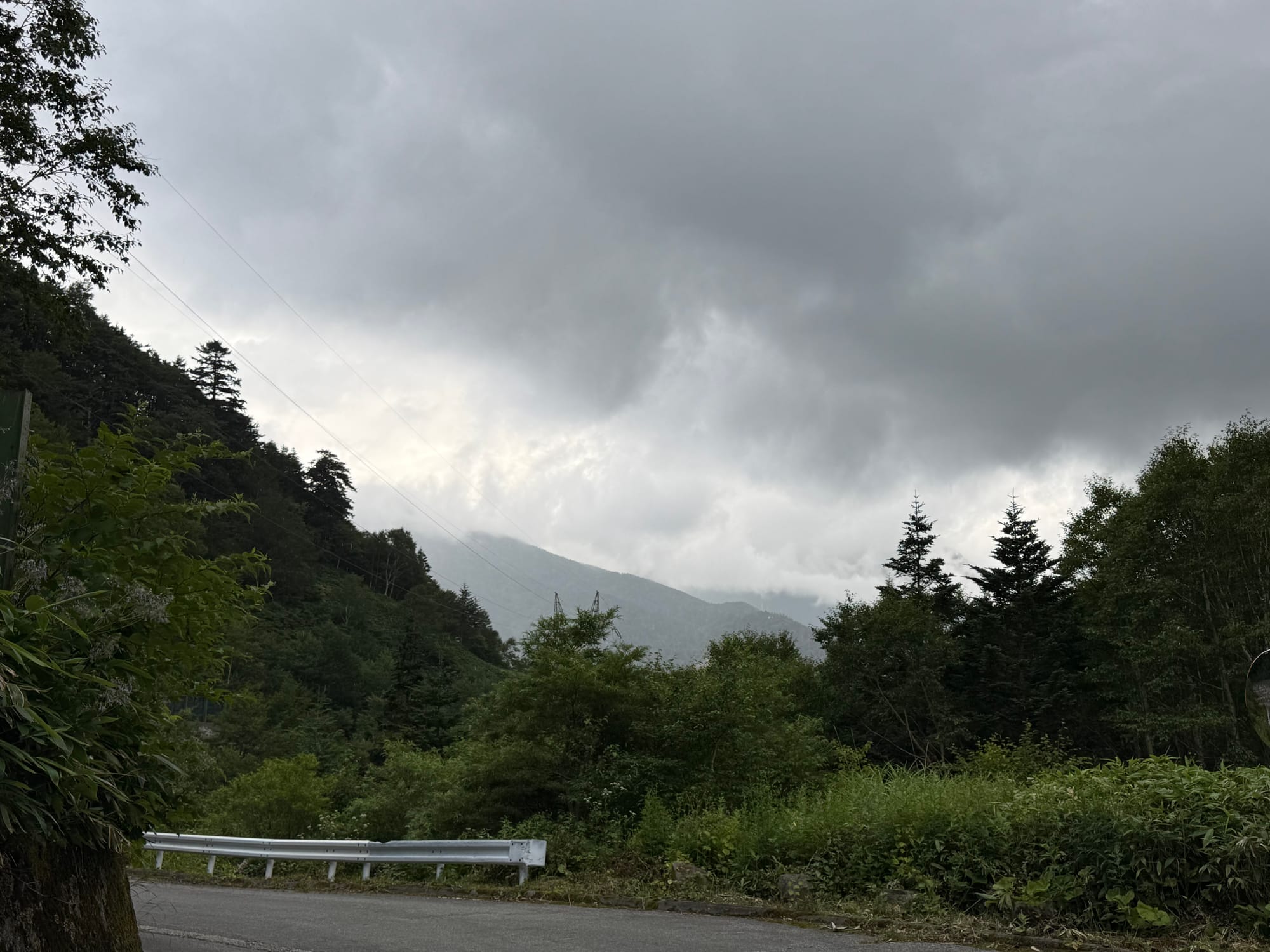
If you guessed up and over, then you are correct. It reminder me of the Scottish roads I was travelling on last year, but more twisty and just as much fun and the view from the top was amazing.
Abo Pass connects the regions around Matsumoto and Takayama through the Northern Japan Alps. The winding mountain route offers dramatic scenery and rapidly changing weather conditions.A view across the forests and mountains of Abo Pass, a historic route through the Northern Japan Alps linking the Matsumoto and Takayama regions.Dark storm clouds build over Abo Pass in the Northern Japan Alps, creating a dramatic mountain landscape as changing weather moves through the high-elevation forests.A summer storm passes over Abo Pass, with rain, low cloud and mist drifting across the forested mountains of the Northern Japan Alps.
Nagawado Dam
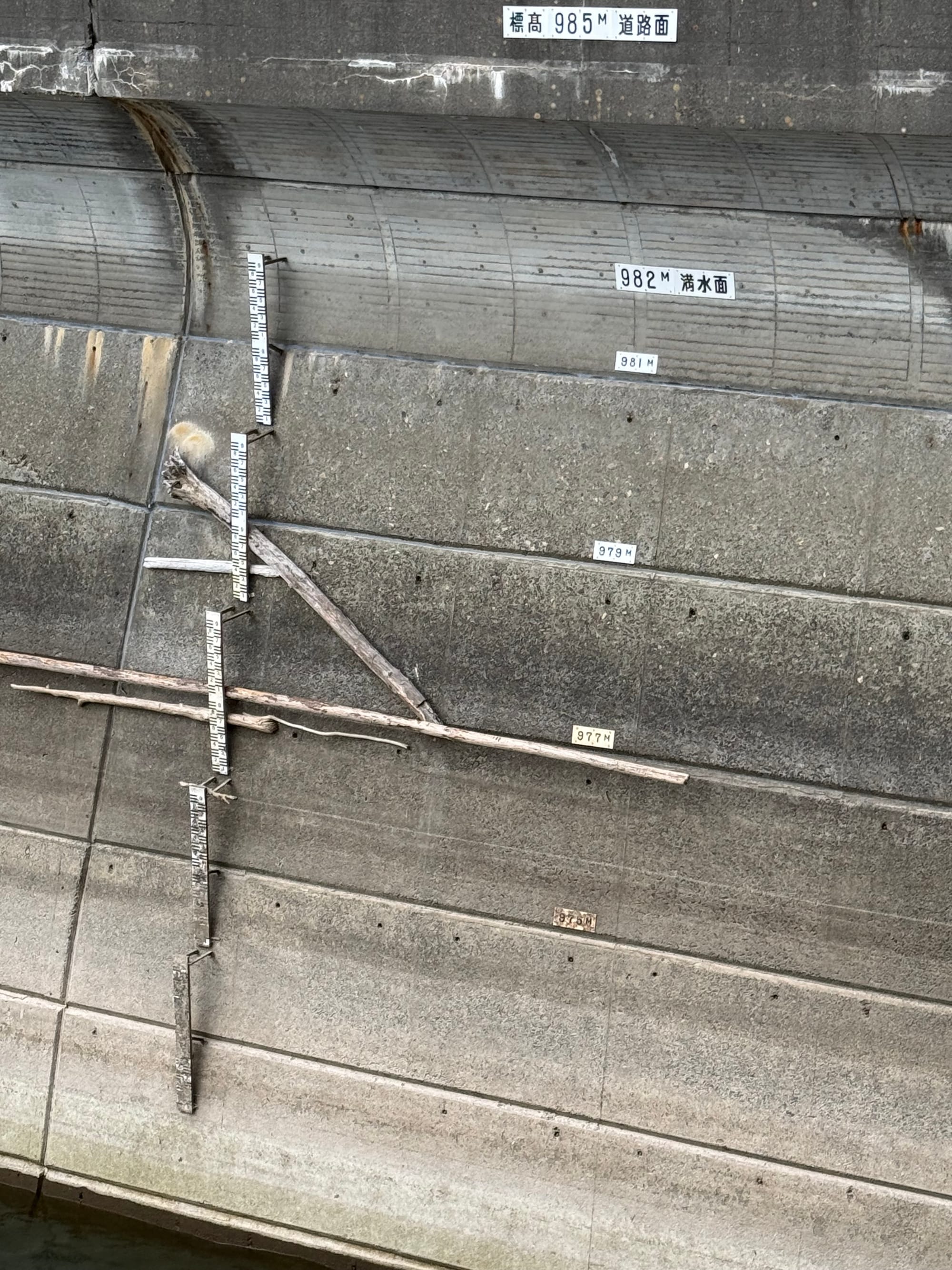
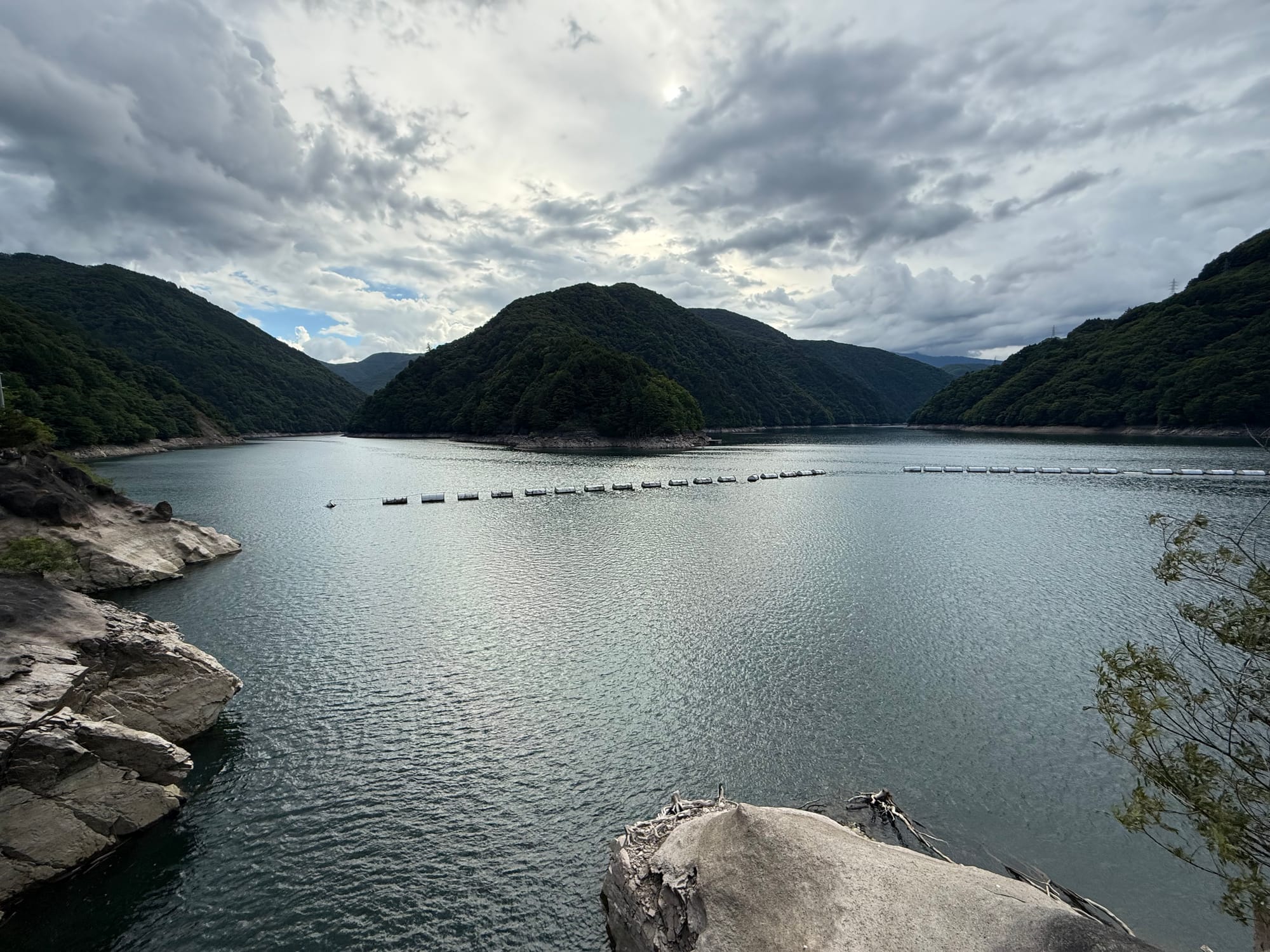
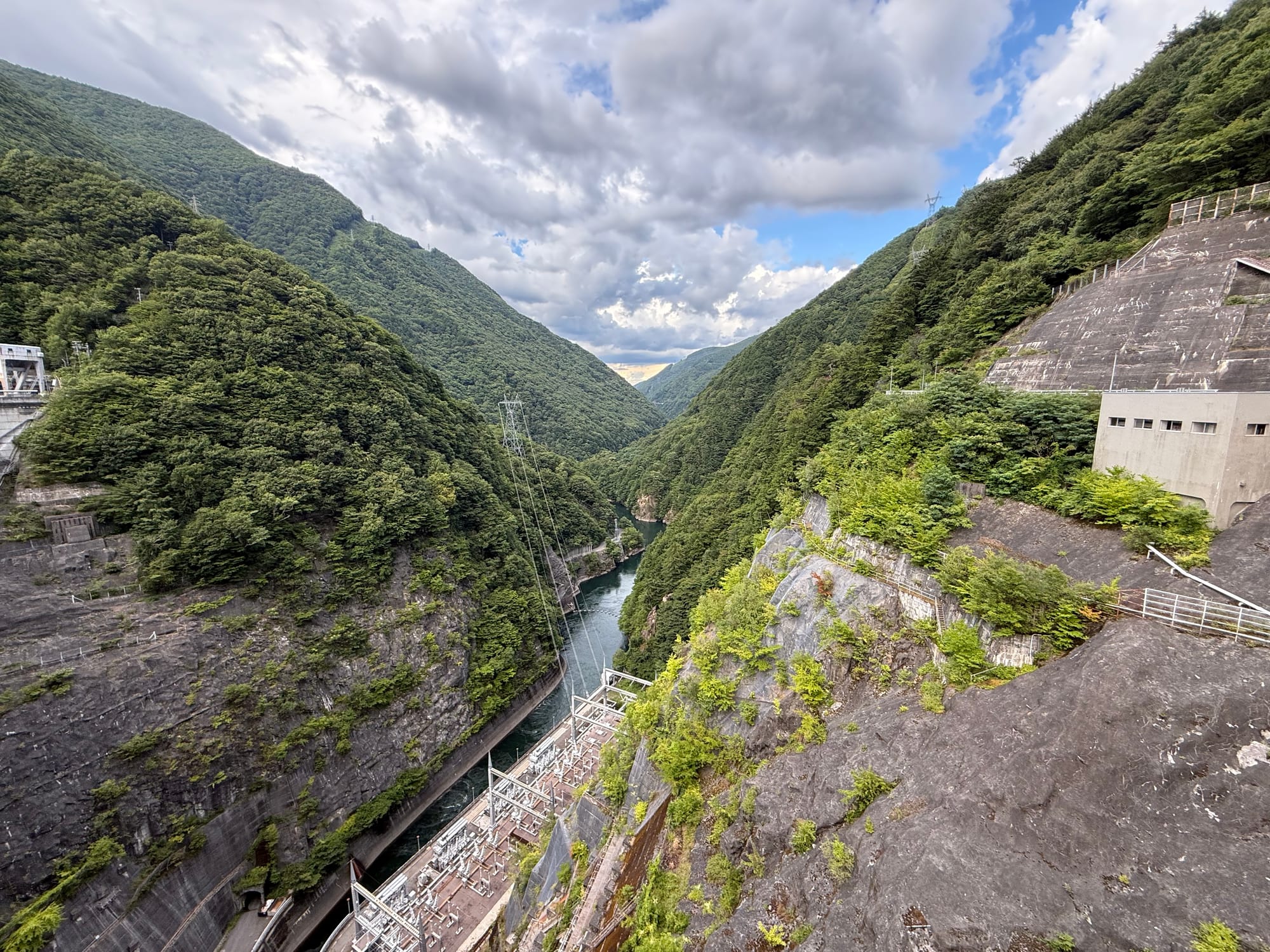
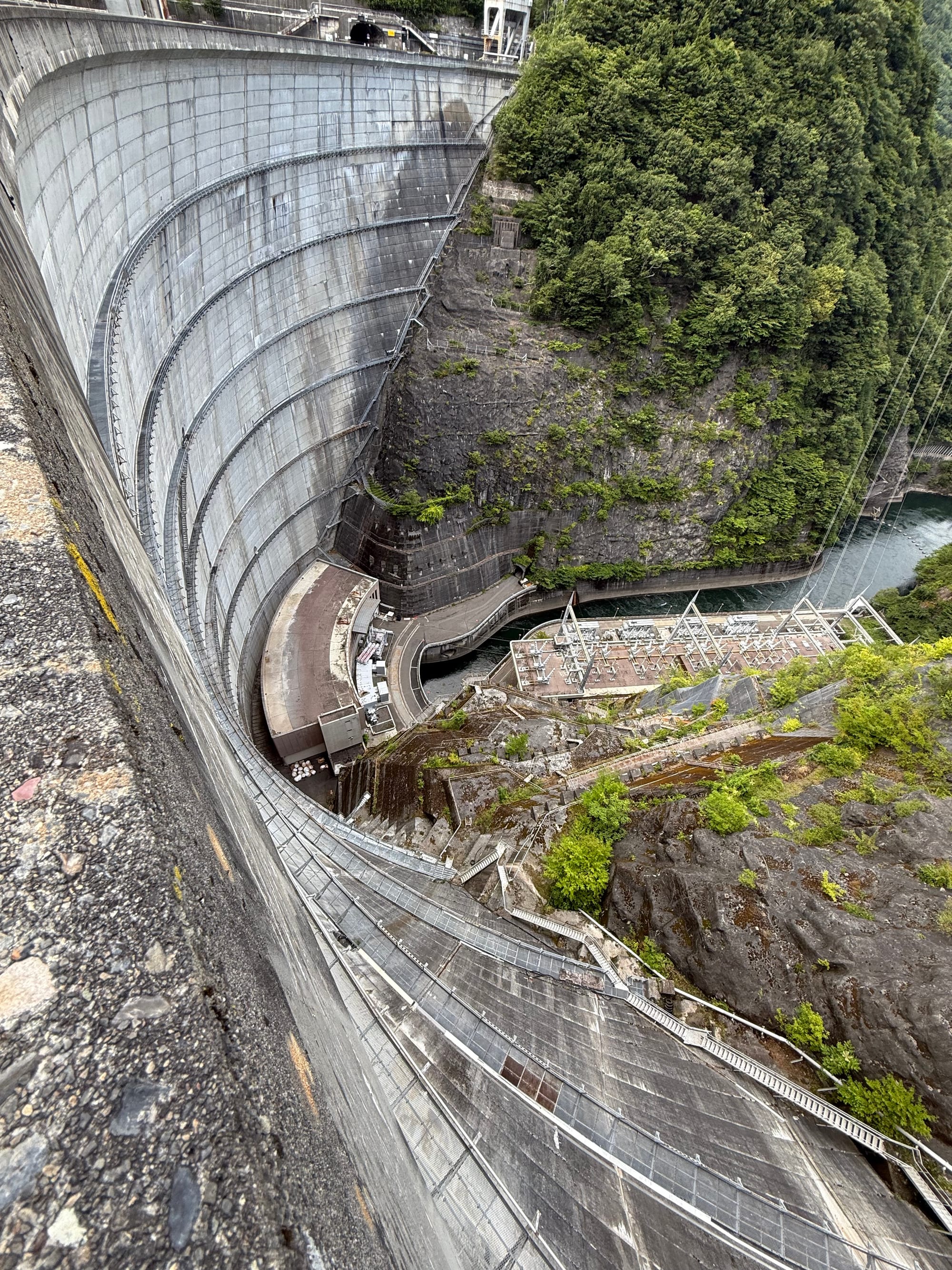
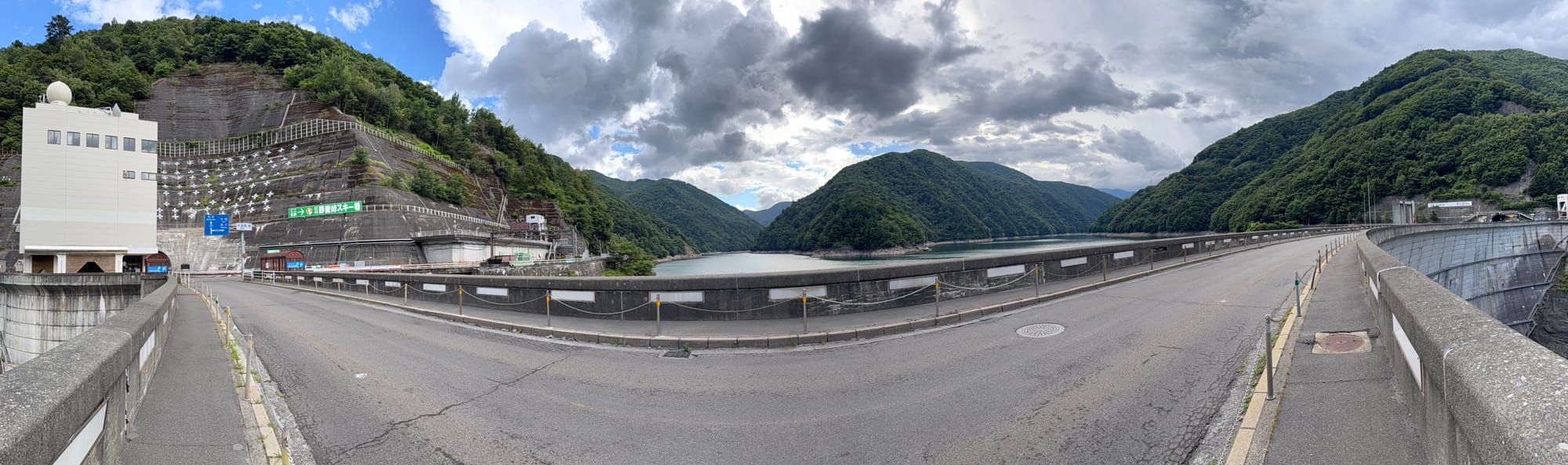
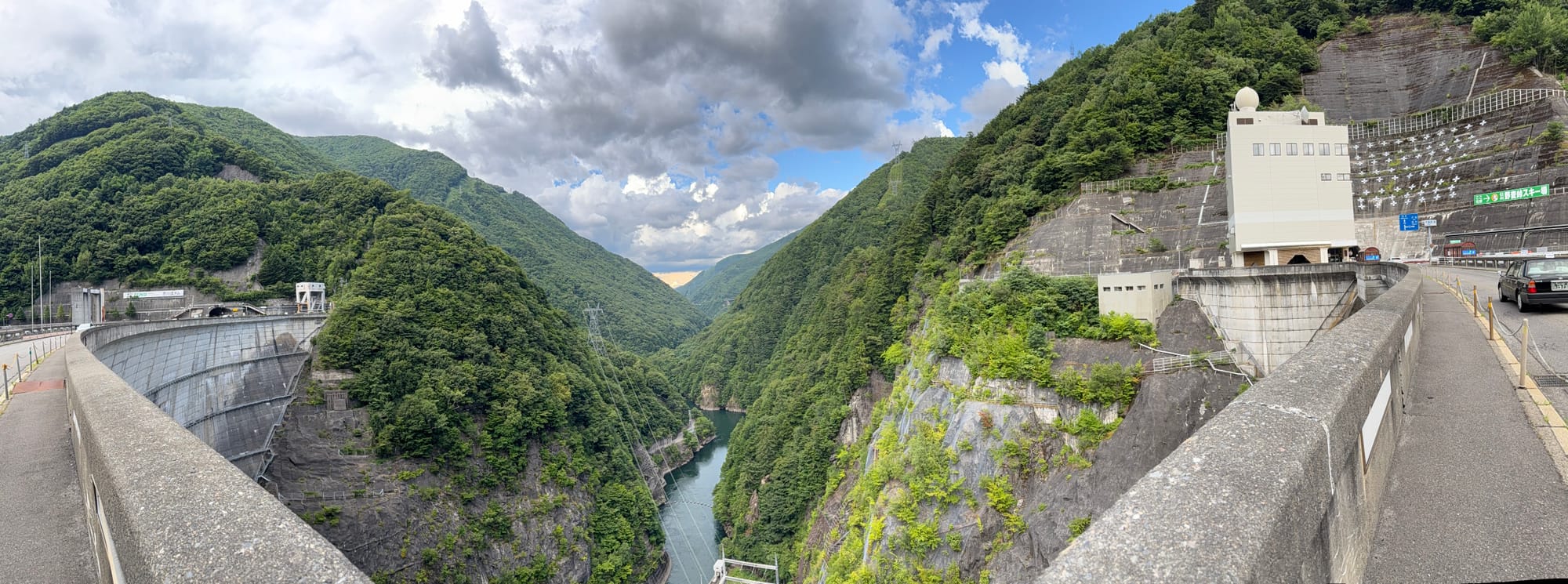
I also stopped by the Nagawado dam, which sits at 985 metres above sea level and I crossed both on the way to Takayama and on the way back. The road that goes over the dam, has tunnels on both sides, so you literally exit a tunnel, go over the dam and then enter another tunnel, well unless you take a side road that leads to another part of the valley.
A water level gauge on Nagawado Dam indicates the reservoir elevation, providing a visual reference for monitoring water storage within the Azusa River hydroelectric system.The reservoir behind Nagawado Dam stretches through a narrow mountain valley in Nagano Prefecture. Built on the Azusa River, the dam forms part of an important hydroelectric and water management system in the Japanese Alps.Looking downstream from Nagawado Dam into the Azusa River gorge. The dam is a key part of the hydroelectric network that harnesses the rivers of the Northern Japan Alps.Looking over the edge of Nagawado Dam, a 155-metre-high arch dam on the Azusa River. The structure is a key component of the hydroelectric system serving the mountainous heart of Nagano Prefecture.A panoramic view from the crest of Nagawado Dam, with the reservoir stretching into the mountains of the Azusa River valley. Completed in 1969, the arch dam is a key part of the hydroelectric system serving the Northern Japan Alps region.The view downstream from Nagawado Dam reveals the dramatic Azusa River gorge below. Surrounded by the steep mountains of the Northern Japan Alps, the dam is a key part of the region's hydroelectric infrastructure.
Join me next time as I carry on exploring around Suwa and places nearby in Suwa part 2.