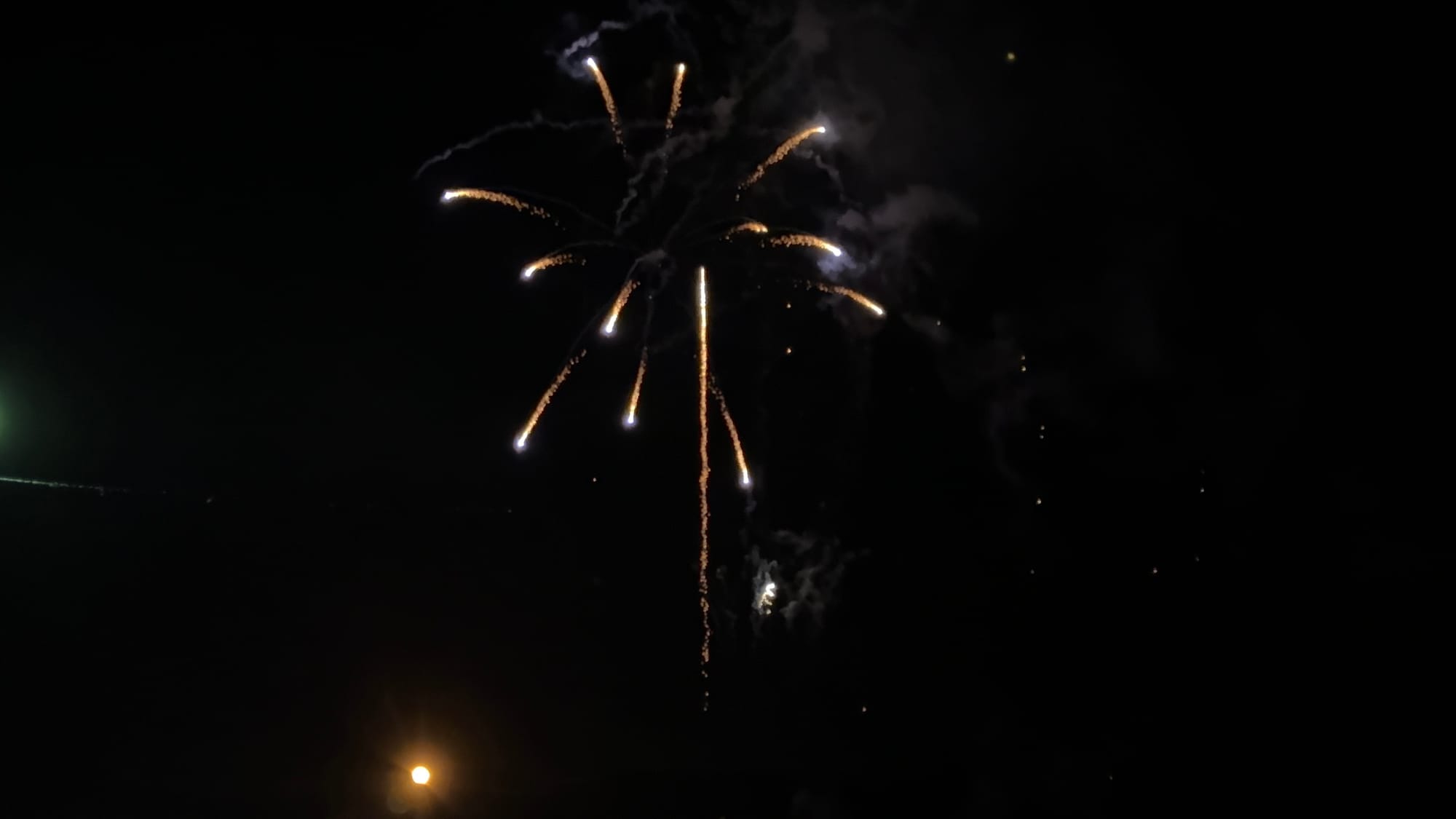
A firework explodes above Lake Suwa during one of Japan's most famous lakeside fireworks displays, lighting up the night sky with cascading golden trails.
Narai-juku and Rest Day
8th August
Today I decided to have a restful day, so got up and had breakfast late, then went for a soak in the Onsen and before making my way to Narai-juku.
Naraijuku
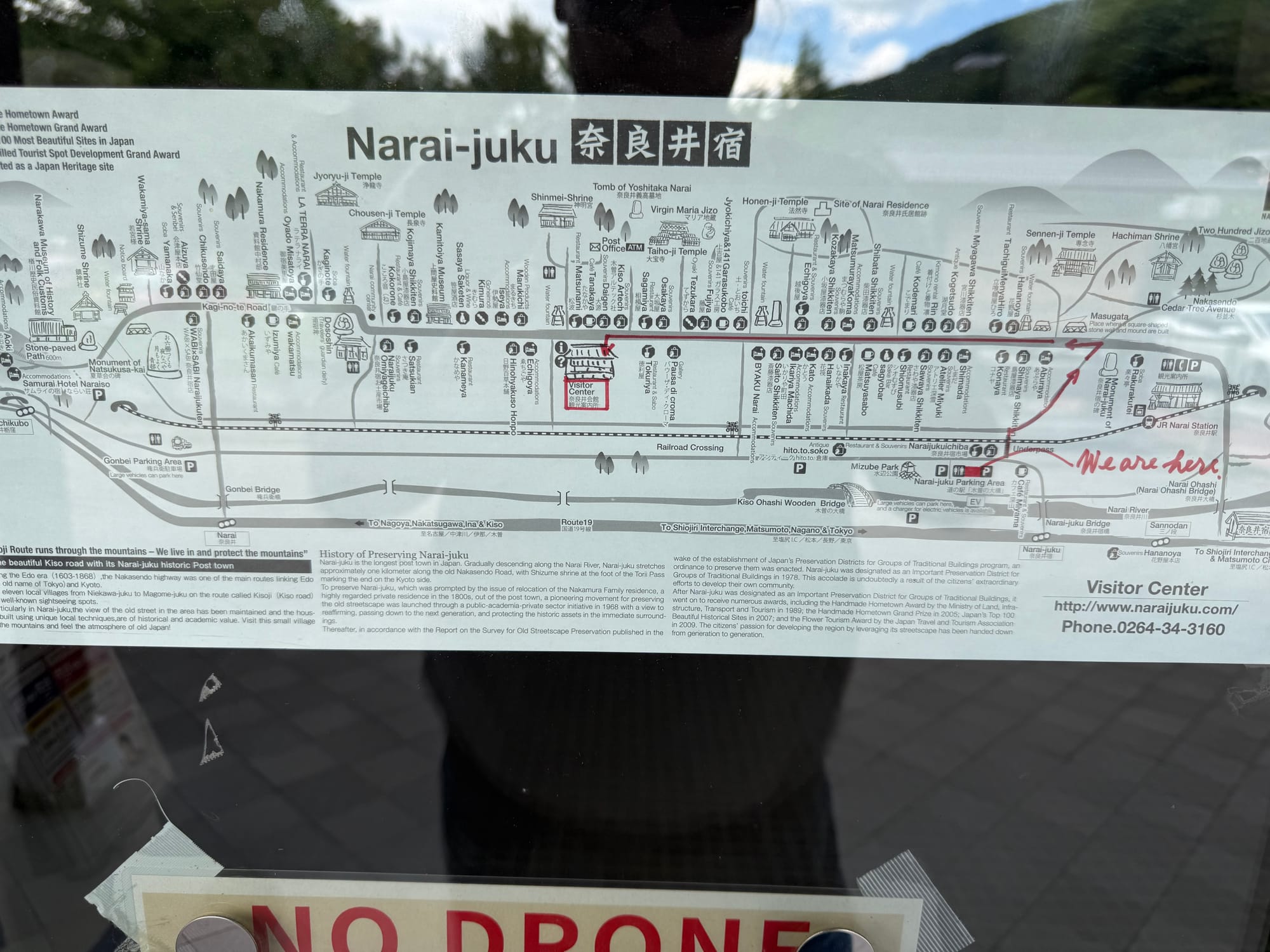
A map of Narai-juku, a well-preserved post town on the historic Nakasendo route. The map highlights key landmarks, museums, temples and traditional streets throughout the village.
Narai-juku was part of the 69 stations along the Nakasenō (Central Mountain Route), that connected Edo (Tokyo) to Kyoto, during the Edo period.
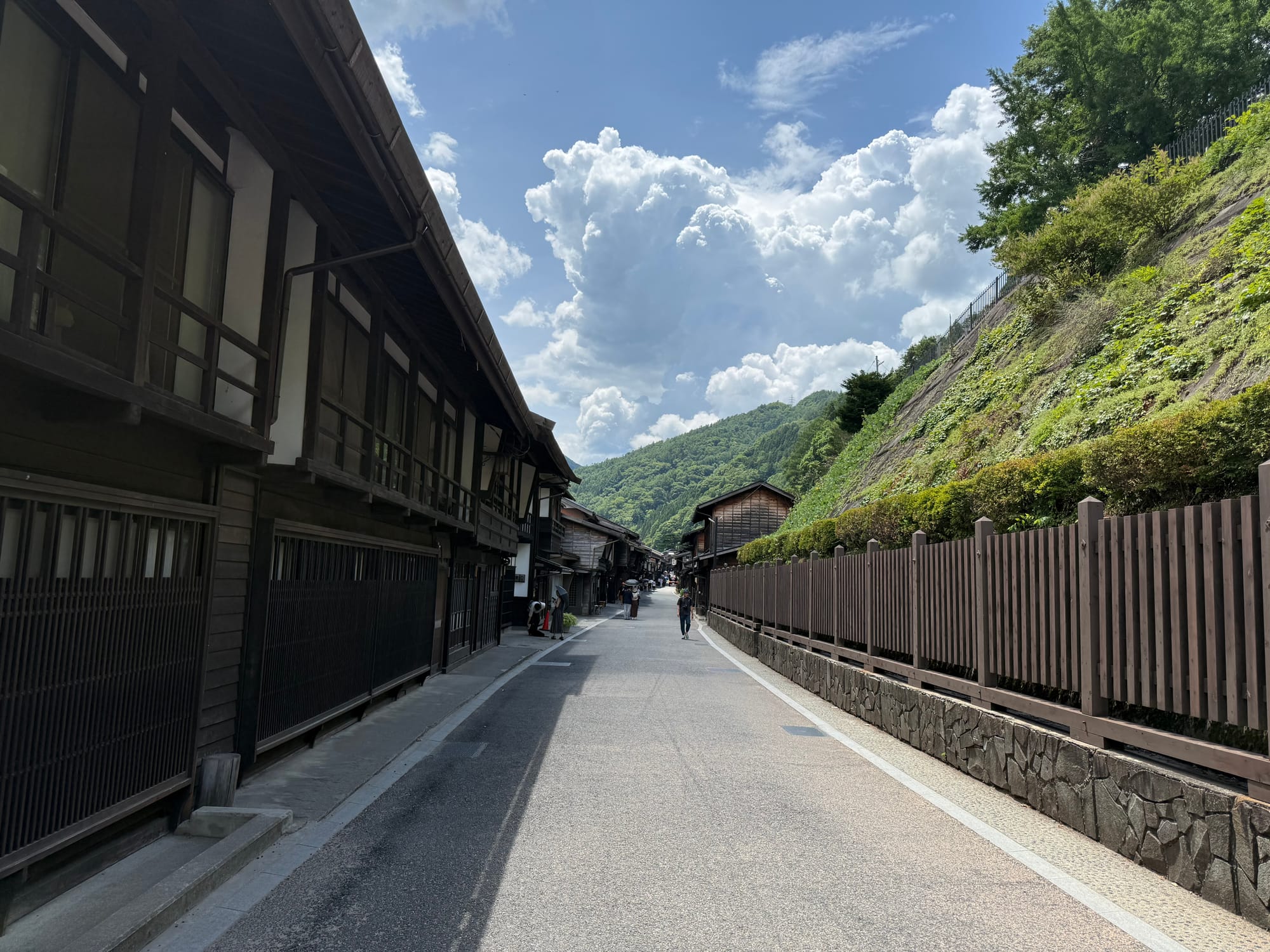
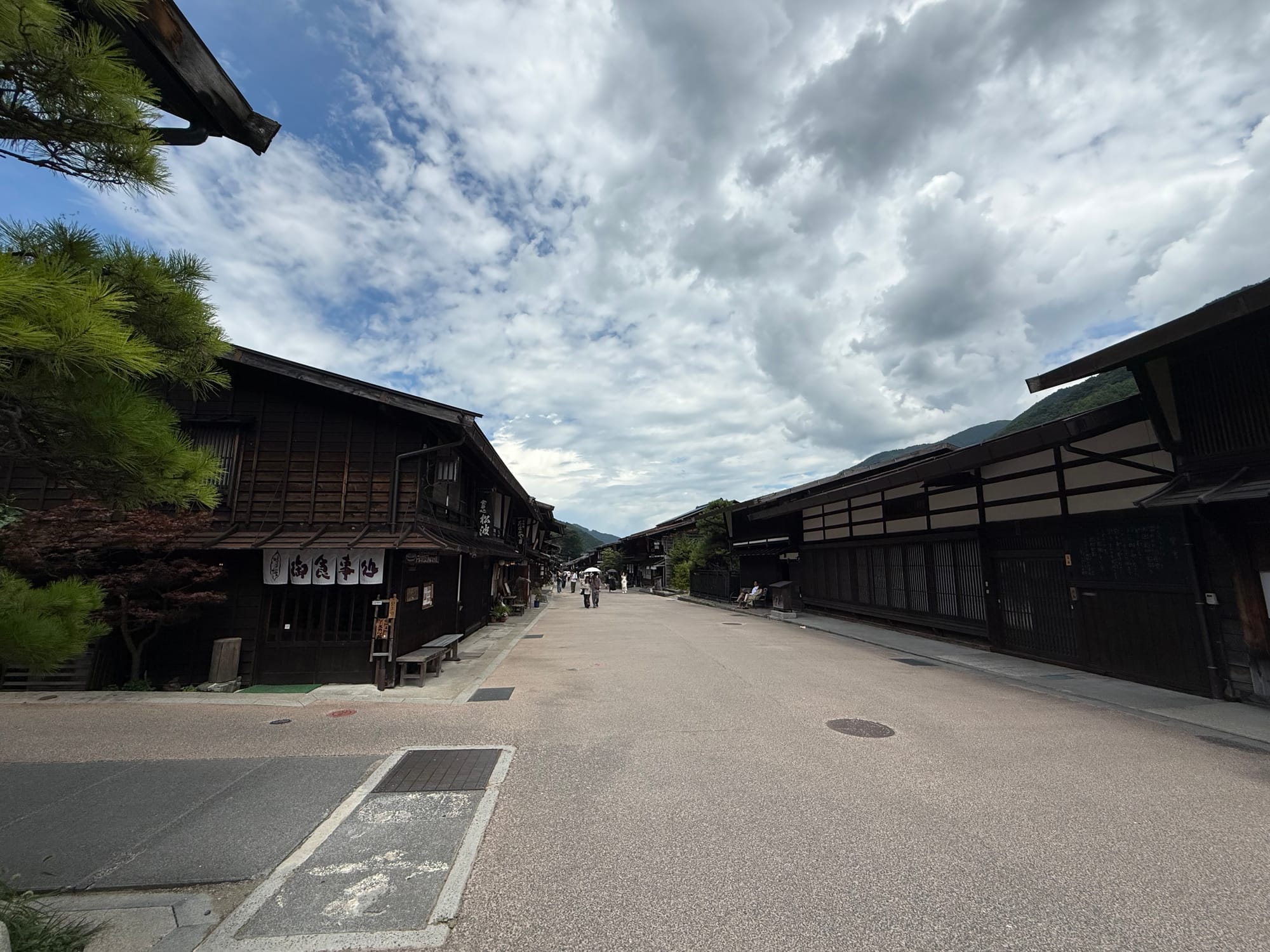
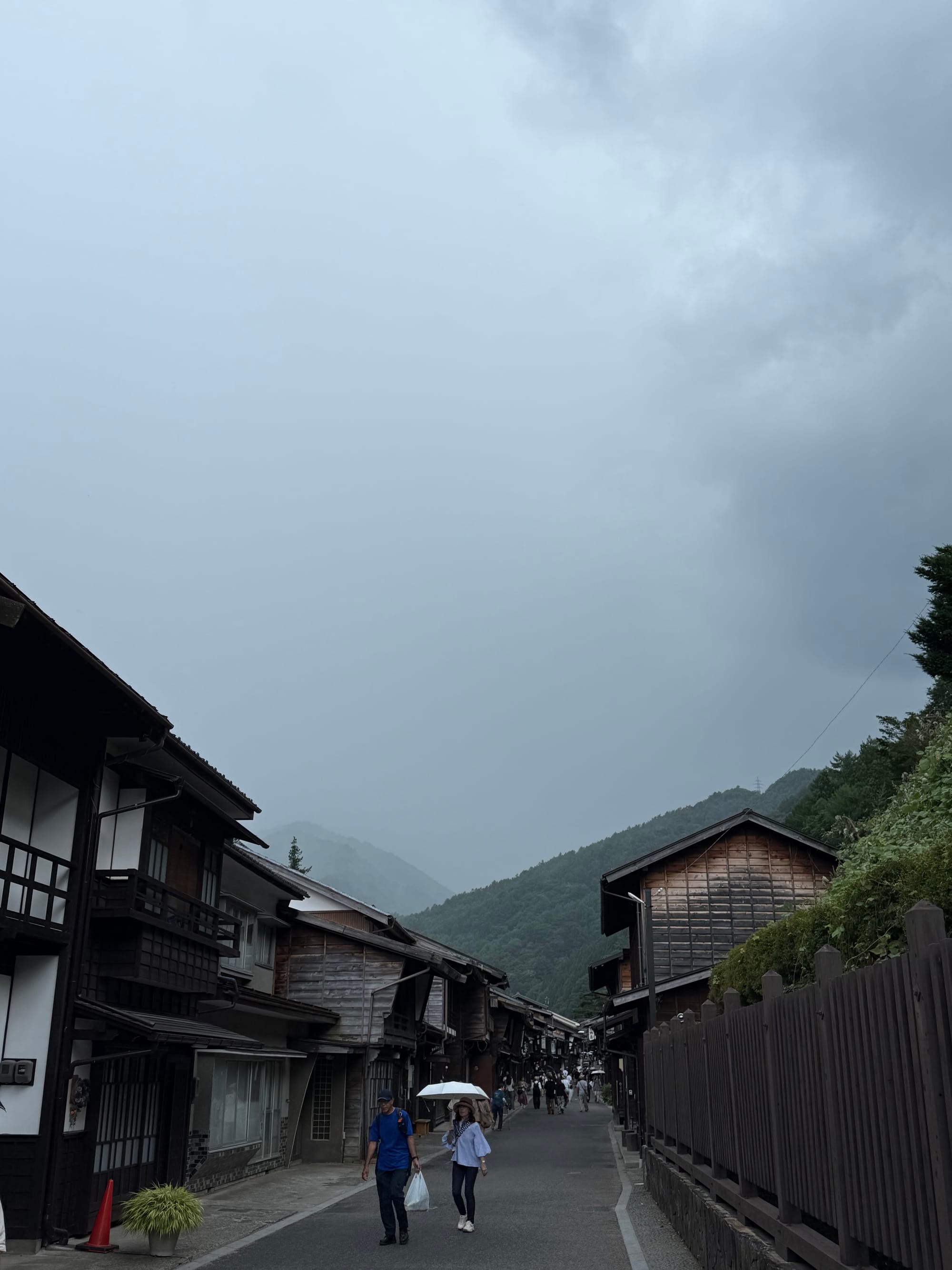
A quiet street in Narai-juku, one of the best-preserved post towns on the historic Nakasendo route. Traditional wooden buildings and mountain scenery reflect the atmosphere of an Edo-period traveller's town.
It is one of Japan’s Nationally Designated Architectural Preservation Sites and the buildings have mostly been kept like they were during the Edo period.
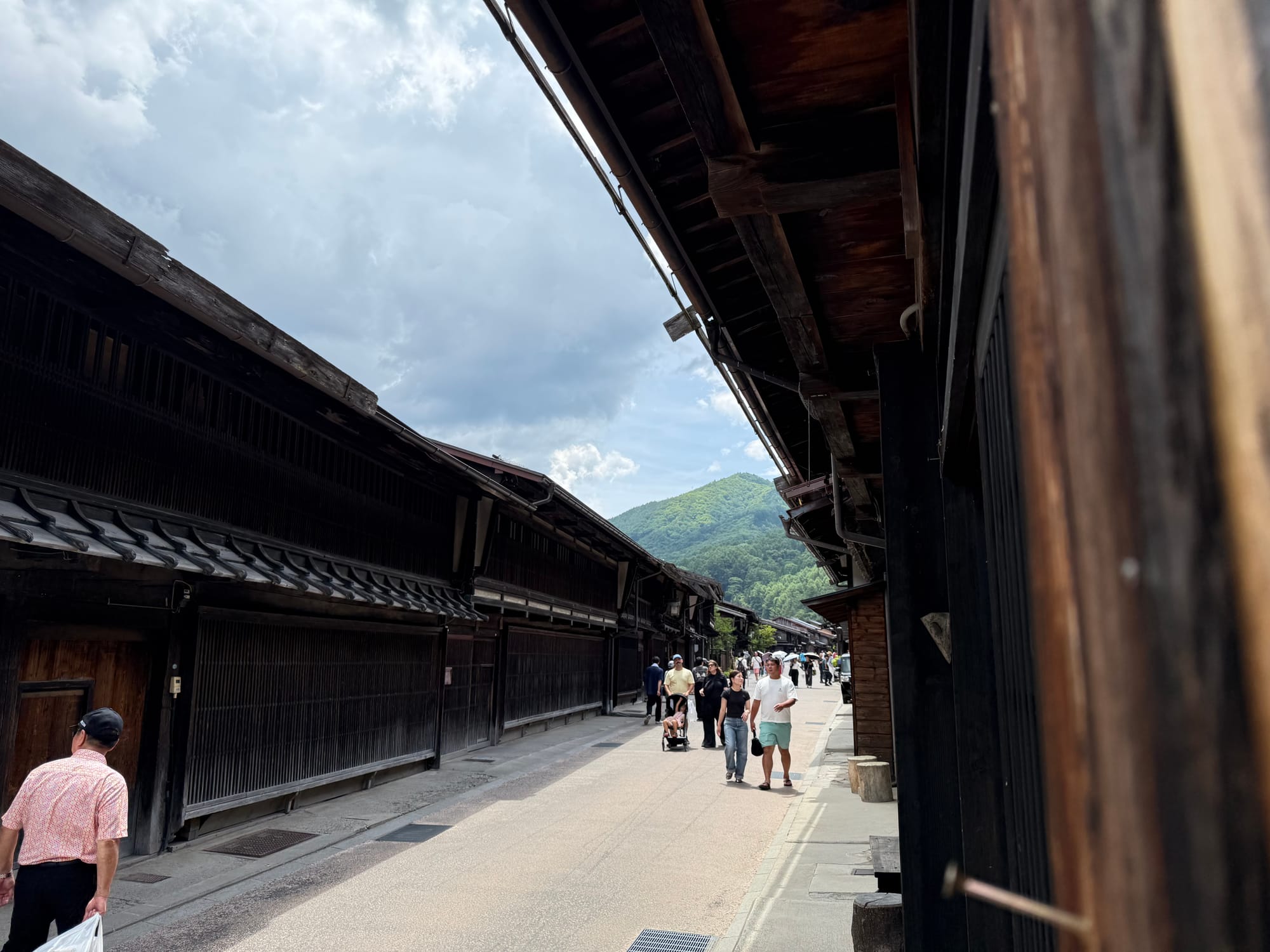
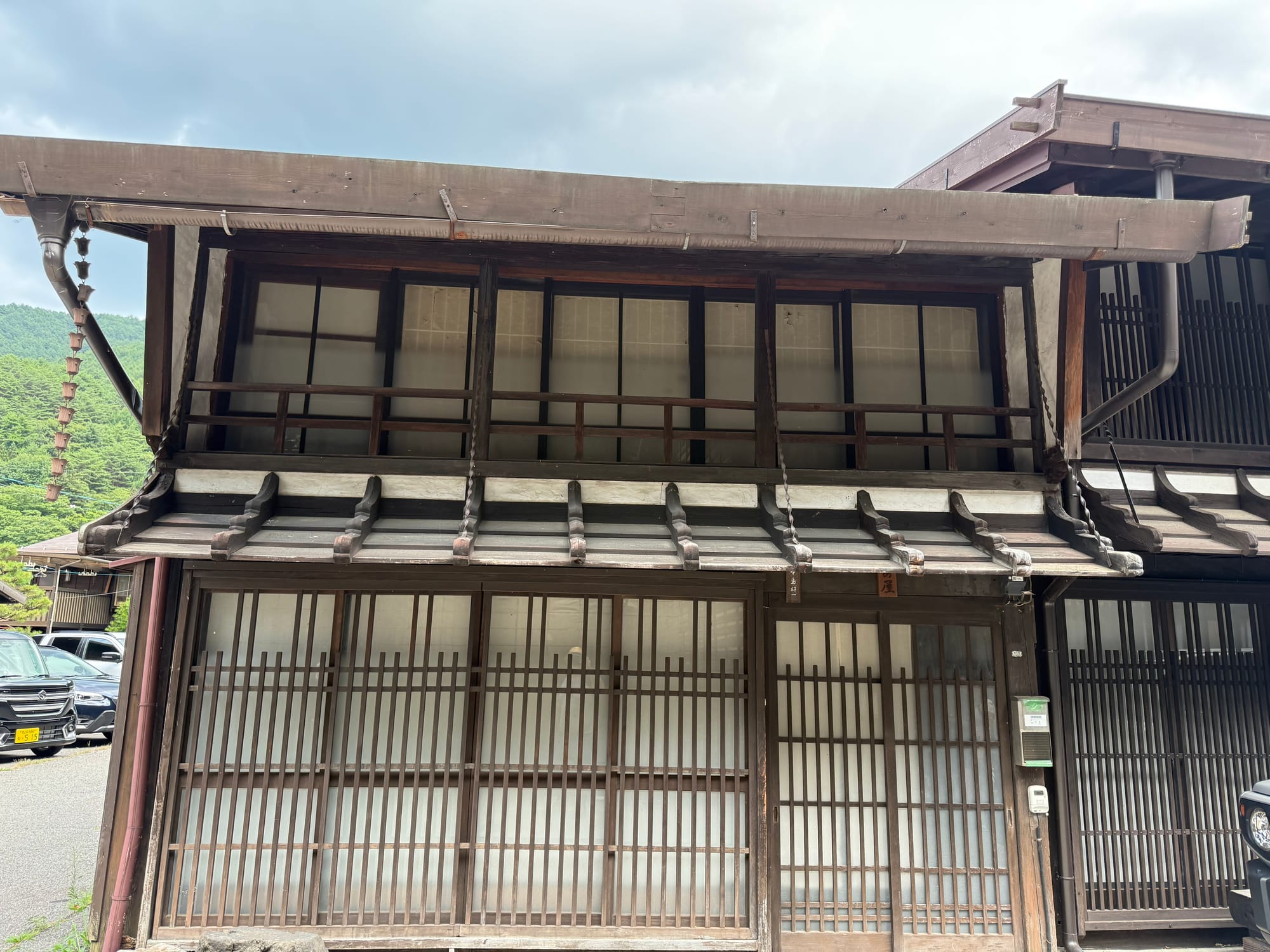
Visitors explore the preserved streets of Narai-juku, one of the longest and best-preserved post towns on the historic Nakasendo route connecting Edo and Kyoto.The broad main street of Narai-juku preserves the atmosphere of an Edo-period post town. Today, its historic wooden buildings house shops, cafés and inns along the former Nakasendo route.A preserved townhouse in Narai-juku, showcasing the distinctive wooden architecture that has made the former Nakasendo post town one of Japan's best-preserved historic streetscapes.
Walking along the street, there we many shops there selling many different things, mostly wooden tools, bowls and cutlery, but many different things as well.
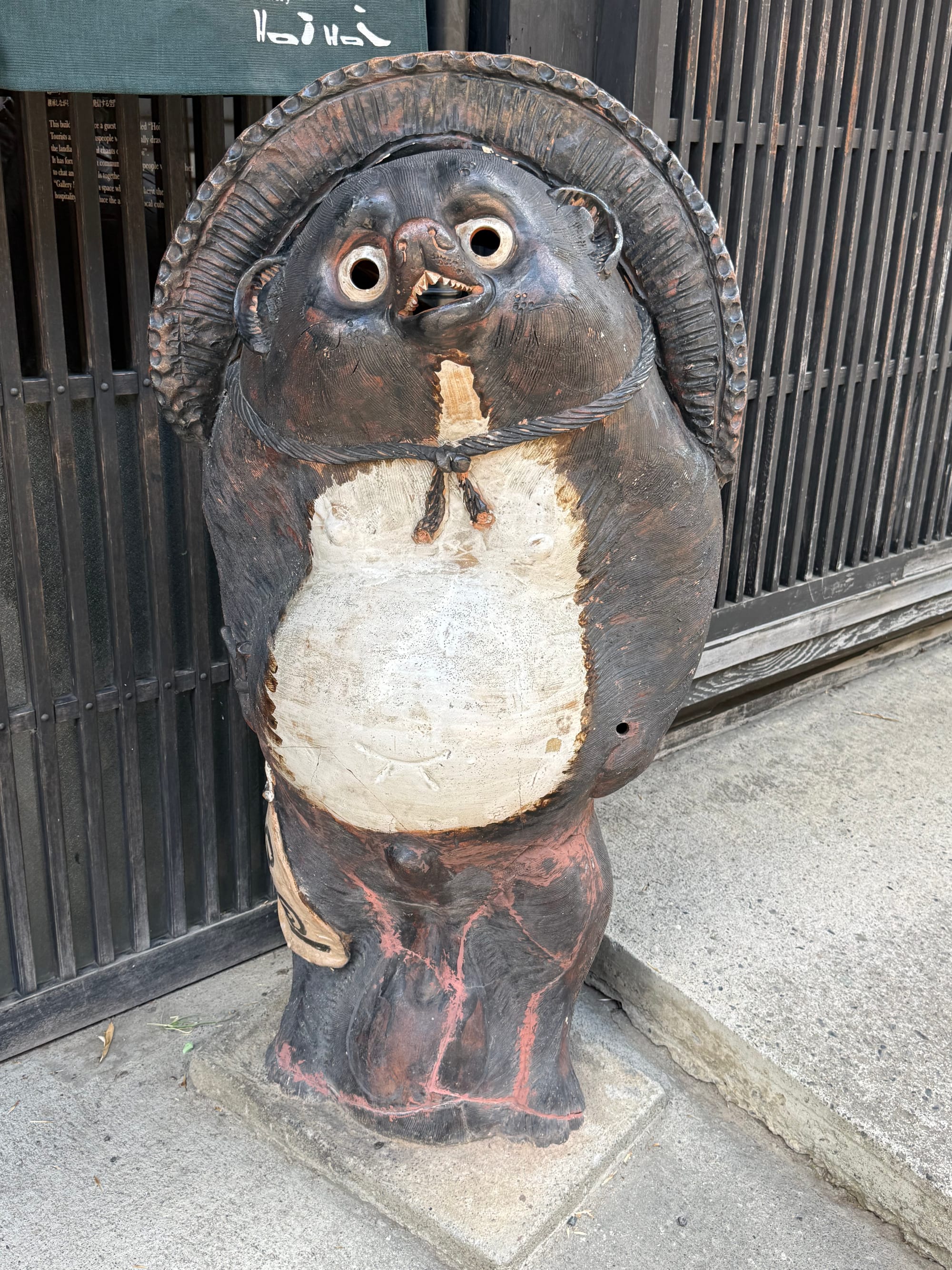
A traditional tanuki statue stands outside a building in Narai-juku. These ceramic figures are a common feature of Japanese shops and inns, symbolising good fortune, prosperity and hospitality.
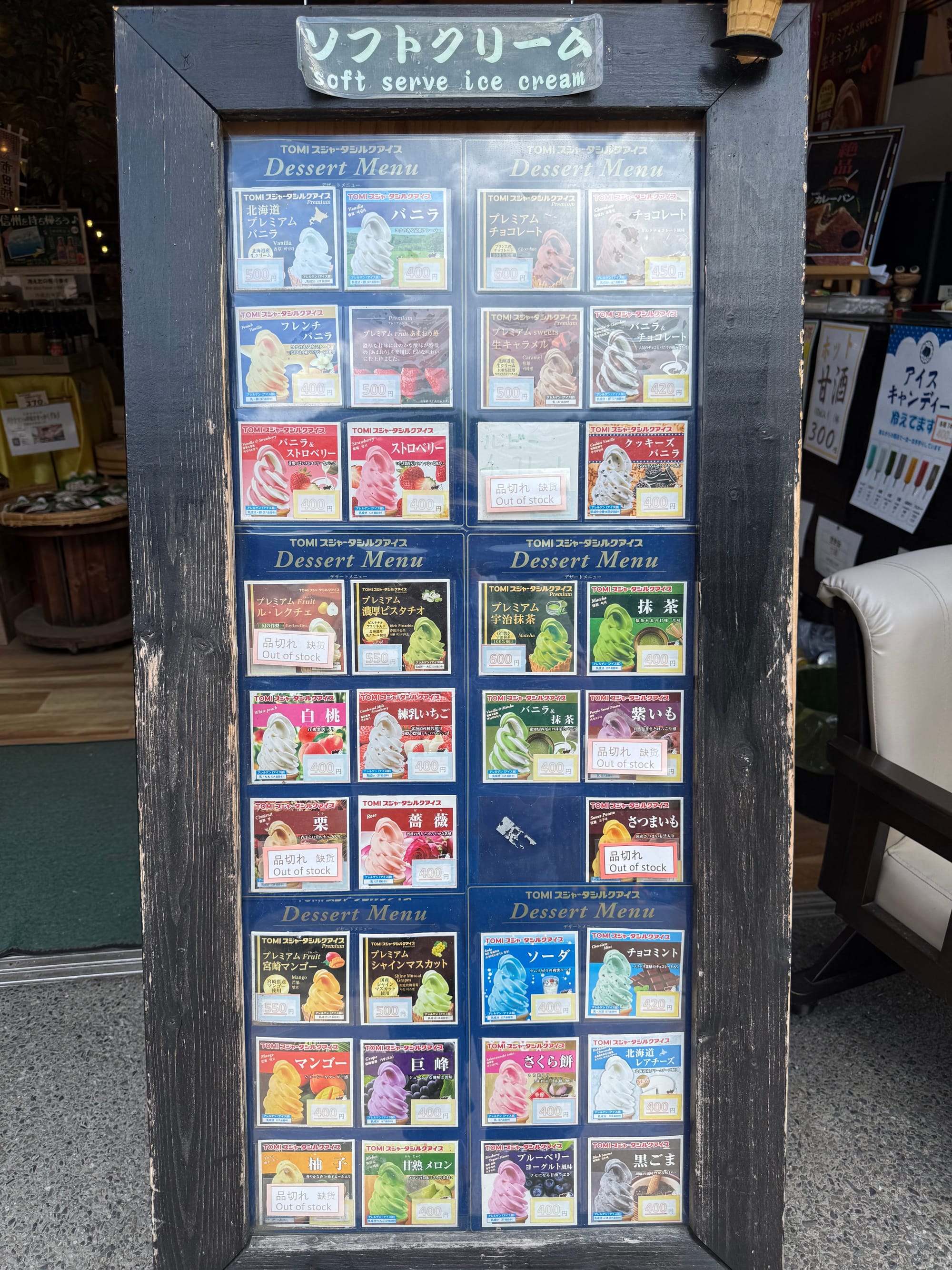
There was also a shop that sold many different types of Ice Cream, which in this heat was really nice, I decided to get the Ramune Soda flavor, which was really sweet, but addictive.
A ramune-flavoured soft-serve ice cream enjoyed in Narai-juku. Inspired by Japan's popular lemon-lime soda, the ice cream is known for its distinctive pale blue colour and refreshing flavour.A soft-serve ice cream menu in Narai-juku showcasing dozens of flavours, from classic vanilla and chocolate to Japanese favourites such as ramune, matcha, melon and black sesame.
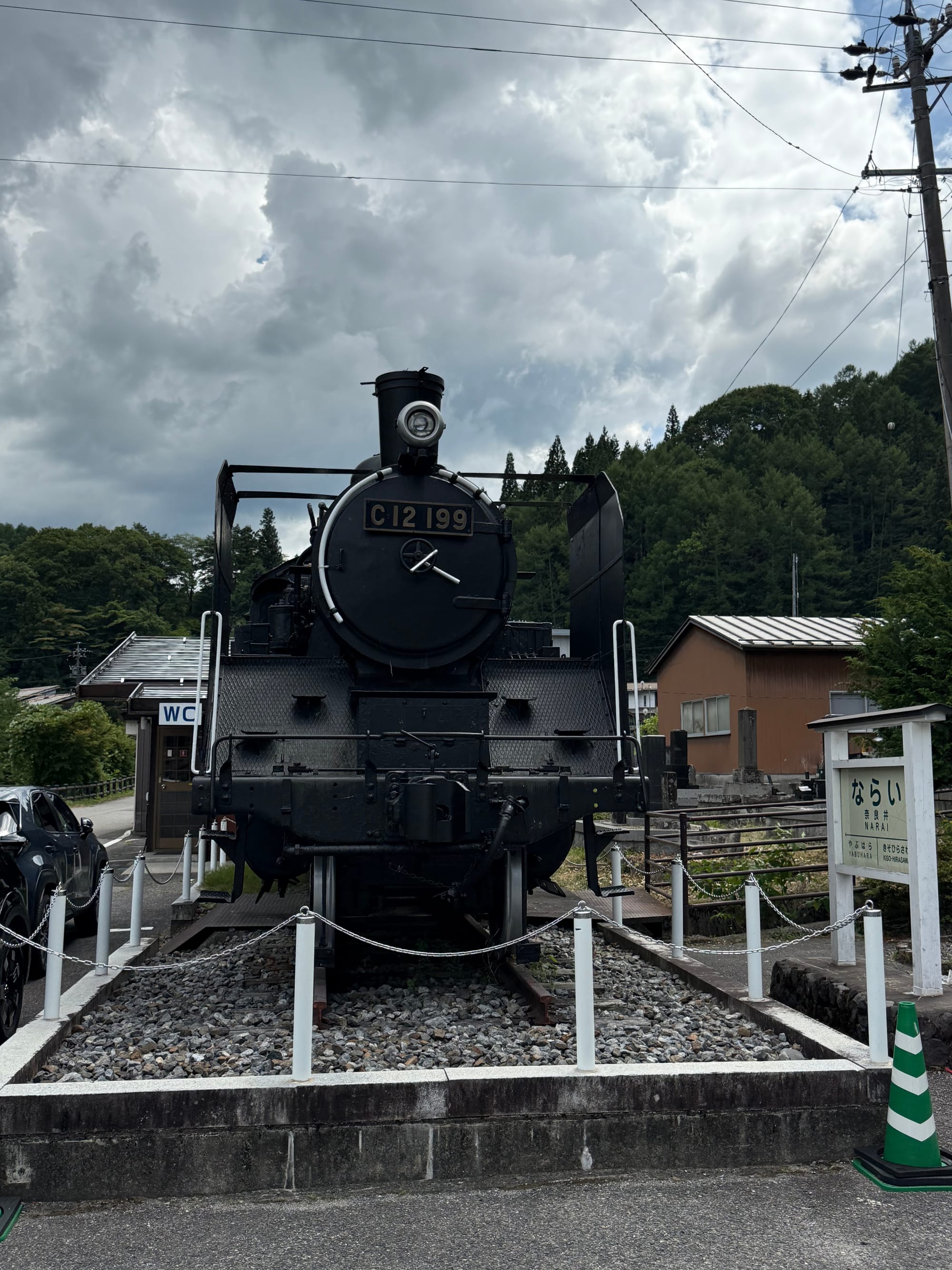
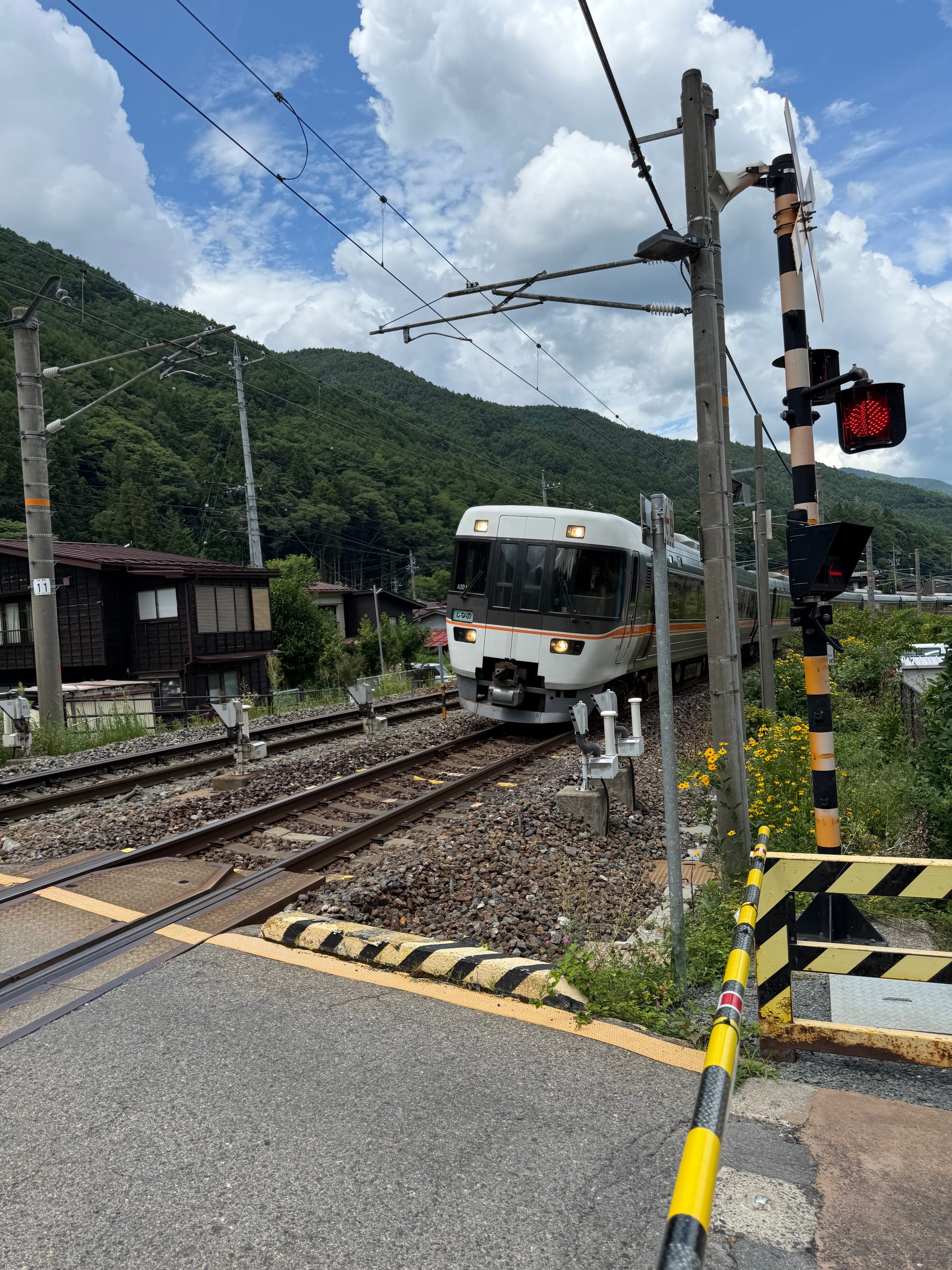
After having more of a look around, I was an old steam engine, which would have served the local town back in the day, not like the current newer trains, that still flow though the area.
C12 199, a preserved steam locomotive displayed outside Narai Station. The locomotive commemorates the important role of rail transport in the Kiso Valley and along the Chuo Main Line.A JR Central train passes through Narai in the Kiso Valley. The Chuo Main Line connects many of the historic post towns and mountain communities that developed along this important transport corridor.
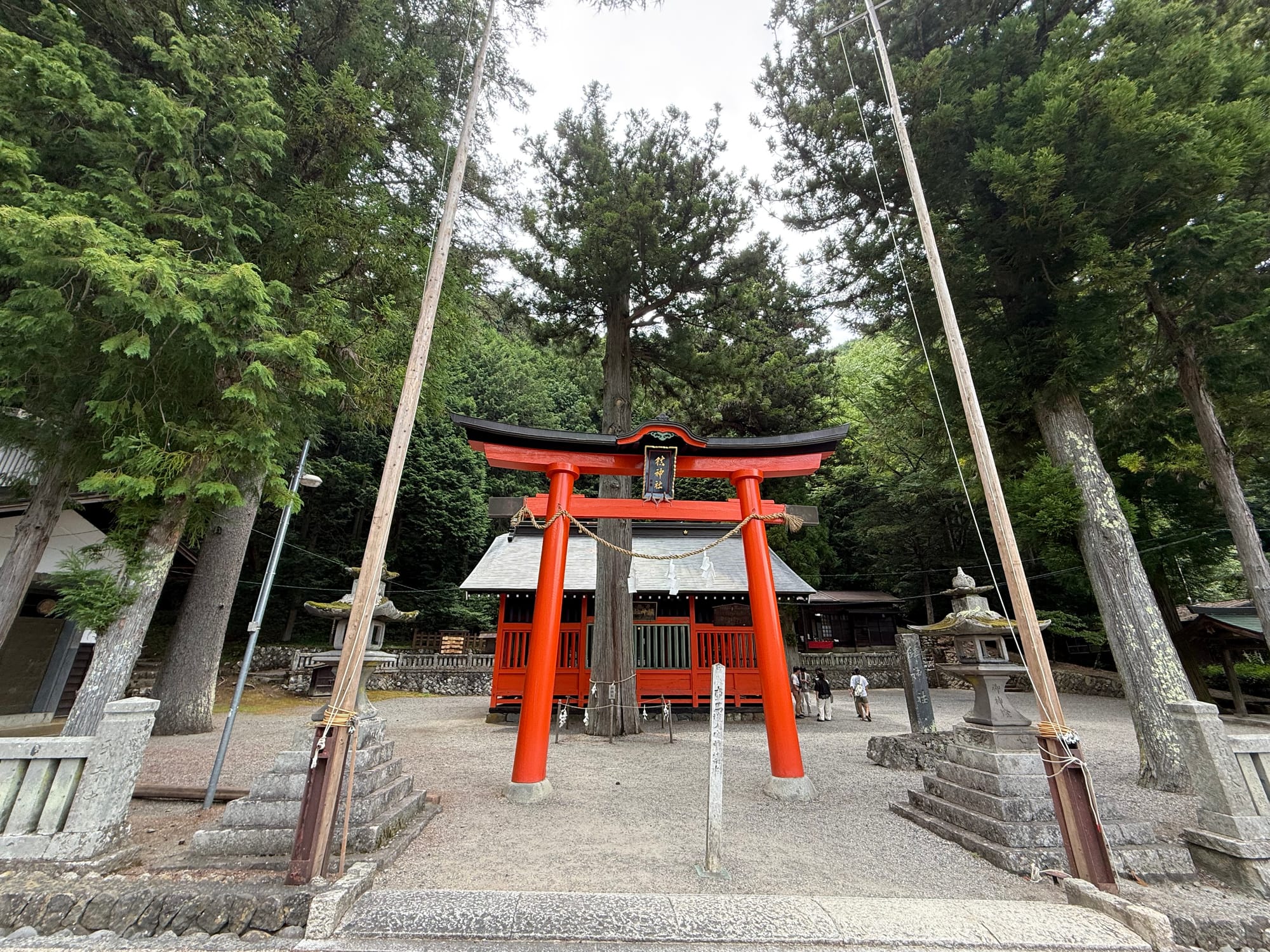
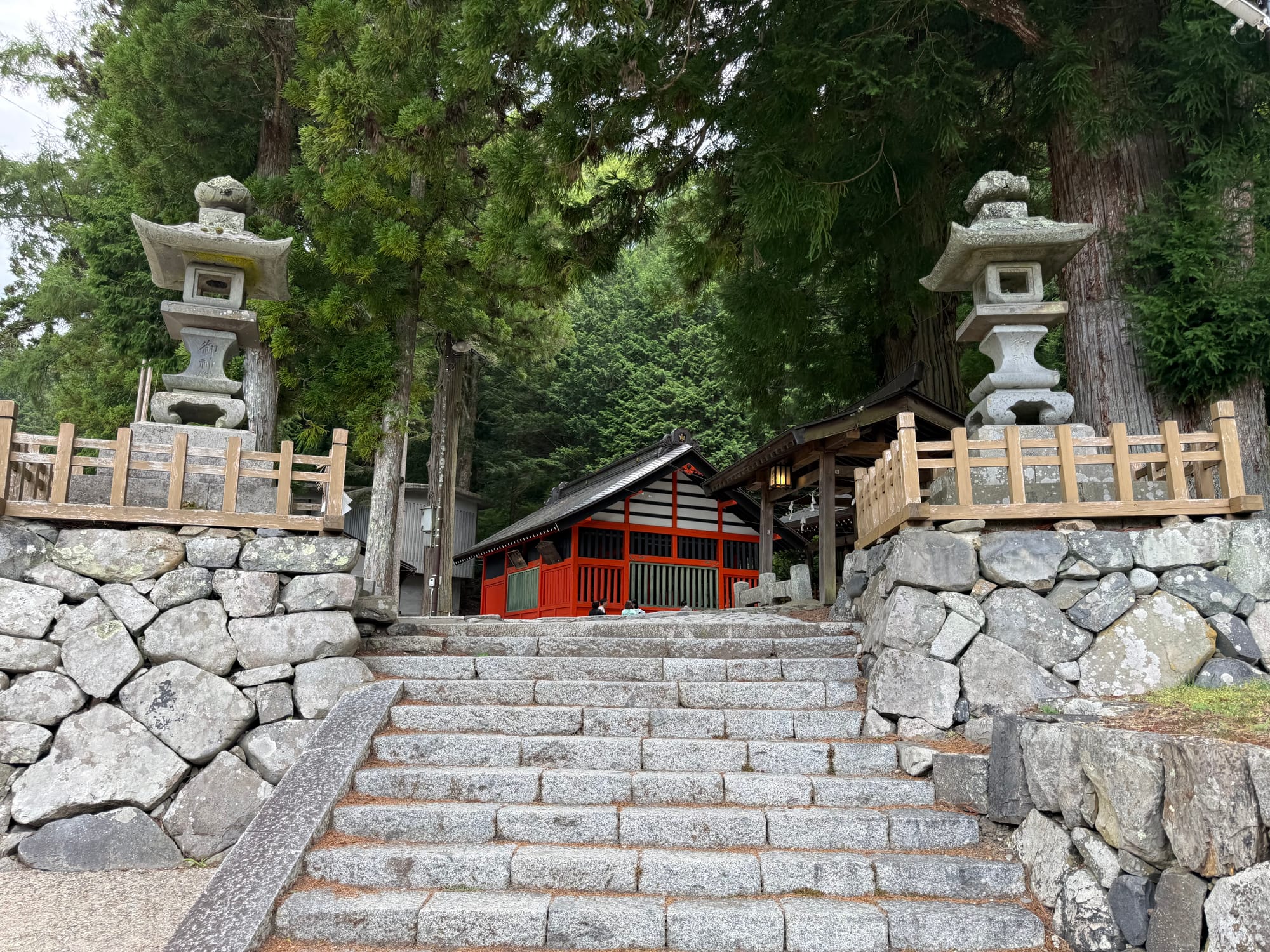
I also had a look around the Shizume-Kinka Shrine, which was established in 1618, when the town was suffering from a sickness, so they brought a protective deity from Chiba, which is all the way across the bay from Tokyo, there.
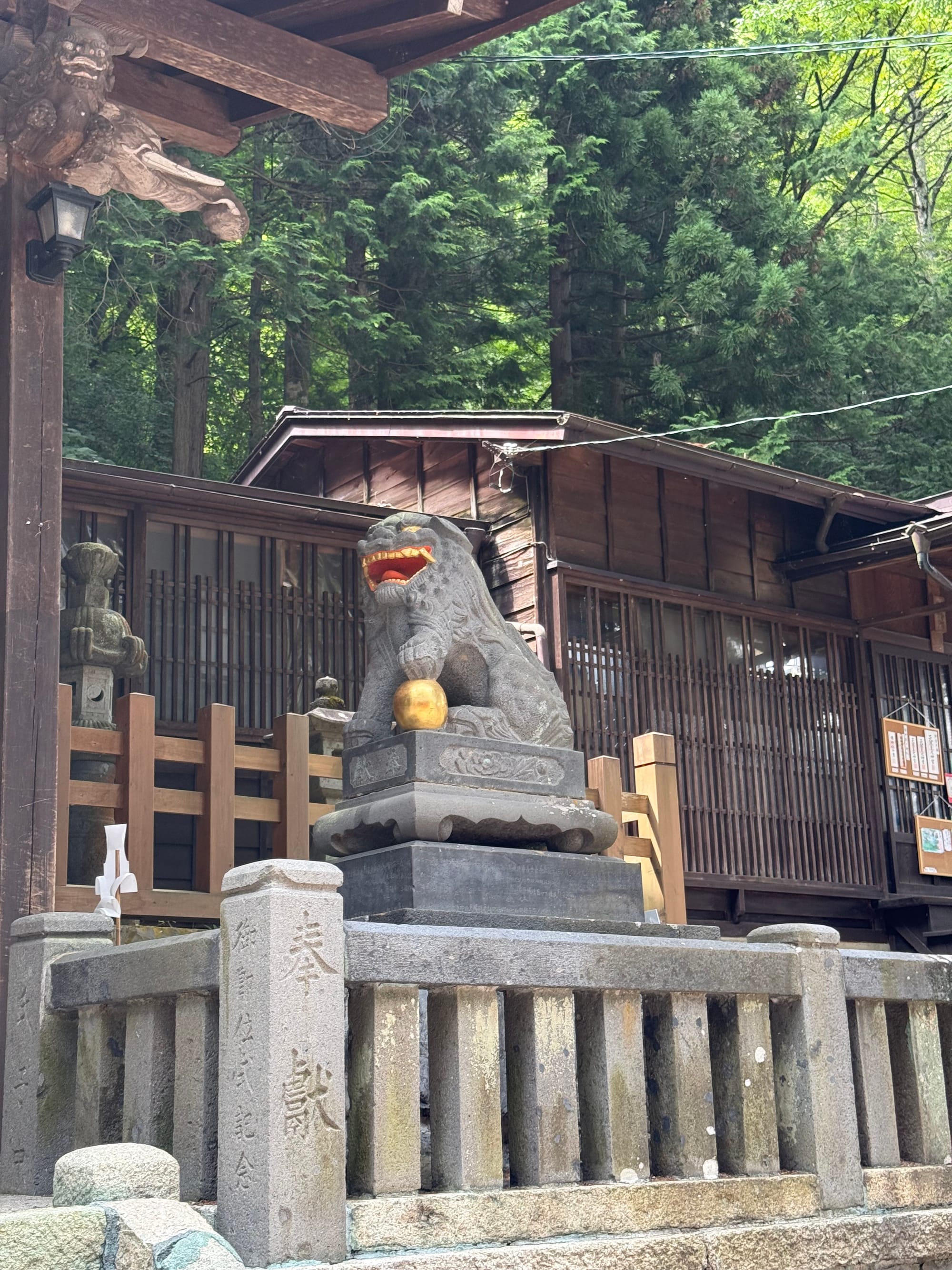
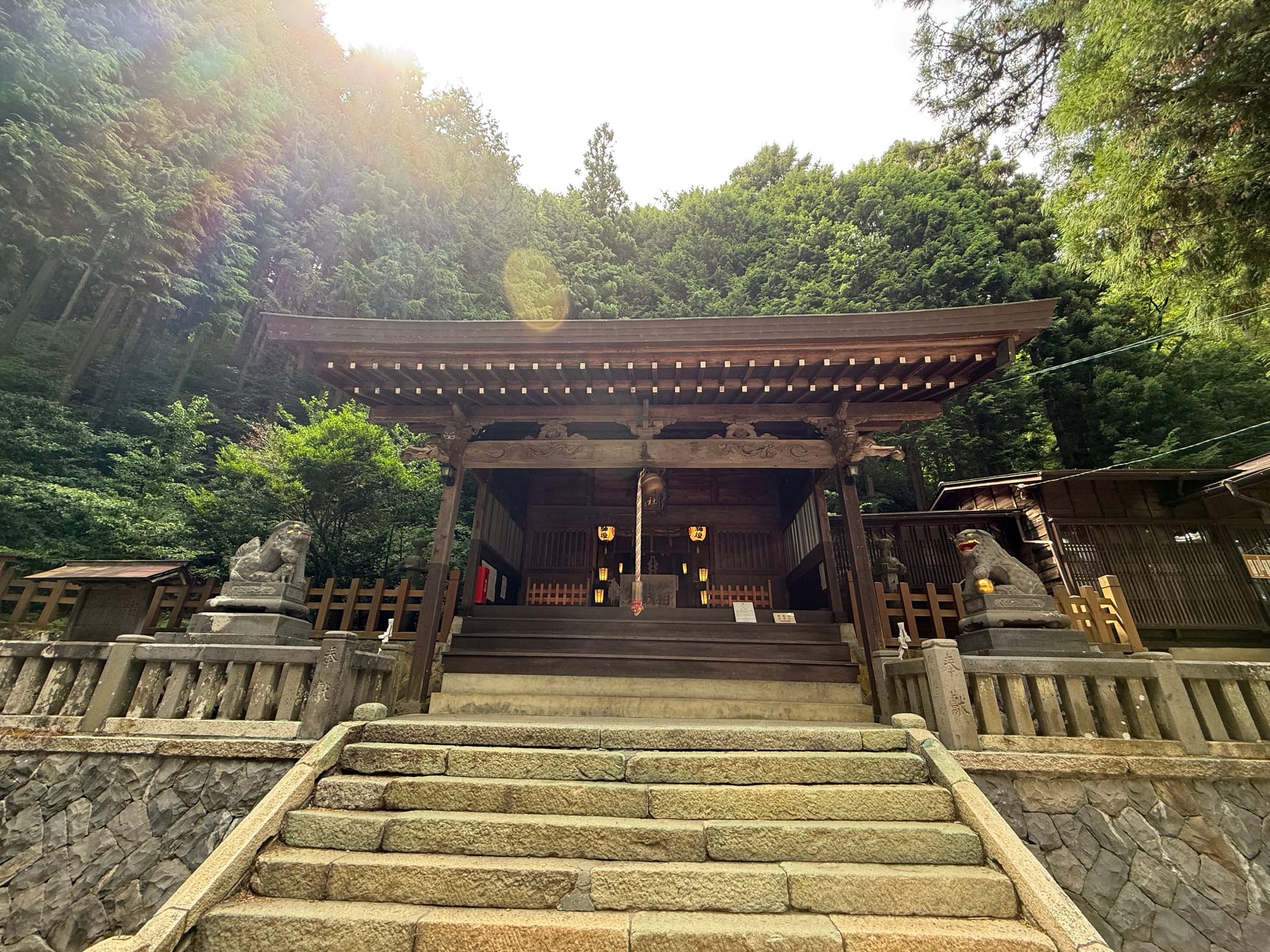
Shizume-Kinka Shrine stands within a grove of towering trees near Narai-juku. The shrine's striking red torii gate and peaceful woodland setting make it a notable landmark in the Kiso Valley.Stone steps ascend to Shizume-Kinka Shrine through a grove of towering cedars. The shrine's peaceful woodland setting reflects the deep connection between Shinto worship and the natural landscape of the Kiso Valley.A komainu guardian statue watches over the grounds of Shizume-Kinka Shrine. These lion-dog figures are traditionally placed at Shinto shrines to protect sacred spaces and ward off evil spirits.The main hall of Shizume-Kinka Shrine stands at the heart of the shrine grounds, surrounded by towering cedar trees that create a peaceful forest setting in the Kiso Valley.
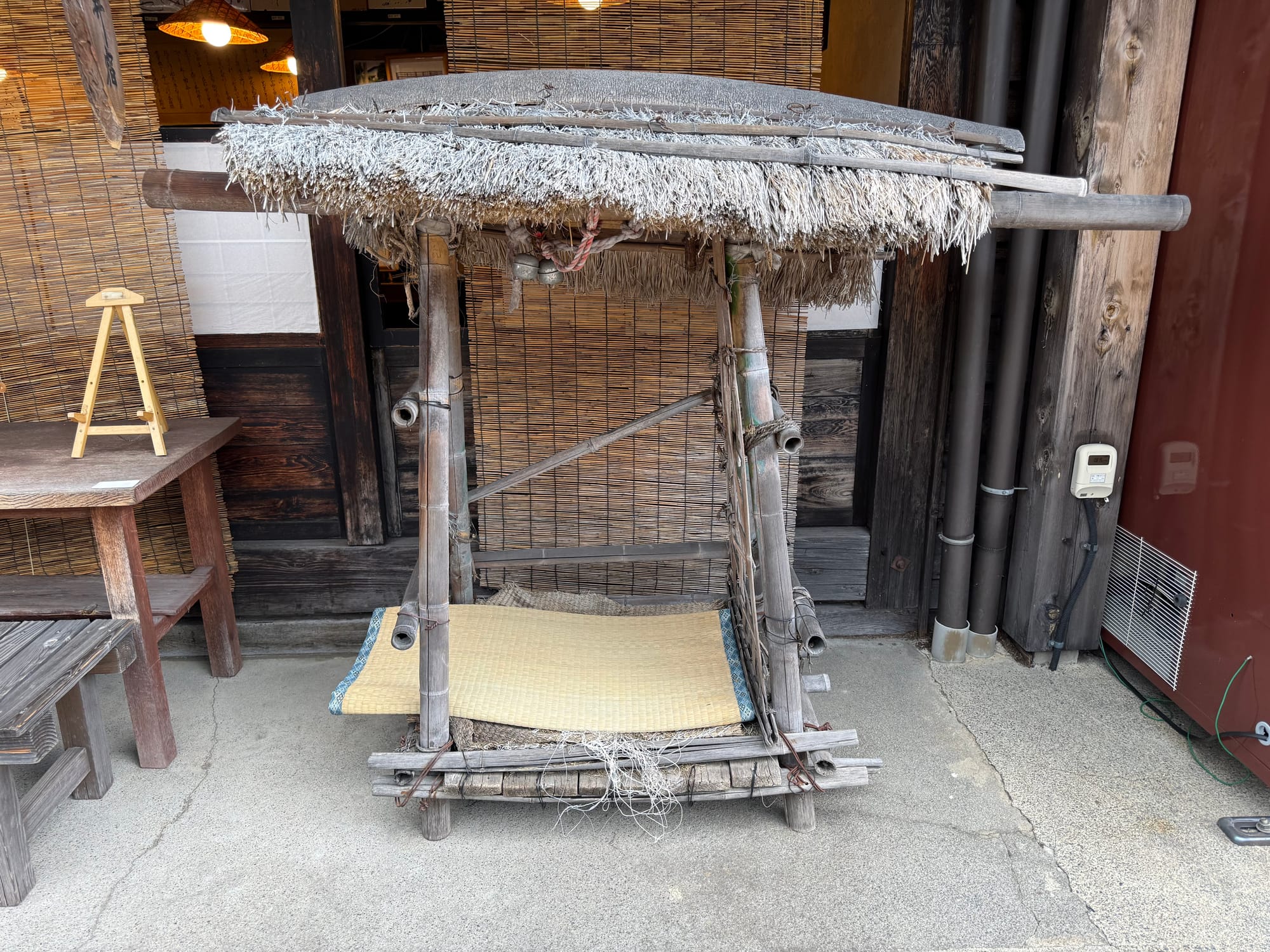
There was also an old one-person palanquin there.
A traditional one-person palanquin (kago) on display in Narai-juku. Before modern transport, these lightweight carriers were used to carry travellers along mountain routes such as the historic Nakasendo.
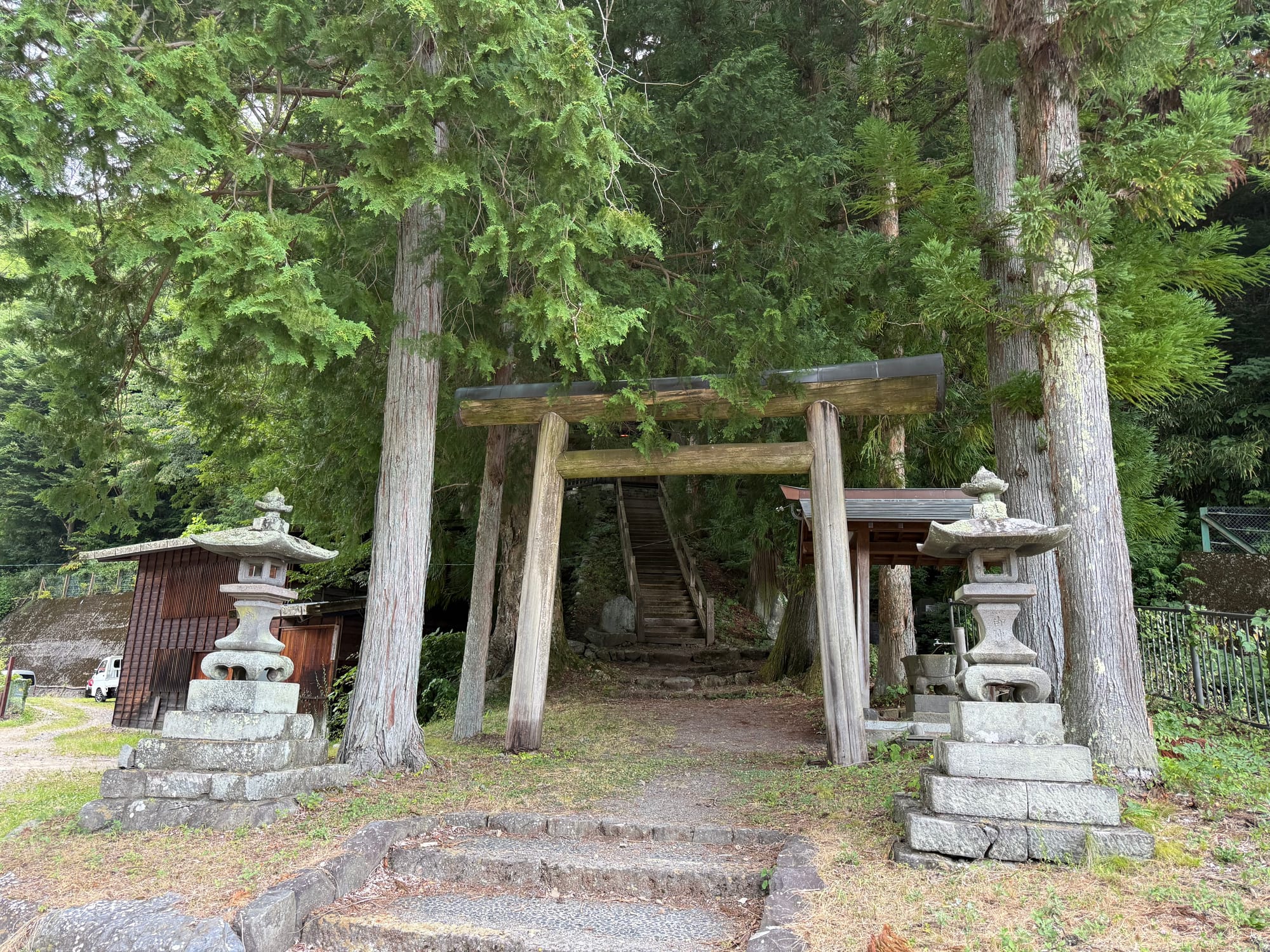
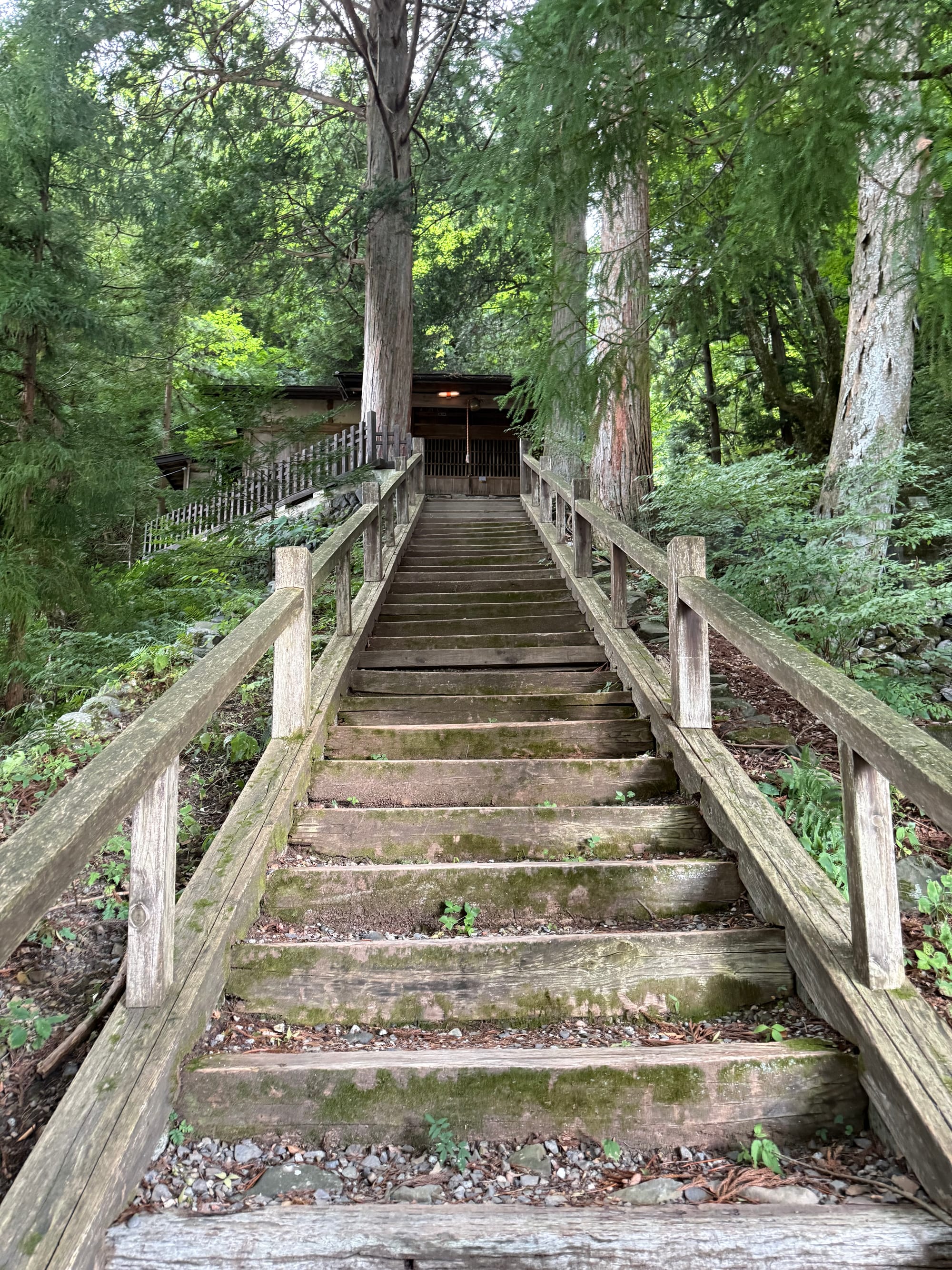
On the way back through the village, I saw some stairs going up the side of the mountain, that looked like they lead to nowhere, but they actually lead up to a shine.
A woodland shrine entrance near Narai-juku, where a stone stairway ascends through towering cedars to a small sanctuary hidden within the forested slopes of the Kiso Valley.A forest staircase ascends to a small shrine hidden among the cedar trees near Narai-juku, reflecting the close relationship between sacred sites and the natural landscape of the Kiso Valley.
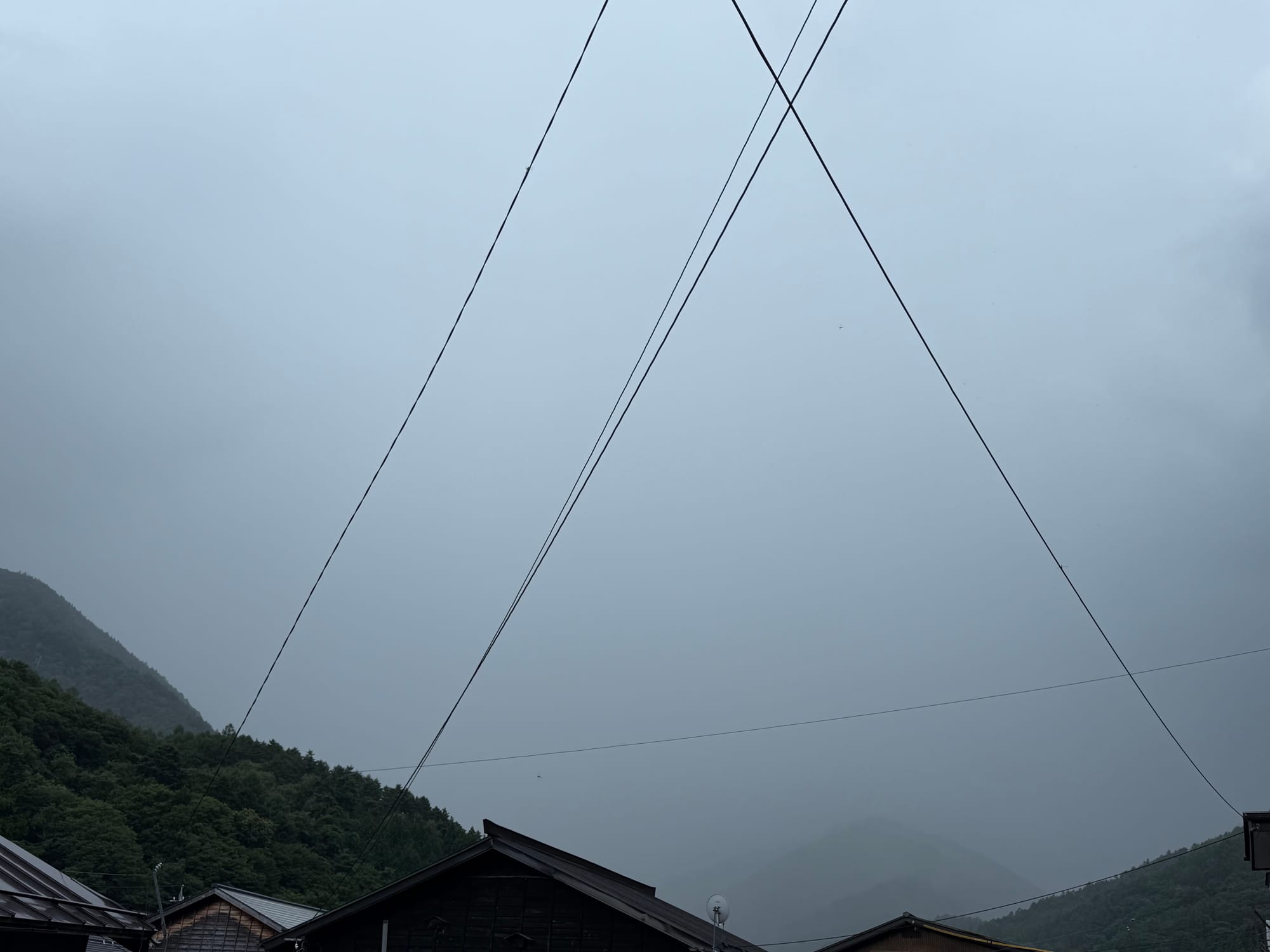
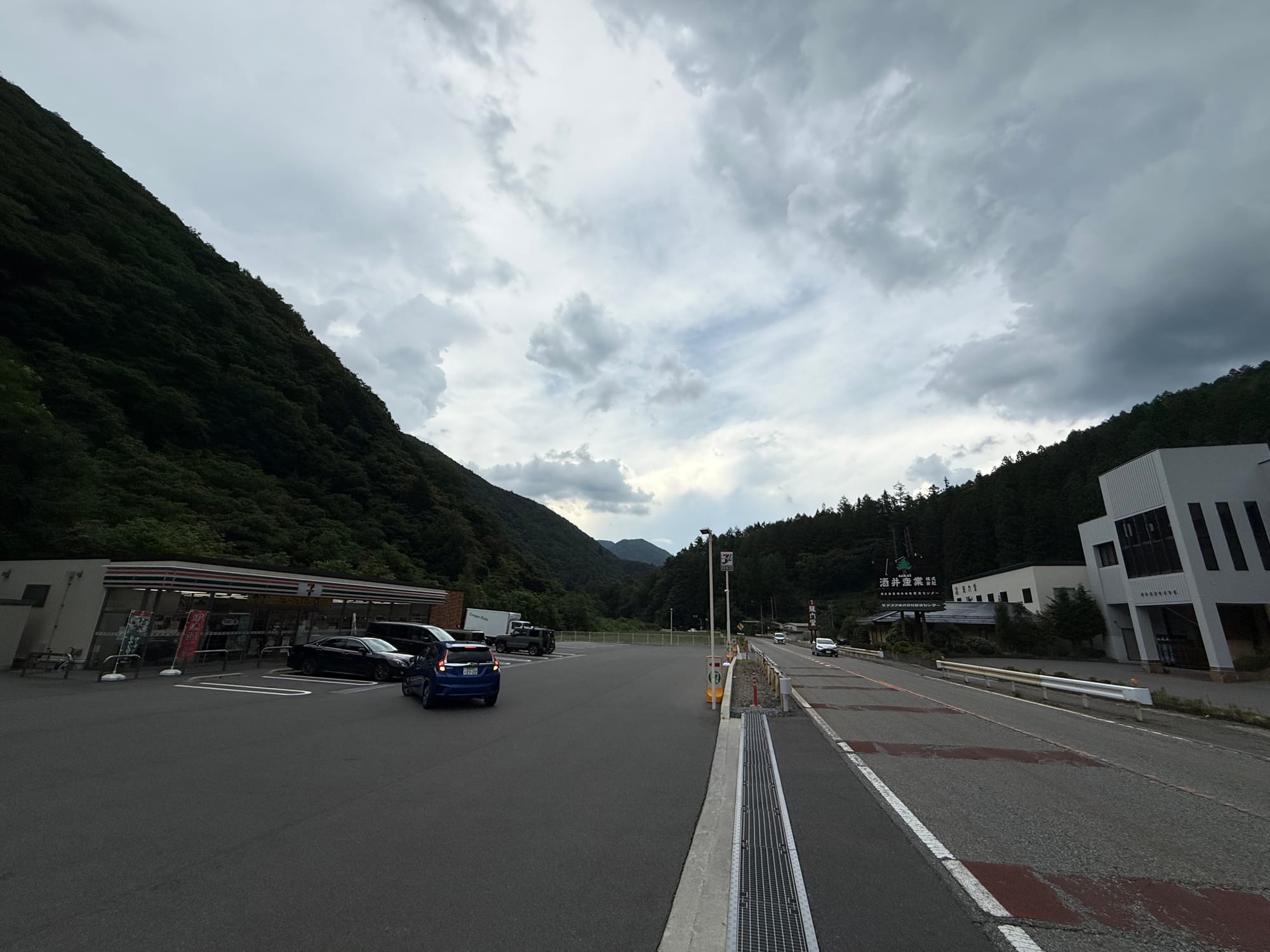
I could see and hear some thunderstorms coming in over the mountain pass, so I thought it was finally a good time to start heading back to Suwa, before the rain started to get heavy.
Rain and low cloud settle over the Kiso Valley, obscuring the surrounding mountains and transforming the landscape around Narai-juku into a misty scene.Storm clouds gather over Narai-juku as visitors walk along the historic Nakasendo post town. The approaching rain and misty mountains add a dramatic atmosphere to the preserved streetscape.A roadside stop in the Kiso Valley as storm clouds build over the surrounding mountains. The changing weather creates a dramatic backdrop to the journey through central Japan.
Thunder
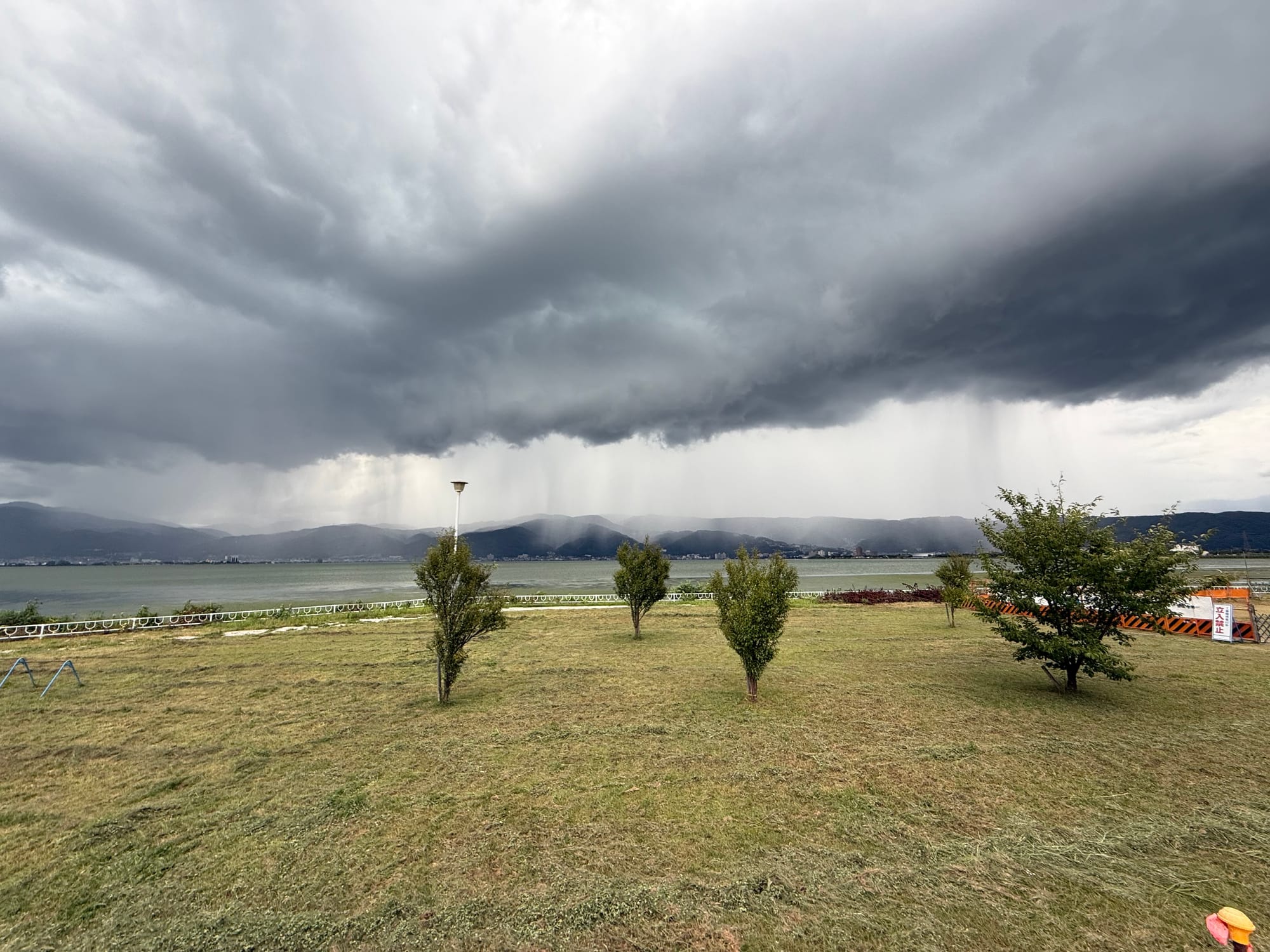
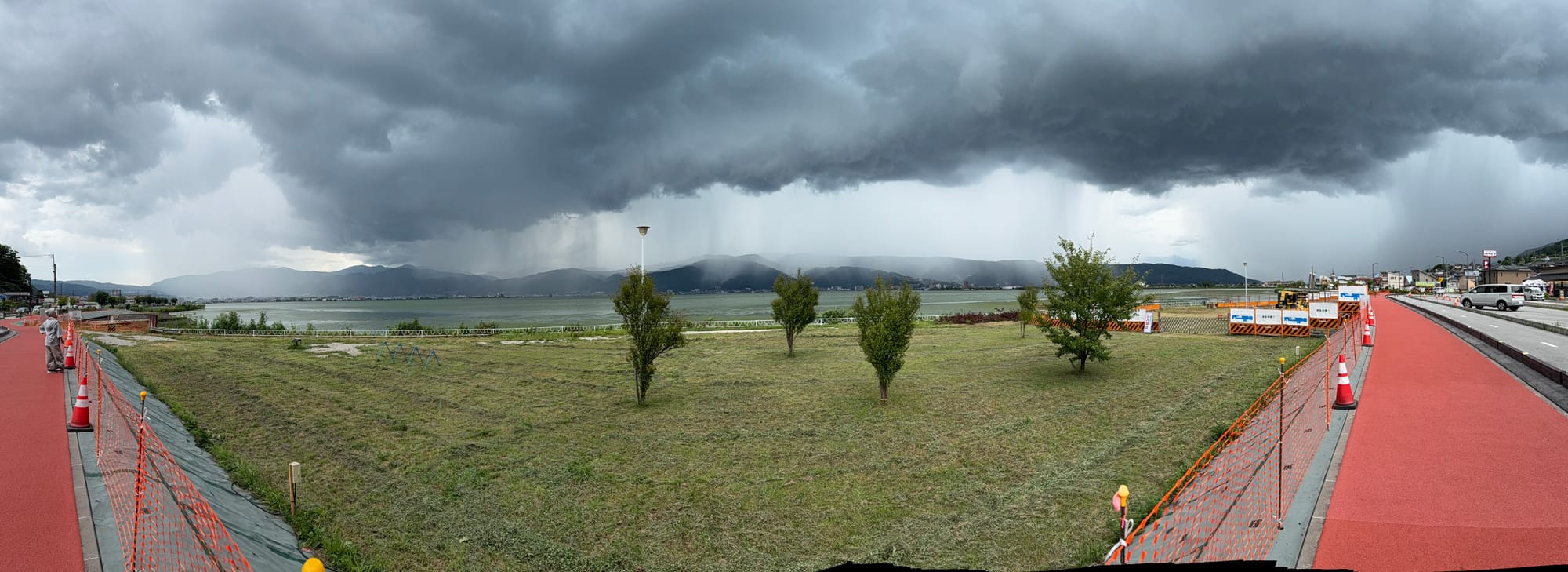
I stopped off on the other side of lake Suwa from my hotel on the way back and was able to get some good photo's before it started pouring down and I had to do adult things, like washing clothes at the laundrette.
Lake Suwa is a prone to afternoon/evening thunderstorms and heavy rain in the summer due to the heat from the sun, heating the enclosed valley up and this combines with the humidity from the lake being forced to rise up the side of the mountains surrounding the lake.
A dramatic summer storm sweeps across Lake Suwa, with curtains of rain visible over the distant mountains while calmer conditions persist along the lakeshore in the foreground.A summer storm moves across Lake Suwa, with curtains of rain sweeping over the far shore while dark clouds stretch across the sky above the lakeshore.
You could hear the thunder and see the lightning, but as always, when I tried to get a video of it, no thunder or lightning would happen.
0:00
/1:00
A video of the storm from the other side of the lake with me trying to capture the thunder and lightning, but to no avail.
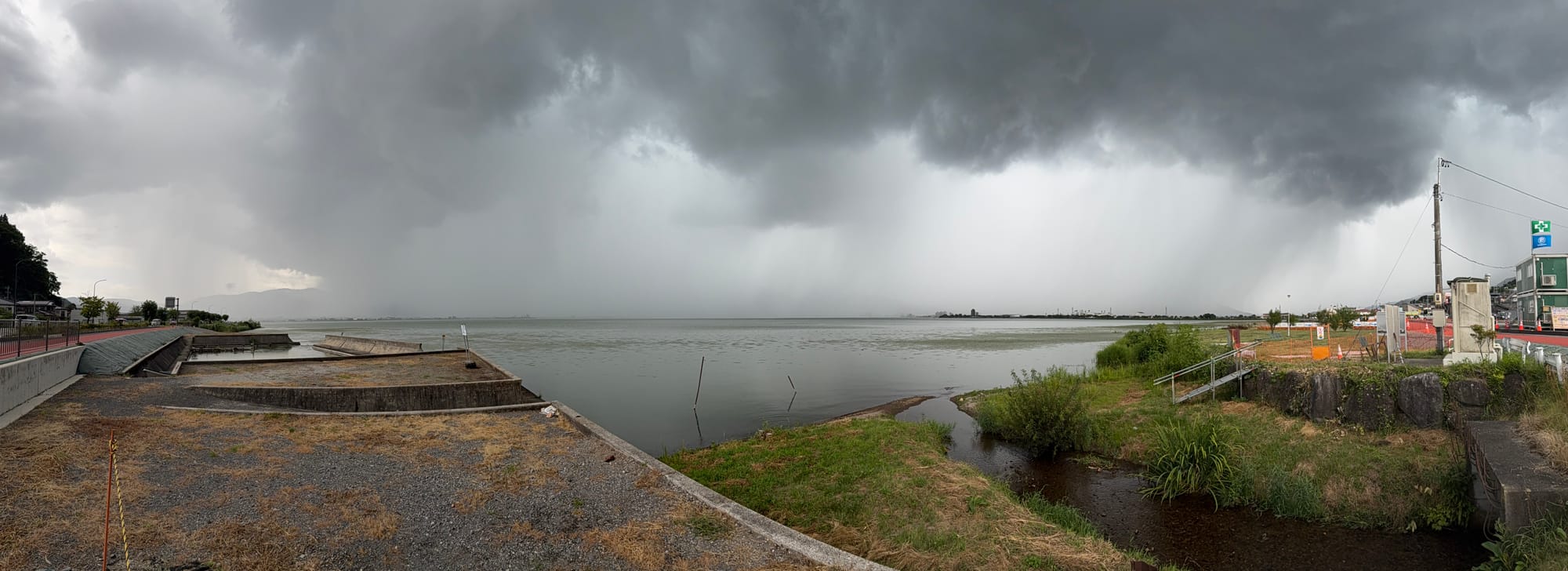
Heavy rain sweeps across Lake Suwa as a summer thunderstorm moves over the basin. Dark clouds and visible rain shafts create a dramatic scene above the lake and surrounding mountains.
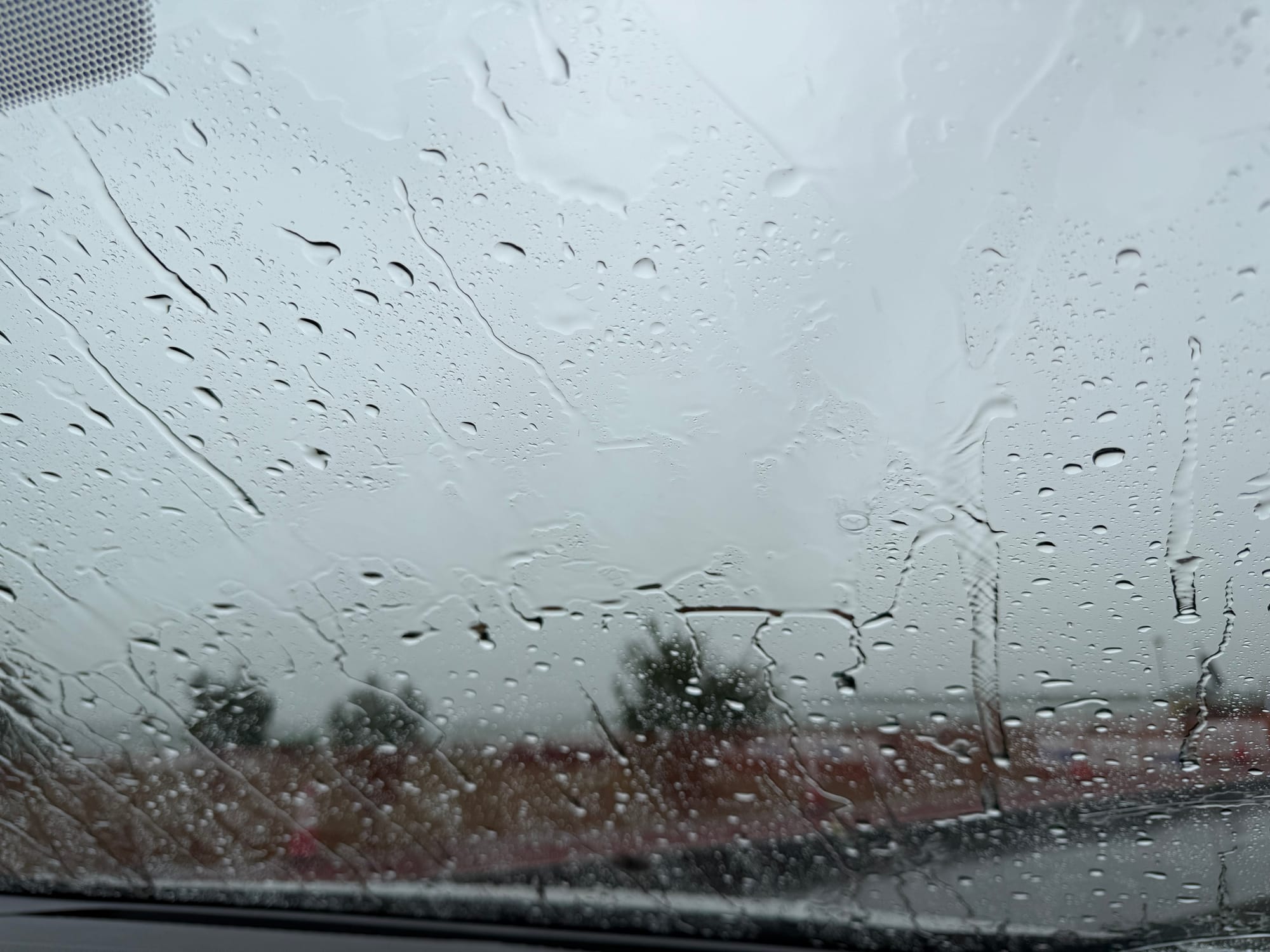
Here was the view when I parked up at the laundrette, which used to be a petrol station before it.
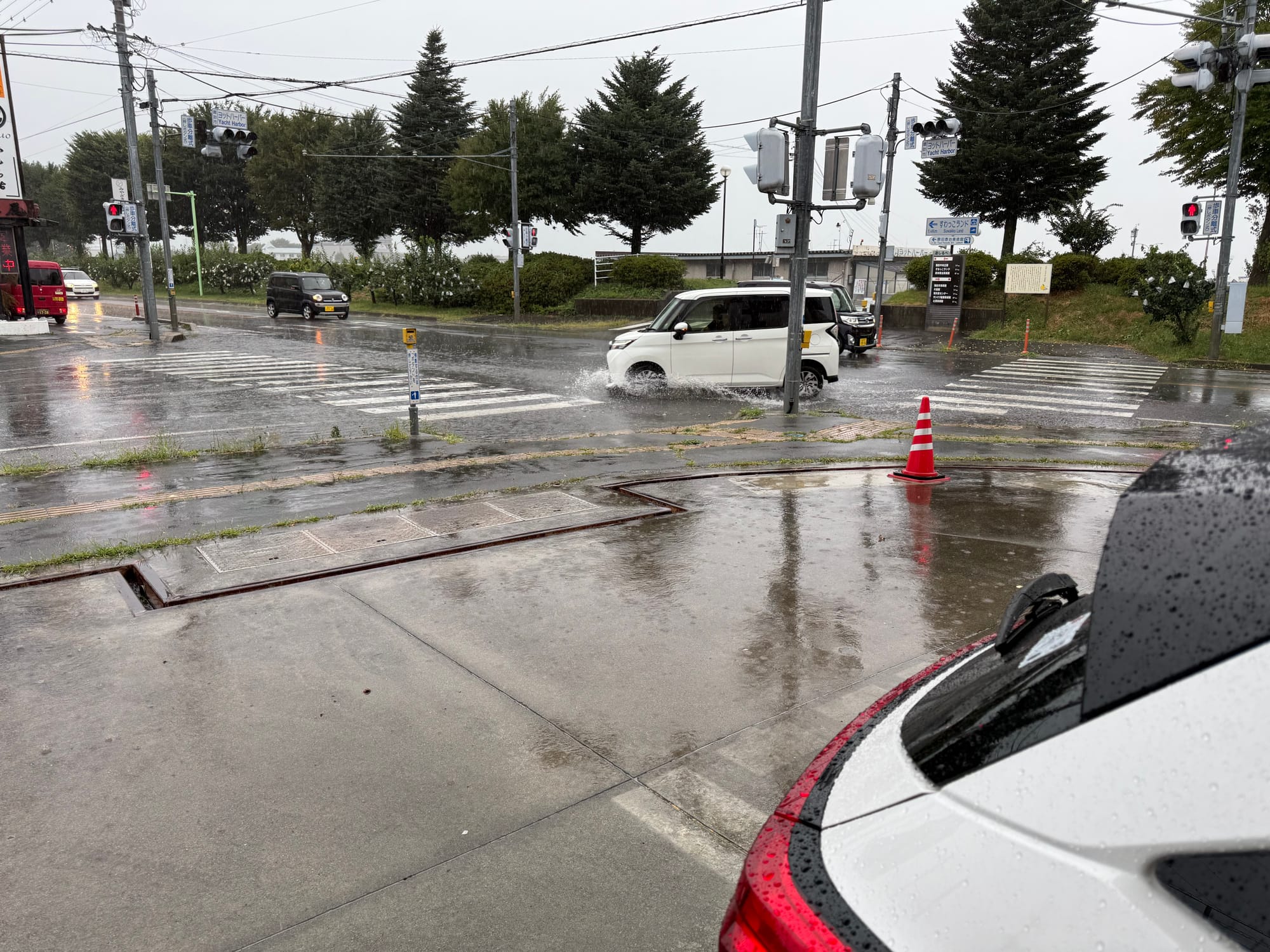
The storm finally arrives at Lake Suwa, with heavy rain reducing visibility and turning the lakeside landscape into a blur of grey skies and water-streaked glass.Sheltering at a laundrette during a summer downpour near Lake Suwa, as vehicles pass through waterlogged streets and heavy rain sweeps across the lakeside area.
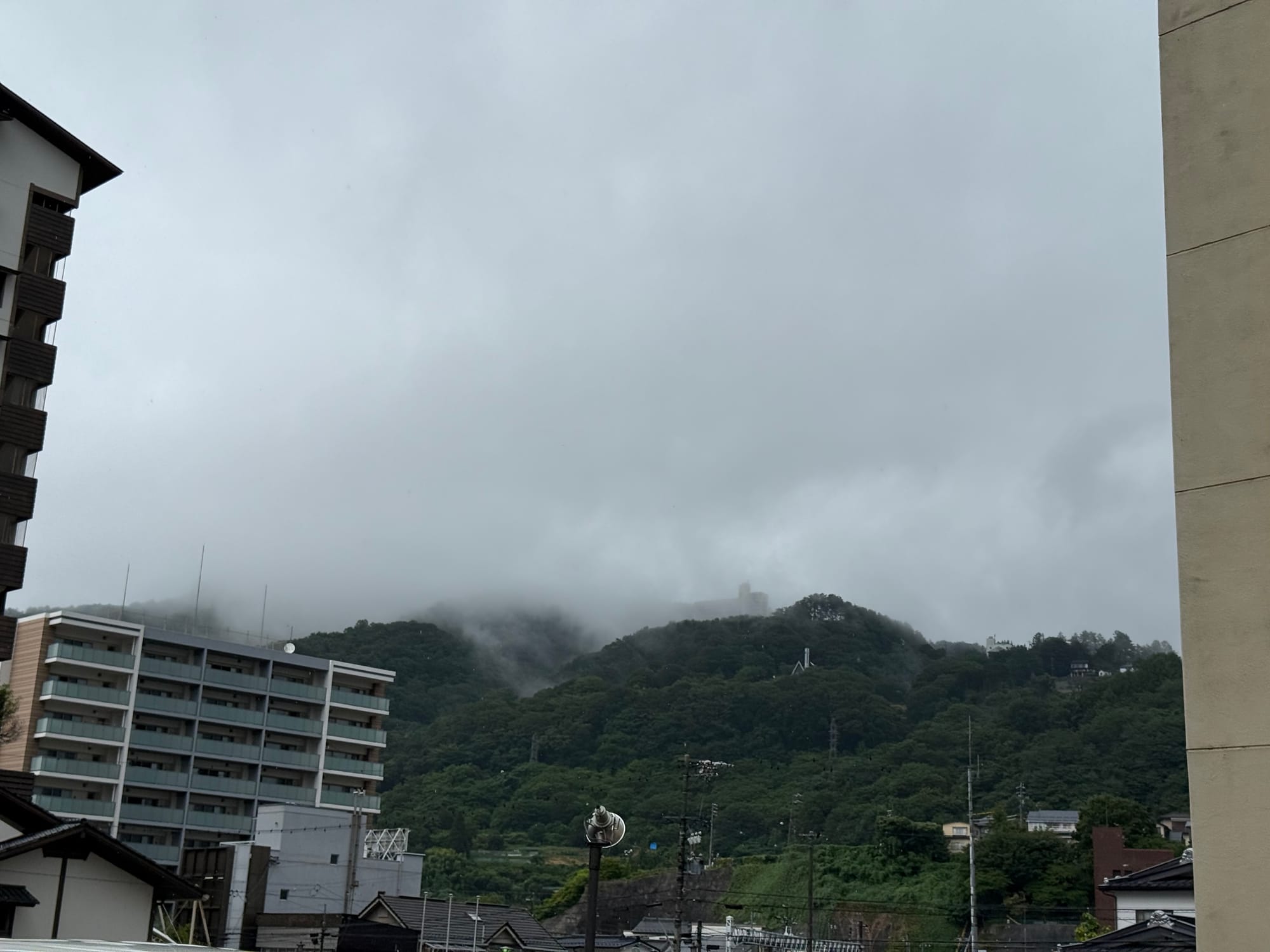
Later on in the evening, the view from my hotel window looking like something from spirited away when looking at the mountain. There is a hotel on the mountain that you might be able to see, plus the Tateishi park viewpoint is currently just under the cloud in this photo.
Low clouds linger over the hills above Lake Suwa after the storm, with mist drifting through the trees as the weather begins to clear later in the evening.
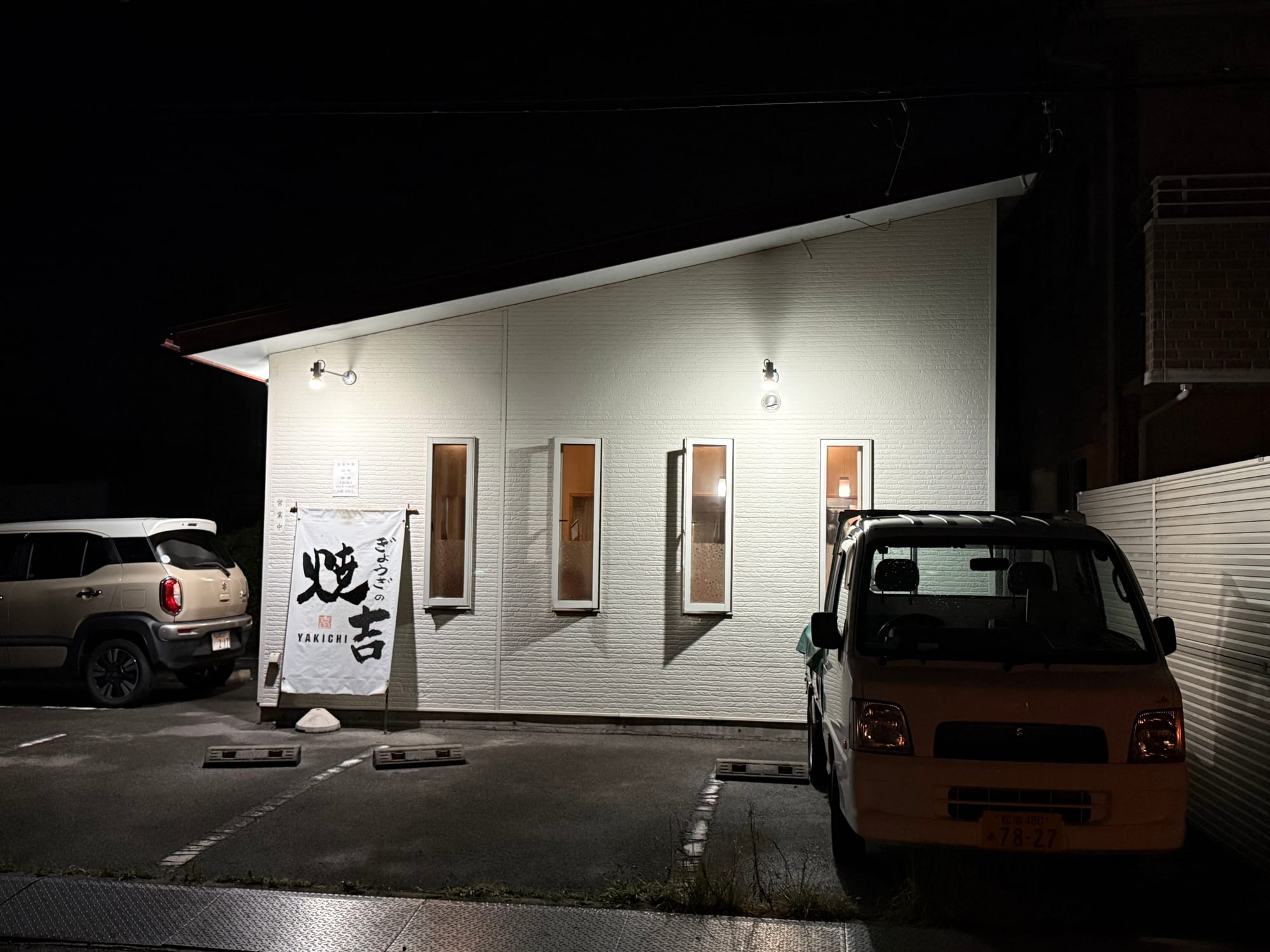
I also went to a gyoza restaurant later that evening, which was out in the middle of nowhere, but it was really good, especially as when the guy was cooking the Gyoza, he would set the pan on fire to flash fry the Gyoza, which made for a really good thing to watch and I could feel the heat from my seat.
Yakichi Gyoza in Suwa after a summer storm. This small local restaurant specialises in handmade gyoza and serves as a popular spot for a casual evening meal.
Takashima Castle
9th August
Originally I was meant to go hiking up Mt. Tateshina-yama, but due to the threat of thunderstorms, heavy rain and low cloud, I decided it was better to be safe than sorry, especially as I didn't want to be struck by lightning.
So instead, I didn't really have much to do, so decided to go to Takashima castle, which is the local castle here in Suwa.
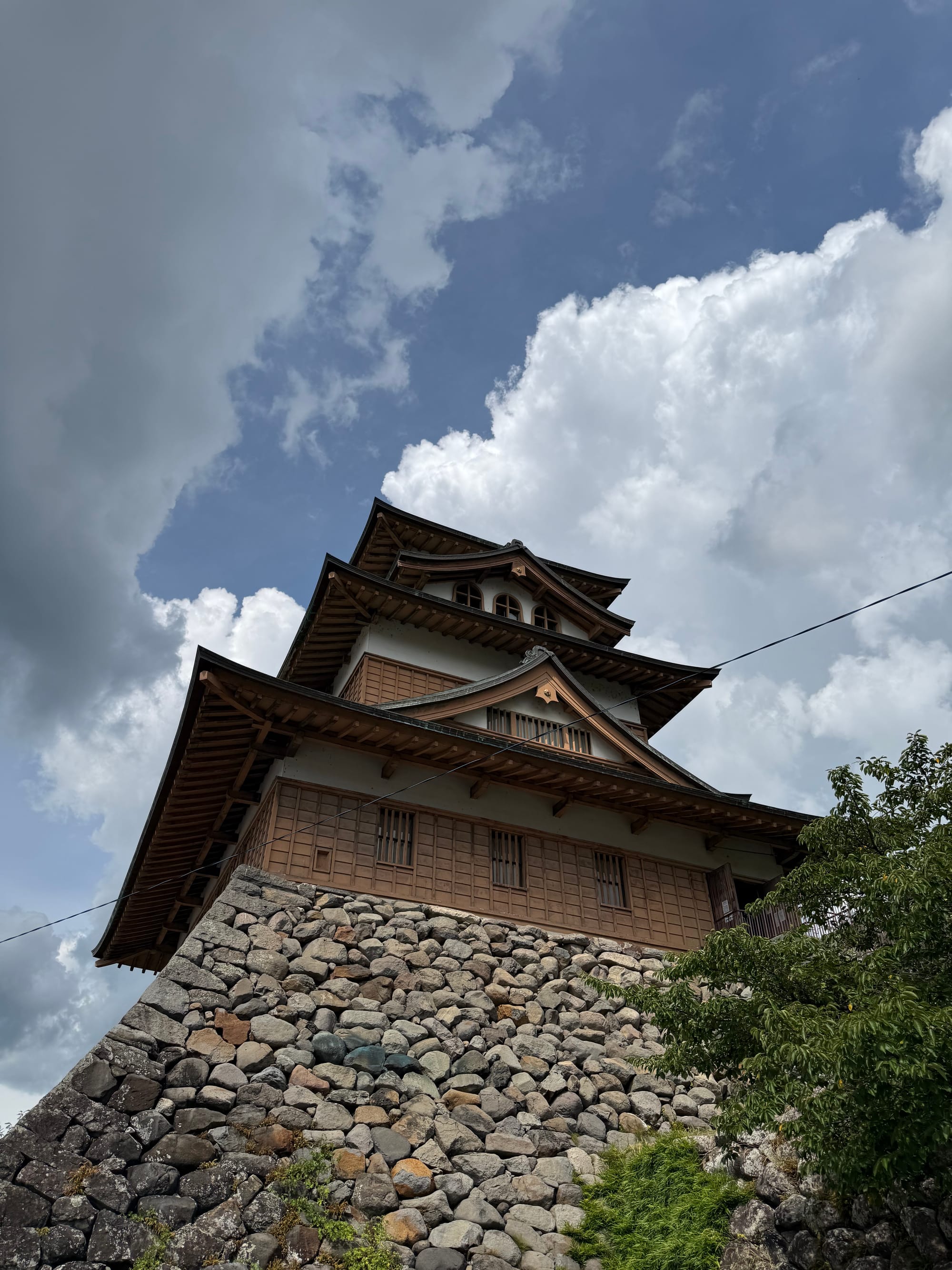
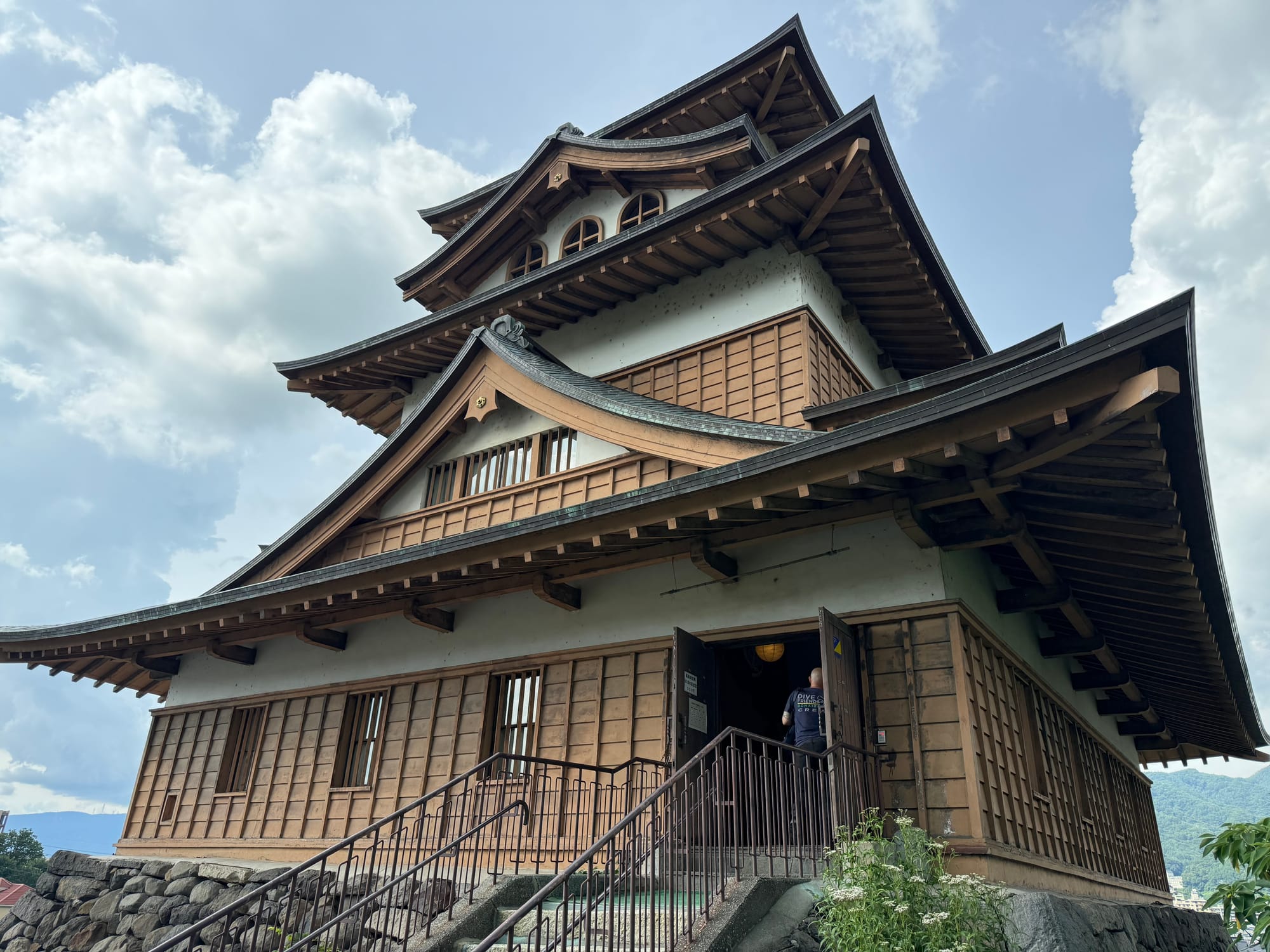
Takashima Castle, also known as the "Floating Castle of Suwa", was originally built in 1598 on the shores of Lake Suwa. The reconstructed keep remains one of the city's best-known historic landmarks.The reconstructed keep of Takashima Castle in Suwa. Originally built in 1598 beside Lake Suwa, the castle was once known as the "Floating Castle" because its moats and marshes blended into the surrounding lakeshore.
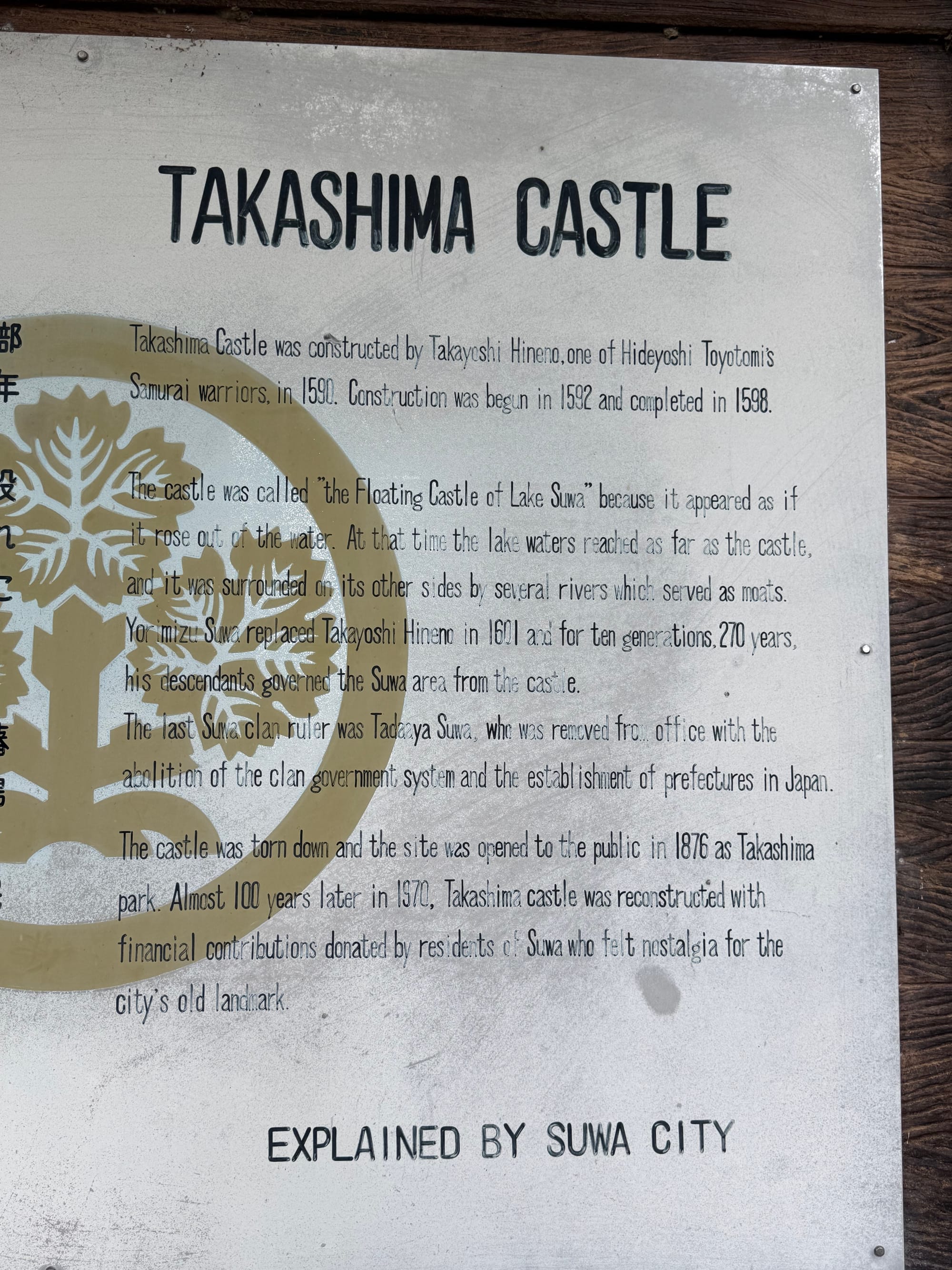
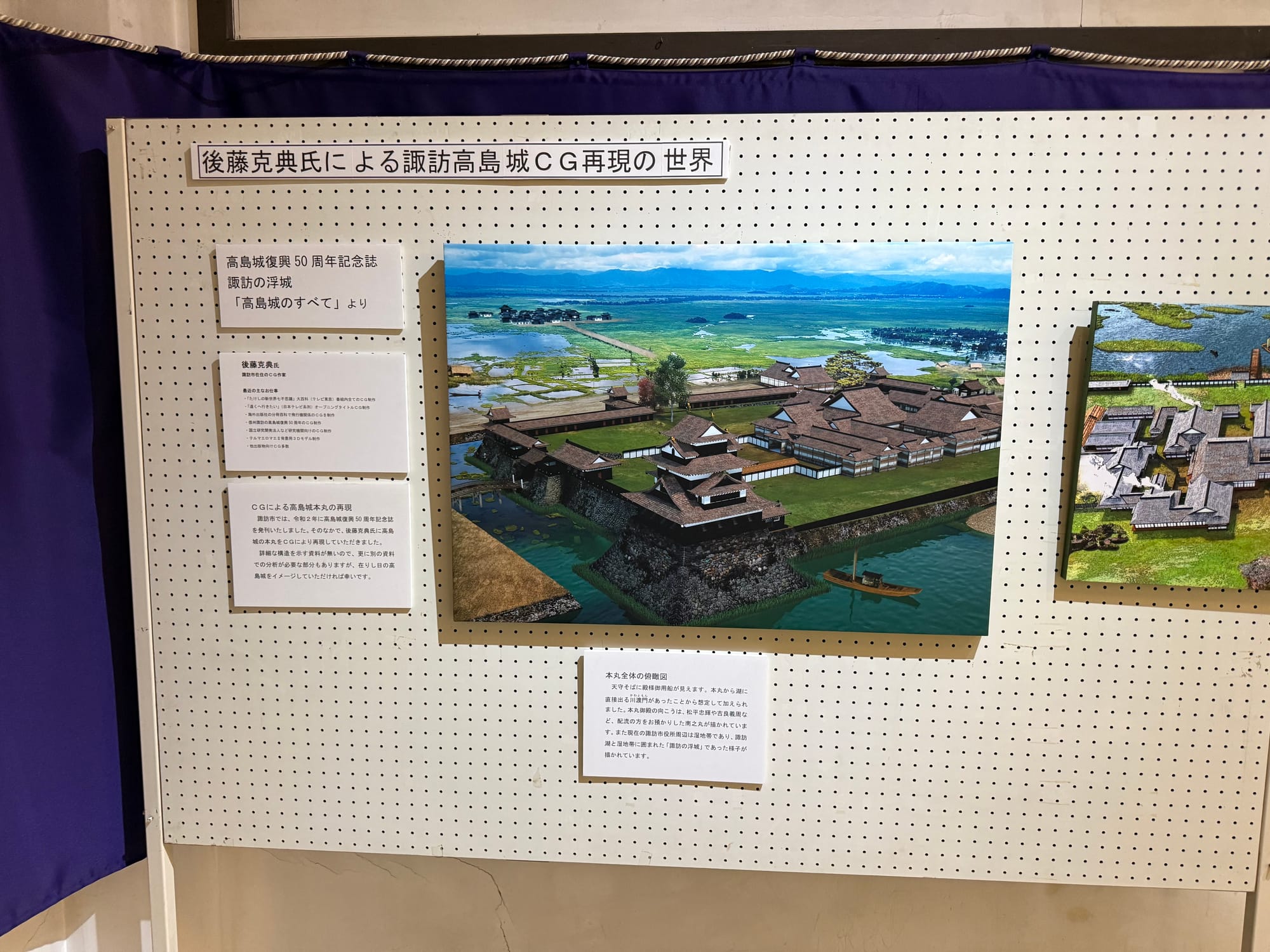
It was once called the floating castle as Lake Suwa was was right up against it and it had a moat surrounding it, which gave it that impression.
An information panel at Takashima Castle explains the history of the former "Floating Castle of Lake Suwa", from its construction in the late sixteenth century to its reconstruction in 1970.A computer-generated reconstruction of historic Takashima Castle illustrates how the castle once stood amid the waters and wetlands of Lake Suwa, giving rise to its nickname, the "Floating Castle."
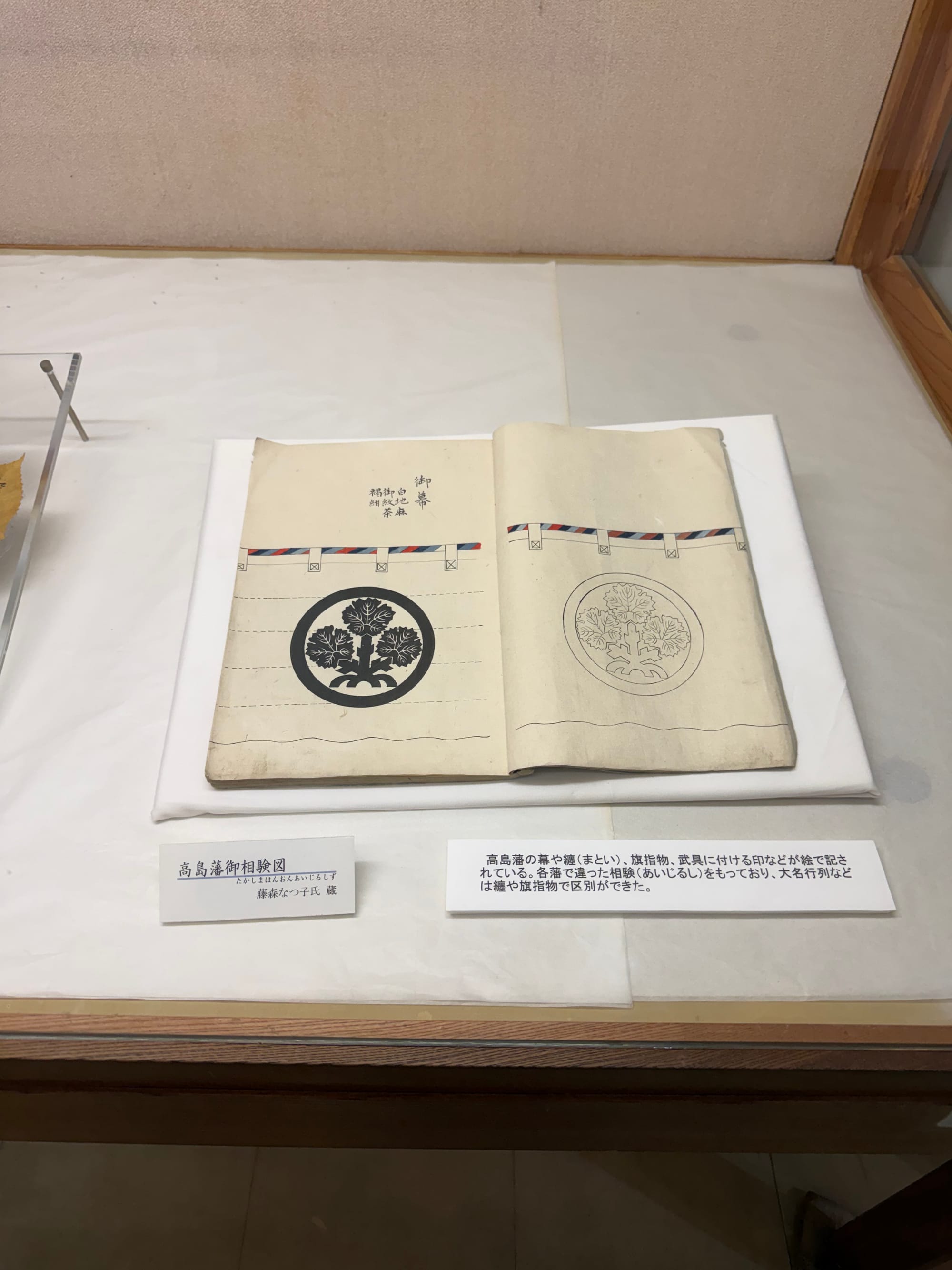
They also have on display the official emblem of the Suwa clan.
A historical reference book displaying the heraldic crests of the Suwa clan. Such emblems were used to identify banners, armour and military equipment associated with the rulers of Takashima Castle.
The Castle standing here is a replica of the original. It was constructed in 1598, torn down in 1876 and opened as Takashima park. It was then reconstructed in 1970, which was done with funds donated by residents.
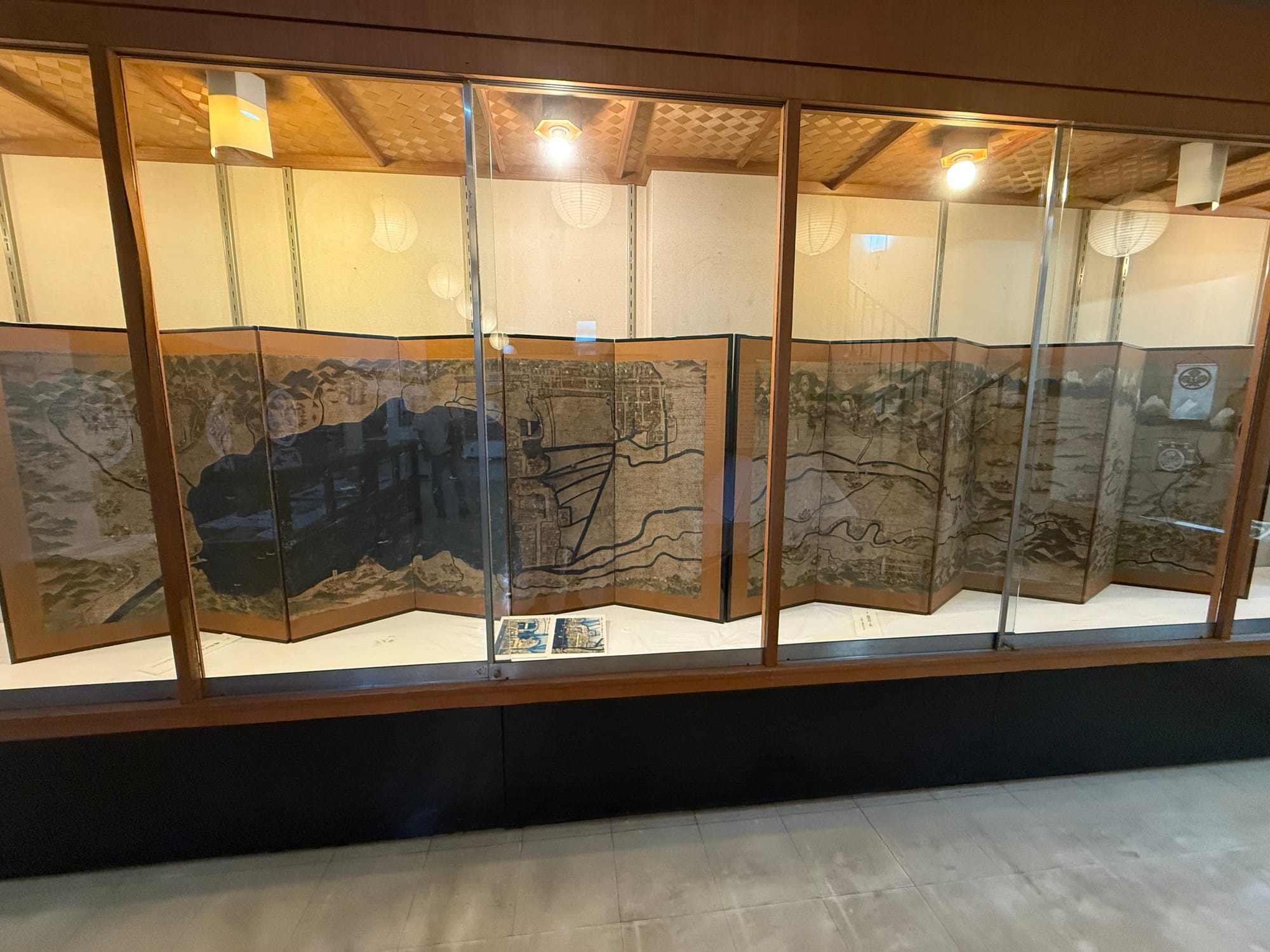
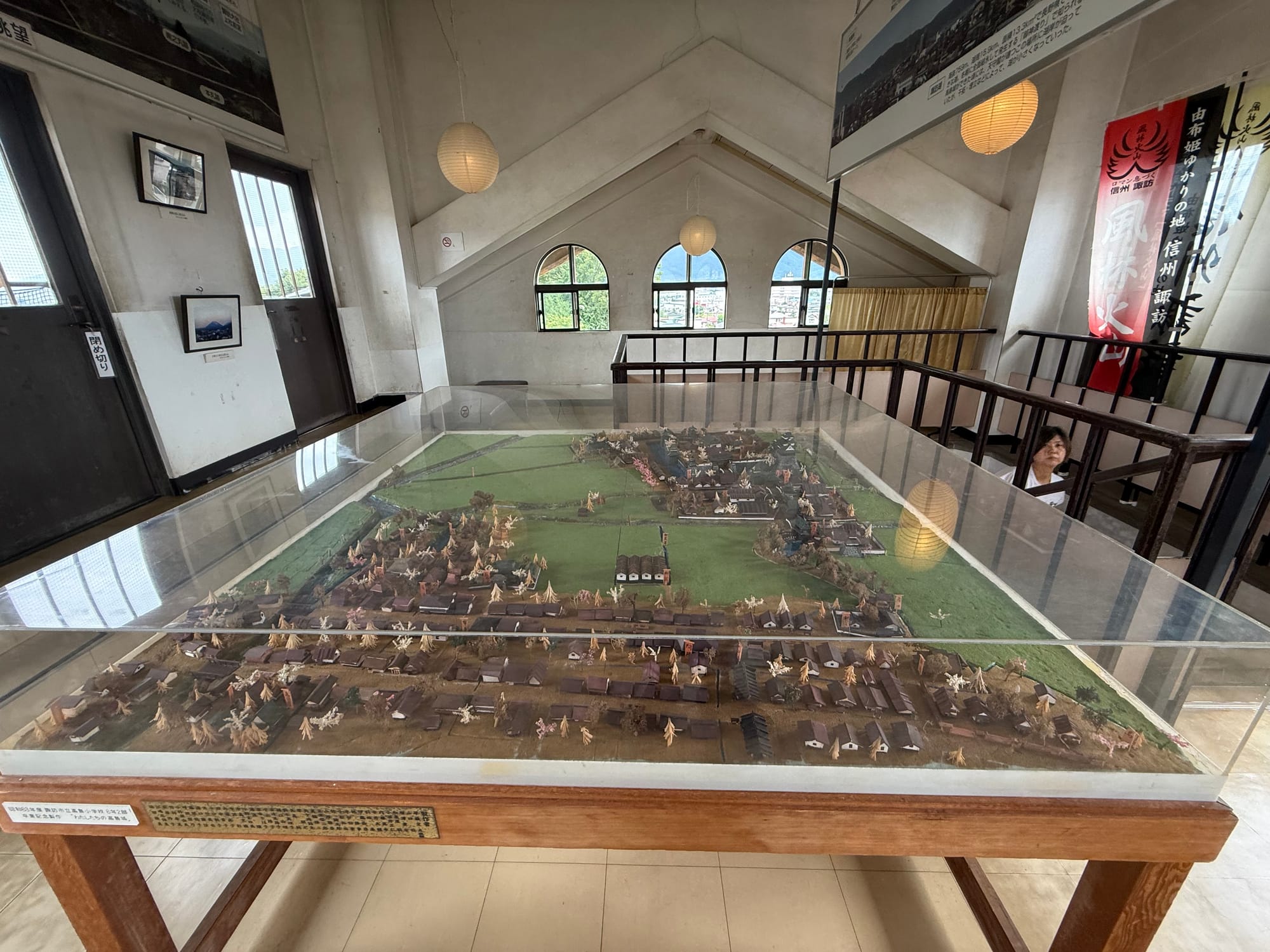
A historic folding screen on display at Takashima Castle illustrates Lake Suwa and the surrounding area, providing a valuable record of the landscape and settlements associated with the castle during the Edo period.A scale model of Takashima Castle and its castle town illustrates how the complex was laid out during the Edo period, with defensive moats, residences and administrative buildings surrounding the castle grounds.
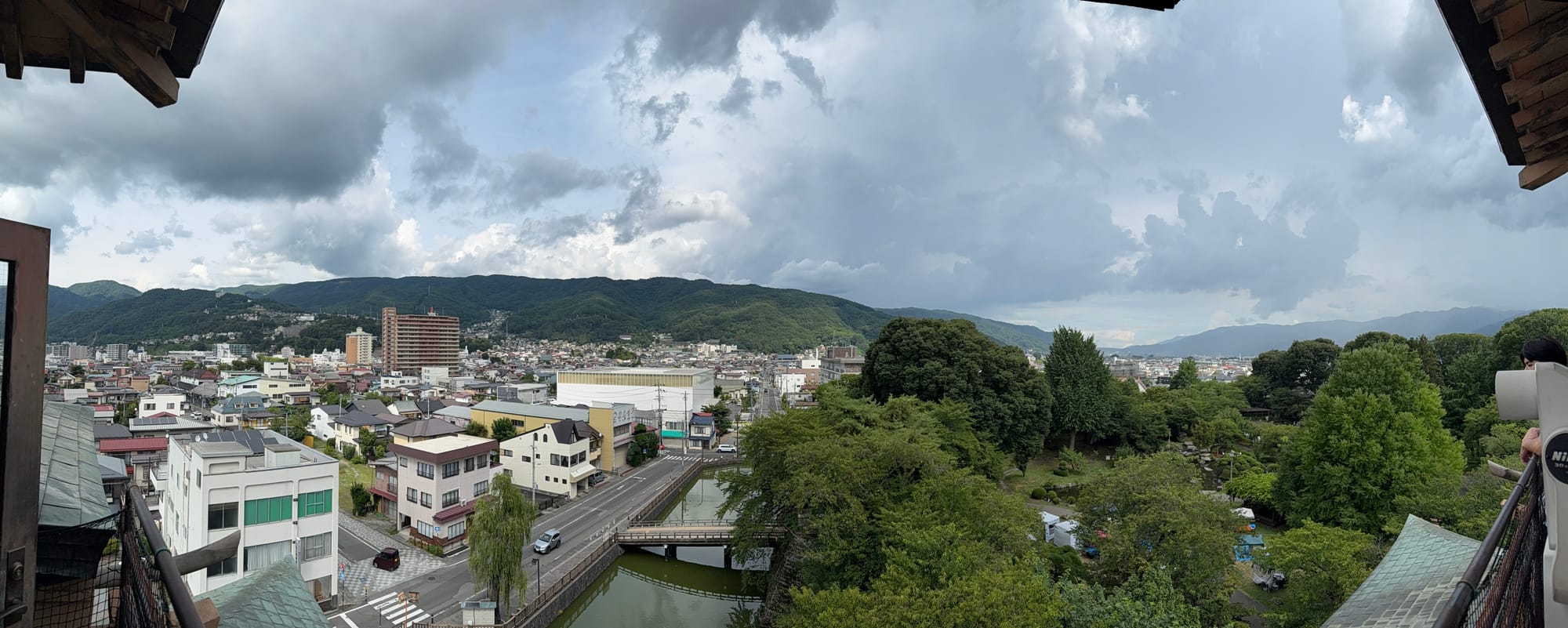
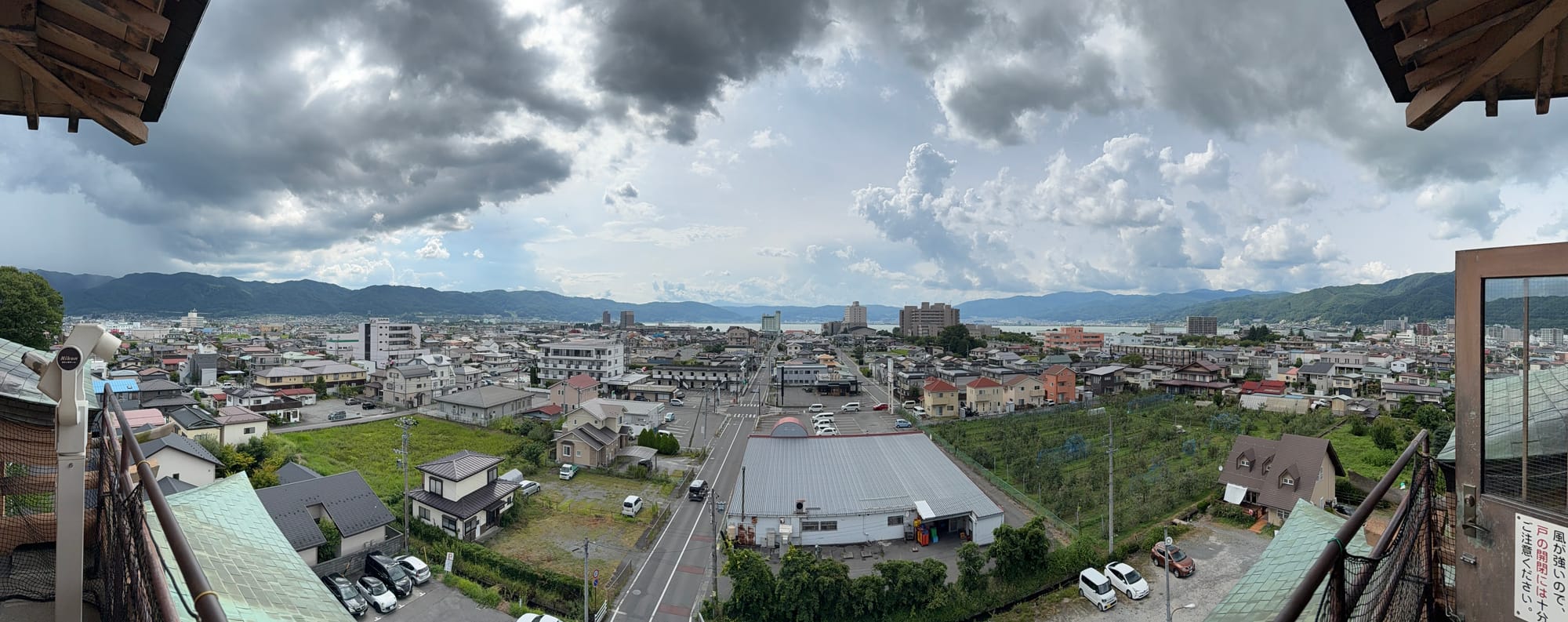
There were some awesome views from the top of the castle.
The view from Takashima Castle stretches across the city of Suwa and the surrounding mountains. Dark storm clouds gathering over the basin provide a dramatic backdrop to the historic castle grounds below.The view from Takashima Castle extends across Suwa toward Lake Suwa and the surrounding mountains. Dark summer storm clouds add drama to the landscape stretching across the basin below.
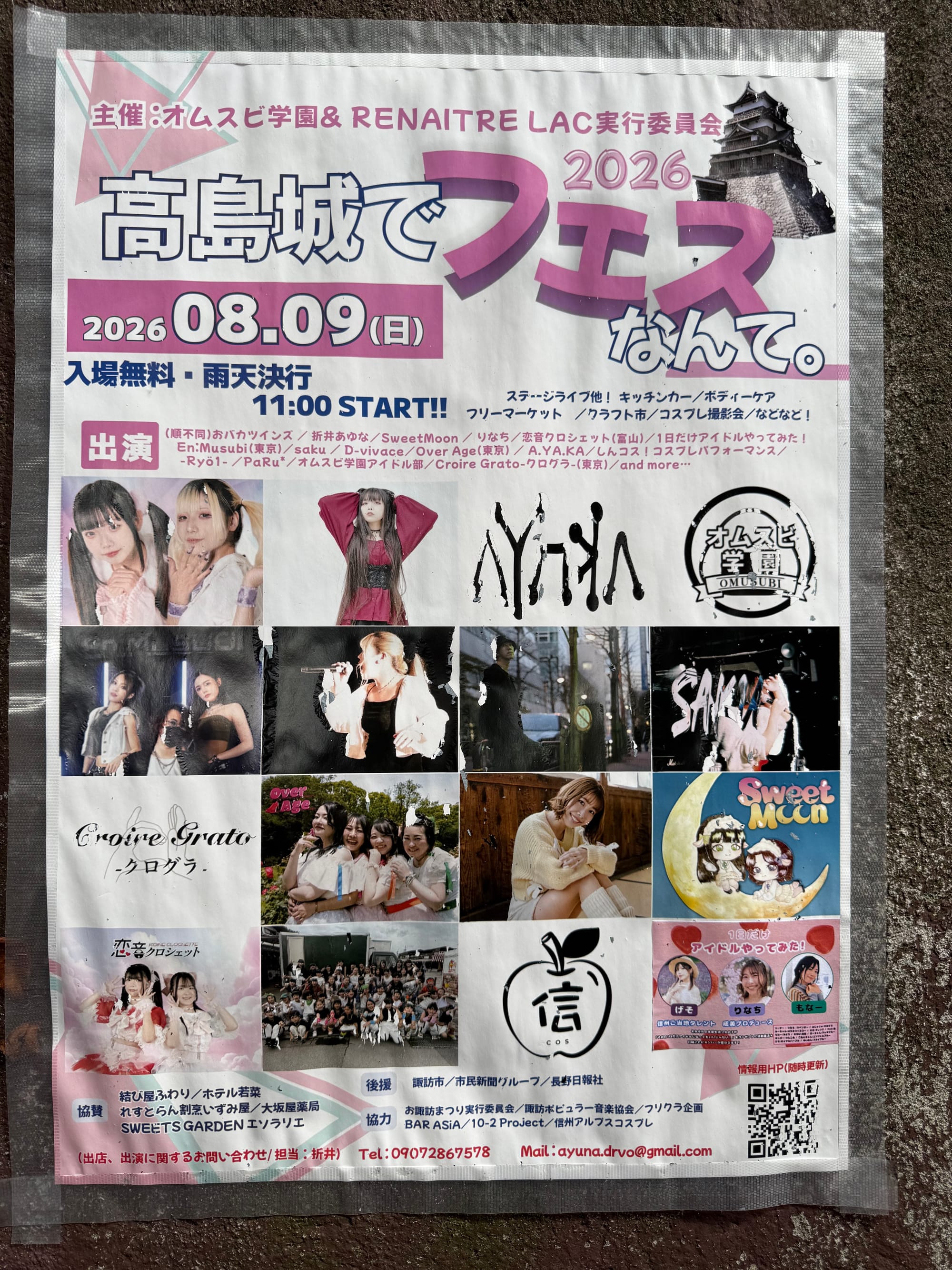
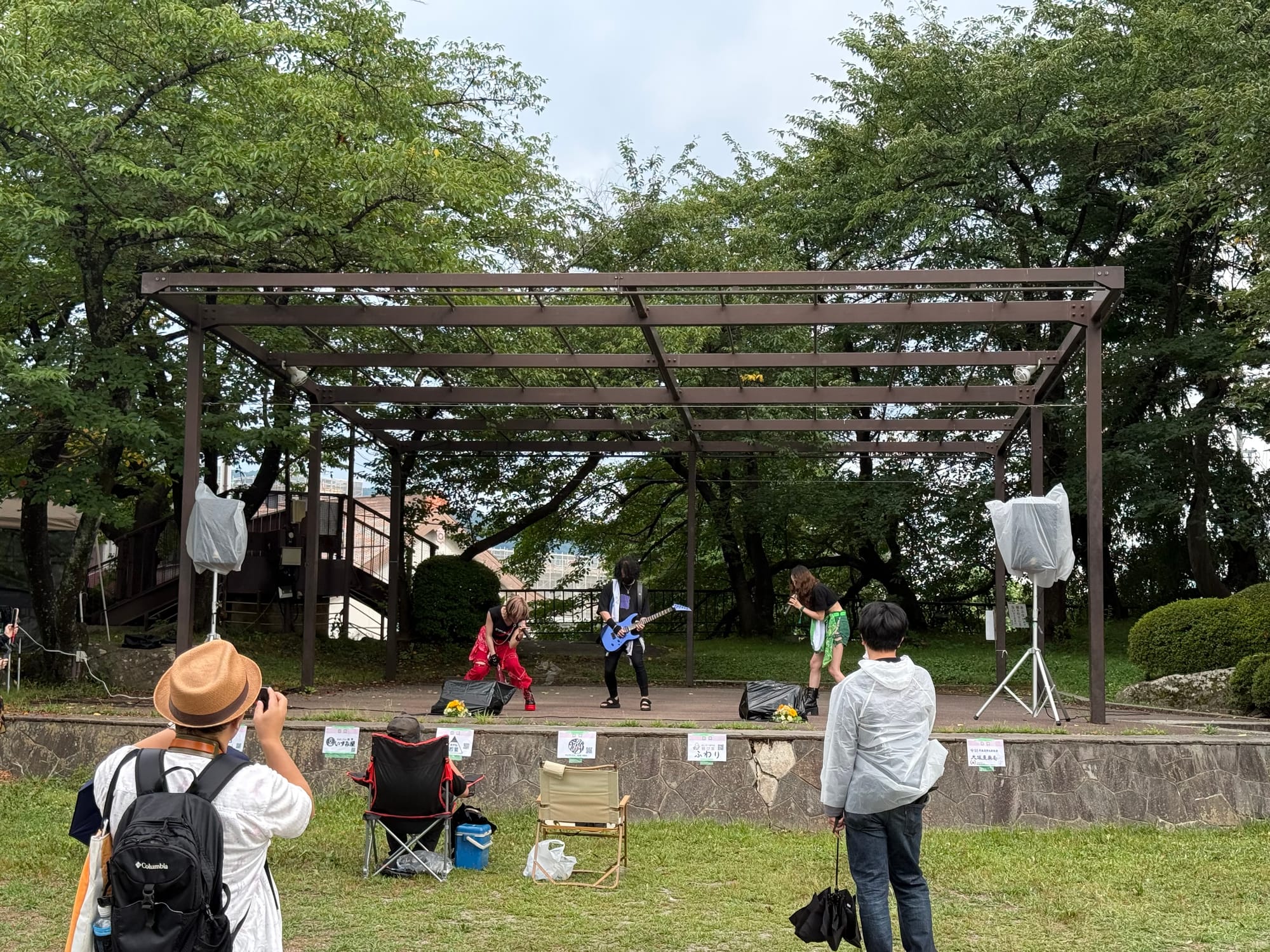
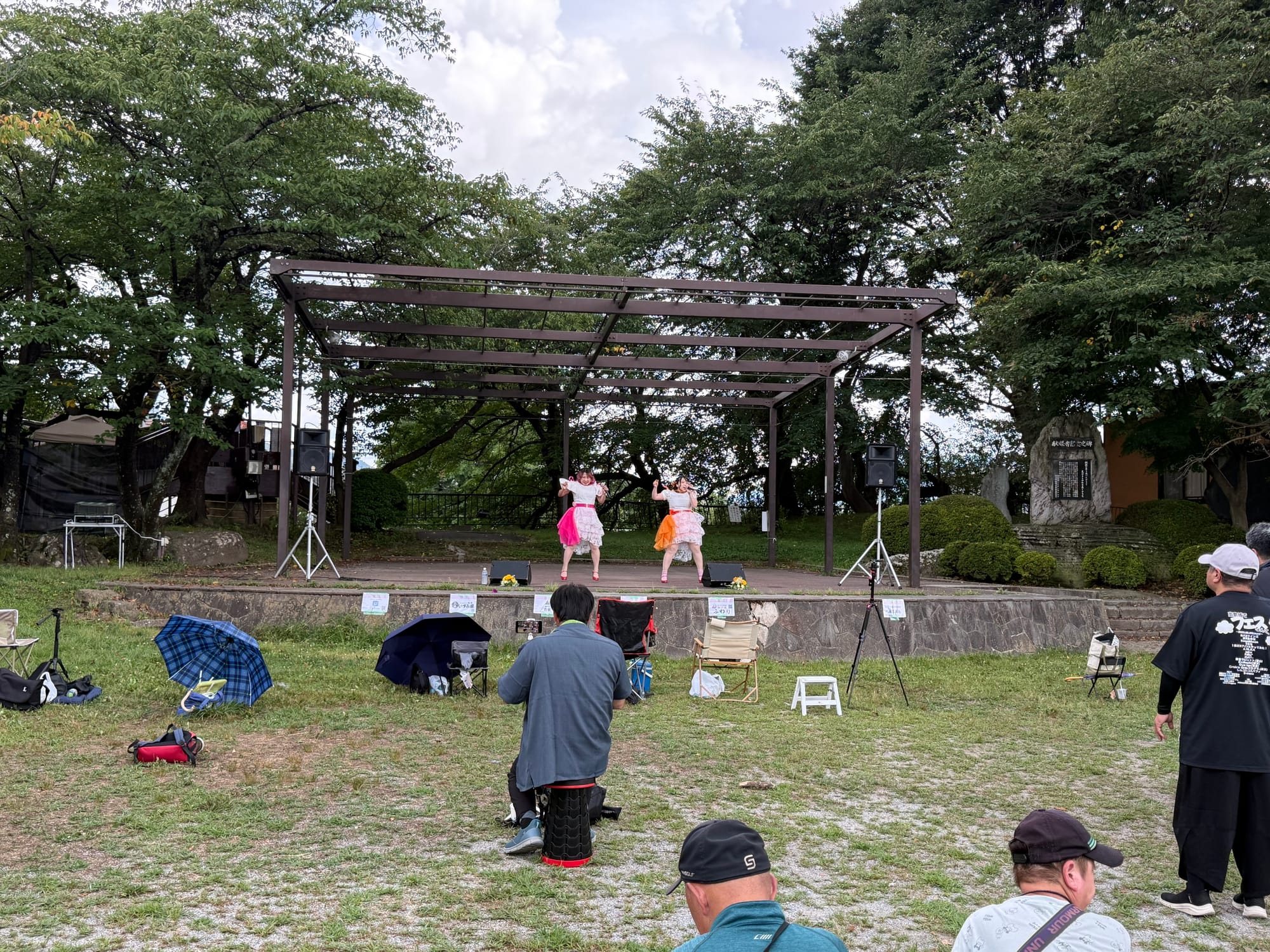
And there was also a concert going on in the park, which looked really good and I managed to get a few photos of it. Plus the music was also really good and i recognised one of the songs, as one of the acts covered an anime song.
A poster promoting the 2026 Takashima Castle Fes in Suwa. The event combines live music, cosplay, food vendors, craft stalls and other activities within the grounds of the historic Takashima Castle.A live performance at Takashima Castle Fes, an event held in the grounds of Takashima Castle featuring music, food stalls, cosplay and community activities.An idol performance at Takashima Castle Fes, where live entertainment, food stalls and community activities bring visitors together within the historic grounds of Takashima Castle.
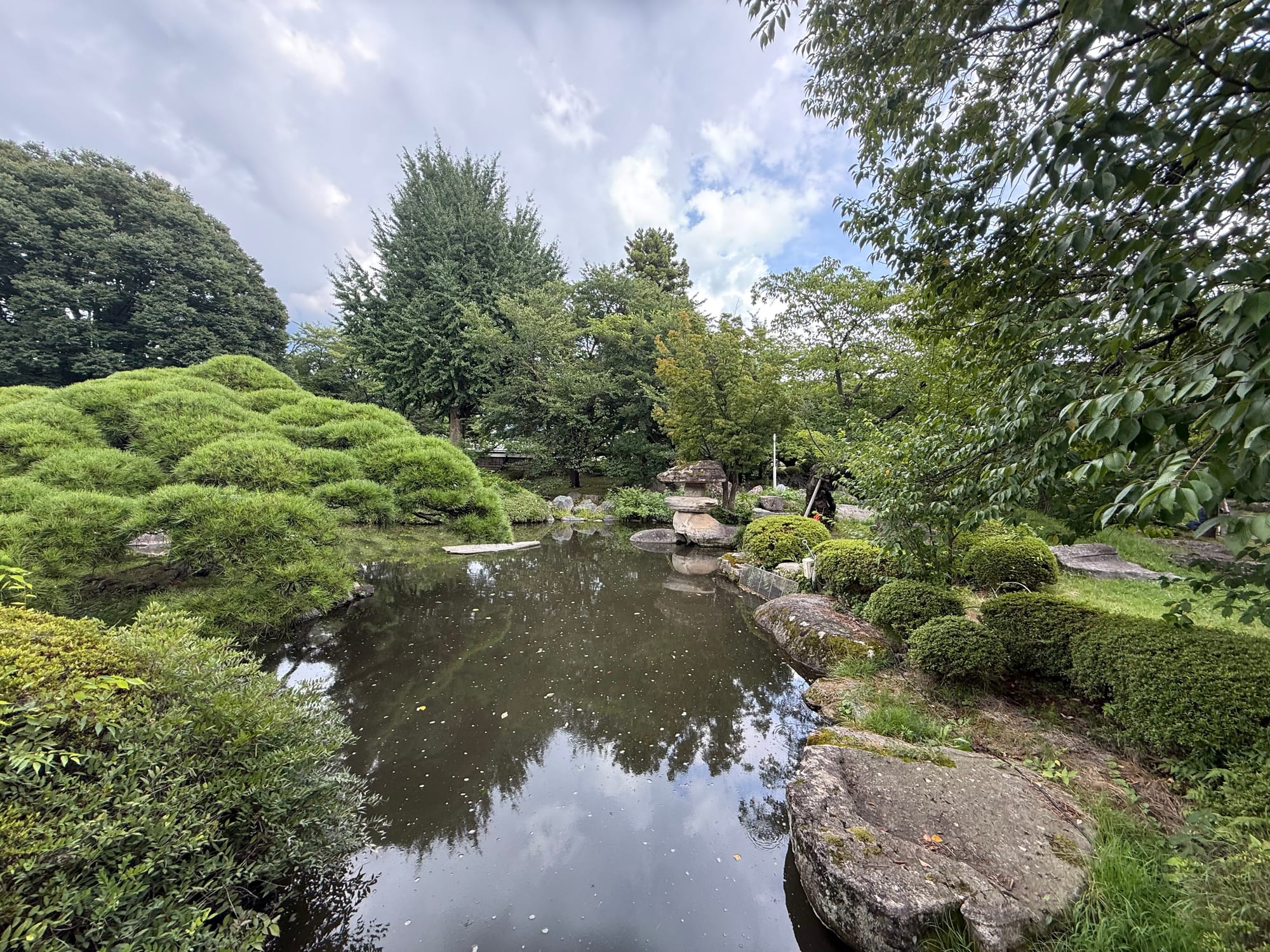
And here are some photos from around the park as well.
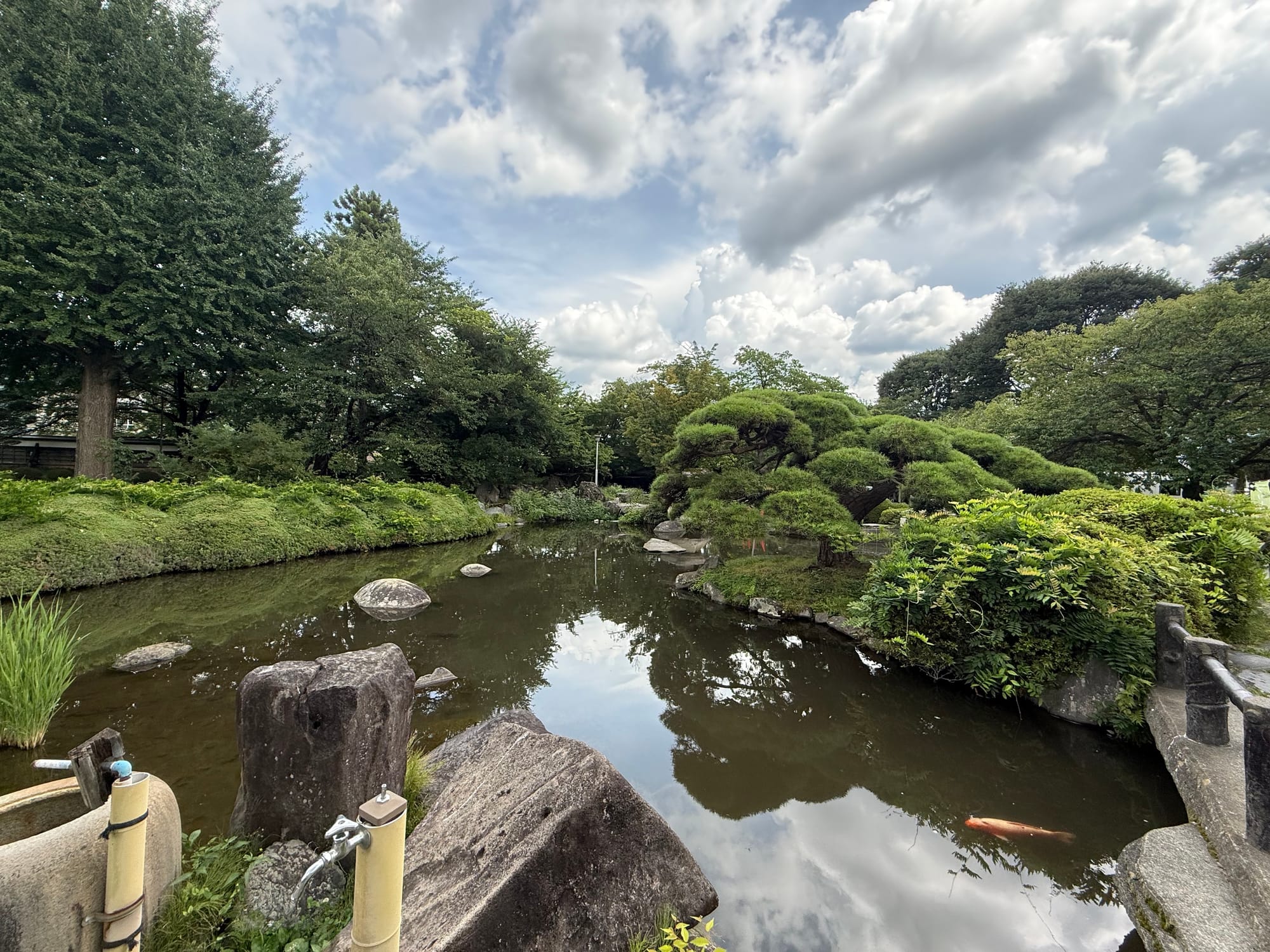
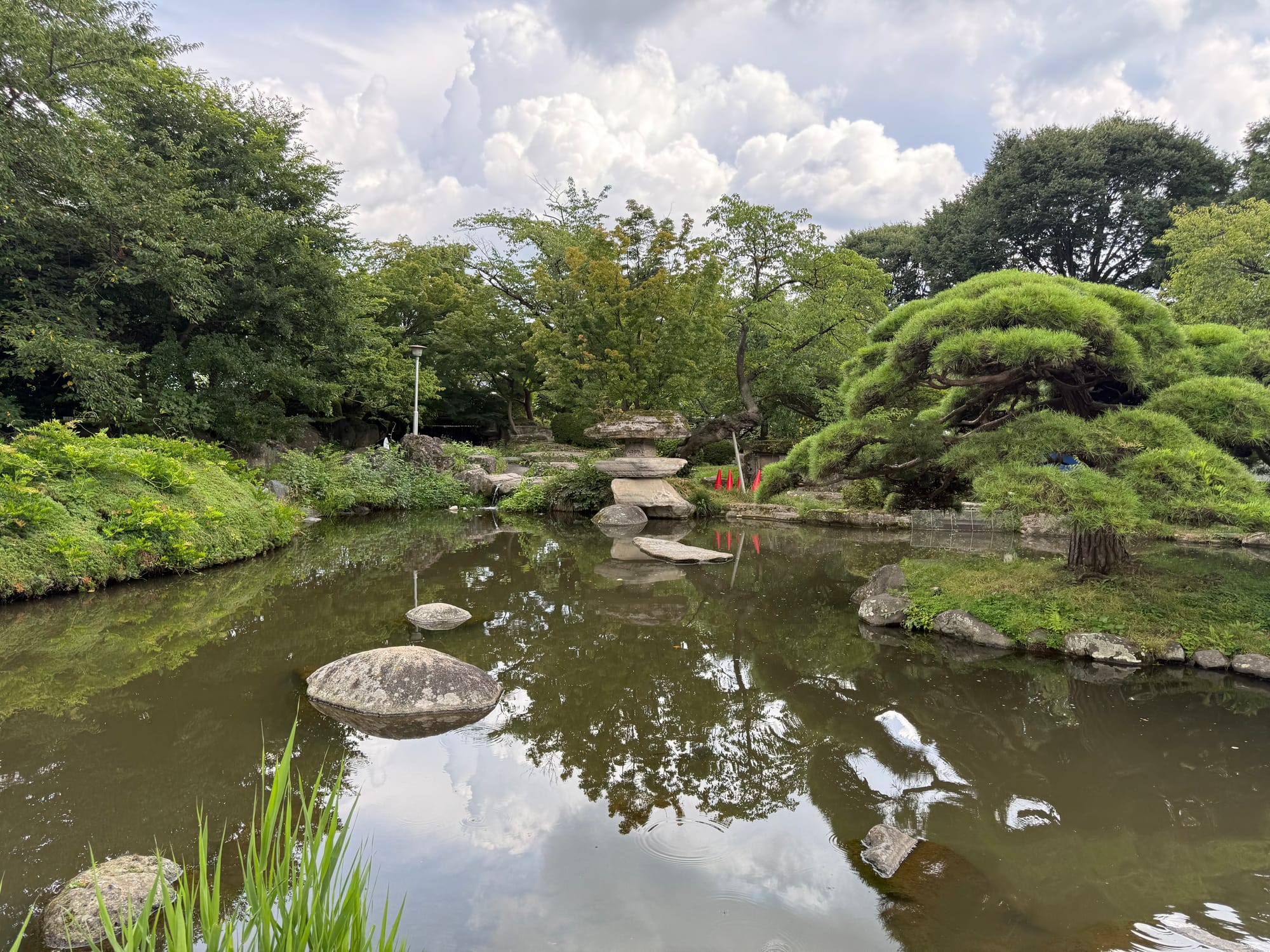
A tranquil garden in Takashima Castle Park, with a pond, stone lanterns and sculpted trees reflecting the traditional landscape design often found within Japanese castle grounds.A pond within Takashima Castle Park reflects the surrounding trees and clouds. Carefully shaped pines, stones and water features create a traditional Japanese garden landscape beside the castle grounds.A traditional garden pond within Takashima Castle Park, where sculpted pines, stone lanterns and reflective water create a peaceful landscape beside the historic castle grounds.
Fireworks Again!
That evening I decided to go to the fireworks festival again, but it is still a shame that I won't be here for the big on on the 15th.
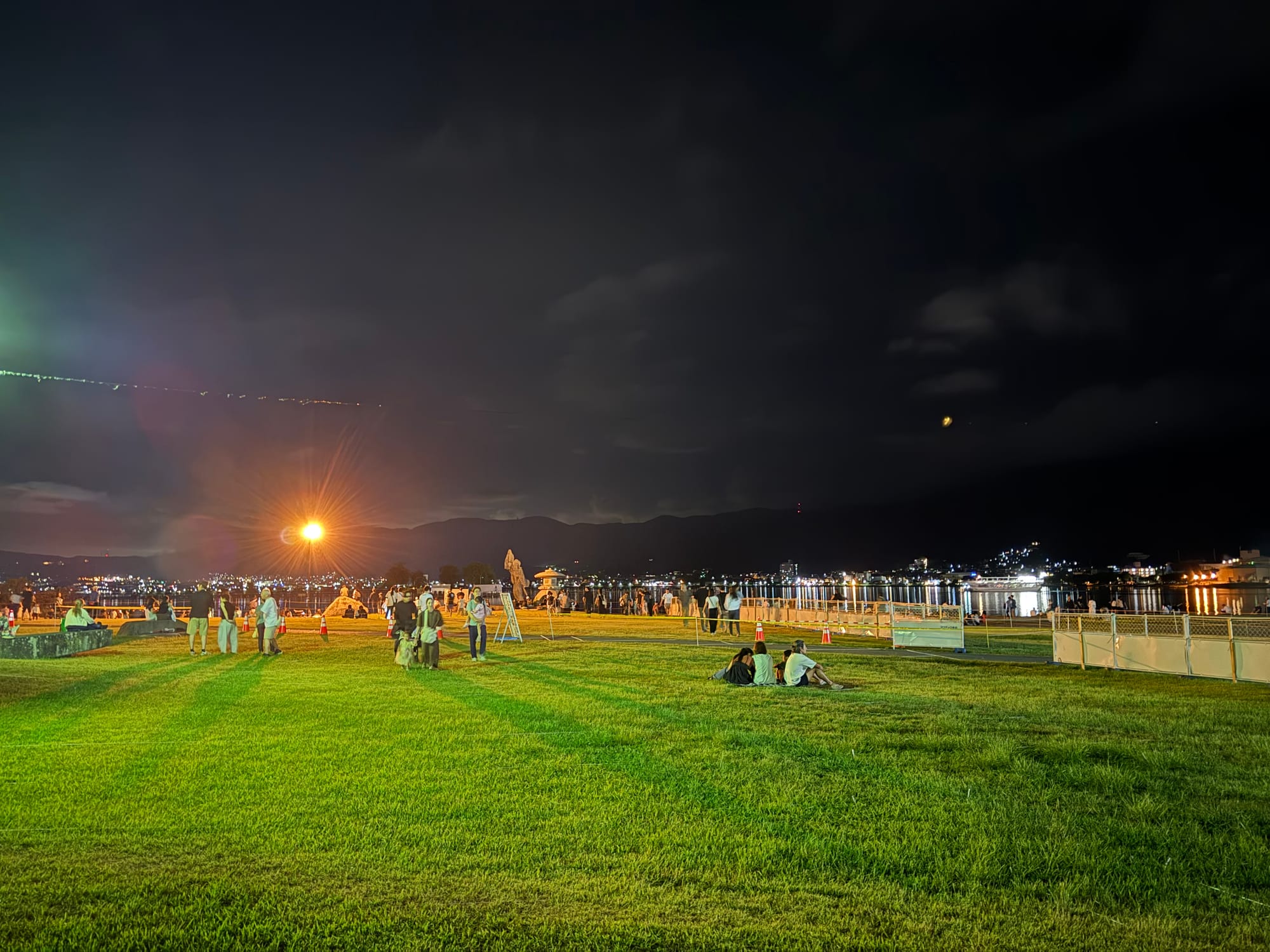
Visitors wait along the shores of Lake Suwa for the evening fireworks display, enjoying the lakeside atmosphere as lights from the surrounding towns shimmer across the water.
0:00
/2:28
First video of the fireworks display over lake Suwa
0:00
/2:56
Second video of the fireworks display over lake Suwa
0:00
/2:31
Third video of the fireworks display over lake Suwa
Exploring Suwa Part 2
10th August
Today, I have a couple of things planned, like kayaking on lake Suwa and going to a museum about a festival that only happens every six years. I also added in going to an observation deck on the other side of Suwa, near Chino city.
Kayaking on Lake Suwa
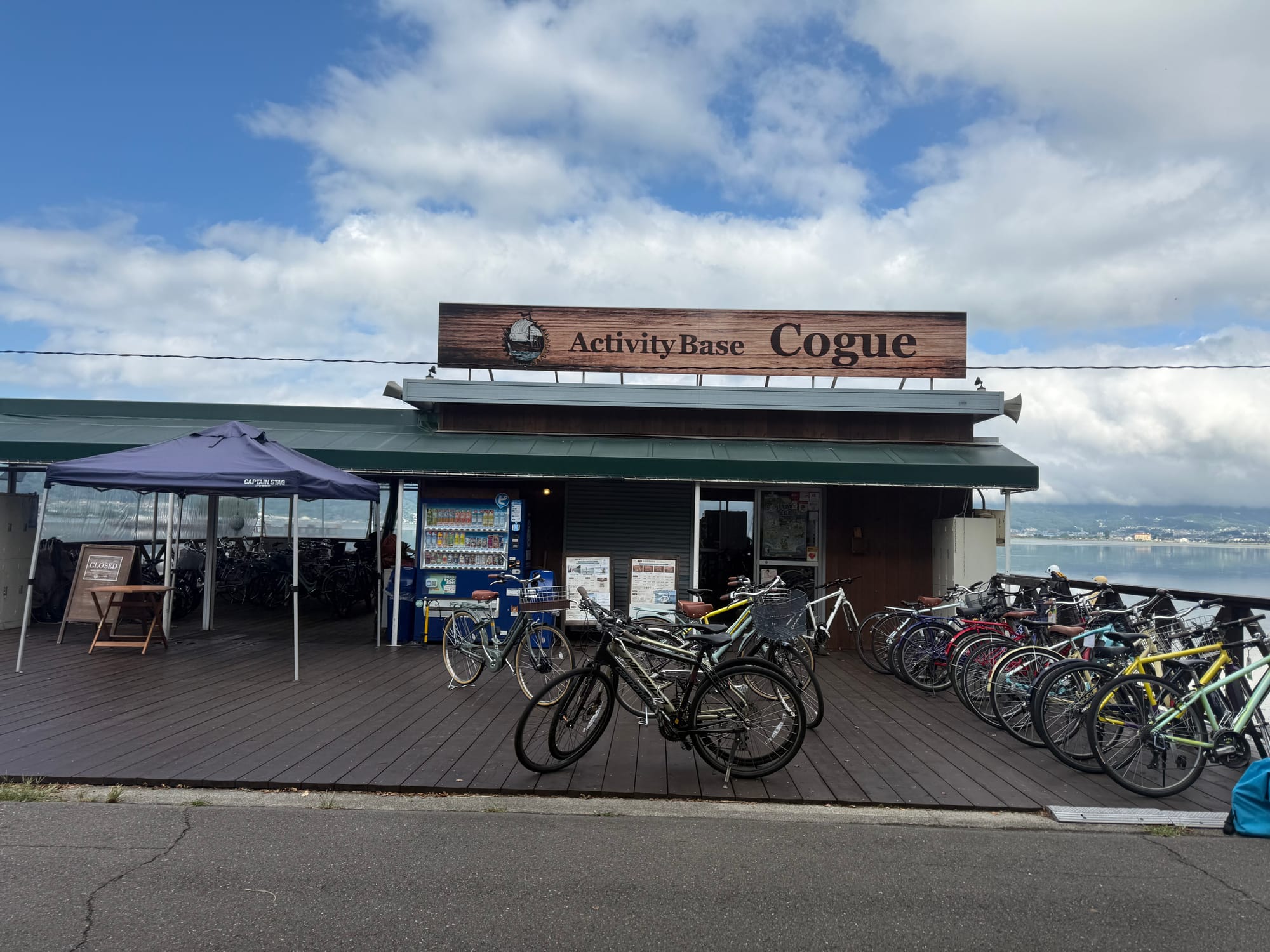
Activity Base Cogue is a lakeside recreation facility on Lake Suwa offering bicycle rentals and other outdoor activities, making it a popular starting point for exploring the waterfront.
Kayaking was done through Activity Base Cogue, which cost me 6000 yen (about £30) for two hours on the lake, but in the end, it got cut short due to the wind picking up that much that it made kayaking a fight, instead of an activity, but they did give us a 50% refund for it only being half the time.
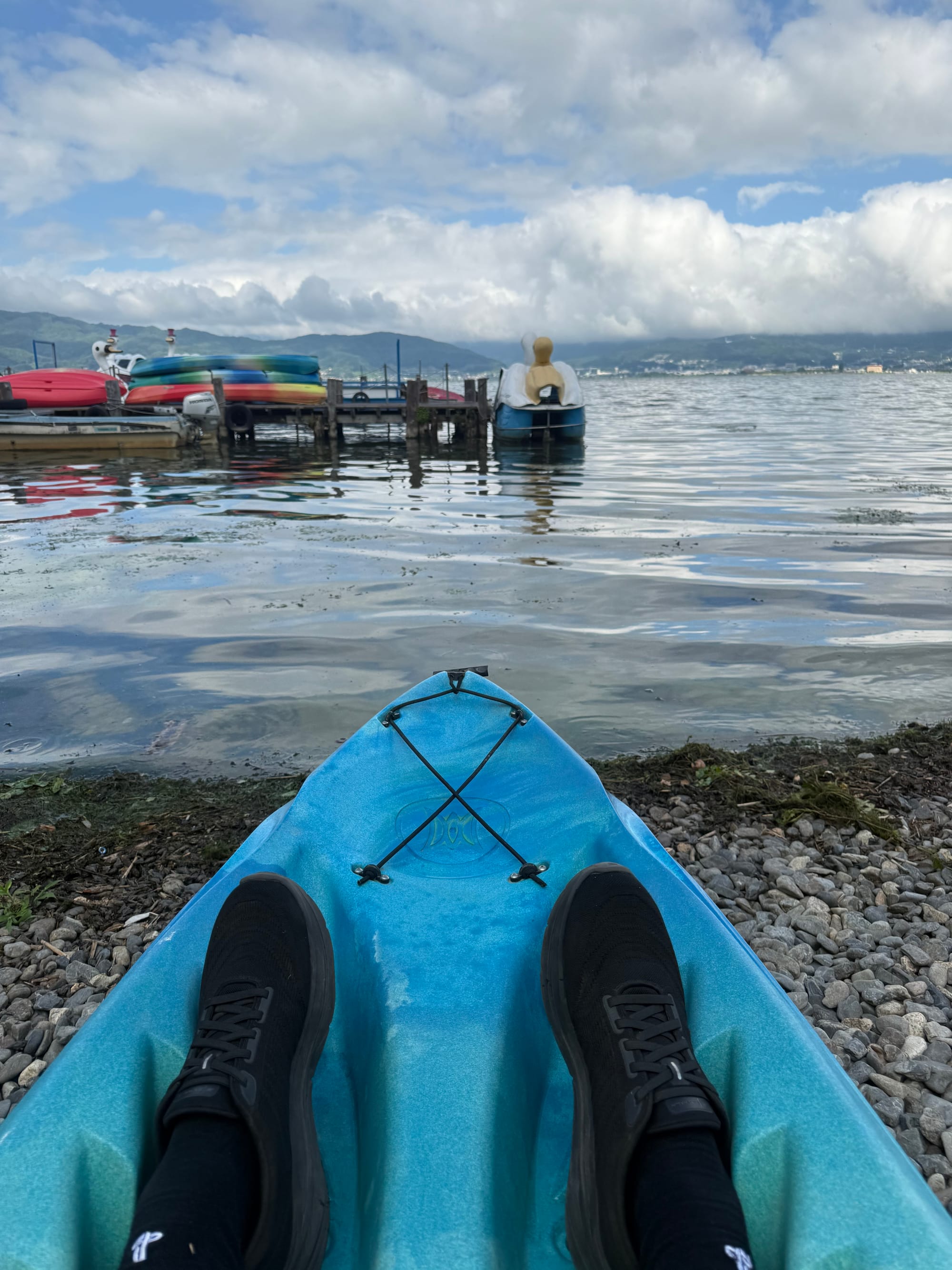
Getting ready to kayak on Lake Suwa, with calm morning waters and dramatic clouds hanging over the mountains surrounding the lake.
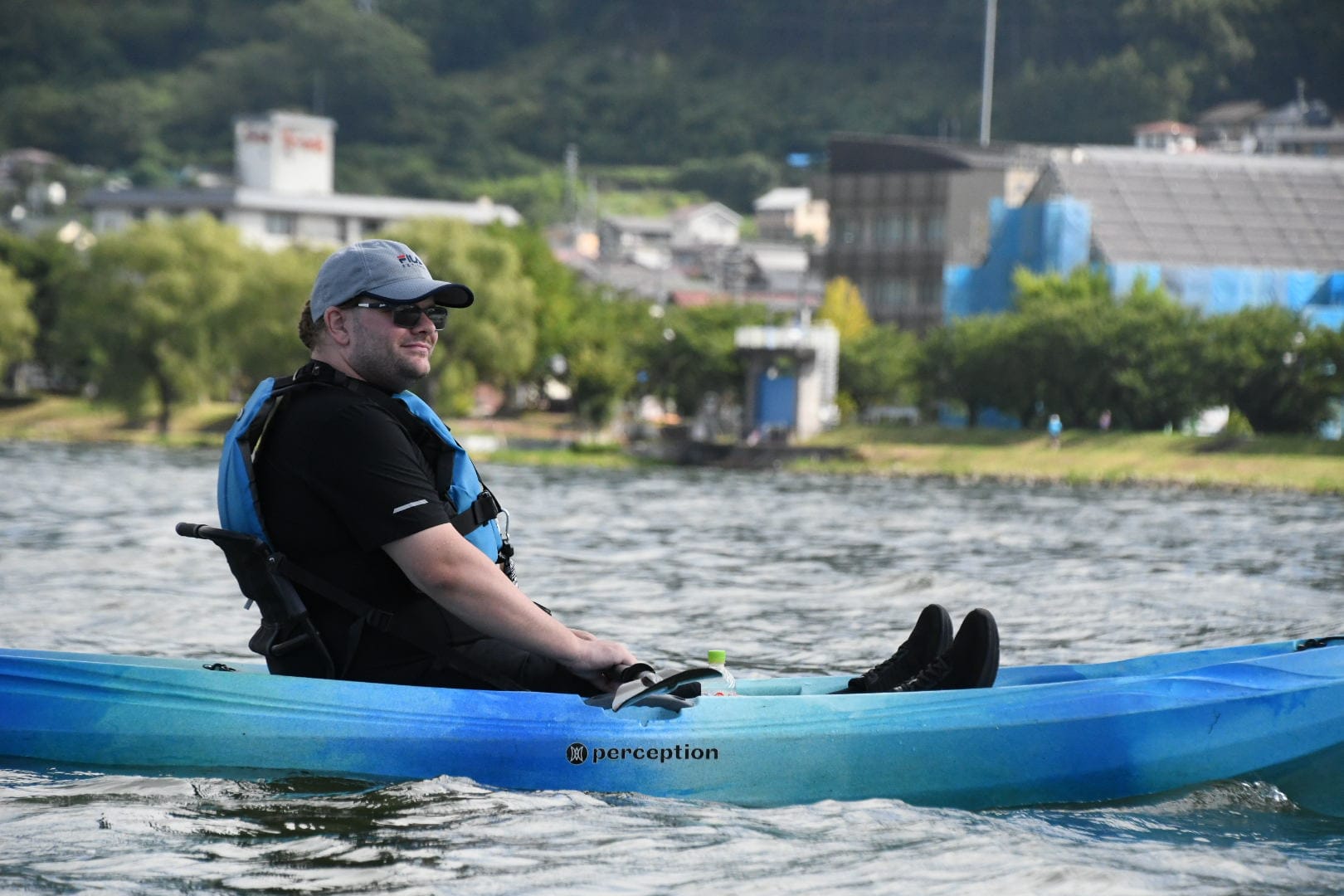
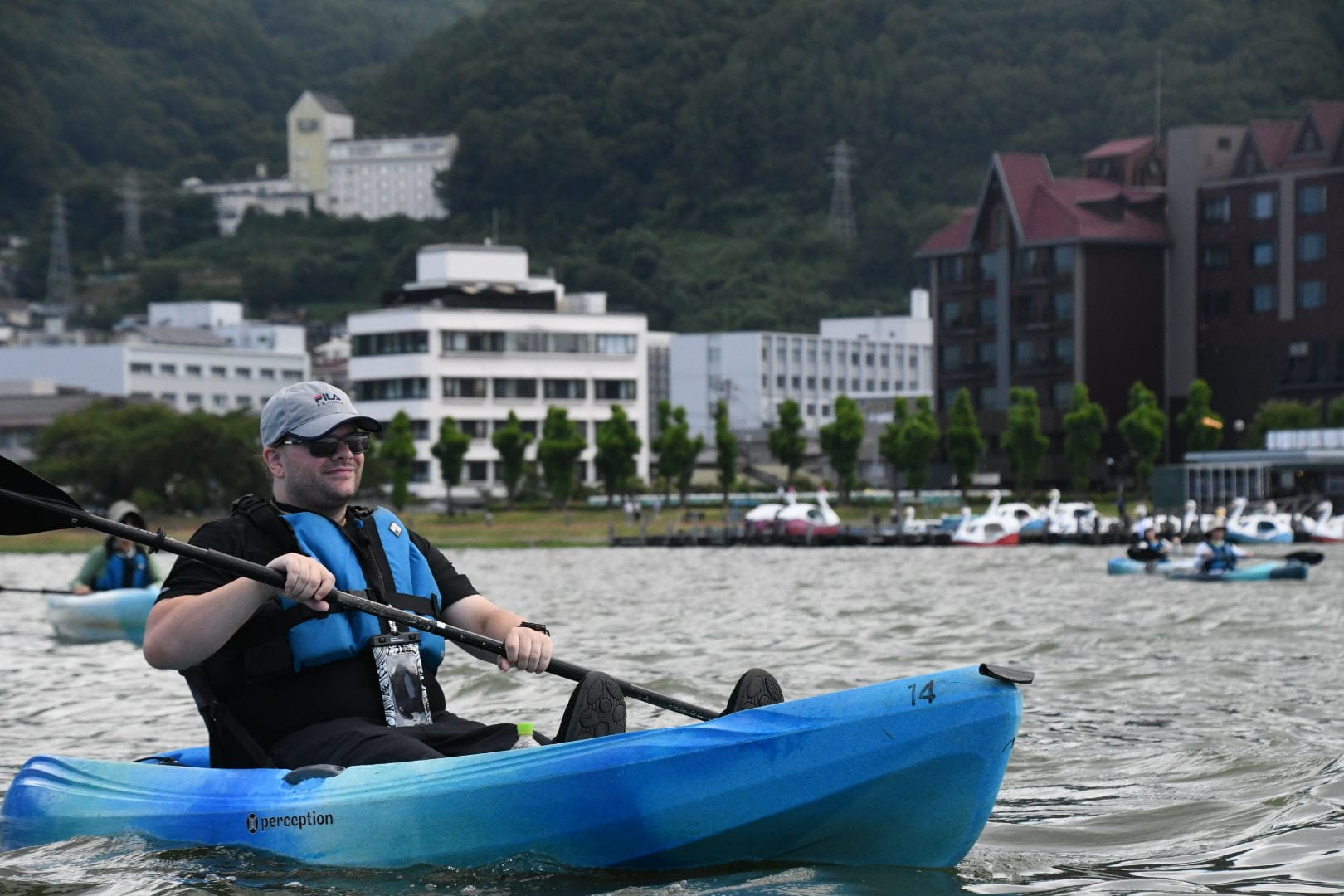
I was able to take my phone camera with me, due to the water pouch that I brought last time I was in Japan. The organiser of the tour also took out a DLSR camera as well and managed to get some photo's of us all.
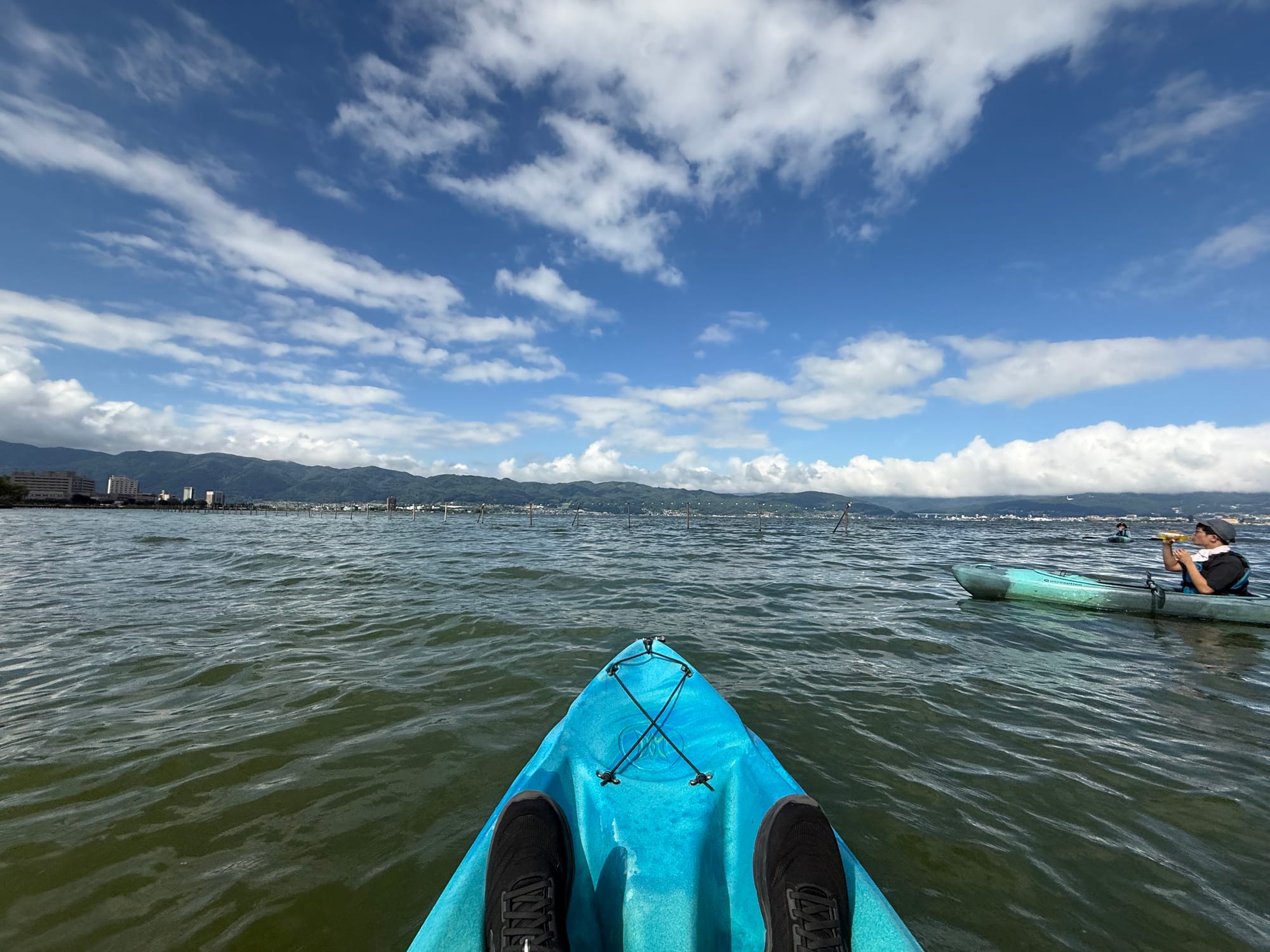
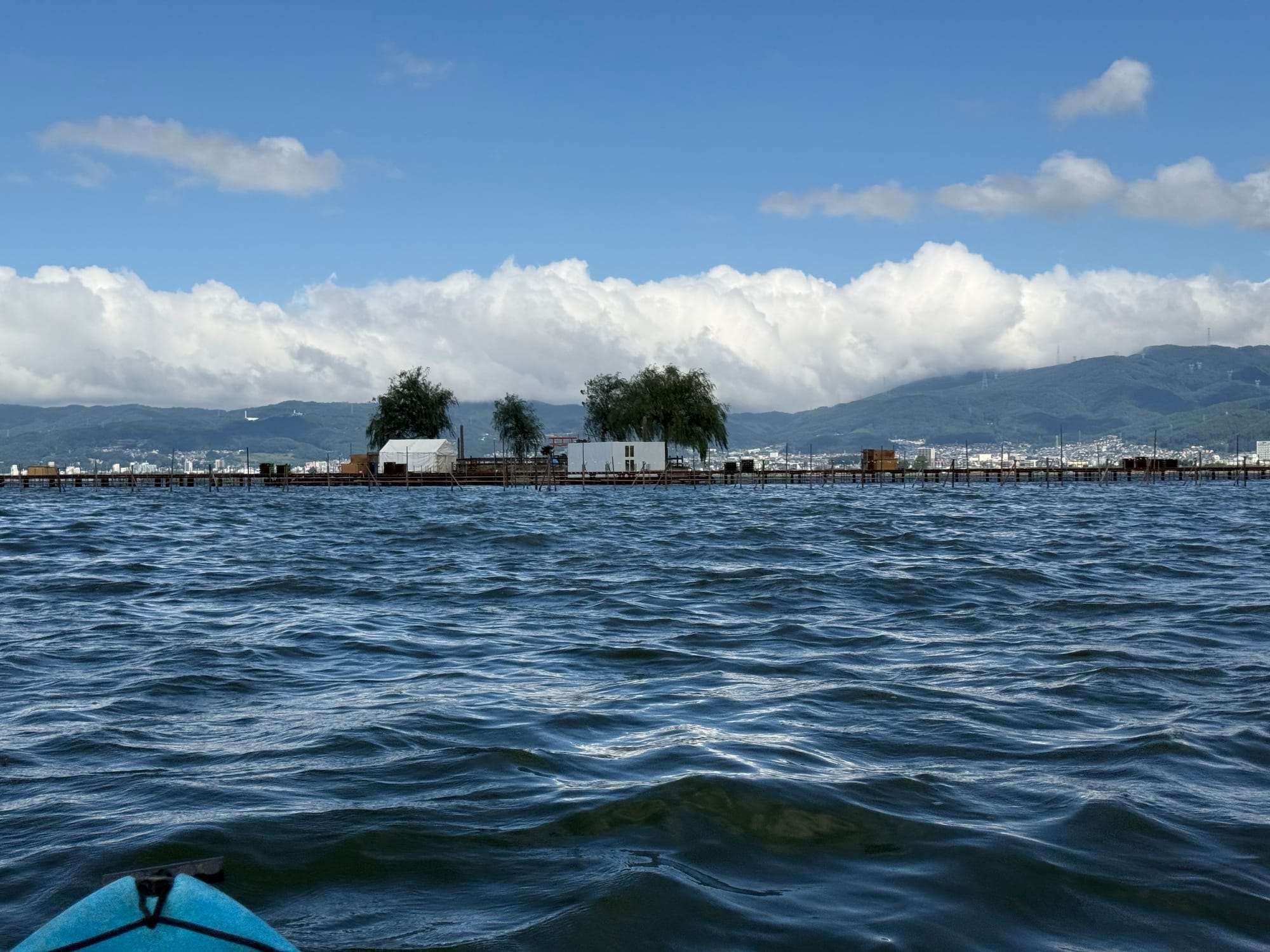
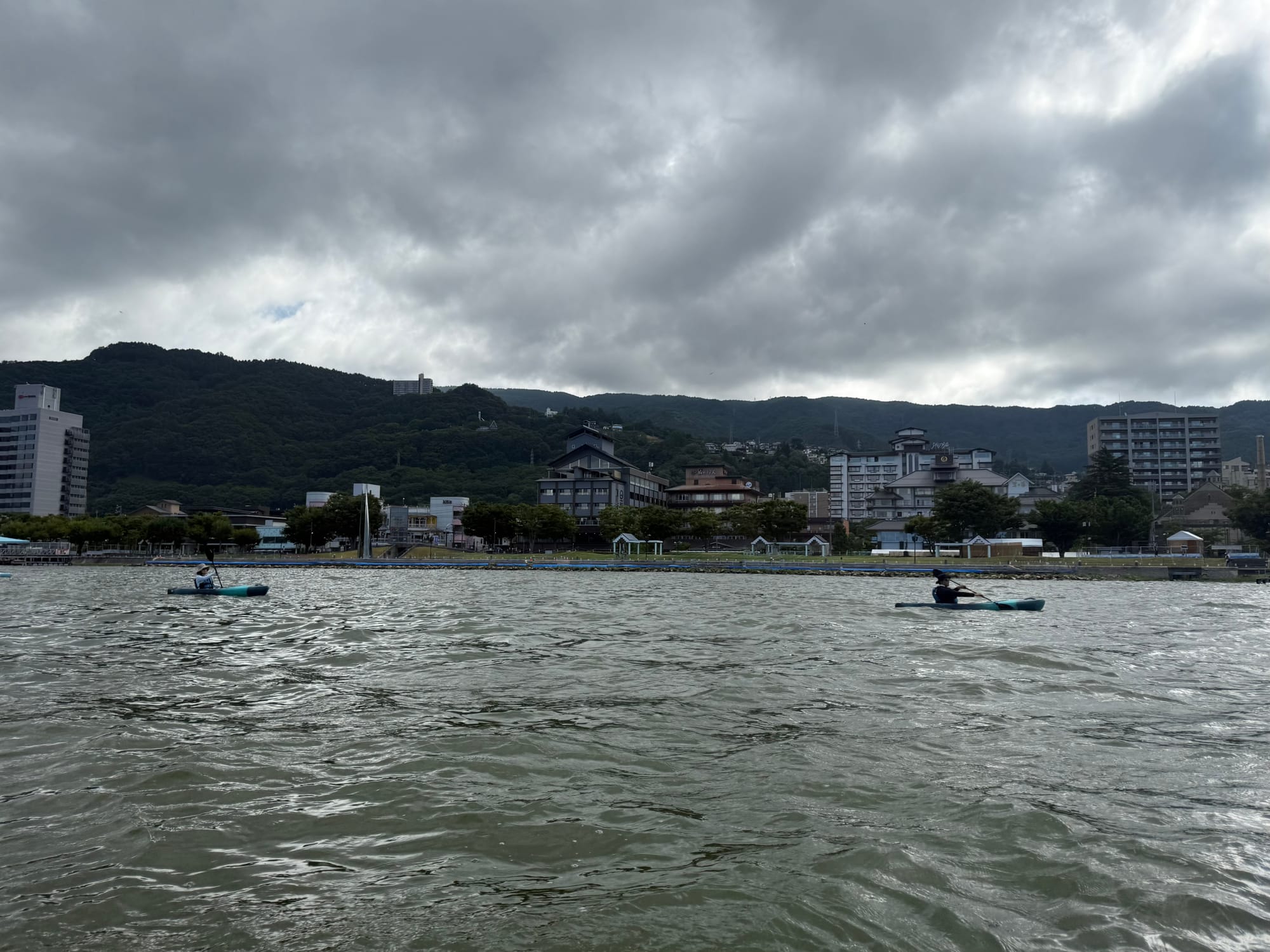
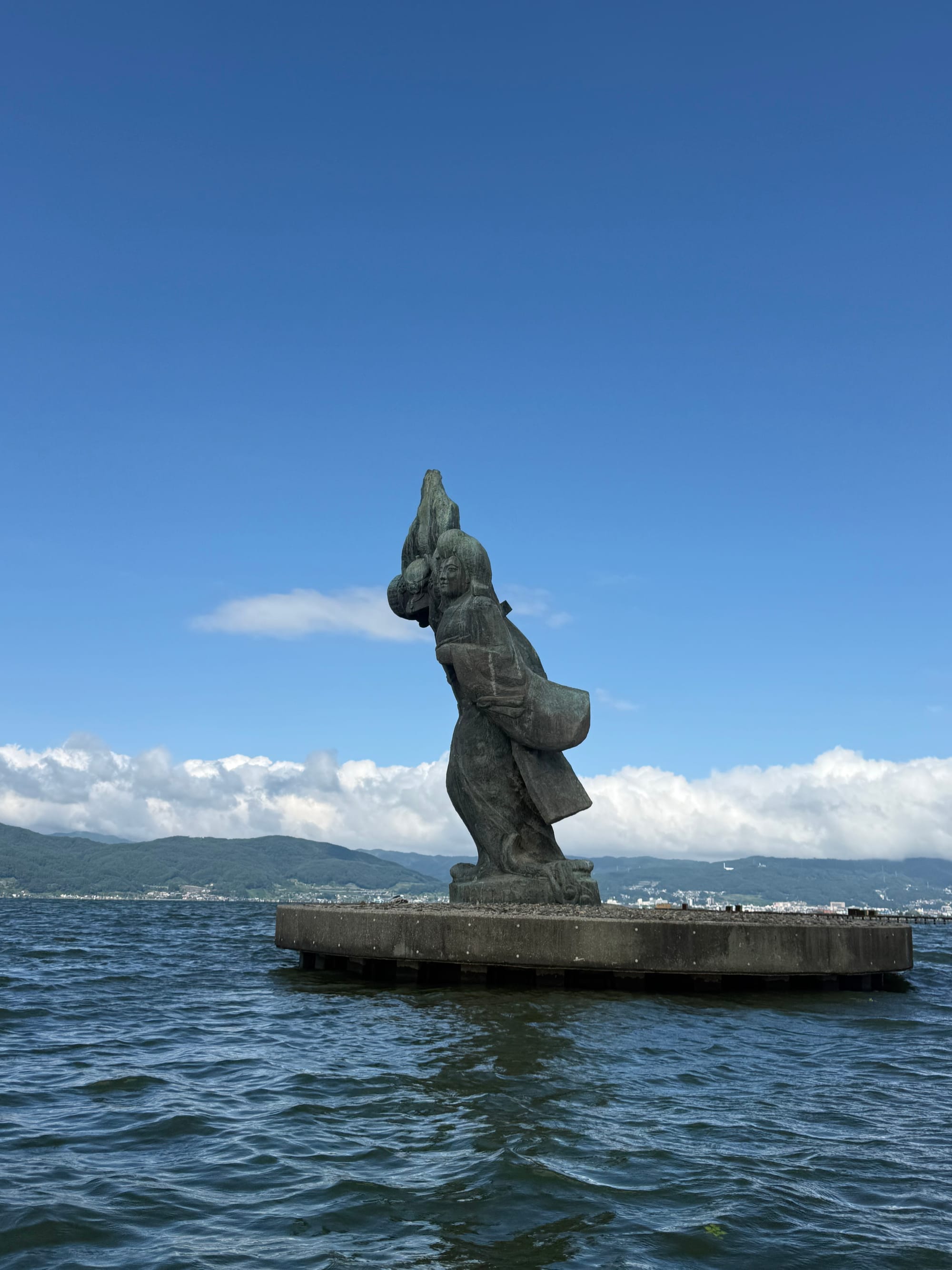
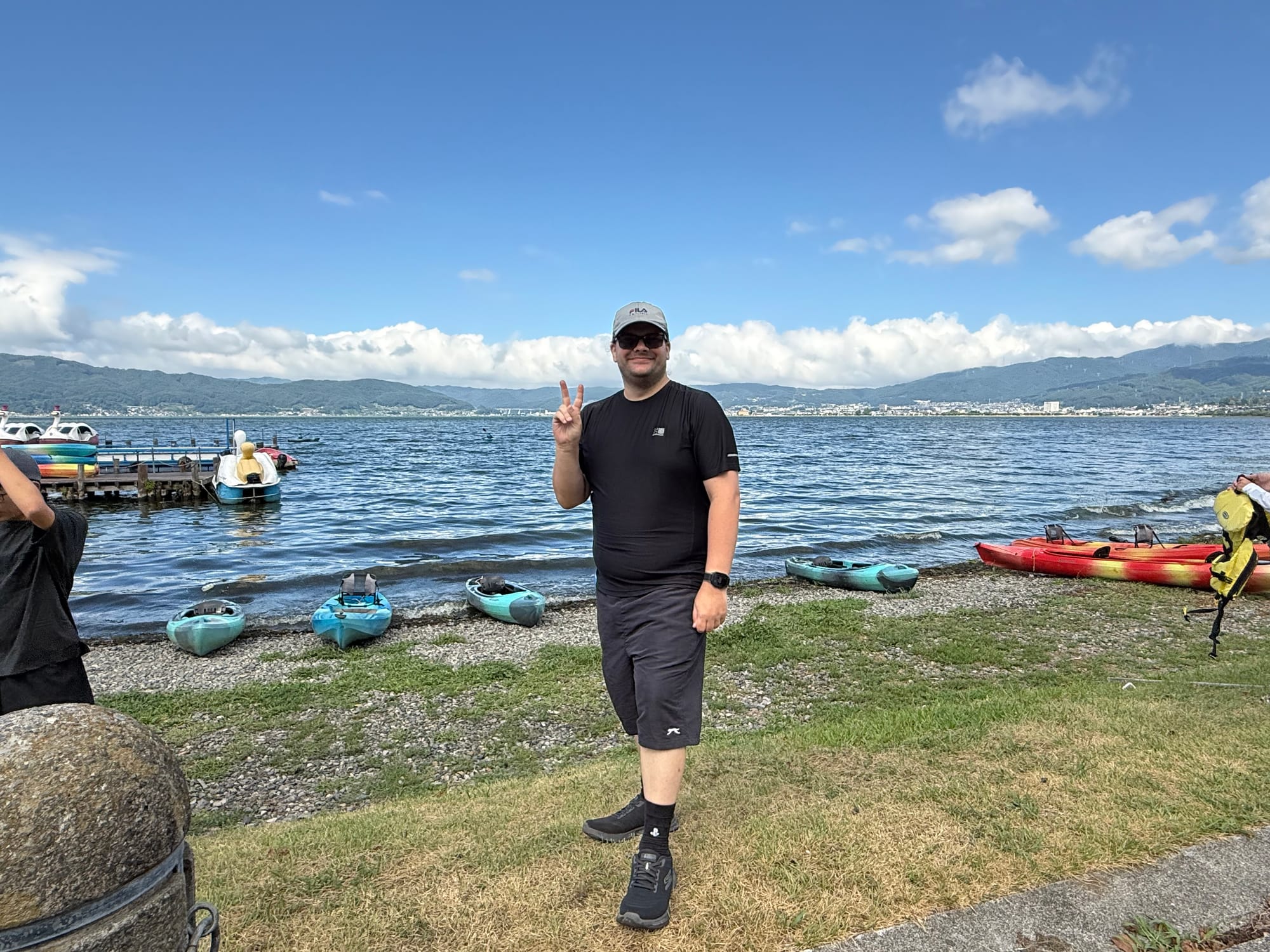
Kayaking on Lake Suwa, with expansive views across the water to the surrounding mountains. The lake offers a unique perspective on the Suwa Basin and its ever-changing skies.Kayaking on Lake Suwa with the waterfront and surrounding mountains in view. Exploring the lake by kayak offers a unique perspective on the scenery and towns around the Suwa Basin.Kayaking on Lake Suwa with the lakeside waterfront and surrounding hills in view. Exploring the lake by kayak provides a unique perspective on the scenery and resort towns around the Suwa Basin.A fireworks launch platform on Lake Suwa, photographed from a kayak. During the lake's famous fireworks events, these offshore structures serve as launch sites for displays that illuminate the entire Suwa Basin.Kayaking on Lake Suwa as storm clouds gather over the surrounding mountains. The changing weather created dramatic views across the lake and the lakeside towns of the Suwa Basin.The Maiden of Lake Suwa statue stands in the waters of Lake Suwa, one of the lake's most recognizable landmarks. Viewed from a kayak, it offers a unique perspective on the lake and the surrounding mountains of the Suwa Basin.Back on shore after kayaking on Lake Suwa, with rental kayaks lined up along the waterfront and panoramic views of the mountains surrounding the Suwa Basin.
You can see from the next photo how choppy the water is, which is why we needed to come in early.
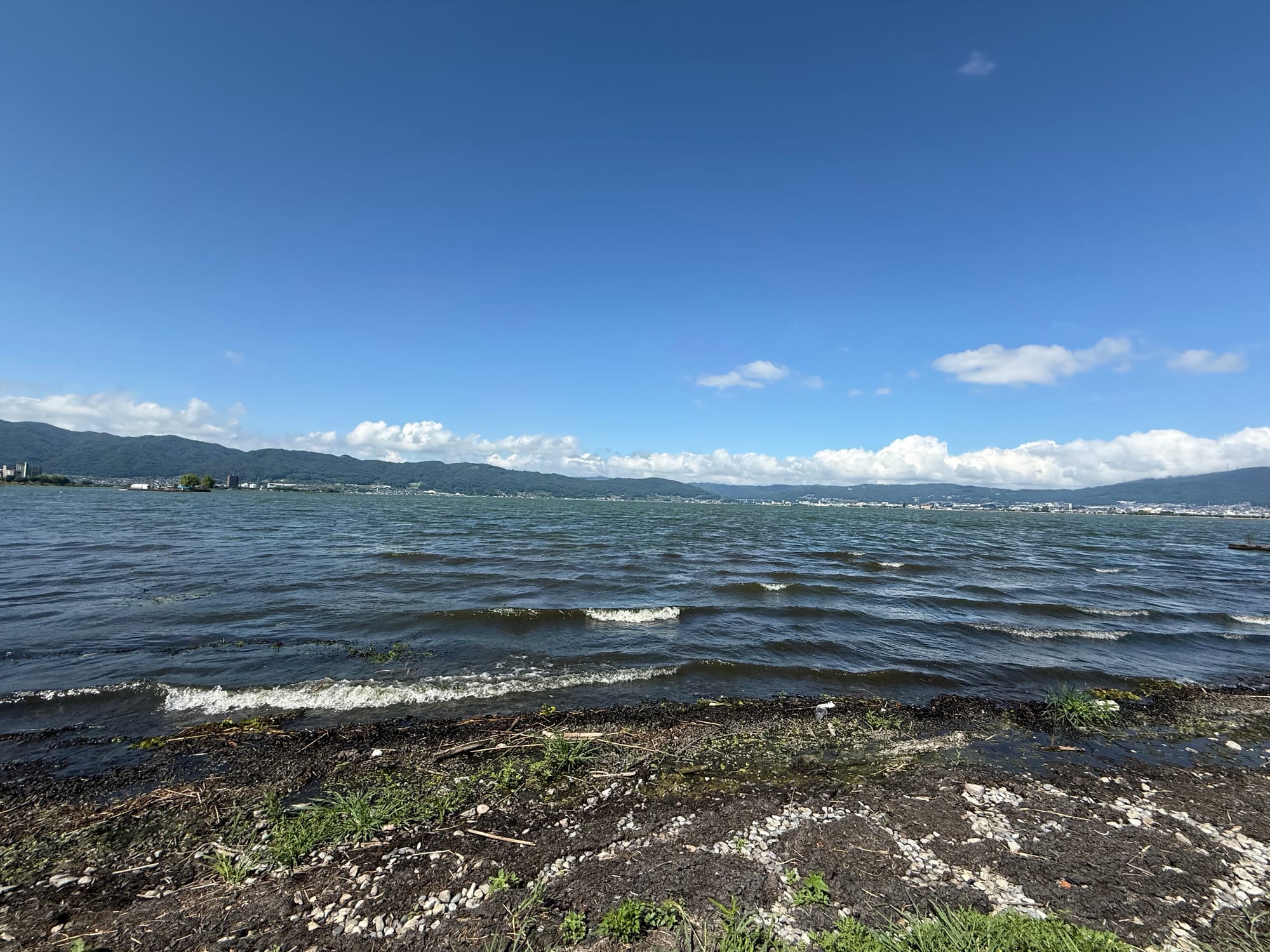
The waters of Lake Suwa stretch across the Suwa Basin, framed by mountains and lakeside towns. A fresh breeze creates small waves along the shoreline on a clear summer day.
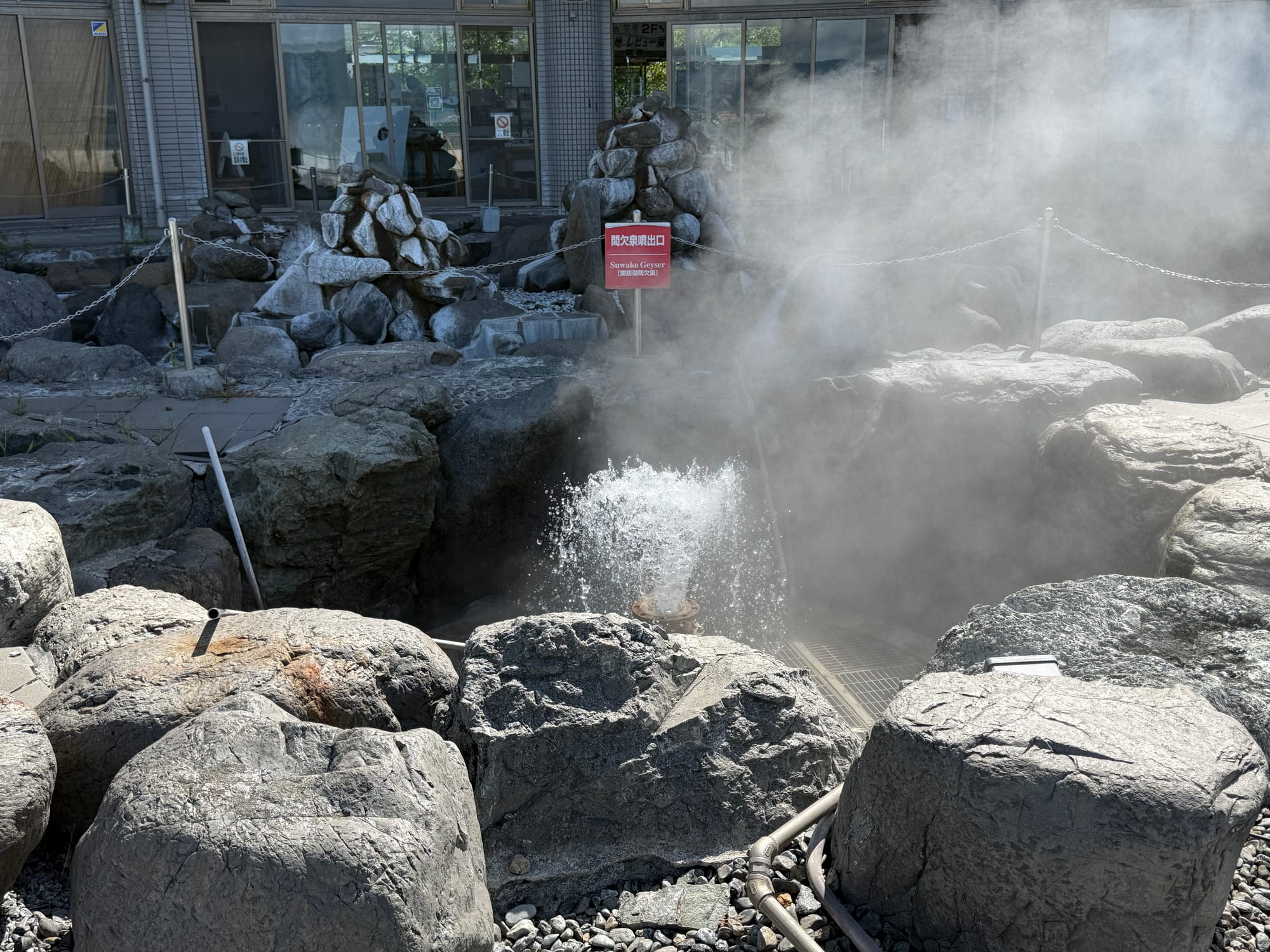
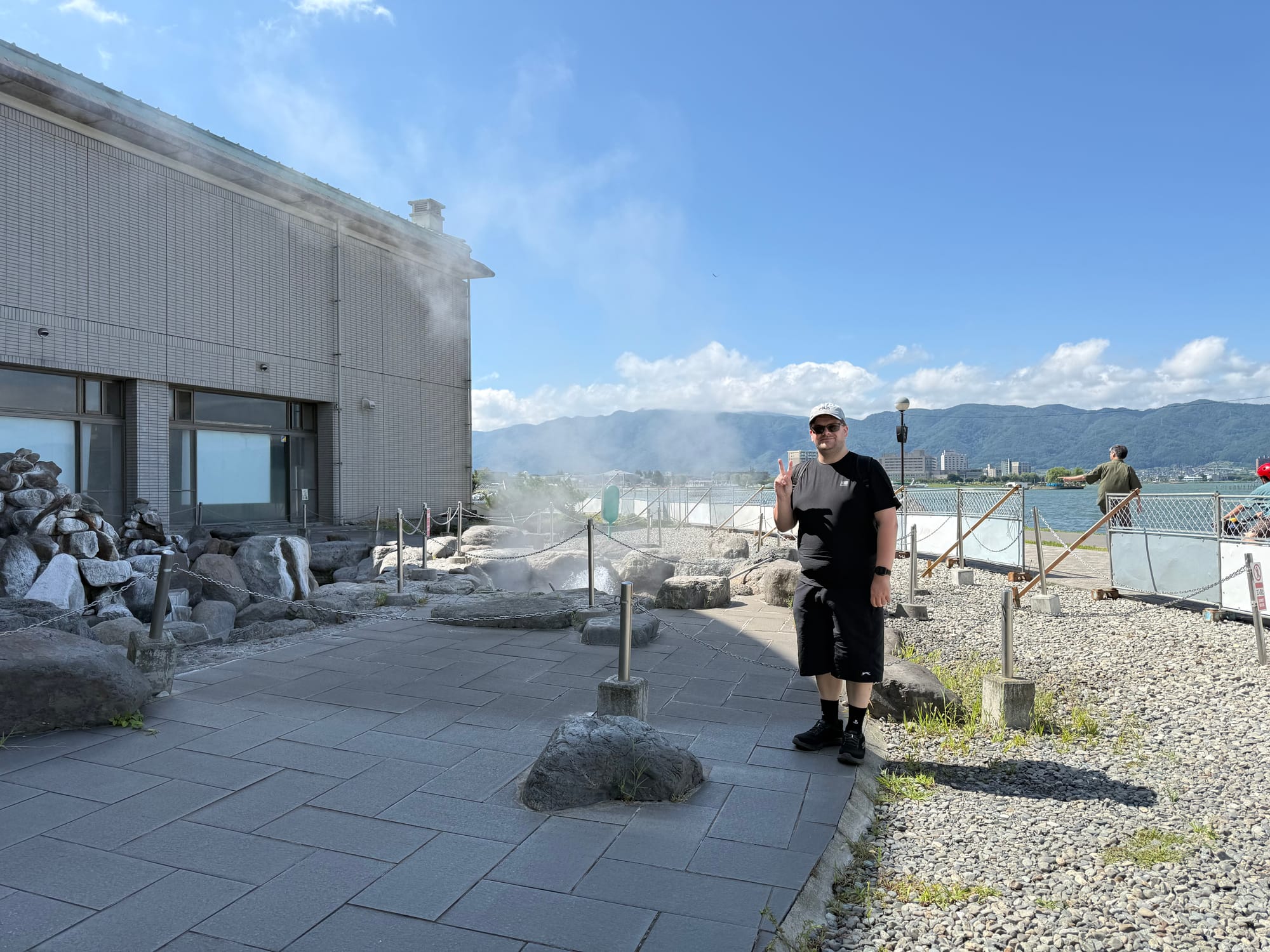
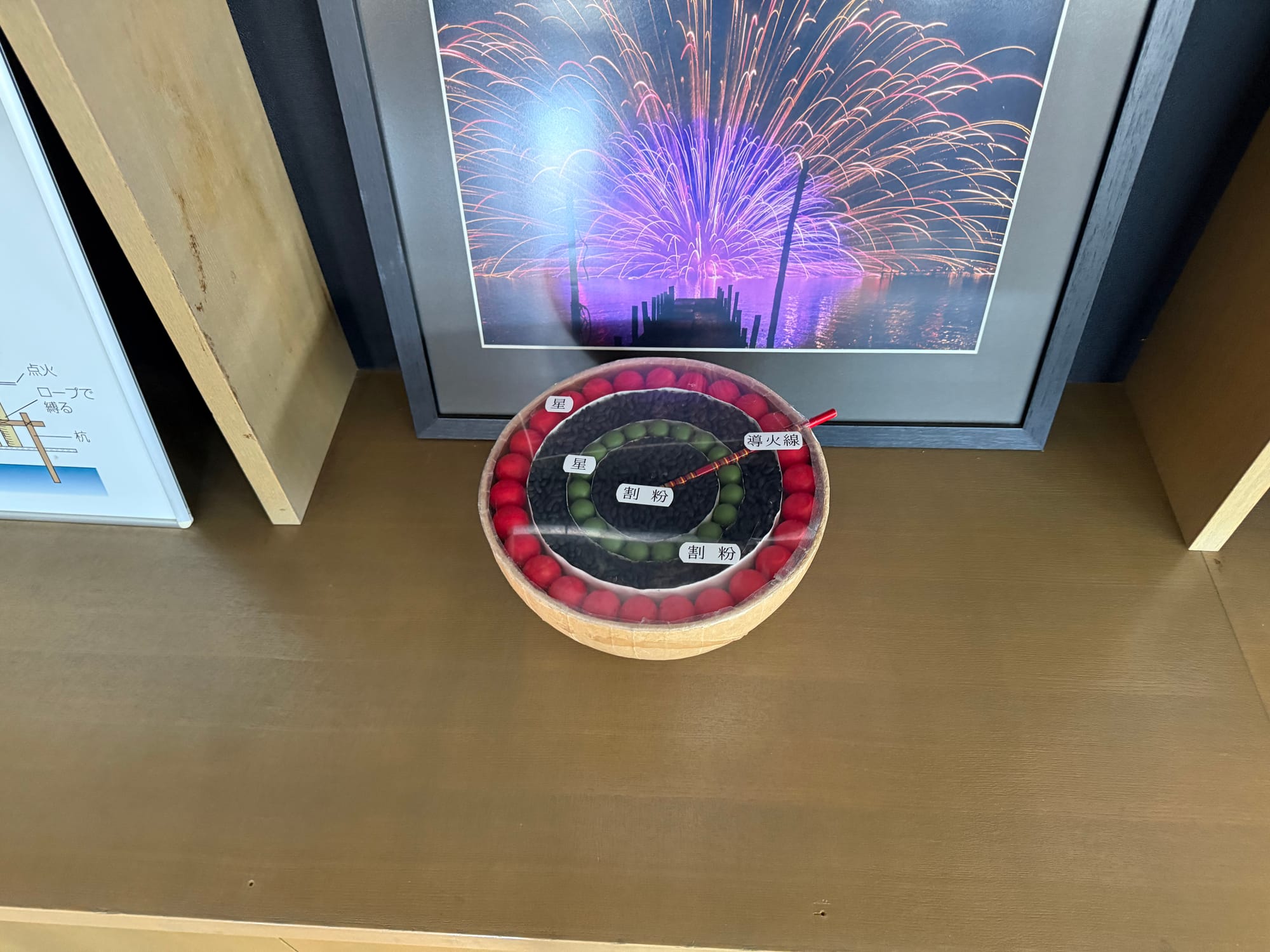
After this, I had a quick look round the Suwa geyser centre, which also showed how the fireworks are made and shot in the festival.
Steam rises from the Suwa Geyser hot spring outlet near Lake Suwa. Once famous for its powerful natural eruptions, the site remains a notable reminder of the region's long connection to geothermal activity and hot spring culture.Posing beside the Suwa Geyser hot spring outlet, where steam rises from geothermal vents near the shore of Lake Suwa. The site highlights the region's long association with hot springs and volcanic activity.A cutaway model of a fireworks shell explains how aerial fireworks are constructed. Displays such as Lake Suwa's famous fireworks festivals use shells packed with coloured stars and bursting charges to create intricate patterns in the night sky.
Tsuetsukitoge Observation Deck
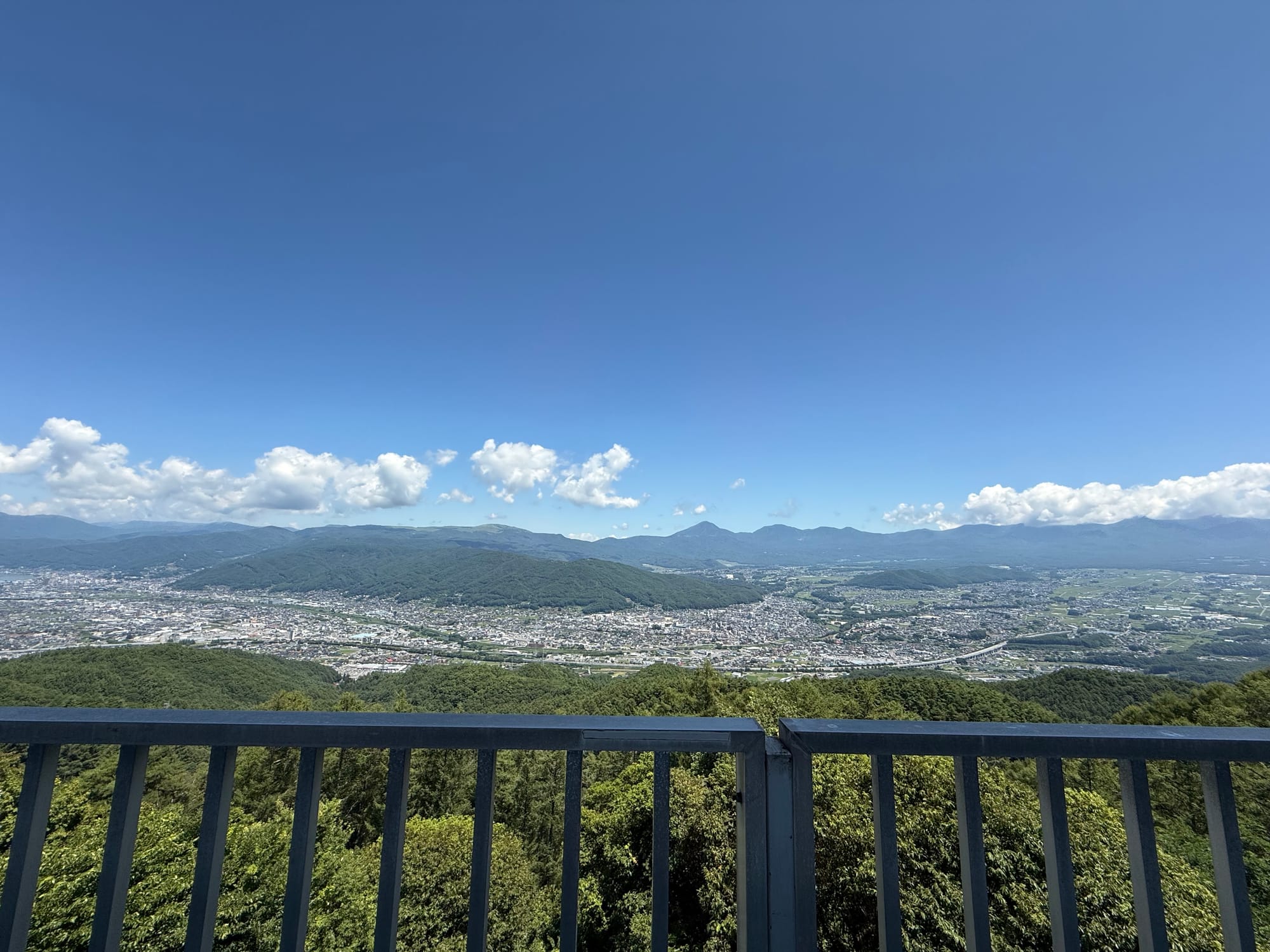
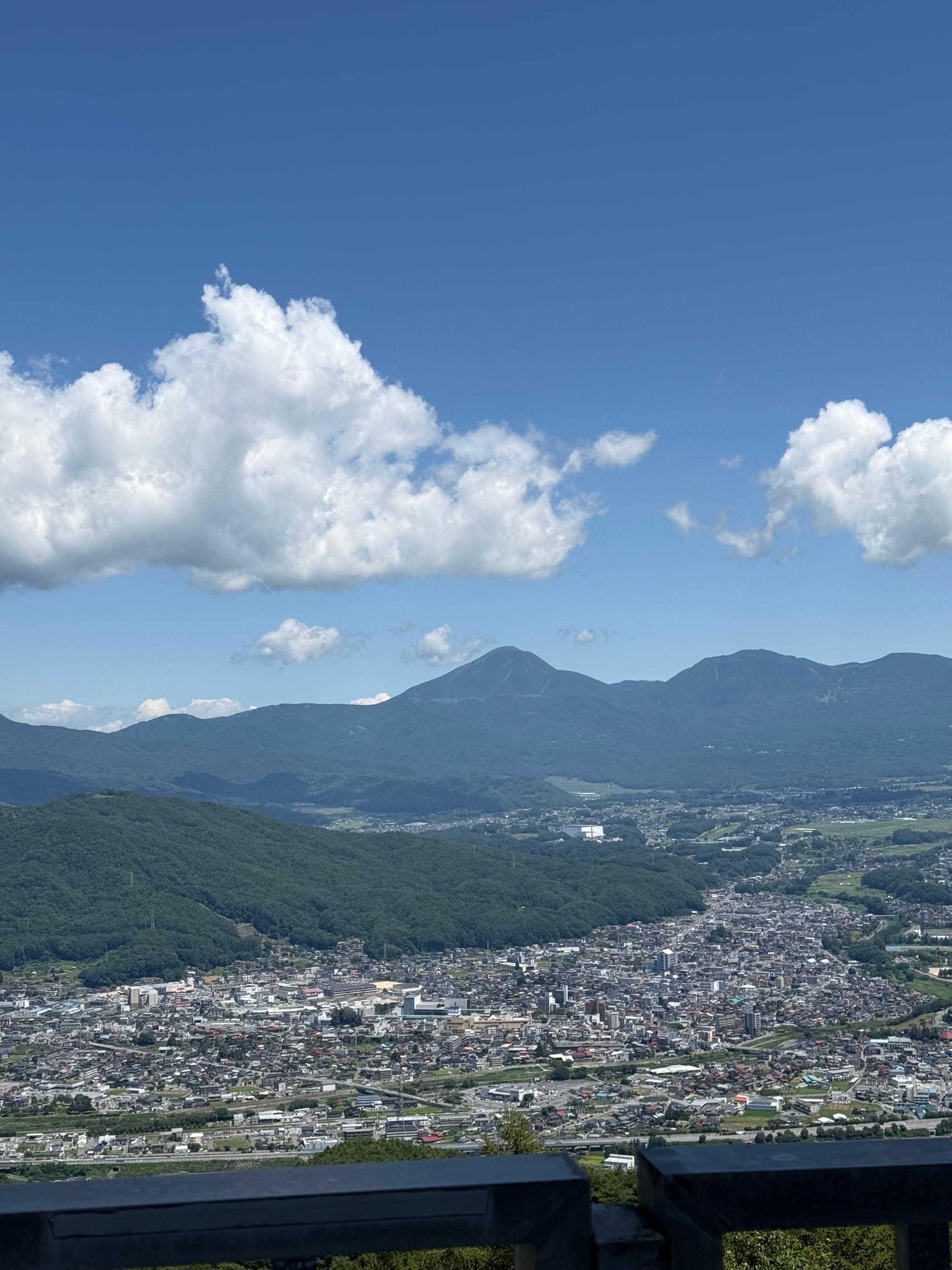
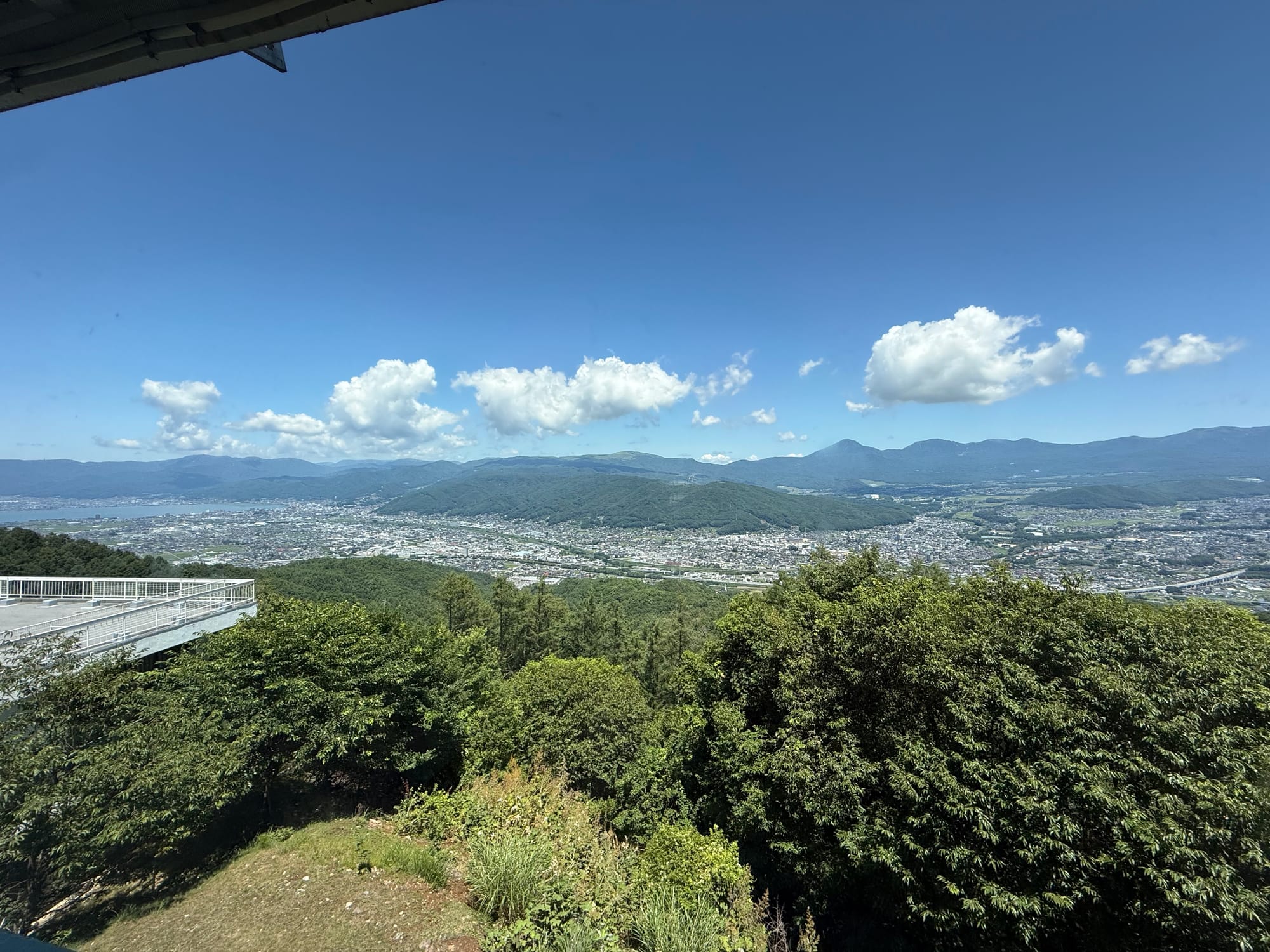
I went up to the Tsuetsukitoge Observation Deck, which is where I also enjoyed a nice Italian pasta lunch, with an apple sorbet.
The view from the Tsuetsukitoge Observation Deck restaurant stretches across the Suwa Basin and surrounding mountains, offering one of the region's most impressive panoramic vistas.Mt Tateshina rises above the Suwa Basin as seen from the Tsuetsukitoge Observation Deck. Often called the "Fuji of Suwa" for its distinctive symmetrical shape, the mountain is one of the region's most recognizable landmarks.A sweeping view from the Tsuetsukitoge Observation Deck restaurant across the Suwa Basin toward Mt Tateshina. Often called the "Fuji of Suwa," the mountain rises prominently above the towns, forests and farmland below.
Onbashira-kan Yoisa
Afterwards, it was time to go to the Onbashira-kan Yoisa, which is a museum dedicated to a festival that happens every 6 years and the last time it happened was in 2022.
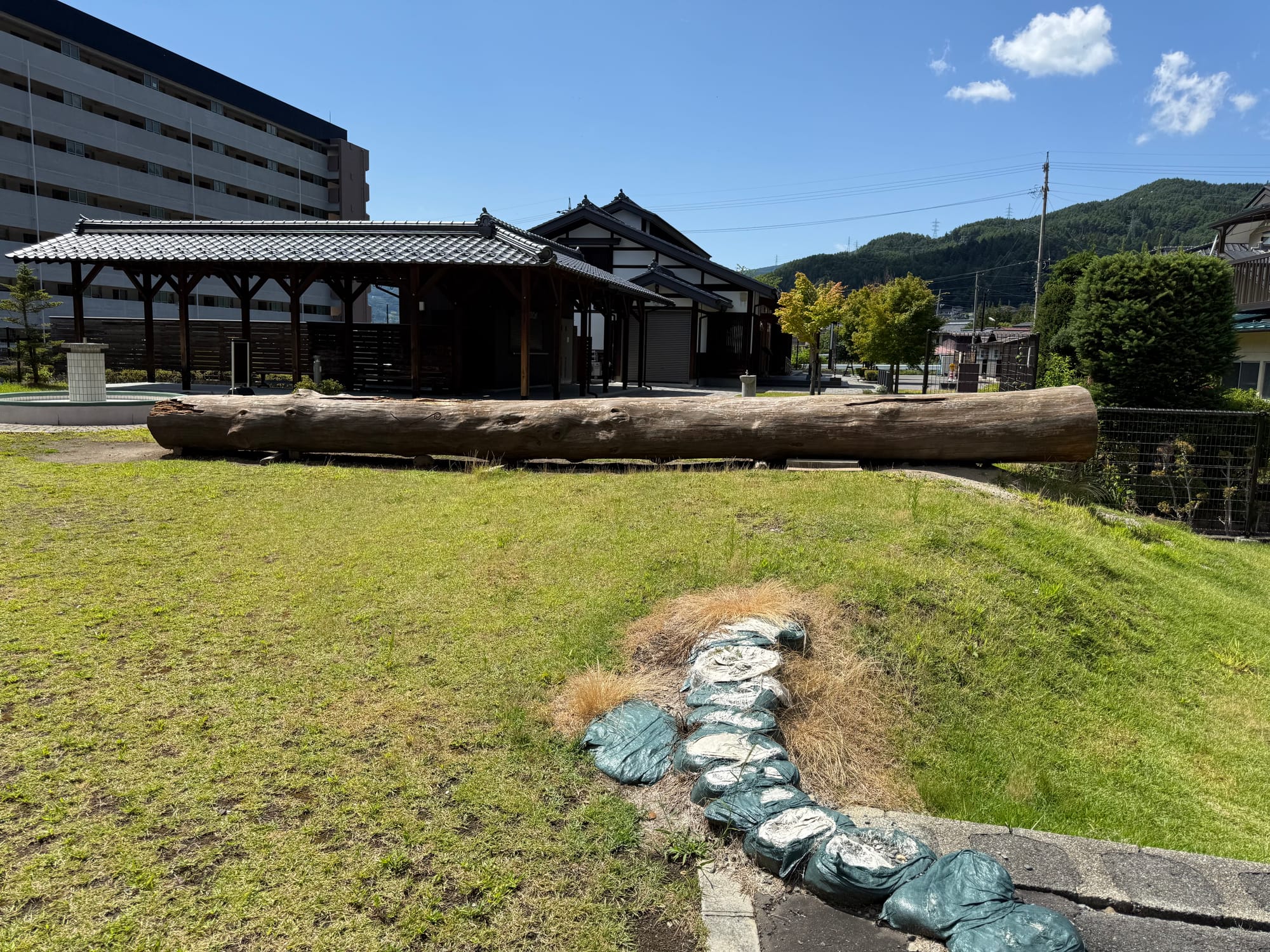
A sacred Onbashira log displayed at Onbashira-kan Yoisa. The museum interprets the famous Onbashira Festival, held every six years, during which massive logs are transported from the mountains and erected at the four shrines of Suwa Taisha.
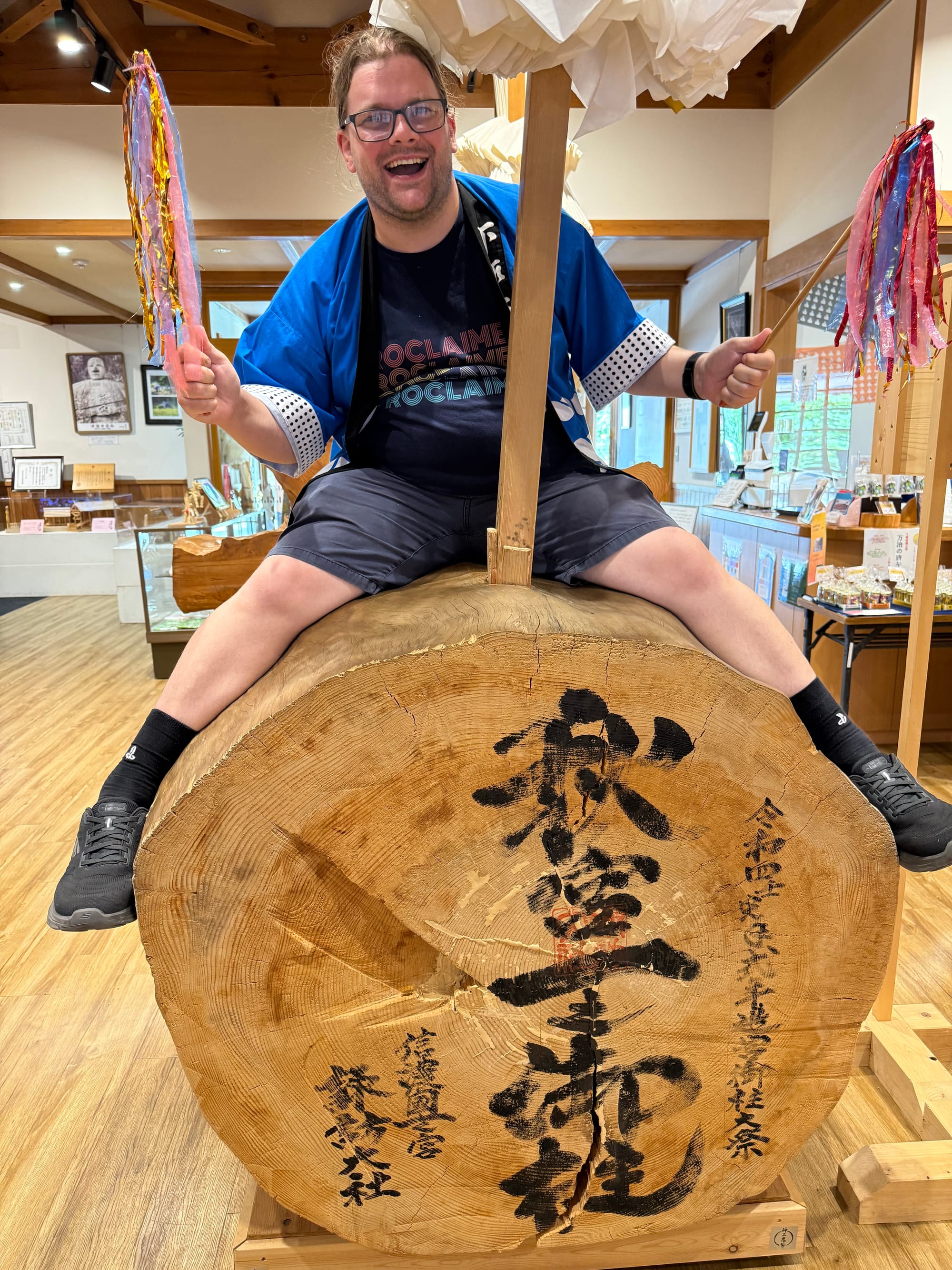
It only cost 300 yen to get in, plus I paid the extra 200 yen for the tree riding experience, which was worth it. The whole thing cost 500 yen (~£2.30).
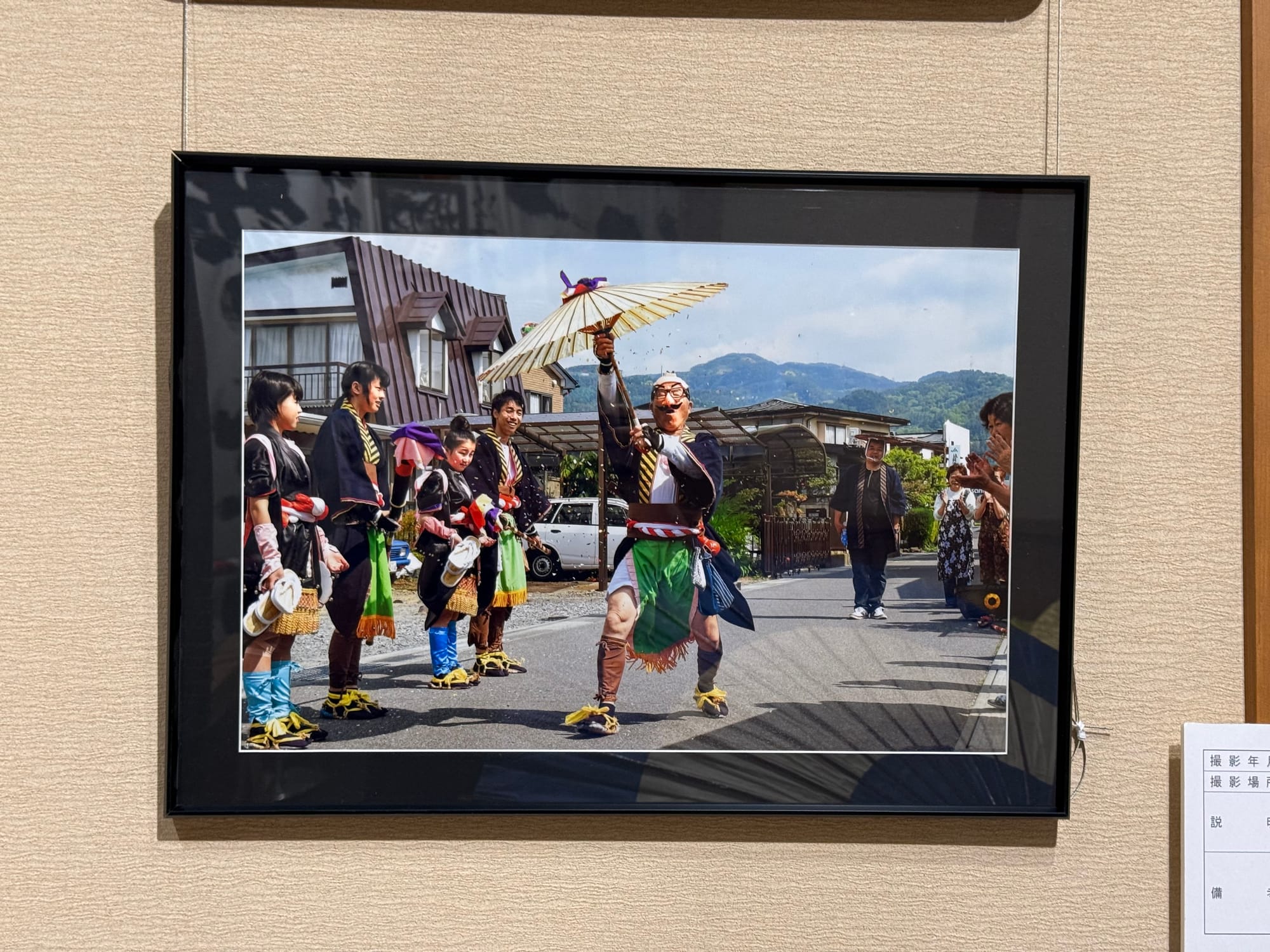
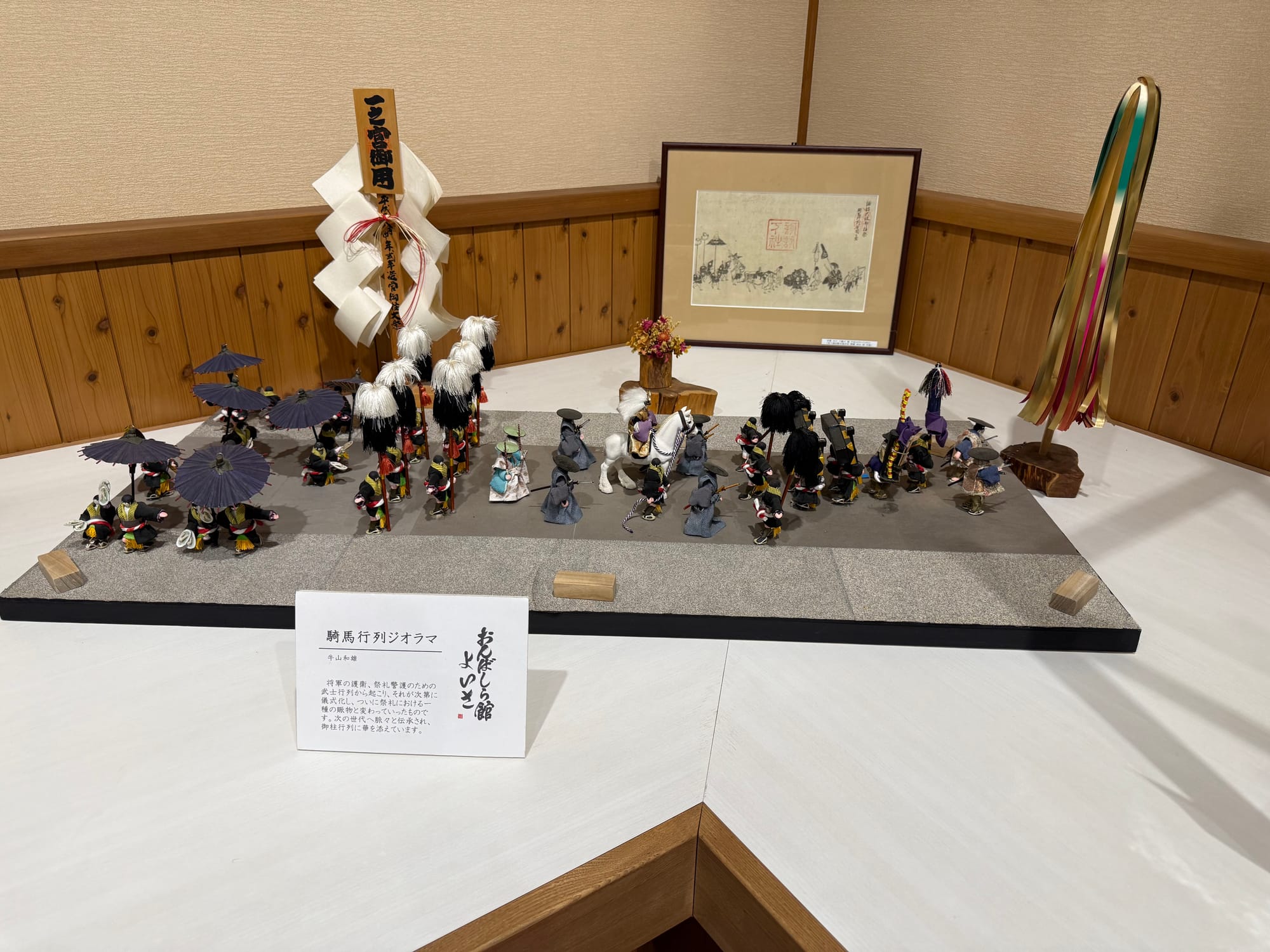
A photograph displayed at Onbashira-kan Yoisa showing a traditional dance performance from the Suwa region. The exhibit highlights local customs and community traditions associated with festivals held around Suwa Taisha and the Onbashira Festival.A detailed diorama at Onbashira-kan Yoisa recreates a traditional Suwa festival procession, illustrating the ceremonial costumes, banners and participants that form part of the region's long-standing religious traditions.
So, what happens in the festival then? Well 16 fir trees are cut down, 8 on the southern mountain for the lower shrines and 8 on the northern mountain for the upper shrines. This museum was dedicated to the lower shrines part of the festival, where they are cut down about 10km away from the shrines and it takes 3 days to take them on the 10km journey, all transported by human hand and no machines (except in 2022 due to Covid restrictions).
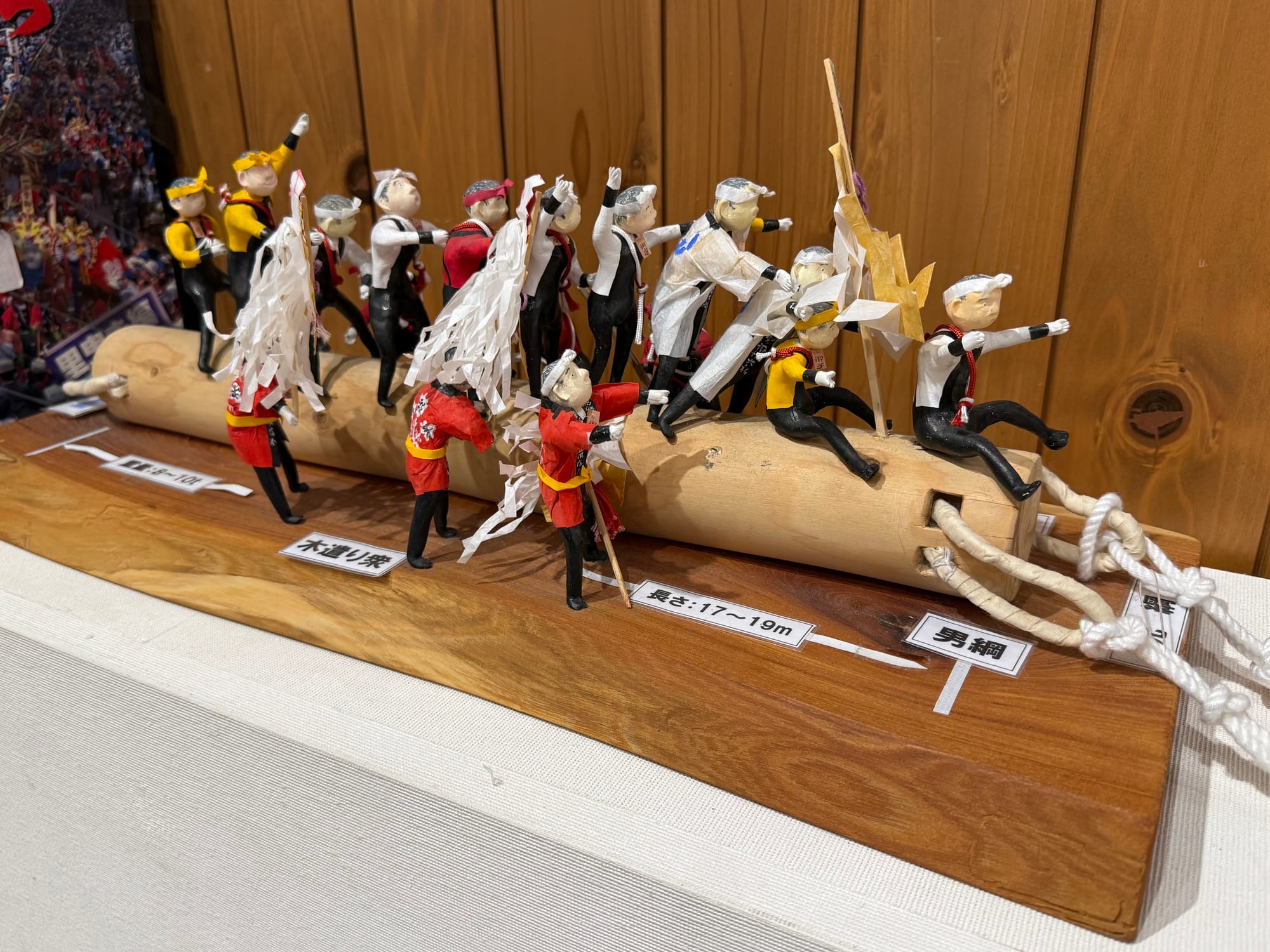
A model recreating the famous Kiotoshi section of the Onbashira Festival, in which participants ride and guide massive sacred logs as they are transported from the mountains to the shrines of Suwa Taisha.
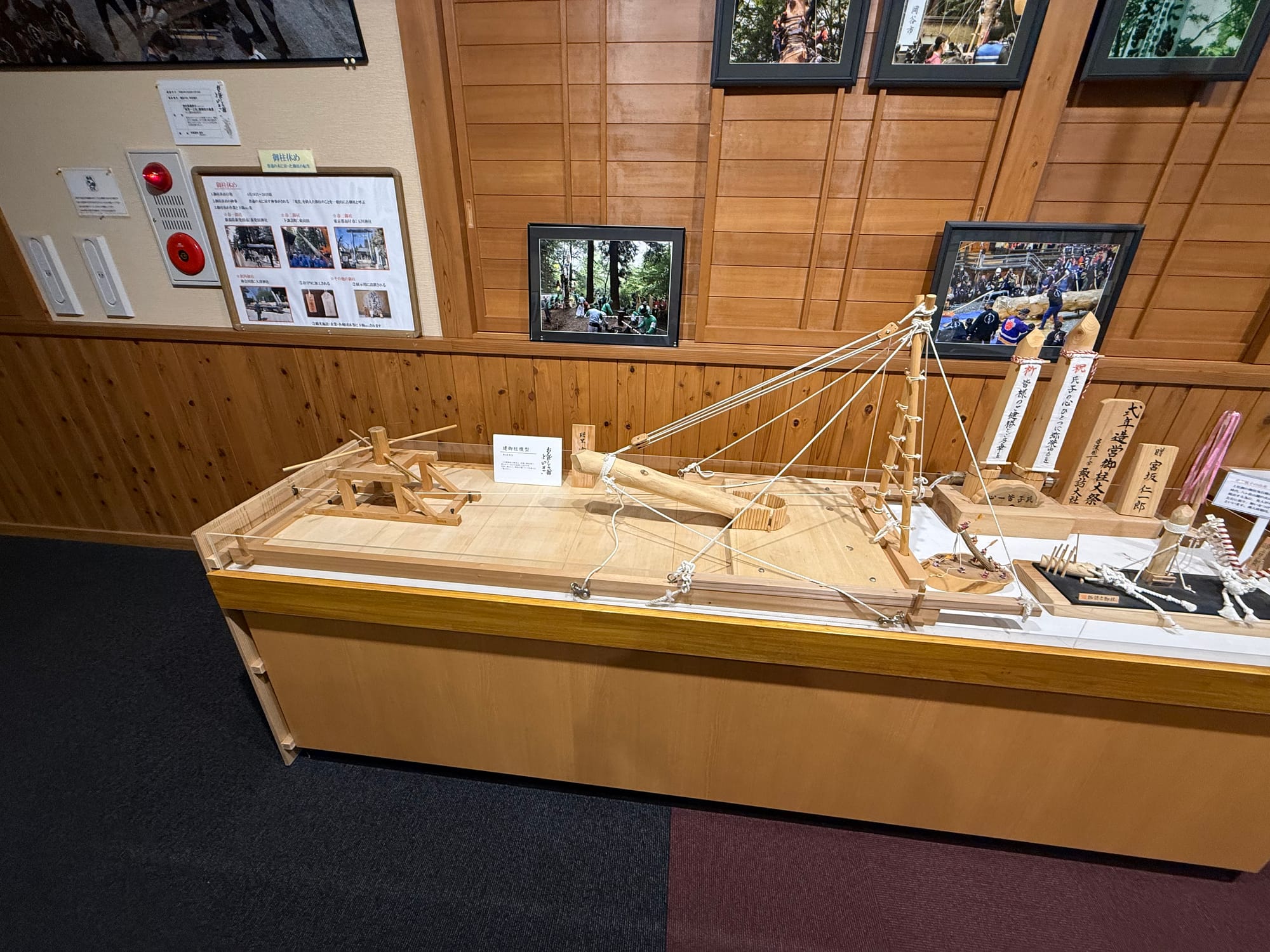
To get the fir tree logs down the mountain, people sit down on them and ride then down the mountain. To get them tilted though, they use these machines to tilt them and then cut a rope to slide it down the mountain.
A scale model demonstrating how an Onbashira log is secured and prepared before the dramatic Kiotoshi stage of the Onbashira Festival, when the massive sacred logs are sent down a steep slope on their journey to Suwa Taisha.
0:00
/1:20
A video showing how the Onbashira logs are transported down the mountain at the Kitoshi stage, on the simulator
Once the logs make it to the shrines down the mountain, they are then turned into Kami (Shinto gods). When talking to the person who took the above video, I did say to him that as someone from the UK, I do find it crazy that they do this, but I do also understand that it is for the gods. He did laugh and he got that to people looking from the outside, it would look crazy.
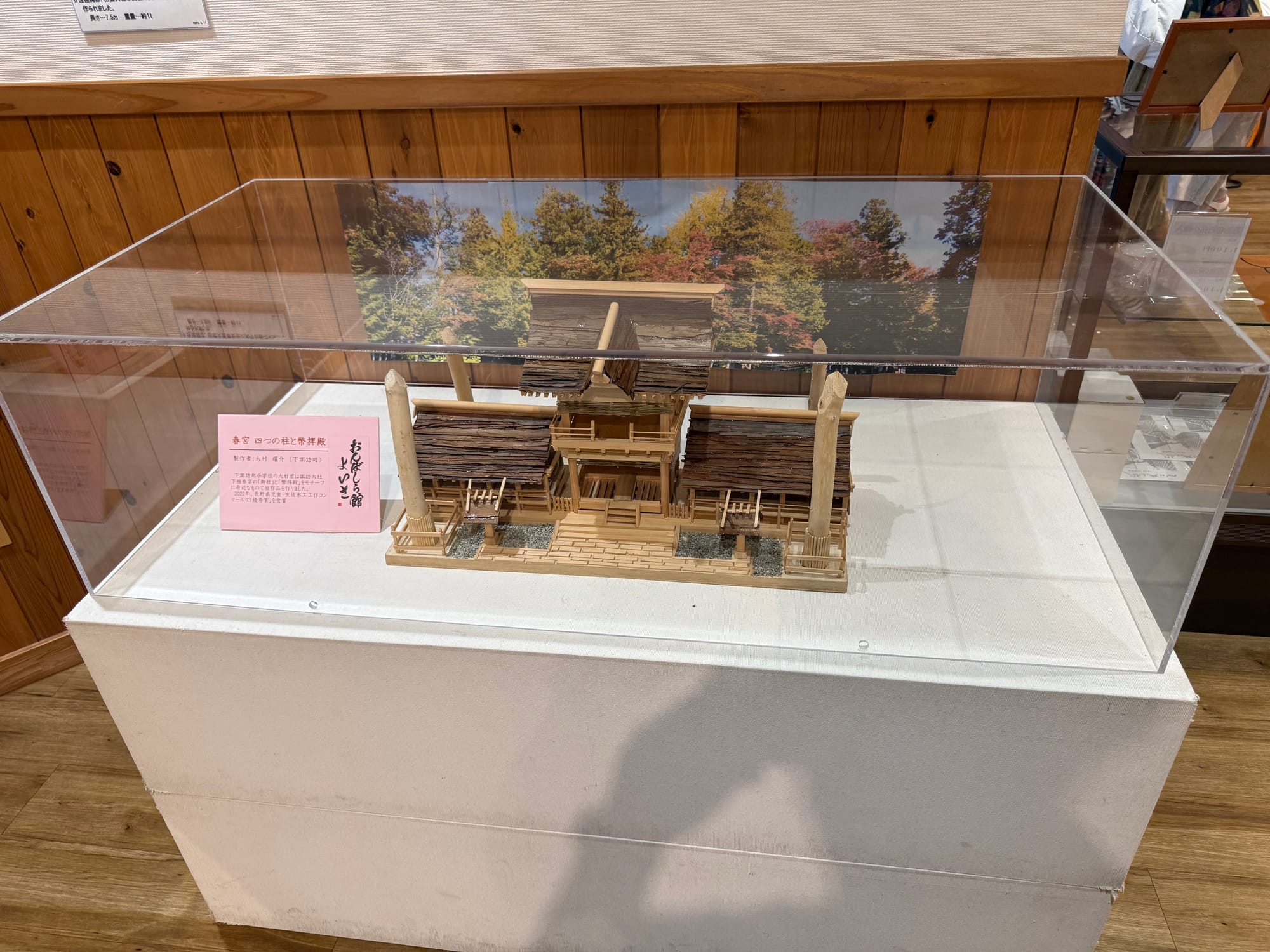
A hands-on exhibit at Onbashira-kan Yoisa allows visitors to experience what it is like to ride an Onbashira log. During the festival, participants famously ride the massive sacred logs as they make their dramatic descent down the Kiotoshi slope.A scale model of Suwa Taisha Shimosha Harumiya at Onbashira-kan Yoisa. The model highlights the four sacred Onbashira pillars that stand at the corners of the shrine precinct, a distinctive feature of all Suwa Taisha shrines.
Thanks all for keeping up with my blog so far, next time, I will be travelling back to Nagoya and then onward to Osaka, which is my final destination before I head back to the UK. Where has the time gone?