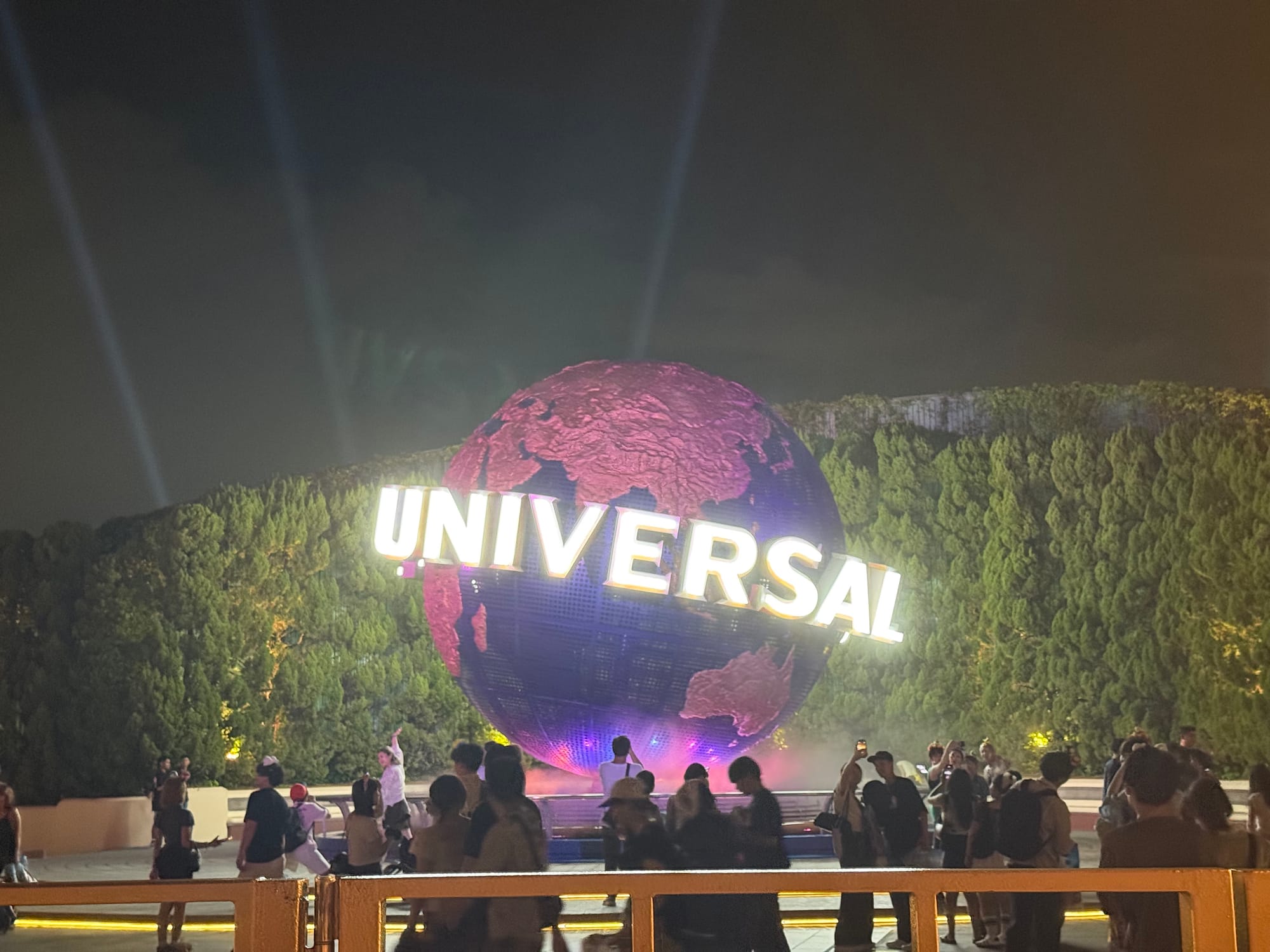
The Universal Studios globe lights up the entrance plaza after dark at Universal Studios Japan. Illuminated by colourful lighting and sweeping searchlights, the landmark remains one of the park's most recognizable symbols.
Universal Studios
14th August
So today was one of the days I was most looking forward to, a day out to Universal Studios Japan in Osaka! As well as get the normal ticket, I paid extra to get the express pass as well, which would let me on every ride once and a lot more quickly than waiting in the normal queues.
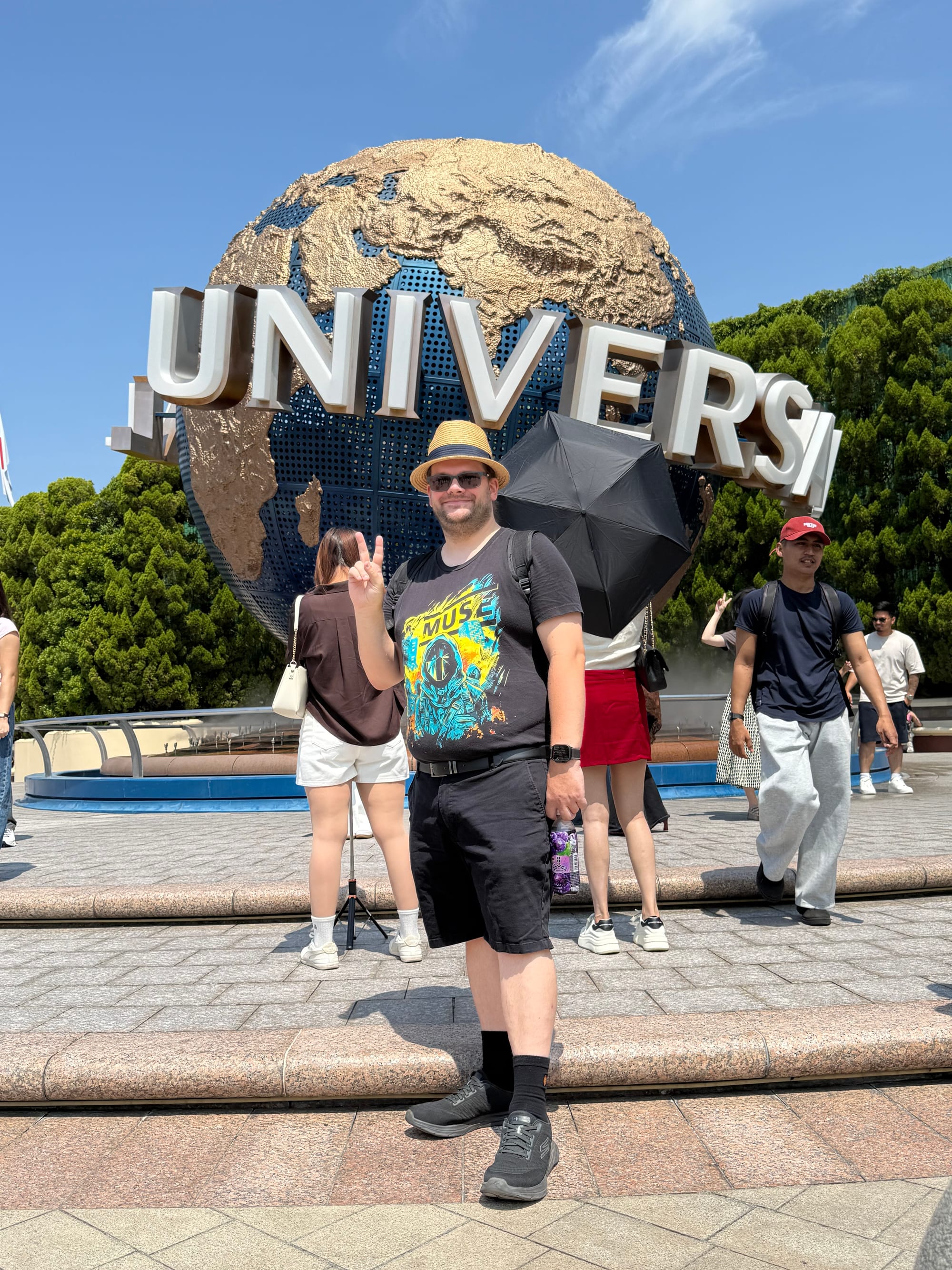
Posing in front of the famous Universal Studios globe at Universal Studios Japan. Located at the park entrance, the landmark has become one of the most recognizable and photographed symbols of the resort.
The pass did cost 57,500 yen (~£266), but when it reduced wait times down from 1-2 hours to 30 mins per ride, it was worth it.
Now it is time for some awards, first starting with the most thematic part of the park award.
Most Thematic Part of the Park
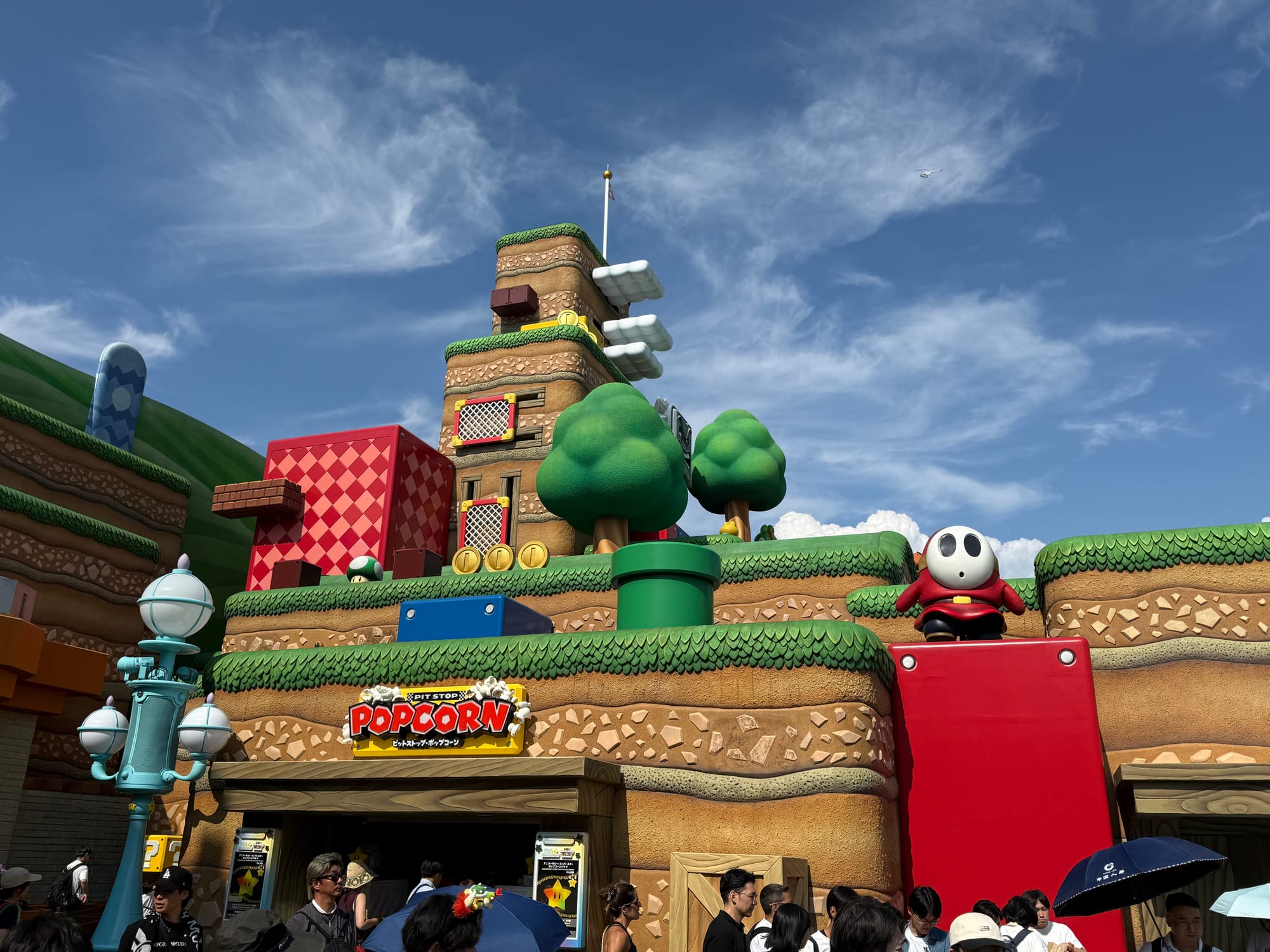
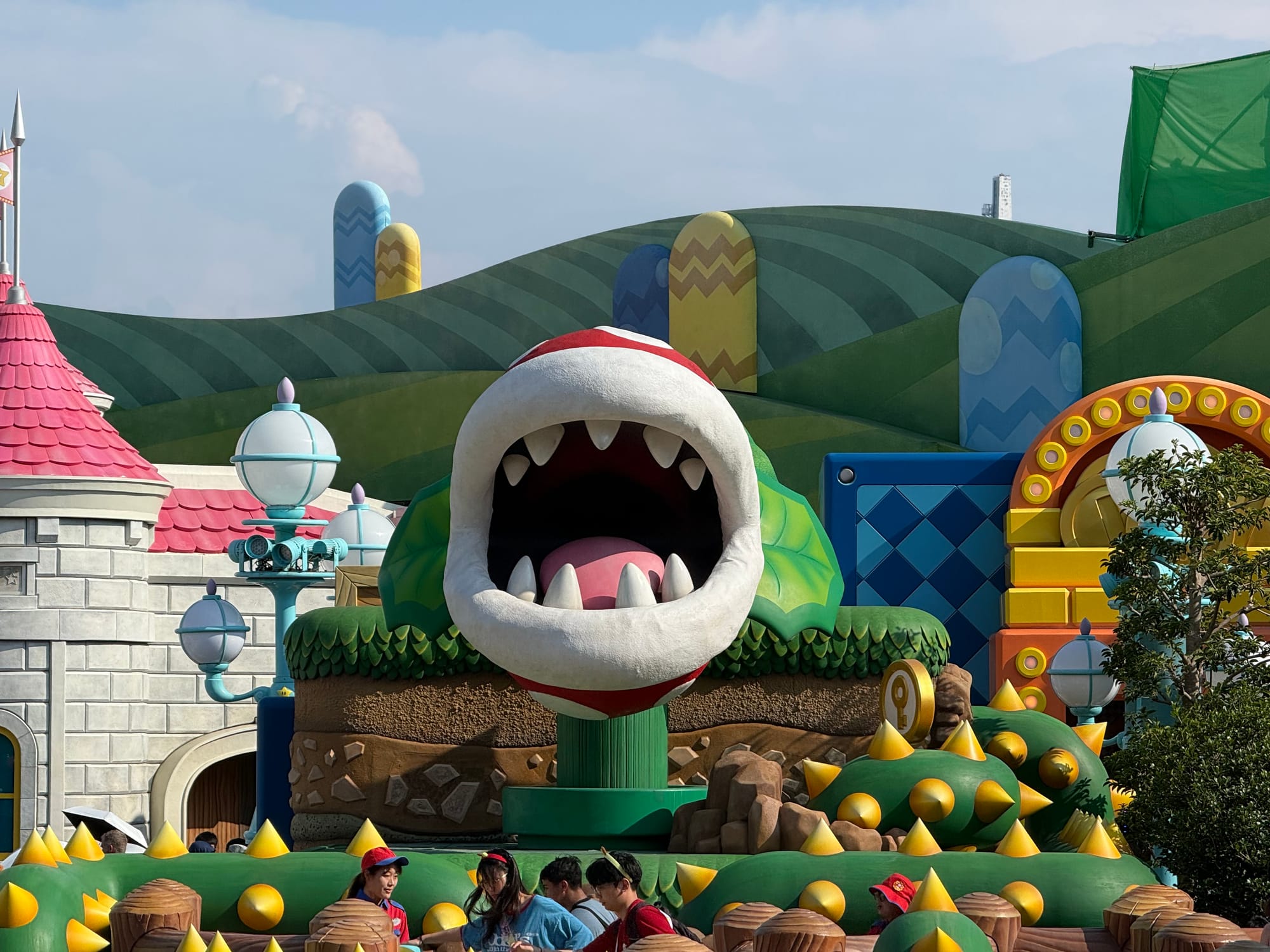
This was quite a hard one to sort out, but eventually as I got round the park, it was really obvious which part of the park was the most thematic and that was Super Nintendo World.
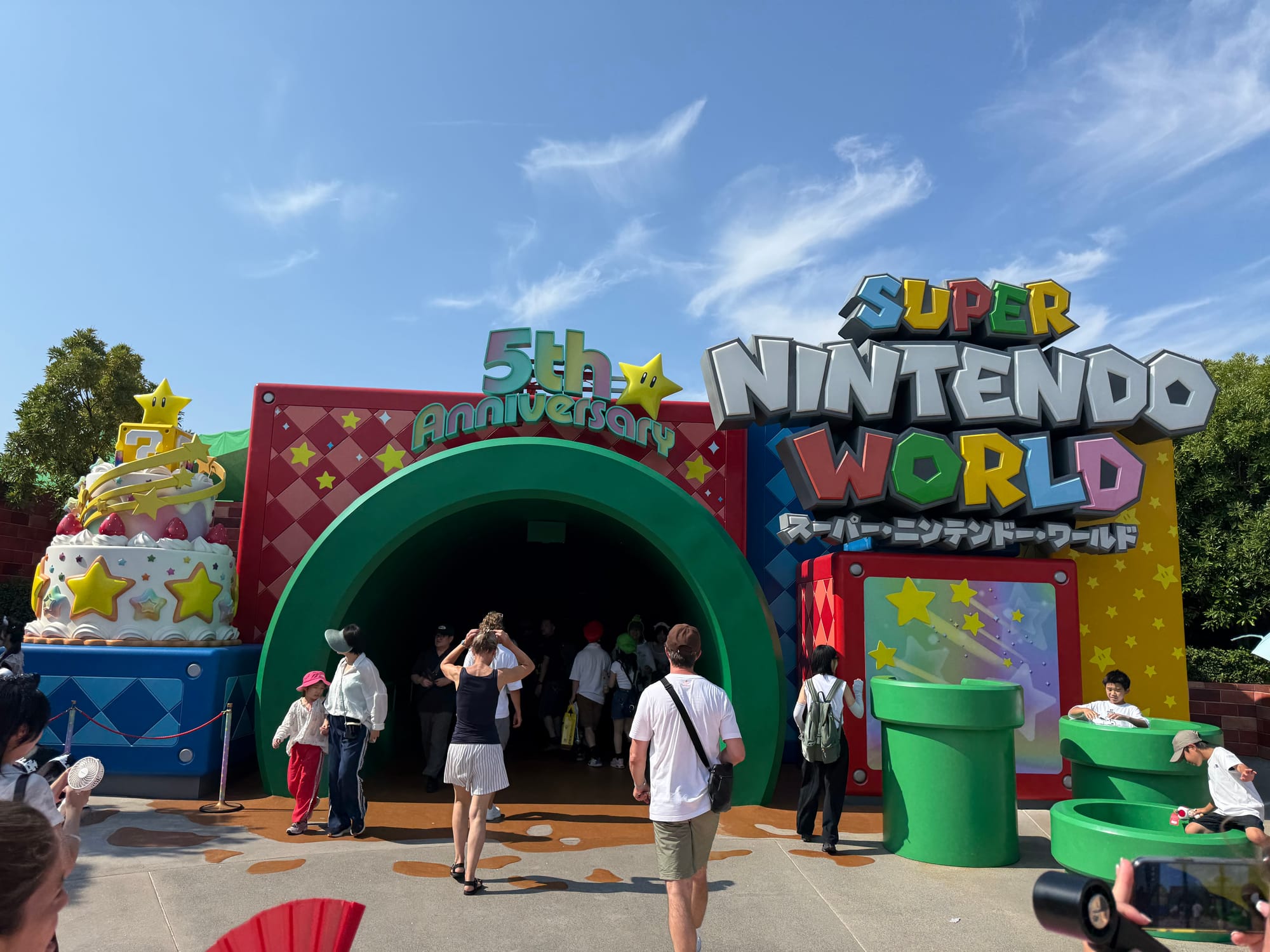
The entrance to Super Nintendo World at Universal Studios Japan. Marking the land's fifth anniversary, the giant warp pipe transports visitors into an immersive world inspired by Nintendo's iconic games and characters.The colourful landscape of Super Nintendo World brings the Mushroom Kingdom to life with moving game elements, iconic characters and interactive attractions inspired by Nintendo's most famous franchises.A giant Piranha Plant rises from a green pipe in Super Nintendo World at Universal Studios Japan. Inspired by one of the most recognisable enemies in the Super Mario series, the animated figure helps bring the Mushroom Kingdom to life.
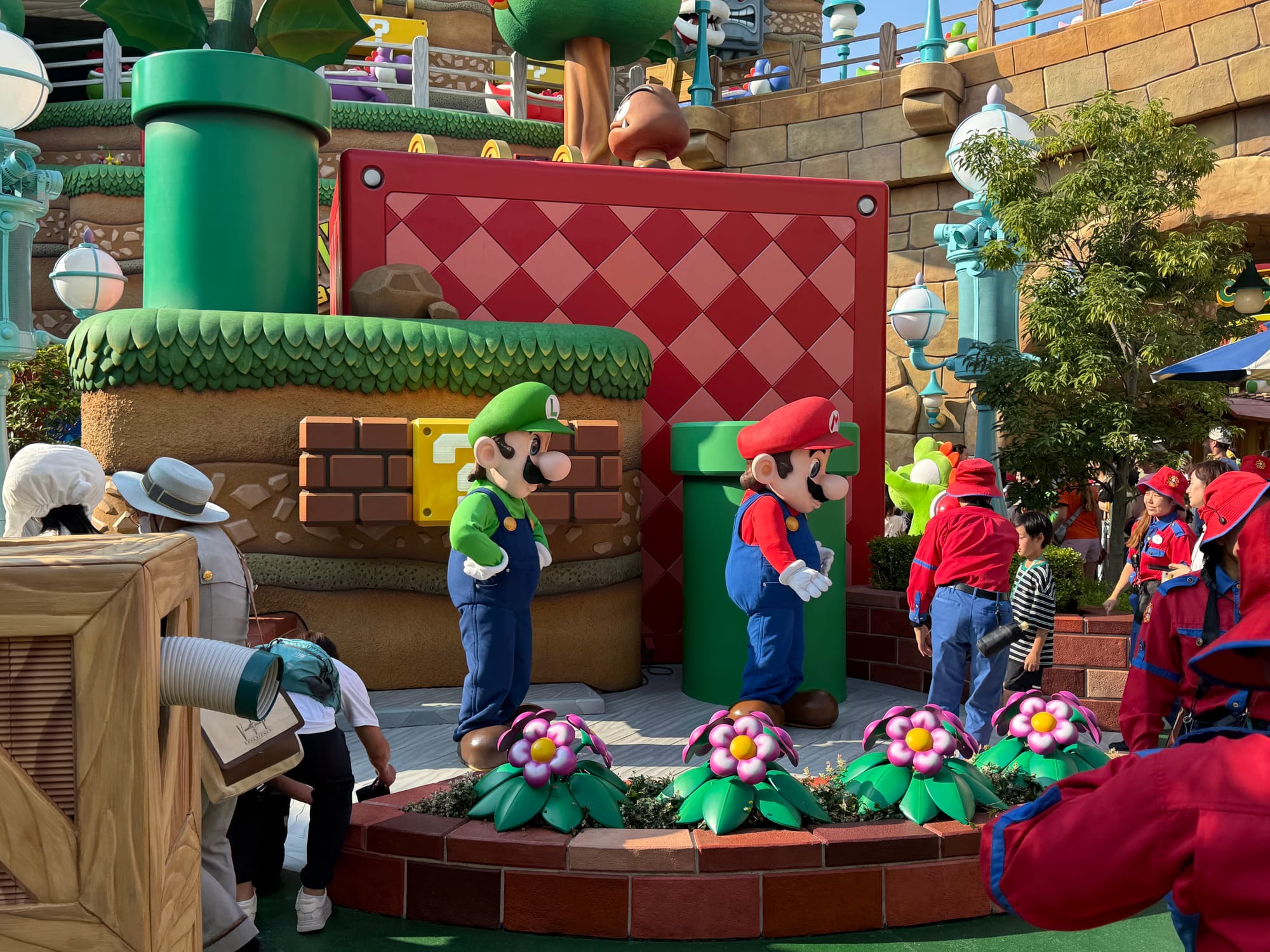
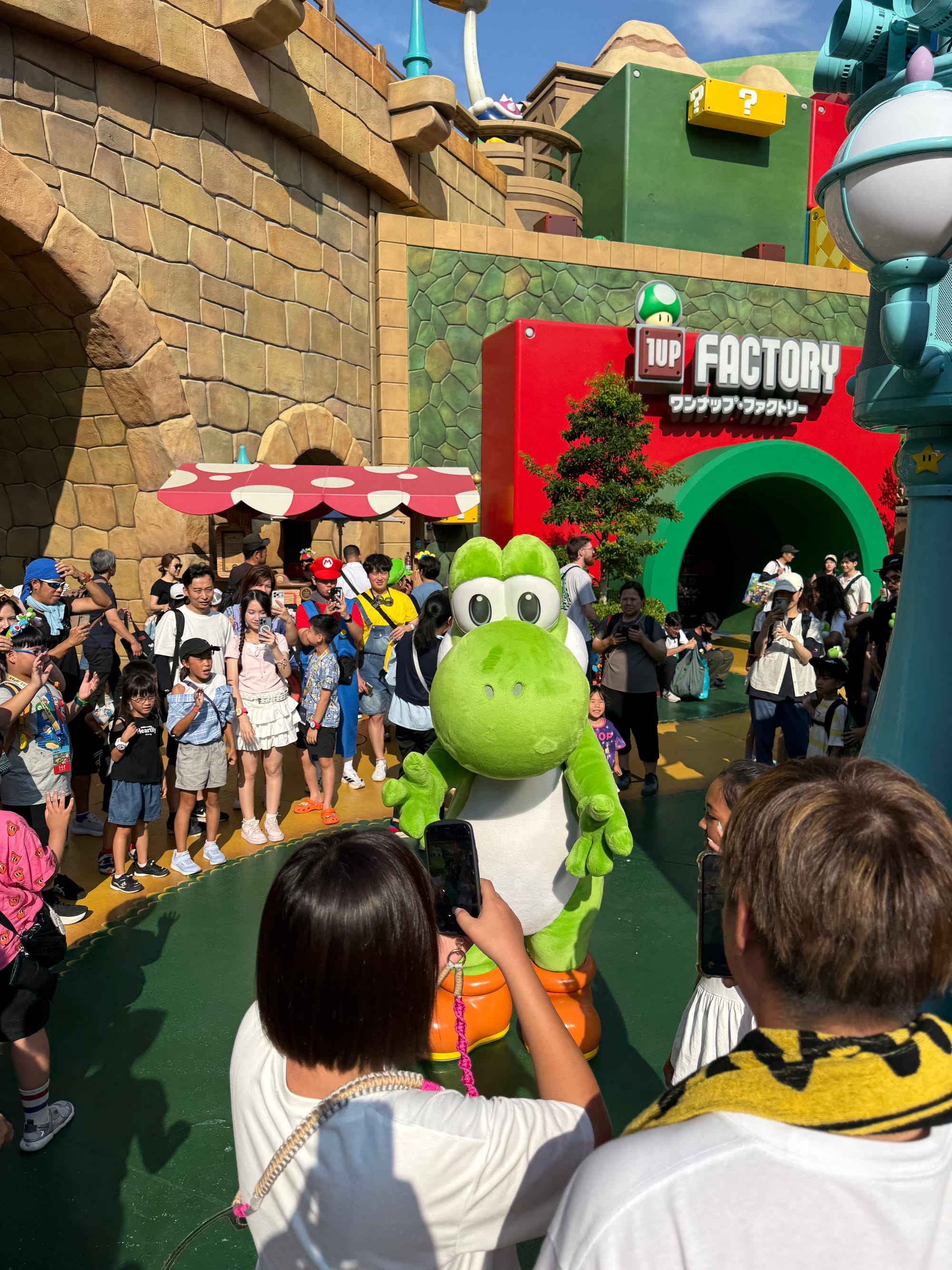
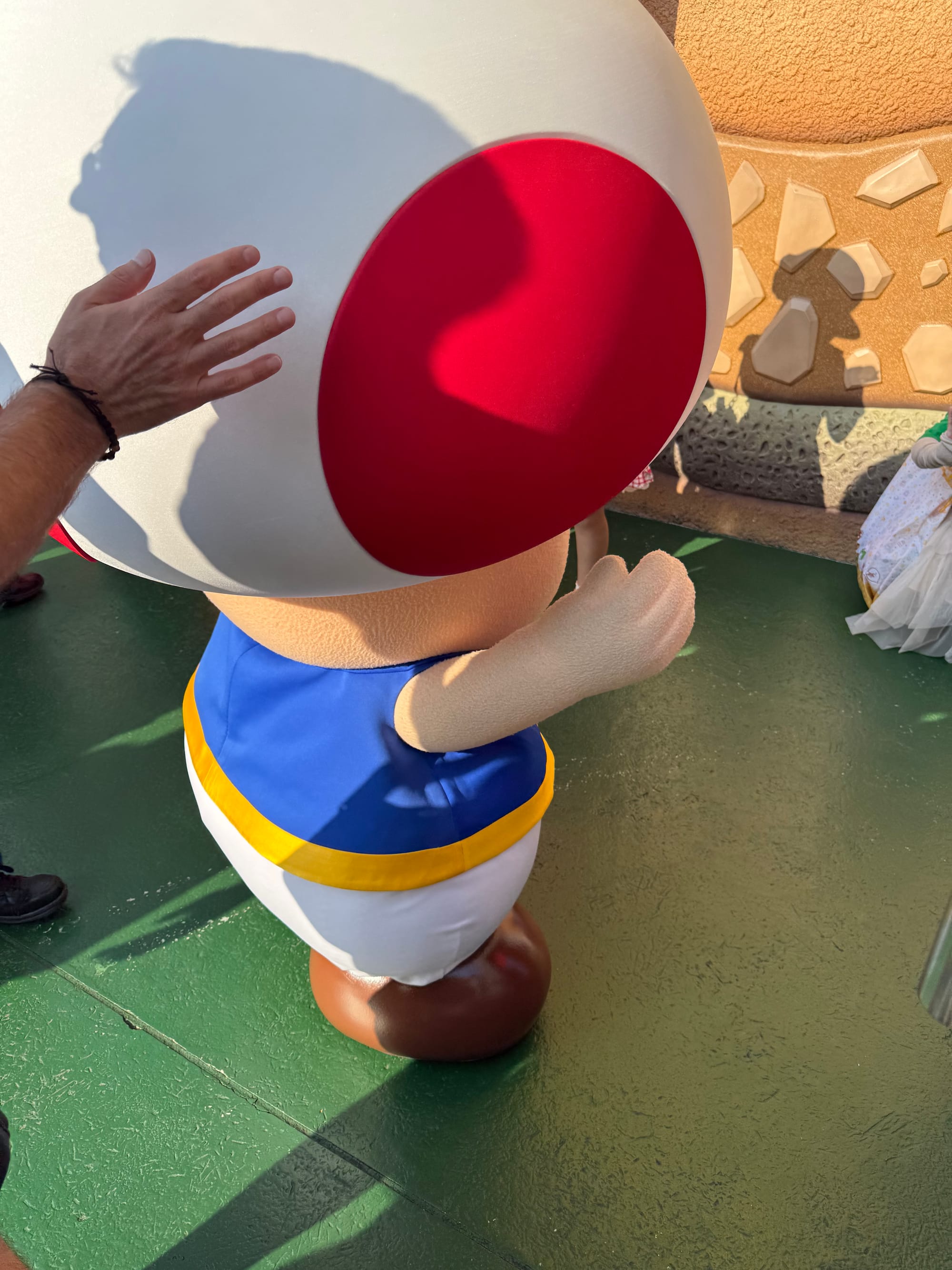
It was like I had stepped into the world of Super Mario and been transported through the pipe network there. You could even meet Mario, Luigi, Princess Peach, Yoshi and Toad to have photos taken with them if you wanted.
Mario and Luigi meet visitors in Super Nintendo World at Universal Studios Japan. The themed land recreates iconic locations, characters and interactive elements from Nintendo's beloved Super Mario games.Mario and Luigi meet visitors in Super Nintendo World at Universal Studios Japan. The themed land recreates iconic locations, characters and interactive elements from Nintendo's beloved Super Mario games.Meeting Toad in Super Nintendo World at Universal Studios Japan. One of the Mushroom Kingdom's most recognisable residents, Toad regularly appears for character greetings and photos throughout the themed land.
Most Thematic Ride
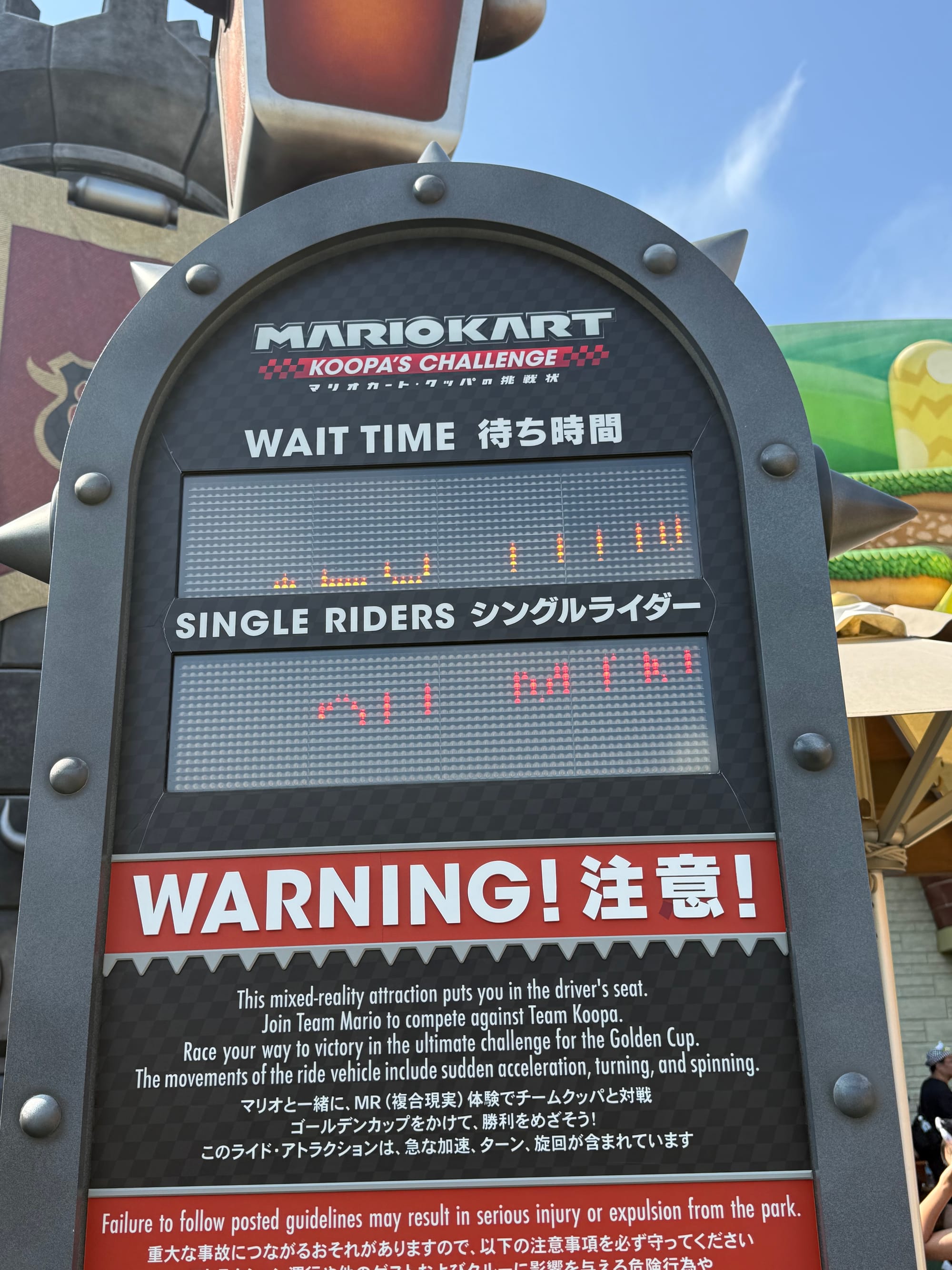
The Most Thematic ride for me was actually a hard choice between Jurassic Park: The Ride, Harry Potter and the Forbidden Journey and Mario Kart: Koopa's Challenge
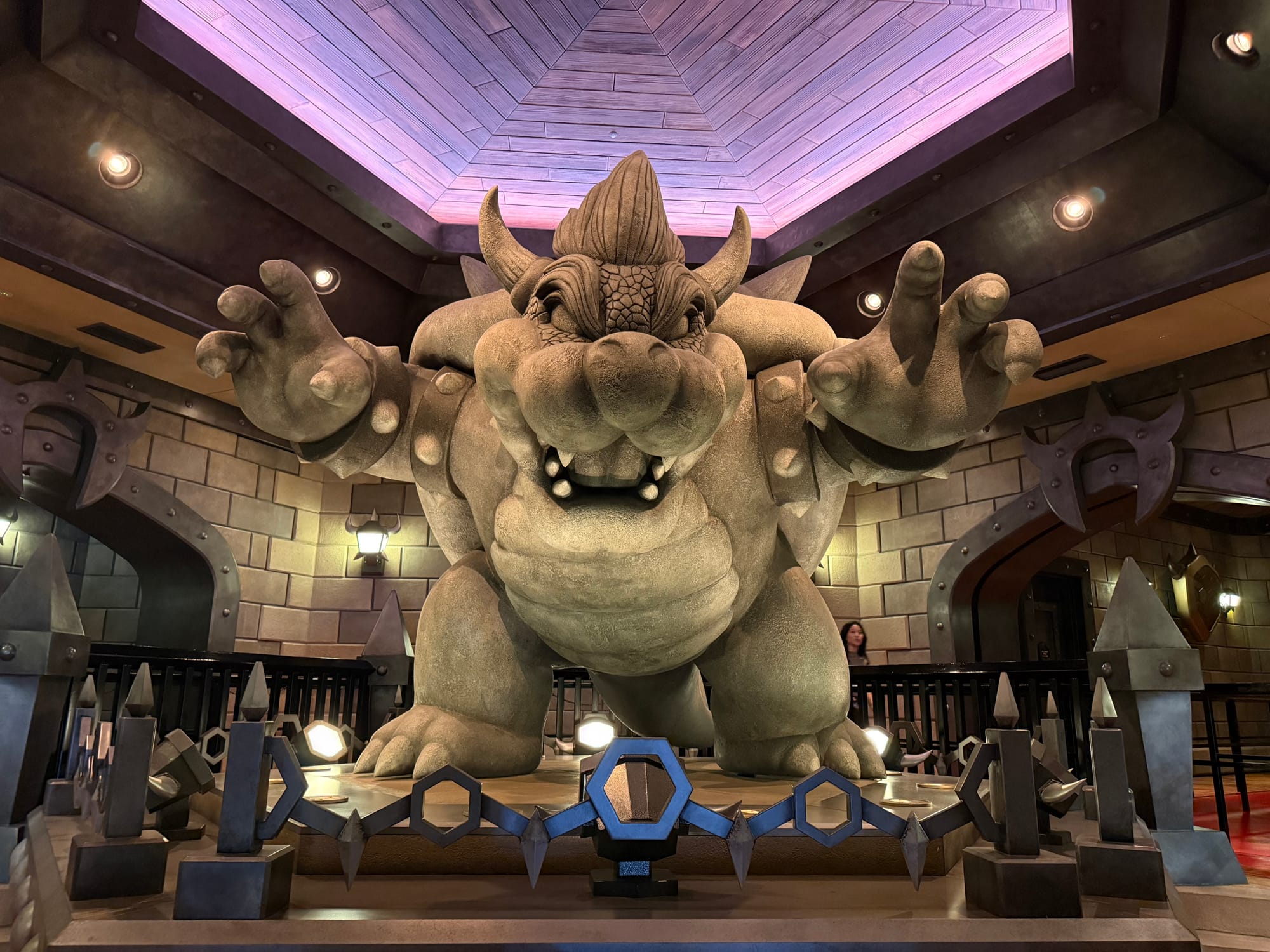
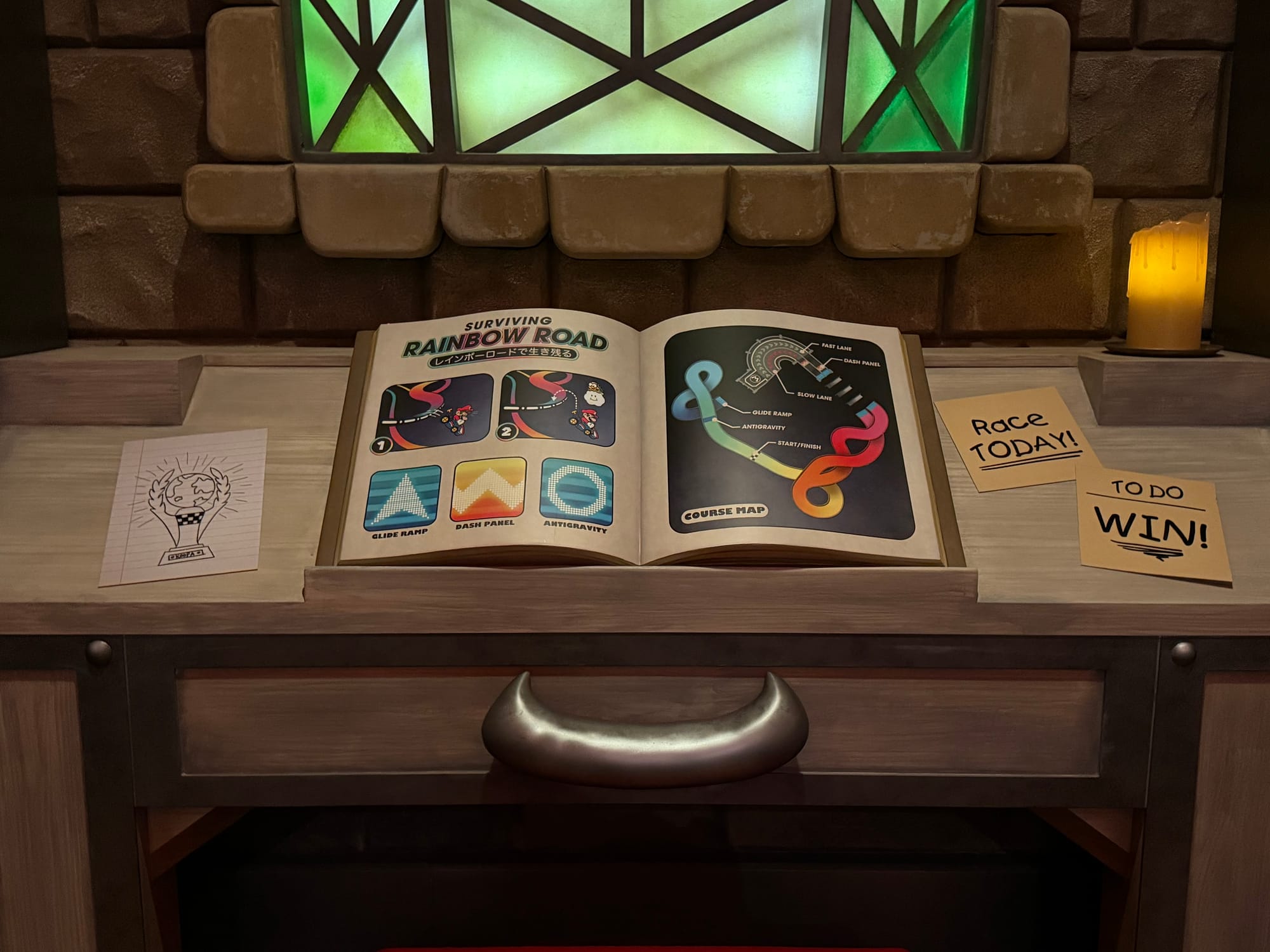
The entrance sign for Mario Kart: Koopa's Challenge in Super Nintendo World. The attraction combines augmented reality, projection mapping and themed ride vehicles to place guests inside a Mario Kart race against Team Bowser.A towering statue of Bowser dominates the queue for Mario Kart: Koopa's Challenge in Super Nintendo World. Guests pass through Bowser's Castle before joining Team Mario in an augmented reality race inspired by the Mario Kart series.A themed display inside the queue for Mario Kart: Koopa's Challenge at Super Nintendo World. The open book features a map of Rainbow Road and race strategy notes, helping immerse guests in the world of Mario Kart before boarding the attraction.
The one I would have to give it to, would actually be Mario Kart: Koopa's Challenge. You were sat in a Mario Kart and put on AR glasses. The goal was to collect as many coins as you can by turning the kart the correct way and shooting shells as the augmented enemies, but you could also shoot your friends. I managed to get 128 coins and the goal was to get 100+.
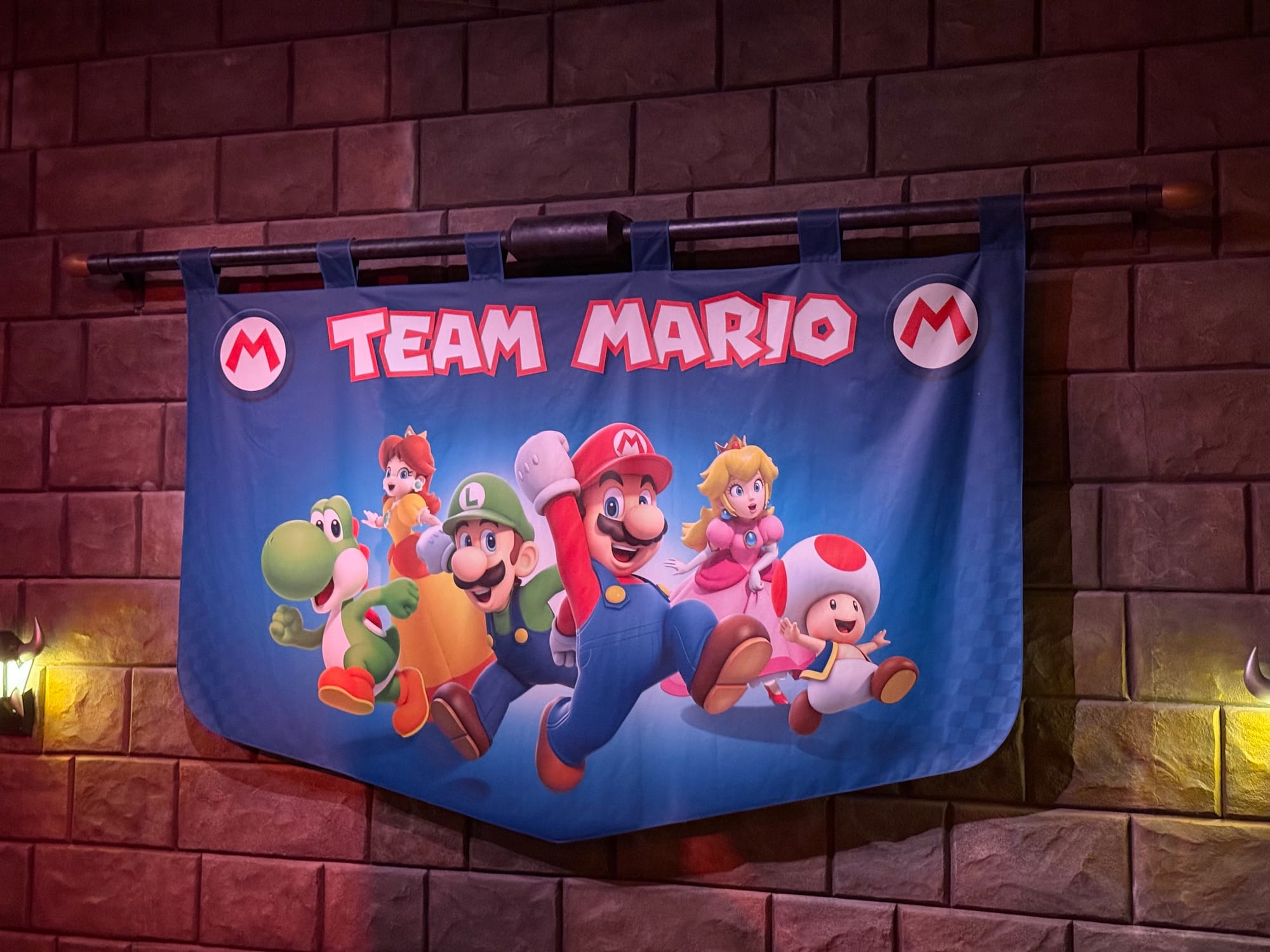
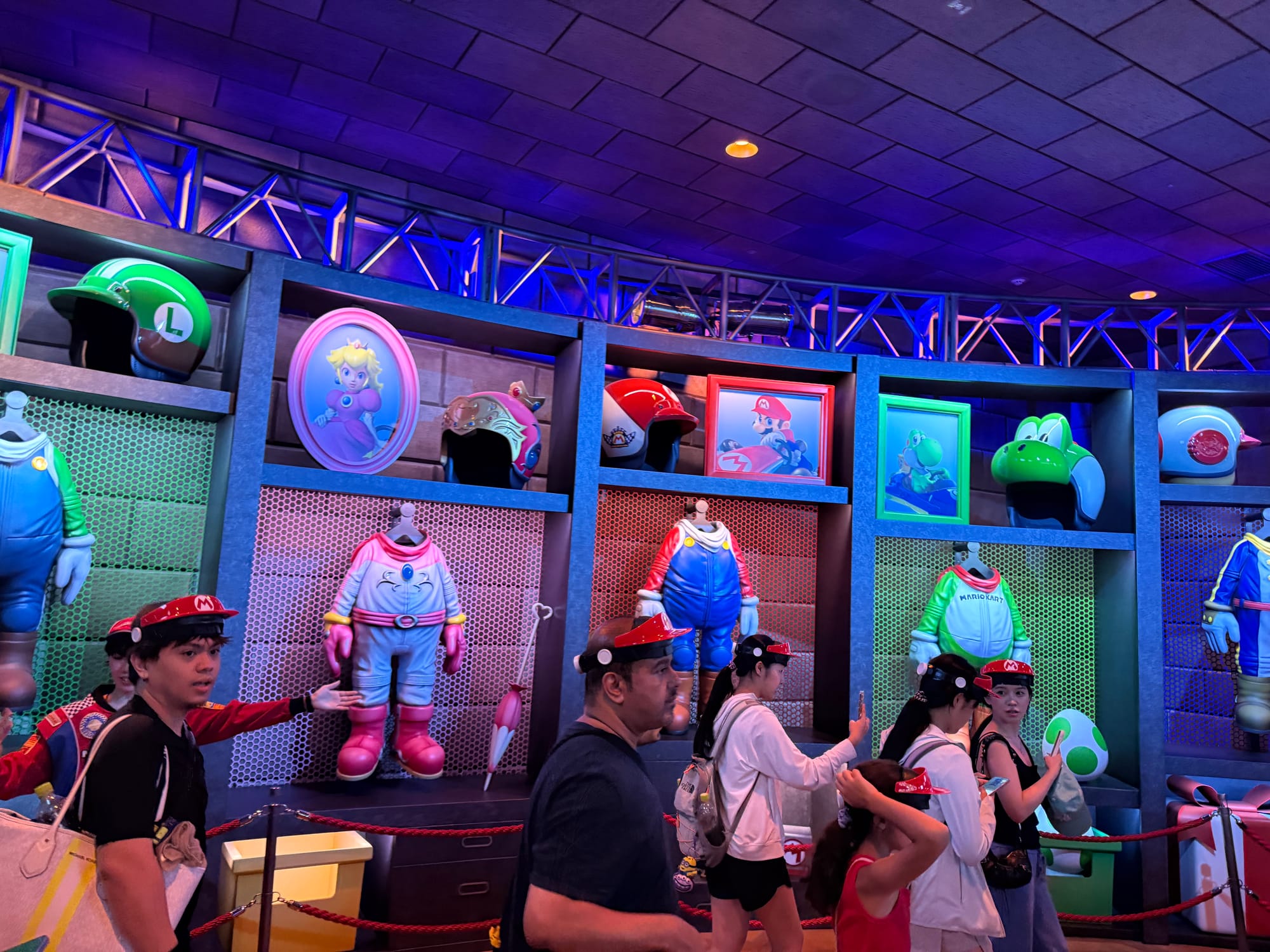
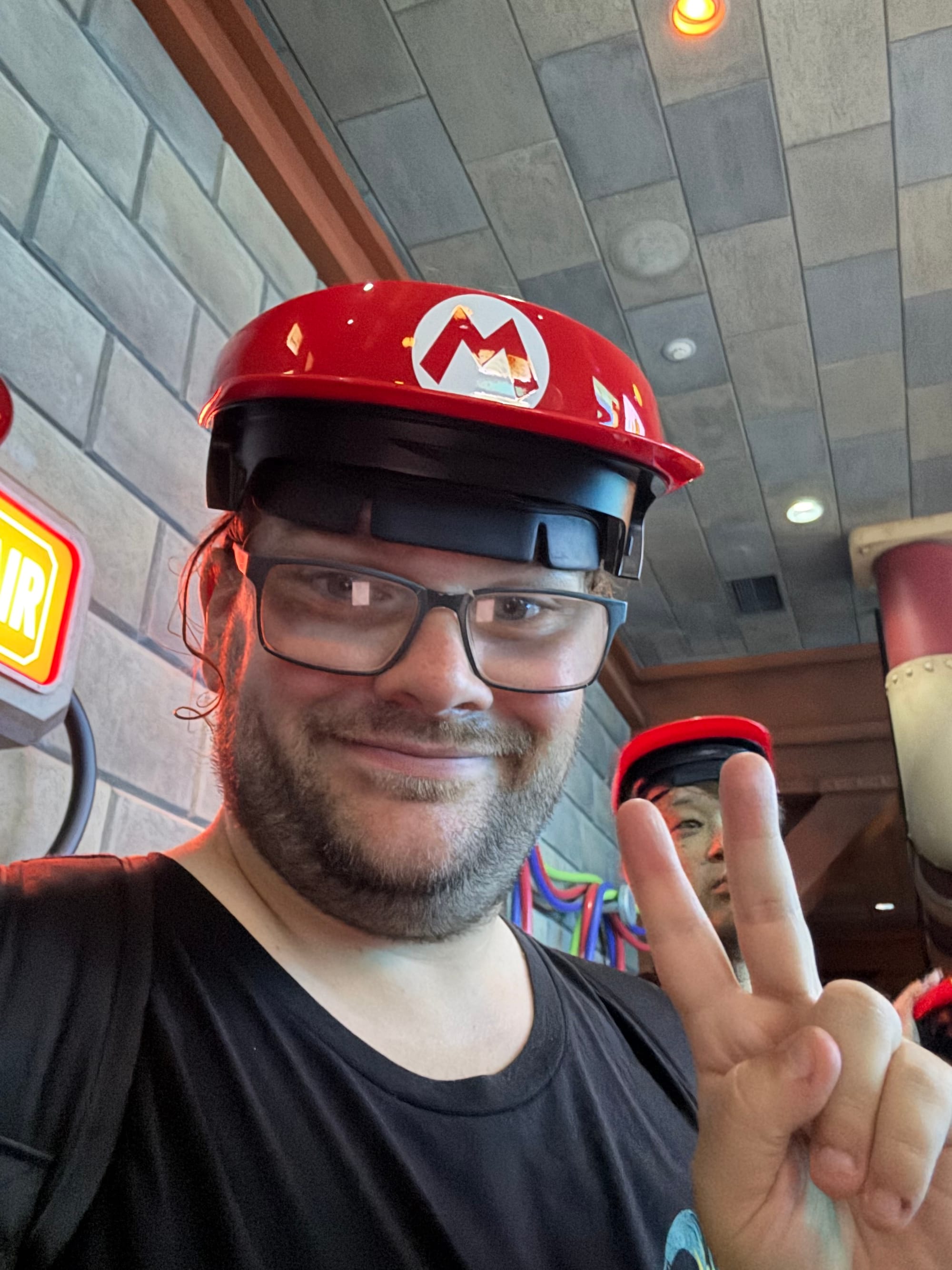
A Team Mario banner inside the queue for Mario Kart: Koopa's Challenge. Guests join Mario, Luigi, Peach, Daisy, Yoshi and Toad in a race against Team Bowser as part of the attraction's storyline.A themed display inside the queue for Mario Kart: Koopa's Challenge showcases racing suits and helmets inspired by Mario, Luigi, Peach, Yoshi and other Mushroom Kingdom characters, helping immerse guests in the world of Mario Kart before the race begins.Ready to race on Mario Kart: Koopa's Challenge at Super Nintendo World. Before boarding, guests are fitted with a Mario-themed visor and augmented reality headset that brings the Mushroom Kingdom race to life.
Best 3D/4D Theatre
This was was between Jujutsu Kaisen: The Real 4-D - Clock Tower of Recurrence and Detective Conan 4-D Live Show: Jewel Under The Starry Sky.
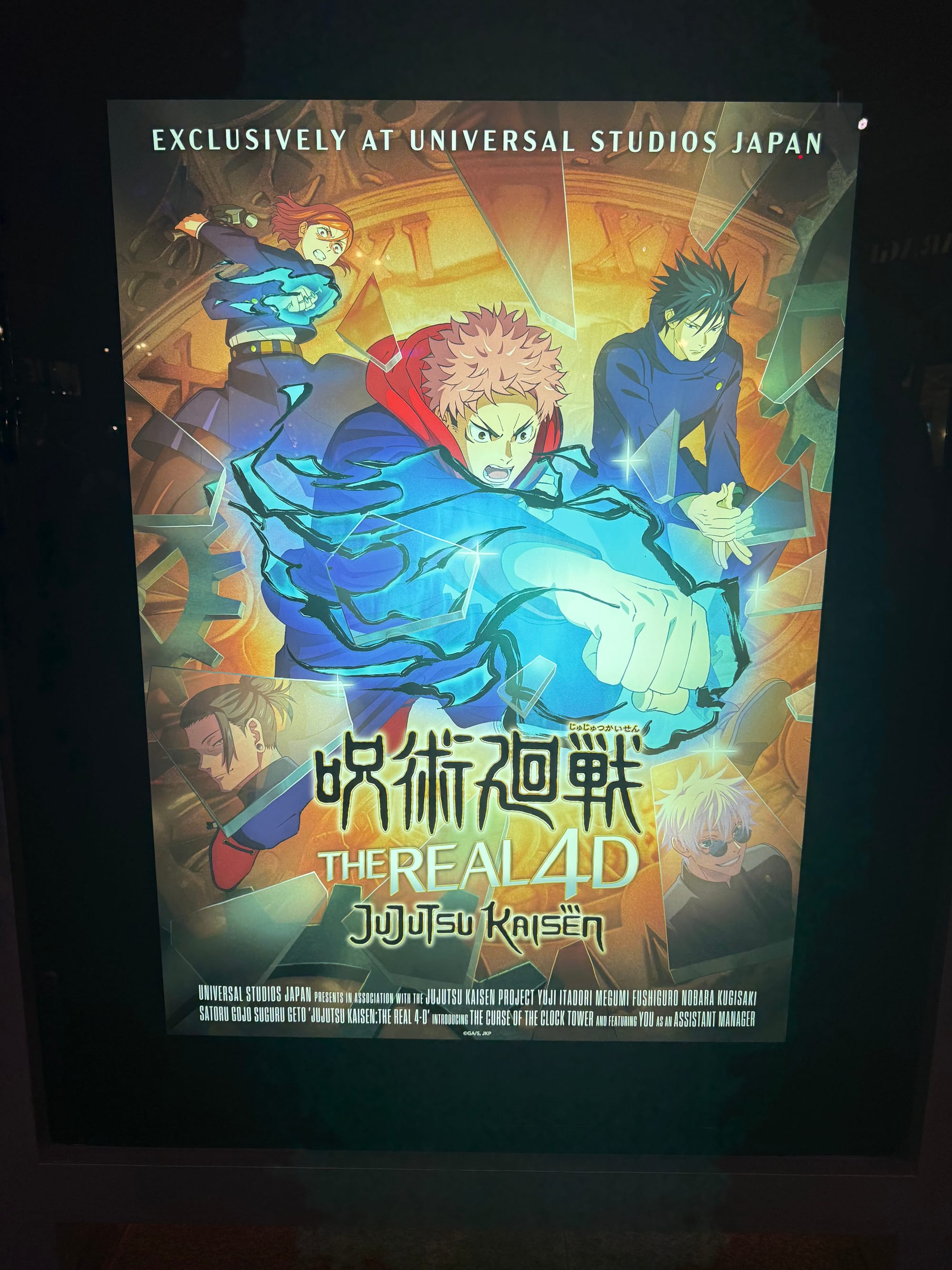
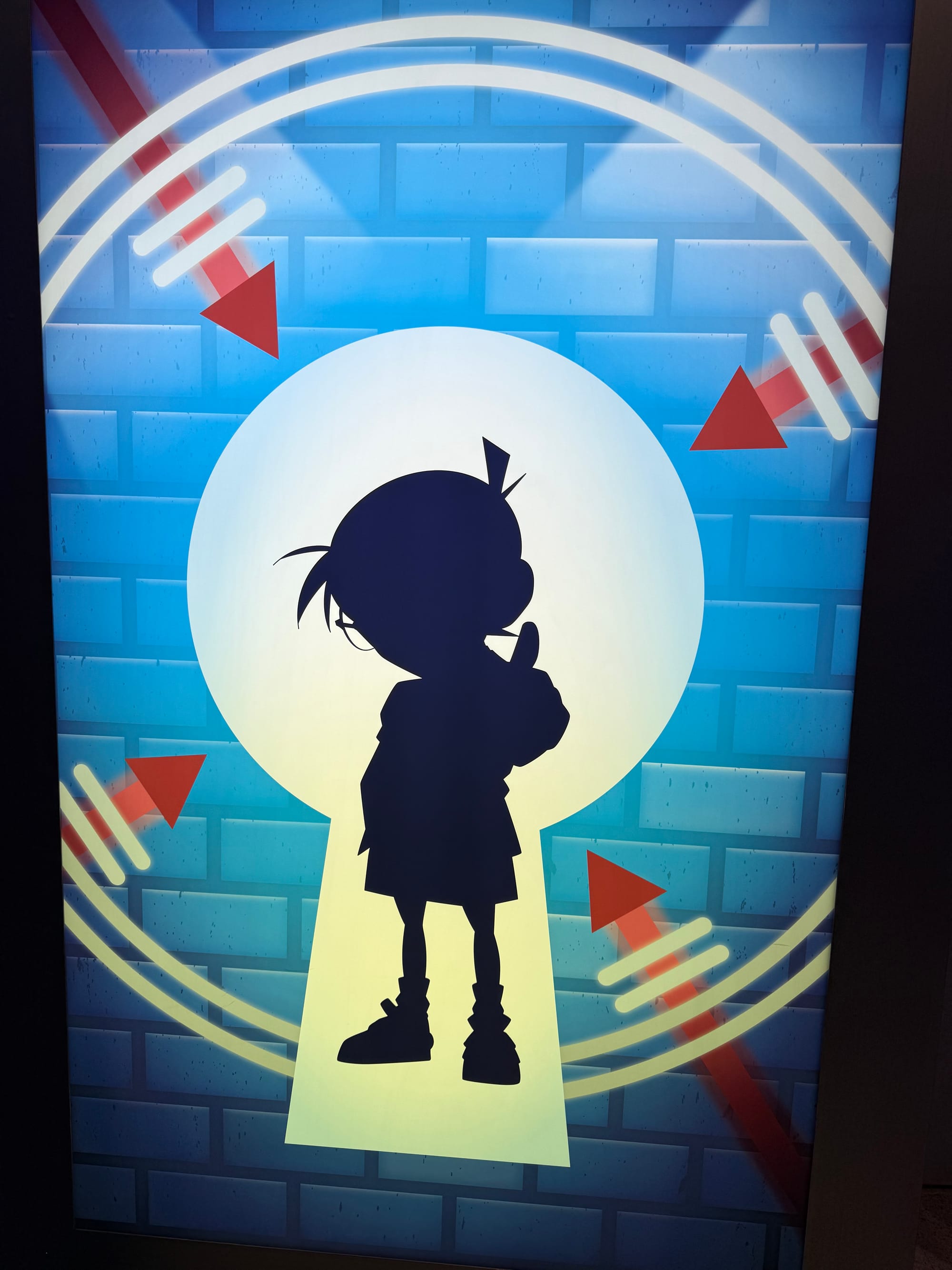
A promotional poster for Jujutsu Kaisen: The Real 4-D at Universal Studios Japan. The limited-time attraction combined 3D visuals, special effects and motion-based storytelling to immerse guests in the world of the popular anime series.A themed display for Detective Conan at Universal Studios Japan. The silhouette of the young detective appears within a keyhole motif, reflecting the mystery-solving adventures that have made the long-running series one of Japan's most popular anime and manga franchises.
To me they are both the winner as Jujutsu Kaisen was in a 3D theatre with moving seats, water sprays and really good animation, but Detective Conan was a 3D Theatre, with live actors, a 180 degree screen experience, smoke screens and a villain that disappeared off screen and then reappeared as a live actor descending from an opening in the ceiling. Ok, so it should probably be Detective Conan, just.
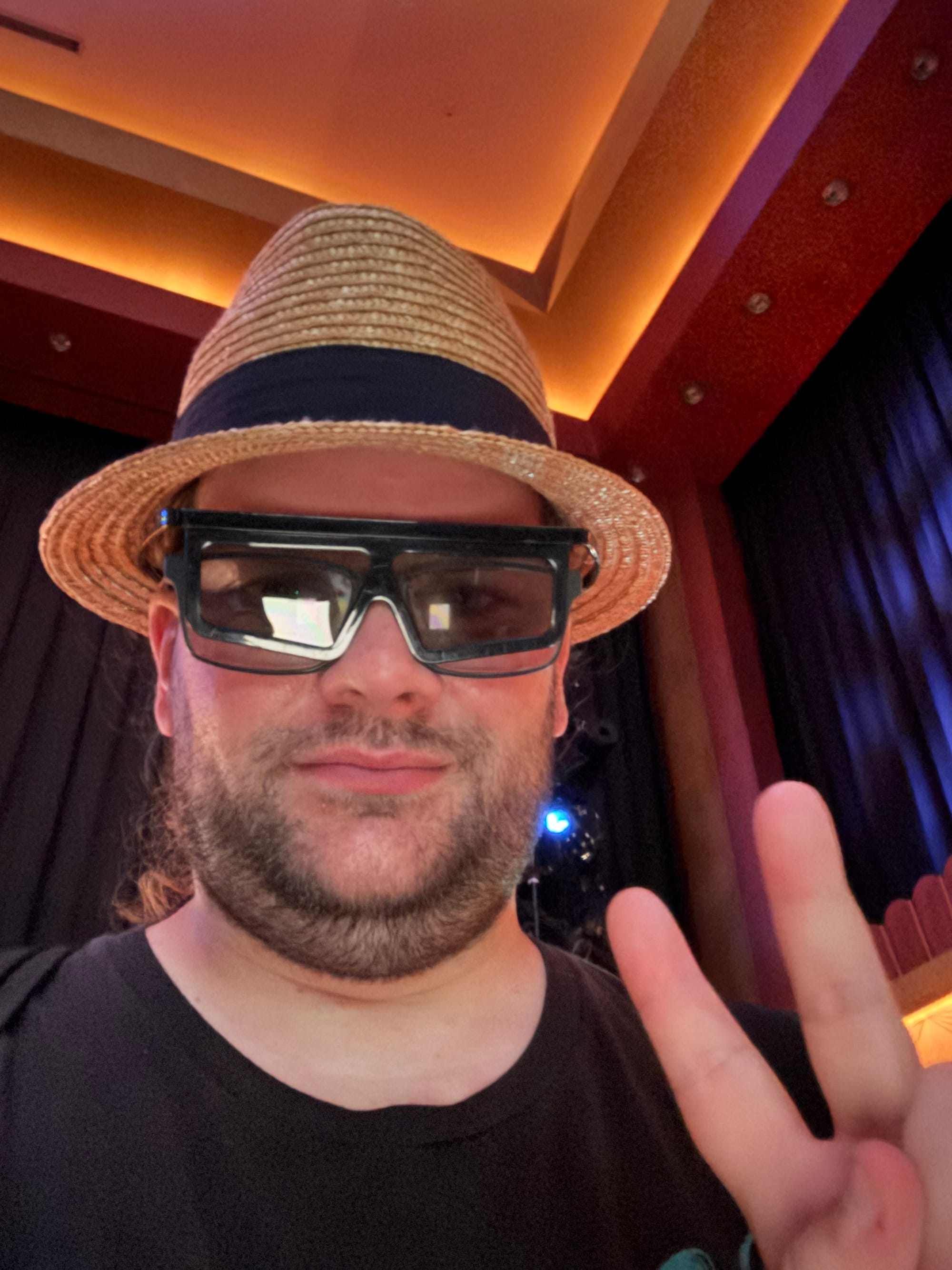
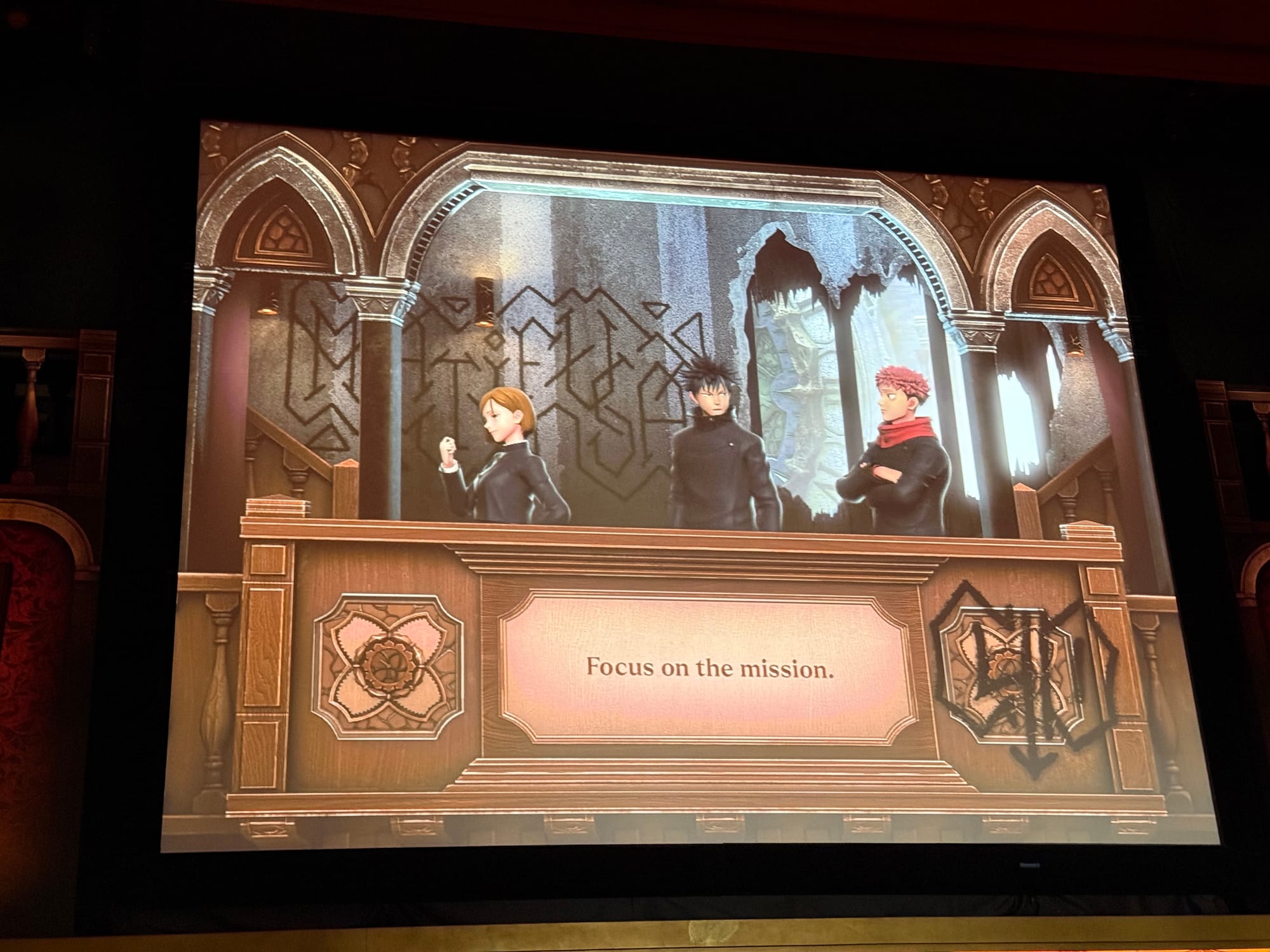
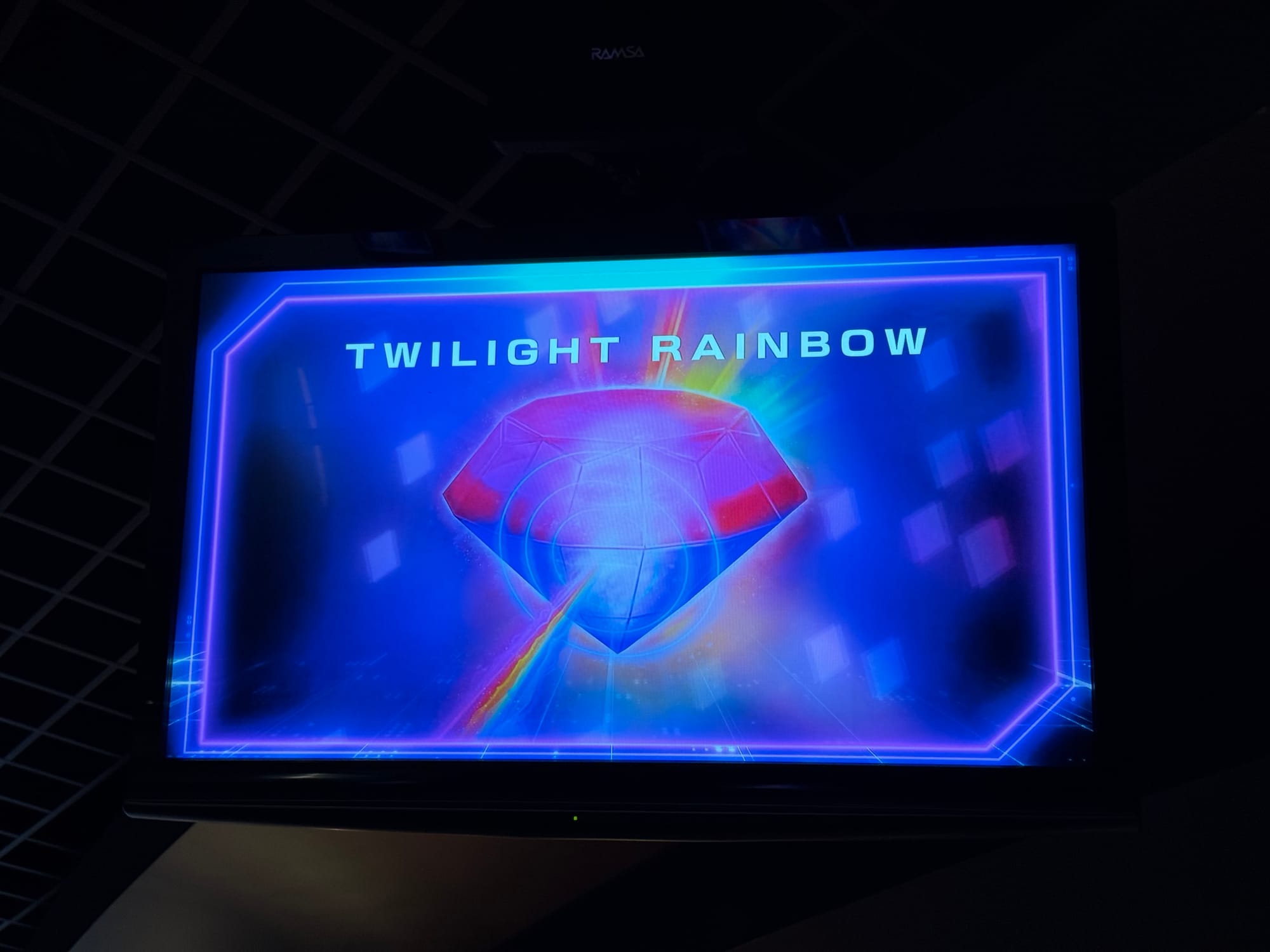
Ready for a 4D attraction at Universal Studios Japan. Special glasses combine with 3D visuals, motion effects and environmental effects to create a more immersive theme park experience.A scene from Jujutsu Kaisen: The Real 4-D at Universal Studios Japan. The attraction placed guests alongside Yuji Itadori, Megumi Fushiguro and Nobara Kugisaki in an original adventure combining 3D animation, motion effects and immersive special effects.A display inside Mario Kart: Koopa's Challenge highlighting the Golden Cup race trophy. Inspired by the Rainbow Road courses of the Mario Kart series, the attraction's storyline challenges guests to compete against Team Bowser for victory.
Best Sing Along Ride
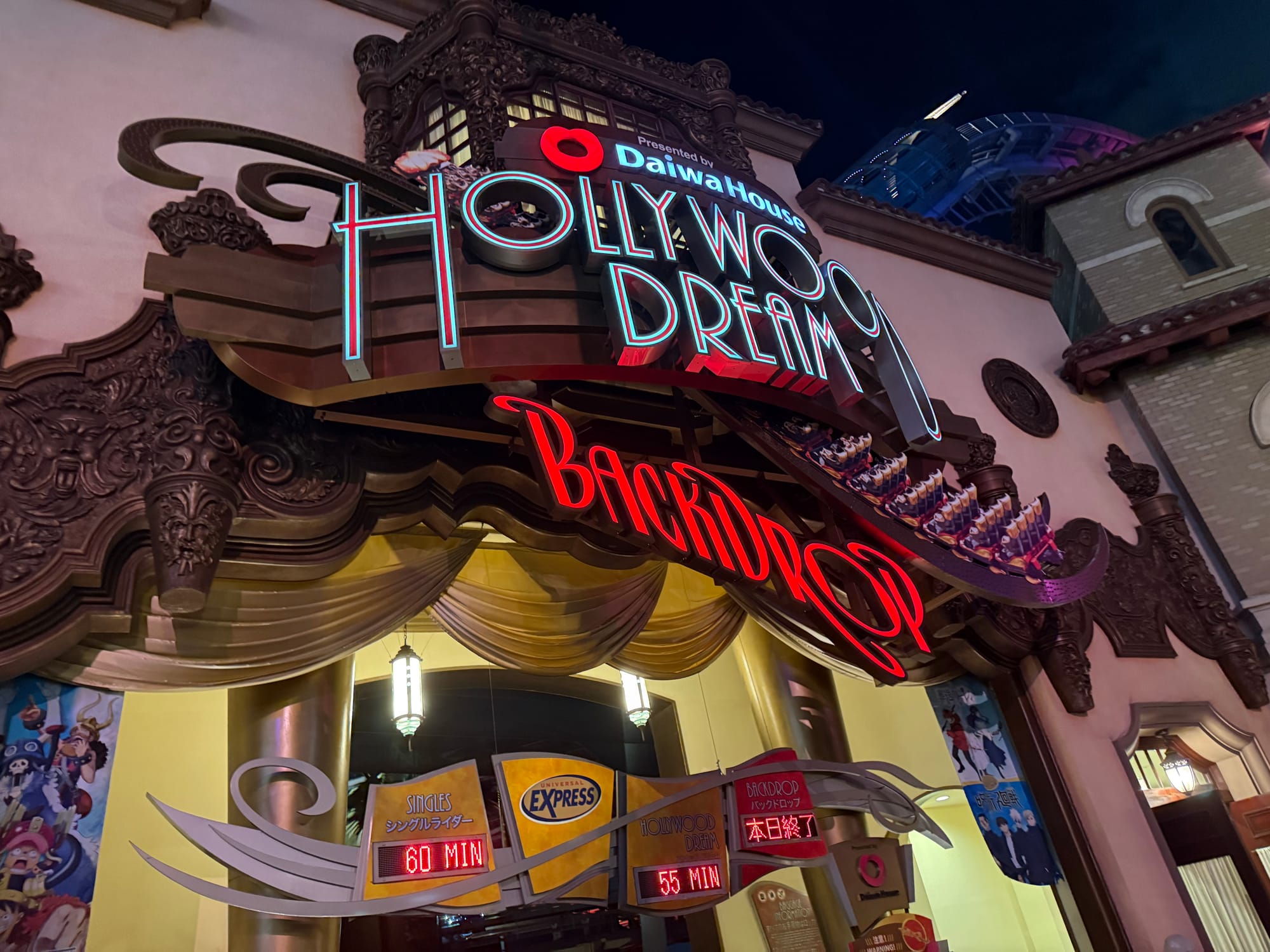
Now, there were 3 rides up for this award and they are: Hollywood Dream: The Ride where you can sing your heart out to 5 different pre-programmed sons while going round the coaster track, Hollywood Dream: The Ride: Backdrop, which is the same ride, with different songs and the roller coaster goes backwards round the track or Space fantasy: The Ride: Club Zedd Remix, which is a bit like space mountain as it is indoors and you listen to club Zedds music.
Hollywood Dream: The Ride at Universal Studios Japan lights up the park after dark. The popular roller coaster is known for its on-board music selection and sweeping views across the Osaka skyline during the ride.
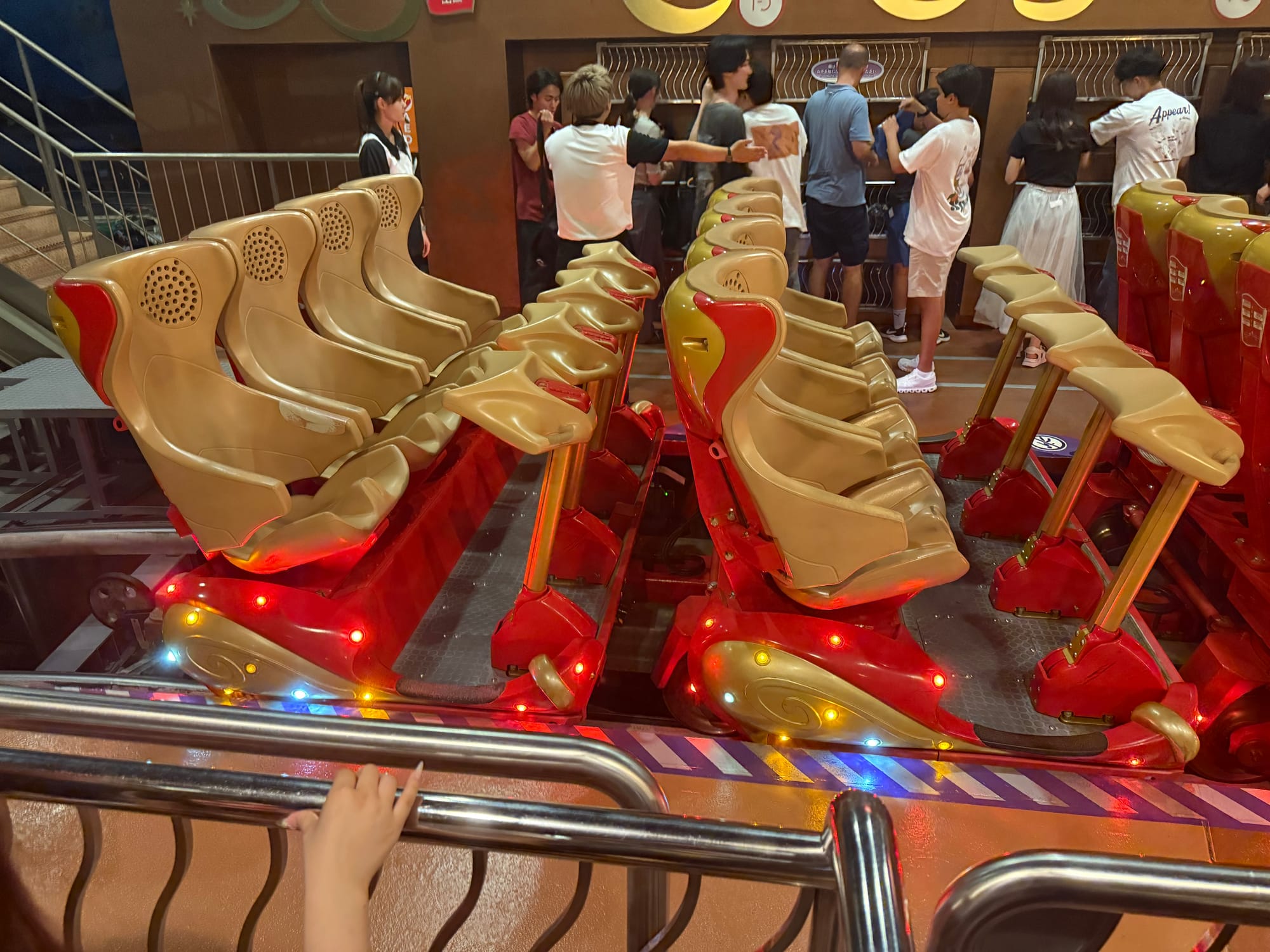
It was actually a hard choice, but the winner was Hollywood Dream: The Ride: Backdrop. I listened to "Shake It Off" and it was blasting music away from behind me where the speakers were. It was really fun and weird though as we were going backwards round the coaster track, so we couldn't see what was coming next, but because I just did it forwards about 5 mins before, it wasn't too bad as I knew what to expect.
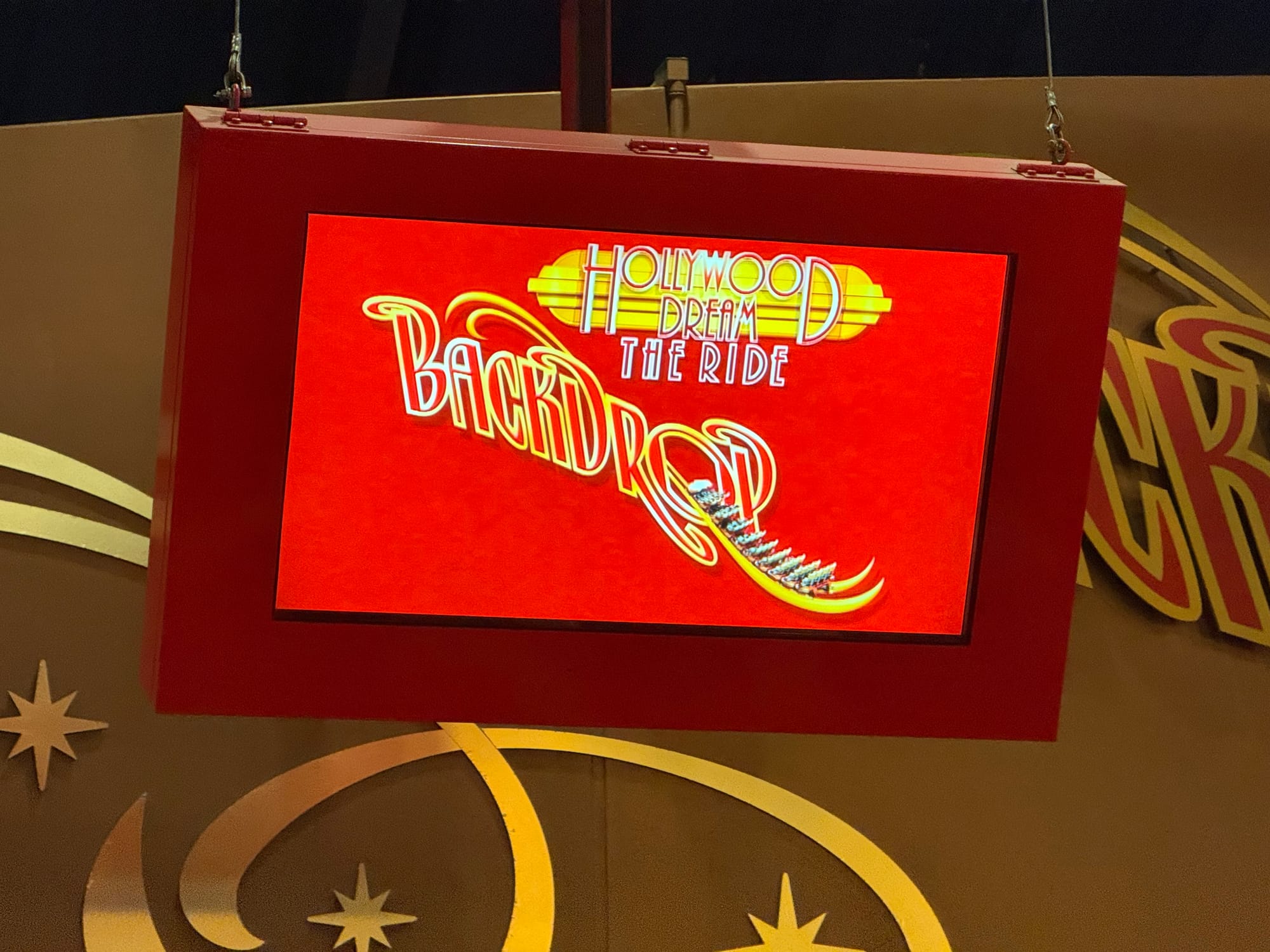
A display for Hollywood Dream: The Ride Backdrop at Universal Studios Japan. Unlike the standard version of the coaster, this variation sends riders through the entire course facing backwards, creating a very different ride experience.The station for Hollywood Dream: The Ride Backdrop at Universal Studios Japan. Riders board specially configured trains that travel the entire roller coaster course facing backwards, creating a unique version of one of the park's most popular attractions.
Most Fun Ride
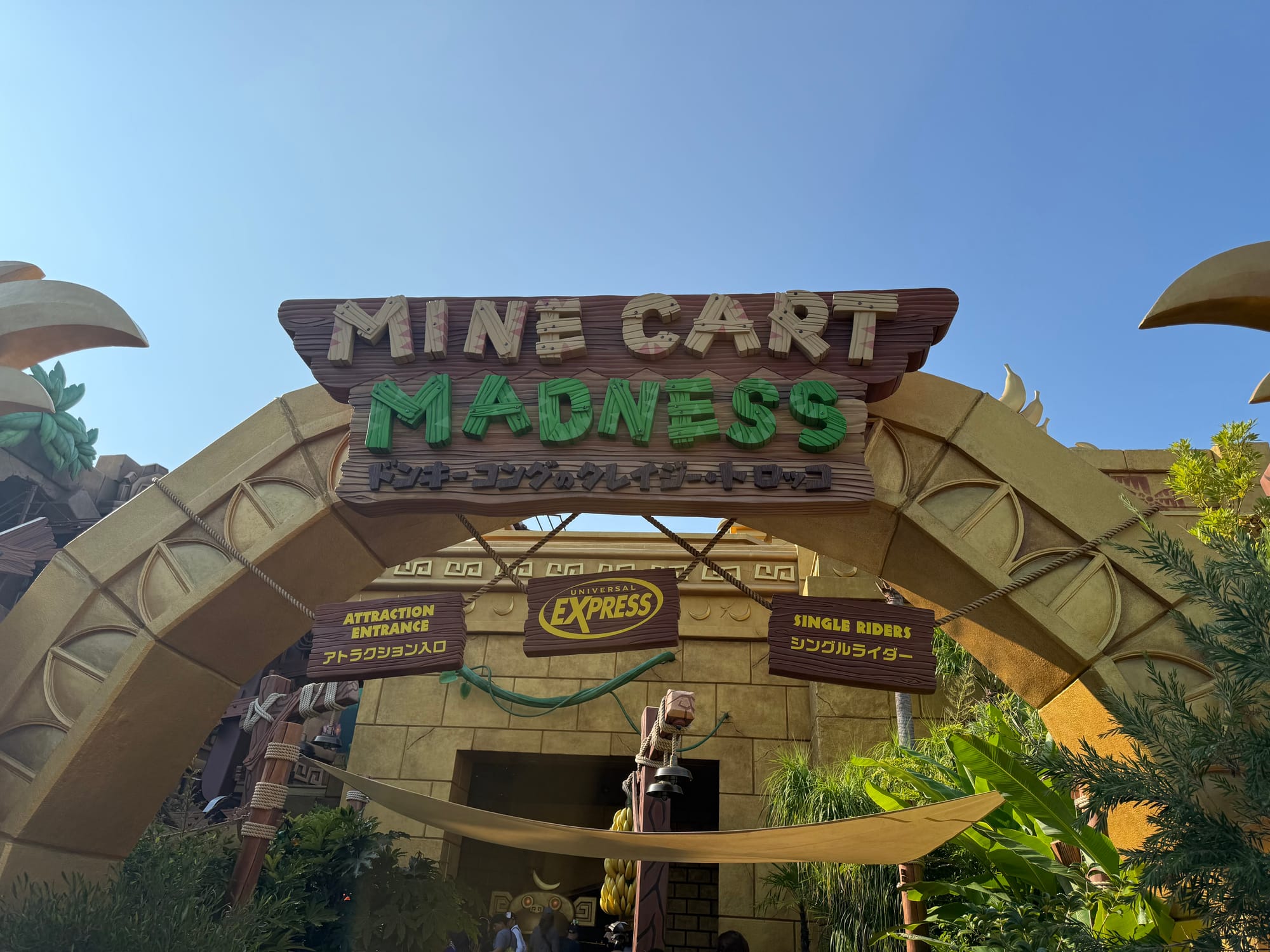
The most fun ride for me would be Hollywood Dream: The Ride: Backdrop, but as I have already mentioned that, it will go to the very close second on my list, which is Mine Cart Madness, in Donkey Kong Country.
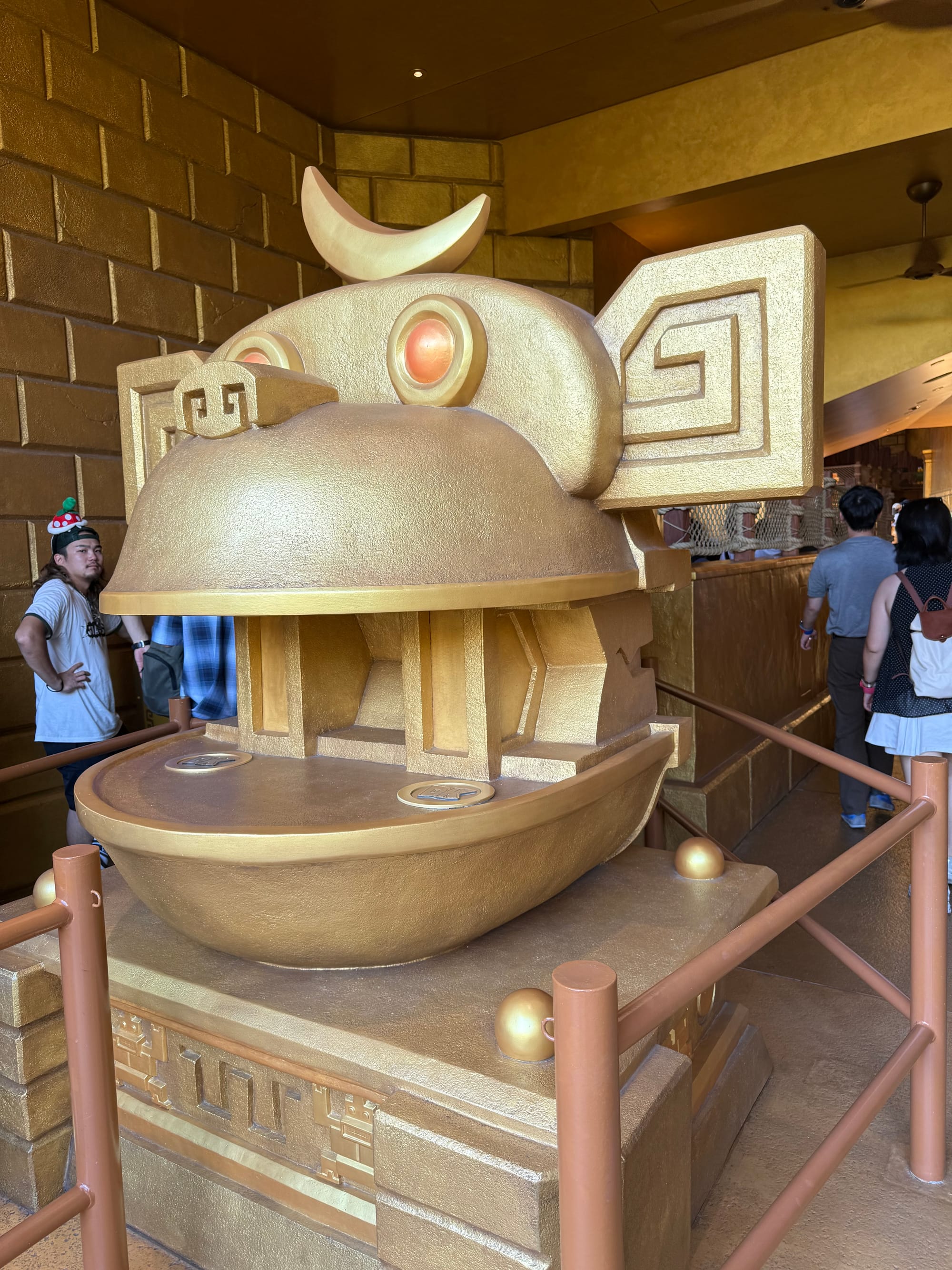
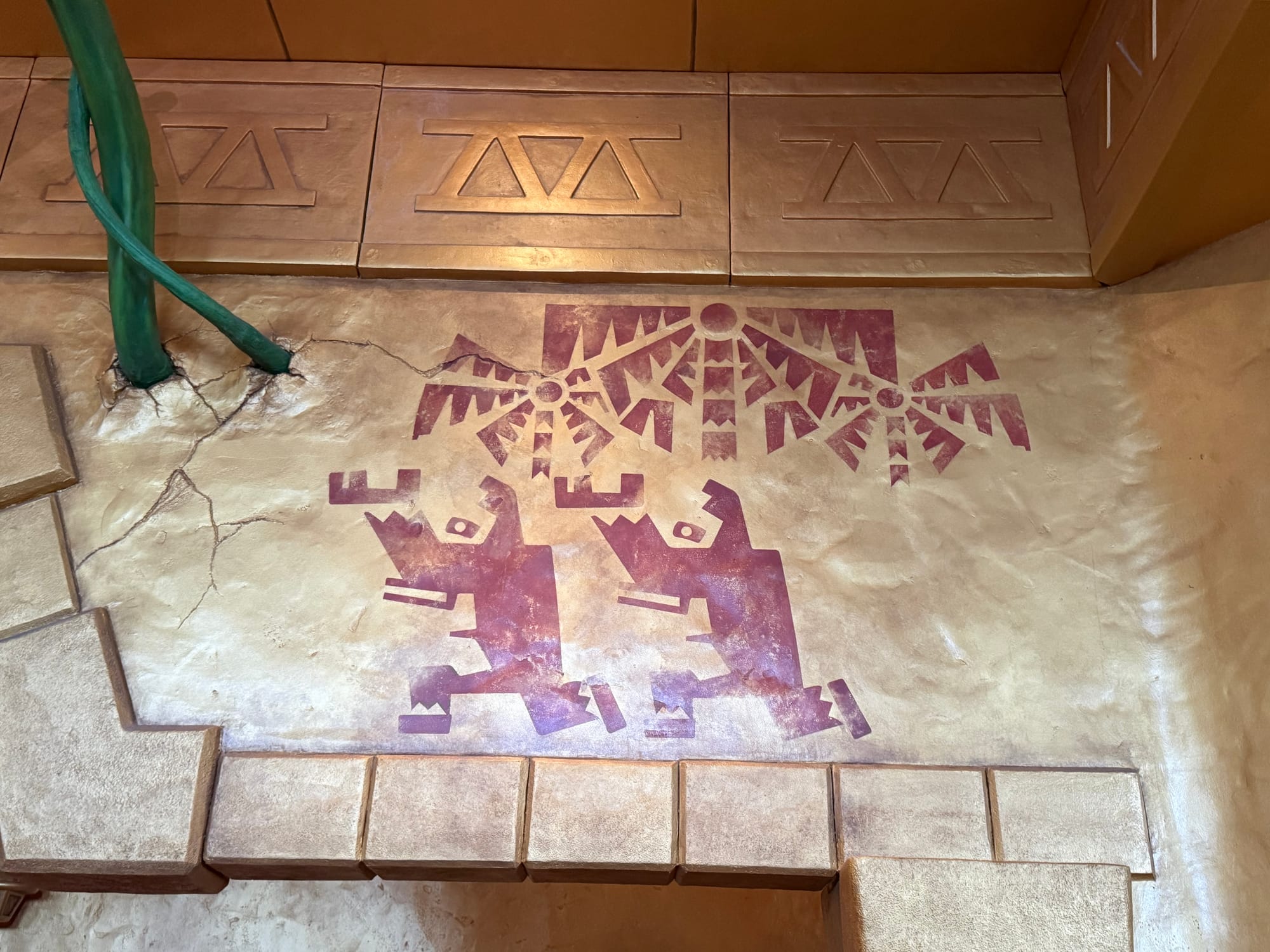
The entrance to Mine Cart Madness in Donkey Kong Country at Universal Studios Japan. Inspired by the mine cart levels of the Donkey Kong Country games, the coaster uses innovative ride technology to recreate the illusion of jumping broken sections of track.A temple statue within the queue for Mine Cart Madness in Donkey Kong Country at Universal Studios Japan. The richly themed attraction draws inspiration from the jungle temples, ancient ruins and mine cart adventures of the Donkey Kong Country game series.Ancient-style artwork in the queue for Mine Cart Madness depicts stylised ape figures and jungle motifs inspired by the mythology and temple ruins of Donkey Kong Country. The detailed theming helps bring the game's adventurous jungle world to life.
It looks like a mine cart that goes round on a track, but instead, it has a sideways track beneath it, to make it have the illusion that you do some jumps and stuff. It was quite cool and good to be honest.
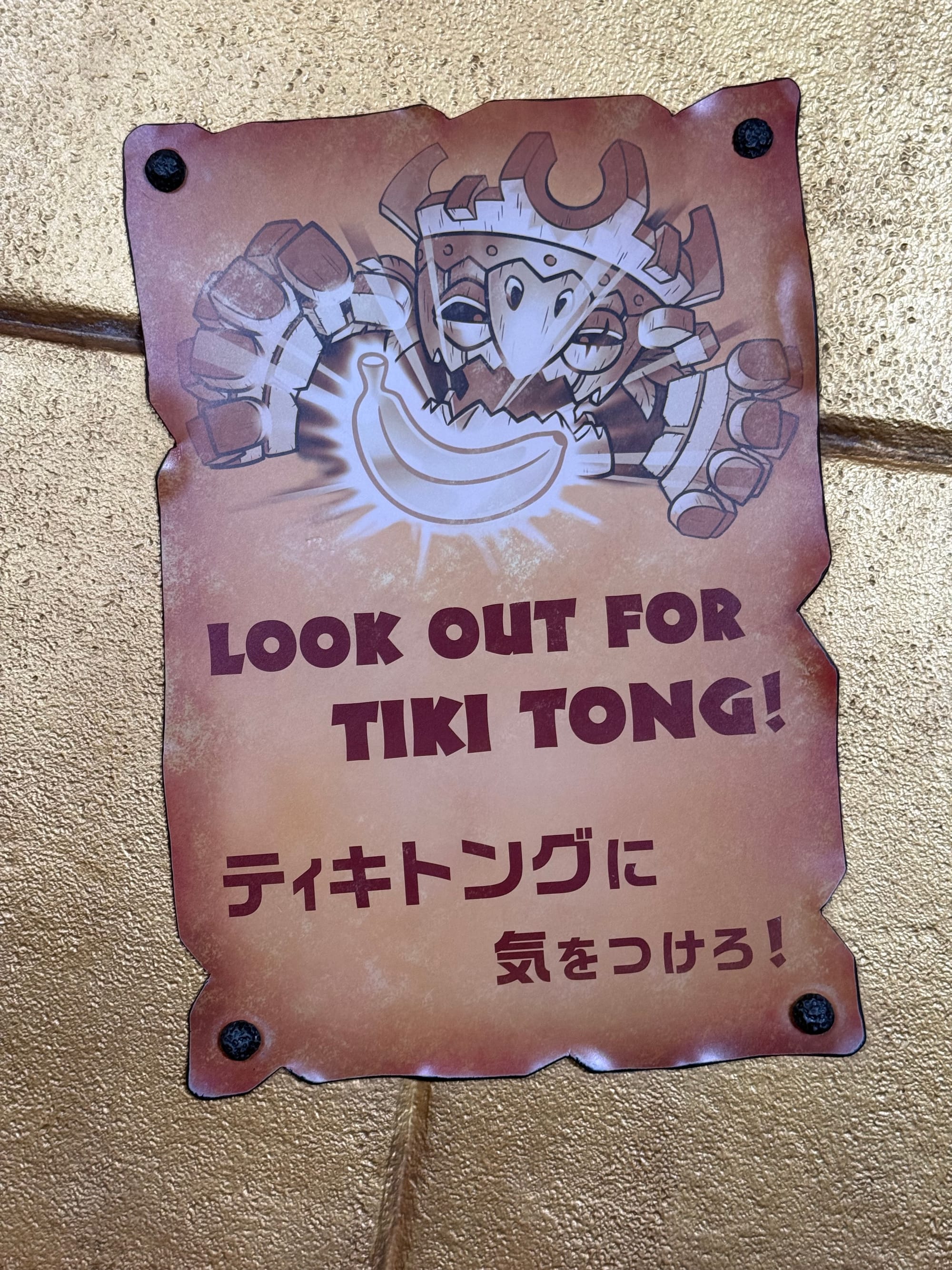
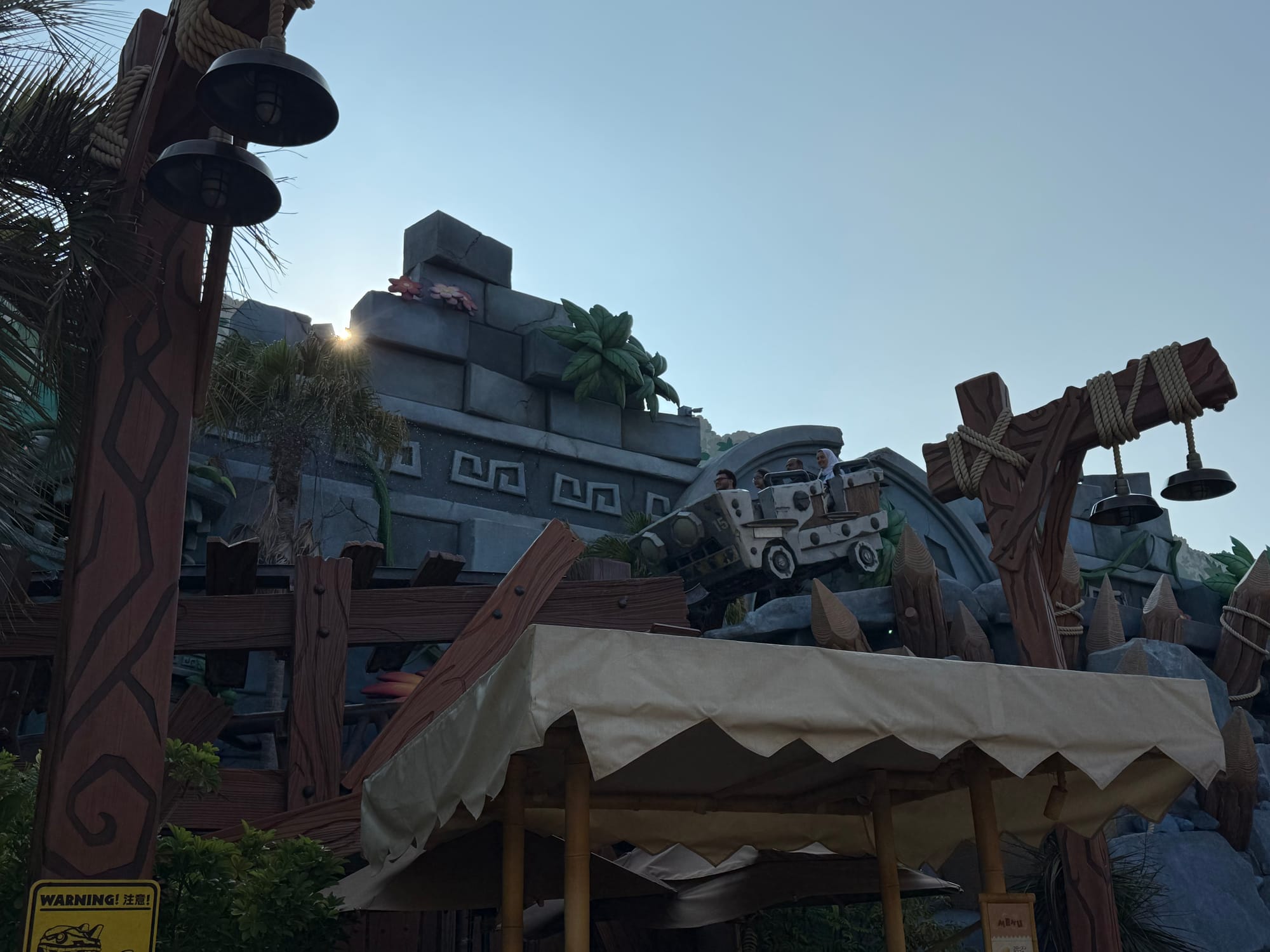
A themed warning sign in the Mine Cart Madness queue references Tiki Tong, the main antagonist of Donkey Kong Country Returns. Details like this help connect the attraction's story to characters and enemies from the games.A mine cart speeds through Donkey Kong Country on Mine Cart Madness at Universal Studios Japan. The attraction uses innovative ride technology to recreate the famous track-jumping moments from the Donkey Kong Country games.
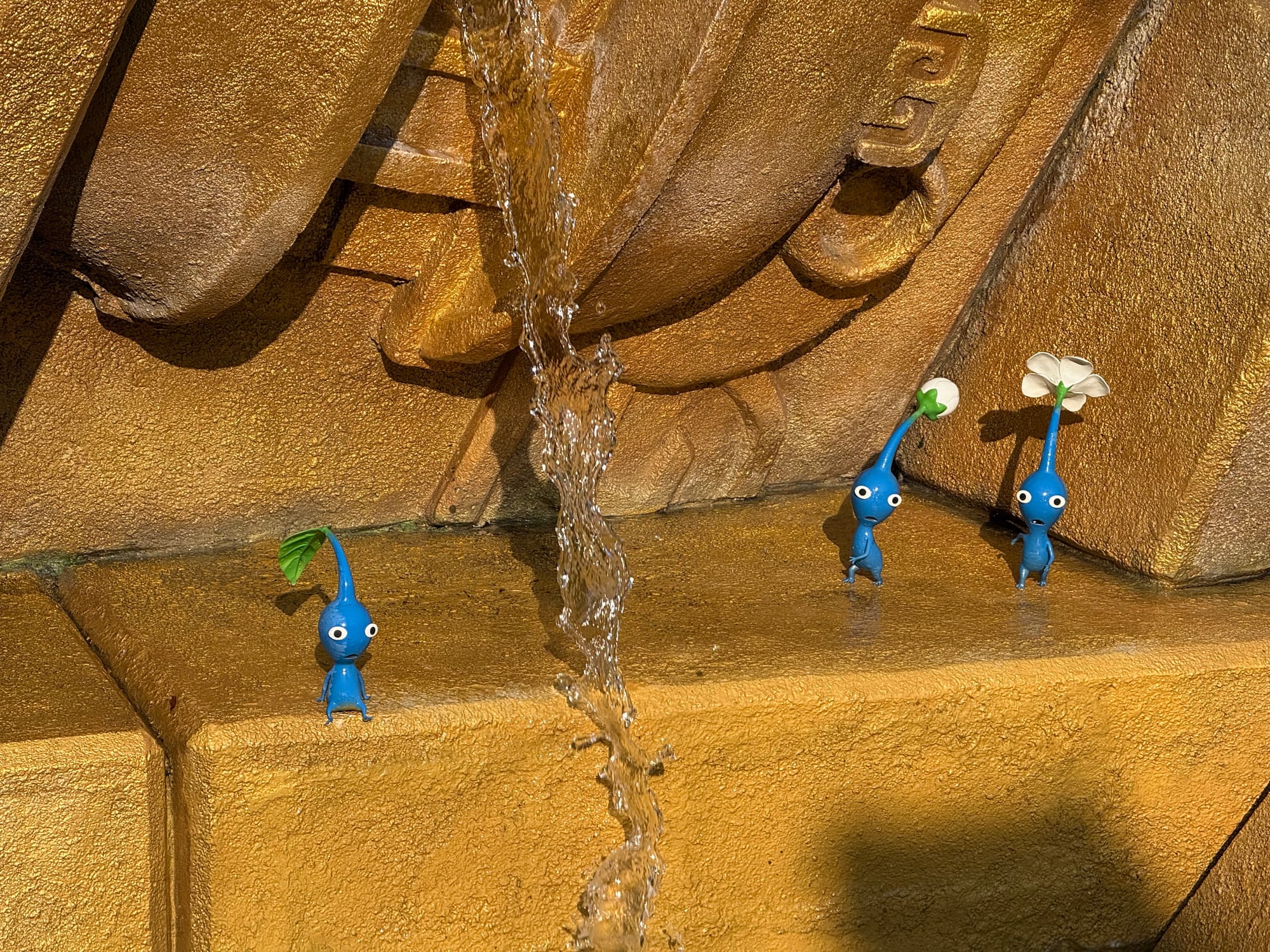
There was also a nice little touch when I came out the the exit and had a look at the water pool there, as there were some Pikmin.
Hidden Blue Pikmin peek out from beside a small waterfall in Donkey Kong Country at Universal Studios Japan. These tiny characters from Nintendo's Pikmin series are scattered throughout Super Nintendo World as fun details for visitors to discover.
Weirdest Ride
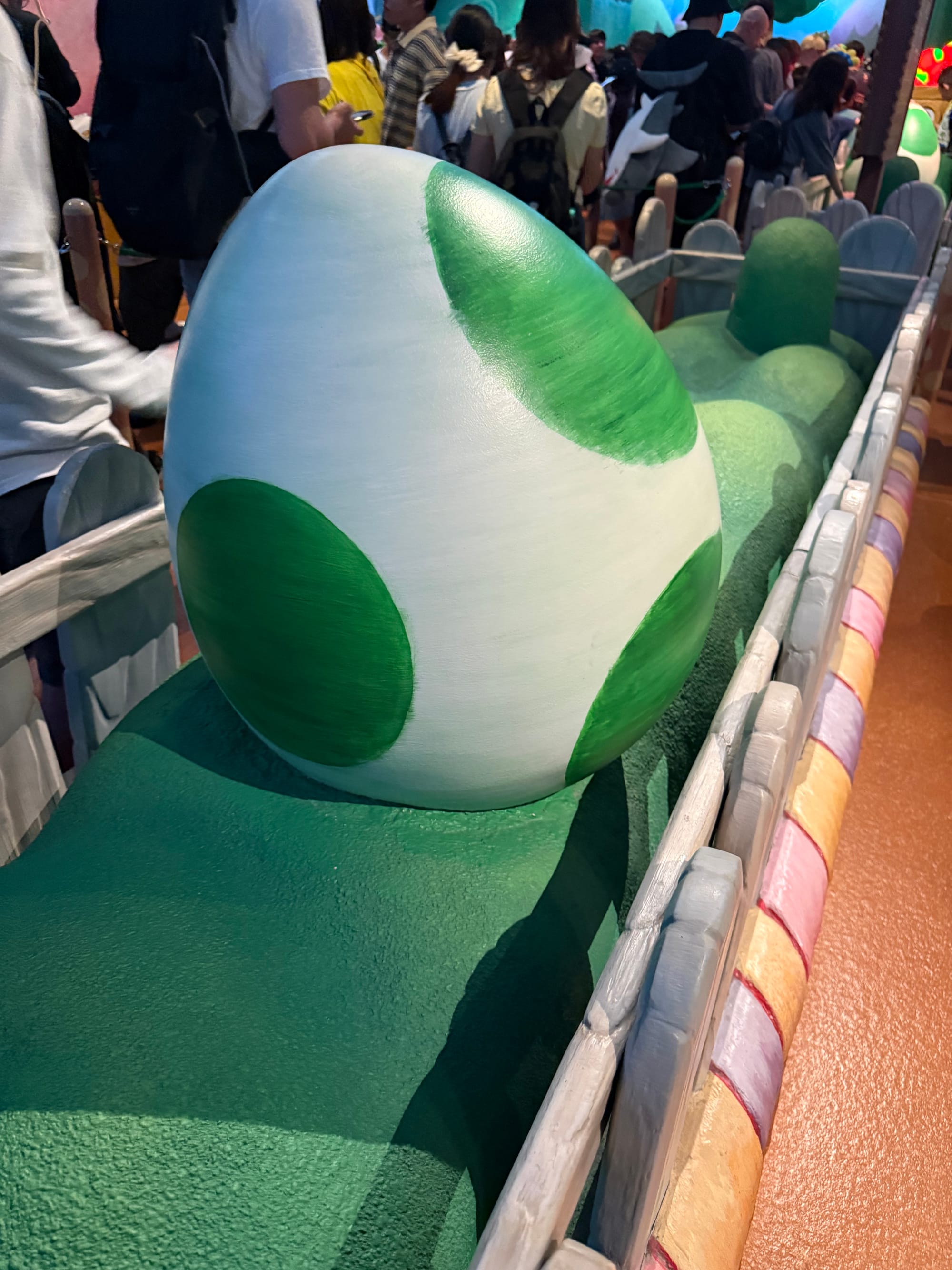
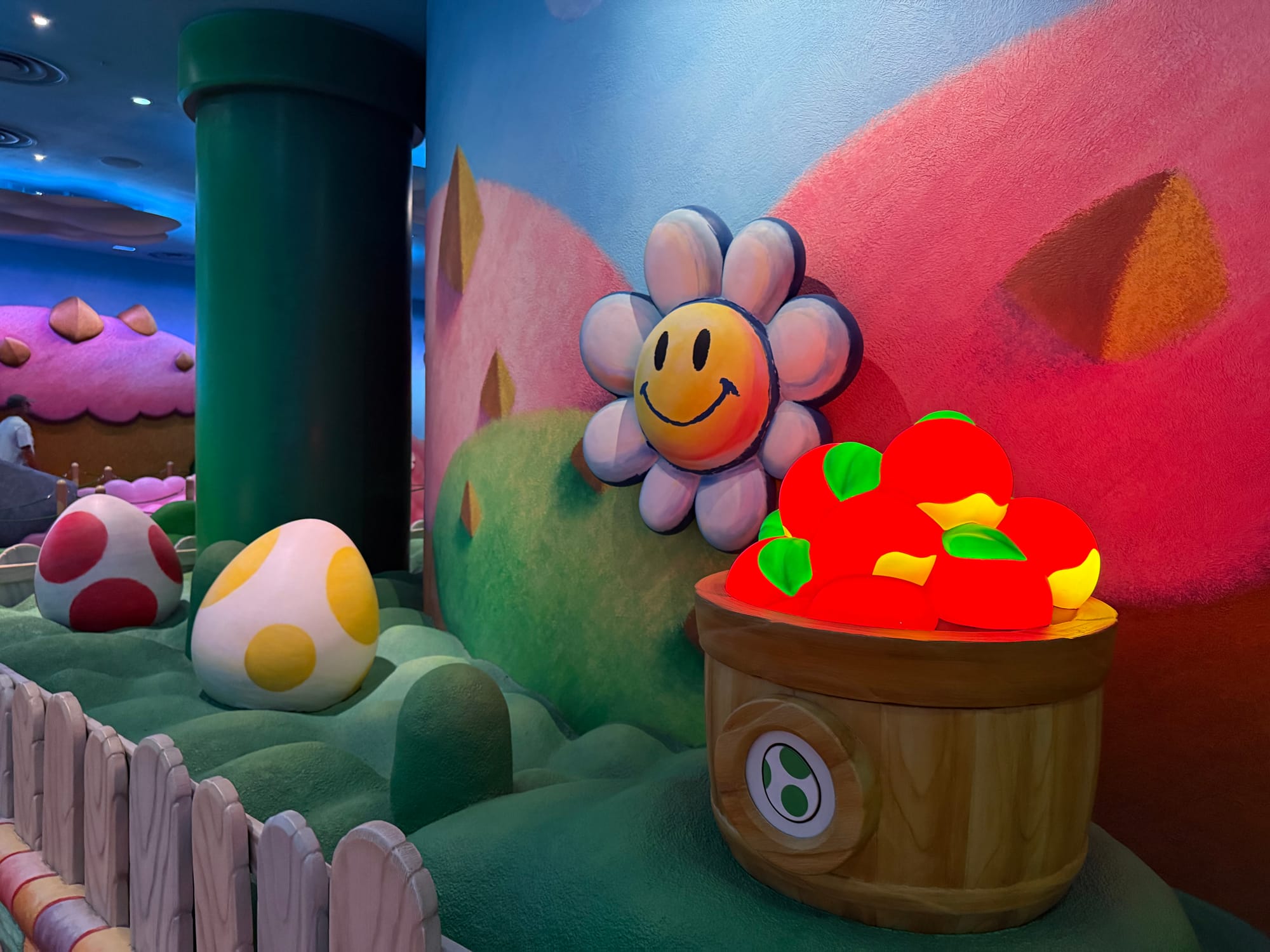
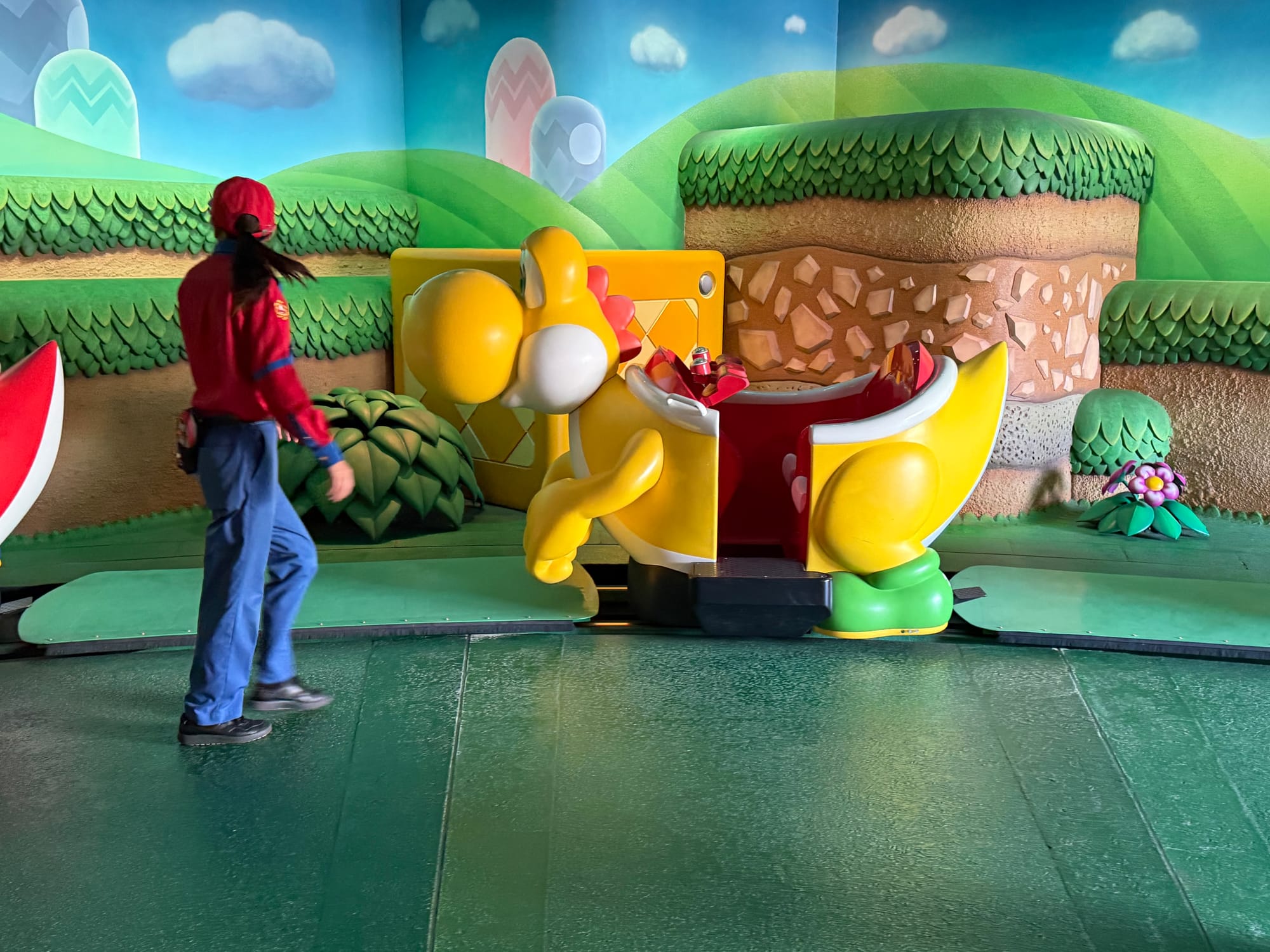
The weirdest ride for me has to be Yoshi's Adventure. You basically ride on a Yoshi's back and hunt for three eggs, which you need to press on the console in front of you. I get that Yoshi likes eggs, but to be it is a weird ride.
A giant Yoshi egg in the queue for Yoshi's Adventure at Super Nintendo World. The family-friendly attraction takes guests on a gentle journey through the Mushroom Kingdom in search of hidden eggs and familiar Nintendo characters.The queue for Yoshi's Adventure recreates the cheerful world of Yoshi, with giant eggs, colourful scenery and familiar elements inspired by the Yoshi's Island and Super Mario games.A Yellow Yoshi ride vehicle awaits guests at Yoshi's Adventure in Super Nintendo World. The gentle family attraction takes riders on a journey through the Mushroom Kingdom, offering scenic views and hidden details inspired by the world of Yoshi and Mario.
Eating At USJ
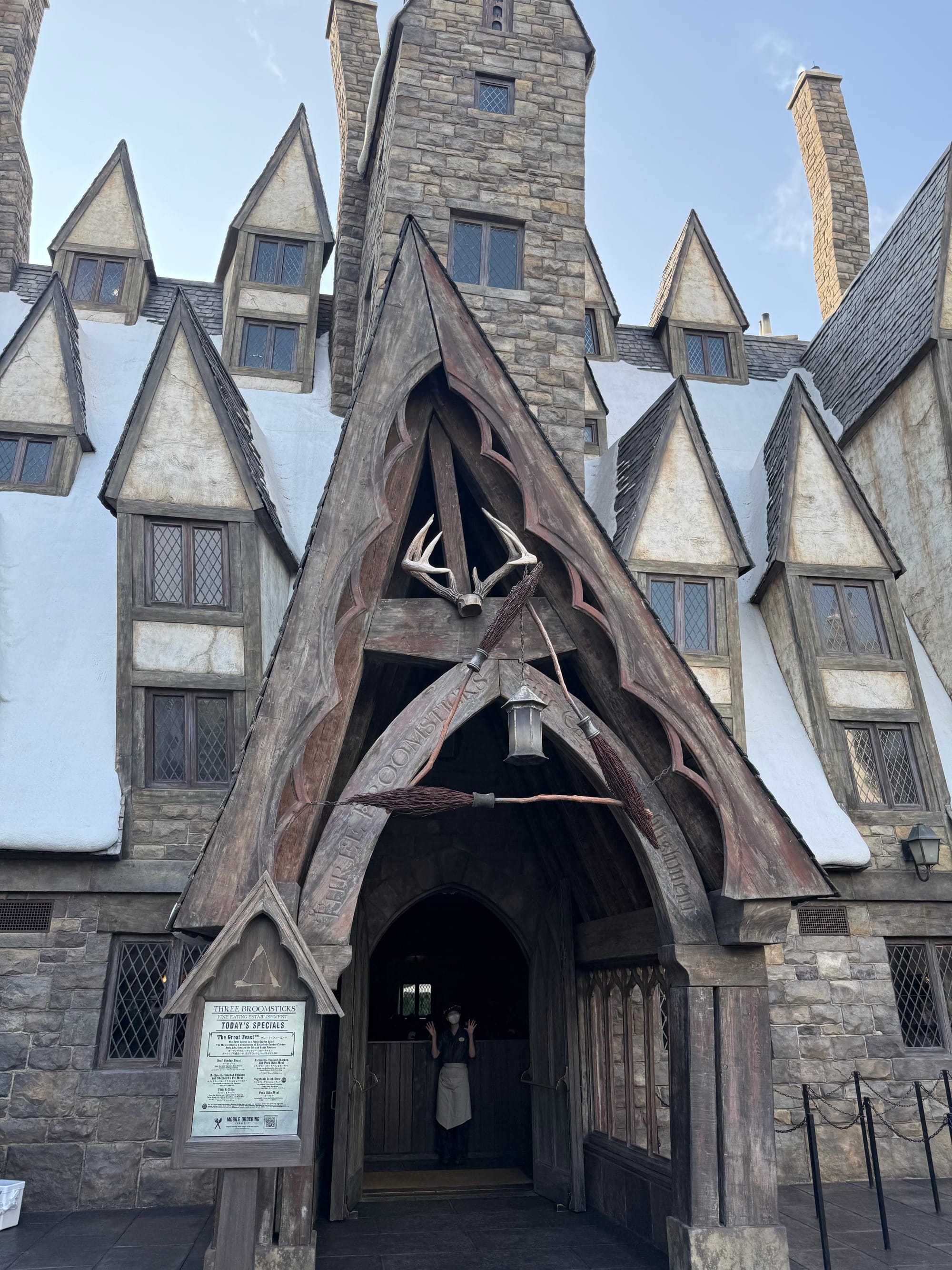
At USJ (Universal Studios Japan), I decided to get something to eat about 18:00 and was debating where to go to eat, but after looking at the menu's and decided to go to the Three Broomsticks in The Wizarding World of Harry Potter.
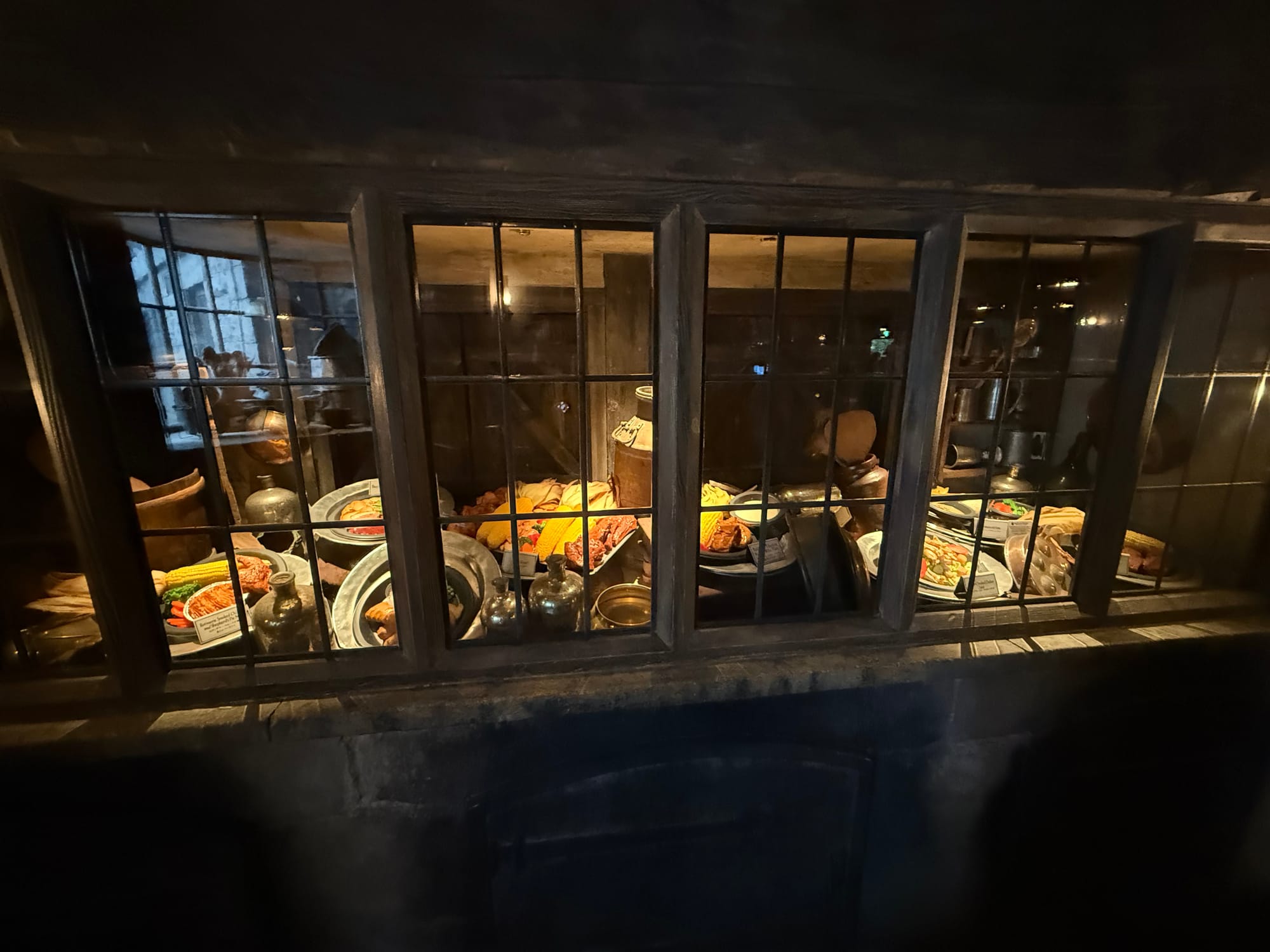
The Three Broomsticks in The Wizarding World of Harry Potter at Universal Studios Japan. Inspired by the famous Hogsmeade inn from the Harry Potter series, the restaurant serves themed dishes and drinks in a setting designed to recreate the magical village.A themed kitchen display at the Three Broomsticks in The Wizarding World of Harry Potter at Universal Studios Japan. The rustic inn is filled with detailed props and décor inspired by the famous Hogsmeade pub from the Harry Potter series.
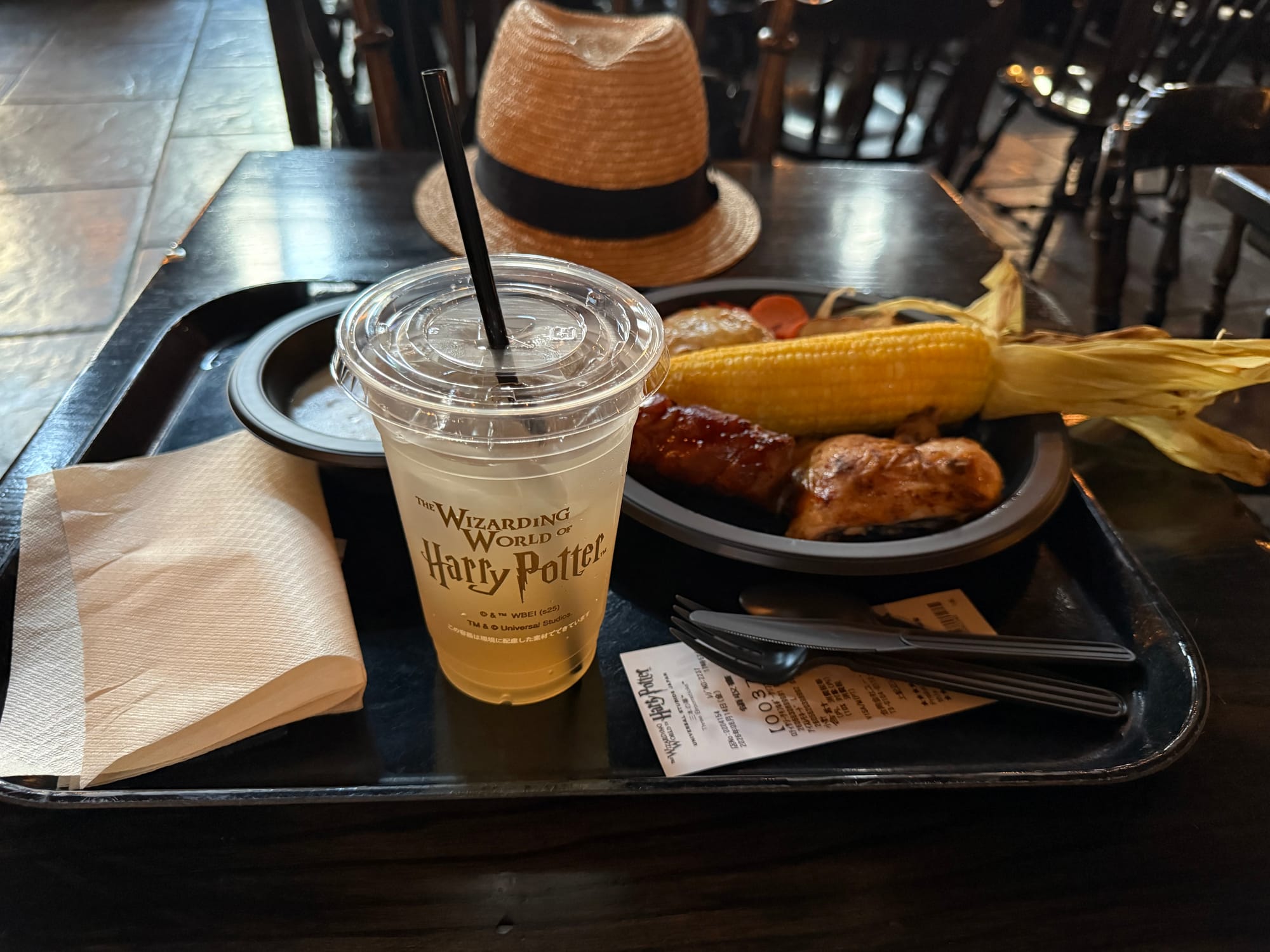
I got a Rotisserie Smoked Chicken and Pork Ribs Meal, that was served with Beef Onion Pie, Corn on the Cob, Roasted Potatoes and Leek and Potato soup. I also got a large apple juice and it came to 3400 yen (£15.84 at the time), which is really good for a decent meal and drink in a theme park. Over here you would probably paid about twice that. Mr Hat was also a bit jealous as well and was looking at the food.
Lunch at the Three Broomsticks in The Wizarding World of Harry Potter at Universal Studios Japan. The meal includes roasted chicken, corn on the cob and potatoes, served alongside a refreshing drink in the themed Hogsmeade inn.
Here are some more photos of the day out in USJ, which was awesome!
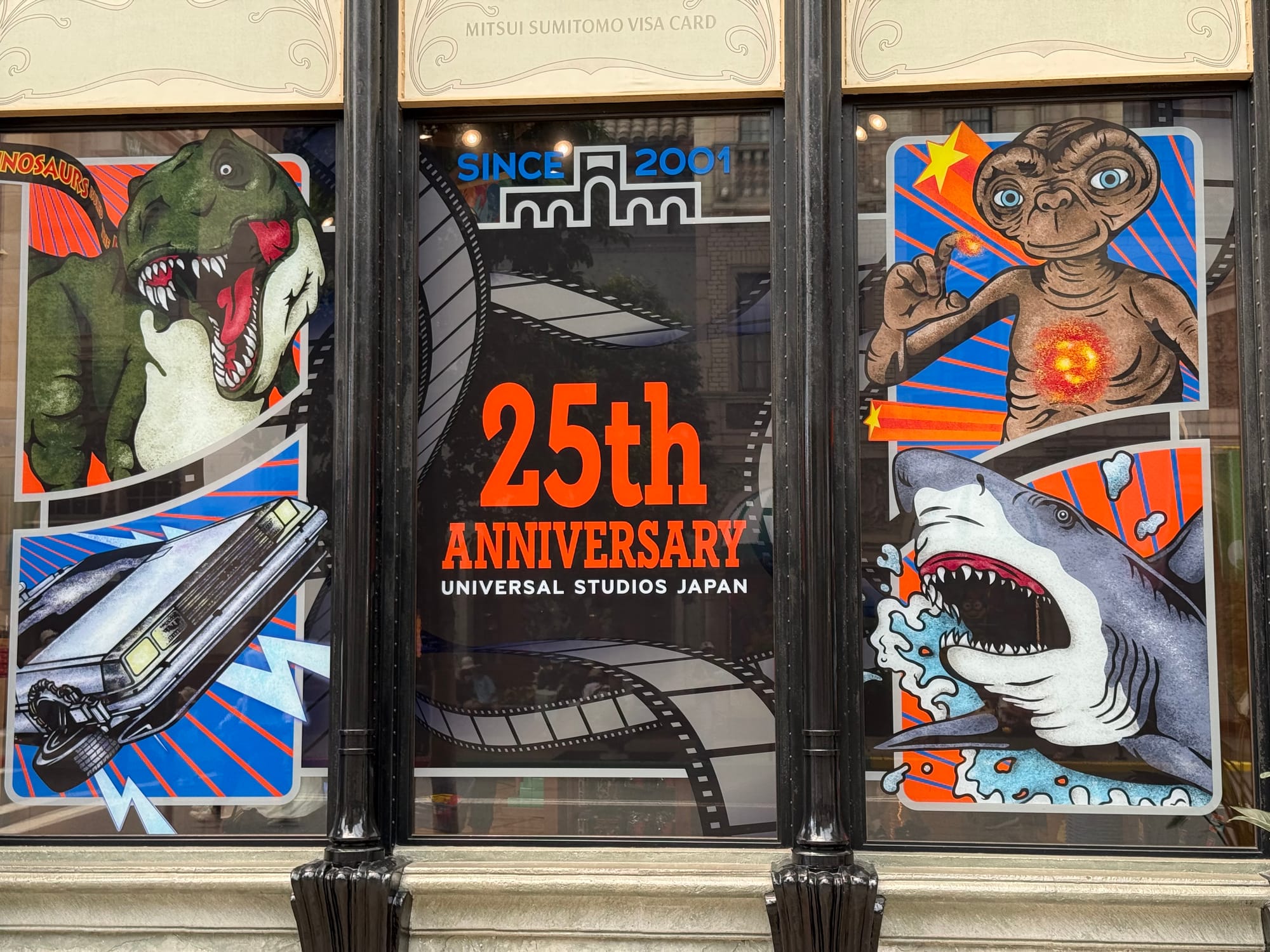
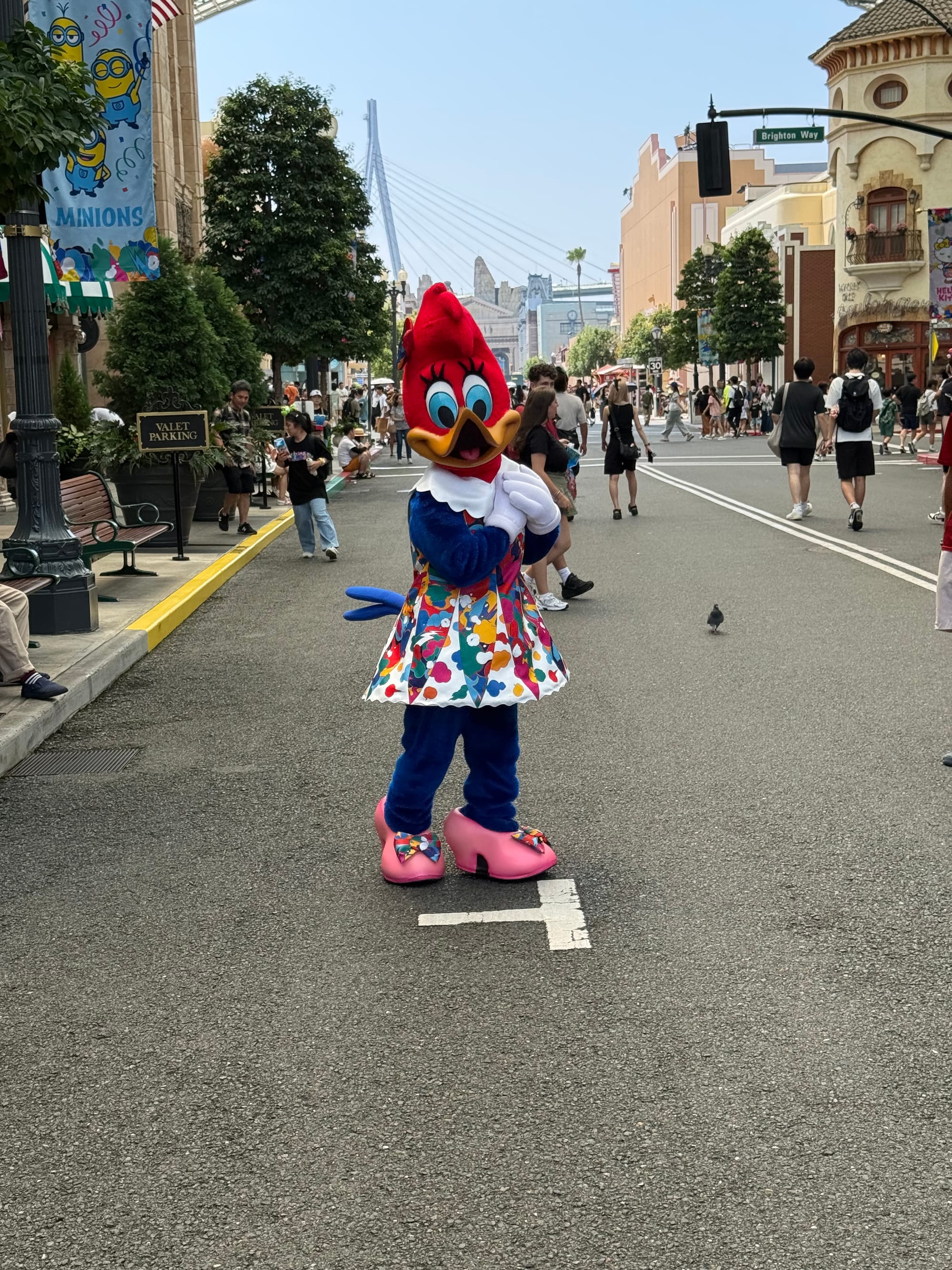
A Universal Studios Japan anniversary display celebrating the park's history through iconic characters and attractions, including E.T., Jurassic Park, Jaws and Back to the Future.Woody Woodpecker greets visitors on the streets of Universal Studios Japan. As one of Universal's classic mascots, the character has been a familiar part of the park since its opening and regularly appears in seasonal celebrations and special events.
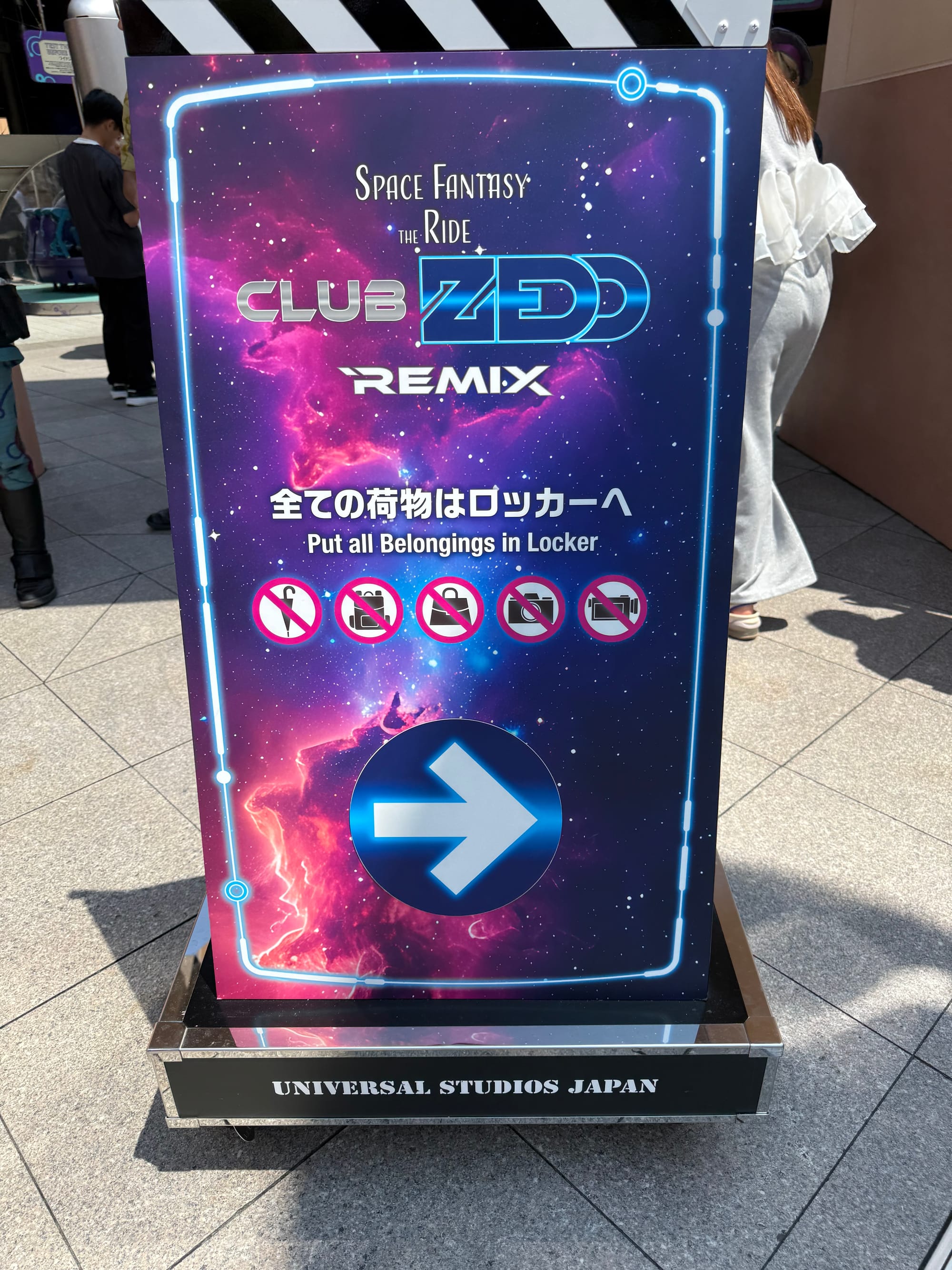
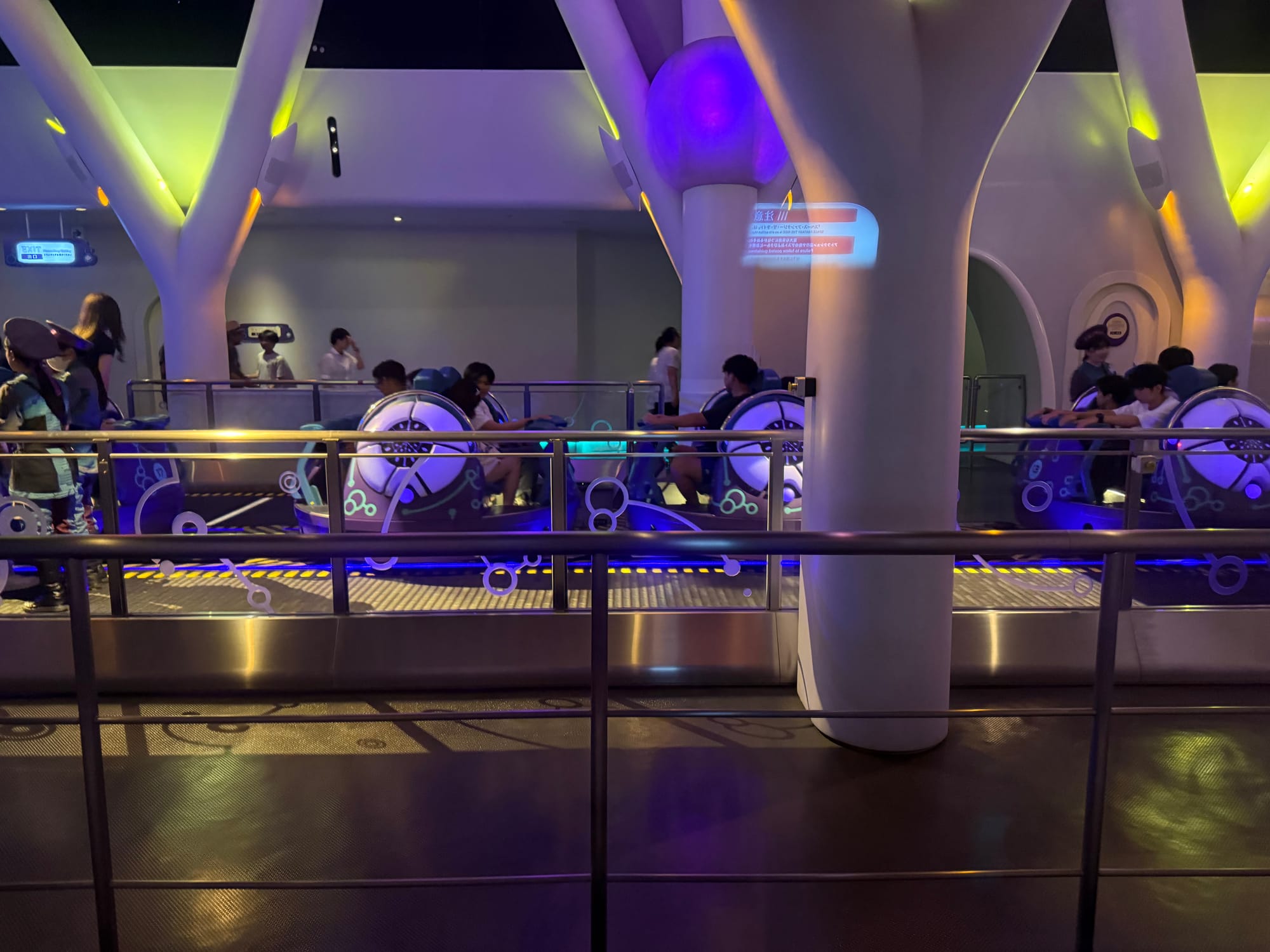
We have Space Fantasy the ride.
A sign for Space Fantasy: The Ride x CLUB ZEDD Remix at Universal Studios Japan. This limited-time version of the spinning indoor roller coaster combined the attraction's space-themed journey with music and visual effects inspired by DJ and producer Zedd.Ride vehicles await departure on Space Fantasy: The Ride x CLUB ZEDD Remix at Universal Studios Japan. This limited-time version of the attraction combined the coaster's spinning space journey with music and visual effects inspired by Zedd.
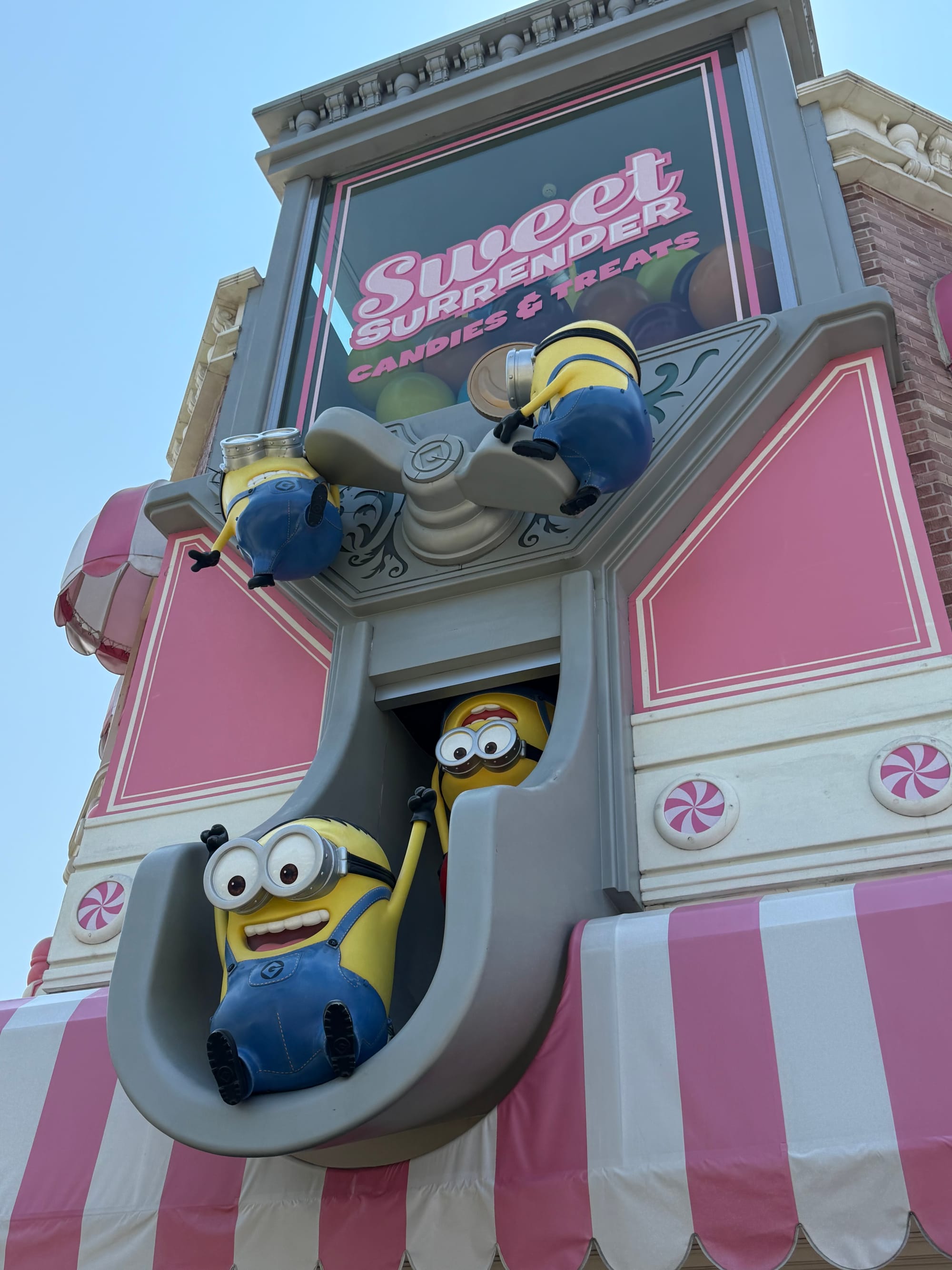
The Minions section.
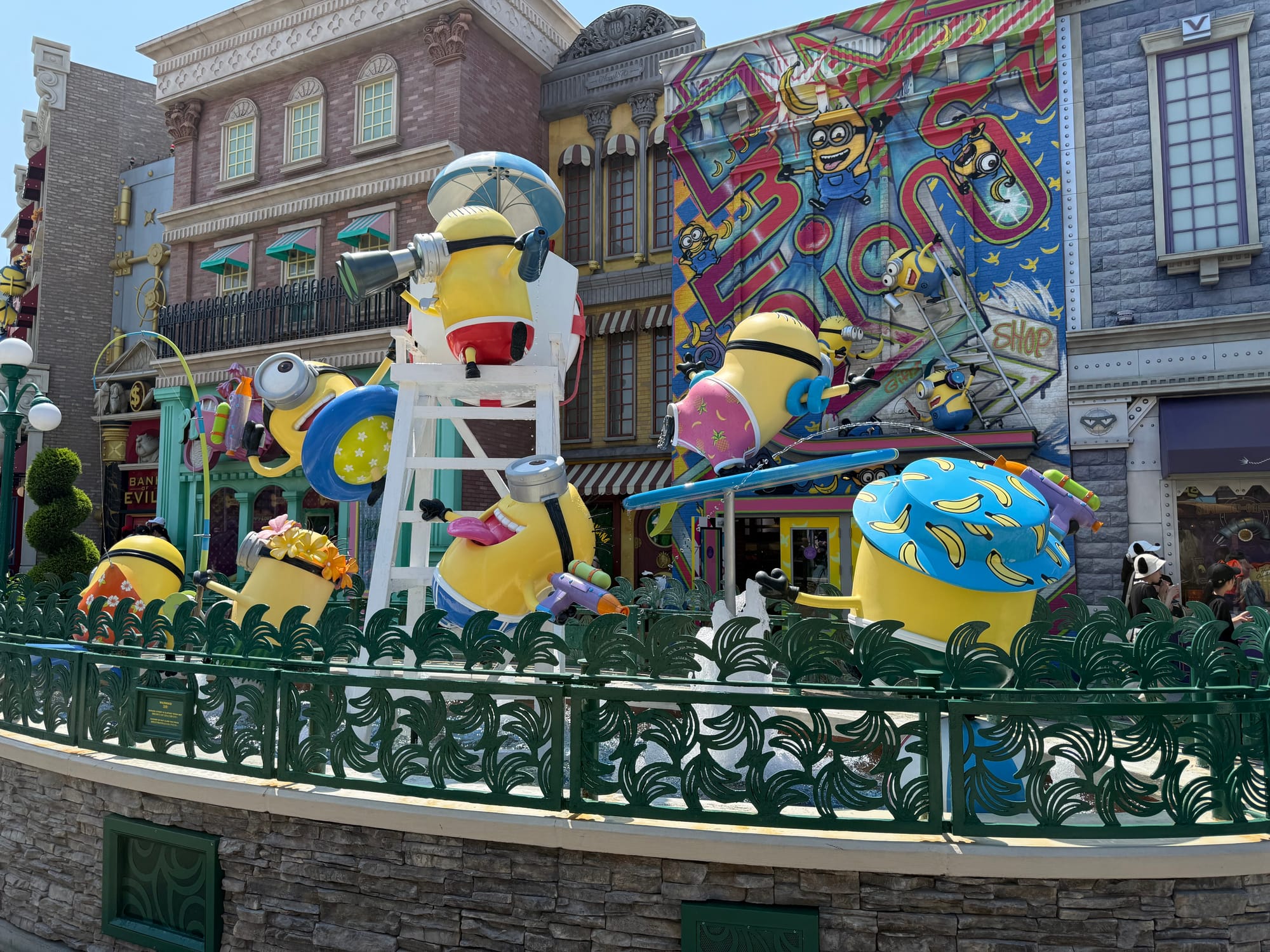
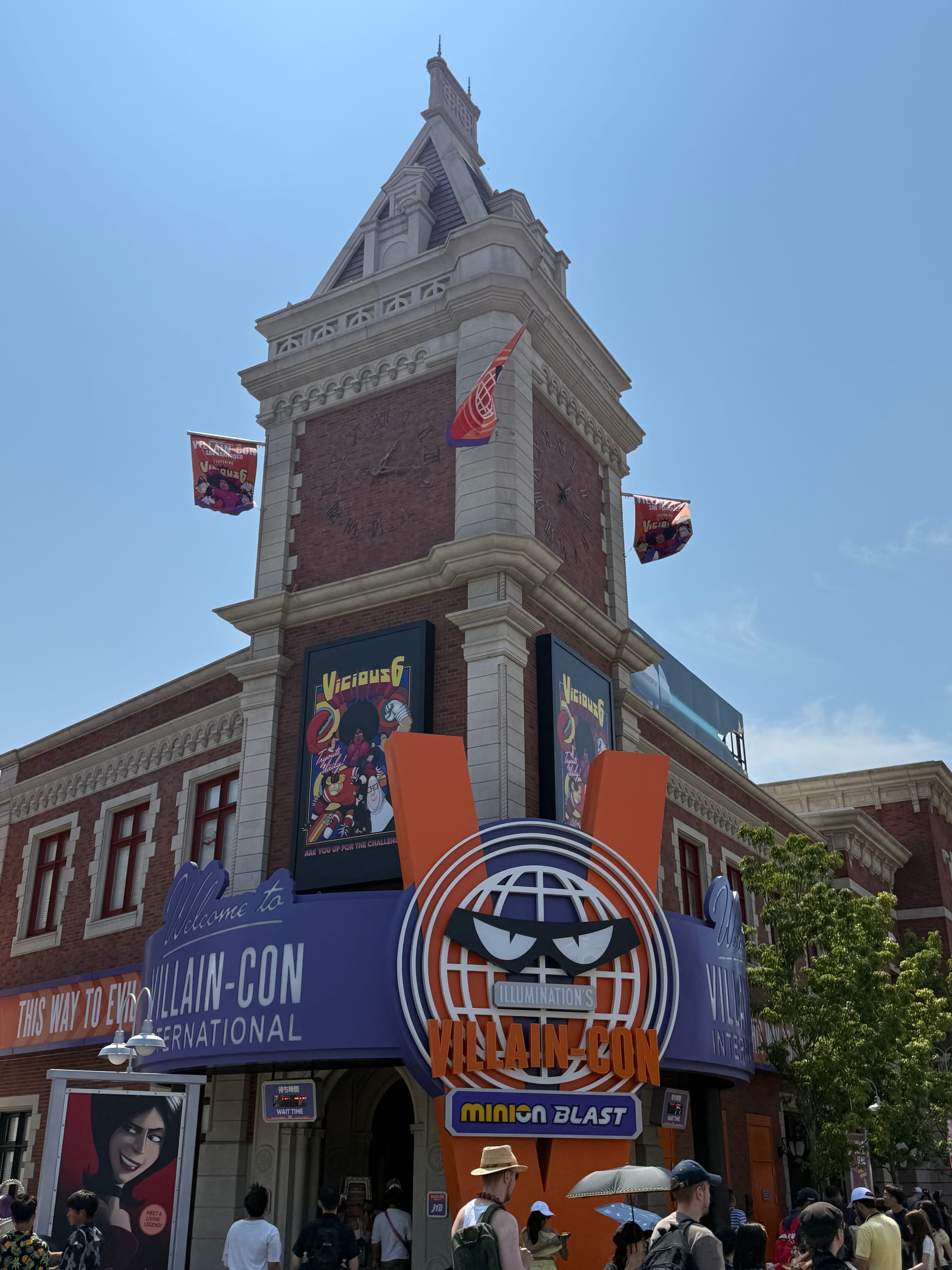
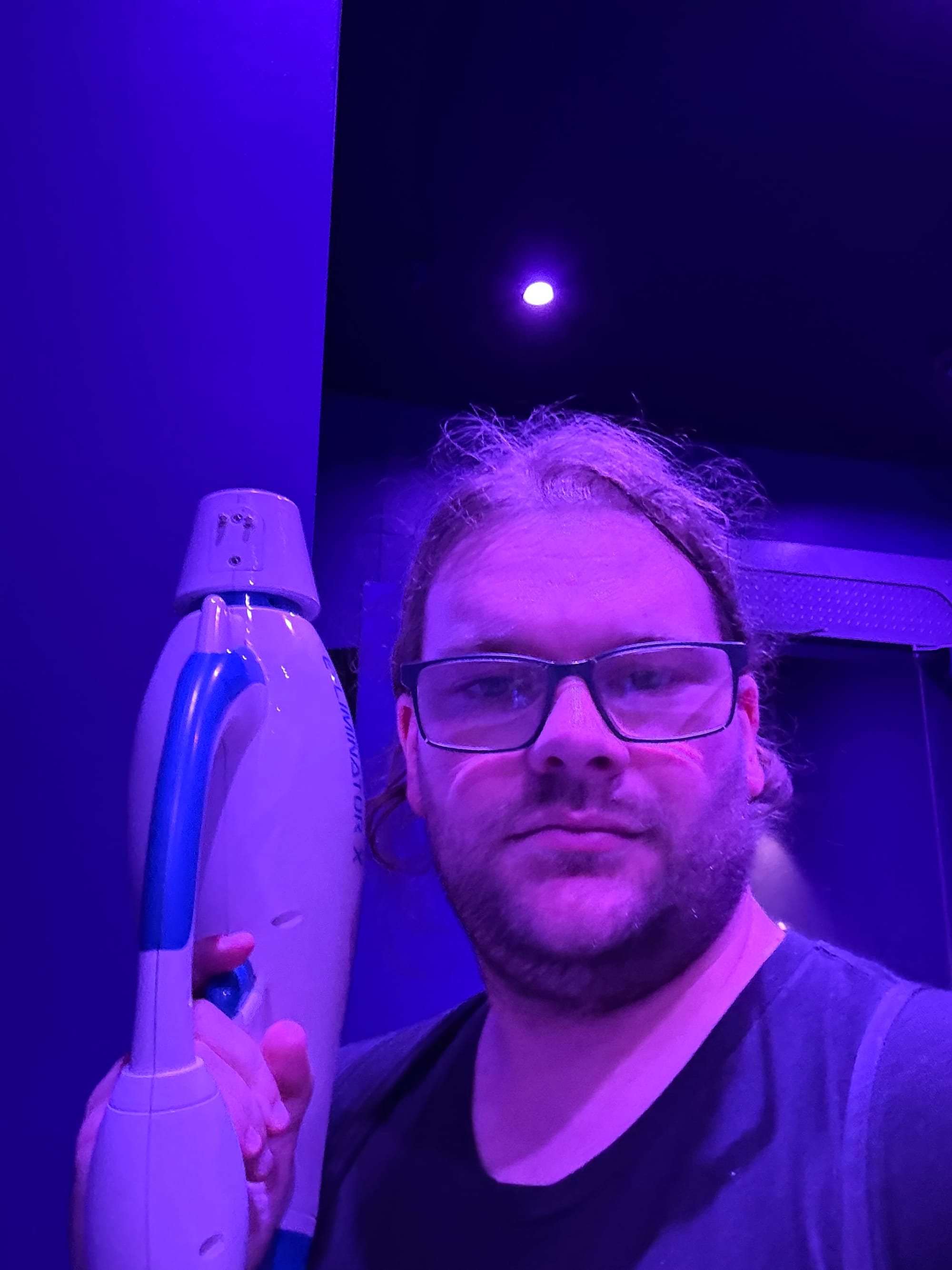
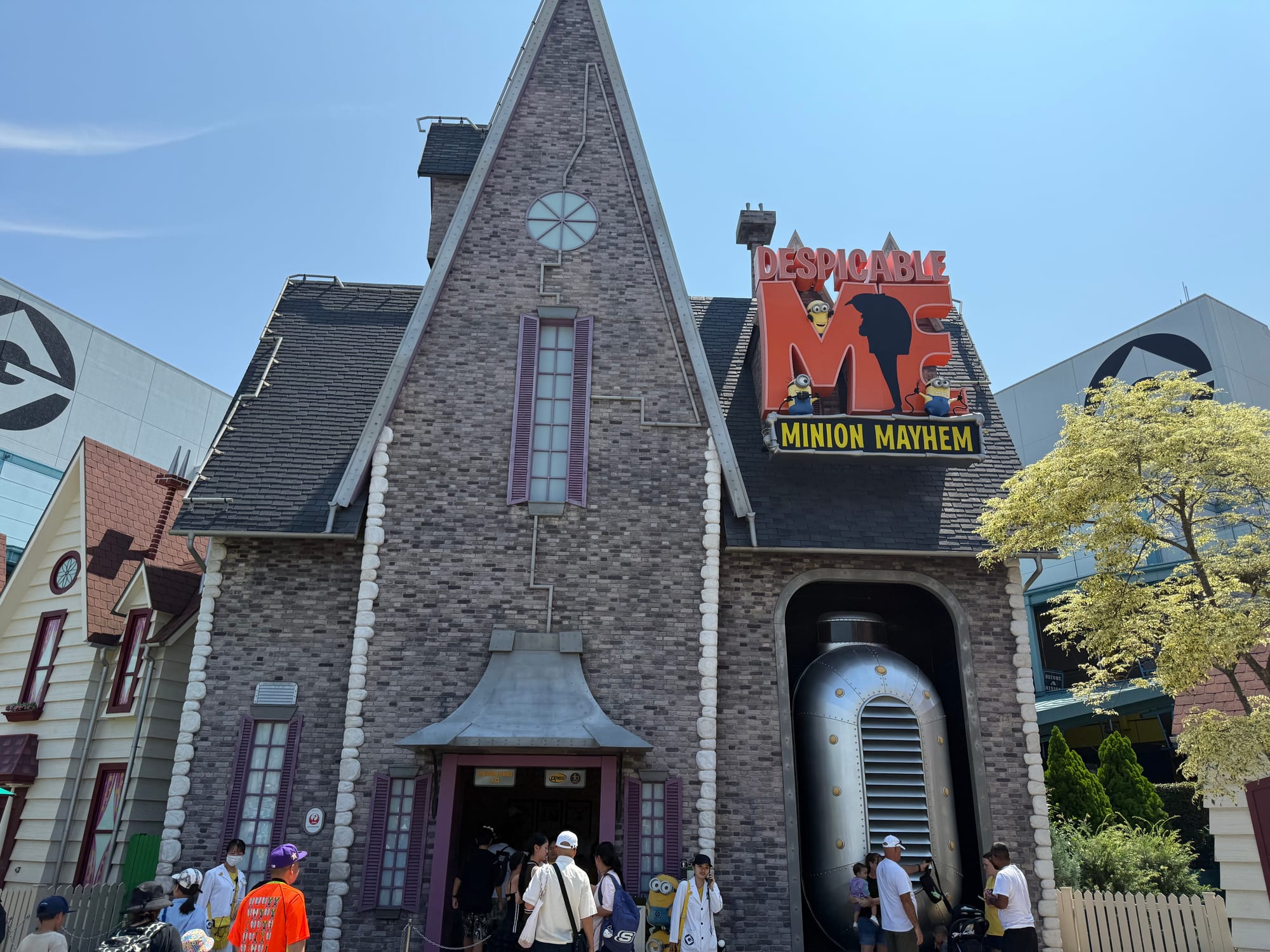
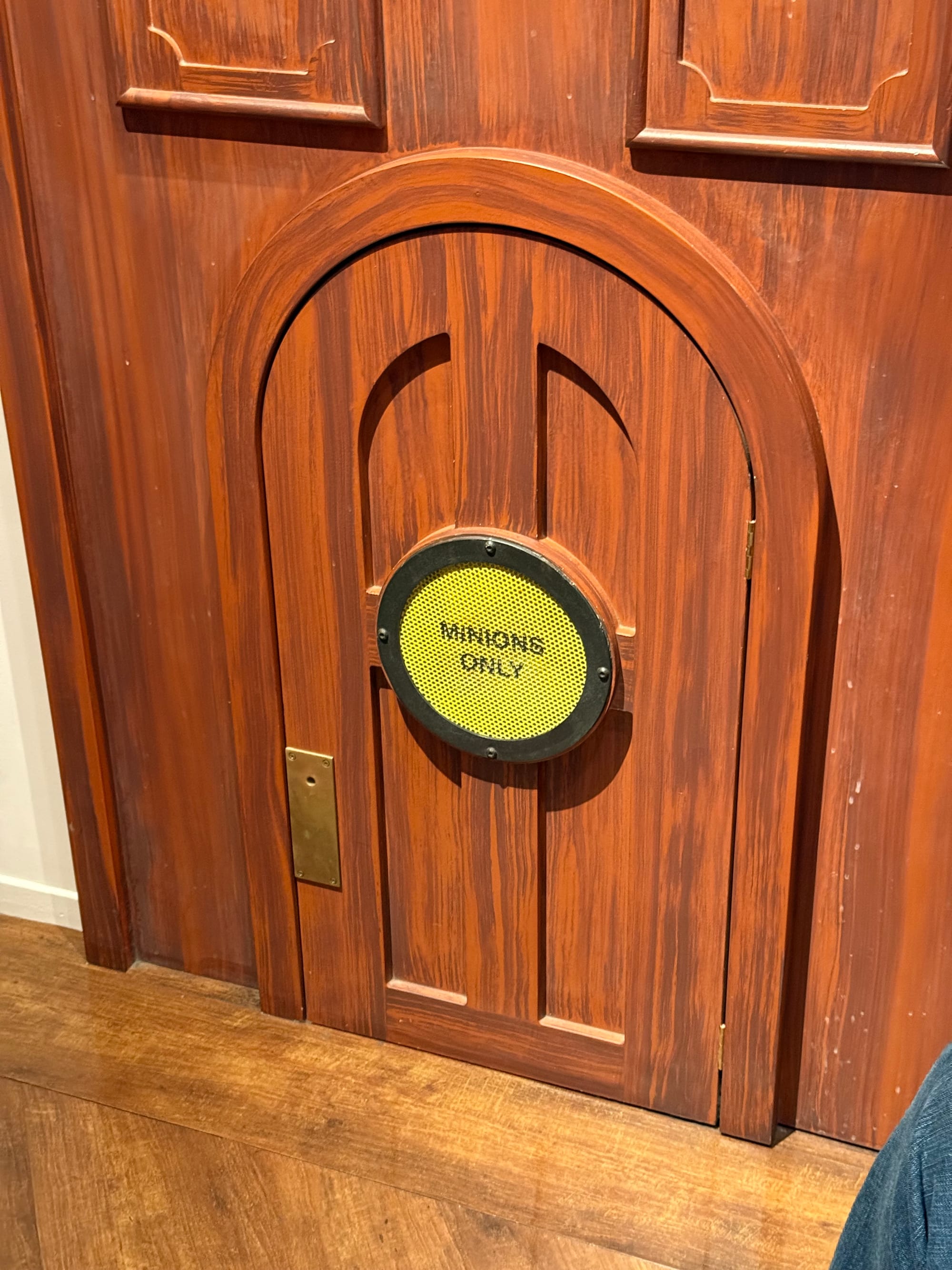
Minions cause playful chaos outside Sweet Surrender at Universal Studios Japan. The colourful candy shop façade features several of Gru's mischievous helpers climbing, sliding and tumbling around an oversized ice cream scoop.A lively Minion display in Minion Park at Universal Studios Japan, with Gru's mischievous helpers enjoying a playful summer scene filled with water effects, colourful decorations and comedy-inspired details.The entrance to Illumination's Villain-Con Minion Blast at Universal Studios Japan. Inspired by the Despicable Me and Minions films, the interactive attraction invites guests to compete for a place among the world's greatest supervillains.Preparing to compete in Illumination's Villain-Con Minion Blast at Universal Studios Japan. Guests use handheld blasters throughout the attraction to earn points and prove their villainous skills in the world of the Minions and Despicable Me films.The entrance to Despicable Me: Minion Mayhem at Universal Studios Japan. Set within Gru's house and laboratory, the attraction uses motion simulation and projection effects to transform guests into Minions for a chaotic adventure.A humorous detail inside the queue for Despicable Me: Minion Mayhem. The tiny "Minions Only" door is designed for Gru's yellow helpers, adding to the playful theming and hidden gags found throughout the attraction.
The Jurassic Park section.
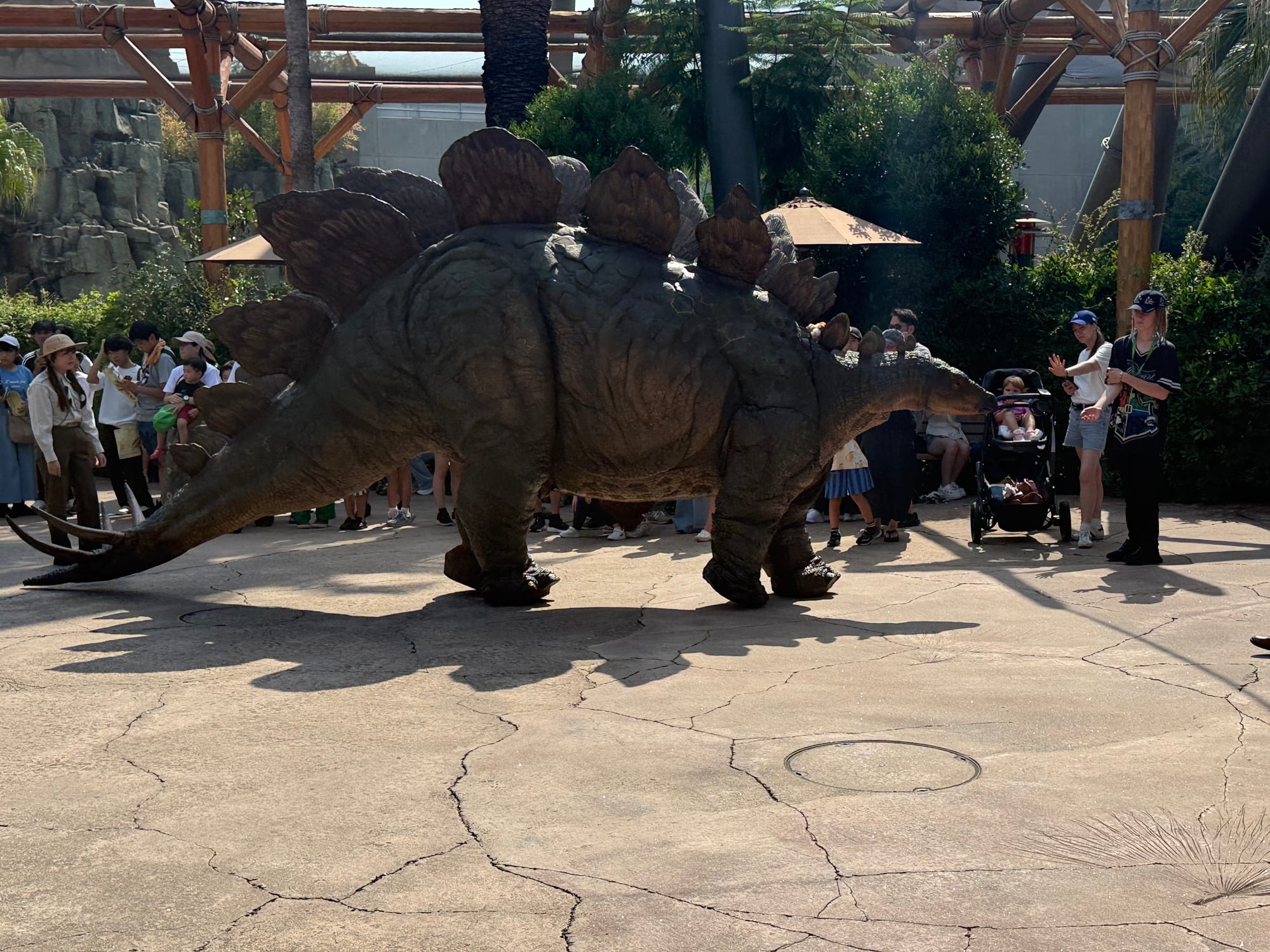
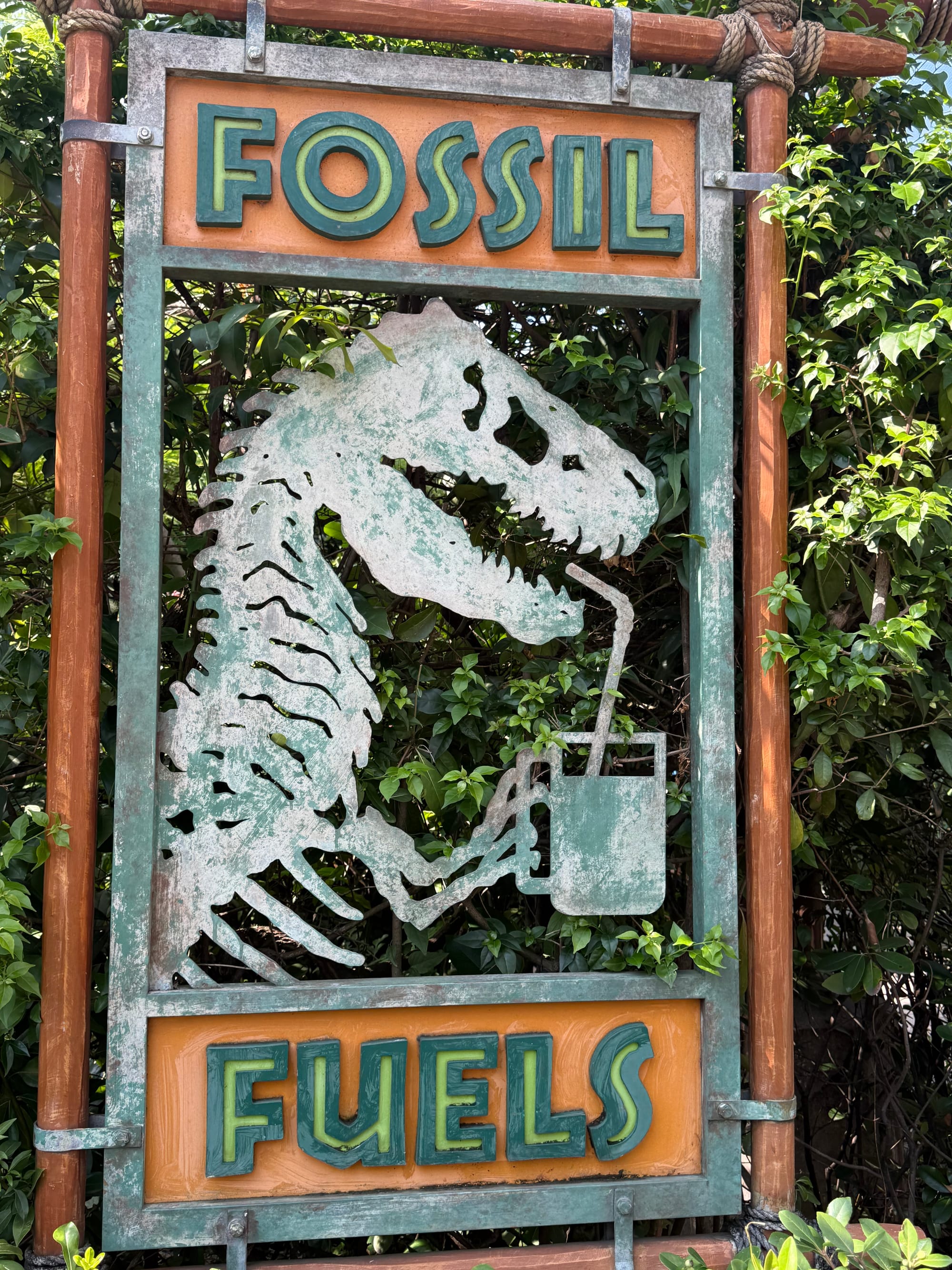
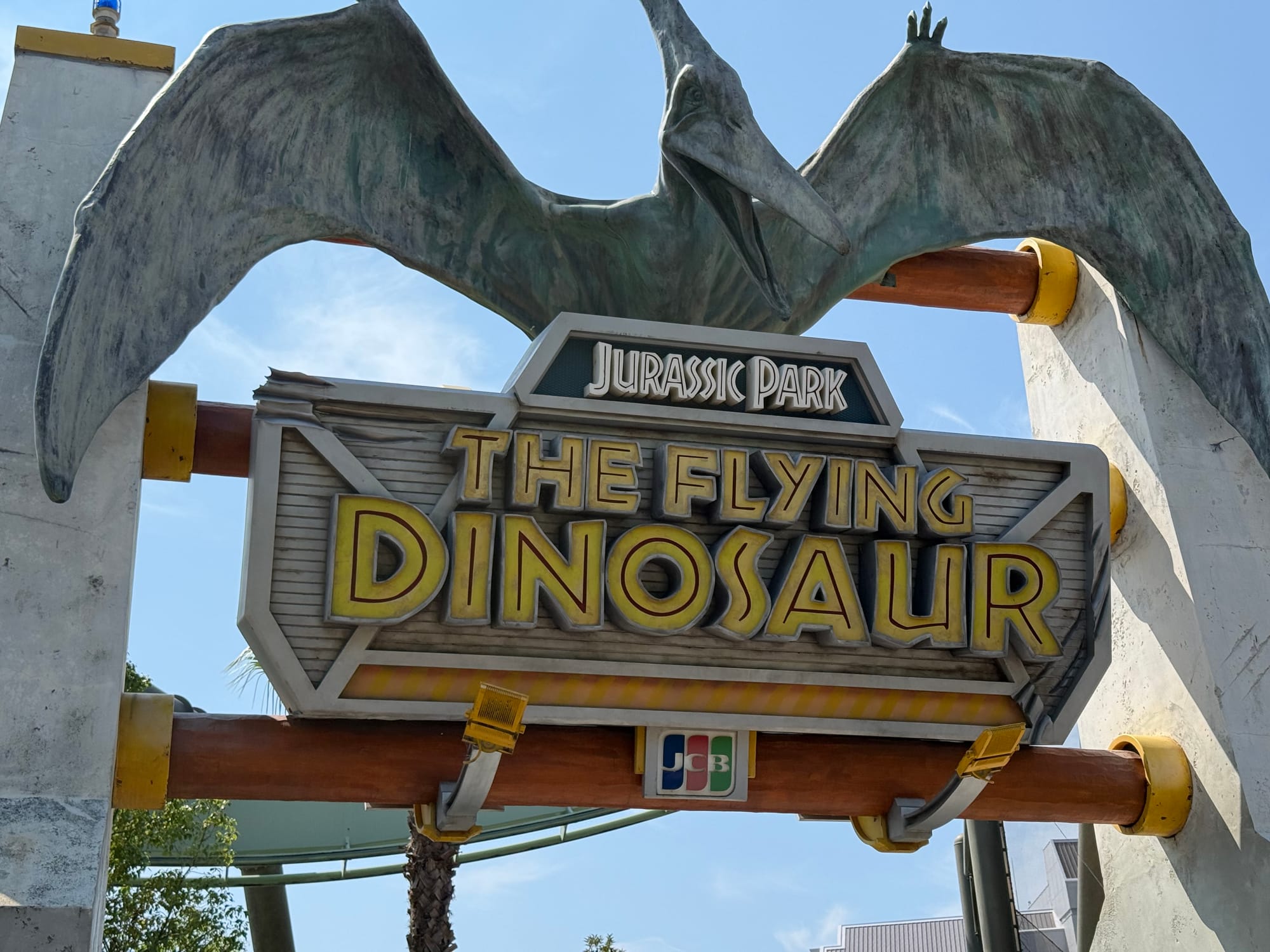
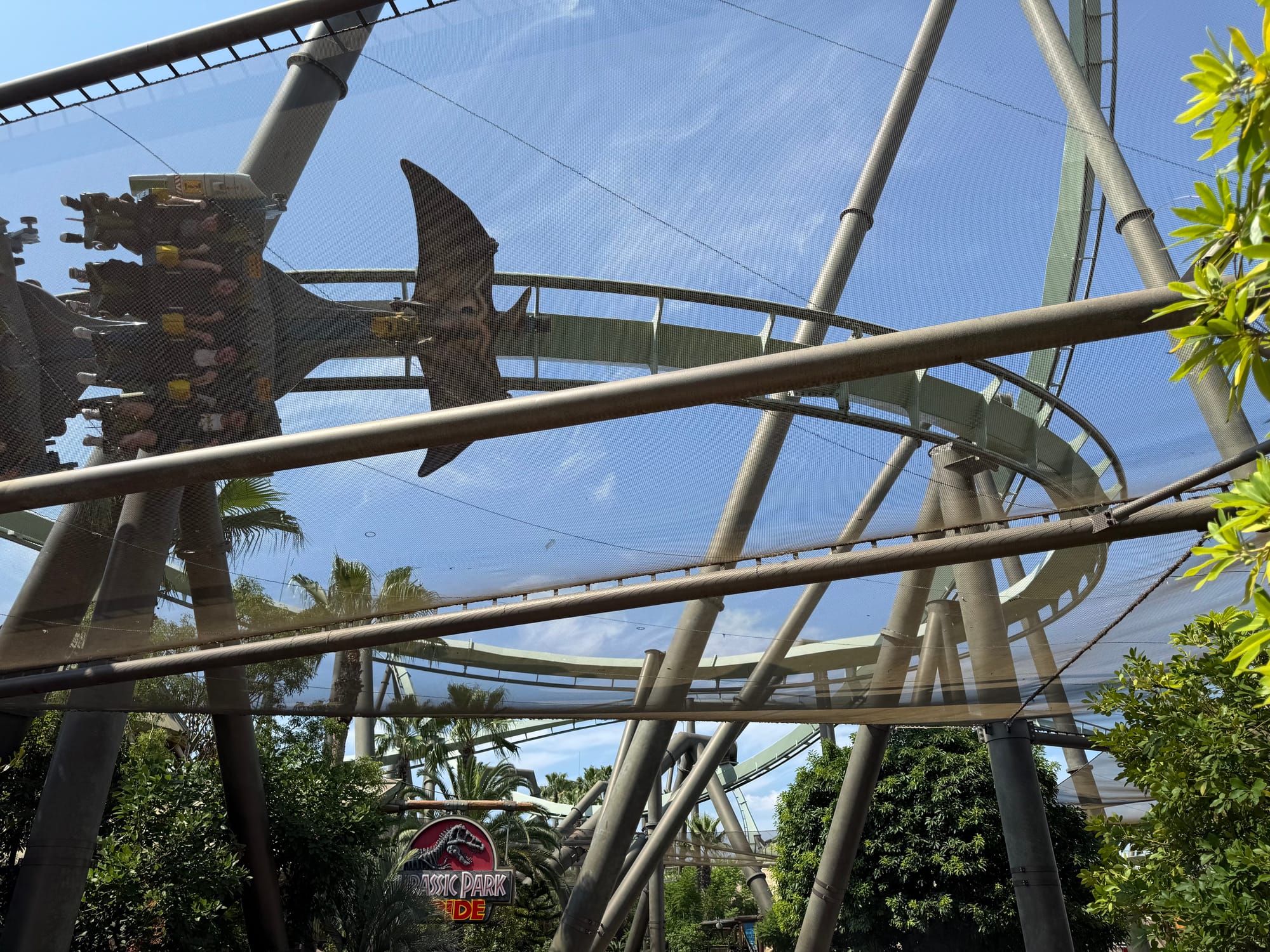
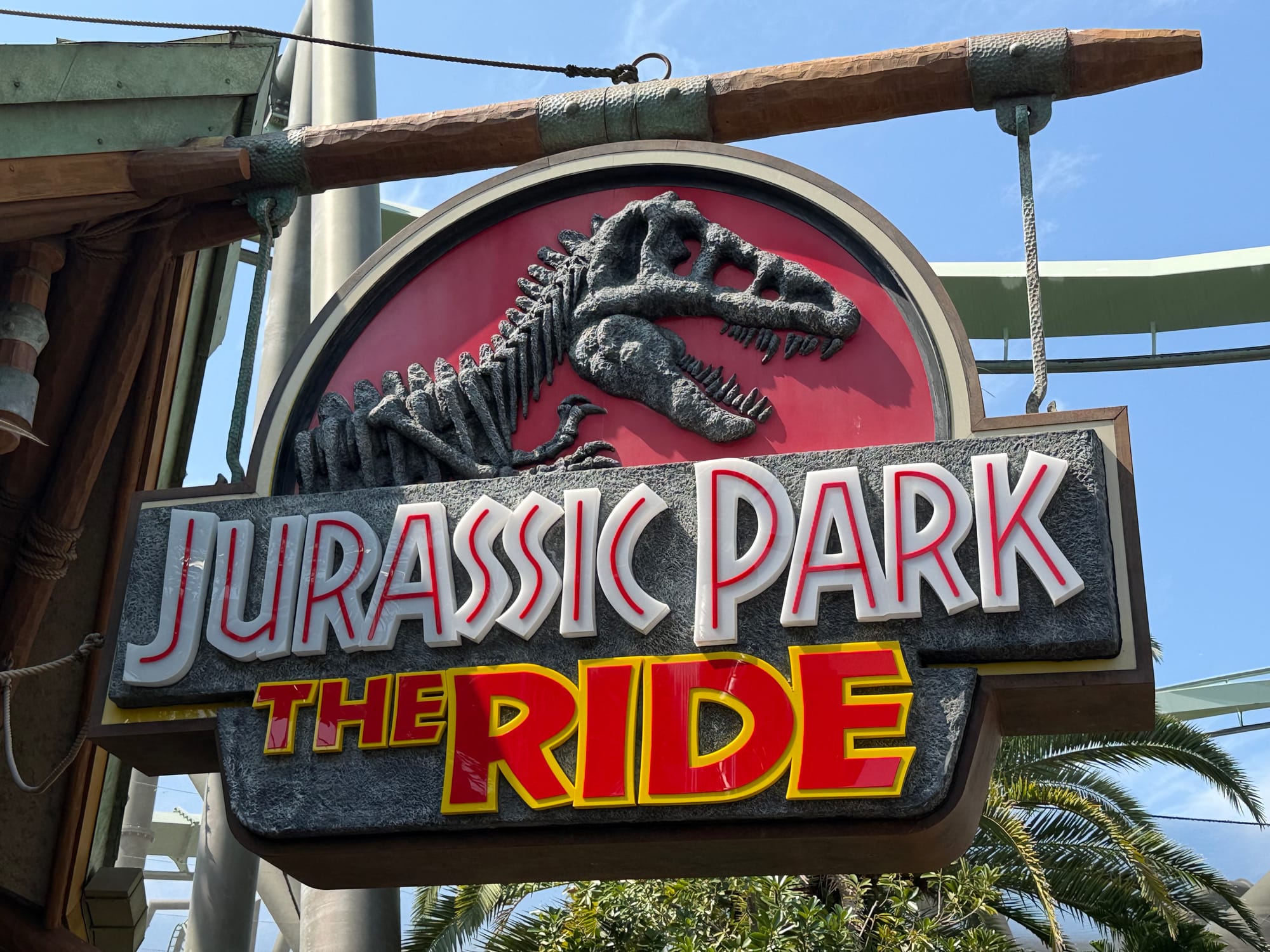
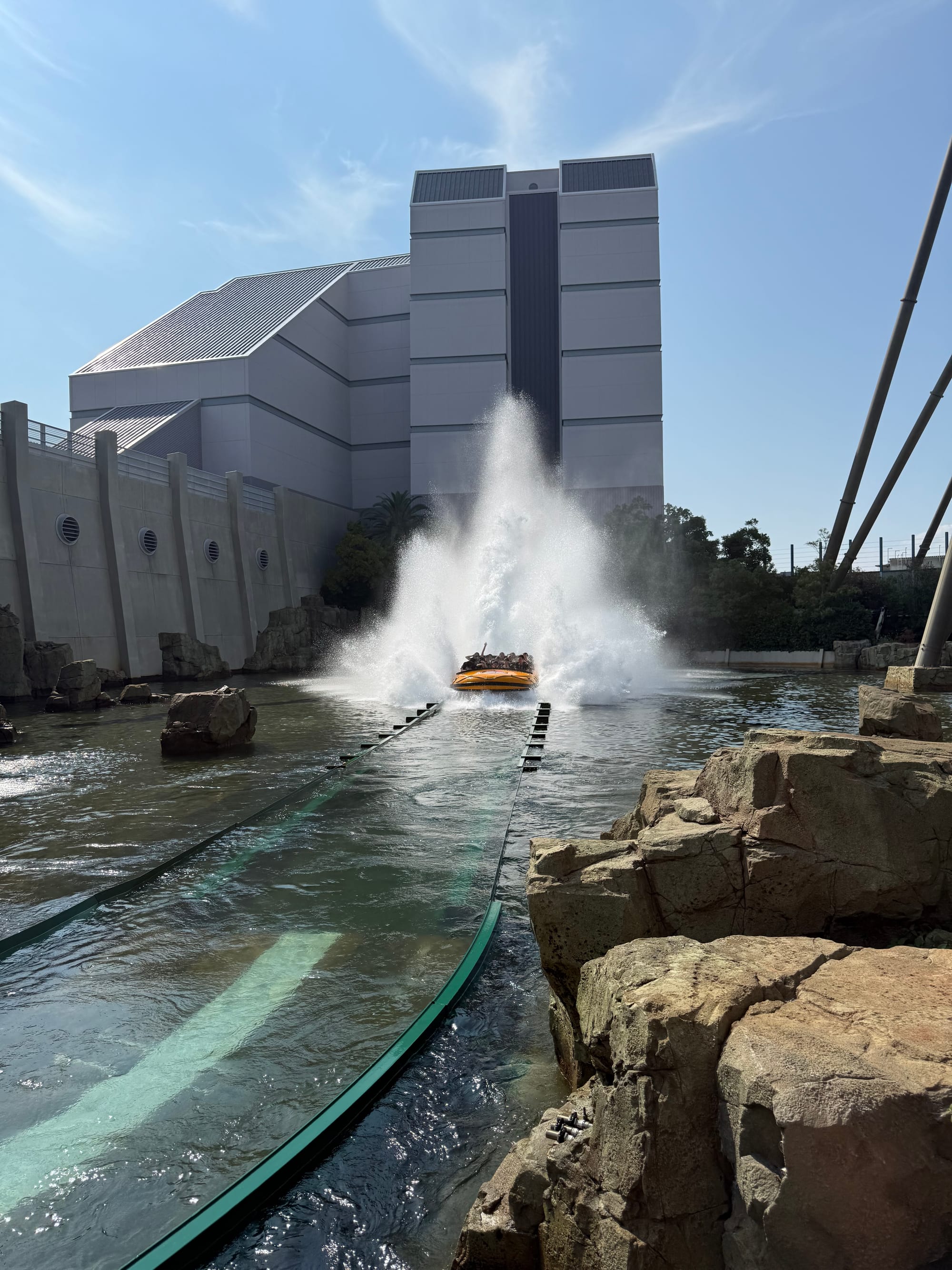
A life-sized Stegosaurus roams Jurassic Park at Universal Studios Japan as part of an interactive encounter. The experience allows visitors to see one of the most recognizable dinosaurs up close within the themed land inspired by the Jurassic Park films.A humorous Fossil Fuels sign in Jurassic Park at Universal Studios Japan. The themed artwork depicts a Tyrannosaurus rex skeleton drinking from a fuel can, combining paleontology and a playful visual pun.The entrance to The Flying Dinosaur at Universal Studios Japan. Inspired by the world of Jurassic Park, the coaster suspends riders face-down beneath the track to simulate the sensation of being carried through the air by a flying pterosaur.A train on The Flying Dinosaur soars through the Jurassic Park area at Universal Studios Japan. The coaster's unique flying position leaves riders suspended face-down, creating the sensation of being carried through the air by a pterosaur.The entrance sign for Jurassic Park: The Ride at Universal Studios Japan. Based on the iconic film franchise, the water ride takes guests through a dinosaur preserve before a dramatic plunge to escape a Tyrannosaurus rex.A boat crashes into the splashdown pool at Jurassic Park: The Ride at Universal Studios Japan, creating the attraction's signature wall of water after the dramatic final drop.
The Jaws Section.
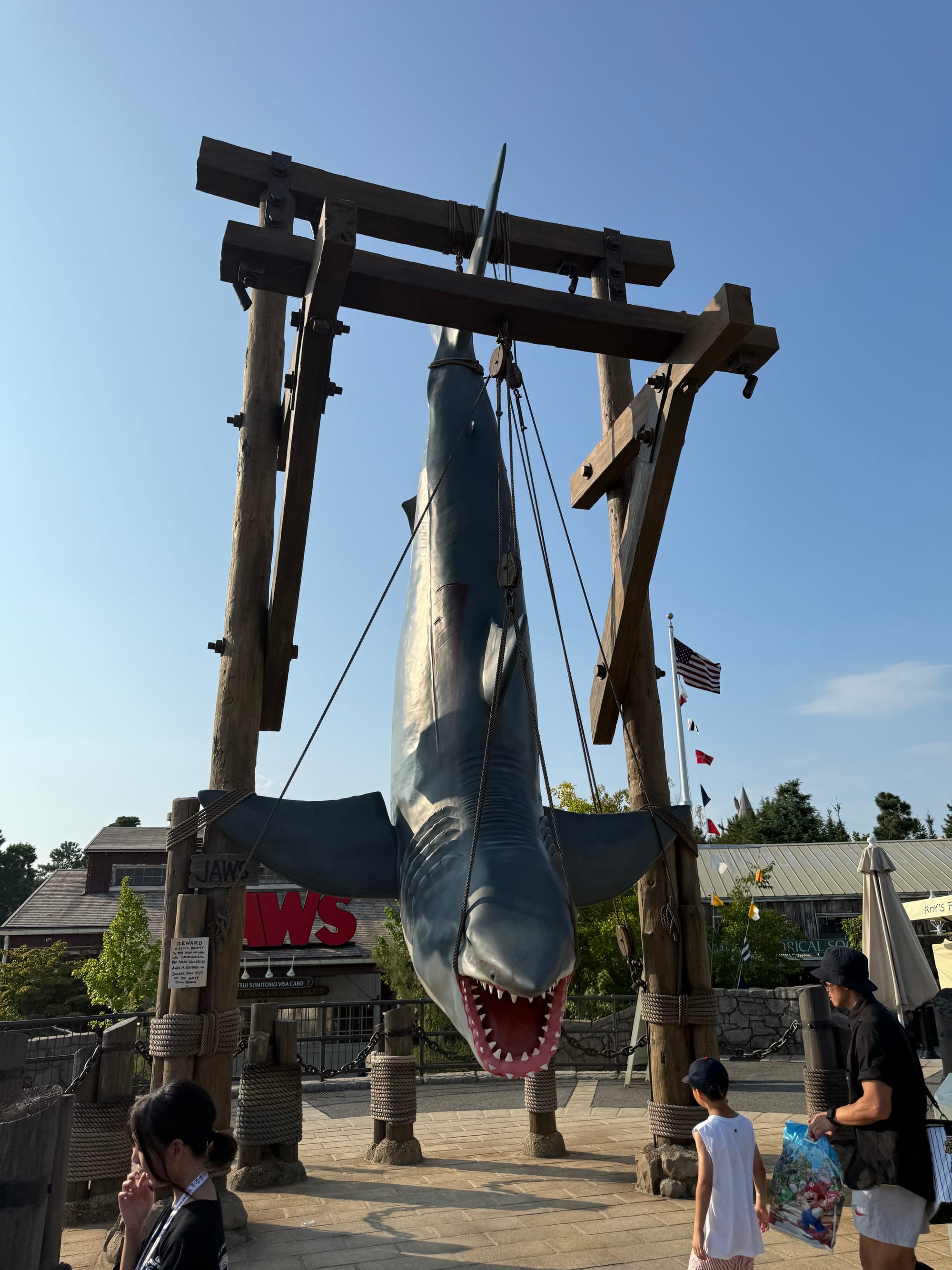
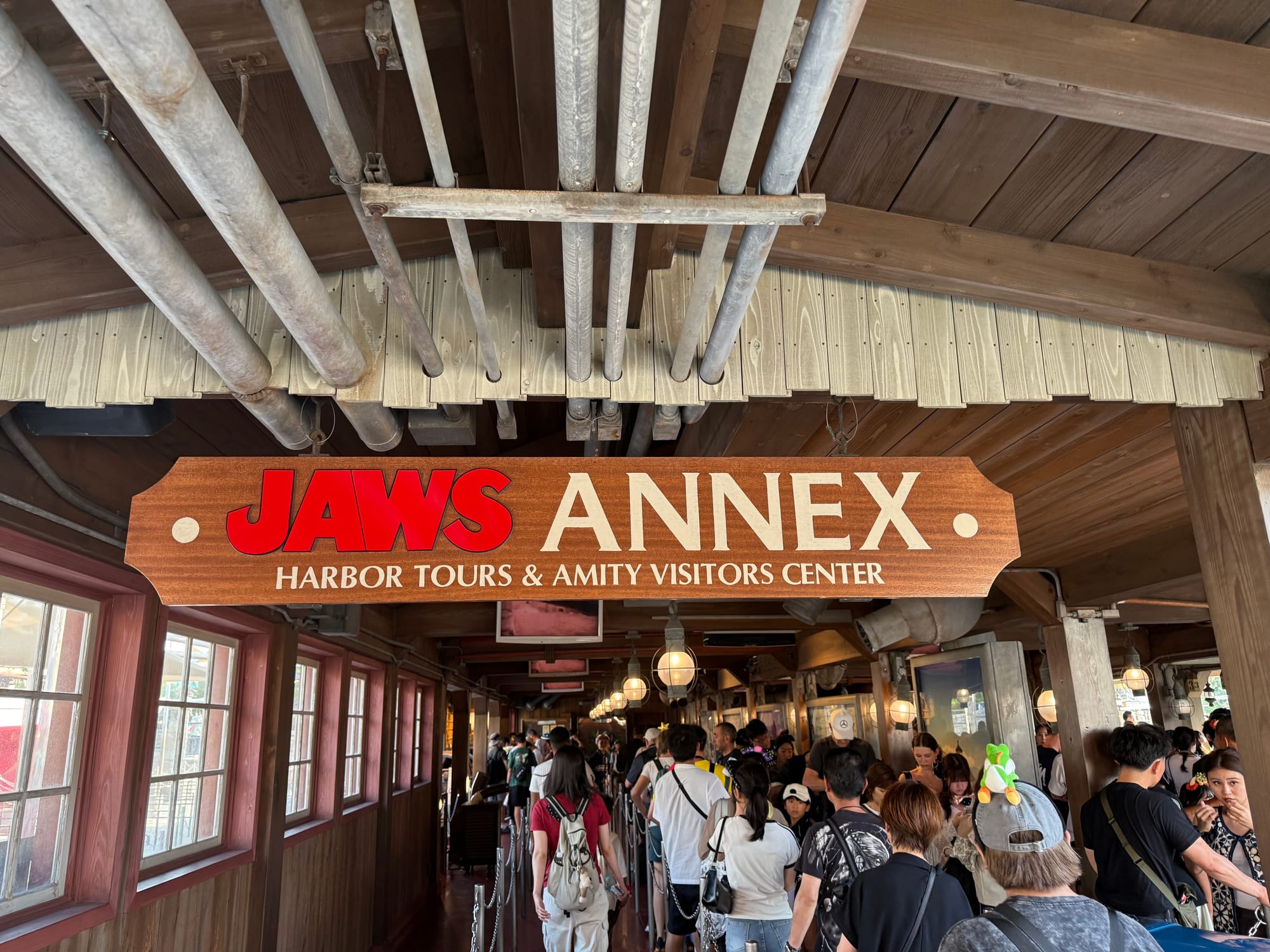
A themed sign in the Amity area of Universal Studios Japan. The weathered waterfront architecture and detailed signage help recreate the fictional seaside setting made famous by Jaws.The iconic shark from Jaws hangs prominently in the Amity area of Universal Studios Japan. Inspired by the famous finale of the 1975 film, the display has become one of the park's most popular photo locations.The queue for Jaws at Universal Studios Japan is themed as the Amity Visitors Center and harbour tour office, immersing guests in the fictional seaside town before their encounter with the infamous great white shark.
The Wizarding World of Harry Potter section.
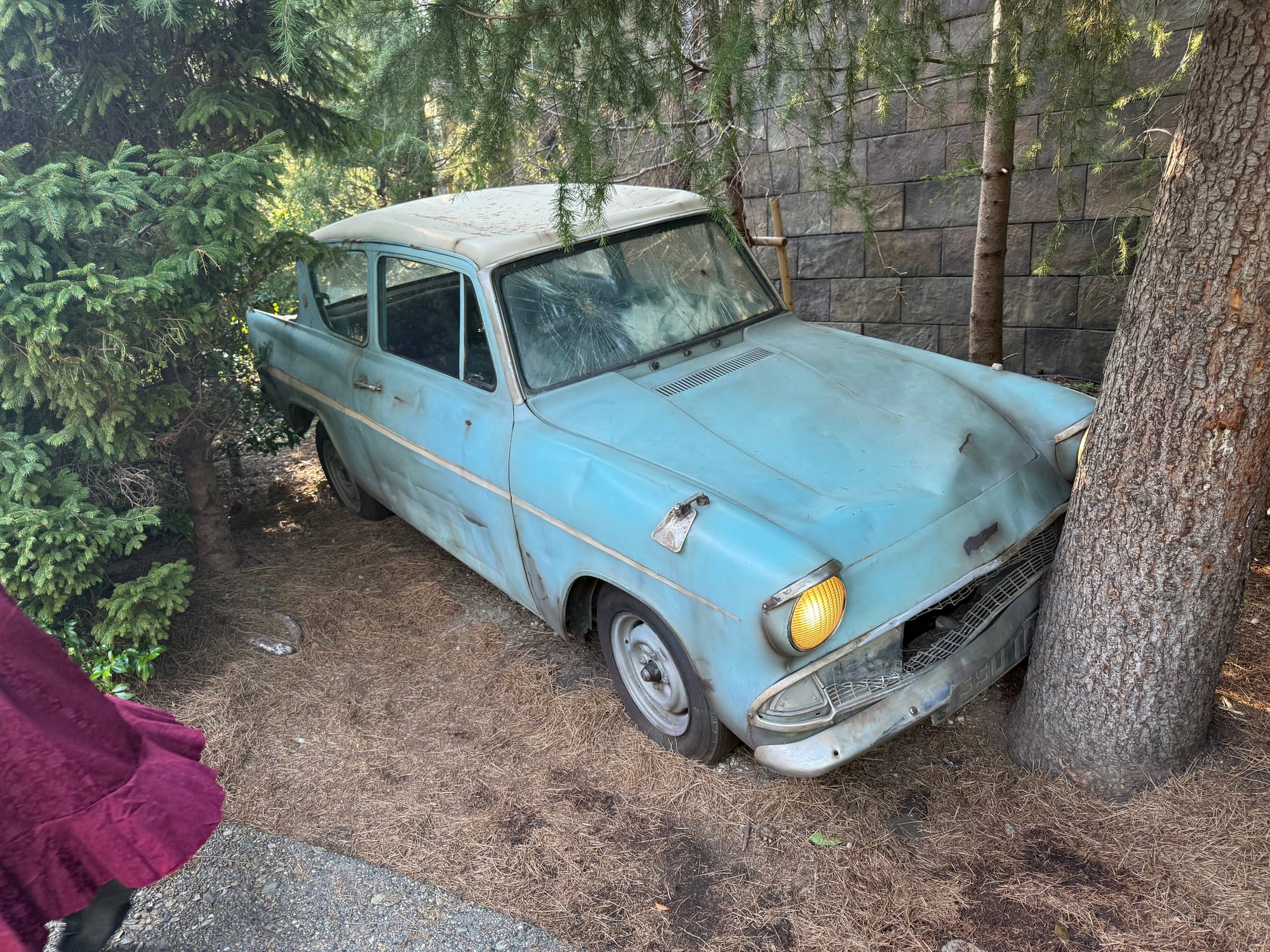
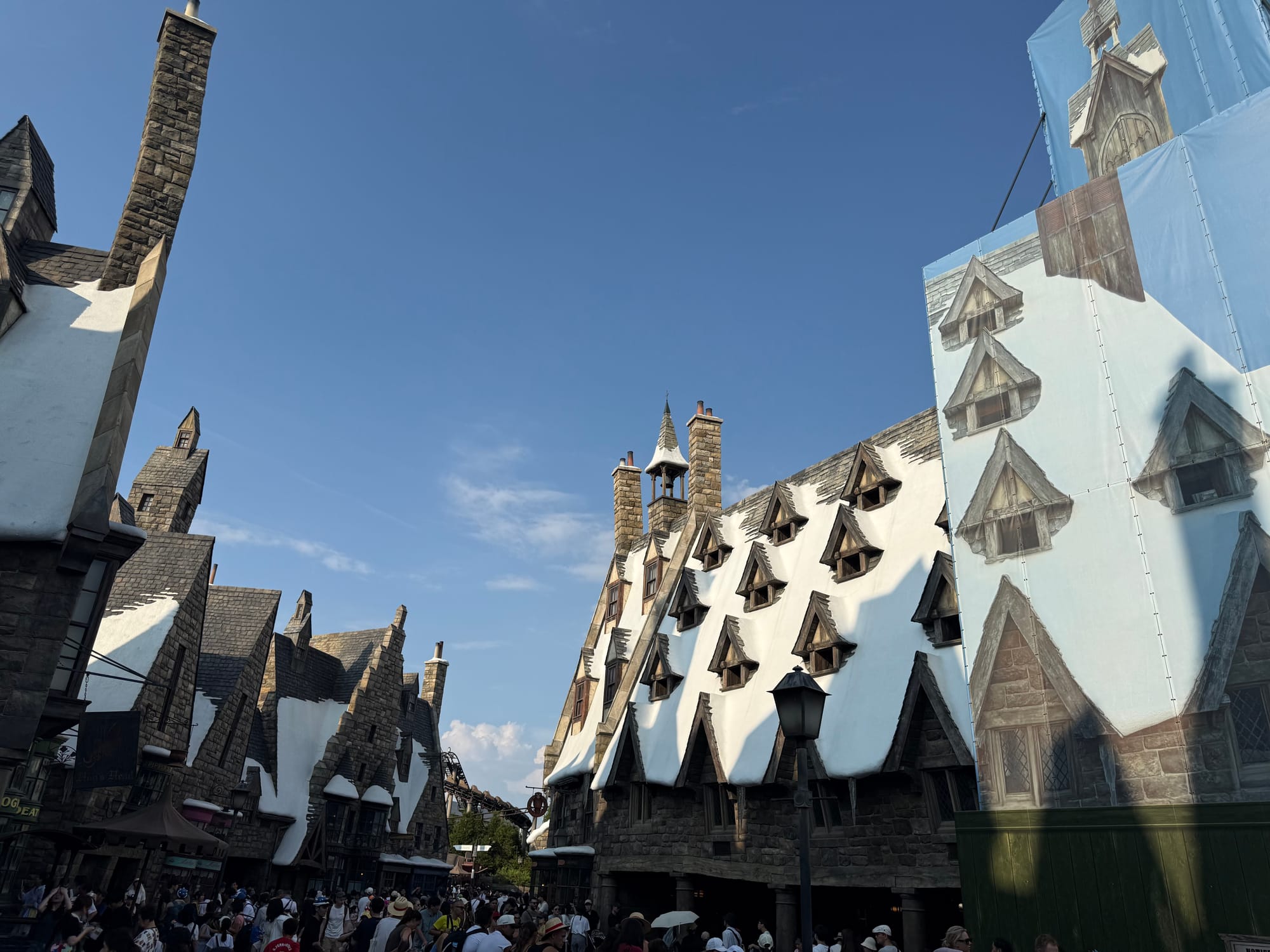
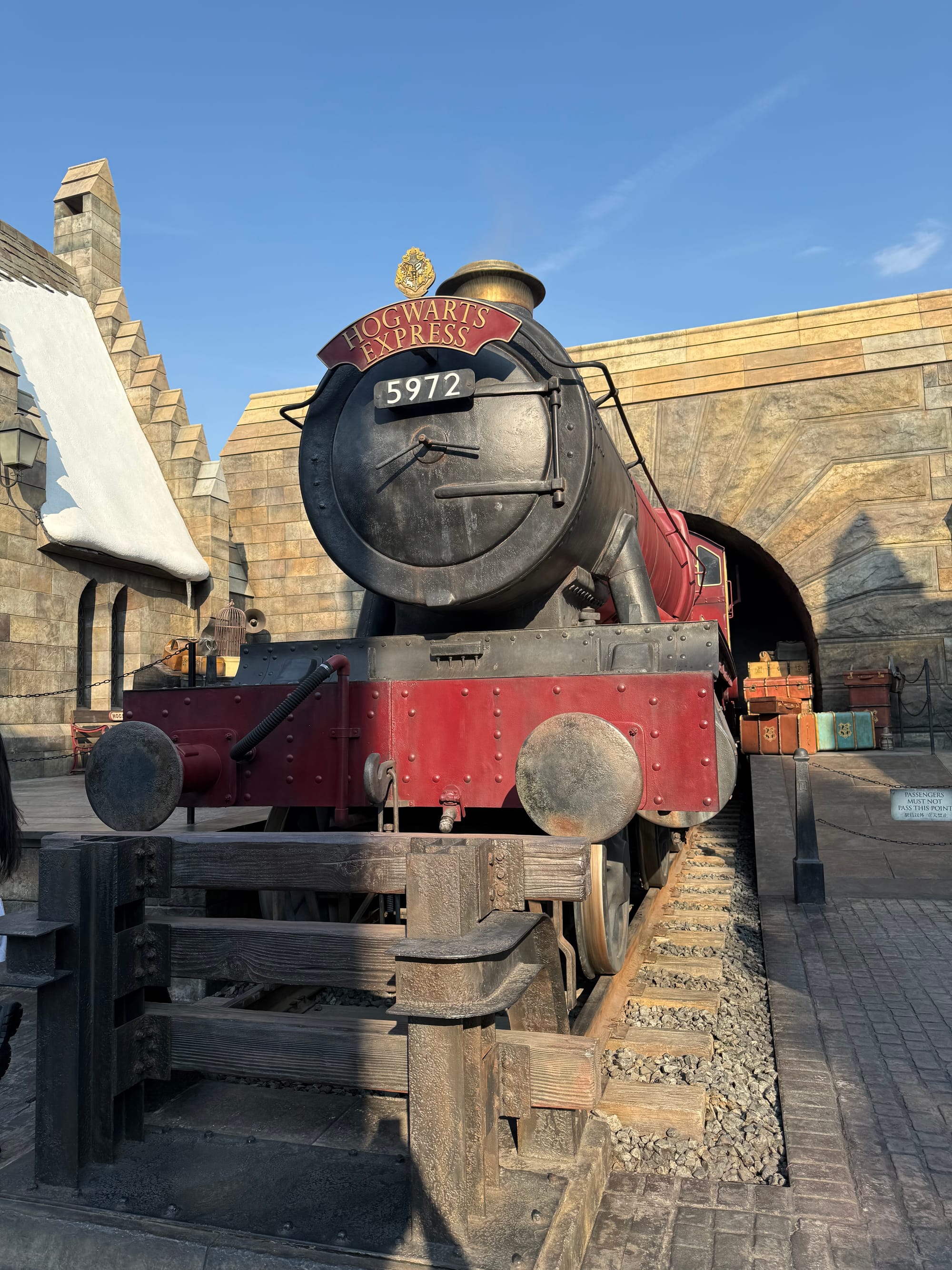
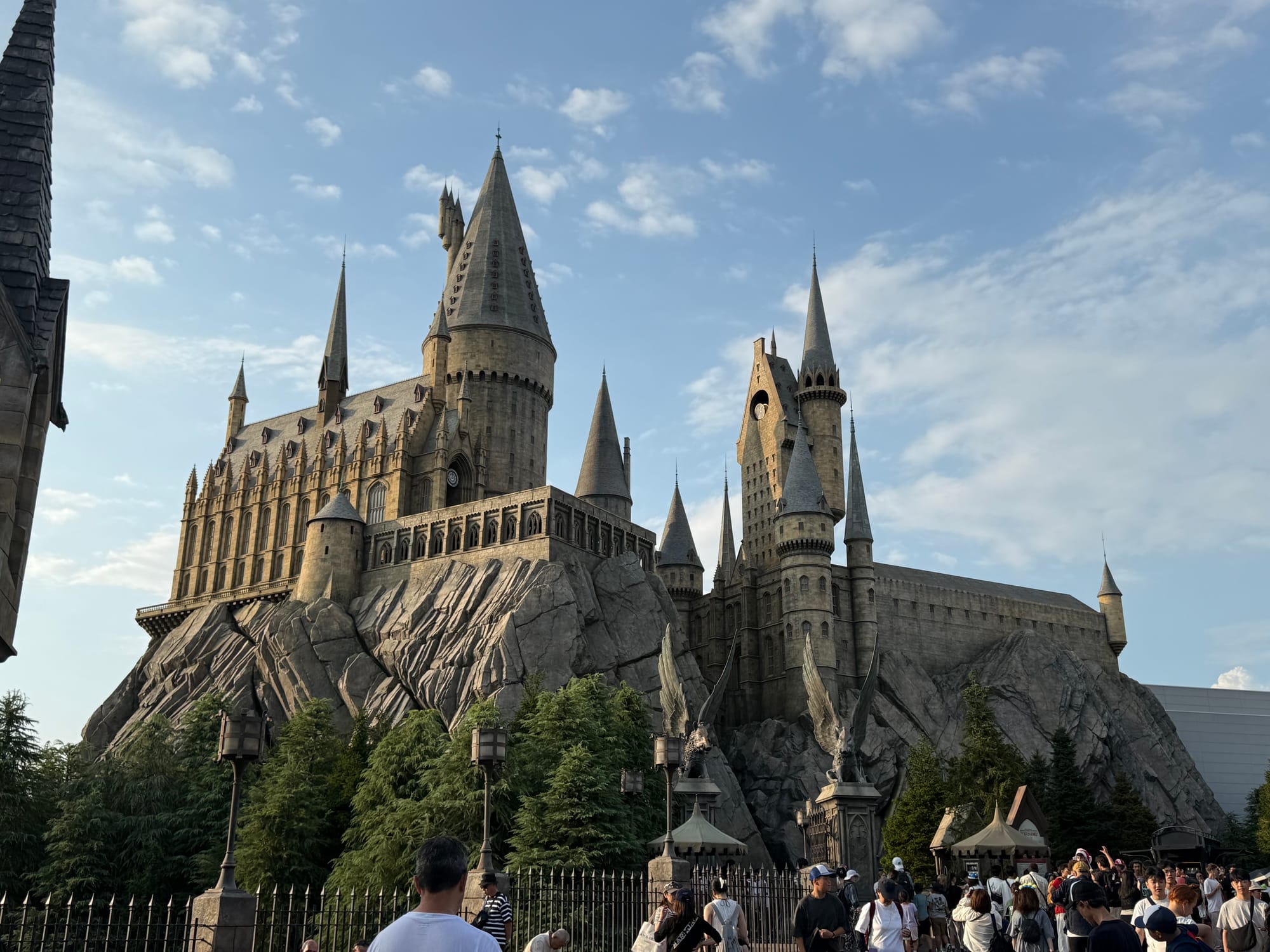
The Weasleys' enchanted Ford Anglia sits crashed into a tree in The Wizarding World of Harry Potter at Universal Studios Japan, recreating its memorable arrival at Hogwarts in Harry Potter and the Chamber of Secrets.Hogsmeade in The Wizarding World of Harry Potter at Universal Studios Japan recreates the magical village from the Harry Potter films, with snow-capped rooftops, themed shops and detailed architecture inspired by the wizarding world.The Hogwarts Express stands at Hogsmeade Station in The Wizarding World of Harry Potter at Universal Studios Japan. The iconic locomotive recreates the train that carries Hogwarts students between Platform 9¾ and the wizarding school.Hogwarts Castle dominates The Wizarding World of Harry Potter at Universal Studios Japan. Recreated in remarkable detail from the films, the iconic castle serves as the centrepiece of the themed land and houses the Harry Potter and the Forbidden Journey attraction.
It was defiantly a good day out and I would like to go again!
Day Trip to Kobe
15th August
So today, it was time to go to Kobe, which last time I was in Japan, I stopped at the station to get Wagyu Ekiben, so this time, it was good to actually go here for a day. First off, was 'The Great Hanshin-Awaji Earthquake Memorial Disaster Reduction and Human Renovation Institution' and then I was off to the Kobe Maritime Museum, which also has Kawasaki Good Times World inside it.
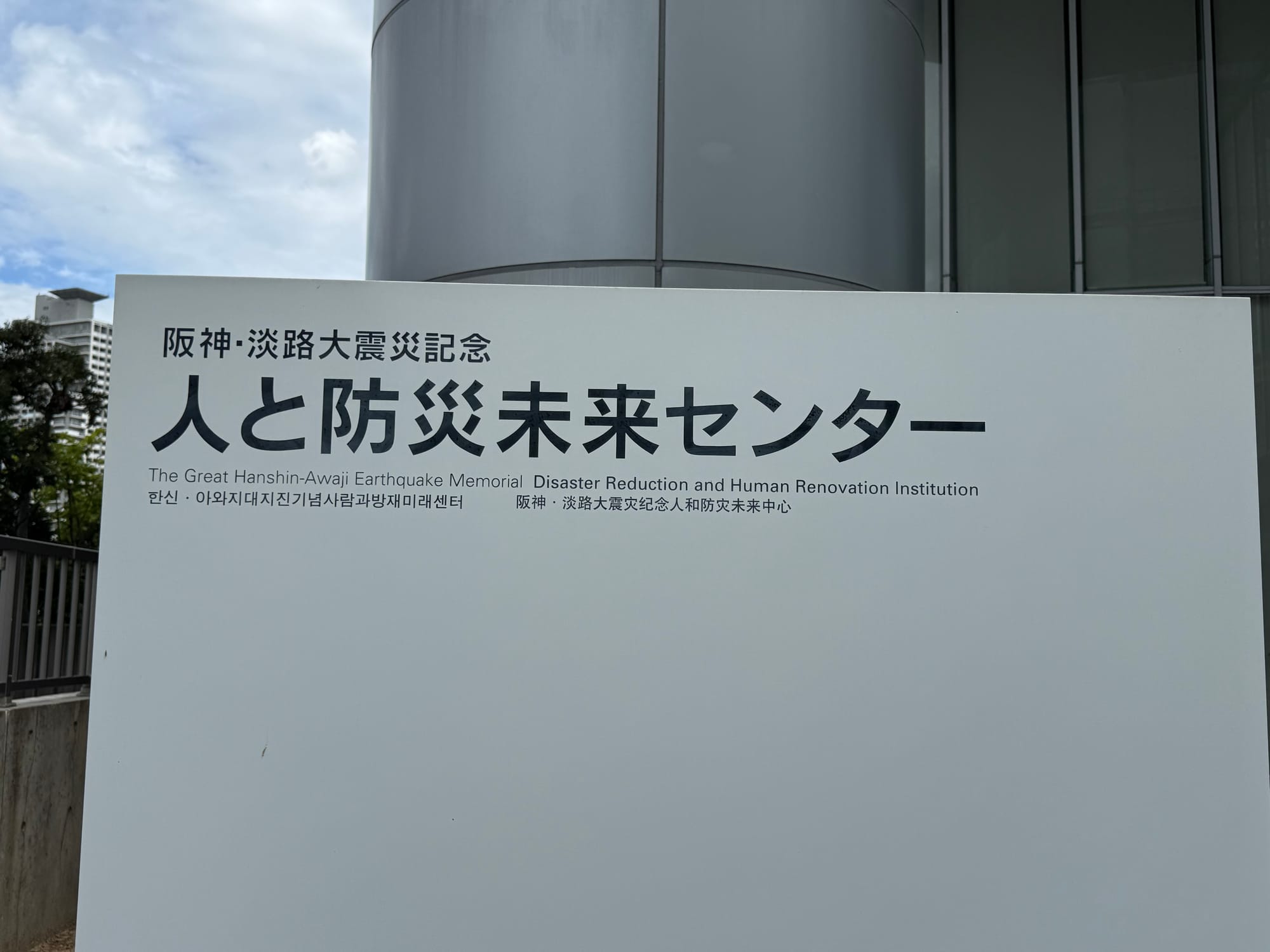
The Great Hanshin-Awaji Earthquake Memorial Disaster Reduction and Human Renovation Institution
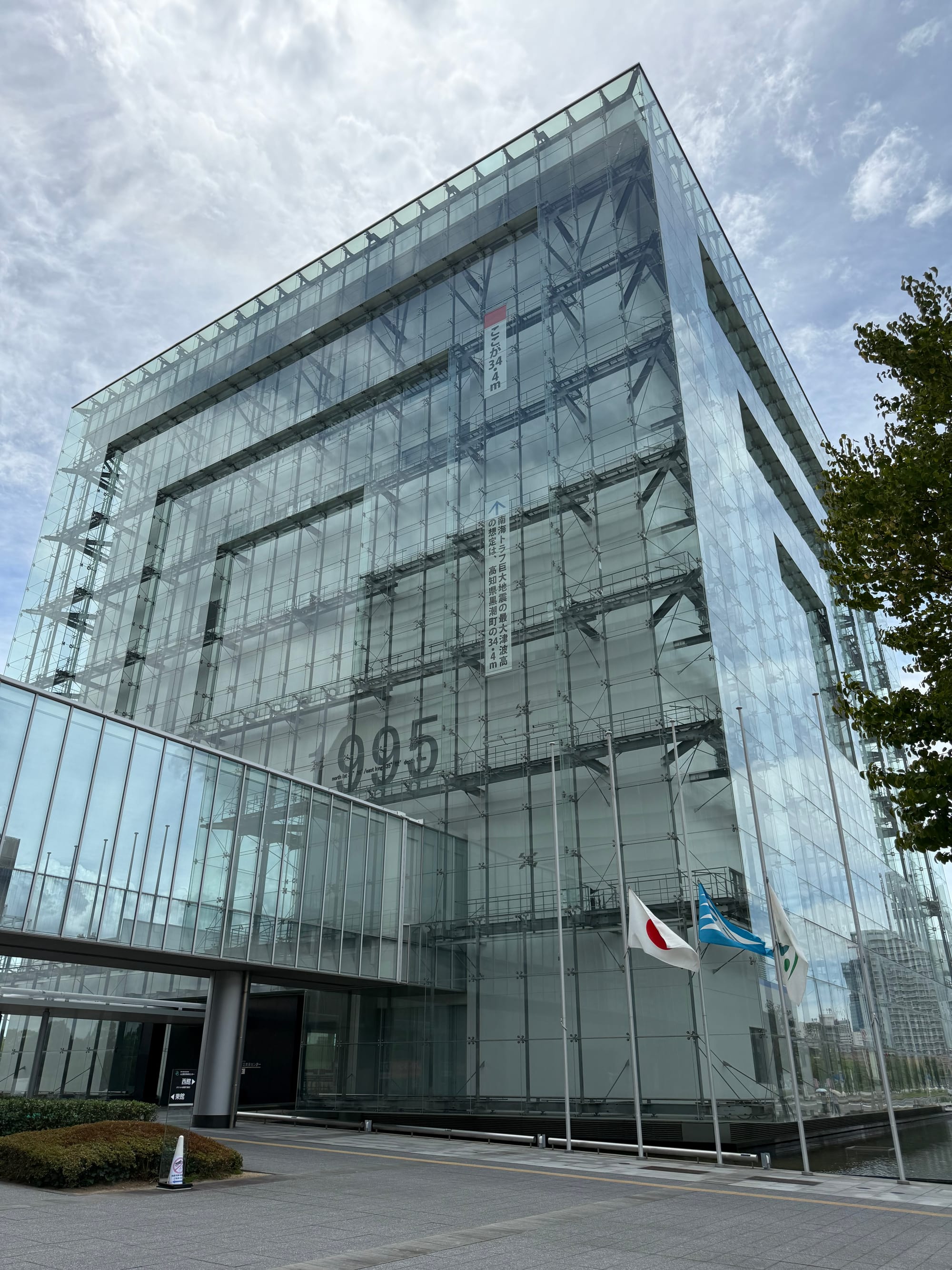
The Great Hanshin-Awaji Earthquake Memorial Disaster Reduction and Human Renovation Institution in Kobe preserves the lessons of the 1995 Great Hanshin Earthquake, promoting disaster preparedness, recovery and resilience for future generations.
Try staying this 3 times faster than you would normally do, as it is a mouthful or when you are drunk! Jokes a side, this was one of the most impactful places I went throughout the trip.
The Great Hanshin-Awaji Earthquake Memorial Disaster Reduction and Human Renovation Institution in Kobe commemorates the 1995 Great Hanshin Earthquake while promoting disaster preparedness, recovery and resilience through education and research.
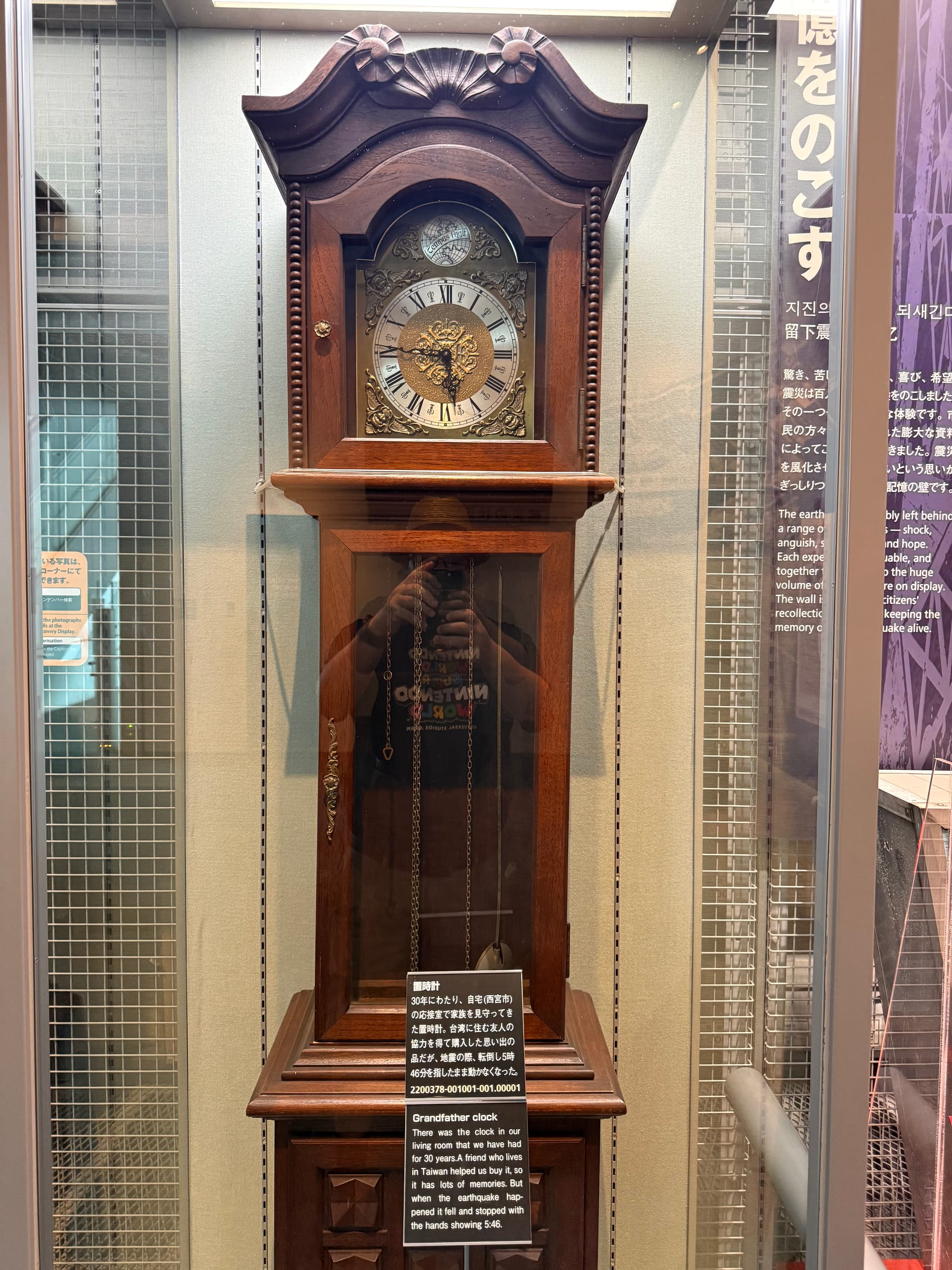
Some of you may had heard about the earthquake that hit Japan at 5:46 am on 17th January 1995. It was a 7.3 on the JMA magnitude scale, was 7 on their seismic intensity scale (the highest level) and the epicentre was roughly 20km away from the city on the northern part of Awaji Island.
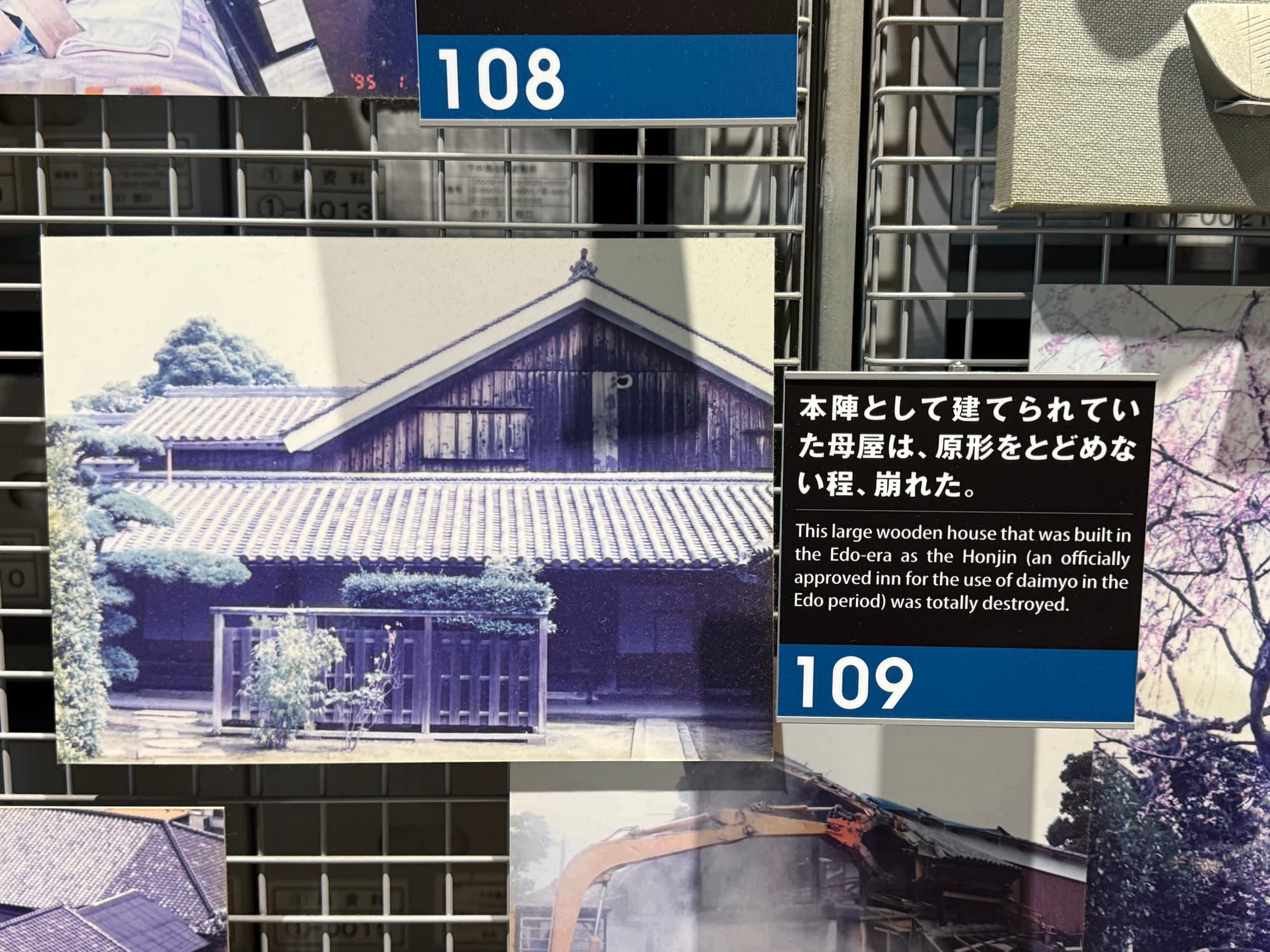
A grandfather clock preserved at the Great Hanshin-Awaji Earthquake Memorial. The clock stopped at 5:46 a.m. during the Great Hanshin Earthquake on 17 January 1995, serving as a powerful reminder of the moment the disaster began.An exhibit at the Great Hanshin-Awaji Earthquake Memorial documents the destruction of a historic Edo-period honjin building during the 1995 Great Hanshin Earthquake, illustrating the impact of the disaster on both communities and cultural heritage.
The earthquake lasted for 20 seconds and the casualties from the Hanshin-Awaji earthquake were 6,434 people, which was mostly due to old wooden homes collapsing and other factors too.
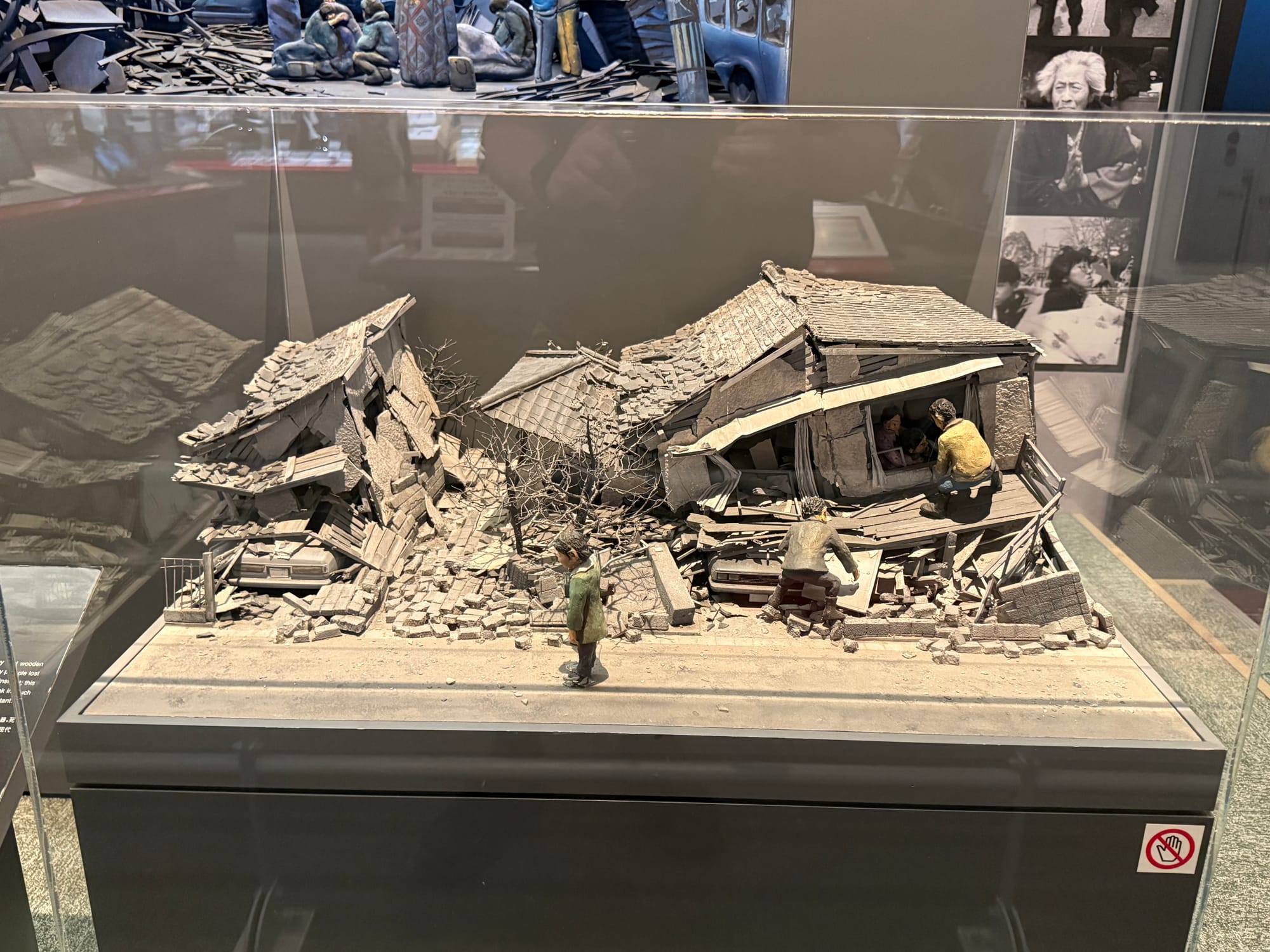
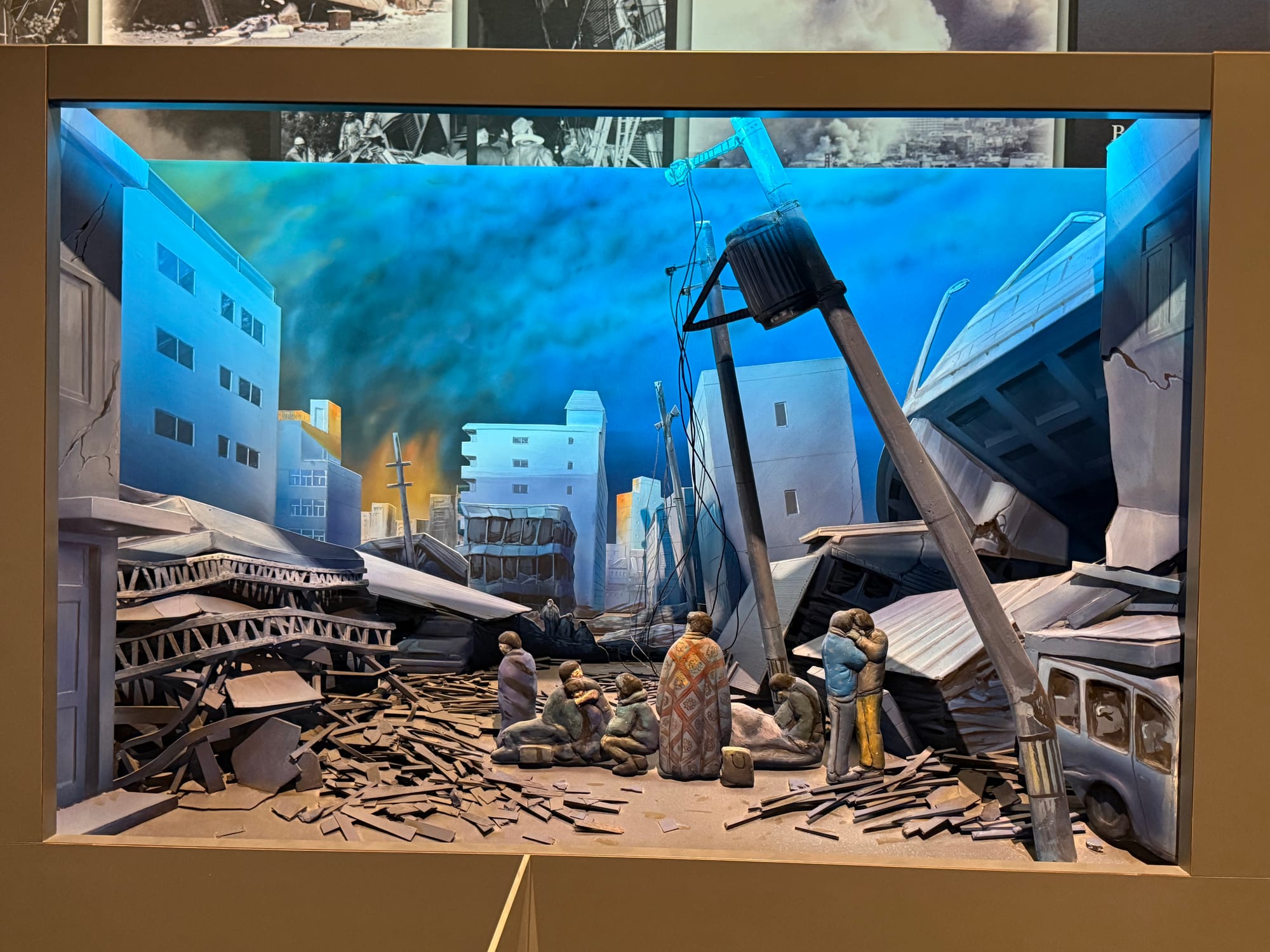
A detailed diorama recreates the devastation caused by the Great Hanshin Earthquake of 1995. The model illustrates the collapse of residential buildings and the challenges faced by residents and rescuers in the immediate aftermath of the disaster.
The centre is there to help us learn from the past, so that we might make a better future, where no one dies from an earthquake. Since this earthquake, Japans building codes have been heavily updated as you can probably tell by the recent 7.1 Kumamoto Earthquake, where only 39 people died, which is still sad because that is 39 people who lost there lives, but at the same time, that is almost the same magnitude as the 1995 one, where so many more people died.
It was only 650 yen to get in and was really educational. First you get taken up to the top floor, where you get taken into a standing theatre room, where you get to experience the earthquake without the floor shaking and seeing all the devastation that was left in it's wake, it was truly heartbreaking. Then was a reconstruction of what the street were like after the earthquake, which really shocked me to be honest. Then there was another film about the earthquake, but form a survivors point of view, where her sister died buried under their house due to the uncontrollable fire that was set off in the aftermath of the earthquake.
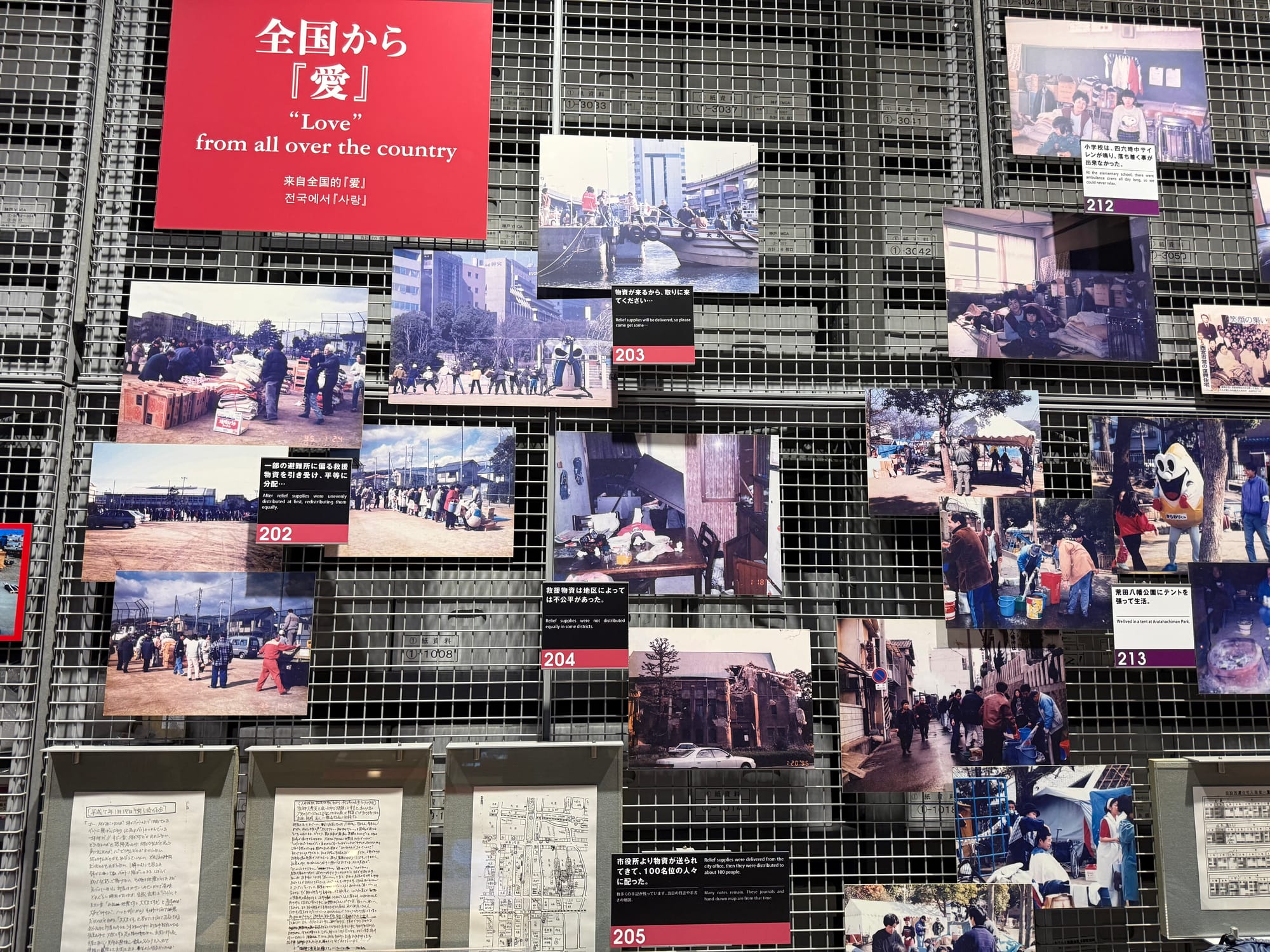
An exhibit documenting the nationwide response to the Great Hanshin Earthquake. Photographs and personal accounts highlight the volunteers, relief supplies and community support that helped affected residents begin the long process of recovery.
It also explained how the community came together to help each other out and how supplies poured in from other cities and prefectures.
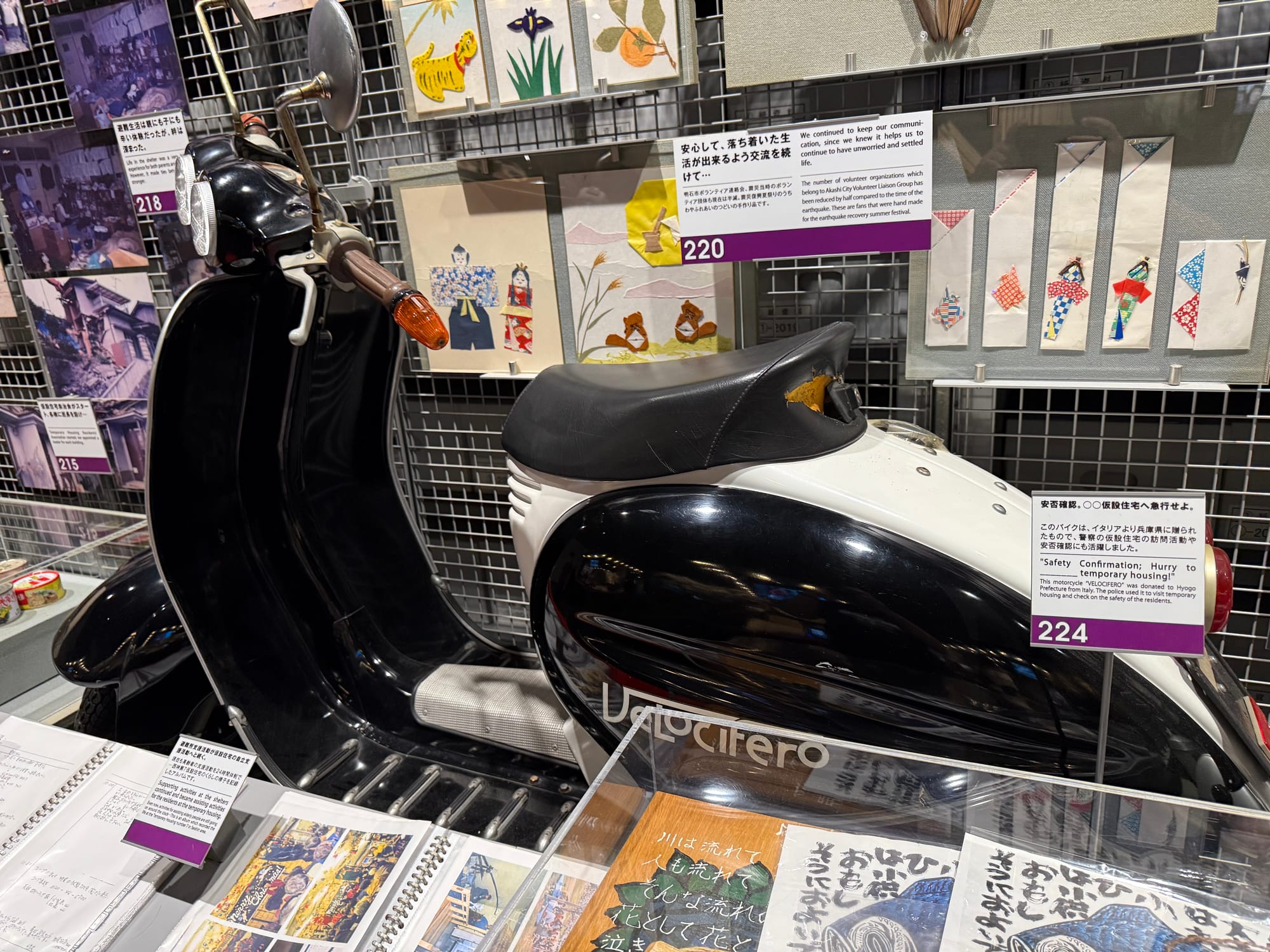
A Velocifero scooter donated from Italy after the 1995 Great Hanshin Earthquake. The exhibit highlights the international assistance received during the recovery effort and the practical role small vehicles played in supporting affected communities.
The next floor was dedicated to memories of the quake and the bits after it as well. Due to parts of Kobe ports and islands being reclaimed land, liquefaction was also a problem. The ground of the land is made of loosely packed sediments, like sand and when the ground started shaking, these sediments keep themselves tightly packed together any more and sank, but then the water rose. This meant that the earth started to become like a quicksand thanks the the earthquake and as a result houses, port equipment and electric poles started to sink.
A diorama recreates the aftermath of the 1995 Great Hanshin Earthquake, showing collapsed buildings, damaged infrastructure and residents coping with the devastation in the hours following the disaster.
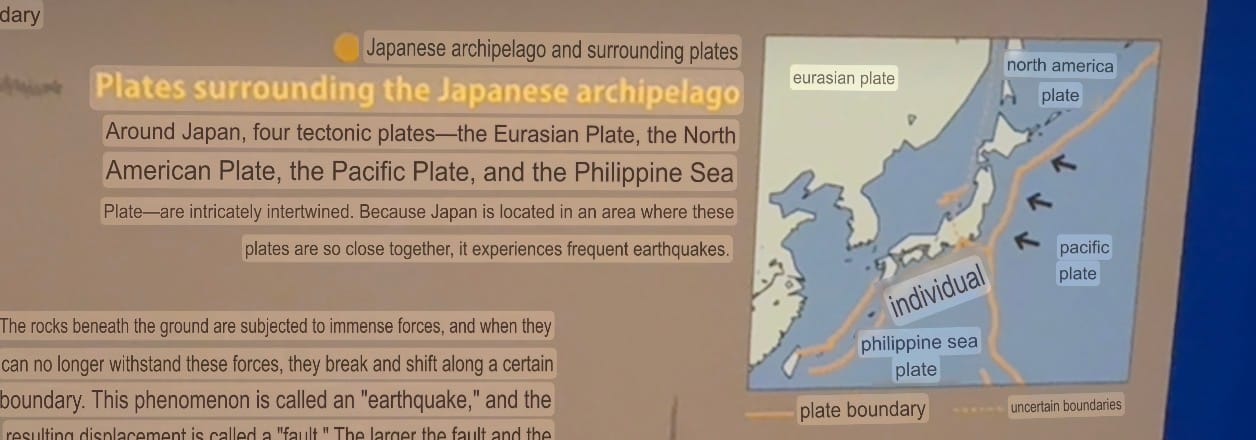
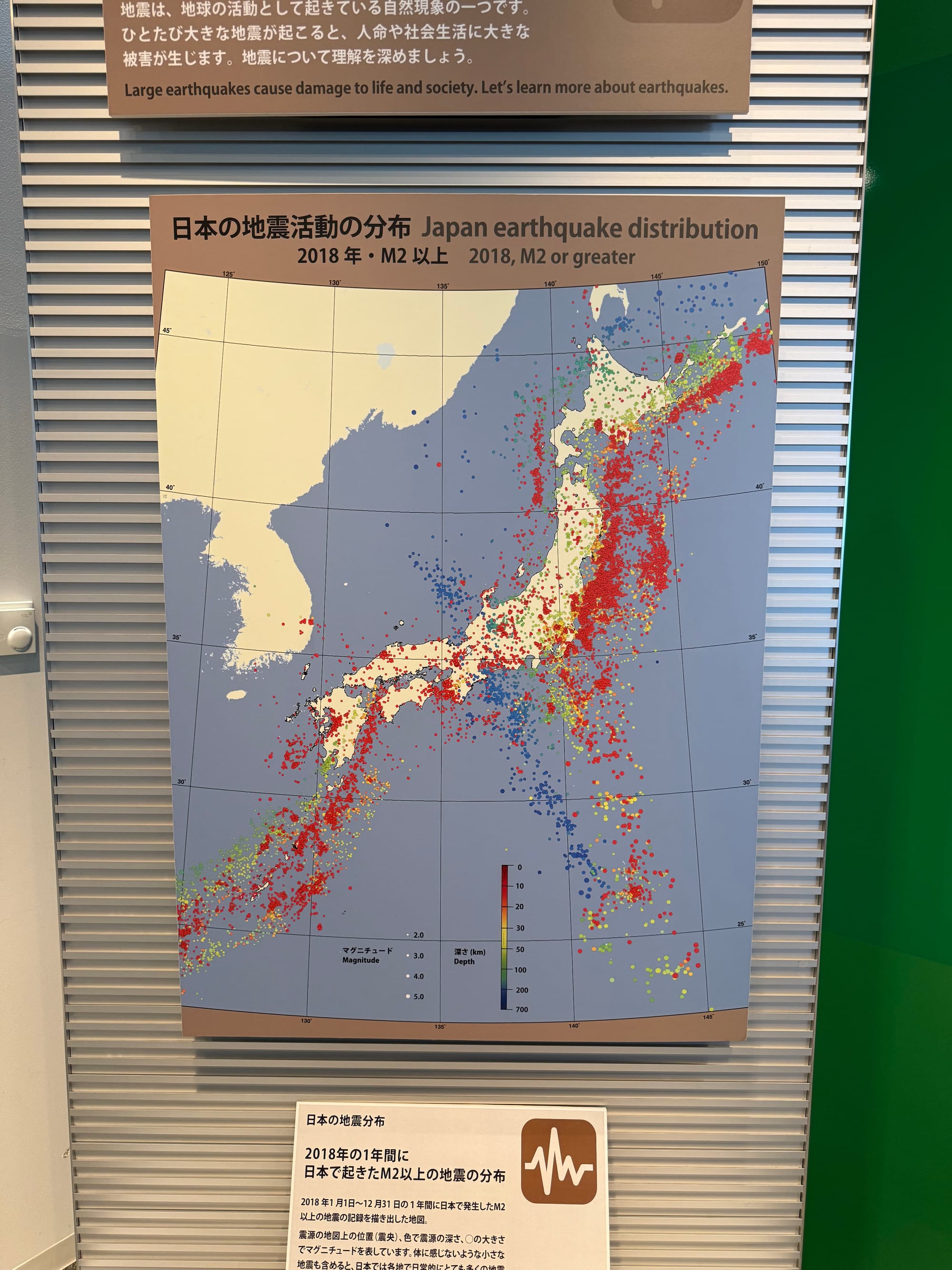
This was explained more on the next floor, which was more about being prepared for earthquake. Did you know that Japan get about 10% of all the worlds Earthquakes. This is mainly due to it being on the pacific ring of fire, but also because it is at a place where 4 tectonic plates meet. There Eurasian Plate, North American Plate, Pacific Plate and Philippines Sea Plate all meet on the land or surrounding the shore.
An exhibit explaining the tectonic plates surrounding Japan. Located at the junction of the Eurasian, North American, Pacific and Philippine Sea plates, Japan experiences frequent earthquakes due to the movement and interaction of these plate boundaries.An exhibit explaining Japan's seismic activity. Situated at the intersection of several tectonic plates, Japan experiences frequent earthquakes and accounts for about 10% of the world's recorded seismic events.An exhibit showing the distribution of earthquakes measuring magnitude 2.0 and greater in Japan during 2018. The dense clusters reflect Japan's location along multiple tectonic plate boundaries, making it one of the most seismically active regions in the world.
They also had an earthquake machine there, where you can see how the depth of an earthquake makes a difference and what the difference between small, medium and large earthquakes are. First I start off at a shallow depth, going from small to large and then do the same with a deep earthquake.
0:00
/1:27
A video showing the difference between shallow and deep earthquakes and also the differences in seismic intensity.
There was also a talk about earthquake standard and how we use steel cross frames to help building withstand earthquakes, but not only that but how Seismic Isolation works, where a building is put on flexible pads or sliding devices to disconnect the building from the ground movement. We also got a lecture on liquefaction and how modern buildings on land that is prone to this, has metal rods that stick into the ground that help to keep it from sinking or tilting.
I also got to try out a simulated VR experience, where a big earthquake happens and you are seeing the room move about and shake from a kids perspective. It then asks you if you have secured your furniture to prevent it flying all over the place like in the video.
Experiencing a virtual reality exhibit at the Great Hanshin-Awaji Earthquake Memorial. Interactive displays use modern technology to help visitors better understand earthquakes, disaster impacts and emergency preparedness.
I did also get a disaster essentials list, which I can use to pack a survival backpack for if an earthquake hits, it is really good and handy.
Kobe Maritime Museum and Kawasaki Good Times World
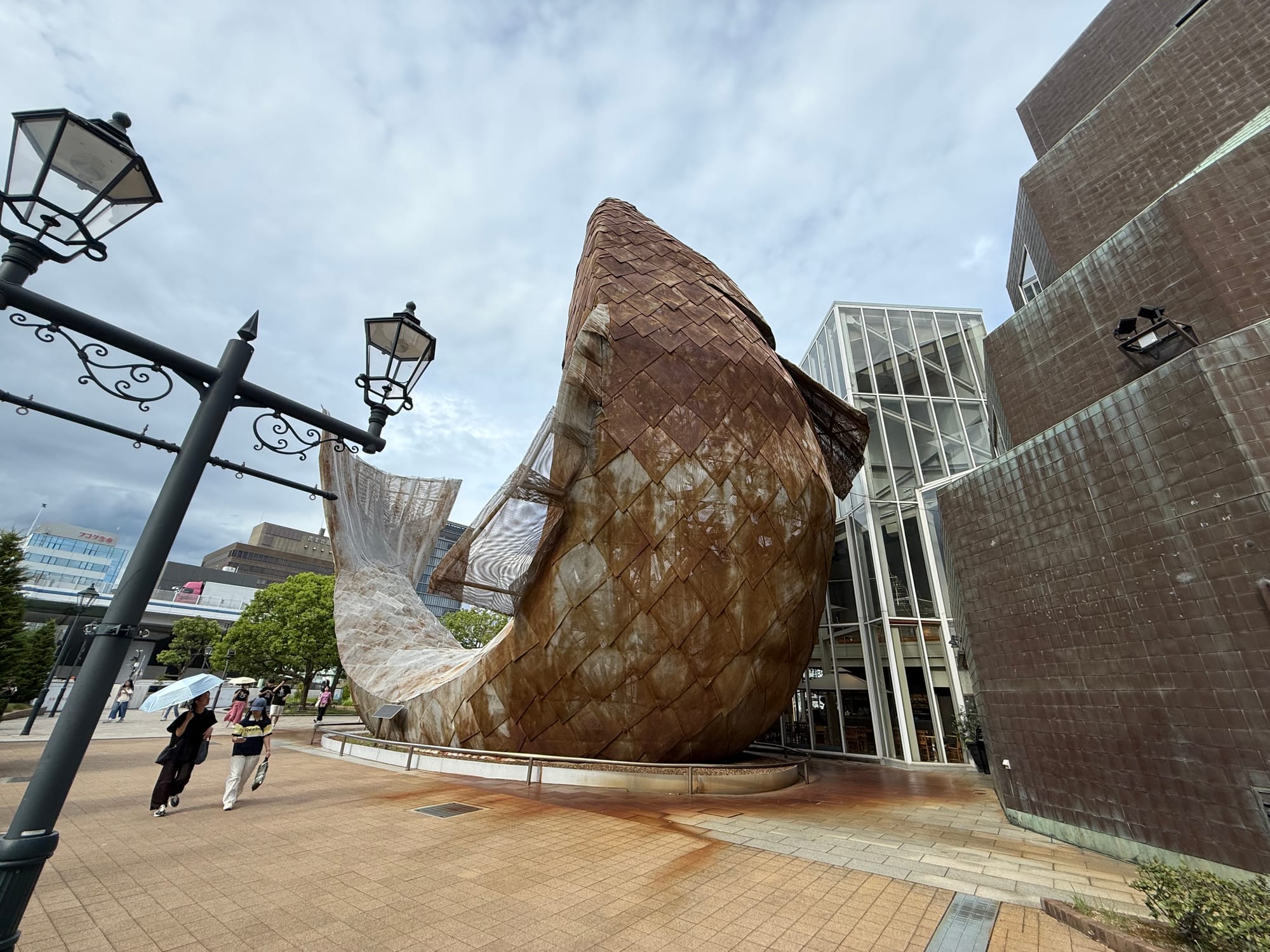
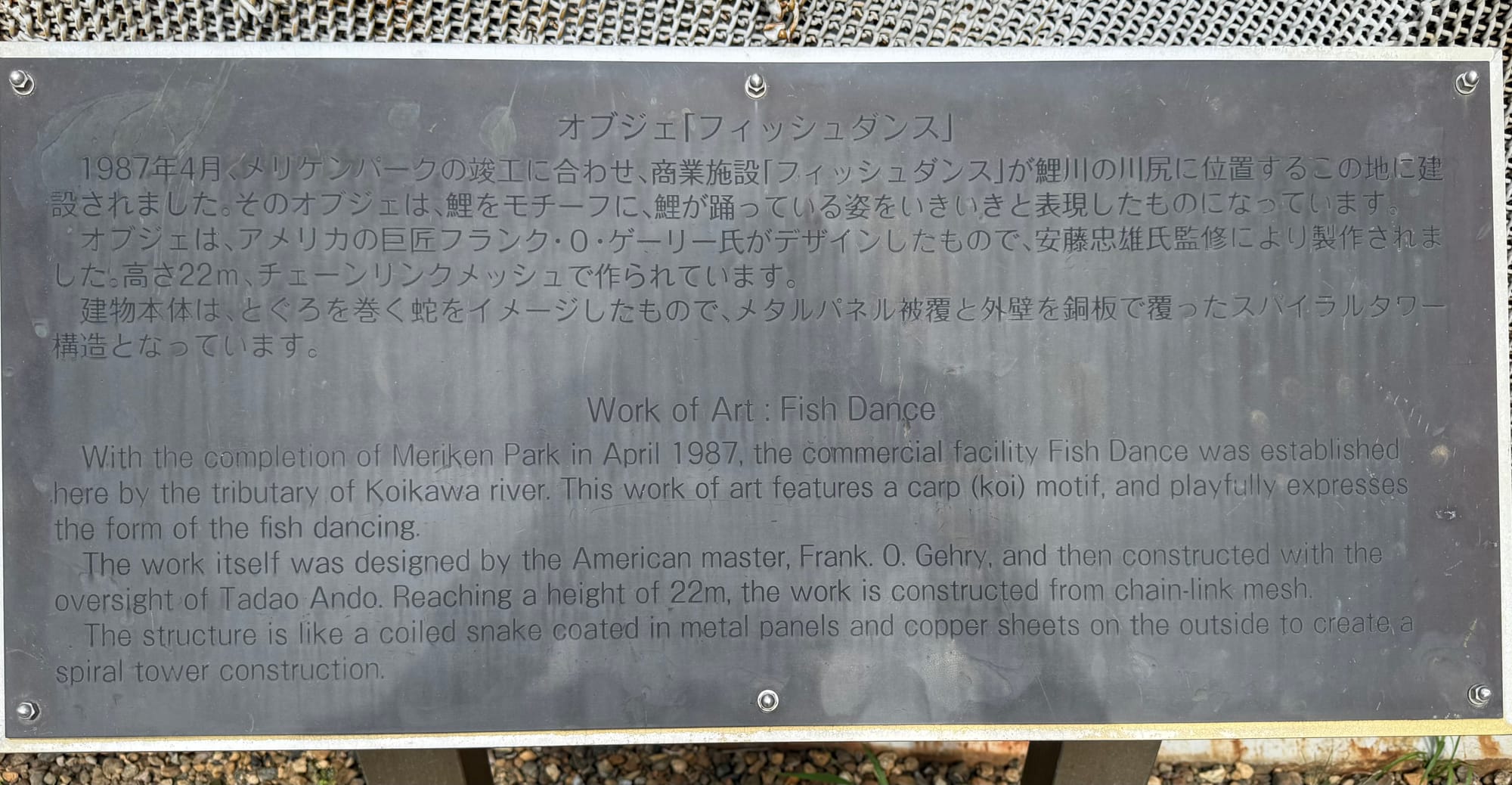
Fish Dance is a landmark sculpture at Kobe Harborland, created by architect Frank Gehry for the 1987 Kobe Port 120th Anniversary celebrations. The giant fish has become one of Kobe's most distinctive waterfront artworks.A plaque explaining the history of Fish Dance, a landmark waterfront sculpture at Kobe Harborland. Designed by architect Frank Gehry and overseen by Tadao Ando, the 22-metre-tall artwork depicts a leaping koi and has become one of Kobe's most distinctive public artworks.
New on my list of places to go was the Kobe Maritime Museum, which I didn't really look much around as I was more interested in what was in there and that is Kawasaki Good Times World.
Kobe Maritime Museum
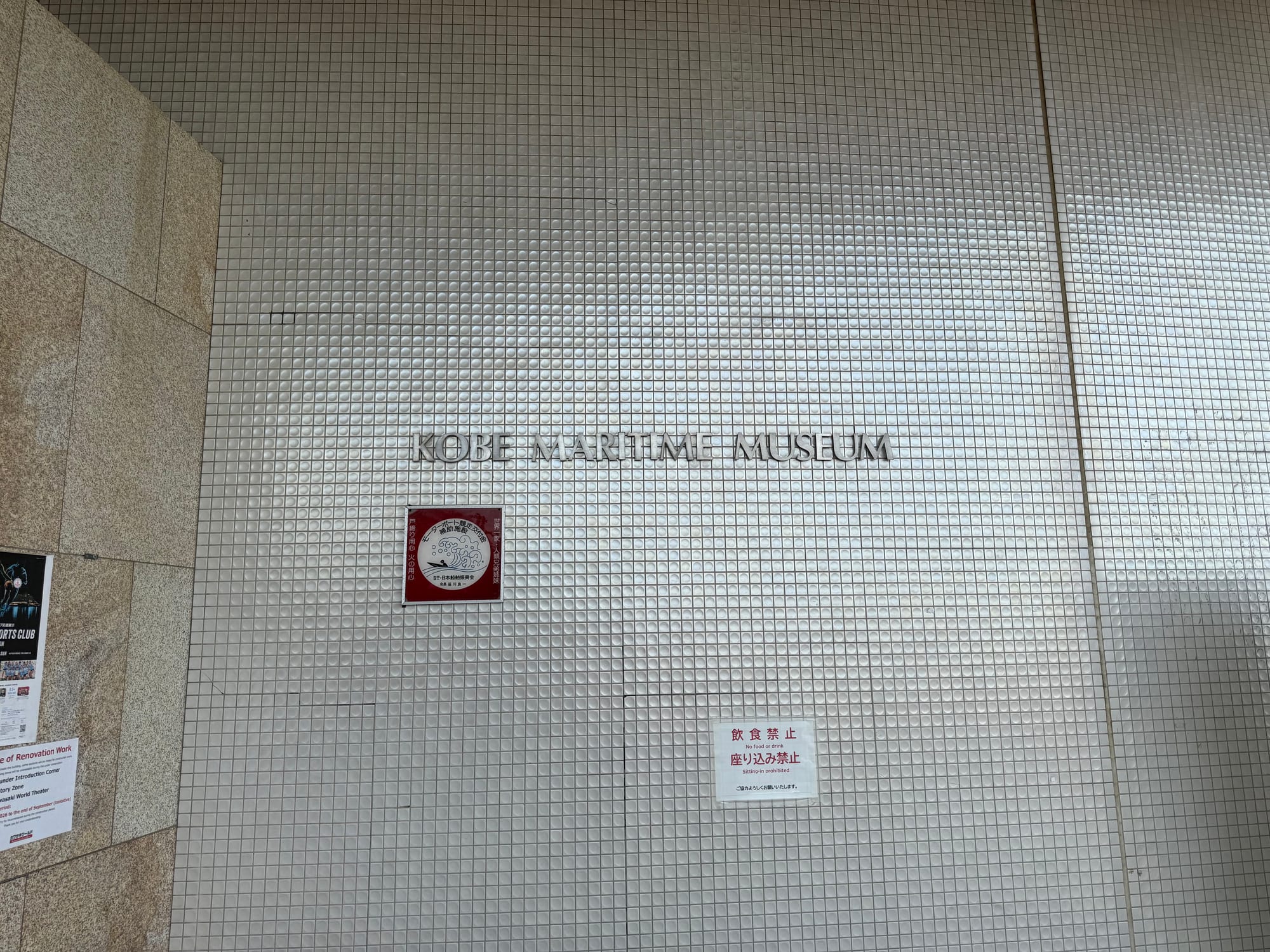
The entrance to the Kobe Maritime Museum, a waterfront museum celebrating the history of Kobe Port, maritime technology and the city's long connection with international trade and shipping.
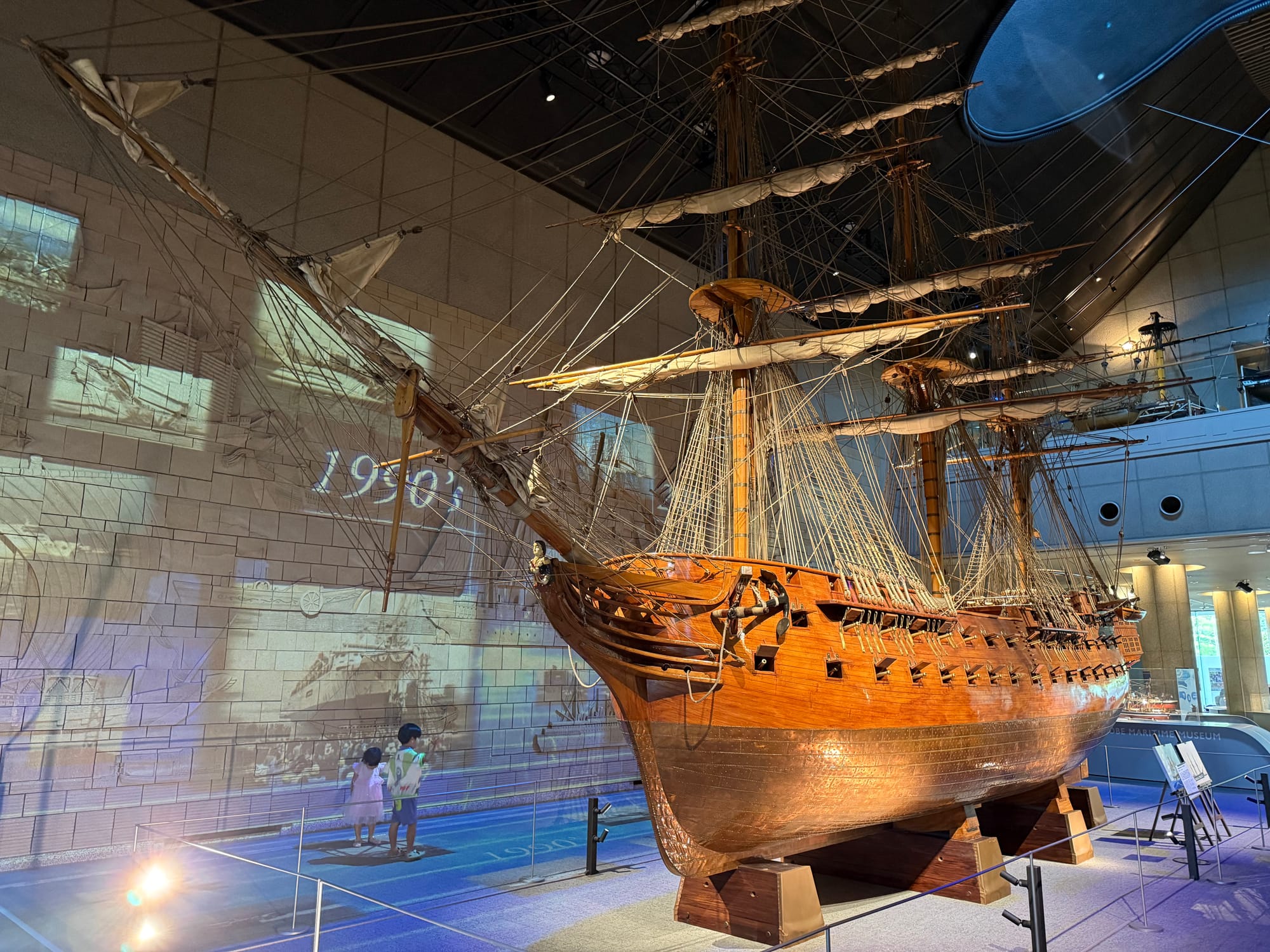
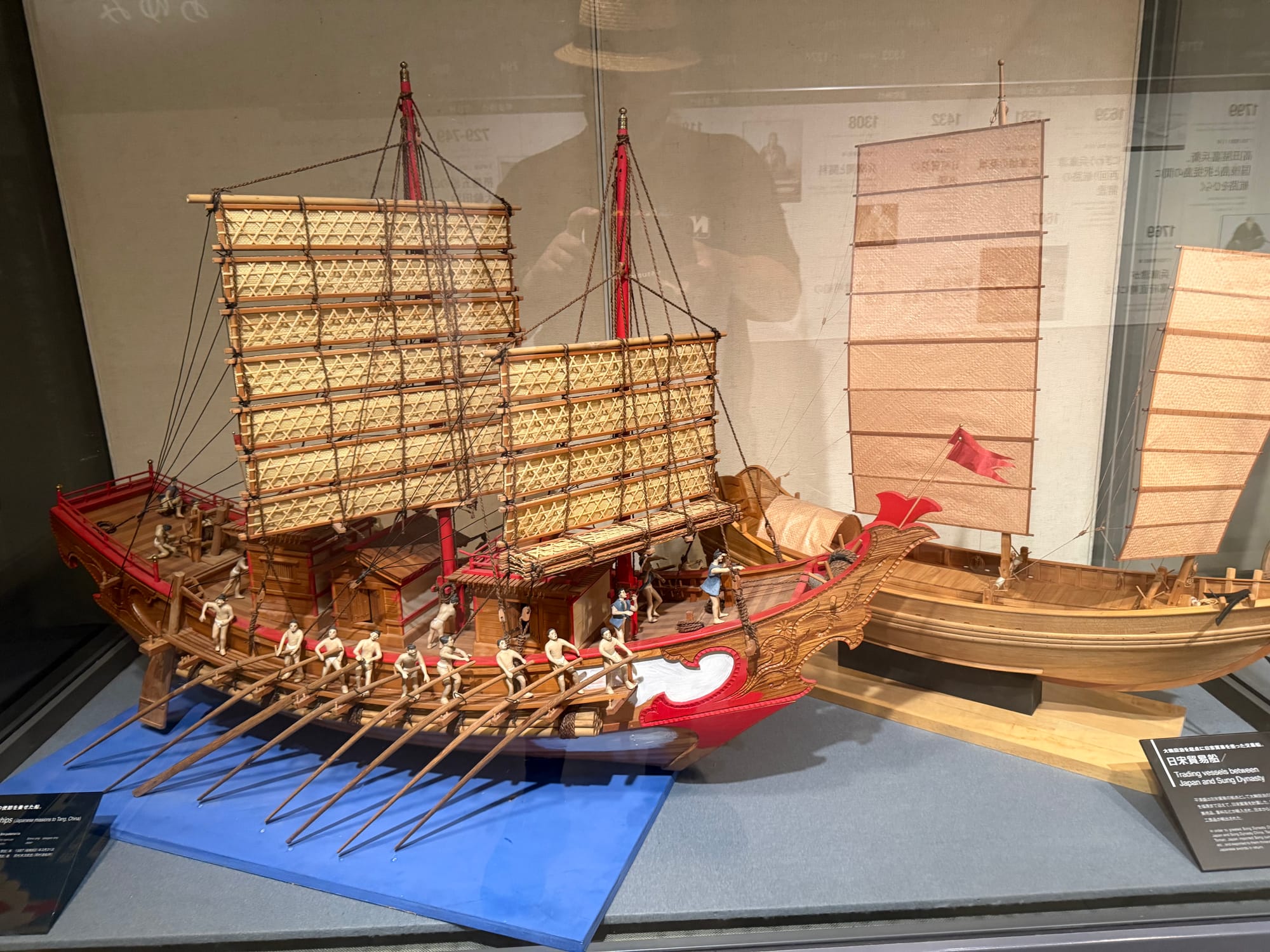
The Kobe Maritime Museum shows us how ships have evolved over the years, especially Japanese ones.
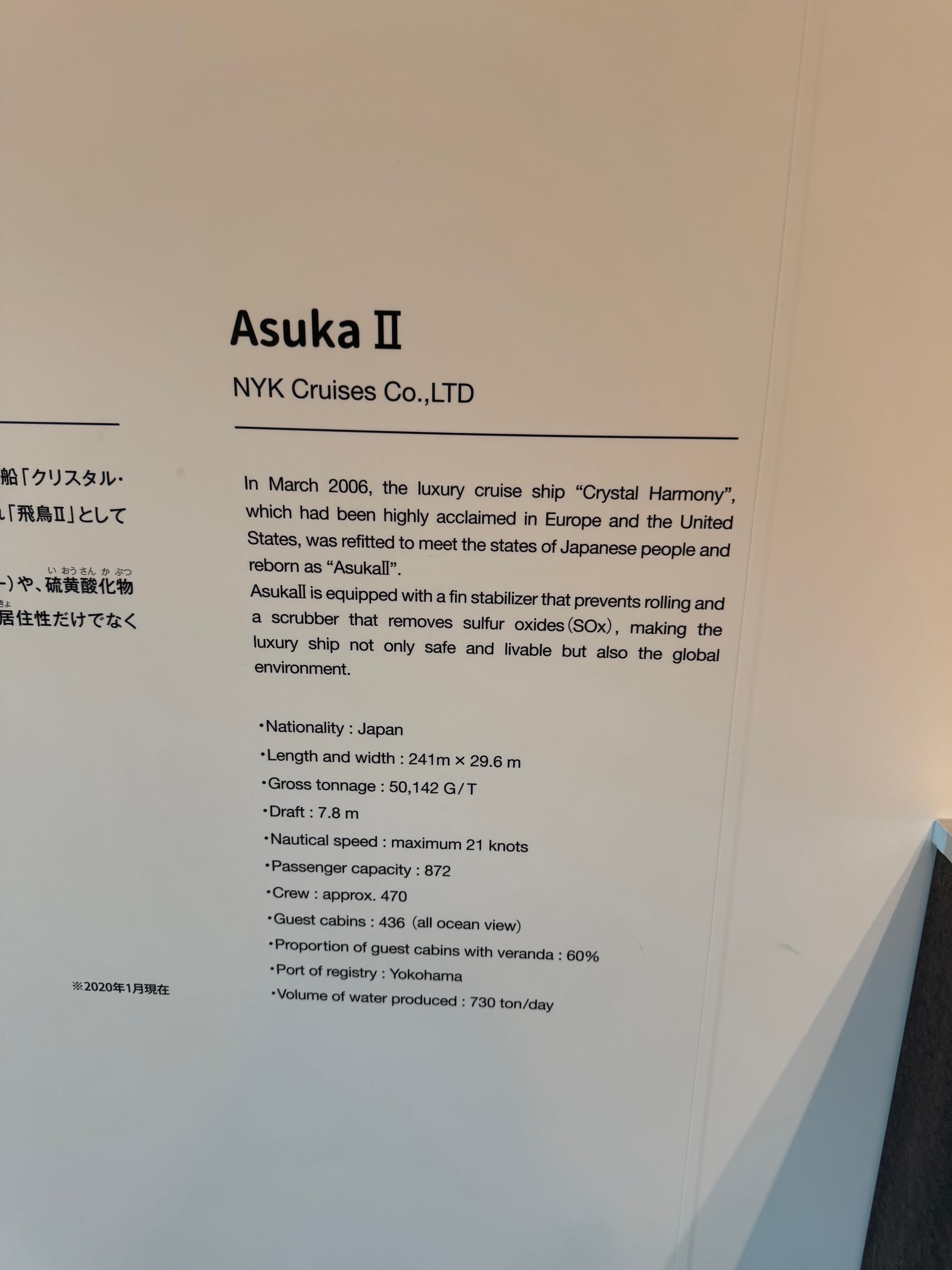
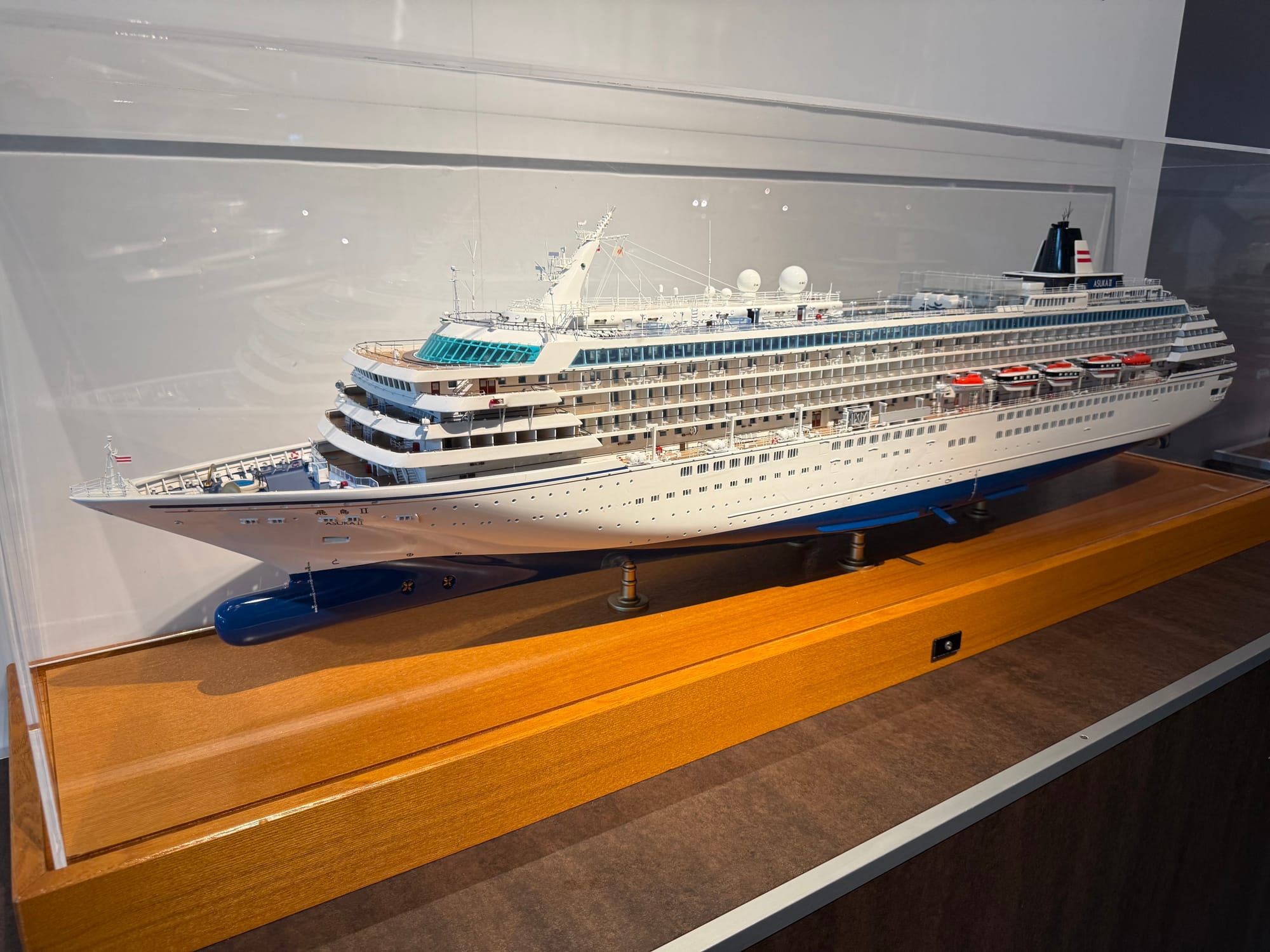
A scale model of a historic sailing ship at the Kobe Maritime Museum. The exhibit reflects the age of sail and the maritime trade networks that connected Japan with the wider world, helping shape Kobe's development as an international port city.Scale models of merchant vessels that traded between Japan and neighbouring regions. These ships illustrate the maritime connections that helped shape commerce, cultural exchange and the development of ports such as Kobe.An exhibit on Asuka II, Japan's flagship luxury cruise ship operated by NYK Cruises. Originally launched as Crystal Harmony in 1990, the vessel was extensively refurbished and entered service as Asuka II in 2006, becoming one of Japan's best-known cruise ships.A detailed scale model of Asuka II, Japan's flagship luxury cruise ship operated by NYK Cruises. The vessel entered service in 2006 and has become one of the best-known cruise ships sailing under the Japanese flag.
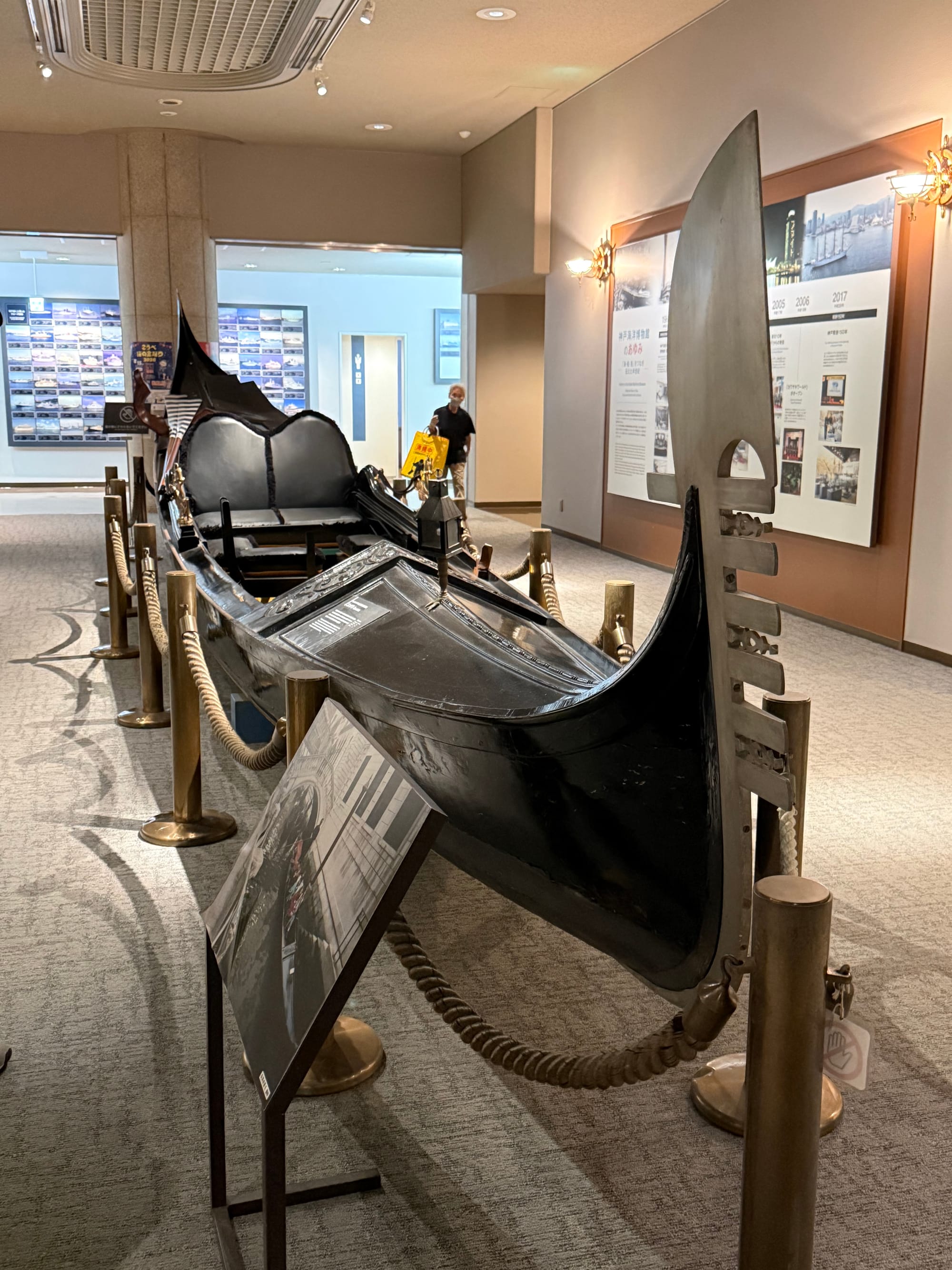
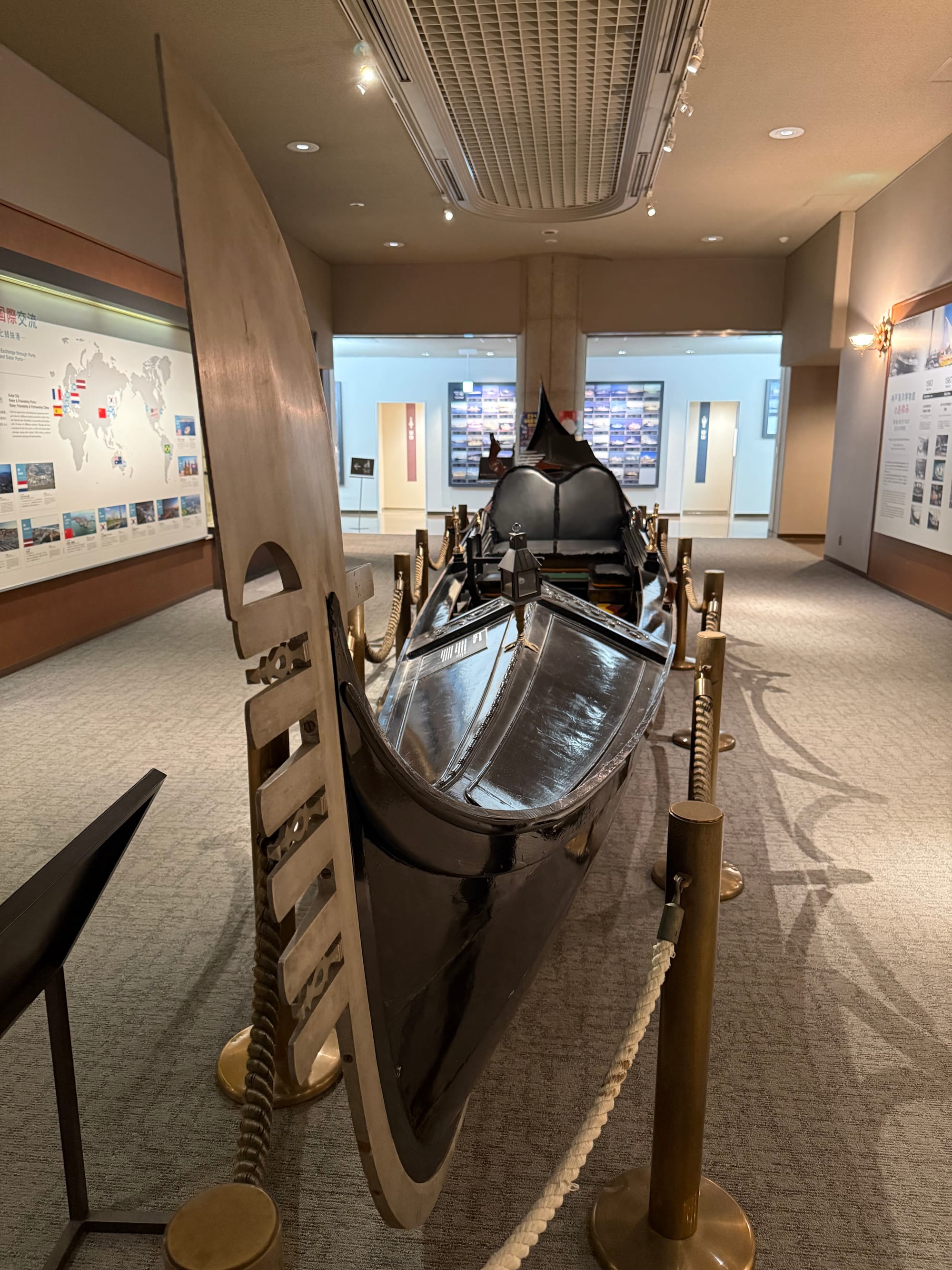
They also had a actually gondola, which had been taken straight from the canals in Venice.
A traditional Venetian gondola on display at the Kobe Maritime Museum. Imported from Venice, the vessel highlights the craftsmanship and unique design of one of the world's most recognisable types of boat, offering a contrast to the ships and maritime technology featured elsewhere in the museum.A traditional Venetian gondola on display at the Kobe Maritime Museum. The distinctive ferro at the bow is one of the vessel's most recognisable features, while the gondola's asymmetrical hull helps it travel in a straight line when rowed by a single gondolier.
Kawasaki Good Times World
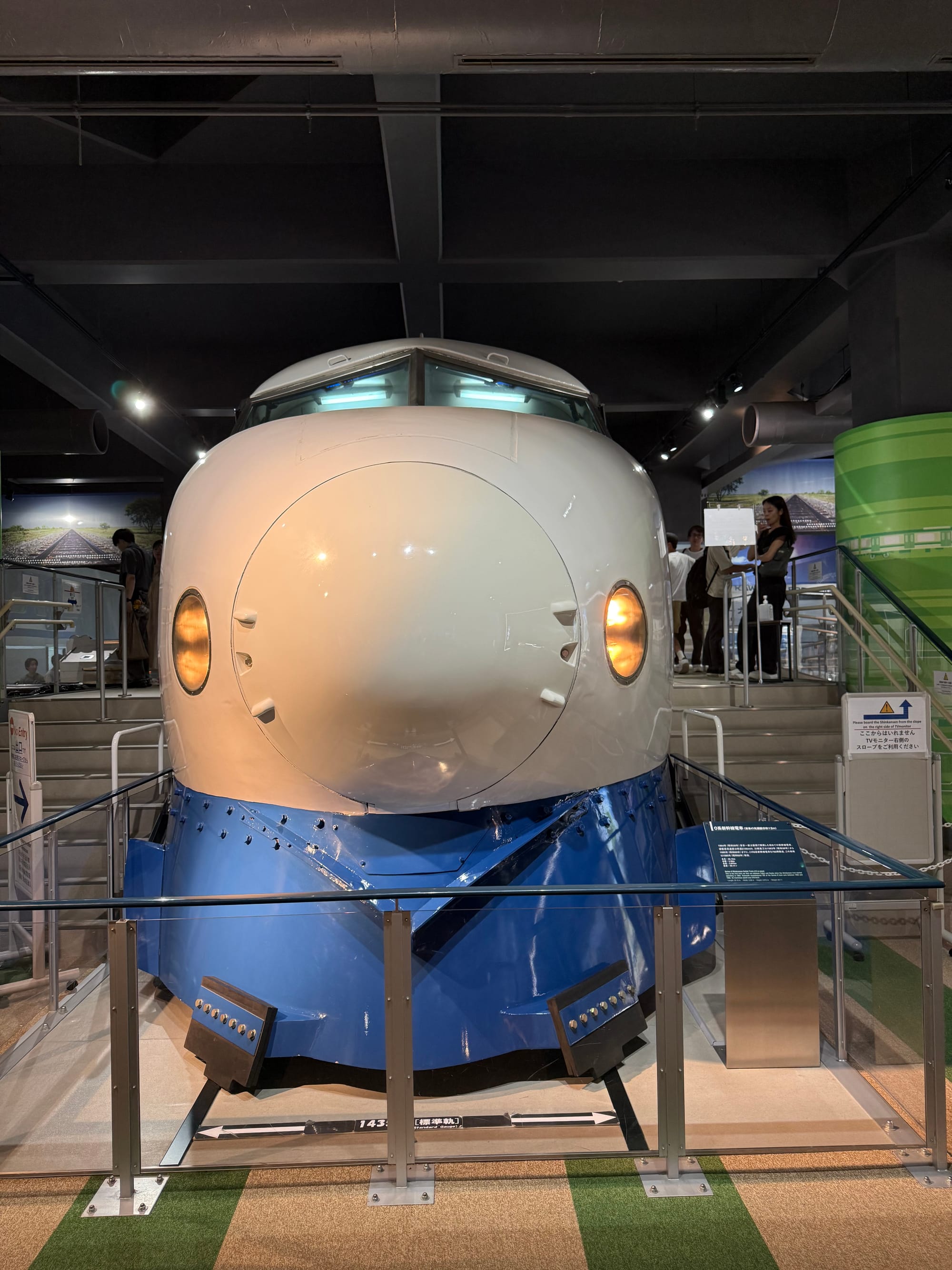
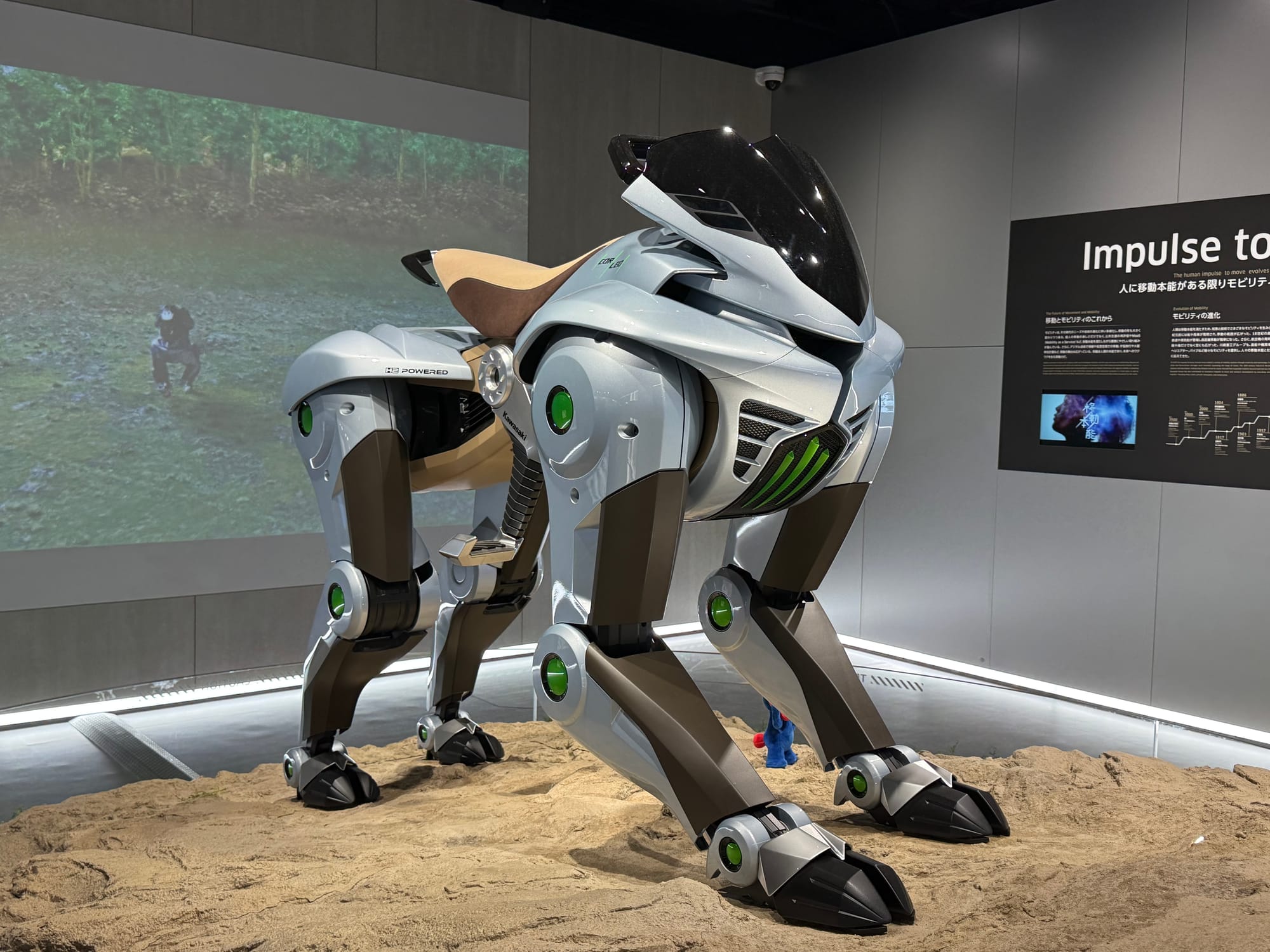
Kawasaki Good Times World is dedicated to a bunch of things Kawasaki. Now one thing you might not know about Kawasaki is that they don't just make motorbikes, but they make lots of different things. They actually design and manufacture rolling stock for the bullet trains, starting with the series 0 back in 1964.
The entrance to Kawasaki Good Times World, a museum within the Kobe Maritime Museum dedicated to Kawasaki Heavy Industries. The exhibition showcases the company's achievements in motorcycles, trains, aircraft, ships and advanced technology.The 0 Series Shinkansen was Japan's first high-speed bullet train, introduced for the opening of the Tokaido Shinkansen in 1964. Its distinctive rounded nose became an enduring symbol of Japan's railway technology and post-war economic growth.Kawasaki's CORLEO mobility concept explores the idea of a rider-controlled robotic vehicle with four articulated legs. Unveiled as a vision of future personal mobility, it combines robotics, motorcycle-inspired design and all-terrain capability.
0:00
/0:20
Video showing what Kawasaki's CORLEO mobility concept explorer can do. It is a four legged transport, that combines robotics, motorcycle design and is capable of all-terrain transport.
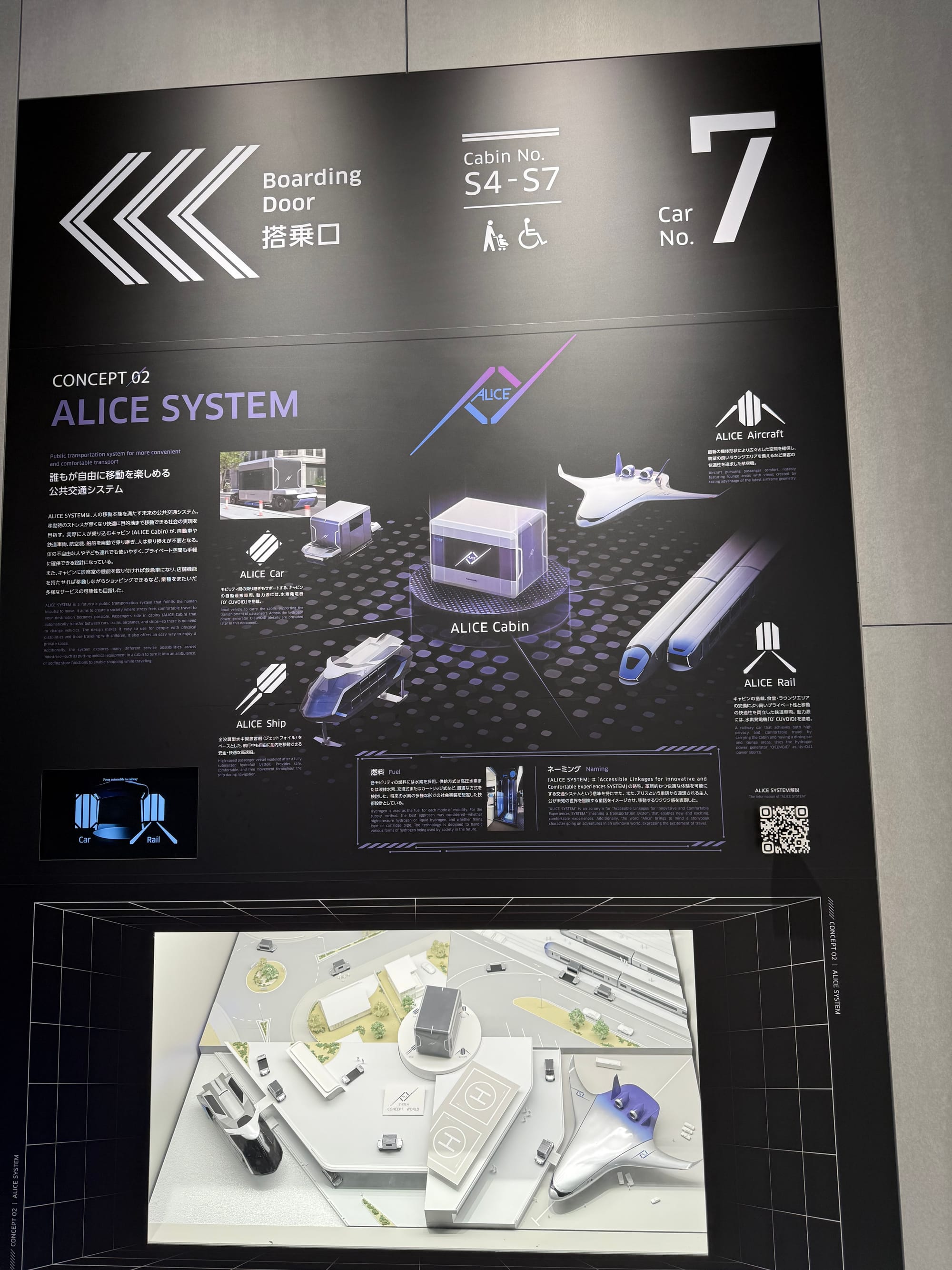
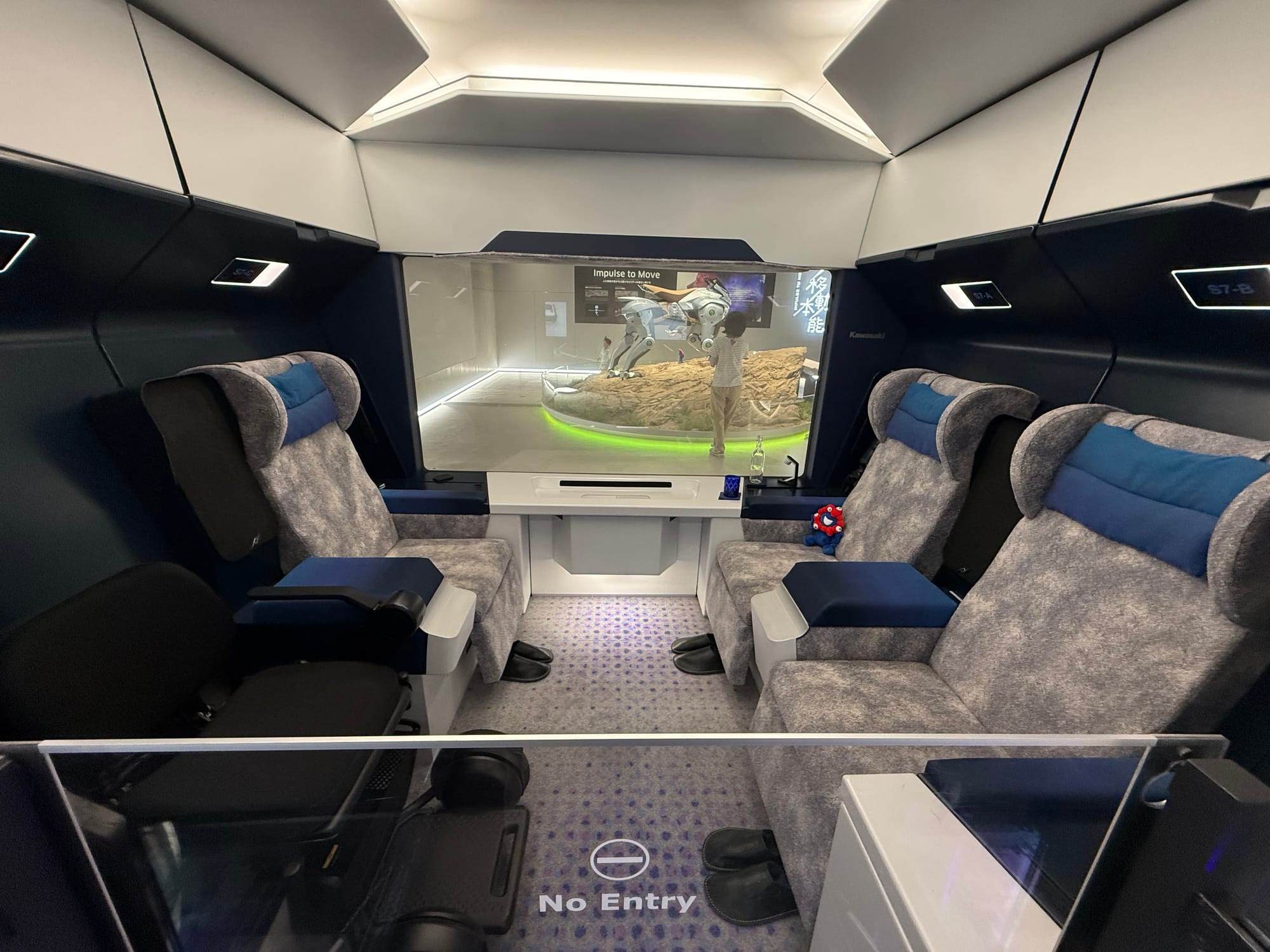
They also make Jet skis, ships, helicopters, planes and an all terrain mounts, which looks really cool. They also have a future concept, where they can transfer a pod between each of the land, sea and air, so you the customer don't have to move between them all.
The ALICE System is a Kawasaki concept for future transportation, using modular passenger or cargo capsules that can transfer between trains, road vehicles, aircraft and ships without changing the cabin itself.A concept passenger cabin from Kawasaki's ALICE System vision of future transportation. Designed to move seamlessly between rail, road, air and sea vehicles, the modular cabin aims to provide a comfortable and accessible travel experience regardless of the mode of transport.
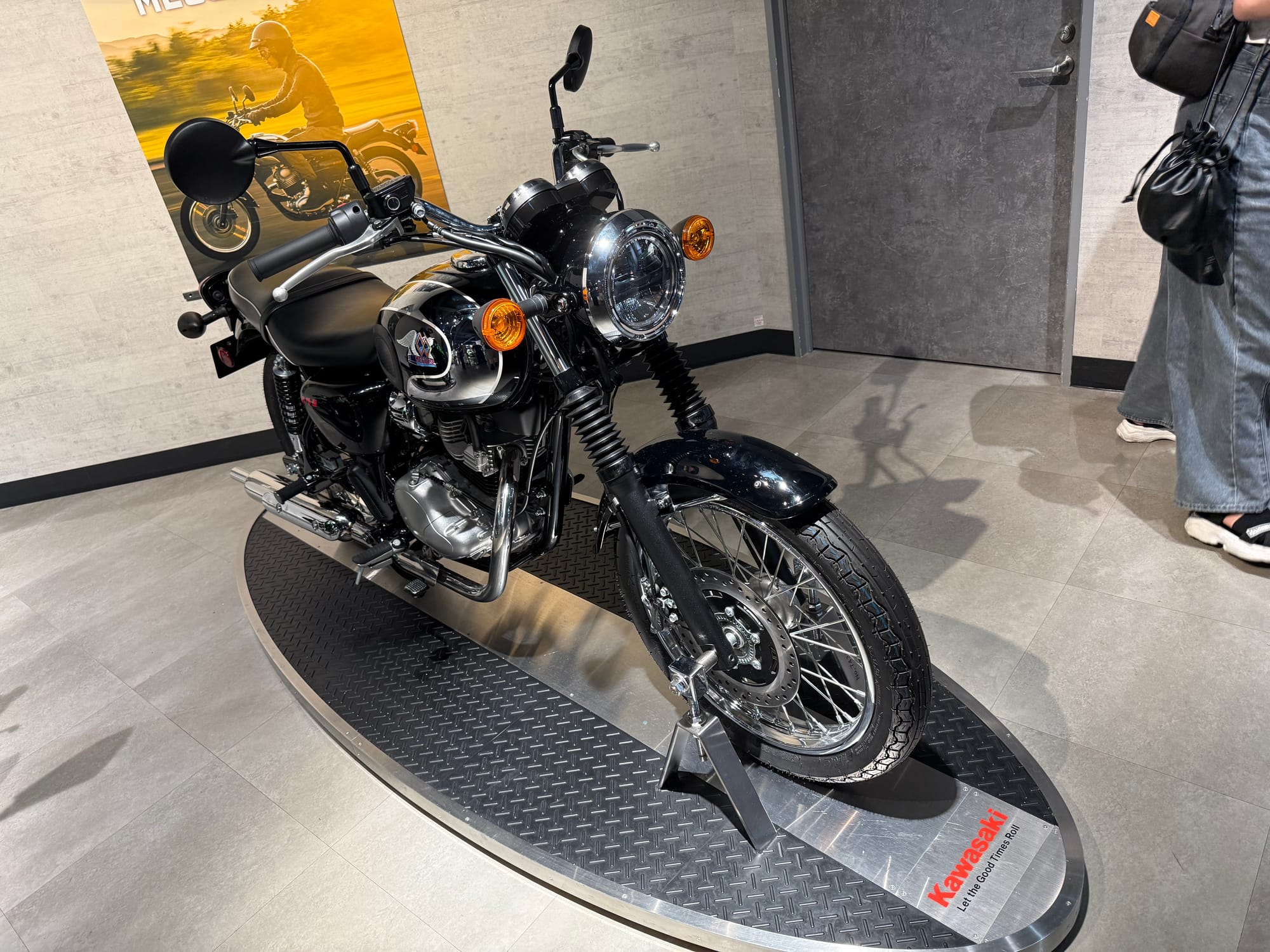
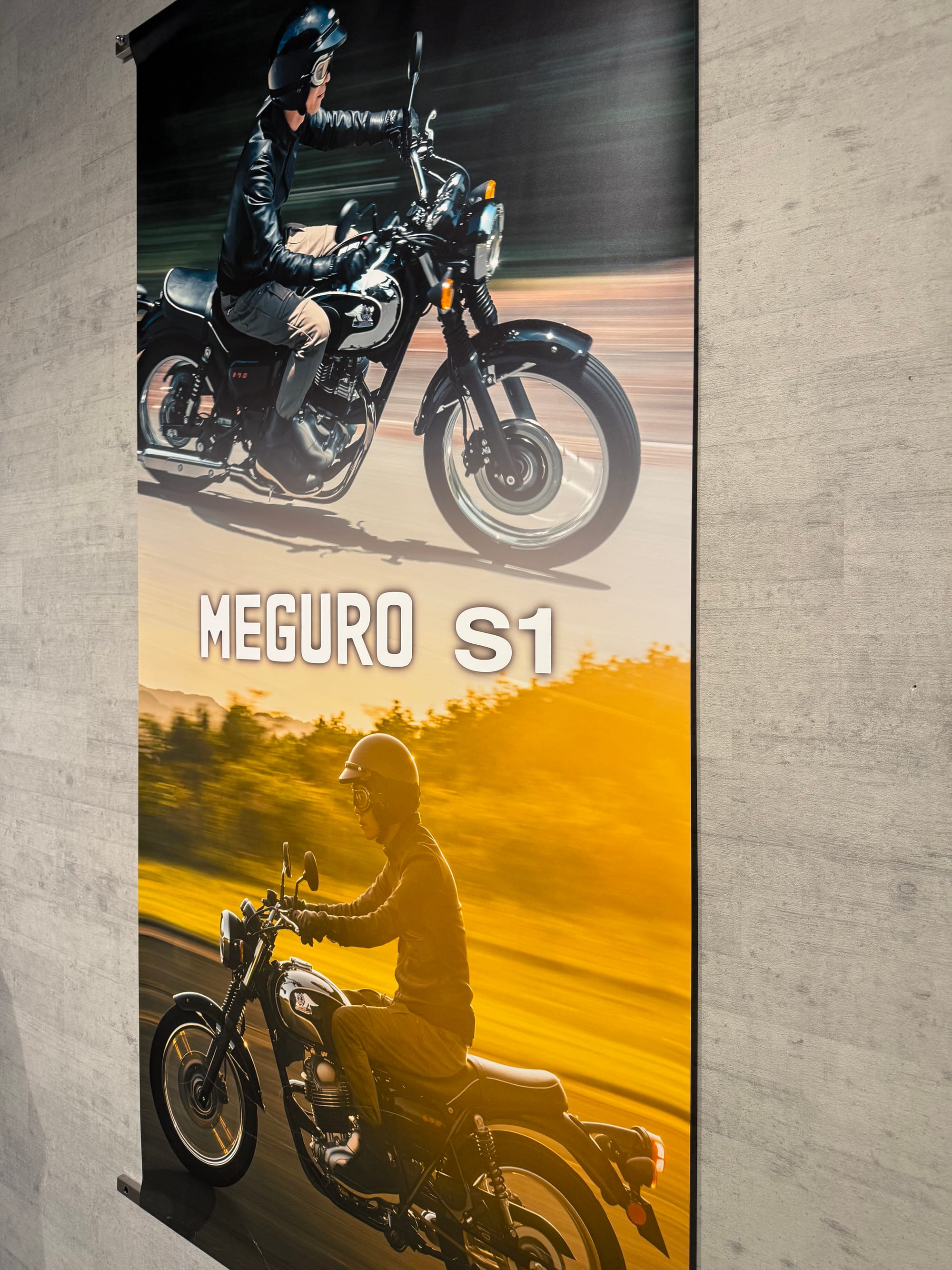
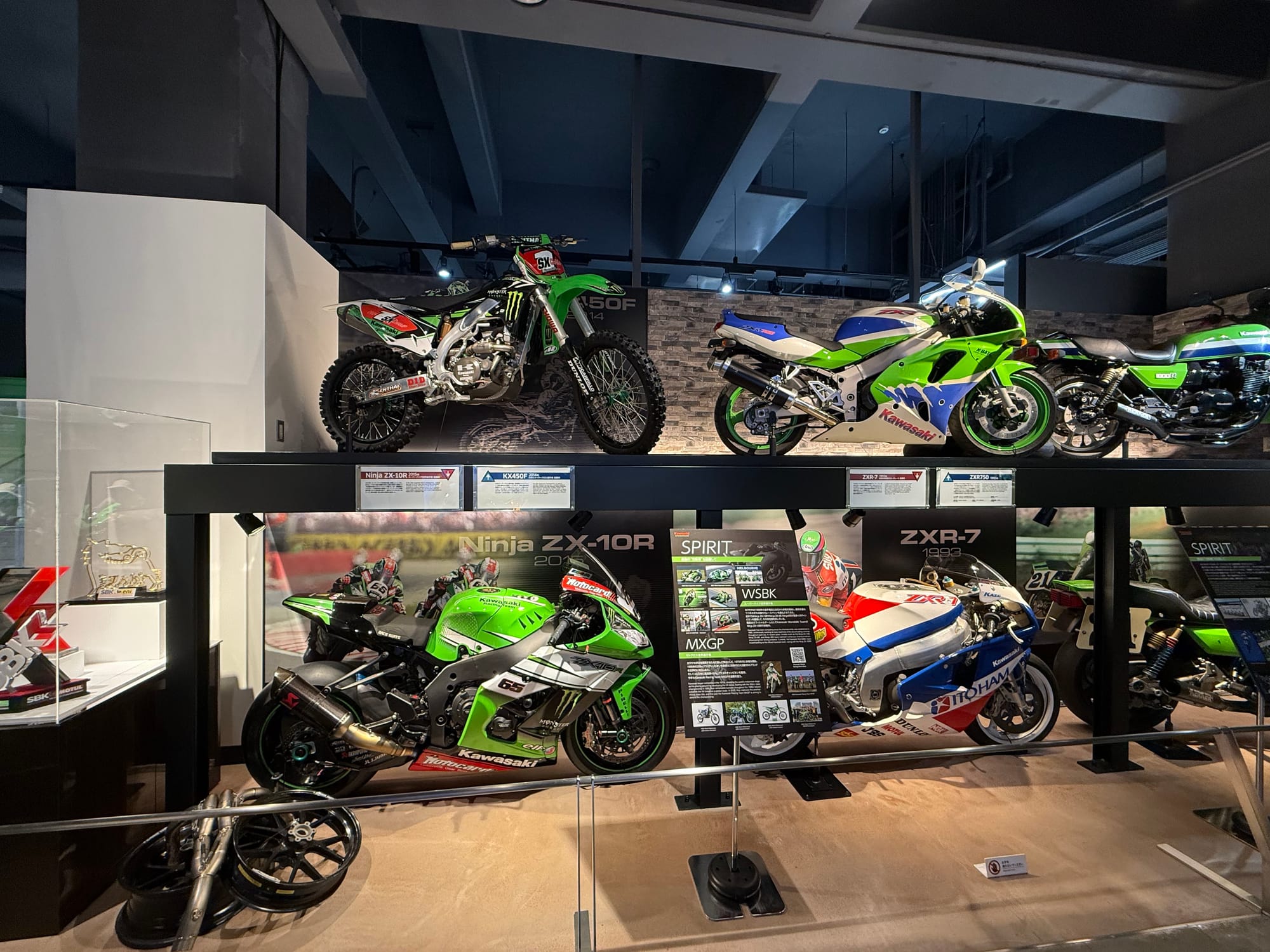
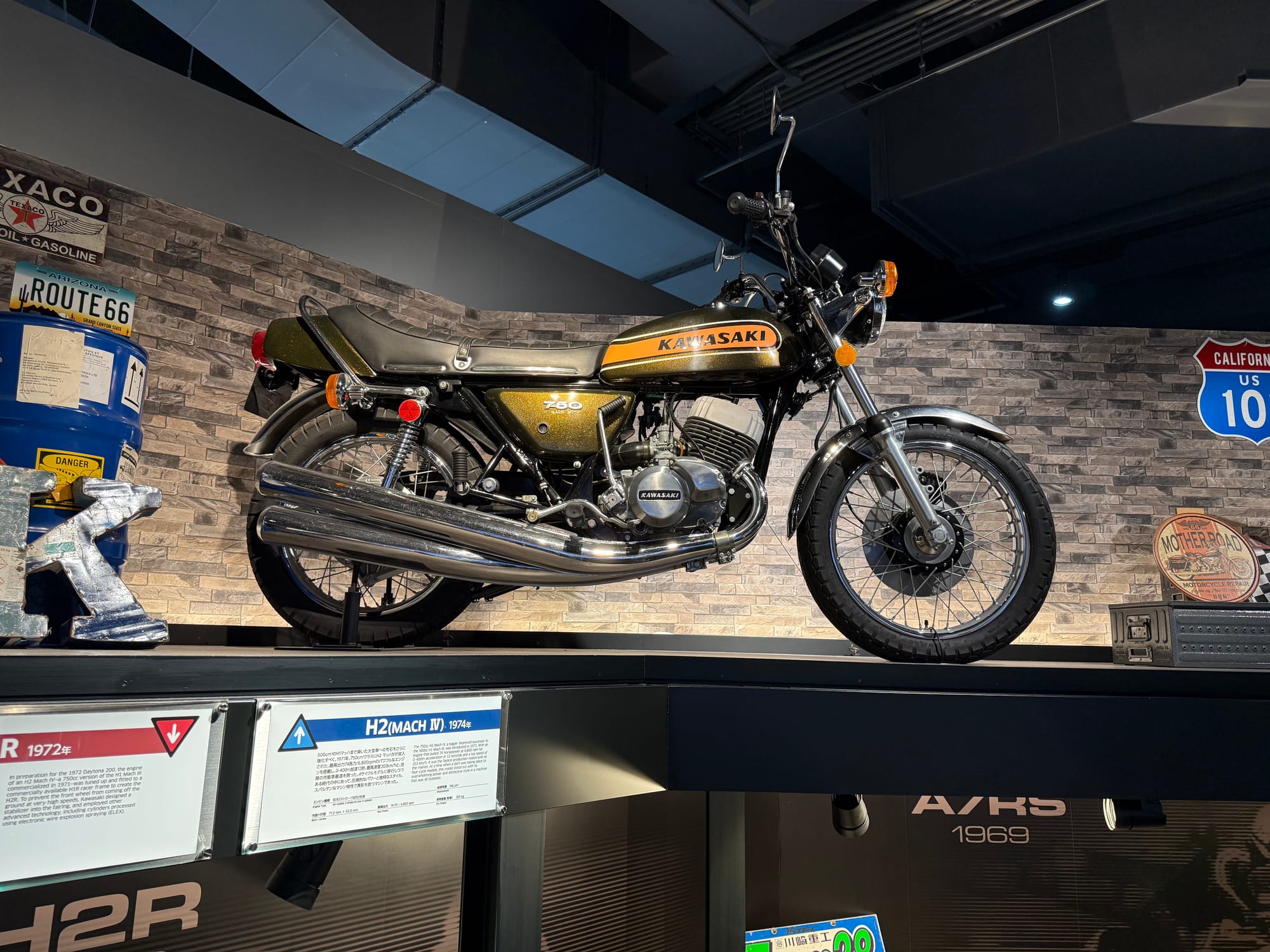
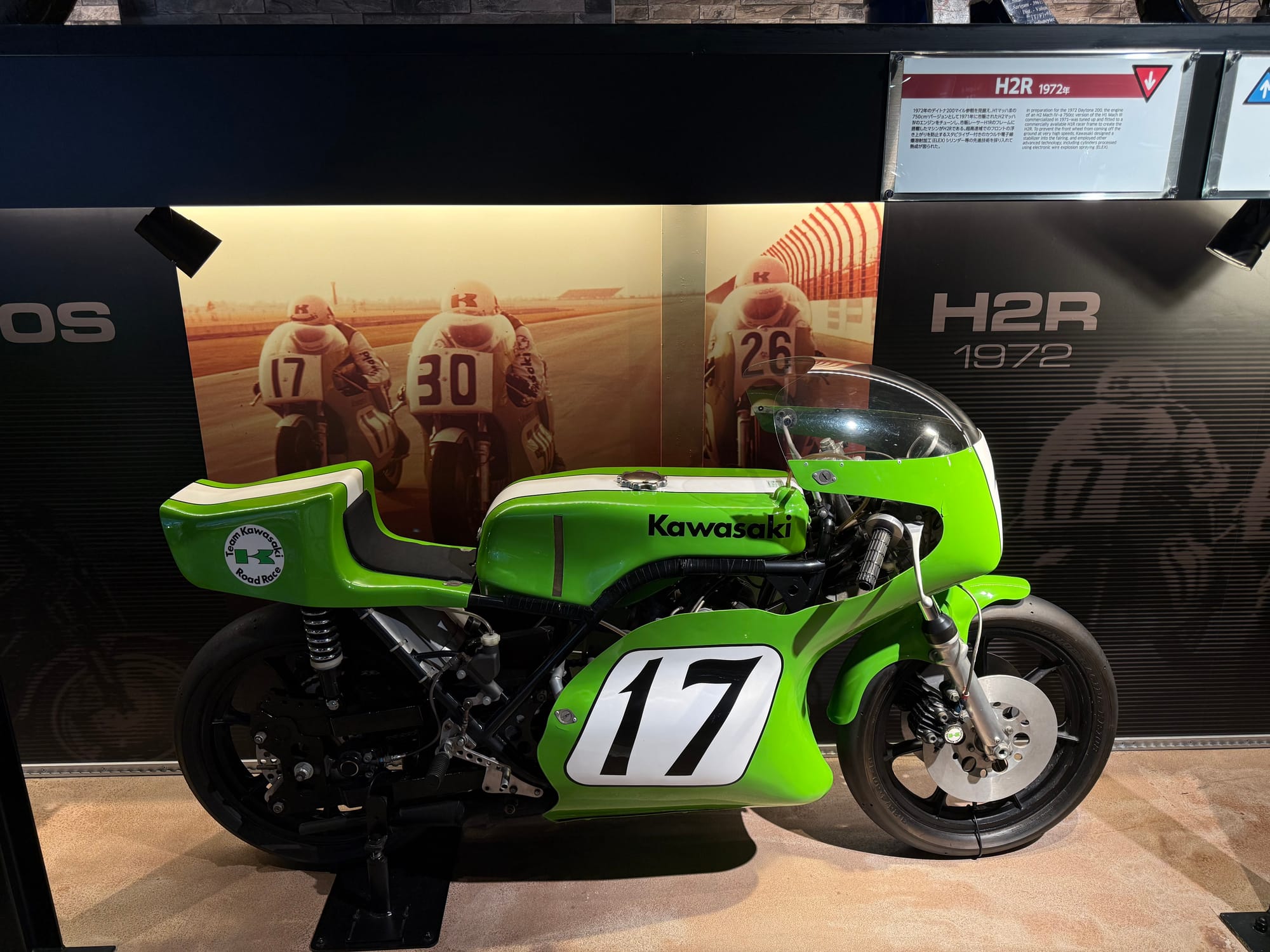
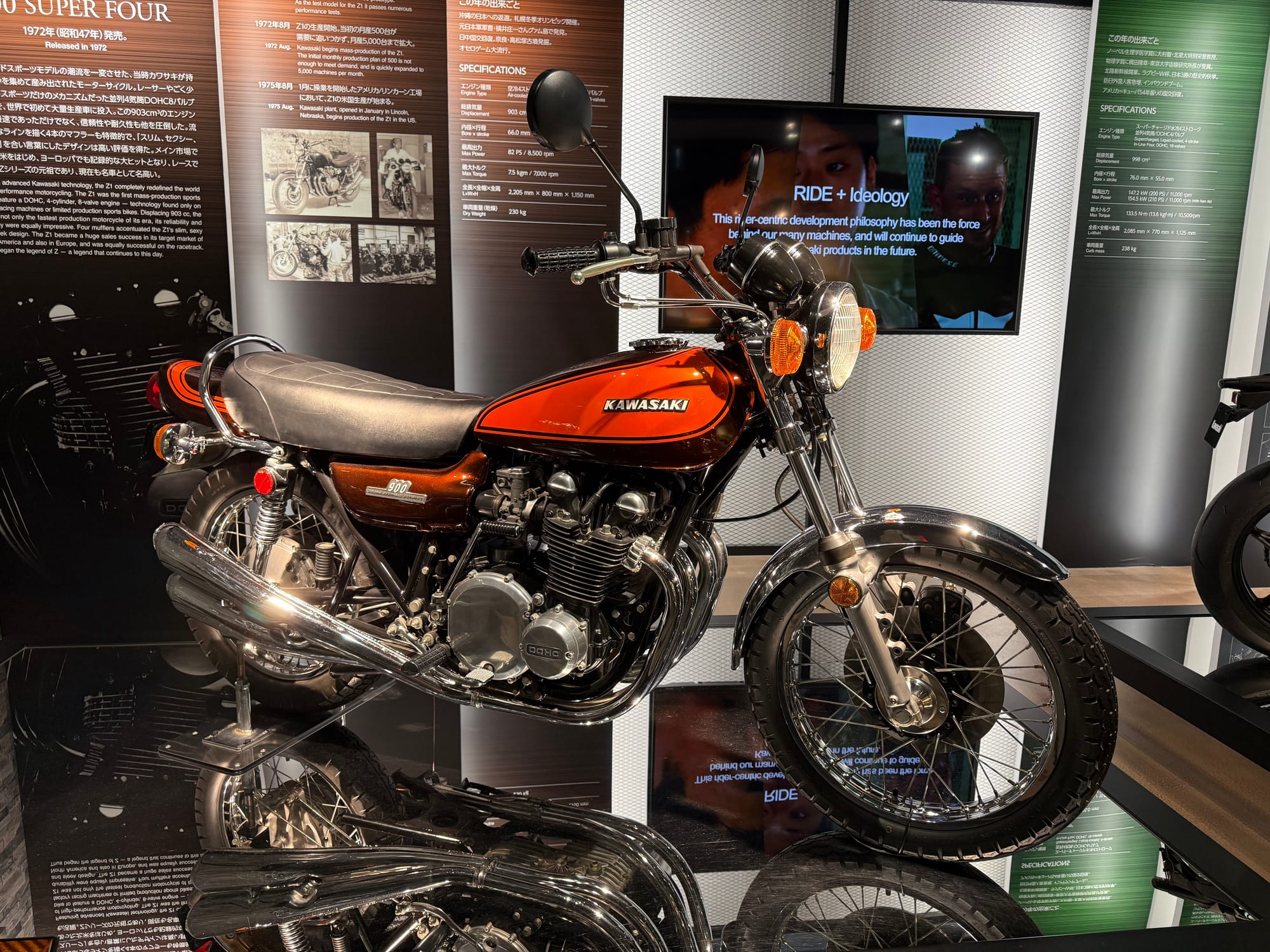
They also have a bunch of motorbikes on display here as well, which is the main reason I wanted to go and it only cost 960 yen to get in to both the maritime museum and Kawasaki. One of the motorbikes that I got to sit on was really nice and it is called the Meguro S1. It is only a 233cc motorbike, but it is really nice and comfortable to sit on and I could quite easily see myself riding one, it is just a shame they aren't available over here in the UK, but they do have a similar and bigger one available in the UK.
The Kawasaki Meguro S1 pays tribute to the heritage of Meguro motorcycles, a brand that became part of Kawasaki in the 1960s. Its retro styling draws inspiration from classic Japanese motorcycles while incorporating modern engineering and technology.A promotional display for the Kawasaki Meguro S1, a modern motorcycle inspired by the heritage of the historic Meguro brand. Its classic styling pays tribute to one of the most influential names in early Japanese motorcycling while incorporating contemporary engineering.A display of Kawasaki motorcycles spanning road racing, motocross and production models at Kawasaki Good Times World. The exhibit showcases the company's long involvement in international competition, including World Superbike and motocross racing.The Kawasaki H2 Mach IV, introduced in 1972, became one of Kawasaki's most iconic motorcycles. Powered by a 750 cc two-stroke triple-cylinder engine, it earned a reputation for exceptional acceleration and helped establish Kawasaki's performance-focused image during the 1970s.The Kawasaki H2R was a factory racing version of the legendary 750 cc two-stroke H2. Developed for competition in the early 1970s, it helped establish Kawasaki's reputation for high-performance motorcycles on racetracks around the world.The Kawasaki Z1 900, introduced in 1972, was one of the most influential motorcycles of its era. Its powerful 903 cc DOHC inline-four engine and high performance helped establish Kawasaki as a major force in the global motorcycle industry.
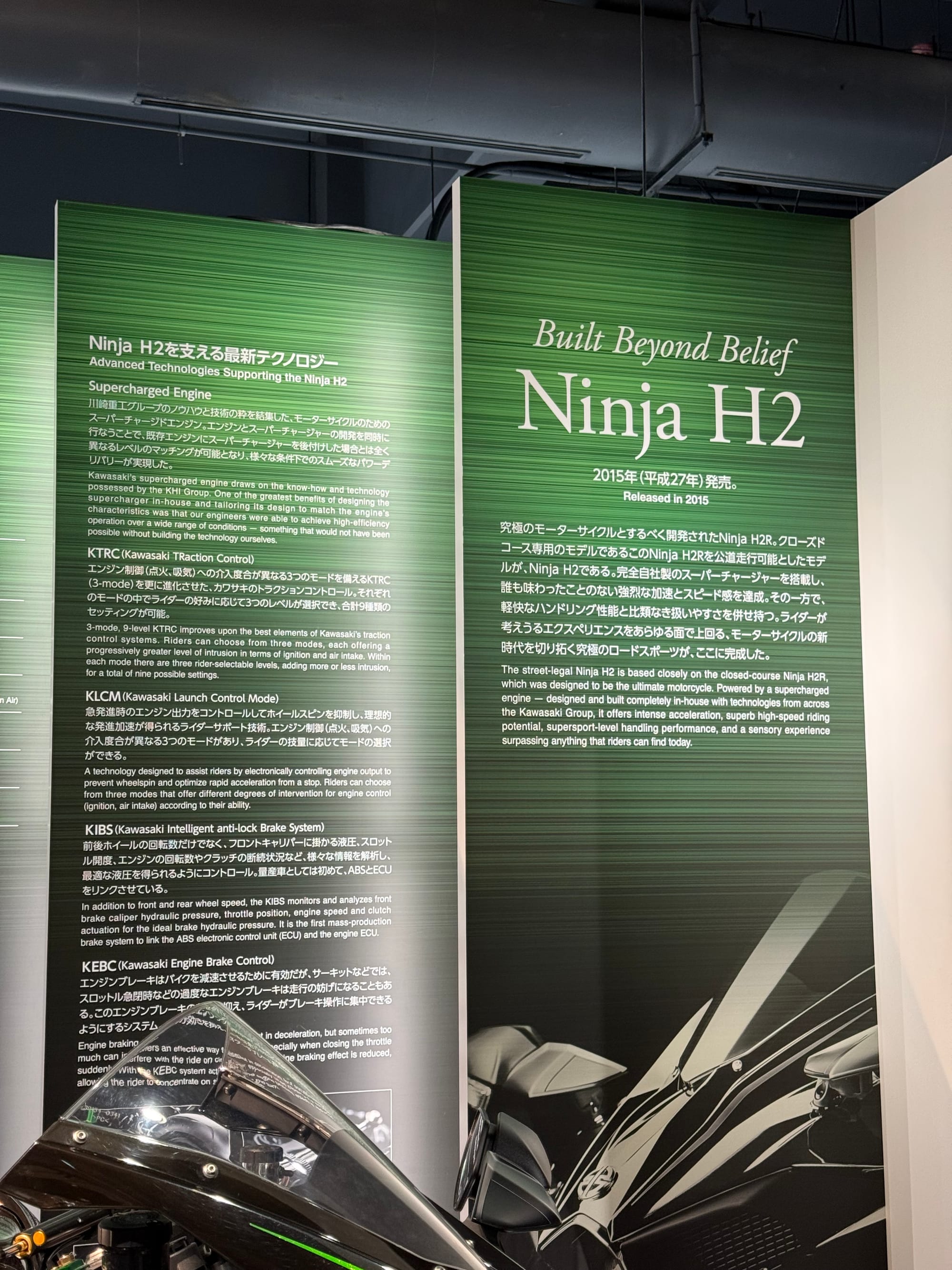
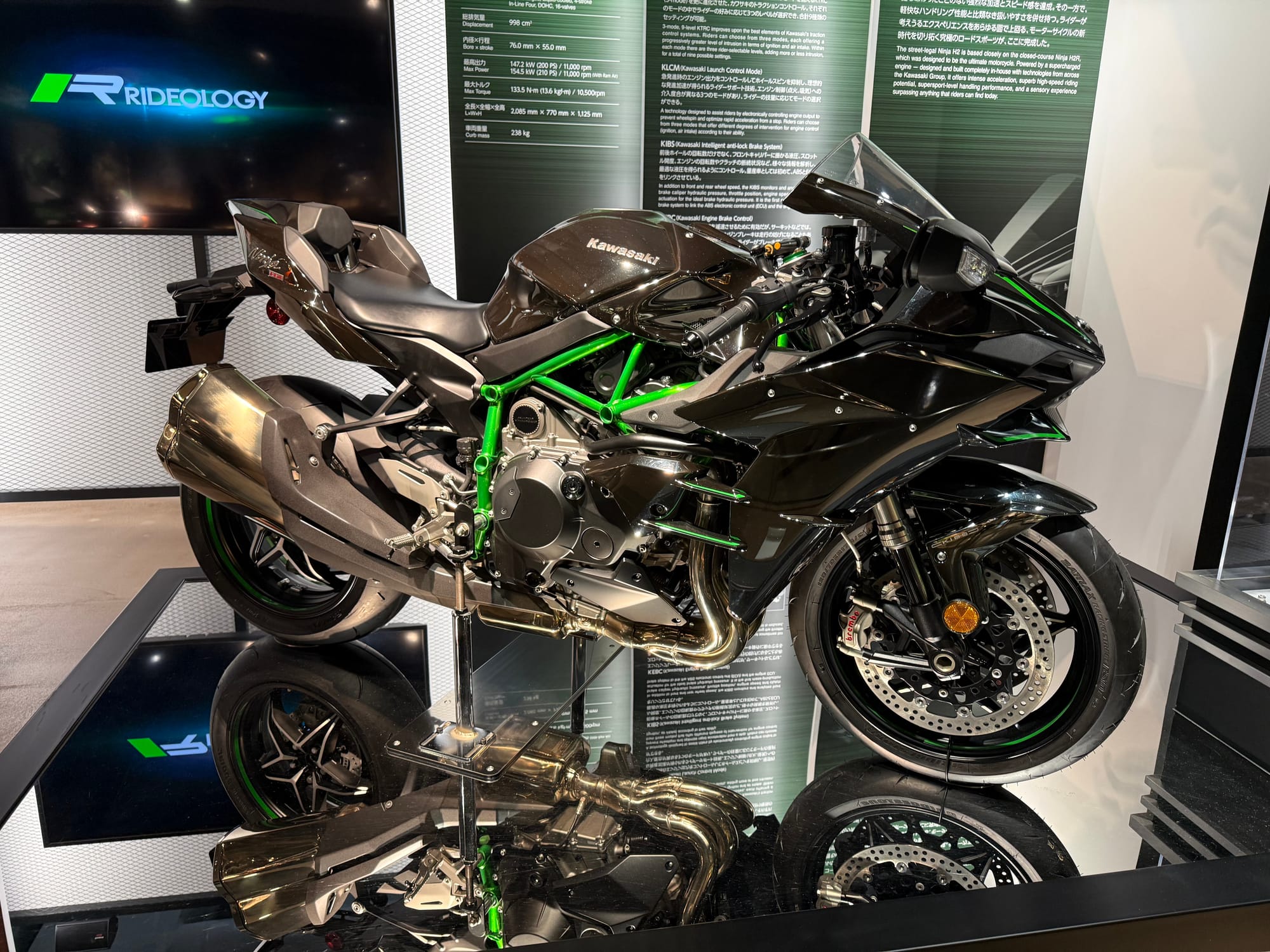
They also had a motorbike there that I really liked the look of, but would not want to ride and that is the Kawasaki Ninja H2, which is a 998cc supercharged, 4 cylinder hyper sport bike that has 200BHP, which is my than my car puts out. It does look really nice, but actually riding it would probably do my back in because of it being a hyper sport bike.
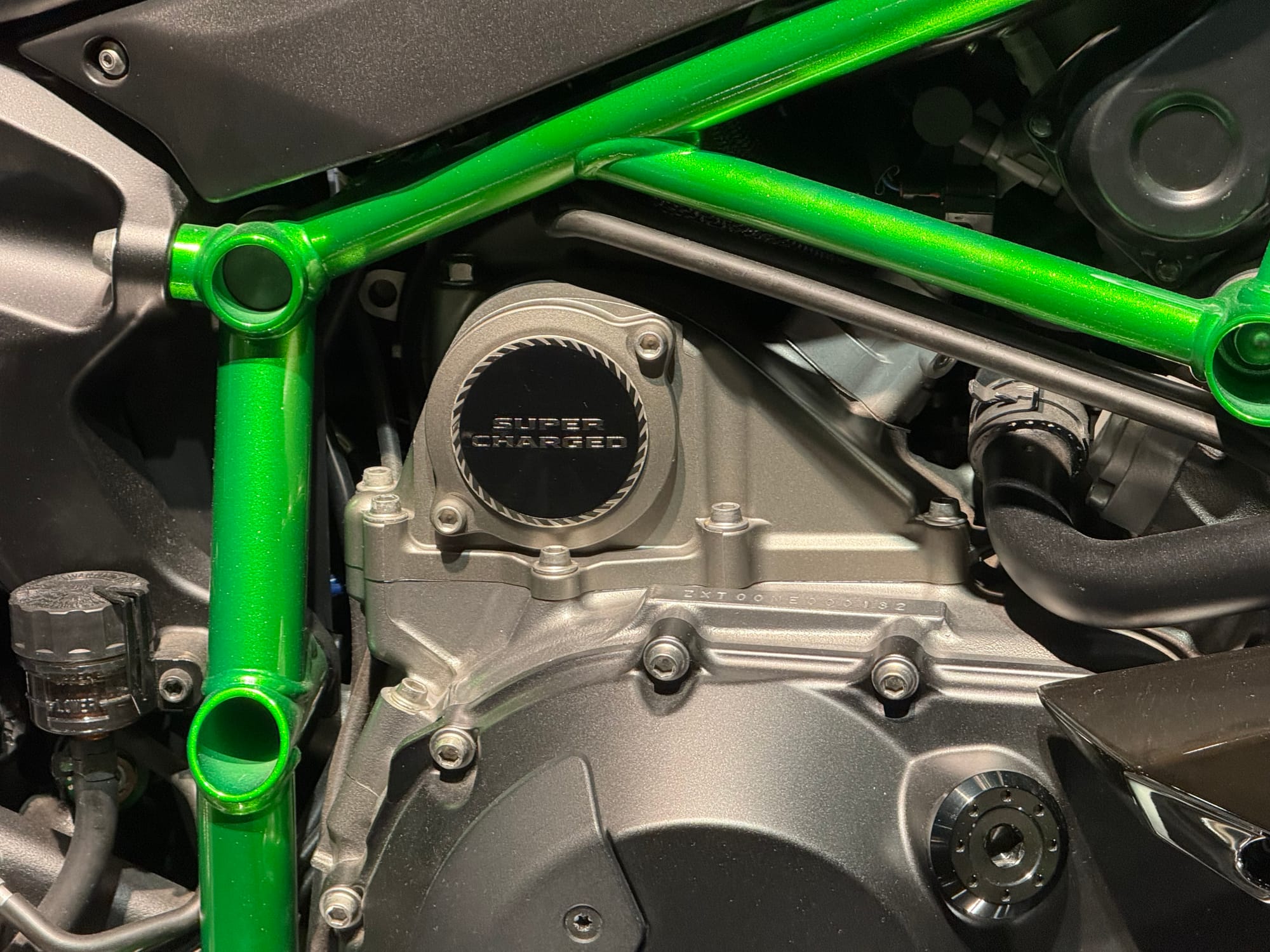
An exhibit introducing the Kawasaki Ninja H2, launched in 2015 as a road-legal version of the track-focused Ninja H2R. Powered by a Kawasaki-developed supercharged engine, it showcased the company's expertise in aerospace, engineering and high-performance motorcycle design.The Kawasaki Ninja H2, introduced in 2015, showcased Kawasaki's in-house supercharger technology and advanced electronics. Combining aerospace engineering expertise with superbike performance, it became one of the most technologically advanced motorcycles of its era.A close-up of the supercharger system fitted to the Kawasaki Ninja H2. Developed in-house by Kawasaki, the supercharged engine became a defining feature of the H2 series, delivering exceptional performance while showcasing technology derived from the company's wider engineering expertise.
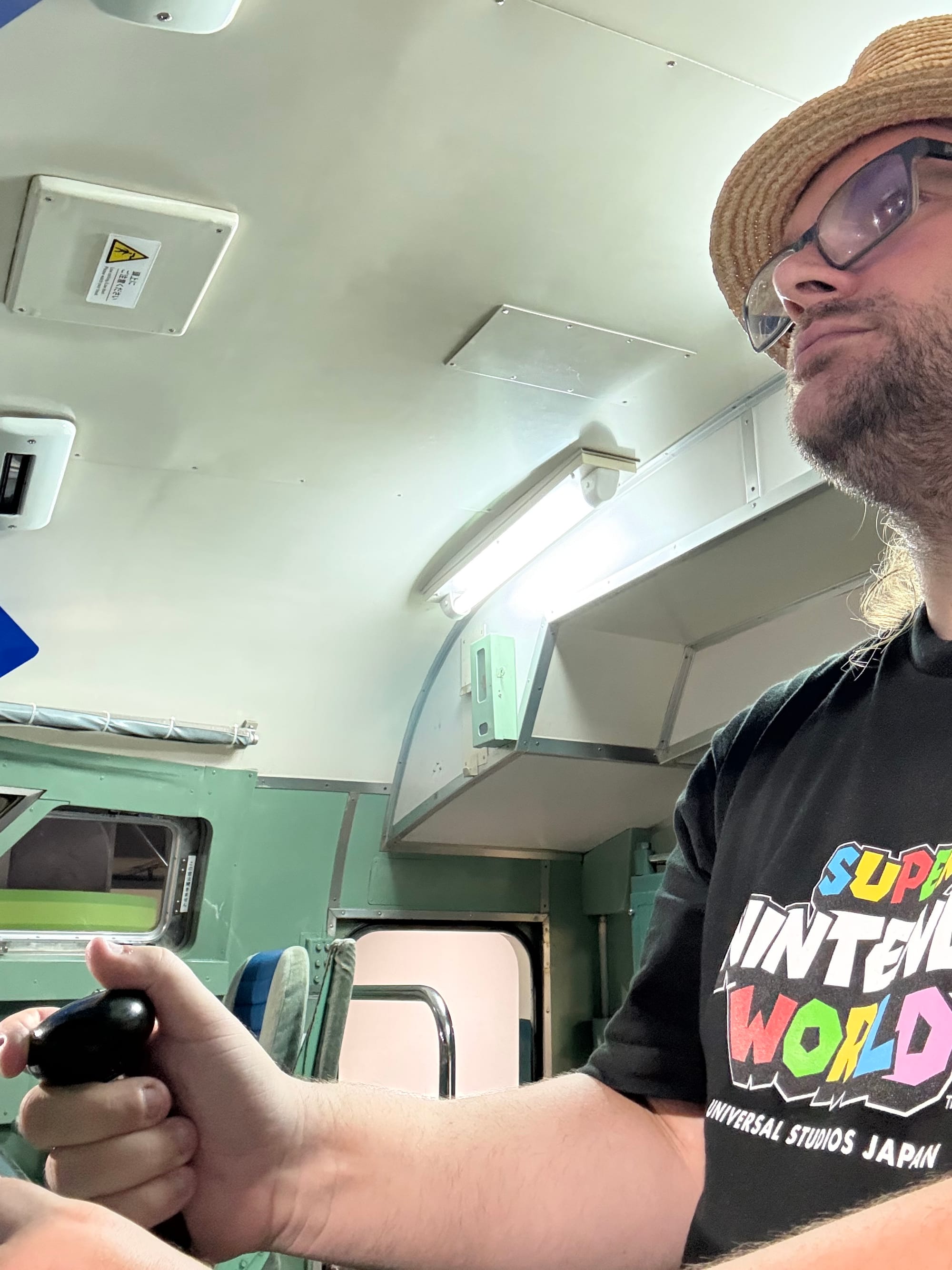
I also got to go on the Shinkansen series 0 and sit down in the drivers seat, which was really good, although there is a bit of a step up from the normal carriage to the drivers seat.
Sitting in the cab of a preserved 0 Series Shinkansen at Kawasaki Good Times World. The original bullet train entered service in 1964 and became a symbol of Japan's high-speed rail network.
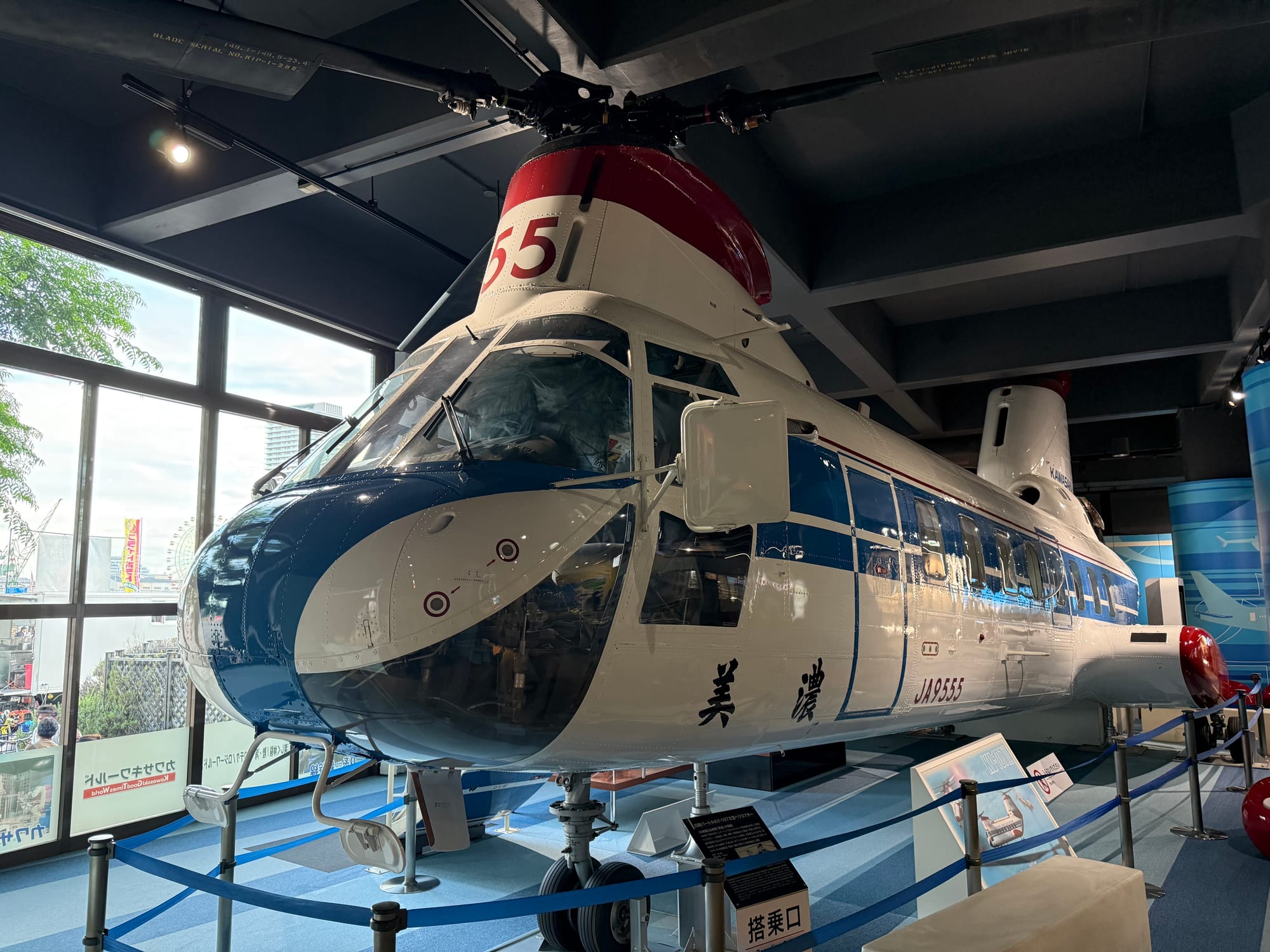
They also has a Kawasaki Vertol KV-107IIA-2 transport helicopter, just casually sitting inside as well, which was amazing to see up close.
A Kawasaki Vertol KV-107IIA-2 tandem-rotor helicopter. Built under licence from Boeing Vertol, the type served in transport, rescue and firefighting roles throughout Japan.
Rest Day
16th August
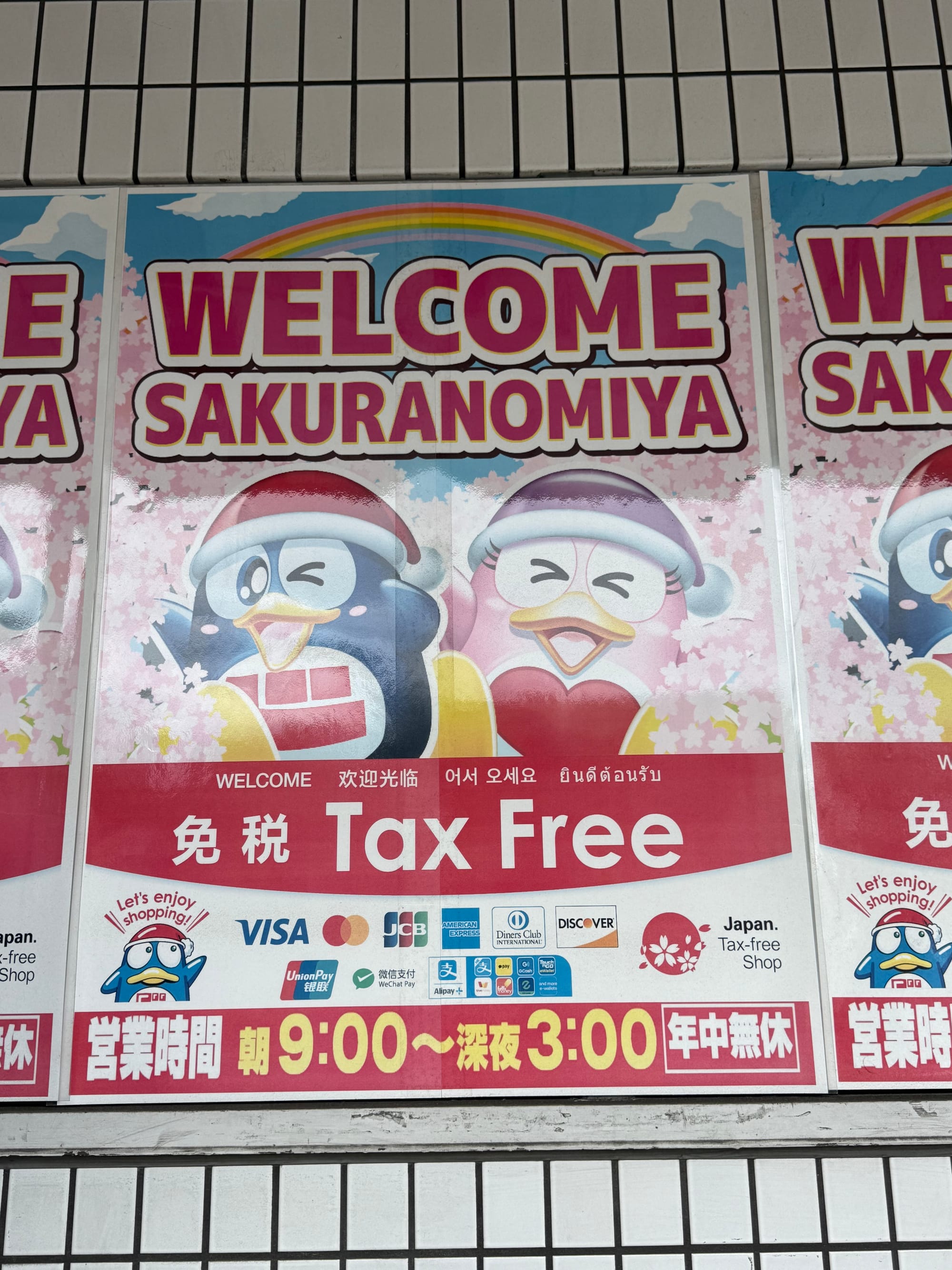
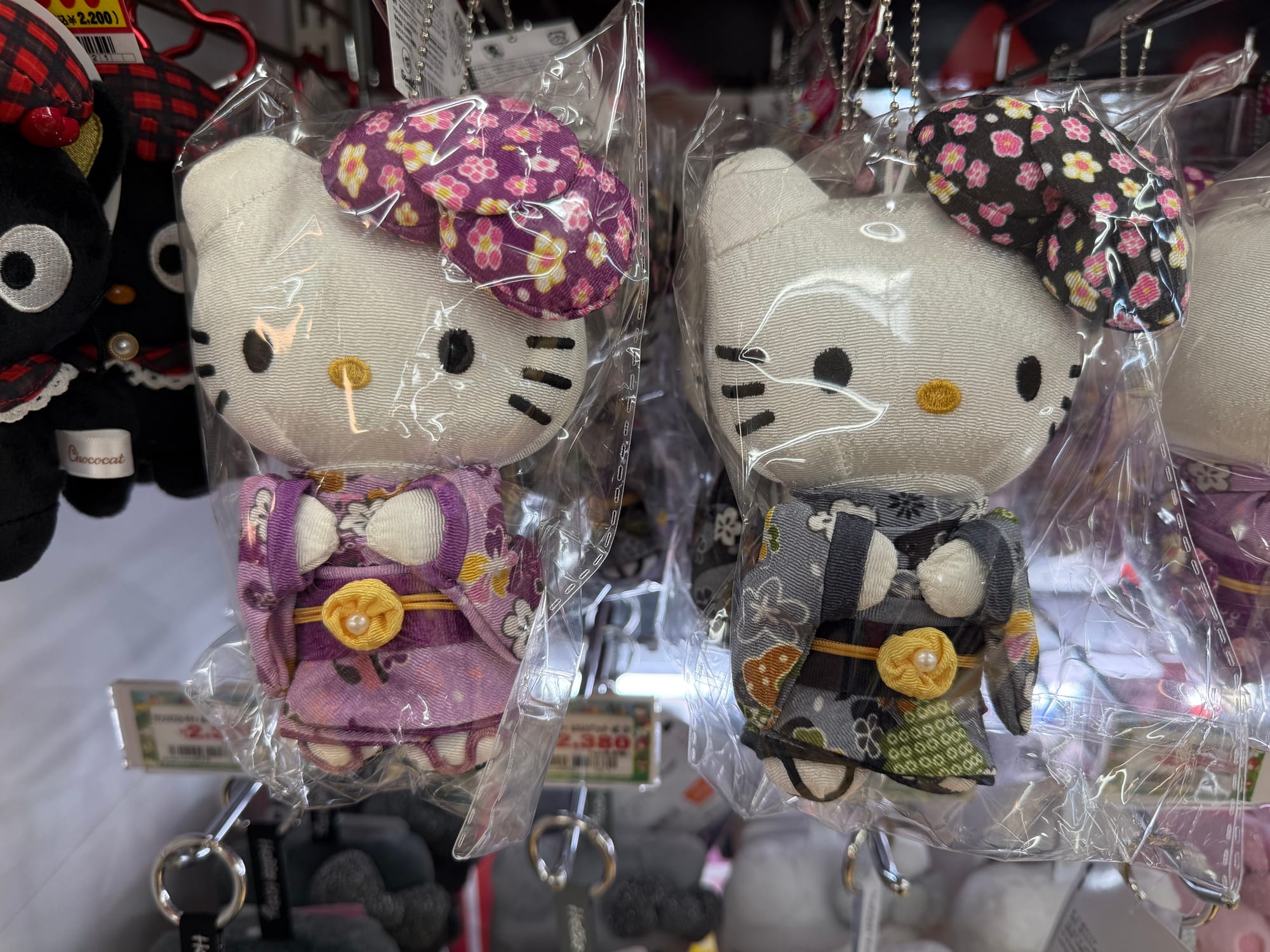
There wasn't much that I did today apart from going to get some last minute souvenirs from Don Quijote and Toys R Us, yes that still exists over in Japan!
A colourful welcome sign at Don Quijote Sakuranomiya in Osaka, advertising tax-free shopping for international visitors.Hello Kitty kimono key chains on sale in Osaka, featuring traditional Japanese patterns and seasonal floral designs.
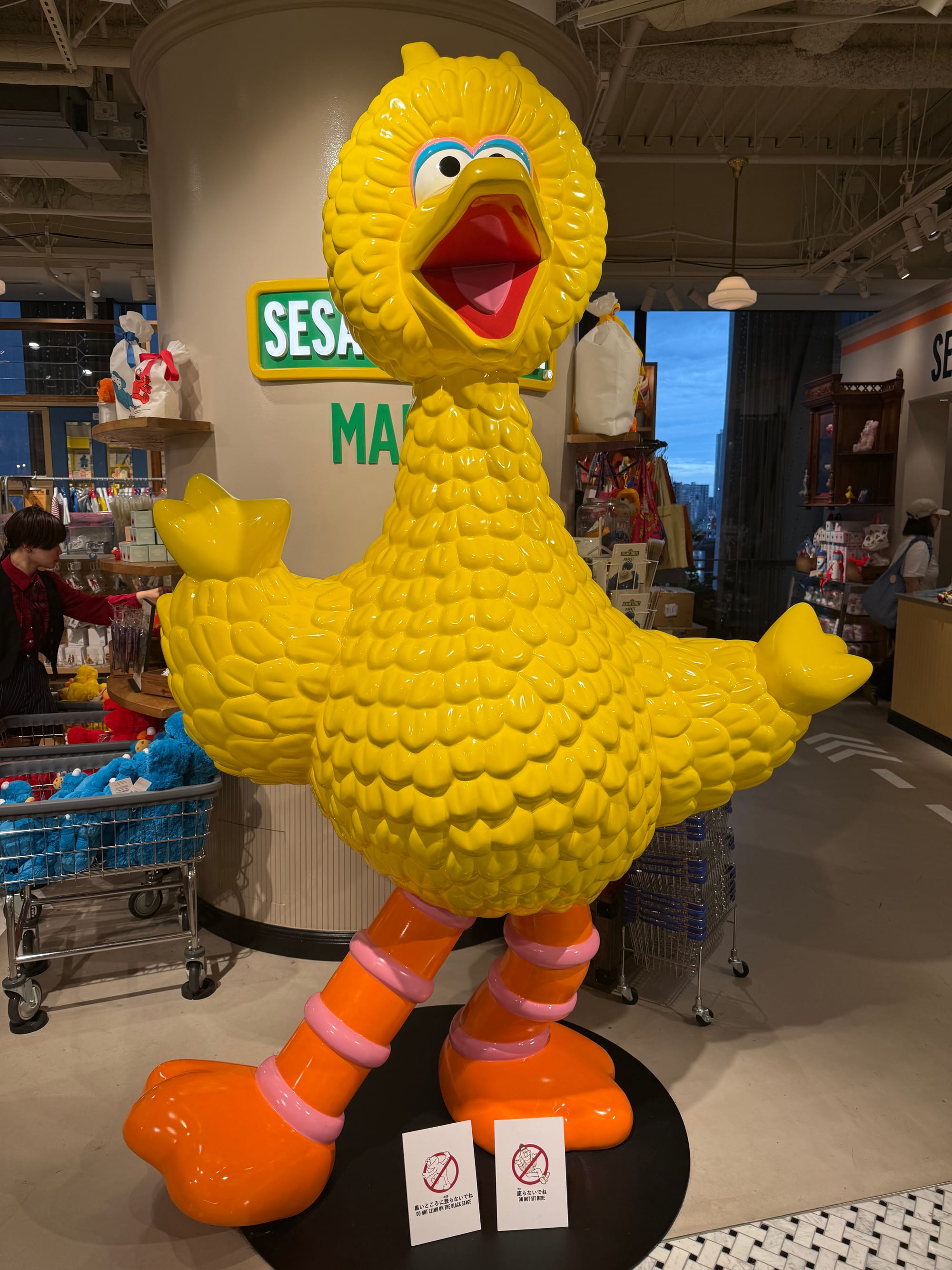
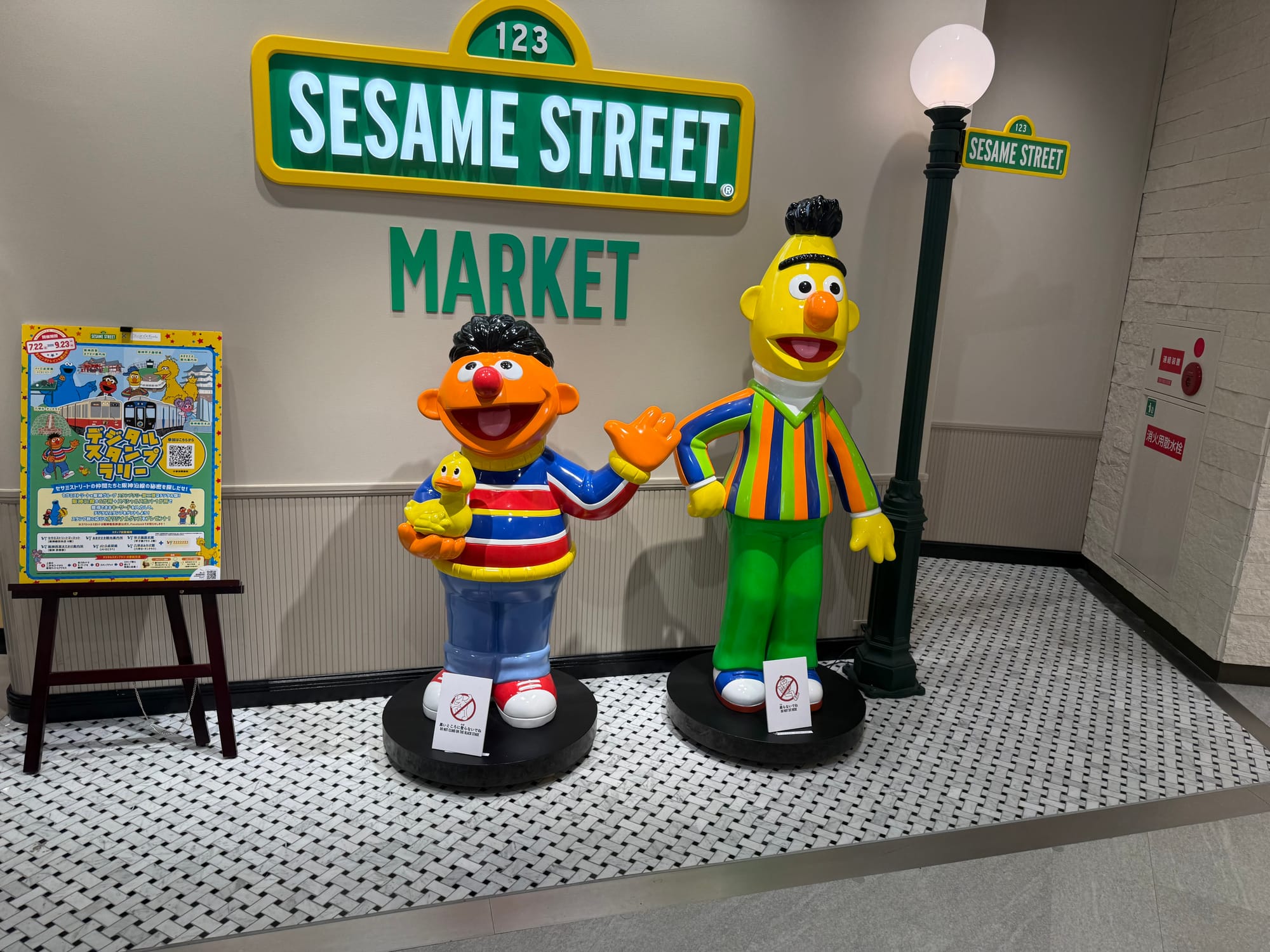
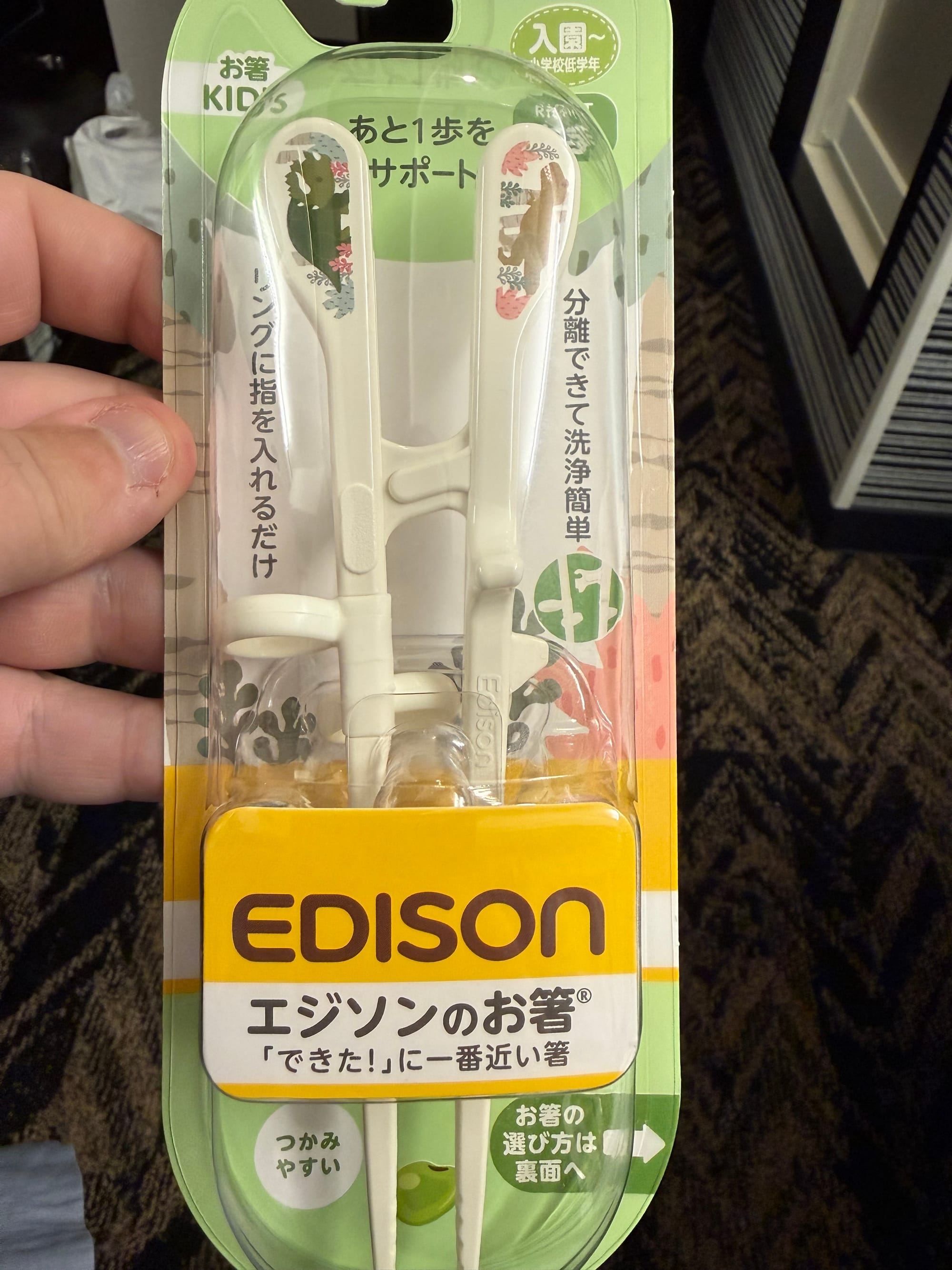
I also went to Loft to try and get some chopsticks for toddlers, but alas they didn't have any, but there is some Sesame Street themed things there.
A giant Big Bird statue inside the Sesame Street Market store in Osaka, surrounded by character merchandise and themed displays.Statues of Ernie and Bert welcoming visitors to Sesame Street Market in Osaka.
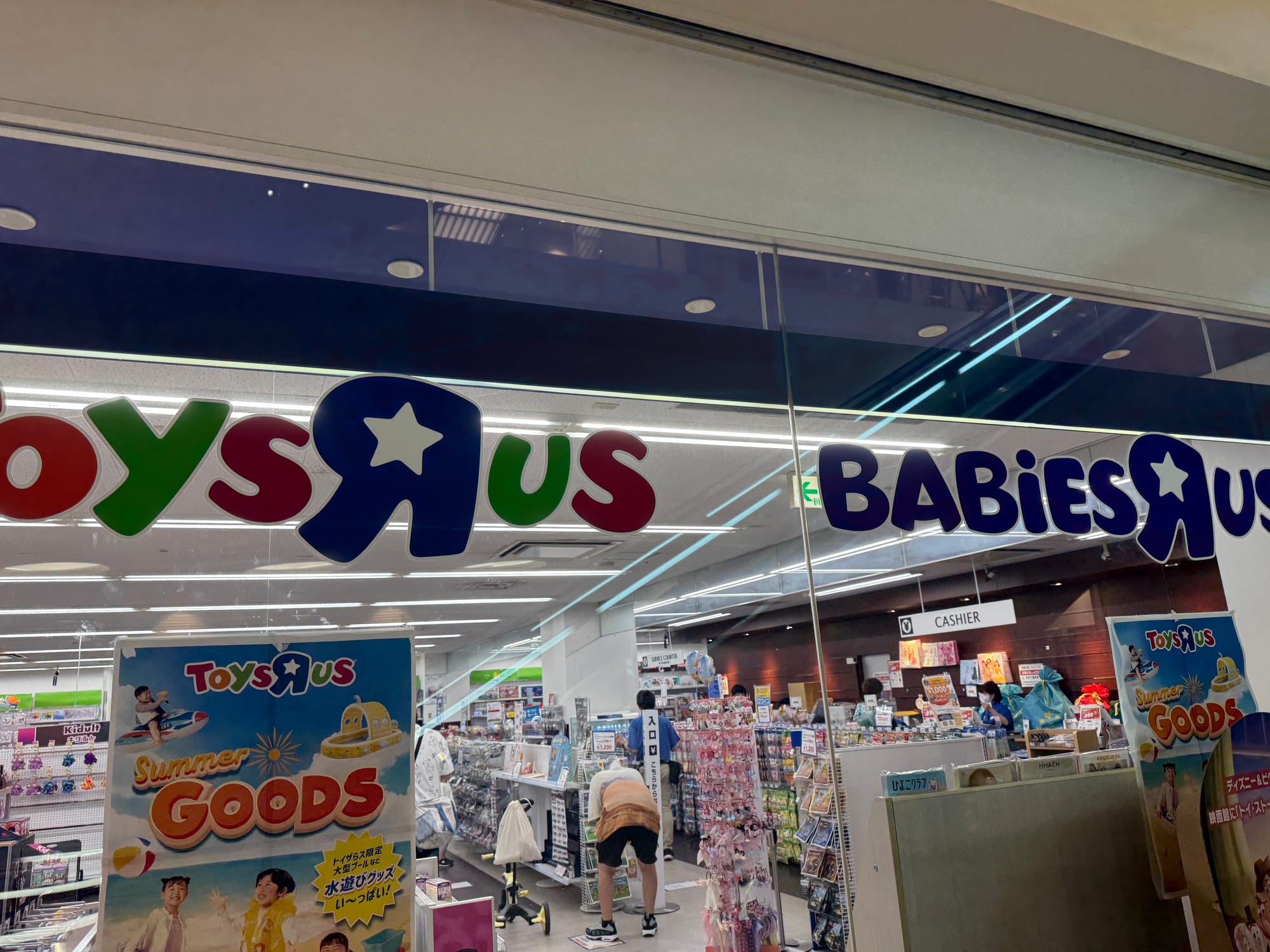
I was able to get some from Toys R Us in the end though.
The entrance to a Toys “R” Us and Babies “R” Us store in Osaka. The combined store offers toys, games, baby products and children's merchandise, making it a popular shopping destination for families.Edison training chopsticks designed to help young children learn how to use chopsticks. The finger-loop design guides hand placement while developing coordination and dining skills.
So, I was now in Namba with and important decision: "Do I go back to Umeda or stay in Namba for something to eat and seeing that I was in Namba Parks, I decided to have a look around.
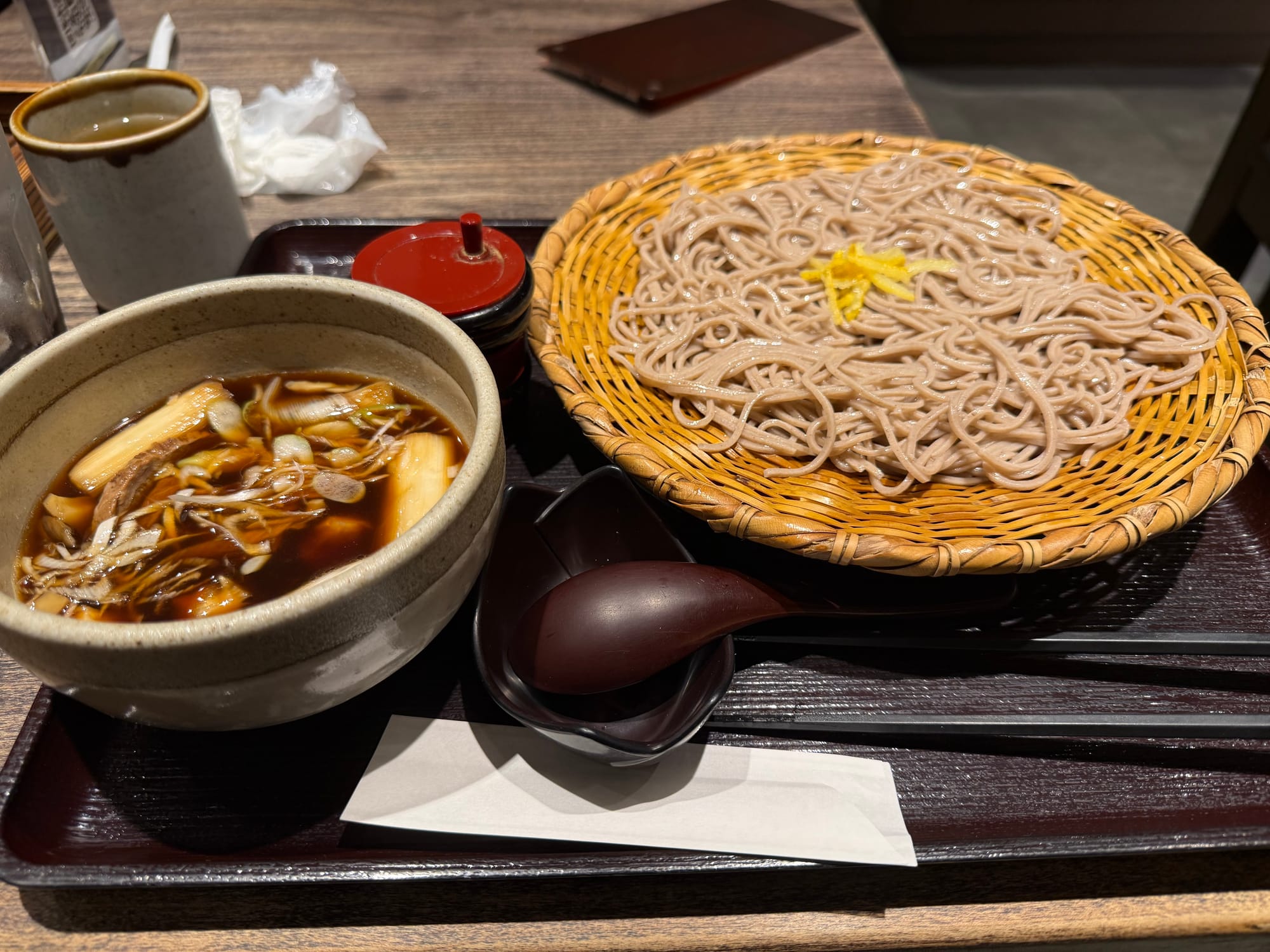
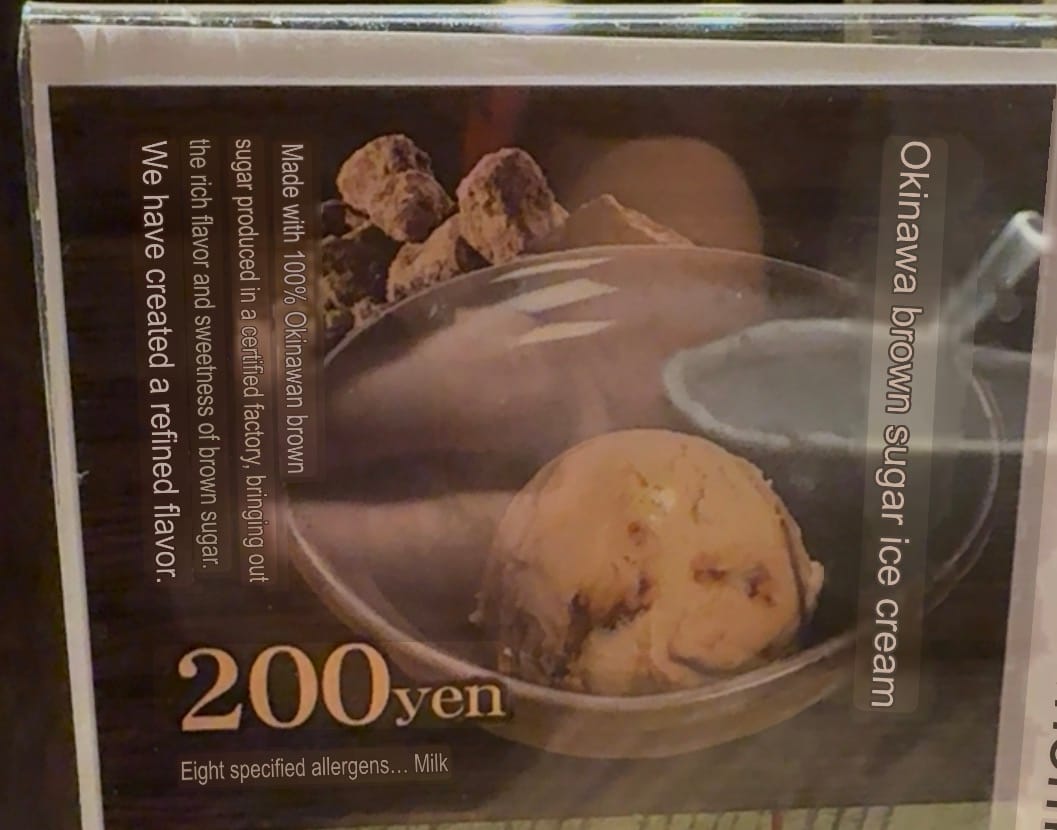
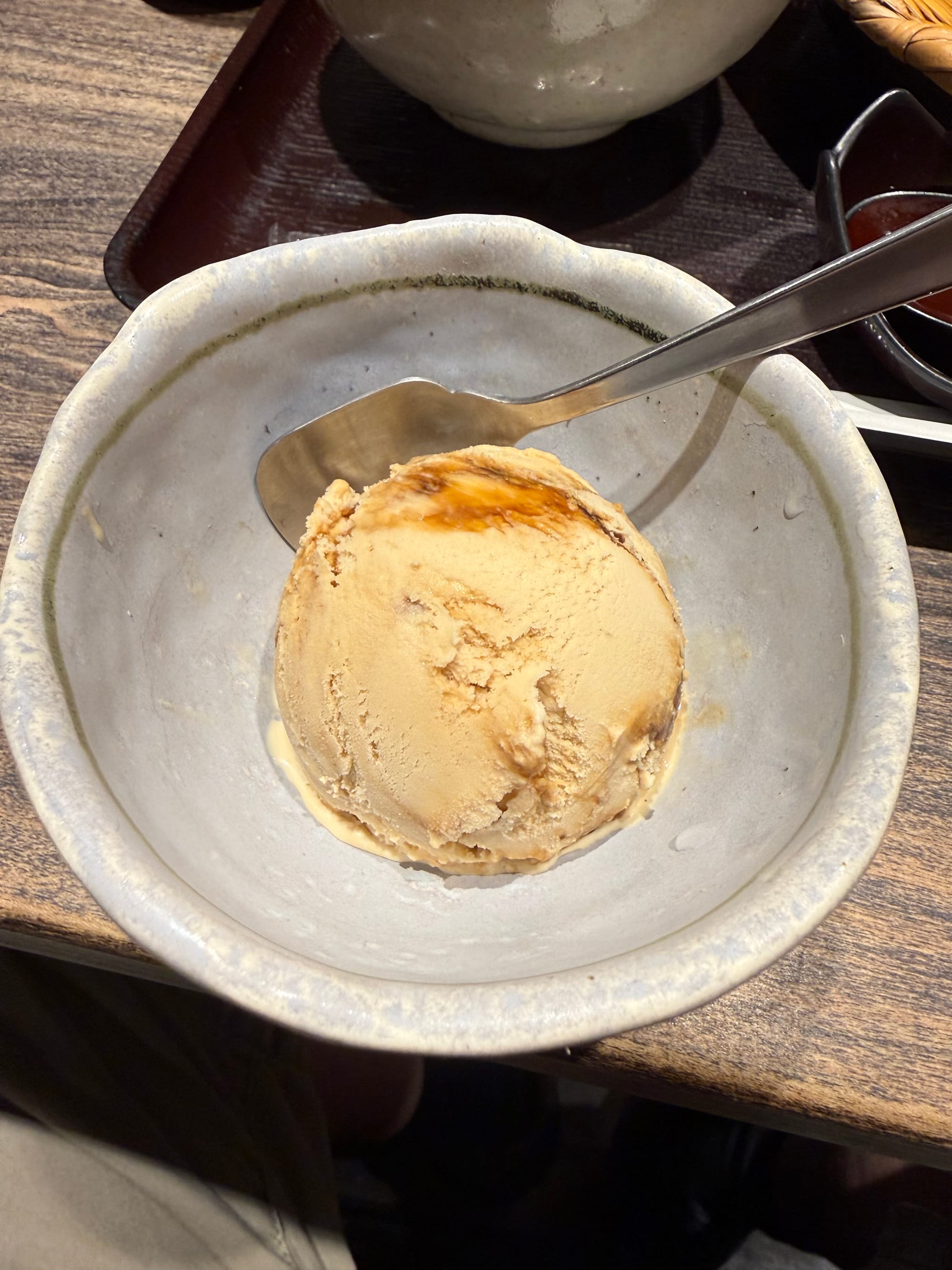
I finally decided on a place called Sojibo, which does soba noodle sets. I got the duck and soba set, a drink and Okinawan brown sugar ice cream.
A traditional soba meal featuring chilled buckwheat noodles served with a hot duck, mushroom and leek dipping broth. The rich, savoury broth provides a flavourful contrast to the cool noodles.A menu display for Okinawa brown sugar ice cream. Made with traditional Okinawan brown sugar, the dessert is known for its rich caramel-like flavour and distinctive sweetness.Okinawa brown sugar ice cream served after a soba meal. Made with traditional Okinawan brown sugar, it has a rich caramel-like flavour and subtle sweetness.
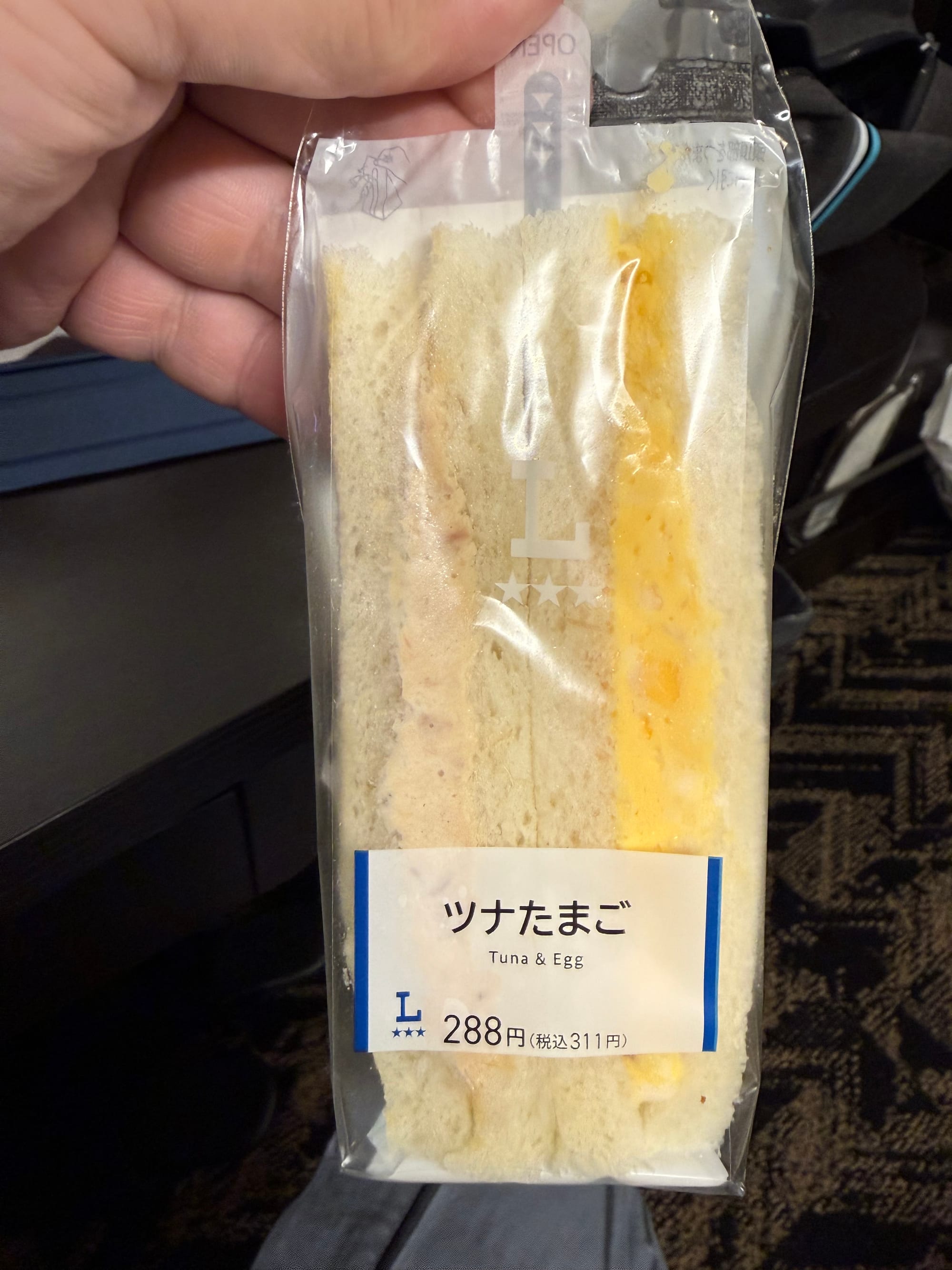
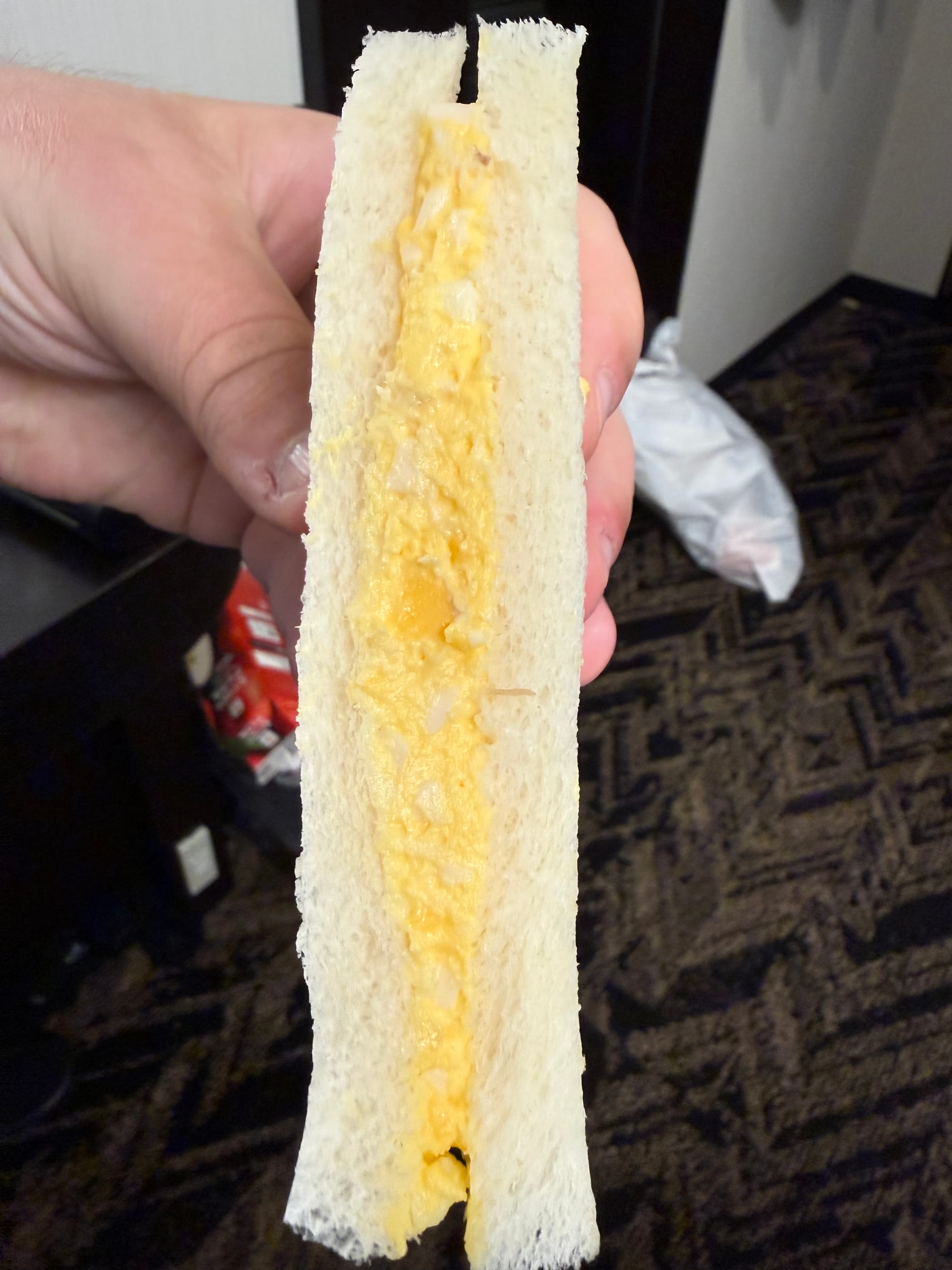
Later that evening, I also had a try of and egg sandwich from a convenience store, which was really nice. It is made from boiled eggs and is mixed with a mayo made from egg yokes, which is what gives it its distinct yellow colour.
A tuna and egg sandwich from Lawson, one of Japan's major convenience store chains. Convenience store sandwiches are a popular grab-and-go meal for commuters and travellers across Japan.A classic Japanese egg sandwich (tamago sando), featuring soft milk bread filled with a creamy chopped egg and mayonnaise mixture. A popular convenience store snack known for its simple ingredients and smooth texture.
Solaniwa Onsen and Heading Home
17th August
Today was fun, but not so much a good start. I packed my two suitcases the night before, which meant that I only had to pack my backpack today. I woke up for breakfast, but then fell asleep again and then got woken up by room phone going off, with the reception desk asking me if i was checking out or needed an hour extension. I missed breakfast as well, but it wasn't all bad.
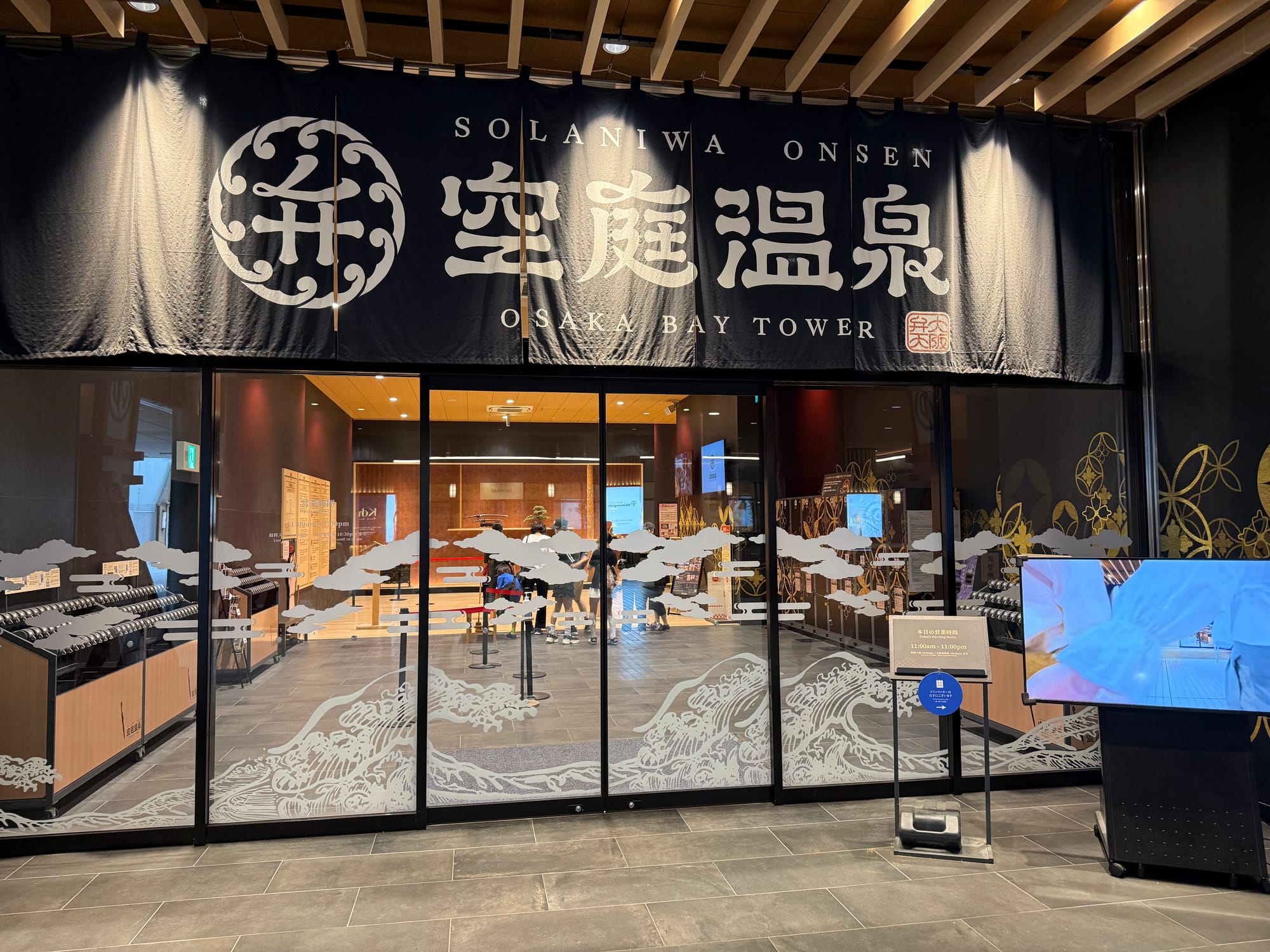
I checked out, left my bags at the hotel and then headed to Solaniwa Onsen, which is at Osaka Bay Tower.
Solaniwa Onsen
The entrance to Solaniwa Onsen Osaka Bay Tower, a large hot spring and spa complex inspired by traditional Japanese bathhouse culture. It combines natural hot spring baths with themed relaxation and garden areas.
Solaniwa Onsen we supposed to be a few days ago, when I went to the maid cafe, but I must have needed that lie in as once I went back to my room after breakfast, I fell asleep again while looking at how to get there. You also have to put your shoes in a shoe locker as soon as you go in.
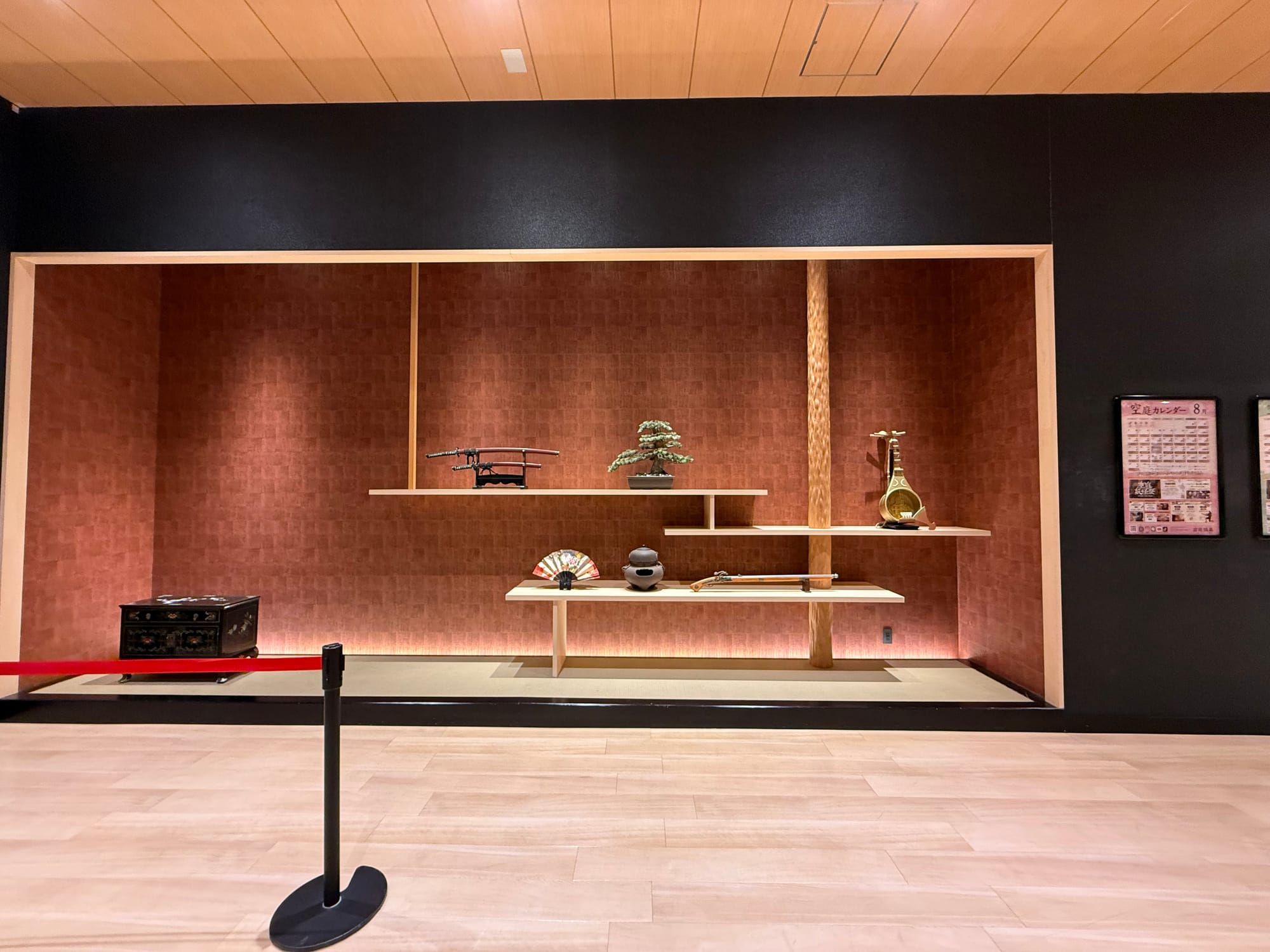
A decorative display at Solaniwa Onsen Osaka Bay Tower showcasing traditional Japanese cultural items, including samurai swords, a bonsai tree and other ornaments inspired by Edo-period aesthetics.
Solaniwa Onsen was really good and I could have quite happily stayed there until closing time at 11pm, but then I would have missed my flight which left off at 19:25.
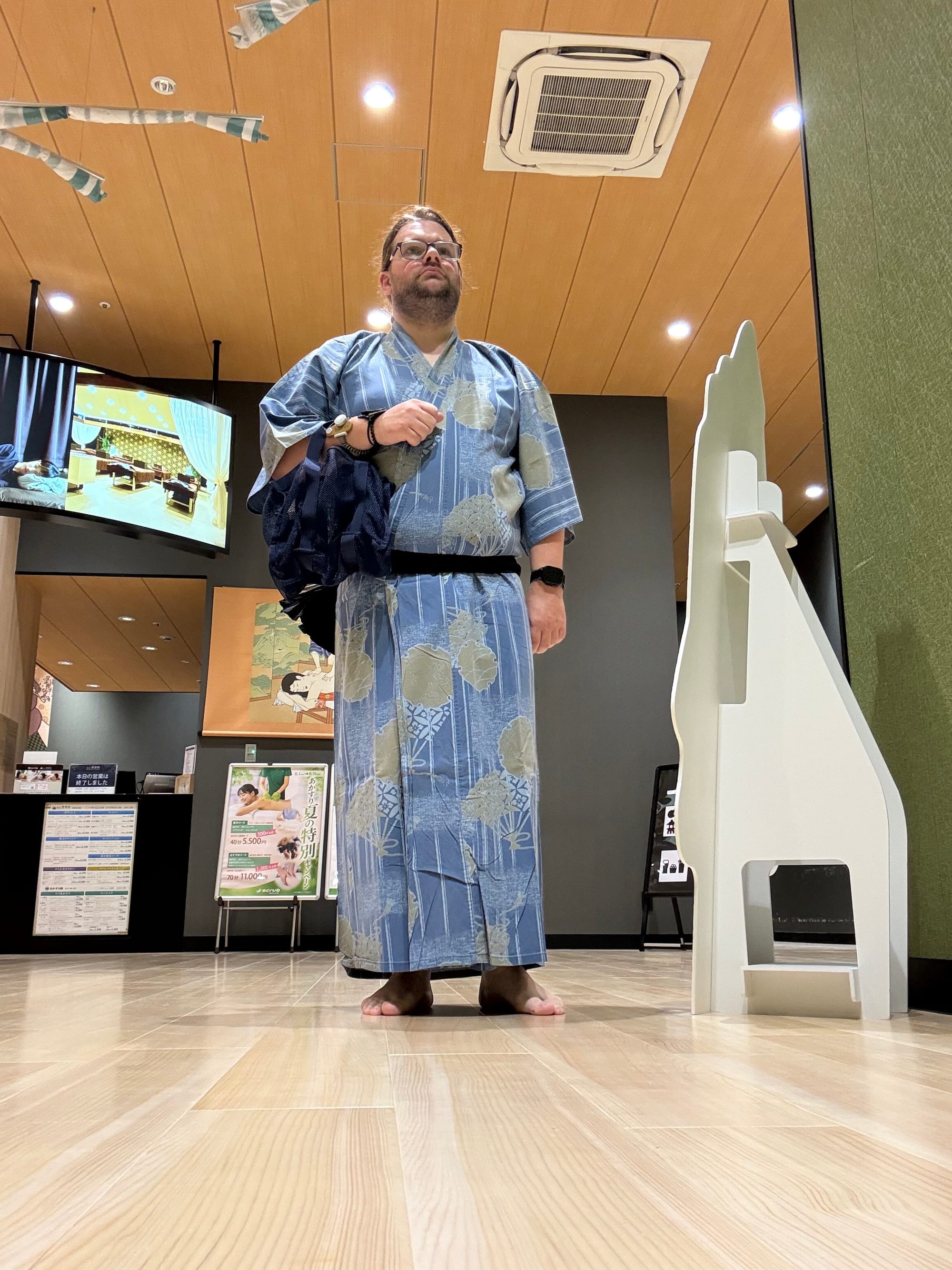
This is a big complex and cost me 2,640 yen (about £12.17) to enter, which includes Yukata rental.
Wearing a yukata at Solaniwa Onsen Osaka Bay Tower. Guests receive traditional-style clothing to wear while exploring the baths, relaxation areas and other facilities throughout the complex.
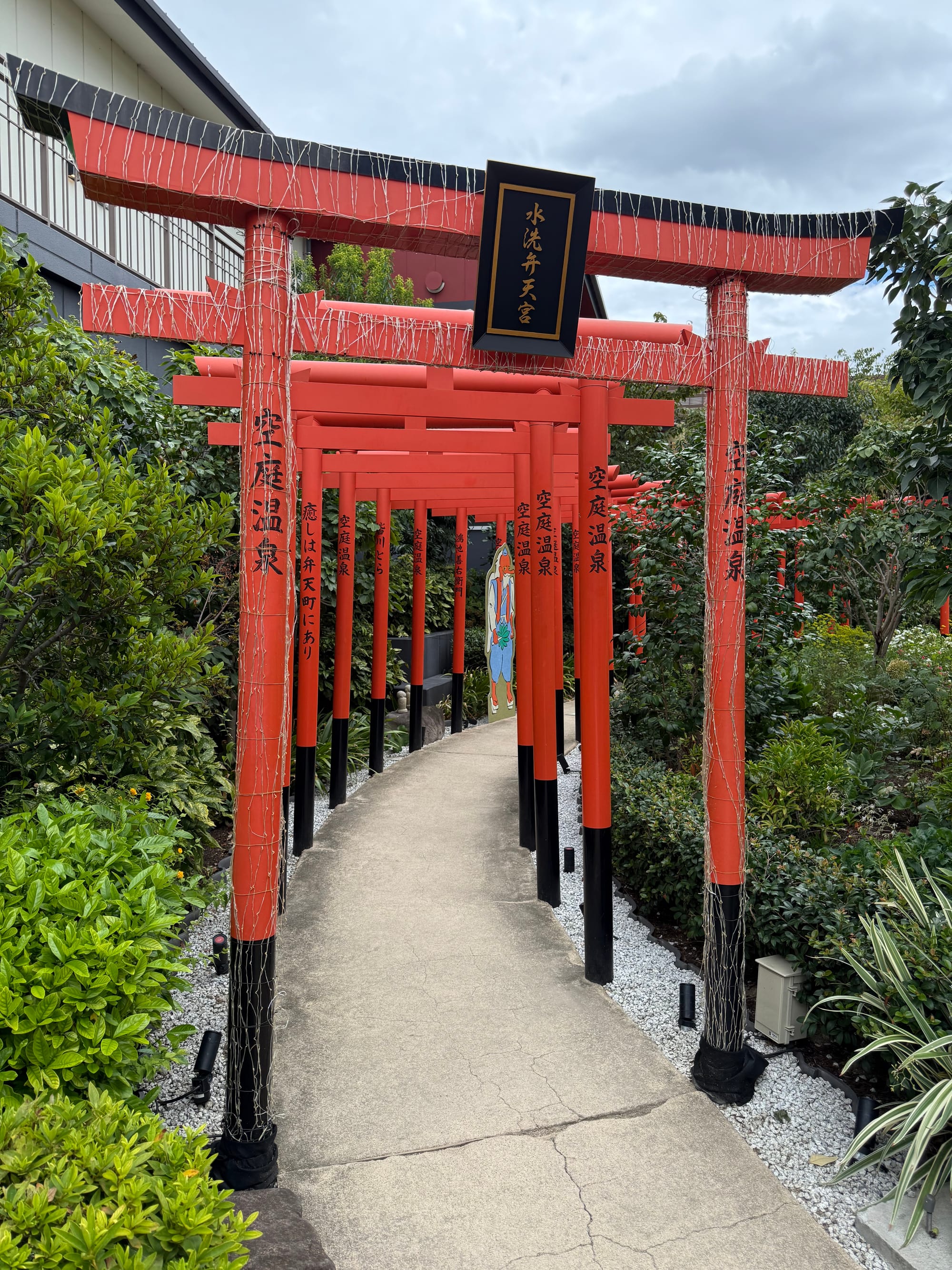
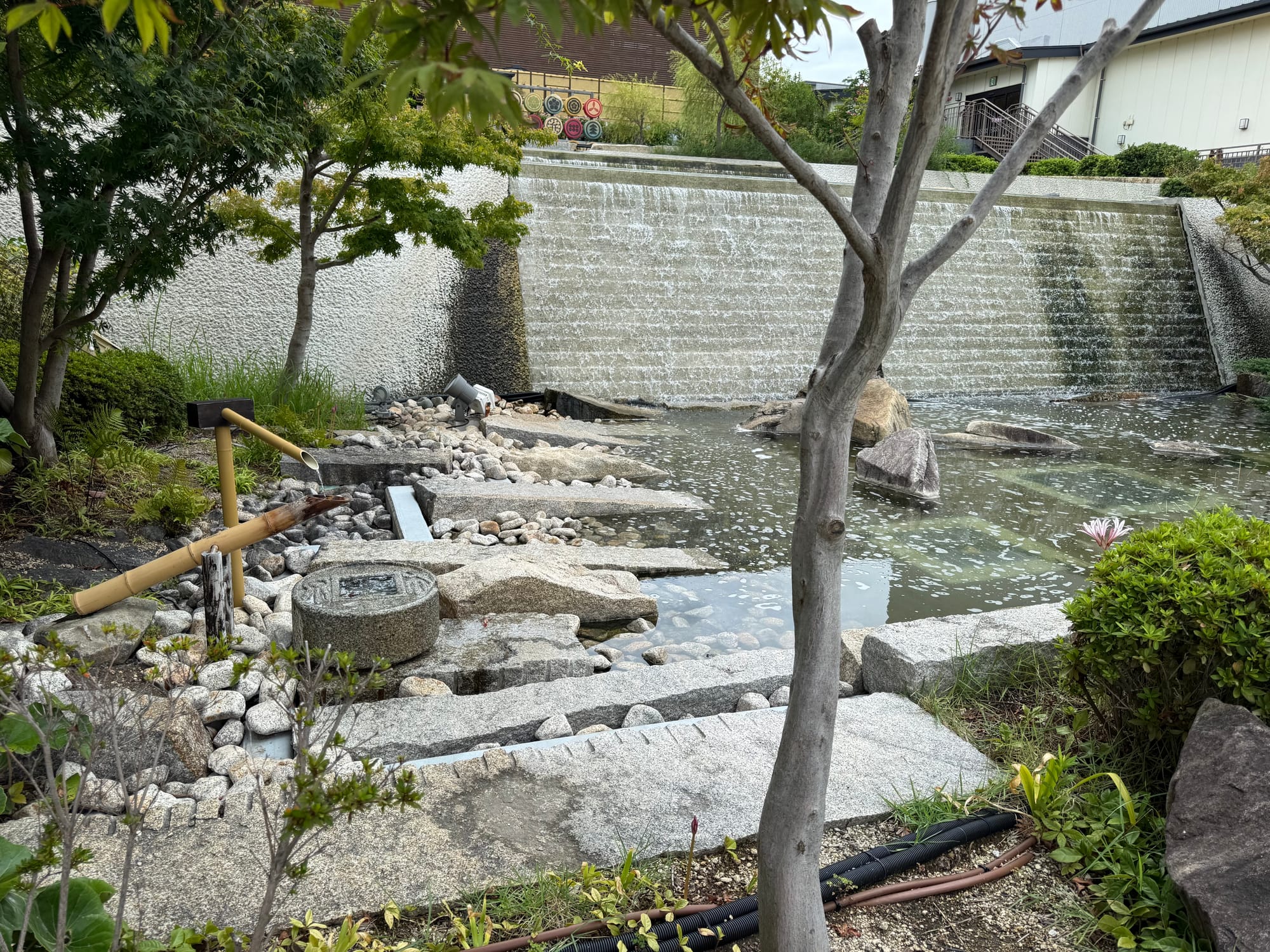
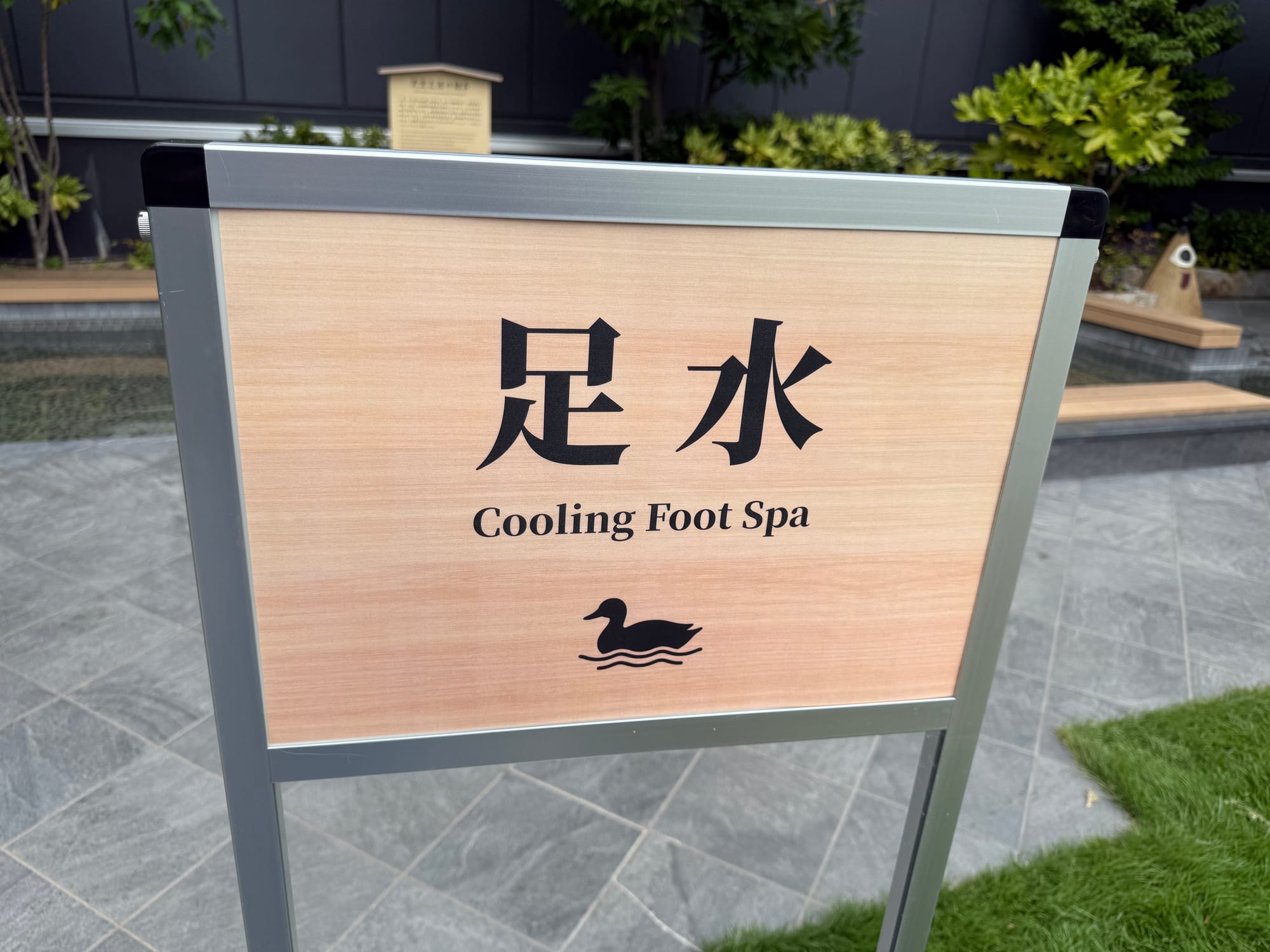
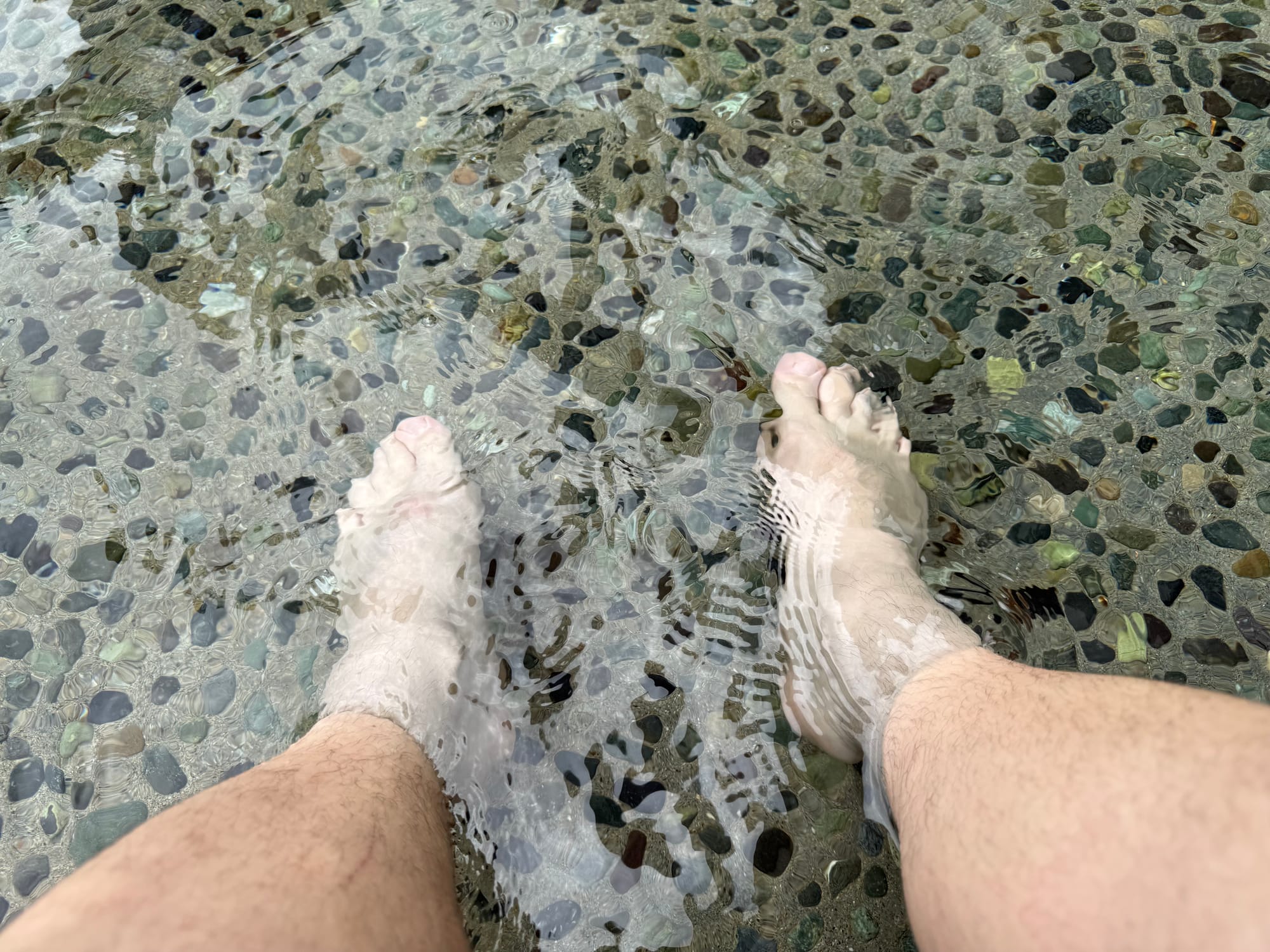
There have a rooftop garden here with cooling foot baths, some torii gates and also a mix of both indoor and outdoor hot springs.
A torii-lined pathway in the rooftop garden of Solaniwa Onsen Osaka Bay Tower. The landscaped garden features traditional Japanese design elements, providing a peaceful outdoor space within the onsen complex.A tranquil garden within Solaniwa Onsen Osaka Bay Tower, featuring a pond, waterfall and traditional Japanese landscaping. The rooftop garden provides a peaceful outdoor retreat alongside the onsen facilities.
It was bliss to be honest, which is why next time I plan on going there, I am going to spend the day.
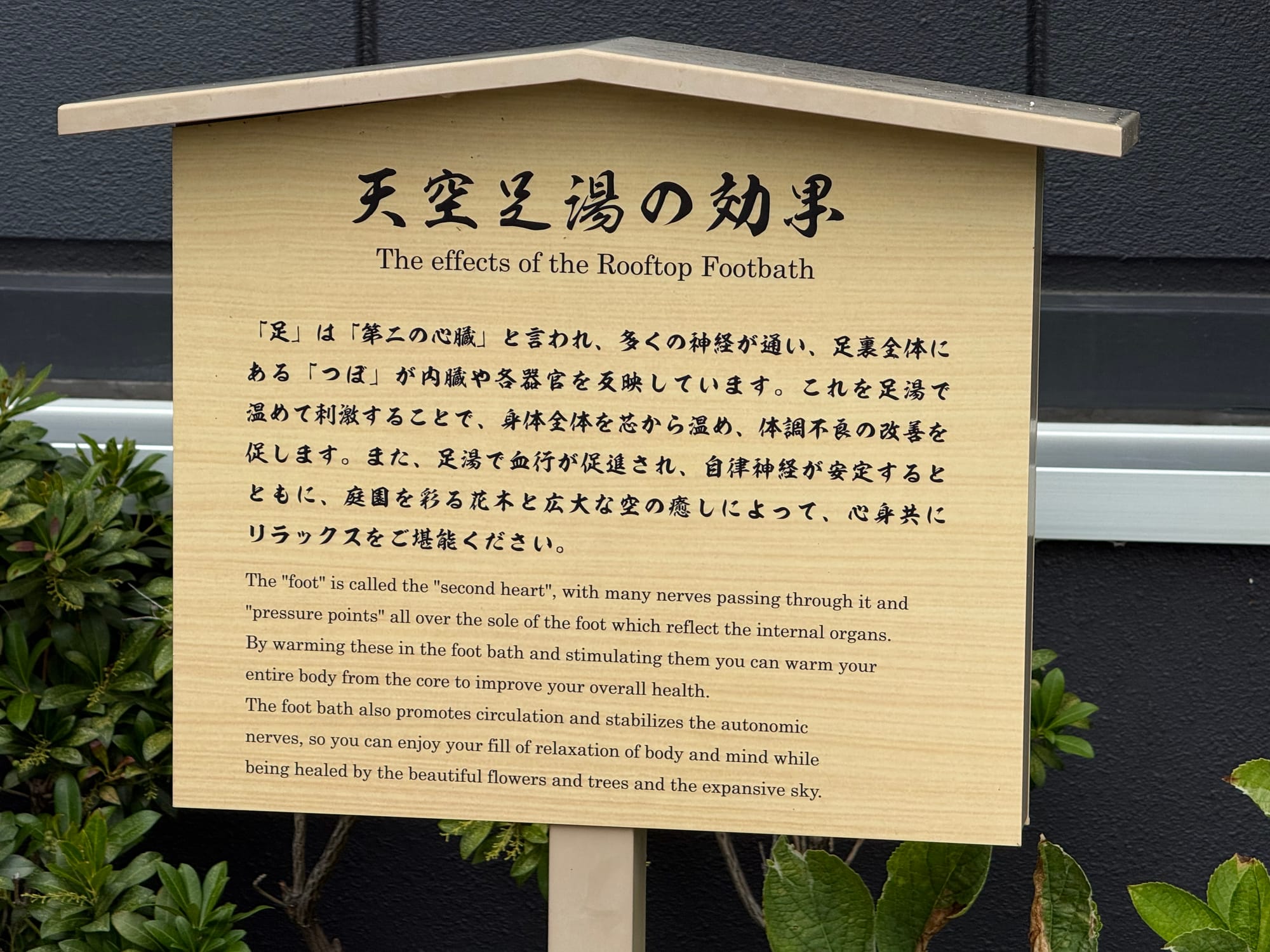
A sign explaining the rooftop foot bath at Solaniwa Onsen Osaka Bay Tower. The foot bath is designed as a relaxing outdoor experience, allowing guests to soak their feet while enjoying the garden surroundings.A cooling foot spa in the rooftop garden at Solaniwa Onsen Osaka Bay Tower. Designed as a refreshing contrast to the hot spring baths, it allows guests to cool their feet while enjoying the outdoor garden setting.Cooling off in the rooftop foot spa at Solaniwa Onsen Osaka Bay Tower. The cool water provides a refreshing contrast to the hot spring baths while overlooking the garden.
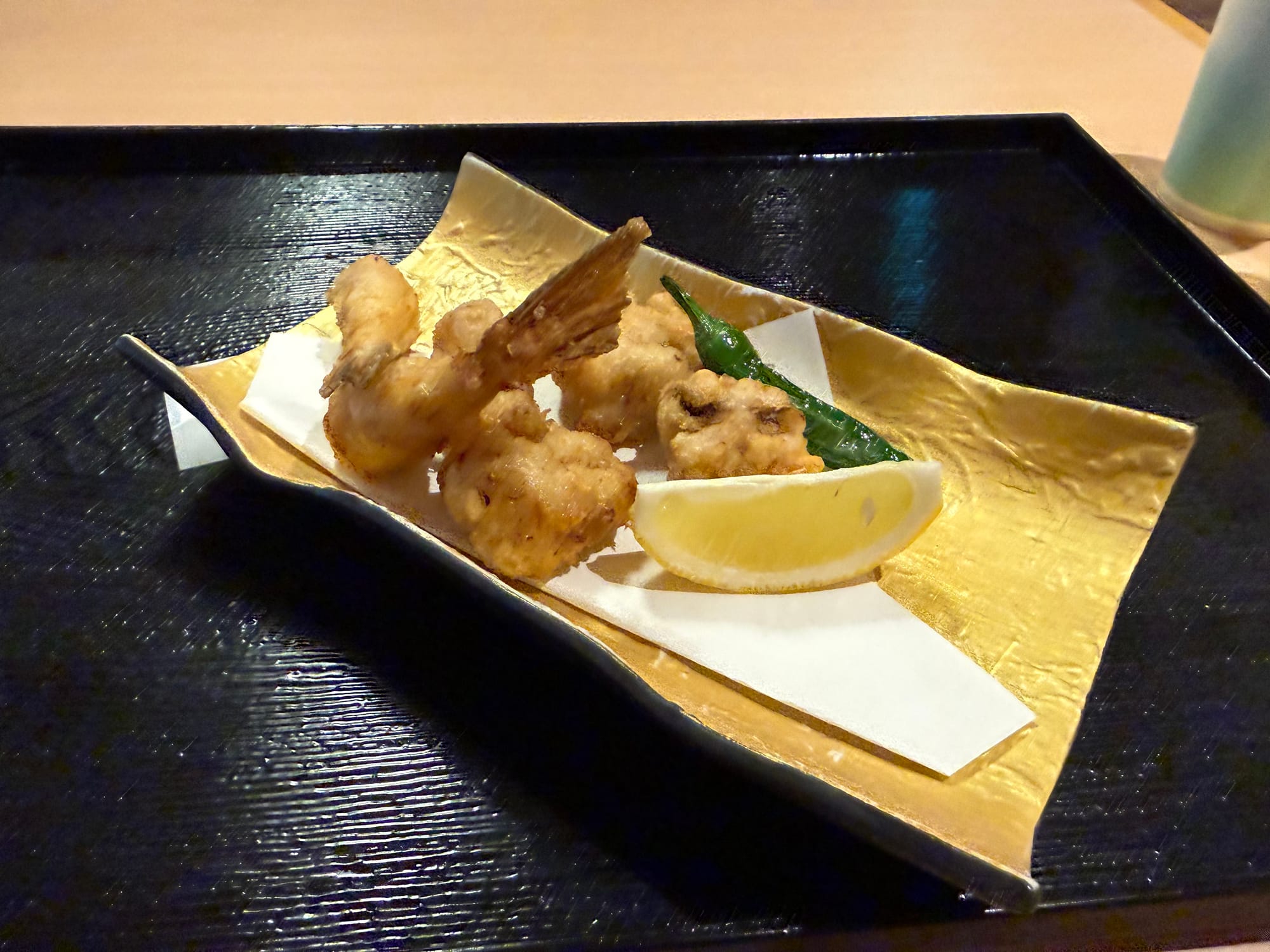
I also tried something new at the restaurant there, which I wanted to try when in Japan, but didn't get time to and that if deep fried fugu or should I say deep fried pufferfish.
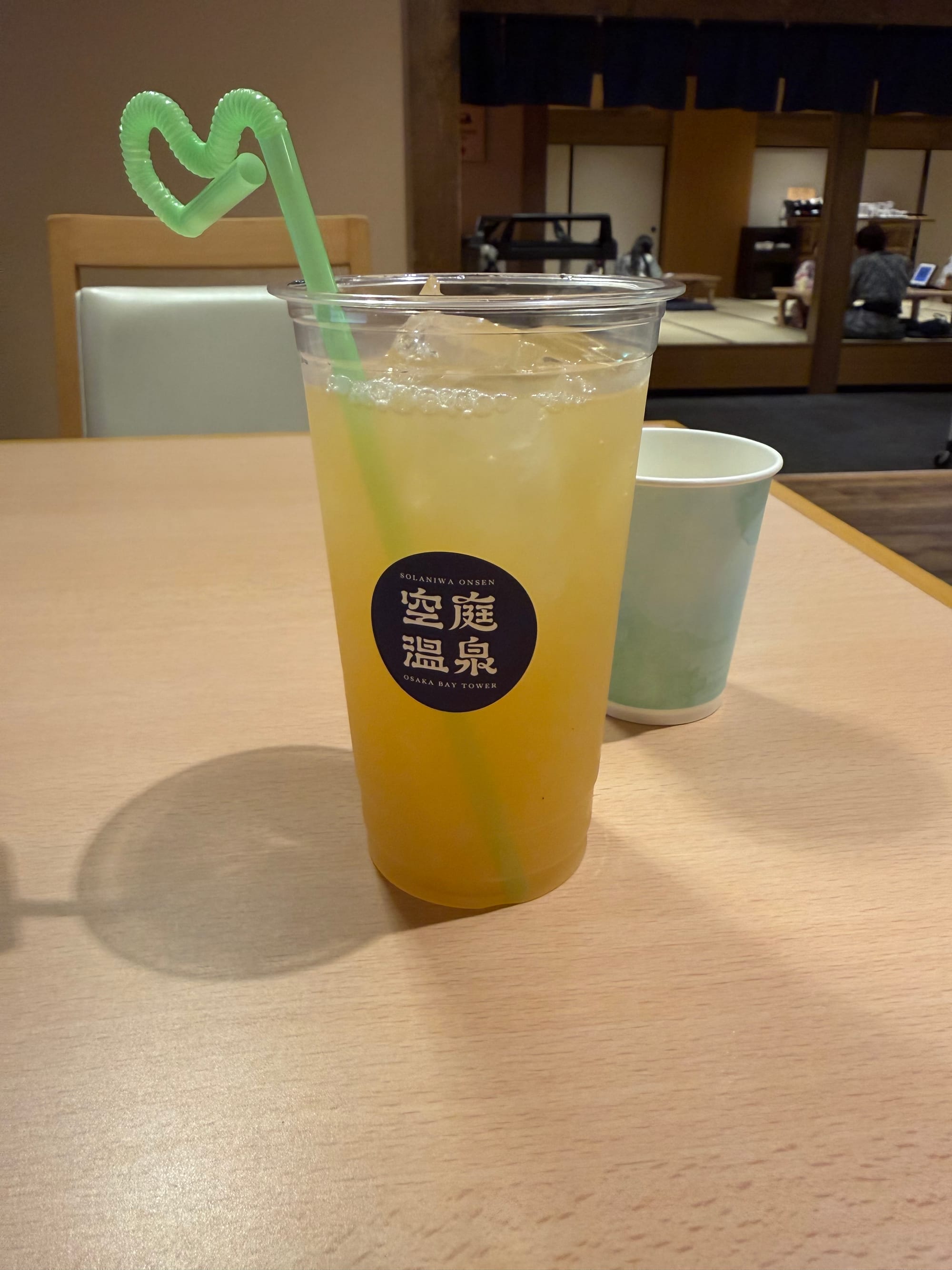
Deep-fried fugu (fugu karaage), a popular way to enjoy Japan's famous pufferfish. The light coating gives the fish a crisp exterior while retaining its firm, delicate texture.A refreshing apple juice enjoyed during a visit to Solaniwa Onsen Osaka Bay Tower. The cold drink provided a welcome break between exploring the gardens, foot baths and onsen facilities.
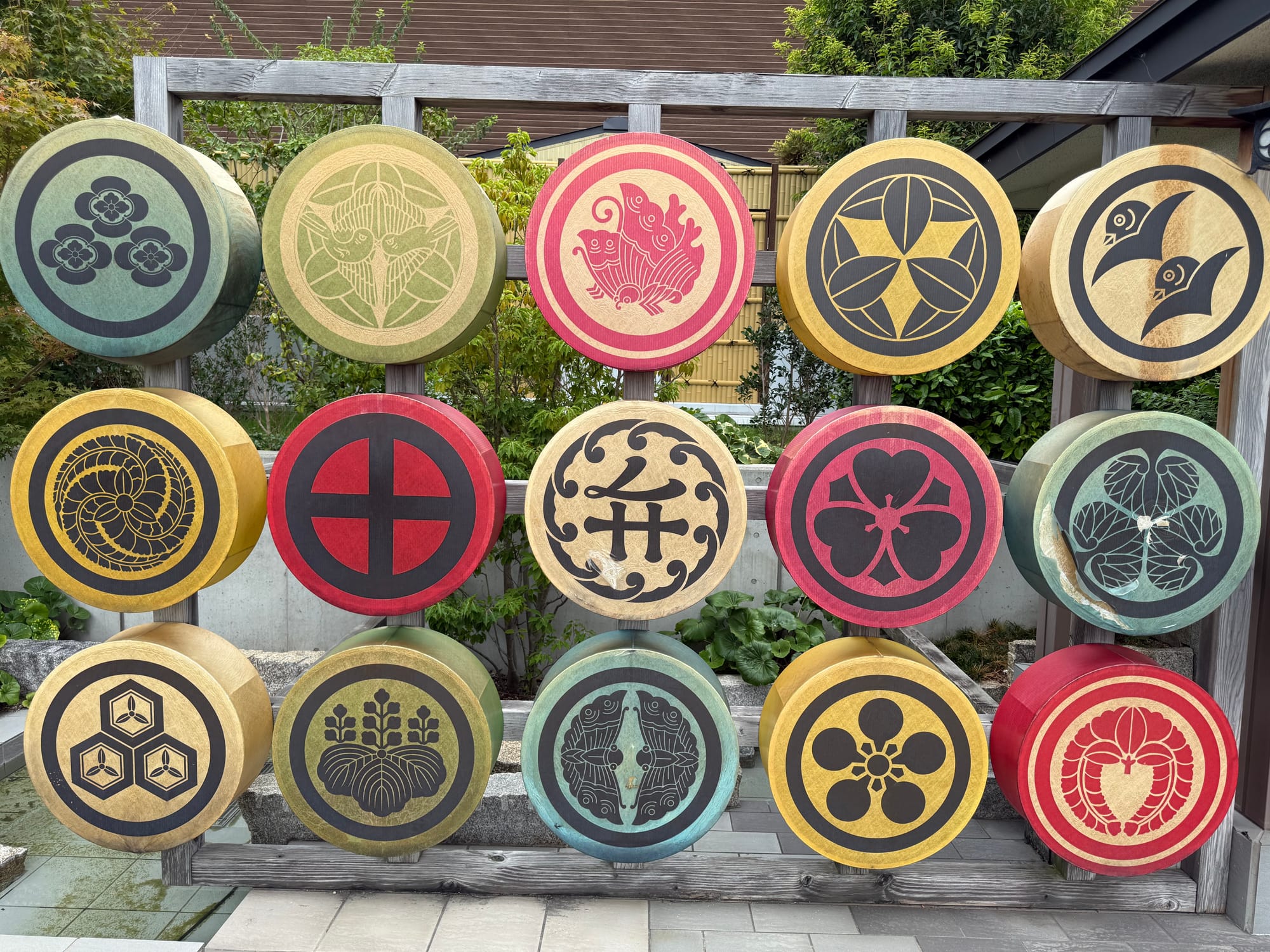
Here are some other photos from Solaniwa Onsen.
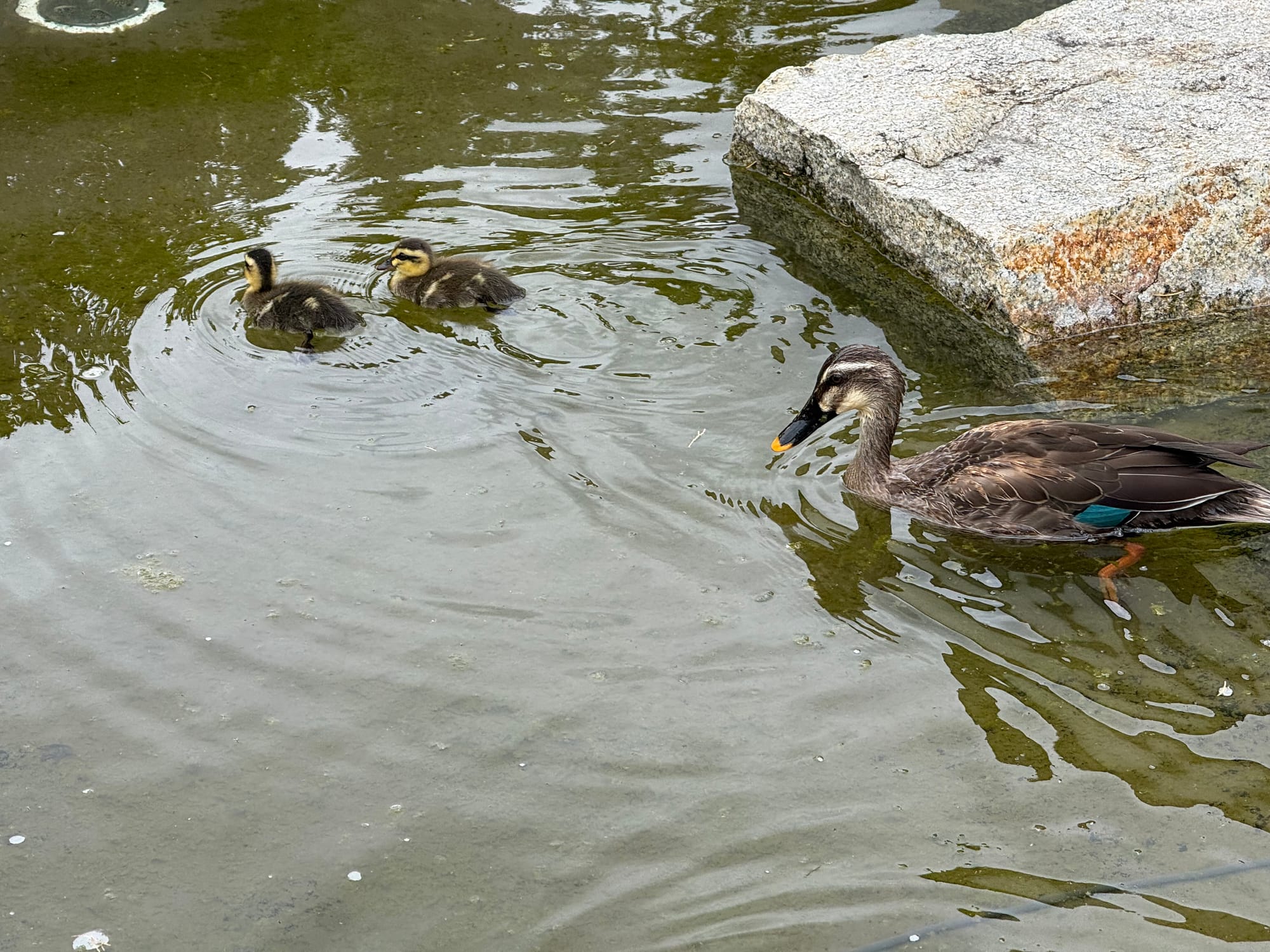
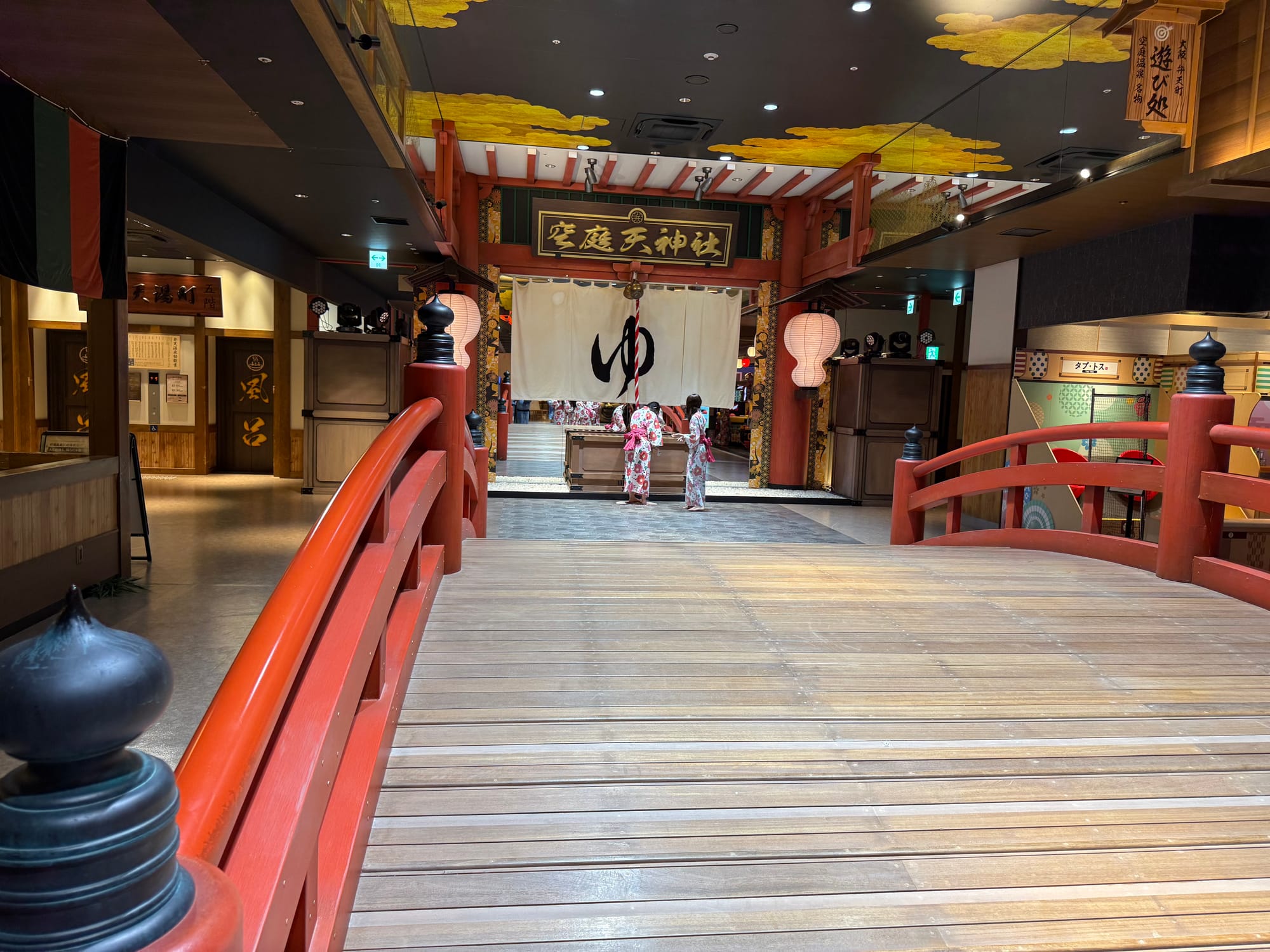
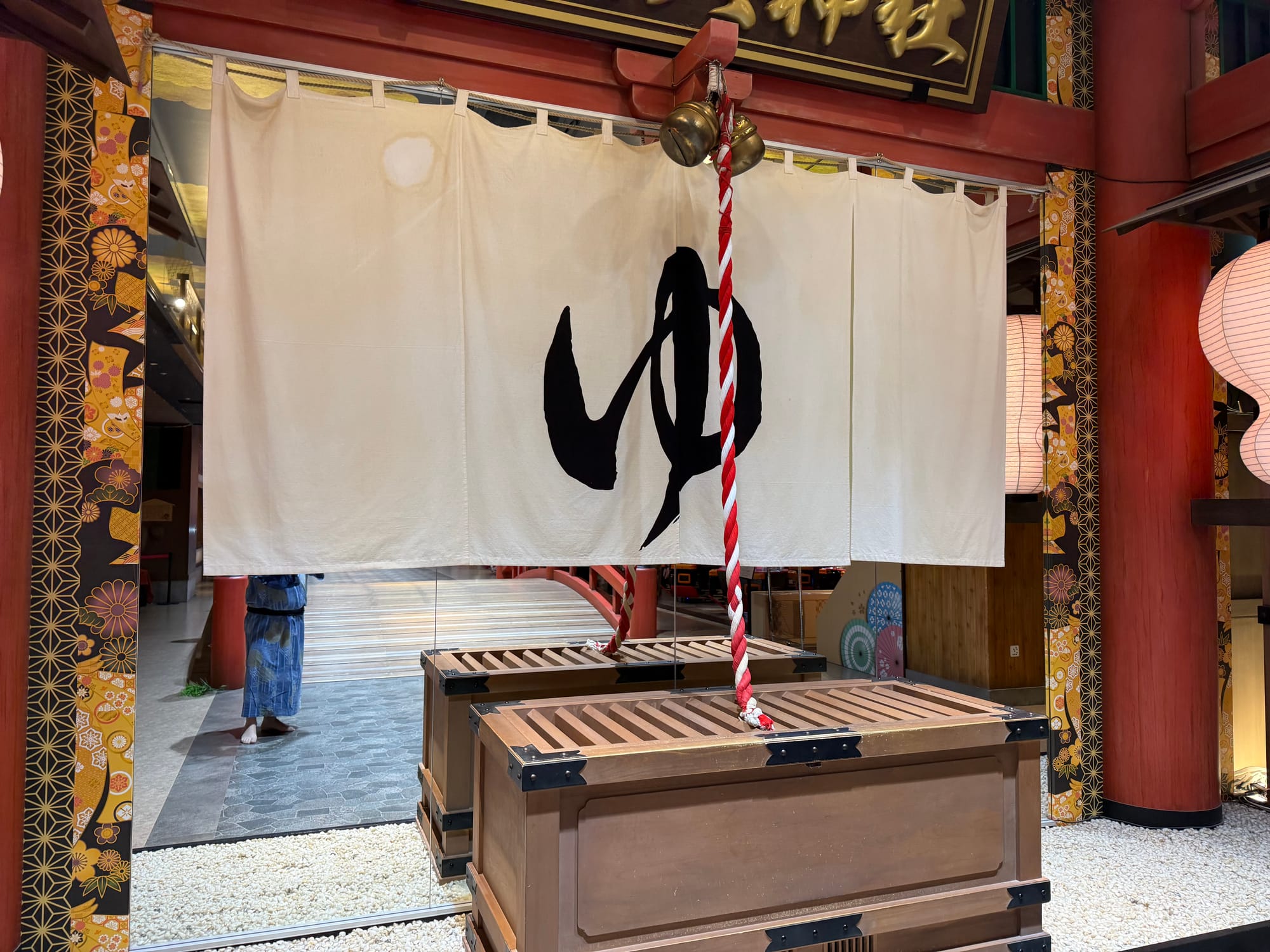
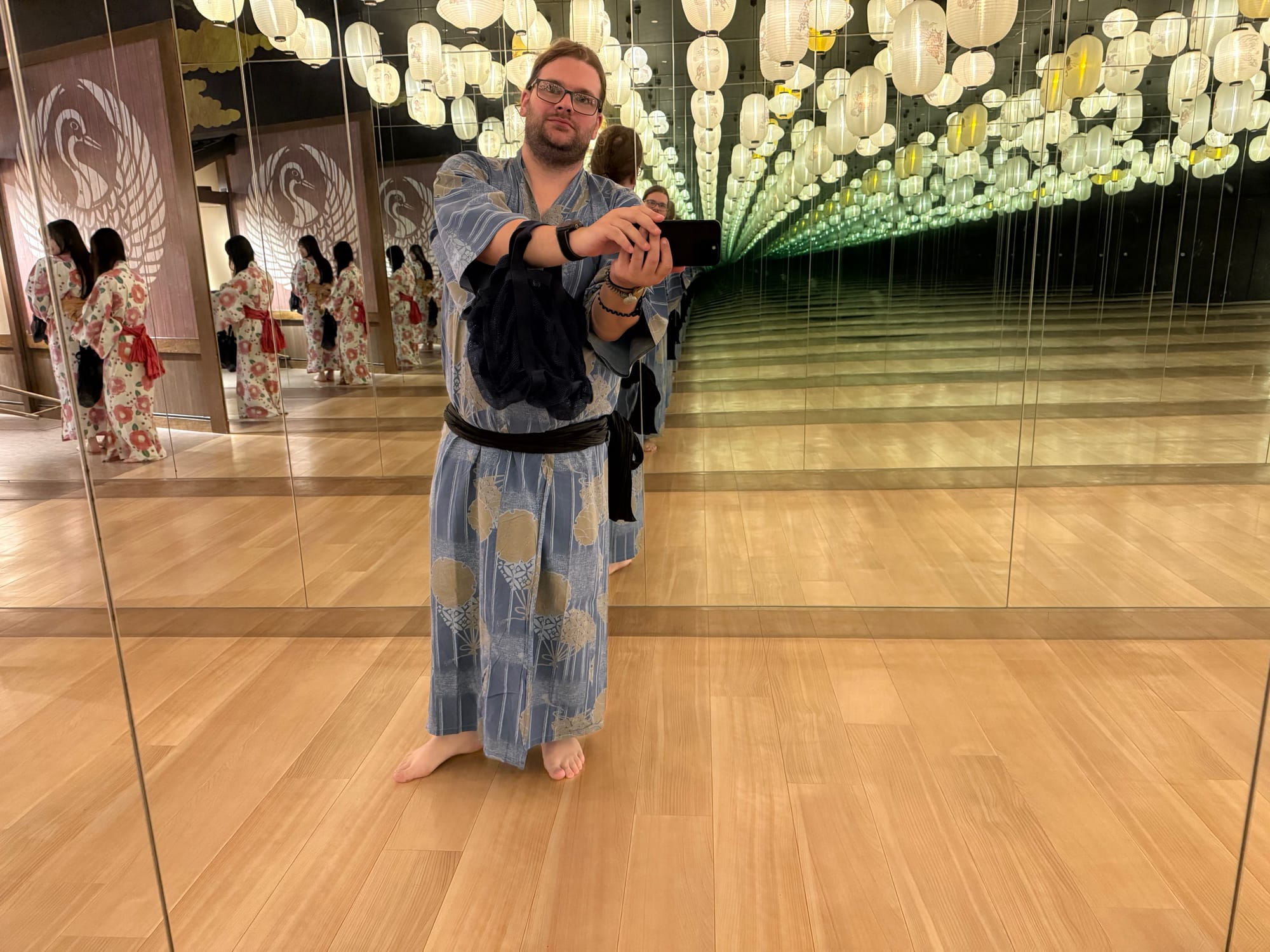
A display of traditional Japanese family crests (kamon) at Solaniwa Onsen Osaka Bay Tower. These distinctive emblems were historically used to identify families, clans and noble houses throughout Japan.A duck and two ducklings swimming in the garden pond at Solaniwa Onsen Osaka Bay Tower. The family of waterfowl adds a touch of wildlife to the onsen's peaceful rooftop garden setting.A red arched bridge leads to the indoor shrine at Solaniwa Onsen Osaka Bay Tower. Designed in an Edo-period style, the shrine area forms a central focal point within the themed onsen complex.The indoor shrine at Solaniwa Onsen Osaka Bay Tower. Designed as part of the complexes Edo-period-inspired atmosphere, it serves as a decorative focal point at the heart of the facility.Taking a photo beneath the lantern display at Solaniwa Onsen Osaka Bay Tower. The mirrored walls and hanging lanterns create an illusion of endless reflections within the onsen complex.
KIX Airport Cafe Lounge NODOKA
As in Manchester, I get access to airport lounges through my bank card. So I got to the airport about 3-3.5 hours early and then went straight to the lounge. This airport lounge was not airside, but just outside the airport departures entrance in the AEROPLAZA.
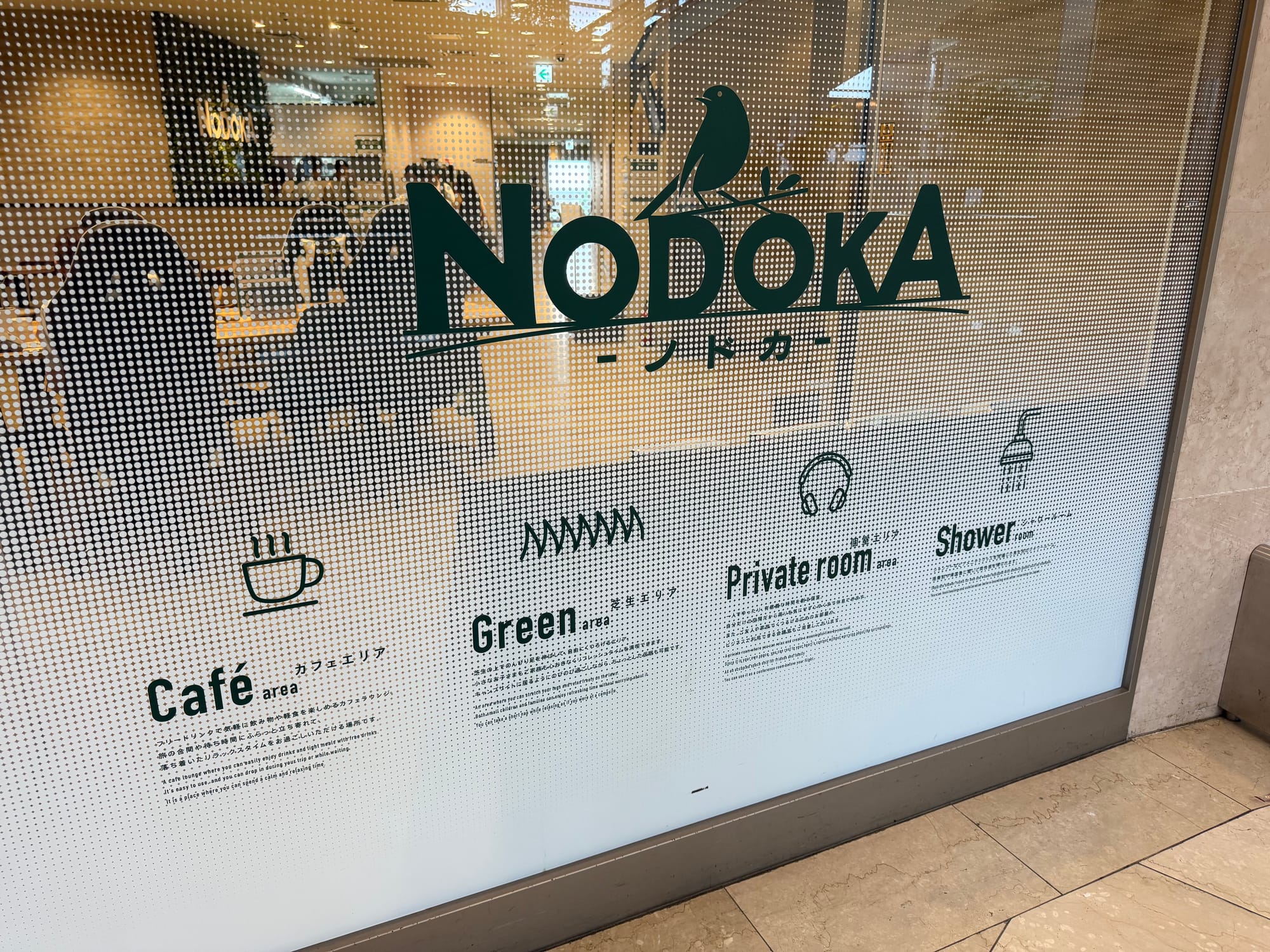
The Nodoka lounge at Kansai International Airport offered a comfortable place to relax before departure, with café facilities, private rooms, showers and quiet spaces for travellers awaiting their flights.
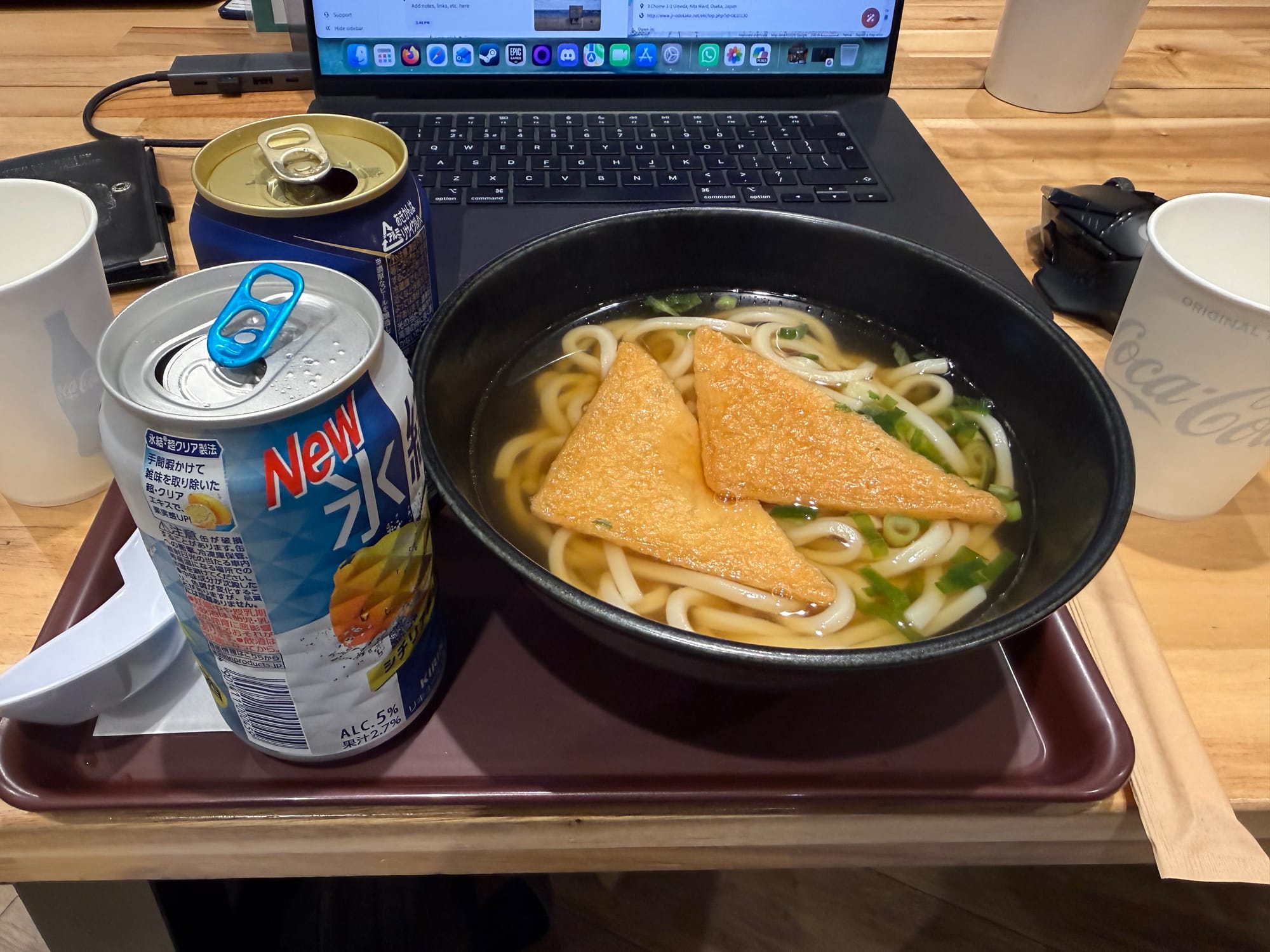
Here I was able to relax for 2 hours connected to the wifi and was able to get some more blog work done. I was able to get a free meal and two alcoholic drinks through my lounge pass, so I got Kitsune Udon and tried both a Lemon Chuhai and Asahi alcoholic free beer.
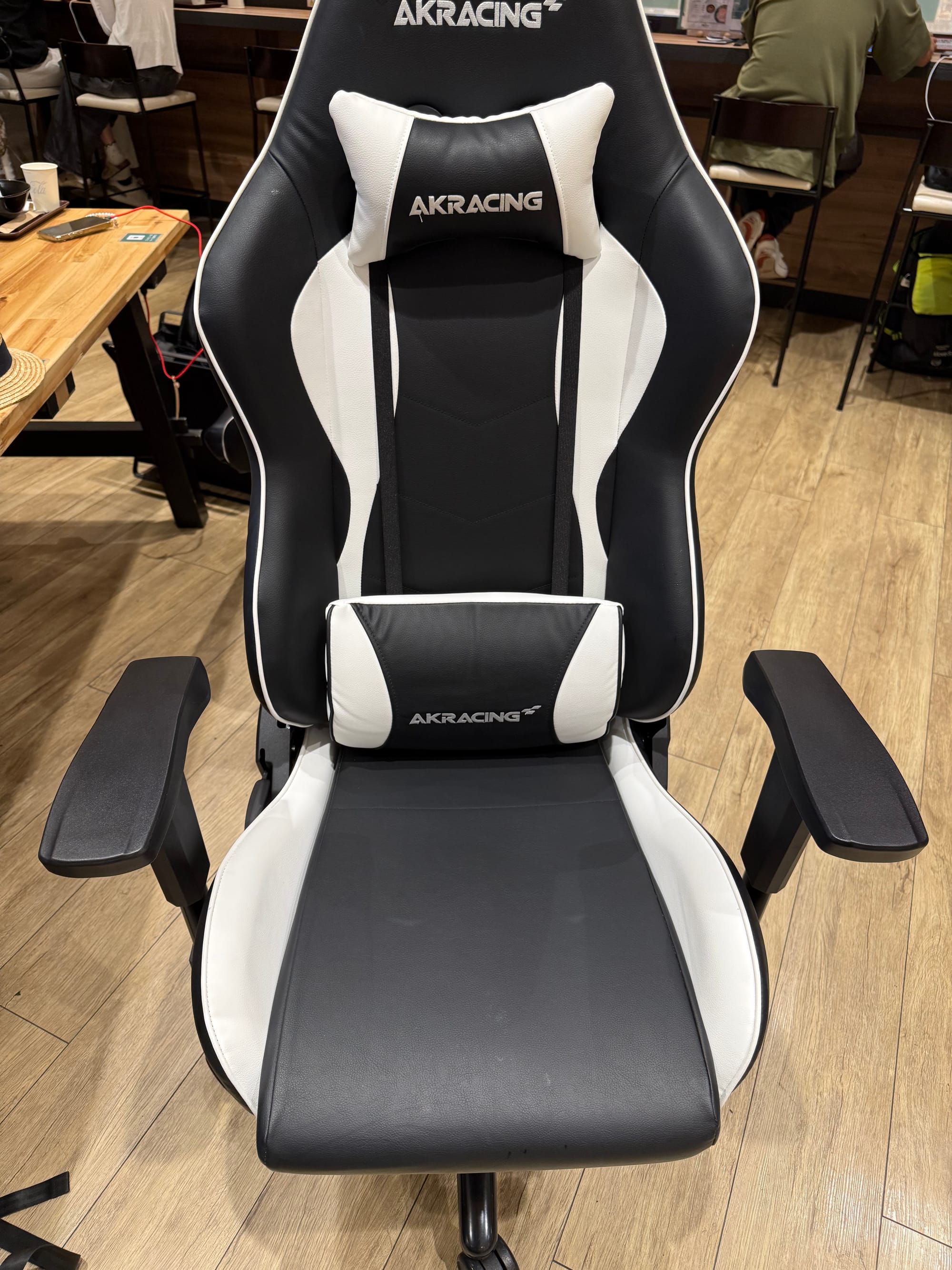
An AKRacing chair in the Nodoka lounge at Kansai International Airport. Comfortable seating like this made it easy to relax and recharge before the flight home.
I wasn't that keen on the alcoholic free beer, but thought it might finally be the first beer I like, but the Lemon Chuhai was really nice and refreshing. It is a mix of Lemon Sour and Vodka, but with only 5% alcoholic content.
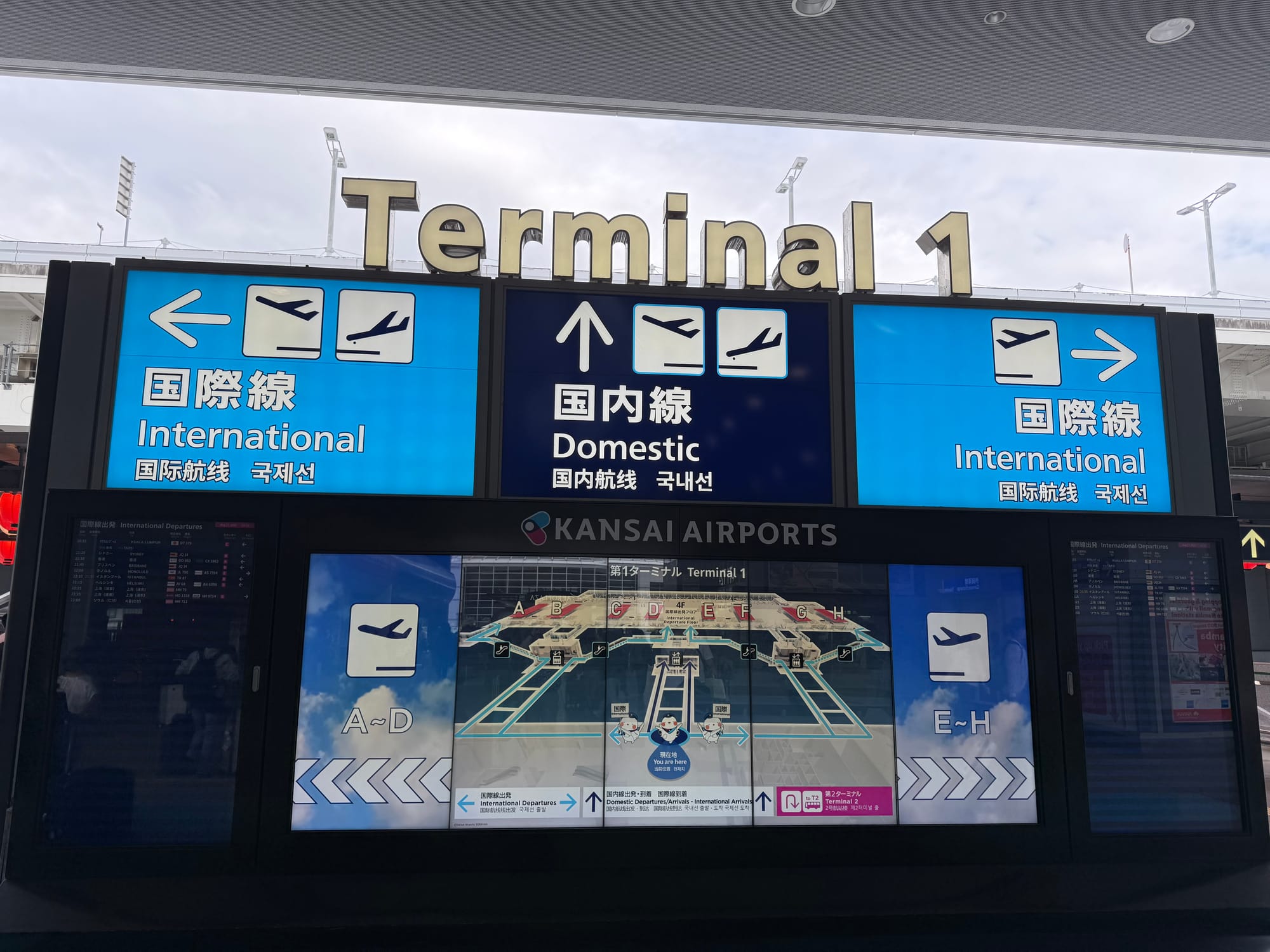
A bowl of kitsune udon enjoyed in the Nodoka lounge at Kansai International Airport before the flight home. The simple meal of noodles, broth and fried tofu made for a relaxing end to the trip.Terminal 1 at Kansai International Airport, the gateway to the Kansai region and the final stop before departing Japan after a journey through Nagano, Gifu, Kyoto, Kobe and Osaka.
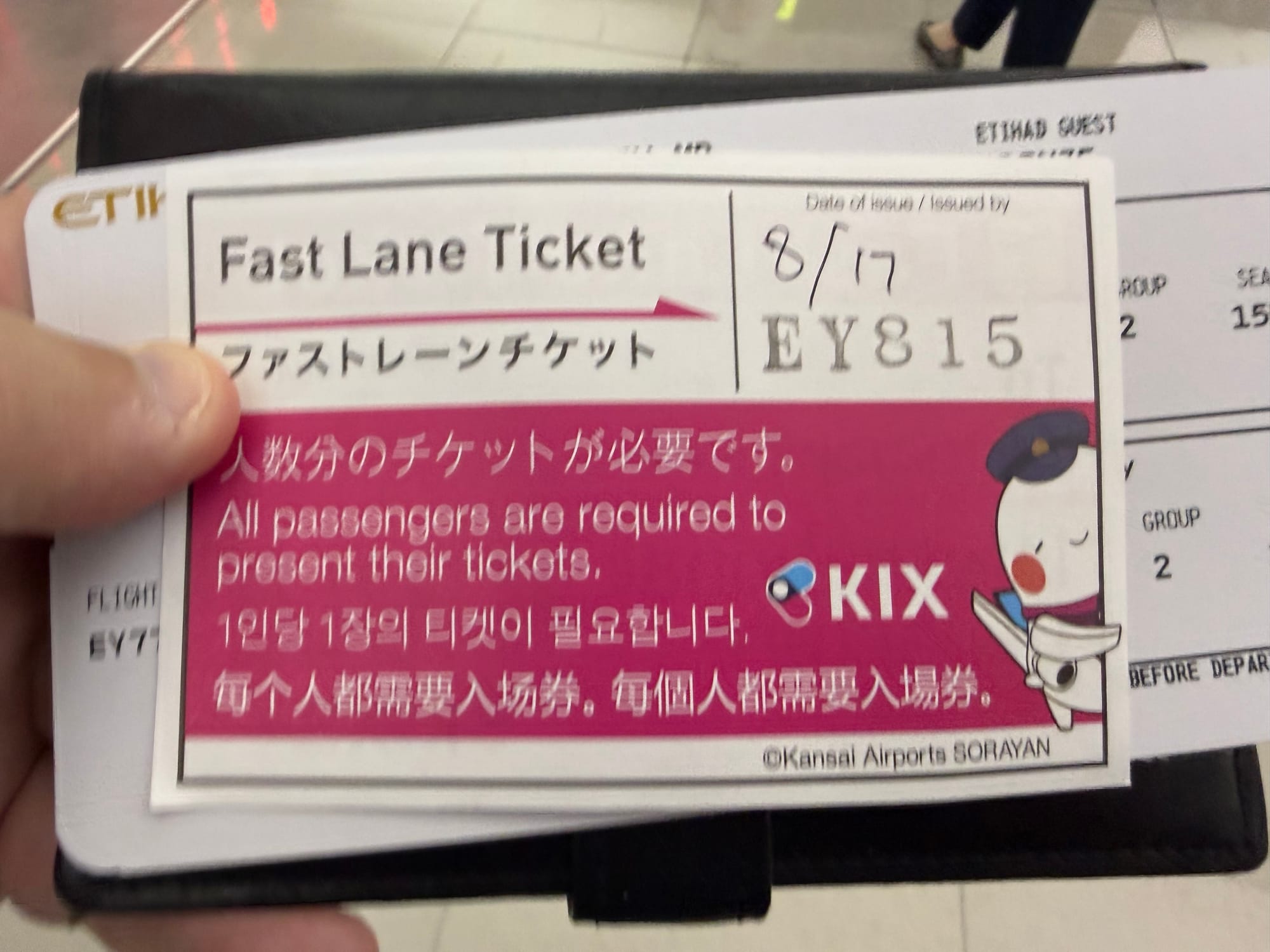
I then made my way to the airport and checked in my luggage. Because I was running close to time for last check-in, they even gave me a fast pass for security, not that I really needed it as normal security wasn't busy, but it was still a nice gesture.
A Fast Lane Ticket at Kansai International Airport, providing expedited access through the security checkpoint before an international flight home.
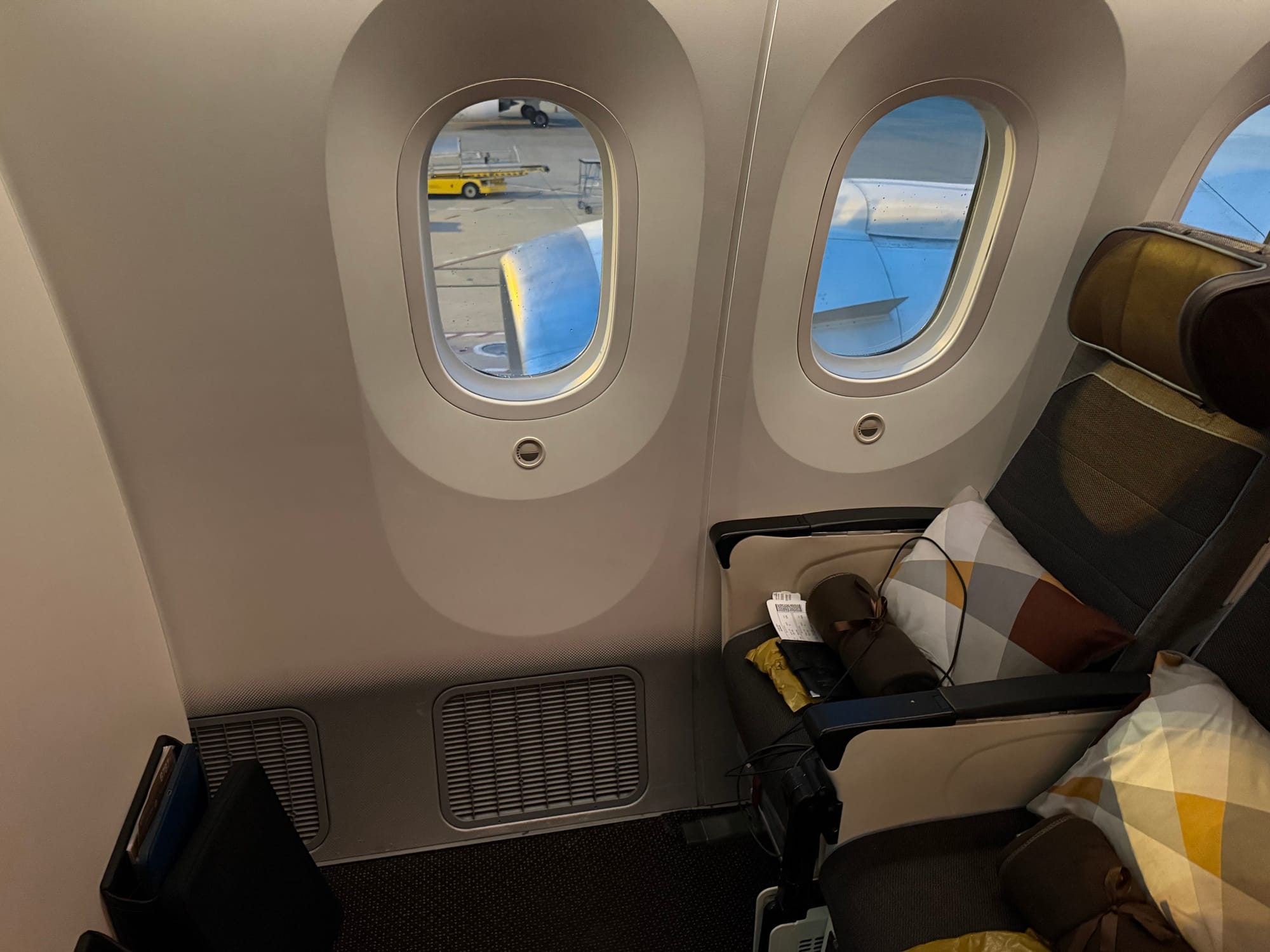
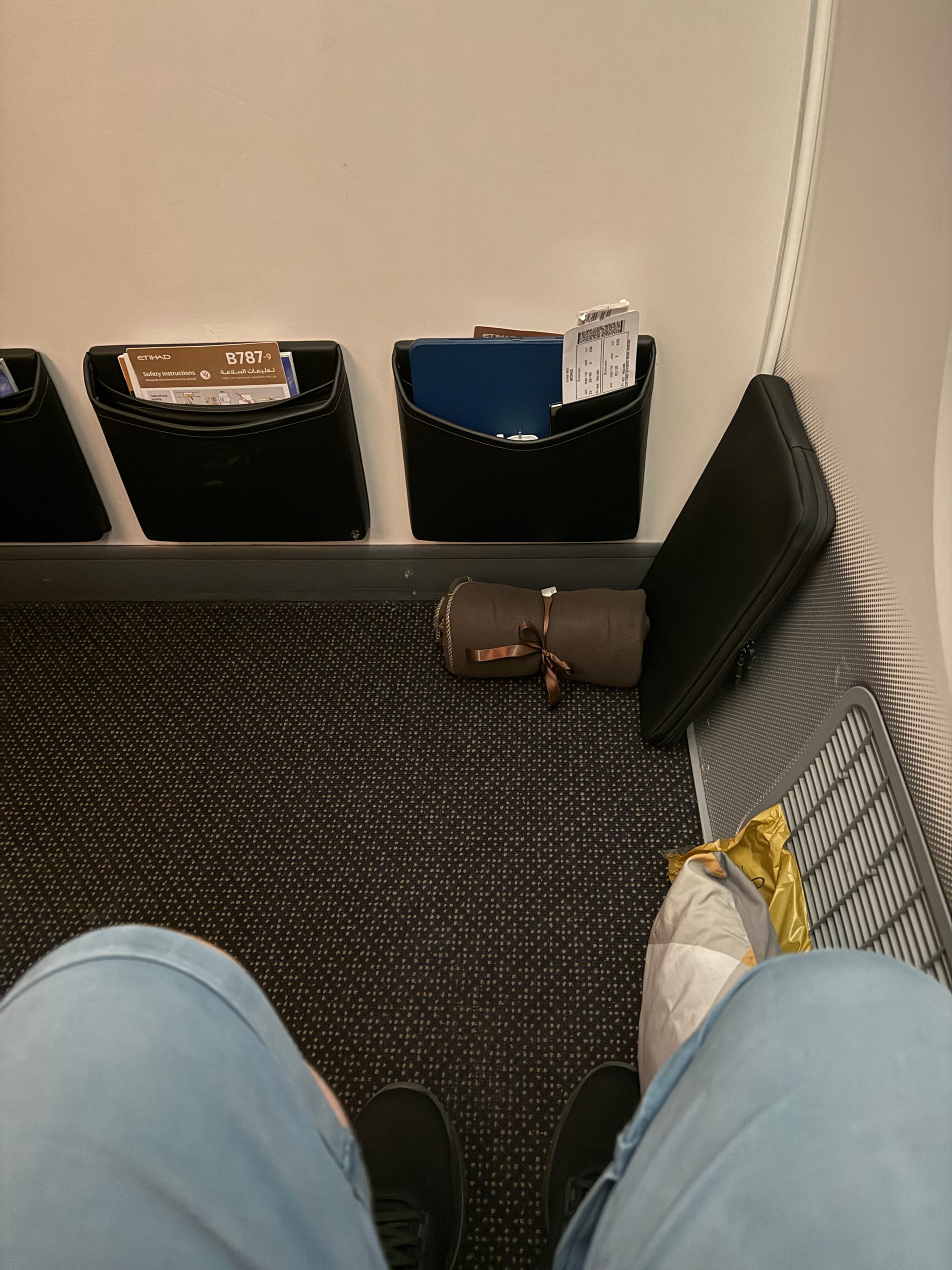
I paid a bit extra for the way back to get a bulkhead seat where, I was right next to the barrier with business class and that game me a load of nice legroom to stretch out into.
My Premium Economy seat on the Etihad Airways flight home from Kansai International Airport. The extra legroom window seat provided a comfortable place to reflect on a memorable journey through Japan.The extra-legroom bulkhead seat in Premium Economy on Etihad Airways' Boeing 787-9 offered plenty of space to stretch out for the journey home from Japan.
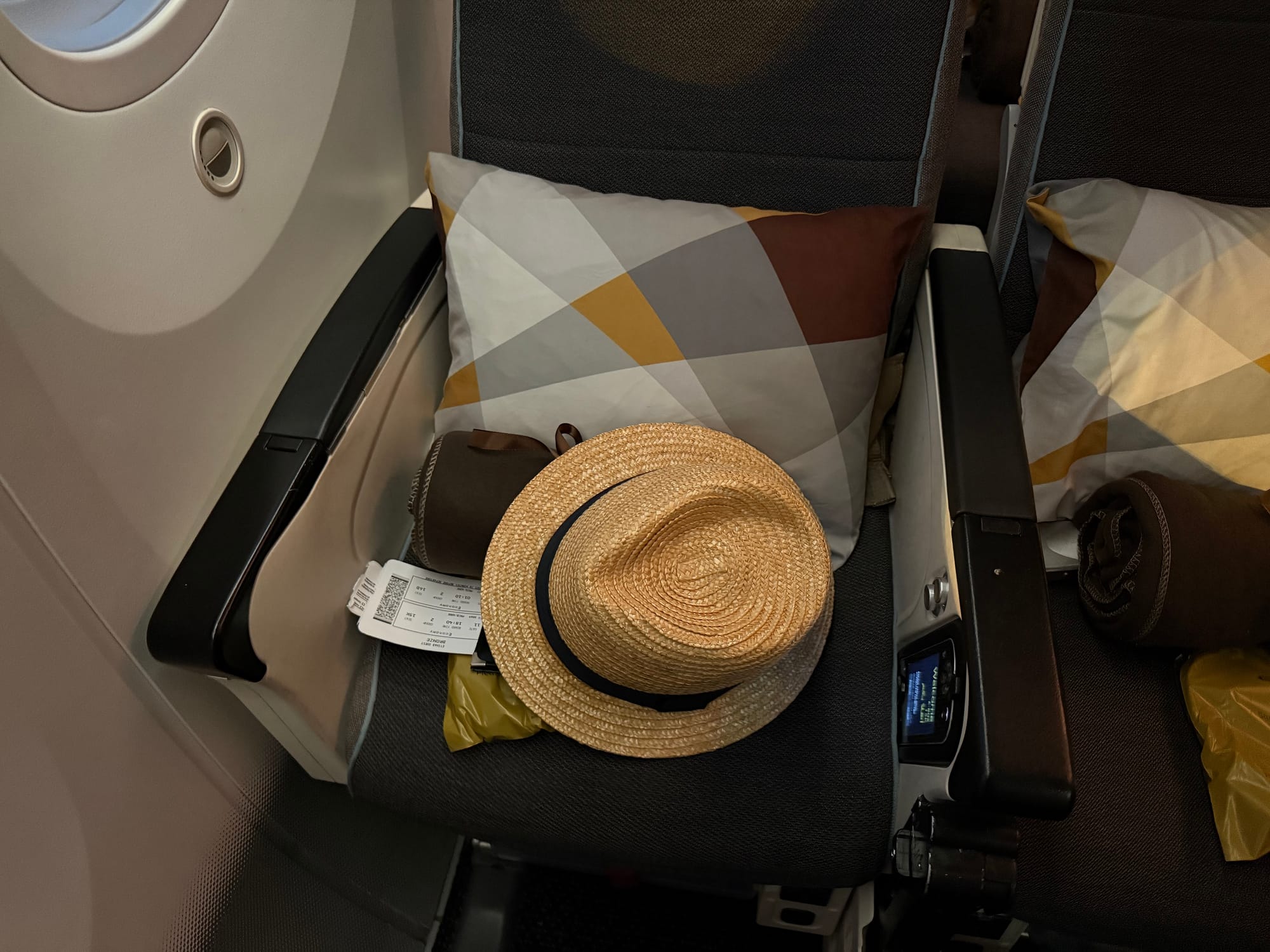
Mr Hat also tried to nick my seat before he went in my backpack.
Mr Hat apparently decided the Premium Economy seat was his, settling in with my boarding pass before the flight home from Japan. 😄
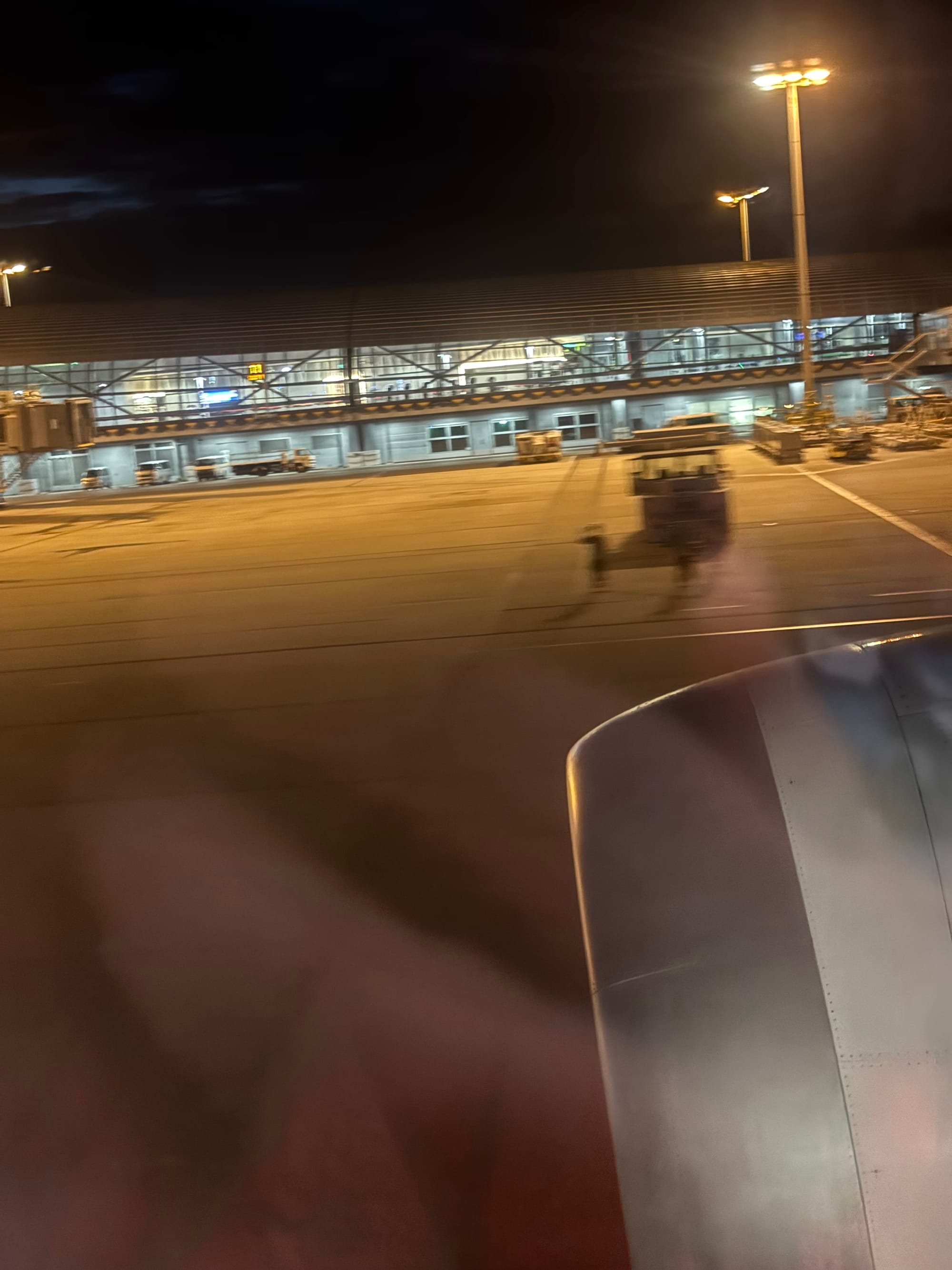
After we had been pushed back by the tug, I could see out of the window the staff waving goodbye to us, which was a really nice touch. Sorry, but it isn't the best photo, although you can make out someone waving just above the silver engine cover in the photo.
Ground crew wave farewell from the pushback tug as the Etihad Airways flight departs Kansai International Airport, marking the start of the journey home after an unforgettable trip to Japan.
Abu Dhabi and Manchester
18th August
Abu Dhabi
Abu Dhabi was nice and quiet during this time of the day, which meant getting through security was easy, but annoyingly there wasn't time to go to the pearl lounge there, as there was a massive queue for it and I would miss my next flight.
The entrance to the Pearl Lounge at Abu Dhabi International Airport. A welcome stop during the journey home, if only it weren't too busy.
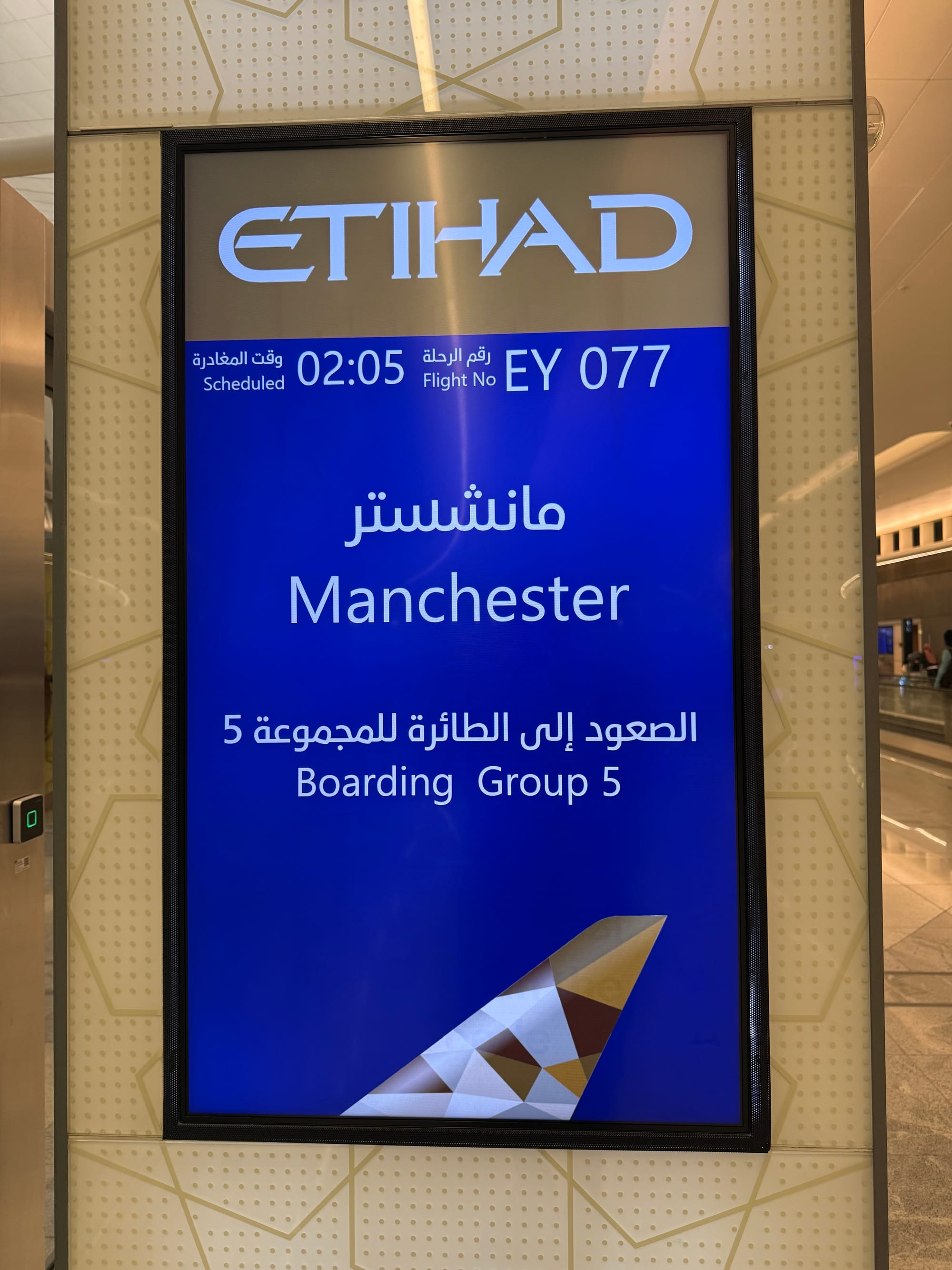
So here we are boarding for the final leg of my journey, going back to the UK. Where has the time gone?
Boarding begins for Etihad Airways flight EY077 from Abu Dhabi to Manchester, marking the final leg of the journey home after an unforgettable trip to Japan.
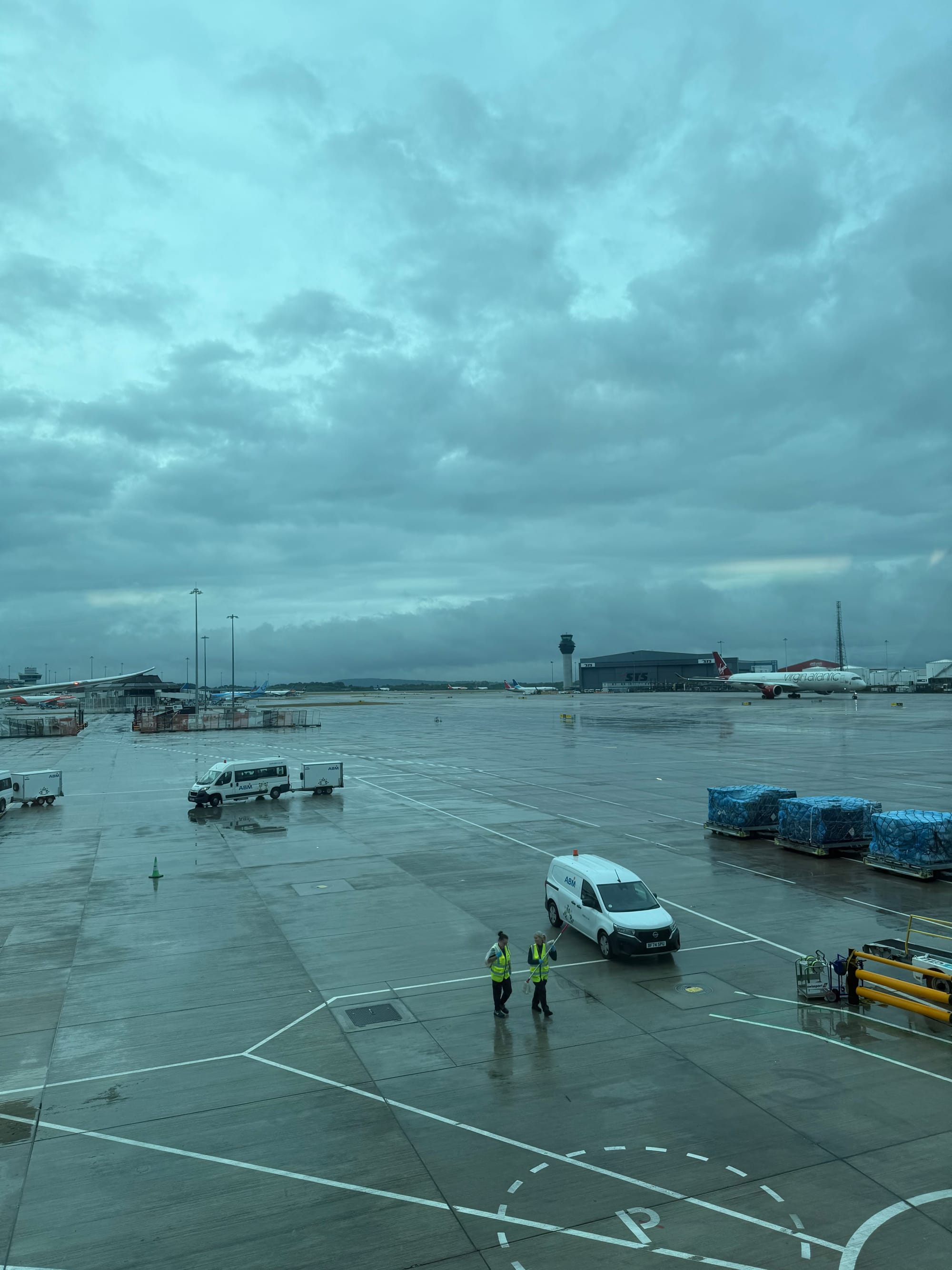
And as always, it is typical! I land in Manchester and it is cold and raining, well colder than where I have been.
Back in Manchester after the long journey home from Japan. Grey skies and wet tarmac provided a familiar welcome to the United Kingdom after a month of travel across Japan.
I will do a cost of travel thing for Japan at some point soon, but for now I hope you have all enjoyed reading about my travels around Japan, until next time everyone!