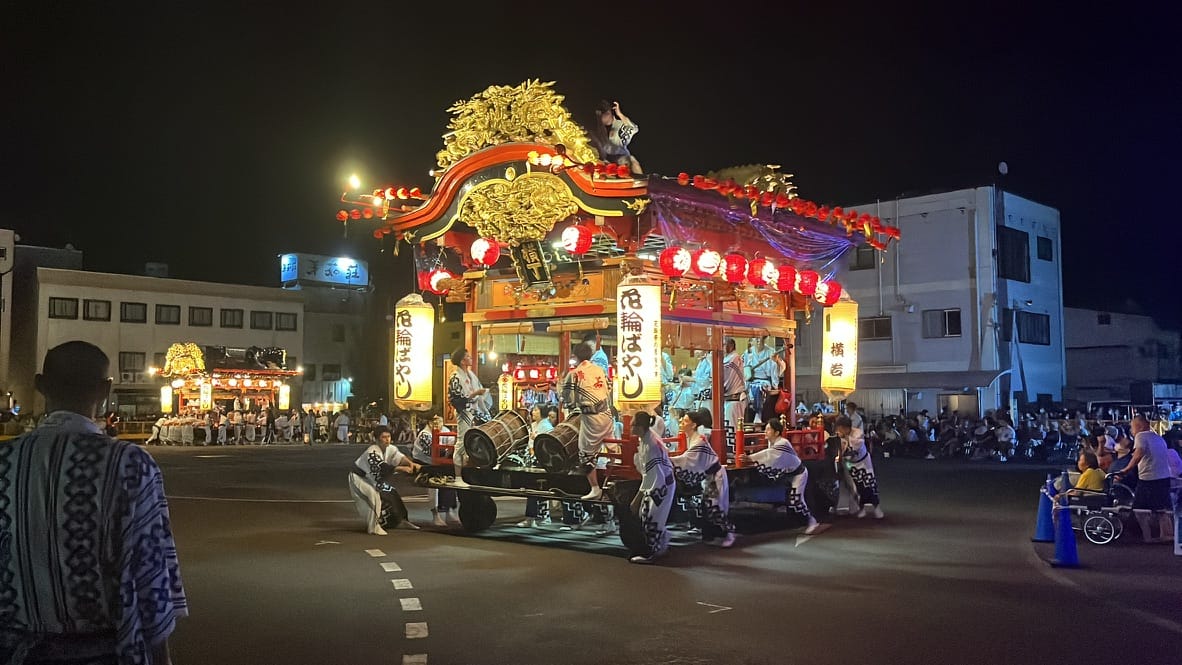
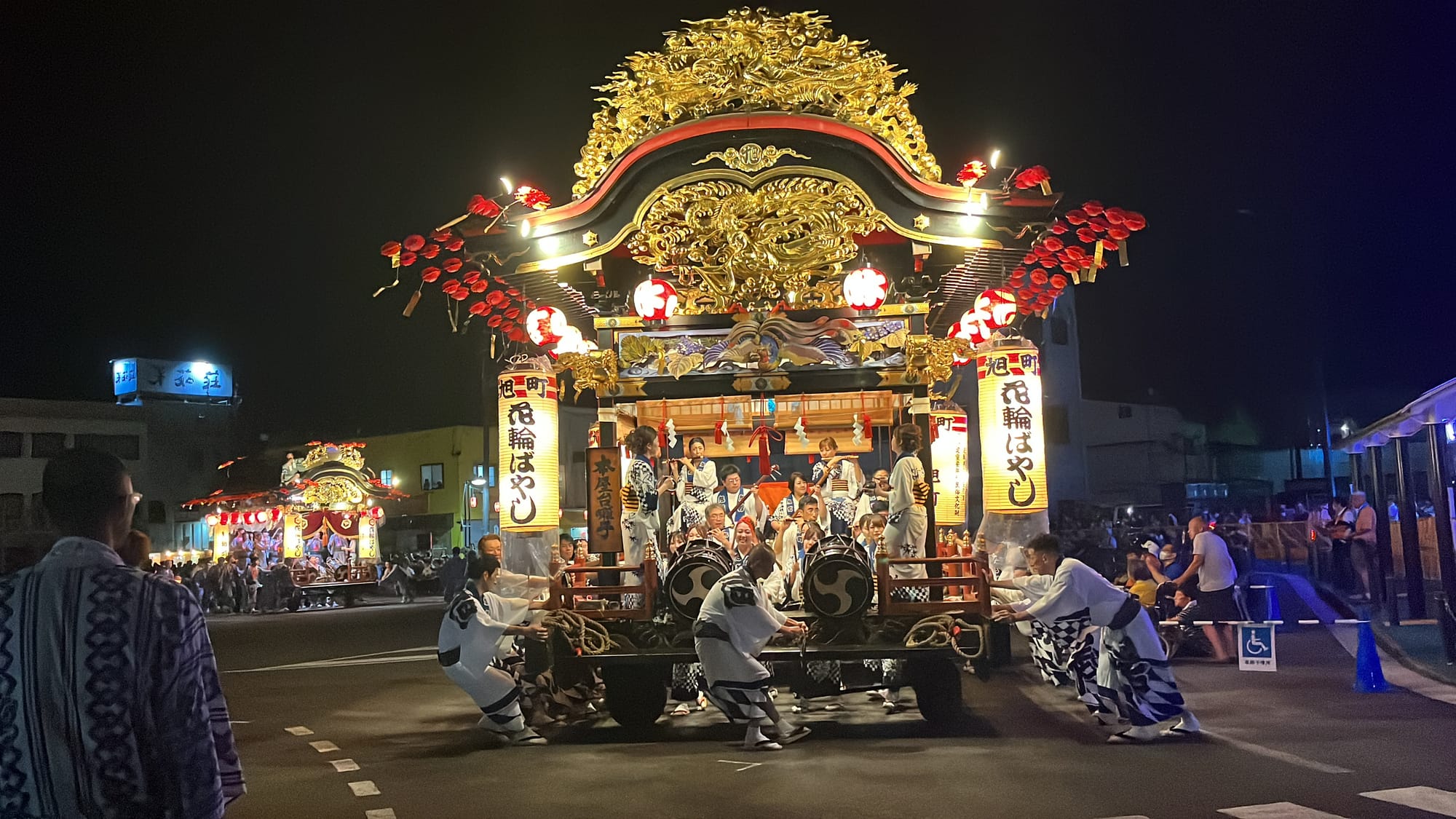
A beautifully decorated float takes part in a traditional festival in Kazuno, Japan, with lanterns, music and community celebrations bringing the streets to life after dark.
So here we are now going towards my final few nights in Japan and as much as most people usually say it when on holiday, I really don’t want to go back home. There is so much to discover out here that I deffo want to come back and not do as much travelling as I did (like 2 days here and 5 there), but spend more time in each place this time (Basically 3-5 days min and ideally 5 days each)
Time to Trade Rails for Wheels
20th August
Today was the day when I get to drive for the first time in about 3-4 weeks, luckily, they drive on the same side as us, but the speed limits are a fair bit different. In the UK we go at 30 MPH (48 KPH) on most roads in an urban area, sometime 40 MPH (64 KPH) if we are lucky. Then rural roads tend to be 60MPH (96.5 KPH) (sometime 50 MPH 80KPH)) if it is a single lane road or 70MPH (112.7 KPH) if it is a dual carriage way or motorway. Over here everything is in KPH which is quite a bit different and so are the speed limits. Usually in an urban area they tend to be either 30 KPH (18.6 MPH) or 40 KPH (24.9 MPH) if you are out in a rural area it tends to be 50 KPH (31 MPH) or 60 KPH (37.3 MPH) and 60 KPH is the National speed limit over here for roads that aren’t an express way. Express ways, which I would like to point out that I haven’t driven on, are basically the same as out motorways, except they aren’t free as they are all tolled like other places in Europe. Express ways have variable speed limits which will change depending on traffic and other road conditions (like our “smart motorways”) with a usual speed limit of either 80 KPH (50 MPH) or 100 KPH (62 MPH). The only exception to this is one or two express ways that go up to 120 KPH (74.6 MPH).
A Nissan Note hire car used to explore northern Japan, pictured during a stop on the scenic route to Lake Towada in the Tōhoku region.
The car I rented out was a nice little Nissan note E-Power which cost me £100 for 2 days. It is an electric hybrid car which was perfect for me especially with the fact that I was going up into the mountains. It has an electric motor to turn the wheels which is powered by a battery, but the battery is charged by either your wheels under regen braking or from the 1 litre petrol engine in the car. Because there was a fair bit of up and down due to hills and mountains where I was going and the general topography as well. It was good as the engine would hardly get touched half the time.
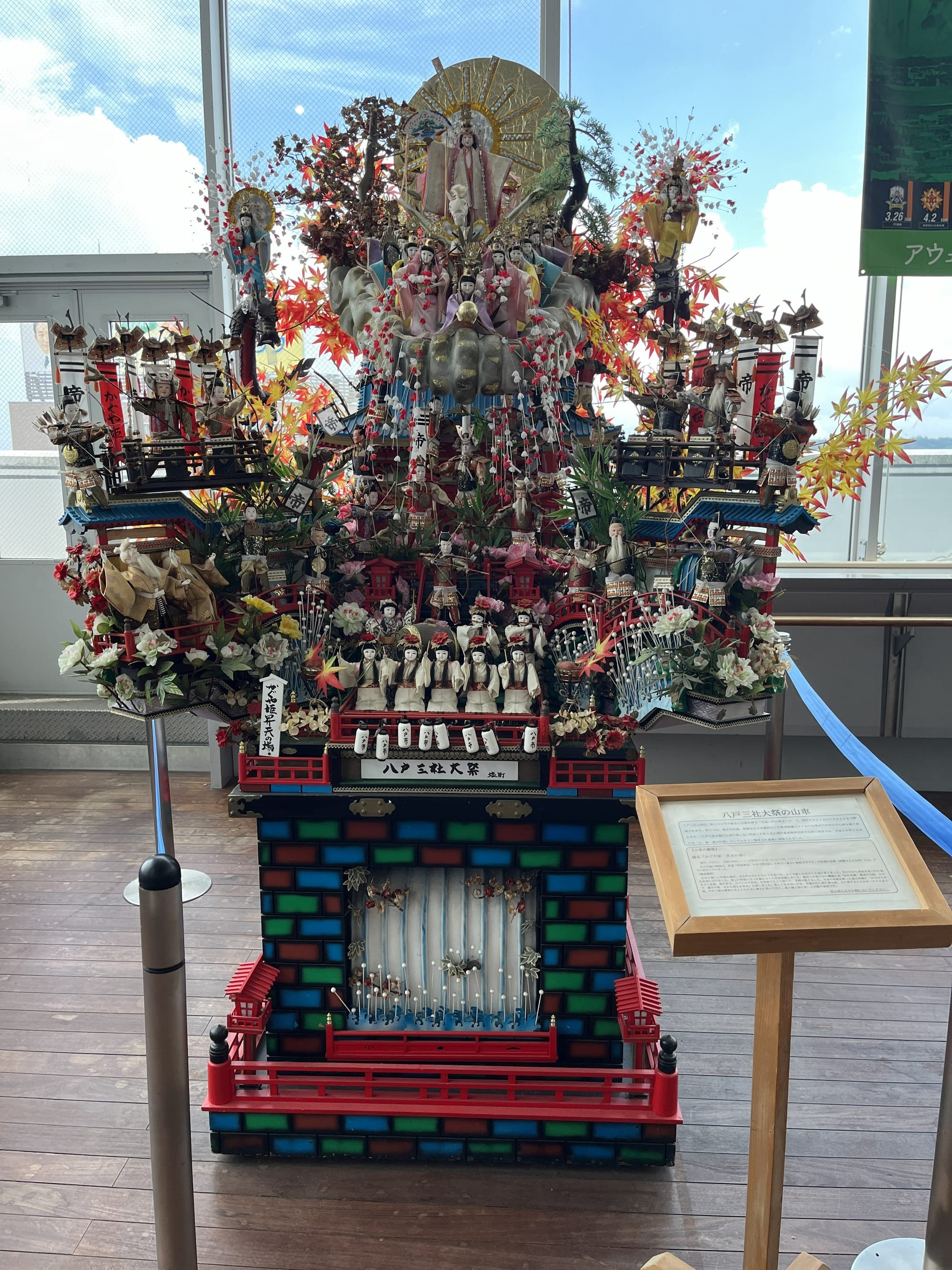
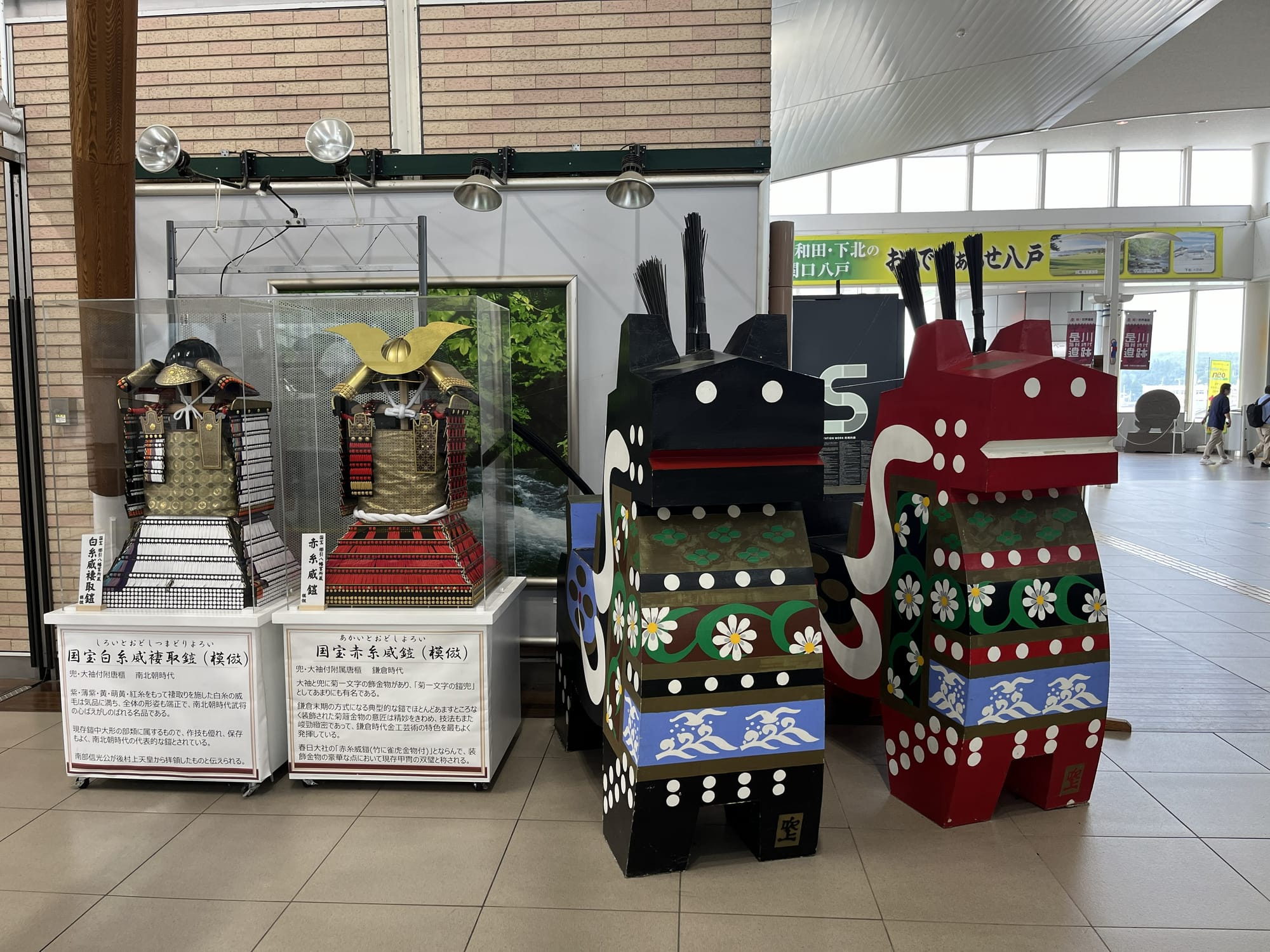
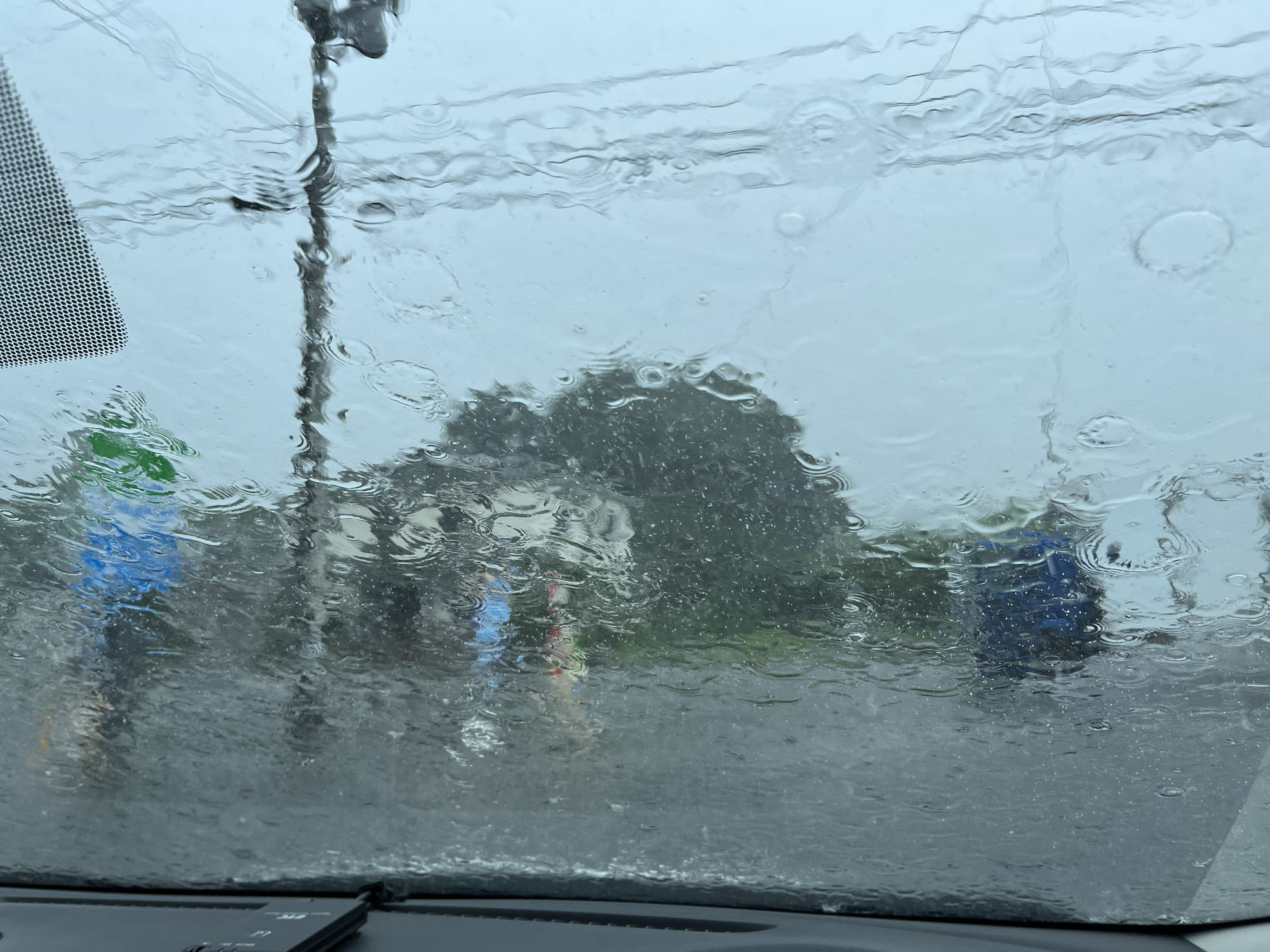
A detailed festival float display at Hachinohe Station celebrates the city's cultural heritage and showcases the craftsmanship associated with the famous Hachinohe Sansha Taisai festival.Displays at Hachinohe Station highlight the region's history and traditions, featuring replica samurai armour alongside colourful exhibits linked to local festivals and cultural heritage.Waiting out a heavy downpour in a Nissan Note at a Japanese convenience store, as rain transformed the view through the windscreen into an impressionistic blur.
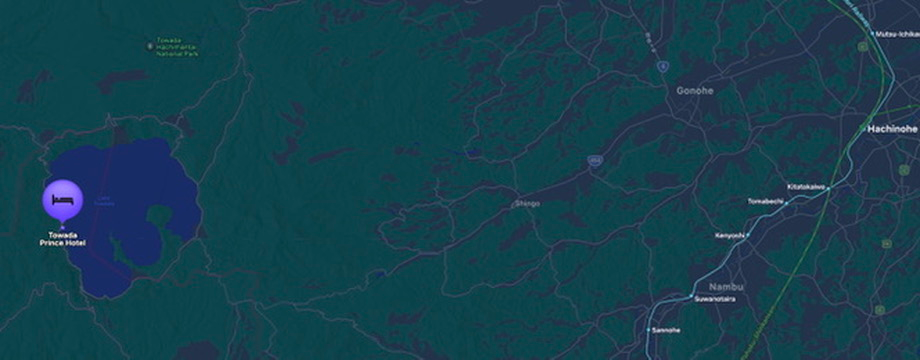
The place I was staying at is called Towada Prince Hotel which is a 4 star hotel literally in the middle of nowhere and on the shores of lake Towada. It was a 2-hour drive from Hachinohe Station which is where I picked the car up from.
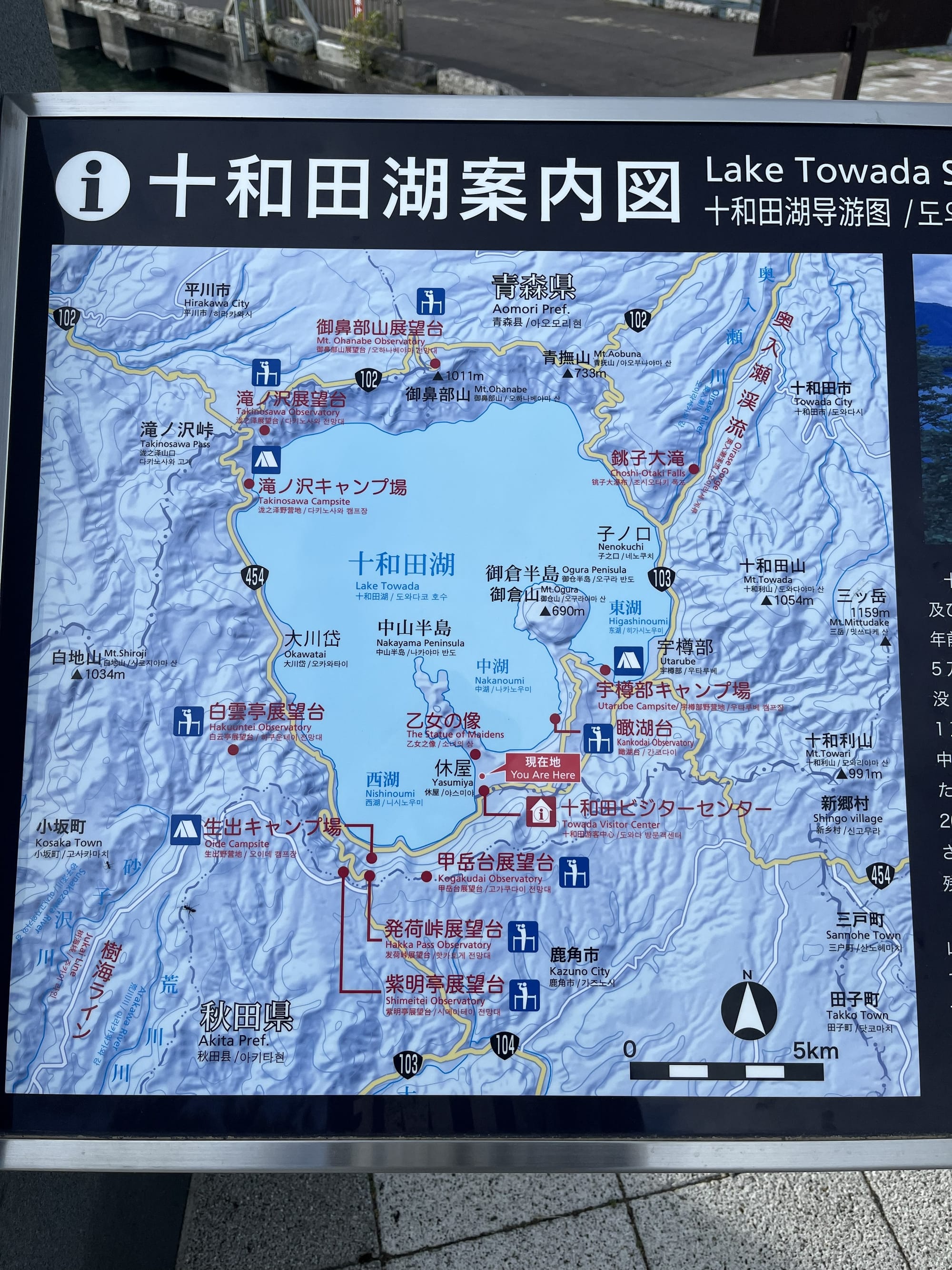
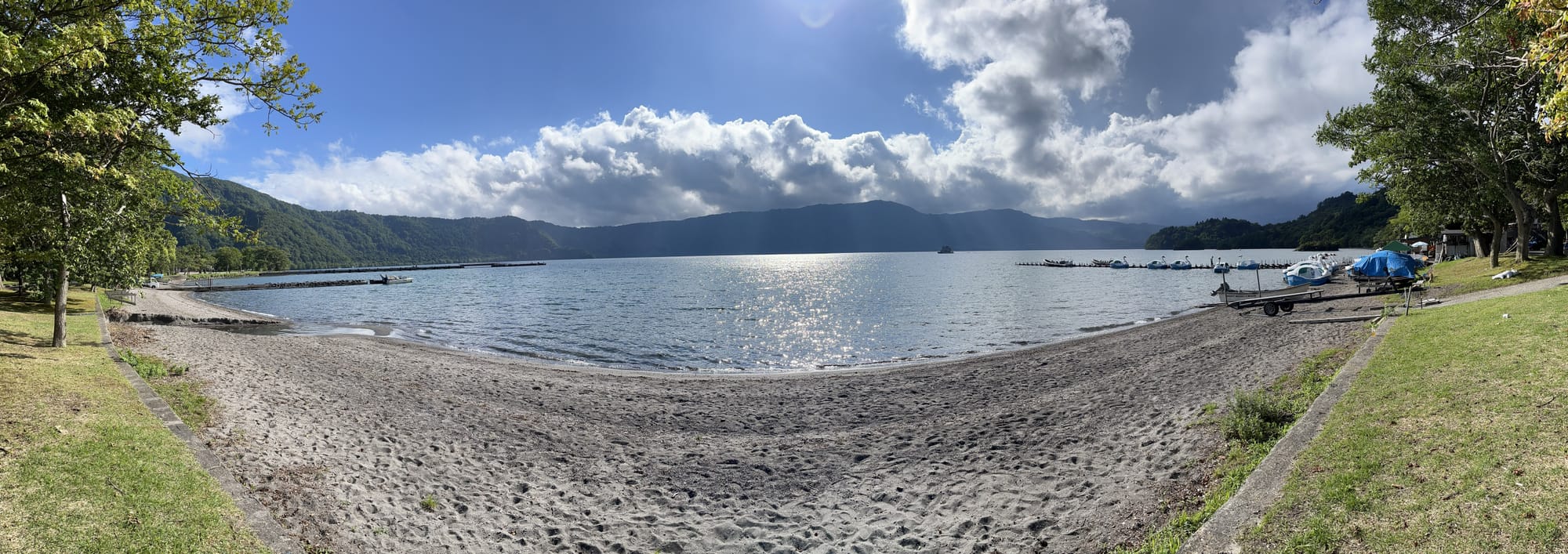
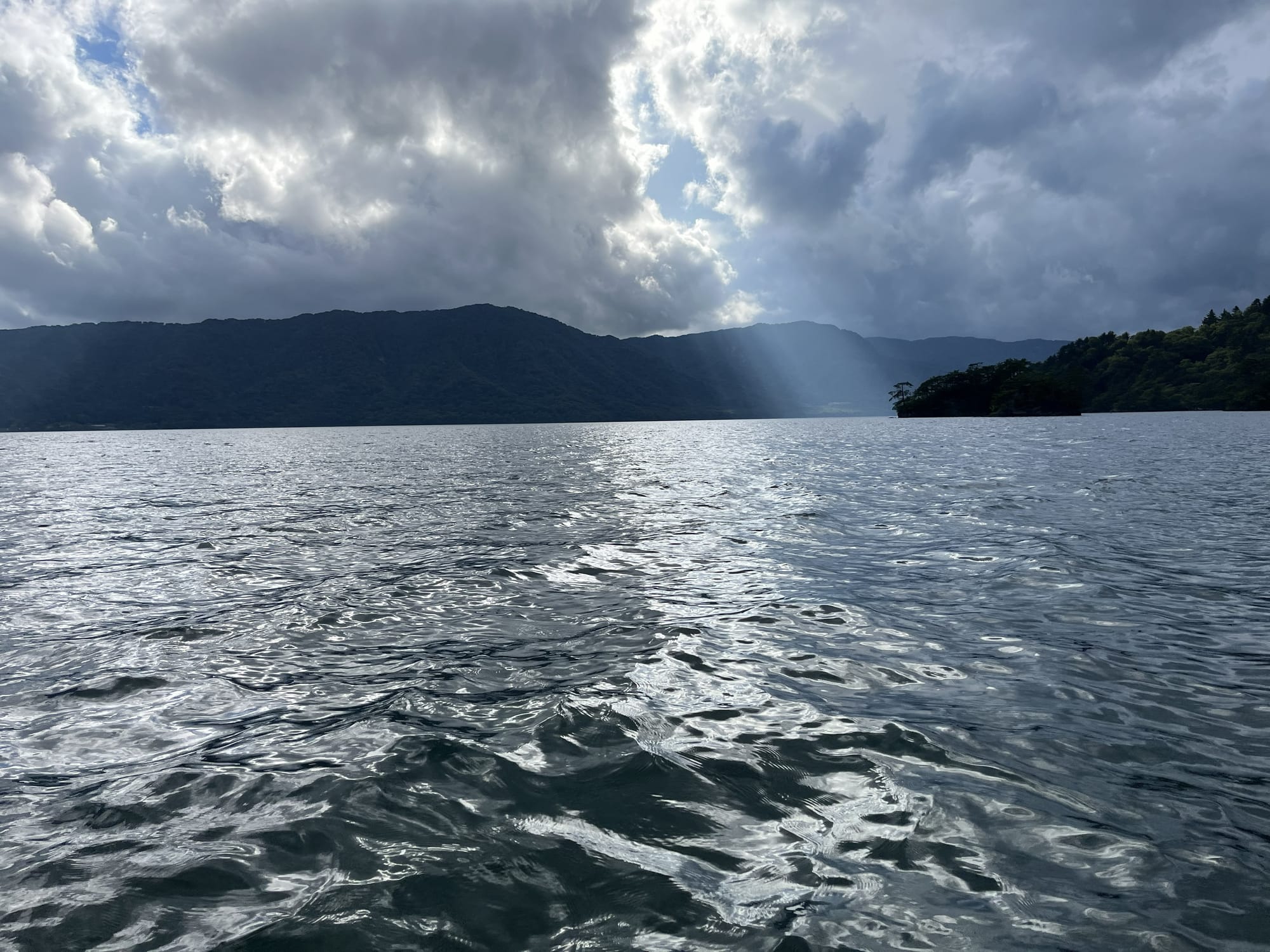
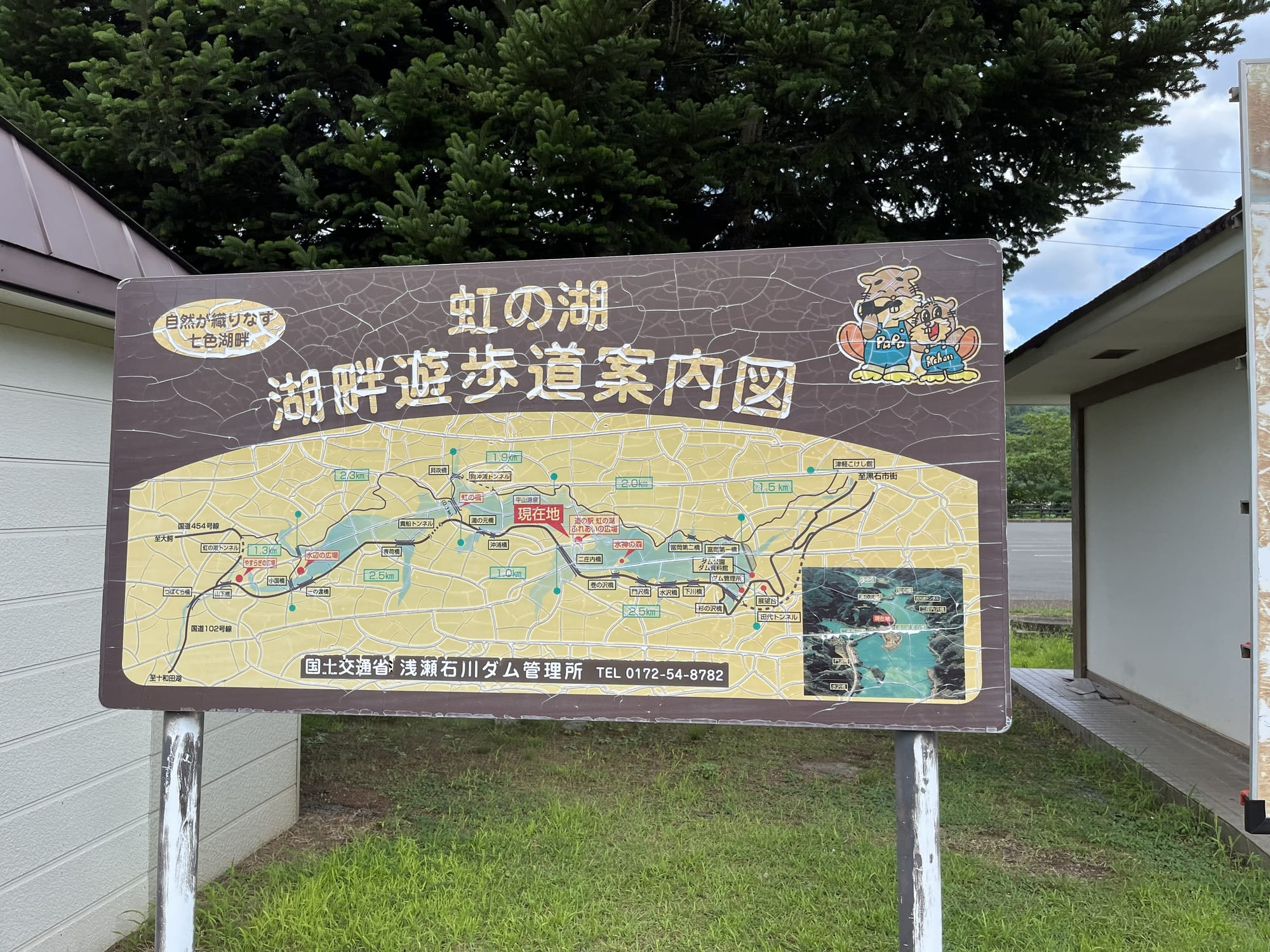
A map of the journey from Hachinohe to Lake Towada, highlighting the location of the Towada Prince Hotel on the shores of one of northern Japan's most scenic caldera lakes.A visitor map at Lake Towada highlights key attractions, viewpoints and routes around one of northern Japan's most scenic volcanic lakes.A panoramic view across Lake Towada, where sunlight breaks through the clouds to illuminate the waters of northern Japan's spectacular volcanic caldera lake.
Instead of going straight to the hotel I stopped in the small community on the shores of the lake and rented out a swan boat. Now you probably don’t know this, but Lake Towada is in the caldera of an active volcano, and it got its distinctive shape from secondary eruptions in the past and then the lava domes collapsing. The surface of the lake measures 23.6 Sq. Miles.
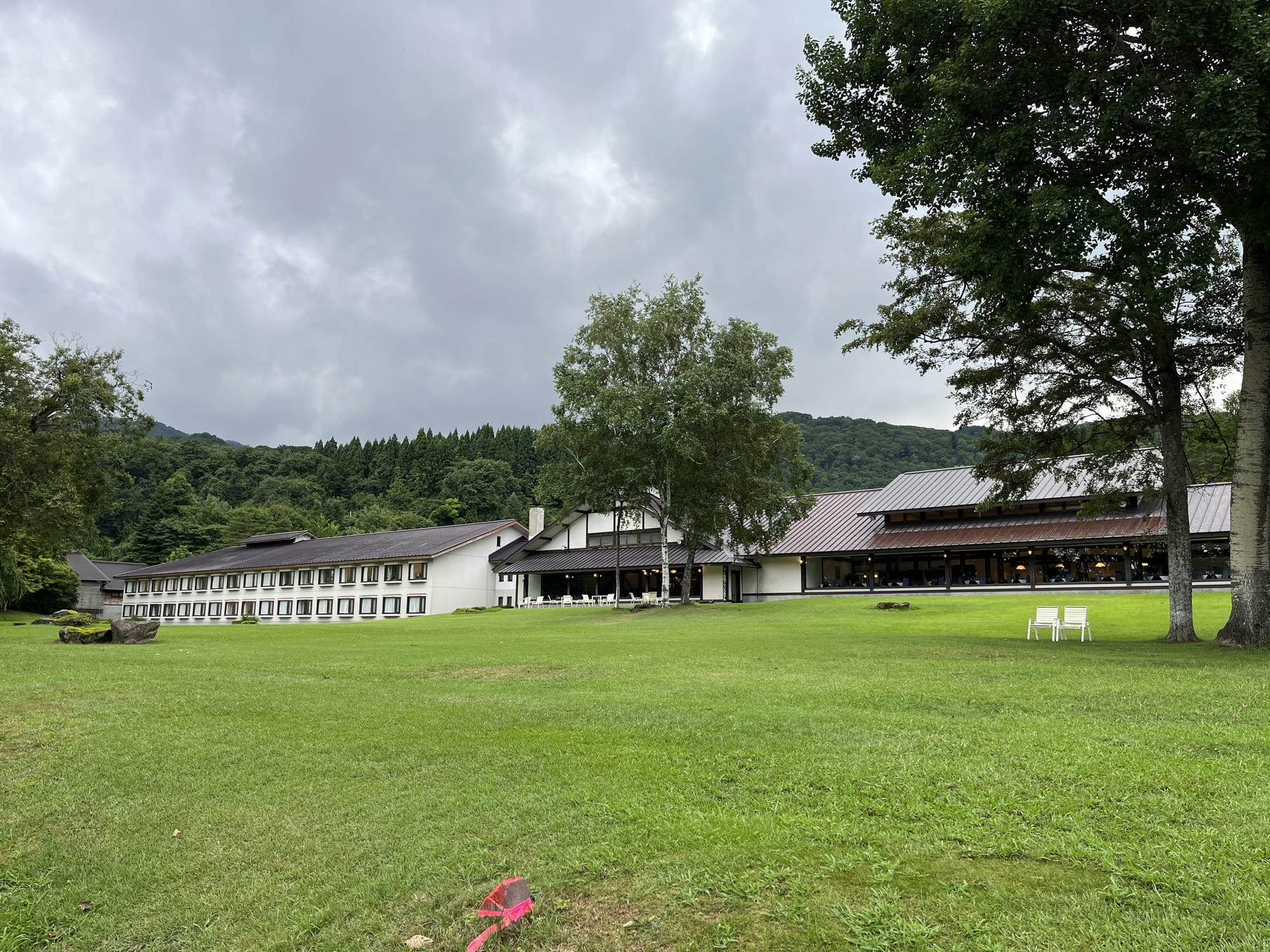
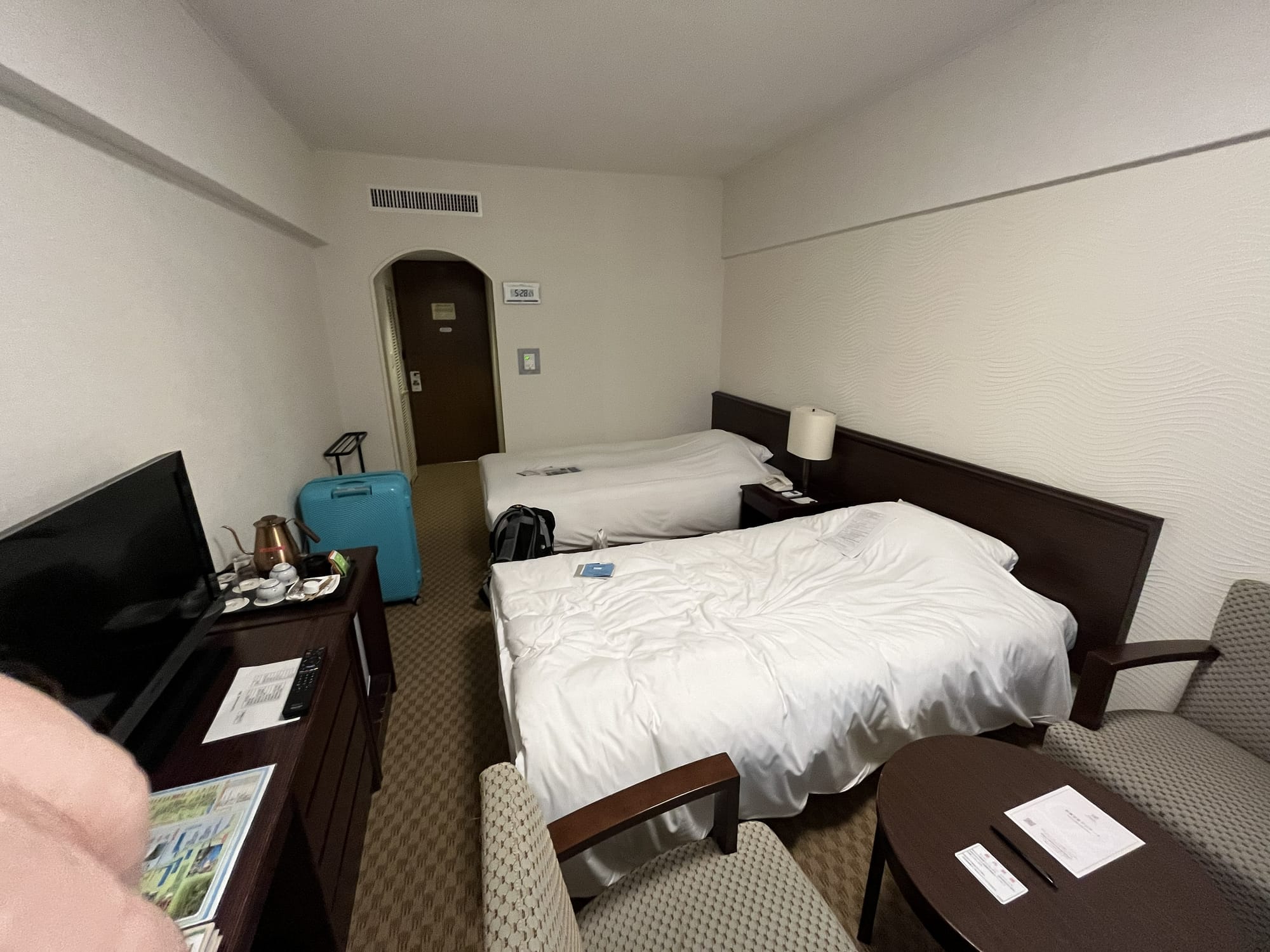
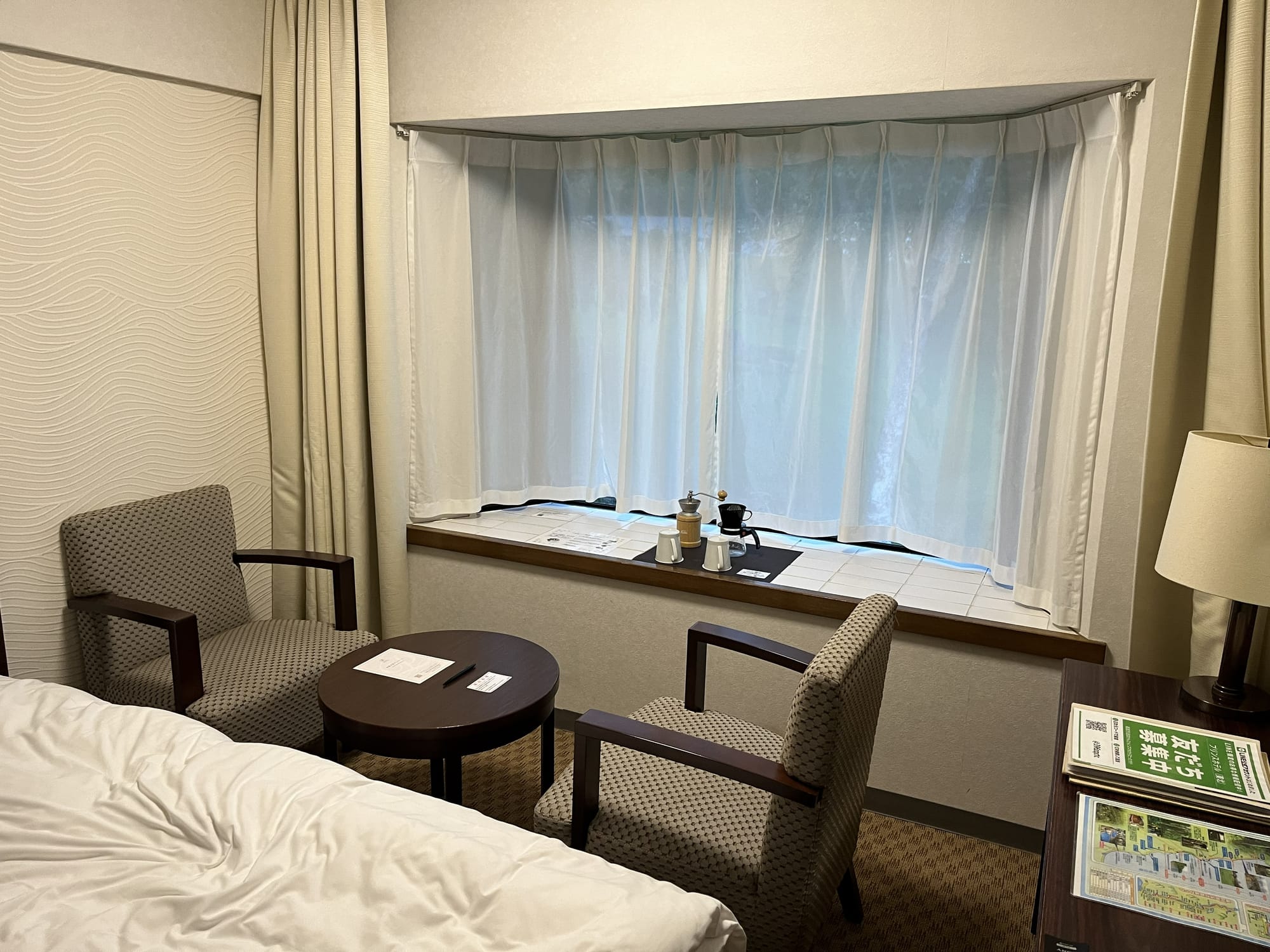
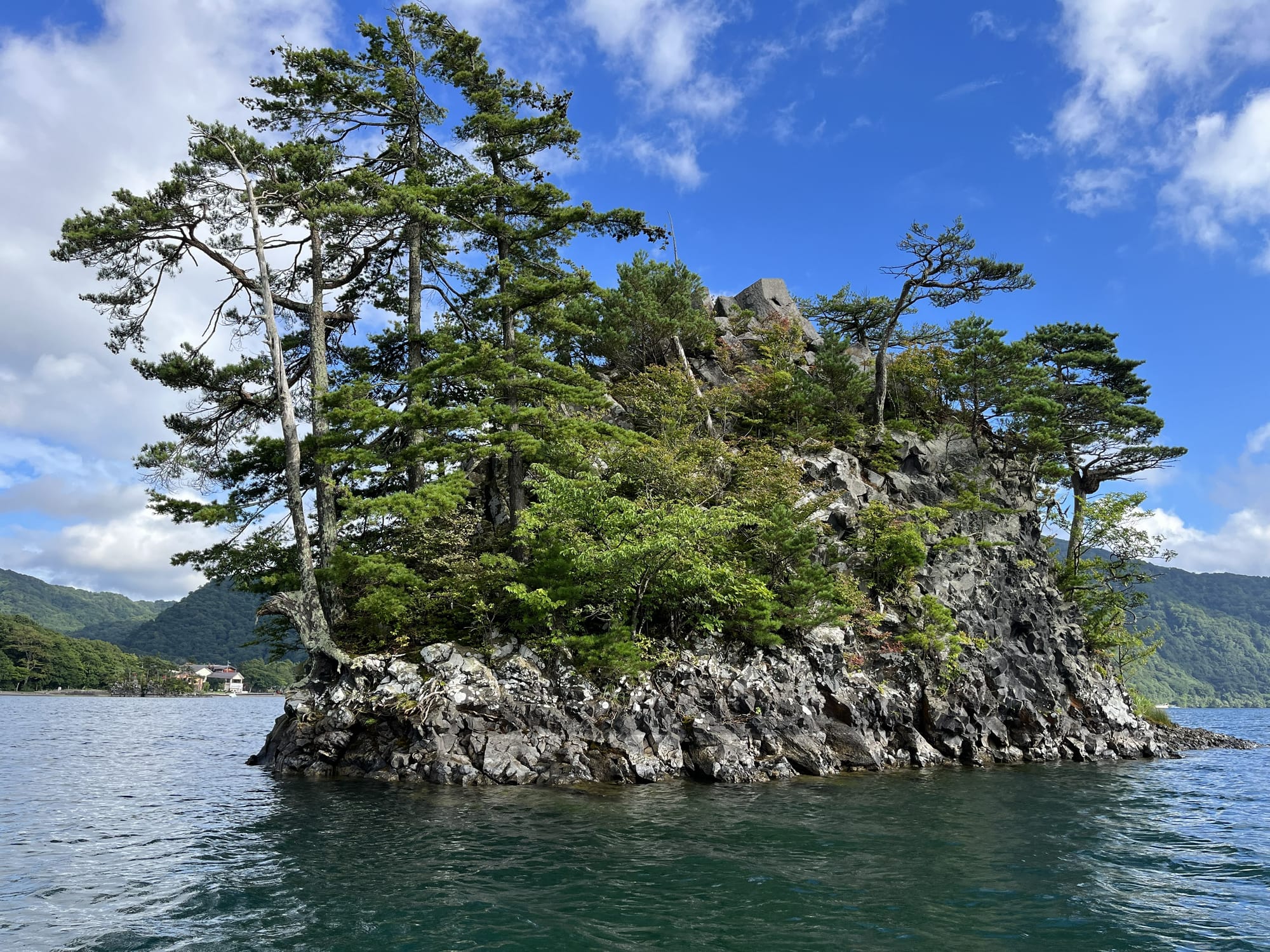
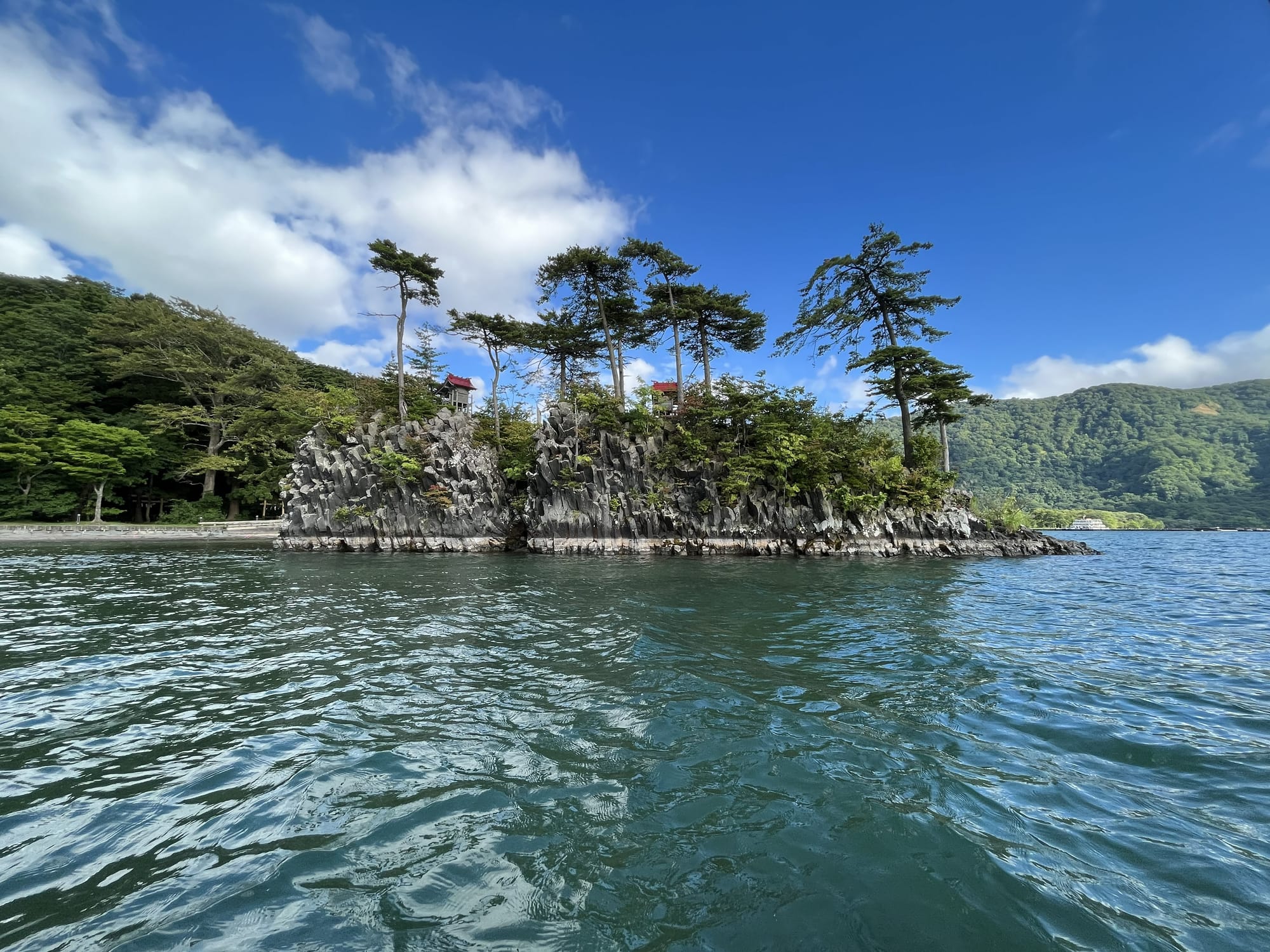
Towada Prince Hotel on the shores of Lake Towada offers a peaceful lakeside setting, surrounded by woodland and dramatic mountain scenery in northern Japan.My room at the Towada Prince Hotel provided a comfortable overnight stay beside Lake Towada, offering a relaxing base for exploring northern Japan.A comfortable seating area in my room at the Towada Prince Hotel, offering a quiet space to relax after exploring Lake Towada and the surrounding countryside.One of Lake Towada's picturesque islets rises from the waters of the caldera lake, showcasing the rugged natural beauty of northern Japan's volcanic landscape.Sunlight streams through the clouds over Lake Towada, creating a striking display of light and shadow across the waters of northern Japan's scenic caldera lake.A small shrine-topped island in Lake Towada, where rugged volcanic rock formations and windswept pines create one of the lake's most distinctive landscapes.
After getting to the hotel to check in I wanted to go out to some food from a nearby town, unfortunately when I got there it was closed so I have to go even further afoot to get some food. I looked up places to go that was good within 10-20KM. Kazuno city is where I finally ended up, but there was a slight twist with me arriving there, there was a Matsuri on, a festival.
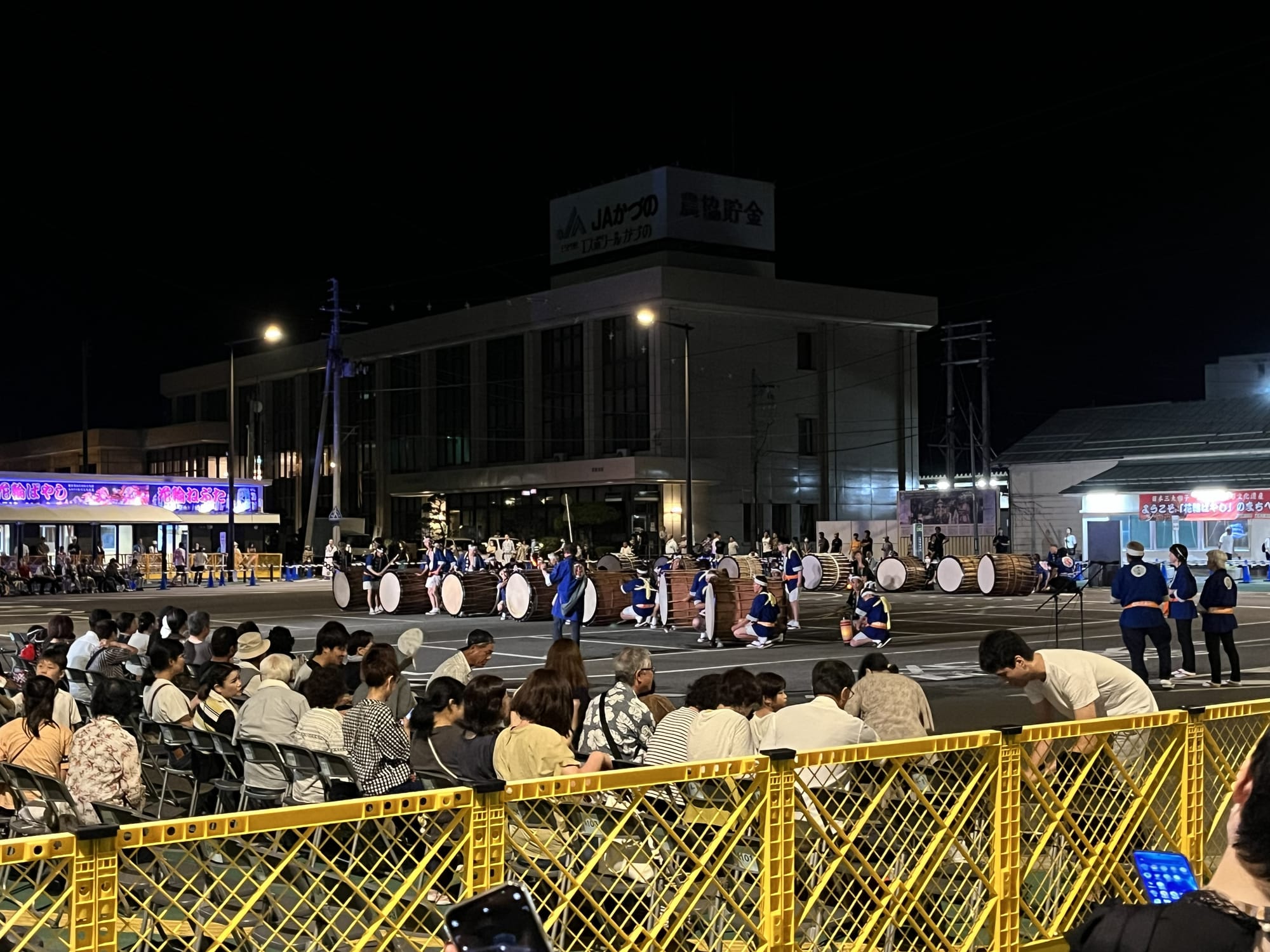
An evening taiko drumming performance at a festival in Kazuno, where powerful rhythms and community celebrations draw crowds from across the region.
0:00
/1:08
The taiko drumming performance.
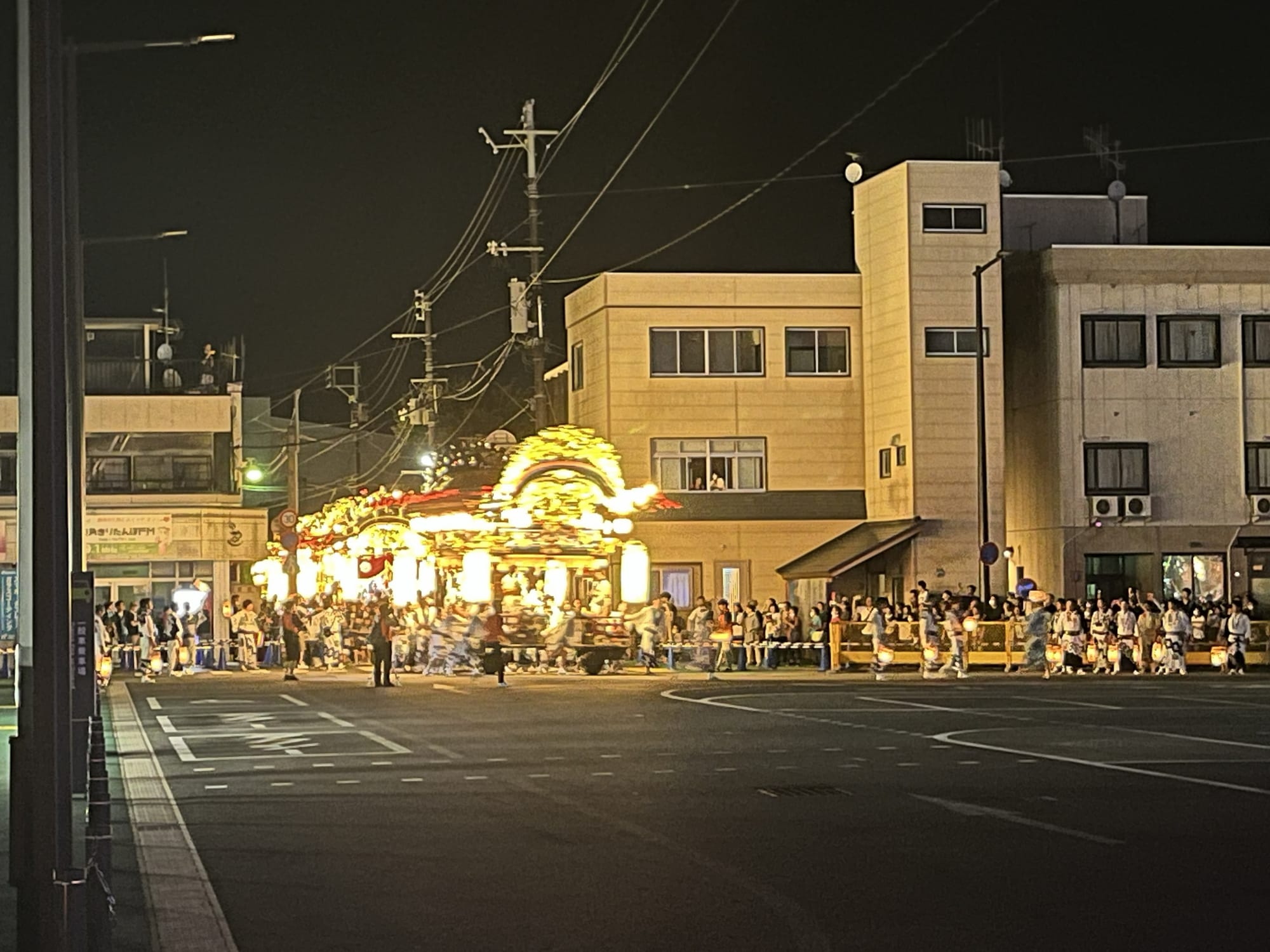
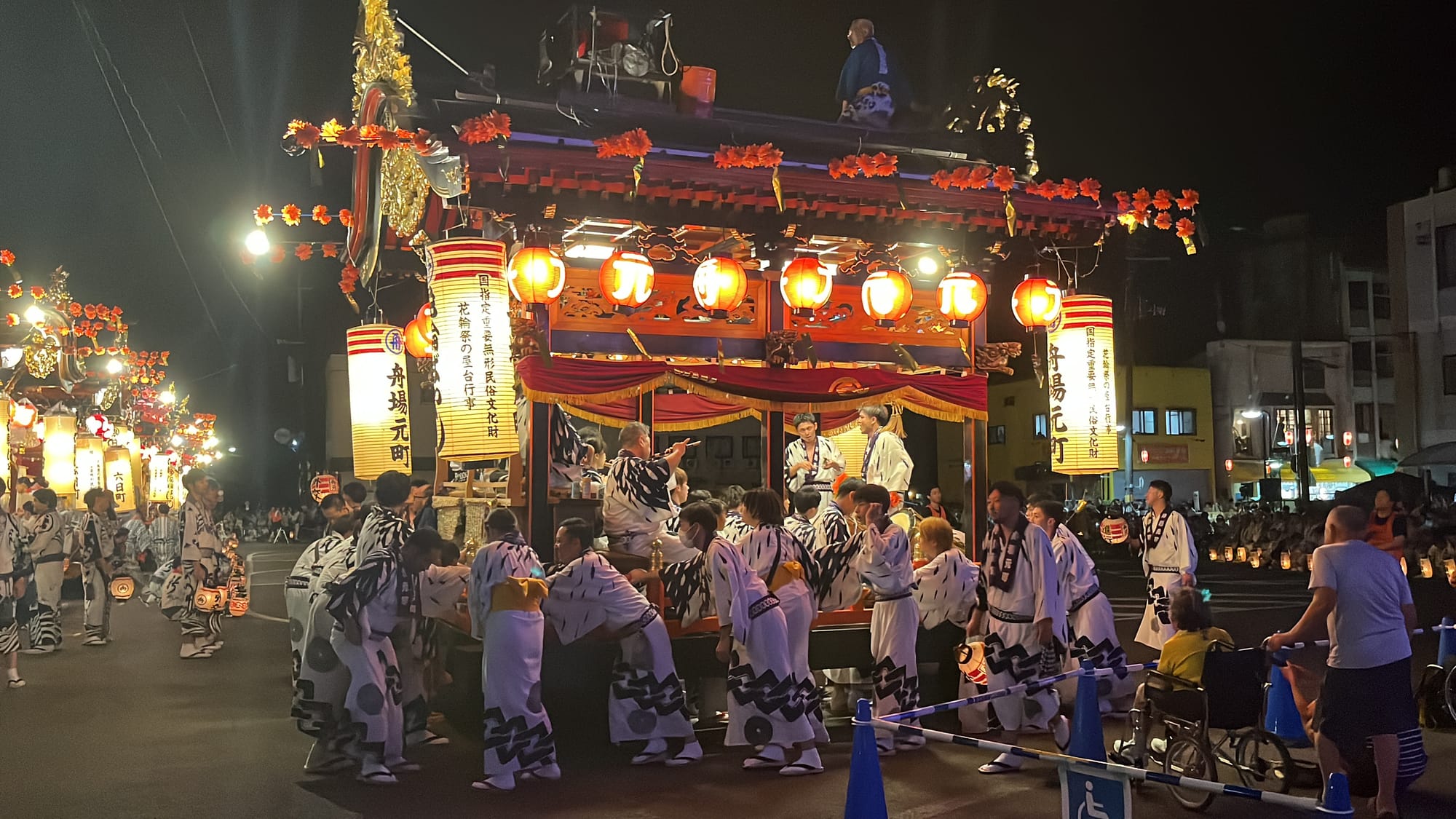
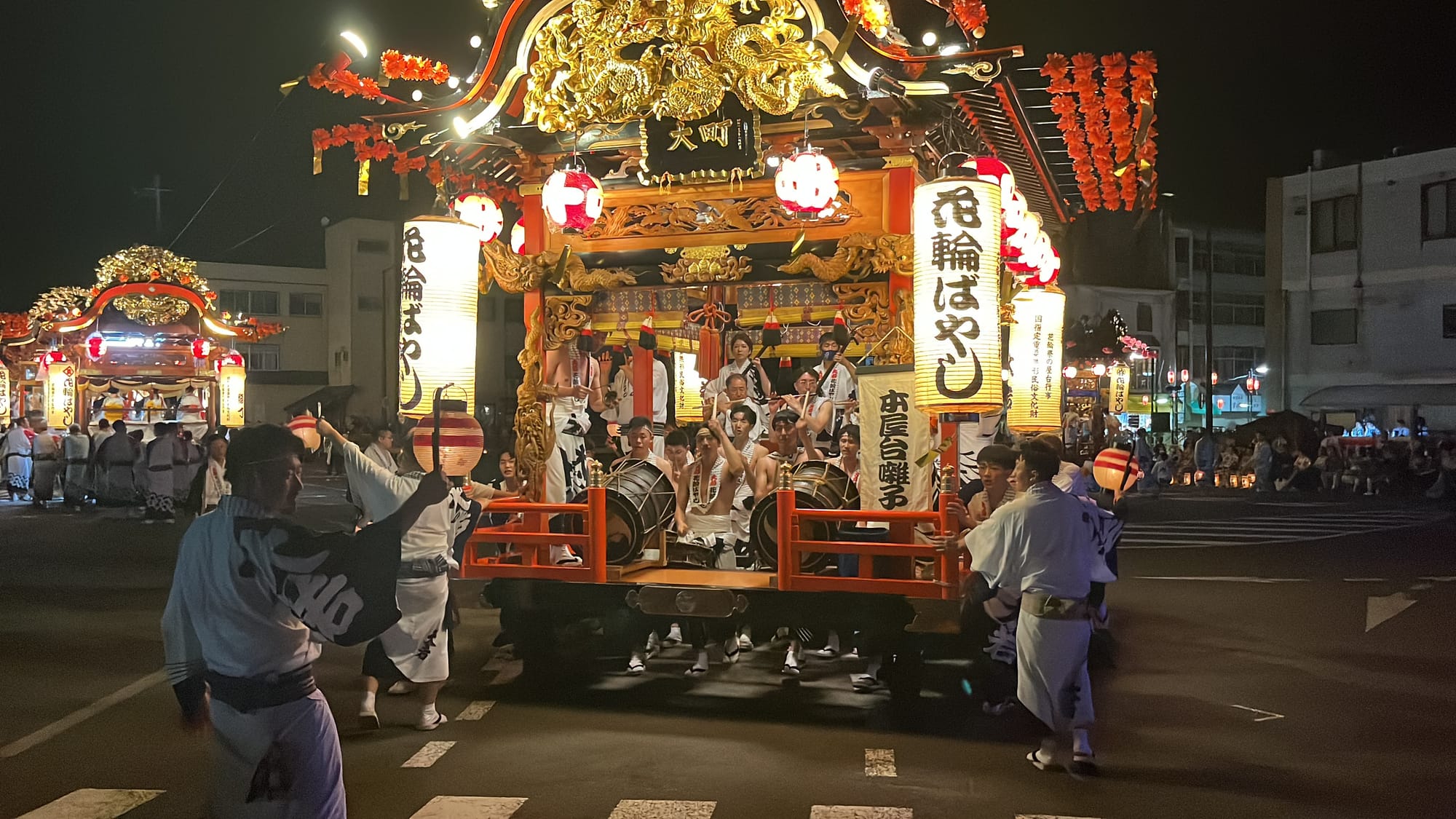
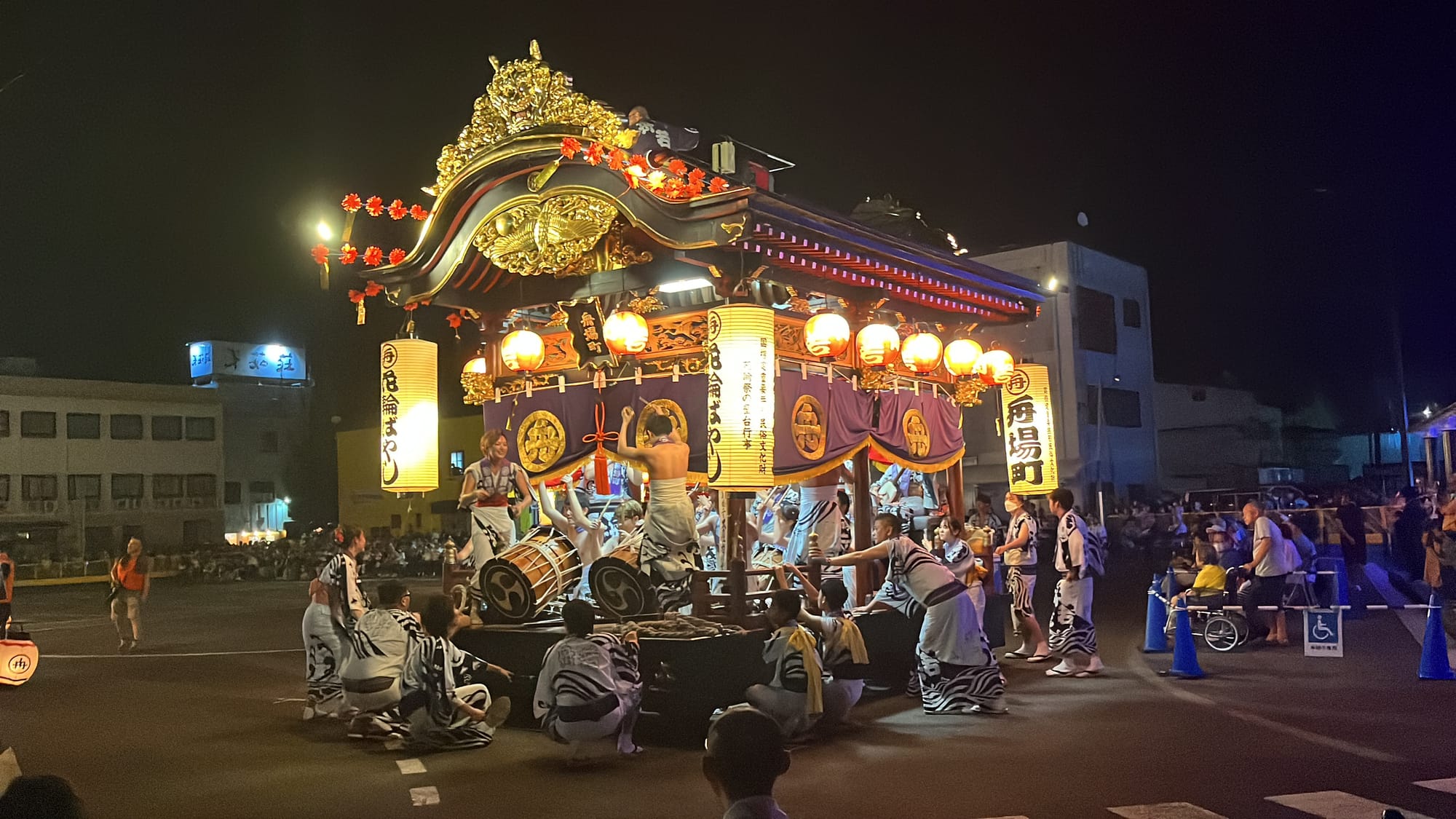
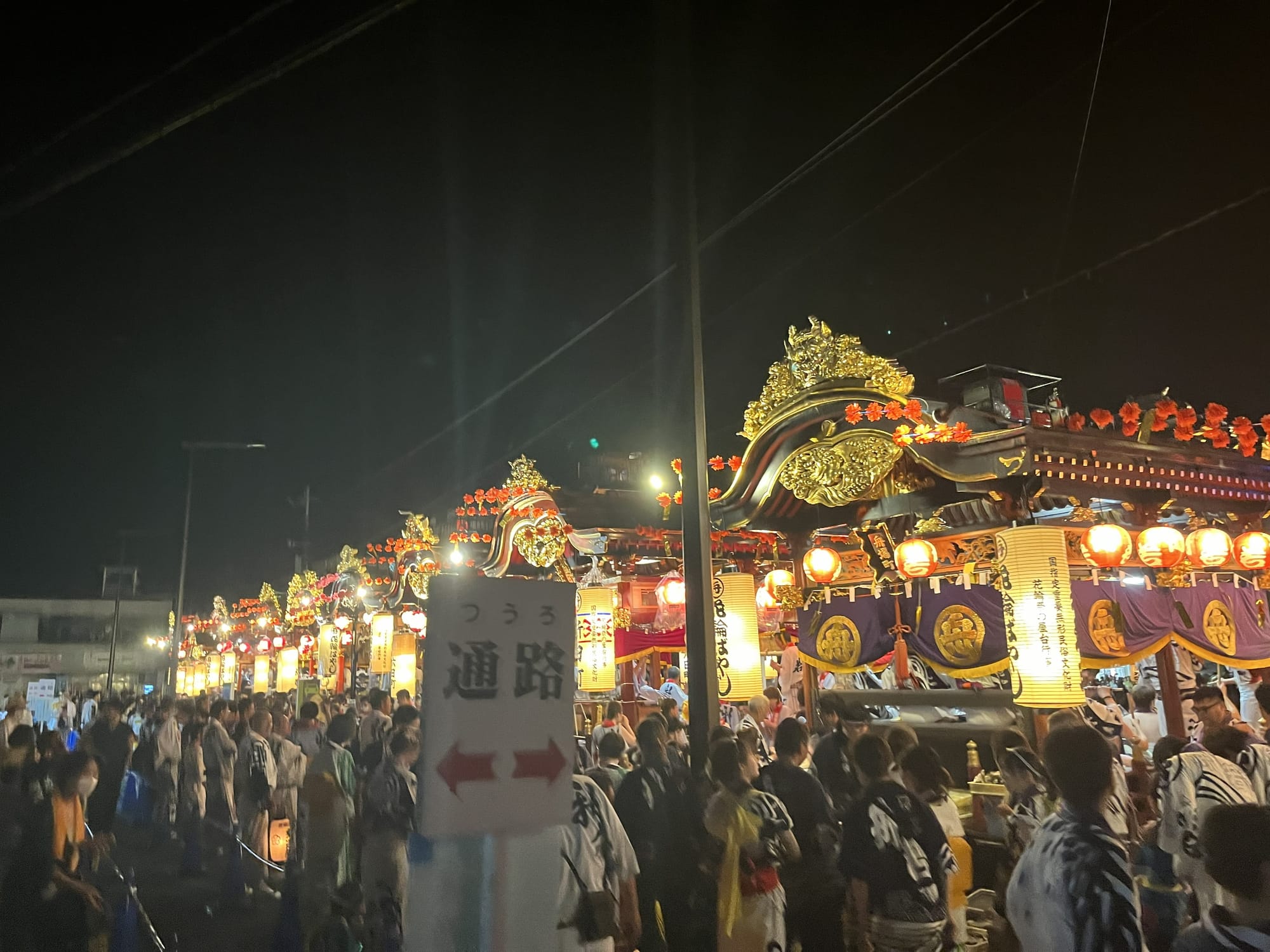
A brightly lit festival float makes its way through the streets of Kazuno during an evening celebration, bringing together traditional music, lanterns and local culture.A beautifully decorated festival float parades through Kazuno after dark, with lanterns, music and traditional performances creating a vibrant celebration of local culture.
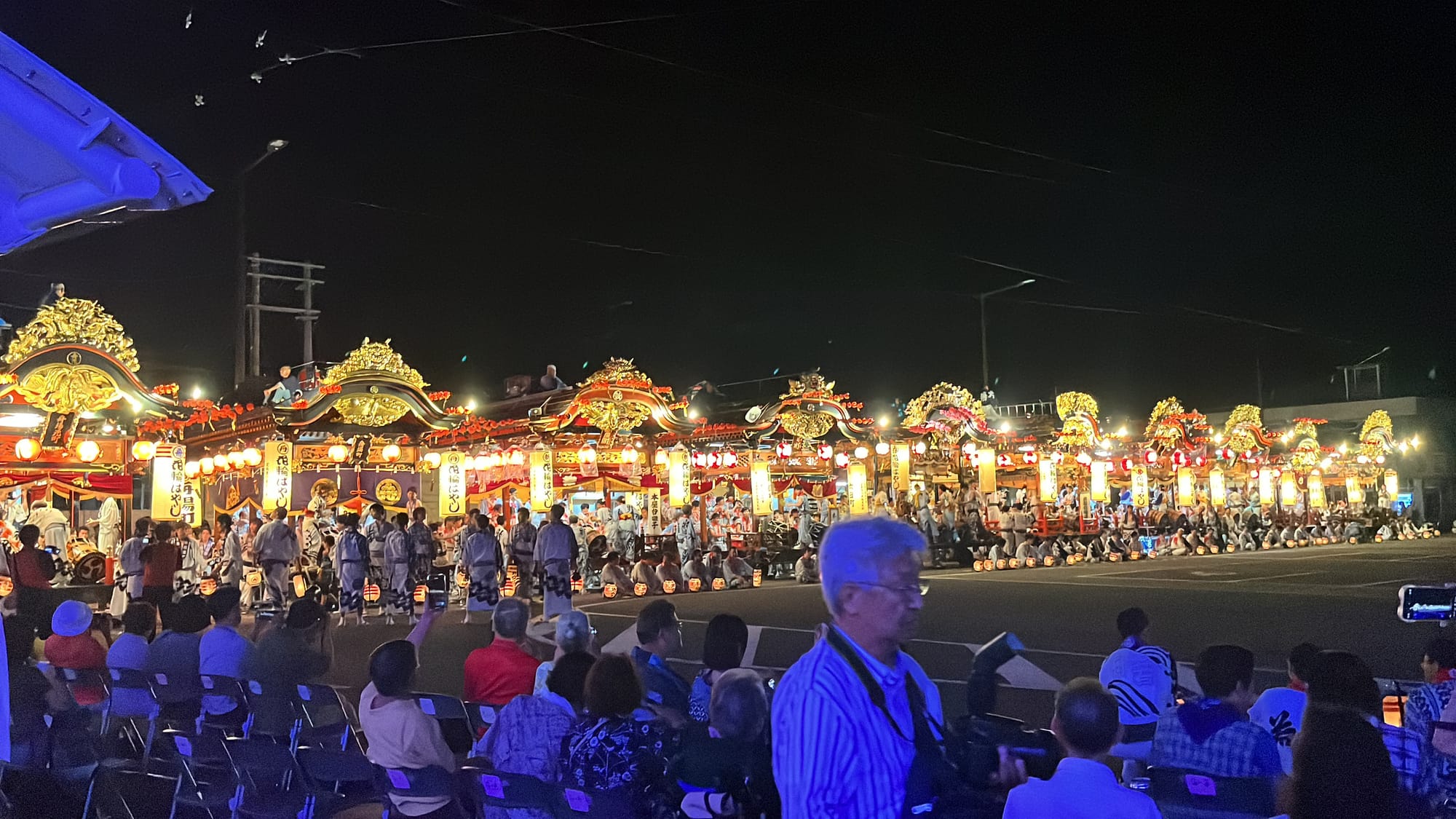
The festival is called Hanawabayashi which is a festival of light and music which takes place just after Obon. It has a history that dates back quite far to 1765. On the 16th (day after Obon) they get all the people who are considered unlucky and have a mass exorcism ceremony in front of the Shinto god of birth (which resides in a nearby shrine). A few days after this on the 19th and 20th there is a big, massive float parade from 10 districts in the town offering music to the deity. It was amazing to watch, and the music was awesome.
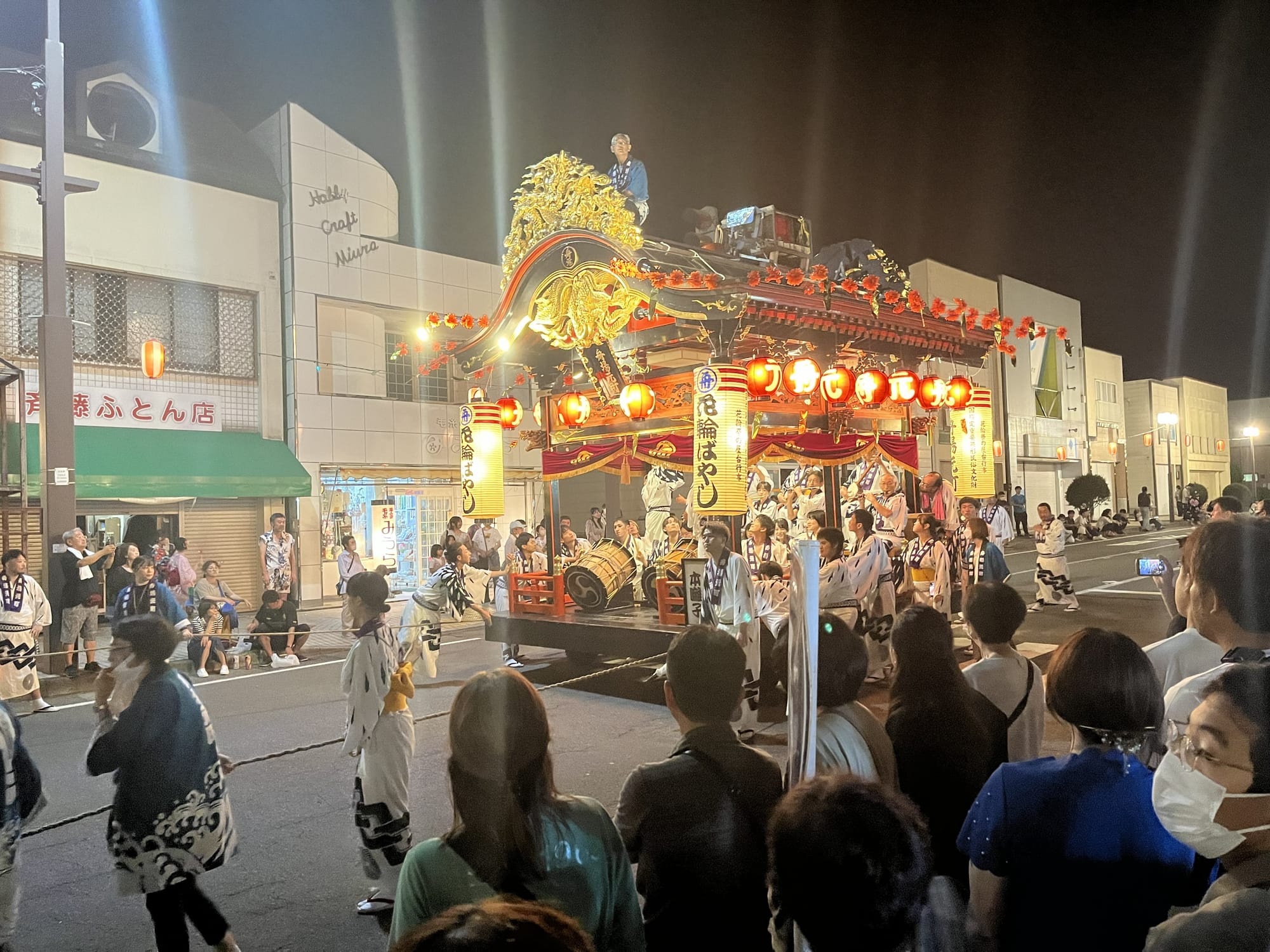
Festival floats parade through Kazuno after dark, their glowing lanterns, intricate carvings and traditional music creating a spectacular celebration of local heritage.A beautifully decorated float takes part in Kazuno's night-time festival procession, with glowing lanterns, traditional costumes and music celebrating local heritage.A lantern-lit festival float passes through Kazuno during an evening celebration, with musicians, drummers and intricate craftsmanship showcasing the region's rich cultural traditions.A lavishly decorated festival float takes part in Kazuno's evening celebrations, with lanterns, traditional music and intricate craftsmanship reflecting the town's cultural heritage.Festival floats gather in Kazuno for a spectacular evening procession, with glowing lanterns, ornate carvings and large crowds celebrating one of the region's most colourful traditions.Festival floats assemble in Kazuno for a spectacular evening gathering, creating a dazzling display of lanterns, music and traditional craftsmanship during one of the region's most celebrated festivals.
So on each float there was at the back 3 shamisen players, then 3 flute players in front and then 2 rows of 3 drummers, but the drummers walked as well even as the float was moving and there would be a few other people on the floats as well with fans and small metal timing cups which they used to help keep the tempo. It was amazing to watch.
As part of my Websites revamp, please see below a video of the festival, but it is 10 mins long, please bear that in mind.
0:00
/10:35
Festival floats in Kazuno, going around the square, with their dazzling display of lanterns, music and traditional craftsmanship.
When I was on the way back to my hotel and I don’t know how well you can see it, but I was in the middle of nowhere and it was awesome to be able to see hardly any light and to just see the stars.
A clear night sky over northern Japan, where stars shine above the treetops and a faint horizon glow contrasts with the surrounding darkness.
Hirosaki City
21st August
Today I decided to get up and go to Hirosaki city, I wanted to also go to Mount Iwaki-San as well, but unfortunately it was clouded over and it wouldn’t be the best idea to go up it, even though I would be via car and chairlift and then walk the rest of the way. So instead, it was time to go to the castle instead and see if it cleared up later. First off, I went to the botanical gardens there and got a combo ticket which only cost 500 yen (About £2.70). On the way though I stopped off on the way at a roadside cafe and got a nice bowl of ramen for only 700 yen. (About £4).
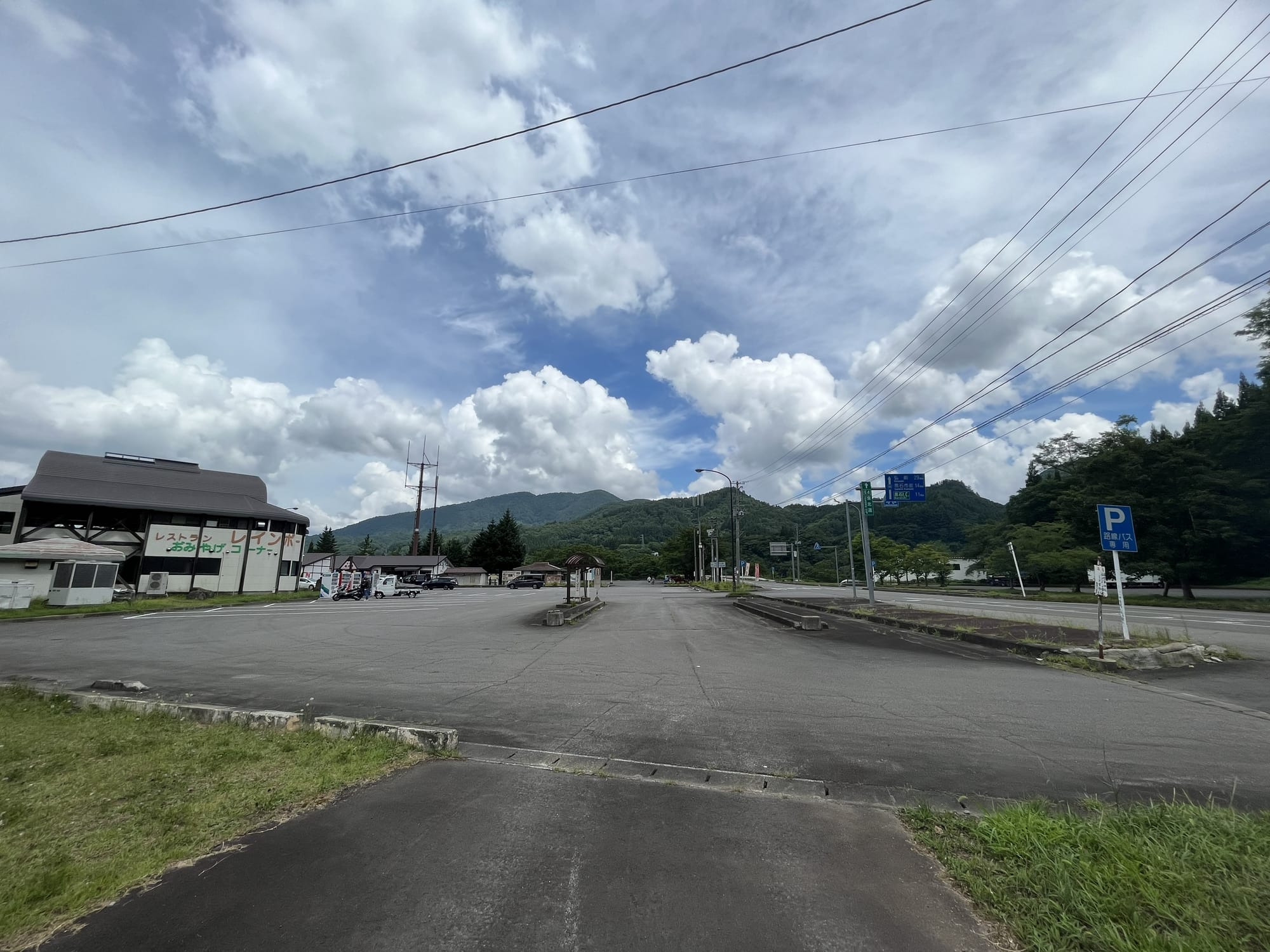
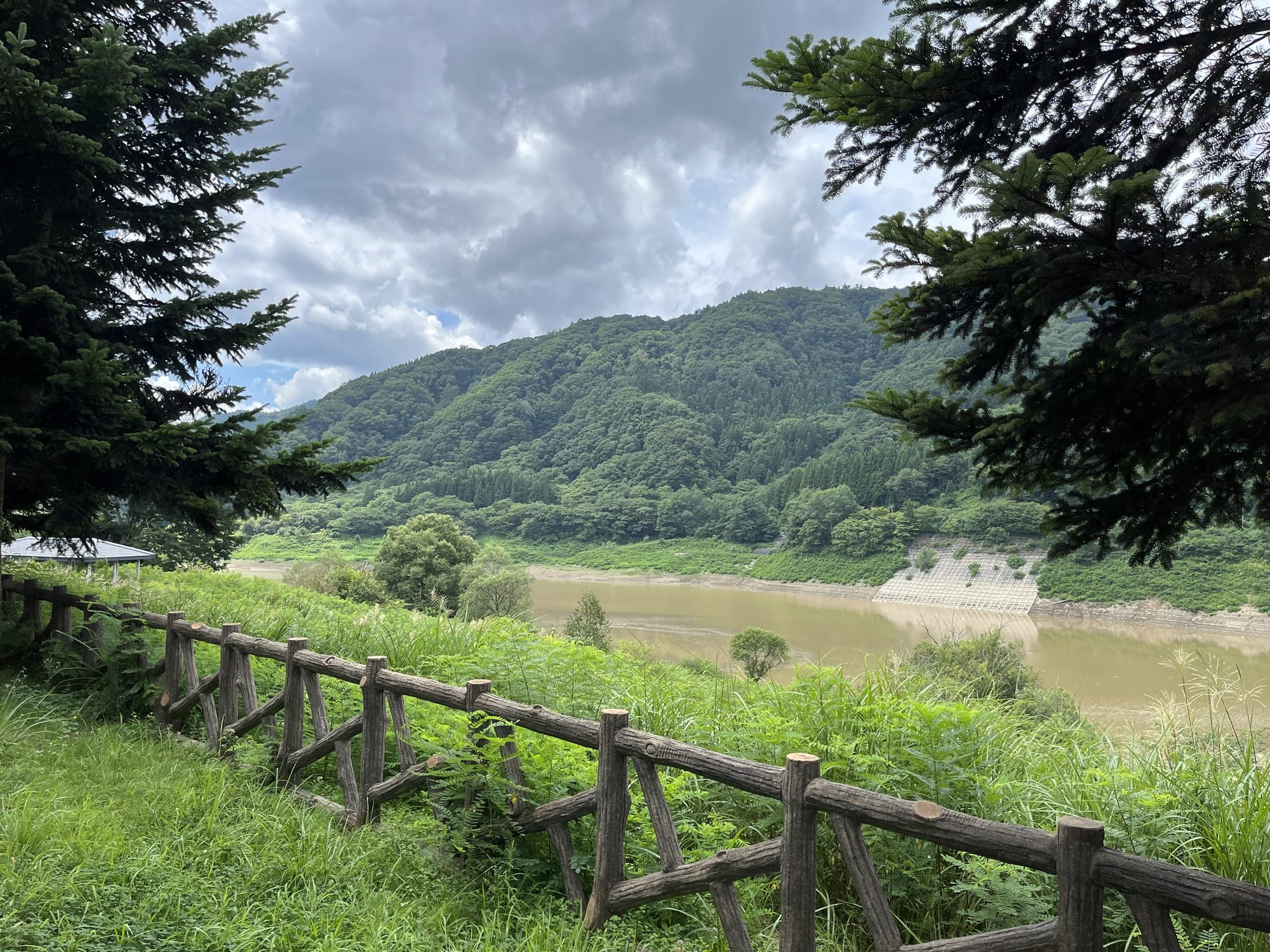
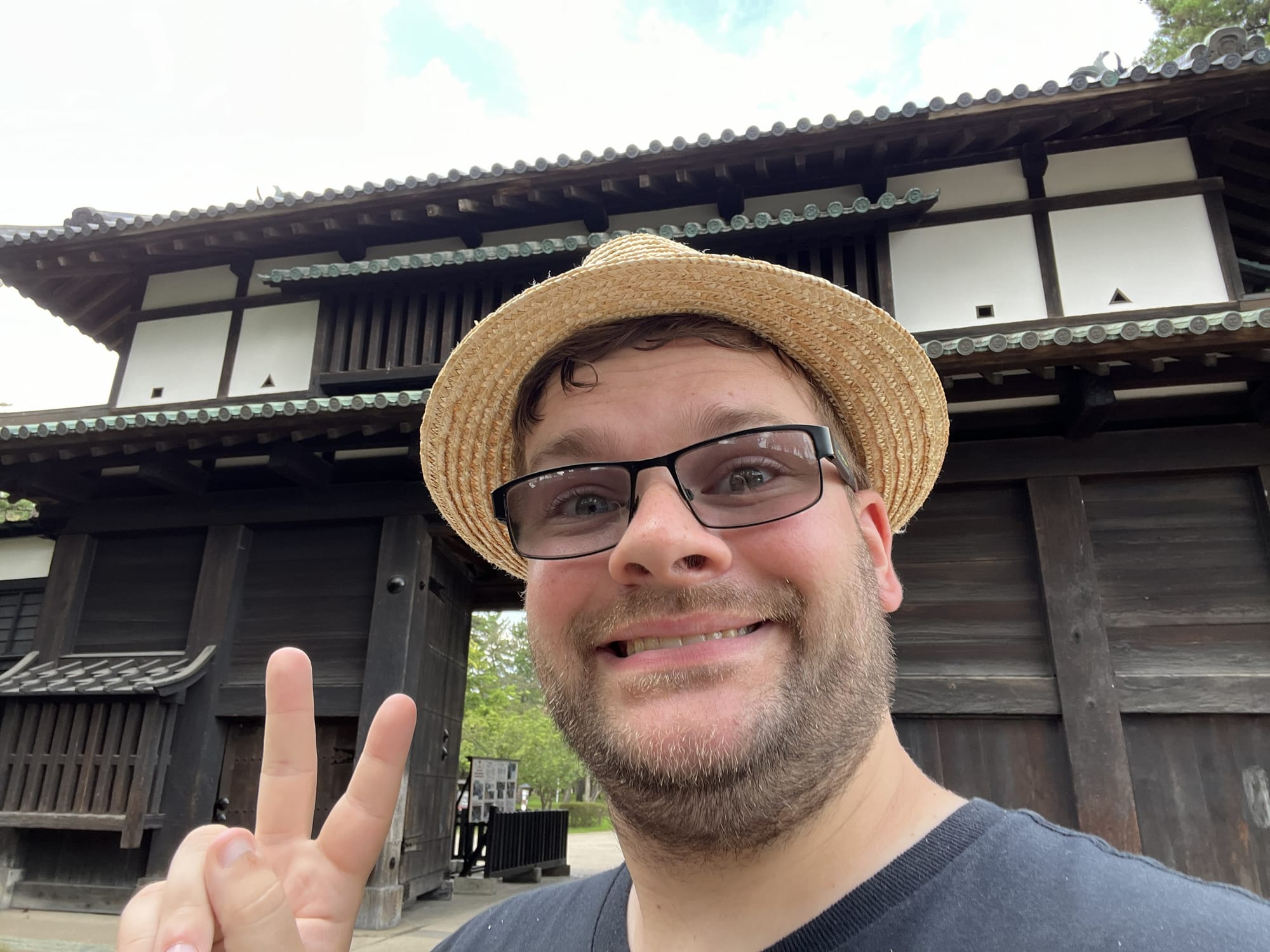
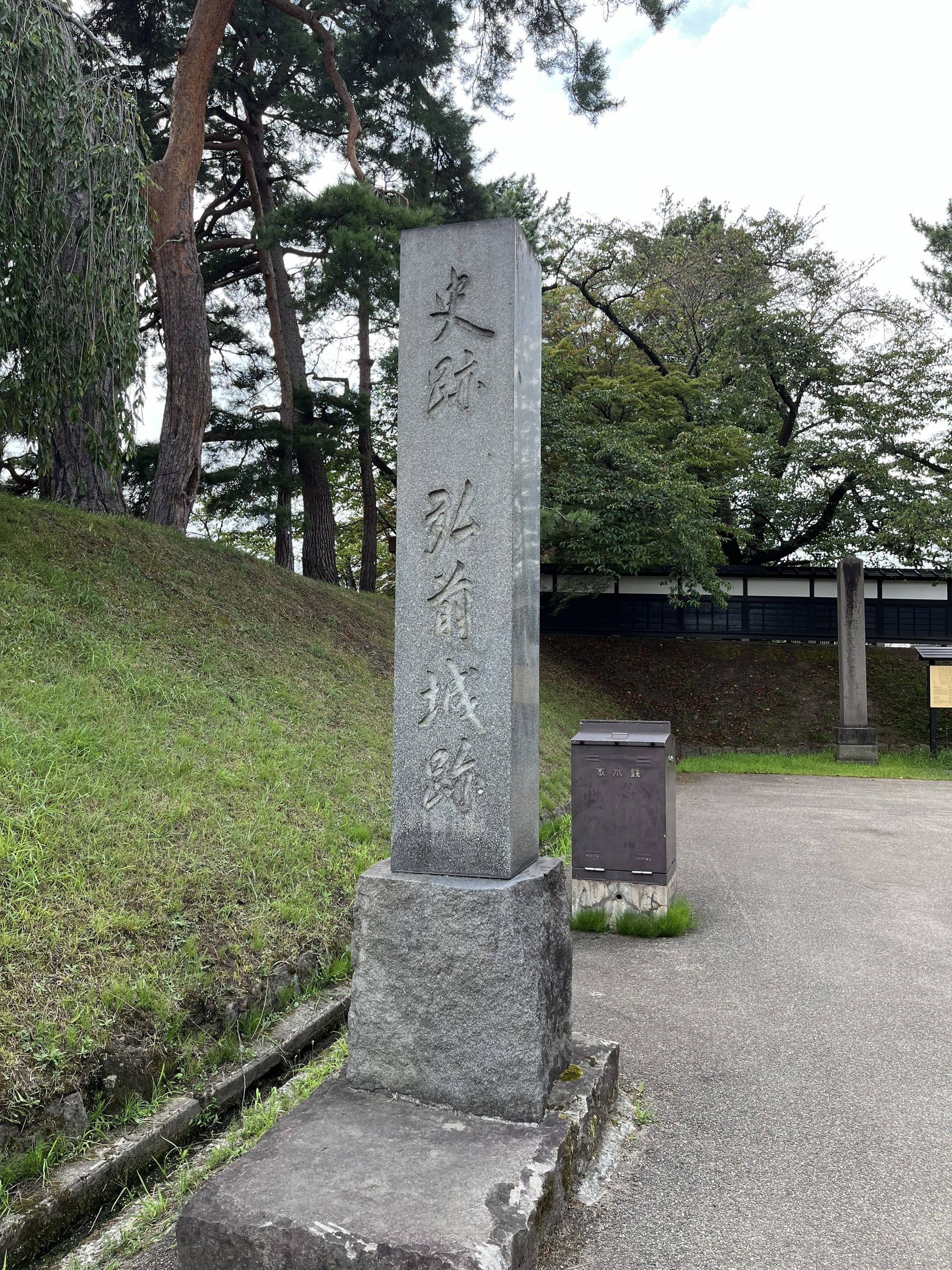
A trail map near Lake Oirase helps visitors explore the area's scenic walking routes, viewpoints and natural attractions in northern Japan.A roadside stop near Lake Oirase offers sweeping views of the surrounding hills and changing summer skies, showcasing the natural beauty of northern Japan.A peaceful view over Lake Oirase in northern Japan, where forested hills, still water and changing skies showcase the region's natural beauty.A selfie at Hirosaki Castle in Aomori Prefecture, featuring one of the historic castle gates and showcasing the rich heritage of northern Japan's former castle town.A stone marker at Hirosaki Castle identifies the site of the former Tsugaru clan stronghold, one of northern Japan's best-preserved Edo-period castles.
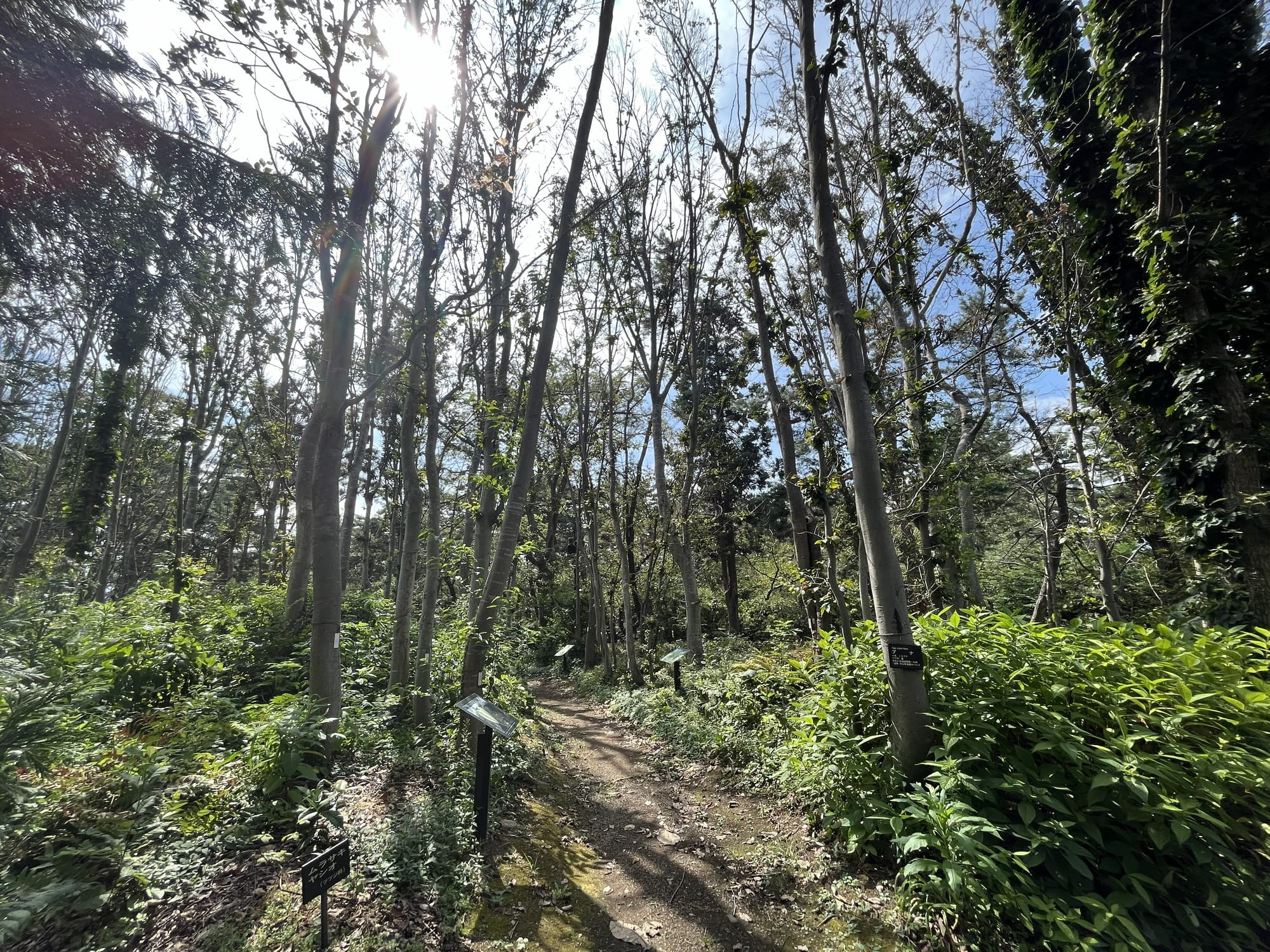
The botanical garden has loads of different flowers and a bunch of different gardens and Japanese gardens. The first few things I came across were a forest, rock garden and a floral calendar.
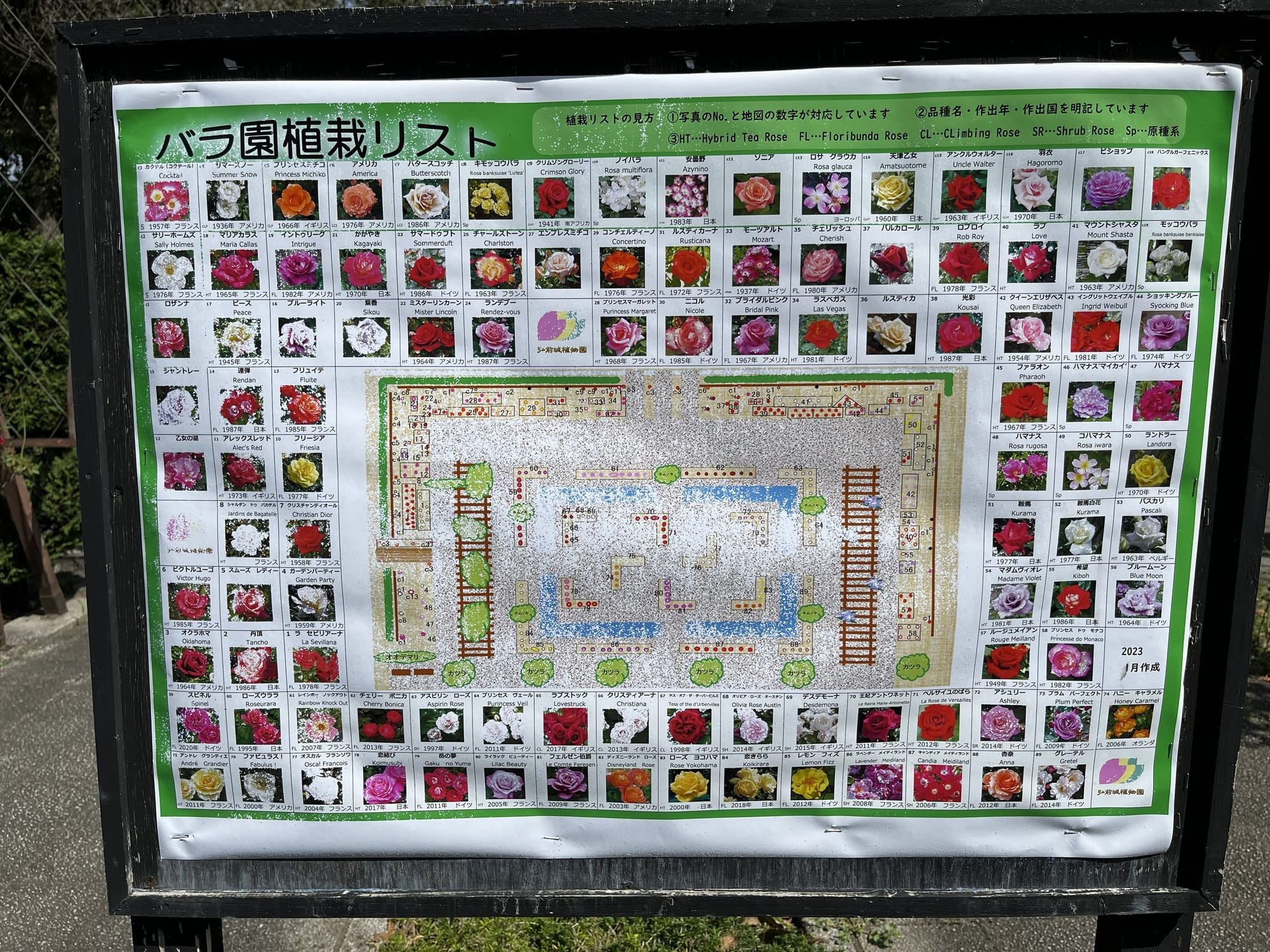
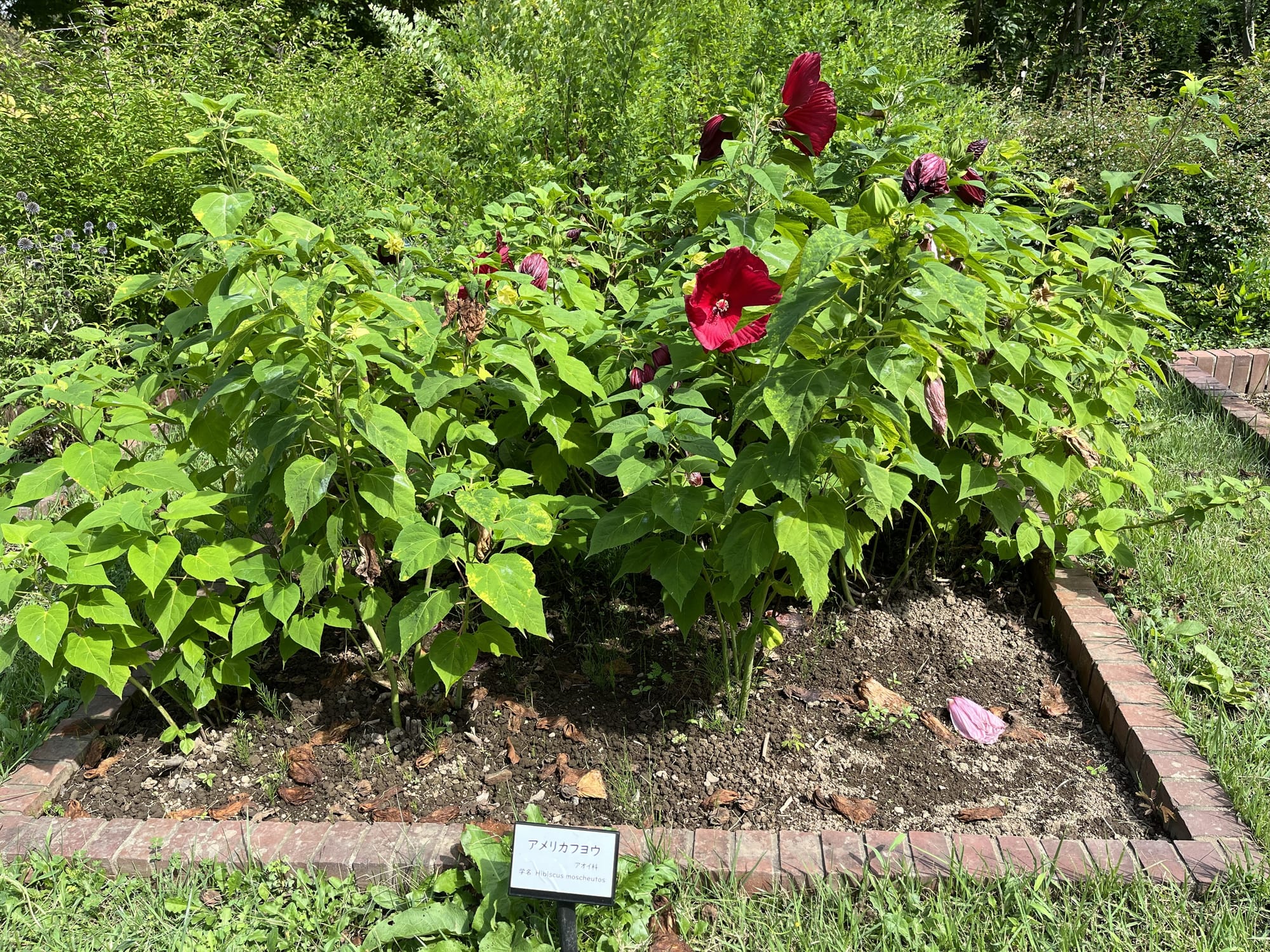
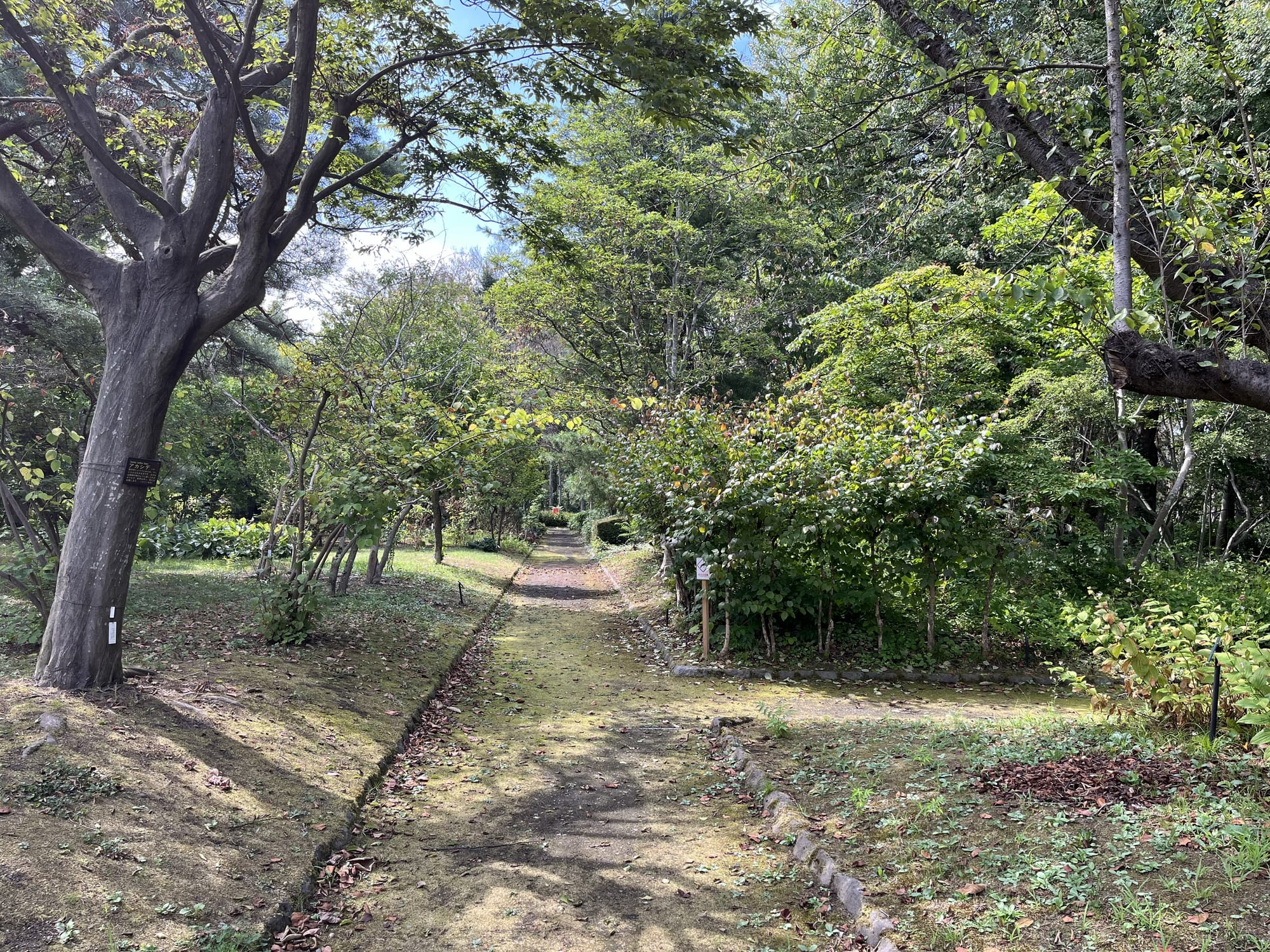
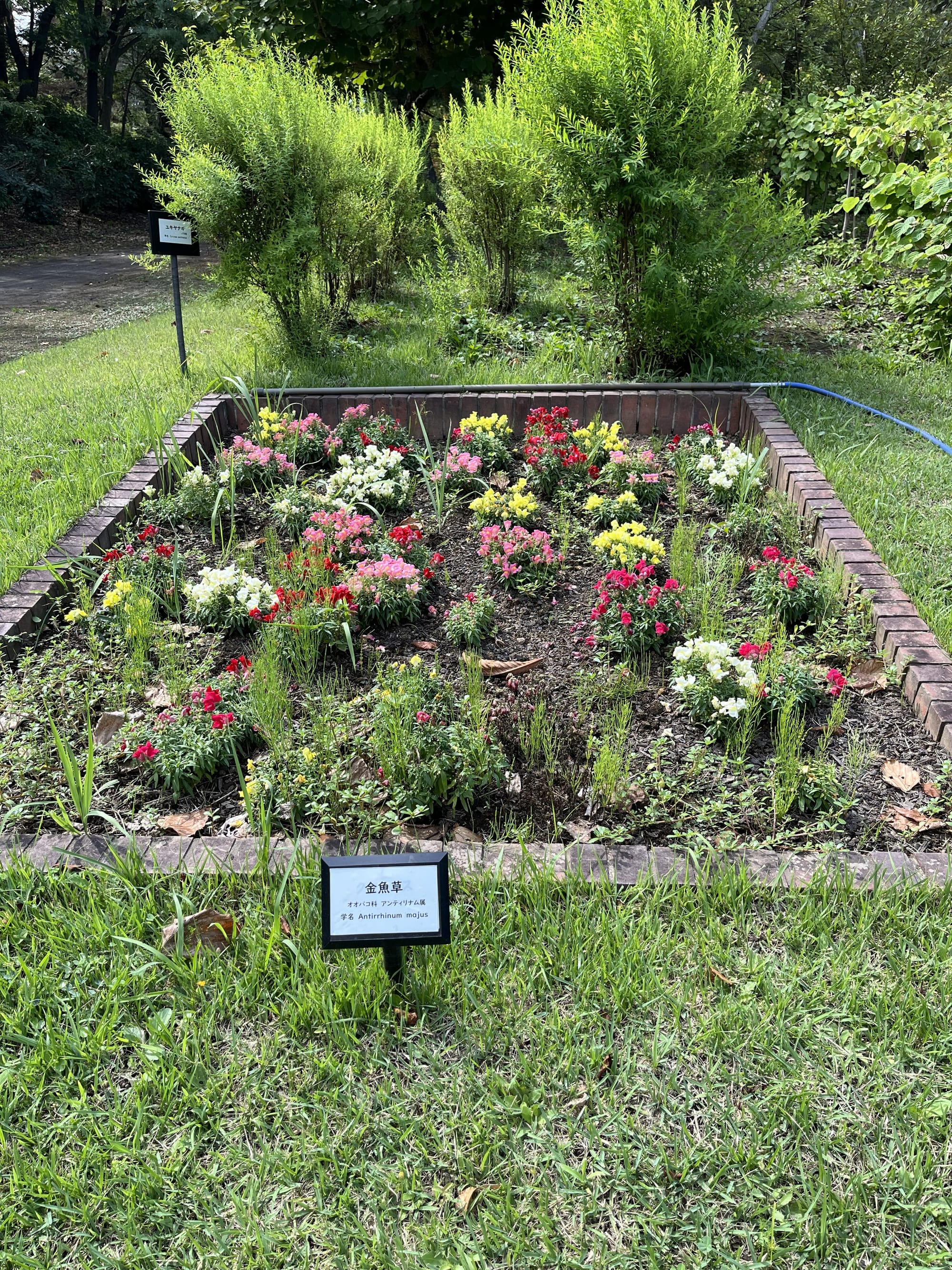
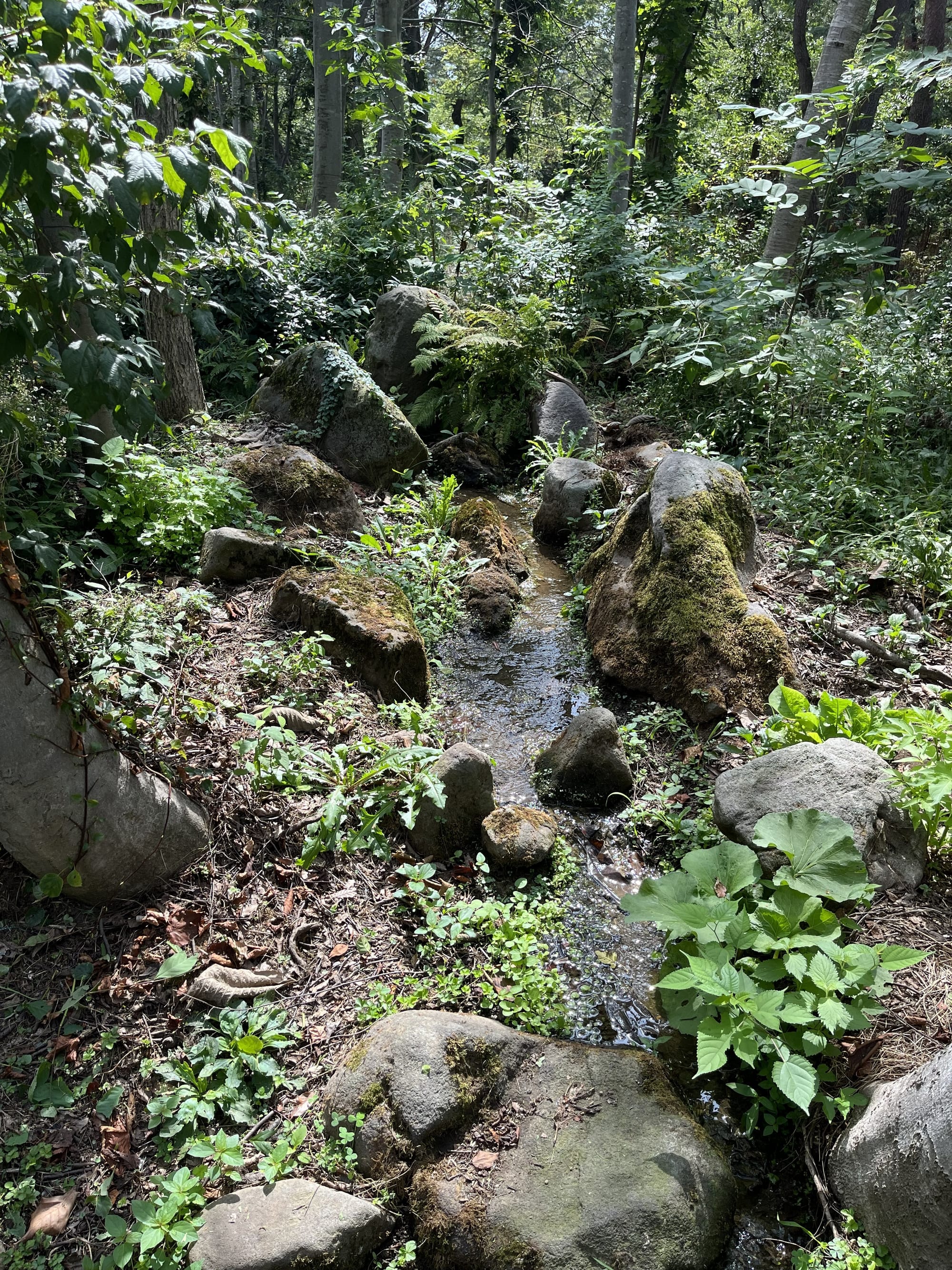
A guide to the rose collection at the Hirosaki Castle Botanical Gardens, highlighting the many varieties cultivated within the castle's historic parkland setting.Vibrant red hibiscus flowers on display at the Hirosaki Castle Botanical Gardens, part of a diverse collection of plants cultivated within the castle's historic park grounds.A peaceful forest trail in the Hirosaki Castle Botanical Gardens showcases native woodland plants and trees, offering a tranquil contrast to the nearby historic castle grounds.Tree-lined path through the Hirosaki Castle Botanical Gardens, bordered by shrubs and mature trees, with dappled sunlight illuminating the peaceful garden landscape.A vibrant display of snapdragons at the Hirosaki Castle Botanical Gardens adds a splash of colour to the park's diverse collection of ornamental plants and flowers.A tranquil woodland stream in the Hirosaki Castle Botanical Gardens creates a natural oasis among the gardens' diverse collection of plants and trees.
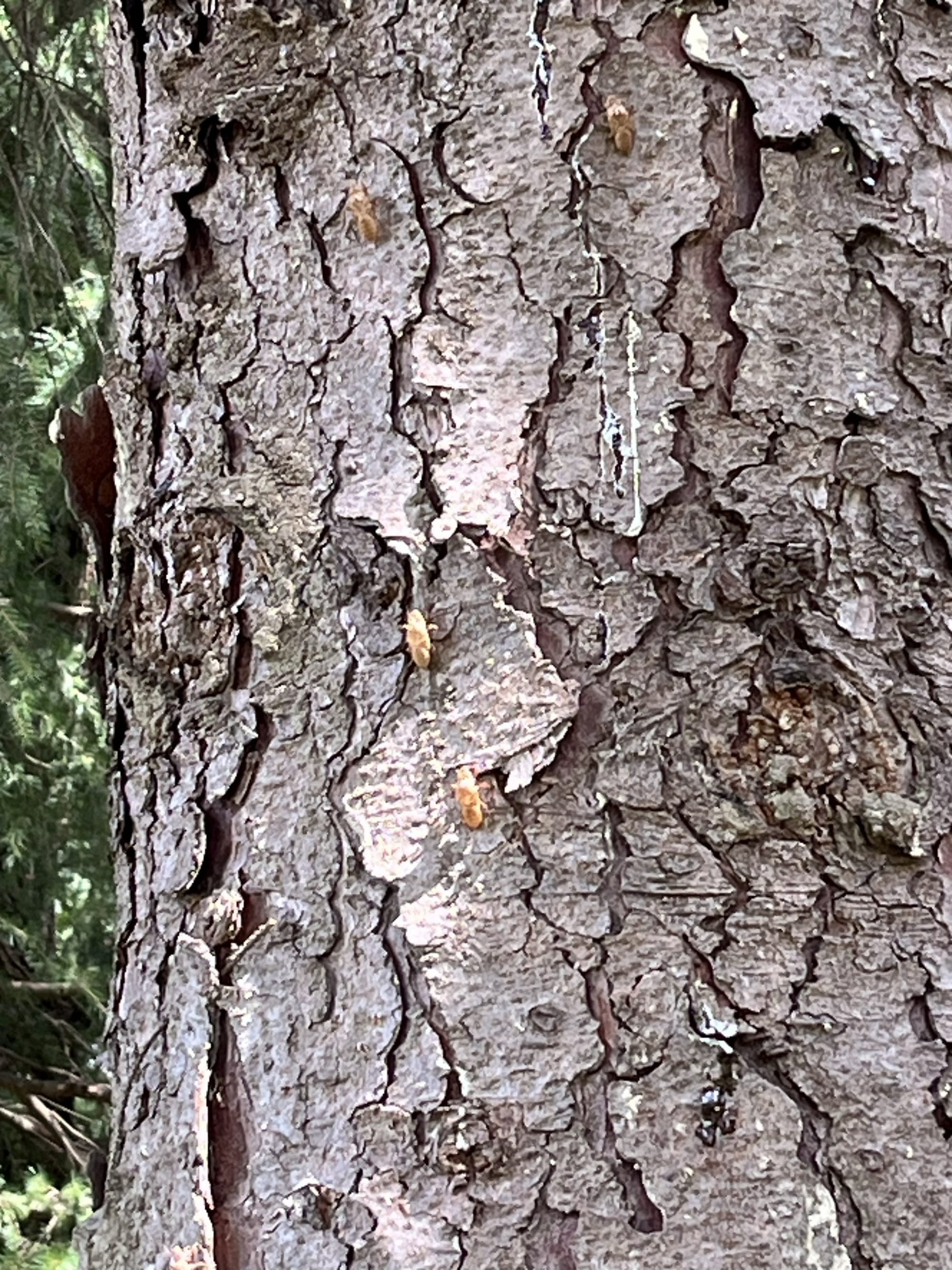
The only annoying this is when you are near any kind of trees in Japan thanks to the cicadas
Cicadas rest on the bark of a pine tree in the Hirosaki Castle Botanical Gardens, their natural camouflage making them easy to miss among the tree's rugged textures.
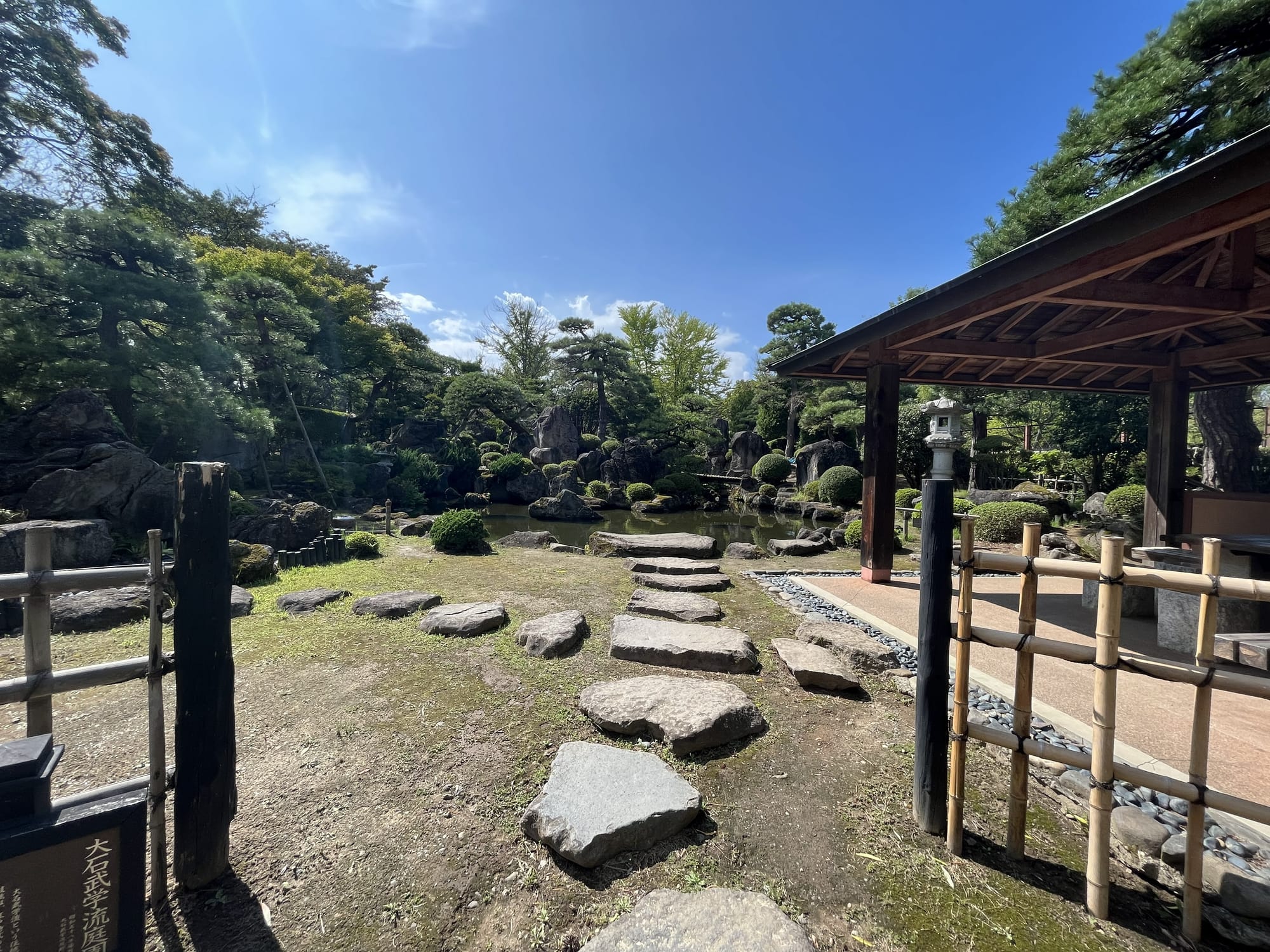
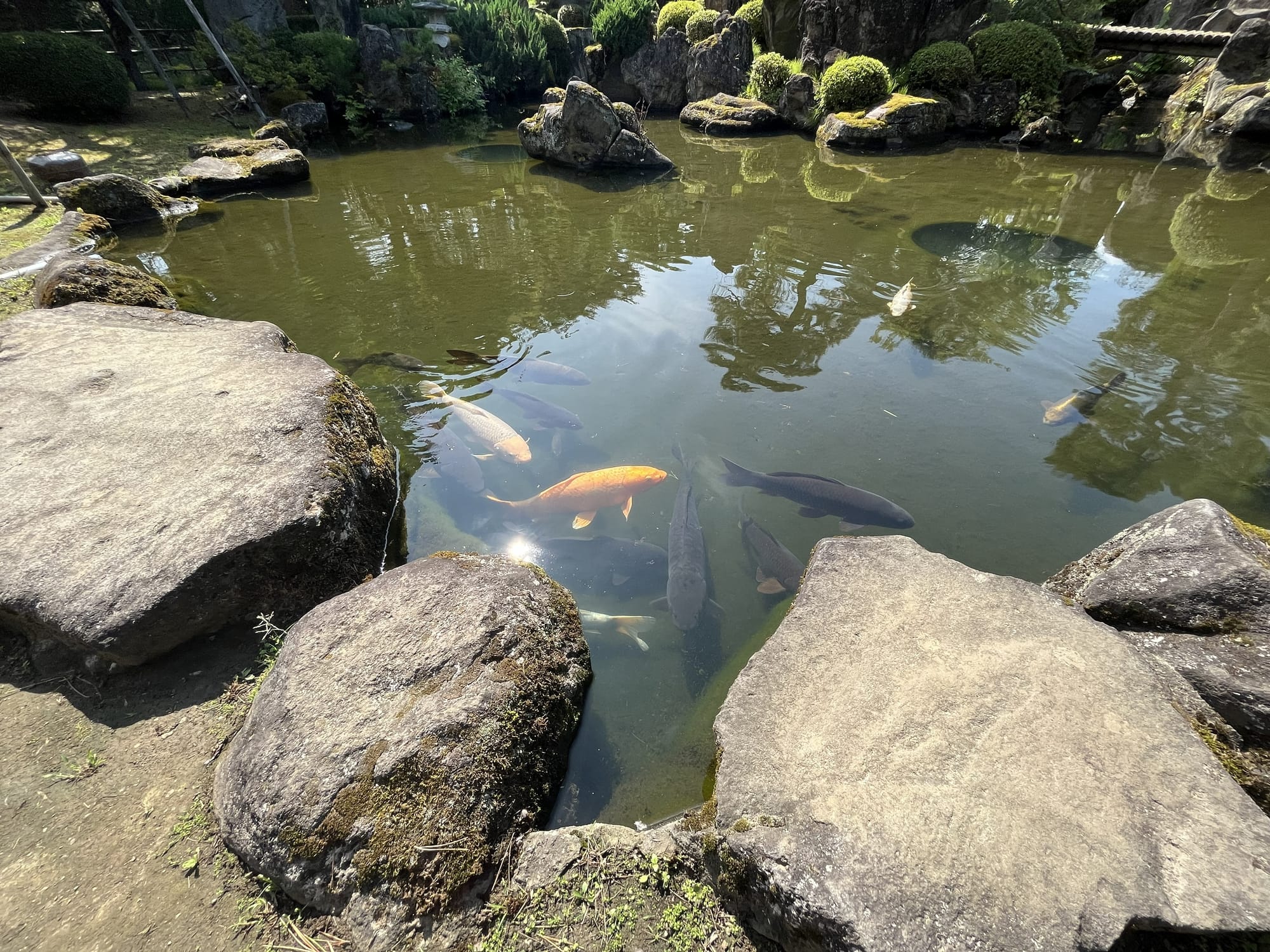
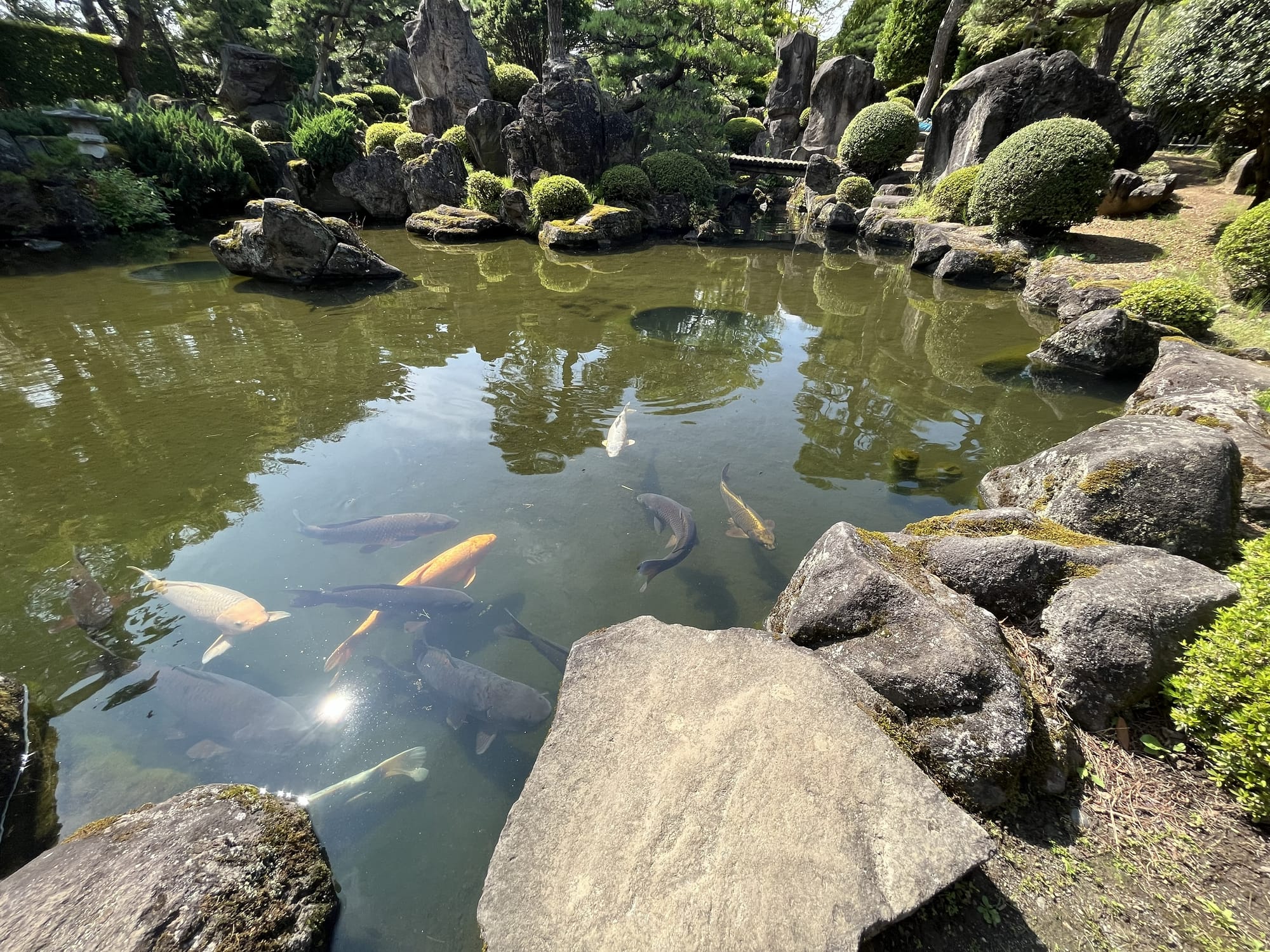
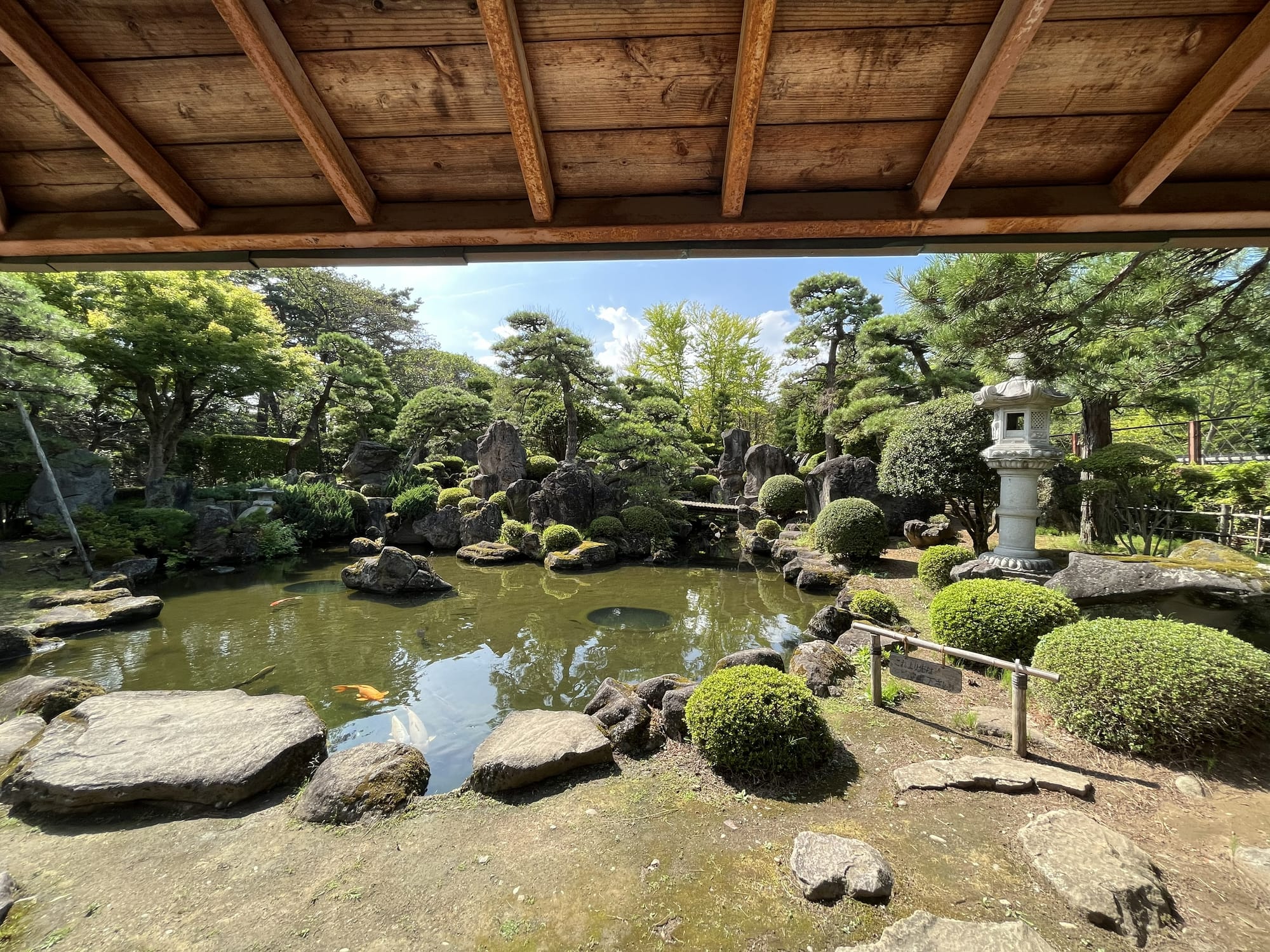
The next bits I came upon was a Japanese garden exhibition and rose garden. with a big pond and some fish in it. They came up to me when I was on the rocks and I had to ask them to stop being Koi with me, ba dum tiss.
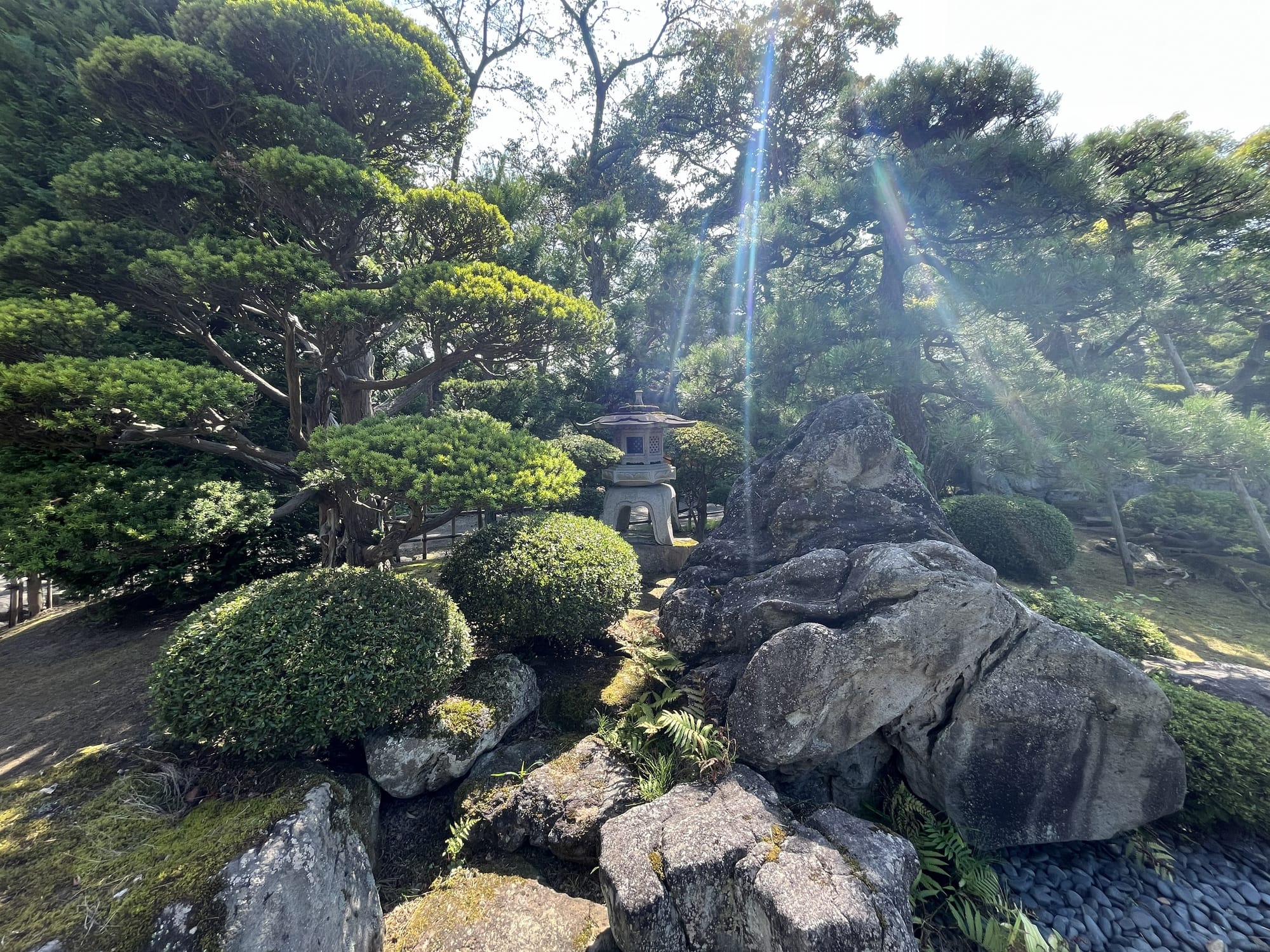
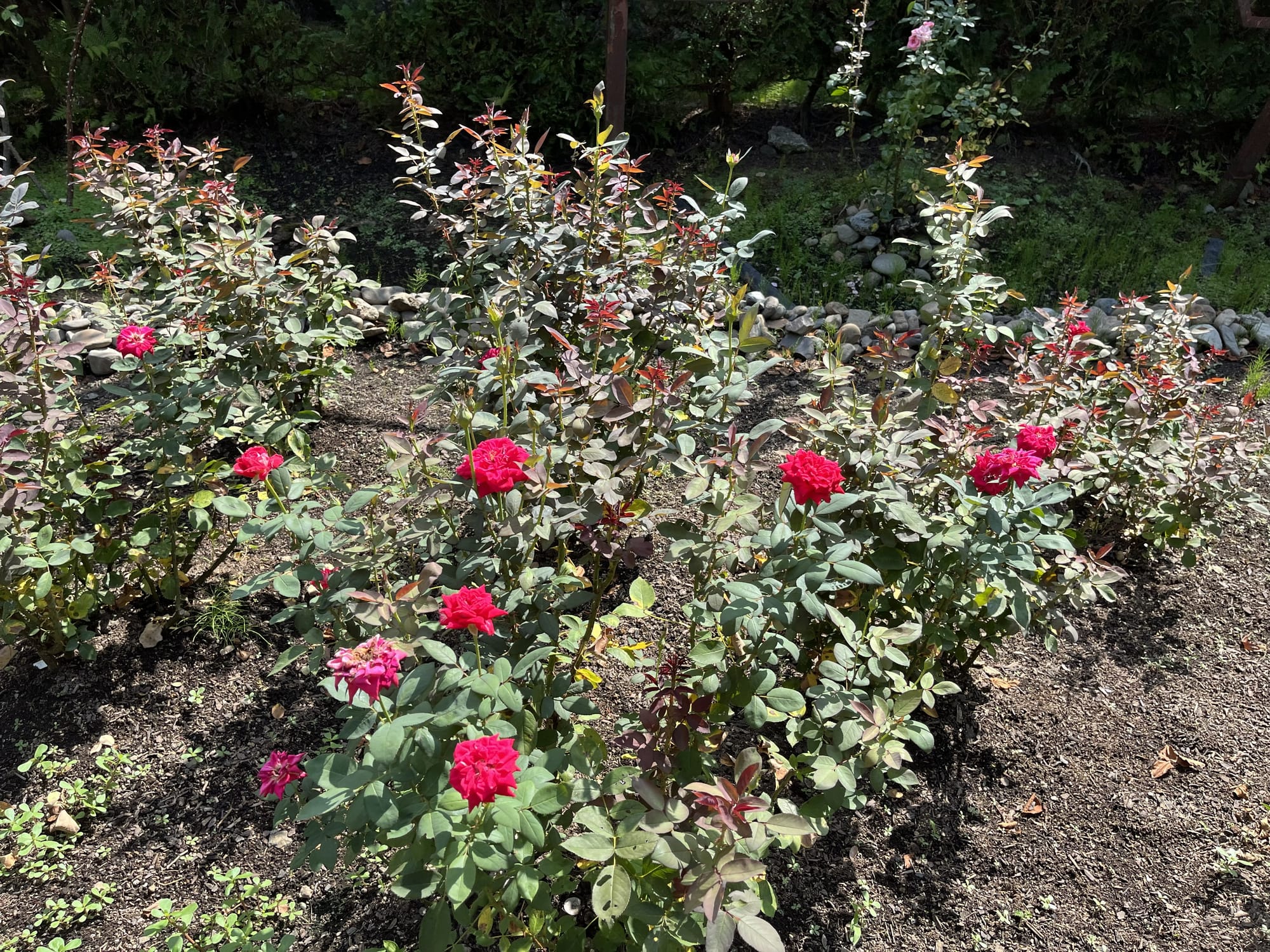
A beautifully landscaped Japanese garden within the grounds of Hirosaki Castle, combining water, stone and carefully shaped trees in a classic example of traditional garden design.Colourful koi carp glide through a pond in the grounds of Hirosaki Castle, adding movement and serenity to the beautifully landscaped Japanese garden.A tranquil pond in the gardens of Hirosaki Castle is home to colourful koi carp, framed by carefully arranged rocks and meticulously maintained Japanese landscaping.A tranquil corner of the Hirosaki Castle gardens showcases the artistry of Japanese landscape design, with sculpted pines, stone lanterns and carefully placed rock formations.Viewed from a garden pavilion, this serene landscape at Hirosaki Castle combines koi-filled ponds, carefully shaped trees and stone features in a classic example of Japanese garden design.A vibrant floral display at the Hirosaki Castle Botanical Gardens showcases a variety of seasonal blooms, adding colour to the gardens surrounding the historic castle grounds.Red roses add vibrant colour to the Hirosaki Castle Botanical Gardens, where a wide variety of rose cultivars are grown within the historic castle grounds.
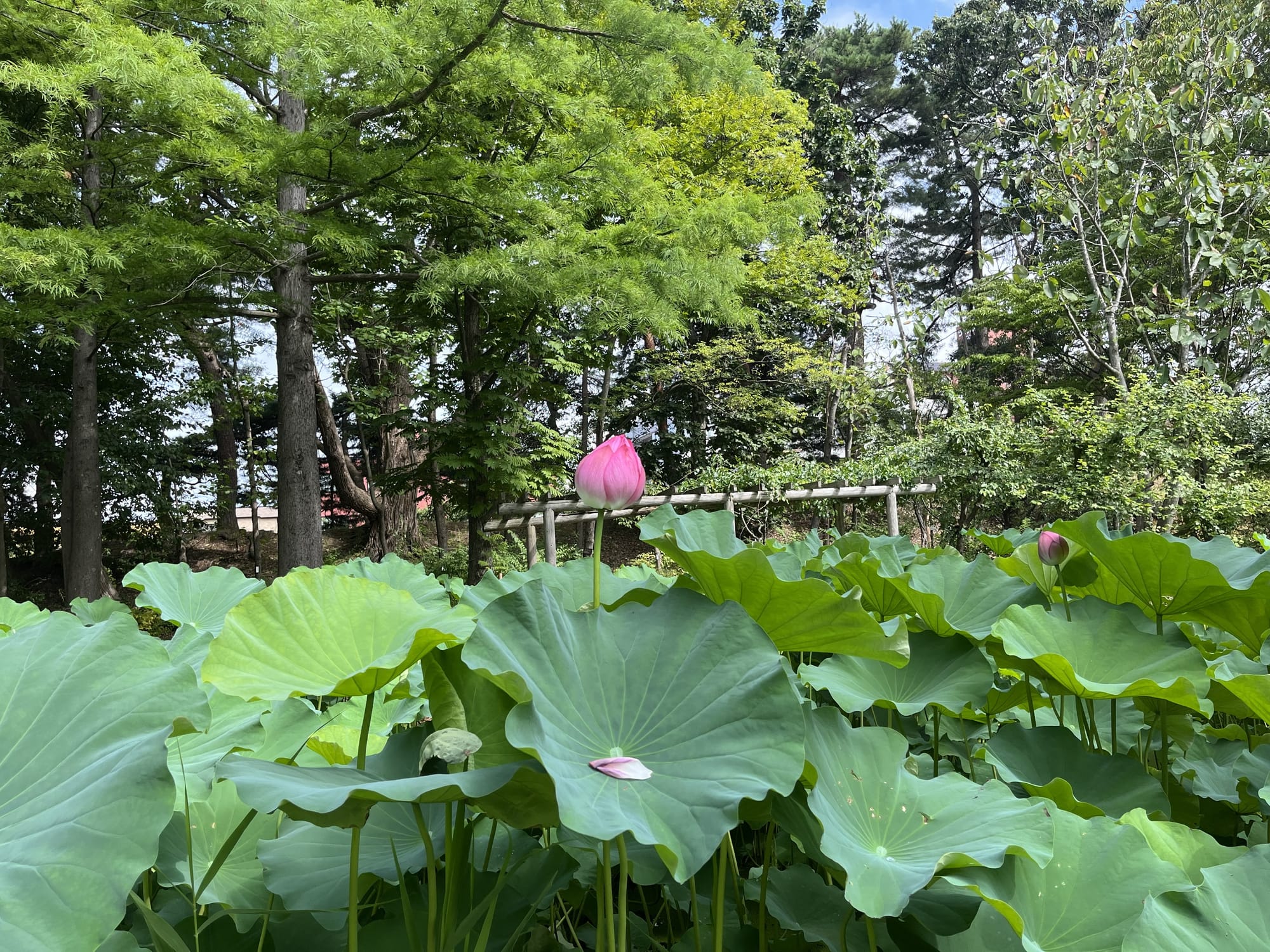
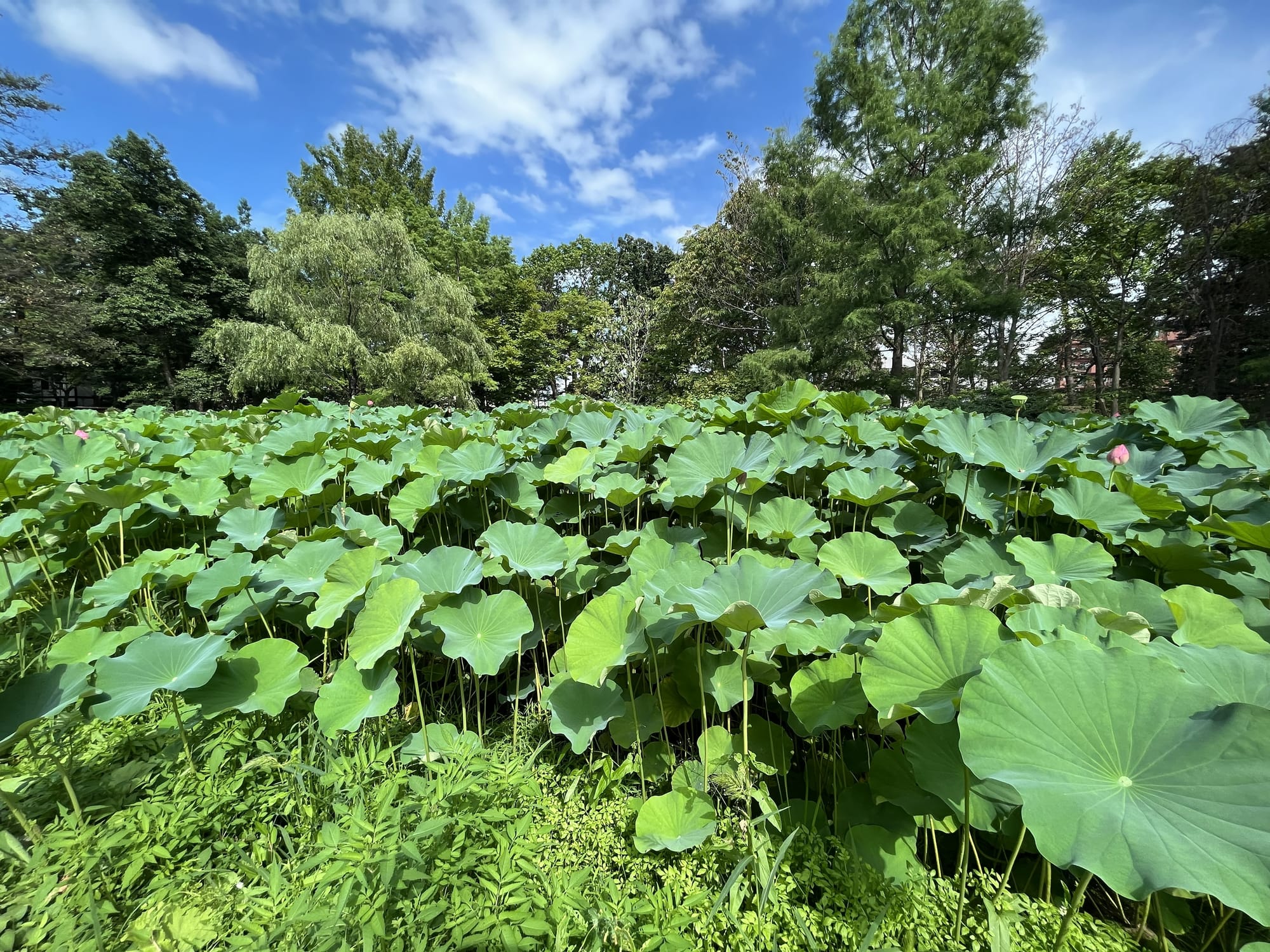
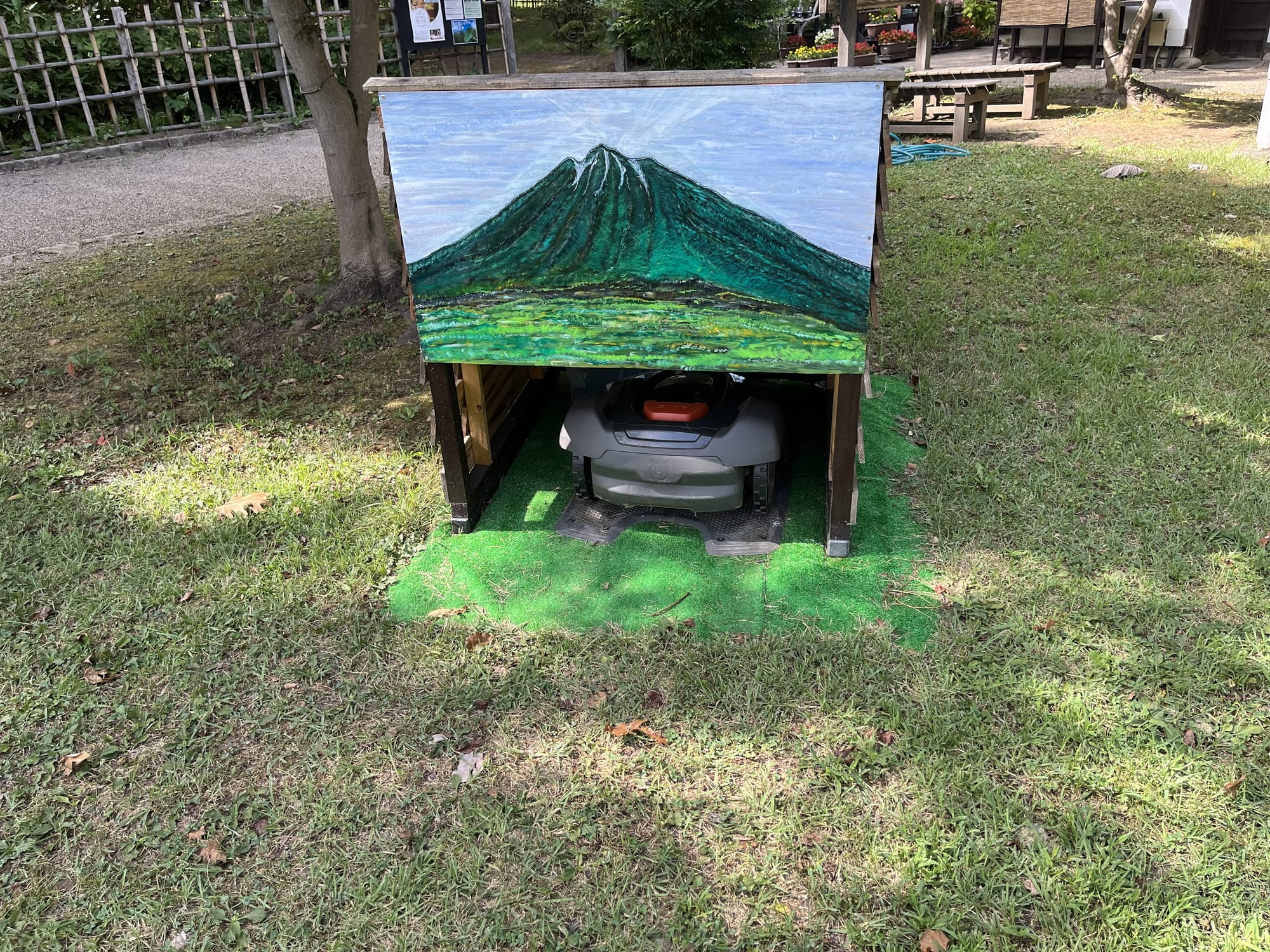
After this I headed to the rest house there and then carried onward to then cherry blossom garden (which aren’t in blooming season any more) and the aquatic plant garden as well. I even saw the lawn mower too for the open lawn area where families can sit down and have a picnic.
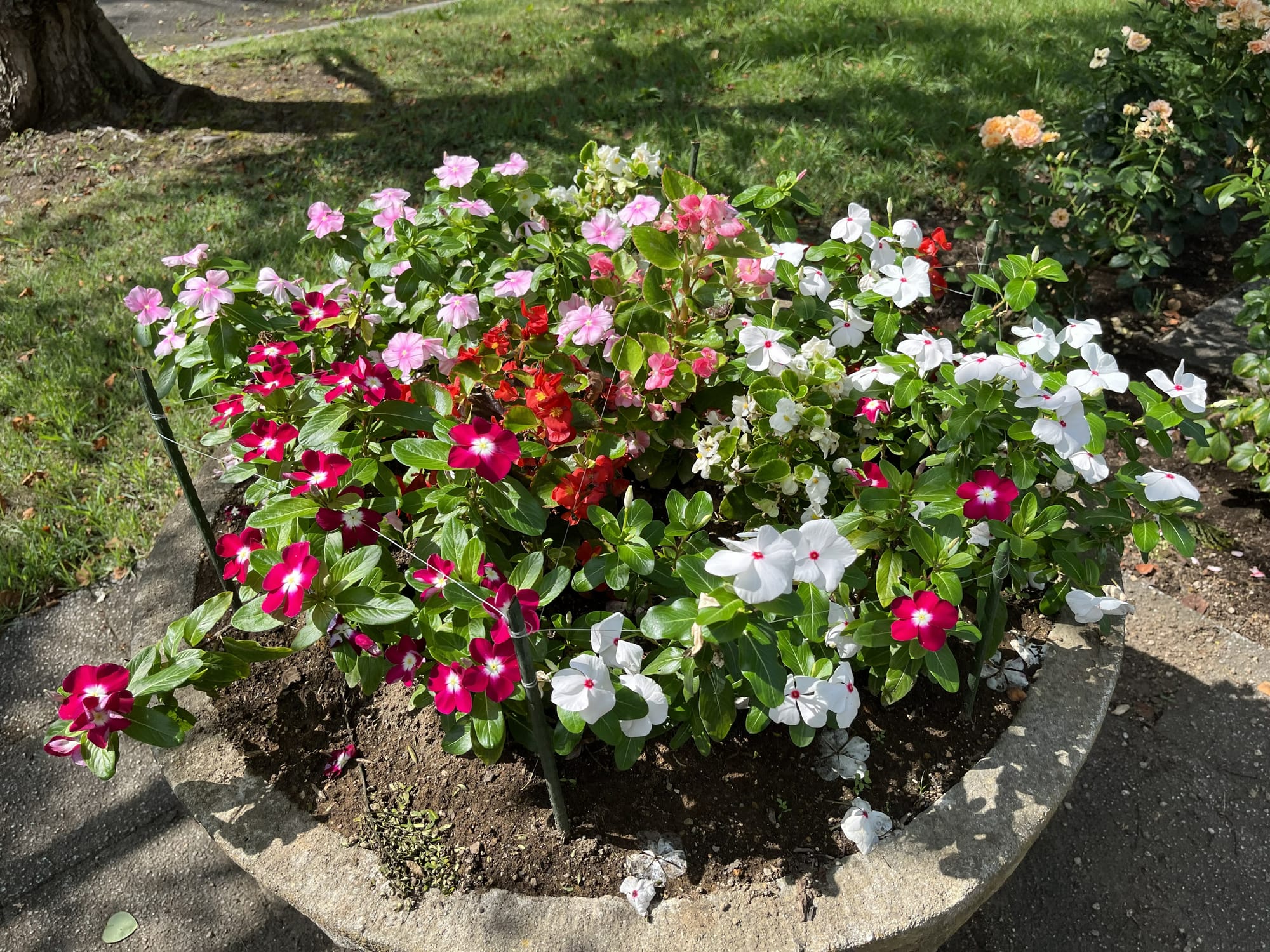
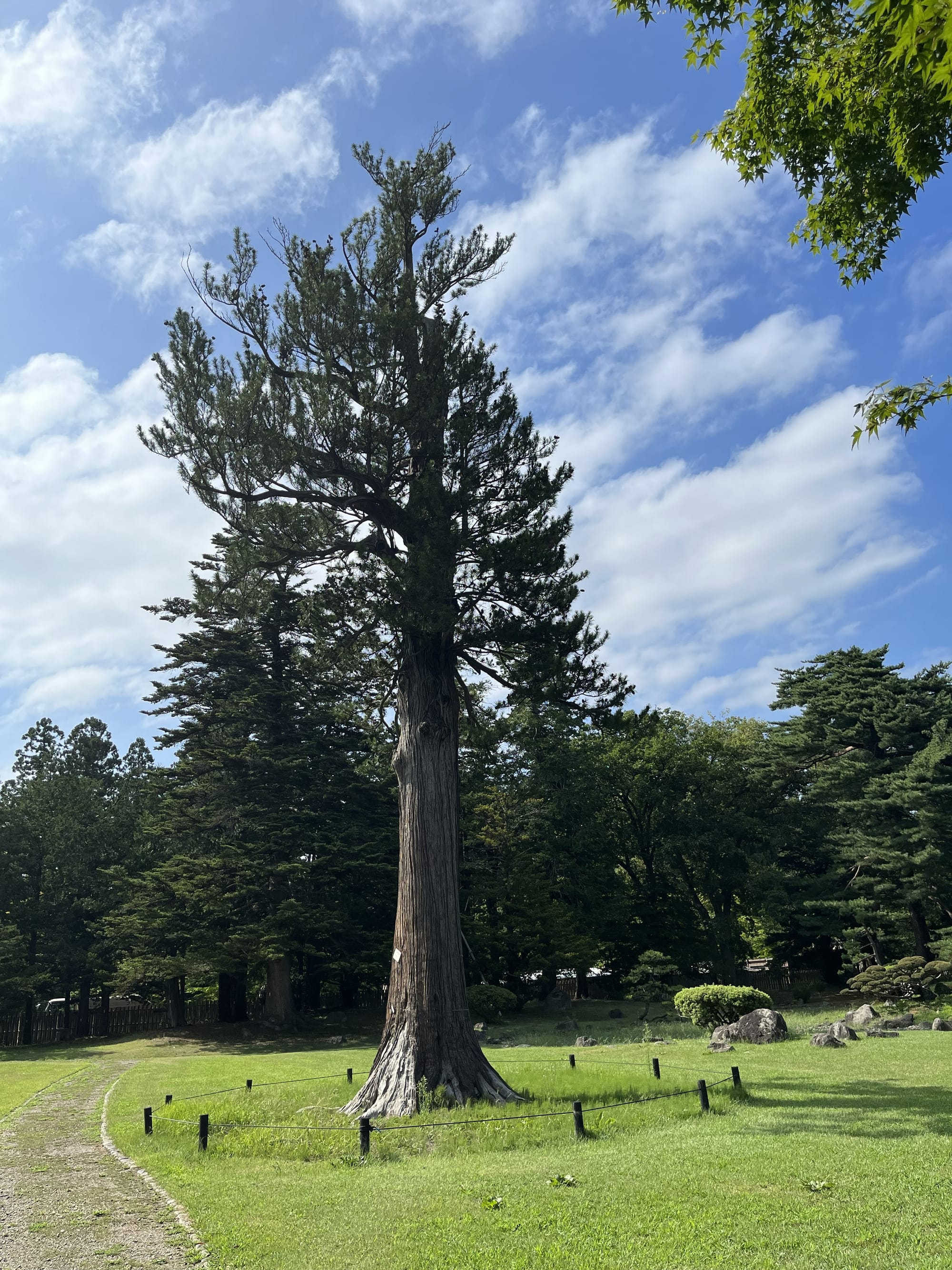
A lotus pond in the Hirosaki Castle Botanical Gardens showcases one of Japan's most iconic plants, with elegant pink blooms rising above the lush green leaves.A vast lotus pond at the Hirosaki Castle Botanical Gardens creates a striking display of lush green leaves and delicate pink flowers within the historic castle grounds.A striking conifer rises above the landscaped grounds of Hirosaki Castle, adding to the peaceful atmosphere of the historic park and botanical gardens.A robotic lawn mower rests beneath a decorative shelter in the Hirosaki Castle Botanical Gardens, where practical technology is blended with artwork inspired by nearby Mount Iwaki.
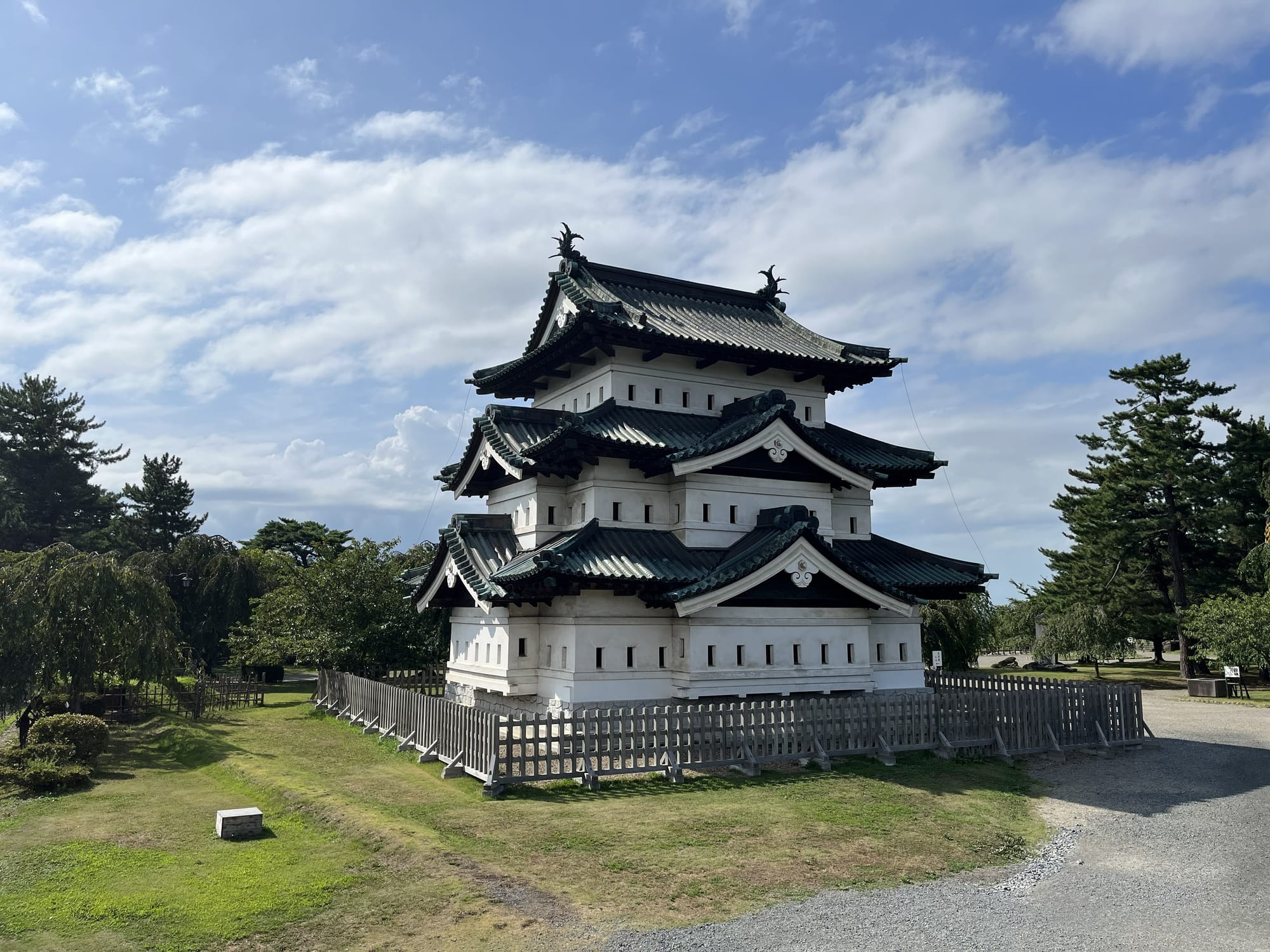
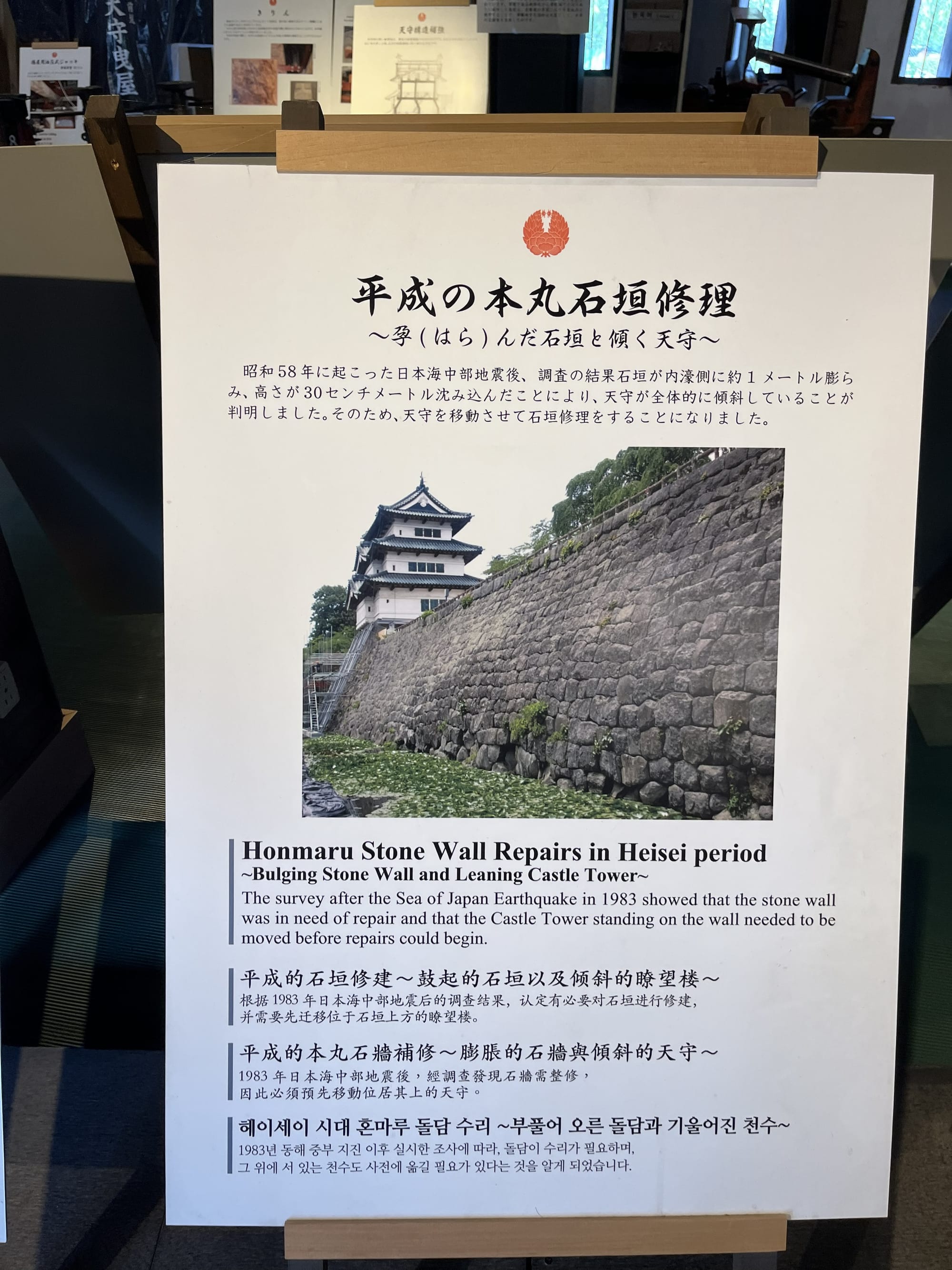
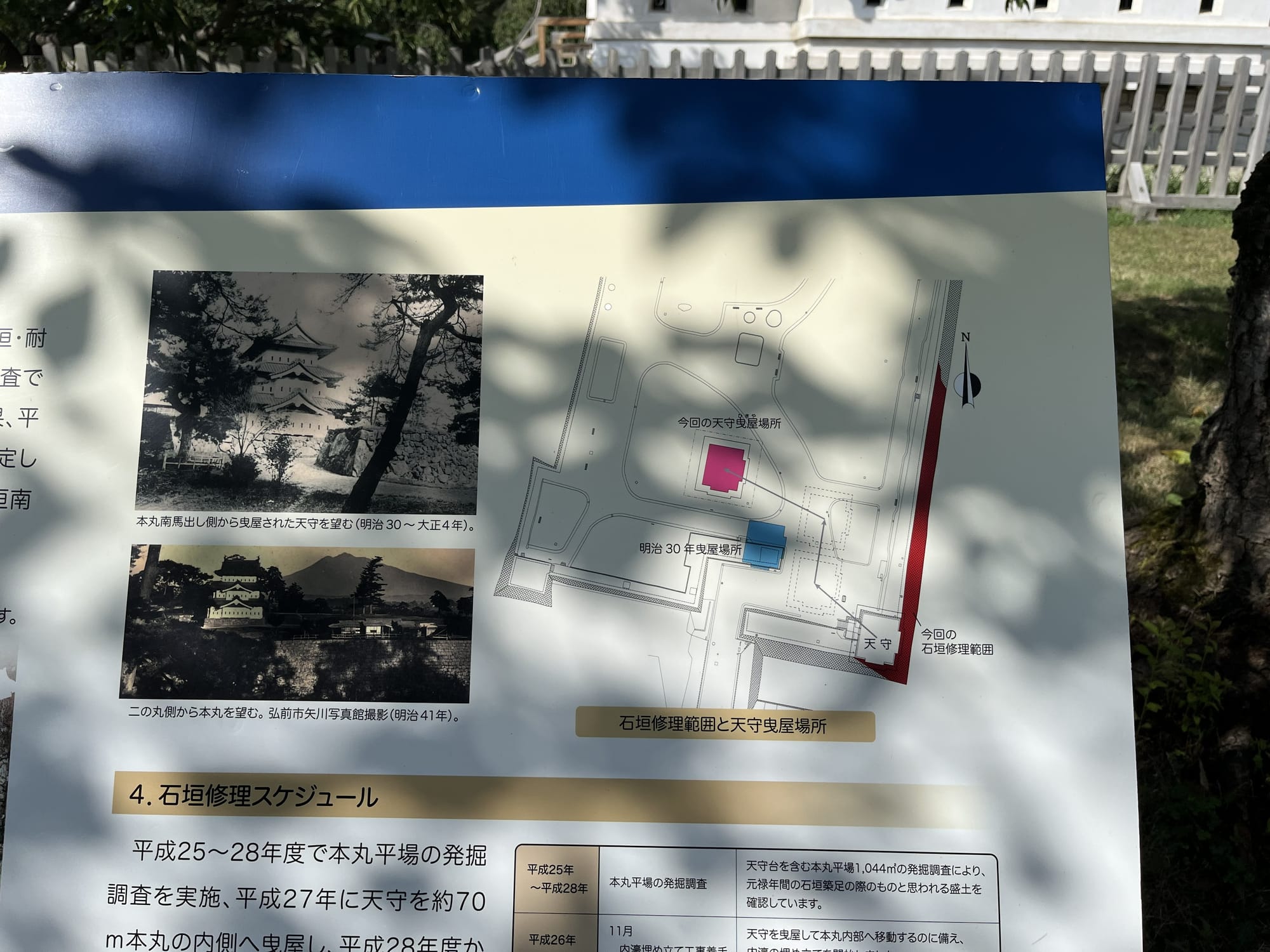
Next it was time to go to the castle and have a look around, not that there wasn’t loads there, but one of the things that was fascinating was they actually had to move one of the keeps due to the wall it was on was bulging out and they was worried that it was going to collapse and take the castle with it. They are now working on the wall and repairing it.
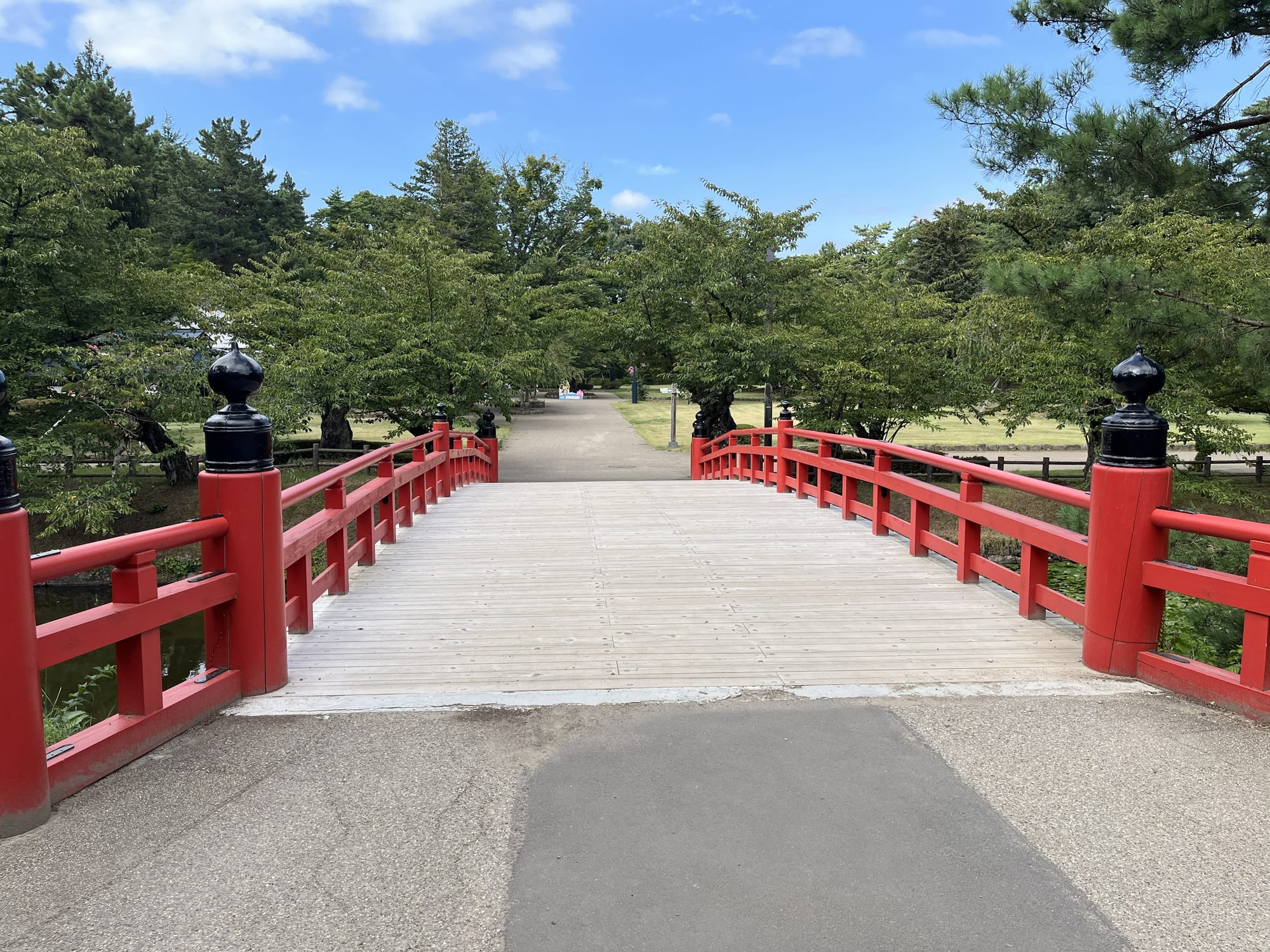
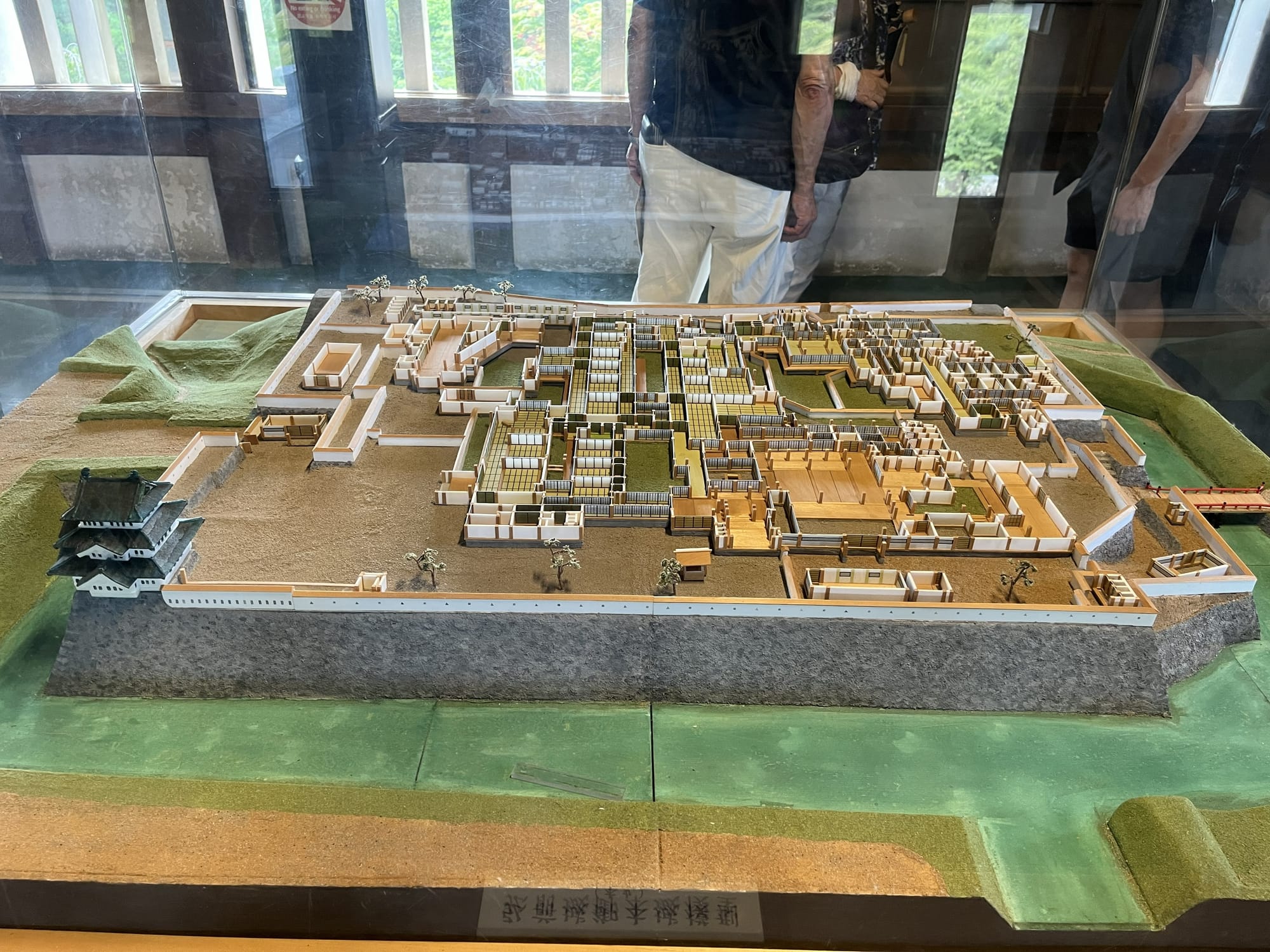
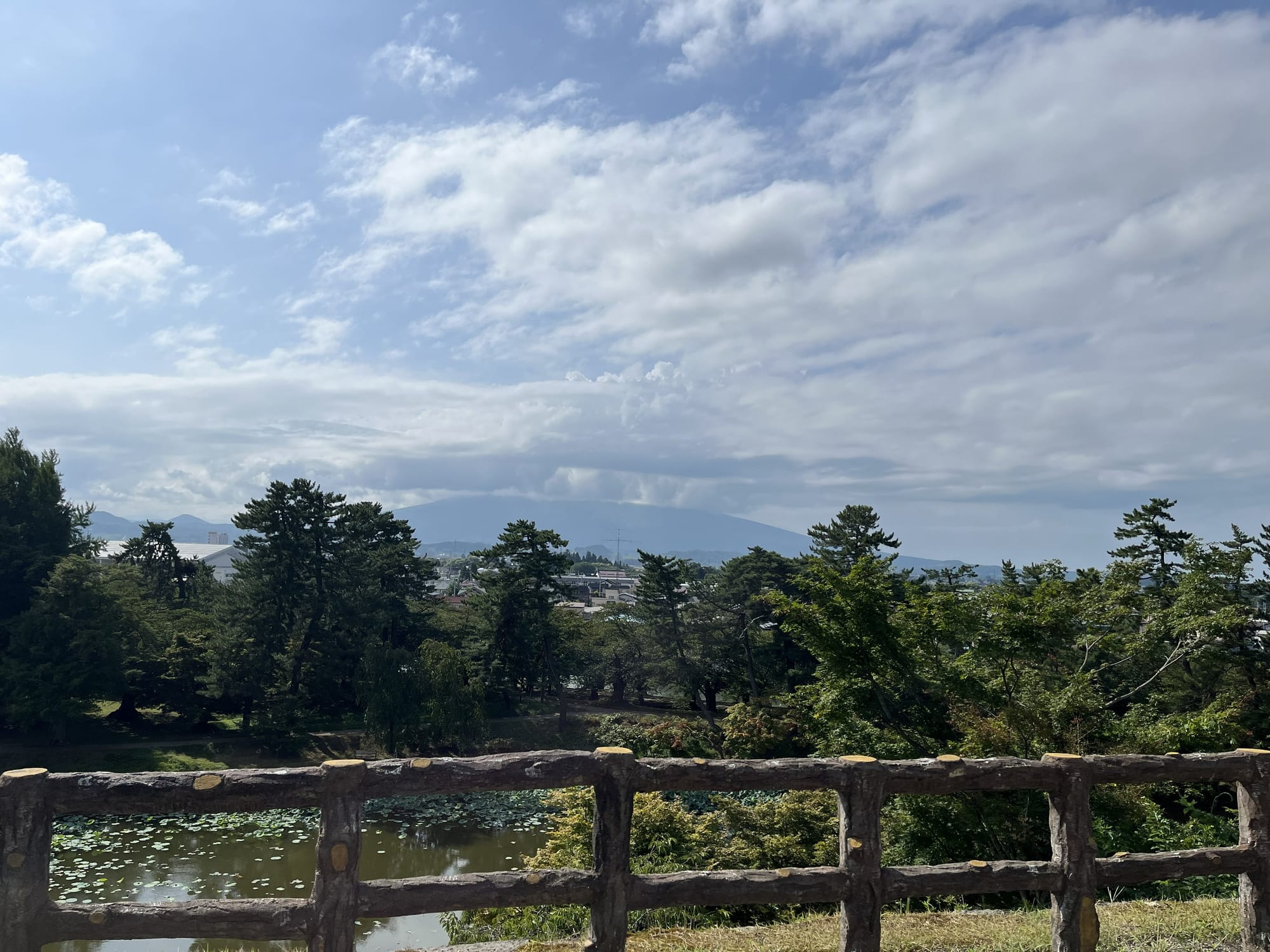
A striking red bridge spans the moat at Hirosaki Castle, providing a colourful focal point within the historic castle grounds and surrounding parkland.The elegant keep of Hirosaki Castle stands at the heart of one of Japan's best-preserved castle grounds, reflecting the history of the Tsugaru clan and northern Japan.An exhibition at Hirosaki Castle explains the major restoration work undertaken during the Heisei period, including repairs to the stone walls and relocation of the castle keep.An information panel at Hirosaki Castle explains the restoration of the stone walls and the temporary relocation of the castle keep during major conservation work.A detailed scale model of Hirosaki Castle illustrates the layout of the castle complex and surrounding buildings during its period as the seat of the Tsugaru clan.Looking towards Mount Iwaki from the grounds of Hirosaki Castle, where the distinctive volcanic peak forms a dramatic backdrop to one of northern Japan's most historic landscapes.
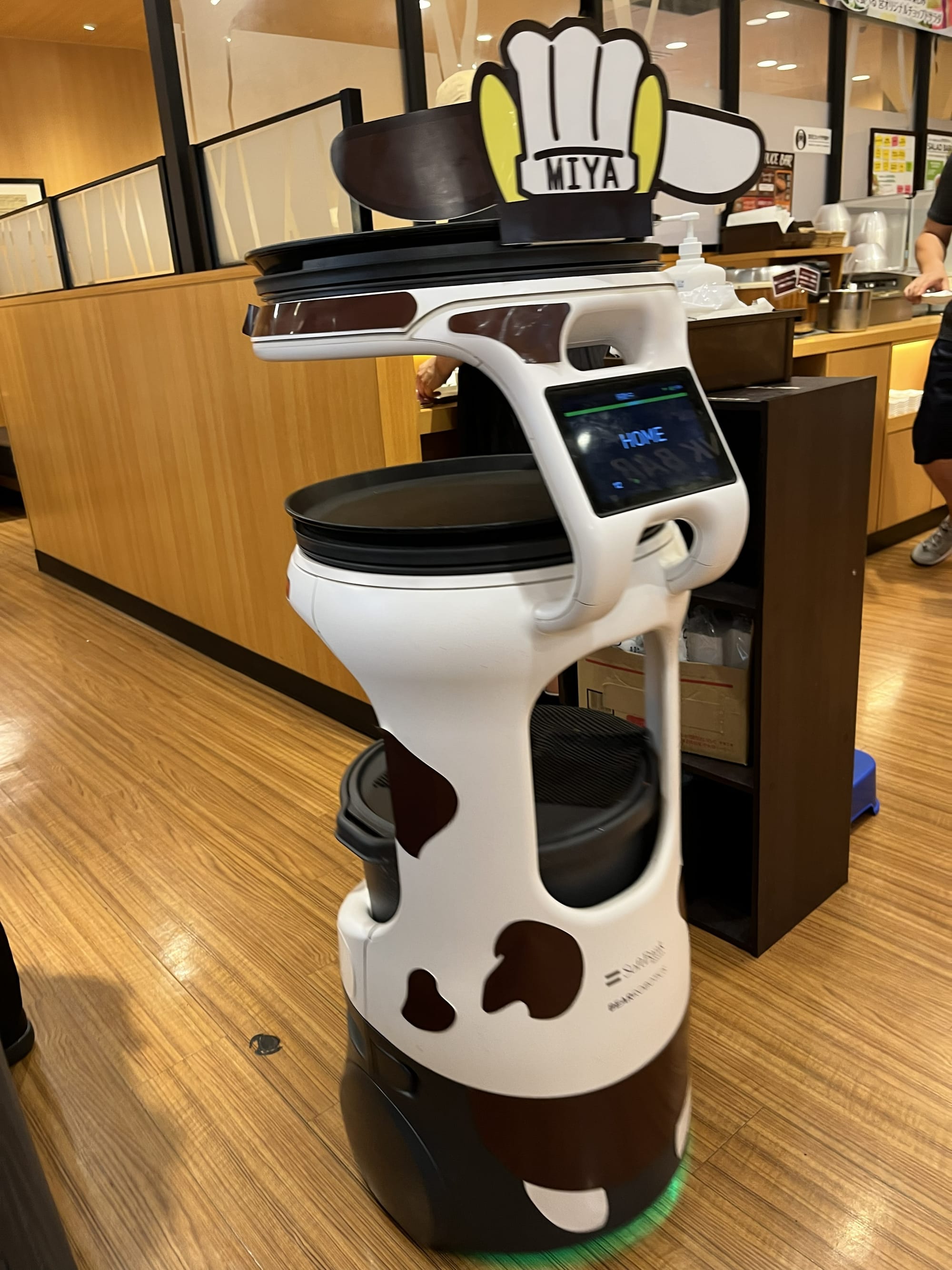
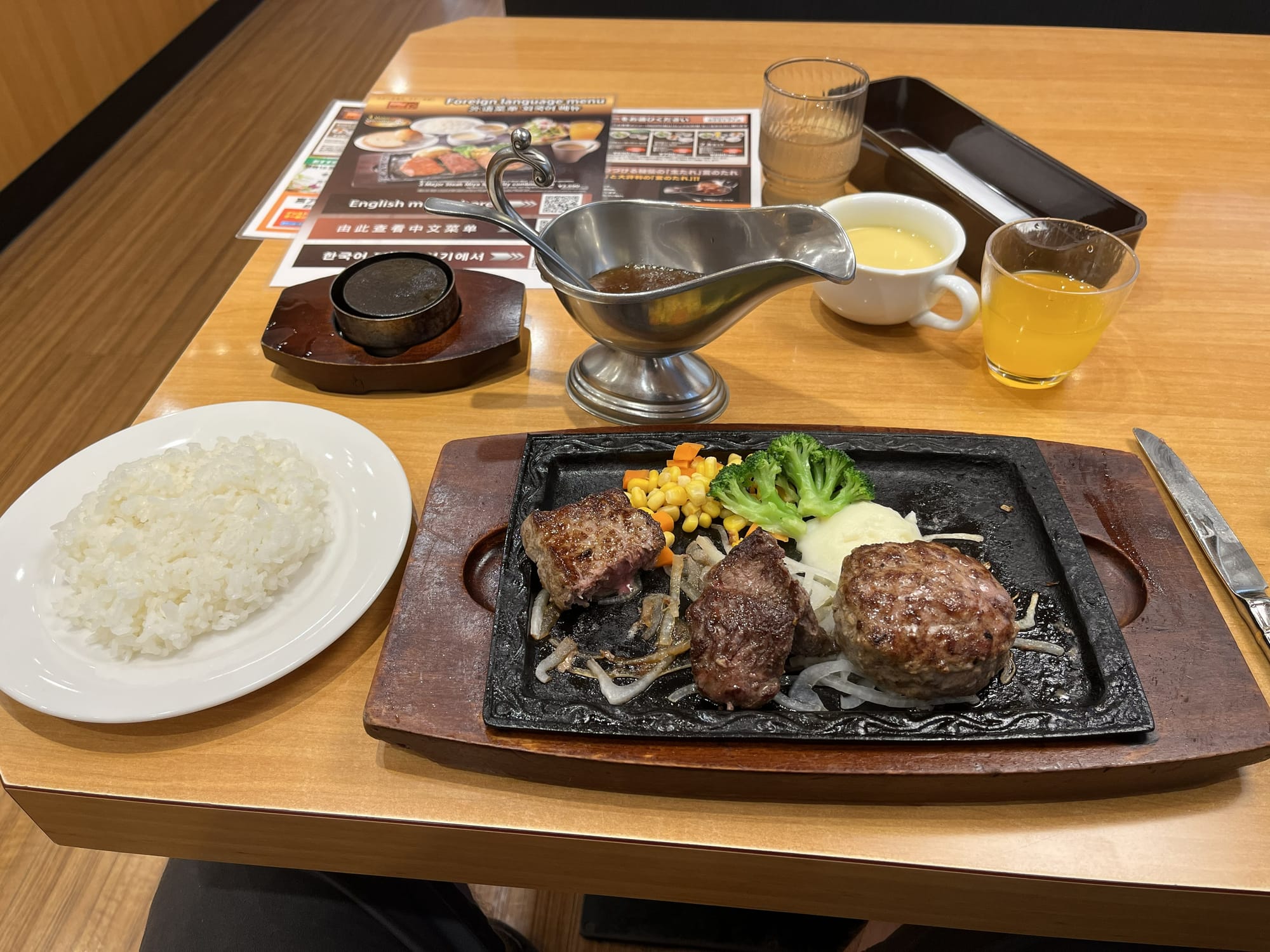
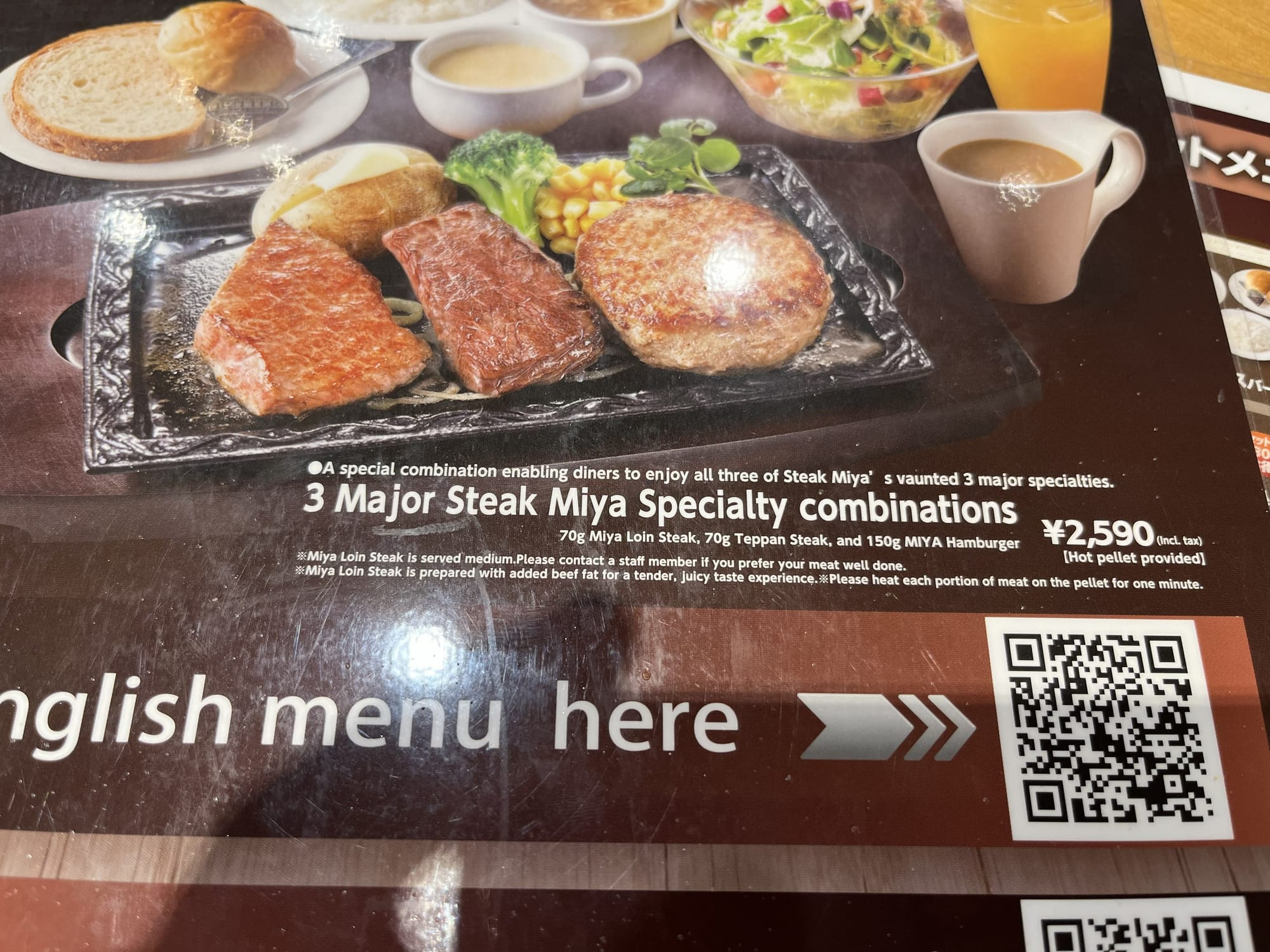
Now it was time to finally go back to looking at if I could go up Mt Iwaki-San which unfortunately still had a cloud covering the top so instead I went to get something to eat from somewhere I saw on the way in, and it looked nice as it said Steak and Hamburger.
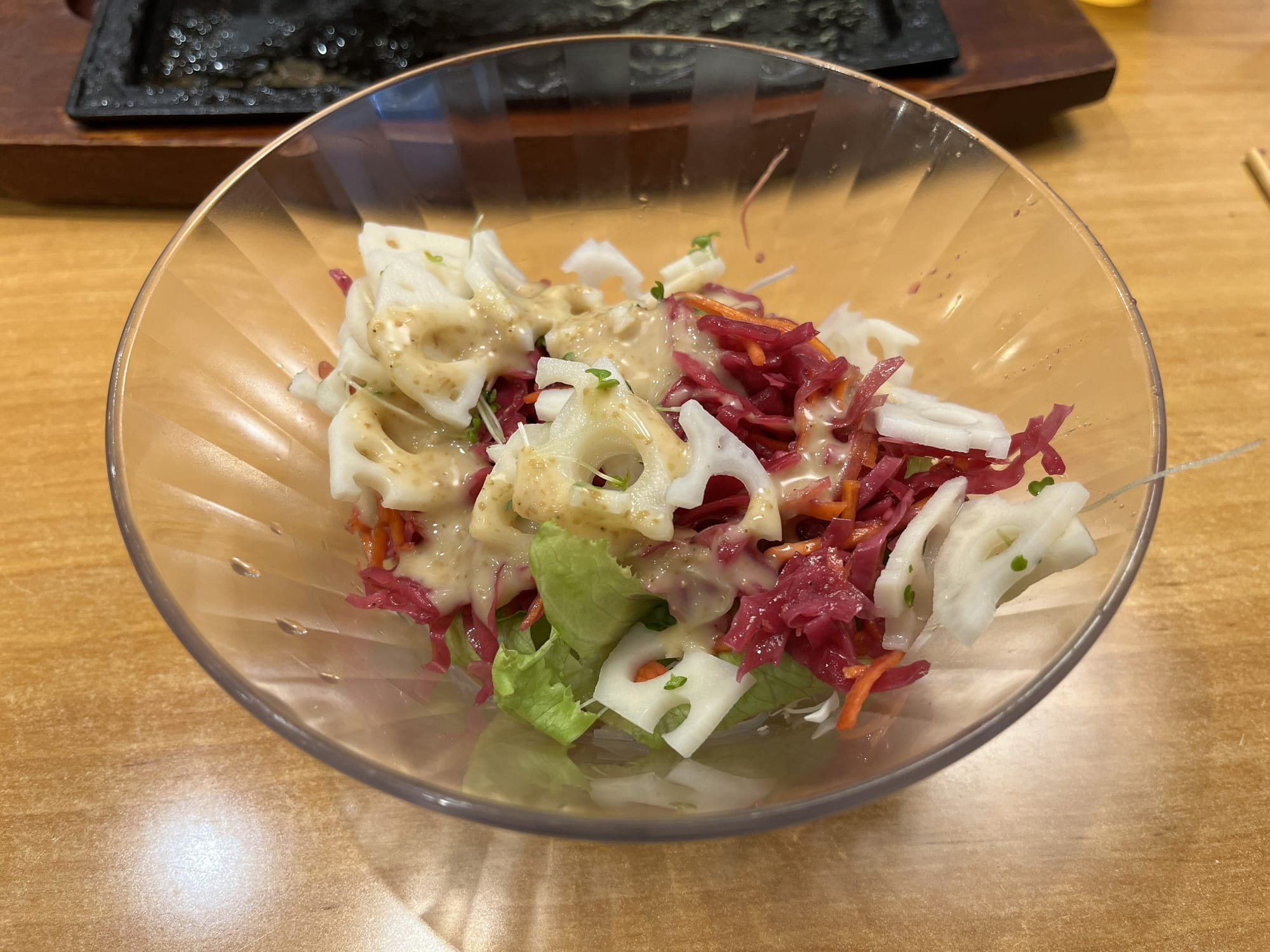
A cow-themed robot server delivers meals in a Japanese family restaurant, showcasing the growing use of automation and technology in everyday dining.A hearty Japanese steak set meal featuring grilled beef, rice, vegetables and soup, enjoyed during a stop in northern Japan.A fresh salad featuring lotus root and seasonal vegetables, served as part of a Japanese set meal in northern Japan.A menu display at Steak Miya highlights a combination meal featuring steak and hamburger steak, accompanied by soup, salad and other side dishes.
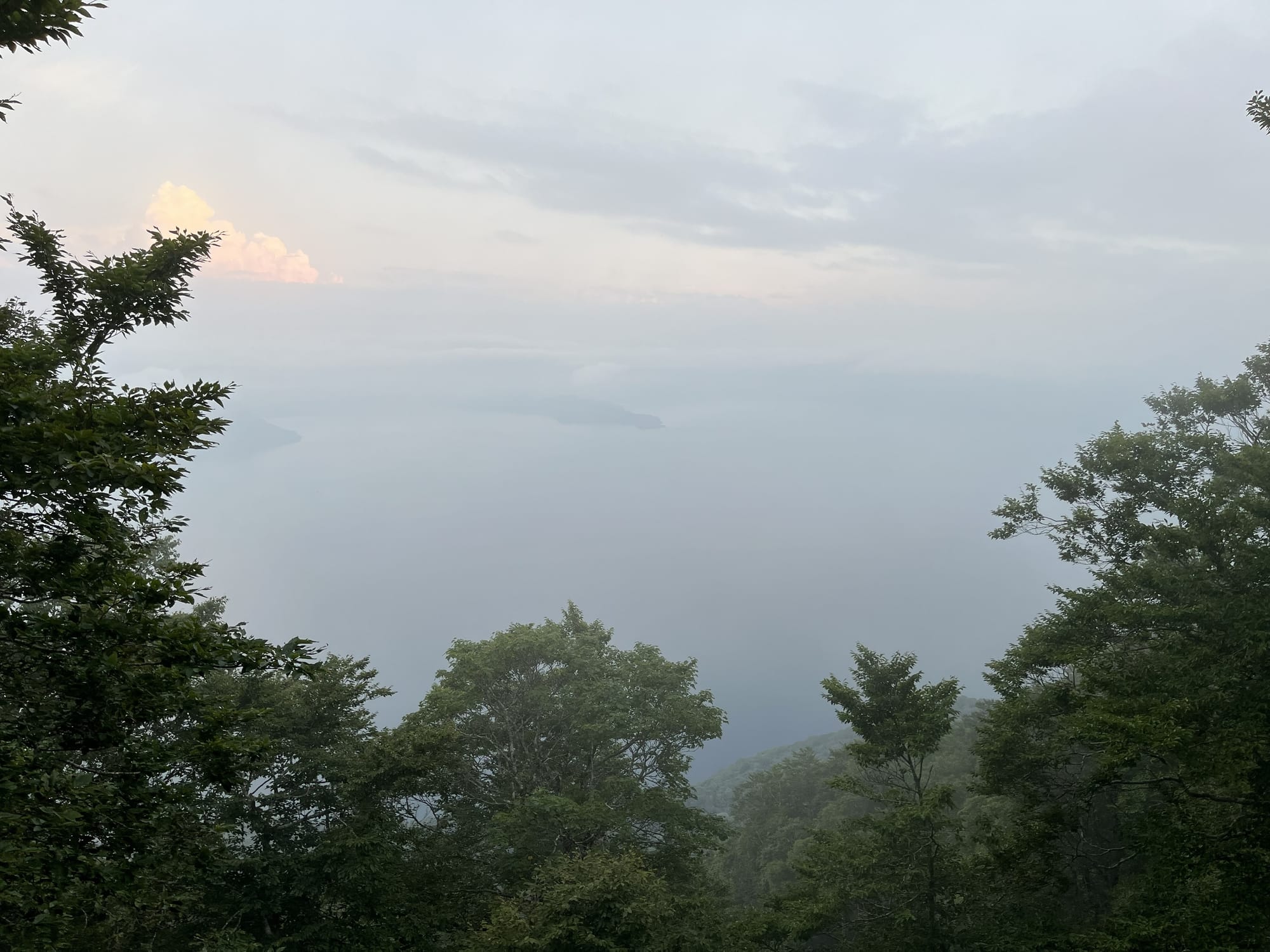
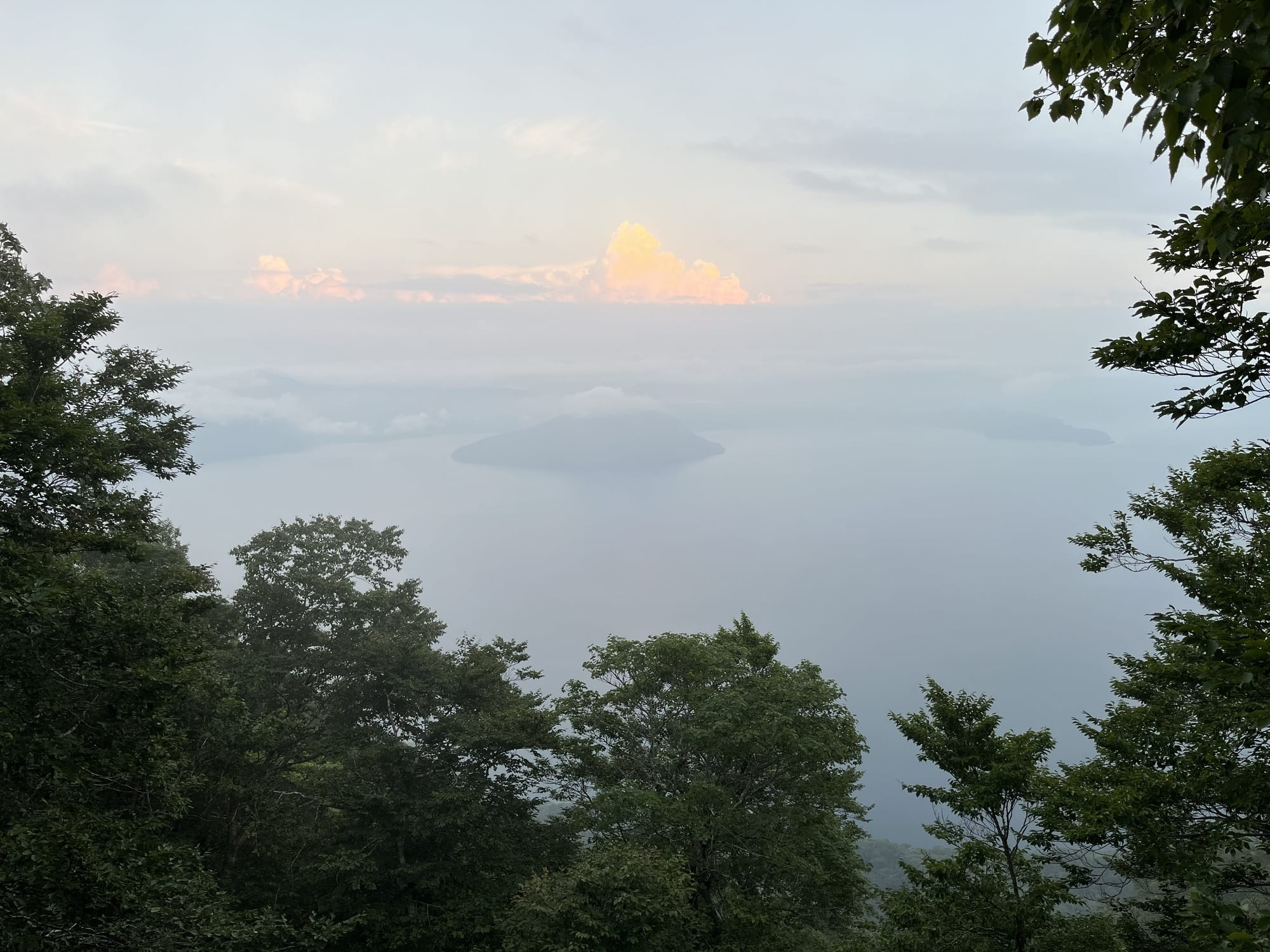
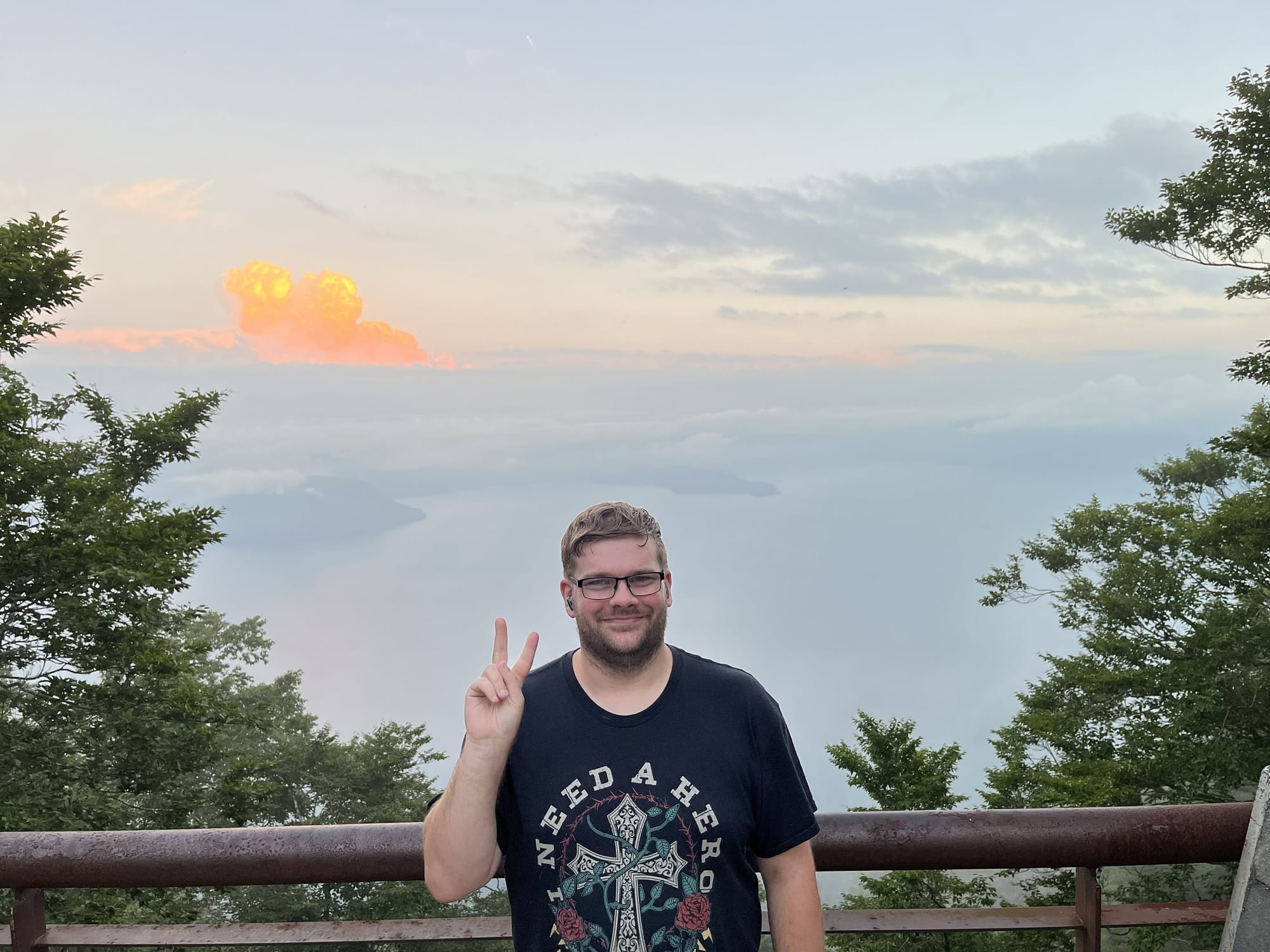
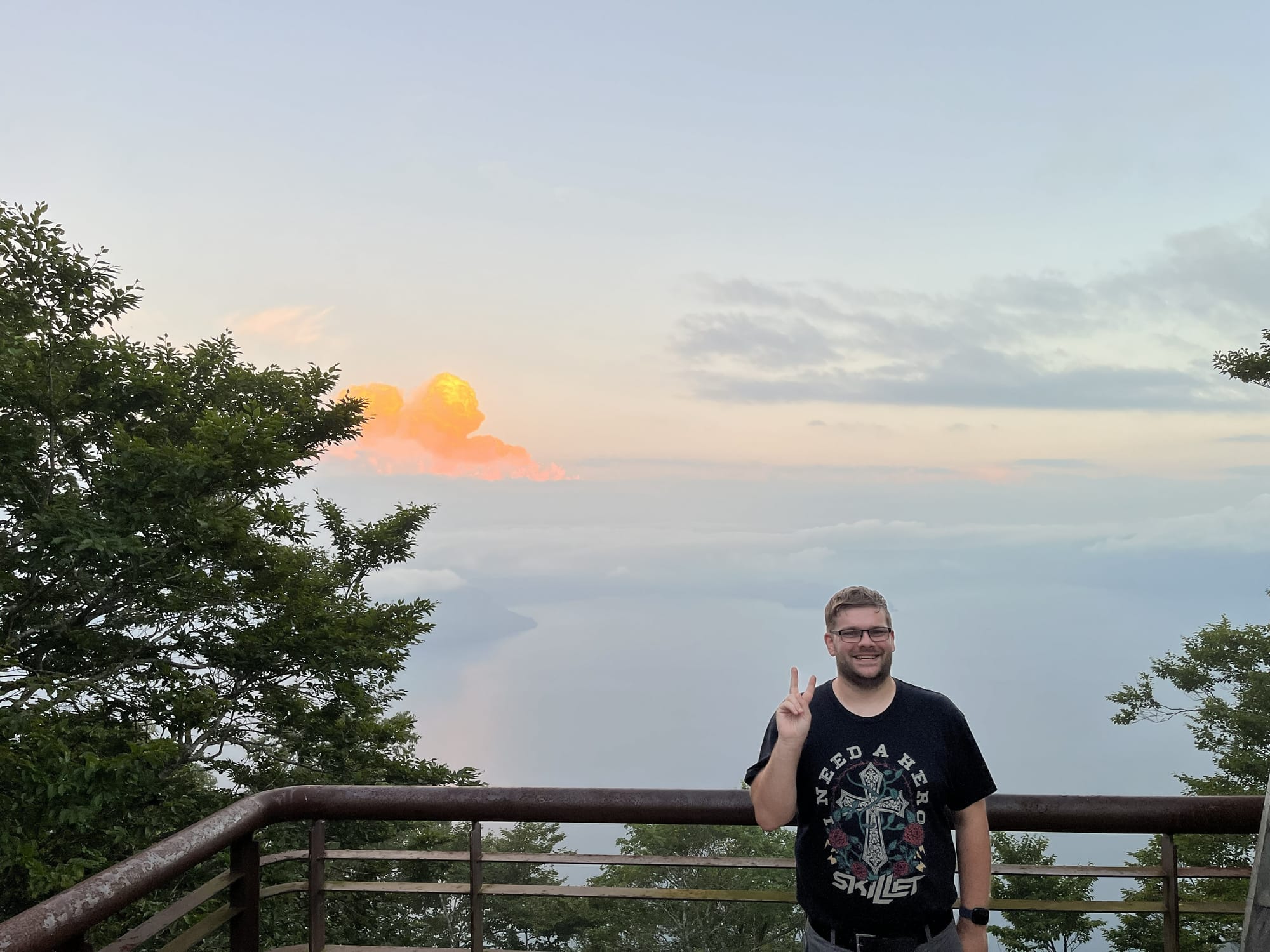
After this lovely meal which was about 4000-5000 yen (about £20-£25) cheaper than the cheapest meal back at the hotel, I decided to head back and because it was still light, I thought it would be a good idea to head up to one of the highest observation points near the hotel. This was both a good idea and a mistake.
A tranquil view across Lake Towada from a high viewpoint, where mist, forested slopes and soft evening light create a dramatic scene over northern Japan's largest caldera lake.A serene view across Lake Towada from a forest-fringed lookout, where low cloud, hazy waters and softly lit evening skies create an atmospheric scene above northern Japan's famous caldera lake.A scenic viewpoint overlooking Lake Towada at sunset, where calm waters, drifting mist and glowing clouds create a peaceful panorama framed by the forests of northern Japan.A spectacular sunset view over Lake Towada from a mountain lookout, where glowing clouds, drifting mist and the expansive caldera waters create a memorable evening scene in northern Japan.
It was a good idea because of the stunning view over the lake, but a bad idea because of the cloud that was constantly on my doorstep, and my rental car doesn’t have fog lights. "Oh dear" or something similar was my thought train when I tried to drive back through it later. The two photo's of me were taken by a Japanese couple who used to live nearby and currently live in Bristol, UK and have lived there for about 7 years. It's a small world after all.
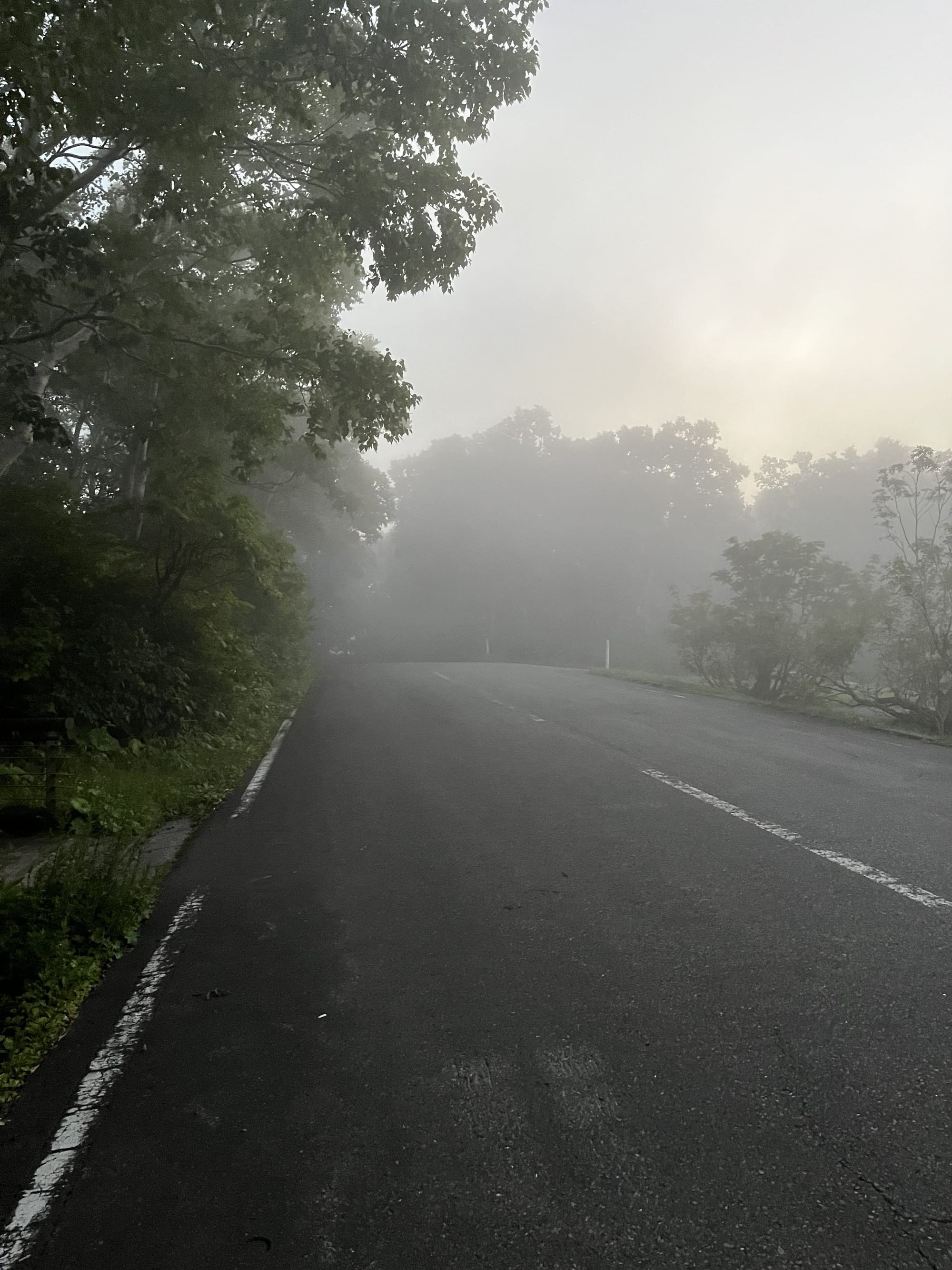
A mist-shrouded road winds through dense woodland near Lake Towada, where drifting evening fog softens the landscape and creates an atmospheric scene in northern Japan's volcanic highlands.
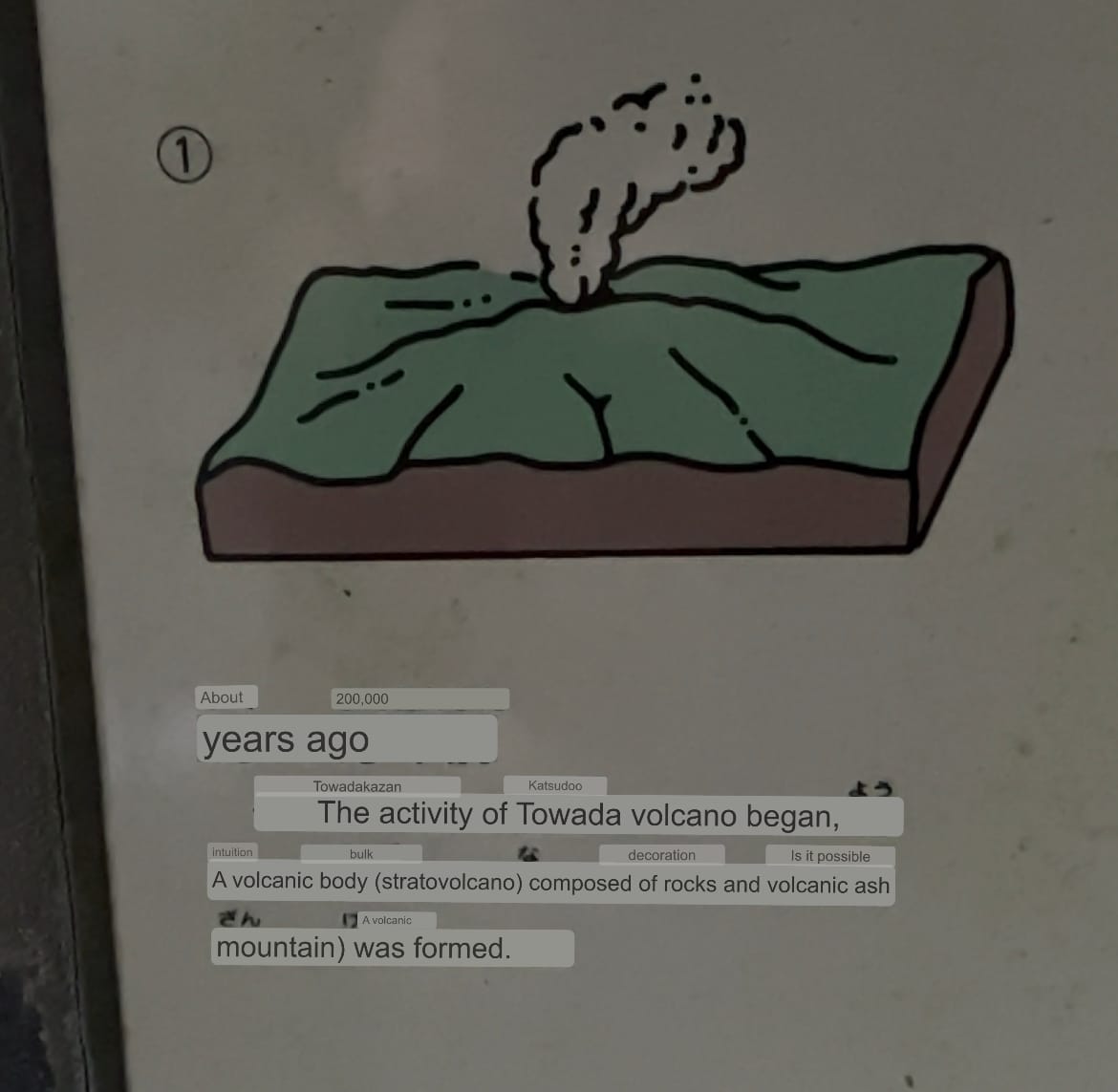
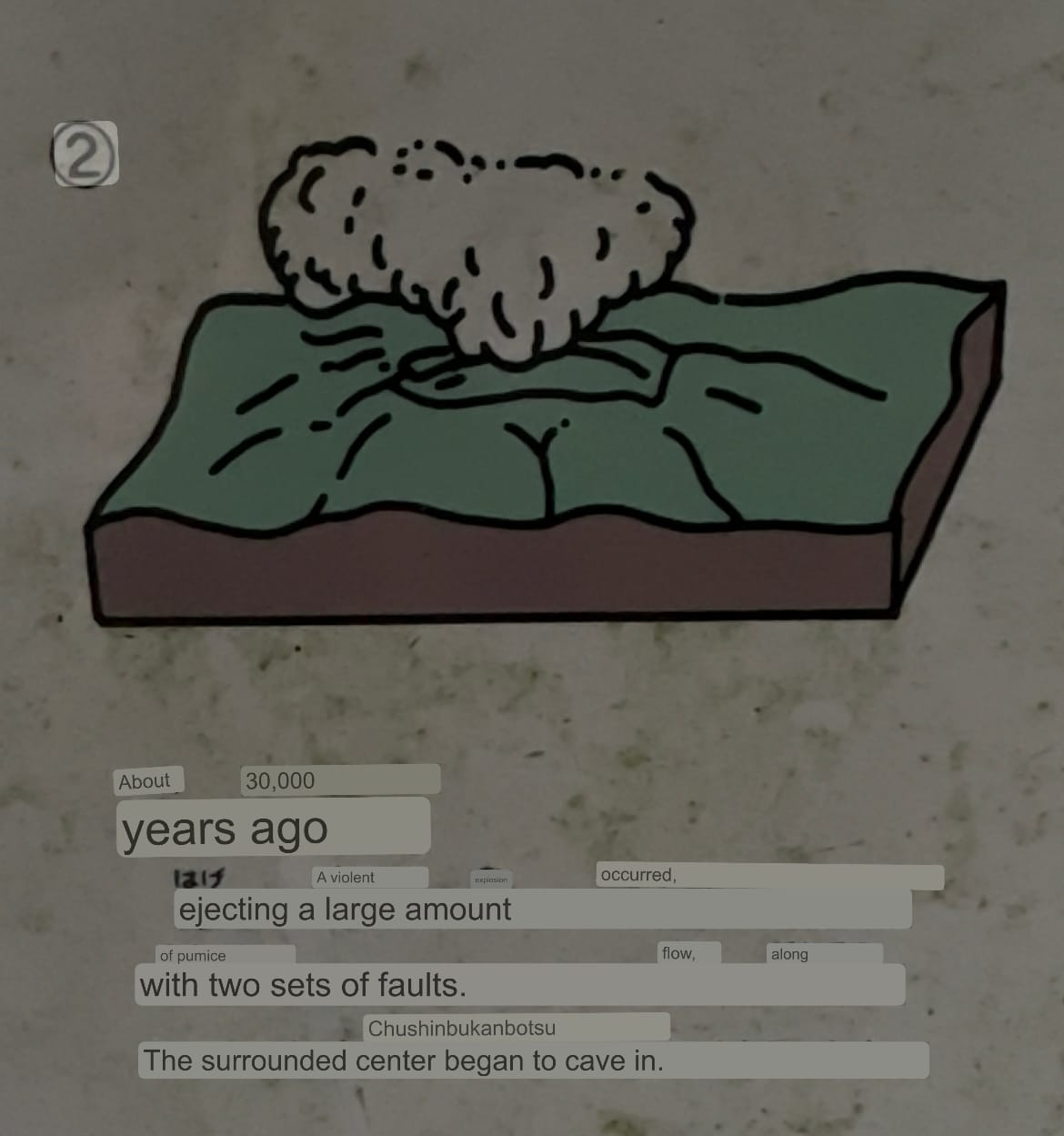
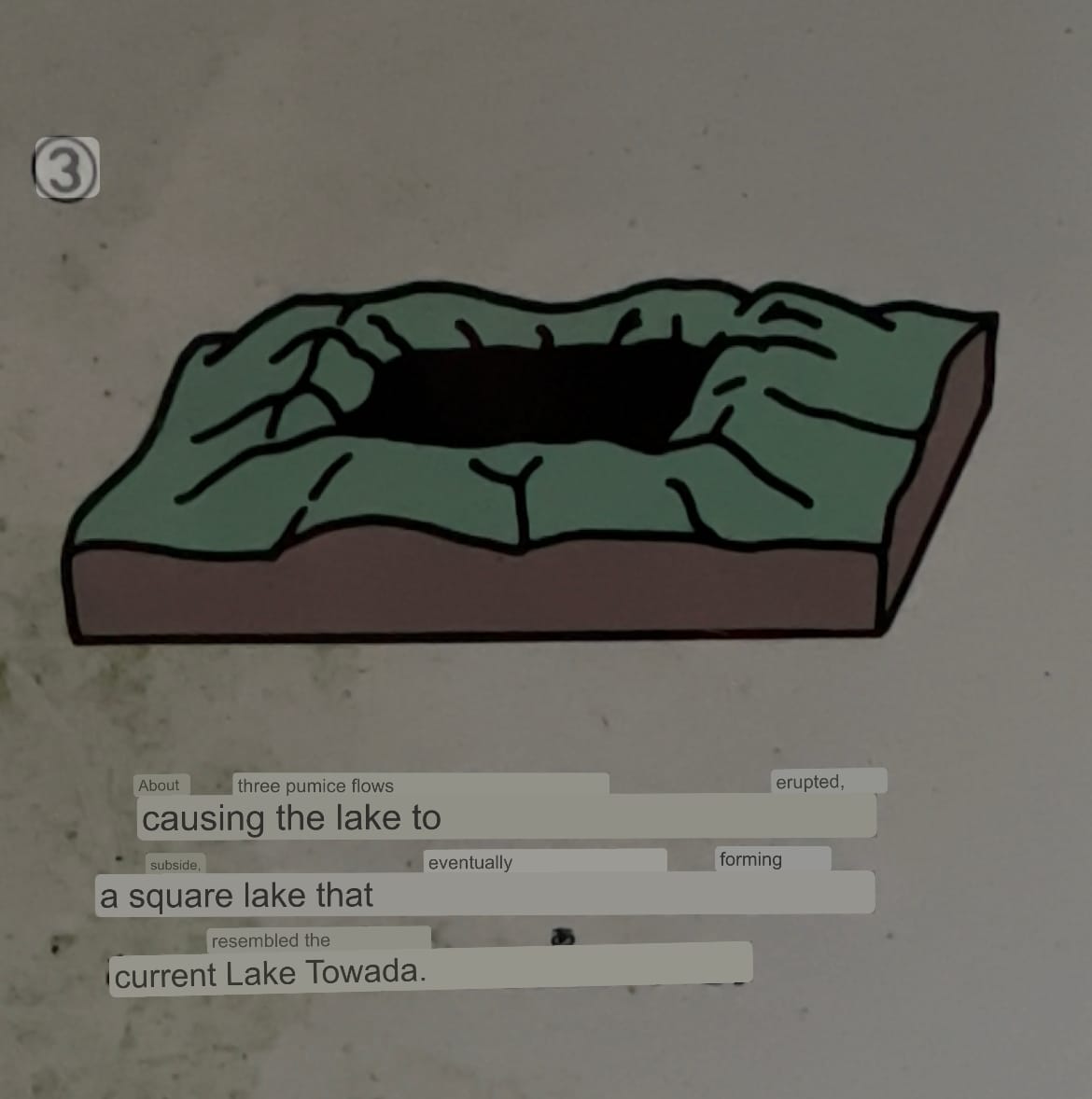
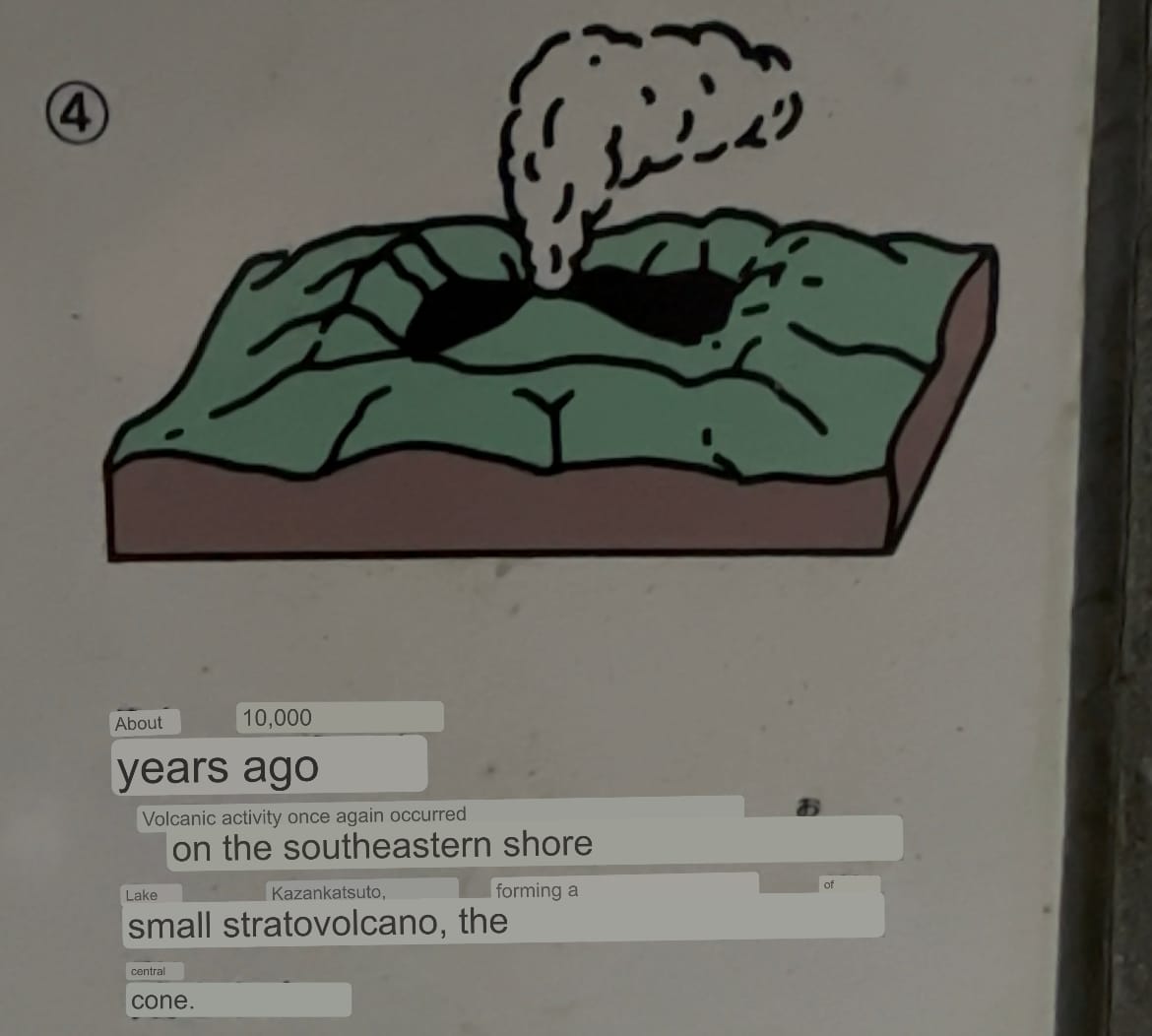
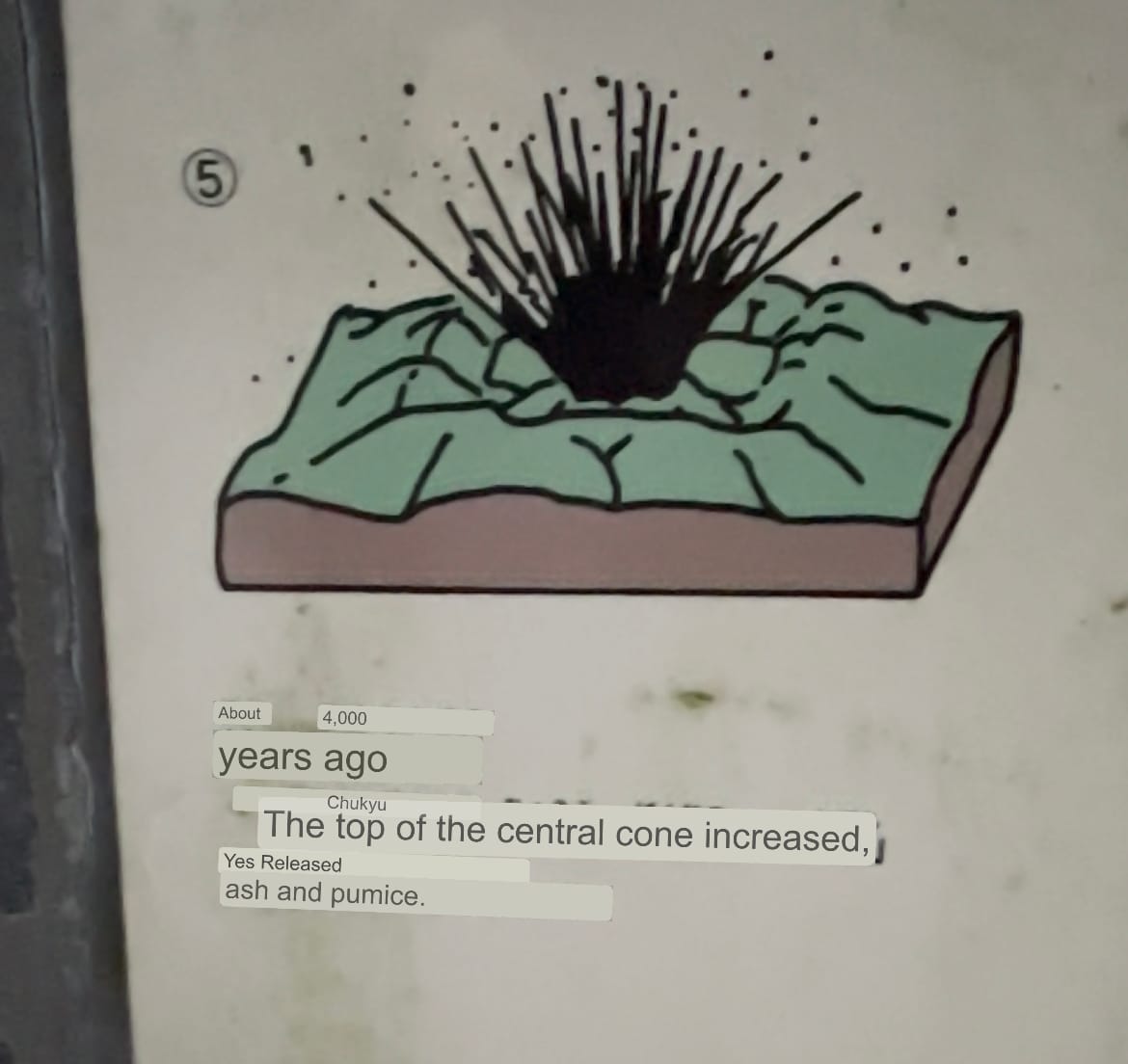
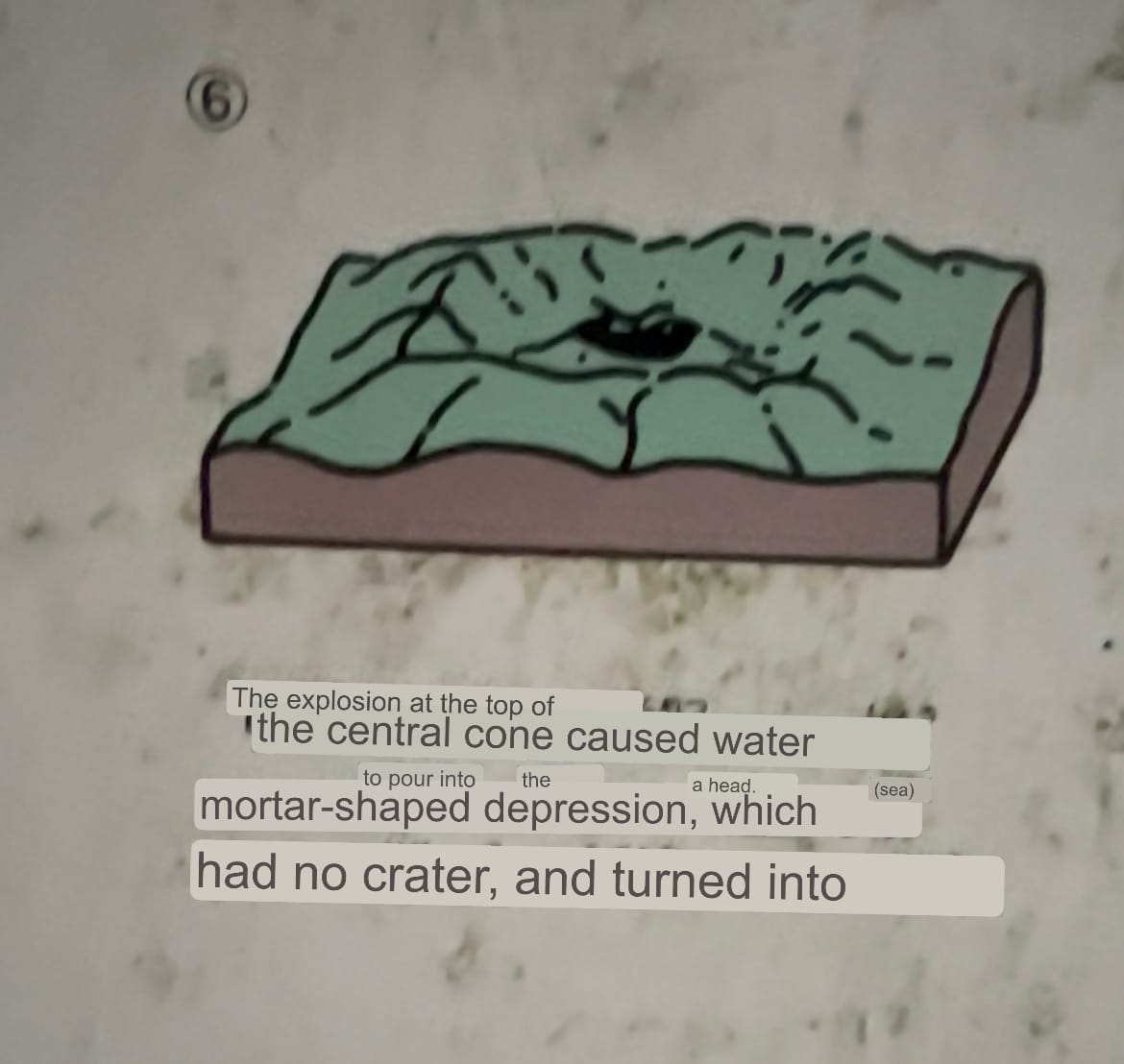
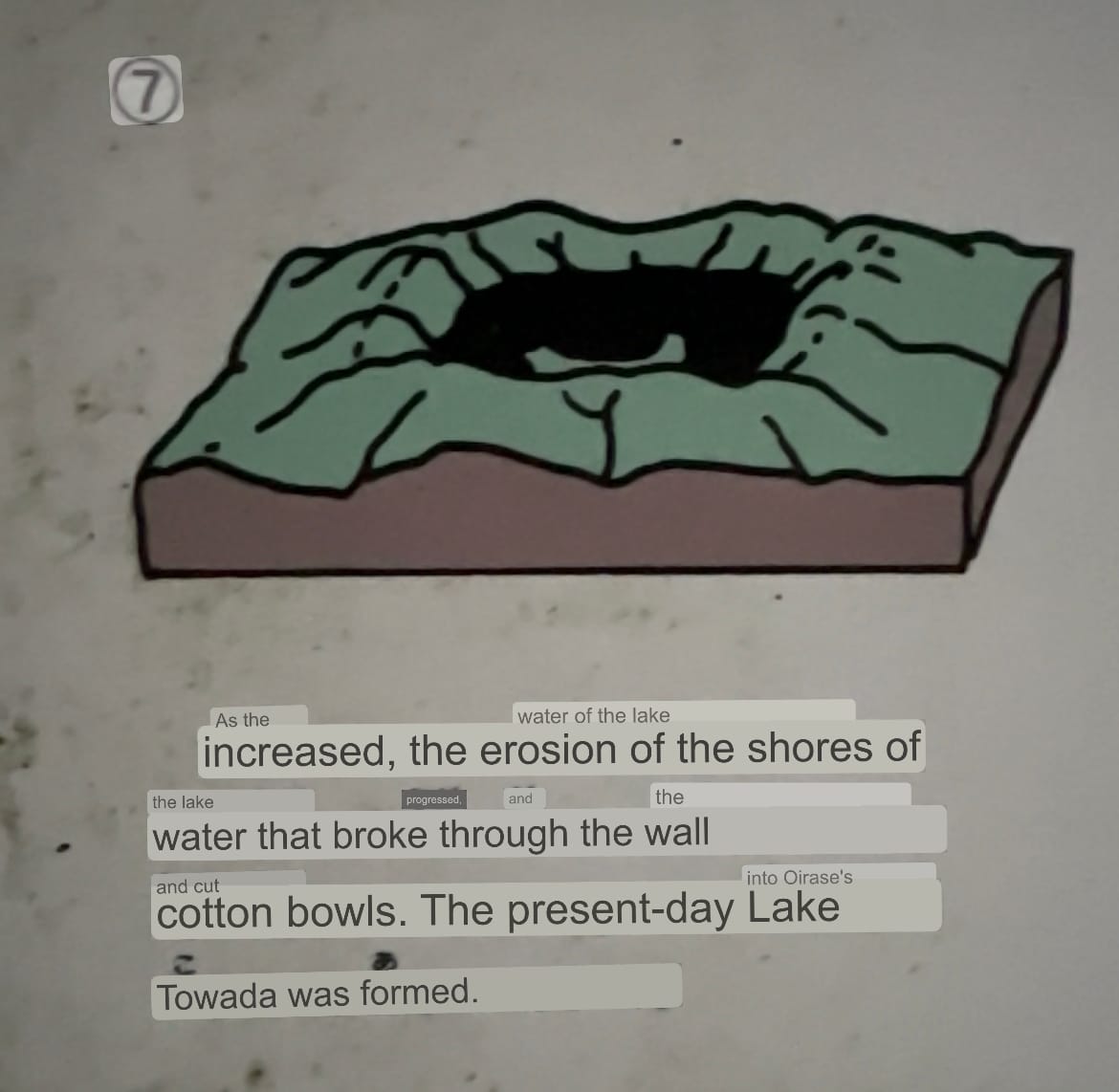
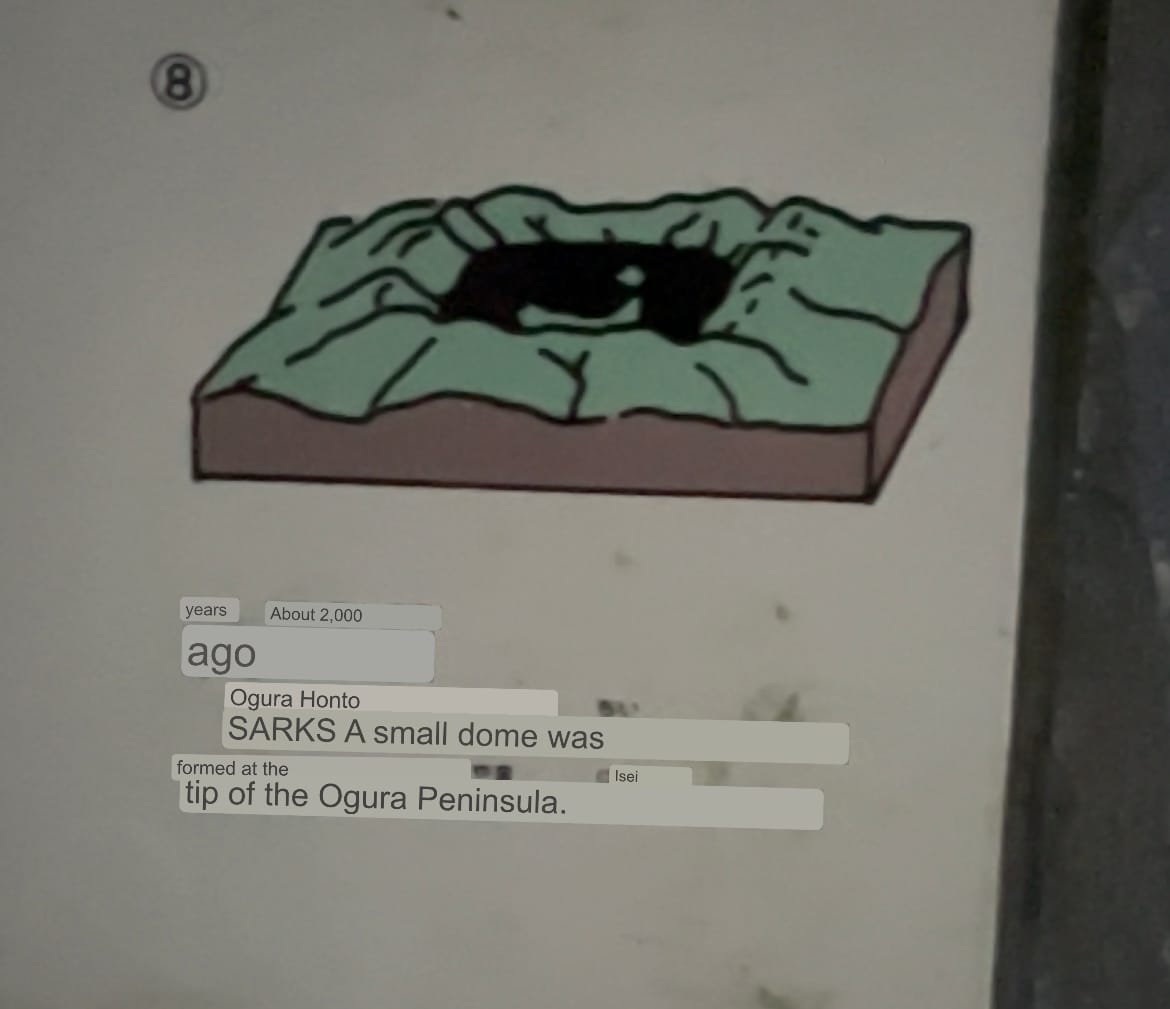
There was also a nice little thing about how the lake was formed which I ran through google translate and then took screenshots of, so they are ready below for you browsing and perusal.
An interpretive display illustrates the early formation of Towada Volcano, showing how volcanic activity and layers of ash and rock gradually built the mountain that would later shape the Lake Towada caldera.An interpretive diagram illustrates a major eruptive phase of Towada Volcano around 30,000 years ago, when violent explosions and collapsing ground helped begin the formation of the vast caldera now occupied by Lake Towada.An interpretive illustration shows the final stages of Lake Towada's formation, where repeated eruptions and ground subsidence created a large caldera that gradually filled with water to form the lake seen today.An interpretive diagram illustrates renewed volcanic activity at Lake Towada around 10,000 years ago, when eruptions within the caldera formed a smaller central stratovolcano that further shaped the landscape seen today.An interpretive illustration depicts a powerful eruption within the Towada caldera around 4,000 years ago, when explosive activity released large quantities of ash and pumice and further reshaped the volcano's central cone.An interpretive illustration shows the final stage in the evolution of the Towada caldera, where water filled a volcanic depression created by earlier eruptions, forming the crater lake that became present-day Lake Towada.An interpretive illustration shows the final shaping of modern Lake Towada, where rising water levels, shoreline erosion and natural drainage gradually created the caldera lake and surrounding landscape seen today.An interpretive illustration depicts one of the most recent stages in Lake Towada's geological development, showing the formation of a small volcanic dome near the Ogura Peninsula around 2,000 years ago within the ancient caldera.
Finally, when I got back to the hotel, it was time for a dip in the open air onsen. This was more like a traditional one that I heard about where it is just a partition between men and women, and it has a fantastic view out of some of the surrounding area. Yes, the area is also cordoned off so no one can accidentally stumble upon you while you are bathing in the onsen.
Time to Start Heading Back to Tokyo
22nd August
For this day I had a bit of a cunning plan as I wanted to go and see and island out back in Hachinohe city, so I got up early, had breakfast, a quick dip in the onsen, which was lovely and refreshing in the morning, got in the car and then started making my way back. It took me a while to get back to Hachinohe, but I finally arrived at Kabushima island which only about 1-1.5 hour before I had to hand in the car in.
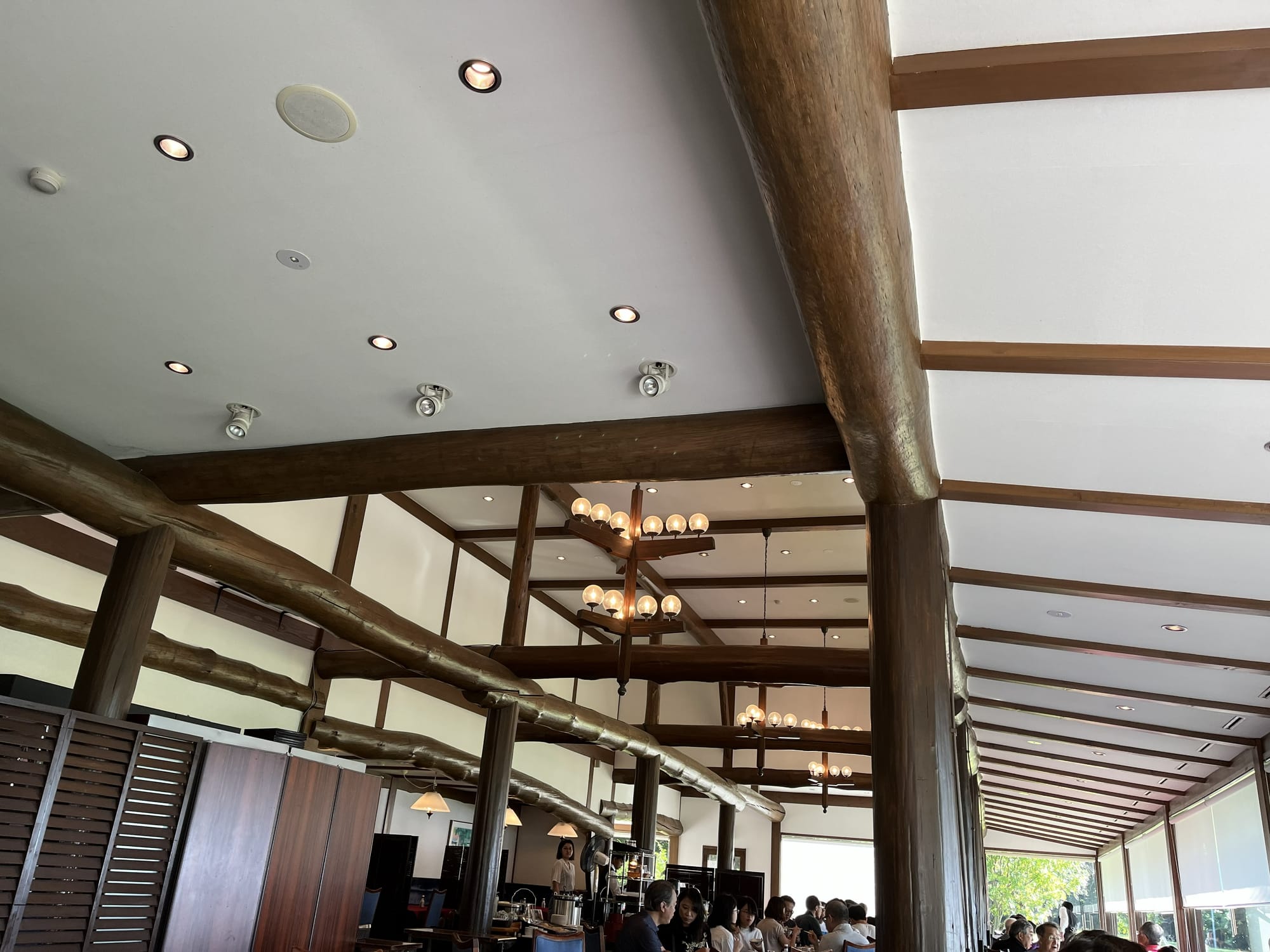
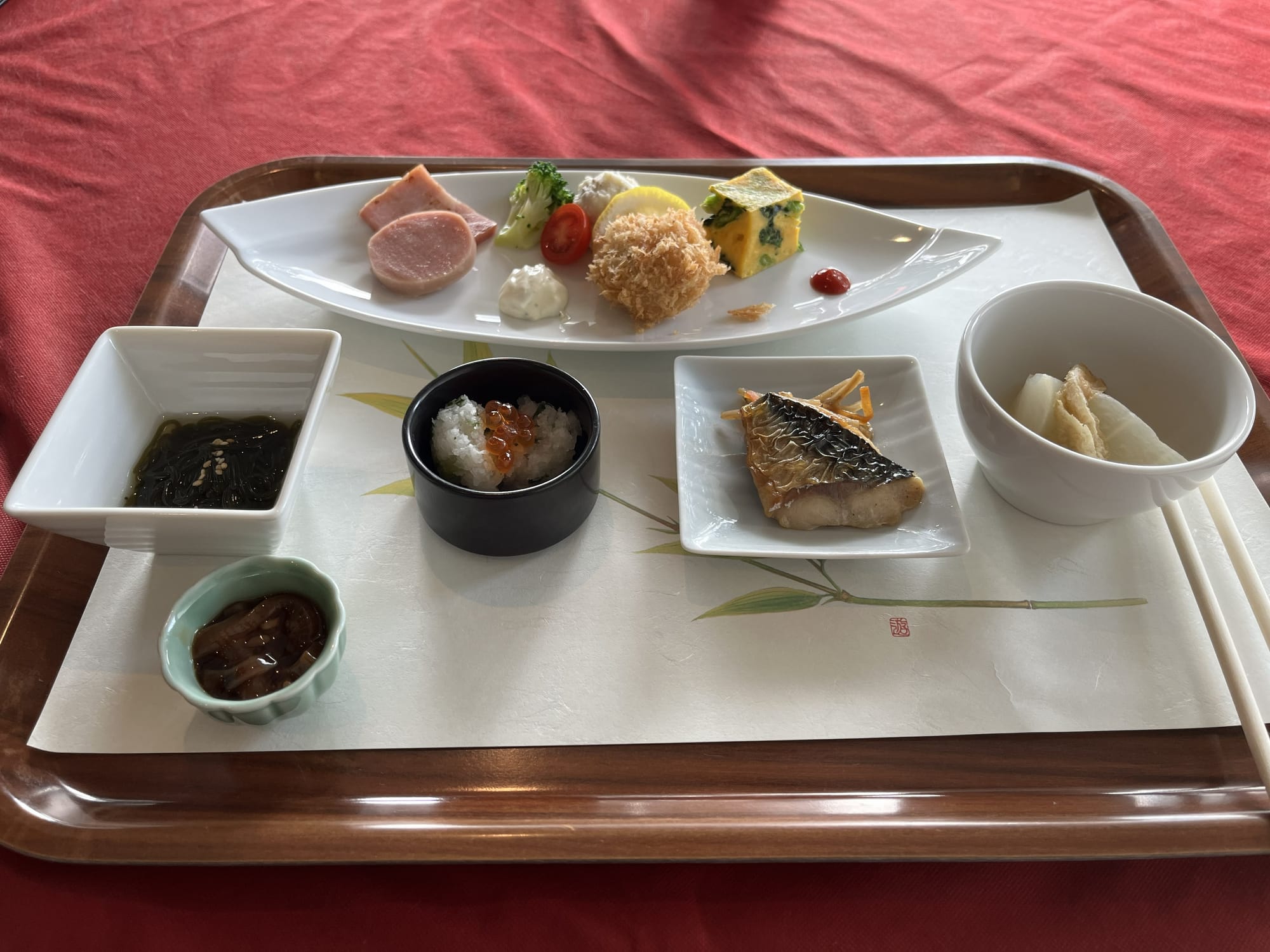
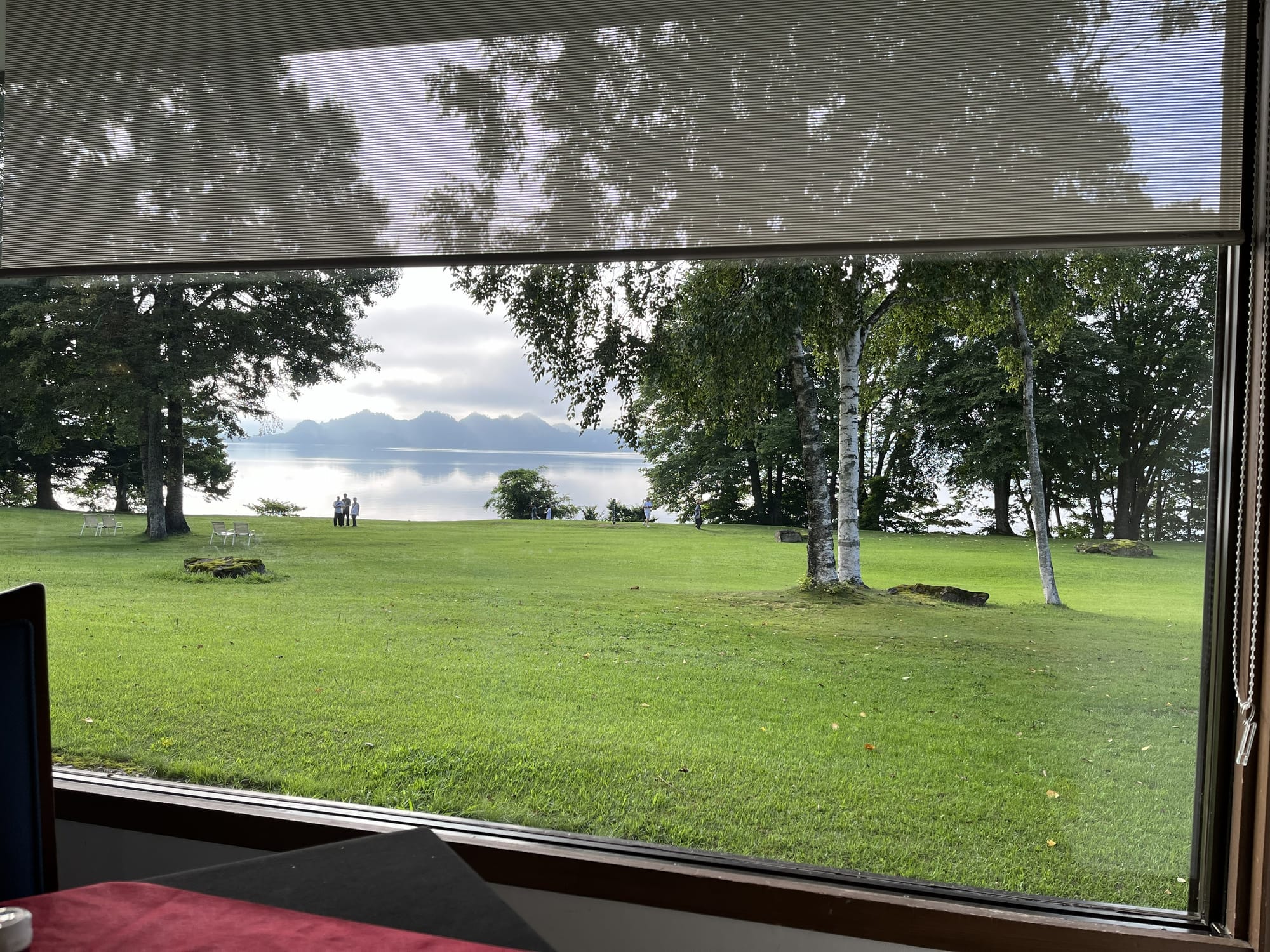
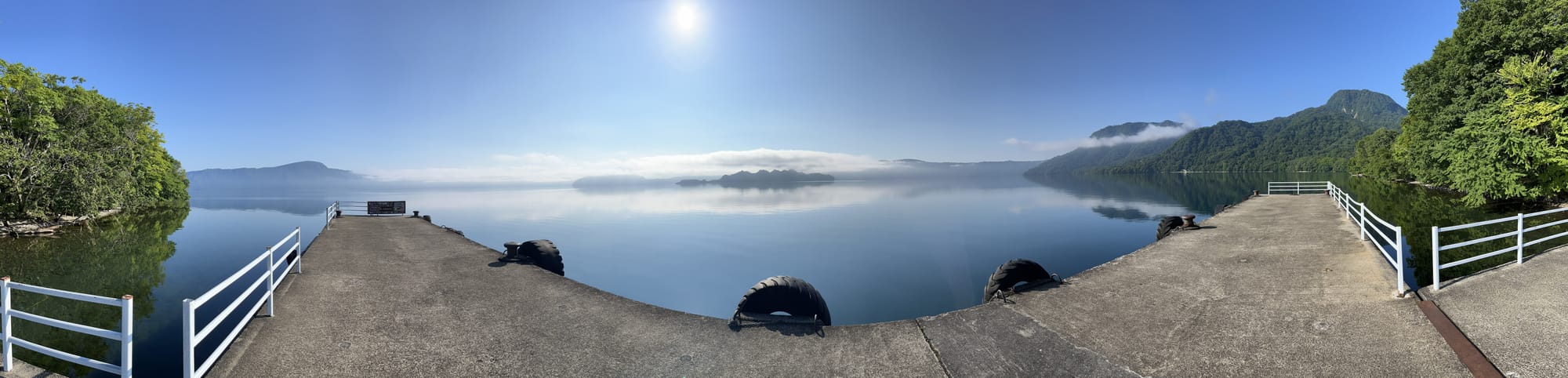
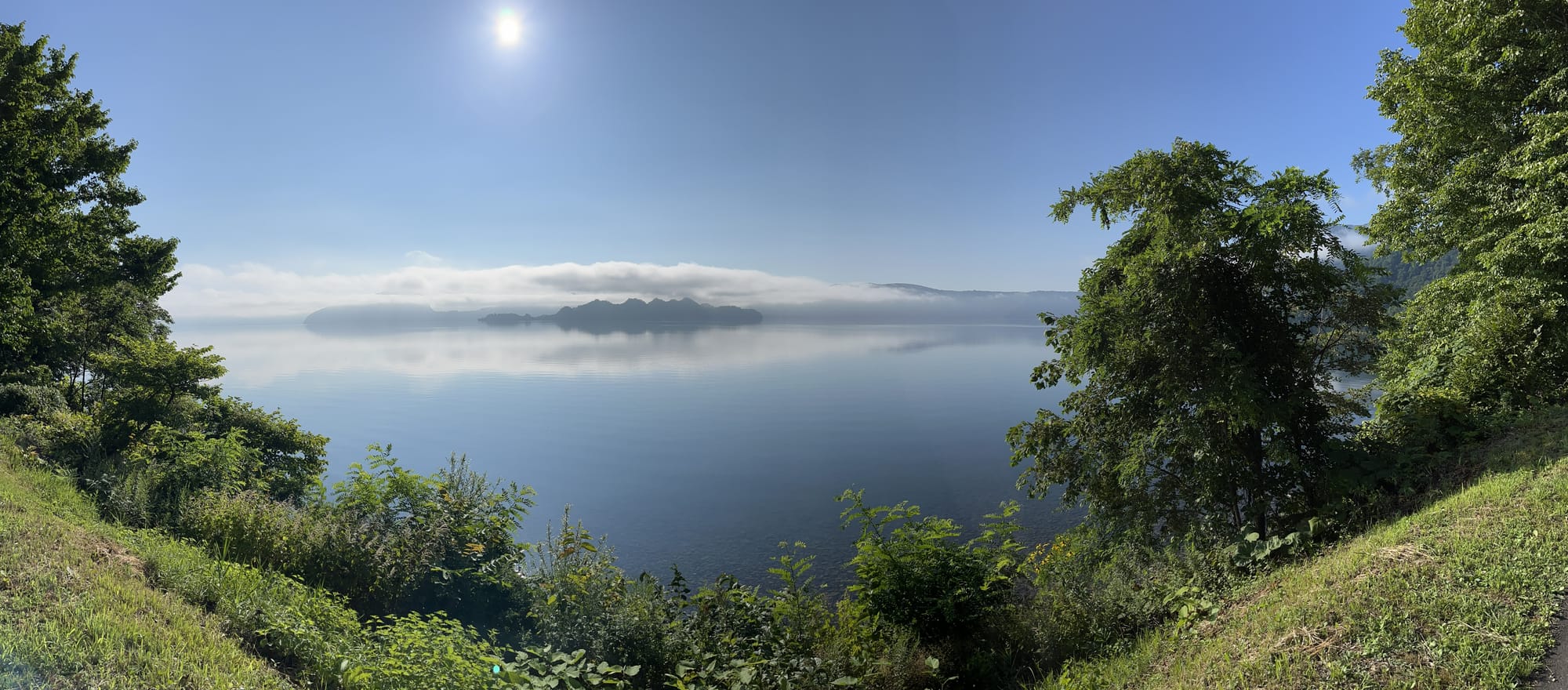
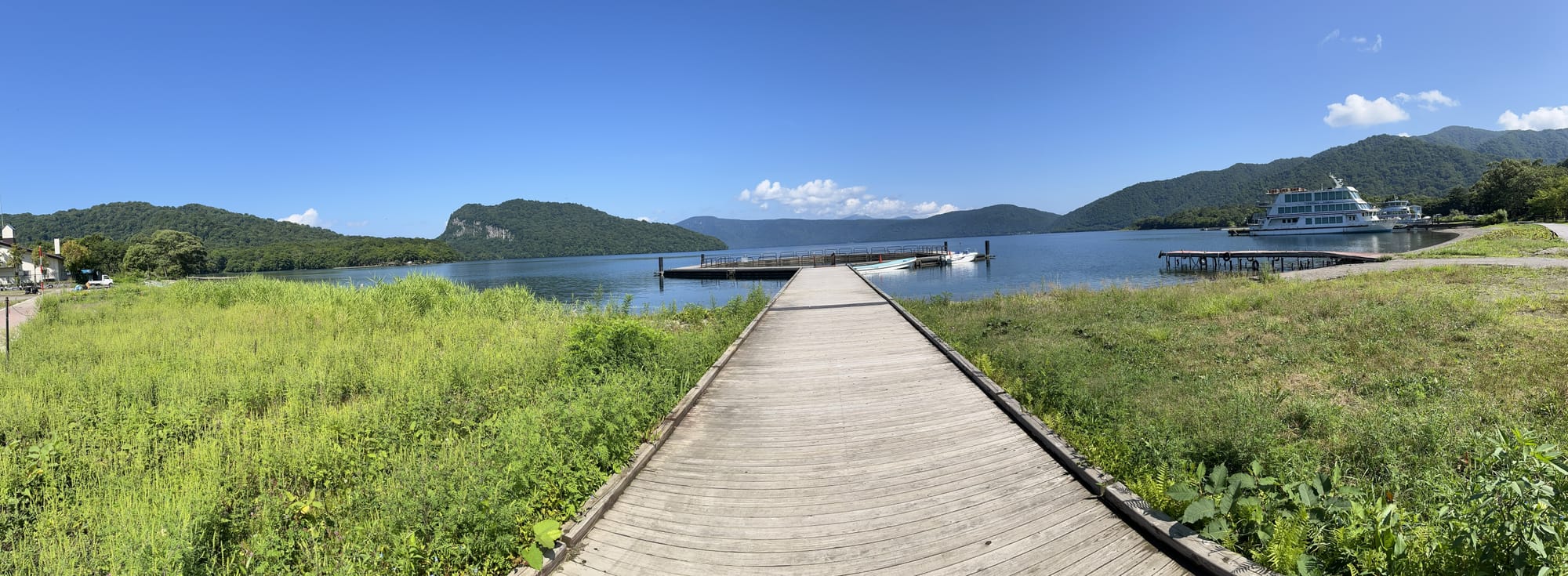
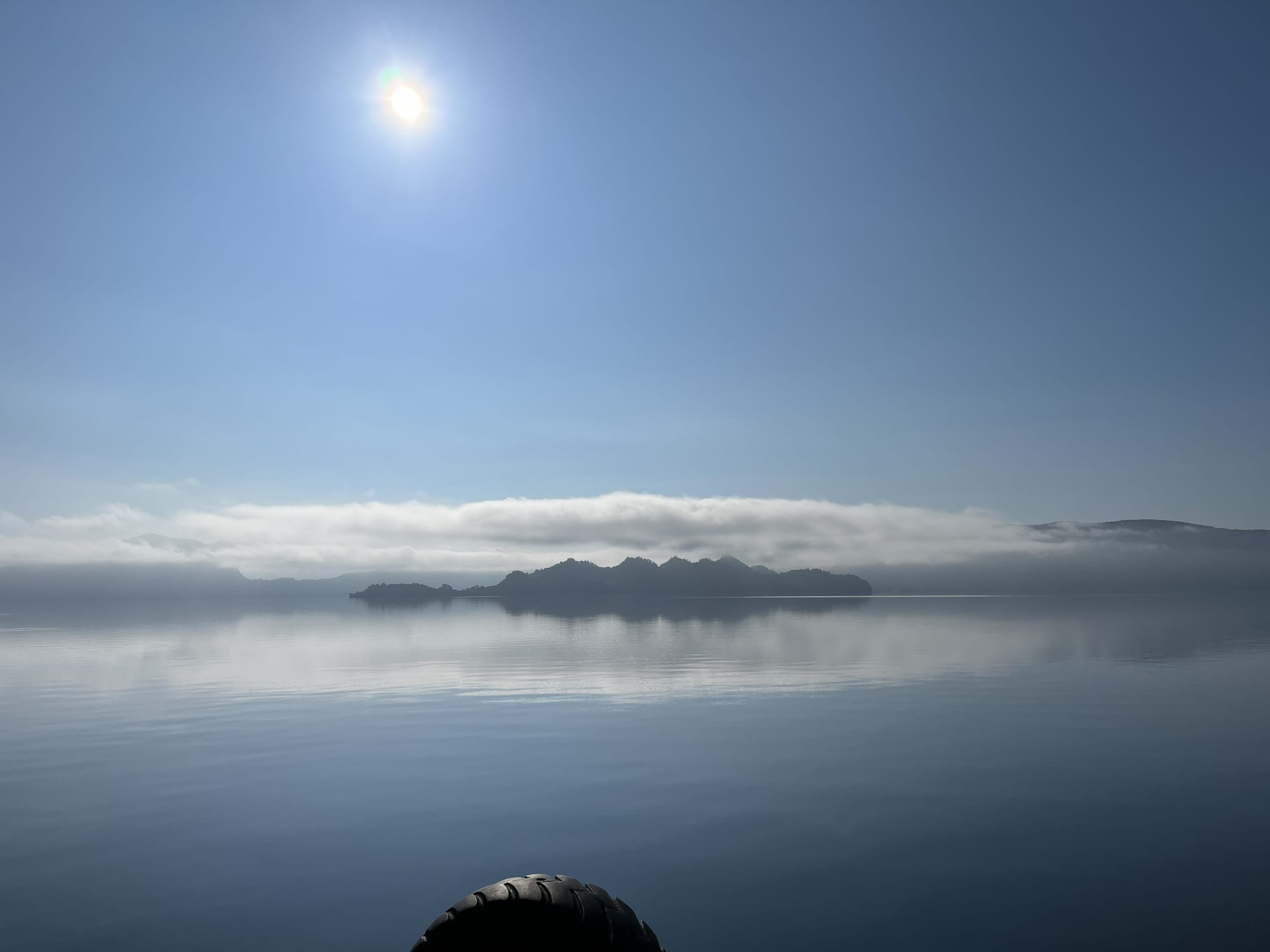
The restaurant at Towada Prince Hotel combines timber architecture, warm lighting and panoramic lake views, providing an inviting setting for guests dining beside the shores of Lake Towada.A beautifully presented selection of Japanese appetisers is served at the Towada Prince Hotel restaurant, showcasing seasonal ingredients and regional flavours in an elegant lakeside dining setting.A tranquil lakeside view from the Towada Prince Hotel restaurant, where expansive lawns, mature trees and the calm waters of Lake Towada create a peaceful dining backdrop in northern Japan.A peaceful morning view from a lakeside pier on Lake Towada, where mirror-like waters reflect the surrounding mountains and drifting mist beneath clear blue skies in northern Japan.A breathtaking view across Lake Towada on a clear morning, where still waters mirror the surrounding forests and a band of low cloud drifts above the lake's distinctive peninsulas and islands.A lakeside boardwalk leads towards the waters of Lake Towada, where forested hills, a floating pier and sightseeing boats create a picturesque scene beneath clear summer skies in northern Japan.A tranquil morning scene on Lake Towada, where low cloud drifts across the distant shoreline and the lake's glass-like surface reflects the bright summer sun and the silhouette of Nakayama Peninsula.
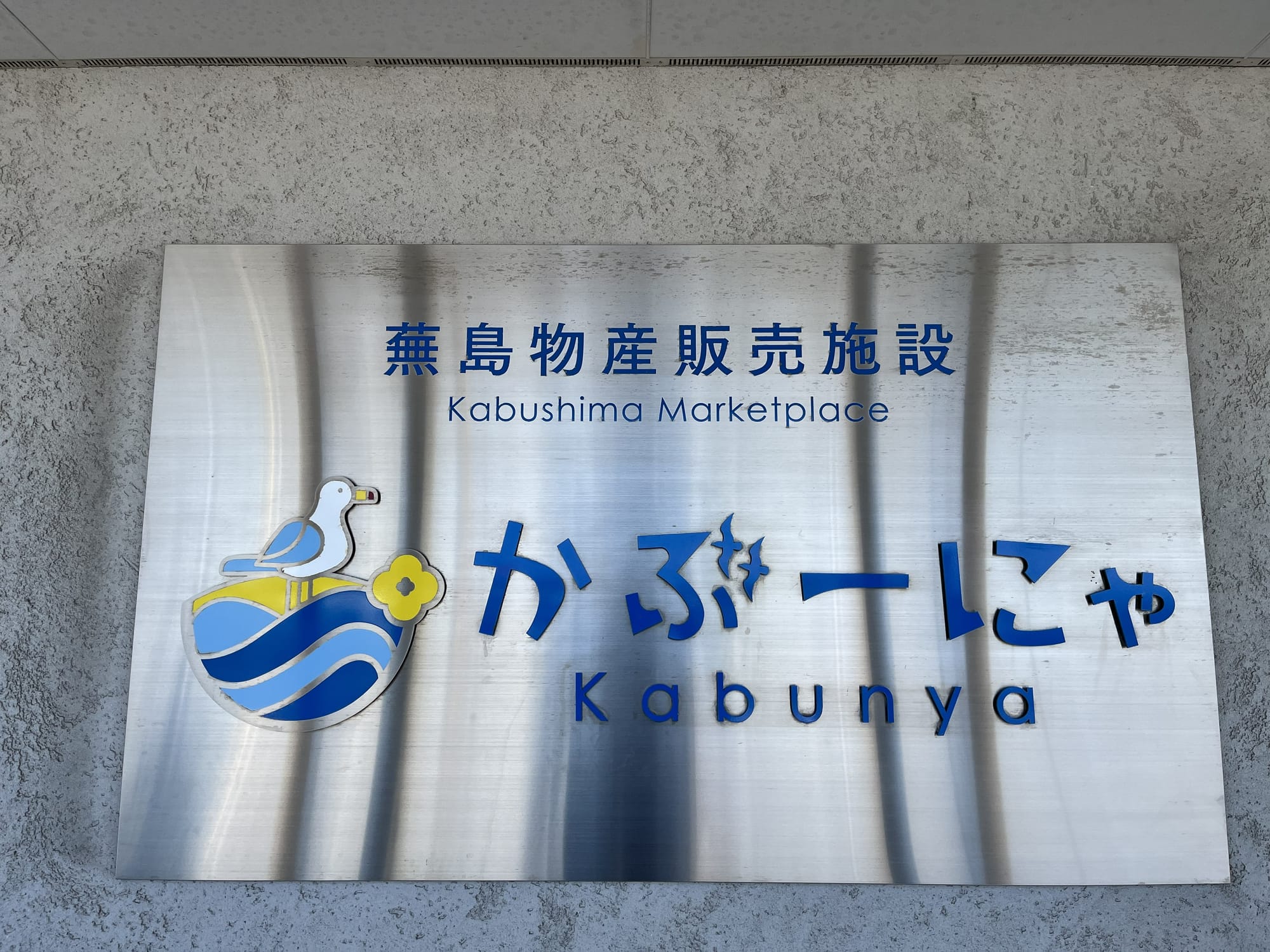
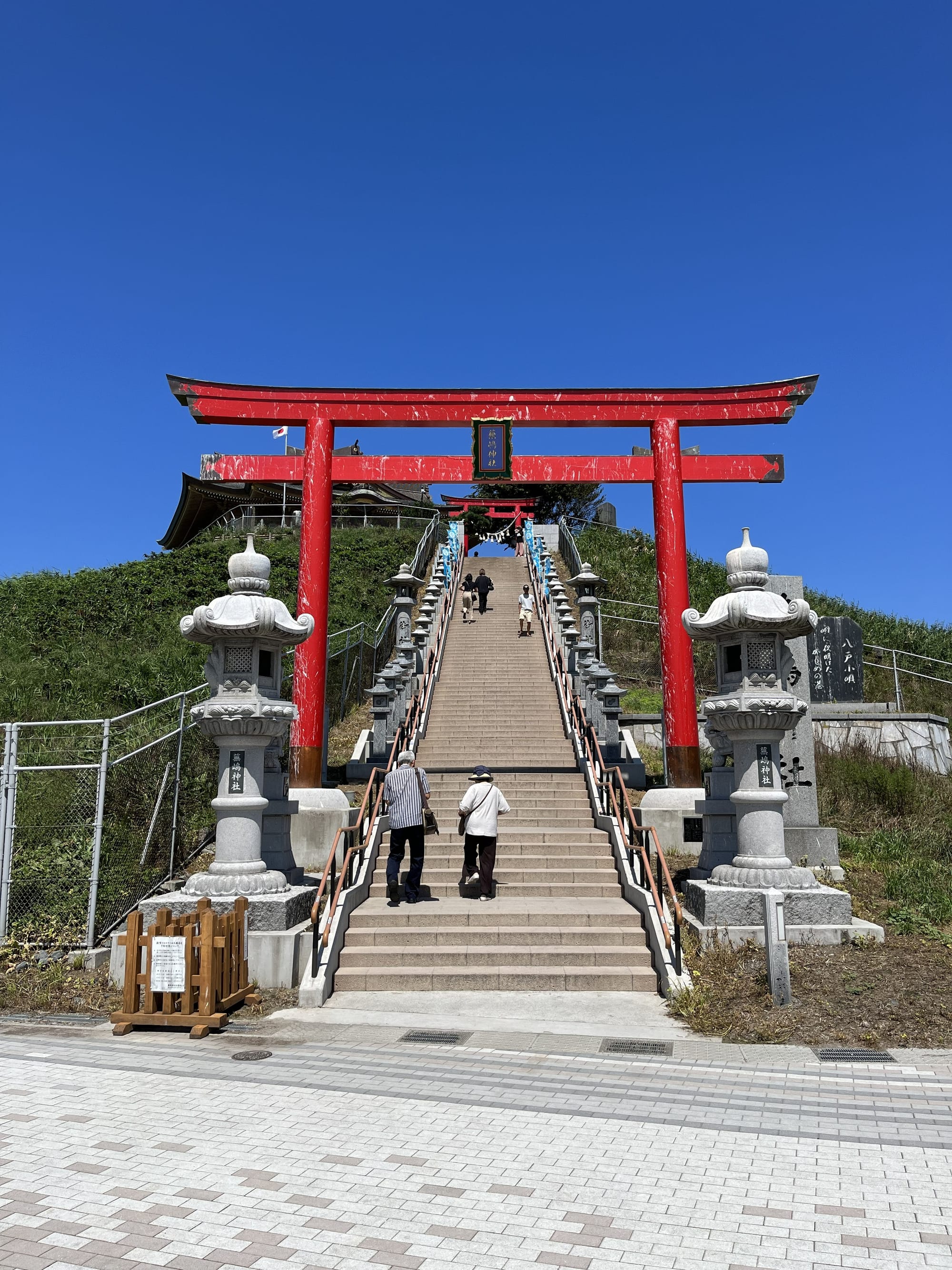
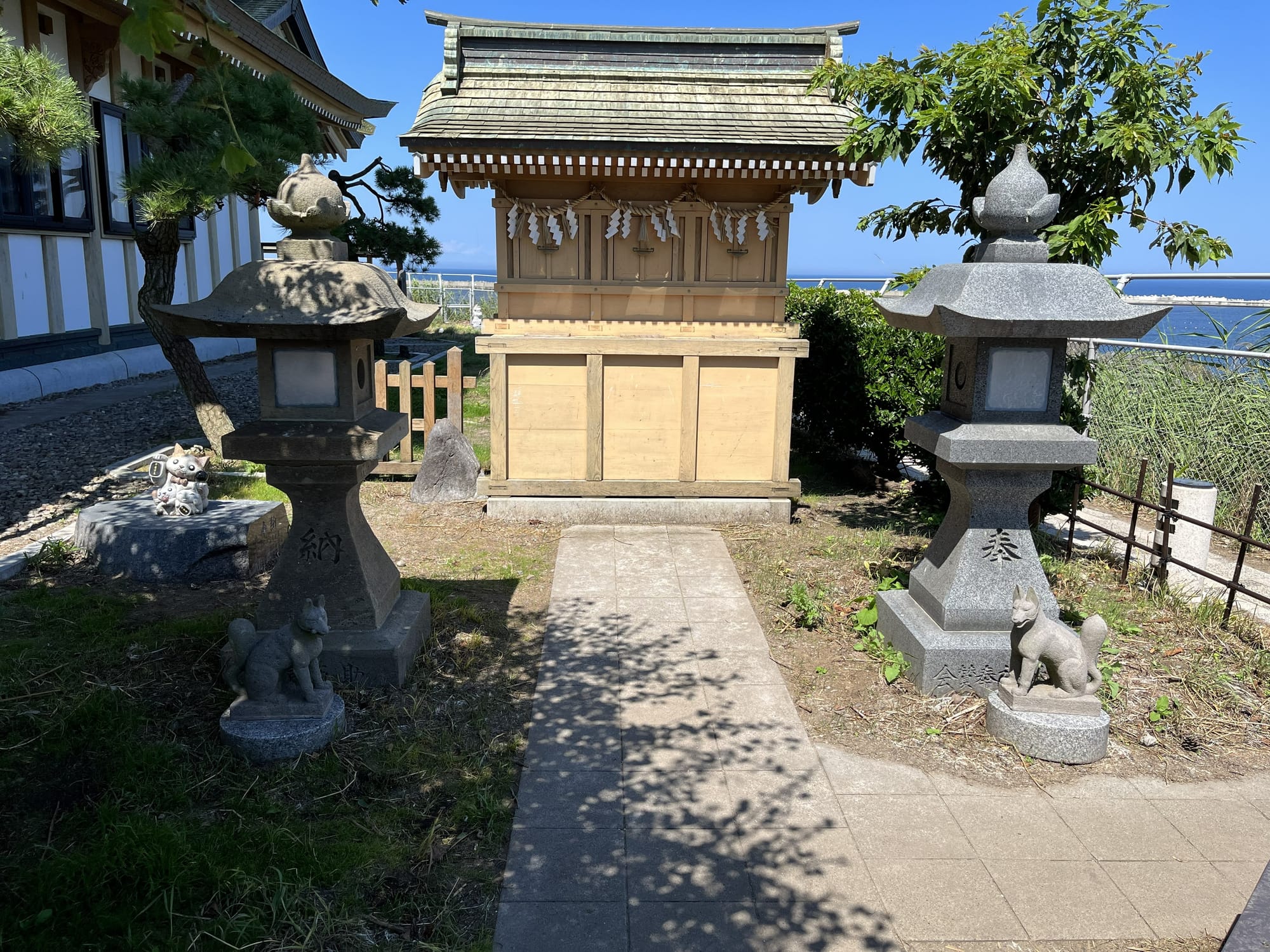
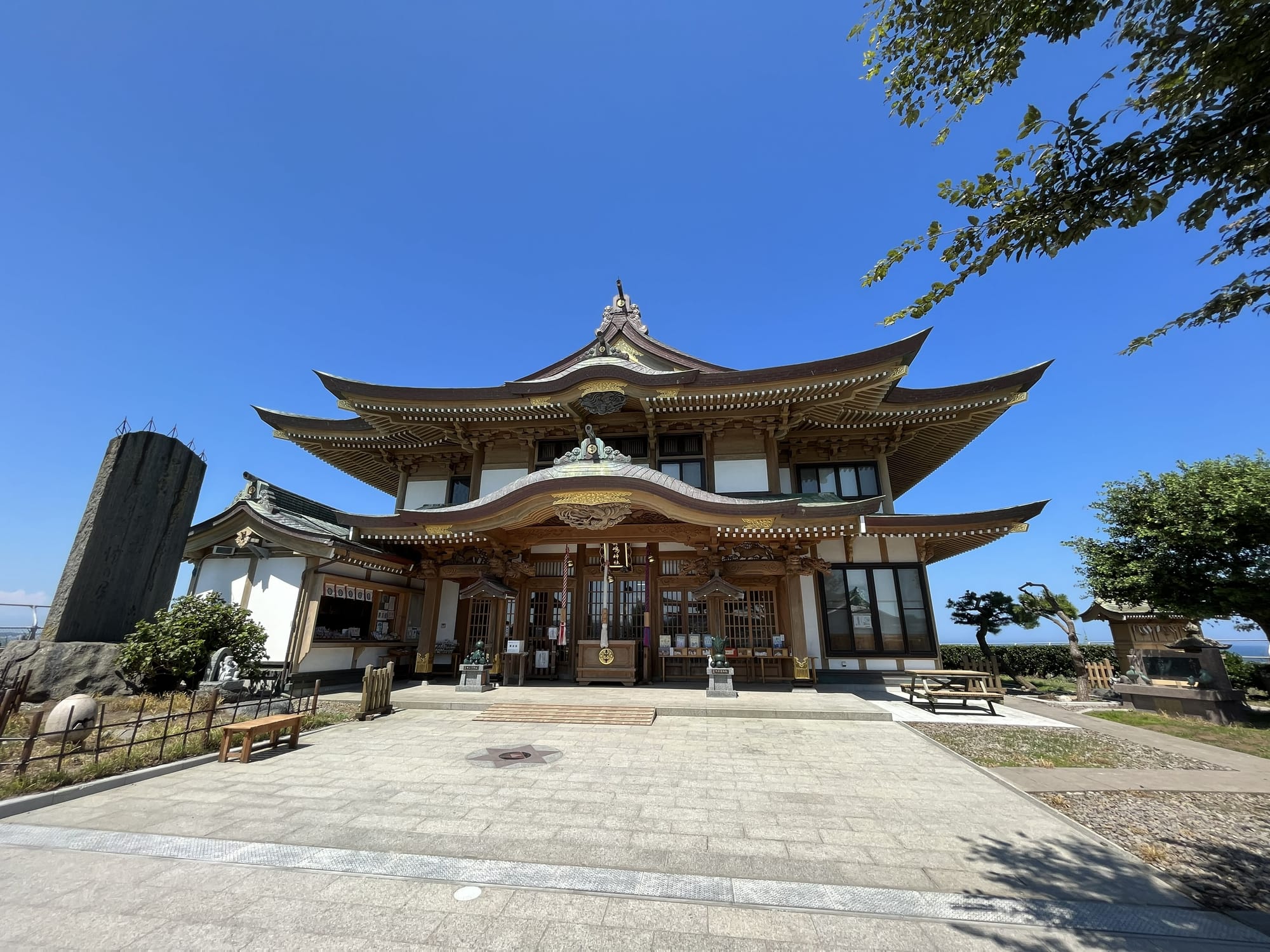
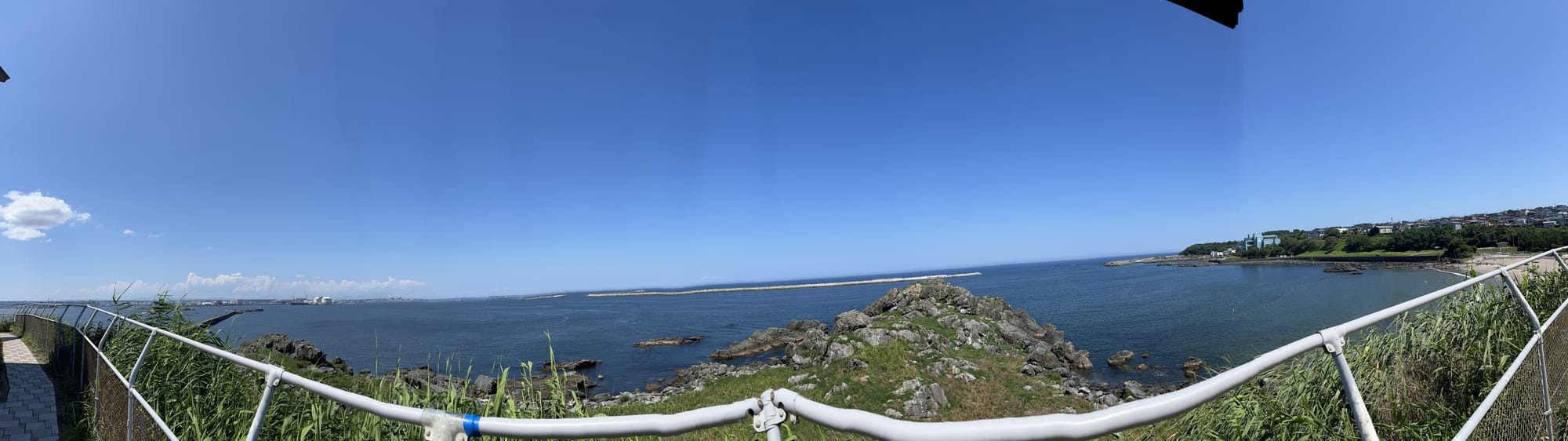
Finally, it’s time to get to Kabushima. Kabushima is a small little island by itself out just literally off the coast. It has its own shrine on it and is famous for black tailed gulls as well. It is connected to the mainland by a small dock.
A sign for Kabunya at Kabushima Marketplace welcomes visitors to one of Hachinohe's coastal attractions, where local products, souvenirs and regional specialities are available near the famous black-tailed gull colony of Kabushima.The striking vermilion torii gate of Kabushima Shrine rises above a long staircase on Kabushima Island, welcoming visitors to one of Hachinohe's most iconic coastal landmarks overlooking the Pacific Ocean.A small auxiliary shrine stands within the grounds of Kabushima Shrine, where traditional wooden architecture, stone lanterns and fox guardian statues overlook the Pacific coast from Hachinohe's sacred island headland.Kabushima Shrine stands prominently on a coastal headland overlooking the Pacific Ocean, where elegant timber architecture, sweeping rooflines and centuries of maritime tradition make it one of Hachinohe's most recognisable sacred sites.A visitor poses beneath a vermilion torii gate at Kabushima Shrine, where traditional Shinto architecture, sacred ropes and coastal scenery combine at one of Hachinohe's most distinctive cultural landmarks.A panoramic view from Kabushima Shrine overlooks the rugged Pacific coastline of Hachinohe, where rocky outcrops, sheltered bays and expansive ocean views highlight the dramatic scenery of northern Japan's Sanriku Coast.
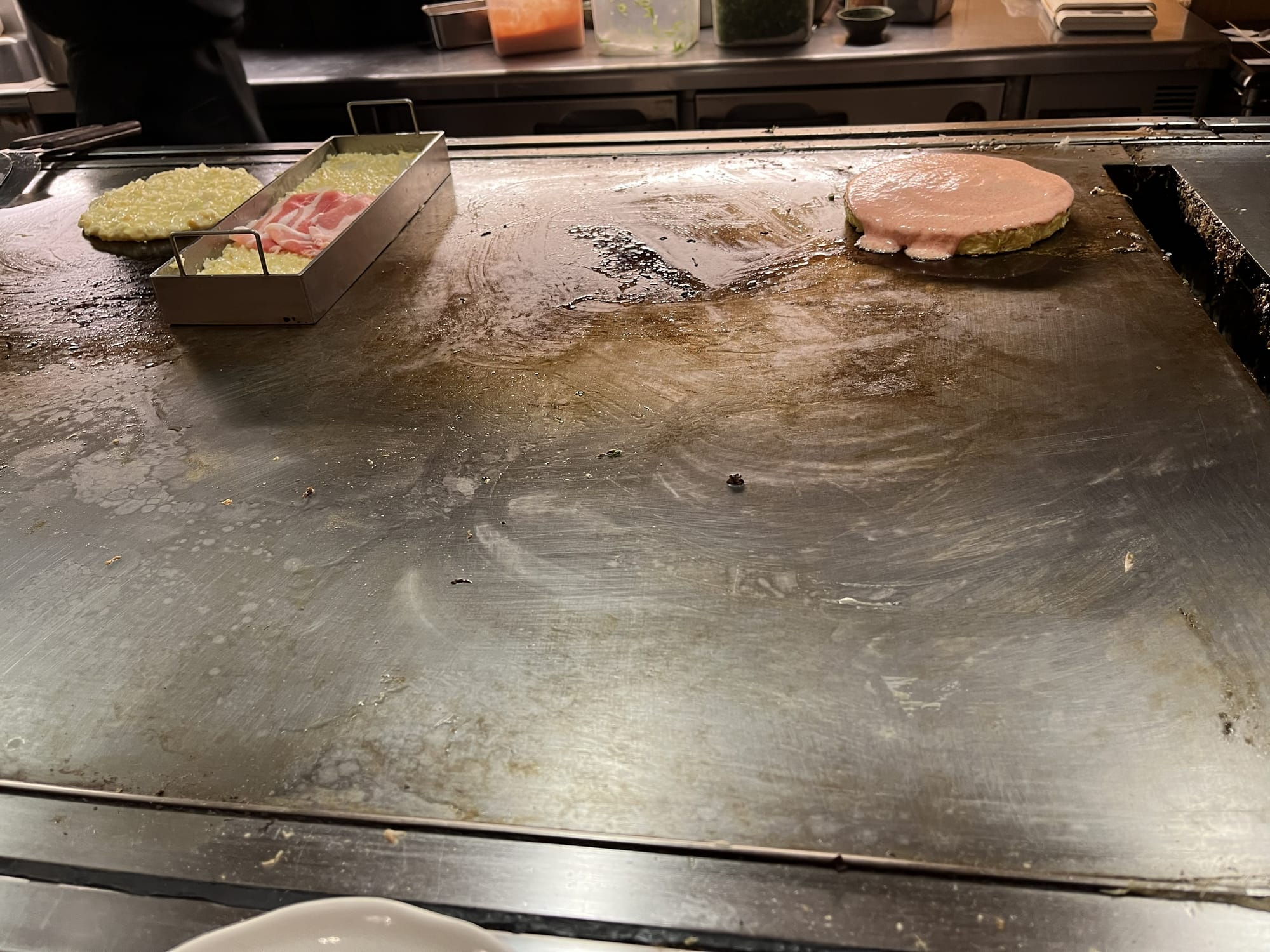
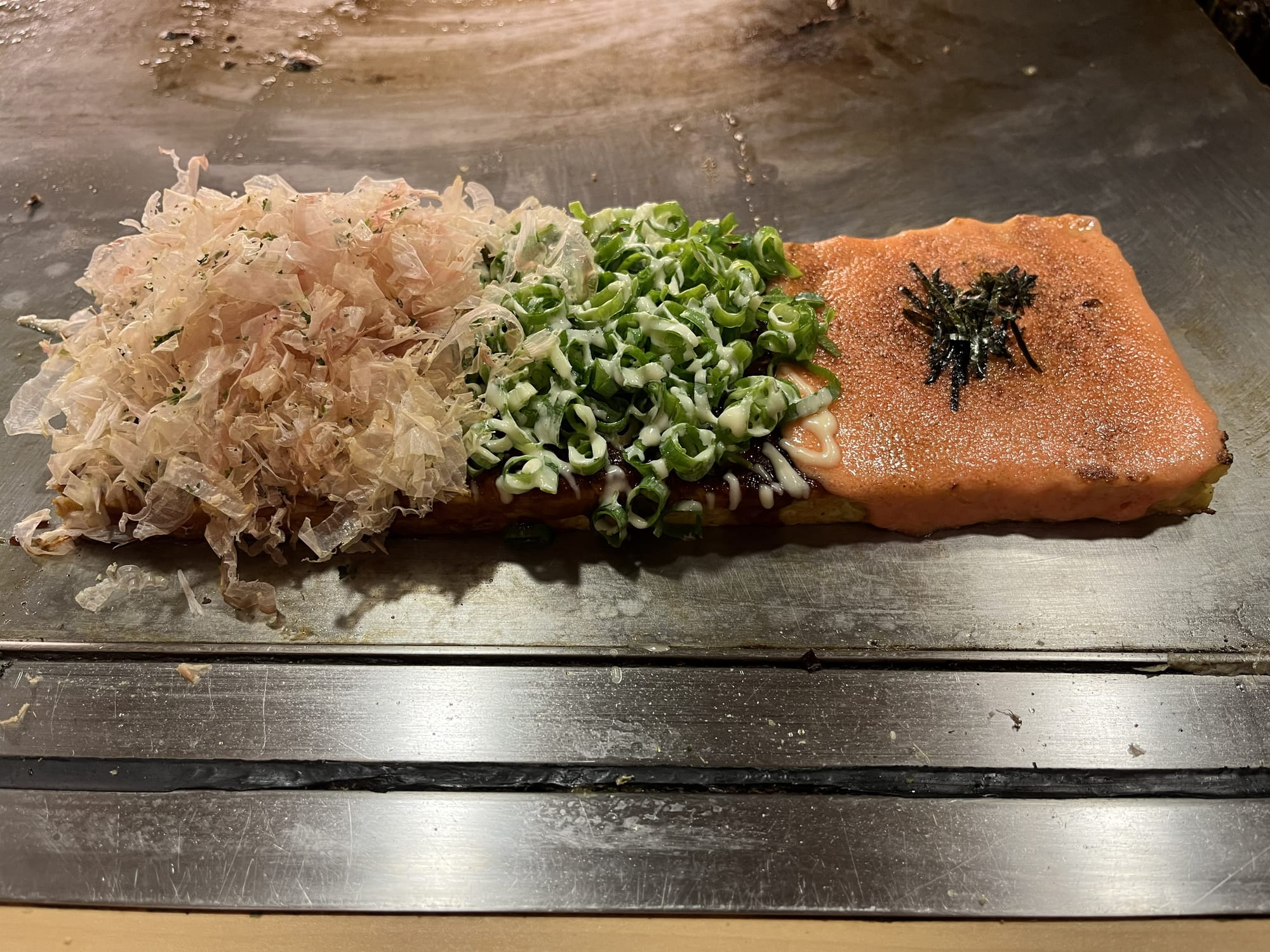
Once I arrived about 3-4 hours later at my new hotel in Tokyo which is my last night here, I went out to a familiar restaurant in Asakusa nearby that does Okonomiyaki. This was my Third time here and it didn’t disappoint. I got a three in one as I couldn’t decide which one to get this time.
Far East Village Hotel Asakusa provides a convenient base for exploring Tokyo's historic Asakusa district, placing guests within easy reach of famous temples, traditional streets and vibrant local culture.A chef prepares okonomiyaki on a teppan grill, where layers of batter, cabbage and fillings are cooked fresh to order in one of Japan's most popular savoury comfort dishes.A freshly prepared okonomiyaki sits on the teppan grill, topped with bonito flakes, spring onions, mayonnaise and spicy cod roe sauce, showcasing a flavourful twist on one of Japan's most beloved savoury dishes.
What was Meant to be My Final Day
23rd August
After going and getting some last-minute gifts the night before and going to get my personalised chopsticks from the Tokyo sky tree today, I could not have predicted what would happen.
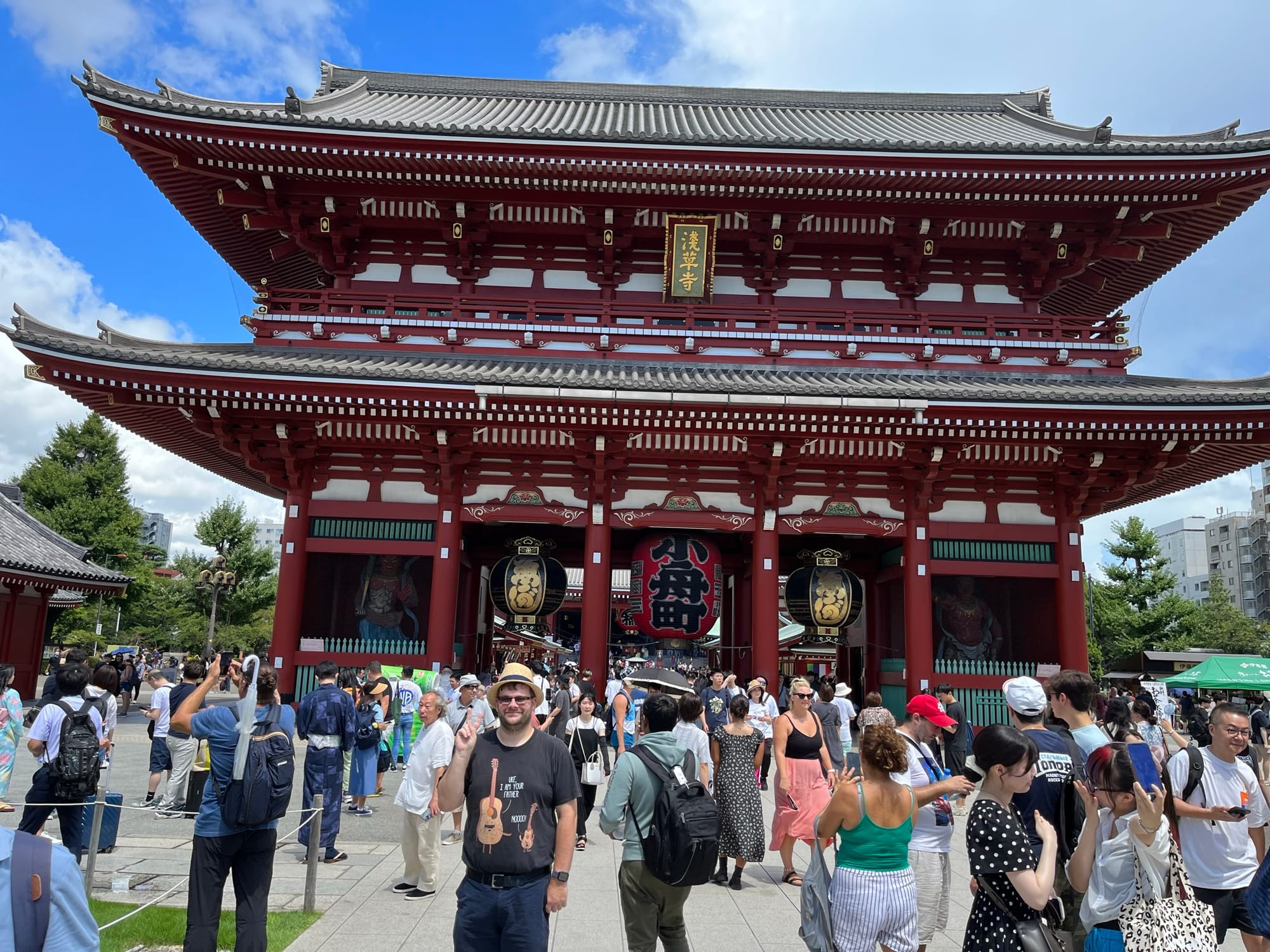
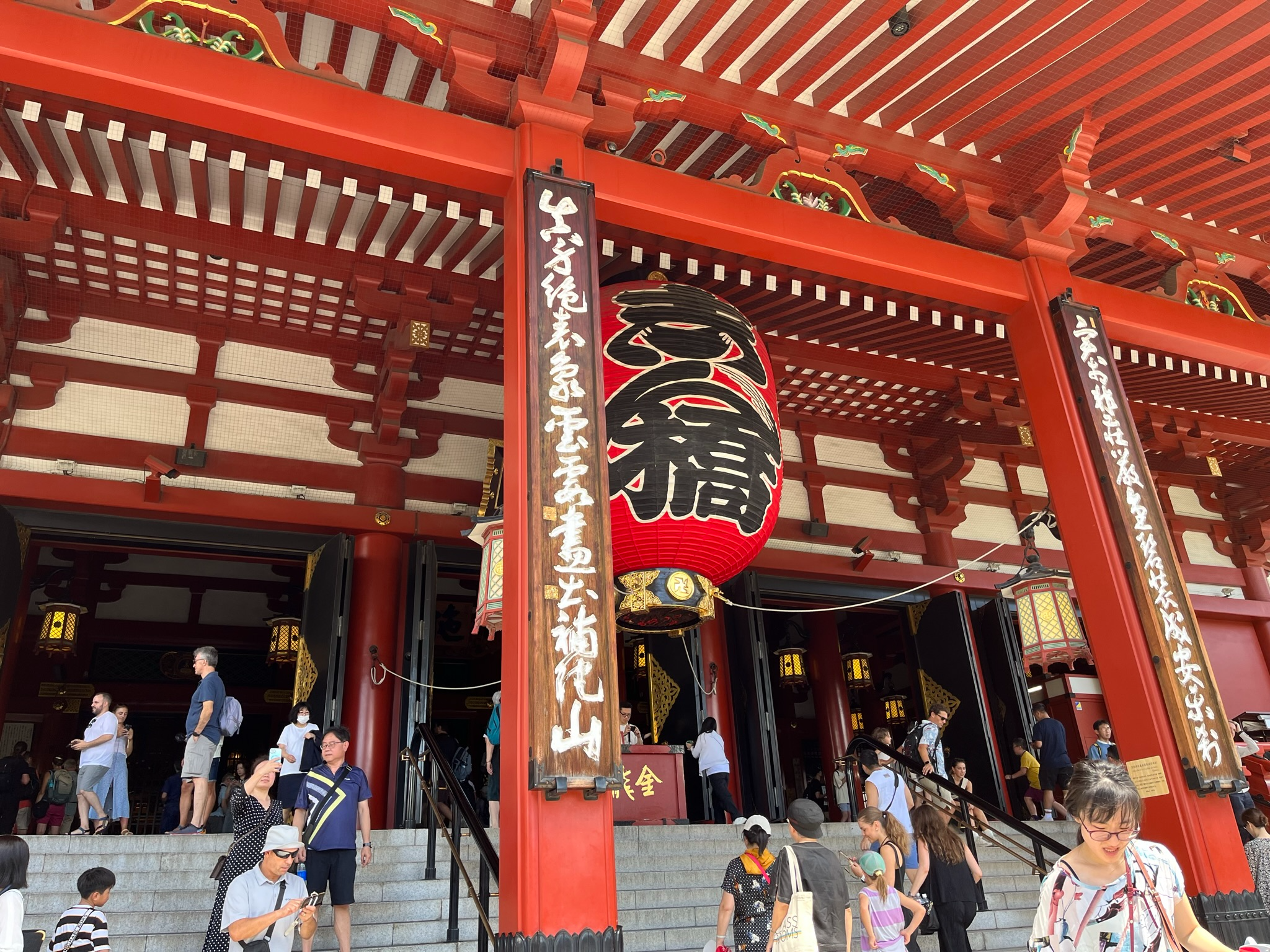
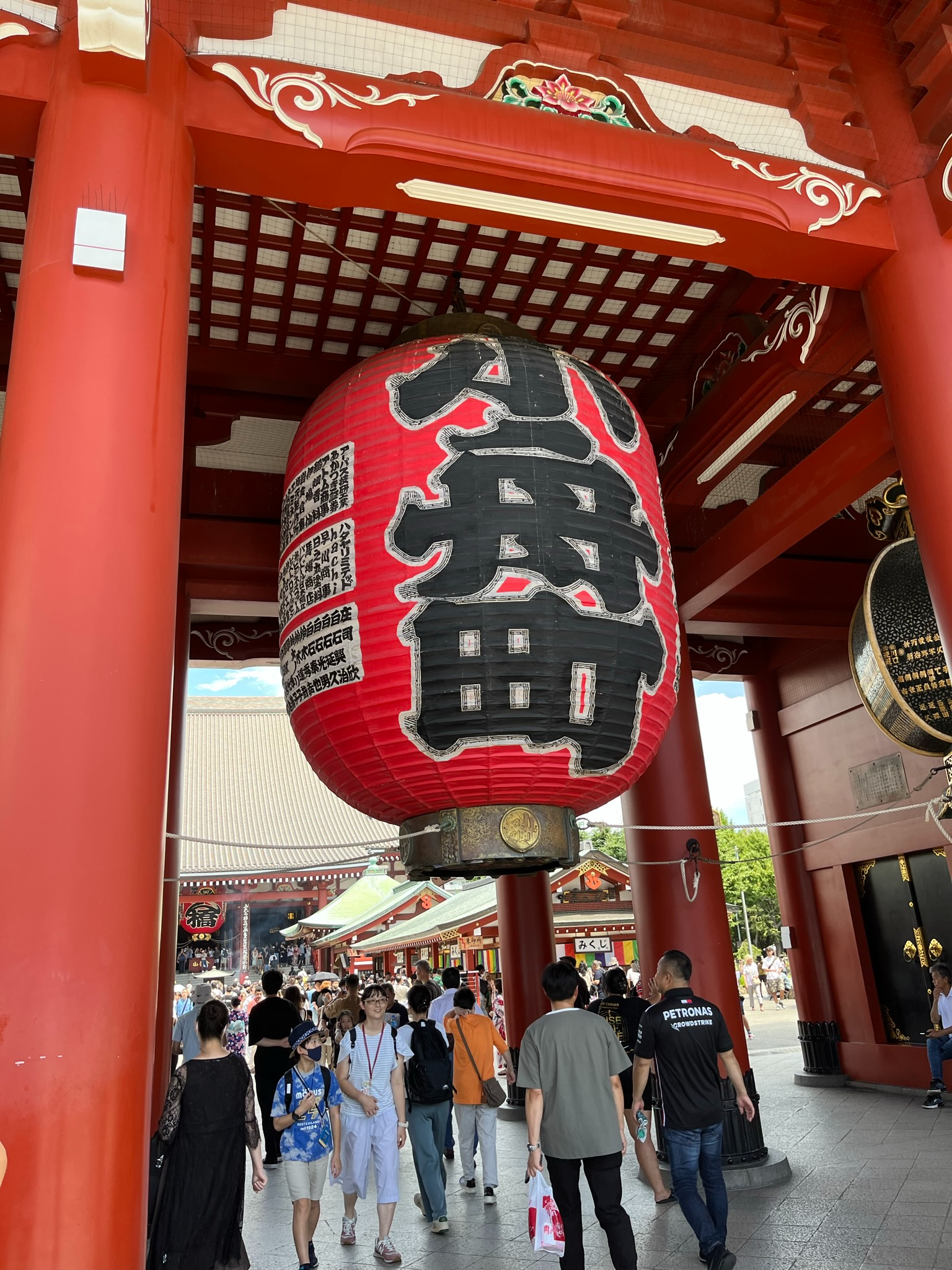
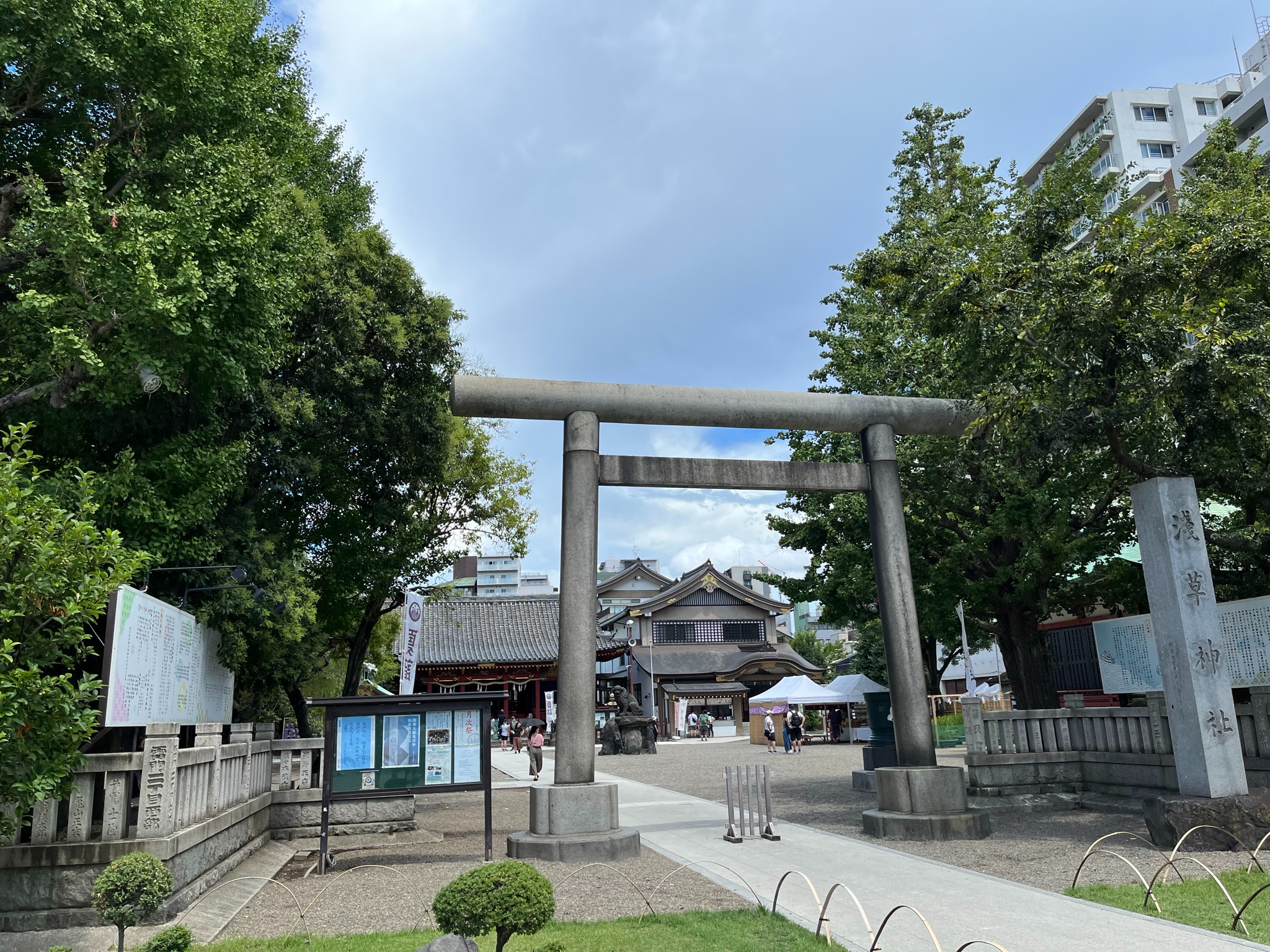
I got up early and double checked that everything was packed and I had my boarding pass ready and waiting on my phone as well. So, I went out to the Tokyo sky tree again to get my own personalised chopsticks that have my name on them (one in English and other in Katakana which is Japanese phonetics). I also went to the Senso-Ji temple and Asakusa Shrine. Where I met this Australian couple who had come from Melbourne.
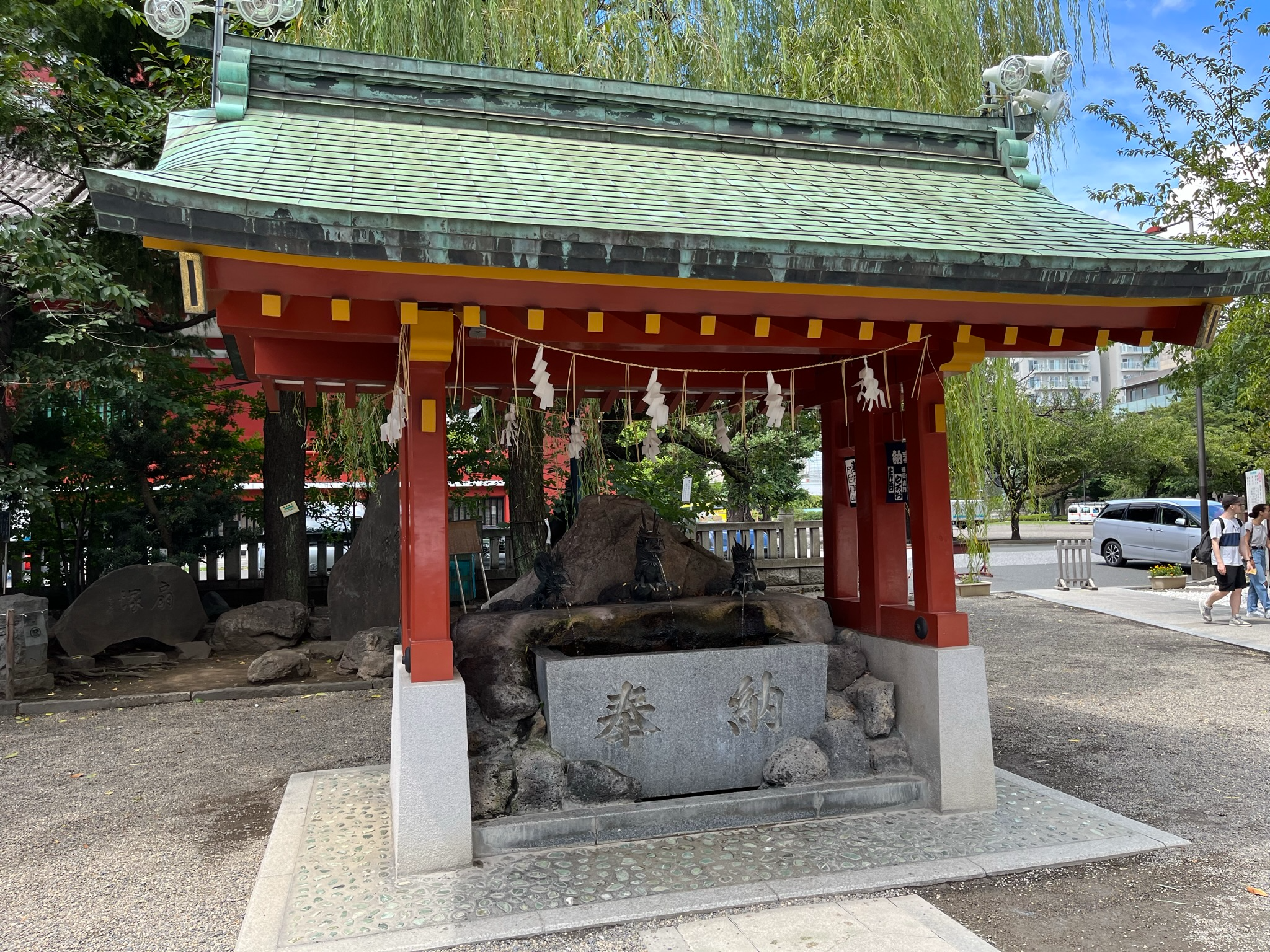
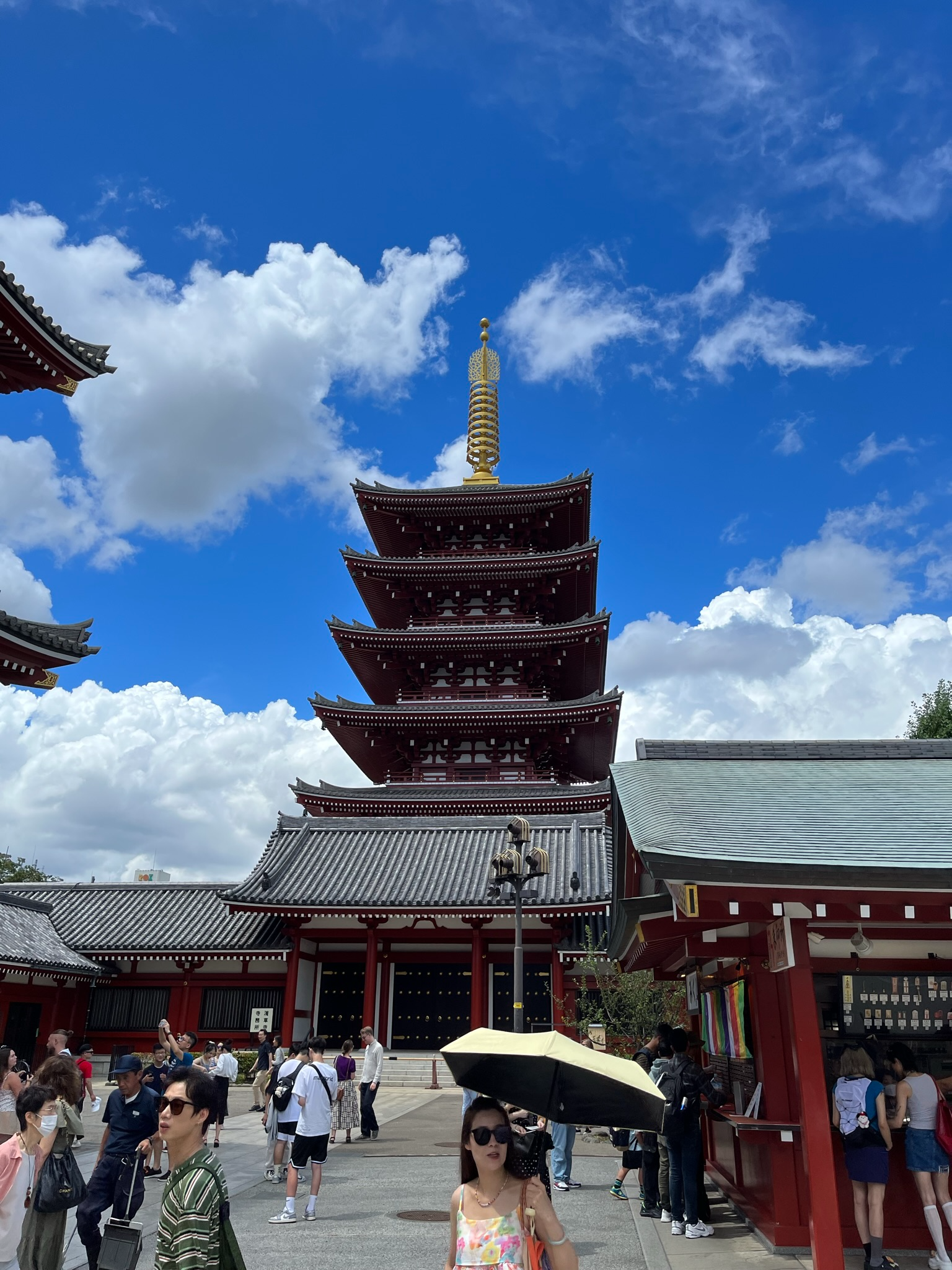
Visitors gather beneath the impressive Hōzōmon Gate at Sensō-ji Temple in Asakusa, where vibrant vermilion architecture, giant lanterns and centuries of history make it one of Tokyo's most iconic cultural landmarks.The iconic Kaminarimon lantern hangs at the entrance to Sensō-ji Temple in Asakusa, where intricate vermilion architecture, historic inscriptions and bustling crowds welcome visitors to Tokyo's oldest Buddhist temple.The famous Kaminarimon lantern dominates the entrance to Sensō-ji Temple, where towering vermilion columns, intricate woodwork and constant streams of visitors create one of Tokyo's most recognisable cultural scenes.The stone torii gate of Asakusa Shrine marks the entrance to one of Tokyo's most important Shinto shrines, where centuries of history, traditional architecture and peaceful grounds sit alongside the bustling Sensō-ji temple complex.A traditional temizuya purification pavilion stands within the grounds of Asakusa Shrine, where visitors perform a symbolic cleansing ritual before worship beneath the shade of mature trees in central Tokyo.The five-storey pagoda of Sensō-ji Temple rises above the Asakusa skyline, where elegant vermilion architecture, golden finials and centuries of Buddhist heritage create one of Tokyo's most iconic historic landmarks.
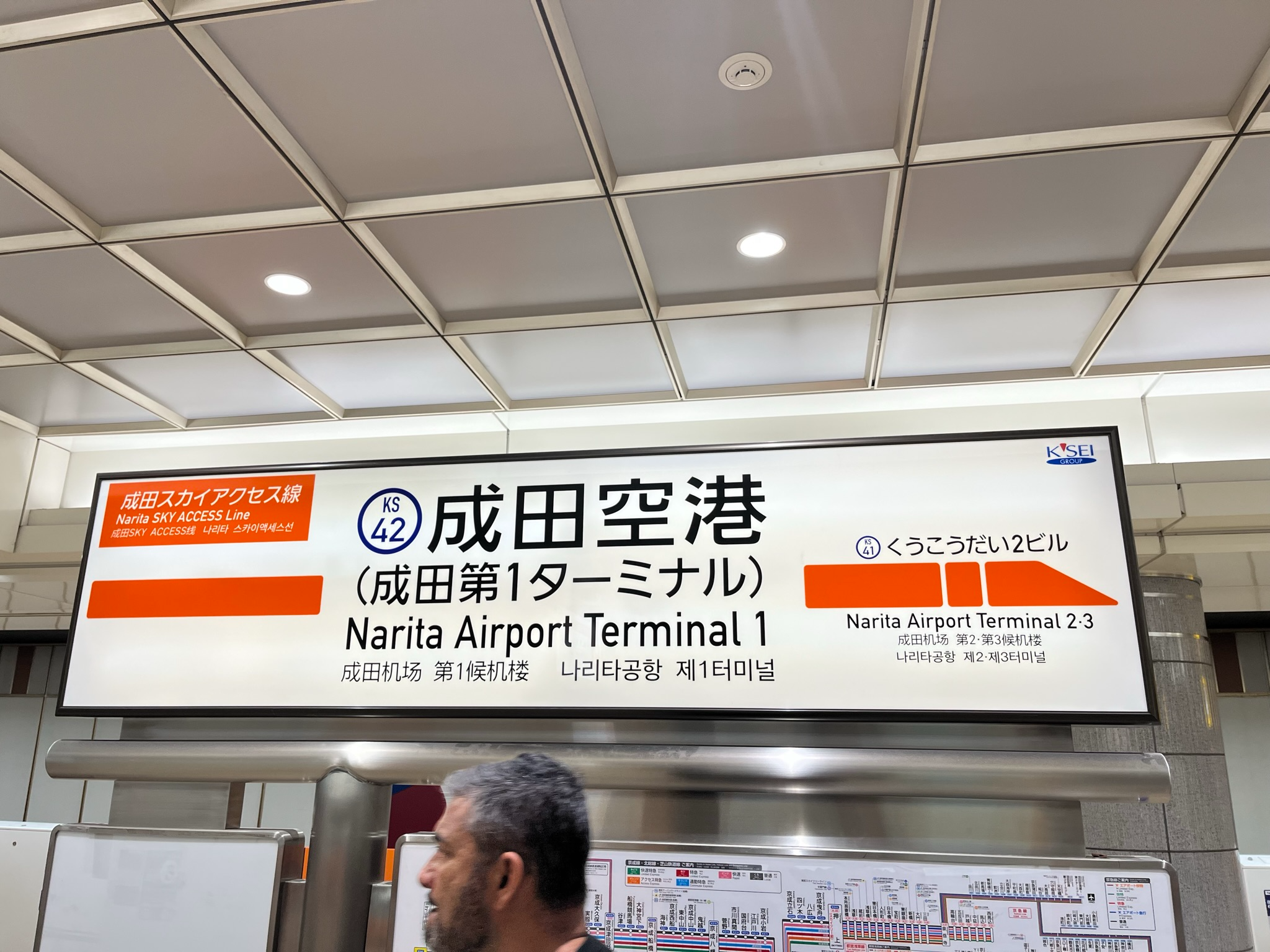
After this I picked up my luggage from the hotel and started making my way back towards the station so I could get the train to Narita airport. I had to scan my passport to get my ticket as it was a special cheaper price for foreigners which was the same thing I had to do when I arrived.
A station sign marks Narita Airport Terminal 1 on the Narita Sky Access Line, a major gateway for international travellers arriving in and departing from Japan through Tokyo's busiest international airport.
I got to Narita and headed to the check in desk, and everything was going great until they asked me if I had my passport. Well let’s just say this was not a fun situation to be in and to say that I did not stress out a bit would be an understatement. After confirming I didn’t have it after unpacking my bag about 3 times, I headed back to the train terminal as I thought I might have left it on the train and thankfully the staff were all really helpful. Good news they managed to find my passport, bad news it was back in Tokyo, and I wouldn’t be able to get it in time for my flight.
To cut a long story short. I was able to get a flight the following day, but I had to do it through different airline as both booking.com and Etihad was being very useless and kept on trying to get me backwards and forwards between them. 2 morals of this mini adventure are 1. always check that you have your passport on you every 5 mins (quoted from my dad) and 2. always take an emergency travel credit card with you as you never know what will arise.
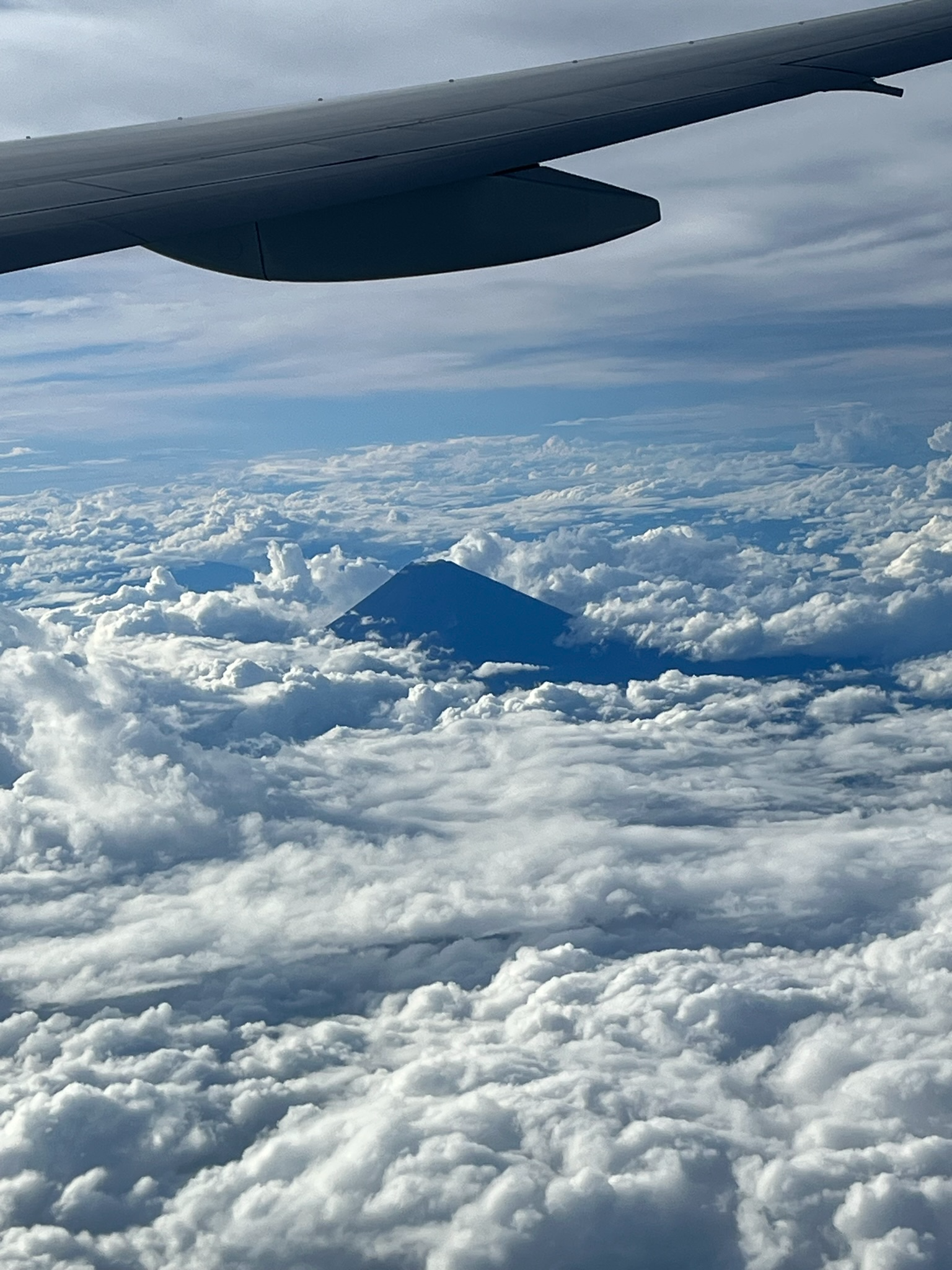
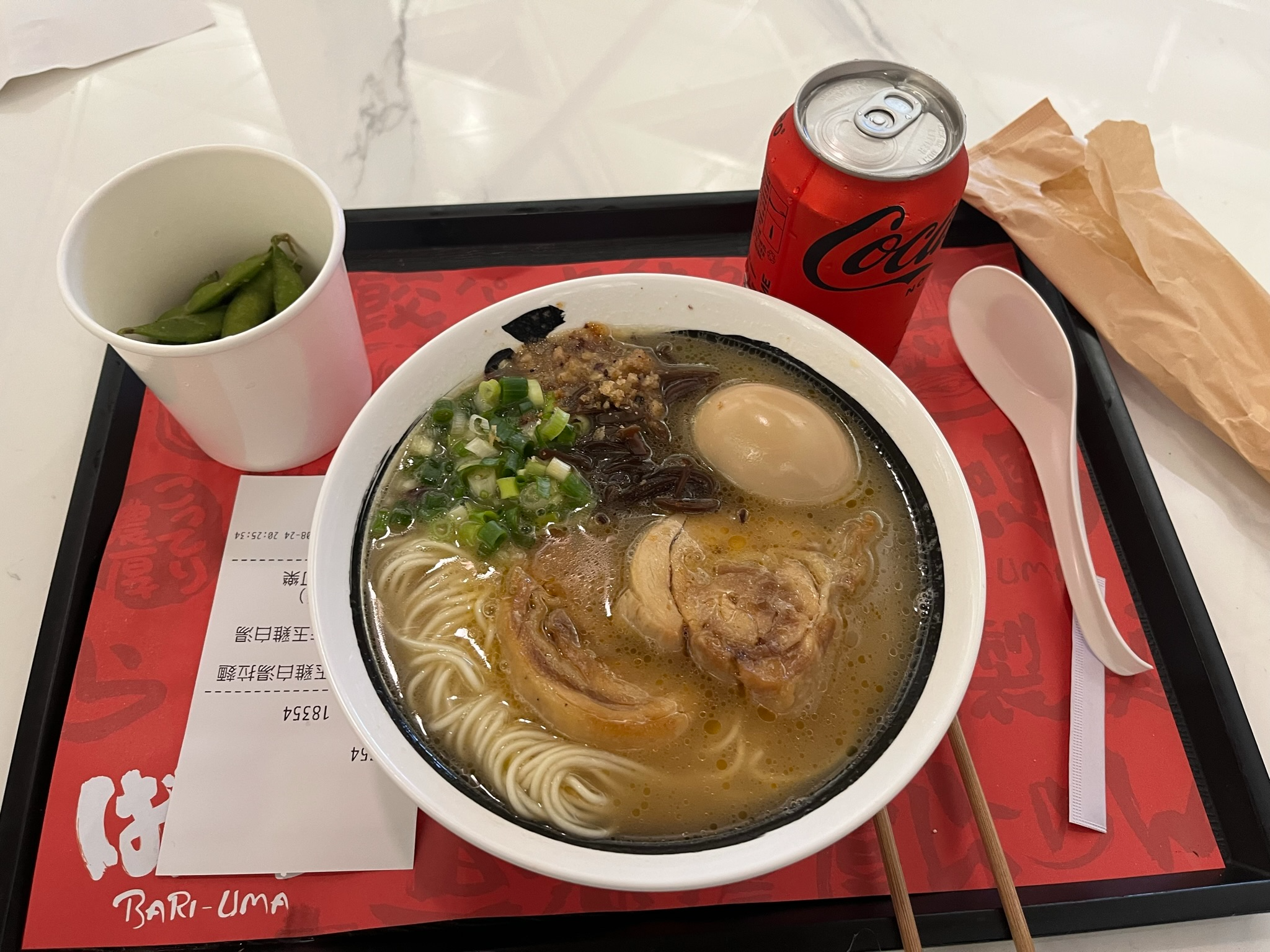
I went via Cathay on the way back home, managed to get a picture of Mount Fuji from the plane and stopped off at Hong Kong Airport on the way back to transit there. Got some rammen while at the airport and did some blog work.
Mount Fuji rises above a vast blanket of clouds as seen from an aircraft window, where Japan's highest peak casts a striking silhouette across the landscape, creating one of the country's most memorable aerial views.A comforting bowl of tonkotsu ramen is served at Hong Kong International Airport, where rich pork broth, tender chashu pork, seasoned egg and fresh noodles provide a satisfying meal before departure.Working on a travel blog during a stop at Hong Kong International Airport, a traveller updates their latest journey notes while waiting at the departure gate, making the most of time between flights.
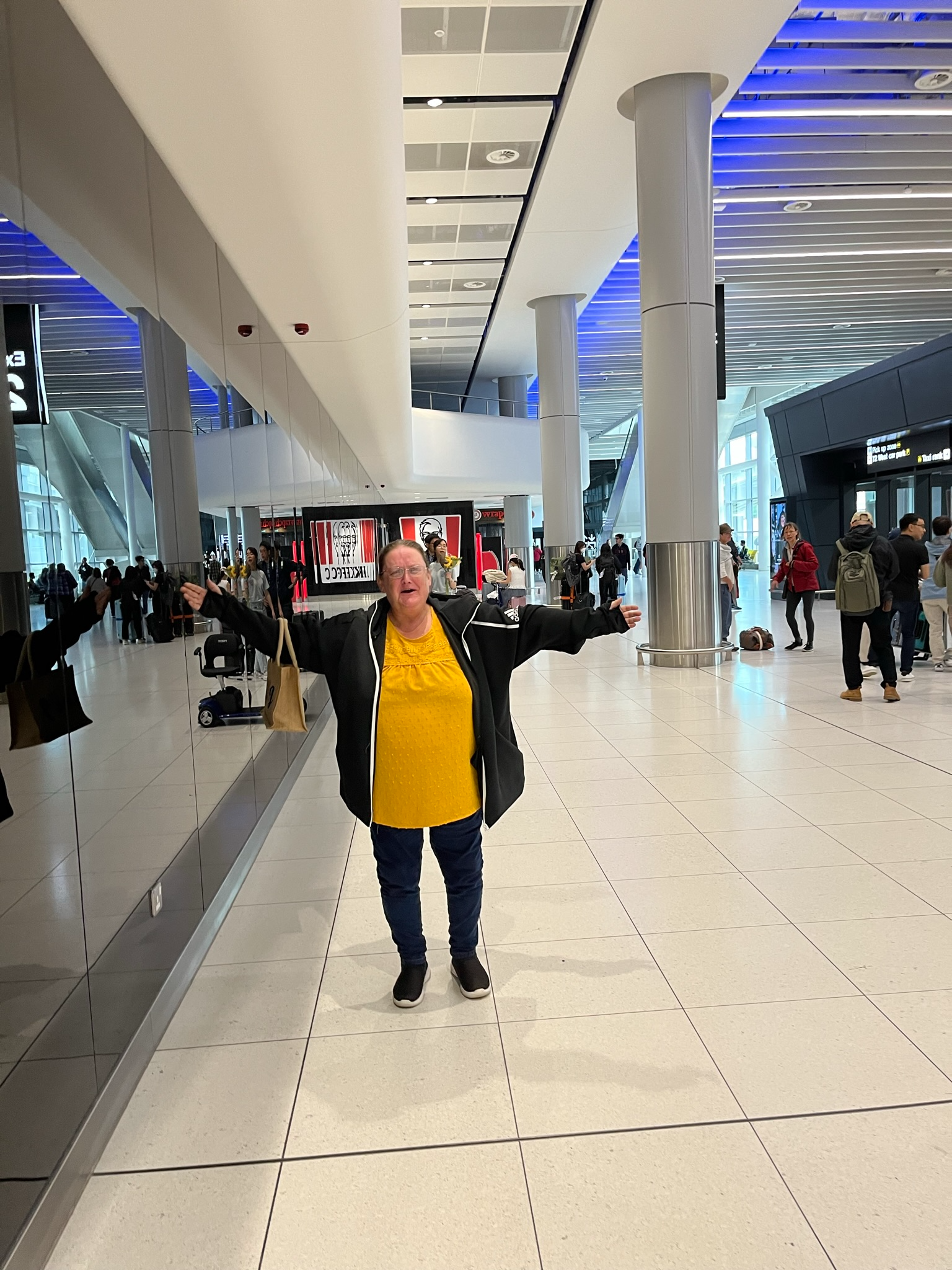
When I eventually got back after a 12.5-hour plane journey I was greeted by my parents, including my mum. Let’s just say as soon as I saw here like in the photo below, I turned around and started walking the other way :D
A warm welcome awaits at the arrivals hall as a family member greets a returning traveller, bringing a memorable journey through Japan to a happy conclusion back home.
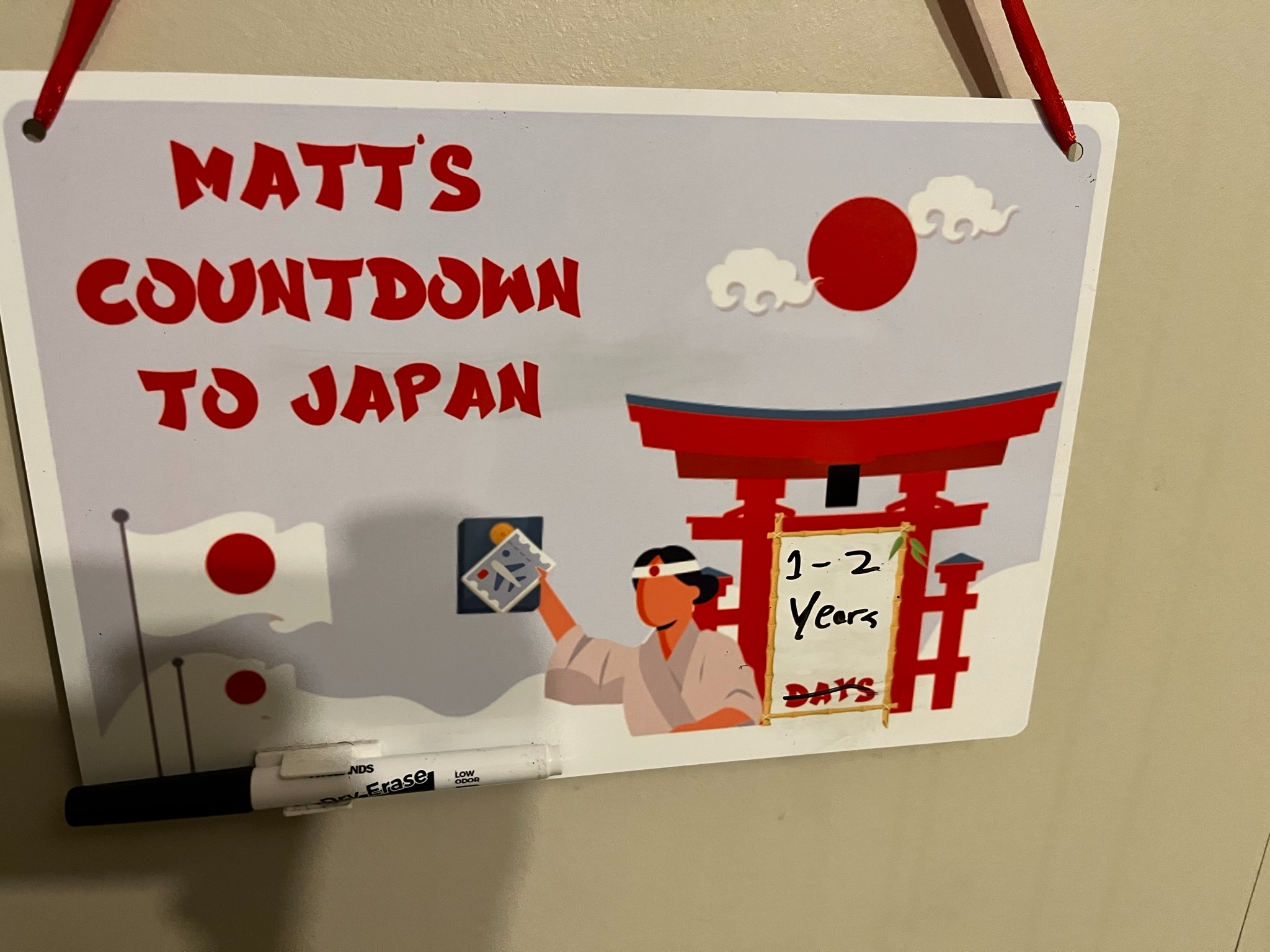
After getting home, it was time to reset my countdown calendar to when I wanted to next go to Japan.
A personalised countdown board marks the anticipation leading up to a long-awaited journey to Japan, serving as a daily reminder of the adventure ahead and the excitement of travel planning.