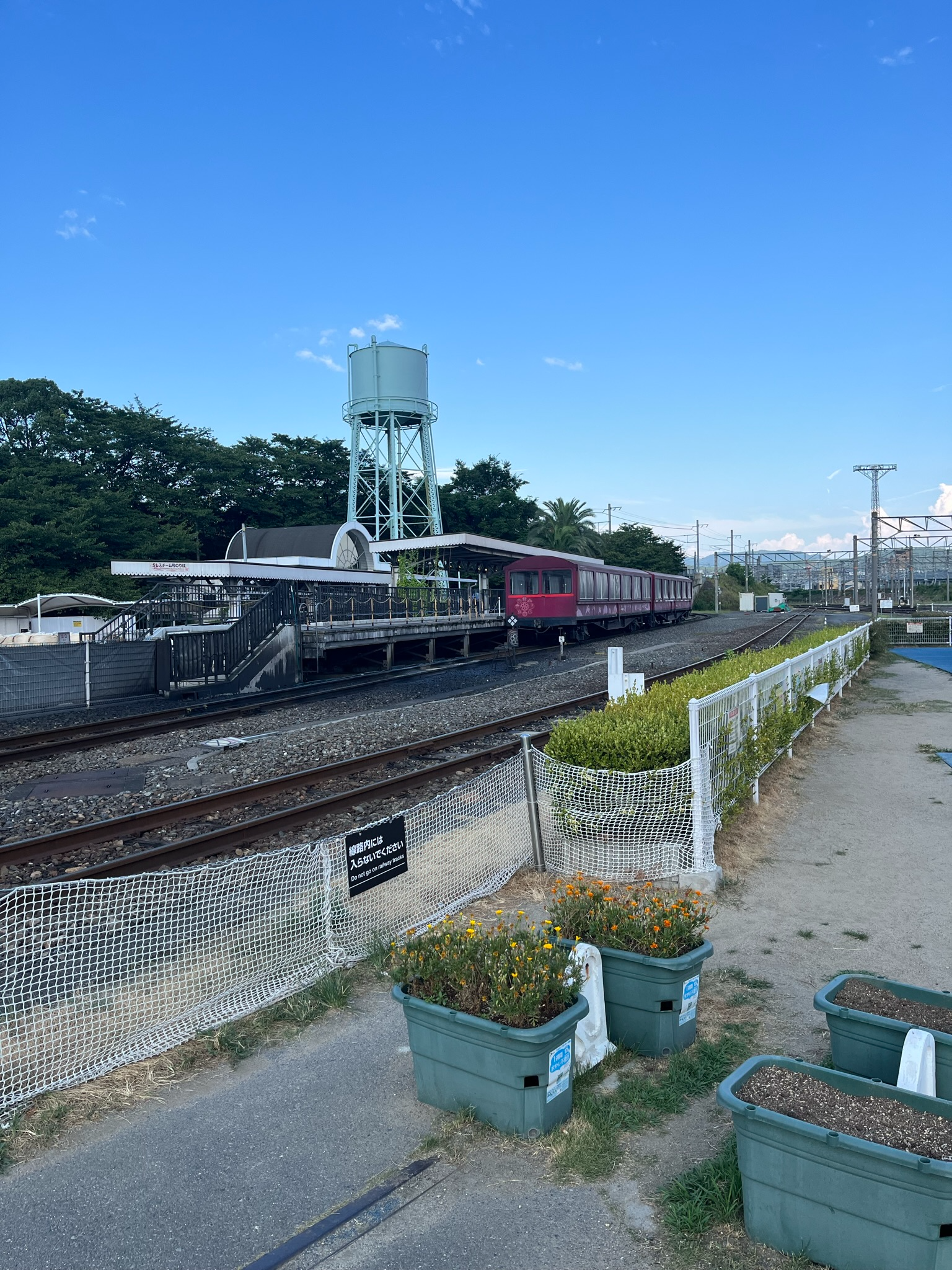
Exploring the Railway Museum in Kyoto, with a beautifully preserved steam locomotive showcasing the engineering, craftsmanship and heritage that helped shape Japan's railways long before the arrival of the Shinkansen.
I called this one Osaka/Kyoto part 2, but I may as well have named it Kyoto part 2 as I didn’t really do anything else in Osaka, but at least it gives me more of an excuse to come back to Japan again (Something I am already looking at)
Kyoto Railway Museum and Rebooking Tickets
13th August
Today was going to be a bit of a chaotic day so I got up with the intention of going to the Kyoto railway museum and the castle/imperial palace but got up quite late and overslept (nooooooooo!!!!!) so instead the Kyoto railway museum it was.
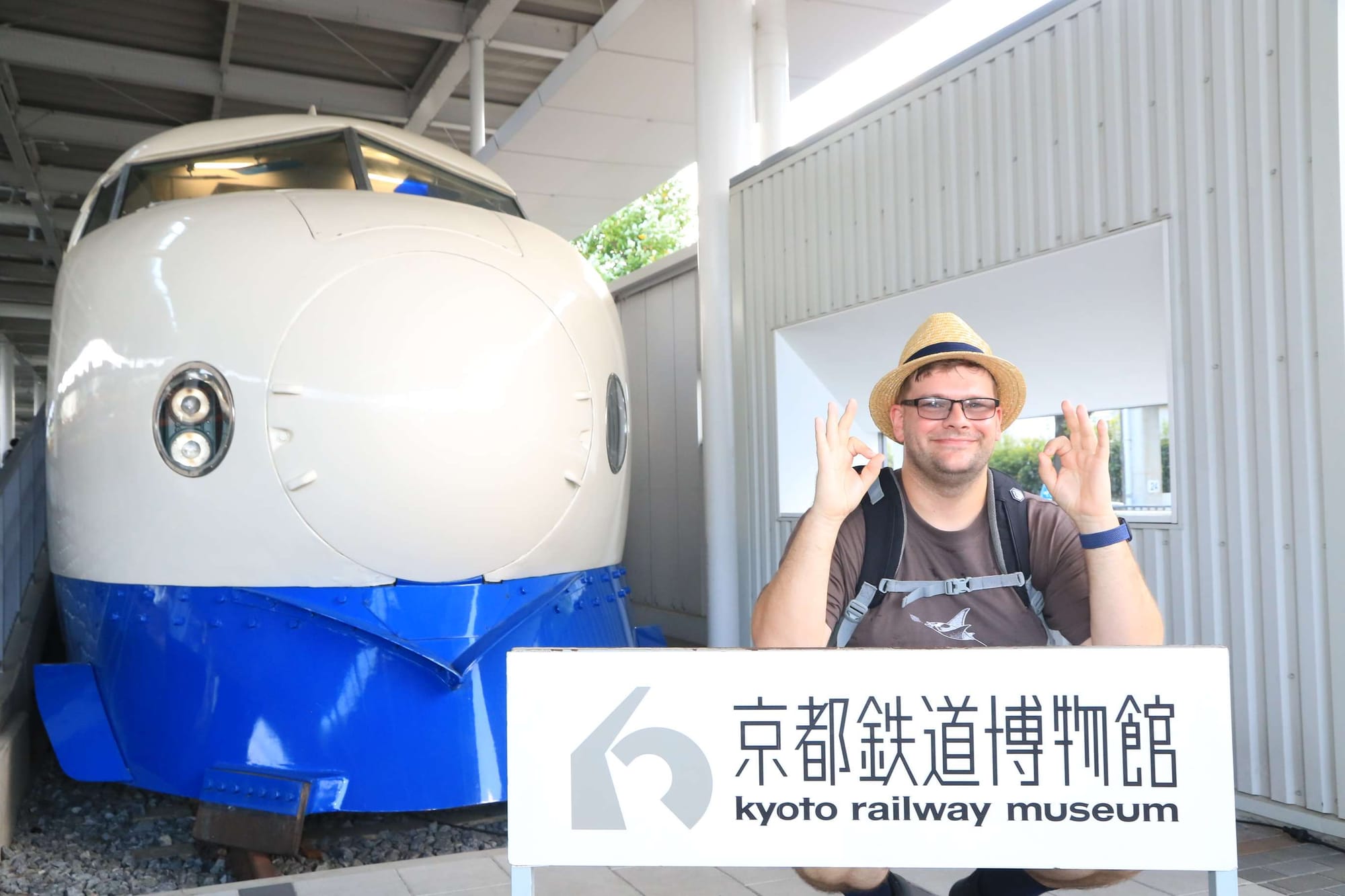
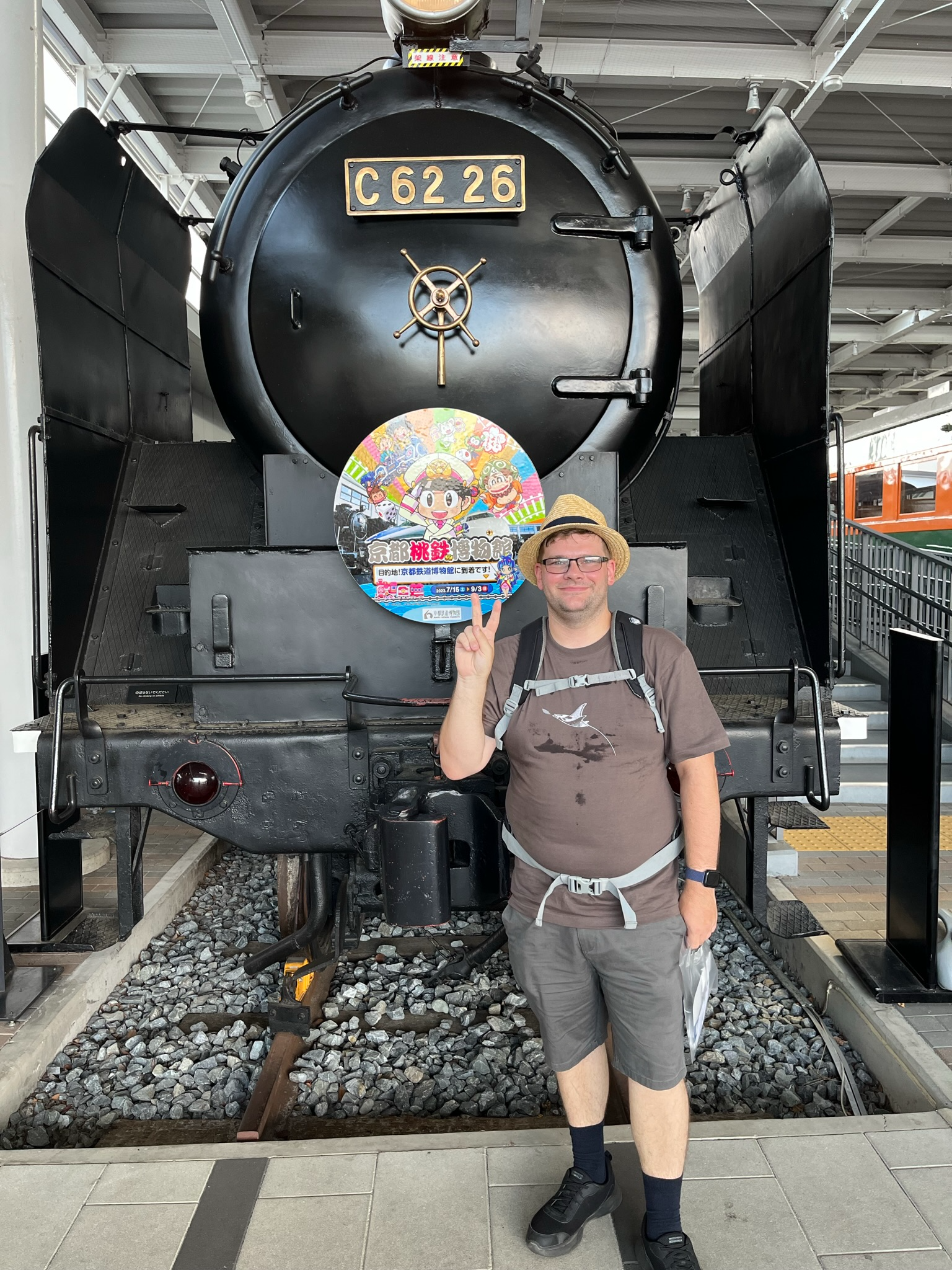
Visiting the Kyoto Railway Museum, with a photo beside the iconic 0 Series Shinkansen highlighting the chance to get up close to the pioneering bullet train that transformed rail travel in Japan and became a symbol of the country's post-war innovation.Exploring the Kyoto Railway Museum, with a photo beside the impressive C62 steam locomotive highlighting the chance to get up close to one of Japan's most famous steam engines and discover the rich history of rail travel before the Shinkansen era.
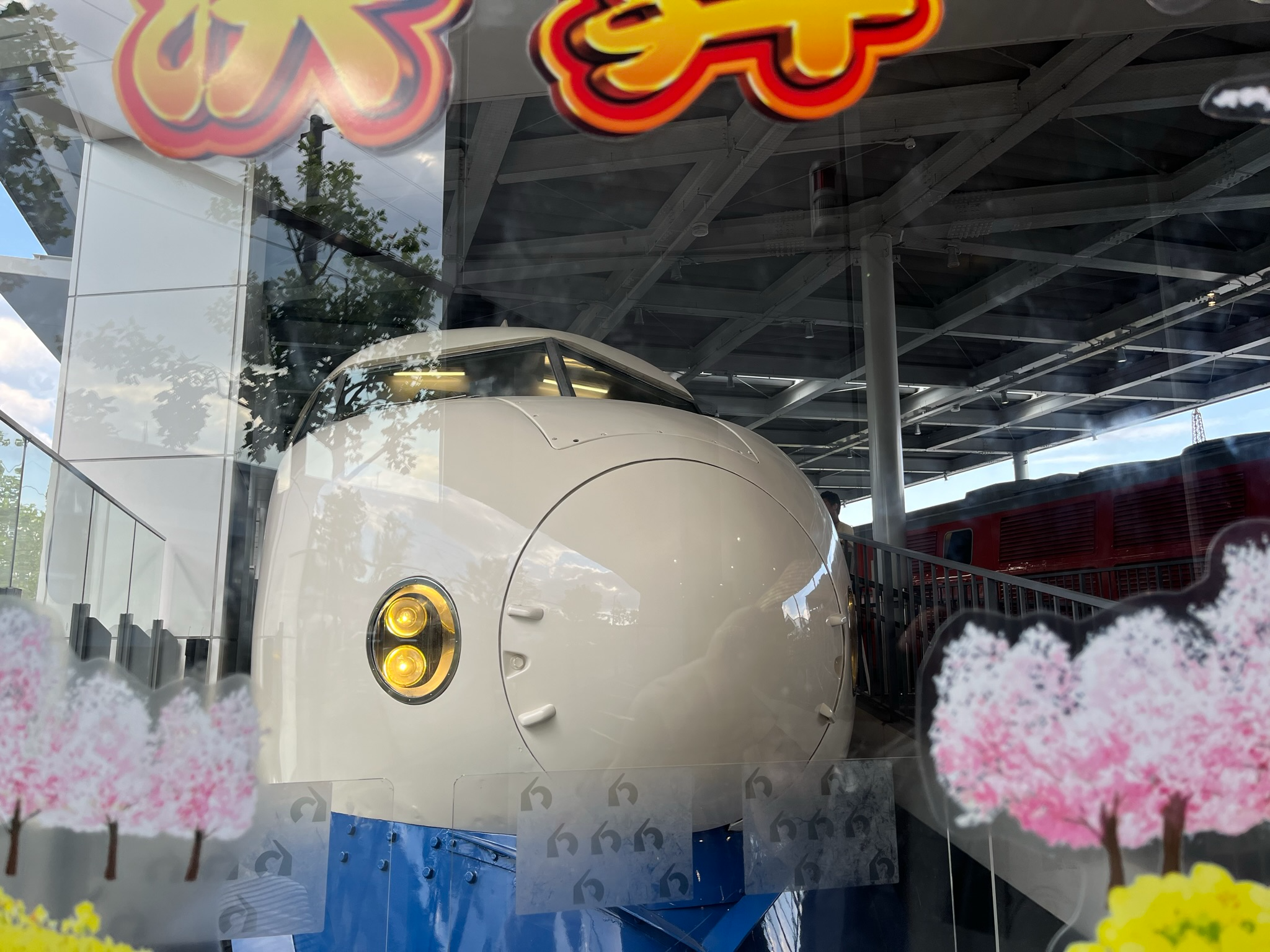
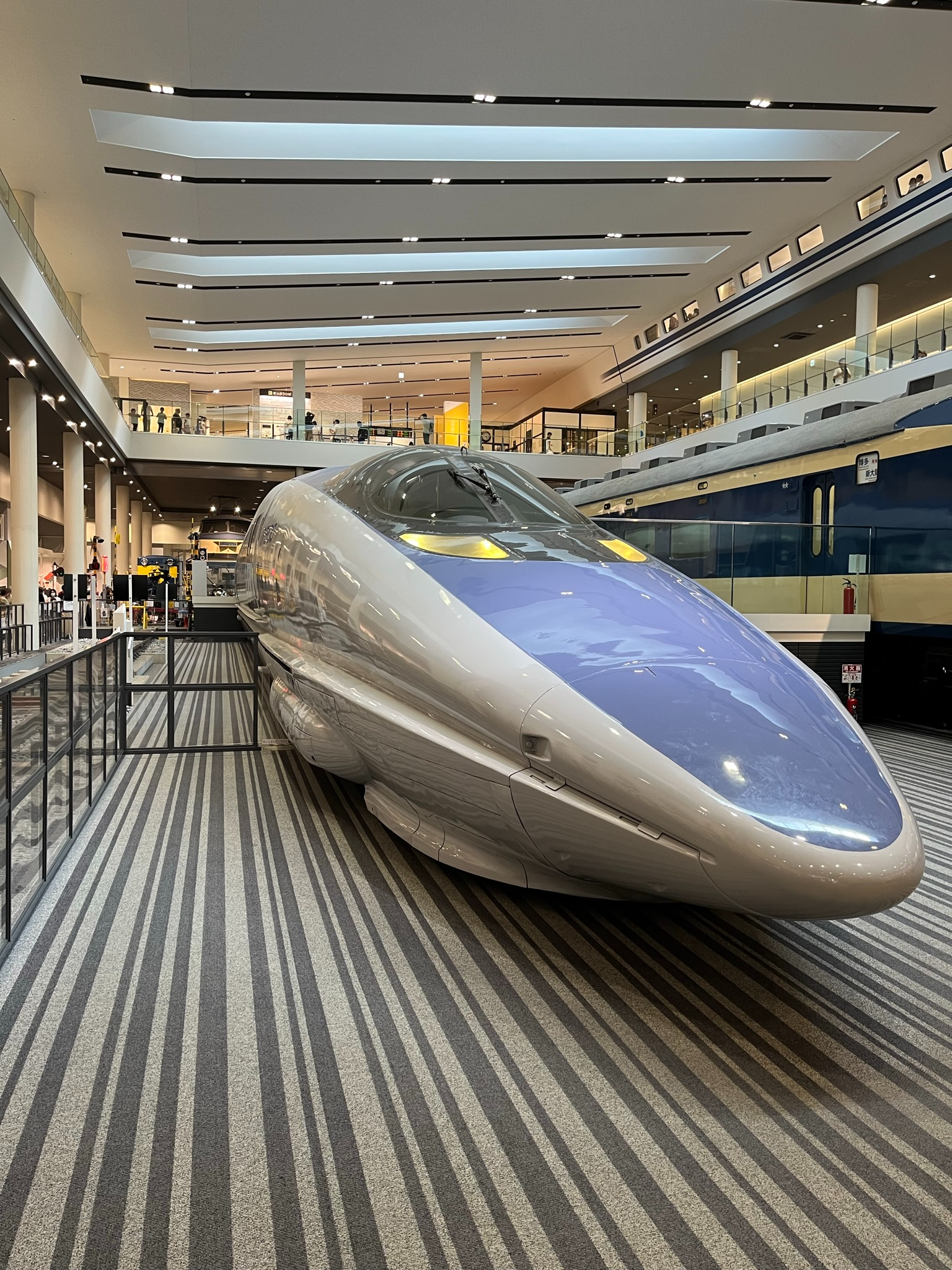
The Kyoto railway museum was massive and was quite informative on the different trains and technology they have used in all the trains over the years, including the Shinkansen Type 0 which was launched in 1964 and was capable of 200 KPH (124 MPH) which is insane. They used technology from a bunch of different trains and even got airplane engineers in to help design it as well.
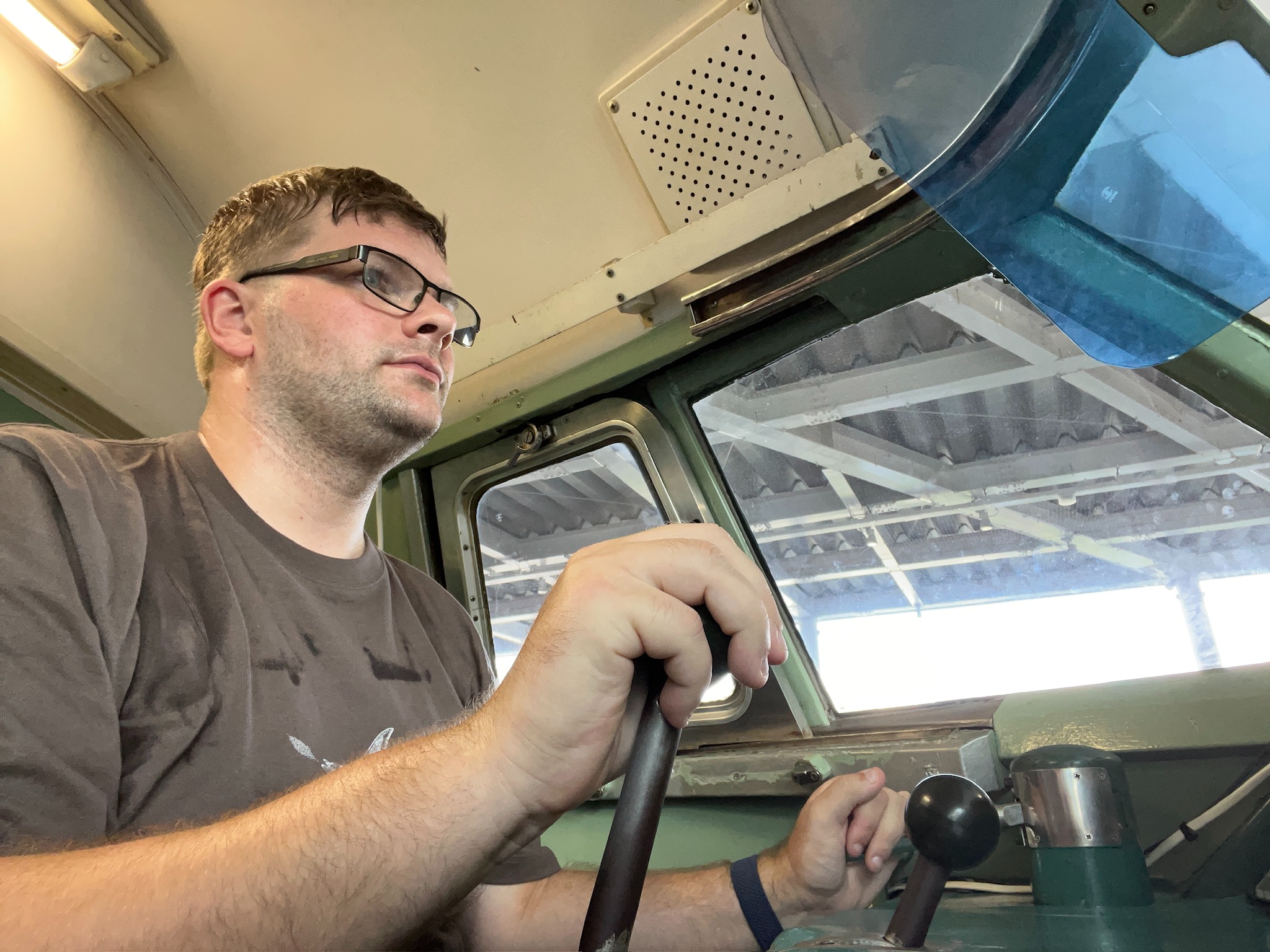
Exploring the Kyoto Railway Museum, with a close-up view of the iconic 0 Series Shinkansen highlighting the pioneering bullet train that revolutionised rail travel in Japan and became a symbol of speed, innovation and modern engineering.Taking the controls inside a preserved train cab at the Kyoto Railway Museum, with the hands-on exhibit providing a rare opportunity to experience the driver's perspective and gain a deeper appreciation for the skill and precision involved in operating Japan's railways.
It was informative especially as did you know that the Shinkansen runs on the same gauge rails we have back in the UK (standard gauge), but the normal trains and limited express trains use narrow-gauge rails.
Exploring the evolution of Japan's high-speed rail network at the Kyoto Railway Museum, with one of the museum's impressive Shinkansen displays showcasing the advanced engineering, speed and innovation that transformed rail travel across the country.
So next time you are on the trains in the UK (if they bother to turn up or aren’t 5 hours late) then think about the fact that in 1964 we could have had the Shinkansen instead of messing around with steam trains and old diesel locomotives.
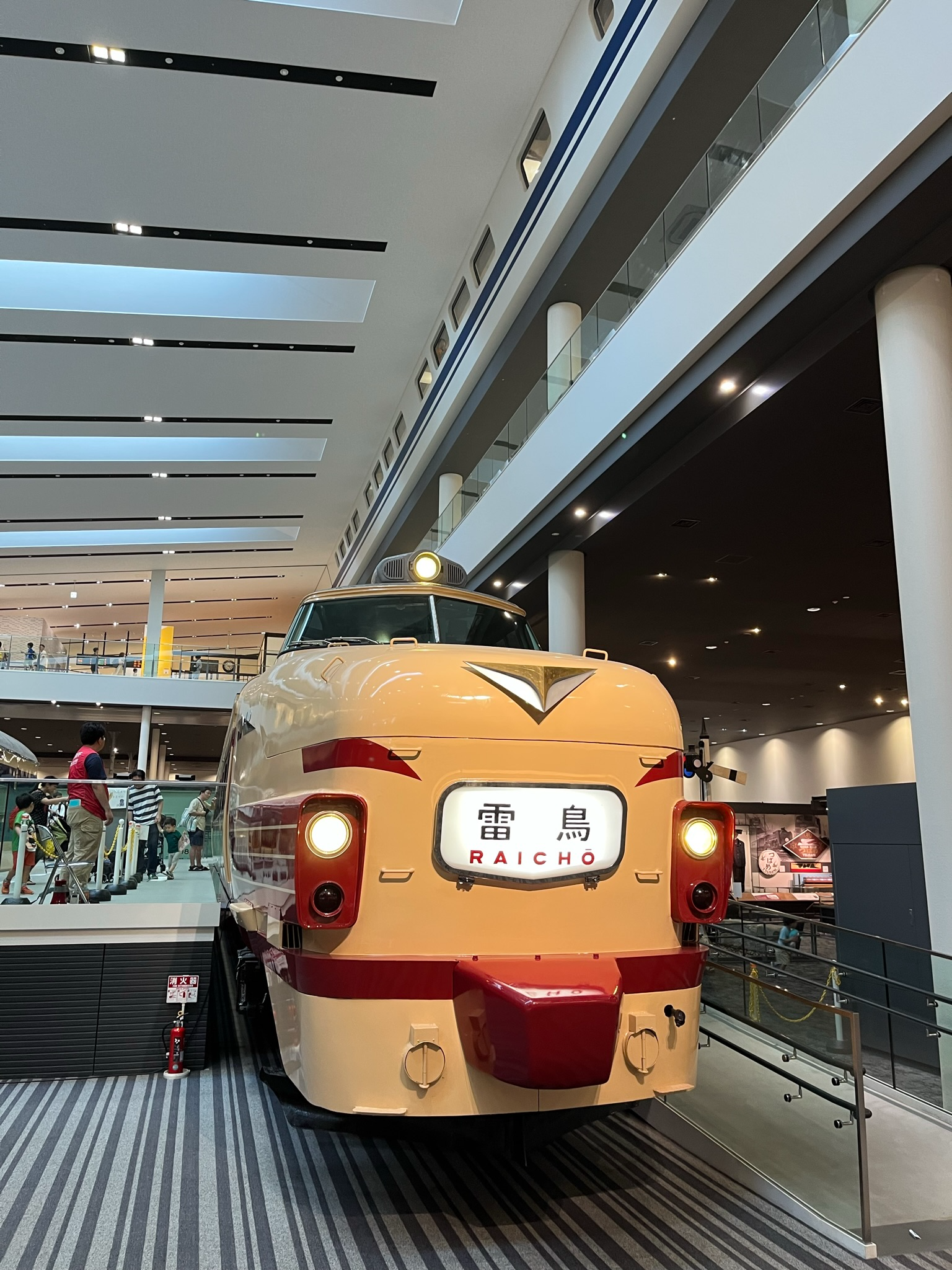
Exploring the Kyoto Railway Museum, with the iconic Limited Express Raichō on display showcasing an era when long-distance electric trains connected major cities across Japan and helped shape the country's modern railway network before the expansion of the Shinkansen.
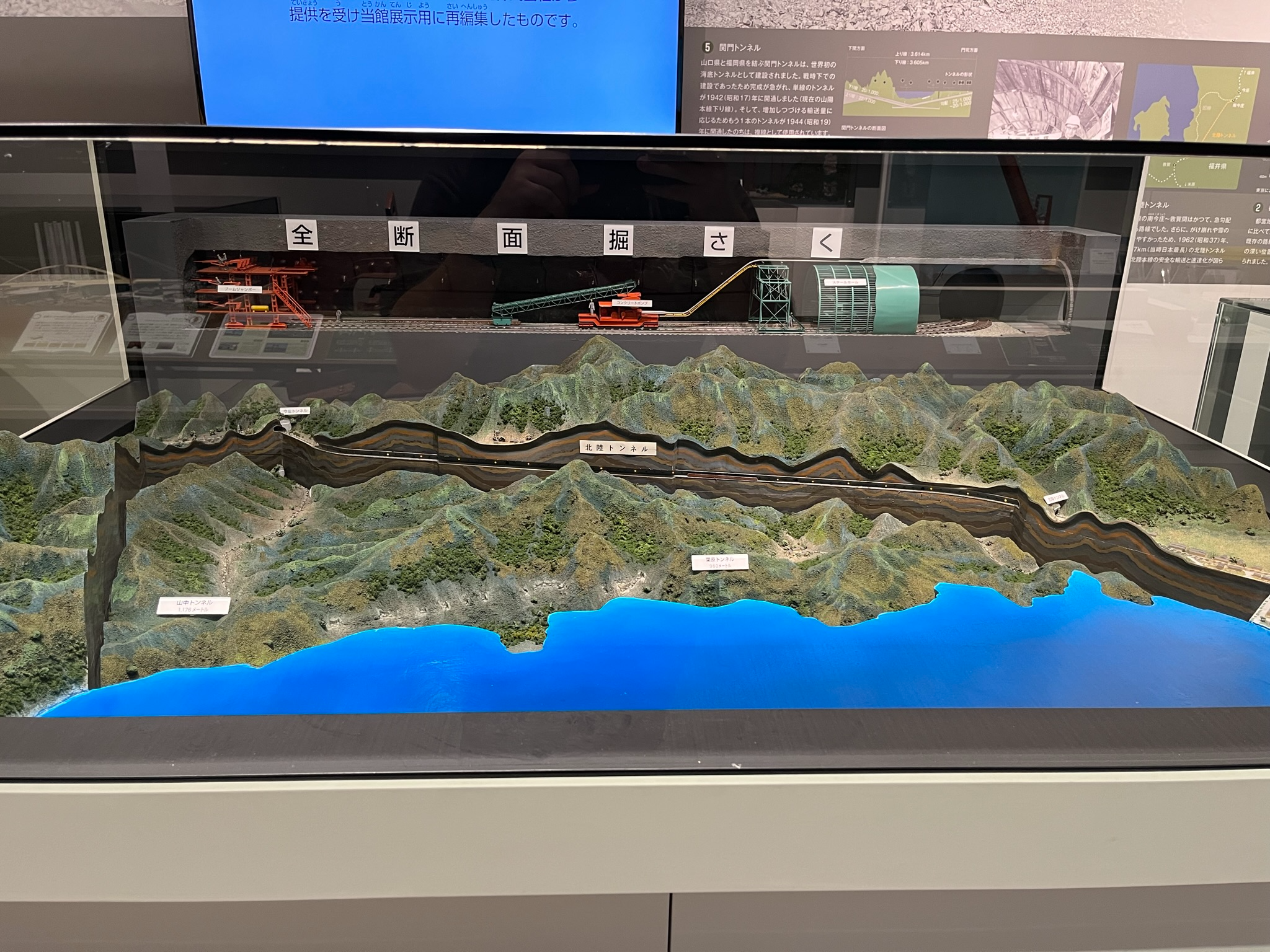
They also had loads more information like about the tunnels they build for trains, especially useful as Japan is quite mountainous, different pantograph types and designs for wheels as well.
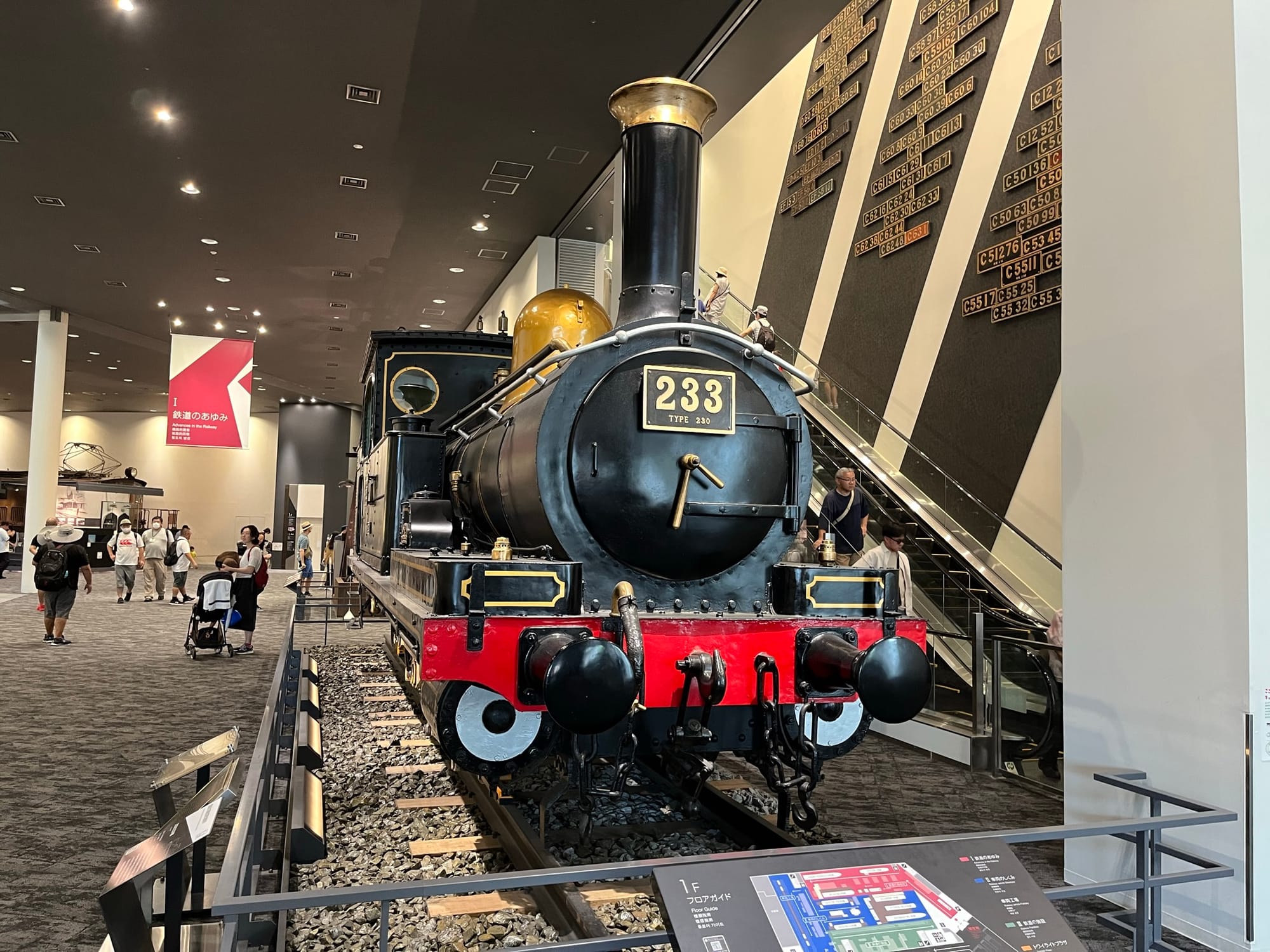
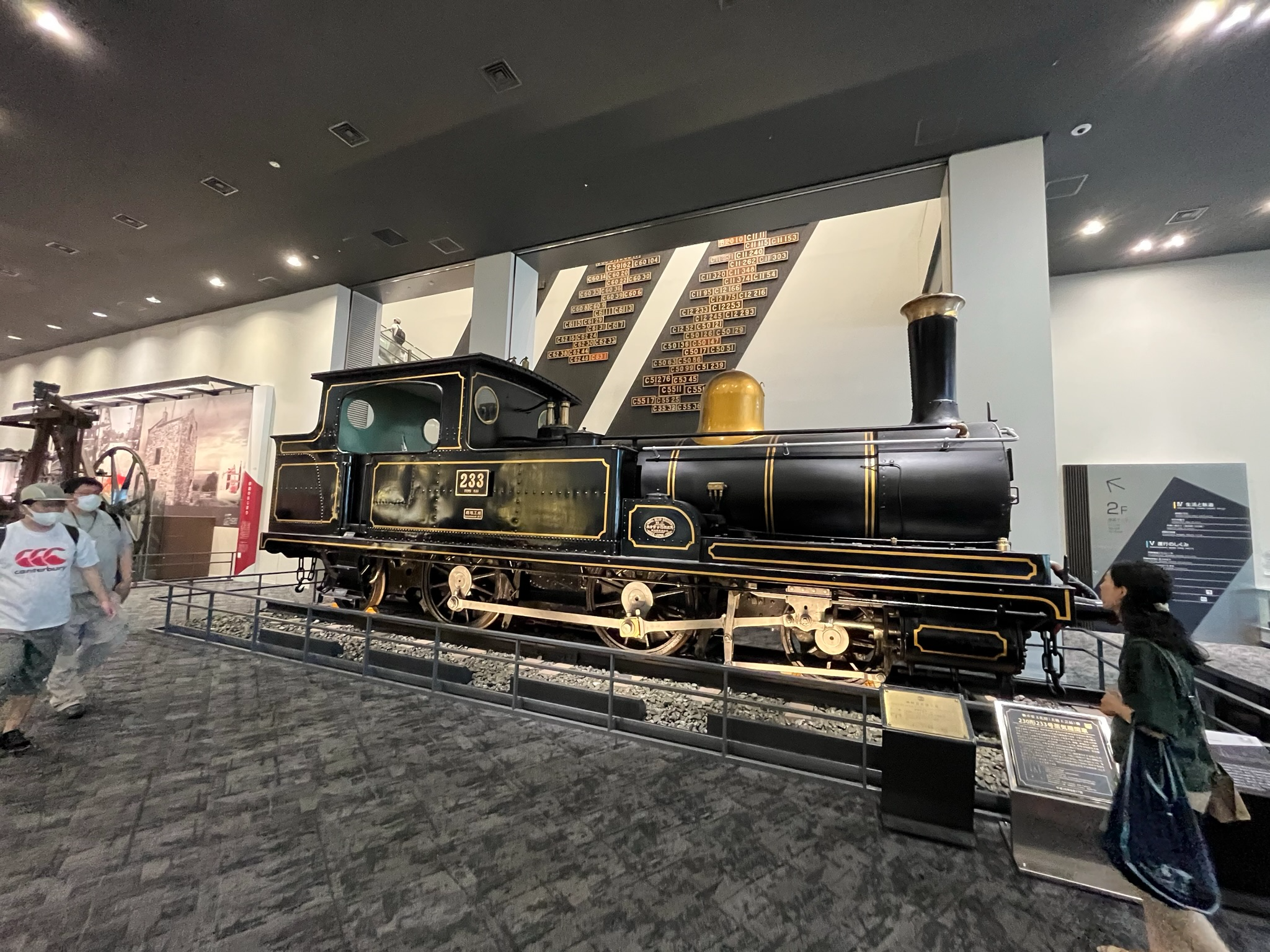
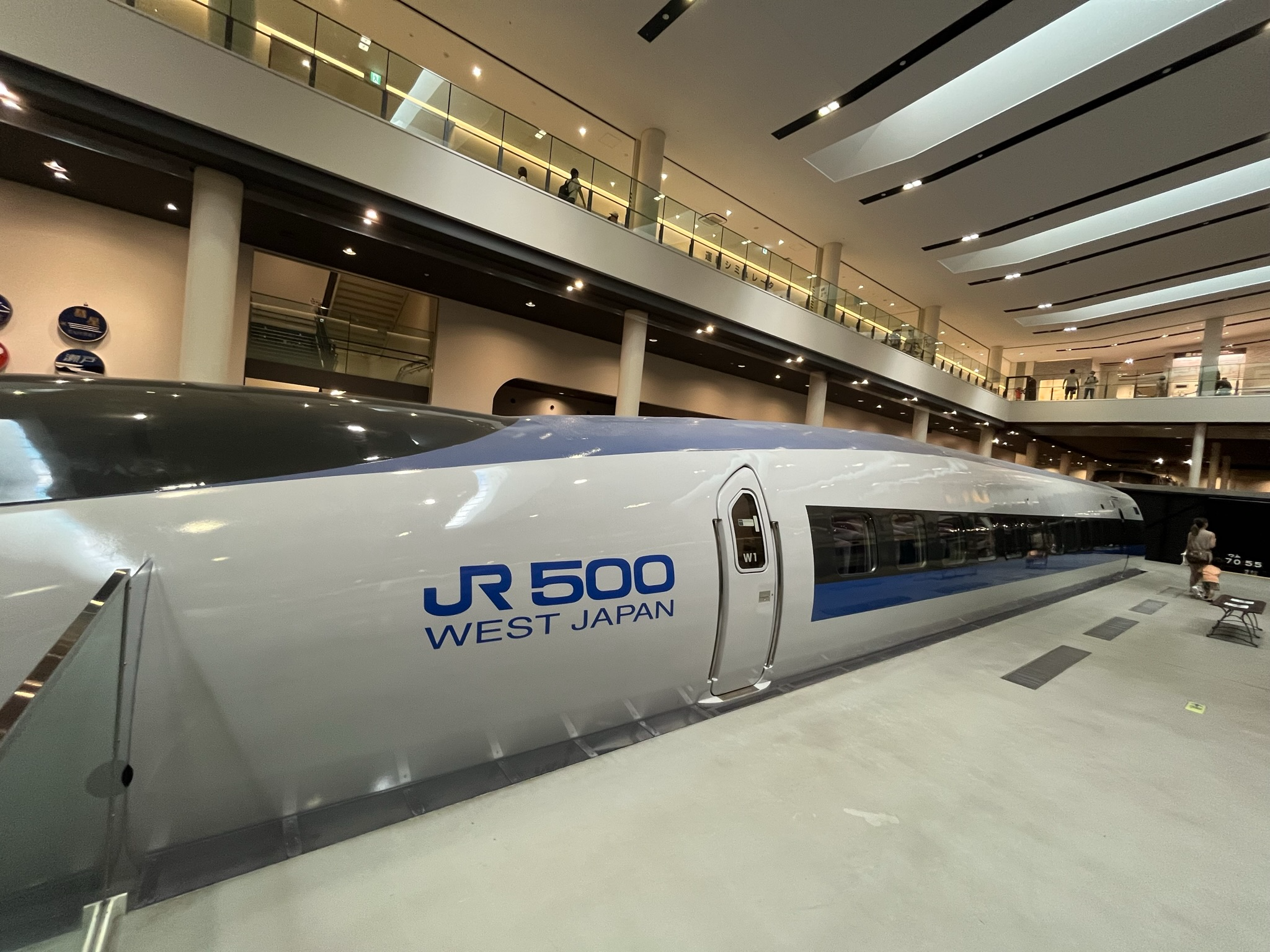
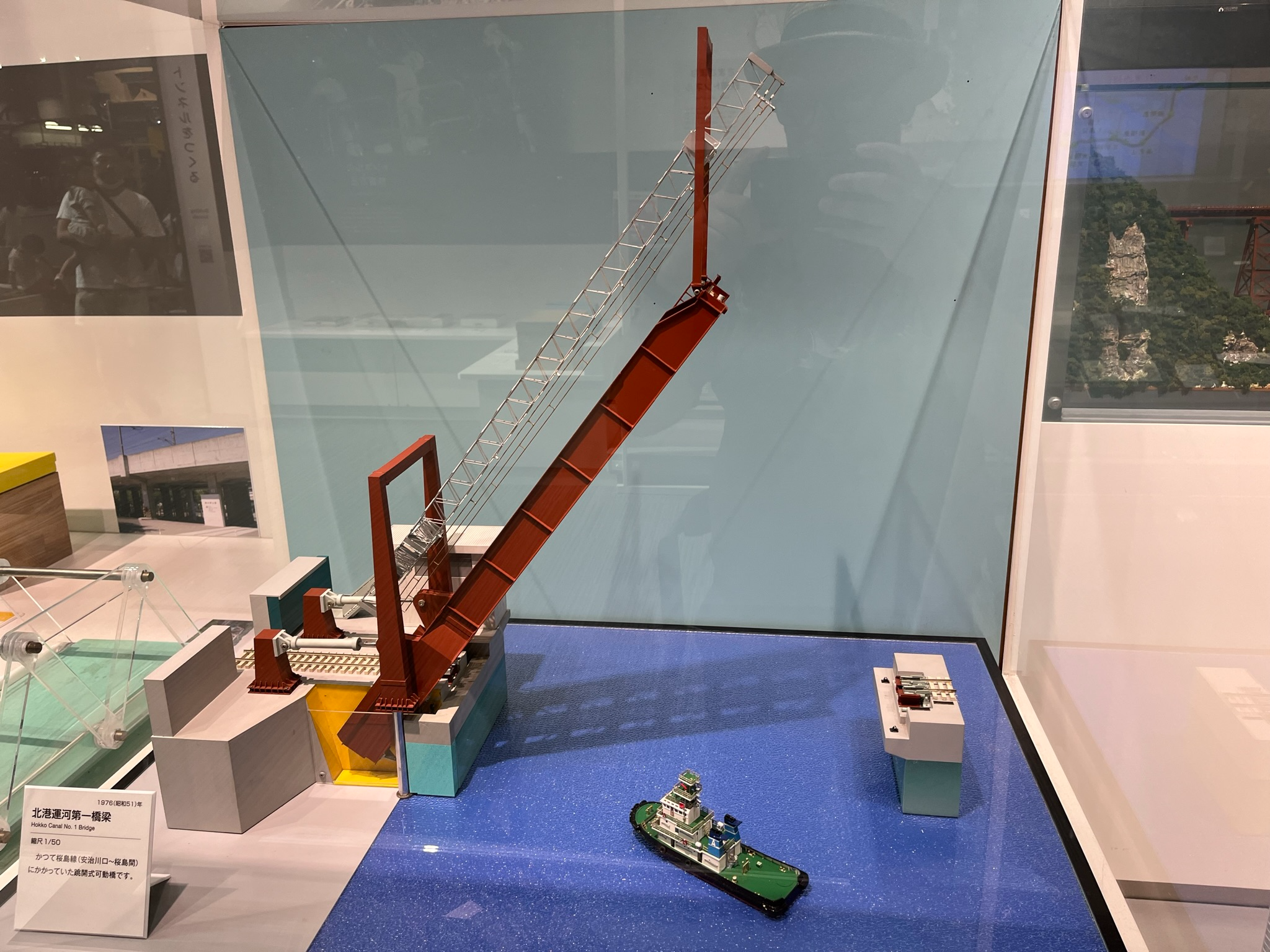
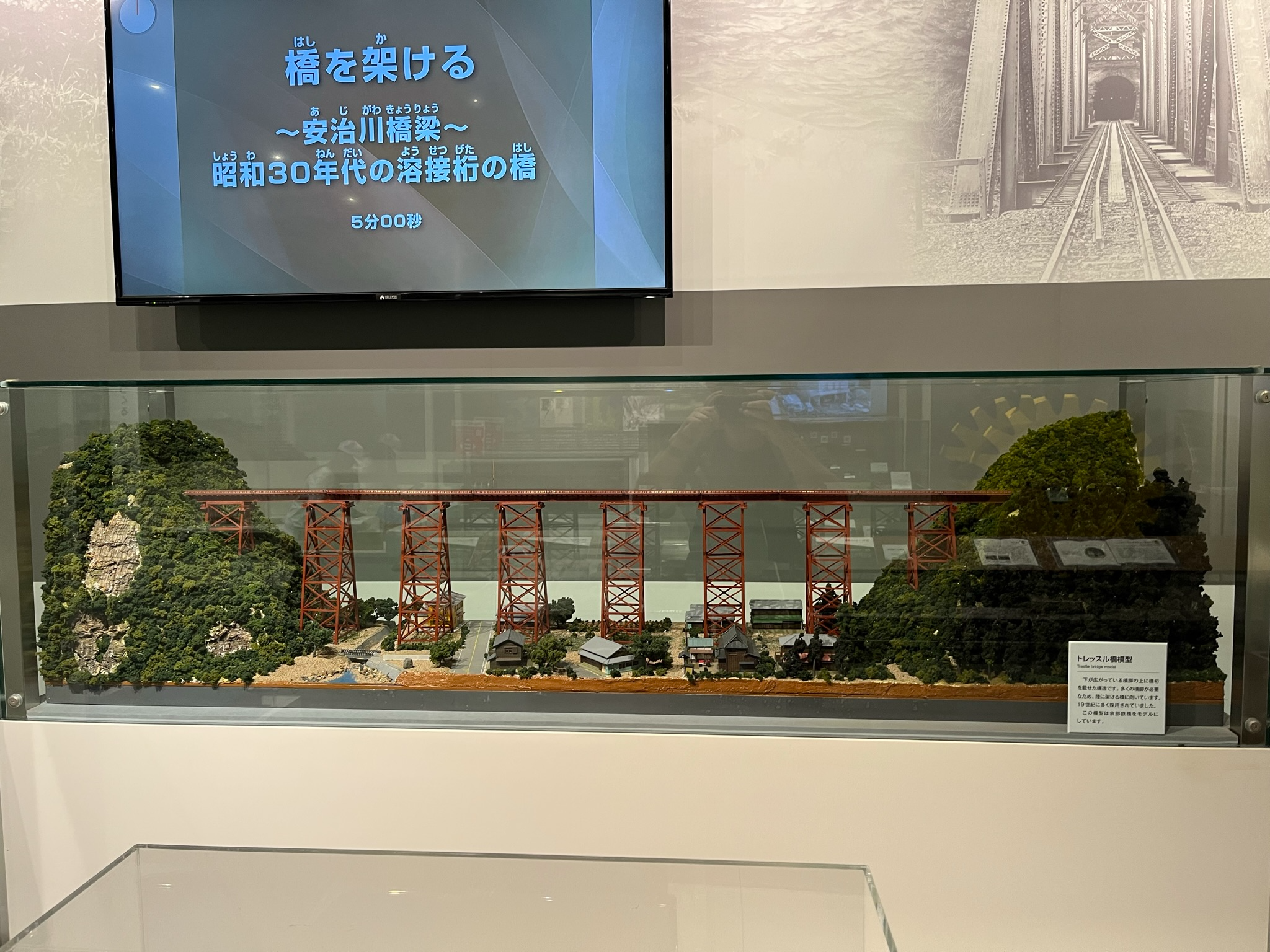
Exploring the origins of Japan's railway history at the Kyoto Railway Museum, with the beautifully preserved No. 233 steam locomotive offering a glimpse into the early years of rail transport and the engineering achievements that laid the foundations for the nation's world-famous railway network.Exploring the Kyoto Railway Museum, with the legendary 500 Series Shinkansen showcasing the cutting-edge design, speed and engineering that made it one of the most iconic bullet trains ever to operate on Japan's high-speed rail network.Learning about the engineering challenges behind Japan's railways at the Kyoto Railway Museum, with a detailed cross-sectional model illustrating tunnel construction techniques and the infrastructure that made it possible to connect communities across the country's mountainous landscape.Learning about the engineering behind Japan's railway infrastructure at the Kyoto Railway Museum, with a scale model of a movable railway bridge demonstrating how trains and shipping routes can coexist through innovative bridge design and construction.Learning about some of Japan's most impressive railway engineering achievements at the Kyoto Railway Museum, with a detailed scale model of the Amarube Bridge illustrating the construction of one of the country's most famous railway trestle bridges and its dramatic setting along the Sea of Japan coast.
Just to quickly retouch on something I have said before in a previous blog, but JR are developing a maglev train currently due to be released in 2040. It would make the journey from Tokyo to Osaka (which takes me 2.5 hours on the second fasted bullet train) in 67 mins with 2 stops on the way.
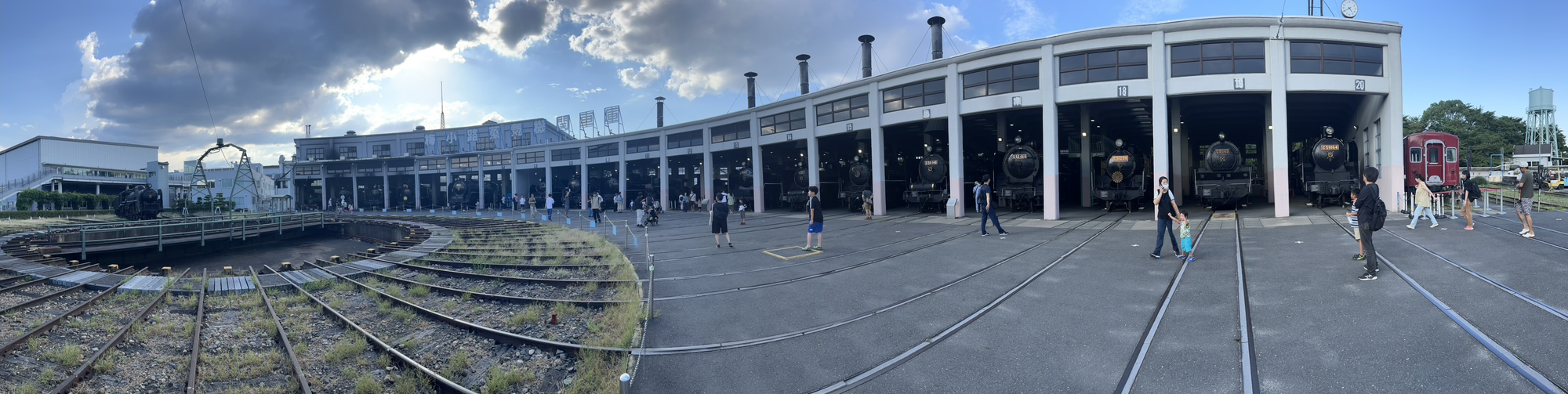
At the museum was also a train shed and turntable of which some of the steam engines still worked and they give steam train rides at some points throughout the day.
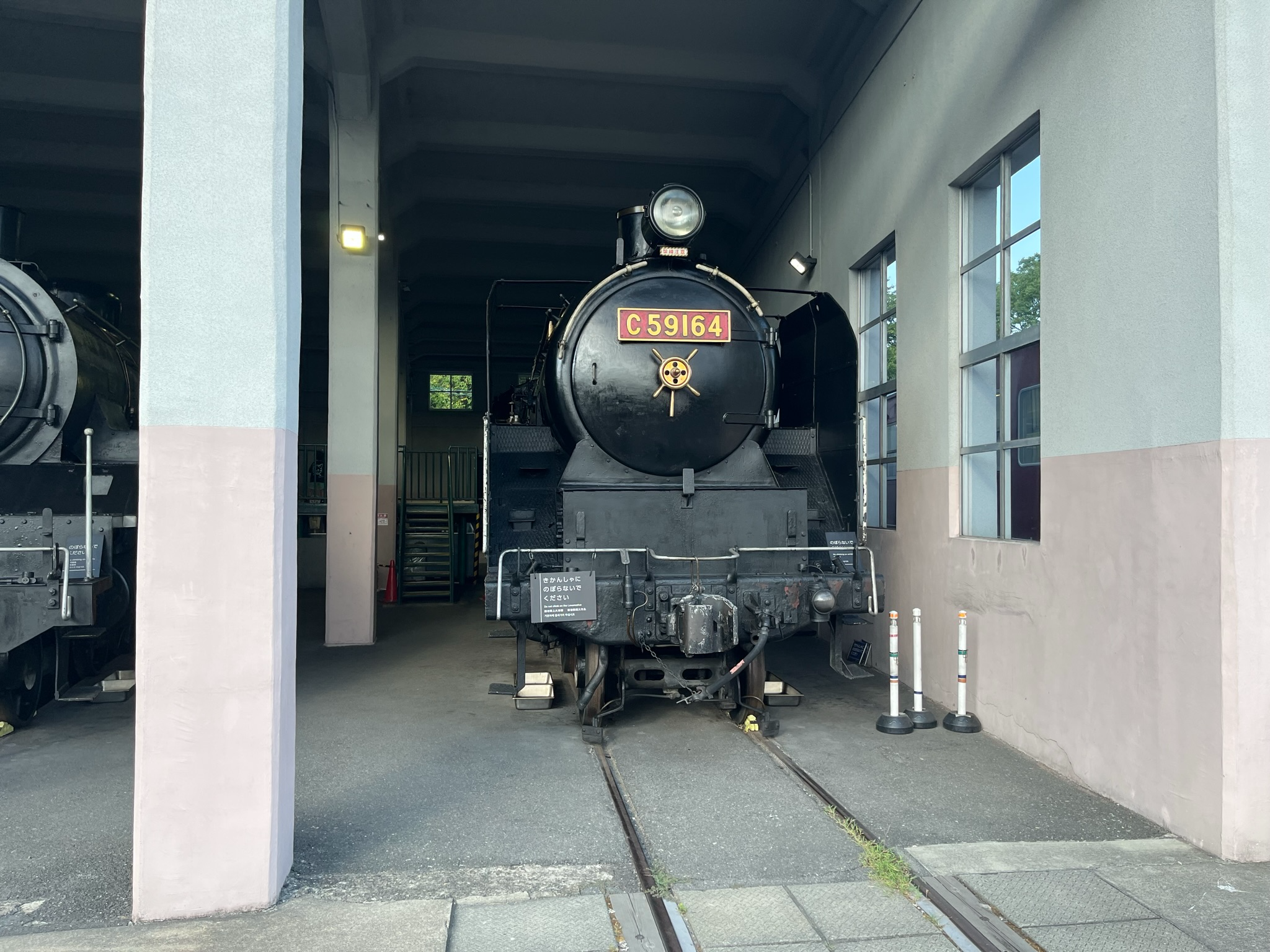
Taking a ride on the steam train at the Kyoto Railway Museum, with the museum's heritage railway offering a chance to experience historic rail travel while passing exhibits, workshops and preserved locomotives around the site.Finishing a visit to the Kyoto Railway Museum at the impressive roundhouse, with dozens of preserved steam locomotives gathered around the working turntable and showcasing the rich heritage of Japan's railway history in one remarkable setting.Exploring the impressive roundhouse at the Kyoto Railway Museum, with the preserved C59 164 steam locomotive standing as a reminder of the powerful engines that once hauled passenger and freight trains across Japan before the age of high-speed rail.
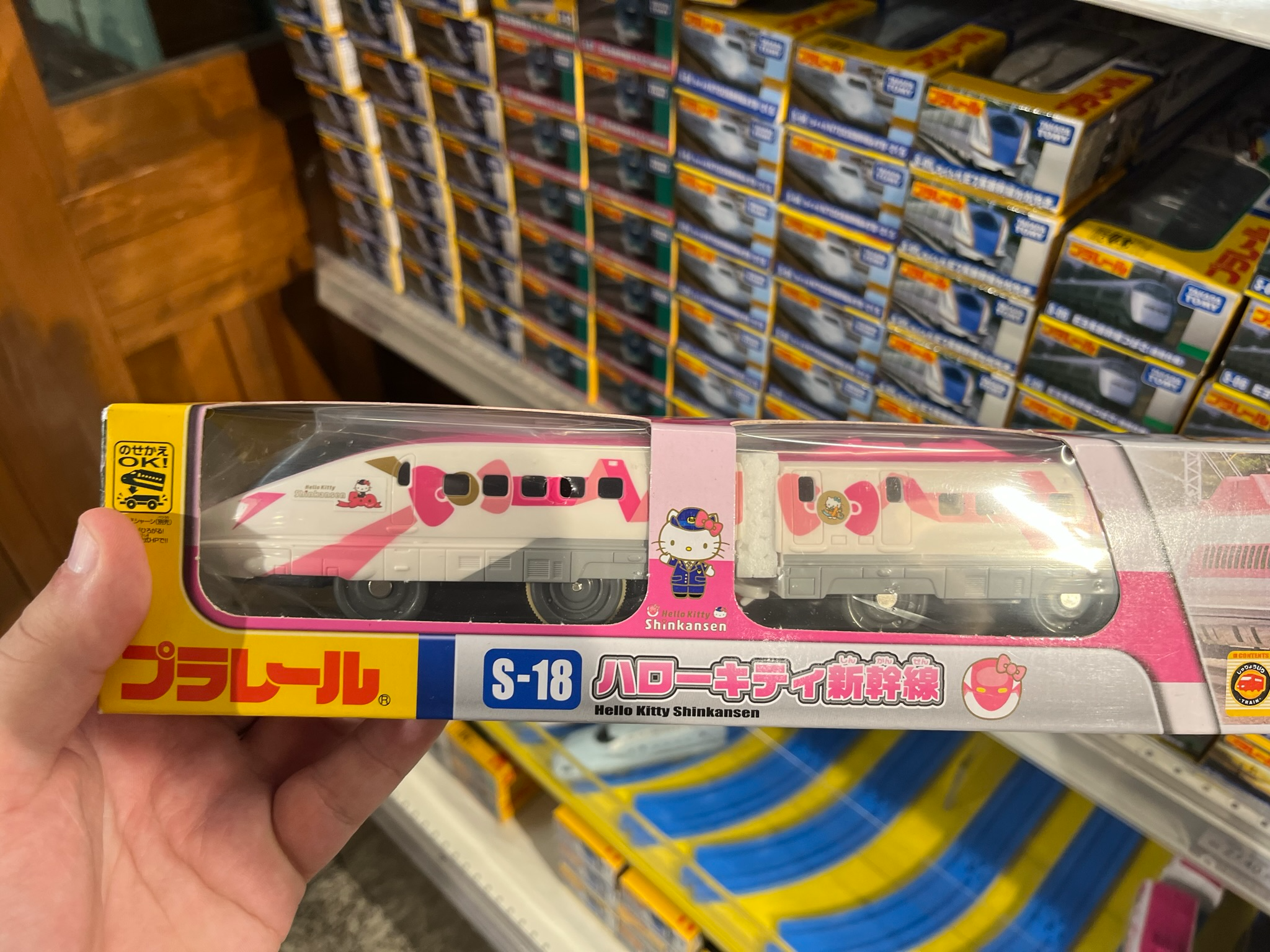
I was also tempted to buy this Hello Kitty Shinkansen model train for one of my friends back home as a bit of a joke, but I decided against it in the end. There is however a Hello Kitty Shinkansen that you can travel on, in Japan.
Browsing the railway museum gift shop before heading home, with a Hello Kitty Shinkansen Plarail set proving difficult to resist and providing the perfect souvenir for a friend back home.
After this it was time to head back to Osaka, drop my bag off at the hotel, pick up my seat reservation tickets, get them cancelled and replaced and then get some food.
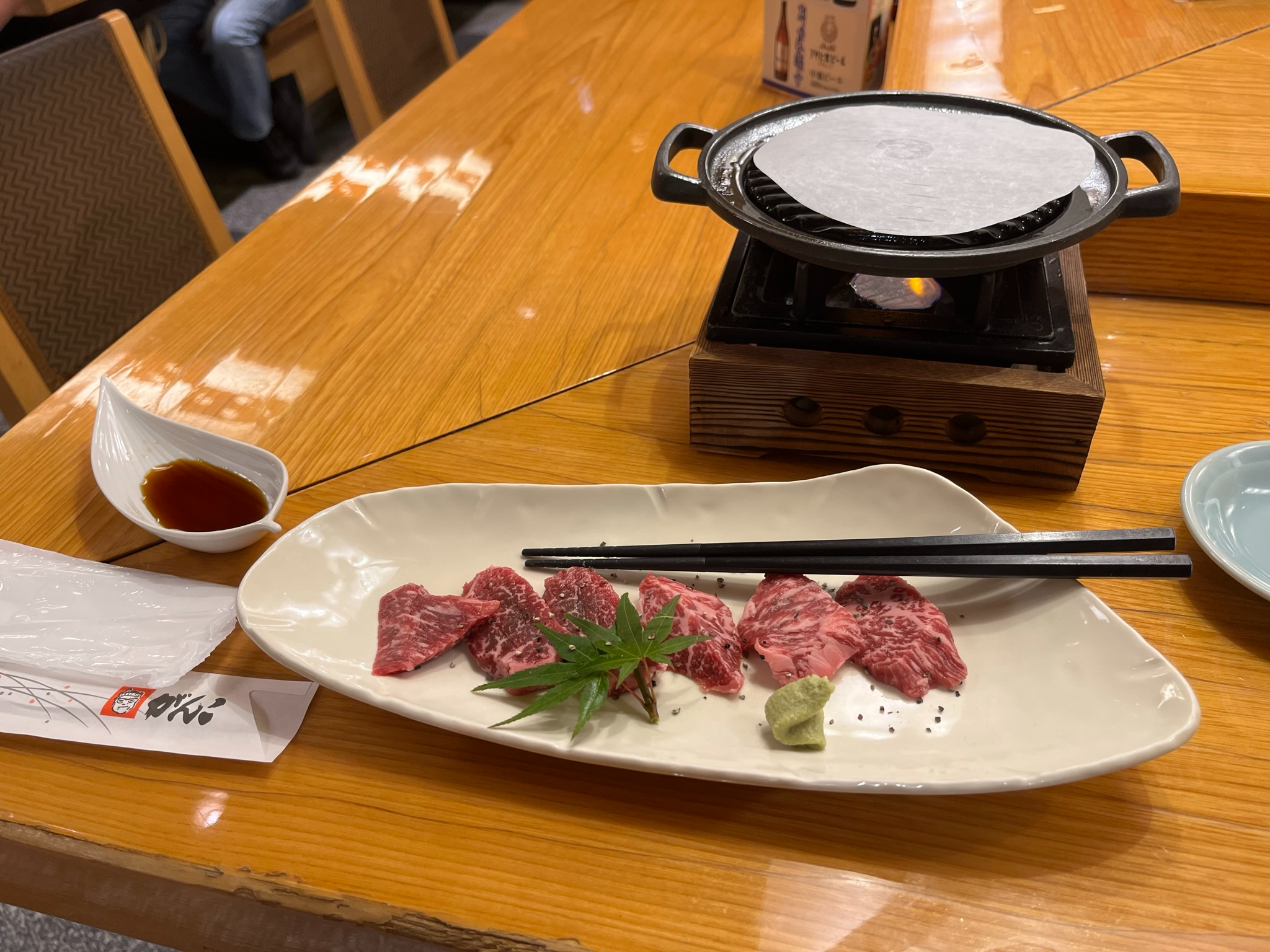
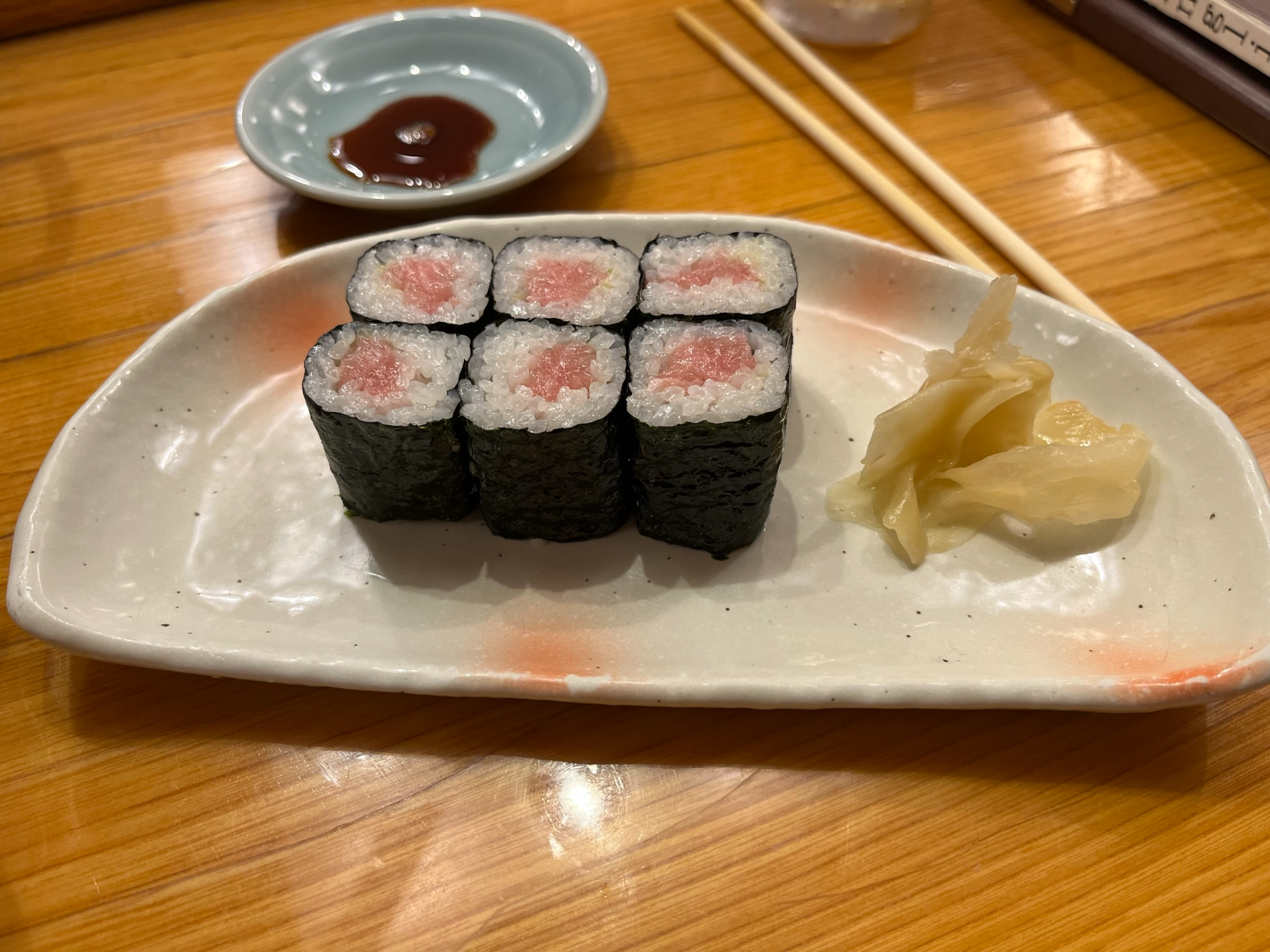
Taking a moment to relax in a local izakaya after a day of exploring Japan, with good food, a welcoming atmosphere making for a perfect evening.Enjoying one of the highlights of an evening at a local izakaya, with beautifully marbled wagyu beef cooked at the table and showcasing the quality, flavour and interactive dining experience that make Japanese beef such a memorable part of travelling in Japan.Enjoying freshly prepared tekkamaki at a local izakaya, with simple ingredients, quality tuna and expertly rolled sushi showcasing how some of Japan's most memorable meals are often the simplest.
Day out and then back to Tokyo
14th August
Today I had to make sure I was up kinda early as I had a few trains to catch and my luggage to lock up at Kyoto train station which only cost 700 yen (about £3.80) for a locker for the day.
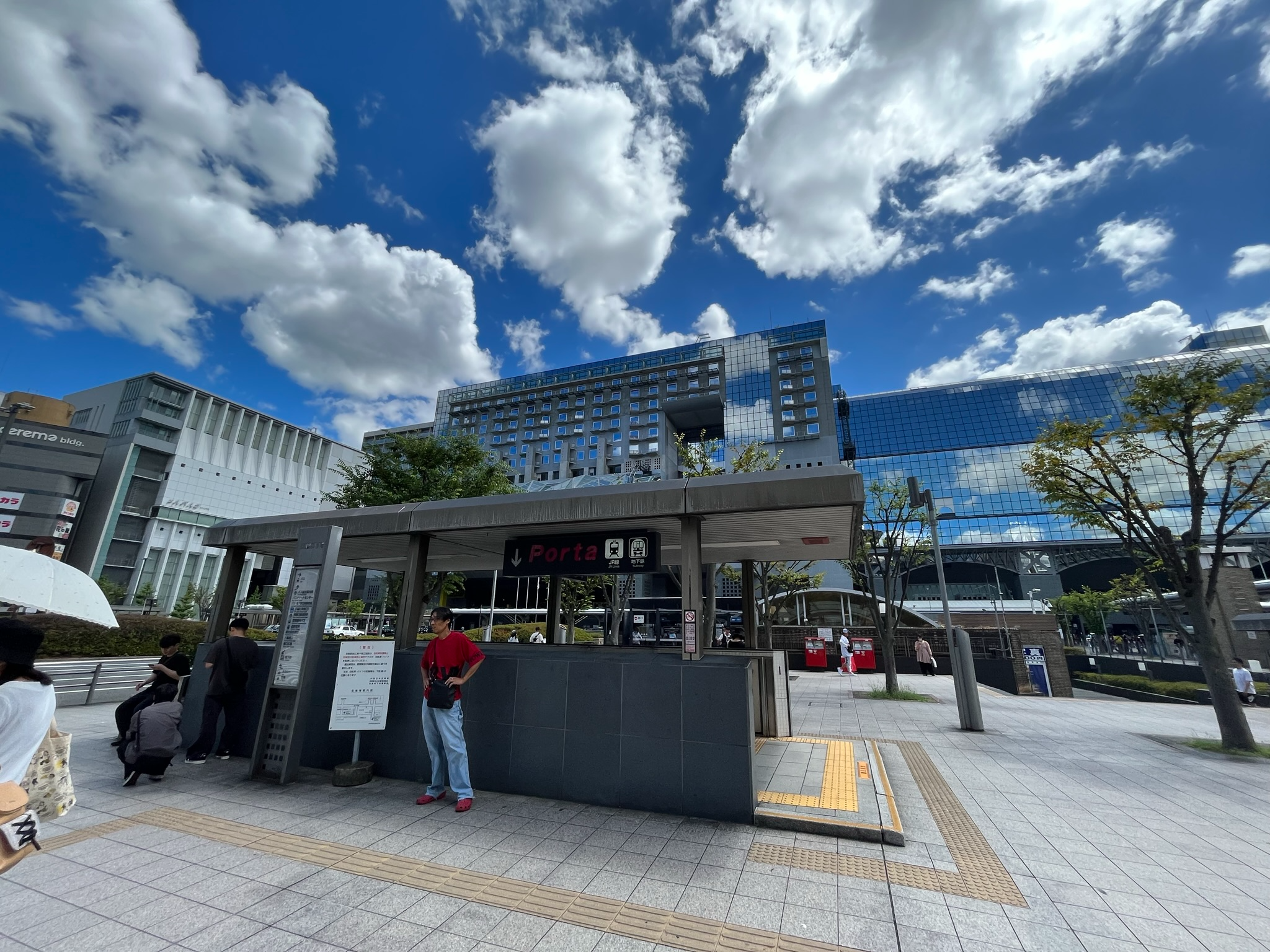
Arriving at Kyoto Station on a beautiful summer day, with the station's striking modern architecture and the bustling Porta entrance serving as a gateway to one of Japan's most historic and culturally rich cities.
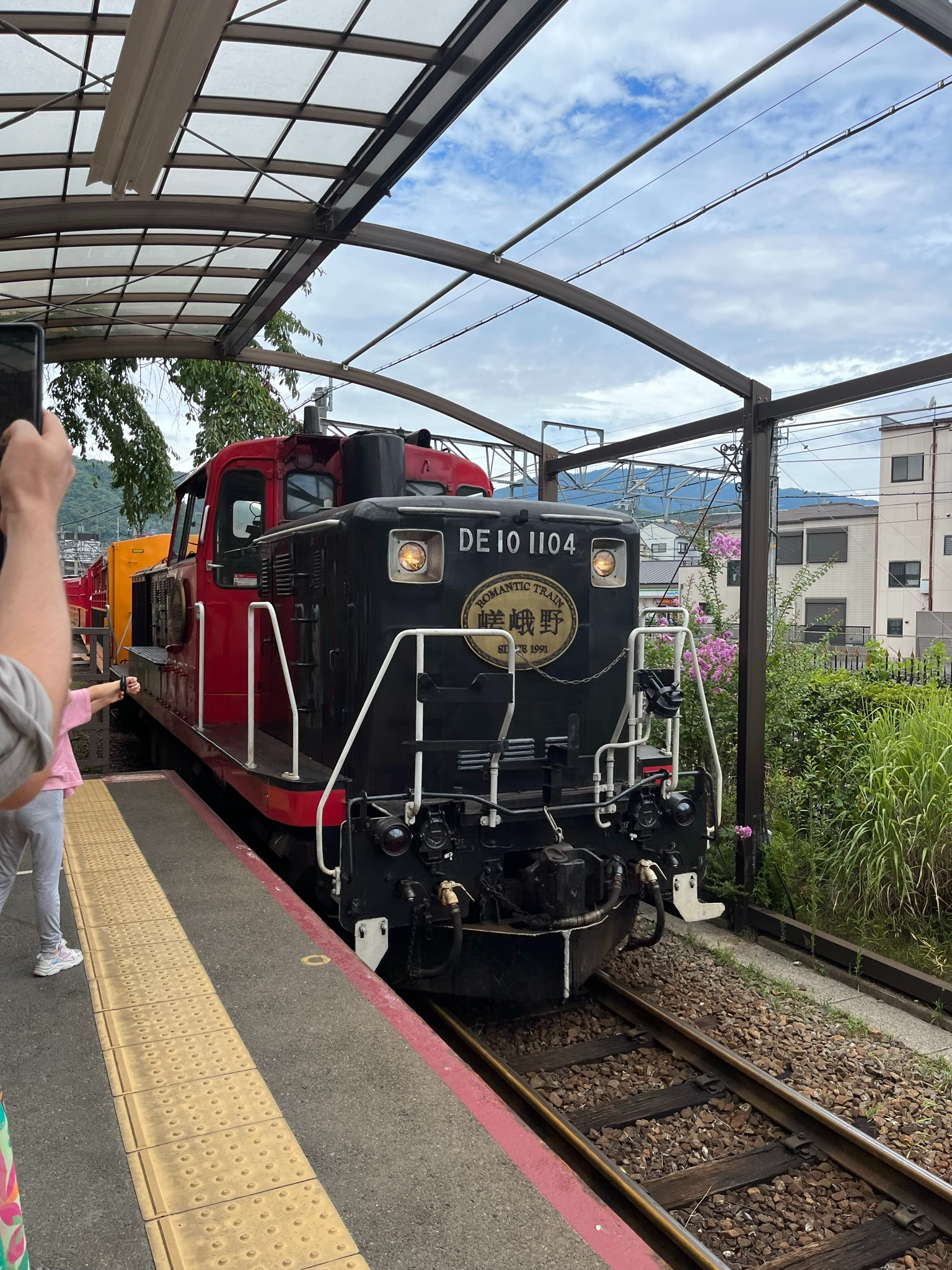
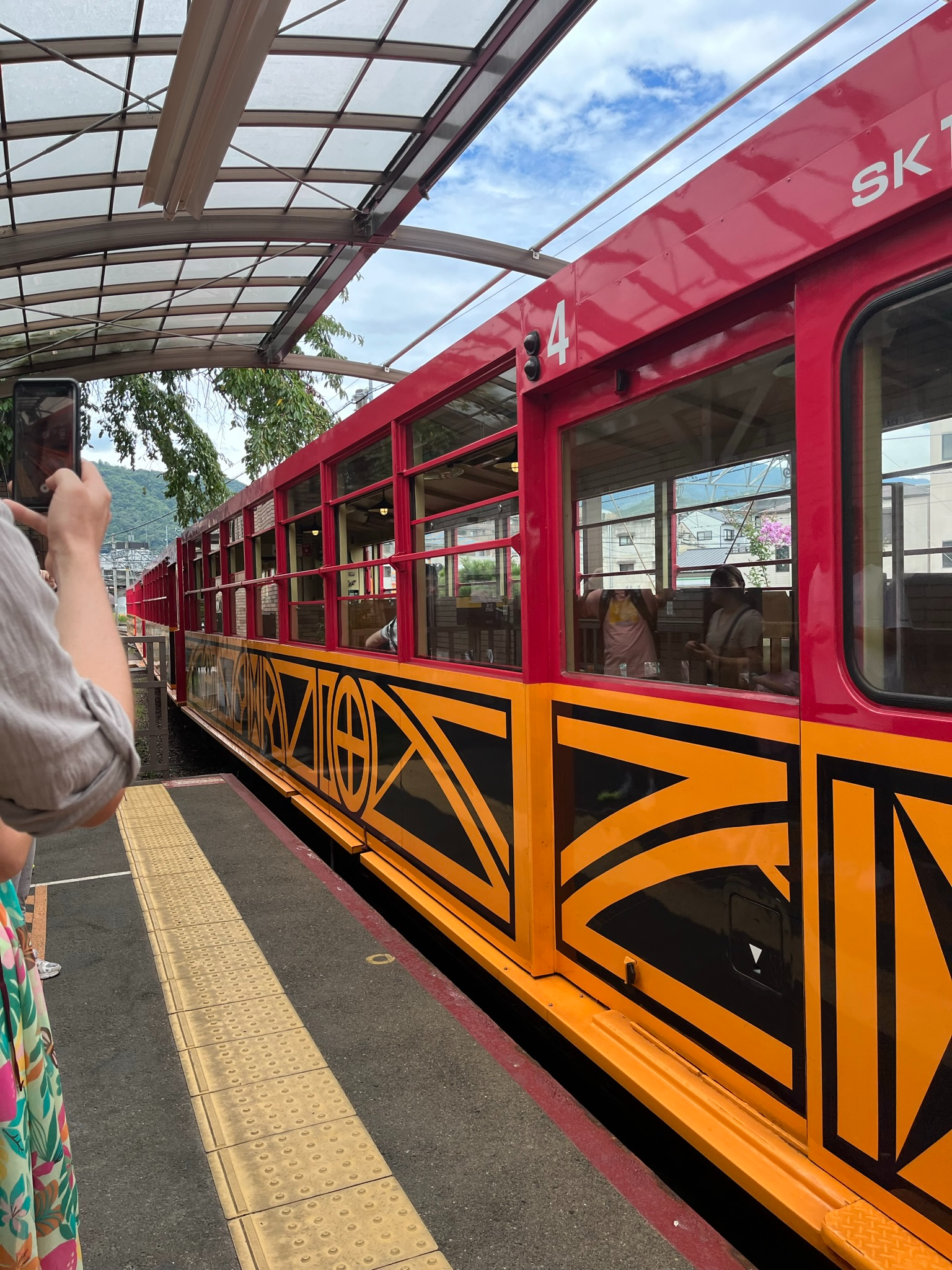
After doing this I was traveling all the way up to Amanohashidate on the northern coast (Osaka is on the southern coast) and this was a fair bit of a journey as I wasn’t doing it all in one go, I was using a few trains to get there. The first one was a locally train from Kyoto station saga-Arashiyama station which didn’t take long. The reason for this was a scenic train I saw on NHK Japan (the English version of Sky) also known as the Sanago scenic train (or Sanago Romantic Railway).
Boarding the Sagano Romantic Train for a scenic journey through the Hozugawa River valley, with the distinctive red-and-black locomotive leading one of Kyoto's most popular sightseeing rail experiences through mountains, forests and dramatic river scenery.Boarding the Sagano Romantic Train for a scenic journey through the Hozugawa River valley, with the train's distinctive open-sided carriage providing uninterrupted views of the forests, mountains and river landscapes that make this one of Kyoto's most popular railway experiences.
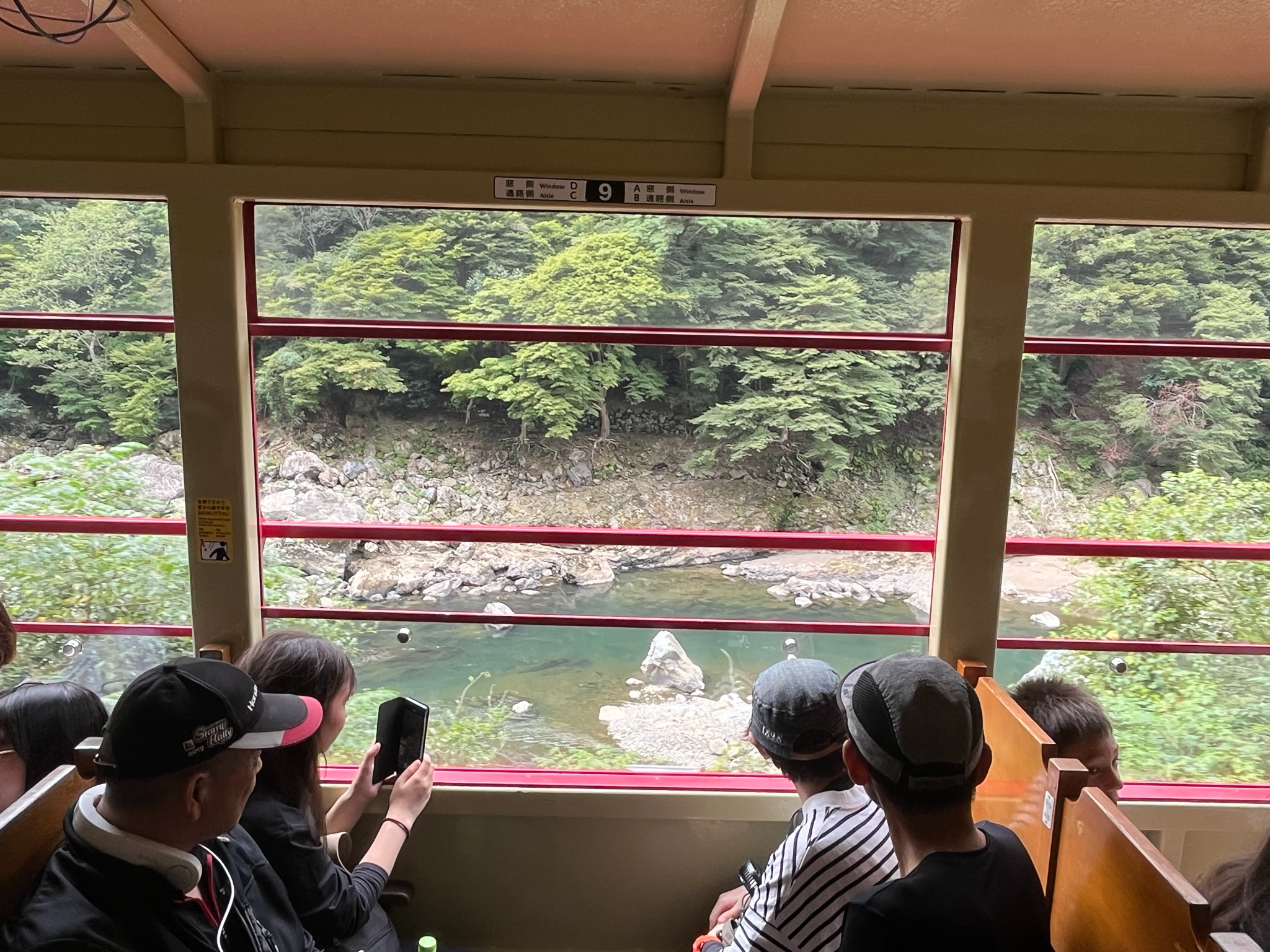
It is pulled by an old diesel locomotive, well pushed for the direction we were going in, down a separate line that hugs the Hozu Valley River instead of just going through the mountains like the JR line does.
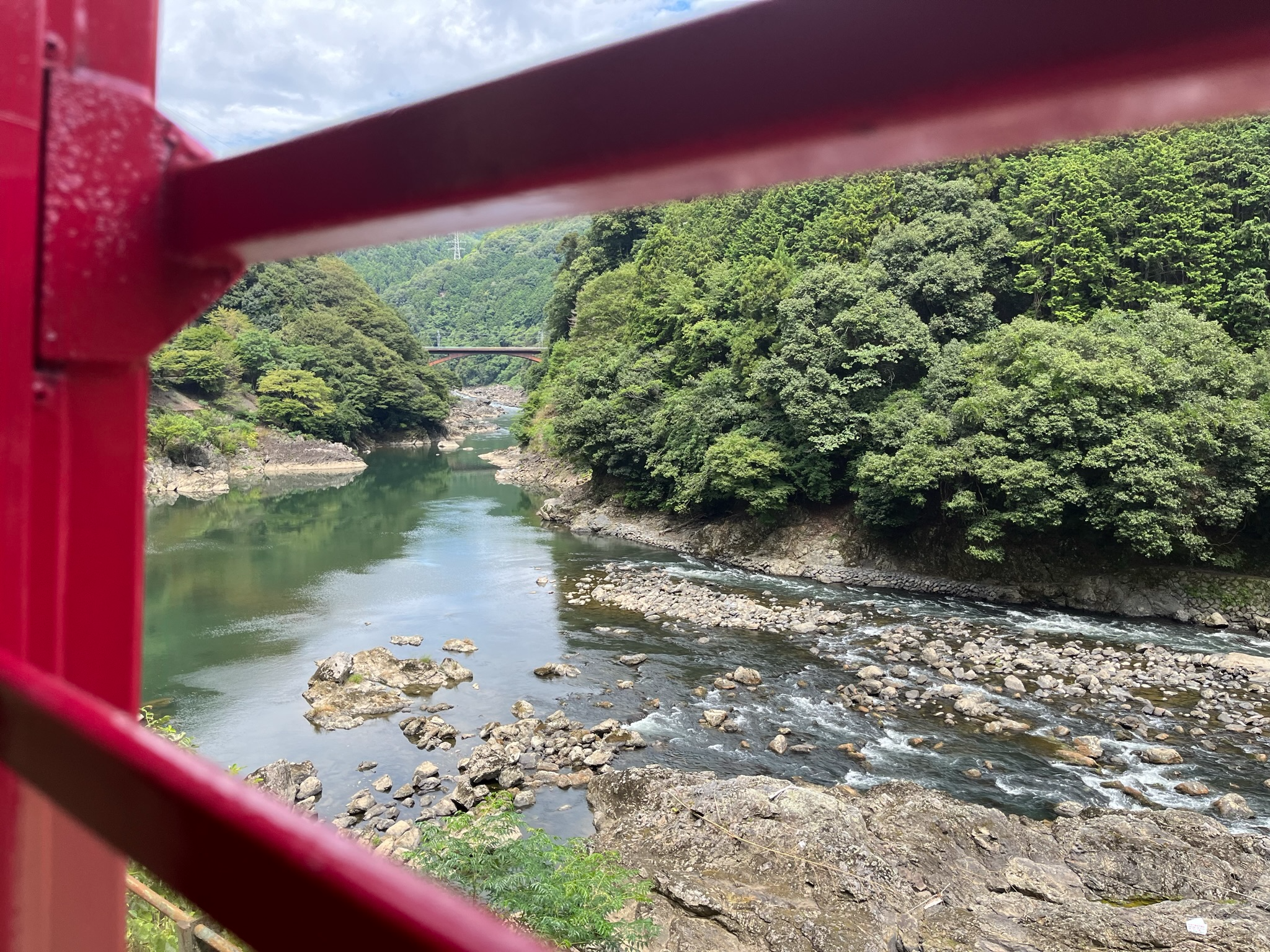
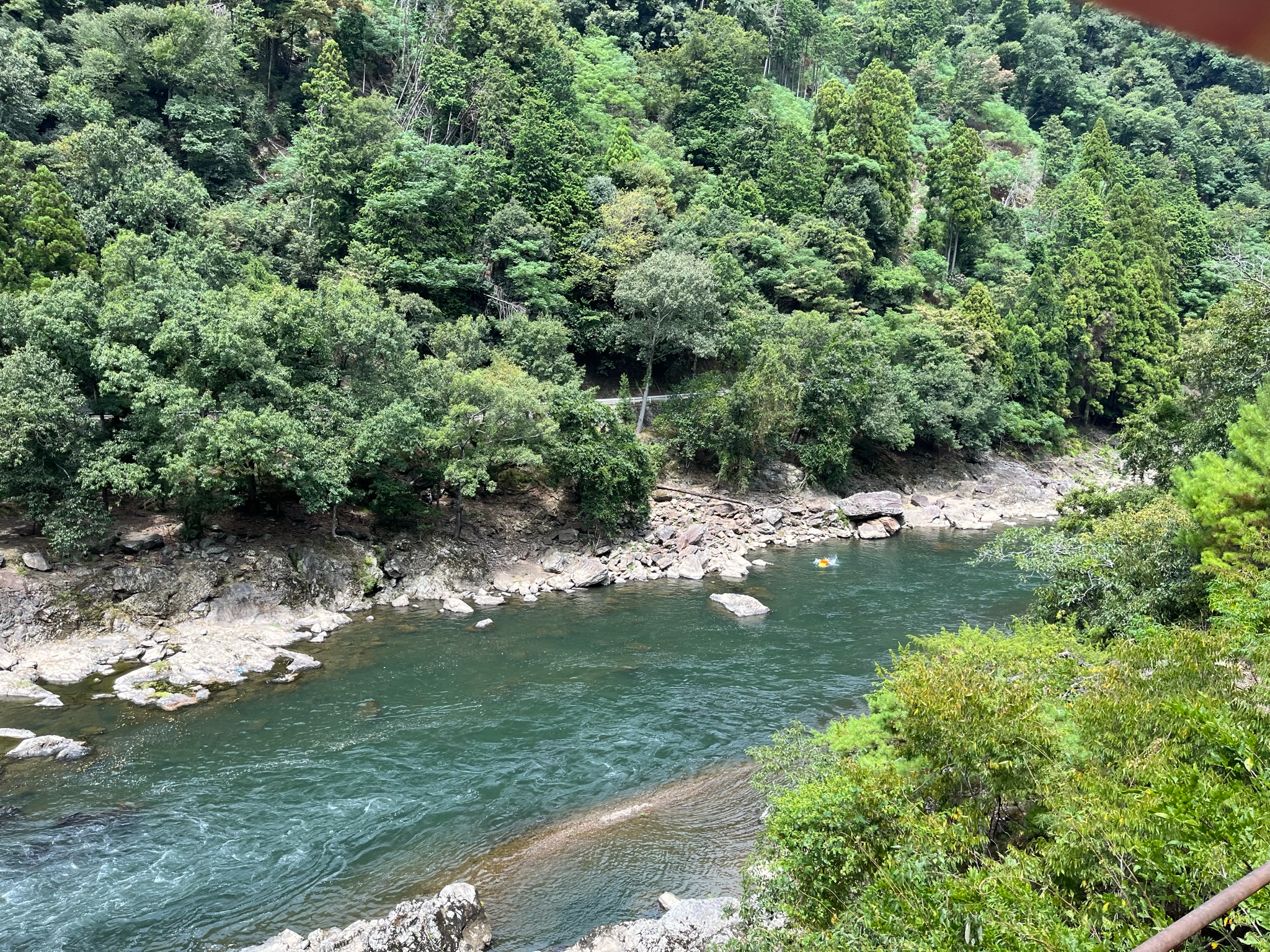
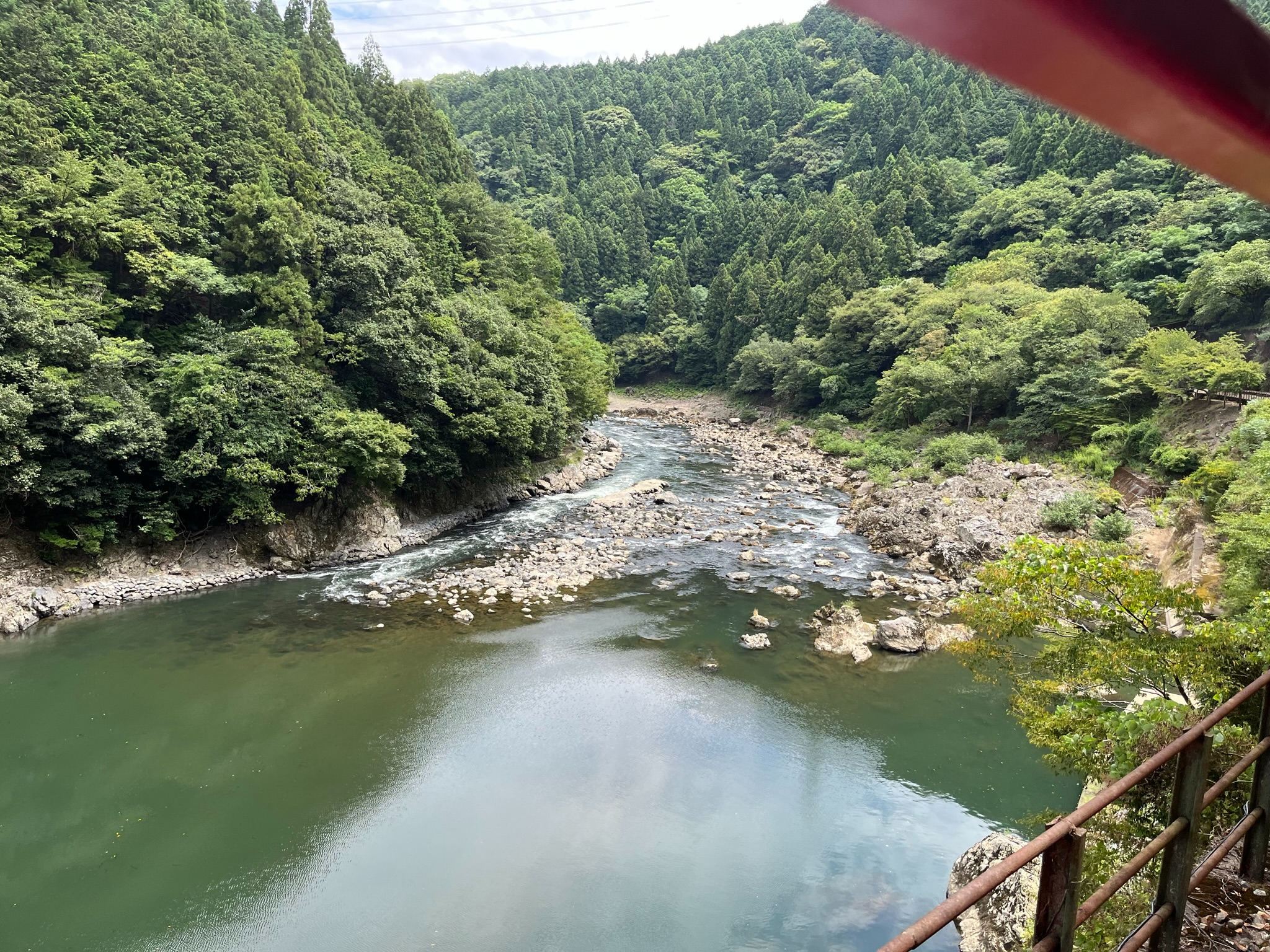
Enjoying the scenic journey aboard the Sagano Romantic Train, with large open windows providing uninterrupted views of the Hozugawa River and the forested landscapes that make this one of Kyoto's most popular railway experiences.Enjoying the scenic journey aboard the Sagano Romantic Train, with the Hozugawa River winding through a dramatic forested valley and providing some of the most beautiful natural scenery found on the outskirts of Kyoto.Continuing the journey aboard the Sagano Romantic Train, with the tranquil waters of the Hozugawa River winding through dense woodland and showcasing the peaceful natural scenery that makes this one of Kyoto's most memorable sightseeing rail experiences.
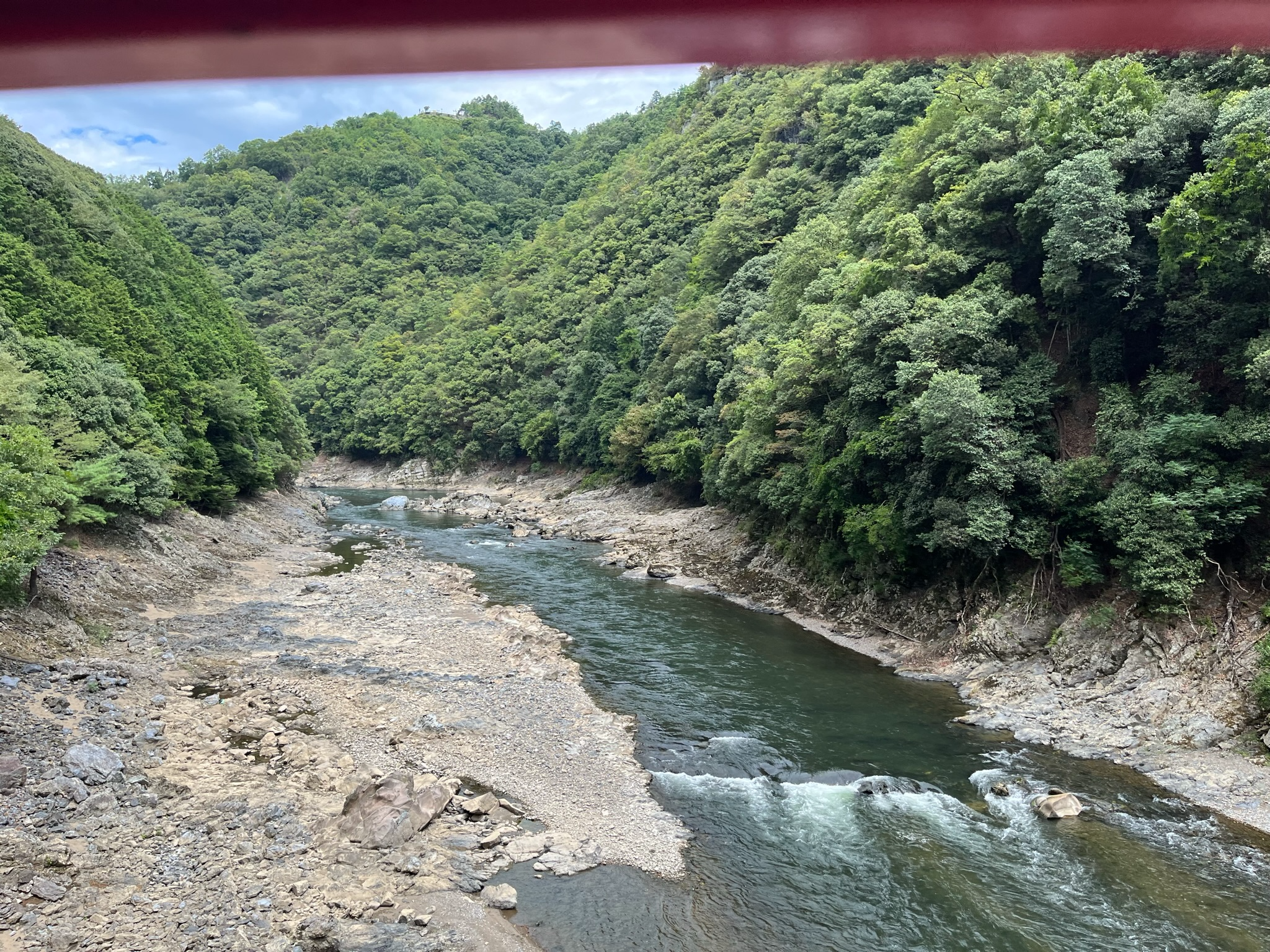
As you can see the views are amazing and the train even stops at its own station in the middle of the route called Hozukyo-Torokko which is just surrounded by mountains and has a road near it, so if you are hiking you can always get dropped off there or picked up from then maybe as well.
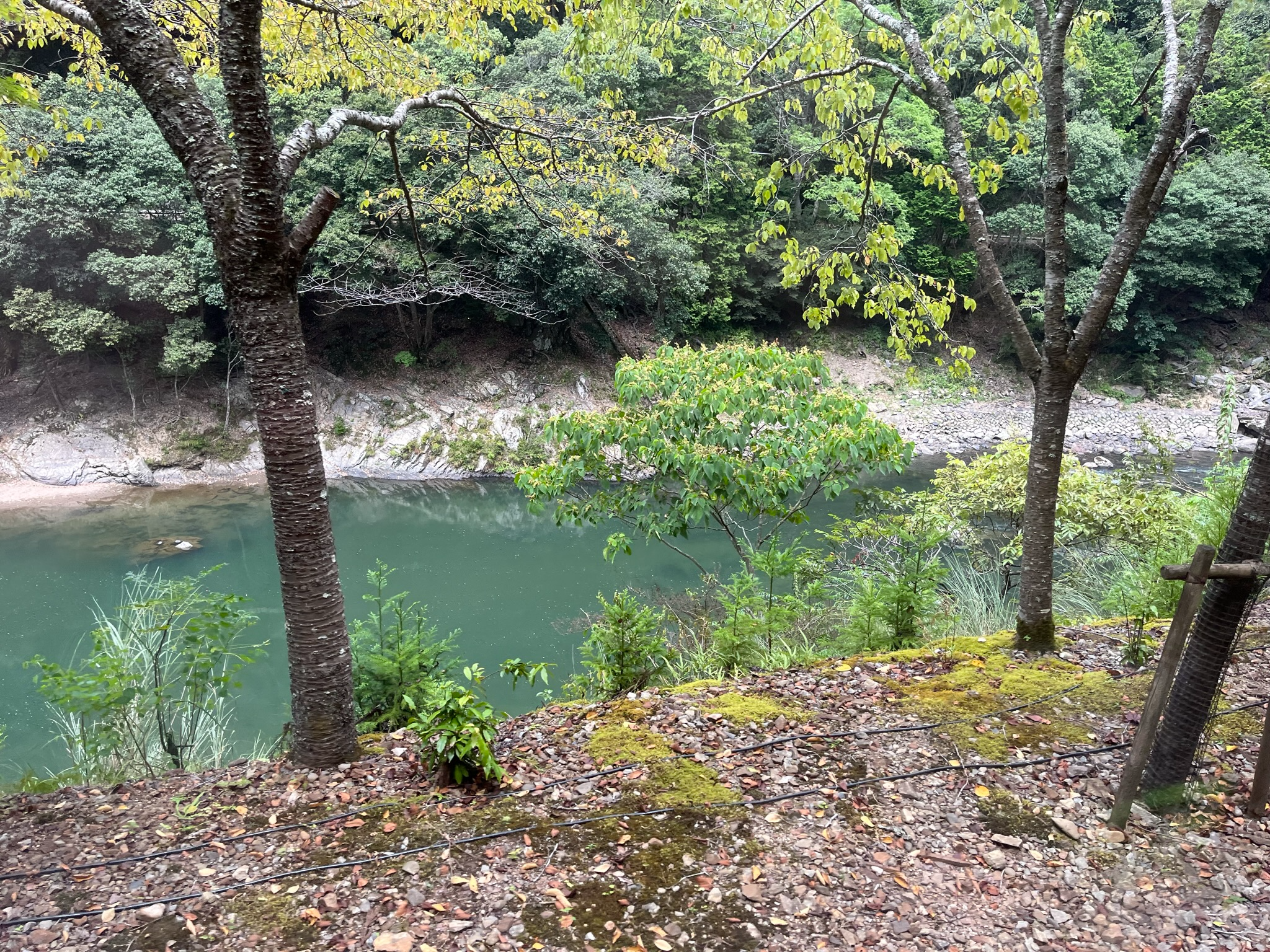
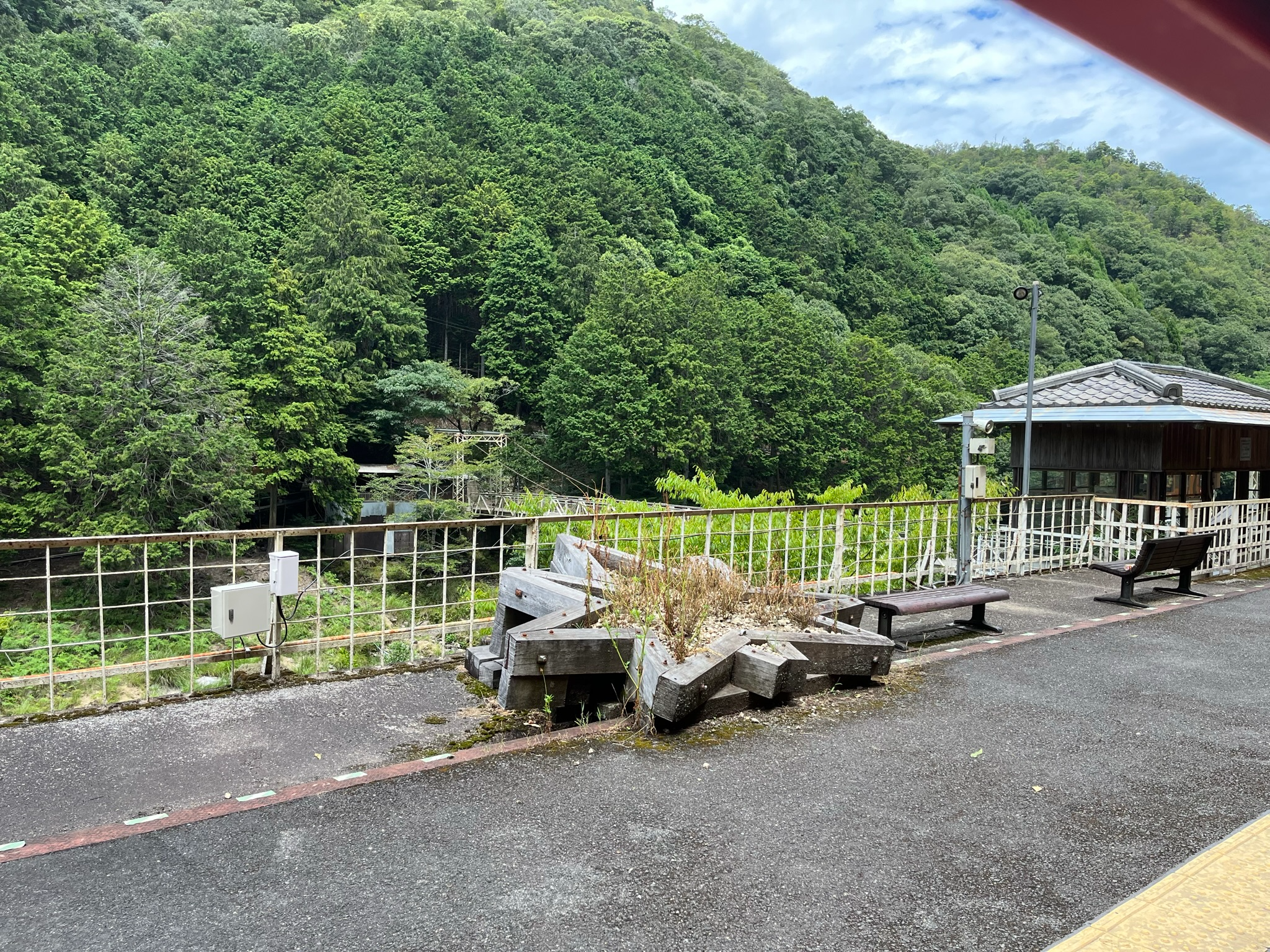
Passing through one of the remote stations along the Sagano Romantic Train route, with forested mountains rising above the platform and highlighting the peaceful natural scenery of the Hozugawa River valley beyond Kyoto.Admiring the scenery from the open-sided carriage of the Sagano Romantic Train, with the Hozugawa River winding through rocky gorges and densely forested hills during one of Kyoto's most scenic railway journeys.Continuing the journey aboard the Sagano Romantic Train, with the emerald waters of the Hozugawa River winding through a forested gorge and showcasing some of the most beautiful scenery in Kyoto's countryside.Taking in the scenery from the Sagano Romantic Train, with the Hozugawa River weaving through a rugged valley of dense forest and rocky riverbanks, showcasing some of the most spectacular countryside landscapes on the outskirts of Kyoto.Reaching the end of the Sagano Romantic Train journey, with the Hozugawa River widening as traditional riverside scenery, forested hills and drifting sightseeing boats come into view near Arashiyama.
After stopping off at Kameoka Torokko station. It was a lovely 10-15 min walk to the nearest JR train station. Also, no I didn’t have the beer as I don’t really drink it.
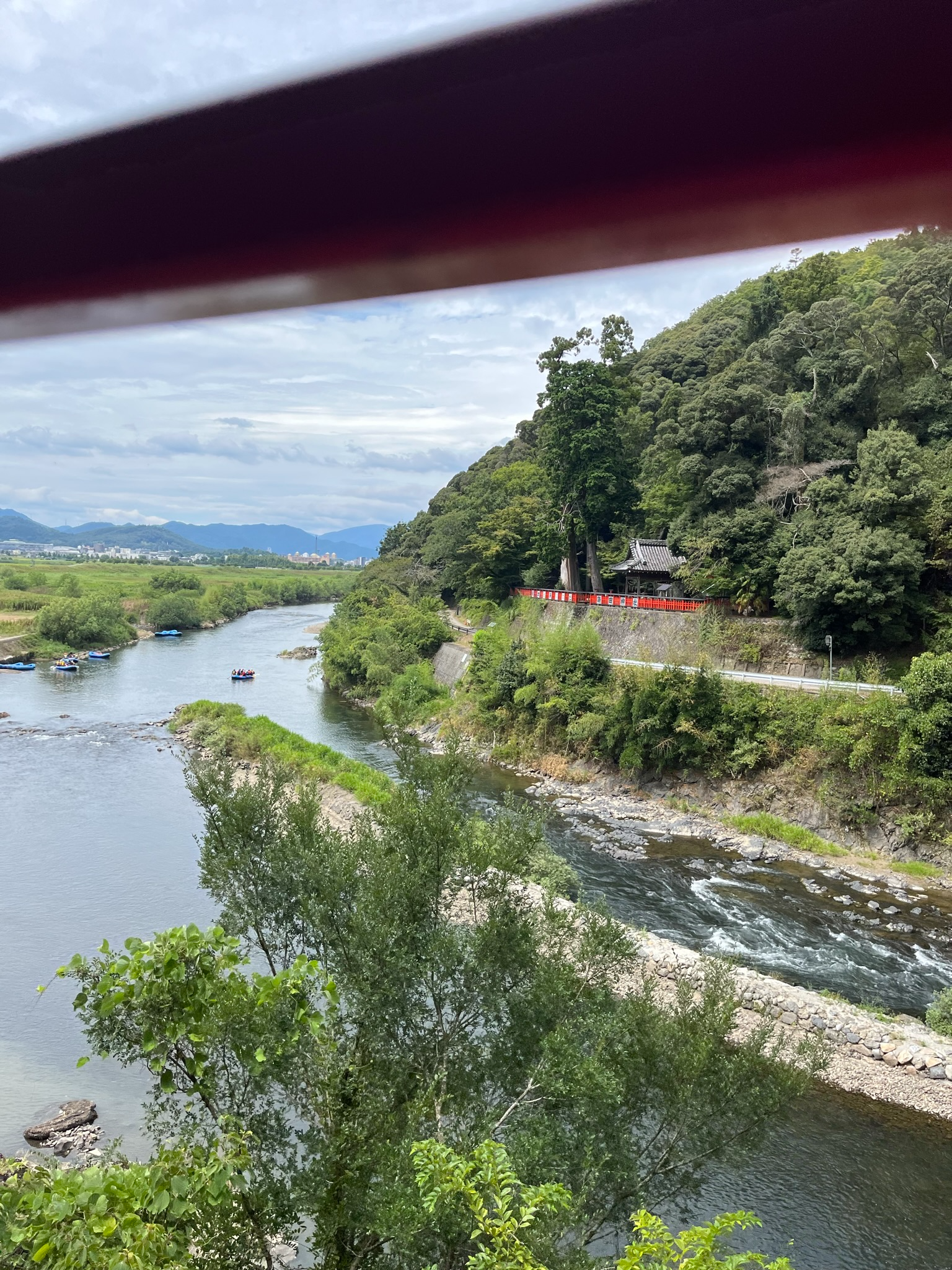
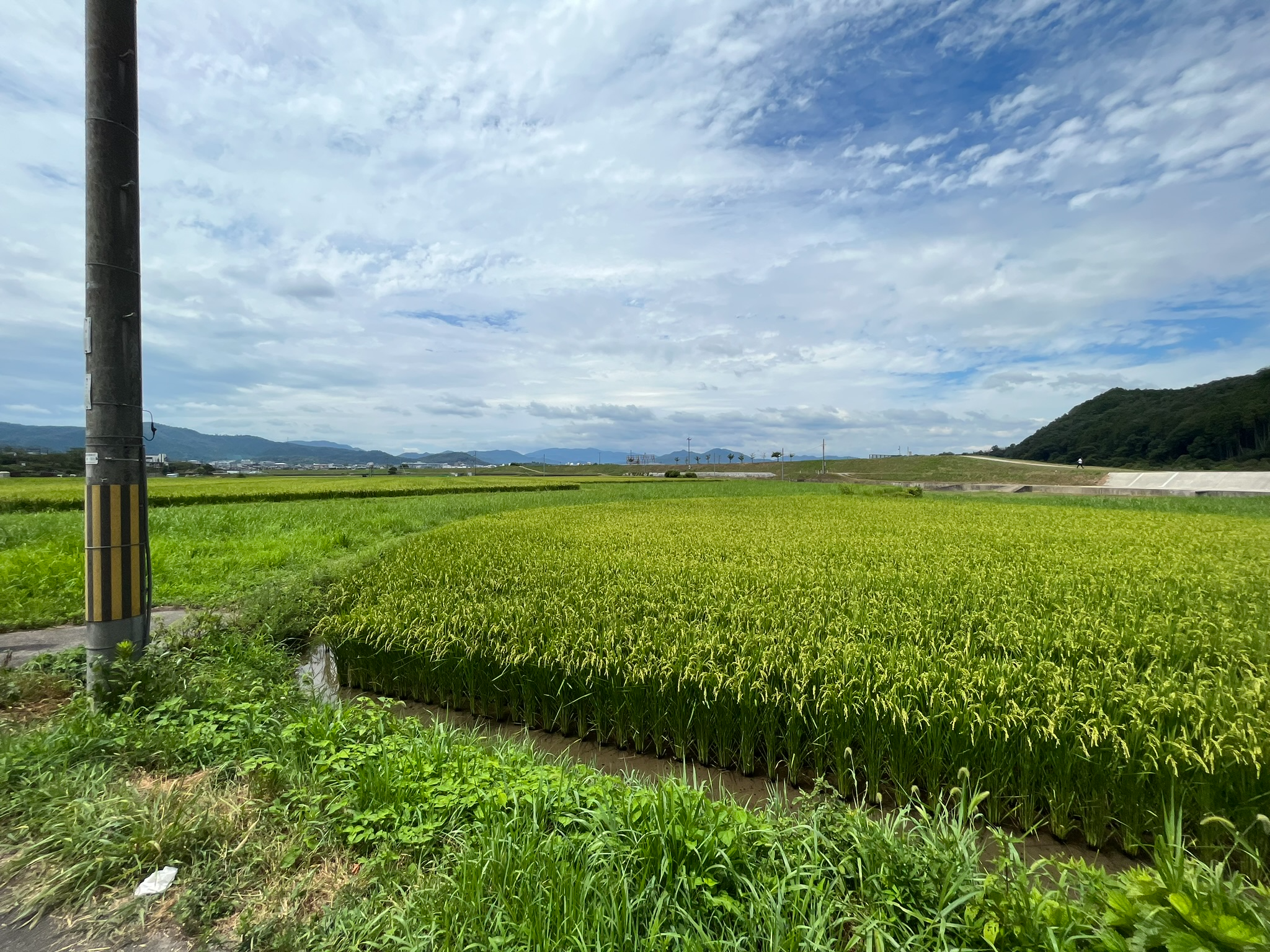
Spotting one of the more unusual sights while exploring the Arashiyama area, with a small roadside truck selling drinks and sweet potatoes, decorated with lanterns and plush toys, adding a touch of local character to the day.Walking through the countryside on the outskirts of Kyoto, with rice fields stretching towards the distant mountains and providing a peaceful glimpse of rural Japan beyond the city's famous temples and historic streets.
At this point as you can see, I am going through the rural areas of Japan which was amazing to see. After picking the local train up from Umahori to Kameoka (with no Torokko) I hopped on the limited express train to up to Fujuchiyama (again glad that I have a Green class card), which took a bit longer than I thought it would, (even though I reserved the seat) I finally almost arrived at my destination, but not quite.
So I got off the train only to be told by the person at the ticket booth that it was the train I wanted to get to Amanohashidate (separate railway company), so he quickly gave me a destination card so I could pay on the train for it and I was on my way along the Kyoto Tango Railway (again something I was though NHK Japan).
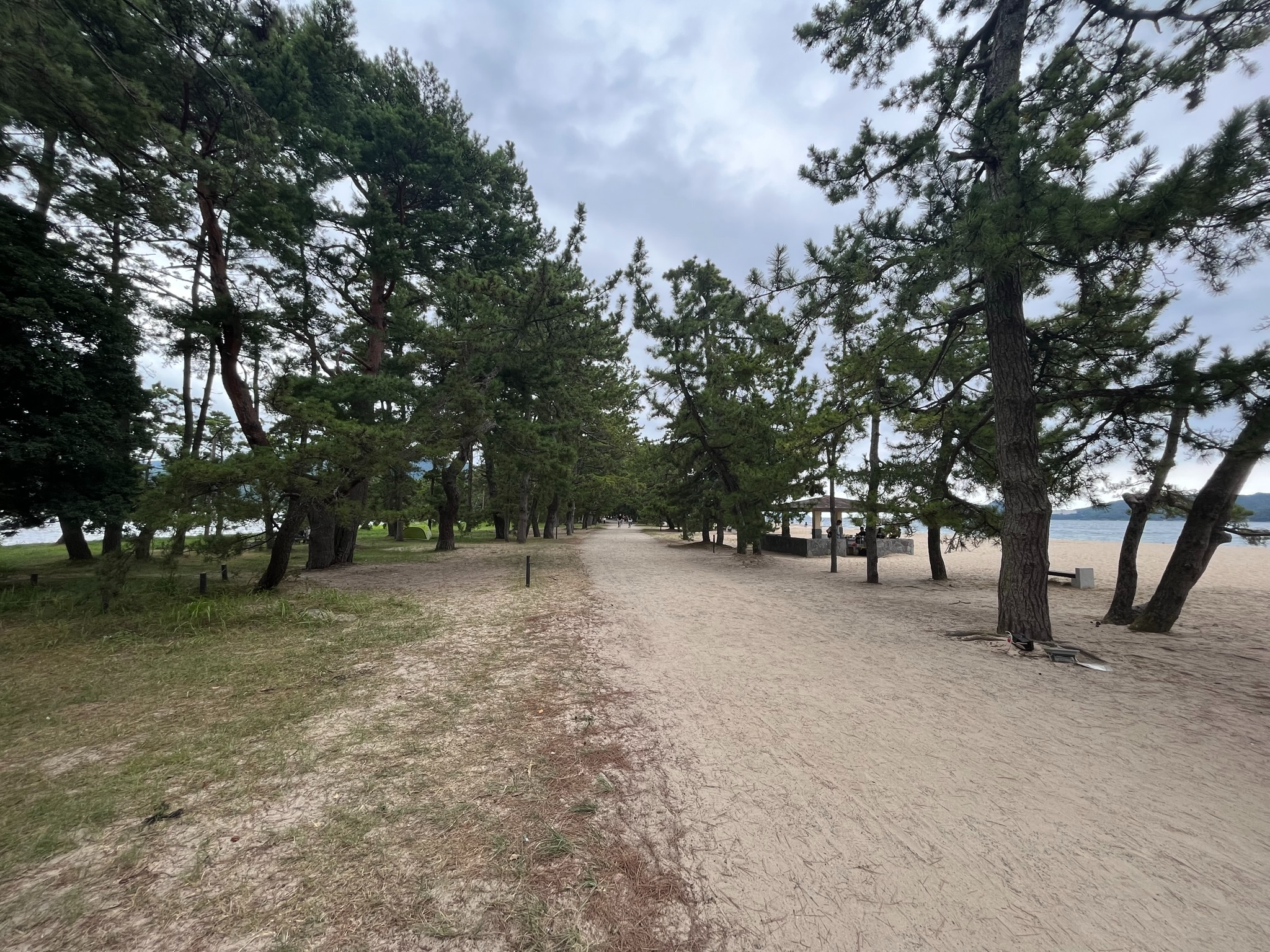
Walking through the famous pine-lined approach at Amanohashidate, with one of Japan's Three Scenic Views offering a peaceful coastal landscape where sandy pathways, towering pine trees and views across Miyazu Bay create a uniquely tranquil atmosphere.
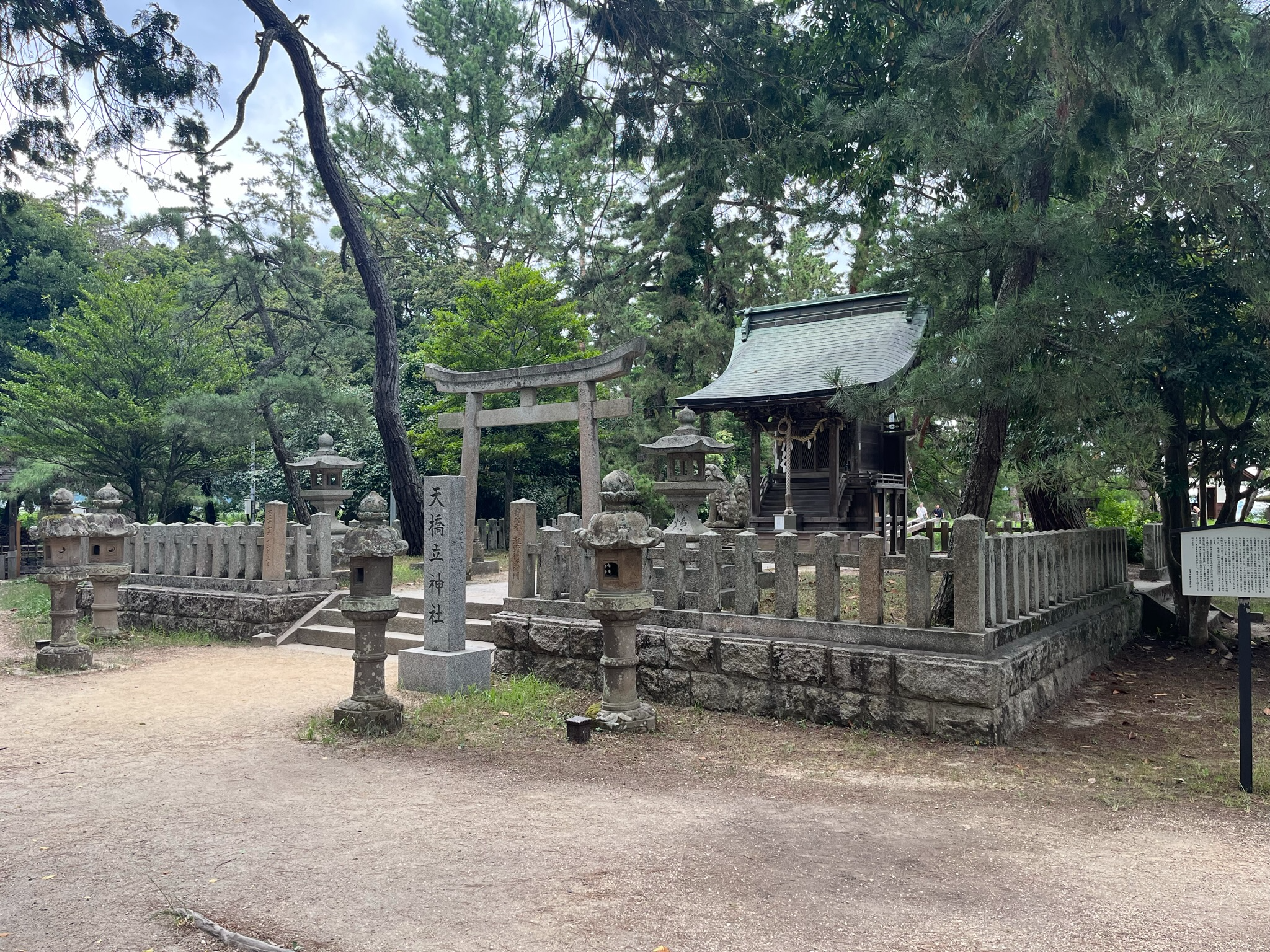
It is very weird to think that this sand bank can be cycled on as it is a beach! It even has a shrine on it.
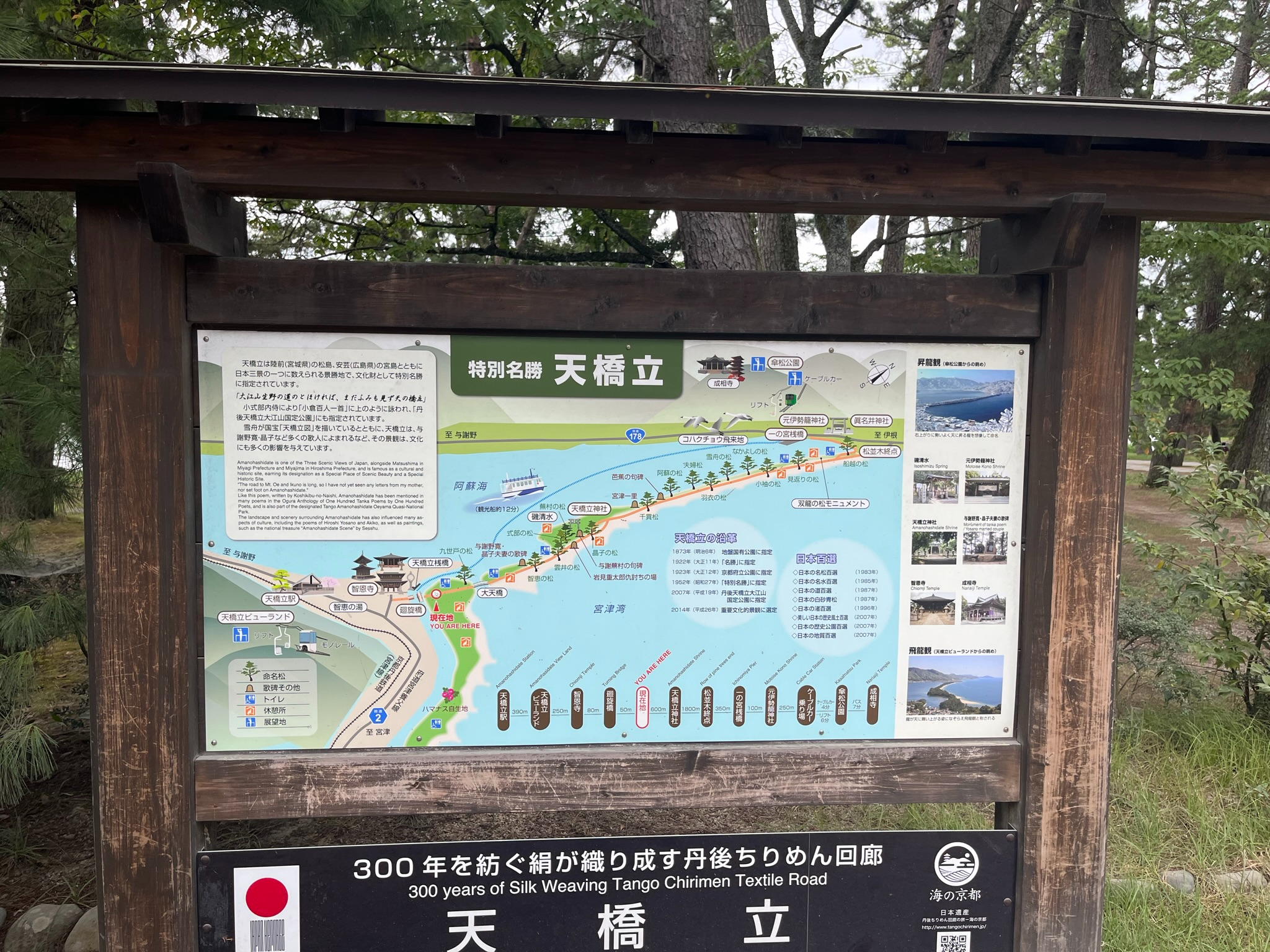
Visiting Amanohashidate Shrine while exploring the famous sandbar, with the small Shinto shrine nestled among pine trees and offering a peaceful place of worship along one of Japan's Three Scenic Views.Using the Amanohashidate information board to plan a walk across the famous sandbar, with the map highlighting key viewpoints, temples and attractions along one of Japan's Three Scenic Views.
My original plan was to go to a theme park that was in the side of a mountain and possible going and do some water sports, but those plans got cancelled and what I did do it go up the cable car on the other side of the sandbank.
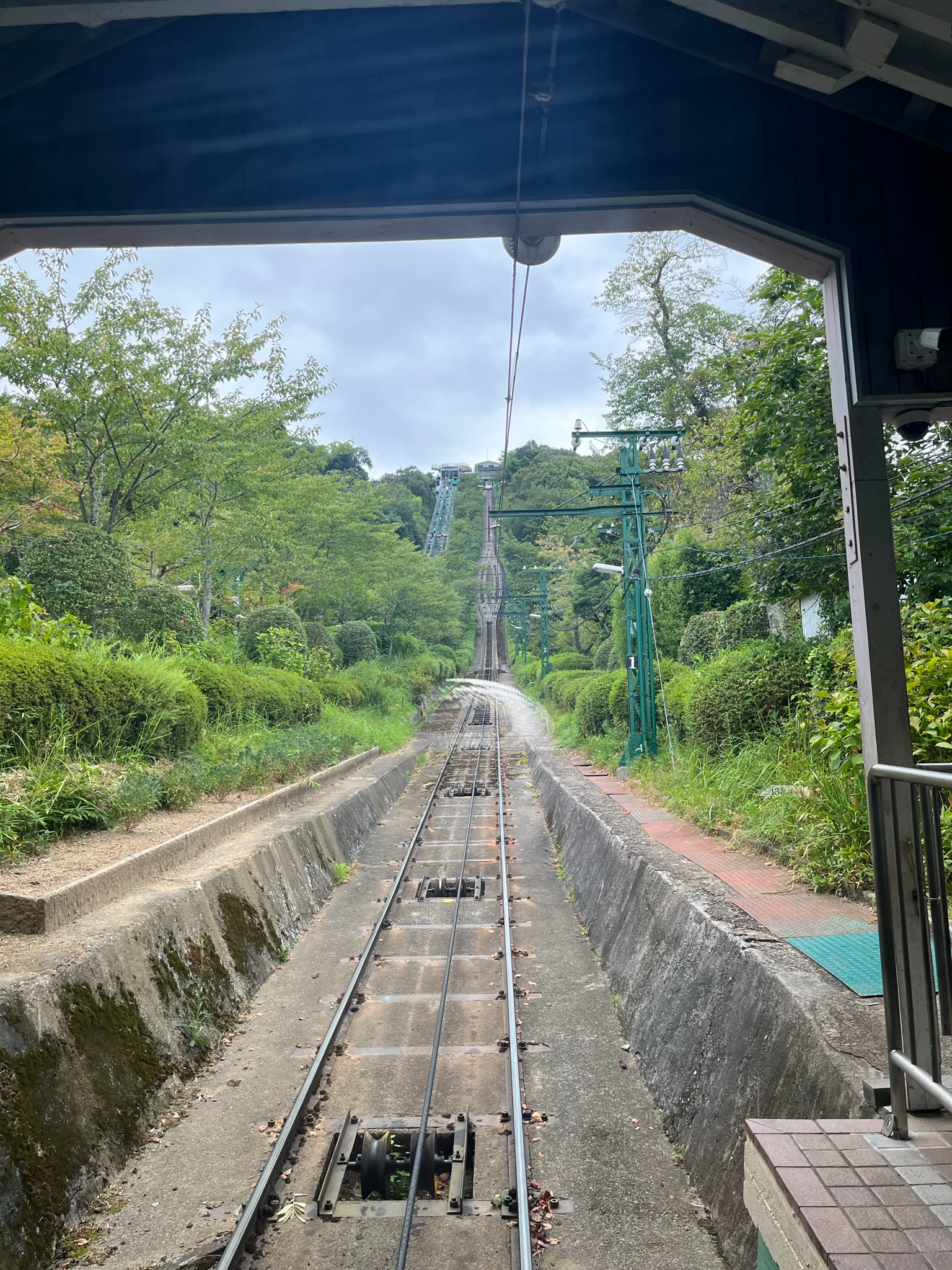
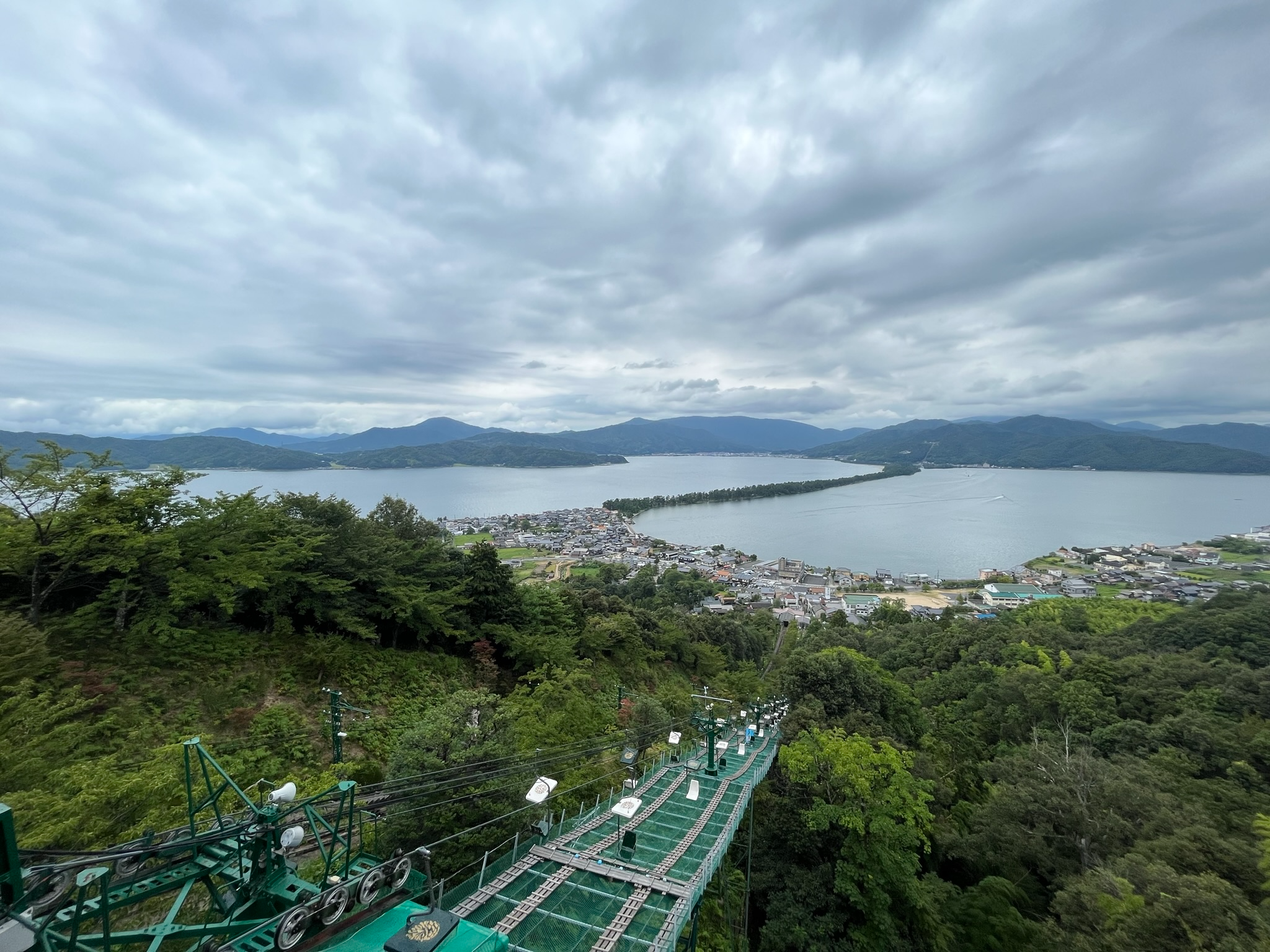
Taking the funicular up to Ama Terrace, with the steep hillside track climbing through the trees towards one of Amanohashidate's most famous viewpoints and offering increasingly impressive views over Miyazu Bay along the way
0:00
/3:05
Video from taking the funicular railway up to Ama Terracce, with the steep hillside track climbing up to one of Amanohashidate's most famous viewpoints.
This two-rail funicular system is quite old and uses the weight of the one coming down to help pull the other up and they split in the middle and pass each other, and it only takes about 3 mins per trip.
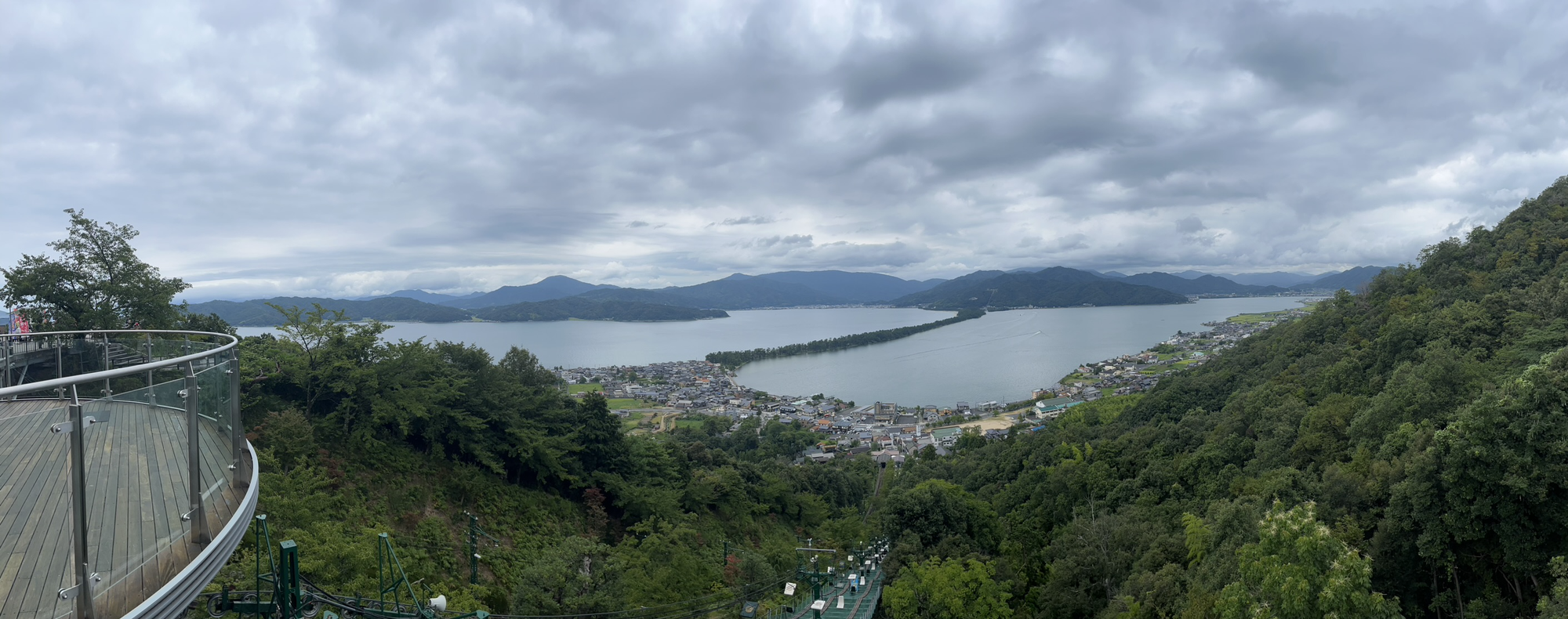
Taking in the famous "Bridge to Heaven" view from Ama Terrace, with Amanohashidate's pine-covered sandbar stretching across Miyazu Bay and showcasing one of Japan's celebrated Three Scenic Views beneath dramatic summer skies.
At the top I was greeted with a magnificent view out over Amanohashidate. I even hiked a little to get a better view as well.
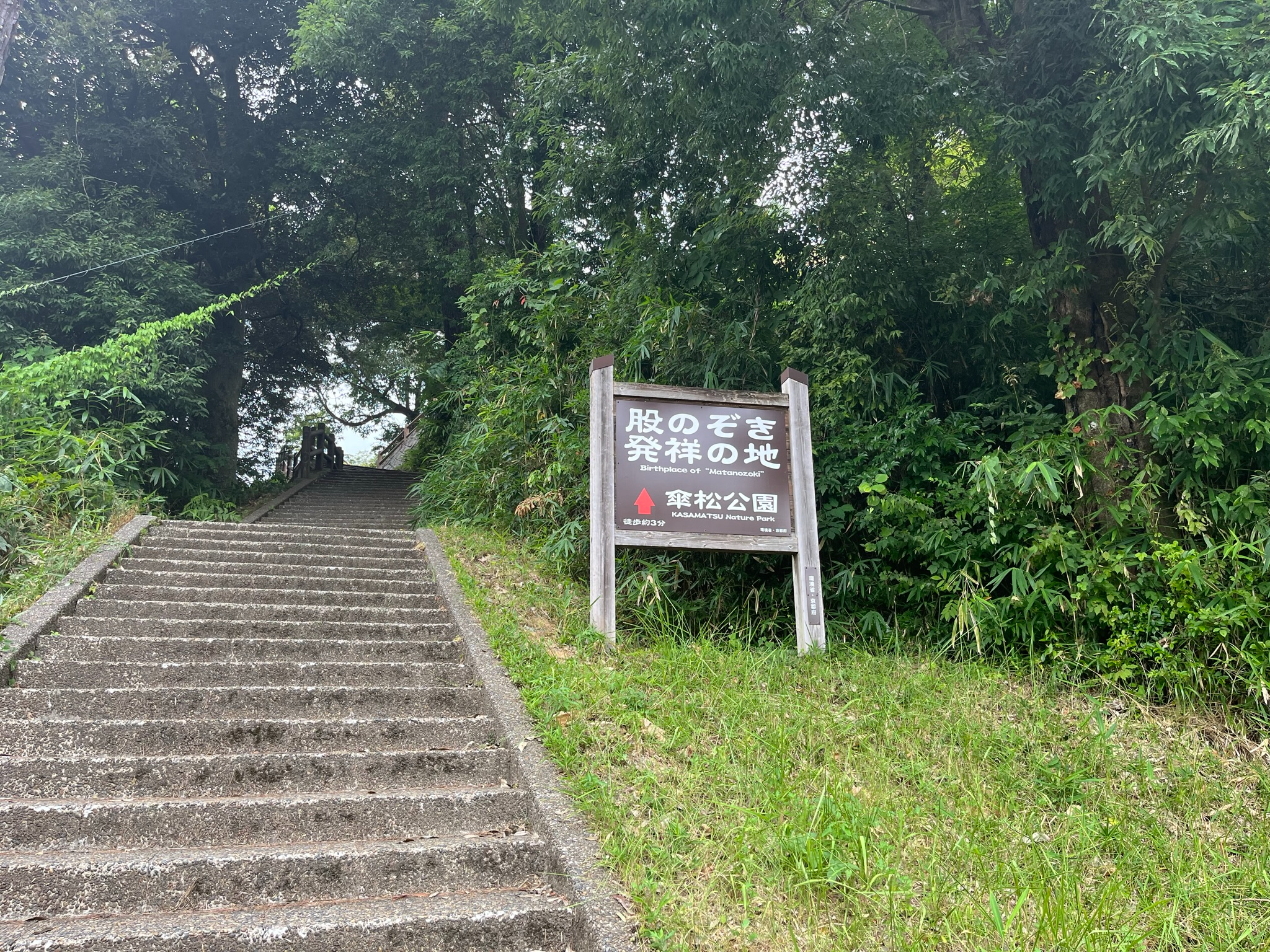
Taking in one of Japan's Three Scenic Views from Ama Terrace, with the famous pine-covered sandbar of Amanohashidate stretching across Miyazu Bay and creating the spectacular landscape often described as a "Bridge to Heaven" beneath dramatic summer skies.Following the path up to Kasamatsu Park, with signs marking the birthplace of the traditional Amanohashidate "matanozoki" viewing method, where visitors bend over and look at the sandbar upside down to see the famous "Bridge to Heaven" perspective.Taking in another breathtaking view from Ama Terrace, with Amanohashidate's pine-covered sandbar stretching across Miyazu Bay beneath dramatic skies and showcasing why it is celebrated as one of Japan's Three Scenic Views.