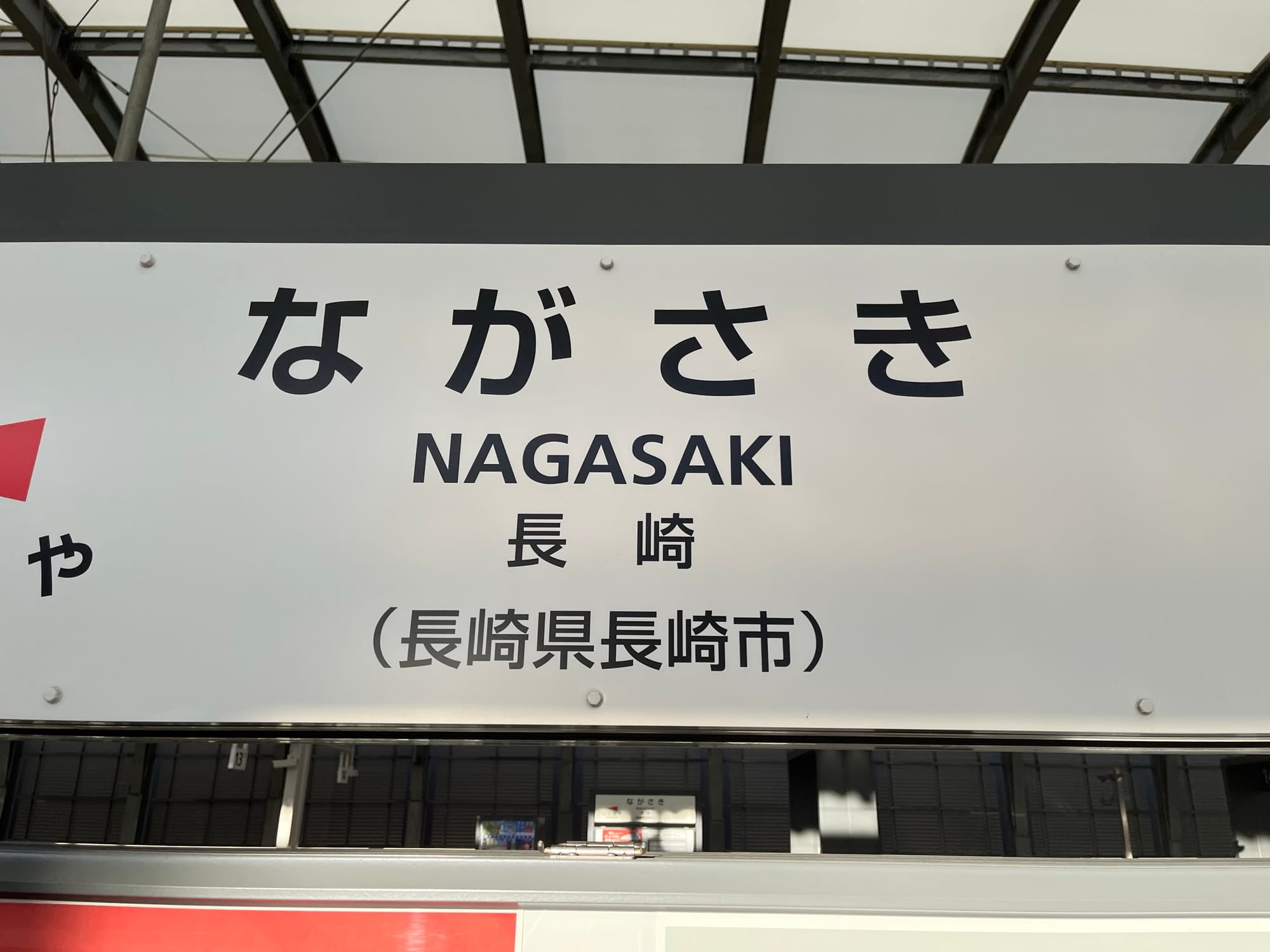
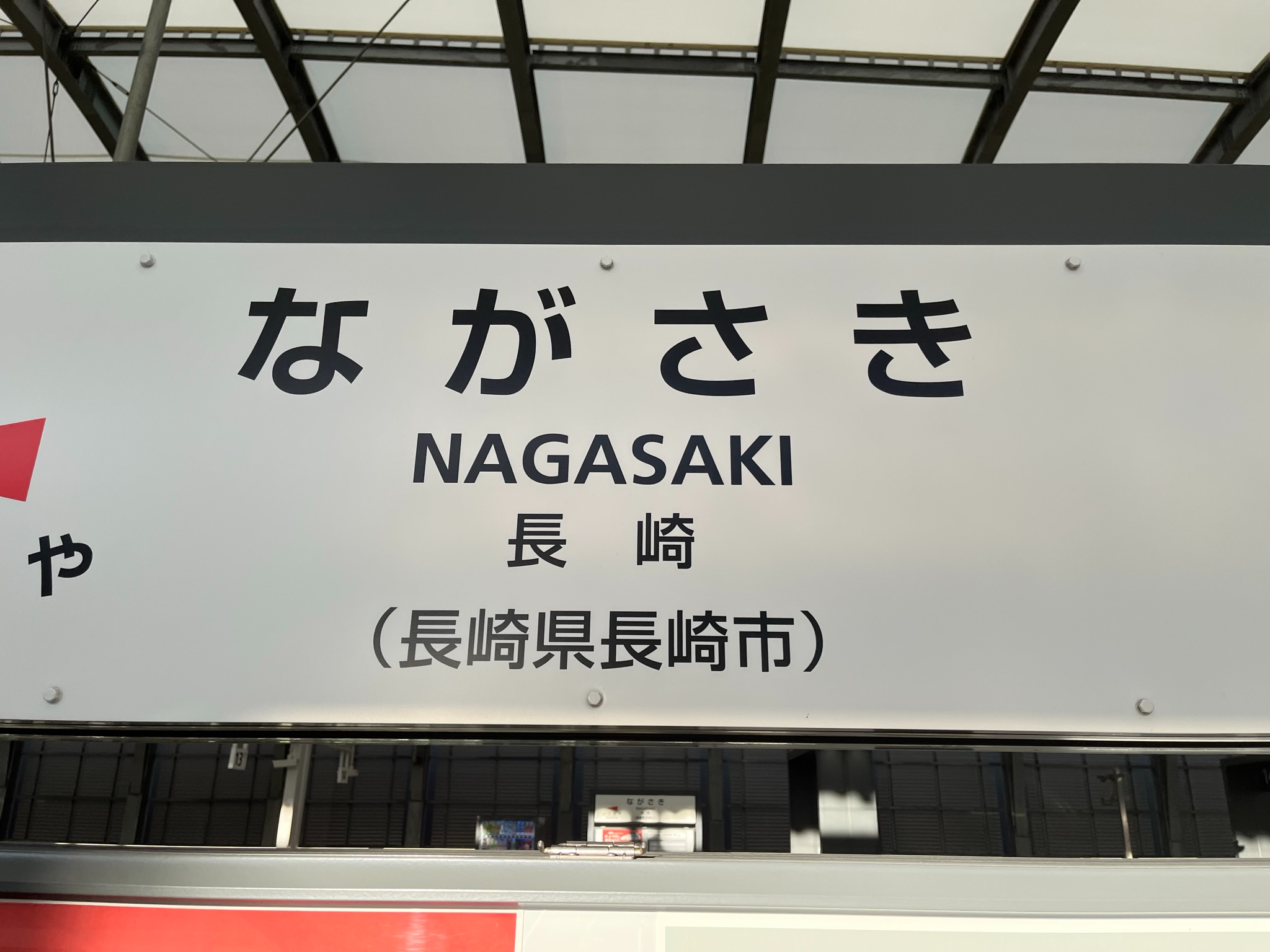
A station sign marks arrival in Nagasaki, the historic port city of western Japan where international influences, centuries of maritime trade and a unique cultural heritage have shaped one of the country's most distinctive urban destinations.
770 Miles on Japans Rail Network
2nd August
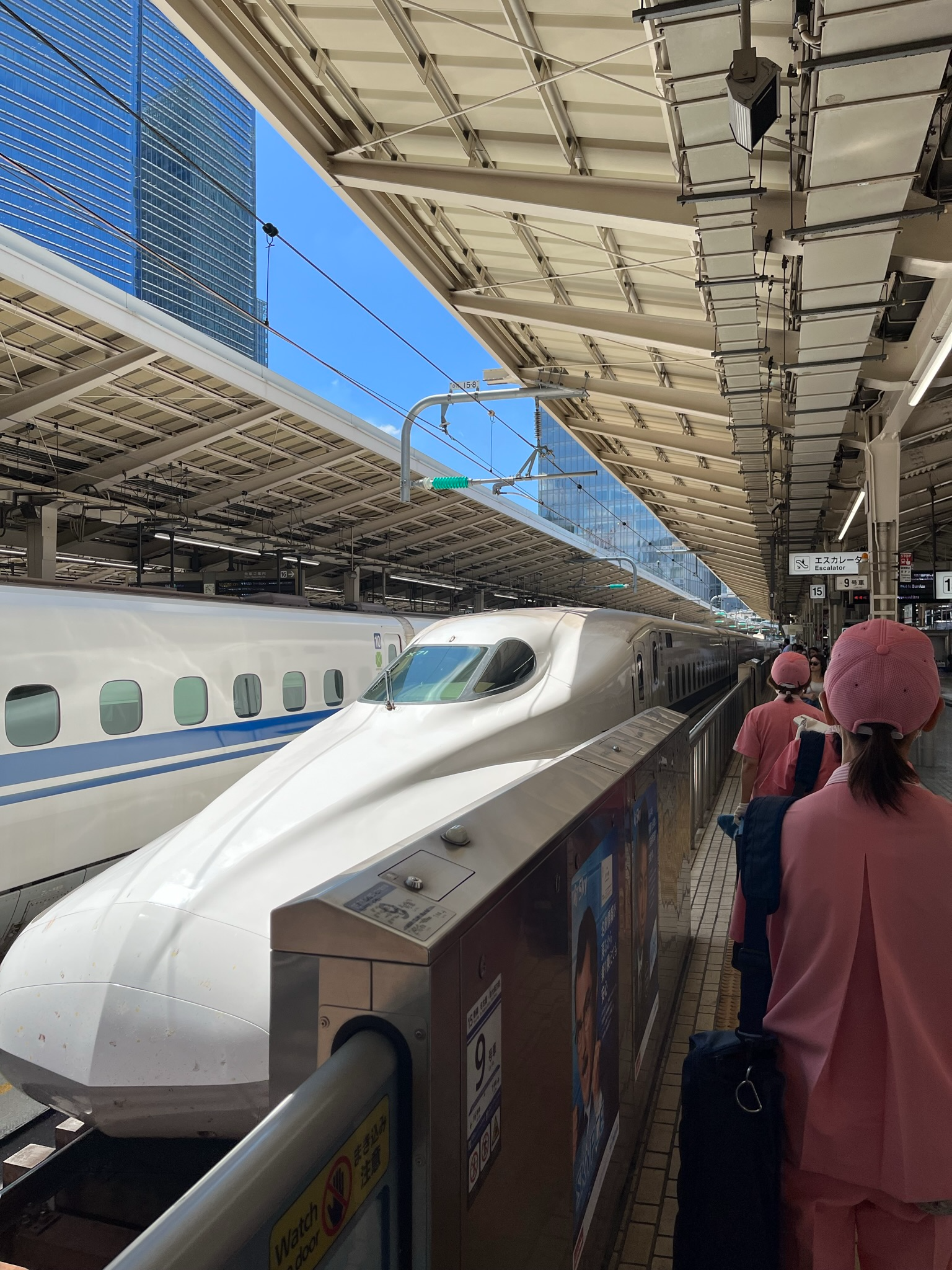
So, a few days ago I got my first taste of a bullet train as I can say, flipping heck, they don’t half go fast. To put things in perspective, Motorway speed in the UK is 70MPH which equates to about 1 miles every 51.4 seconds. Now the bullet train I was on was doing about 170MPH which is 1 mile every 21.2 seconds which is insane. Now they are also developing a new Maglev Bullet train that will cut the time from Tokyo to Osaka down from about 2 hours 30 mins (150 mins) to just 1 hour 7 mins (67 mins) which is insane. It goes about 310MPH which is about 1 mile every 11.5 seconds!!!
A sleek N700 Series Shinkansen waits at the platform, showcasing the remarkable speed, precision and engineering that define Japan's world-renowned high-speed rail network, while passengers prepare for journeys across the country aboard one of its most iconic trains.
I travelled from Tokyo Station -> Shin Kobe -> Shin Tosu -> Nagasaki Station and including about 45 mins of stops that was a 770-mile journey in 7.5 hours. It like going from Wick Station (at the top of Scotland) all the way down to Newquay Station (North Coast of Cornwall) which is a 784-mile slog, and you’d be lucky if most of the trains turned up on time. Come on we are all used that in the UK aren’t we.
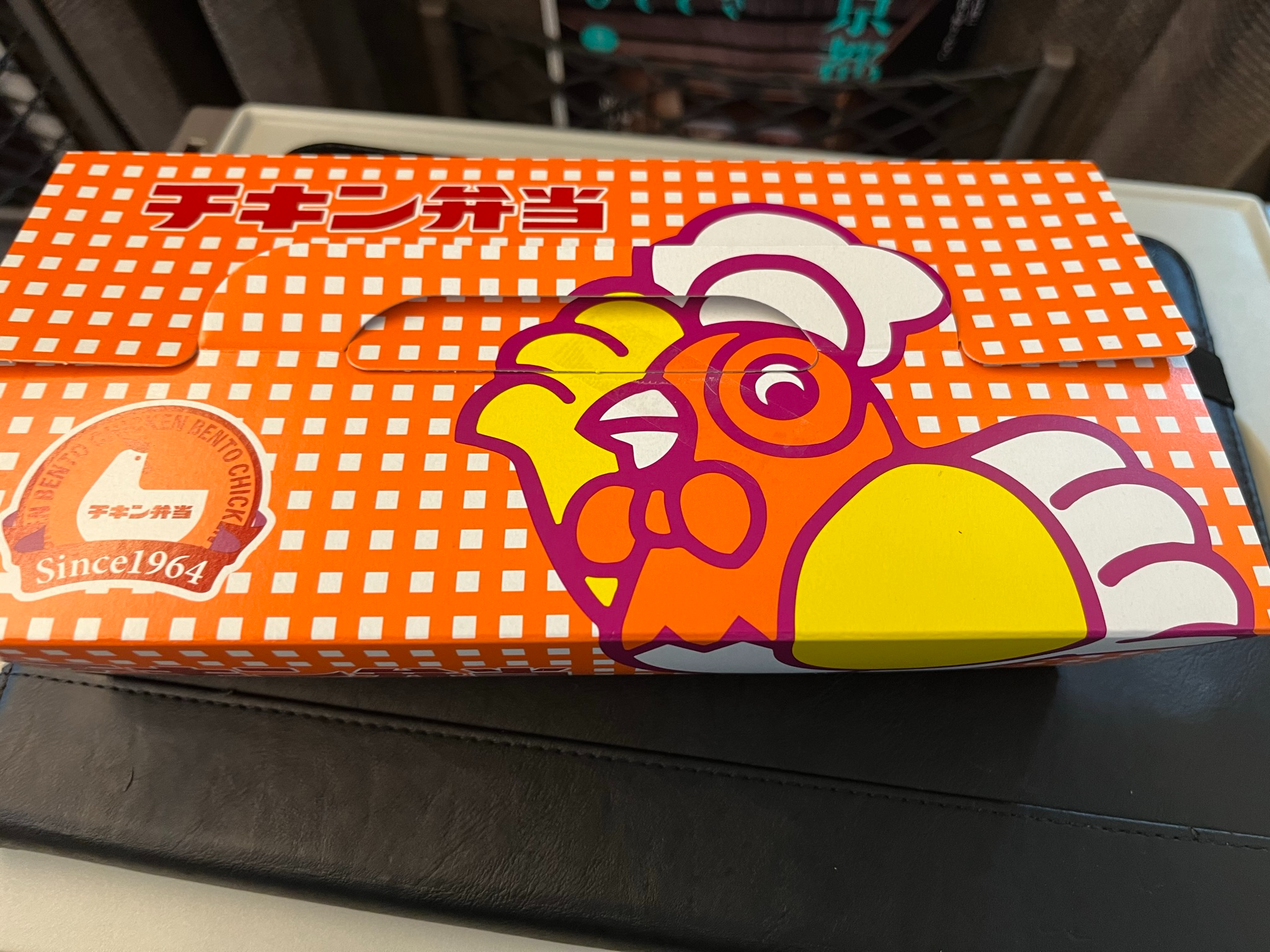
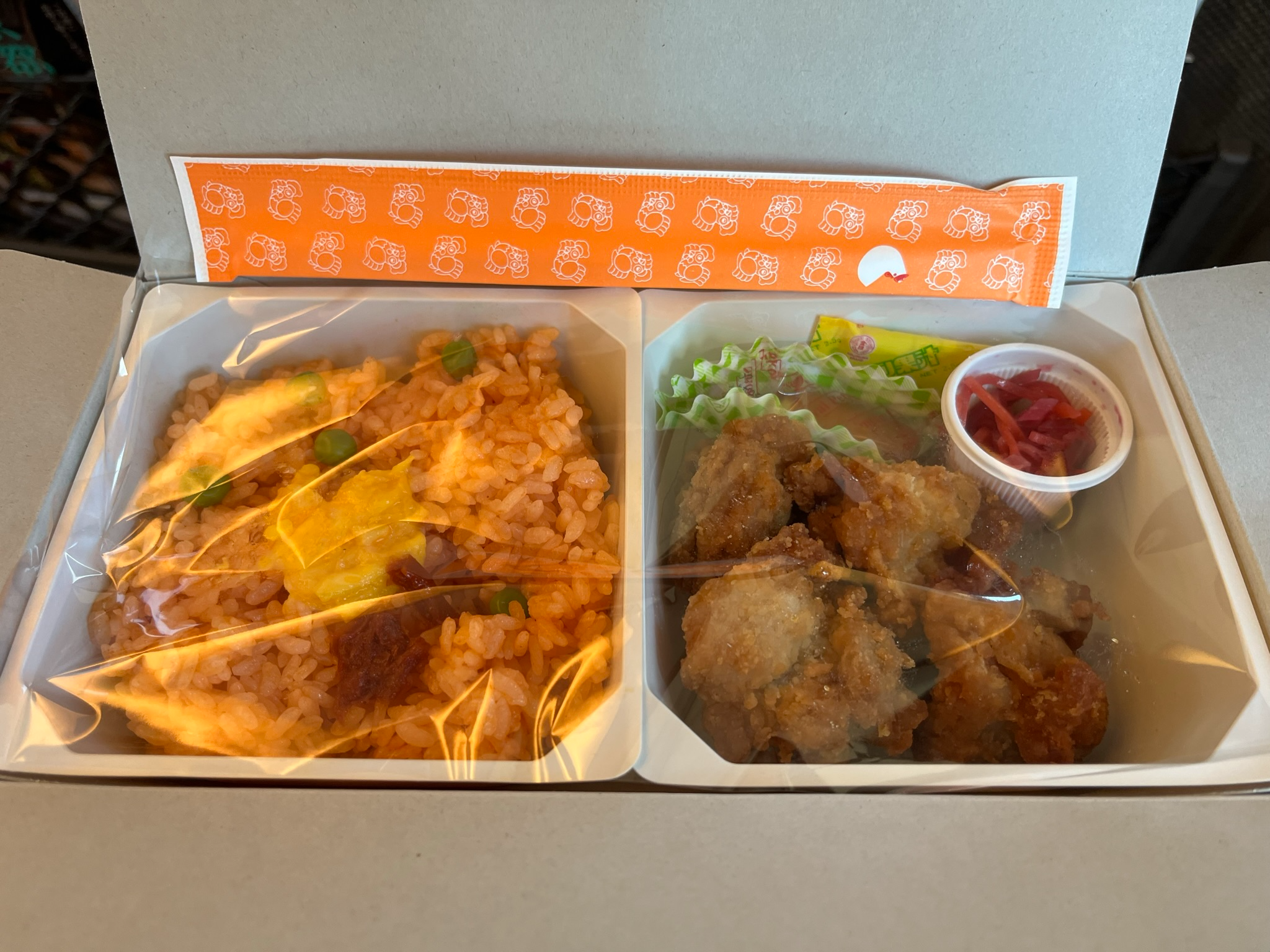
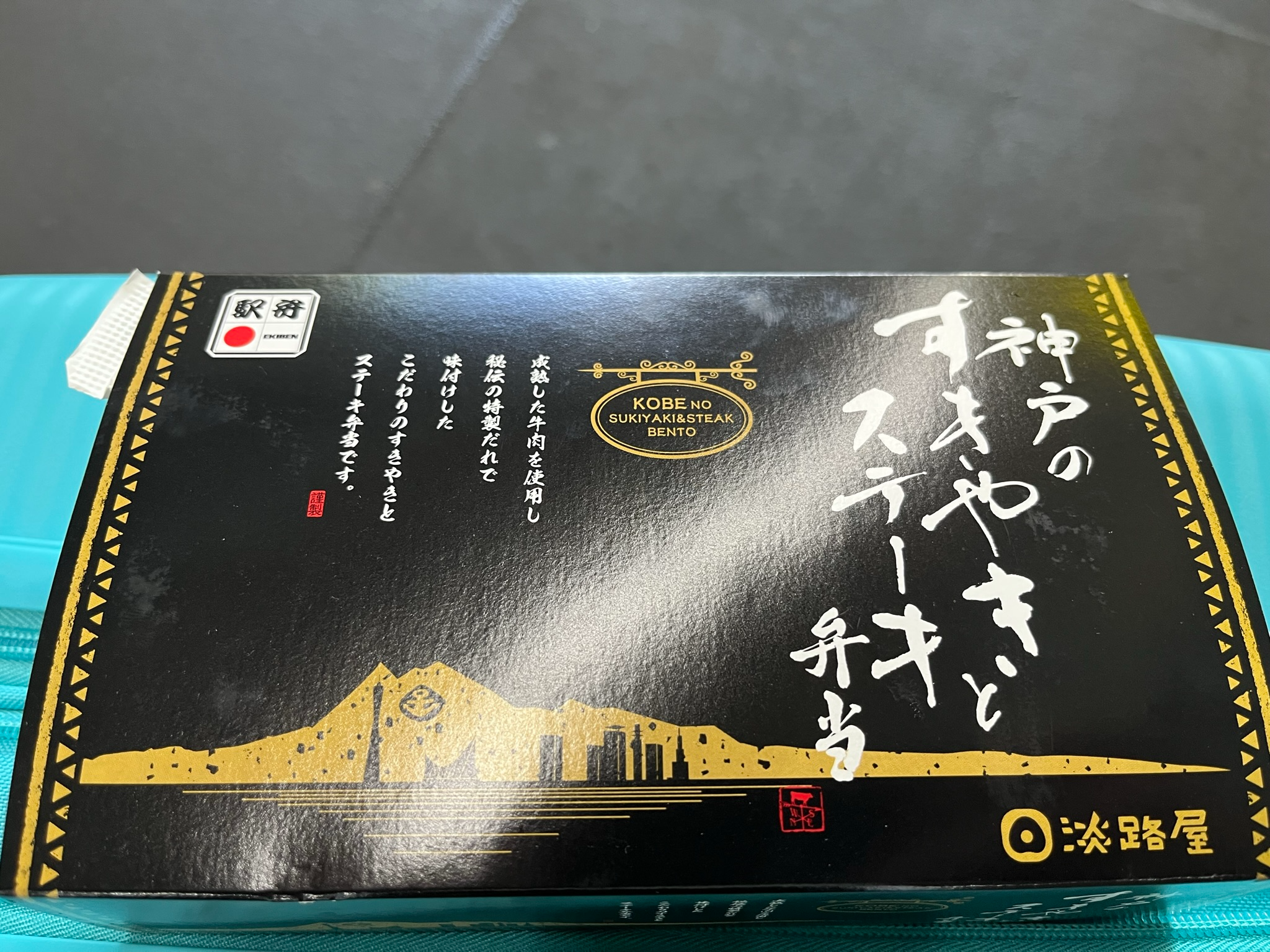
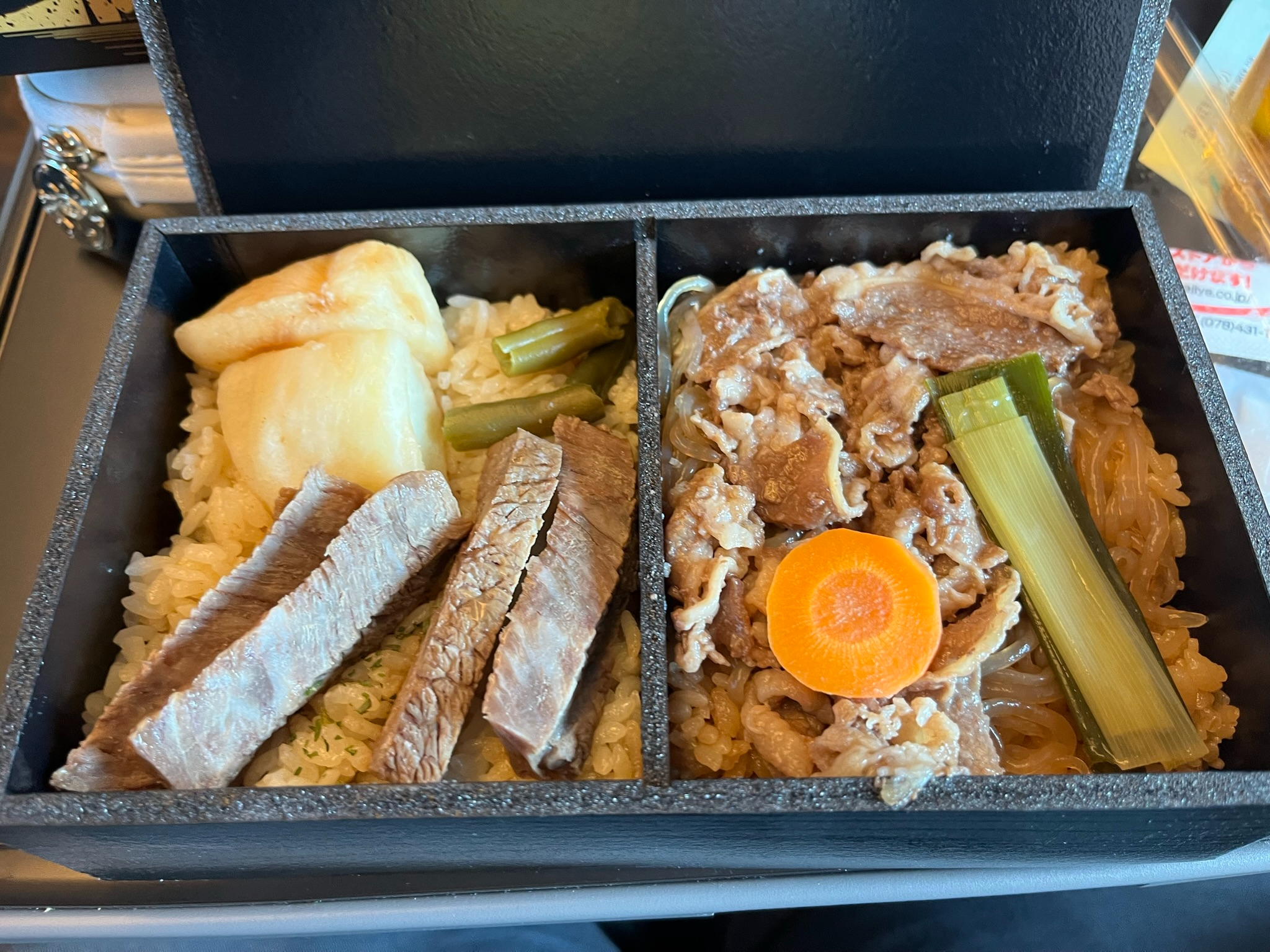
One of the best bits about Shinkansen travel is getting some ekiben from the station. What is ekiben you might be asking right now, well this is ekiben.
A classic Ekiben chicken bento accompanies a journey across Japan by rail, where this long-established station meal tradition combines convenience, regional flavours and a uniquely Japanese travel experience enjoyed aboard the Shinkansen.A classic chicken ekiben is revealed aboard the Shinkansen, featuring seasoned rice, crispy fried chicken and traditional accompaniments that make Japan's beloved station bento culture an essential part of the rail travel experience.A premium Kobe Sukiyaki & Steak Ekiben brings the flavours of Japan's renowned beef culture to the railway journey, combining tender seasoned beef with traditional accompaniments in a popular station bento enjoyed while travelling across the country by Shinkansen.A premium Kobe Sukiyaki & Steak Ekiben showcases two beloved styles of Japanese beef, combining tender sliced sukiyaki beef and succulent steak with seasoned rice and traditional accompaniments, creating a satisfying railway meal enjoyed while travelling across Japan by Shinkansen.
Ekiben translates to Eki - A Japanese Train Station and Ben which is short for Bento - A traditional Japanese boxed lunch. The steak one which I got from Shin-Kobe station was amazing and even contained some Kobe beef.
A station sign marks arrival in Nagasaki, the historic gateway to western Japan where centuries of international trade, cultural exchange and maritime heritage have helped shape one of the country's most distinctive and fascinating cities.
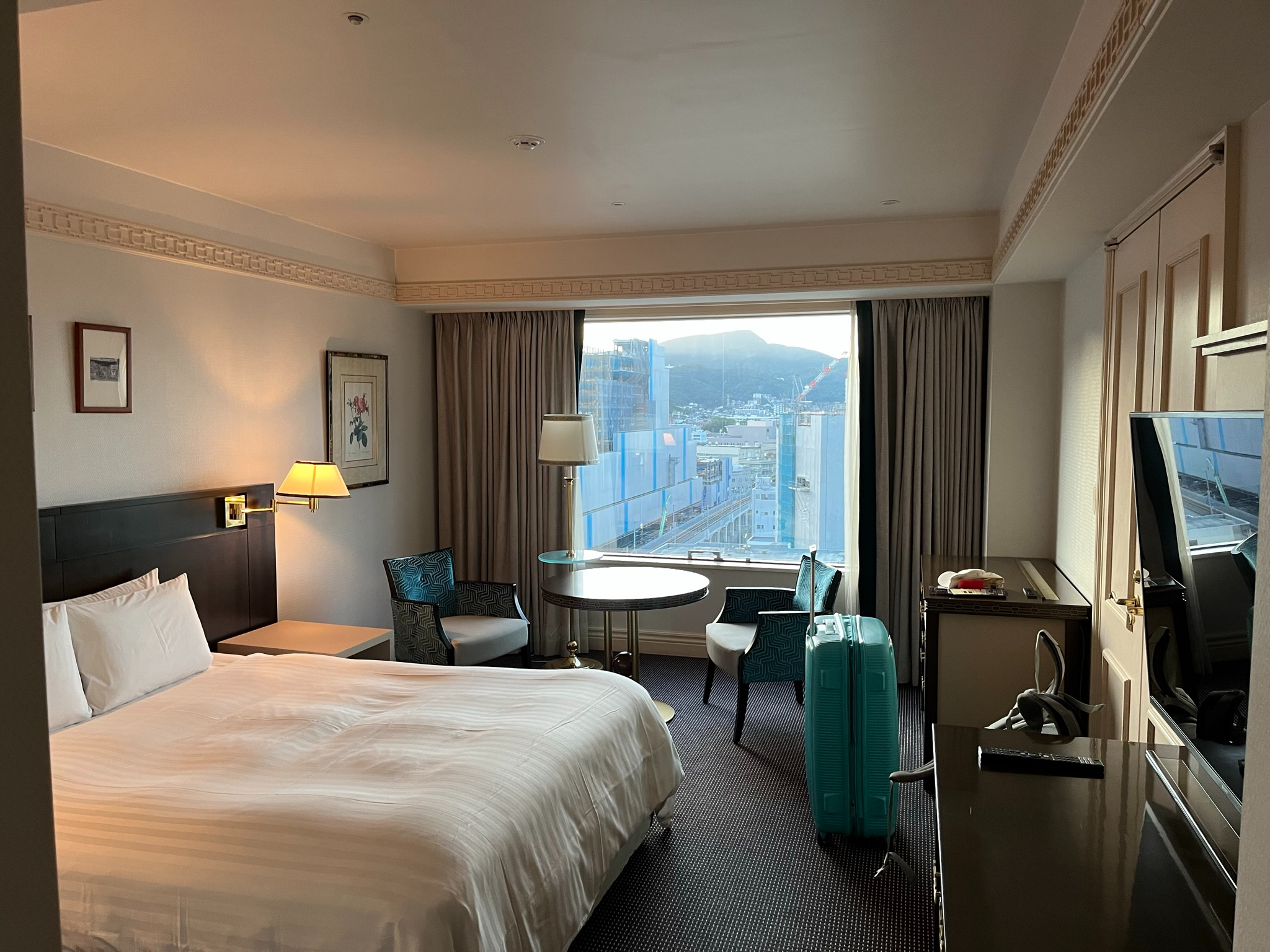
When I got to my new hotel at Nagasaki, it was a nice building with character, a Family mart convenience store build into the side of it with a door directly from the hotel to it and on top of that it was a 4-star hotel as well. All in with breakfast only cost me about £130-140 when I paid for it (rate has gone down now due to GBP to YEN exchange rate).
The Global View Nagasaki offers modern accommodation in the heart of the city, providing guests with convenient access to Nagasaki's historic attractions, scenic viewpoints and vibrant waterfront while serving as a comfortable base for exploring one of Japan's most distinctive destinations.A spacious room at The Global View Nagasaki combines modern comfort with panoramic city views, providing a relaxing retreat after a day of exploring the historic port city's cultural landmarks, waterfront districts and surrounding hills.
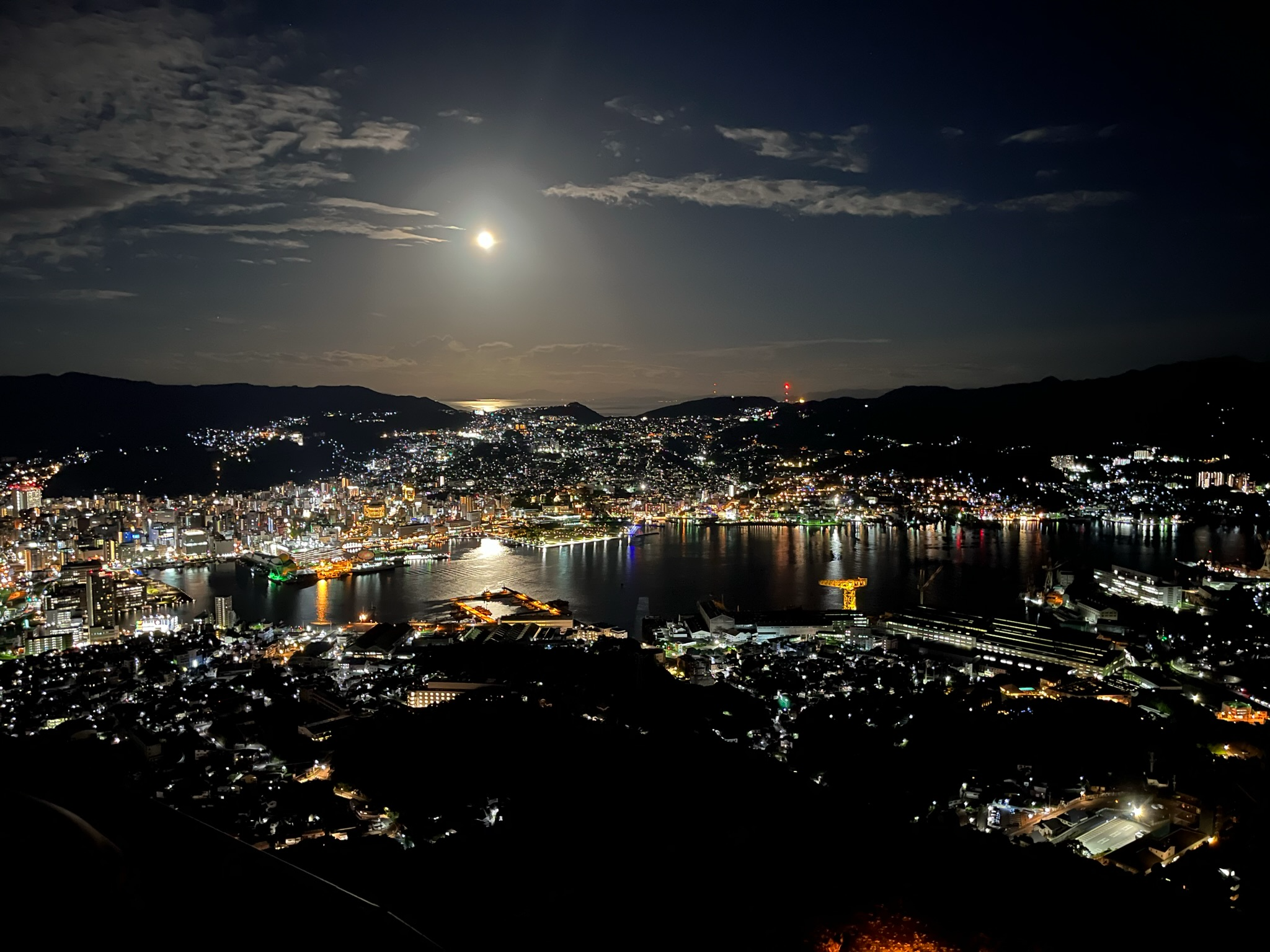
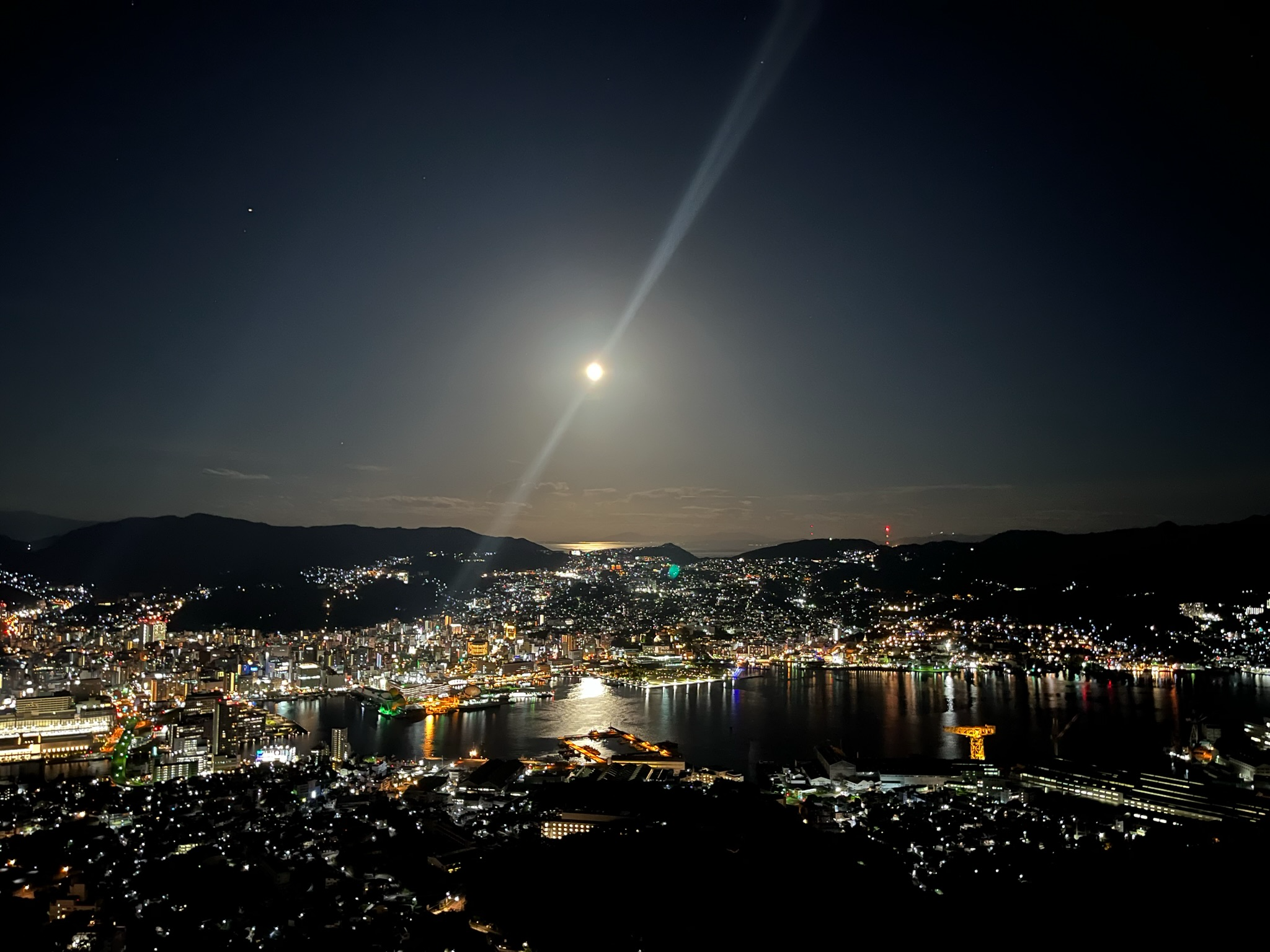
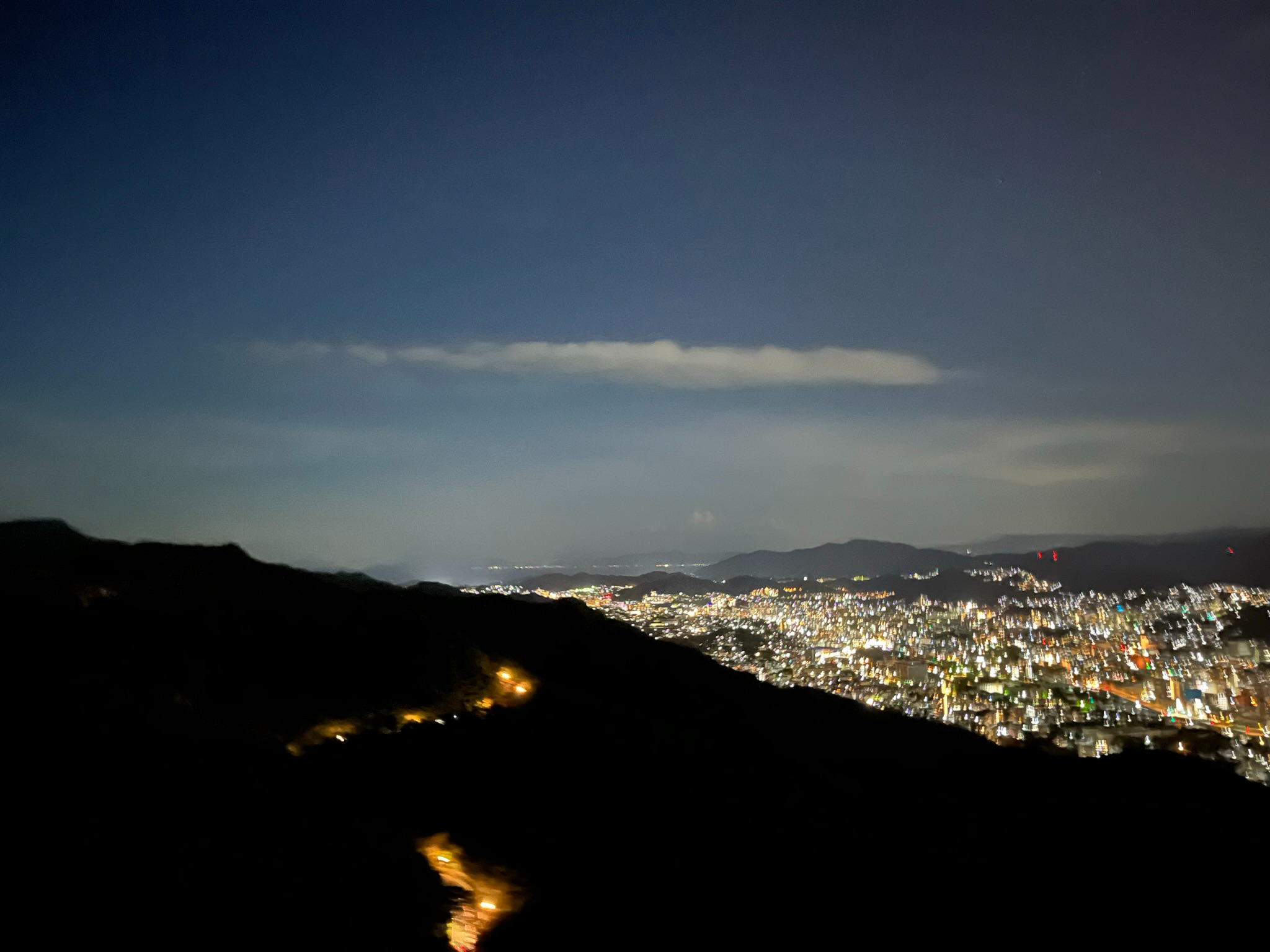
After I got settled, I went down to the desk to inquire about a free shuttle bus to the Mt Inasa ropeway which is a cable car up to the top of the mountain, this was supposed to be on the 3rd, but they had free spaces that night so it was a good shout to go up that night and oh boy, the views were amazing.
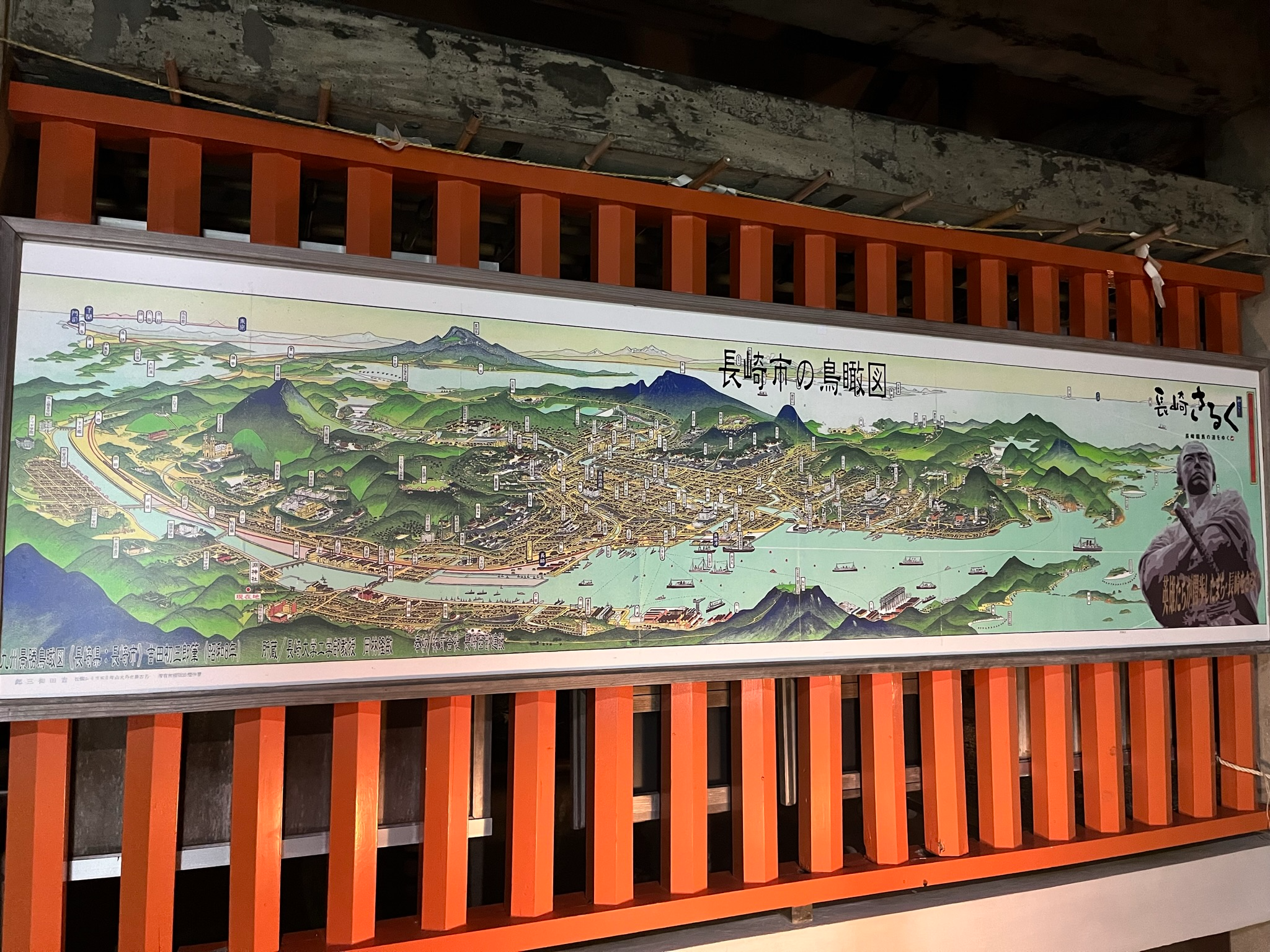
An illustrated panorama at Mount Inasa provides an overview of Nagasaki's unique geography, highlighting the city's harbour, surrounding hills and key landmarks while helping visitors appreciate the landscape that contributes to one of Japan's most celebrated urban viewpoints.A breathtaking night-time panorama from Mount Inasa overlooks Nagasaki Harbour, where countless city lights trace the contours of the surrounding hills and waterfront beneath a bright moon, creating one of Japan's most celebrated urban night views.A dazzling night-time panorama from Mount Inasa overlooks Nagasaki's natural harbour, where thousands of lights spread across the surrounding hillsides and waterfront beneath a luminous moon, creating one of Japan's most celebrated and picturesque urban night views.A memorable moment atop Mount Inasa captures one of Japan's most celebrated night views, where the sparkling lights of Nagasaki spread across the harbour and surrounding hills beneath a bright moonlit sky, creating a breathtaking panorama over the historic port city.A sweeping night-time view from Mount Inasa captures Nagasaki illuminated beneath a clear evening sky, where thousands of city lights spread across the surrounding hills and valleys, creating one of Japan's most renowned and atmospheric urban panoramas.
Day Out in Nagasaki
3rd August
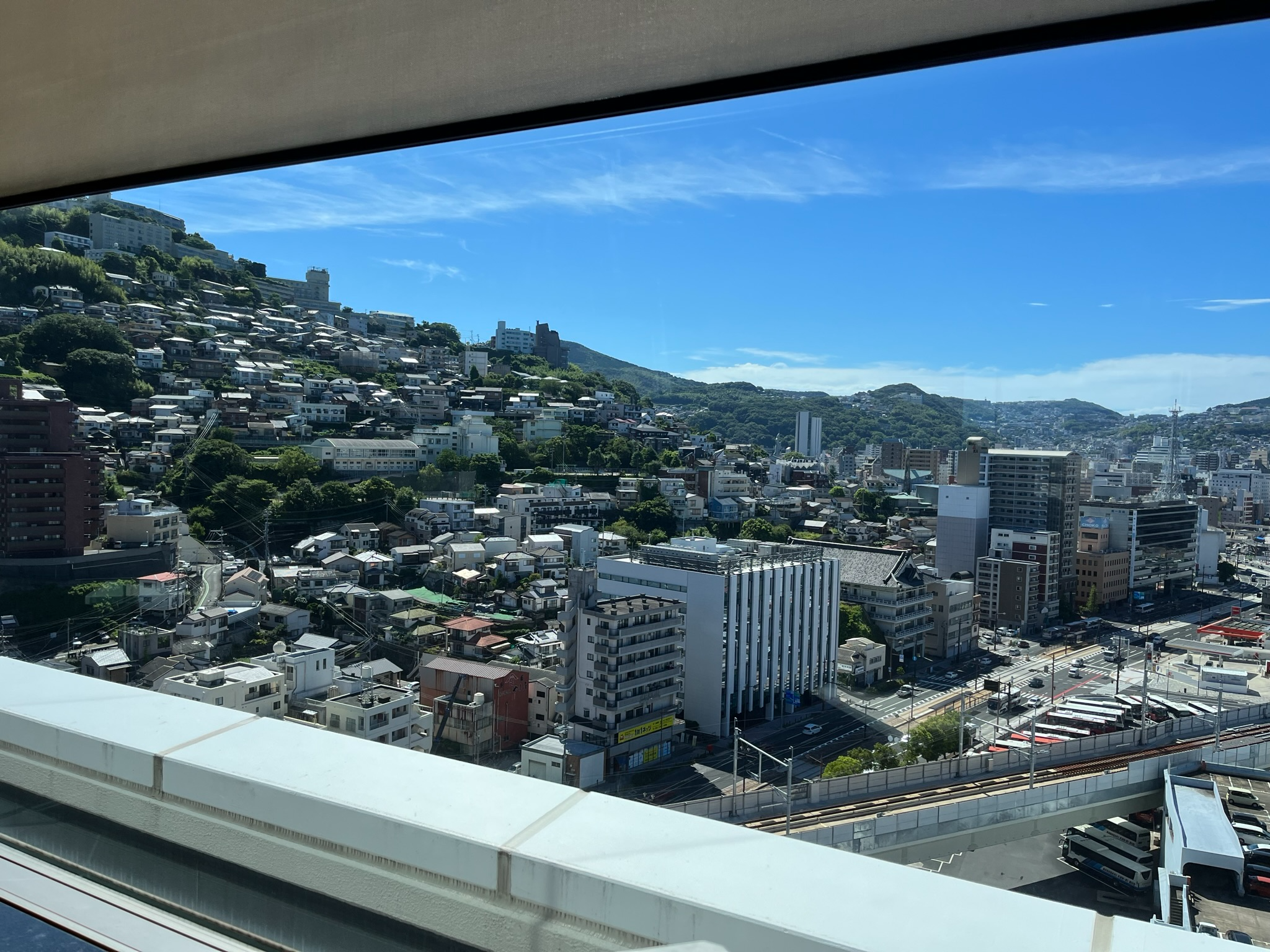
A daytime view across Nagasaki highlights the city's distinctive hillside neighbourhoods, where tightly packed homes climb the surrounding slopes and green mountains frame one of Japan's most geographically unique urban landscapes.
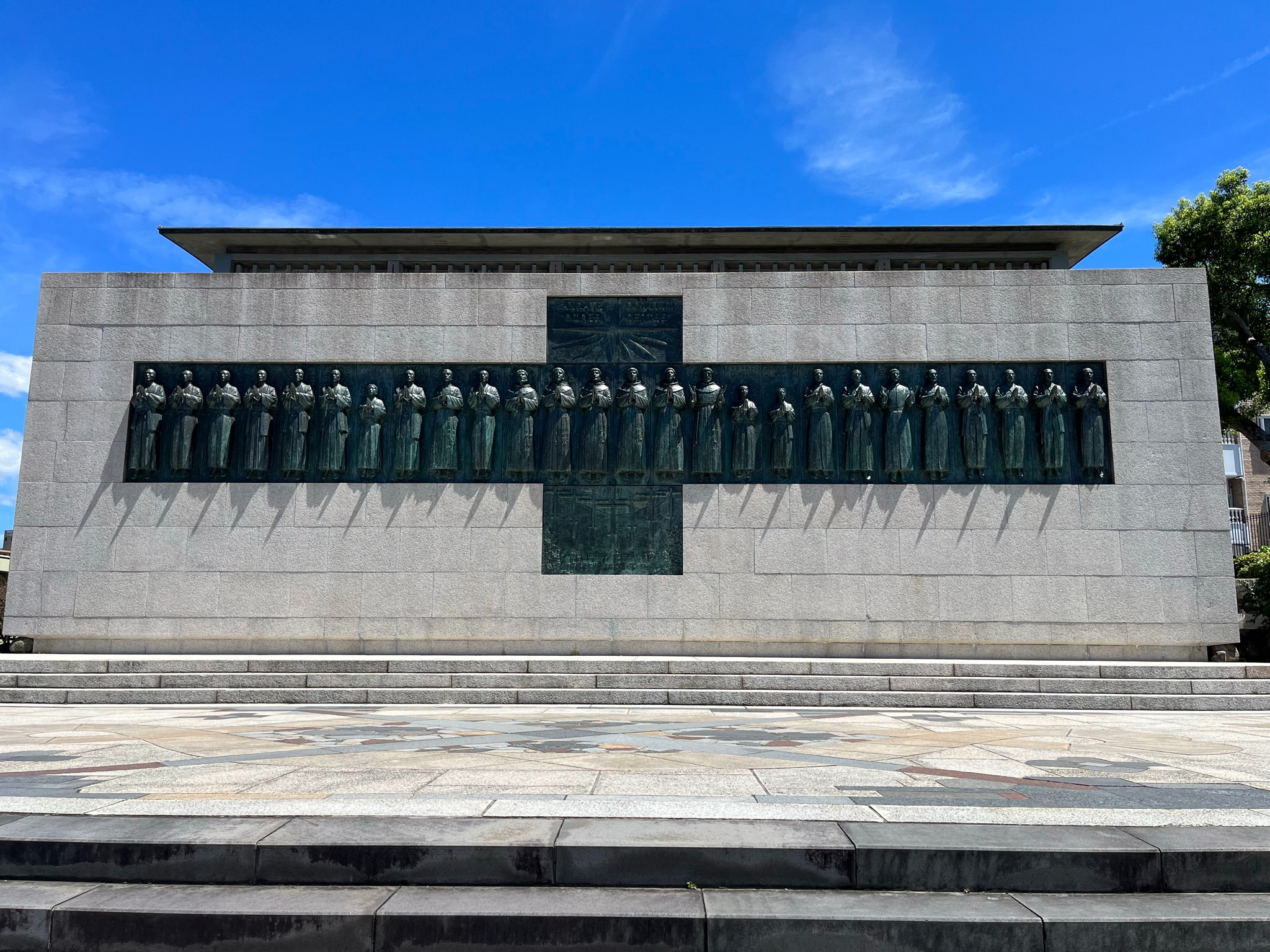
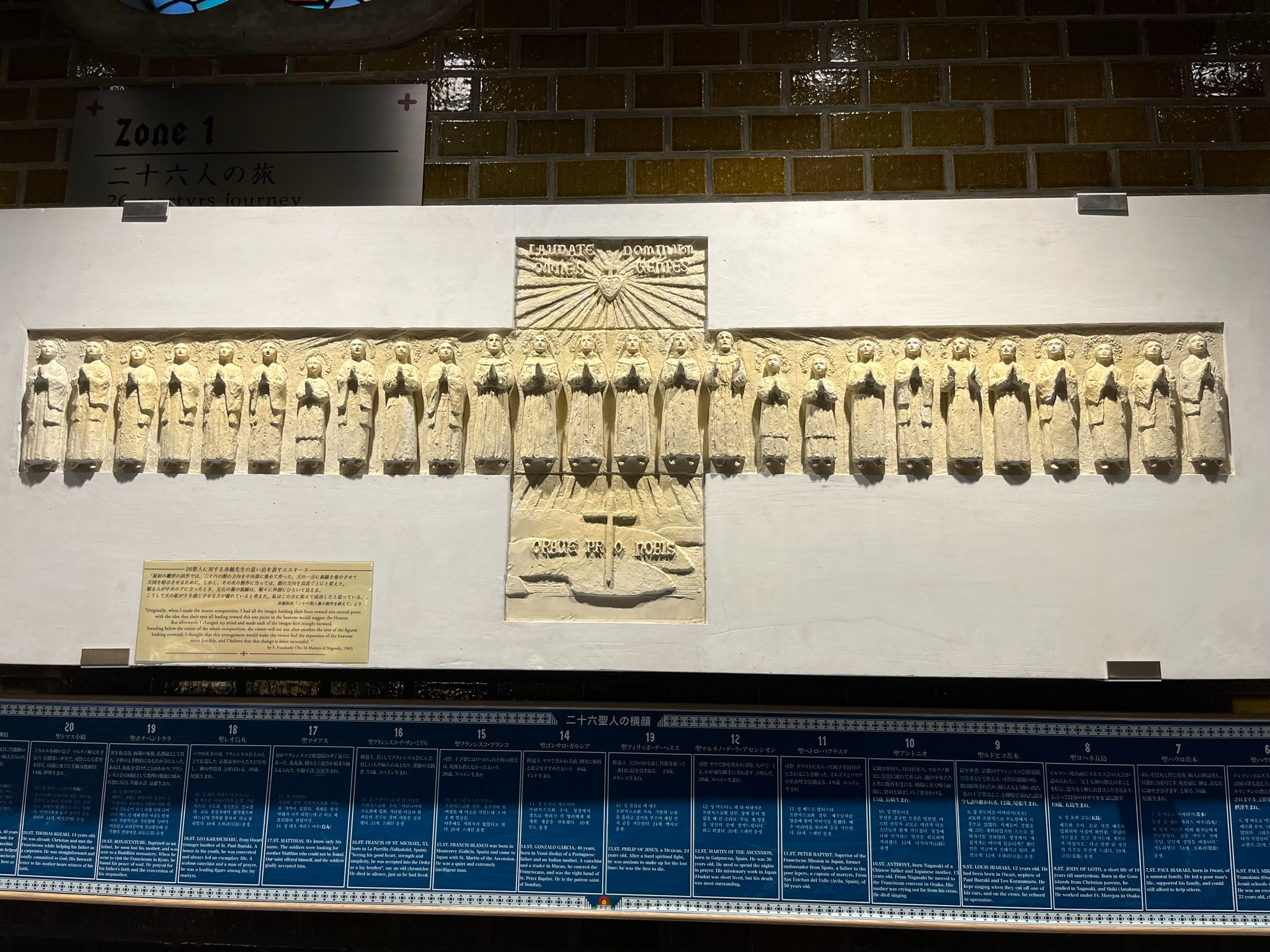
Time to start out the day and grab some breakfast which was lovely. First on my trip around Nagasaki was to go to the Museum of the 26 Martyrs. The history surrounding this I did find quite interesting, like how they came about over here. Now as much as people got converted and even local officials and shogunate got converted, there was a rebellion in 1637 and because of that and the fact that the Christian’s were tearing down Buddhist temples and Shinto shrines (the main religions of Japan) this led to an outright ban in Japan under Toyotomi Hideyoshi and the Tokugawa Shogunate after him. It Wasn’t until 1871 that Christianity was allowed back in Japan with the Meiji Restoration.
The Twenty-Six Martyrs Monument commemorates the group of Christians executed in Nagasaki in 1597, where a striking bronze relief and memorial wall honour their faith, sacrifice and lasting place in Japan's religious and cultural history.An exhibit within the Twenty-Six Martyrs Museum illustrates the story of the Christian martyrs executed in 1597, using a detailed relief sculpture and historical information to commemorate their journey, faith and enduring significance in Nagasaki's religious history.
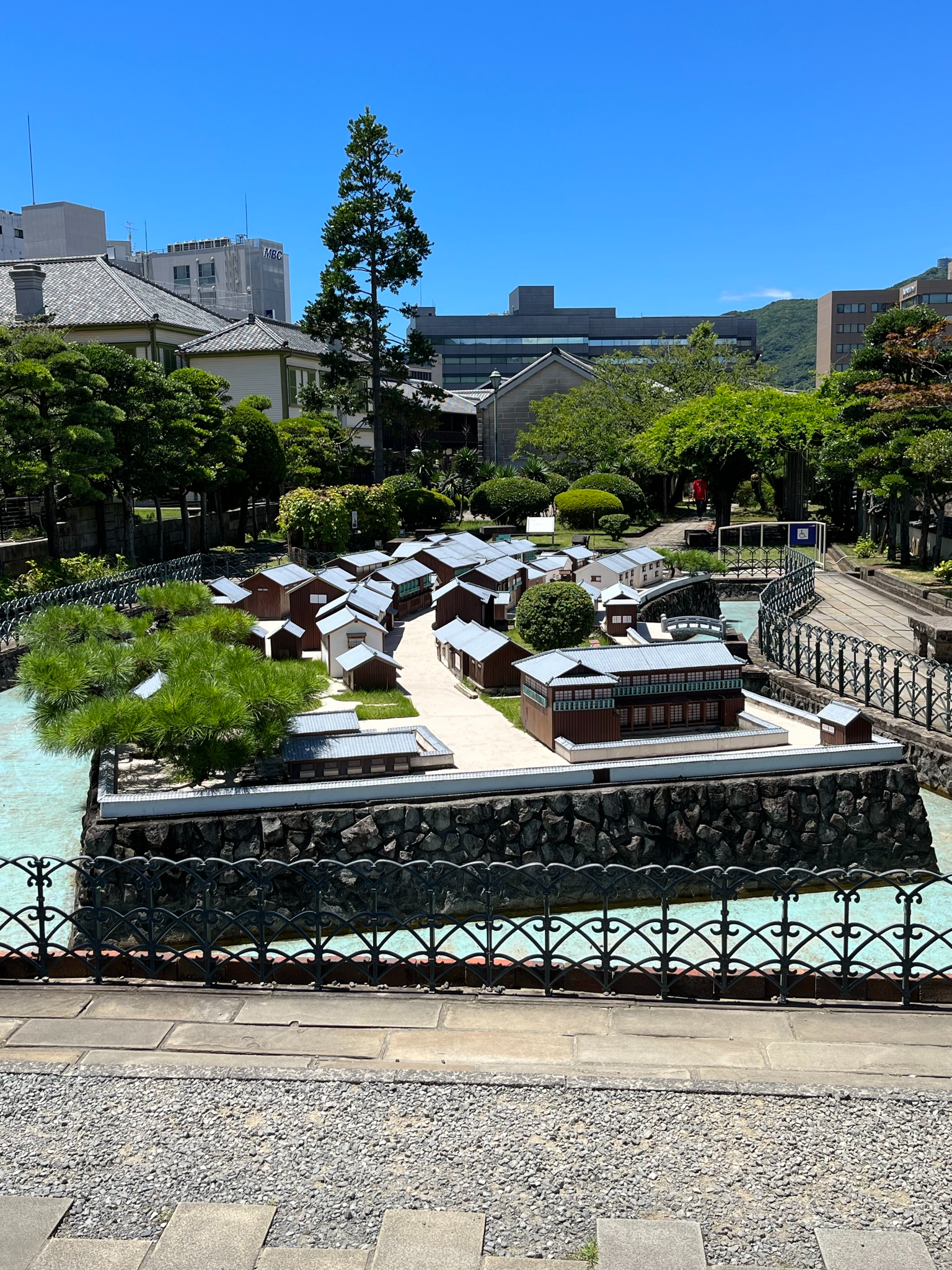
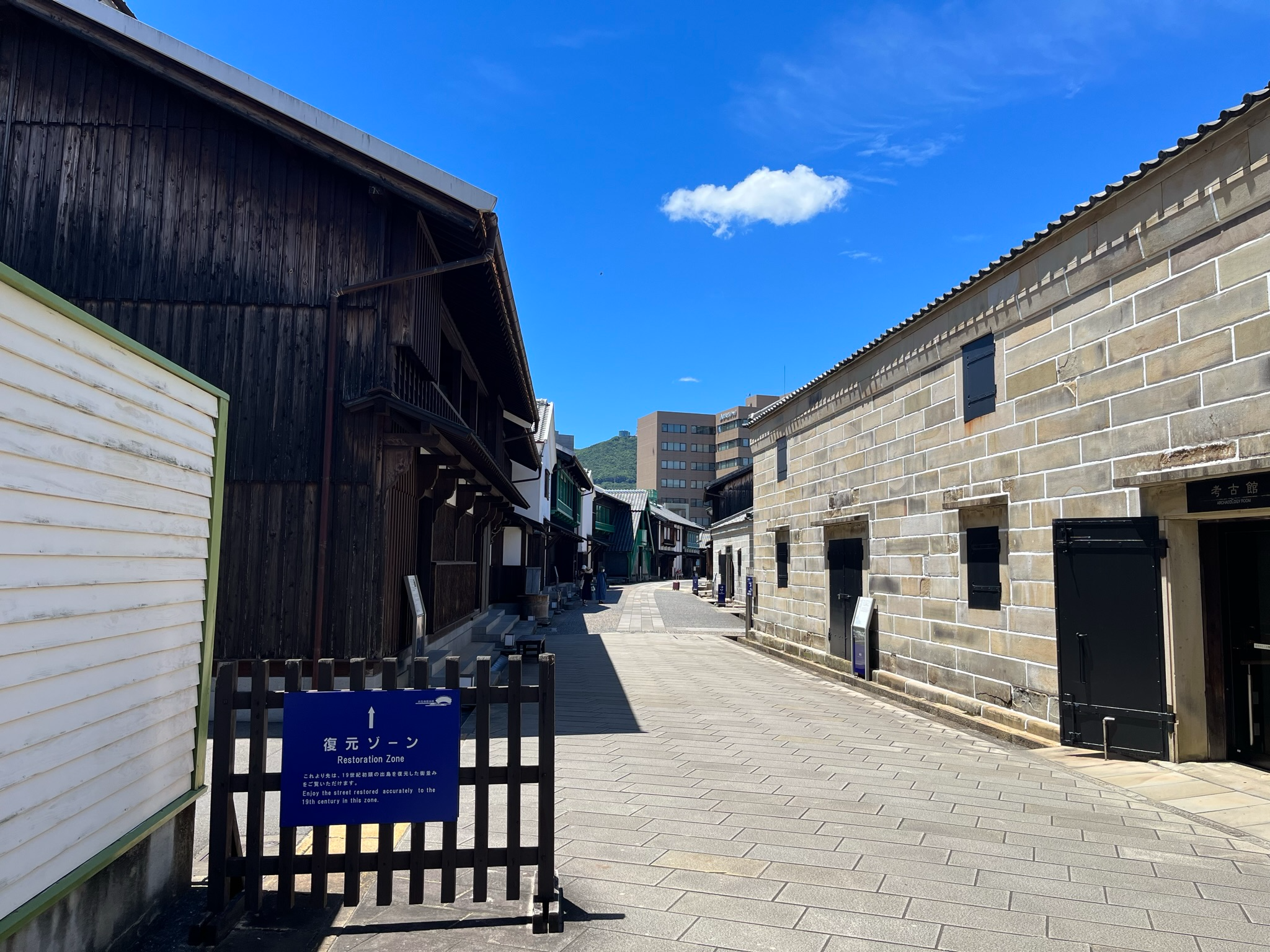
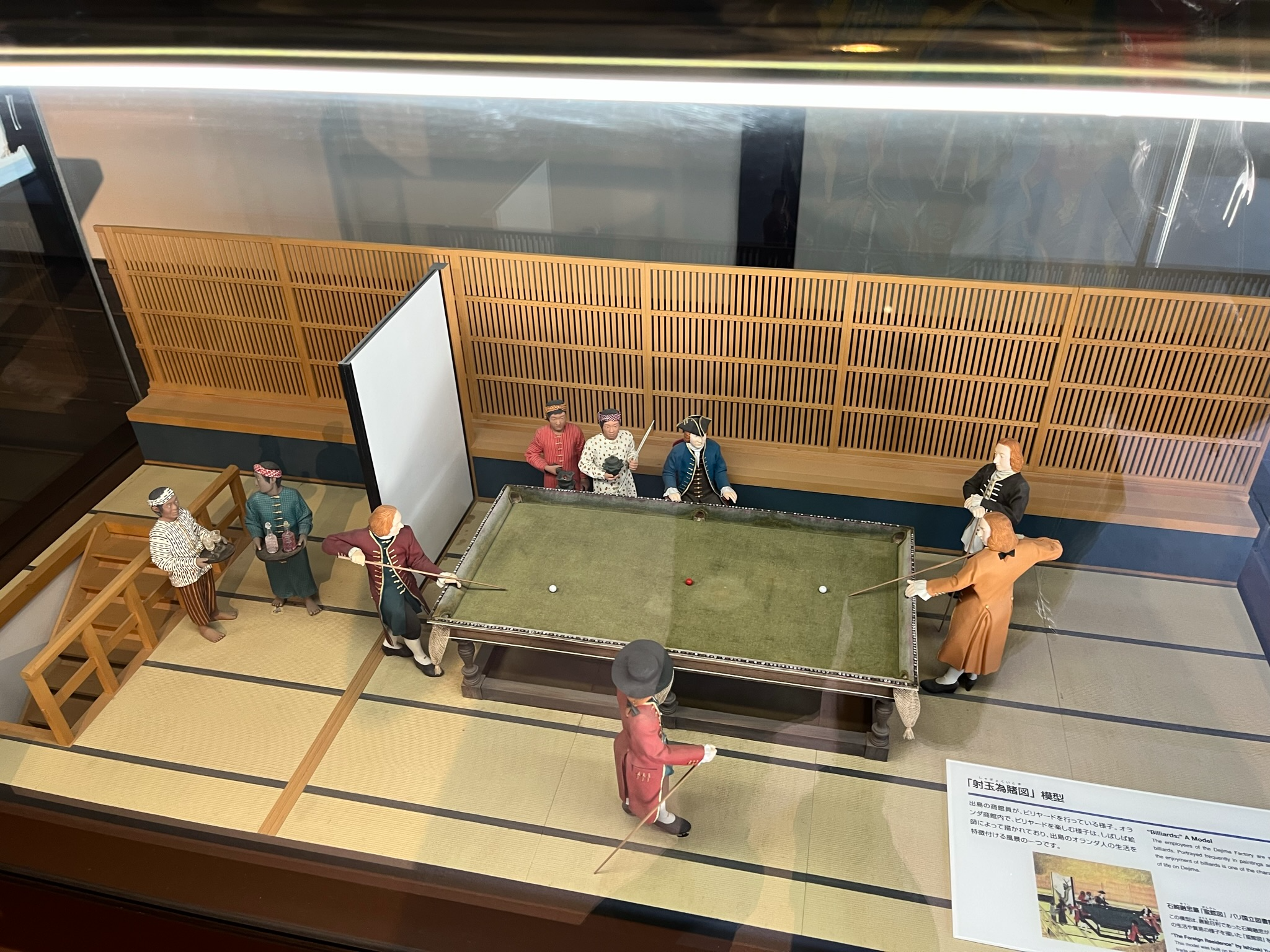
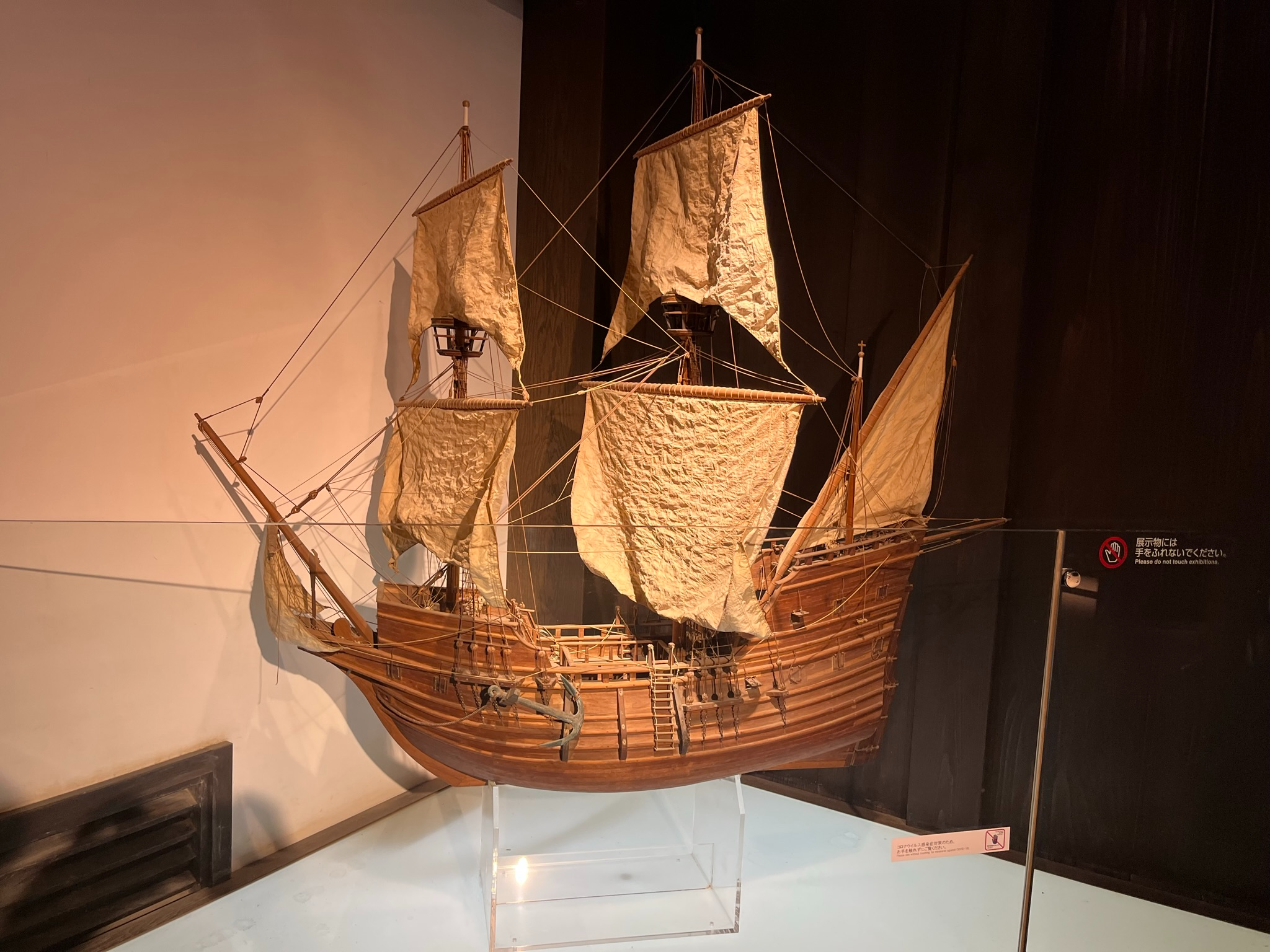
After this I went on my way down a hill towards Dejima. Dejima was a trading outpost build in Nagasaki for trade and was the only point in Japan that could trade with anywhere else in the world including the East India Company. Dejima to me had quite an interesting past as it during the samurai feudal age. The main thing that was exported from here was Copper.
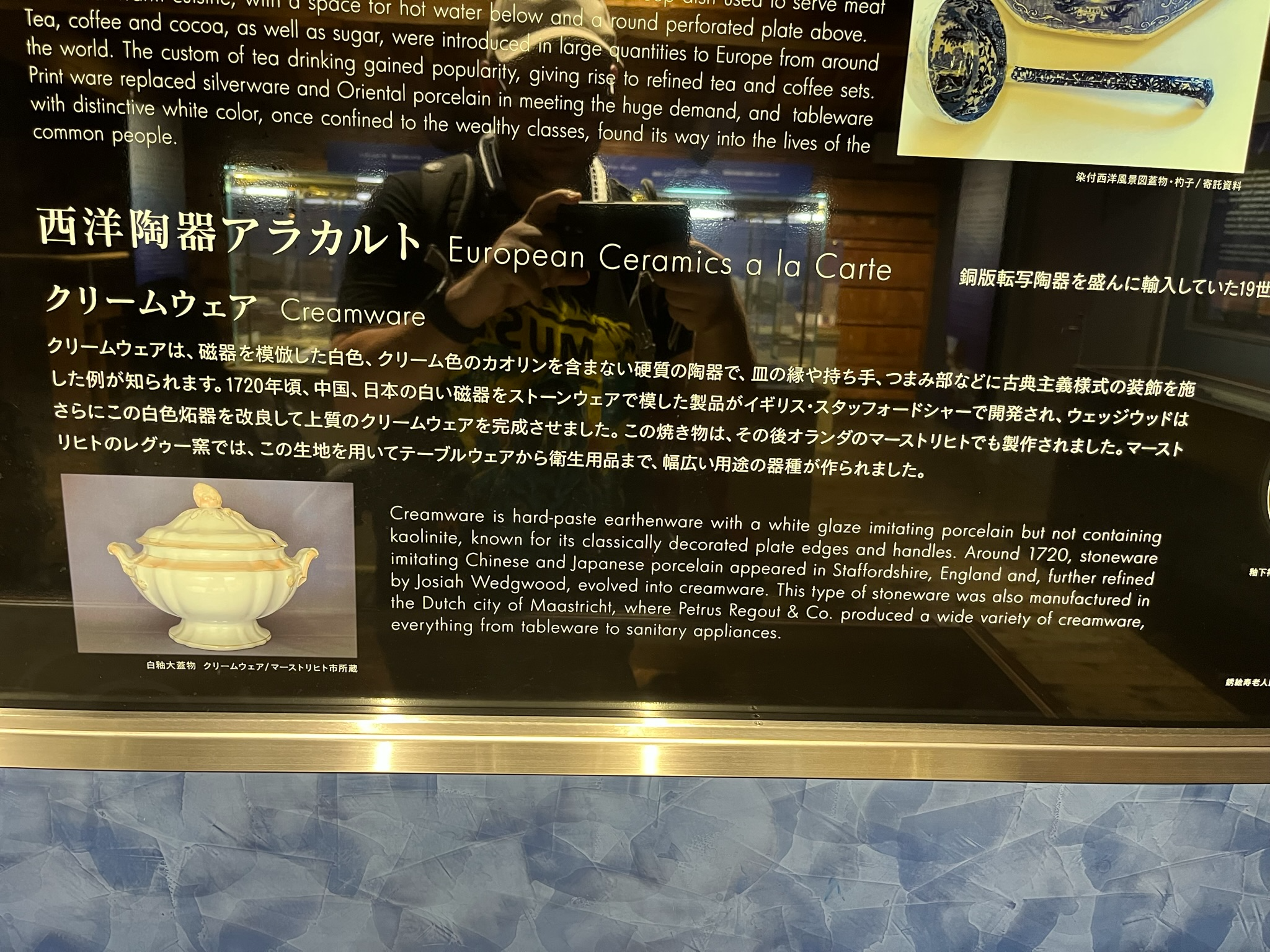
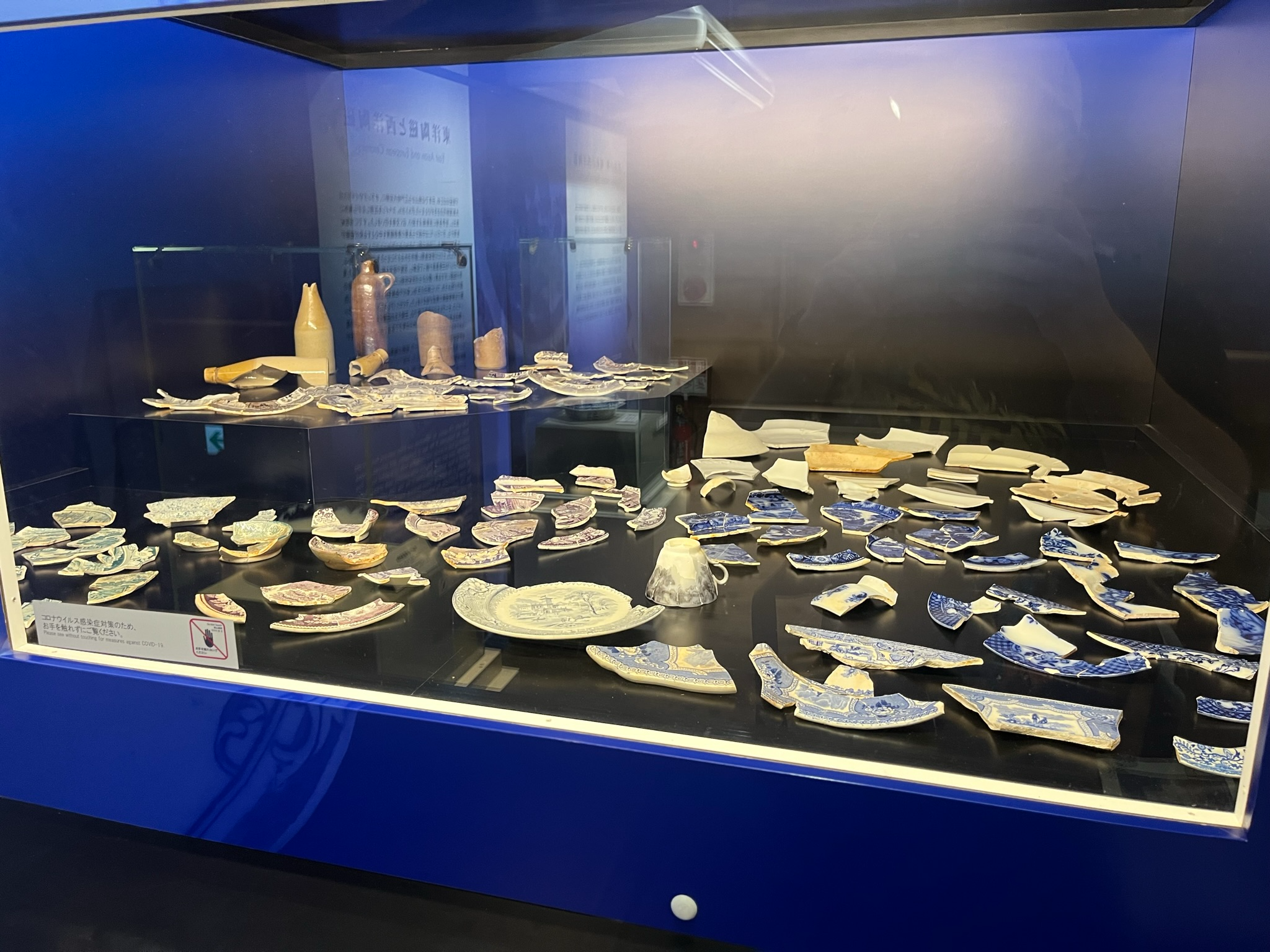
A detailed scale model of historic Dejima illustrates the small artificial island that served as Japan's primary gateway to the outside world during the Edo period, highlighting the unique role Nagasaki played in centuries of international trade and cultural exchange.A stroll through Dejima's Restoration Zone offers a glimpse into Nagasaki's role as Japan's historic gateway to the world, where carefully reconstructed warehouses, merchants' buildings and stone streets recreate the atmosphere of the former Dutch trading post during the Edo period.An exhibit at Dejima recreates a scene from daily life within the historic Dutch trading post, illustrating the cultural exchanges, leisure activities and international interactions that took place on the artificial island during Japan's period of limited foreign contact in the Edo era.A detailed model of a European sailing vessel highlights the maritime connections that linked Nagasaki with the wider world, illustrating the ships that carried goods, ideas and cultural influences through Dejima during Japan's period of limited international trade.An exhibit at Dejima explores the influence of European ceramics on Japanese trade and culture, highlighting imported creamware and other decorative tableware that arrived through Nagasaki, reflecting the exchange of ideas, craftsmanship and consumer tastes between Japan and the West during the Edo period.Archaeological discoveries from Dejima reveal the international trade networks that connected Nagasaki with Europe and Asia during the Edo period, where imported ceramics, tableware and everyday objects provide valuable insight into centuries of cultural exchange at Japan's historic gateway to the world.
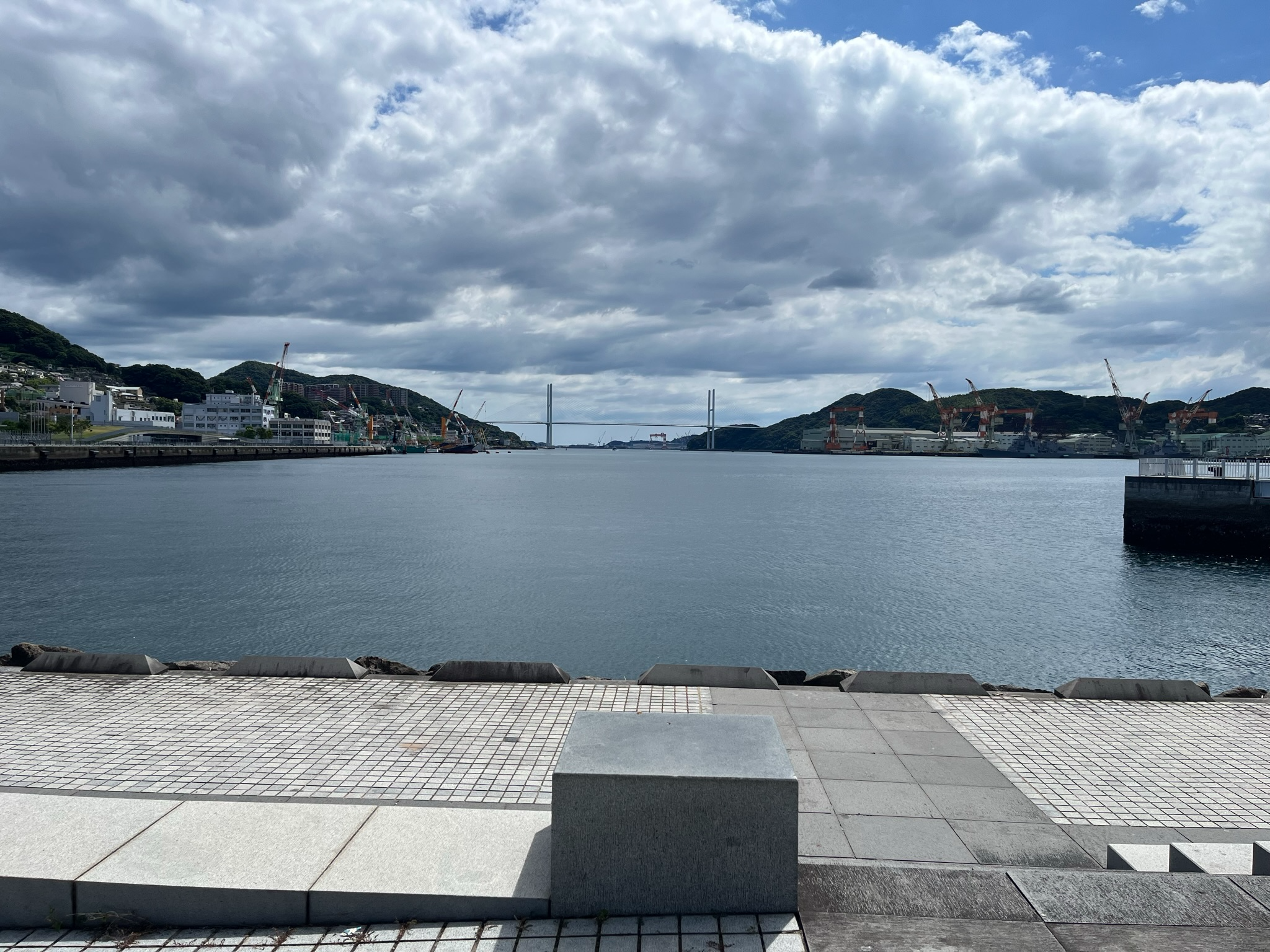
After this I went for a walk around the seaside park whilst talking to my Auntie.
A broad view across Nagasaki Harbour highlights the city's long maritime heritage, where shipyards, waterfront facilities and surrounding green hills frame the calm waters of one of Japan's most historically significant natural harbours beneath dramatic summer skies.
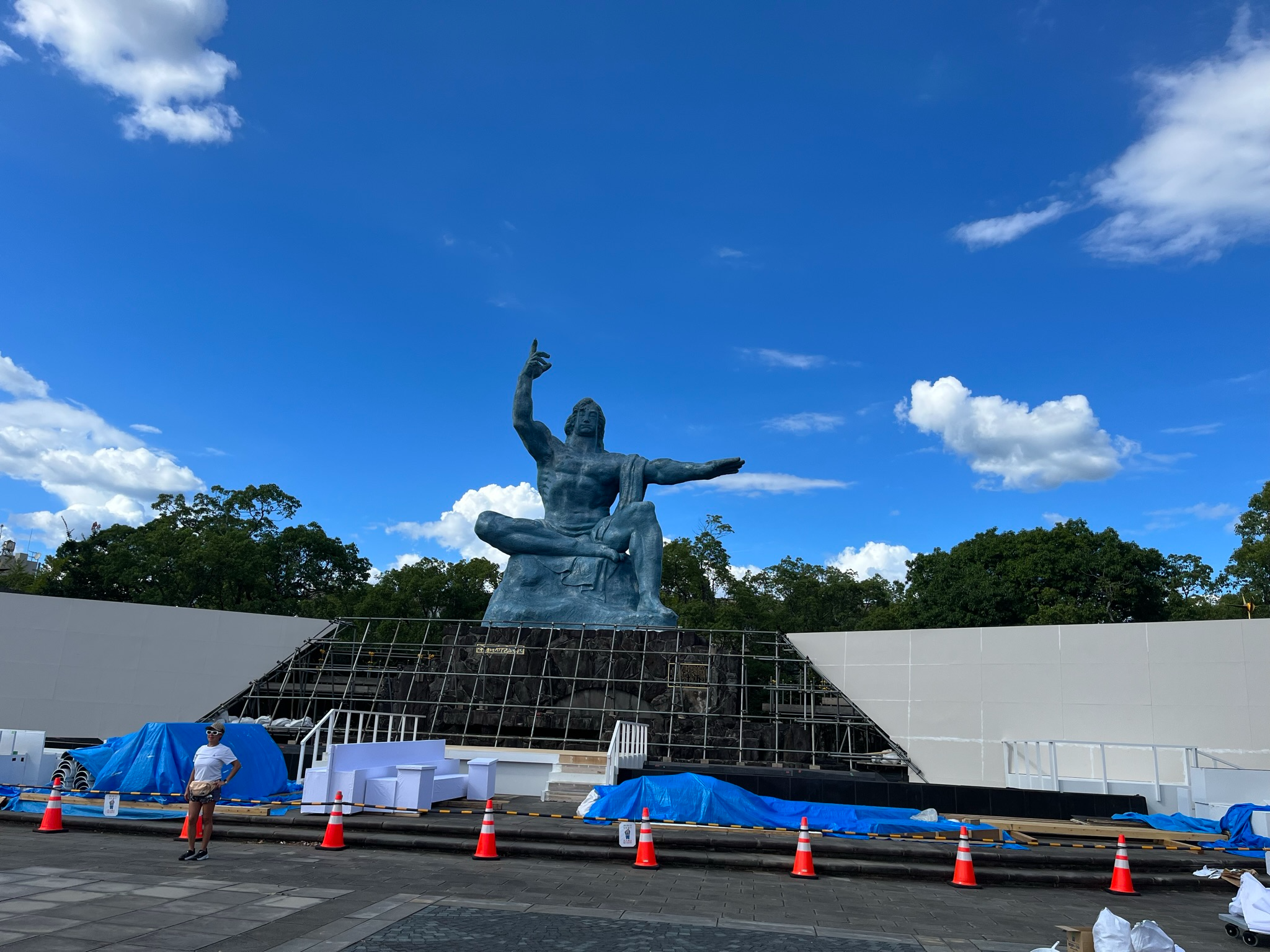
After that I caught the streetcar all the way up to the Nagasaki Peace Park, Hypocentre and museum.
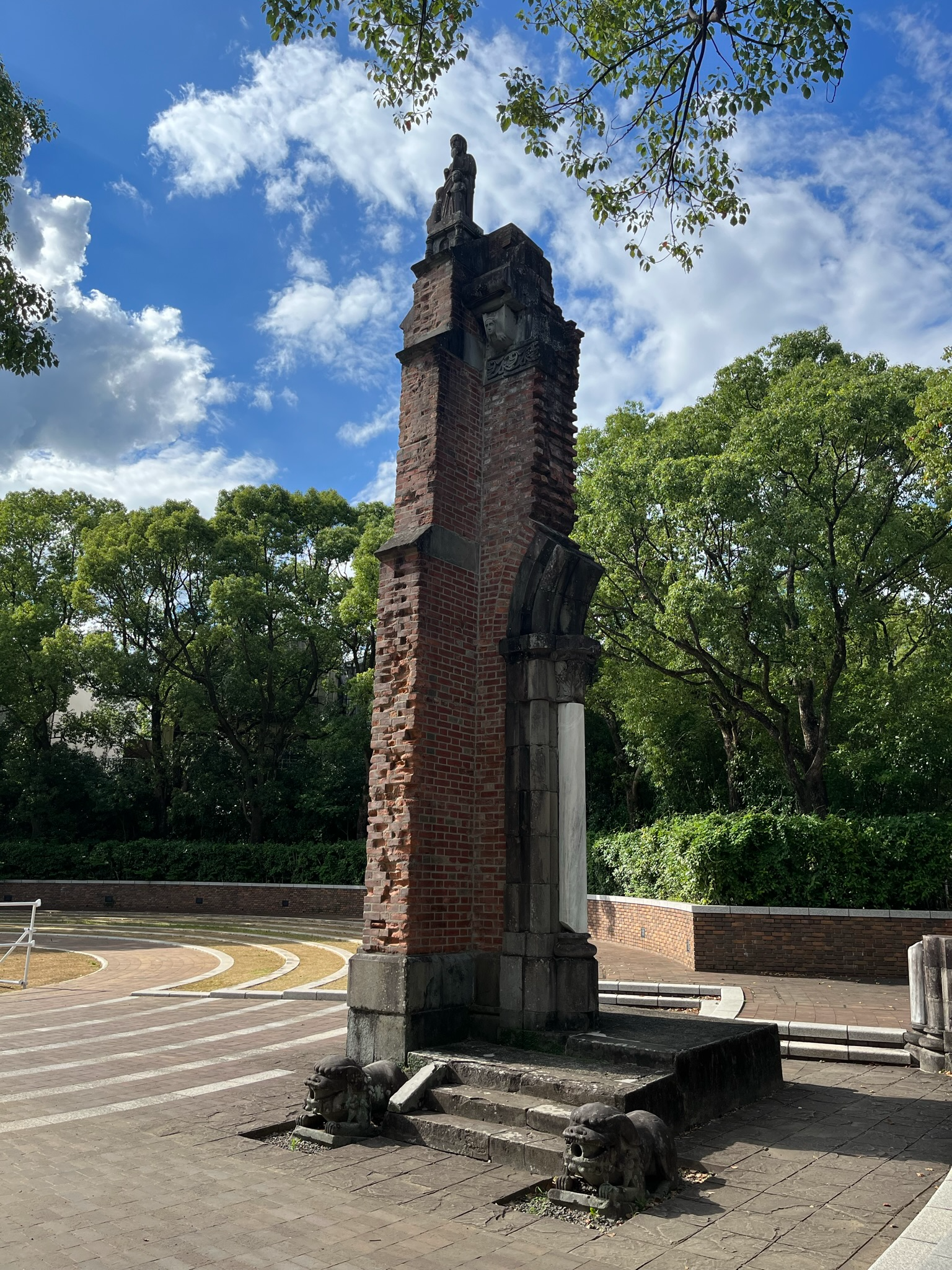
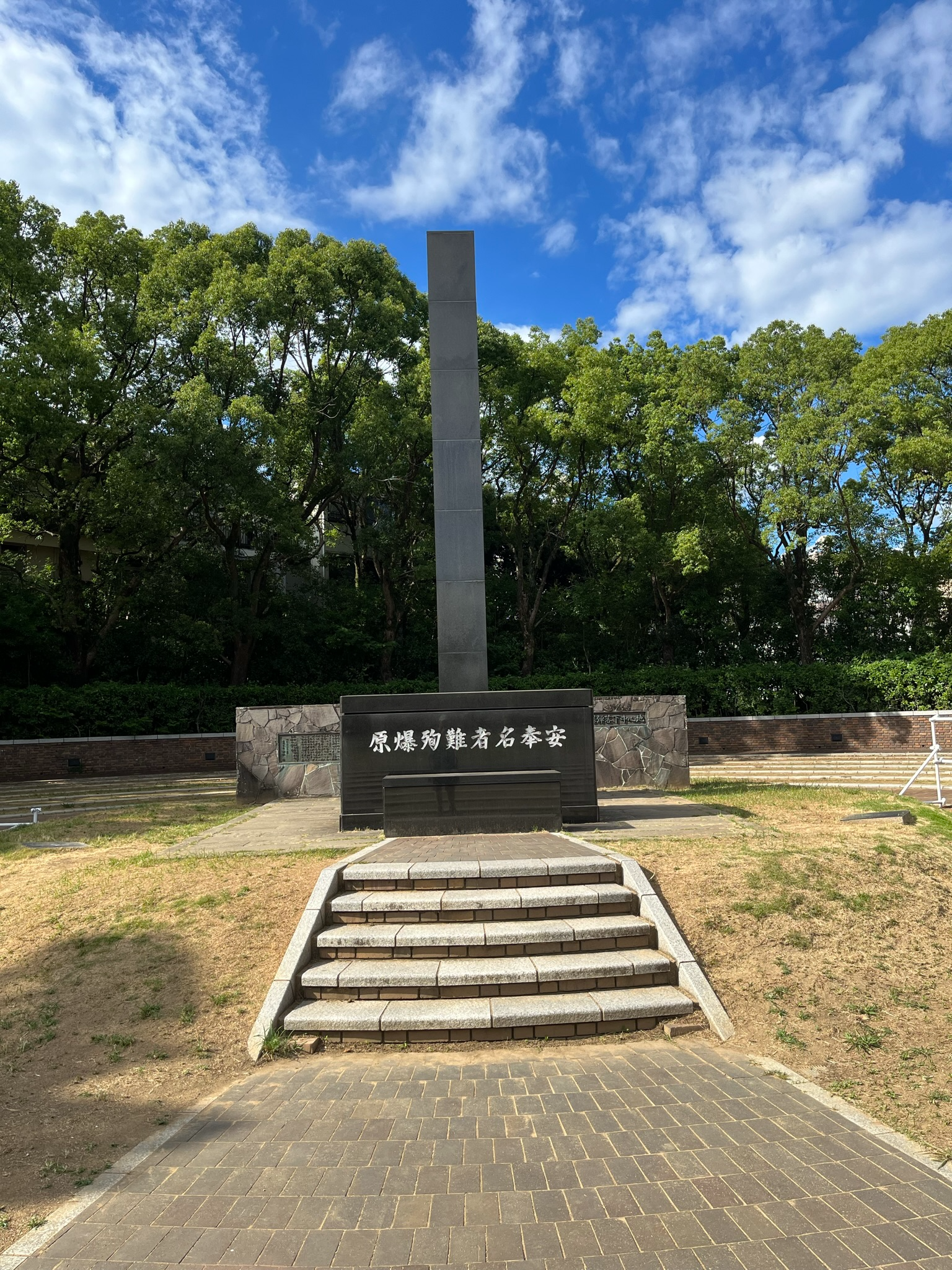
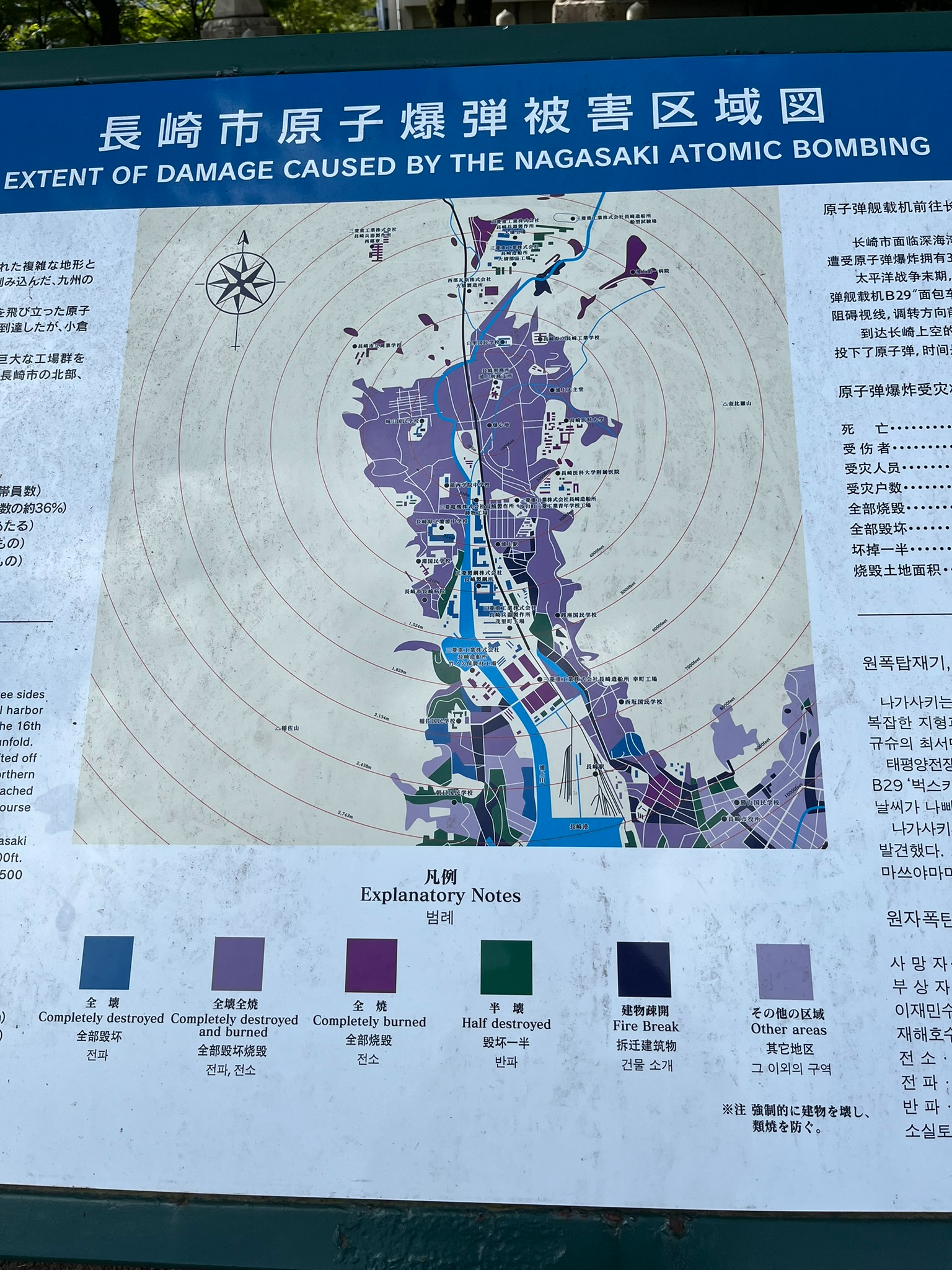
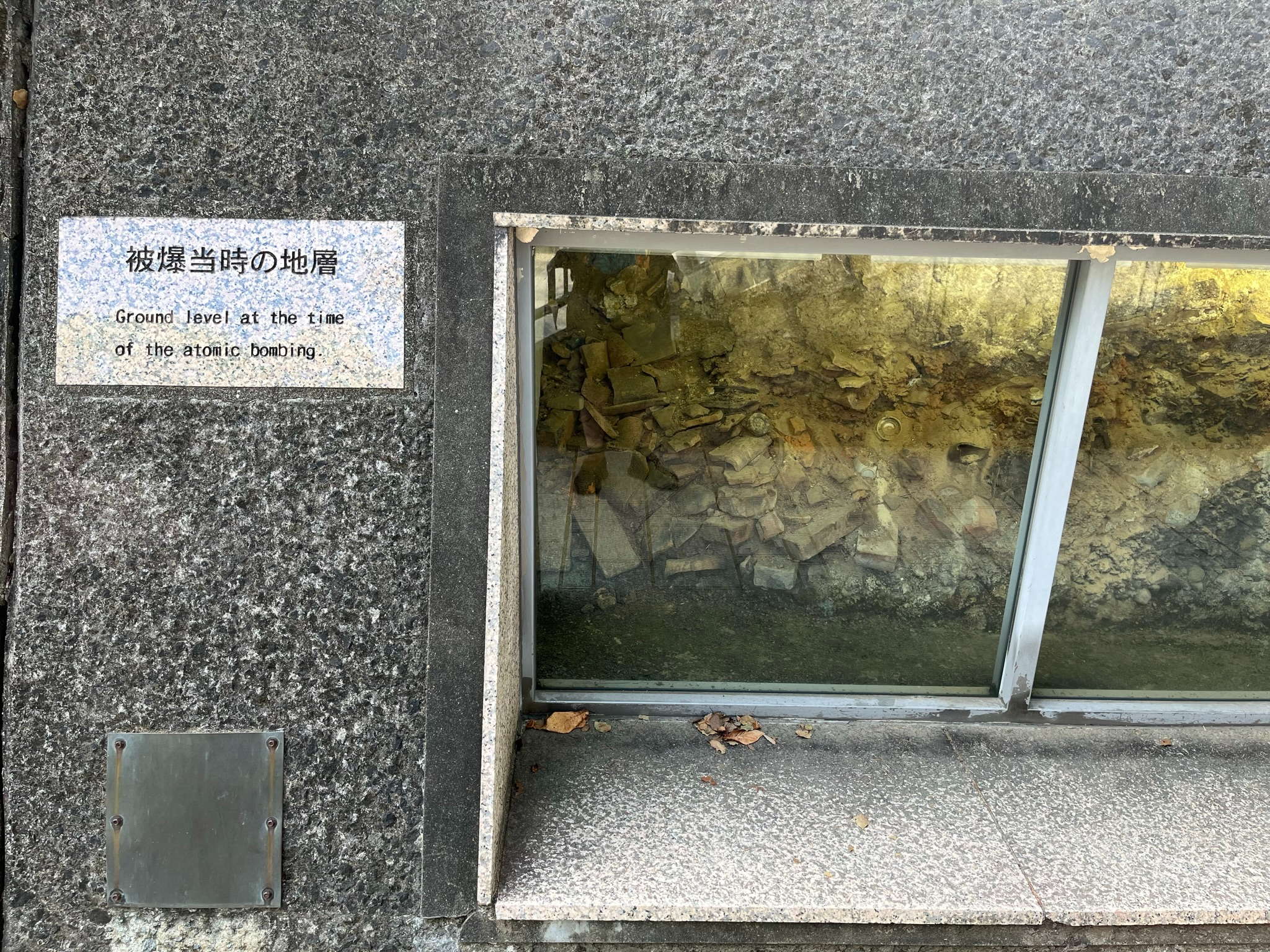
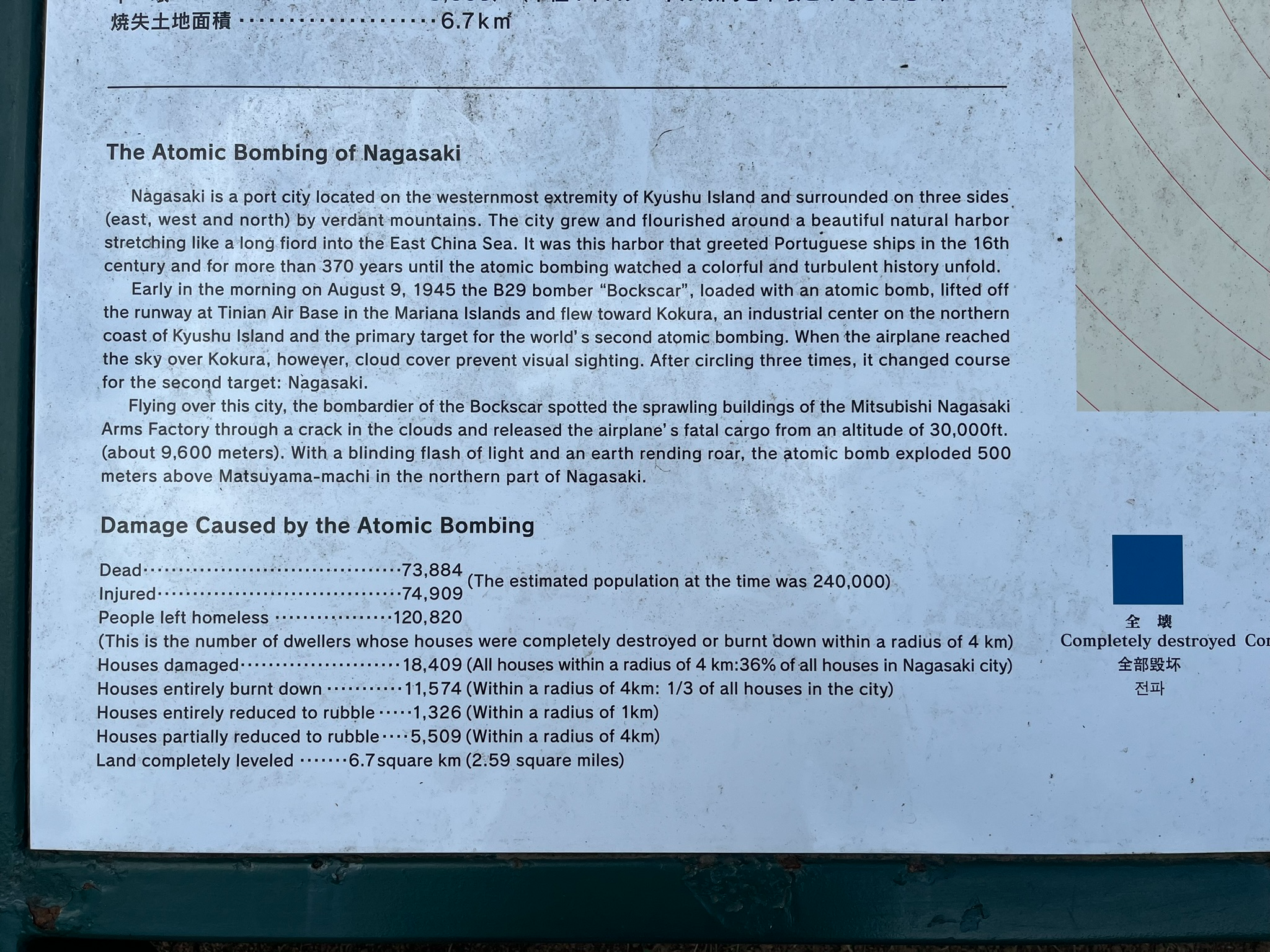
The Nagasaki Peace Statue stands within Peace Park as a powerful symbol of remembrance and hope, where its raised hand points towards the threat of nuclear weapons and its outstretched arm represents peace, commemorating the victims of the atomic bombing while promoting a future free from war.The remains of Urakami Cathedral's bell tower stand as a poignant reminder of the atomic bombing of Nagasaki in 1945, where preserved brickwork and damaged stone elements serve as a powerful symbol of remembrance, resilience and the ongoing pursuit of peace.The Nagasaki National Peace Memorial Hall for the Atomic Bomb Victims honours those who lost their lives in the atomic bombing of 1945, providing a solemn place for remembrance, reflection and prayer while preserving the memory of the tragedy and promoting a lasting message of peace.An informational map at Nagasaki Peace Park illustrates the extent of destruction caused by the atomic bombing of 9 August 1945, showing the areas affected by blast damage, fire and devastation while helping visitors understand the scale of the tragedy that shaped the city's modern history.This preserved ground layer in Nagasaki reveals the buried remains of the city at the time of the atomic bombing, offering a poignant glimpse into the destruction of 9 August 1945 while helping visitors understand the lasting impact of the event through authentic archaeological evidence.
After visiting the Hypocentre and peace park I stated heading over to the Museum and it was well worth going to it. It was not a slander against the west of anything like that. It showed you pictures of what Nagasaki looked like before the bomb was dropped, pictures of just after it was dropped and pictures and videos of what it was like several days and years later, plus people’s testimonies.
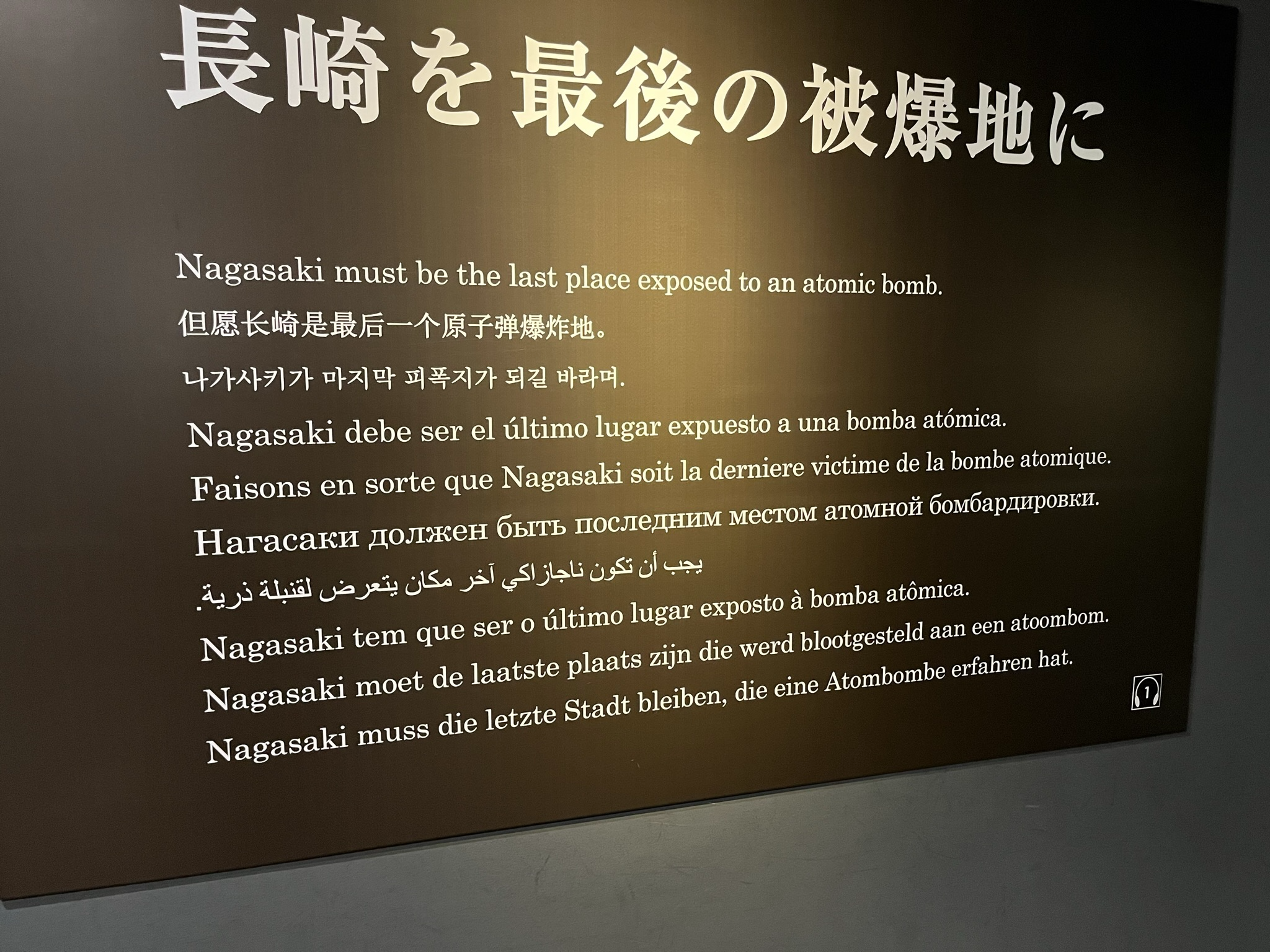
An informational display at Nagasaki Peace Park explains the events and impact of the atomic bombing of 9 August 1945, providing historical context, casualty figures and details of the widespread destruction that reshaped the city while reinforcing the importance of remembrance and peace.An exhibit at the Nagasaki Atomic Bomb Museum conveys a powerful message of peace and nuclear disarmament, presenting the declaration "Nagasaki must be the last place exposed to an atomic bomb" in multiple languages to underline the city's enduring commitment to ensuring such a tragedy is never repeated.
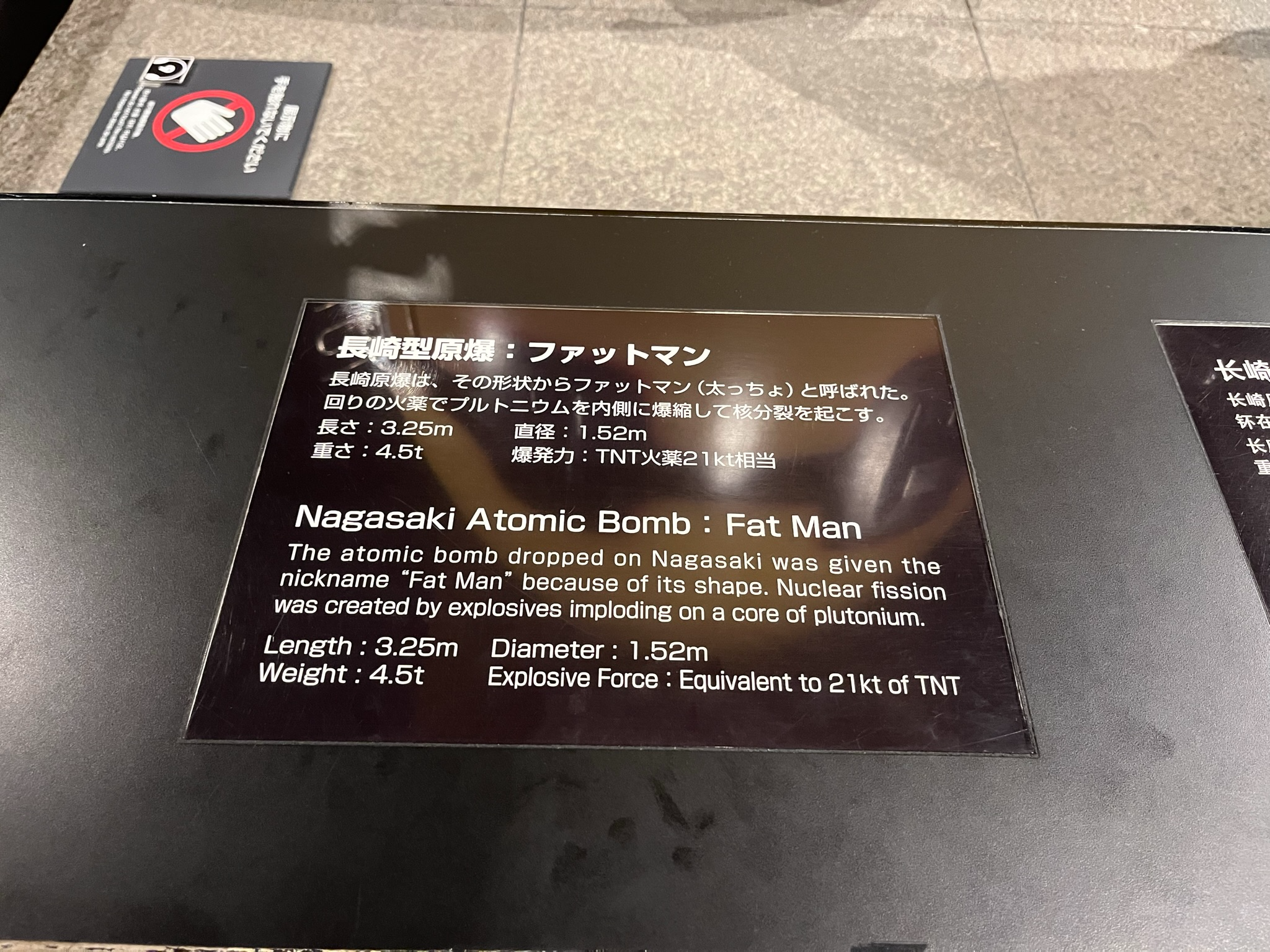
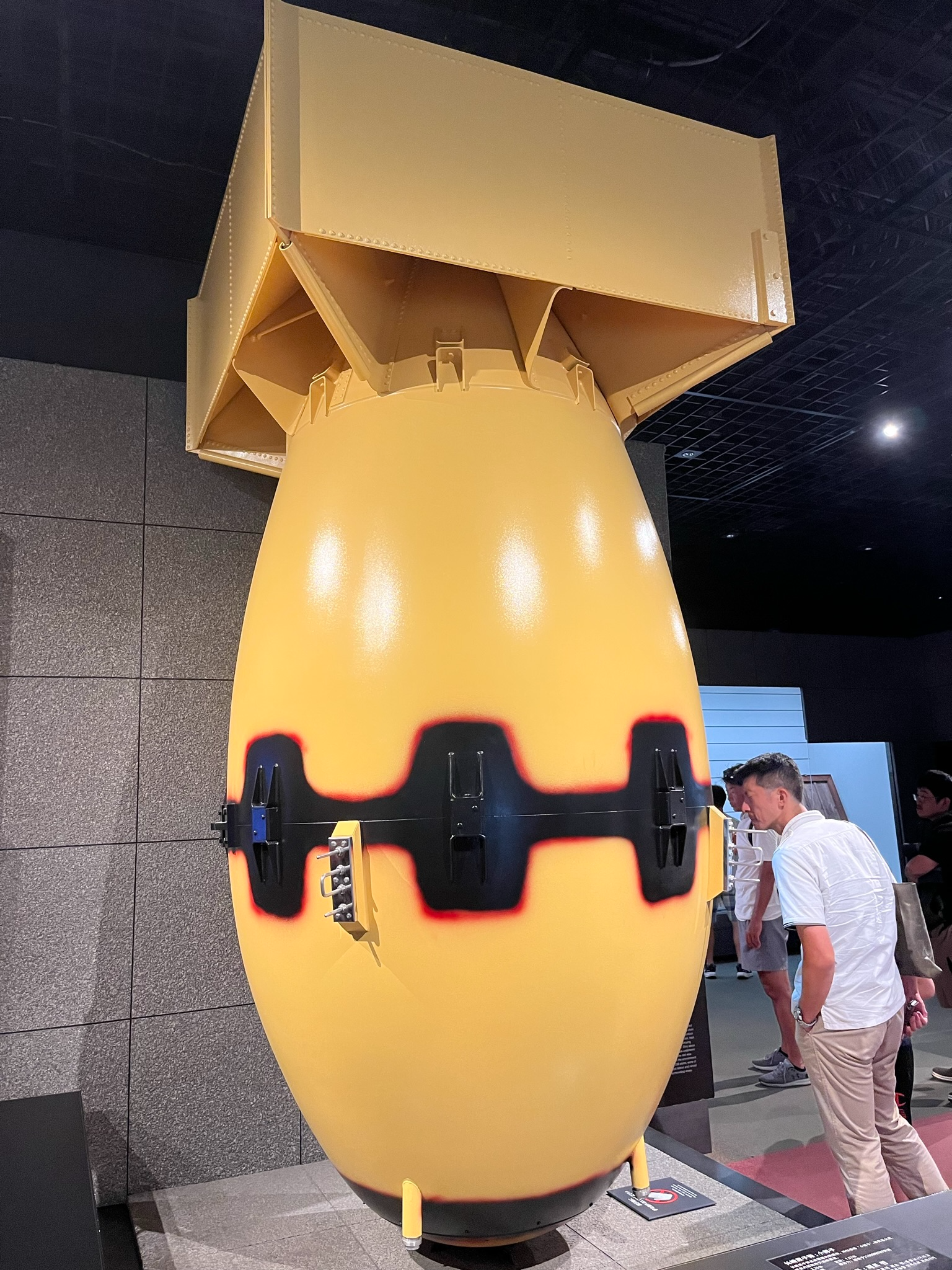
They have a replica of the original bomb that was dropped. It was detonated about 500-600 metres above ground zero.
An exhibit at the Nagasaki Atomic Bomb Museum provides technical information about the "Fat Man" atomic bomb detonated over the city on 9 August 1945, helping visitors understand the weapon's design and destructive power while placing the events of the bombing within their wider historical context.A full-scale replica of the "Fat Man" atomic bomb is displayed at the Nagasaki Atomic Bomb Museum, providing visitors with a sobering visual representation of the weapon detonated over the city on 9 August 1945 and encouraging reflection on the devastating human consequences of nuclear warfare and the enduring importance of peace.
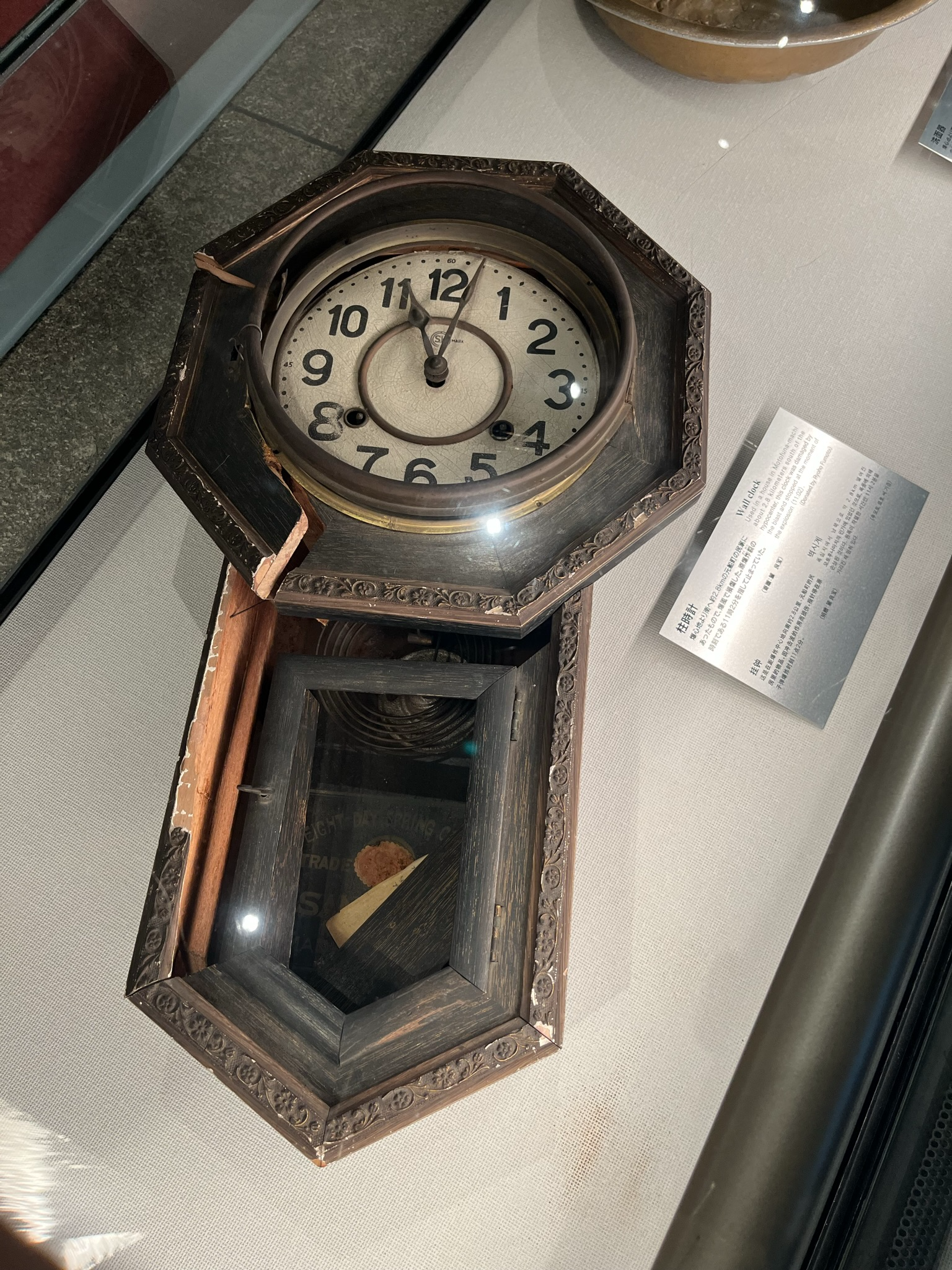
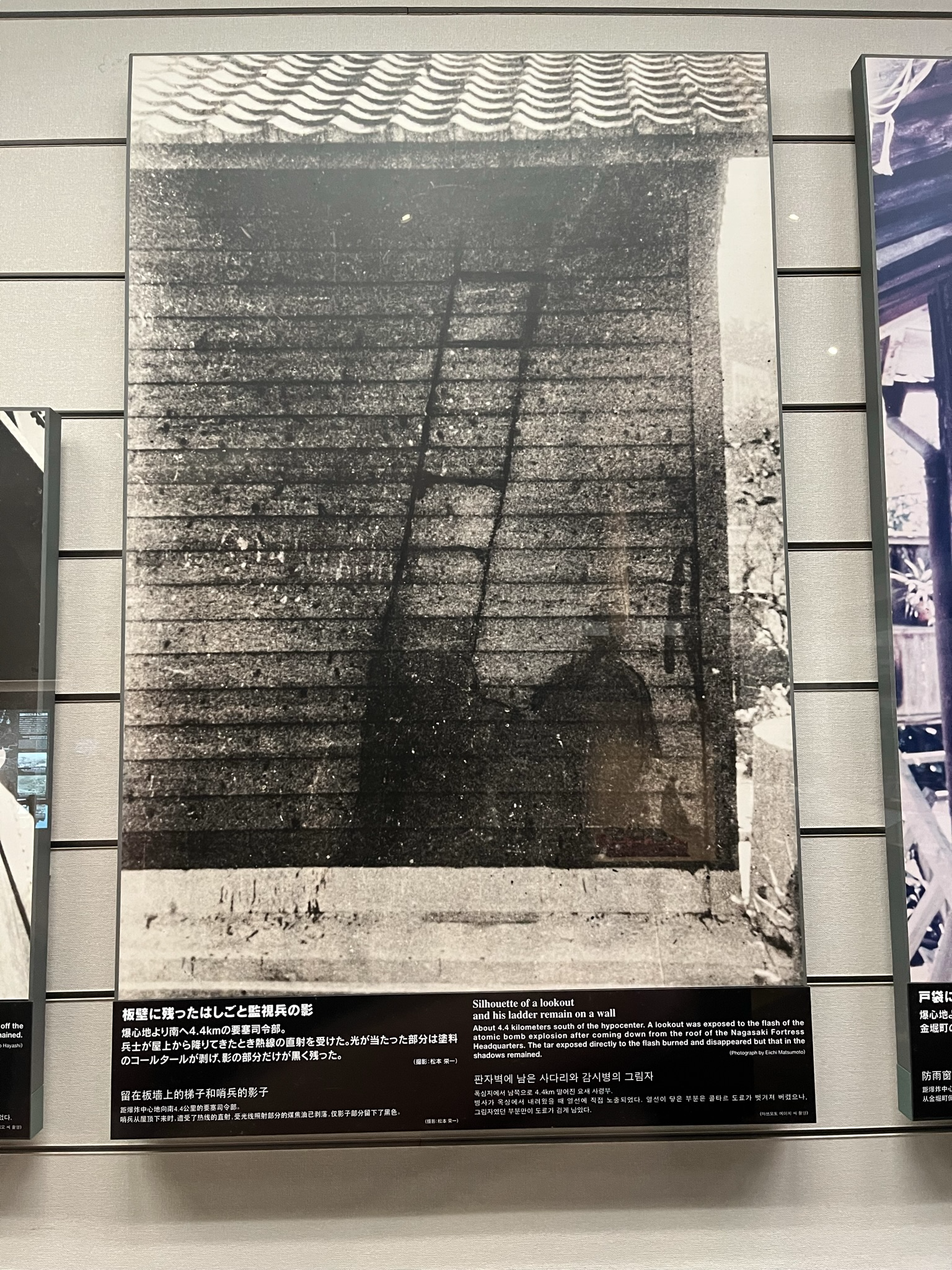
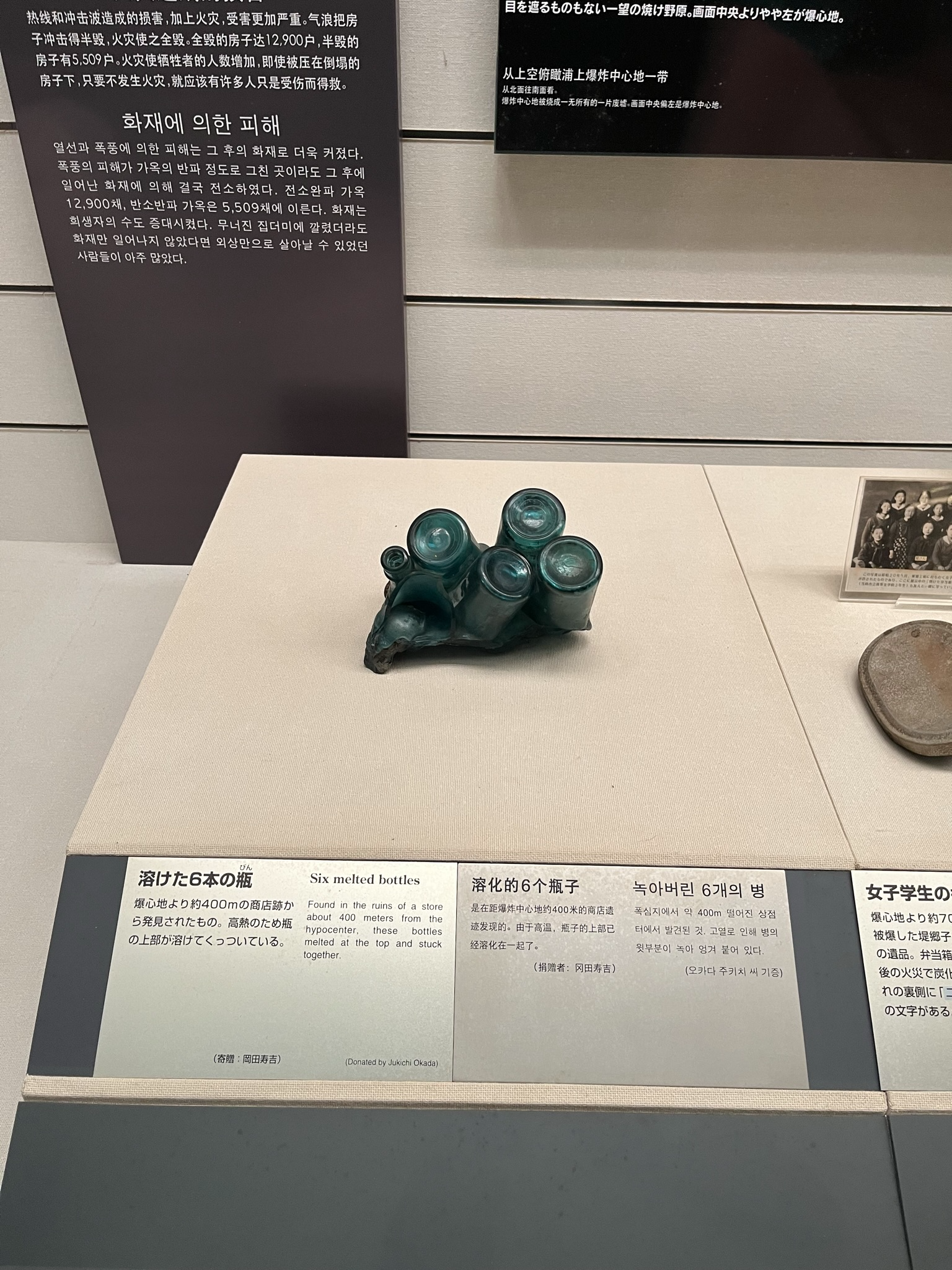
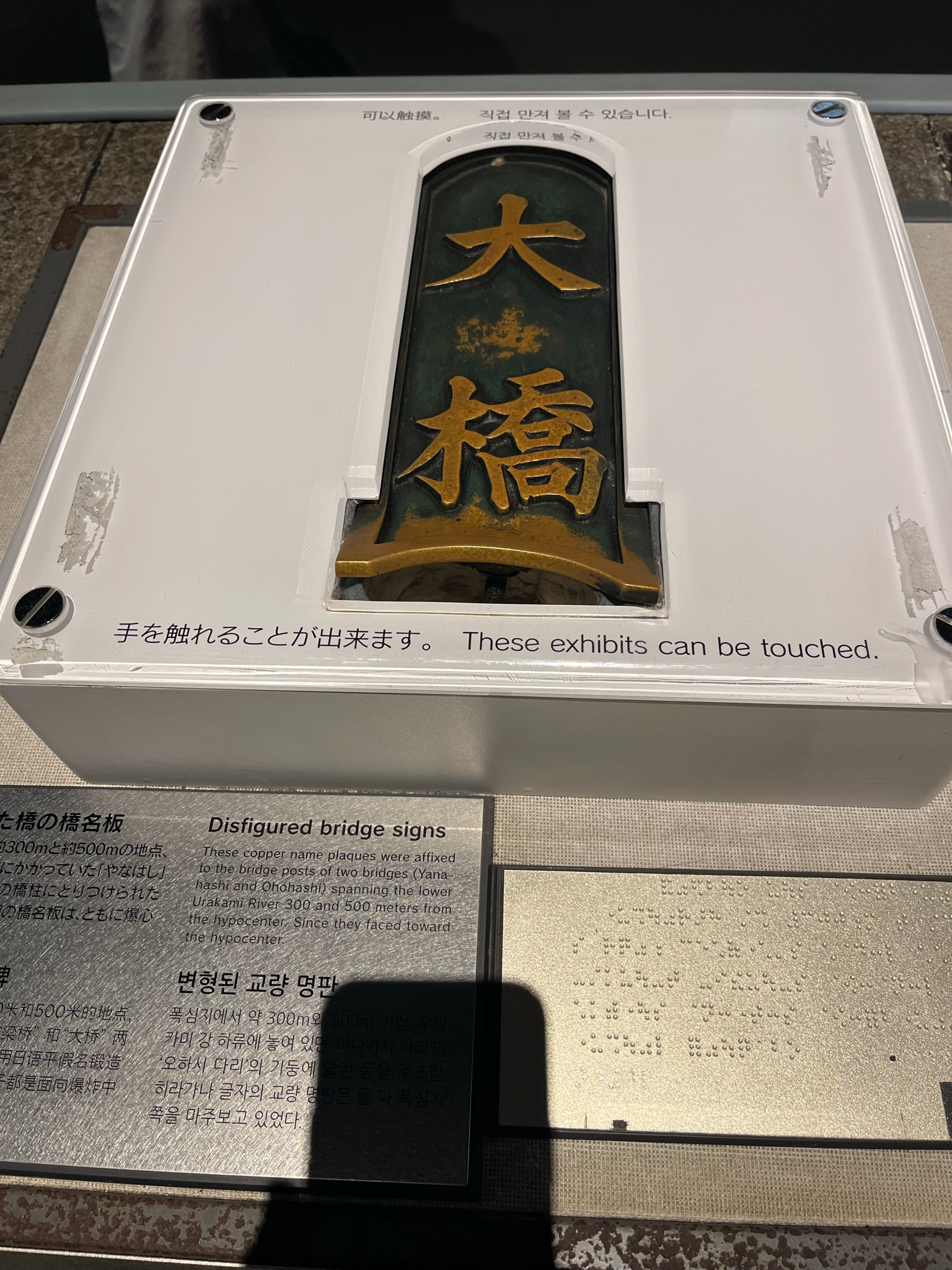
Here are some of the exhibits which speak more than 1000 words. I am trying to be careful exactly what I put up as I don’t want to make this a very graphic blog. Looking at some of the photos in the exhibit they did include photos that had the destruction, death and devastation that was caused by the bomb.
A damaged wall clock preserved at the Nagasaki Atomic Bomb Museum stands as a powerful reminder of the moment the atomic bomb struck the city on 9 August 1945, with the timepiece frozen by the blast and serving as a poignant symbol of the lives forever altered by the tragedy and the importance of remembering its lessons.An exhibit at the Nagasaki Atomic Bomb Museum displays one of the most haunting photographic records of the bombing's aftermath, showing a shadow permanently imprinted on a wall where a lookout tower and ladder shielded the surface from the atomic flash, preserving a stark reminder of the immense heat and destructive force released over the city on 9 August 1945.A poignant exhibit at the Nagasaki Atomic Bomb Museum displays six glass bottles fused together by the extreme heat generated by the atomic bombing of 9 August 1945, providing powerful physical evidence of the immense temperatures produced by the blast and serving as a lasting reminder of the human and material devastation suffered by the city.A preserved bridge nameplate displayed at the Nagasaki Atomic Bomb Museum bears the scars of the atomic bombing of 9 August 1945, illustrating the intense heat and blast effects experienced near the hypocentre while serving as a tangible reminder of the destruction that transformed the city and the importance of preserving its memory.
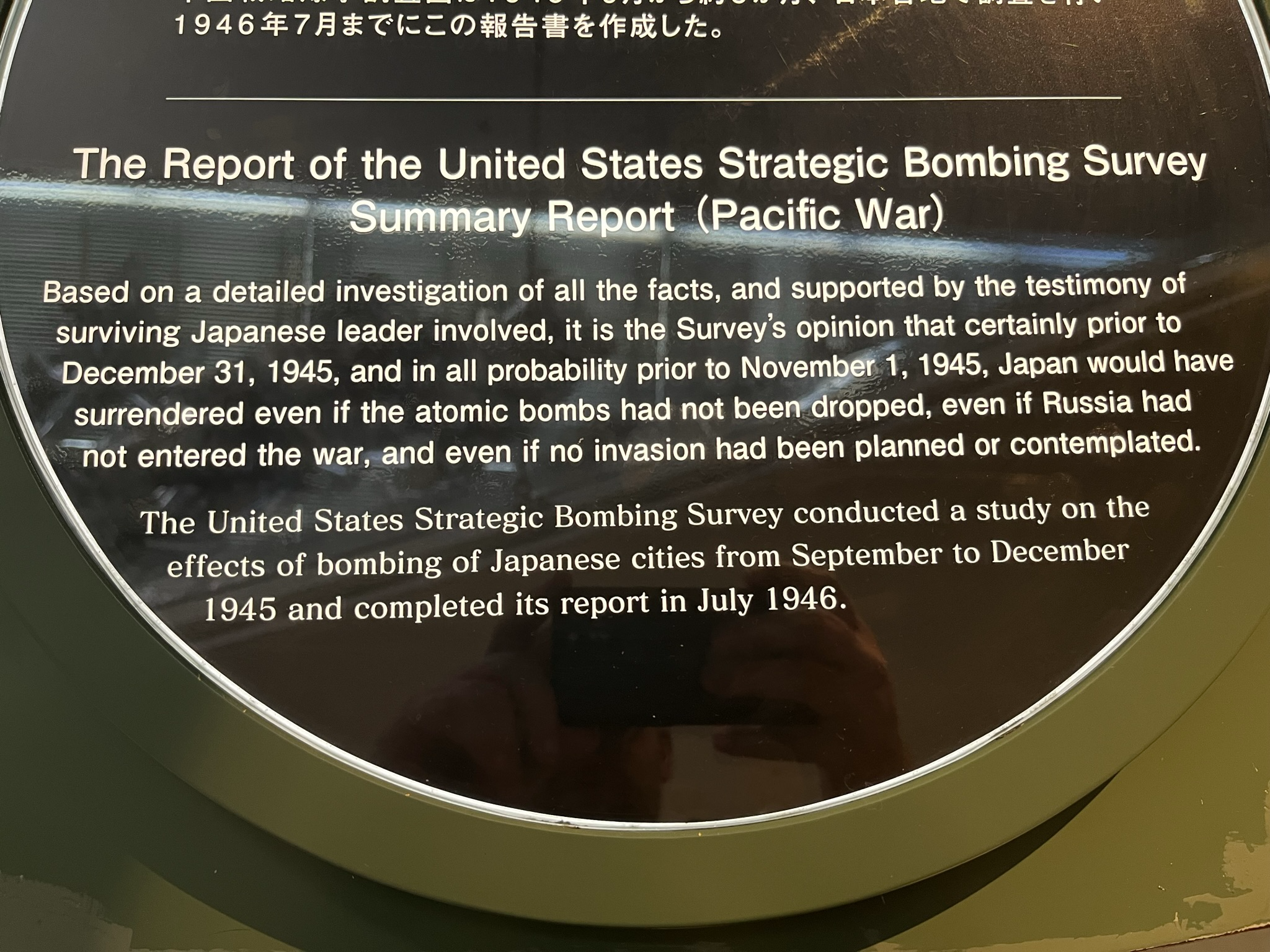
The even more sad thing is that after the war there was a US Strategic bombing survey conducted, and it was the opinion of the survey that Japan would have surrendered by the end of the year 1945 even if no nukes had been dropped.
An exhibit at the Nagasaki Atomic Bomb Museum highlights findings from the United States Strategic Bombing Survey, presenting post-war analysis of Japan's surrender and the effects of strategic bombing while encouraging visitors to examine the historical context, consequences and ongoing debates surrounding the final months of the Second World War.
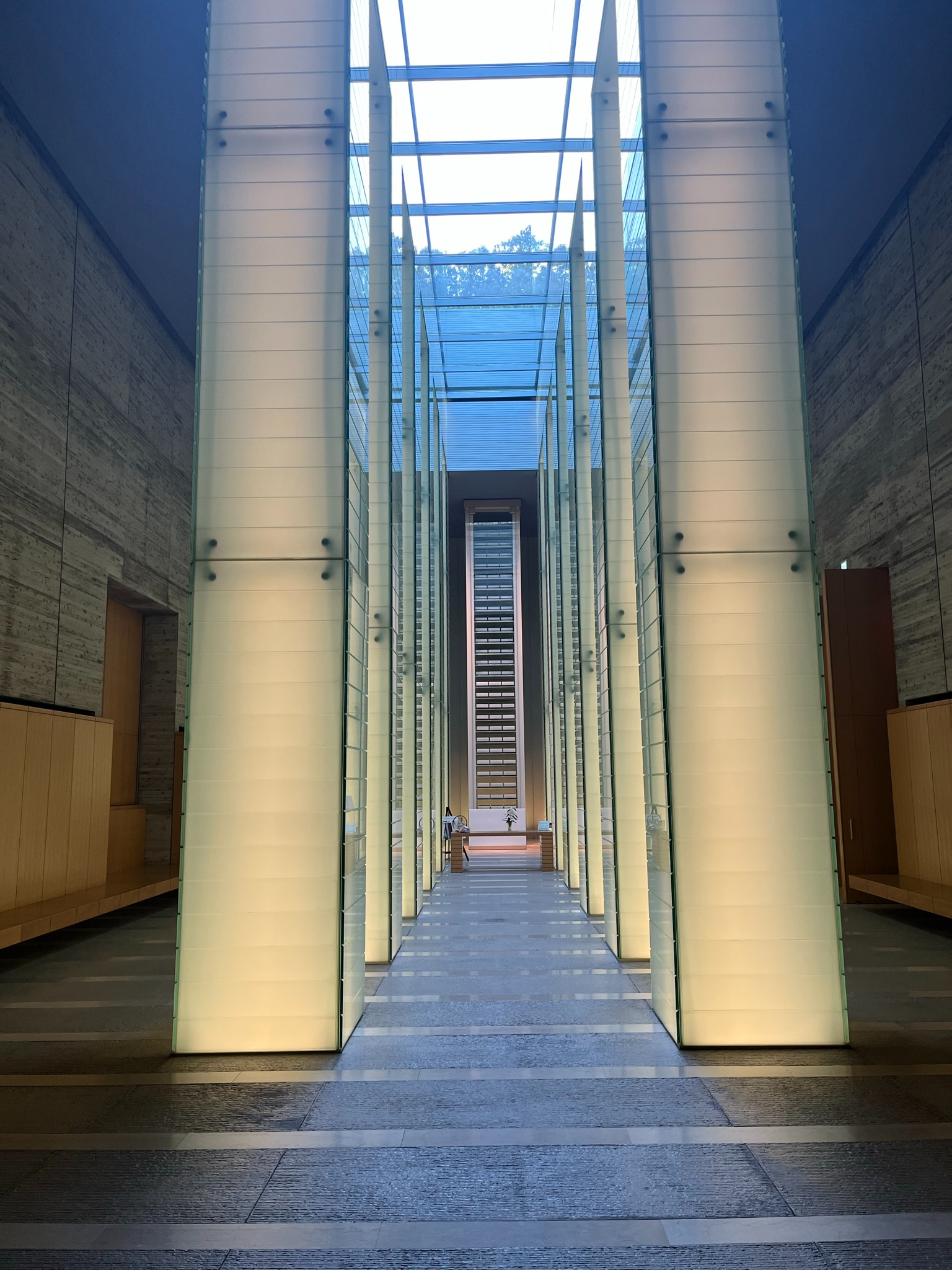
After I went to the memorial section after this to pay my respects to those who had fallen due to the atomic bomb. This pillars of light contain books with all the victims’ names on them.
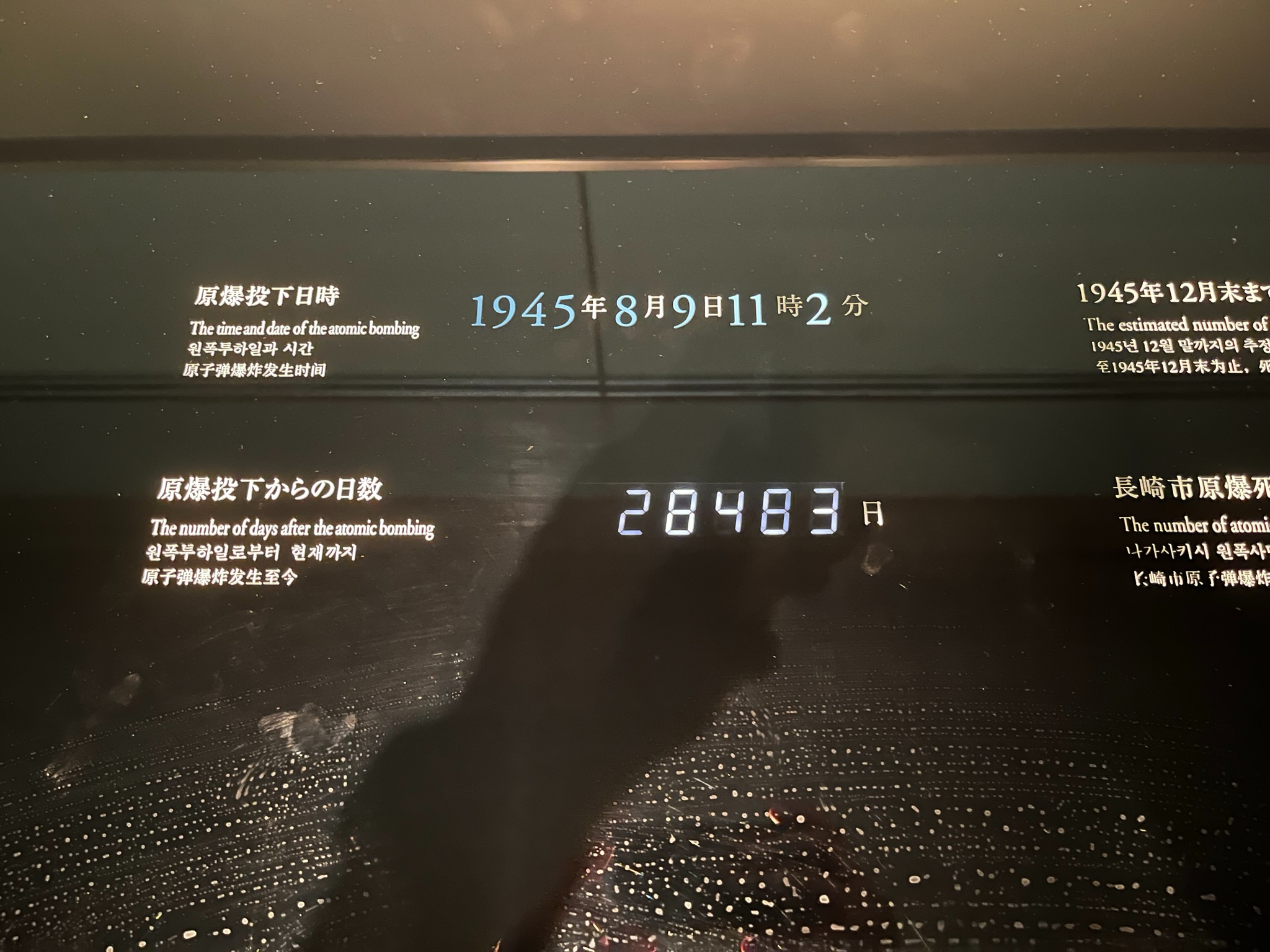
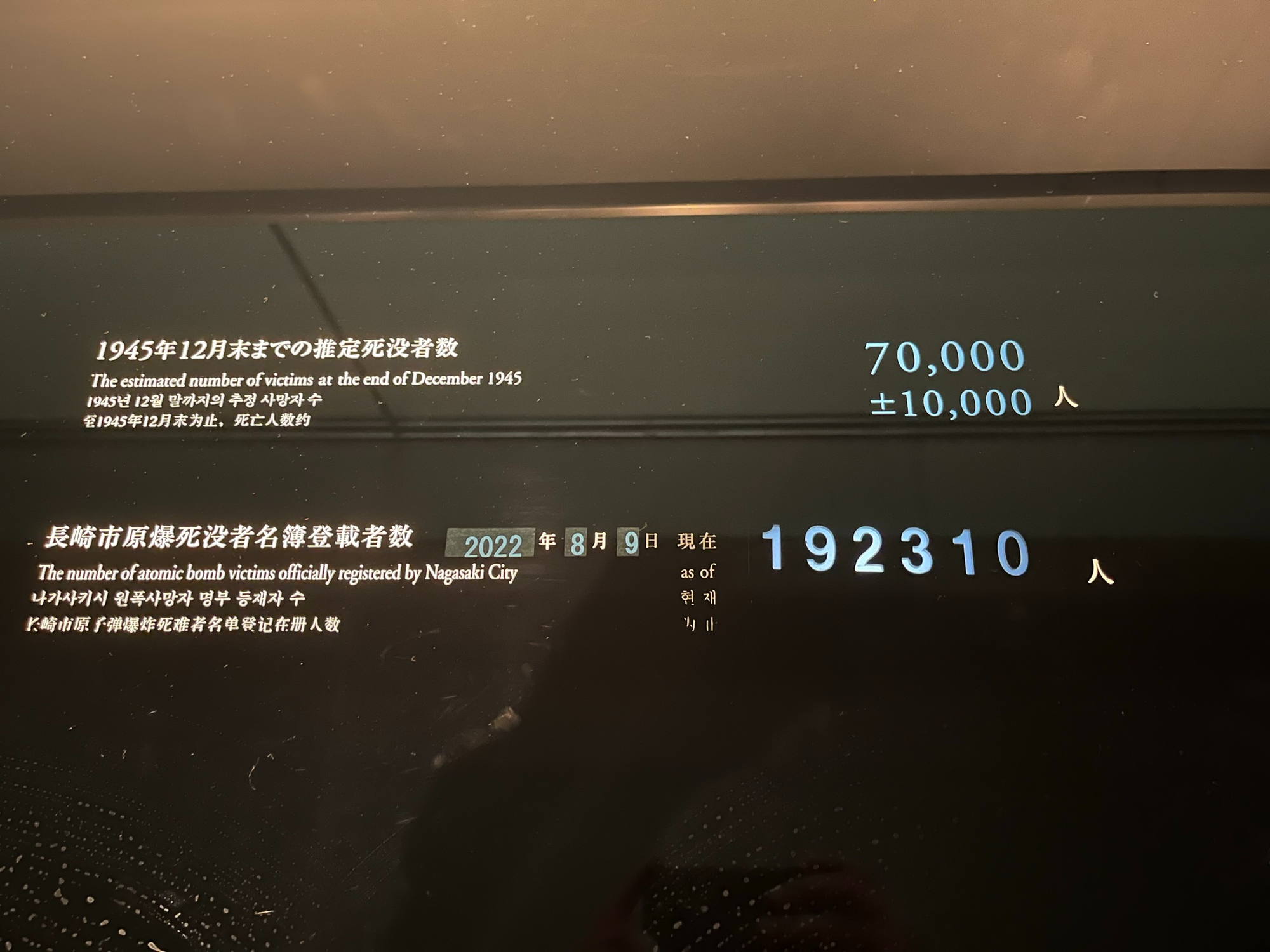
An exhibit at the Nagasaki Atomic Bomb Museum records the exact moment of the atomic bombing on 9 August 1945 at 11:02 a.m., while a running counter marks the number of days that have passed since the attack, linking the historic event to the present day and underscoring the enduring importance of remembrance, education and the pursuit of lasting peace.An exhibit at the Nagasaki Atomic Bomb Museum presents the human cost of the atomic bombing, showing both the estimated number of deaths by the end of 1945 and the number of officially registered victims.A contemplative memorial space inside the Nagasaki Atomic Bomb Museum, where light, architecture and symmetry encourage reflection on the events and legacy of 9 August 1945.
I hope this has helped give you some though on the use of nuclear weapons. I certainly find them extremely bad and hurtful. Yes, there was military personnel and targets in Nagasaki, but then there are loads of innocent people that died as well due to the actions of dropping the Atomic Bomb. Should we ever repeat this? In my opinion no, this should never have to happen again.
Thank you all for reading and next time I will be blogging from Hiroshima!