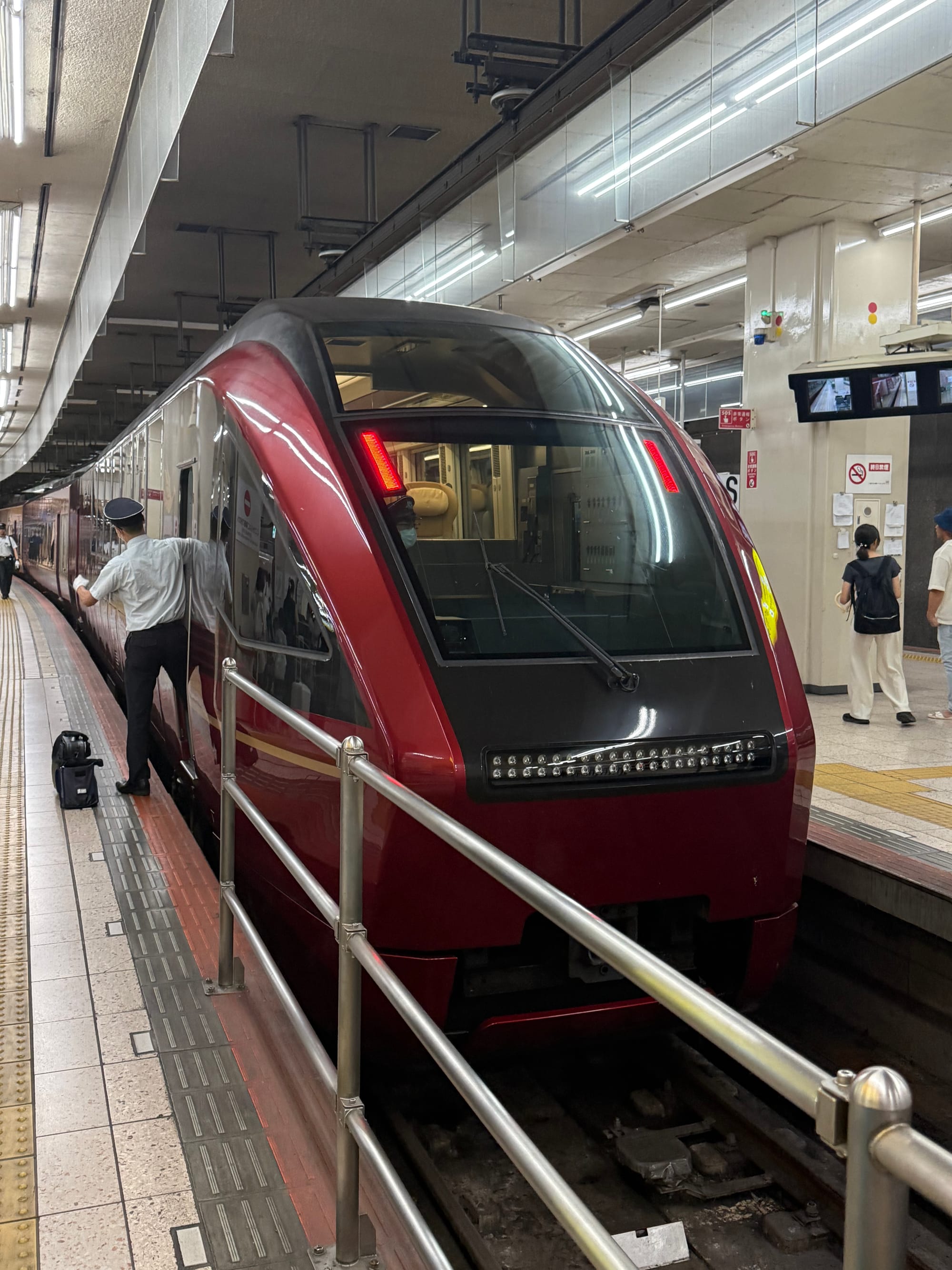
The stylish Kintetsu Hinotori limited express is one of Japan's most striking trains, linking Osaka and Nagoya with premium seating, panoramic windows and a distinctive deep red livery.
Now it is time to leave Beppu and go to Nagoya, which is a bit of a trek, so instead of getting a few trains, i thought I’d save a bit money and trade rails and wheels for an overnight ferry.
The Ferry from Beppu to Osaka
29th July - Part 2
So instead of staying in a hotel for another night, which would cost about ~£62 and then having to spend about ~£105 the next day on trains for a limited express train from Beppu to Kokura and then onwards to Nagoya, I decided to get an overnight ferry for ~£110 and then a slower limited express train for ~£26.50
Sunflower!!!!!!!!
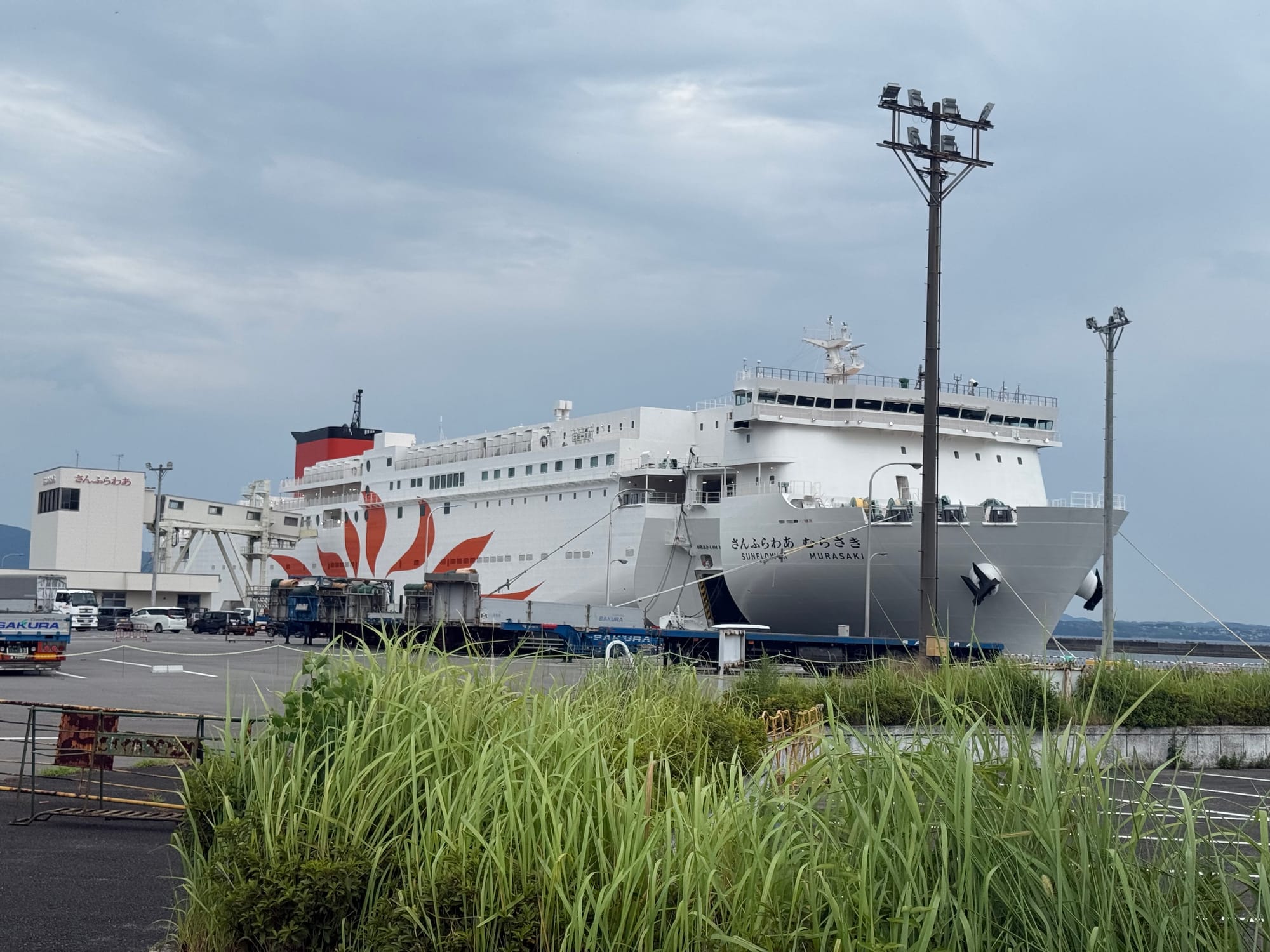
The Sunflower Murasaki awaits departure at Beppu Port before beginning its overnight voyage to Osaka, providing a comfortable sea journey across the Seto Inland Sea between Kyushu and Kansai.
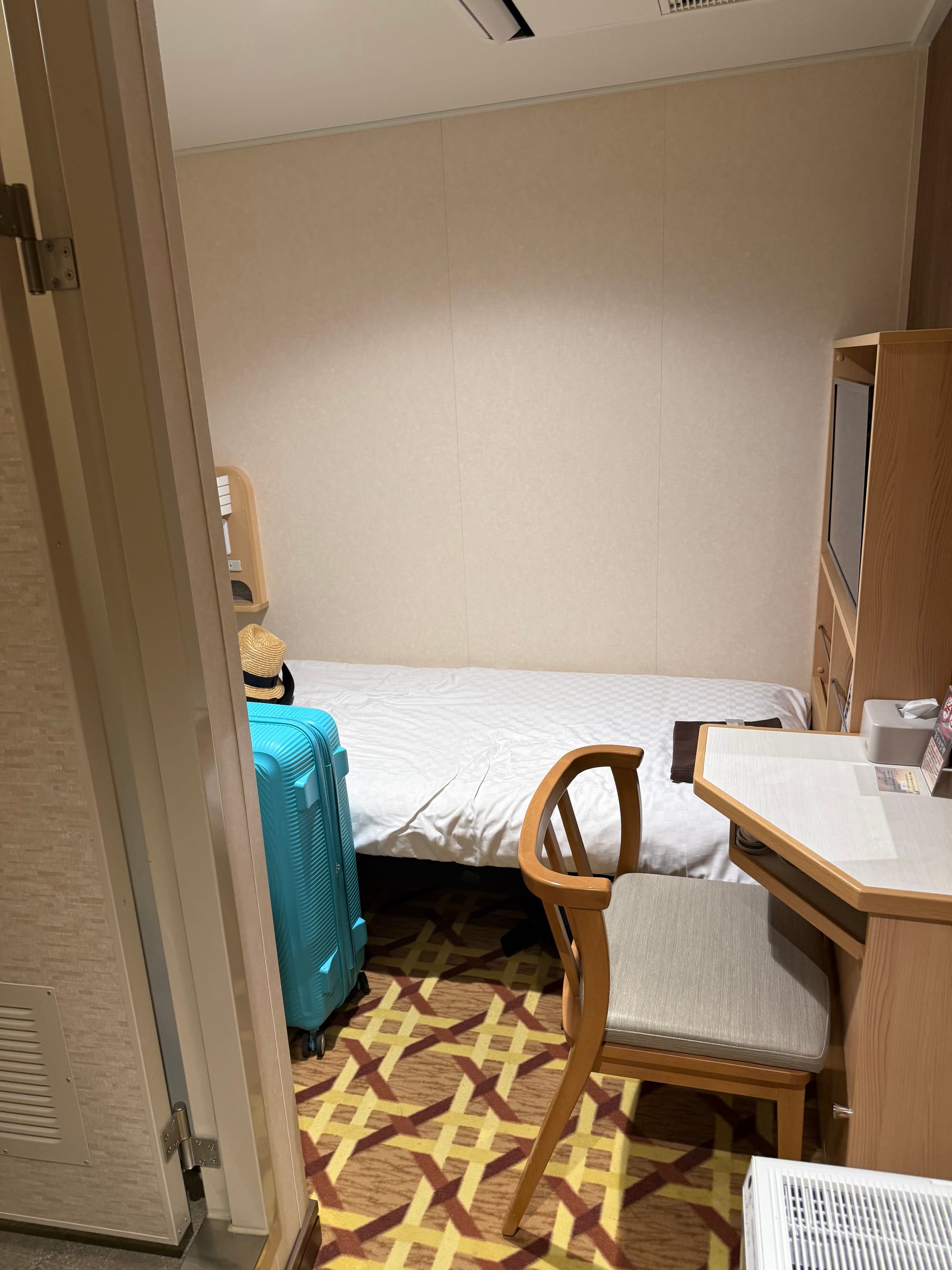
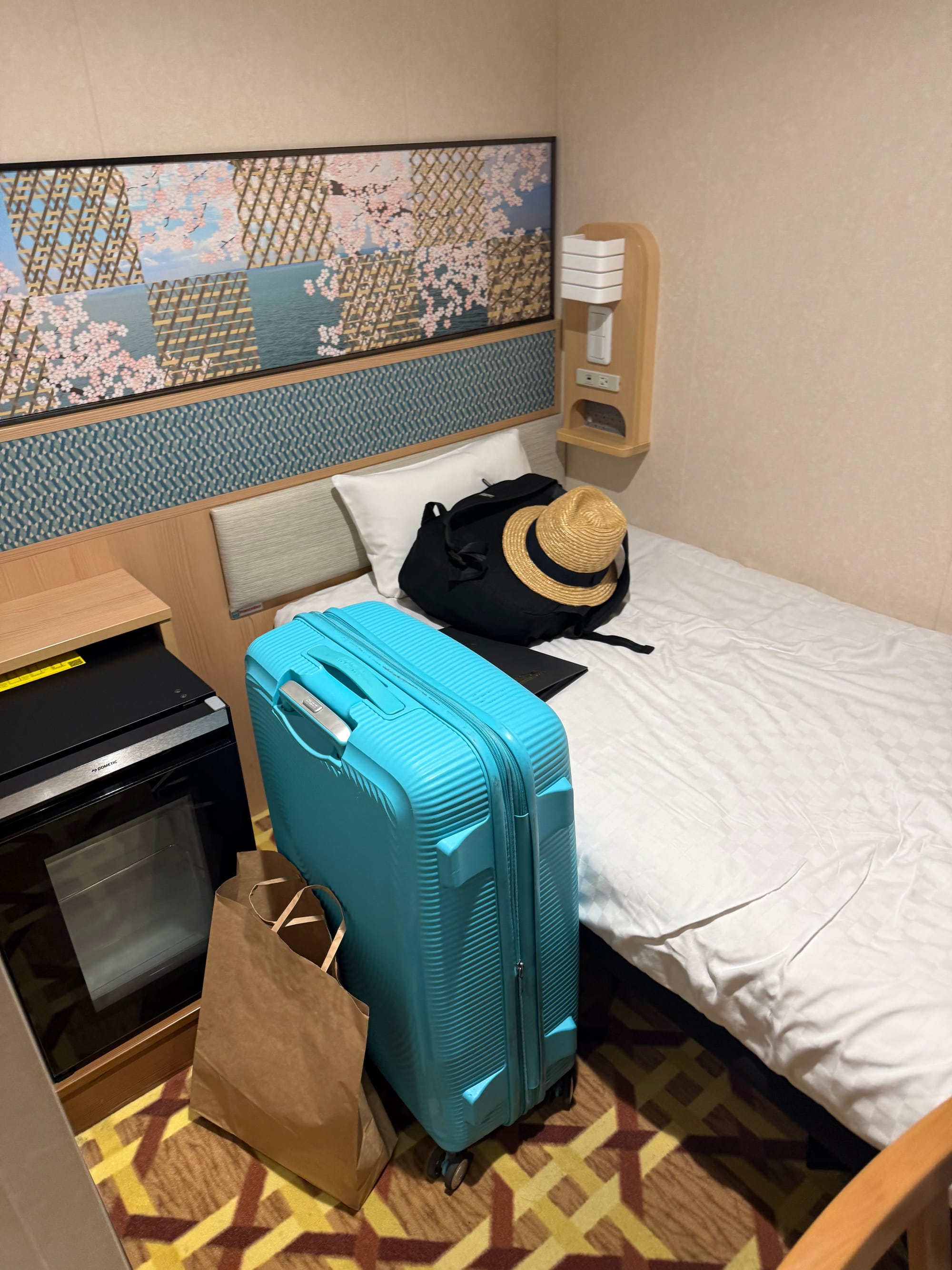
This is my transport for tonight, the Sunflower ferry ‘Murasaki’, which will take me from Beppu to Osaka overnight. The cabin I payed for was a superior single cabin, which was its own private cabin. it was a bit small, but it is all I needed.
My private cabin on board the Sunflower Ferry for the overnight voyage from Beppu to Osaka, providing a comfortable place to relax while travelling across the Seto Inland Sea.Another view of my private cabin on board the Sunflower Ferry from Beppu to Osaka, showing the compact yet comfortable accommodation provided for the overnight voyage across the Seto Inland Sea.
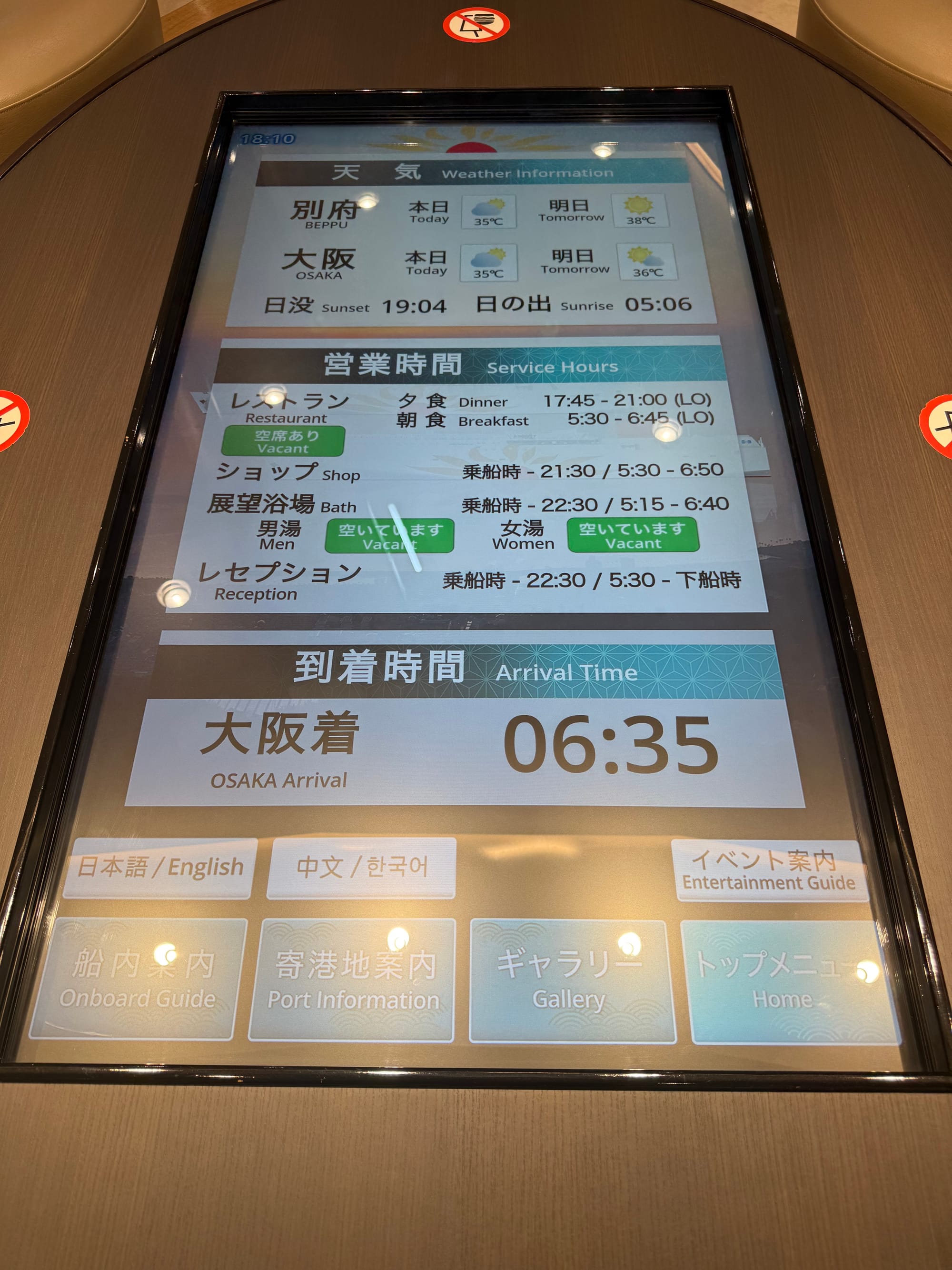
We left Beppu at 6:45pm and was due to get to Osaka almost 12 hours later at 6:35am
An onboard information display on the Sunflower Ferry provides weather updates, facility information and a scheduled arrival time of 06:35 ahead of the overnight voyage from Beppu to Osaka.
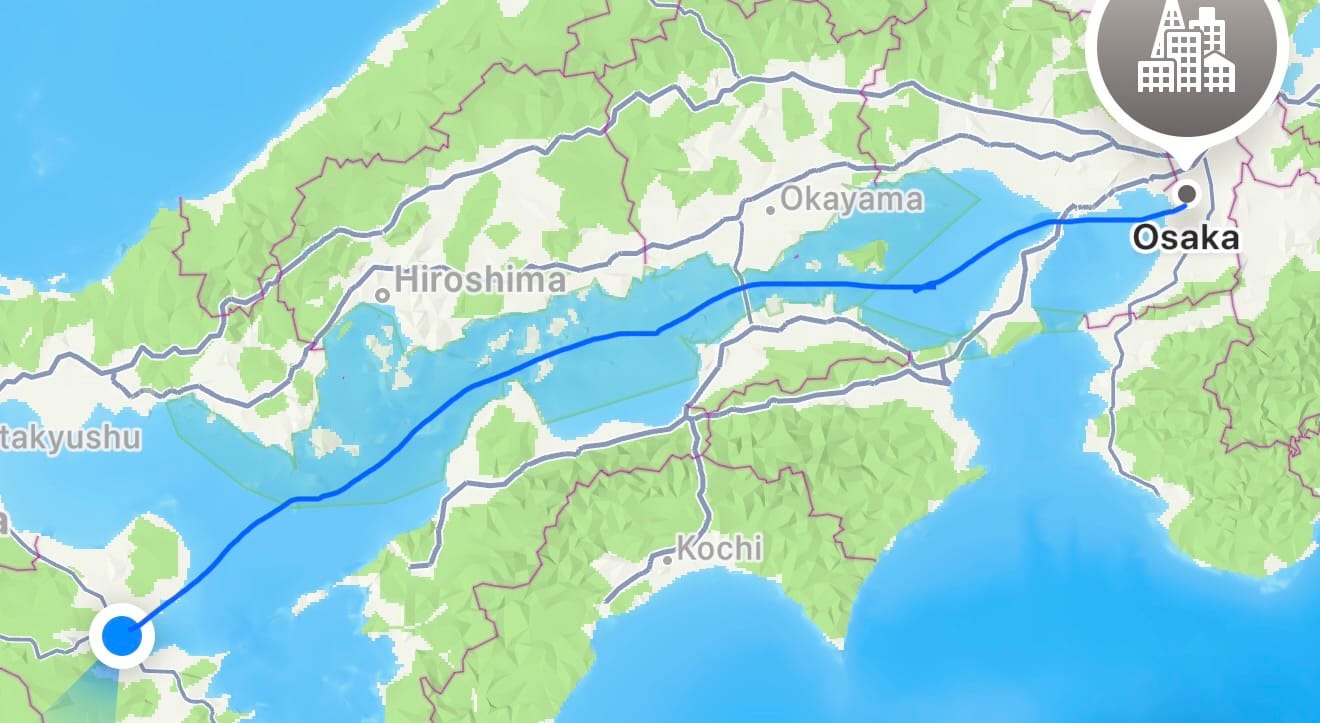
The journey would take us through the Seto Inland Sea, and which is situated between the 3 islands of Kyushu (where Beppu is), Shikoku (which I want to go to at some point) and Honshu (Japans main island where Osaka is). The Seto Inland Sea also have many island in it.
A map of the Sunflower Ferry's overnight journey from Beppu to Osaka, crossing the Seto Inland Sea and linking Kyushu with the Kansai region by sea.
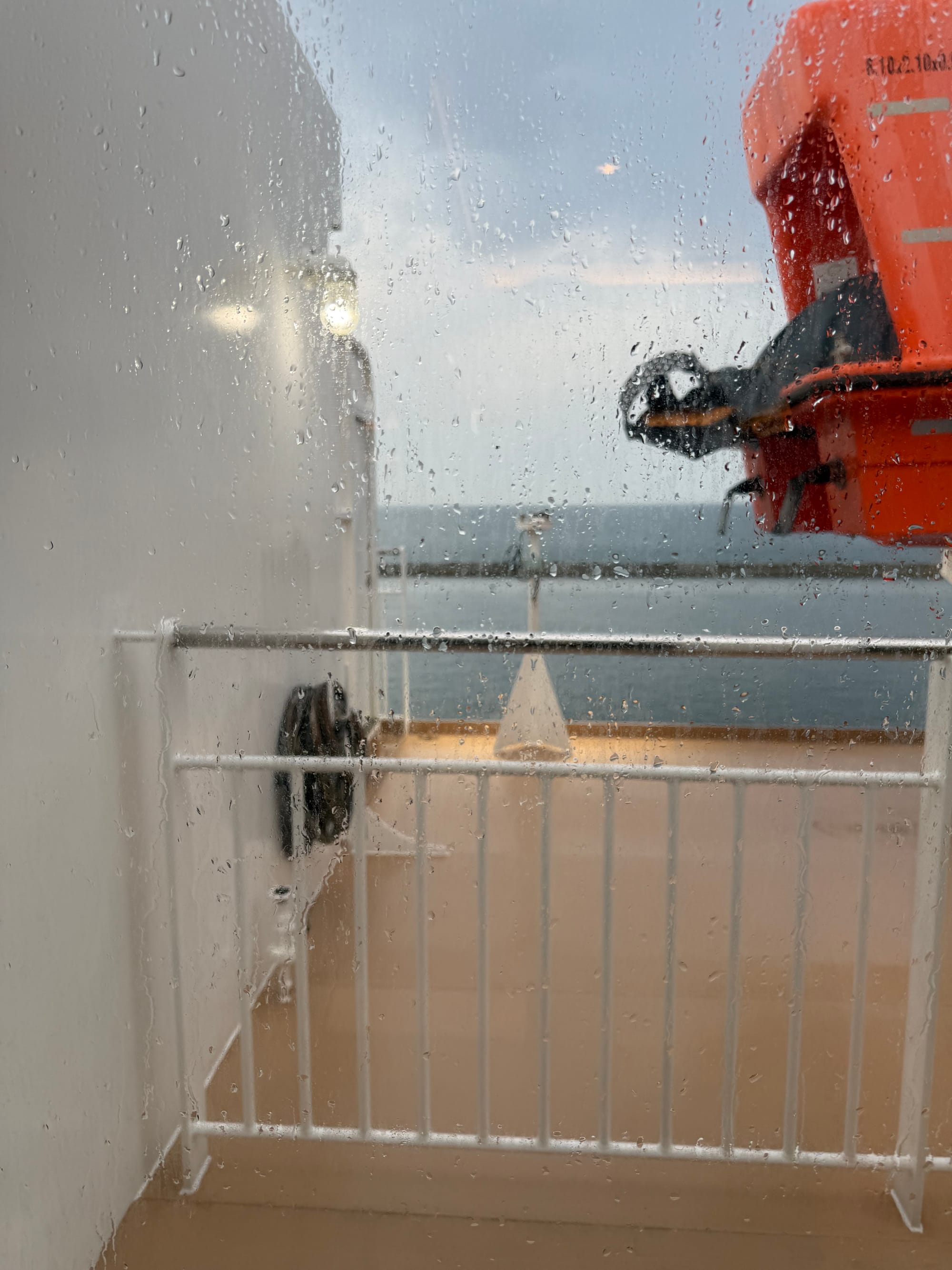
After boarding this weird clear liquid started falling form the sky, which I hadn’t seen for ages.
Looking through a rain-streaked window on board the Sunflower Ferry, as unsettled weather accompanied part of the overnight voyage from Beppu to Osaka across the Seto Inland Sea.
There is also an Onsen on the ship, which I found weird, but also nice and relaxing as I was also to look out to sea.
Arriving in Osaka and Train to Nagoya
30th July
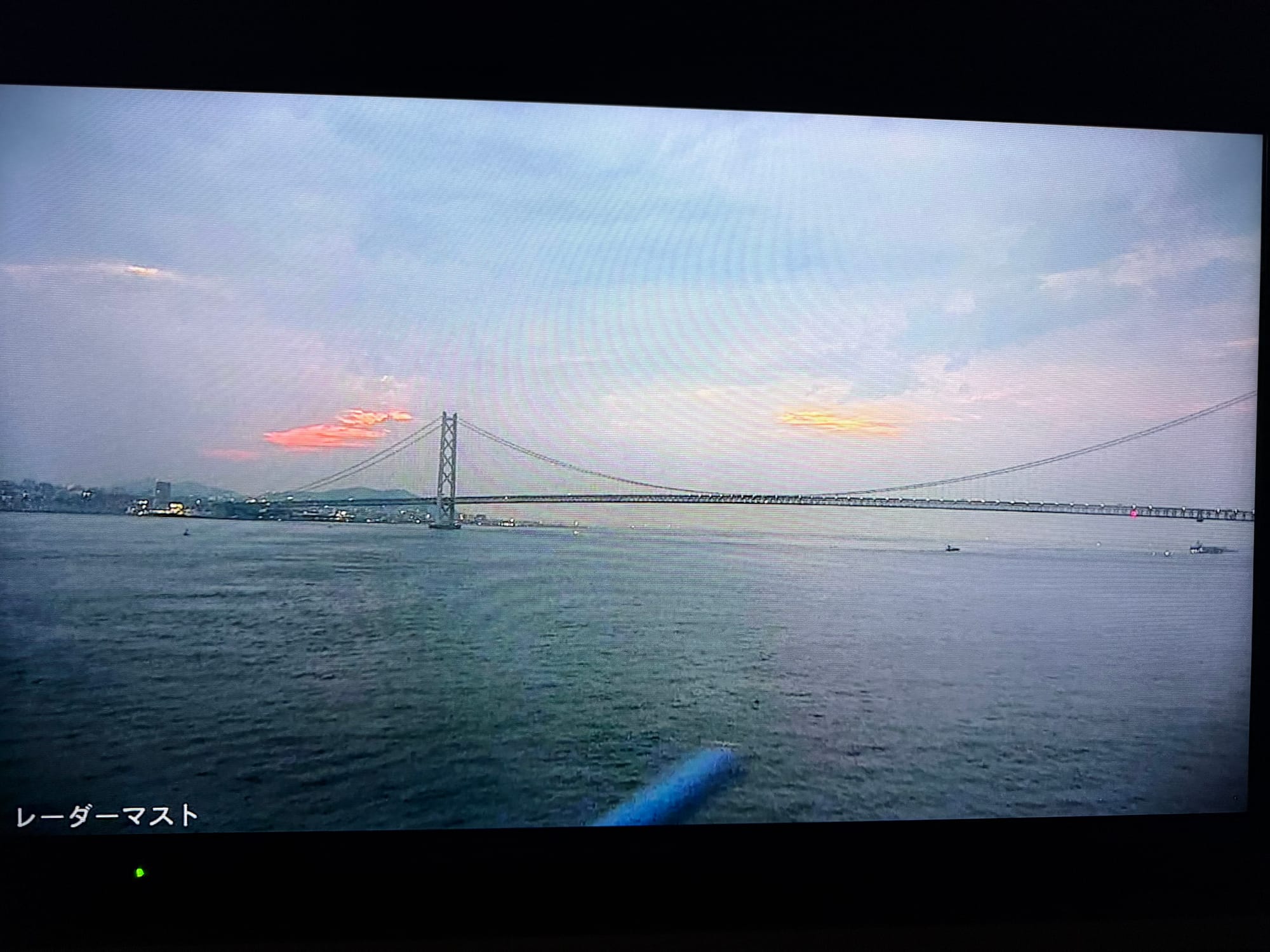
I finally arrived in Osaka at bout 6:30am, which was an early one for me, I gave myself till 9am to go and get my plugboard that I left at my hotel (at least it wasn't my passport this time!), go to Osaka Namba station, get some ekiben and then catch my train, easy.
Approaching Osaka aboard the Sunflower Ferry, the Akashi Kaikyō Bridge comes into view at dawn, marking the final stages of the overnight voyage from Beppu across the Seto Inland Sea.
Limited Express Hinotori
The train I am getting is a 2 hour limited express that runs between Nagoya and Osaka. I saw it advertised on the NHK channel, which I sometimes get watch.
The Kintetsu Hinotori limited express waits at the platform, providing a stylish and comfortable journey between Osaka and Nagoya with its distinctive deep red livery and premium interiors.
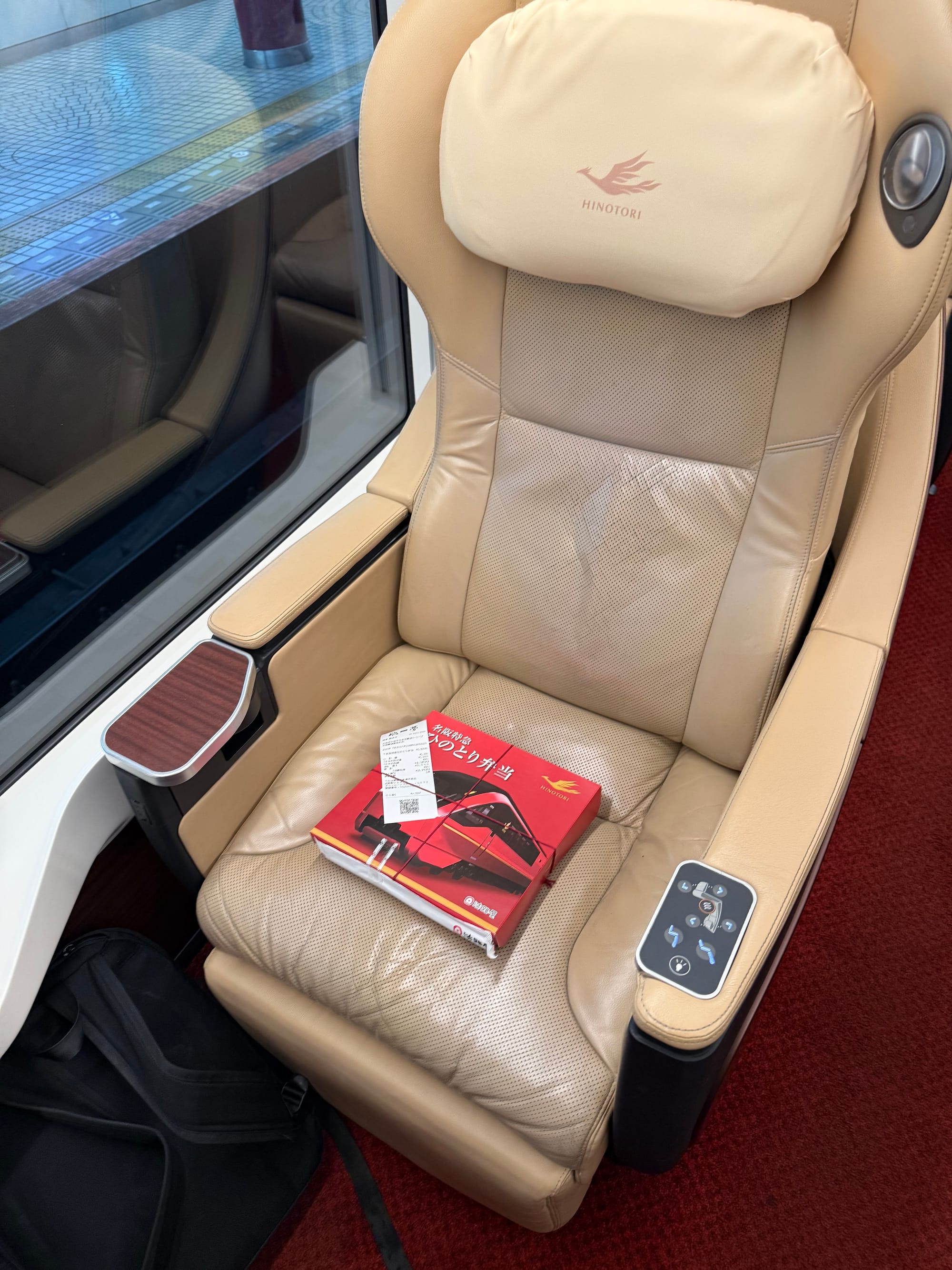
The train only cost me £25 for the premium car and let me tell you, it was so relaxing, that relaxing that i actually fell asleep for about 30-45mins 😅.
My premium seat aboard the Kintetsu Hinotori limited express, complete with a specially themed ekiben, offering a comfortable journey between Osaka and Nagoya.
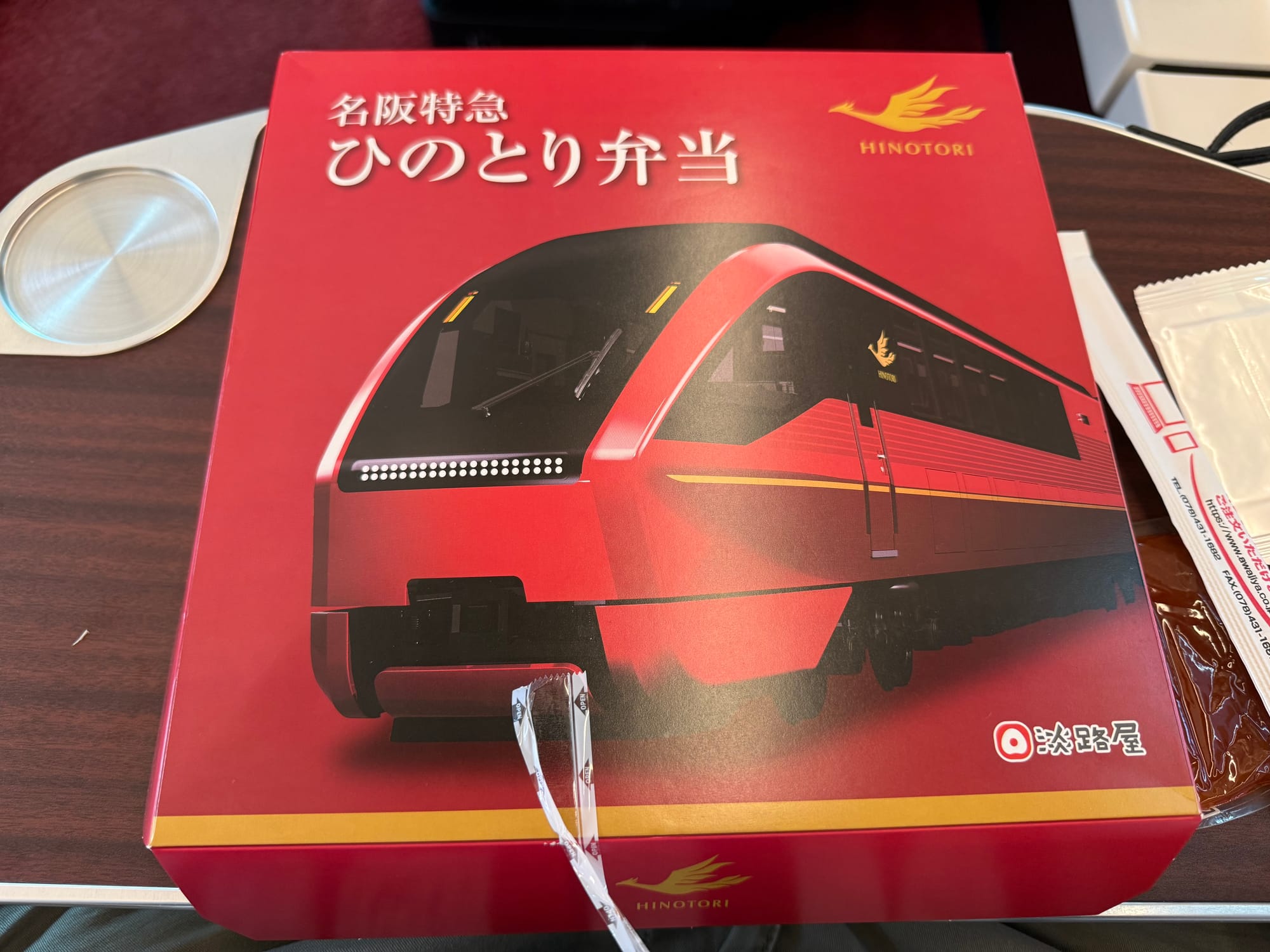
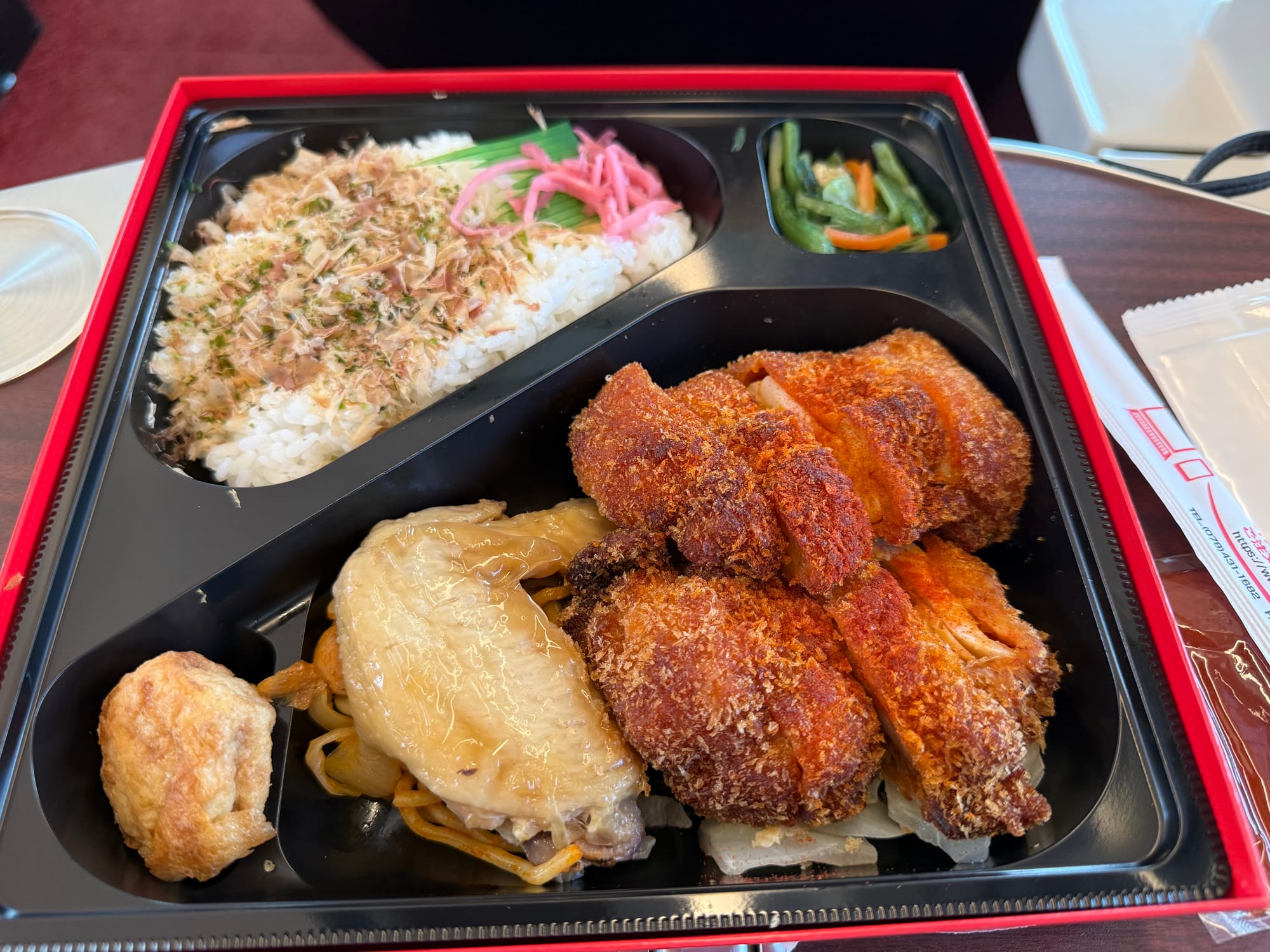
I also got the Hinotori Ekiben from the station, which was delicious and only cost ~£7.40. It contains rice, with dried tuna flakes on top, spicy pork cutlets and a chicken thigh.
A Hinotori-themed ekiben purchased for the journey, matching the distinctive deep red livery of the Kintetsu Hinotori limited express while travelling between Osaka and Nagoya.The Hinotori ekiben served on board the Kintetsu Hinotori combines rice, pork cutlet and a selection of side dishes, making for a satisfying meal while travelling between Osaka and Nagoya.
After arriving at Nagoya, I still had 3.5 hours to kill, so I took my cases to the hotel, left them there and then headed to the Toyota Commemorative Museum of Industry and Technology.
Toyota Commemorative Museum of Industry and Technology
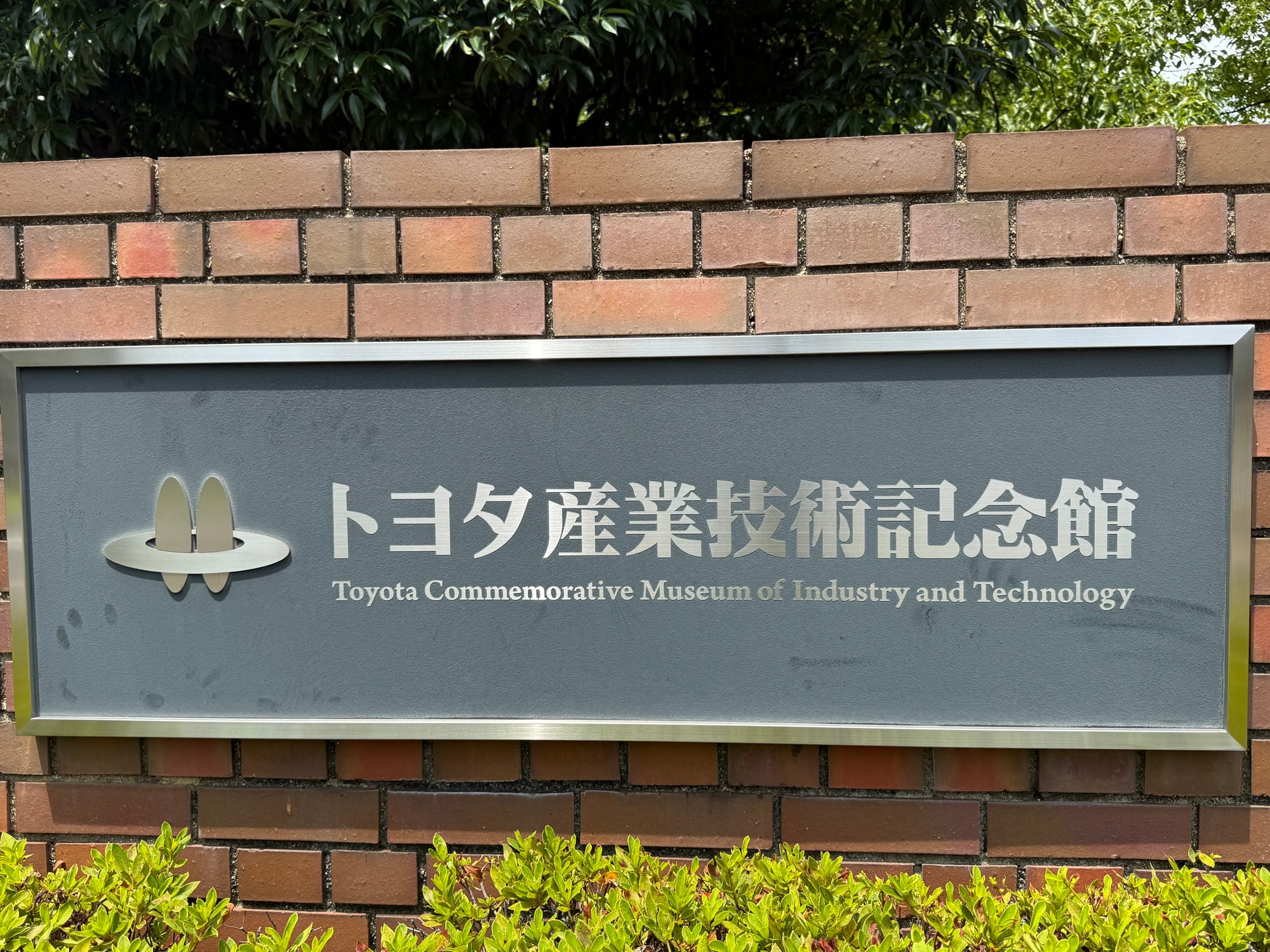
The Toyota Commemorative Museum of Industry and Technology in Nagoya traces the company's origins in textile manufacturing and its evolution into one of the world's leading automotive manufacturers.
Now I went here knowing bits about Toyota, but I didn’t realise how old the group actually is as they started off as Toyoda and they were in the textiles business.
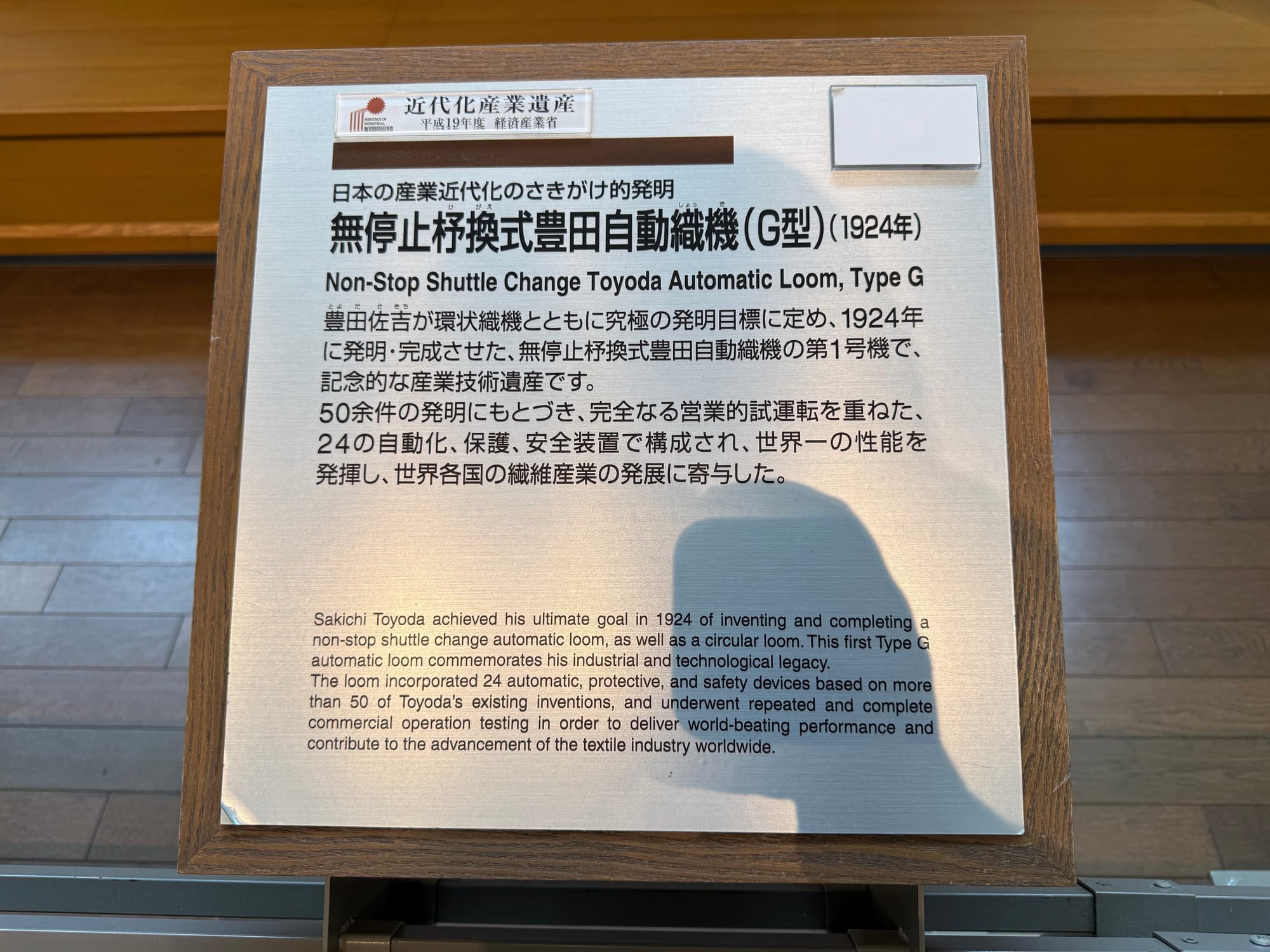
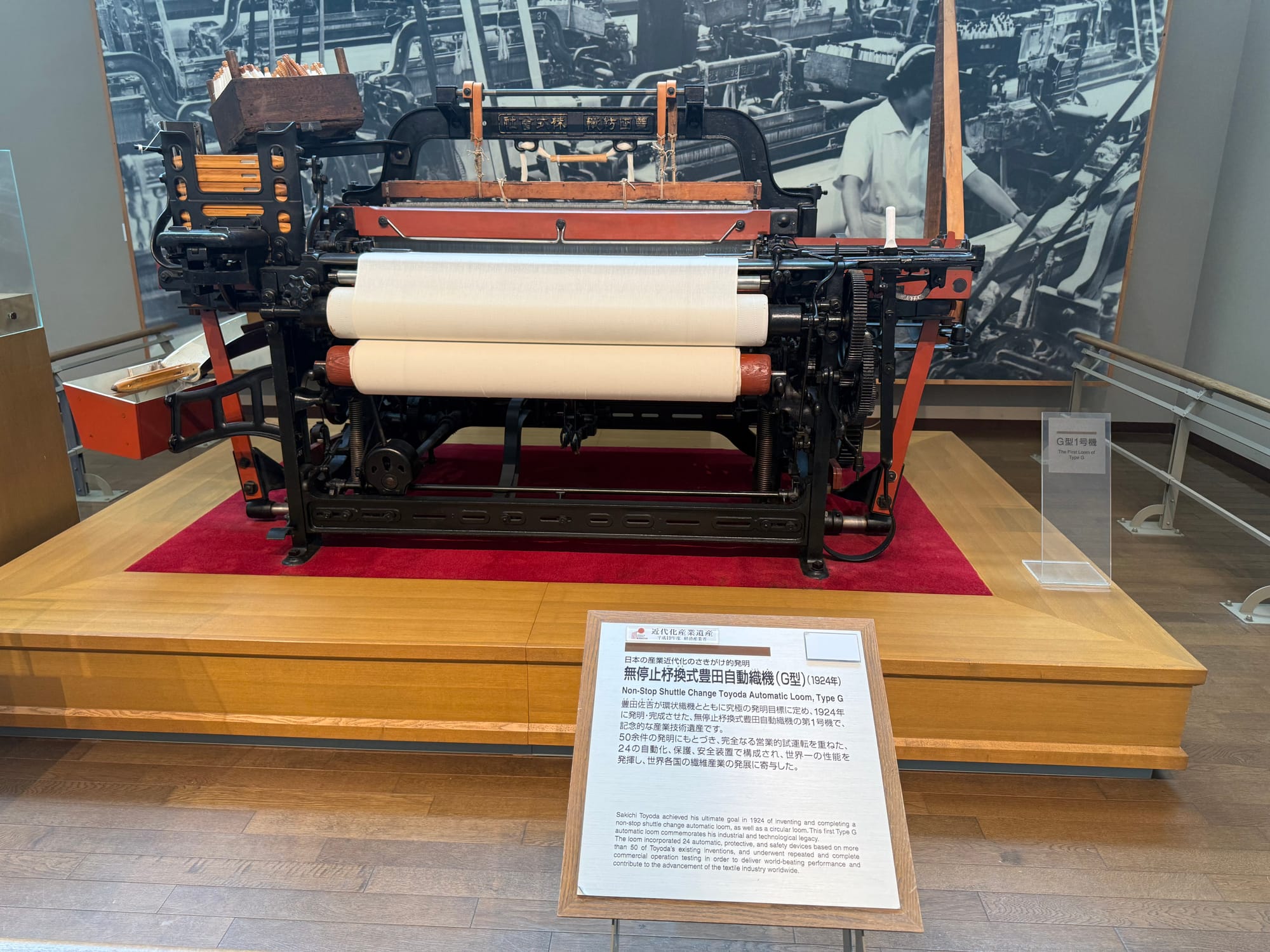
An exhibit at the Toyota Commemorative Museum of Industry and Technology highlights the 1924 Type G Toyoda Automatic Loom, a breakthrough invention that helped fund Toyota's transition from textiles to automobiles.The Type G Toyoda Automatic Loom, invented by Sakichi Toyoda in 1924, was a revolutionary textile machine whose success helped provide the foundation for the future Toyota Motor Corporation.
They even made and improved looms to make them more efficient and the even gave the rights to make this loom for a about 1 million yen at the time, which is roughly 3 billion yen today (14.2 million GBP).
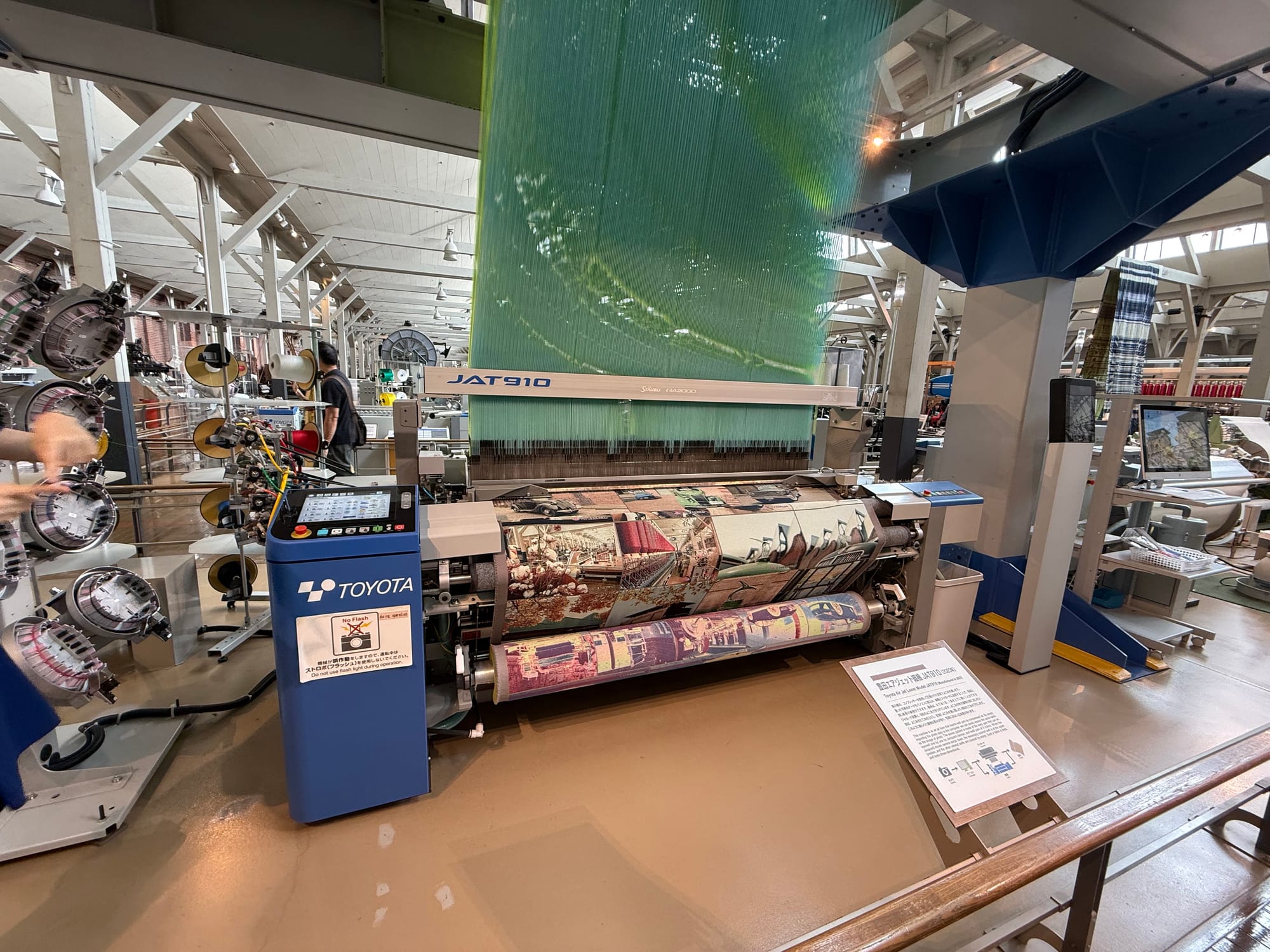
A modern Toyota weaving machine in operation at the Toyota Commemorative Museum of Industry and Technology highlights the company's origins in textile manufacturing before its transformation into a global automotive leader.
They still make looks today including this one that can essentially print any kind of pattern you want out.
Kiichiro Toyoda was the mastermind behind Toyota cars today and his father Sakichi, who founded Toyoda Automatic Loomworks. Going into cars was something that Kichiro wanted to do, with the goal to make a car that the Japanese people could afford as companies such as GM, Ford and Chrysler were already over in Japan.
A thought-provoking exhibit at the Toyota Commemorative Museum recalls the scepticism surrounding Japan's early car industry, before Toyota grew into one of the world's leading automotive manufacturers.
Kiichiro managed to convince his dad that they could make a people’s car in Japan, but it was a bit risk as the financial sink could wipe out Toyoda Automatic Loomworks.
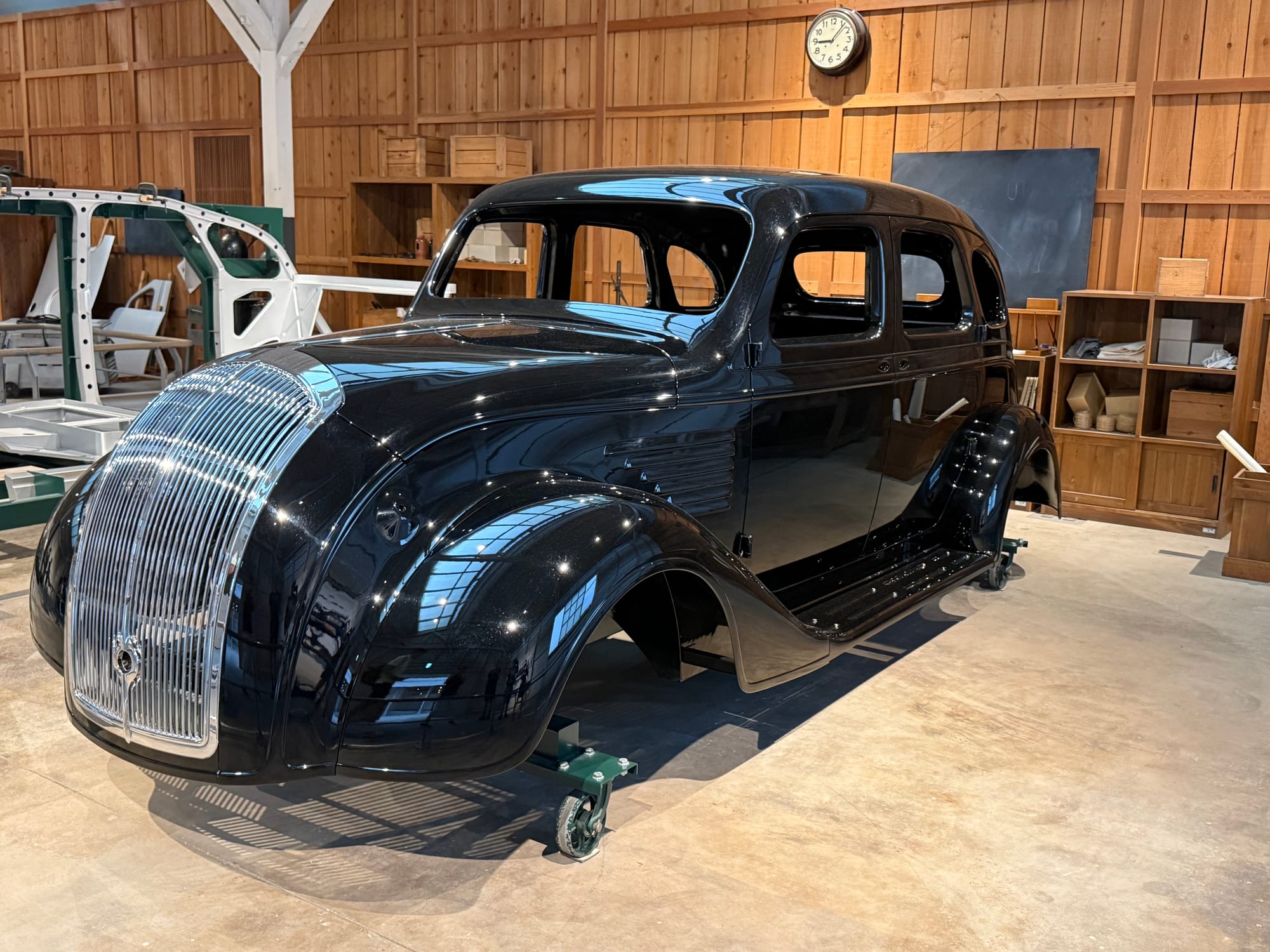
To do this they actually brought a Chrysler and meticulously took it apart and made notes on how it worked. After many attempts to make a working car, especially and engine, they finally came out with a working prototype called the Toyota A1.
An early Toyota passenger car body on display at the Toyota Commemorative Museum highlights the company's transition from textile machinery to automobile production during the 1930s.
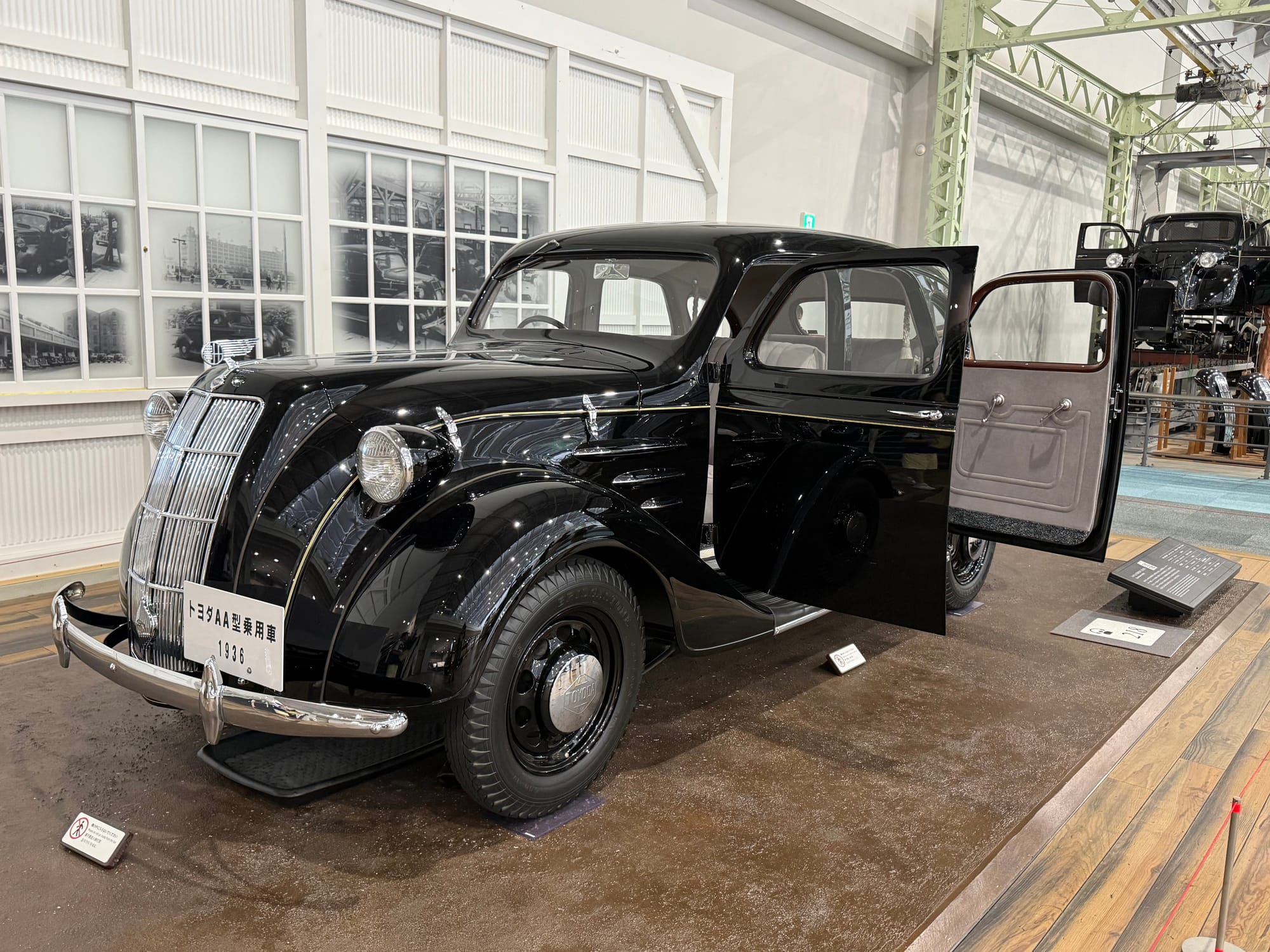
it featured a 3.5 liter straight 6 engine, with a 3 speed manual gearbox and they refined the way the car was made before they finally released it to the public 1 year later.
The 1936 Toyota AA passenger car represents one of Toyota's first production automobiles, marking a key milestone in the company's transformation from textile machinery manufacturer to car maker.
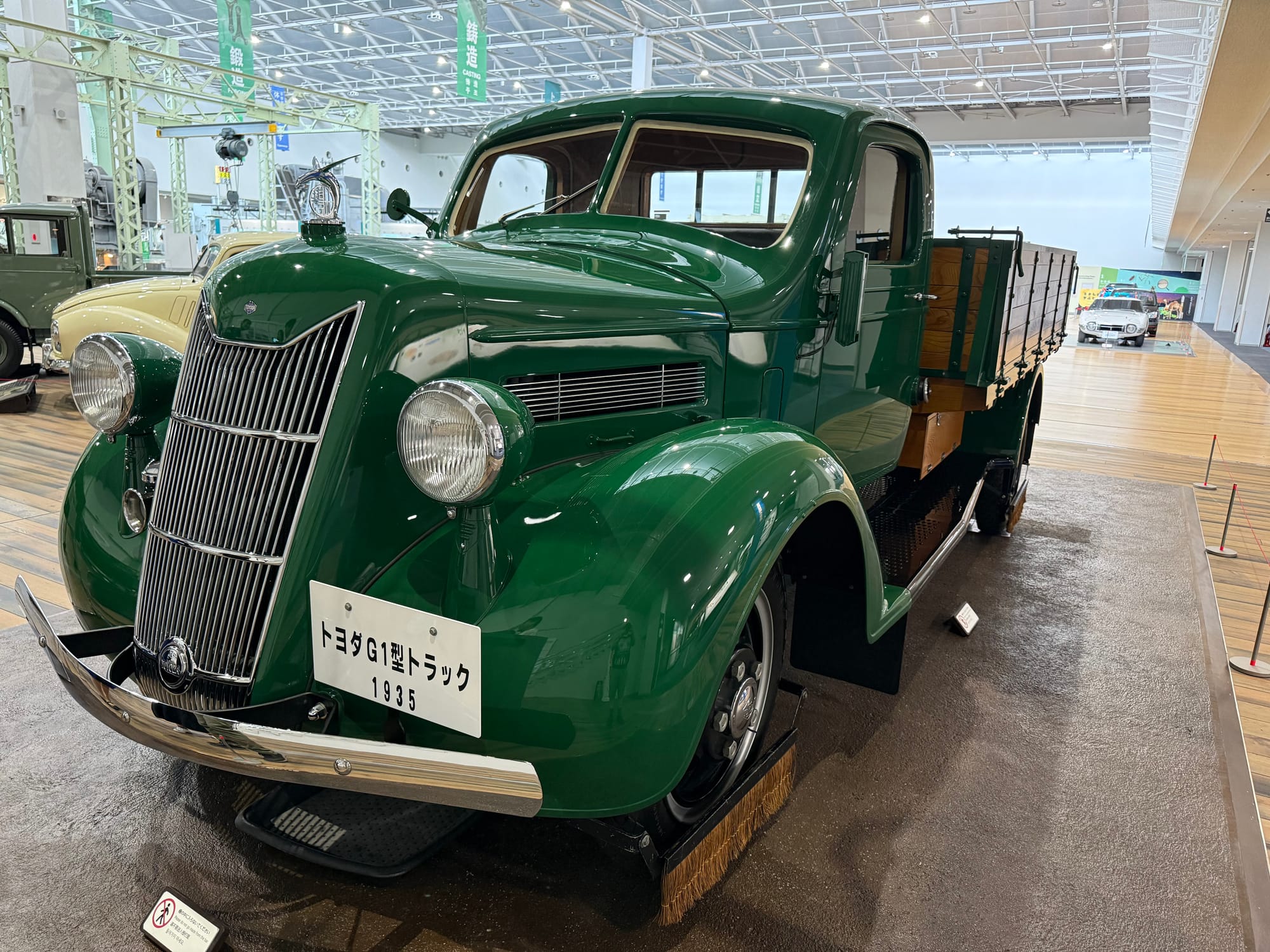
As Japan needed trucks more than cars, they were ordered by the government to create trucks and most cars were turned into taxis.
The 1935 Toyota G1 truck was Toyota's first production vehicle, marking the company's entry into the automotive industry before passenger car production began the following year.
Over the years Toyota has come up with a few innovations, including being the first manufacturer to come up with the Just in Time method, which helped them massively post war to eliminate waste and is used all over the world these days in production, including where I work.
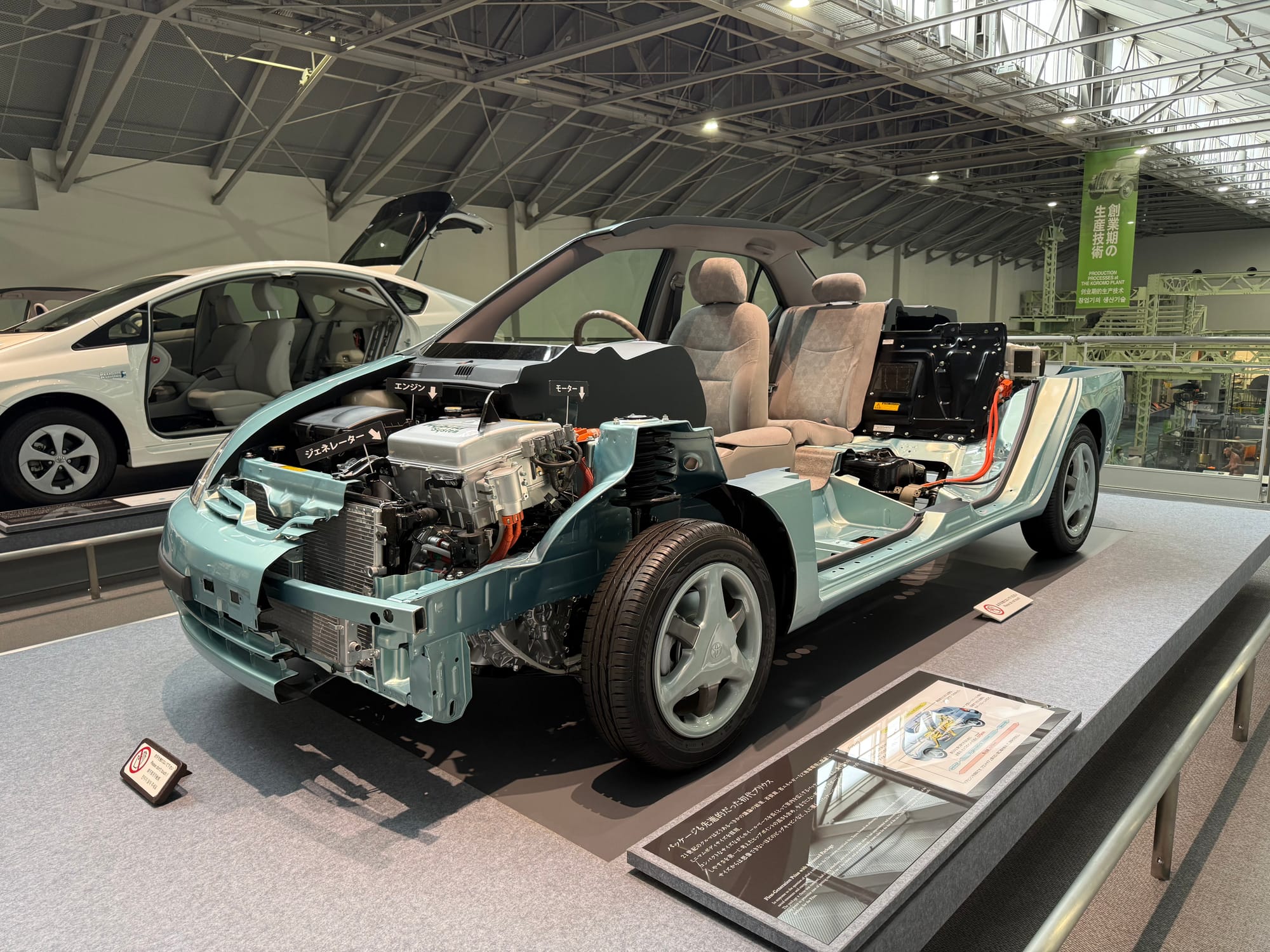
A cutaway Toyota Prius on display at the Toyota Commemorative Museum illustrates the hybrid technology that helped pioneer a new generation of fuel-efficient vehicles and transformed the global automotive industry.
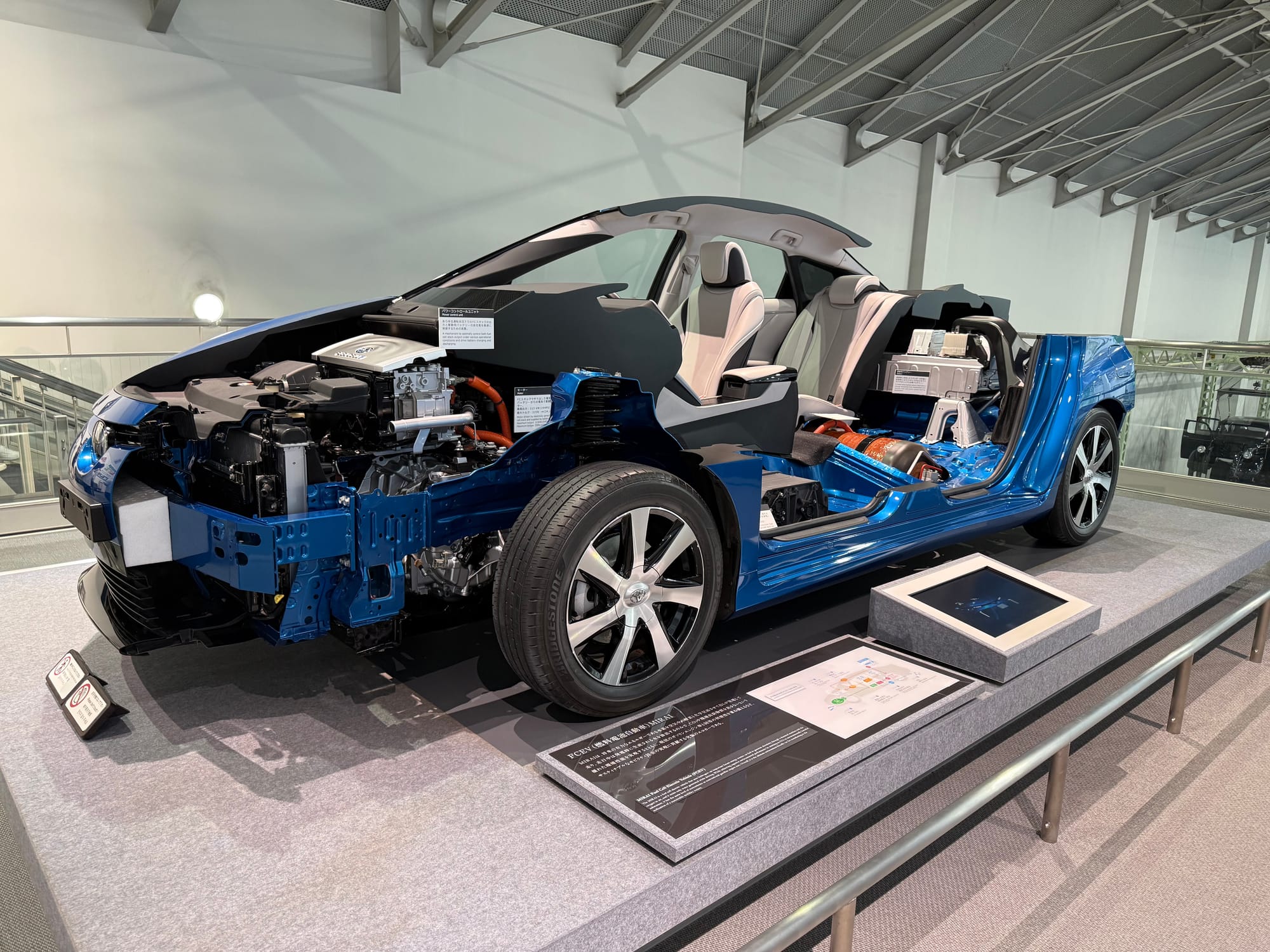
They also came out with the first electric car in 1997 with the Prius and launched into Hydrogen fuel cell sedans with the Mirai.
A cutaway Toyota Mirai at the Toyota Commemorative Museum demonstrates the hydrogen fuel cell technology that represents one of Toyota's approaches to low-emission motoring and future mobility.
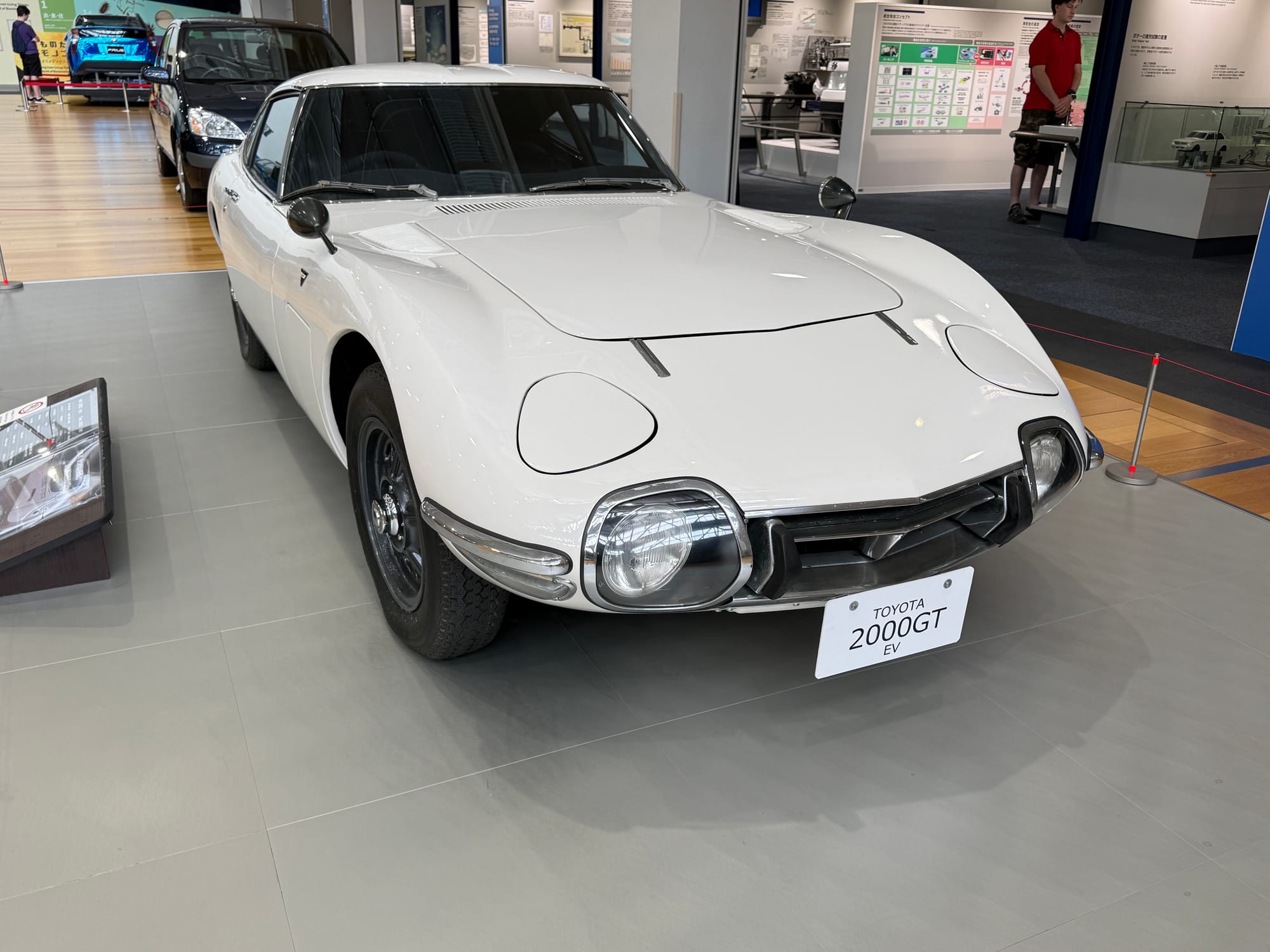
They also had a car there on show, which is like a dream car for me, like the Jaguar E-Type is for my dad and that car is the Toyota 2000GT and competed with the likes of Porche and Jaguar with its 2 Liter straight 6 Back in 1967.
A Toyota 2000GT EV on display at the Toyota Commemorative Museum demonstrates how one of Japan's most iconic sports cars has been adapted to showcase modern electric vehicle technology.
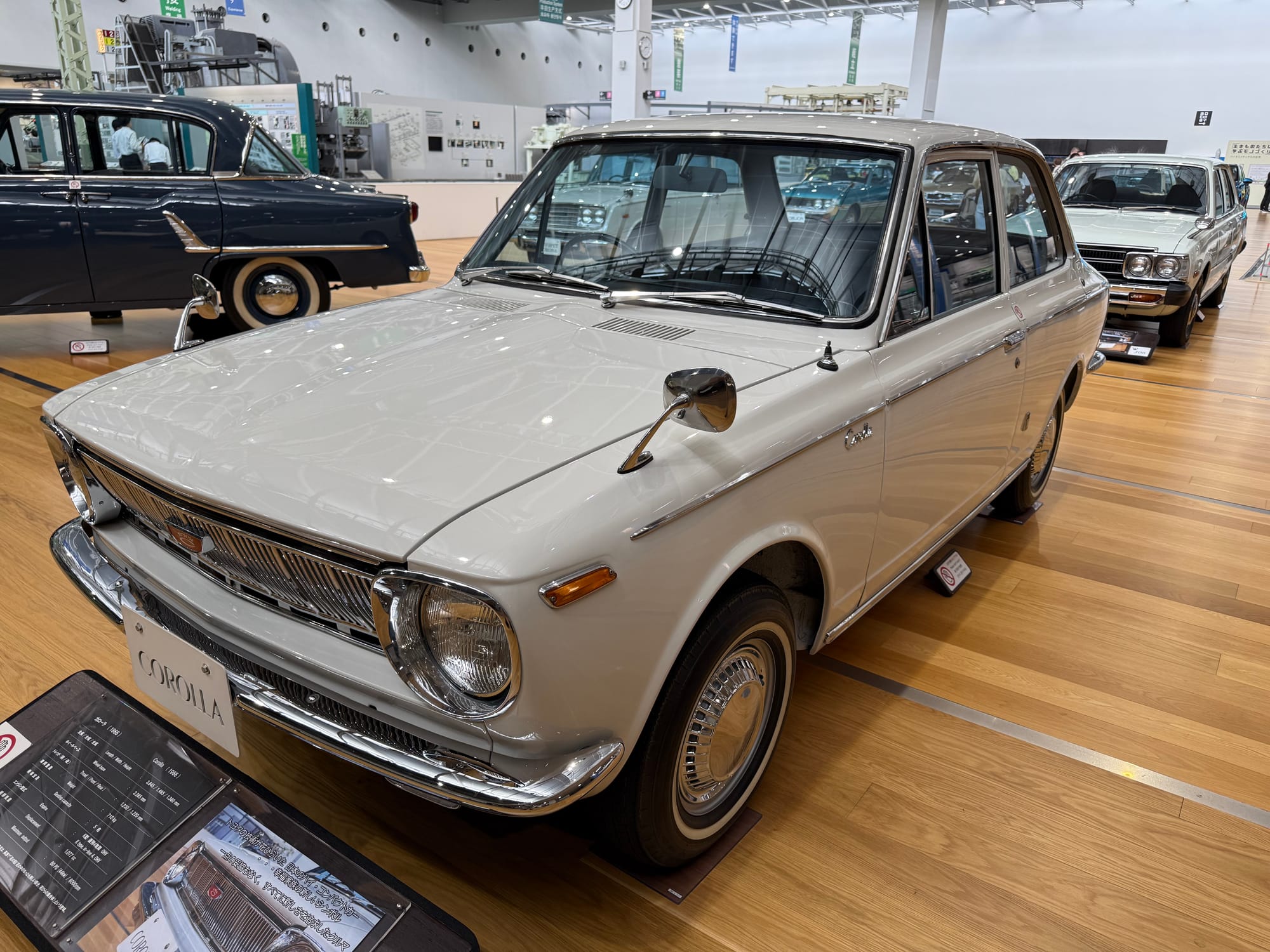
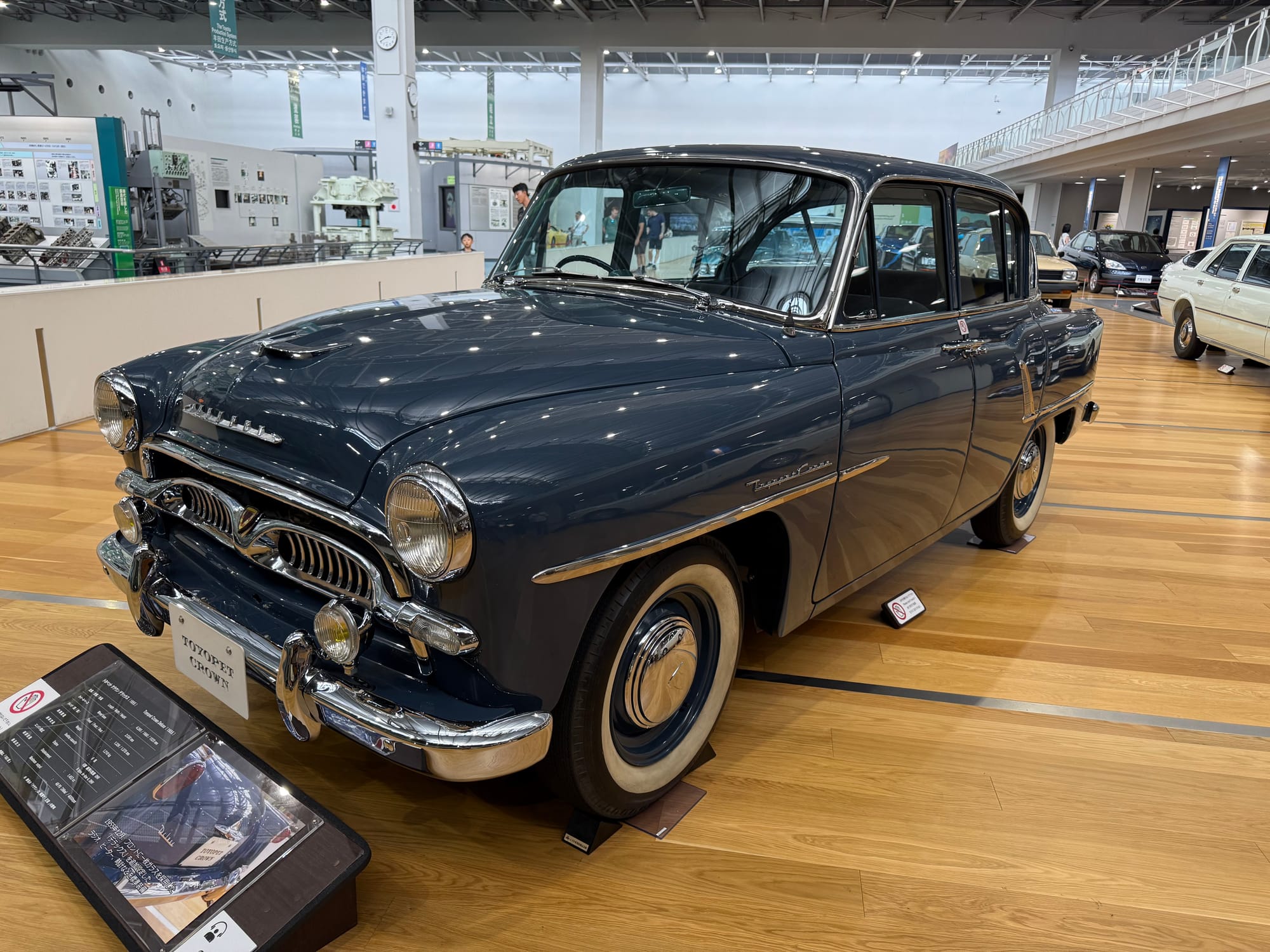
There were also quite a few other car there from over the years as well.
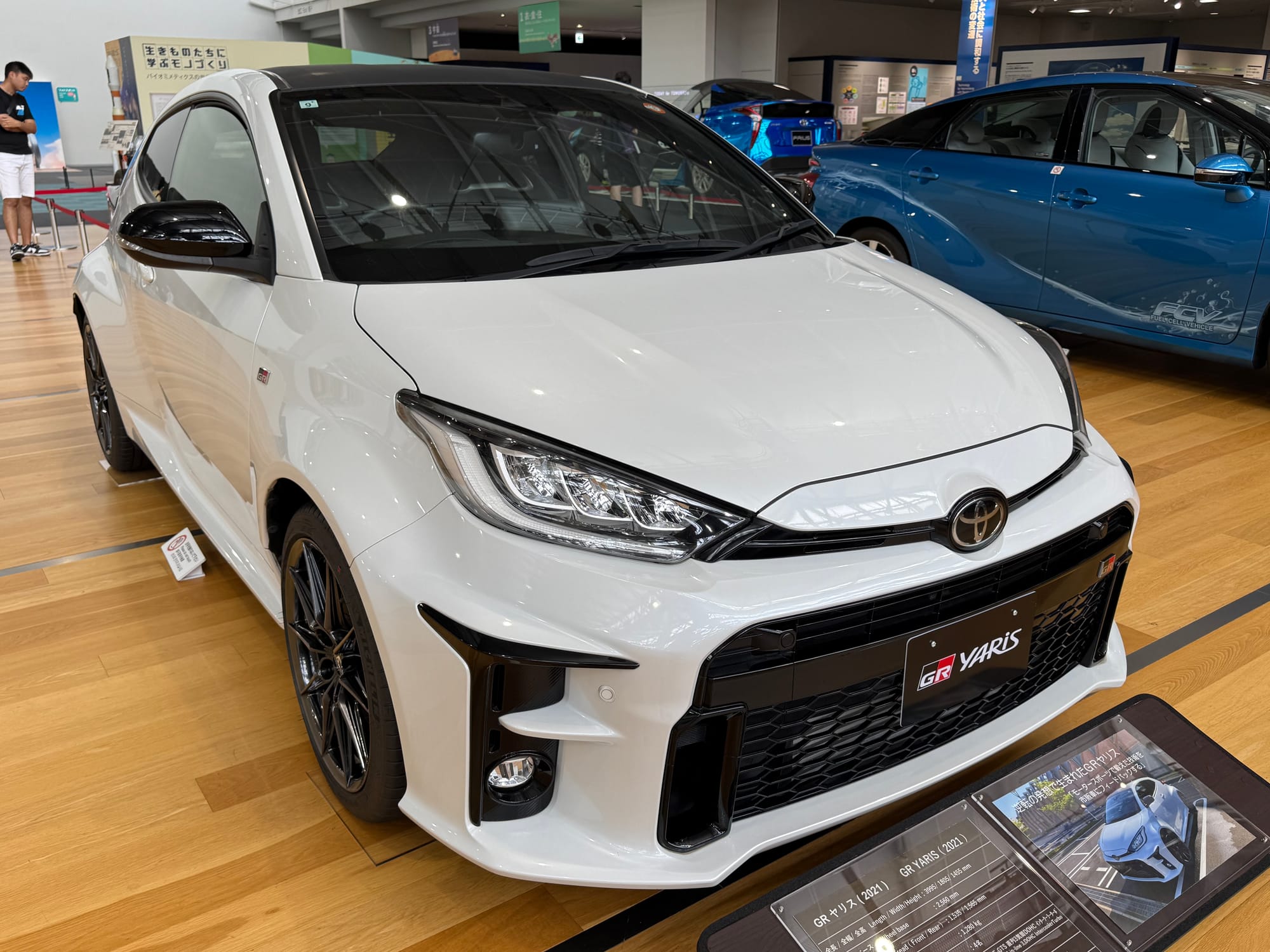
The first-generation Toyota Corolla, introduced in 1966, became one of Japan's most successful family cars and helped establish the Corolla as one of the best-selling vehicle names in automotive history.The Toyota Crown, introduced in 1955, was Toyota's first mass-produced passenger car developed specifically for the Japanese market and became a milestone in the company's automotive history.The Toyota GR Yaris showcases Toyota's modern performance engineering, with a rally-inspired design developed through the company's involvement in top-level motorsport competition.
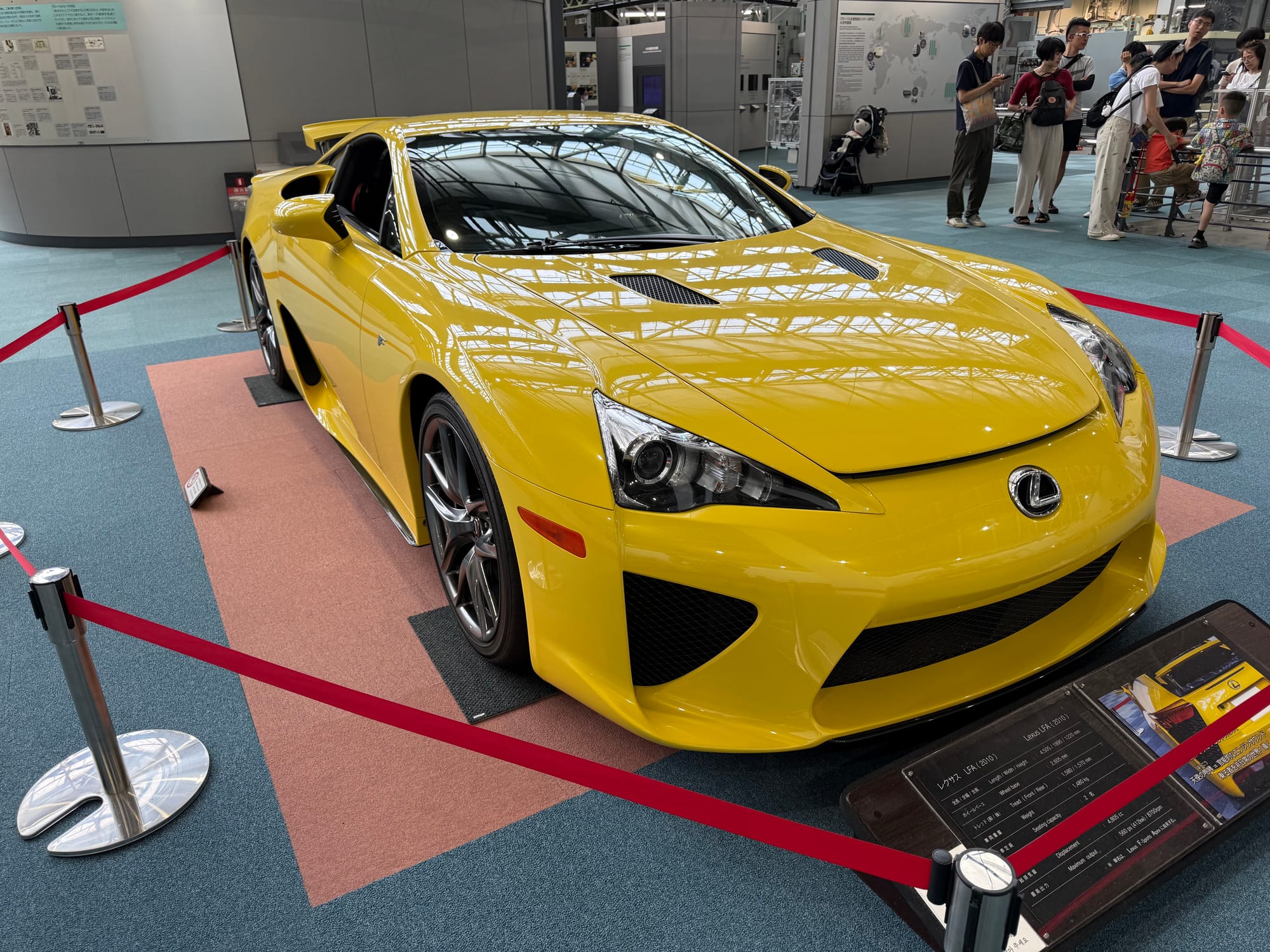
Some of you may know that Lexus is Toyotas luxury range of car and they had on display a Lexus LFA which looked amazing.
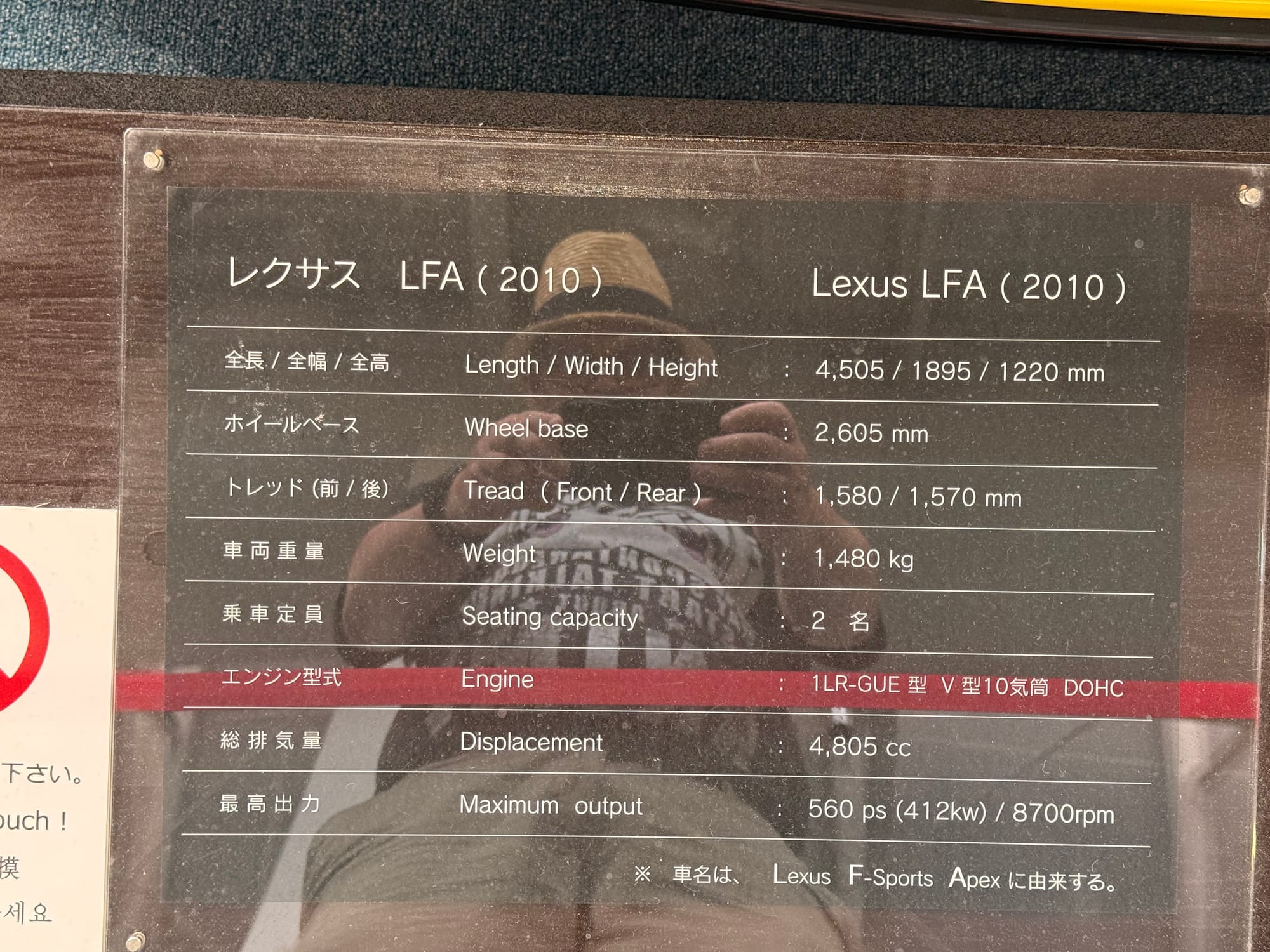
The Lexus LFA represents one of Japan's most celebrated supercars, combining advanced engineering, a carbon-fibre structure and a legendary V10 engine in a limited-production flagship model.The specification panel for the Lexus LFA highlights the engineering behind Toyota's flagship supercar, including its 4.8-litre V10 engine producing 560 PS and a top speed of 202 mph (325 km/h).
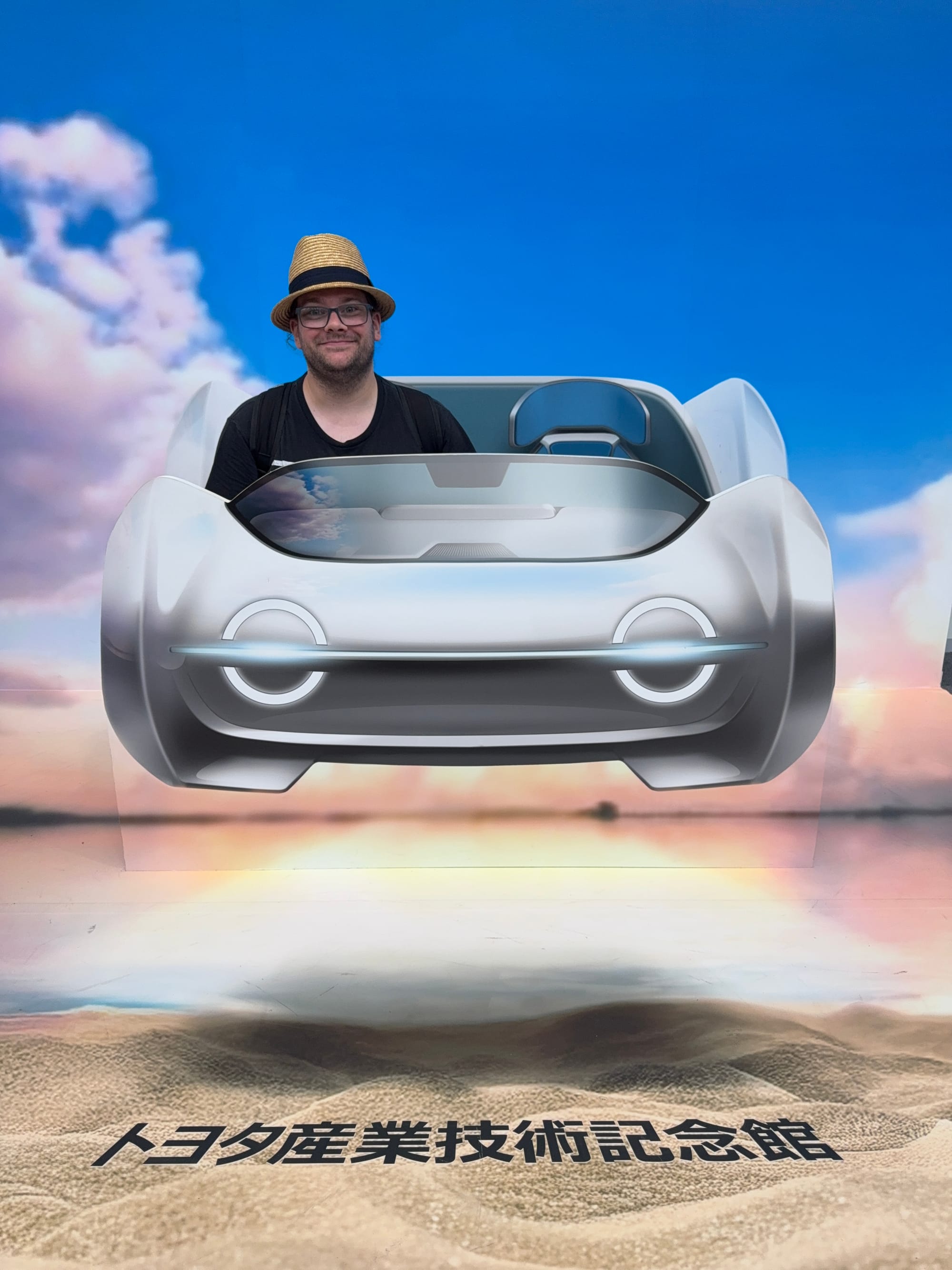
They also let me try out a futuristic flying car.
Trying out a futuristic concept car display at the Toyota Commemorative Museum, imagining what personal transport might look like in the decades to come.
There is also a robot in the lobby that plays the violin for people, so I managed to get a recording of it.
0:00
/3:06
Toyota's partner robot at the Toyota Commemorative Museum of Technology and Industry playing the violin to Johann Pachelbel's Cannon in D
After this, I made my way back to my hotel, which I am staying at for a while now. It is the APA Hotel Nagoya Sakae Kita, which is smaller than the one in Osaka, but I don’t mind that as it still comes with a buffet breakfast and has a hot spring, which was a requirement for all my hotels.
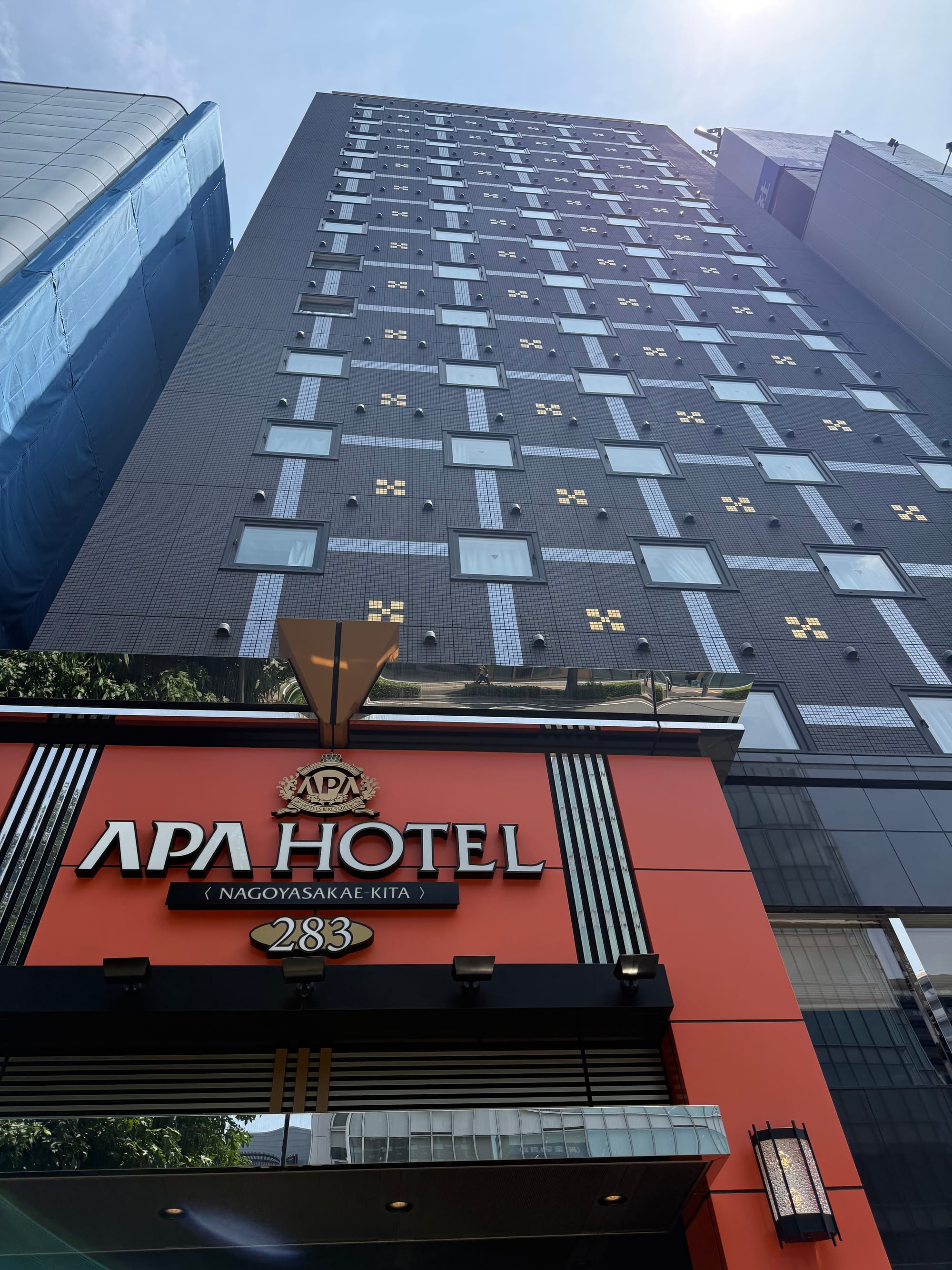
APA Hotel Nagoya Sakae-Kita served as my base while exploring Nagoya, offering a convenient location within easy reach of the city's museums, attractions and transport links.
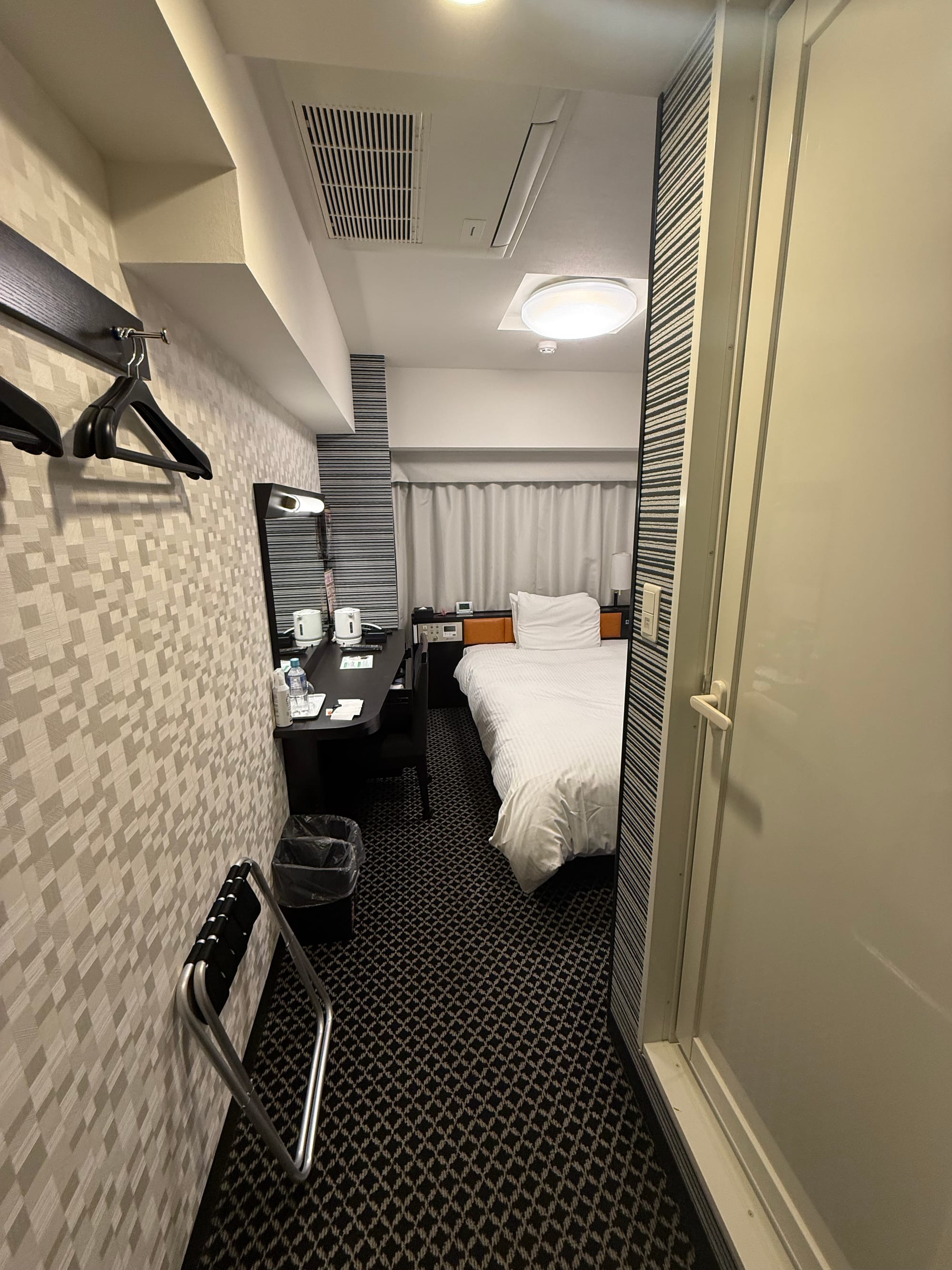
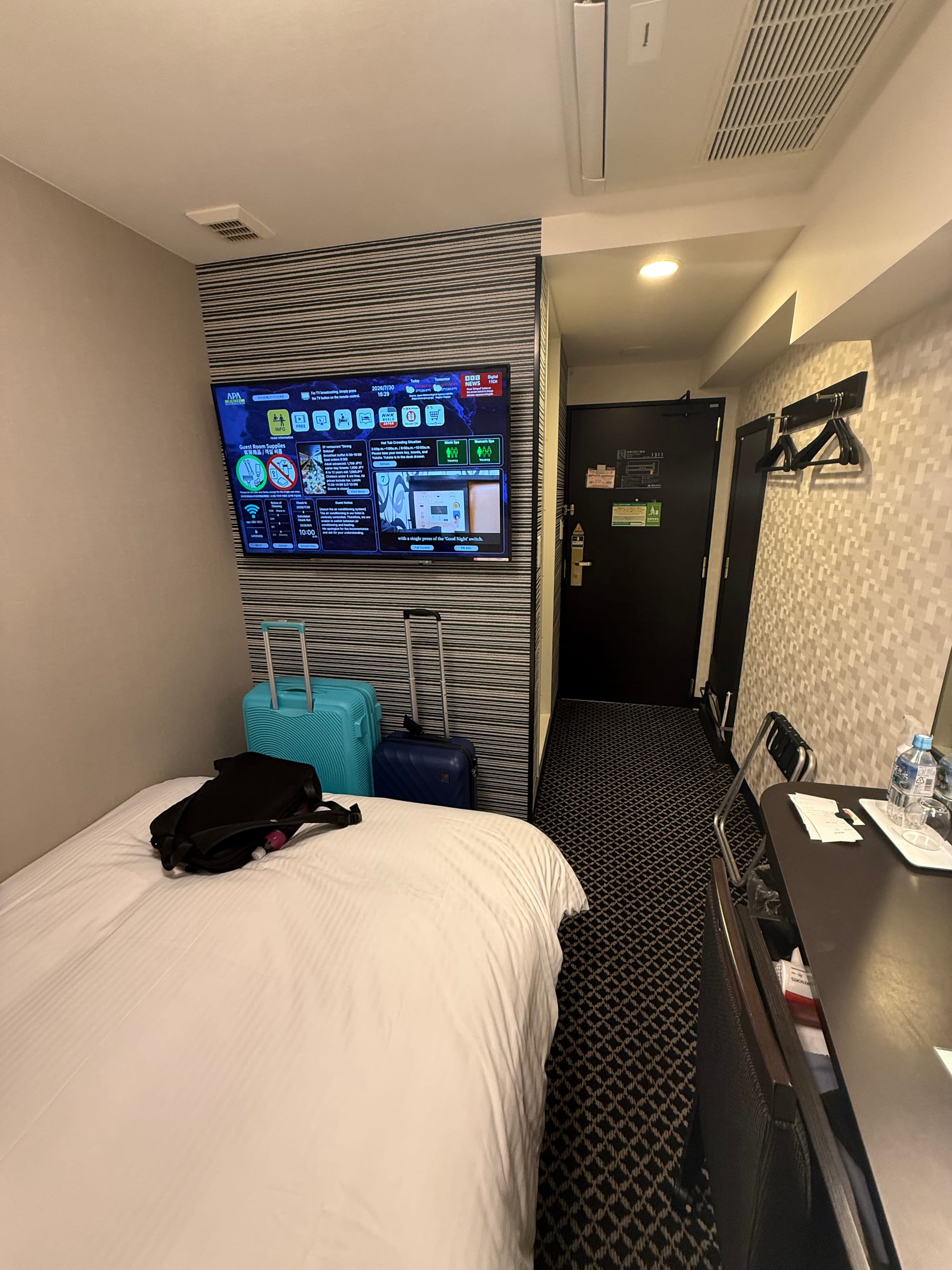
And the room was pretty much the same as the one in my hotel in Osaka, but the hotel is a bit smaller overall and when you step out of your hotel room, it is not inside, it is like a outdoor courtyard.
My room at APA Hotel Nagoya Sakae-Kita, a compact but comfortable base for exploring Nagoya, with the efficient design typical of Japanese business hotels.Another view of my room at APA Hotel Nagoya Sakae-Kita, showing the compact design, workspace and modern amenities typical of Japanese business hotels.
SC Maglev Park and Osu
31st July
Today was time to go all the way down to the SC Maglev and Railway Park to have a look at how train technology has changed over the years and then onto Osu, which is a shopping district and also has a big Buddhist temple in Nagoya.
SC Maglev and Railway Park
The SC Maglev and Railway park which opened in 2011, features 39 retired trains and also has a couple of experimental trains like the maglev MLX01-1.
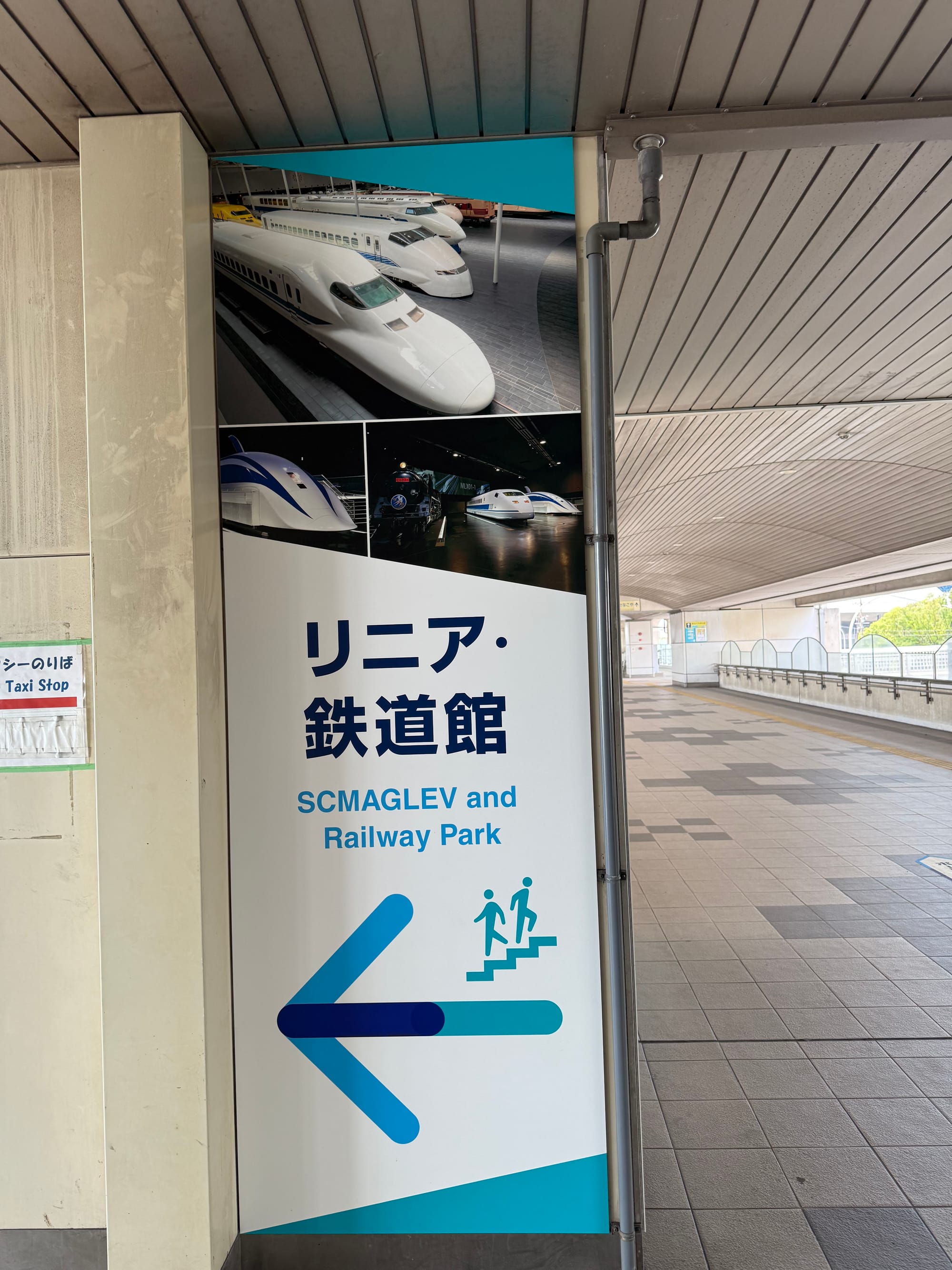
Arriving at the SCMAGLEV and Railway Park in Nagoya, where exhibits showcase the history of Japanese railways and the development of the world's fastest magnetic levitation trains.
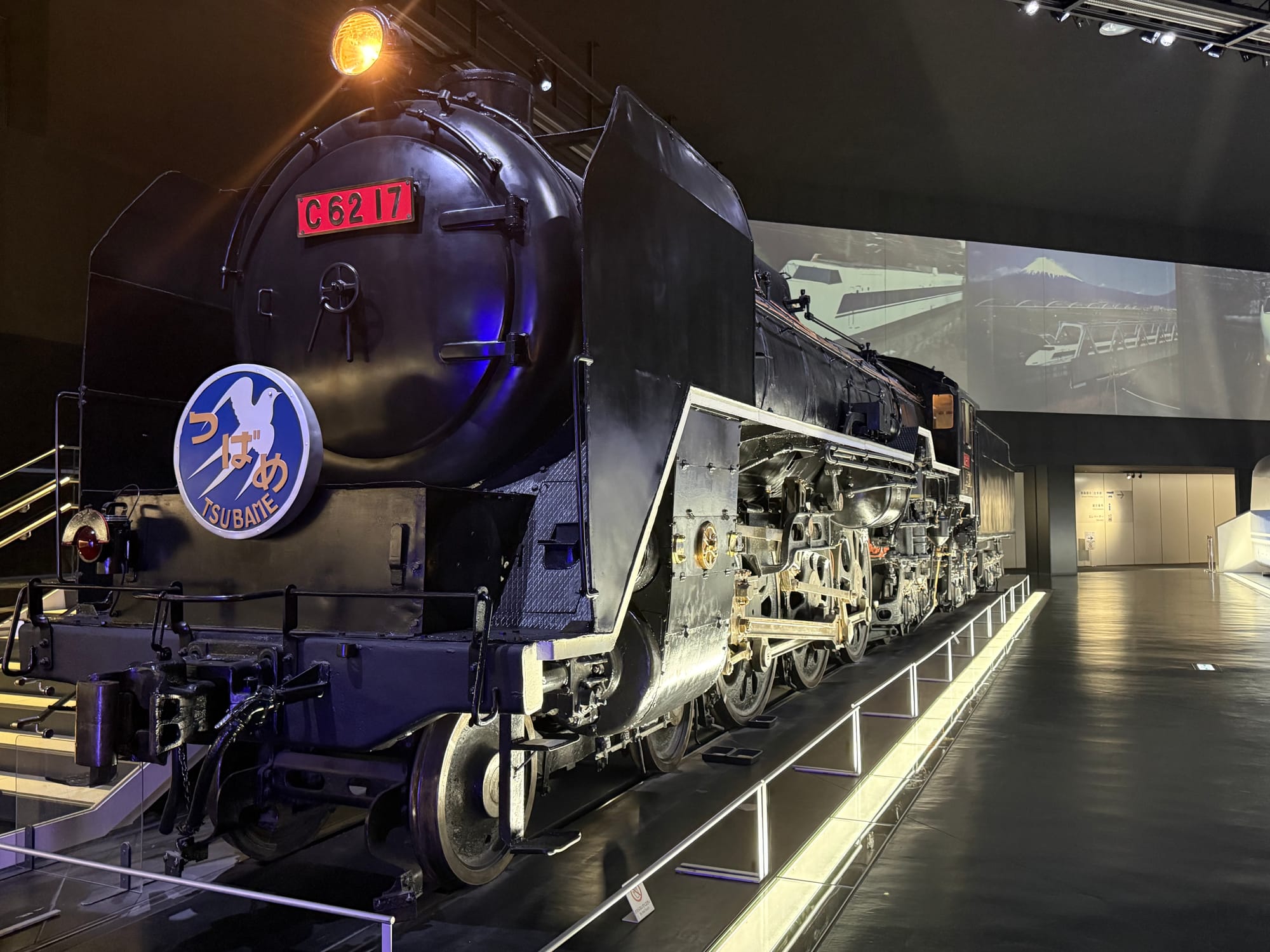
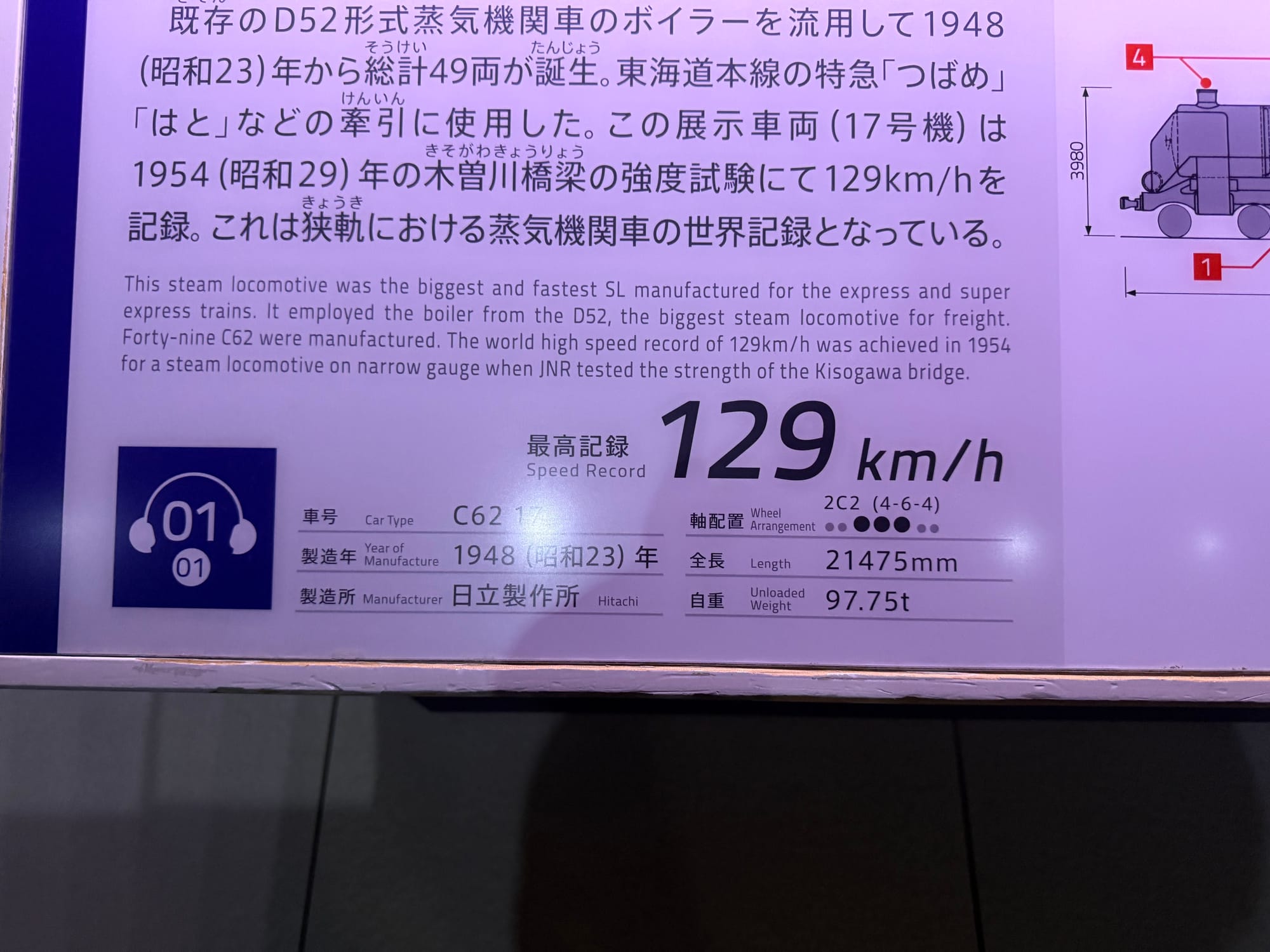
It has a Type 62 series steam engine is the fasted narrow gauge steam engine in The world, hitting a massive 129 KPH (80MPH).
The preserved C62 17 steam locomotive at the SCMAGLEV and Railway Park recalls the golden age of Japanese steam railways and the prestigious Tsubame express services that operated before the Shinkansen era.The C62 17 steam locomotive set a world speed record for a narrow-gauge steam locomotive in 1954, reaching 129 km/h during testing on the Kisogawa Bridge, a milestone highlighted at the SCMAGLEV and Railway Park.
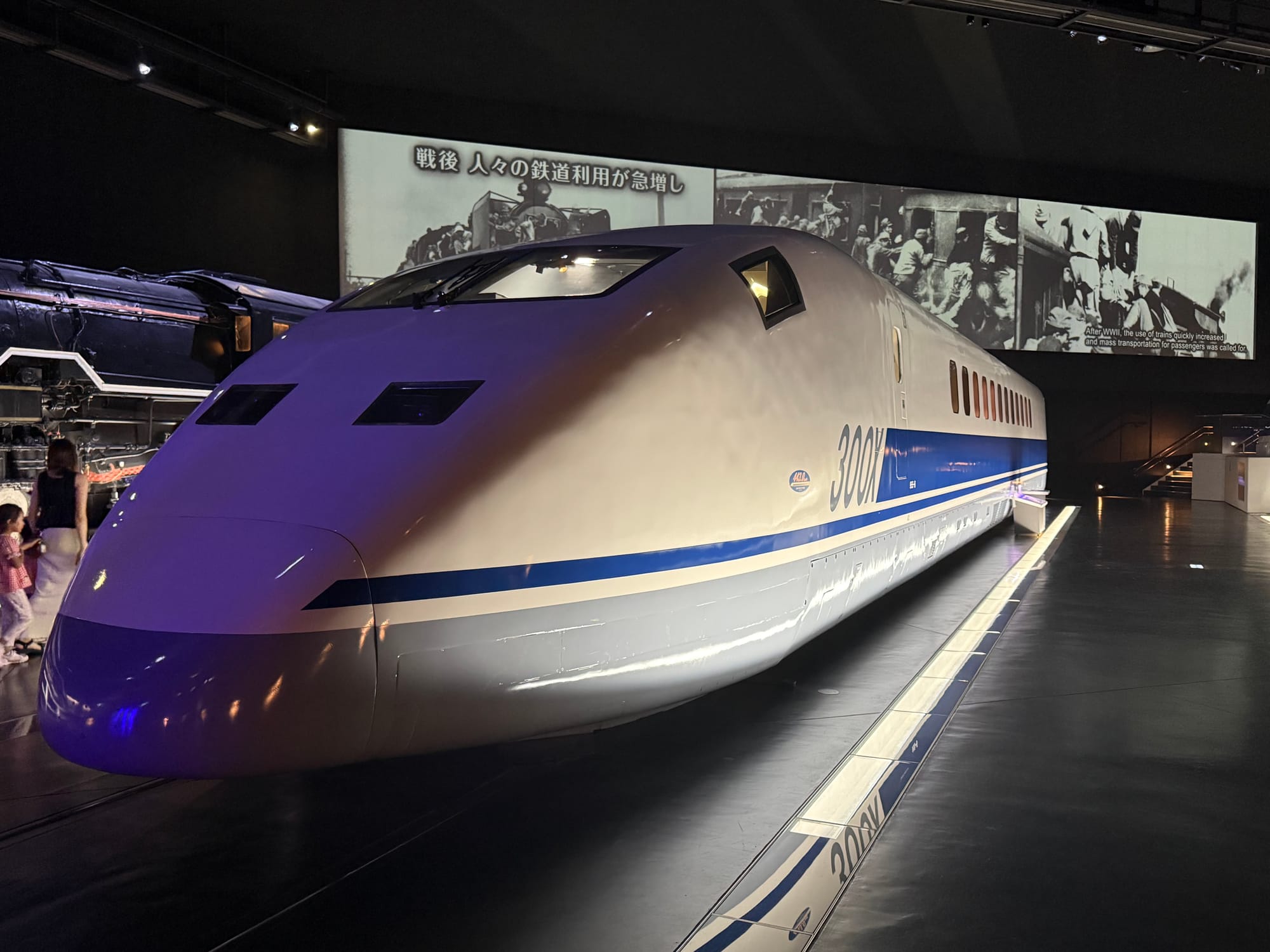
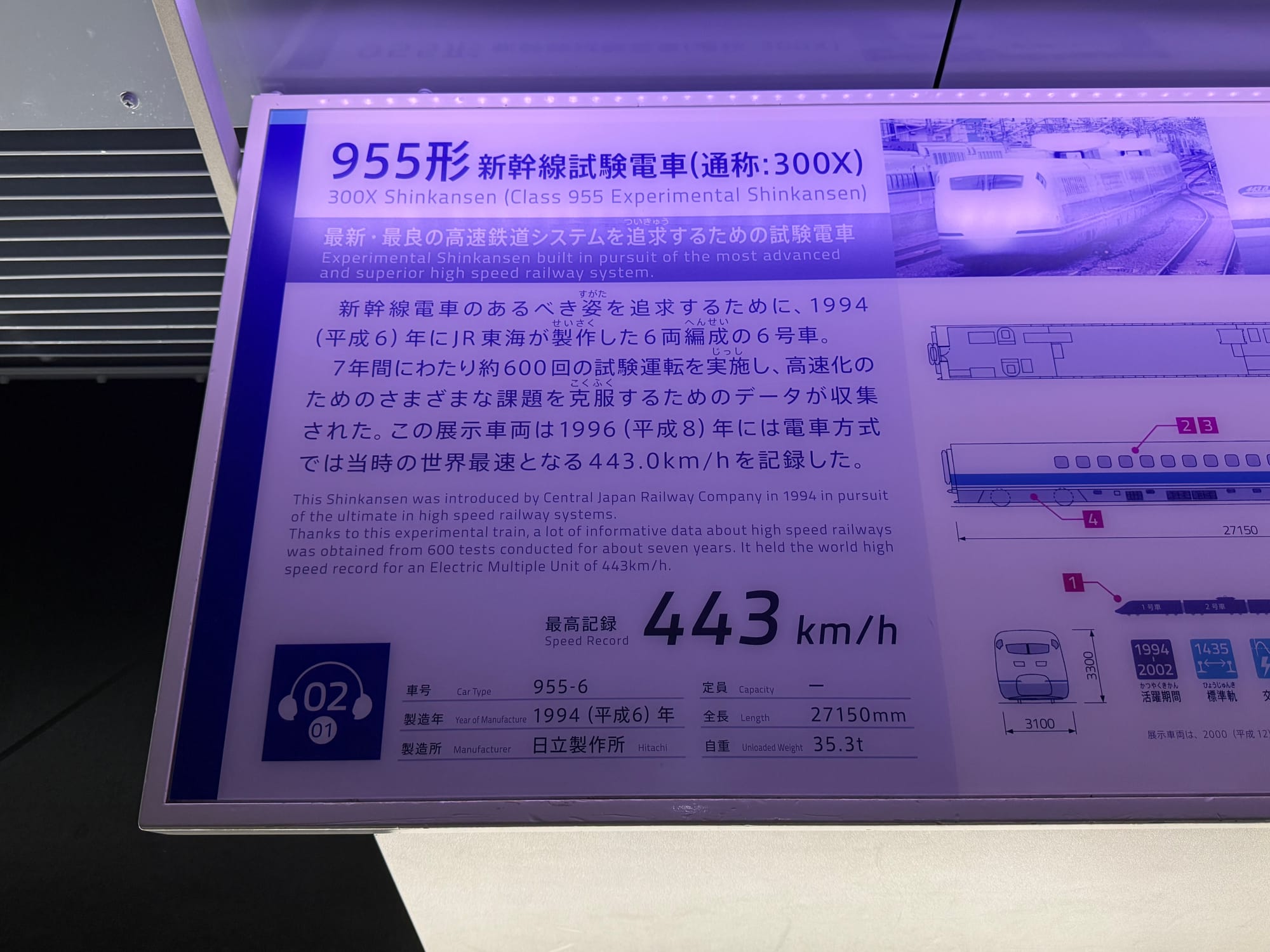
There is also the experimental 300X bullet train, which was the fasted standard gauge train from 1996 to 2007, which a speed of 443 KPH (275 MPH).
It is still quicker than the bullet trains that run in Japan these days as there test speed reach between 360 to 400KPH (223 to 248 MPH), but are restricted to 320 KPH (200MPH), which is due to environmental values such as noise.
The 300X experimental Shinkansen was developed by JR Central in the 1990s to test high-speed rail technology, helping pave the way for later generations of Tokaidō Shinkansen trains and achieving speeds of up to 443 km/h during testing.An information display for the 300X experimental Shinkansen explains how the train helped develop future generations of high-speed rail, setting a world record speed of 443 km/h during testing in 1996.
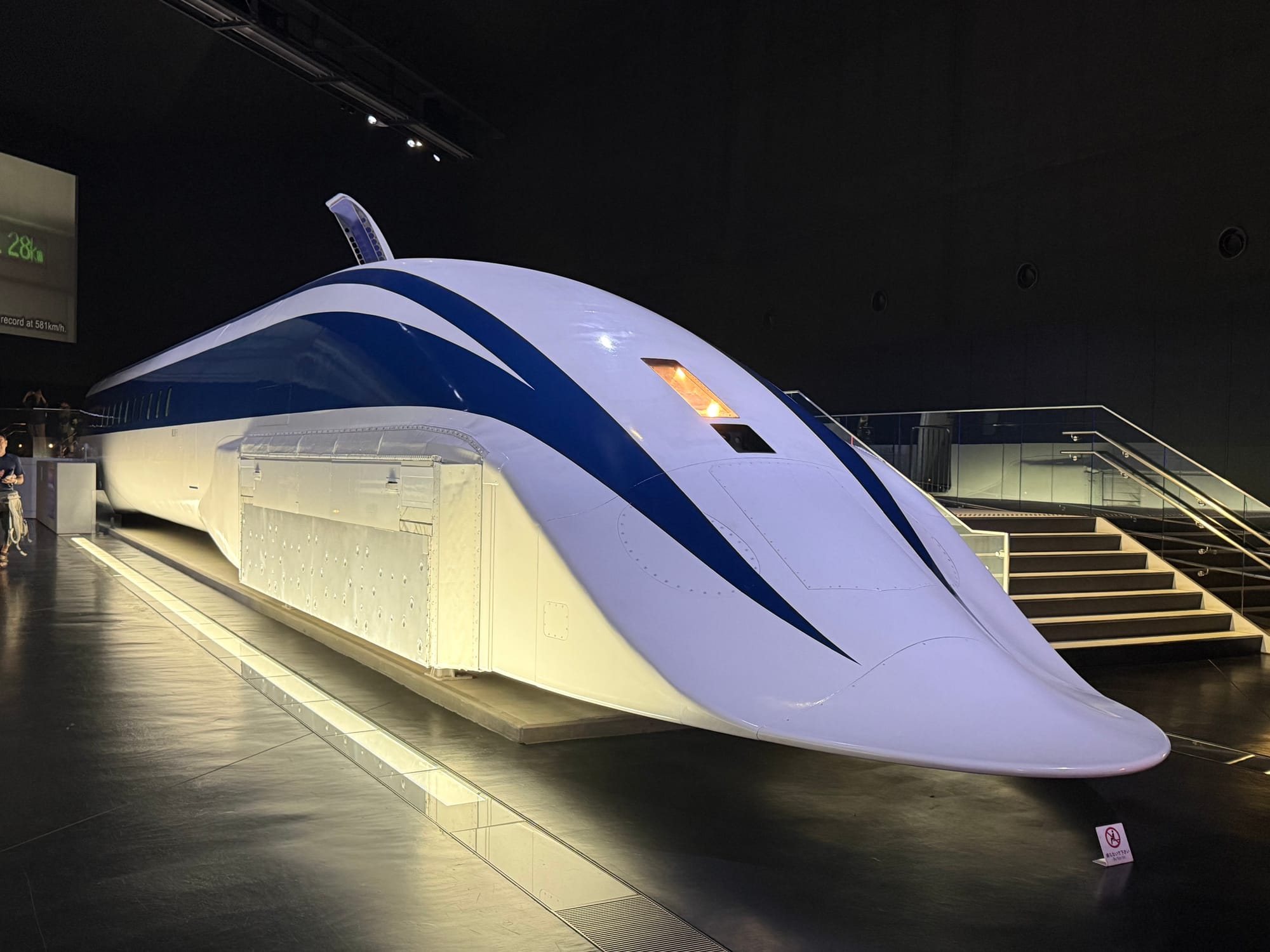
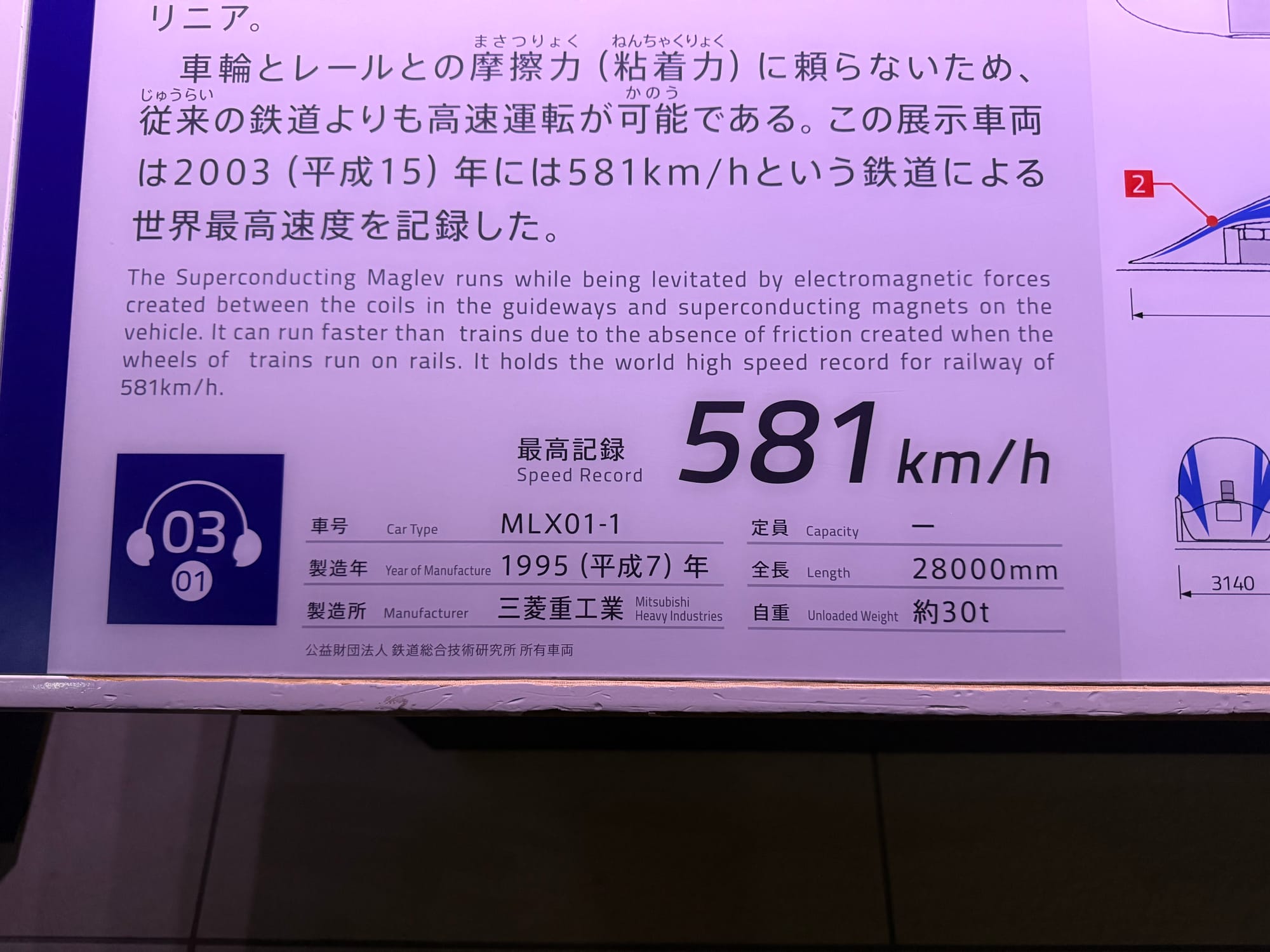
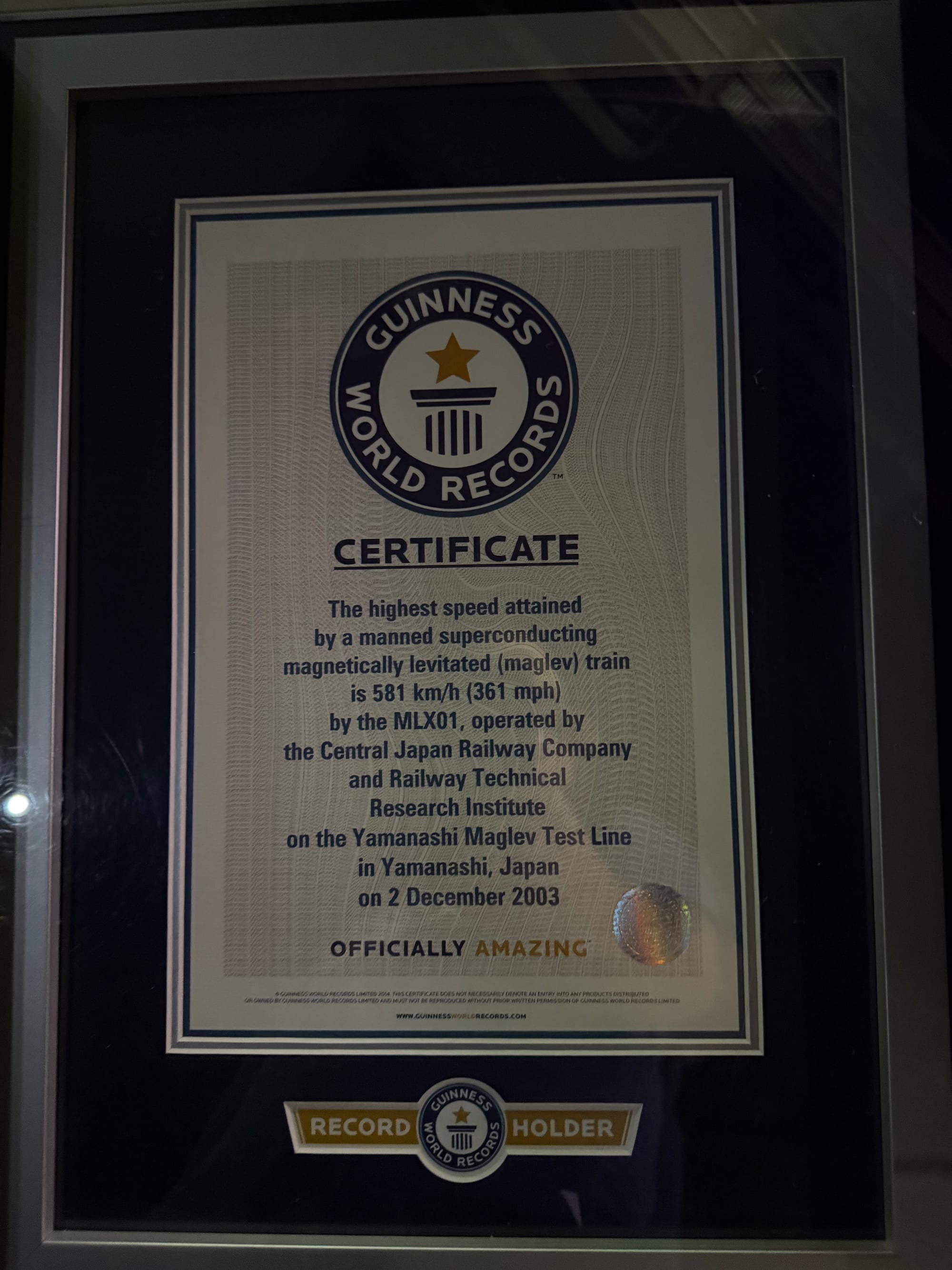
Next in the entrance hall was the MLX01-1, which was built in 1995 and was the fastest Maglev train and held the Guinness world record for it, with a speed of 581KPH (361MPH) in 2003.
The MLX01-1 superconducting maglev test vehicle helped pioneer Japan's next generation of ultra-high-speed rail, contributing to the development of the Chūō Shinkansen and achieving speeds in excess of 550 km/h during testing.An information display for the MLX01-1 maglev test vehicle explains its role in advancing Japan's superconducting maglev technology, including its record speed of 581 km/h achieved during testing in 2003.A Guinness World Records certificate commemorates the MLX01 superconducting maglev's achievement of 581 km/h on the Yamanashi Maglev Test Line in 2003, a milestone in the development of Japan's next generation of high-speed rail technology.
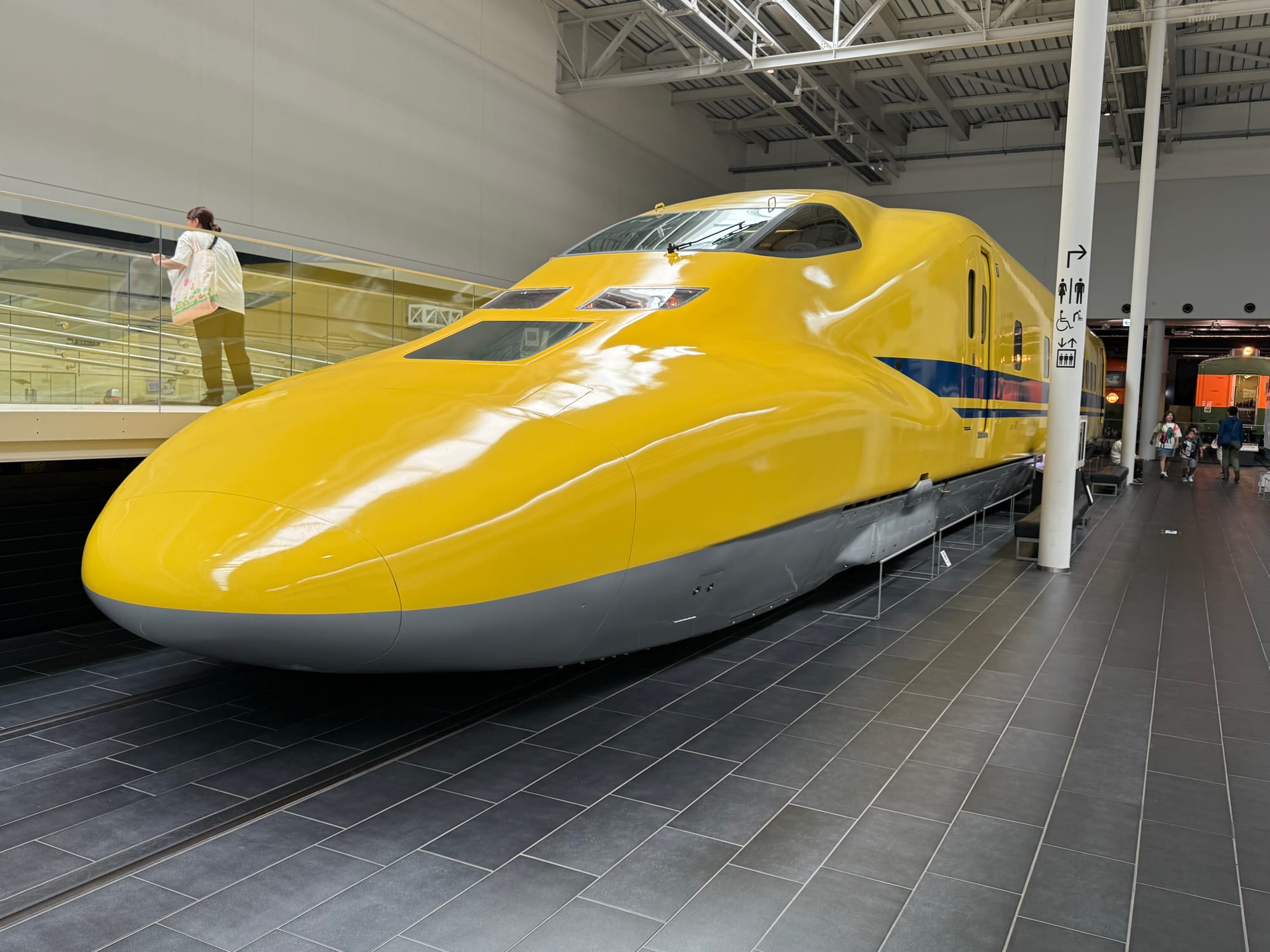
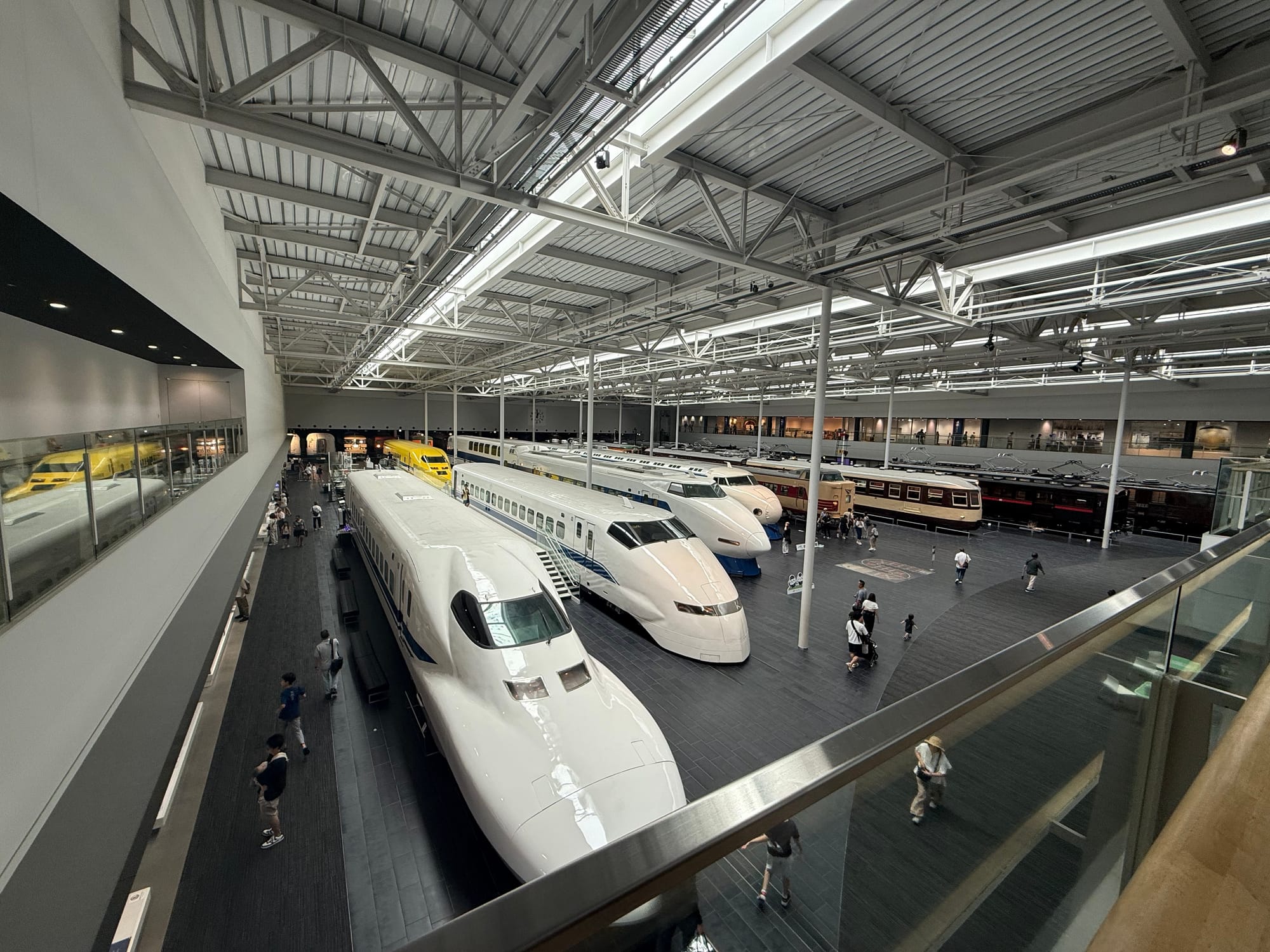
After the entrance hall, I walked into the main hall and wow, there are many different trains in here, from all different era's including Japans famous yellow bullet train called Dr. Yellow.
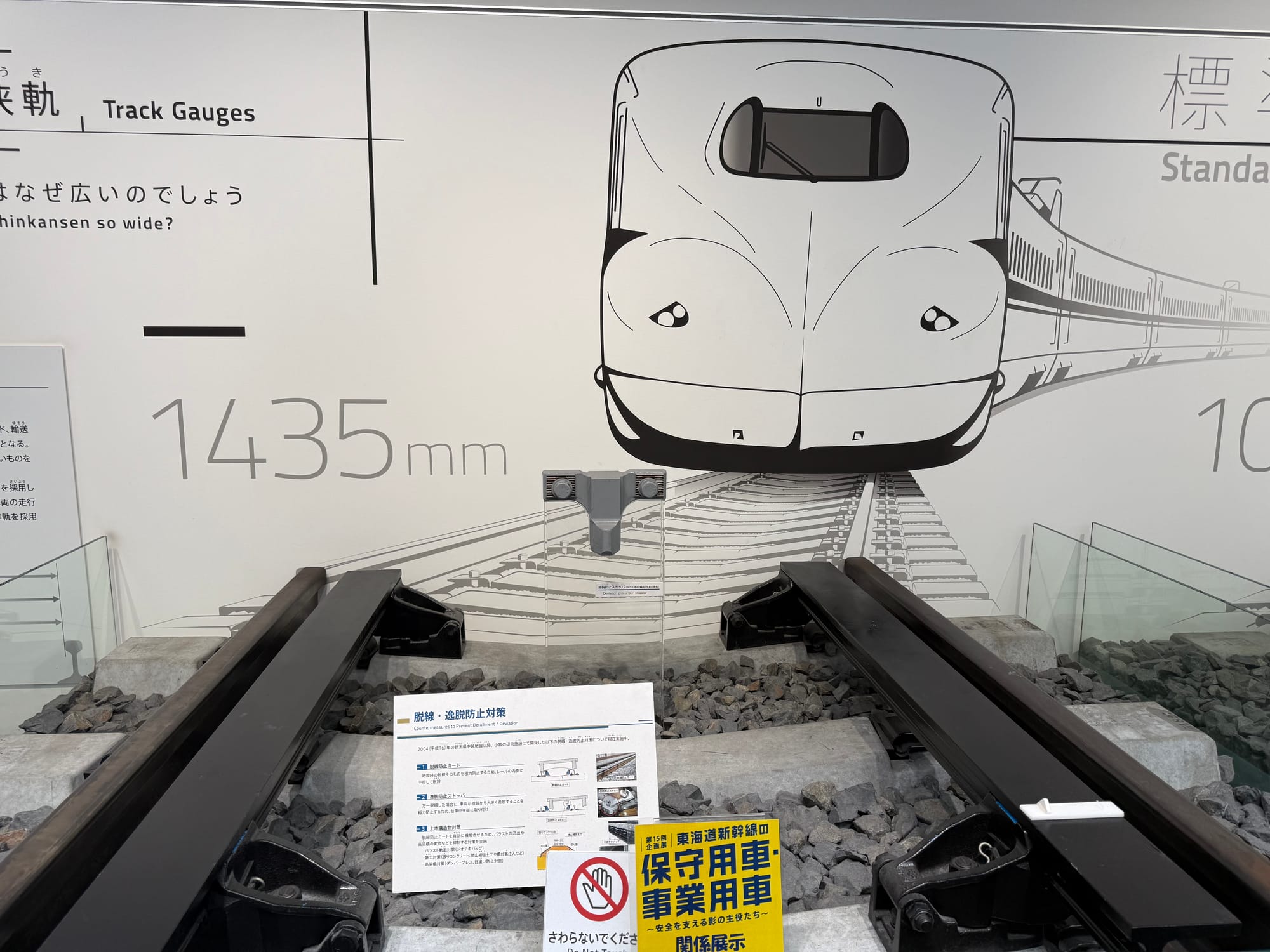
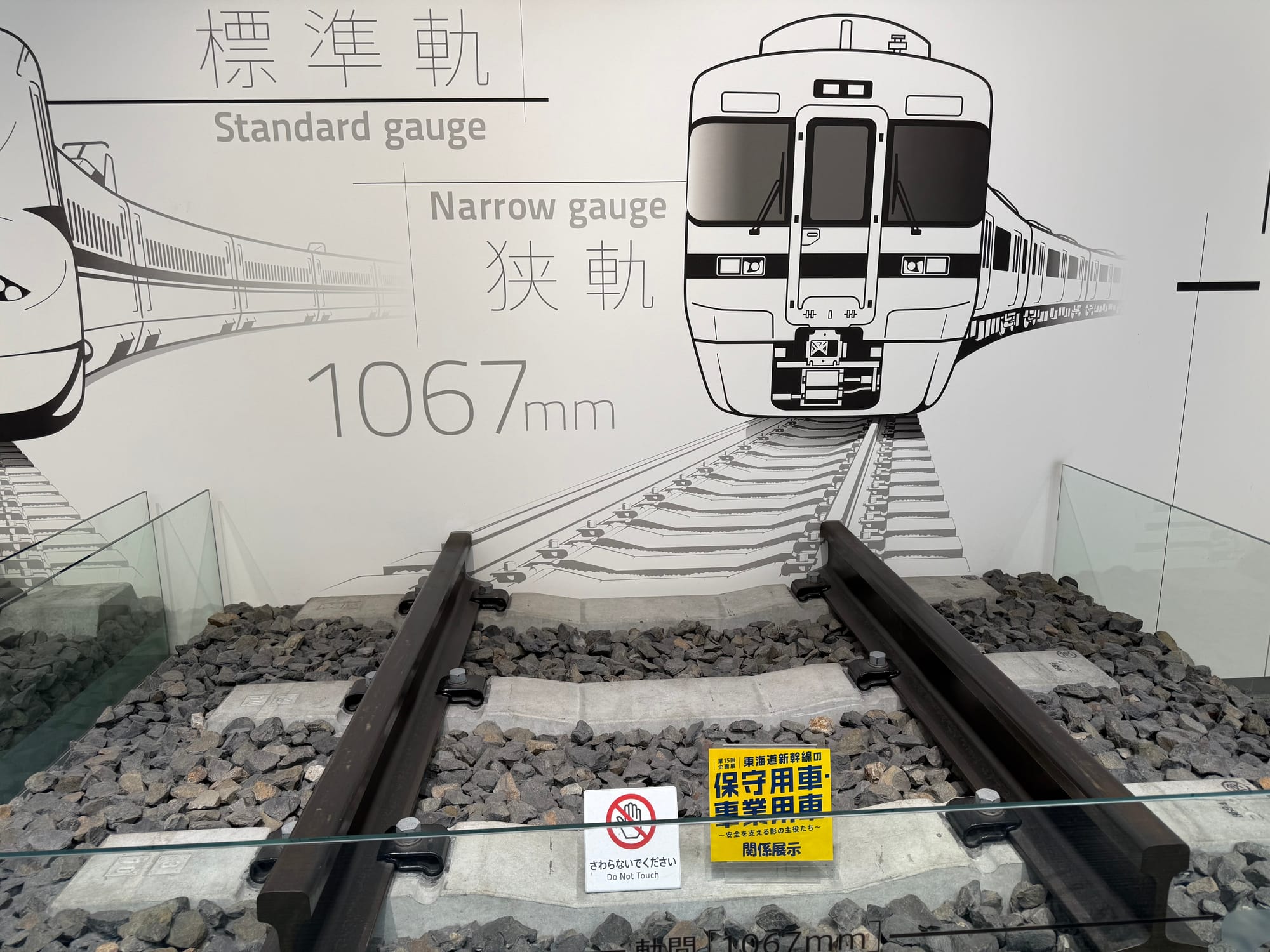
They had quite a bit of information about different trains and rail gauges, including the ones that Japan uses. The bullet train uses standard gauge like we do in the UK, which makes projects such as HS2 look like a laughing stock, especially as Japan constantly opens new bullet train lines, including one that will extend the line from Hakodate all the the way to Sapporo, which is 257km (~160 miles) away by car and currently take just over 3.5 hours at the moment by train.
An interactive exhibit at the SCMAGLEV and Railway Park explains the 1,435 mm standard gauge used by the Shinkansen, contrasting it with Japan's narrower conventional railway network and highlighting its role in high-speed rail operations.An exhibit at the SCMAGLEV and Railway Park compares Japan's traditional 1,067 mm narrow-gauge railway network with the wider standard-gauge tracks used by the Shinkansen, helping explain the evolution of high-speed rail in Japan.
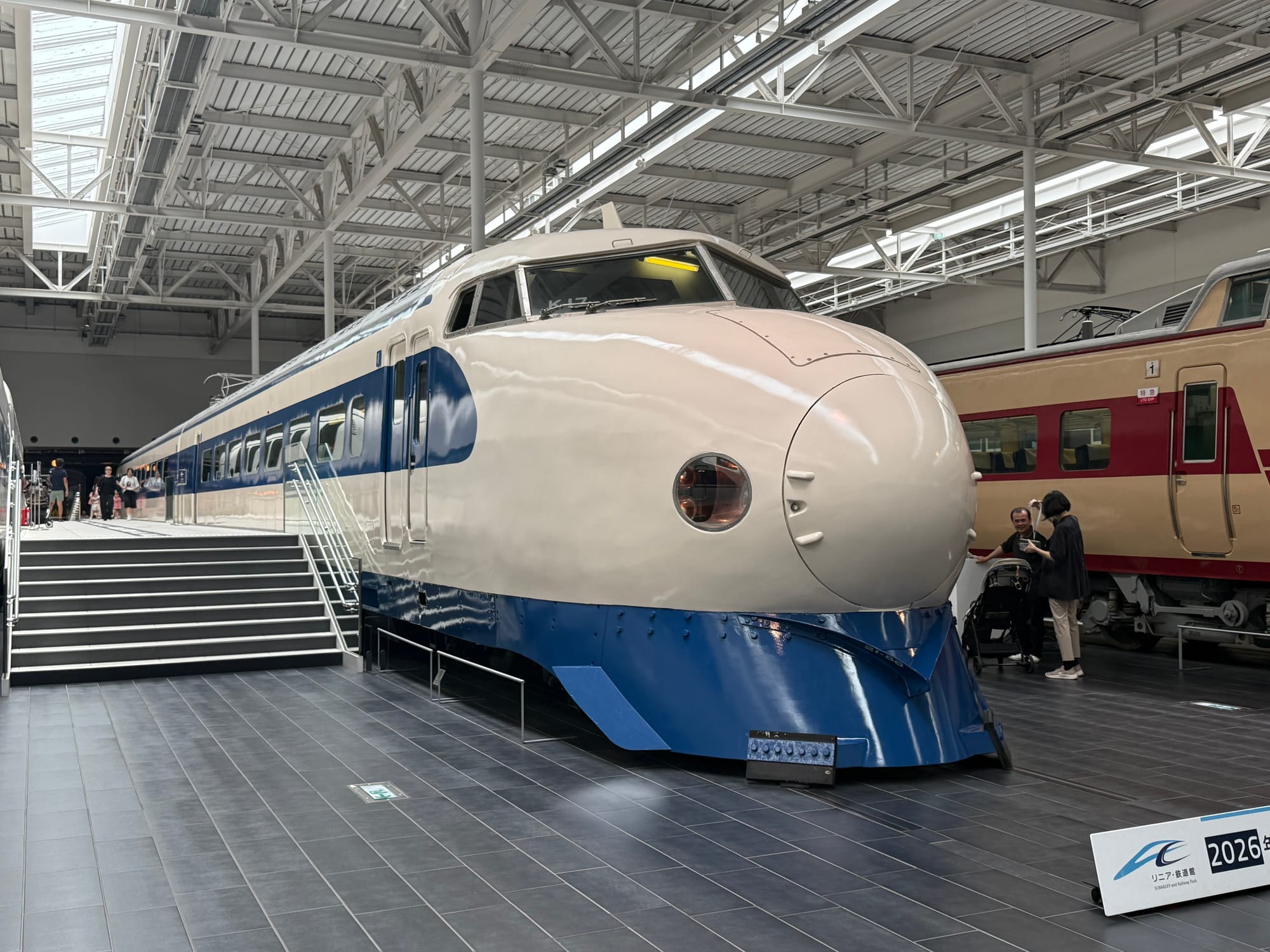
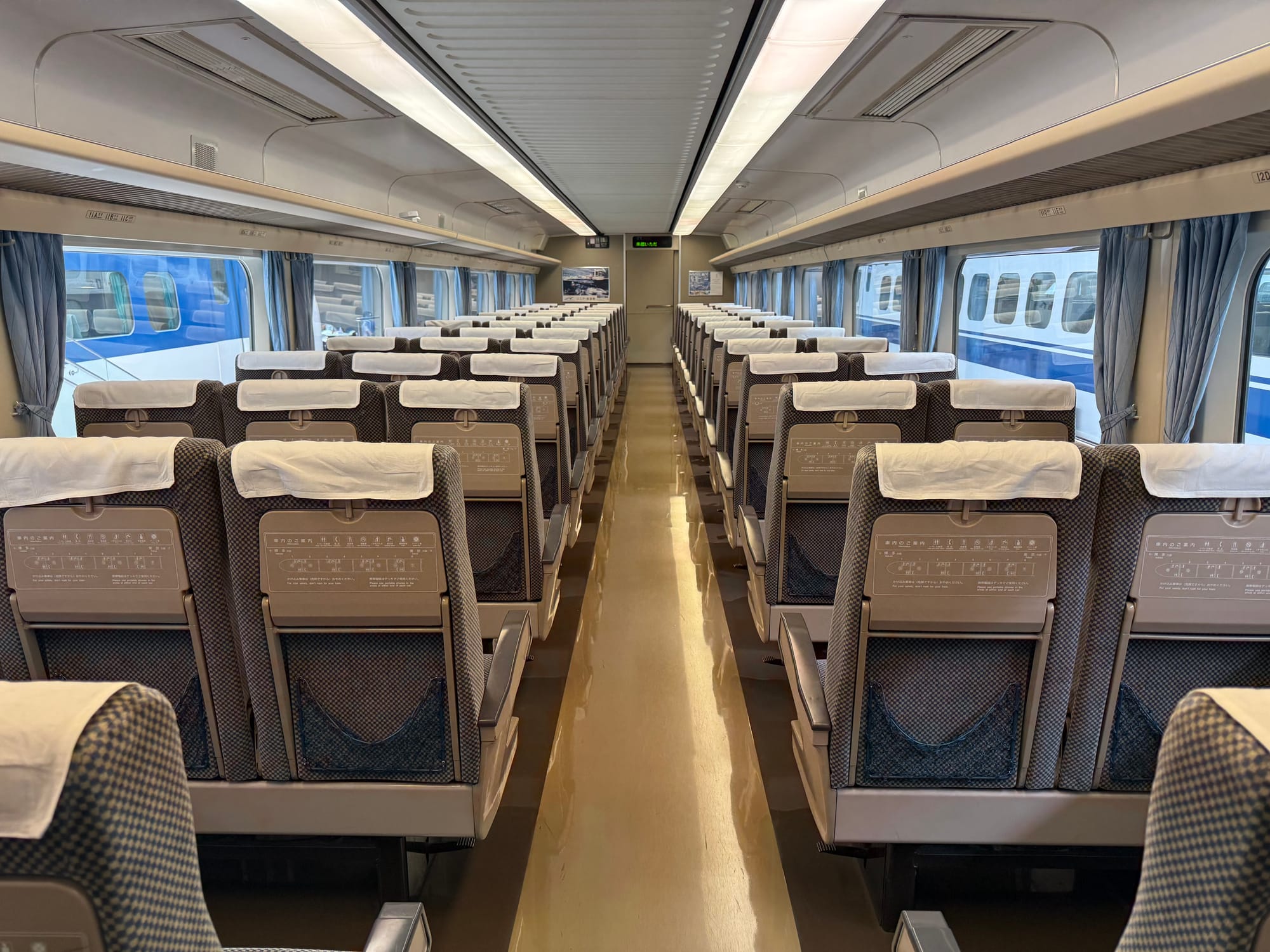
There was also a Shinkansen 0 series there, which was the first bullet train Japan built and released in 1964 at a time when we were still messing about with steam and diesel trains in the UK. It was developed with the help from Aerospace engineers and had an original top speed of 210KPH (130MPH), which would do the 515km (320 miles) journey in 4 hours, which is now about 2.5 hours on the fastest Nozomi train.
The 0 Series Shinkansen was the world's first high-speed train, entering service in 1964 and transforming rail travel in Japan while becoming one of the most recognisable train designs ever built.Inside a preserved 0 Series Shinkansen carriage, offering a glimpse into the experience of travelling on the world's first high-speed railway when it transformed transport in Japan after 1964.
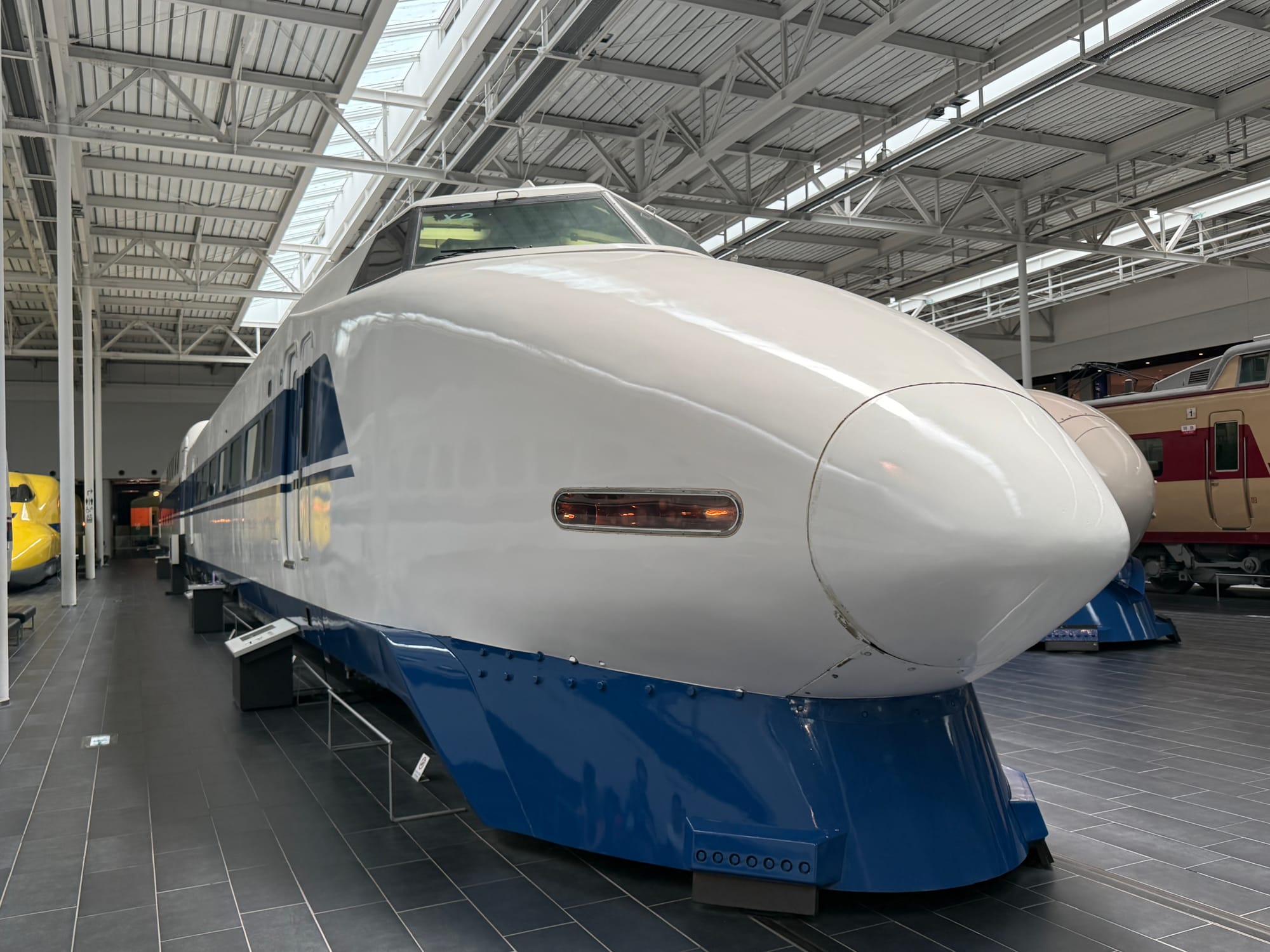
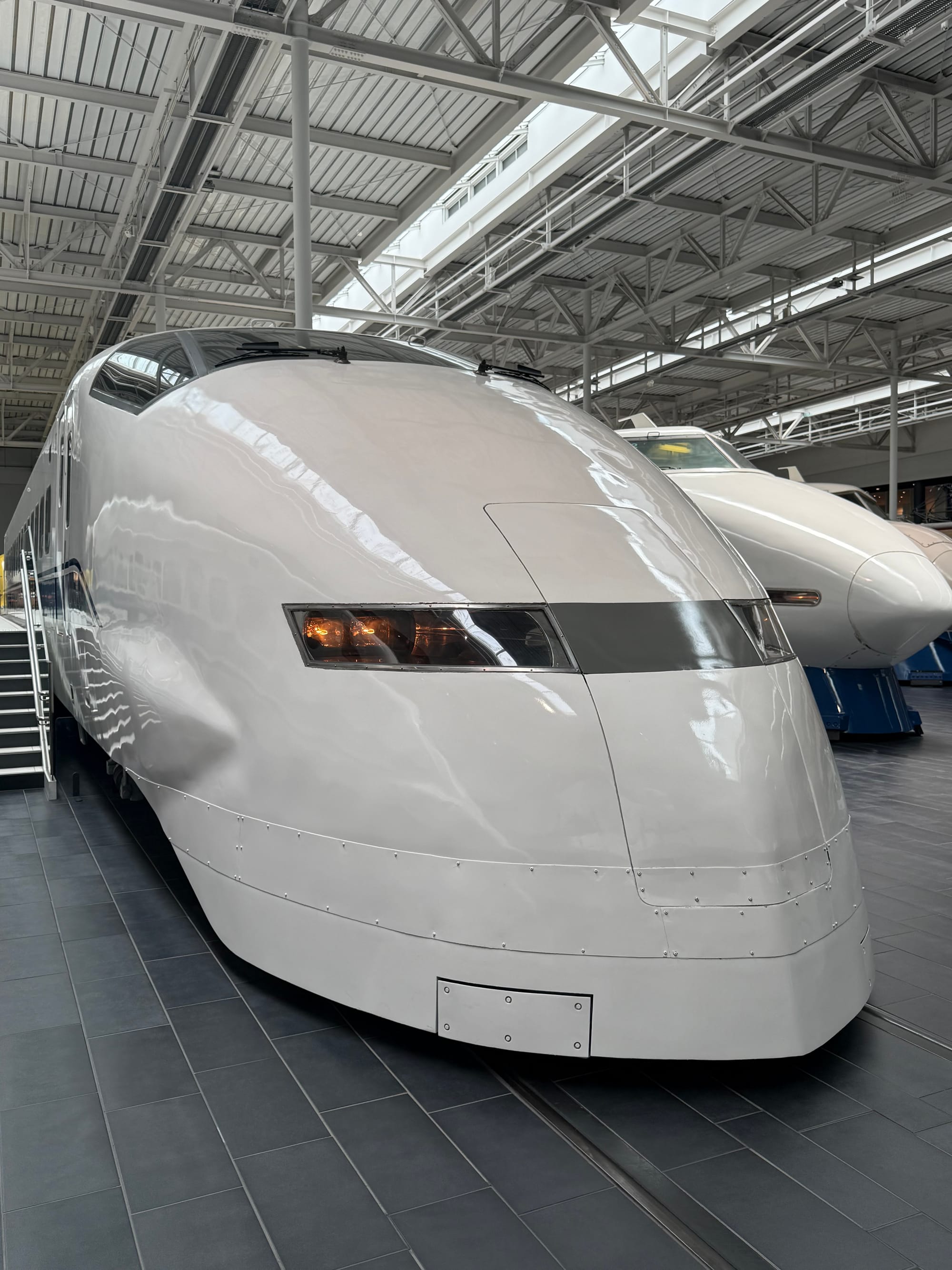
They also had a preserved 100 series and 300 series here as well, which has quite a weird front end.
The 100 Series Shinkansen represented the next generation of Japan's high-speed trains, introducing double-deck cars and improved comfort while building on the success of the original 0 Series.Caption: The 300 Series Shinkansen introduced a new generation of Japanese high-speed rail, combining improved aerodynamics, higher operating speeds and greater efficiency on the Tokaidō Shinkansen route.
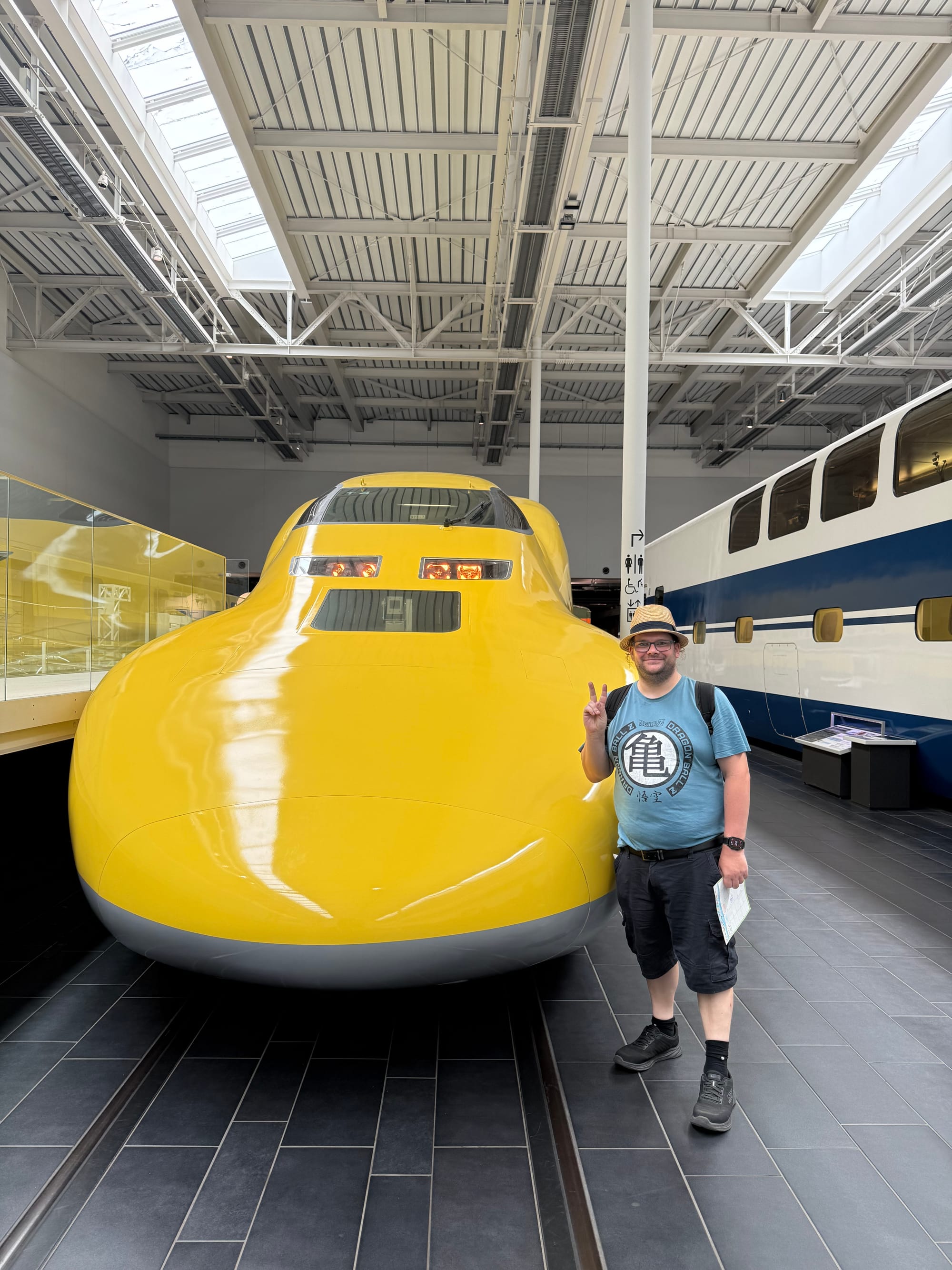
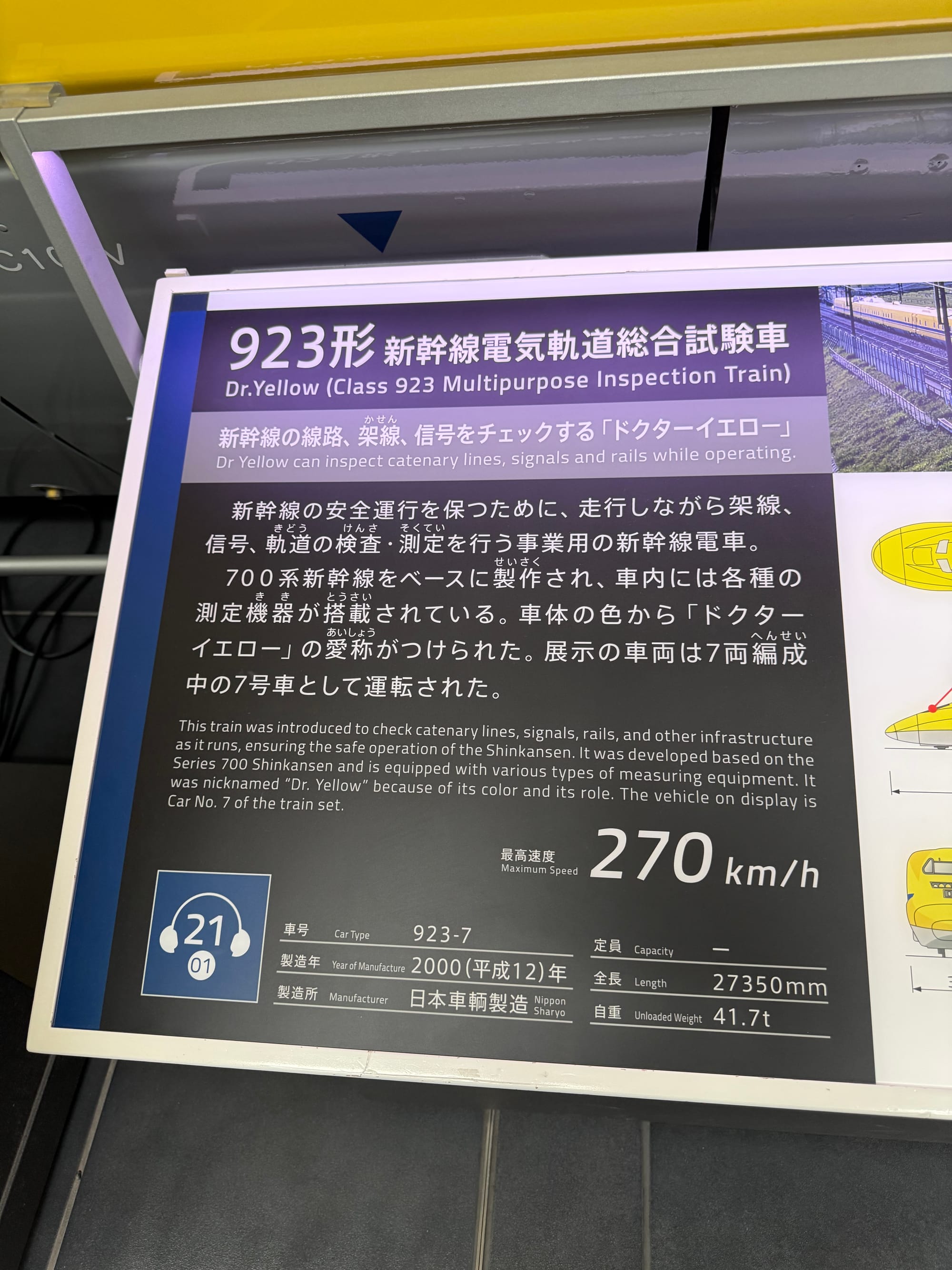
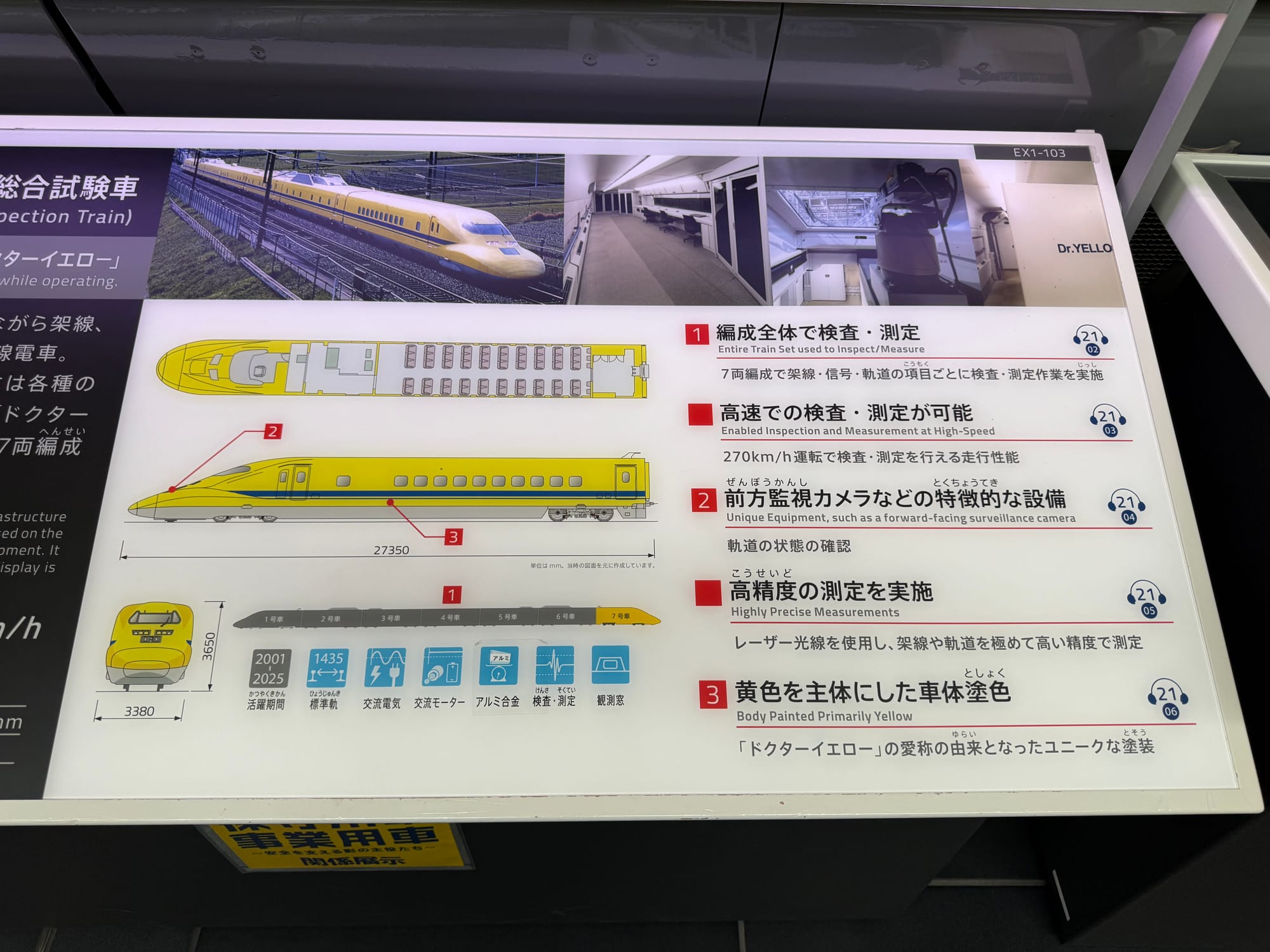
Now one of the trains that I wanted to see the most was the retired 700 series Doctor Yellow train. The retired one here was part of a 7 train set and the 'Doctor refers to its testing and diagnostic equipment onboard and the 'Yellow' refers to its bright colour. It's equipment checks the condition of the track and overhead wires and carried out this inspection at full speed.
Doctor Yellow, the famous inspection Shinkansen used to monitor the condition of the Tokaidō and Sanyō Shinkansen routes, has become one of Japan's most iconic and recognisable railway vehicles.Posing with Doctor Yellow at the SCMAGLEV and Railway Park in Nagoya, standing beside one of Japan's most famous railway vehicles and a symbol of the Shinkansen network.An exhibit on the Class 923 Doctor Yellow explains how the specialised inspection train monitored tracks, signals and overhead wires while running at normal Shinkansen speeds, helping to ensure the safety and reliability of Japan's high-speed rail network.An exhibit on Doctor Yellow explains how the specialised inspection train monitors track, signalling, overhead wires and other infrastructure while travelling at normal Shinkansen operating speeds, helping to maintain the safety and reliability of Japan's high-speed rail network.
They also have quite a few other trains from over the ages there as well.
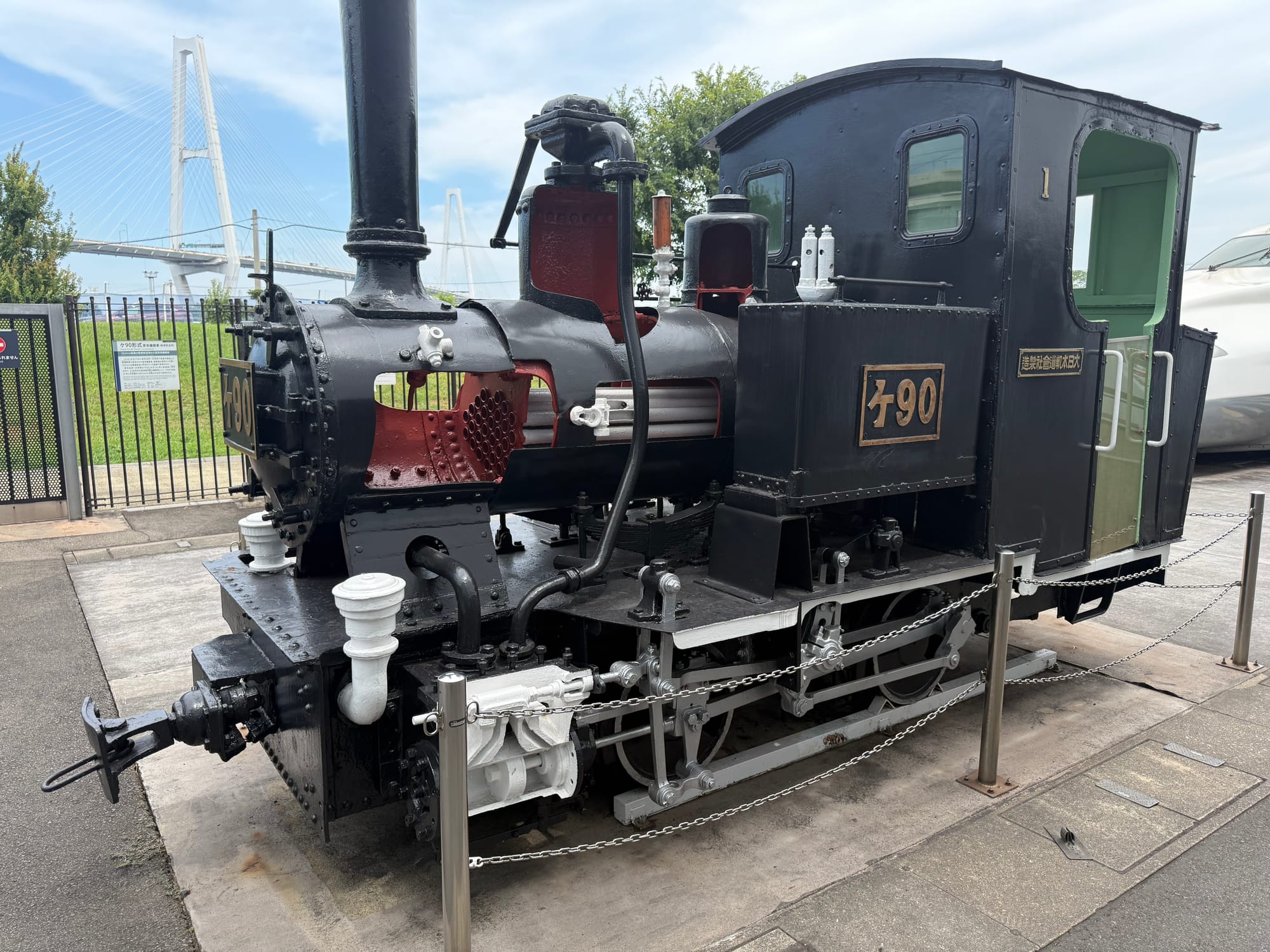
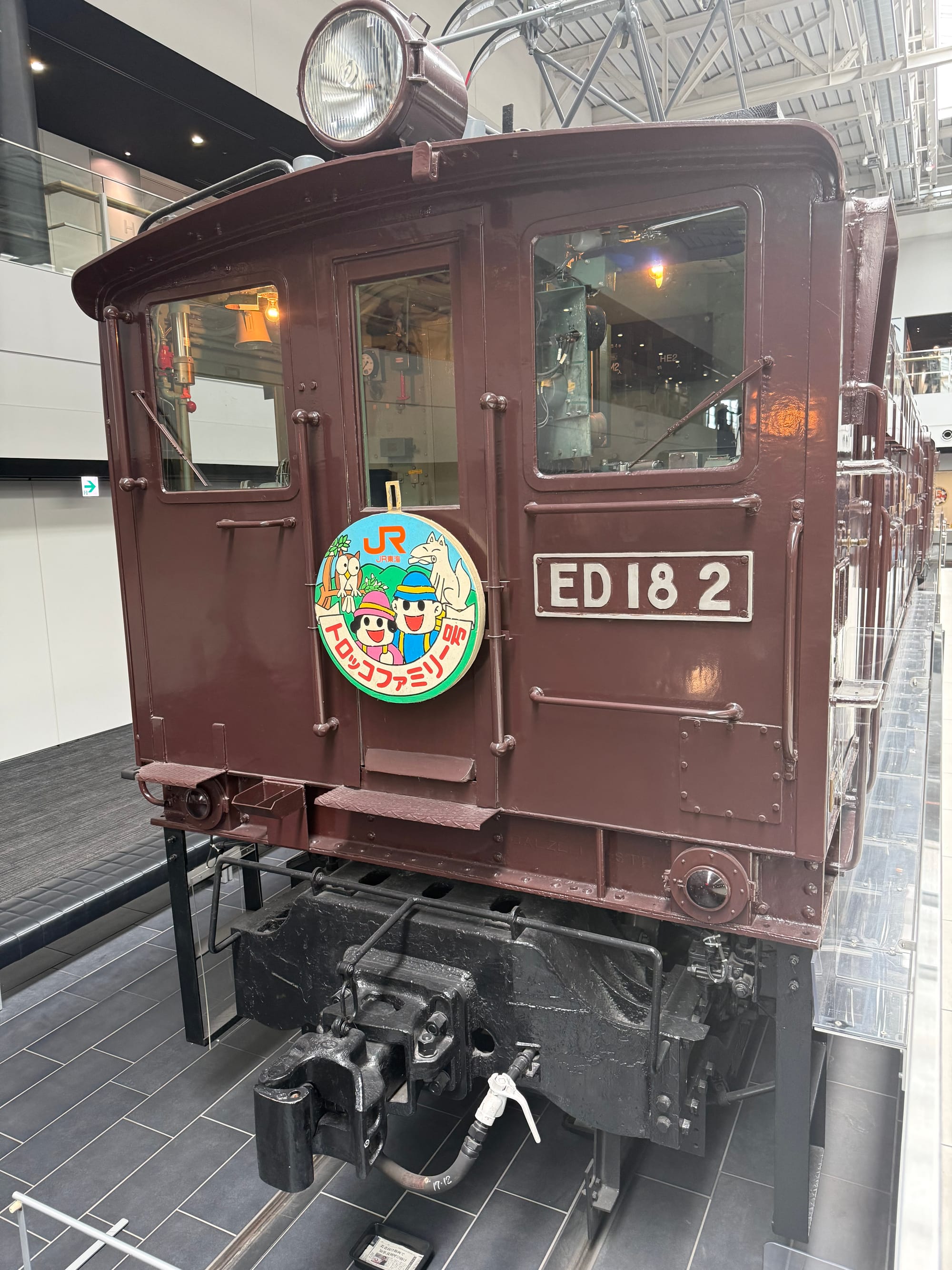
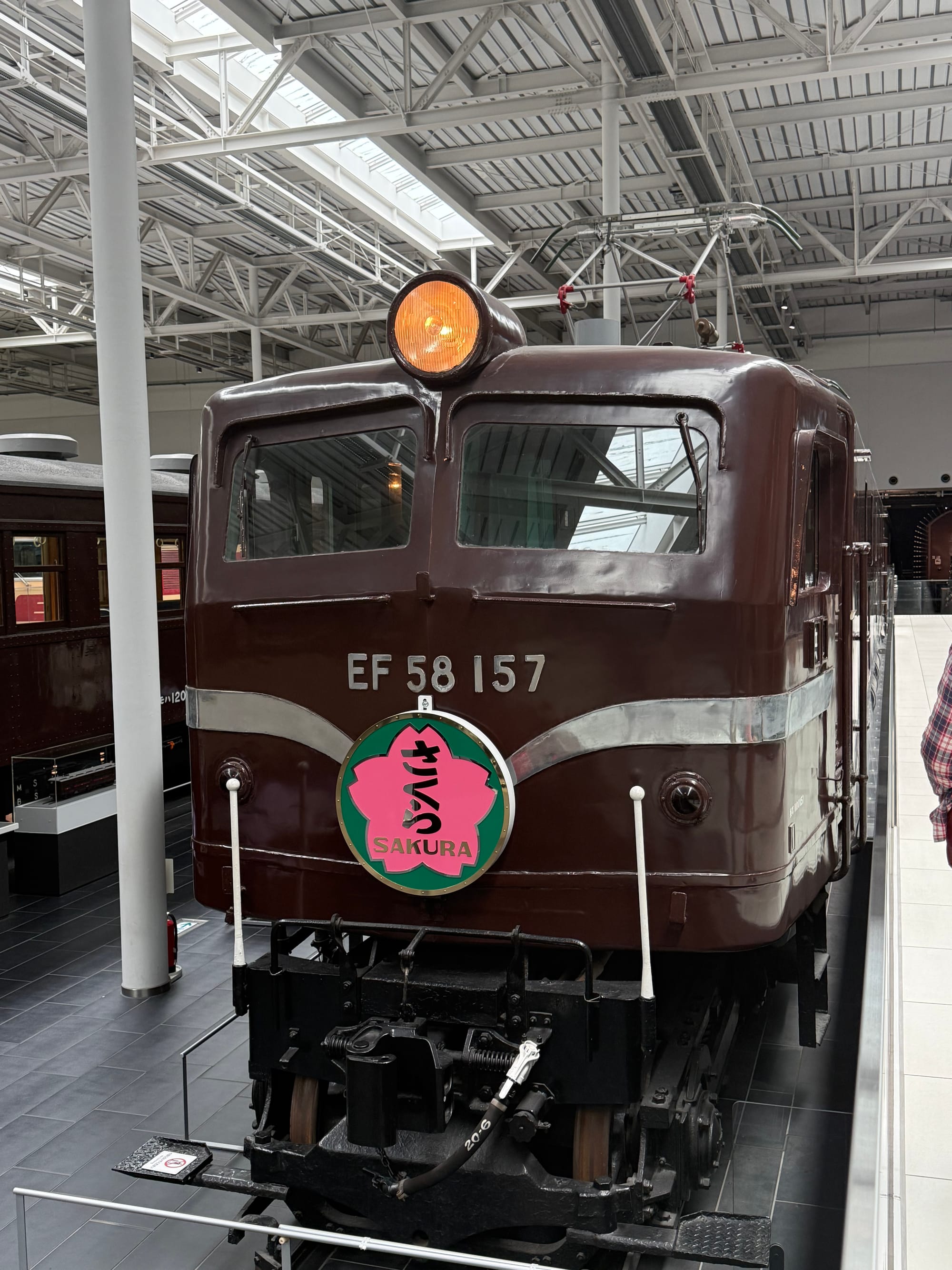
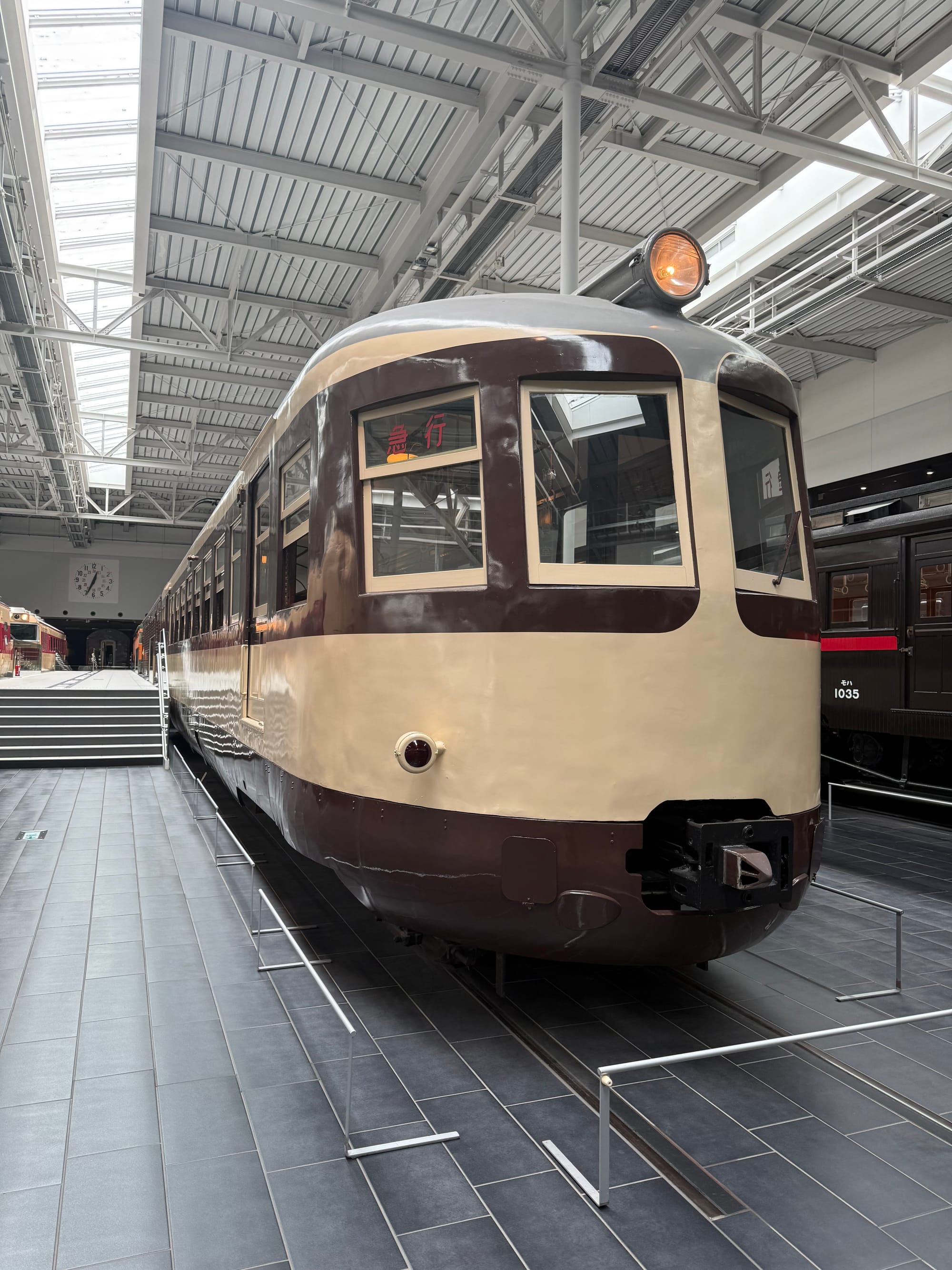
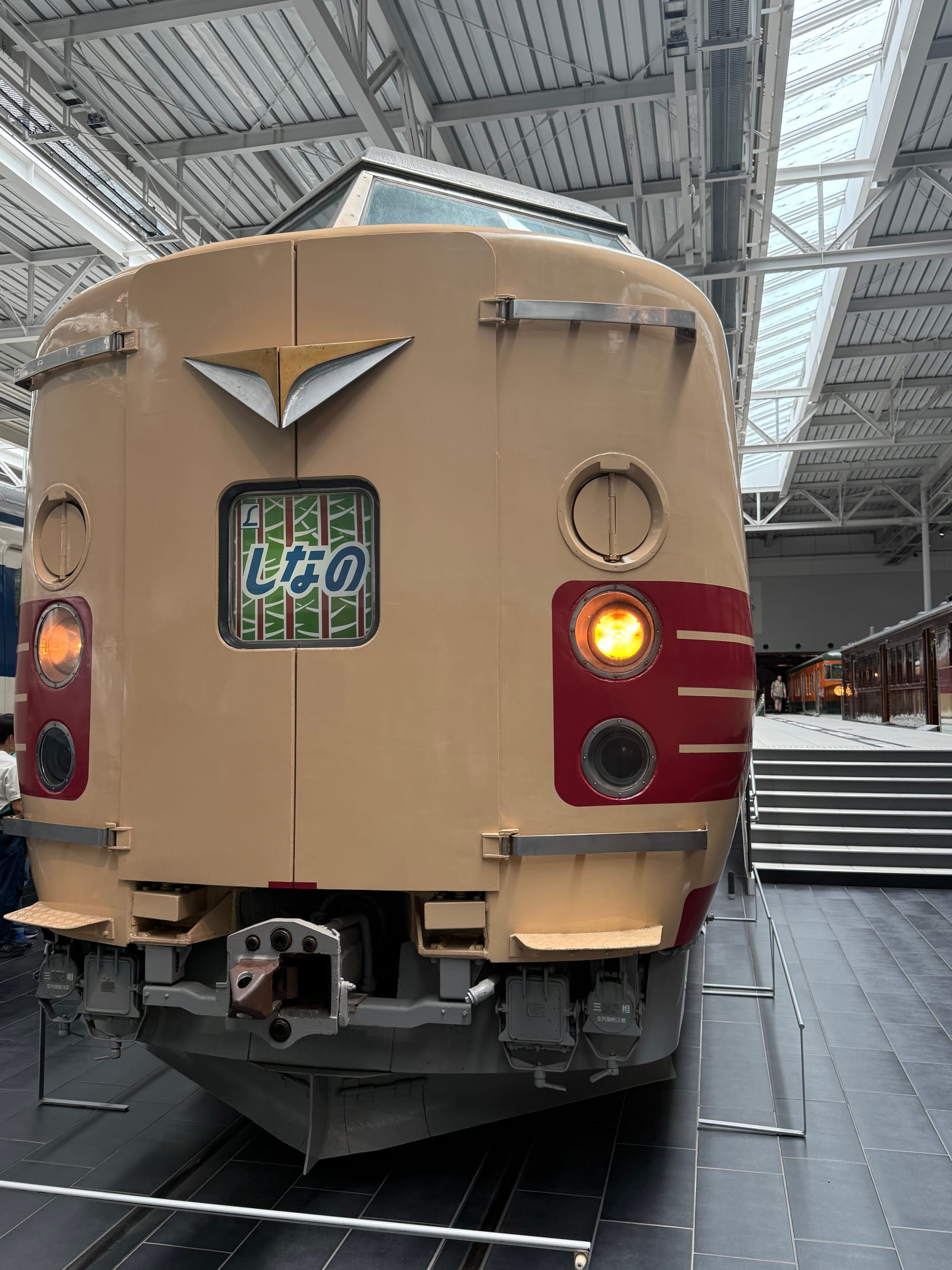
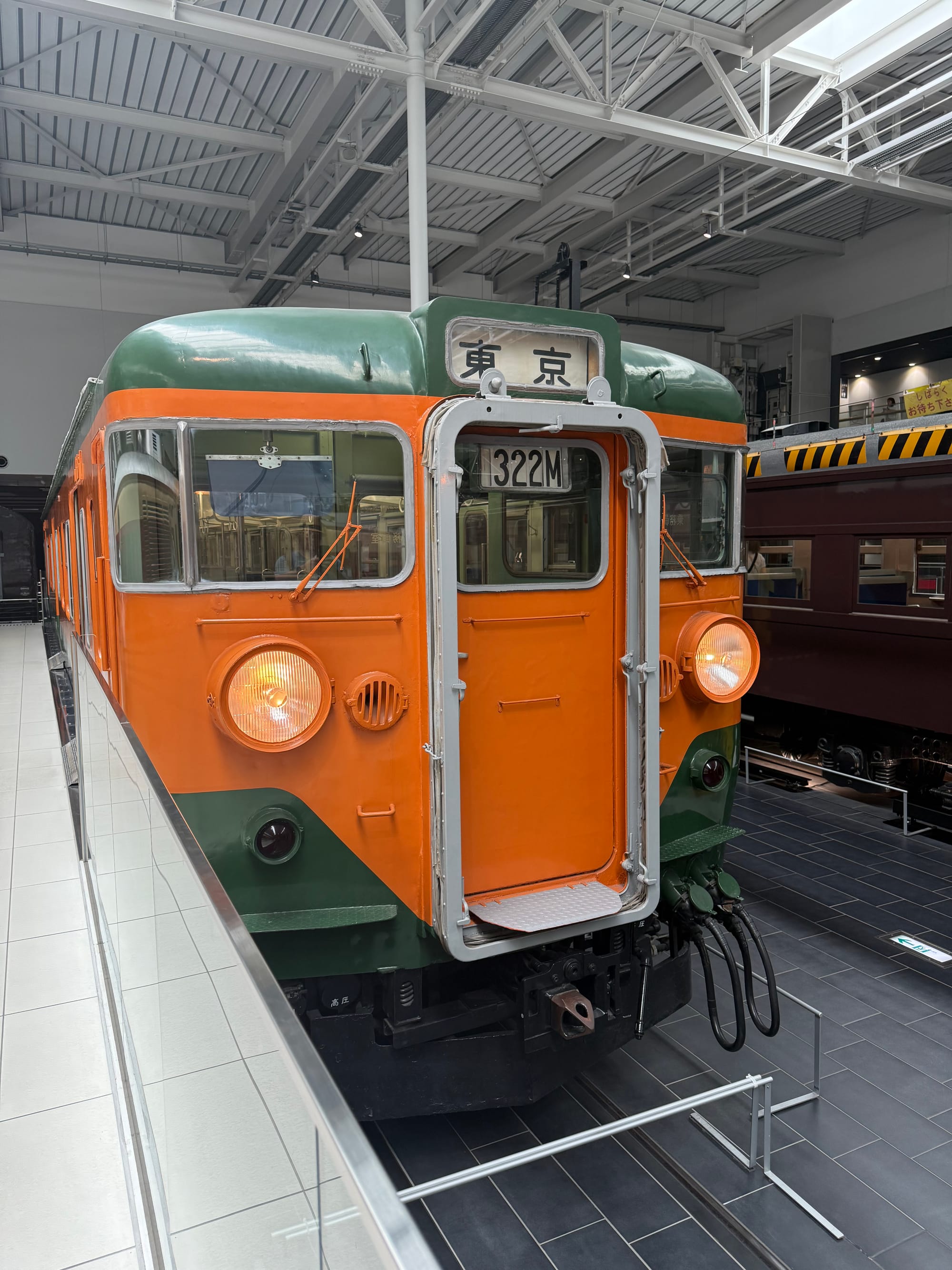
The main exhibition hall of the SCMAGLEV and Railway Park brings together some of Japan's most important railway vehicles, tracing the evolution of rail travel from classic locomotives to the Shinkansen and future maglev technology.A cutaway steam locomotive outside the SCMAGLEV and Railway Park reveals the inner workings of a nineteenth-century railway engine, helping visitors understand how steam power transformed rail transport in Japan and around the world.The preserved ED18 2 electric locomotive at the SCMAGLEV and Railway Park represents an early generation of Japanese electric traction, helping illustrate the development of railway technology before the Shinkansen era.The EF58 157 electric locomotive is displayed with a Sakura headboard, recalling the celebrated overnight and long-distance passenger services once operated on Japan's conventional railway network before the Shinkansen era.The Series 80 EMU was Japan's first long-distance electric multiple unit, helping modernise passenger rail travel in the post-war era and paving the way for later generations of express trains.The 381 Series Shinano limited express was Japan's first tilting train, introduced to improve speeds on winding routes and becoming a familiar sight on services linking Nagoya with the mountains of central Honshū.The 111 Series EMU introduced the iconic orange-and-green Shōnan livery to Japan's suburban railways, becoming a familiar sight on commuter and regional services radiating from Tokyo during the post-war railway boom.
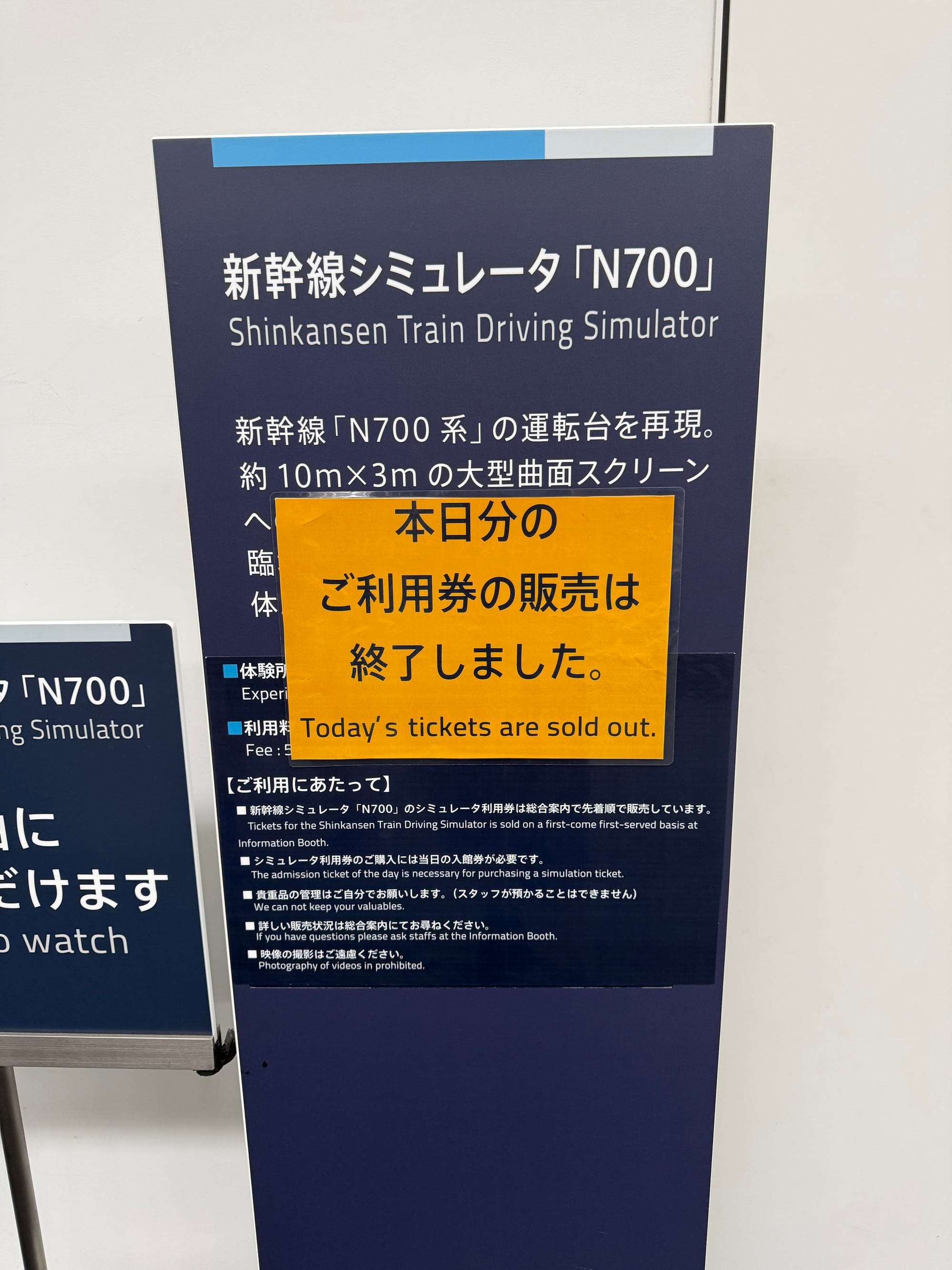
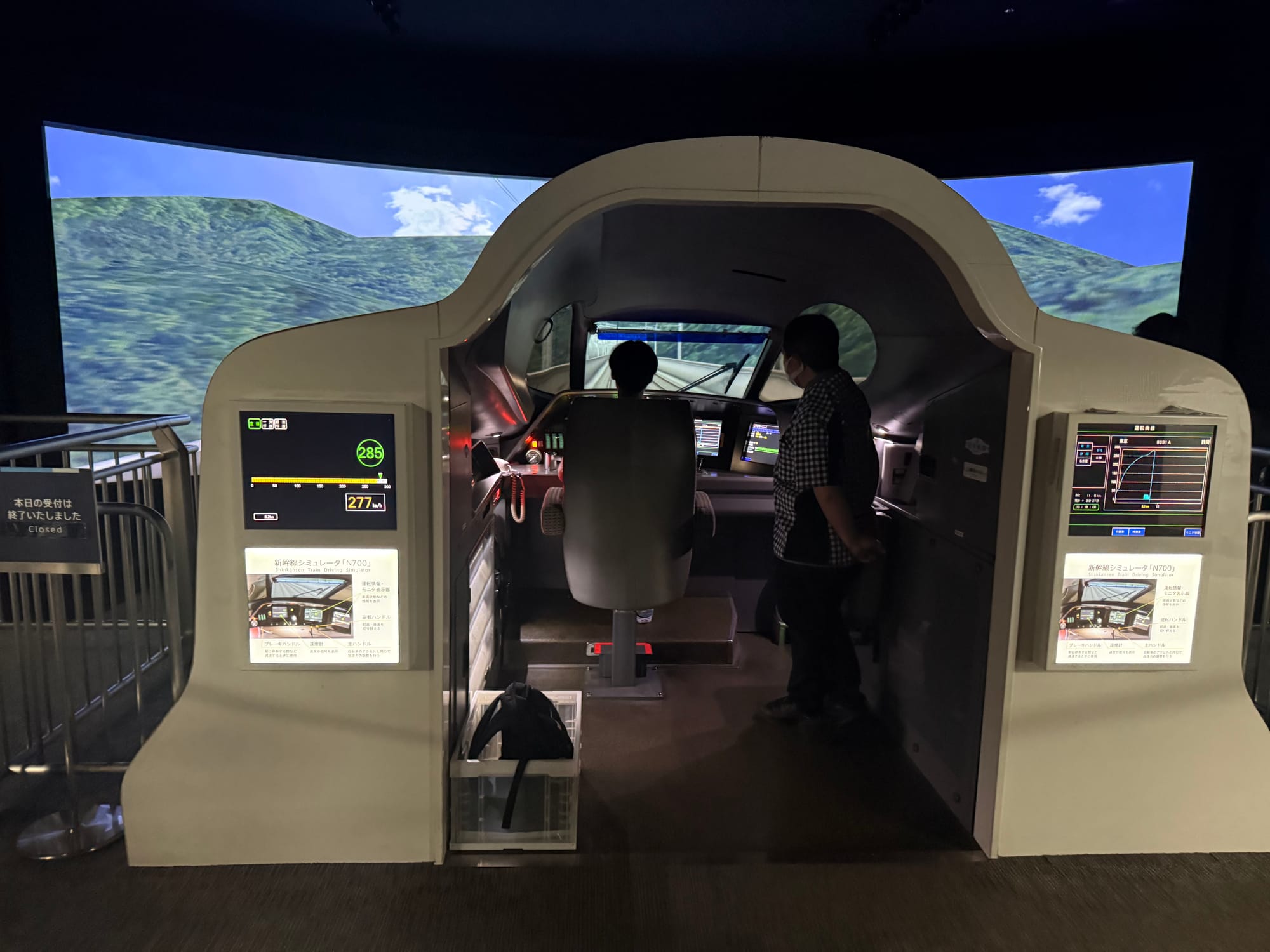
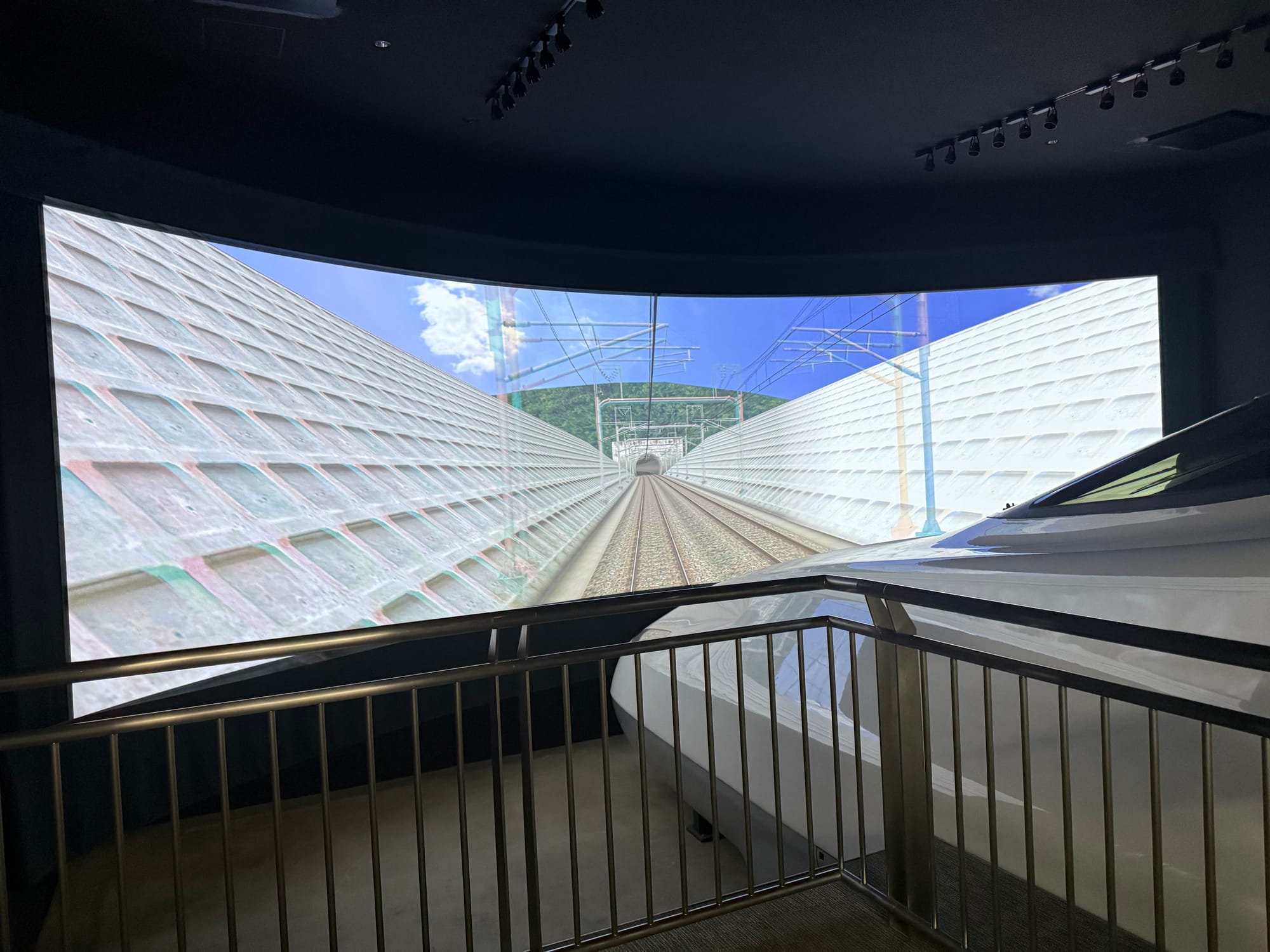
They also have a couple of simulators including a simulator to drive a N700 series Shinkansen, but unfortunately by the time I got there, it was all sold out. I could go in and have a look though.
The popular N700 Shinkansen driving simulator at the SCMAGLEV and Railway Park was fully booked for the day, showing just how popular the museum's hands-on railway experiences can be.The N700 Series Shinkansen driving simulator at the SCMAGLEV and Railway Park allows visitors to experience operating Japan's famous high-speed trains in a realistic cab environment.The Shinkansen driving simulator at the SCMAGLEV and Railway Park recreates the experience of operating an N700 Series train, allowing visitors to experience Japan's high-speed rail network from the driver's perspective.
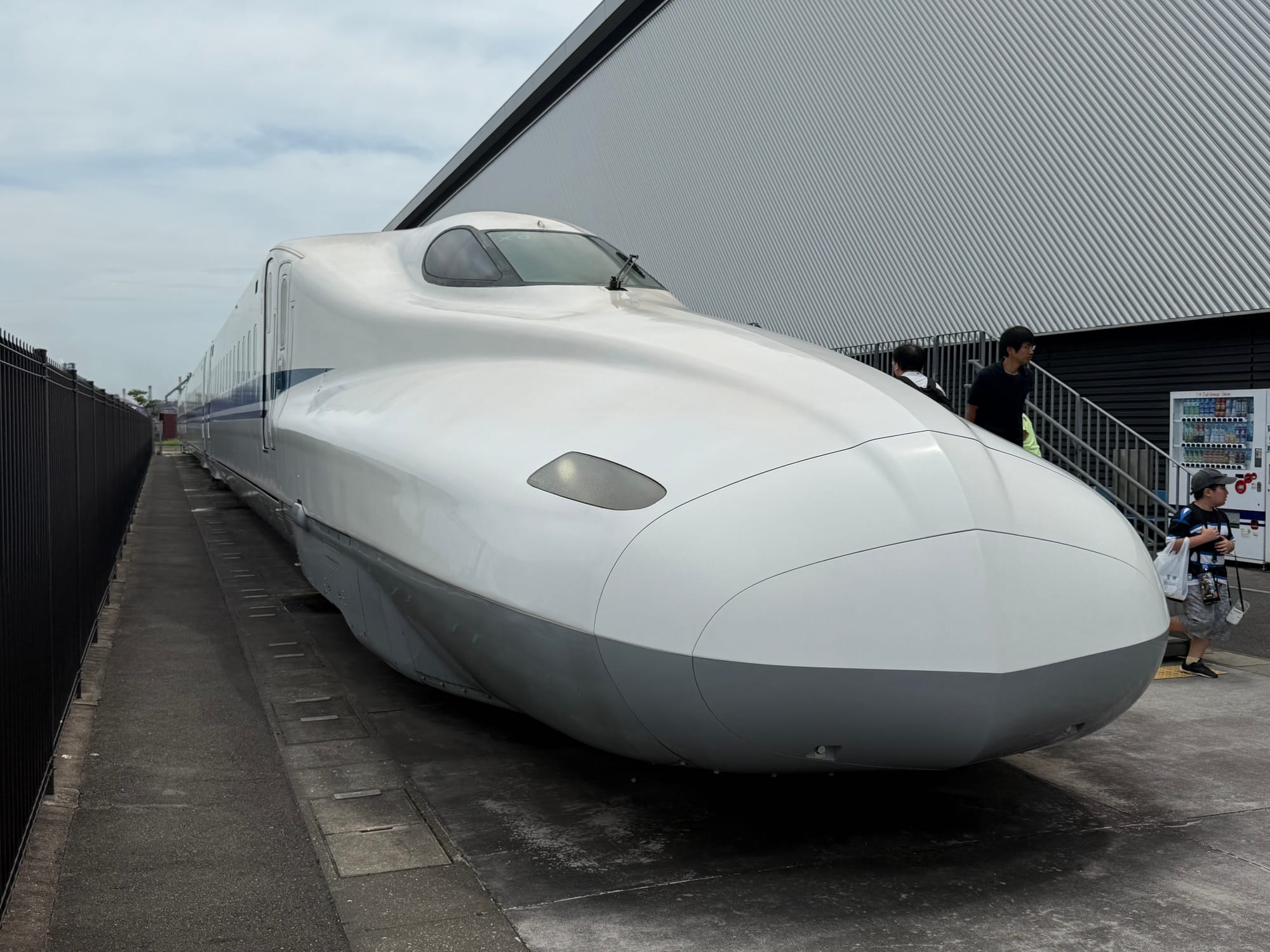
Outside there was also a N700A series Shinkansen which you could go and sit on and eat your lunch.
The N700A Series Shinkansen on display at the SCMAGLEV and Railway Park showcases the advanced design of Japan's flagship high-speed train, which operates across the Tokaidō and Sanyō Shinkansen networks.
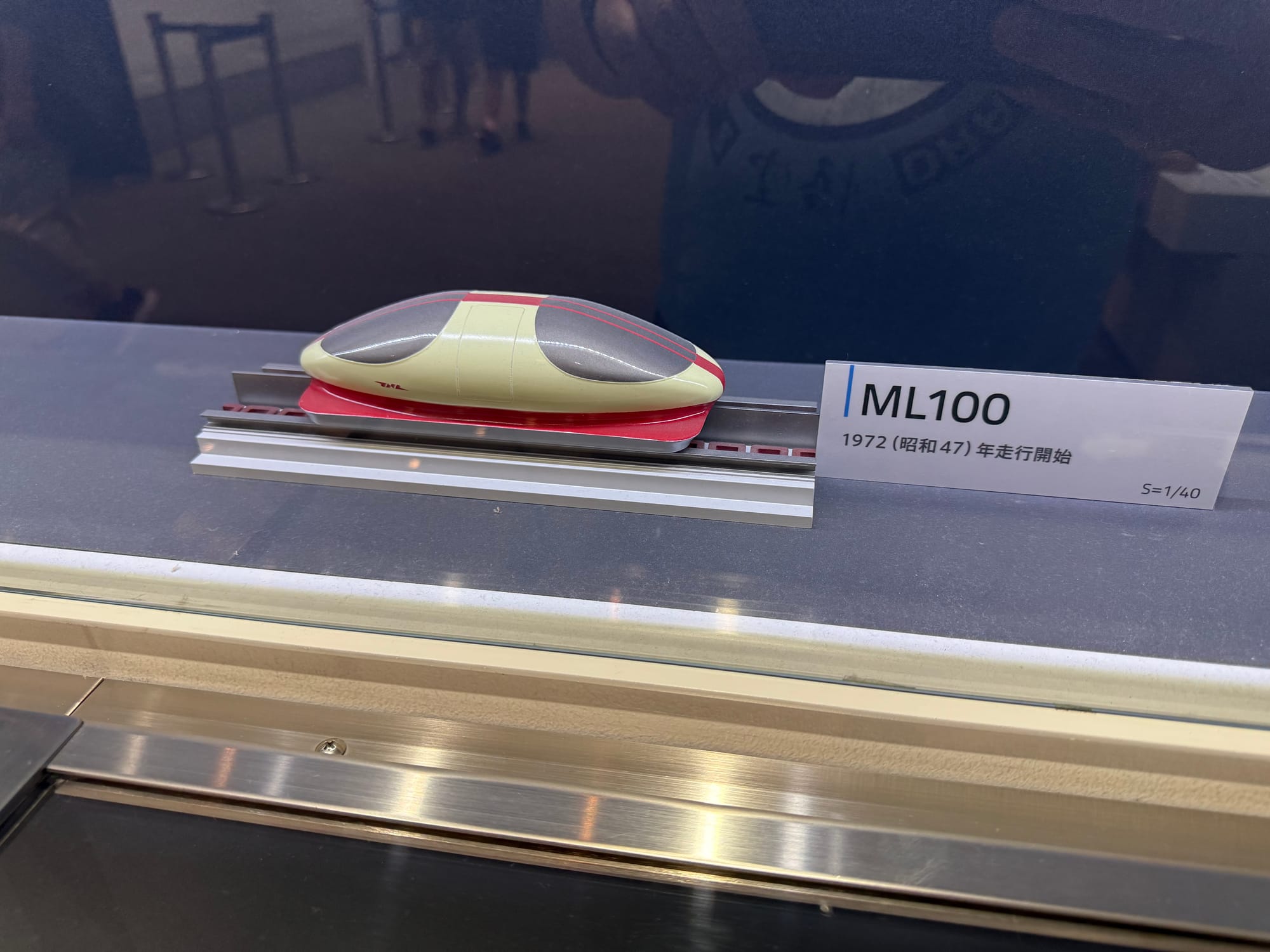
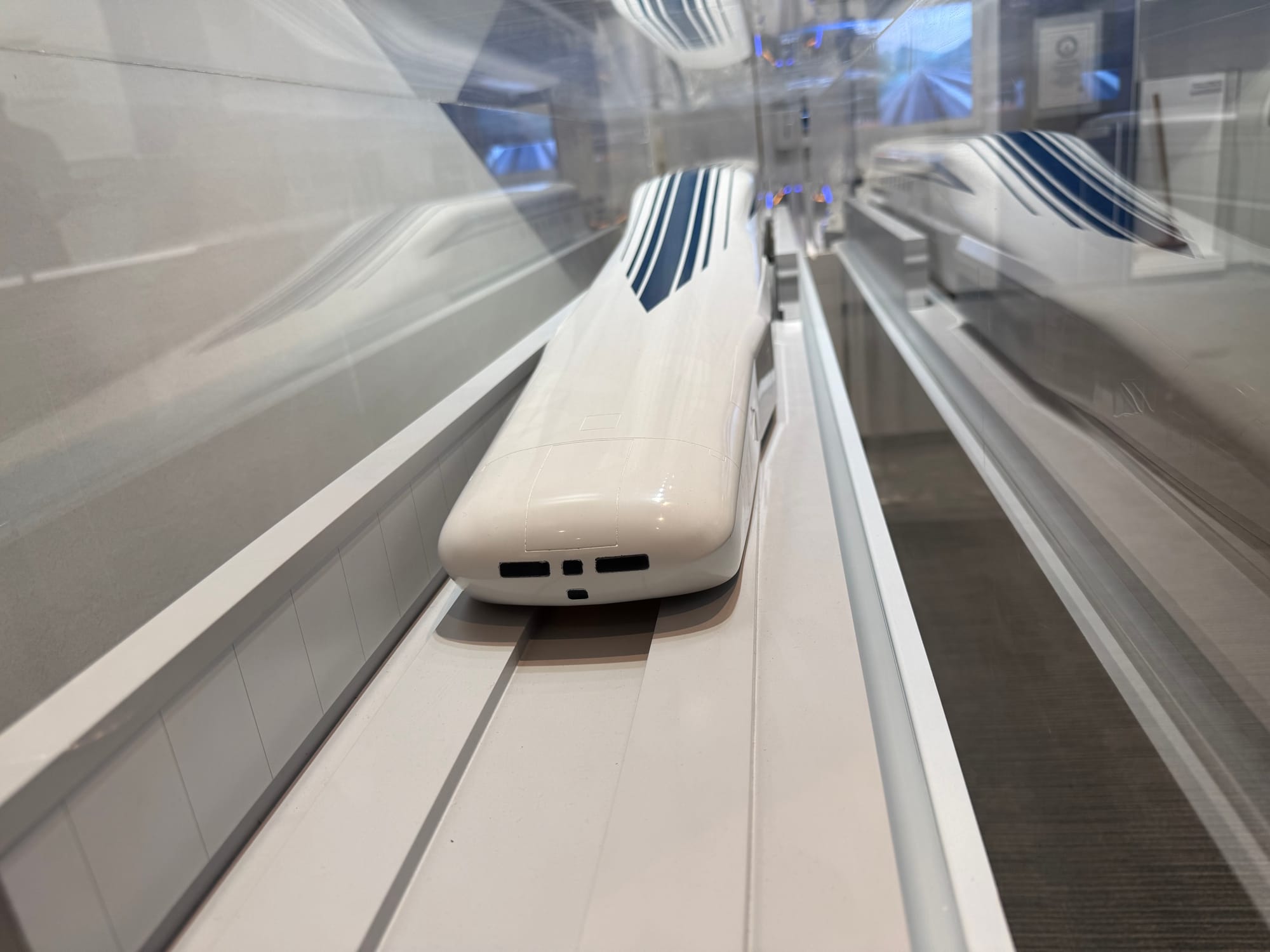
There is a place in the museum dedicated to Maglev trains, which the JR RTRI (Railway Technical Research Institute) back in 1972 built the single car ML100 maglev train, which could only go at 60KPH (37MPH). Compare this to the current train record of 603KPH (373MPH) set by the L0 series Maglev and that speed mean it has a pace of ~6 seconds per kilometre or ~9.6 seconds per mile.
A model of the ML100 experimental maglev train highlights the early stages of Japan's magnetic levitation research, which began in the 1970s and ultimately led to today's world-record-breaking superconducting maglev technology.A model of Japan's superconducting maglev train demonstrates the technology planned for the Chūō Shinkansen, which is set to connect Tokyo, Nagoya and Osaka at speeds exceeding 500 km/h.
This means at top speed the L0 Maglev train would be able to do the 345 mile journey from London to Glasgow in ~55 minutes, instead of the current 4.5 hours that it normally takes the current train to go.
Osu
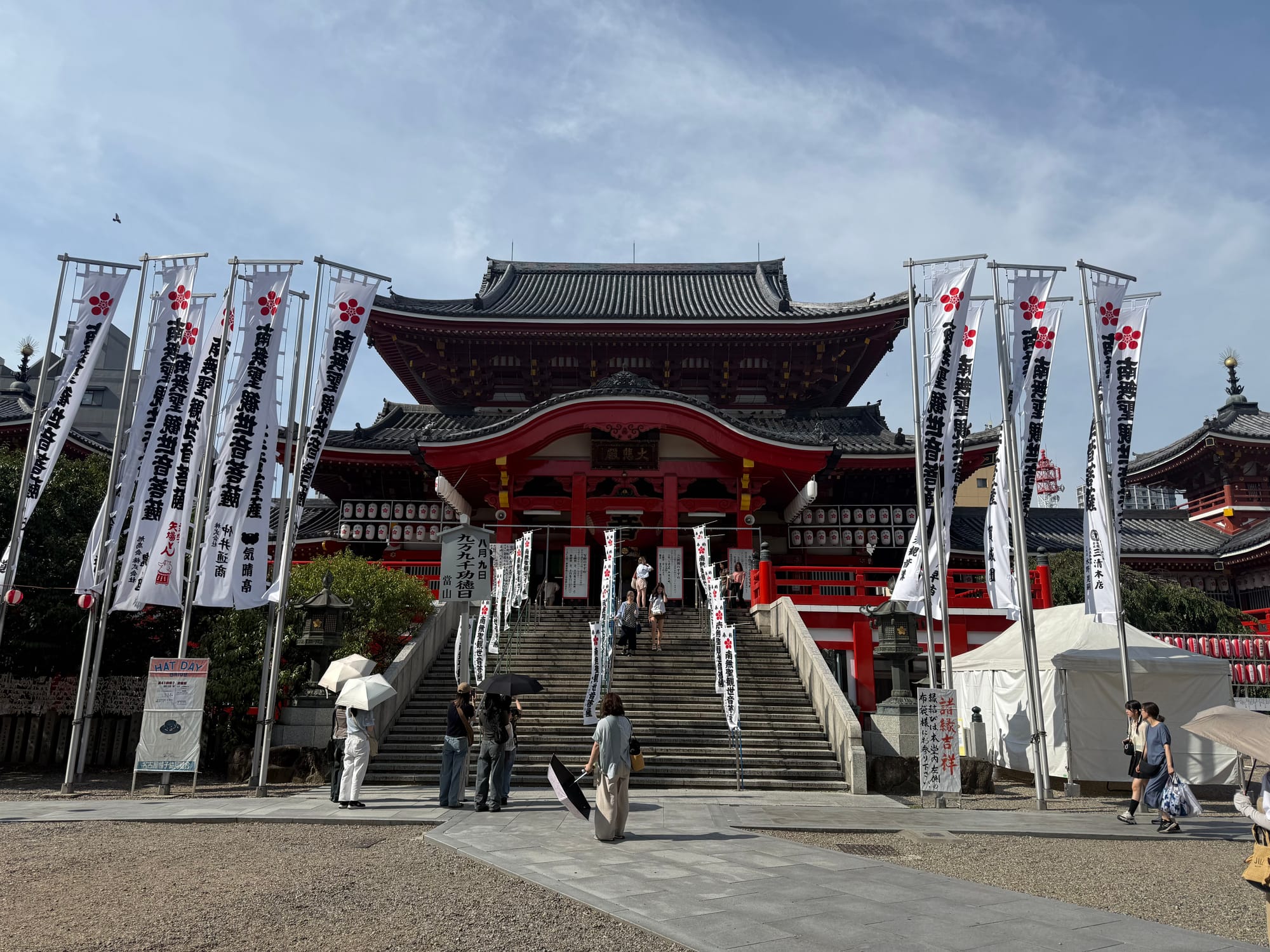
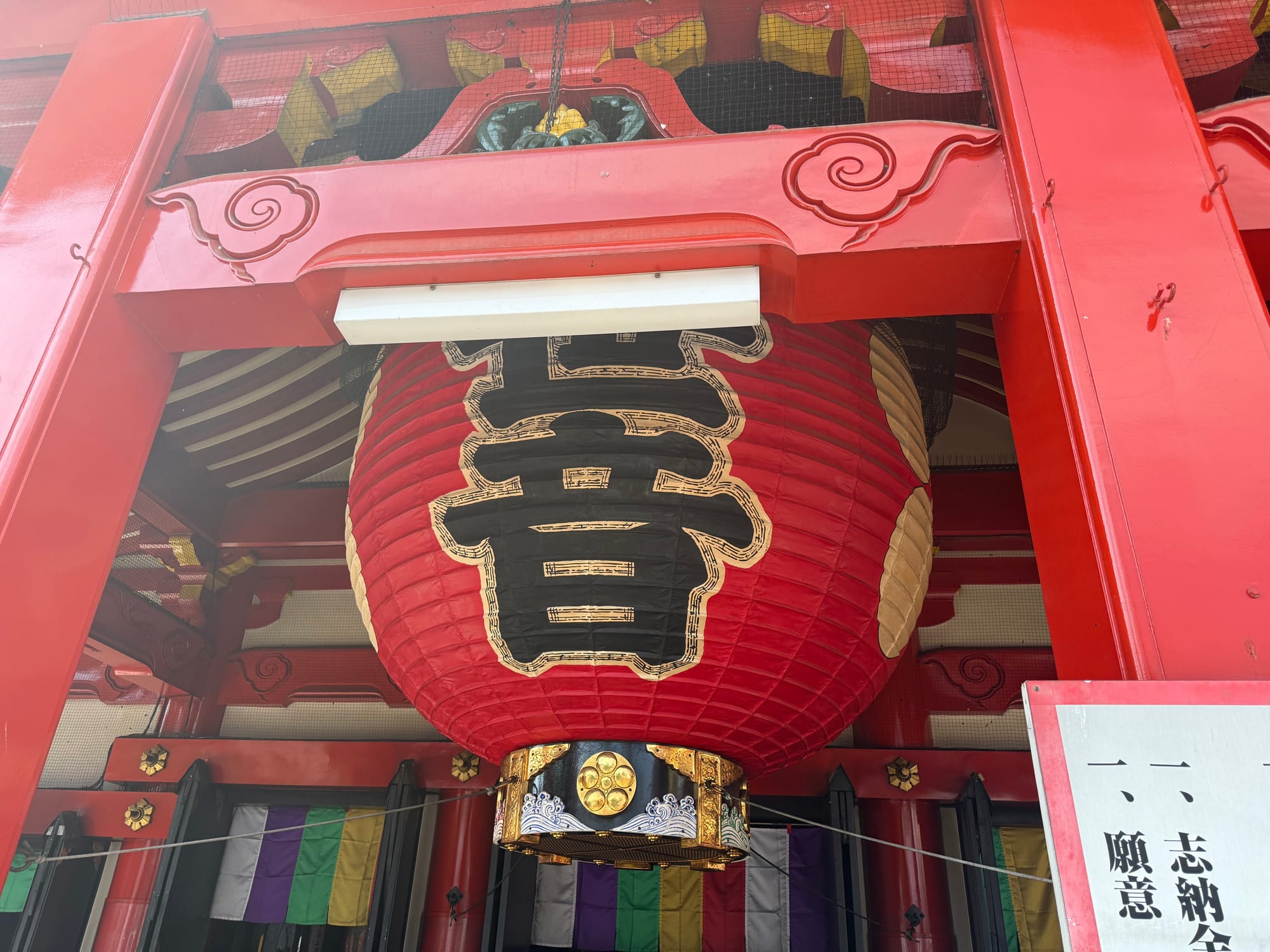
After this, I went to Osu which is a big shopping district in Nagoya and also has a bit massive temple, which was on my list of places I got recommended to go to. Although I only really got pictures of the temple.
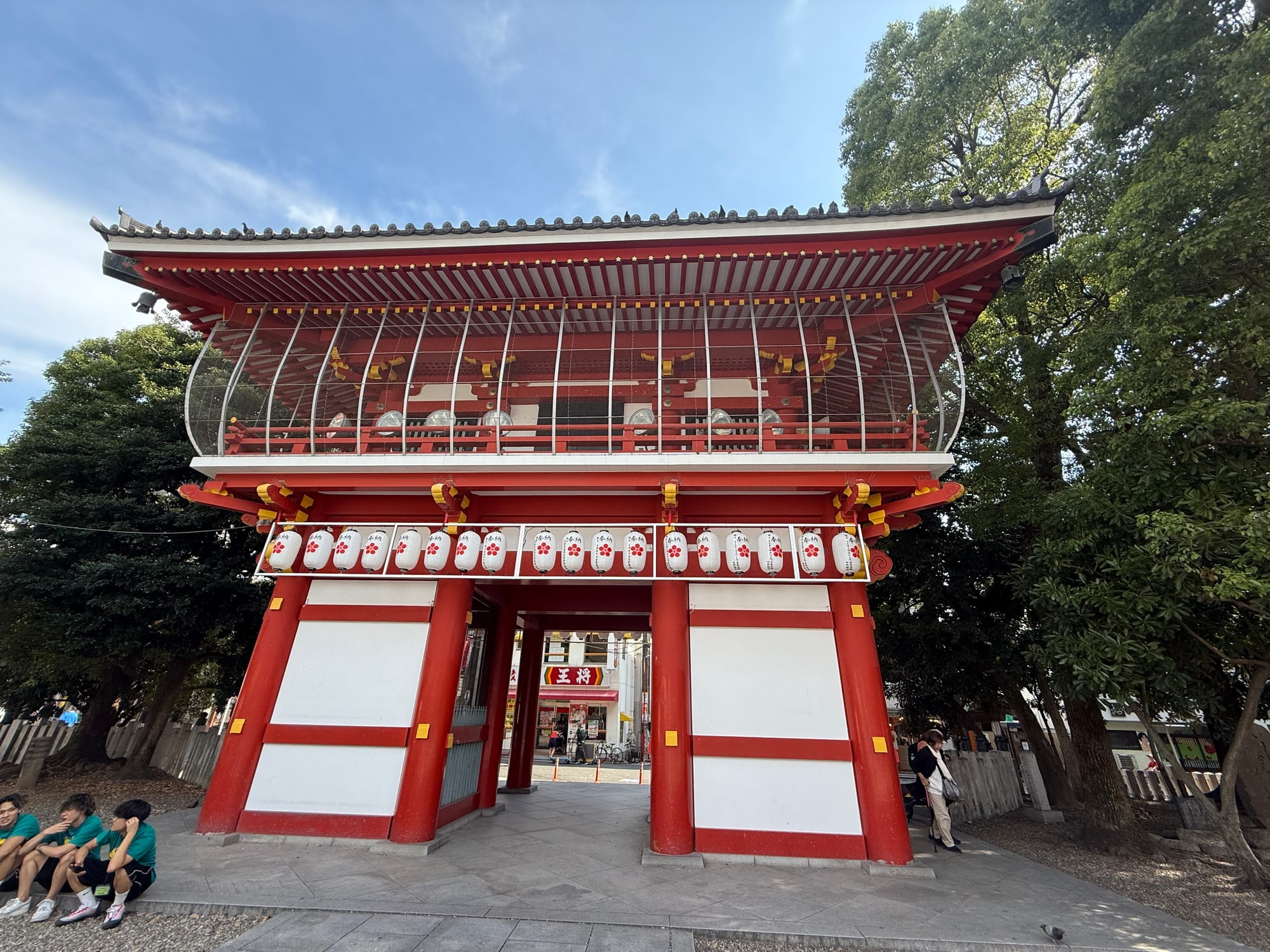
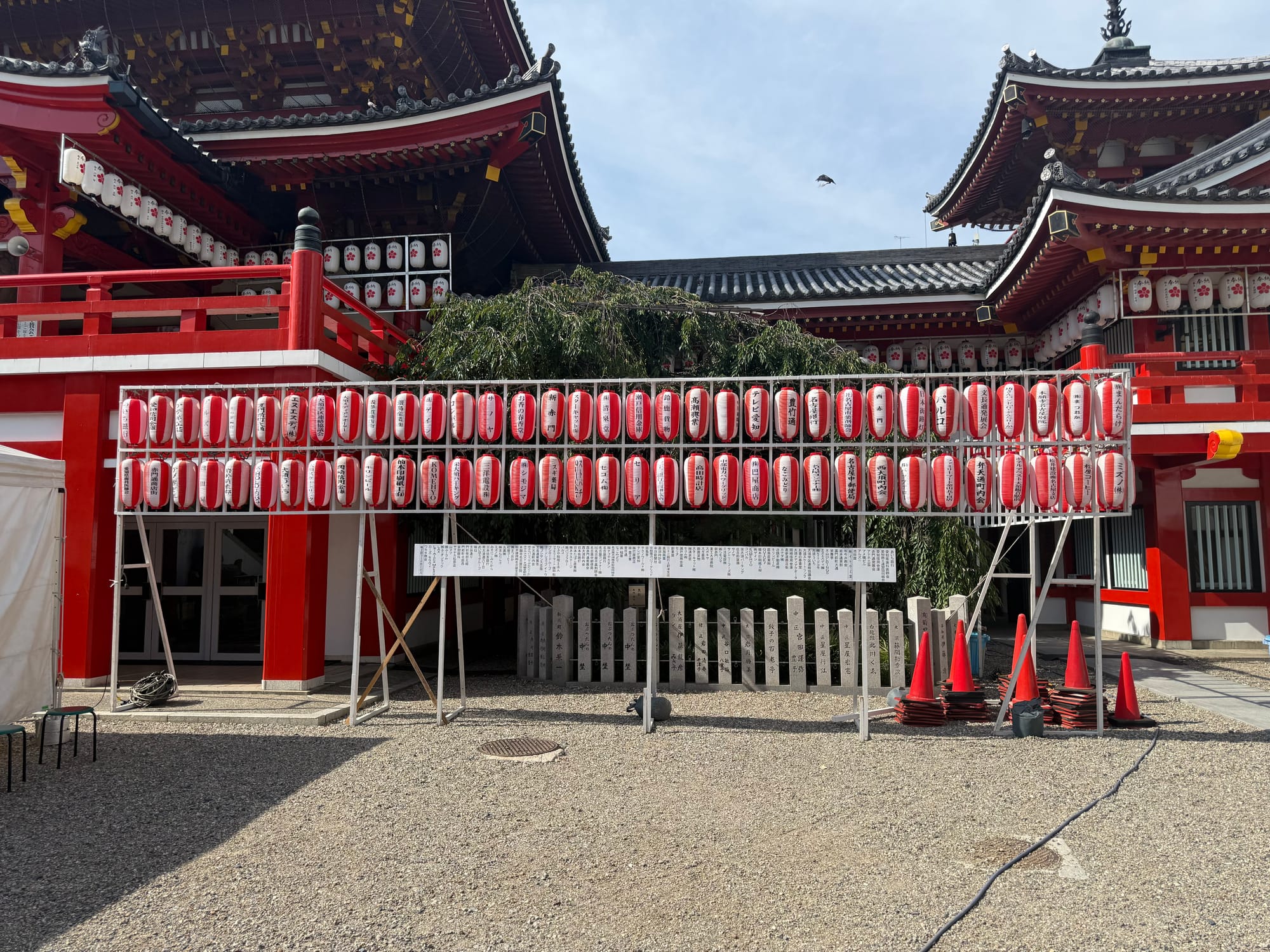
Ōsu Kannon Temple is one of Nagoya's most important Buddhist temples, known for its impressive red architecture, lively atmosphere and central role in the city's cultural and religious life.The enormous lantern at Ōsu Kannon Temple is one of the temple's most recognisable features, welcoming visitors to one of Nagoya's most important Buddhist sites.One of the striking gates at Ōsu Kannon Temple, where traditional red-and-white architecture, lanterns and historic design welcome visitors to one of Nagoya's most important Buddhist sites.Lanterns line the courtyard of Ōsu Kannon Temple, adding colour and atmosphere to one of Nagoya's most important Buddhist sites, surrounded by its distinctive red architecture.
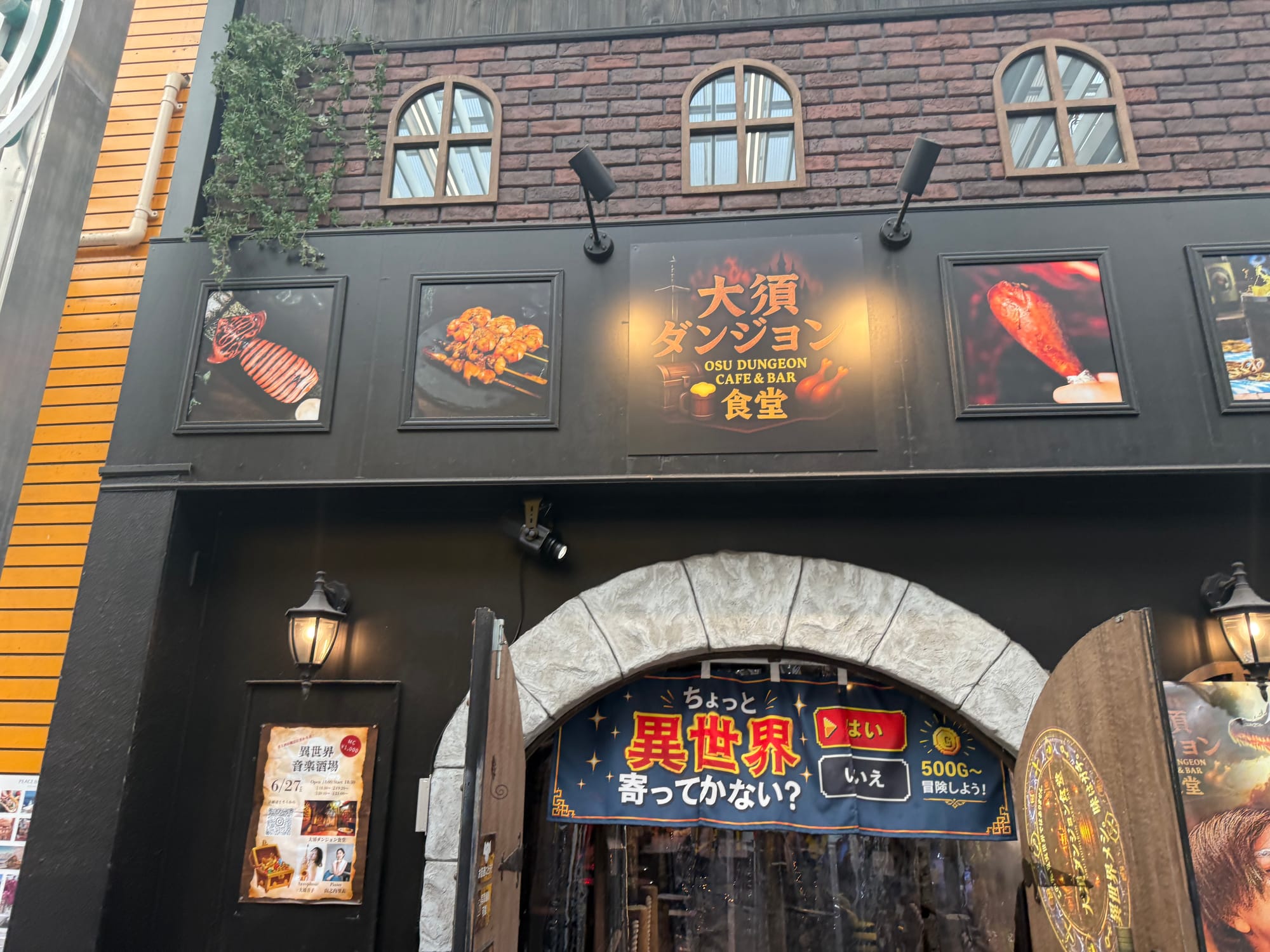
I did also get a picture of this weird dungeon cafe and bar.
The Ōsu Dungeon Café & Bar brings fantasy role-playing themes to Nagoya's Ōsu district, combining immersive décor, themed dining and gaming-inspired experiences.
Nagoshima Spa Land
1st August
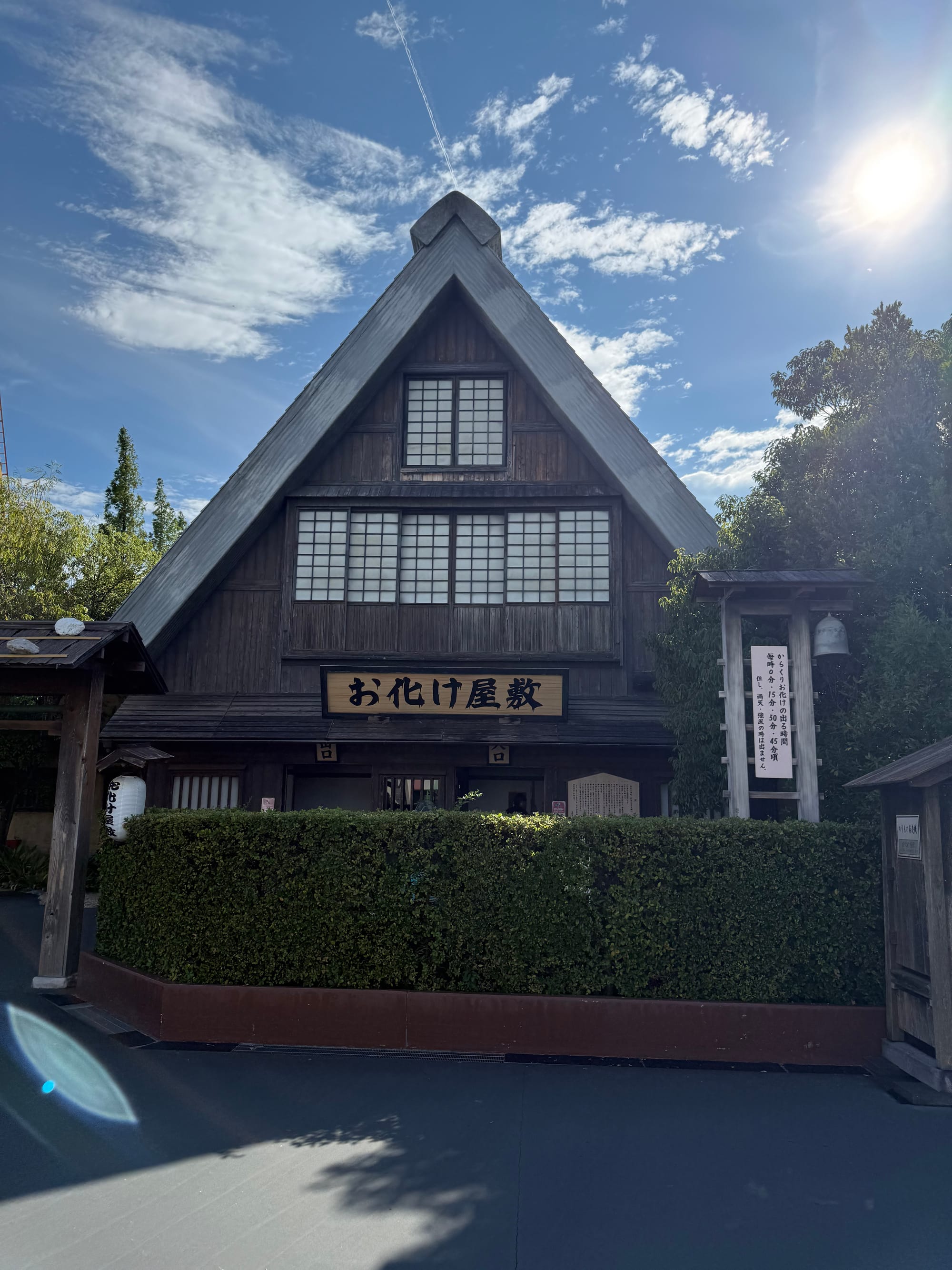
Today I went to a theme park called Nagoshima Spa Land. Before you think spa land, not it isn't quite that. It is a theme park, water park, spa resort and hotel all on the same plot, but the theme park was actually there first.
Nagoshima Spa Land
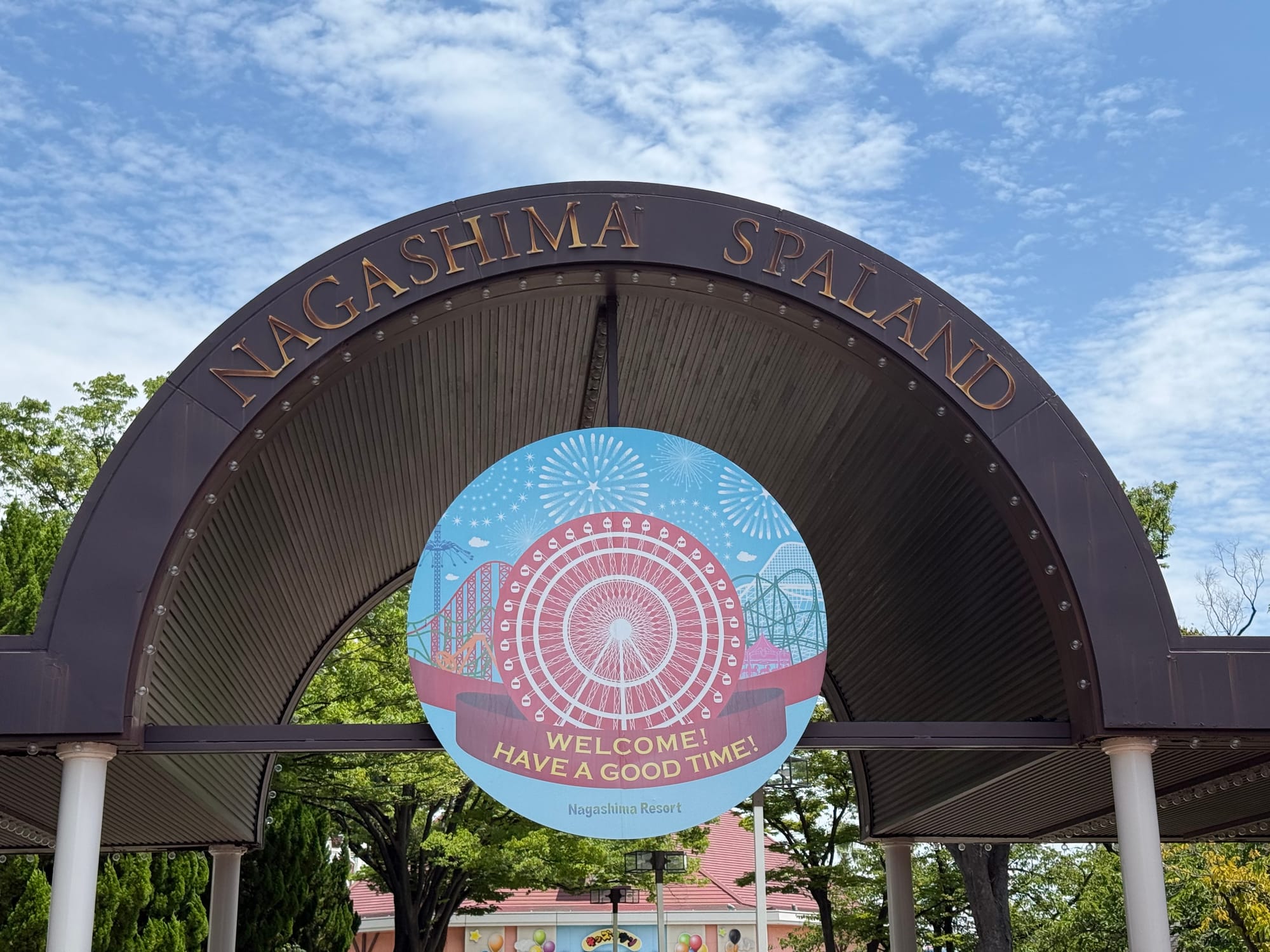
The entrance to Nagashima Spa Land welcomes visitors to one of Japan's largest amusement parks, renowned for its record-breaking roller coasters, attractions and resort facilities.
This is somewhere I wanted to go last time, but cause my time in Osaka was cut short due to a typhoon, I wasn't able to go. So like I did last time with Disneyland, let’s do some awards for the rides here.
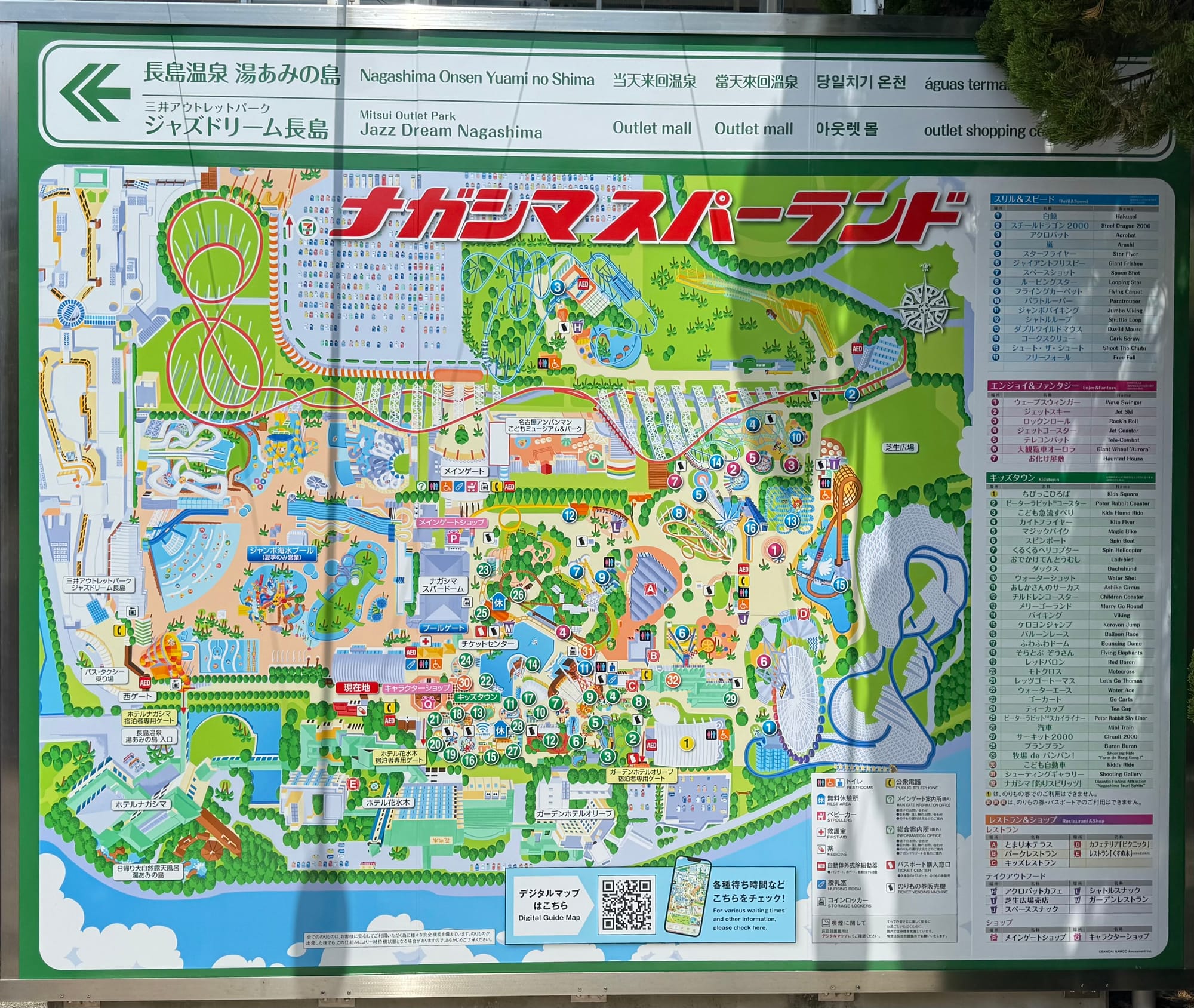
A park map helps visitors navigate Nagashima Spa Land, highlighting its record-breaking roller coasters, water attractions, hotels, shopping facilities and resort amenities.
Fastest and best ride
So the award for fasted and best ride goes tooooooo…
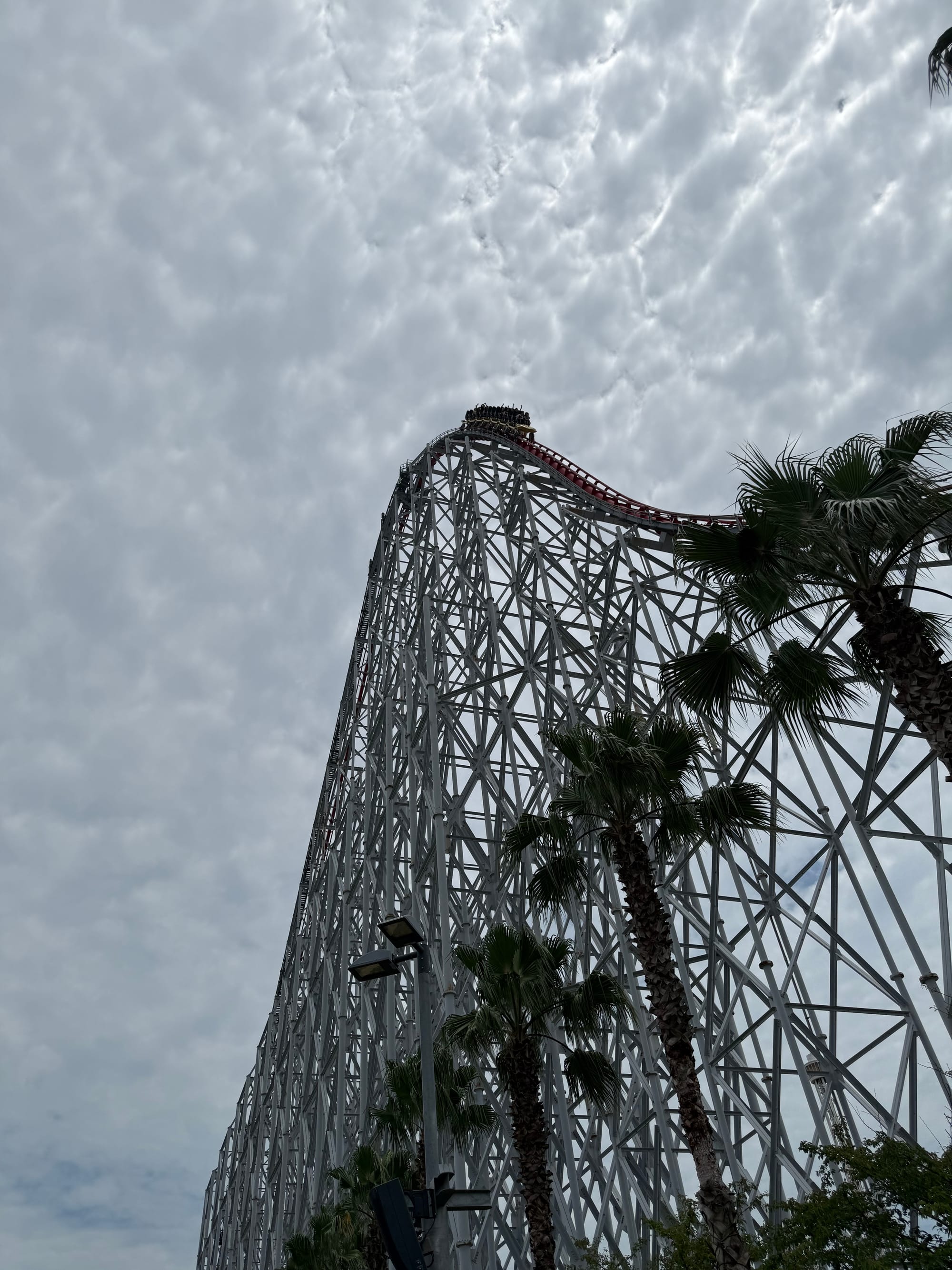
The Steel Dragon 2000!! This rollercoaster was built in 2000 and cost a fair bit more to build as they made it earthquake resistant. it was the worlds tallest at the time, standing at 97 metres high and with a max speed of 95mph. I will admit that as we were all going up the long lift hill, I was thinking to myself, why have I got on this ride and at the top o was thinking ‘oh no’.
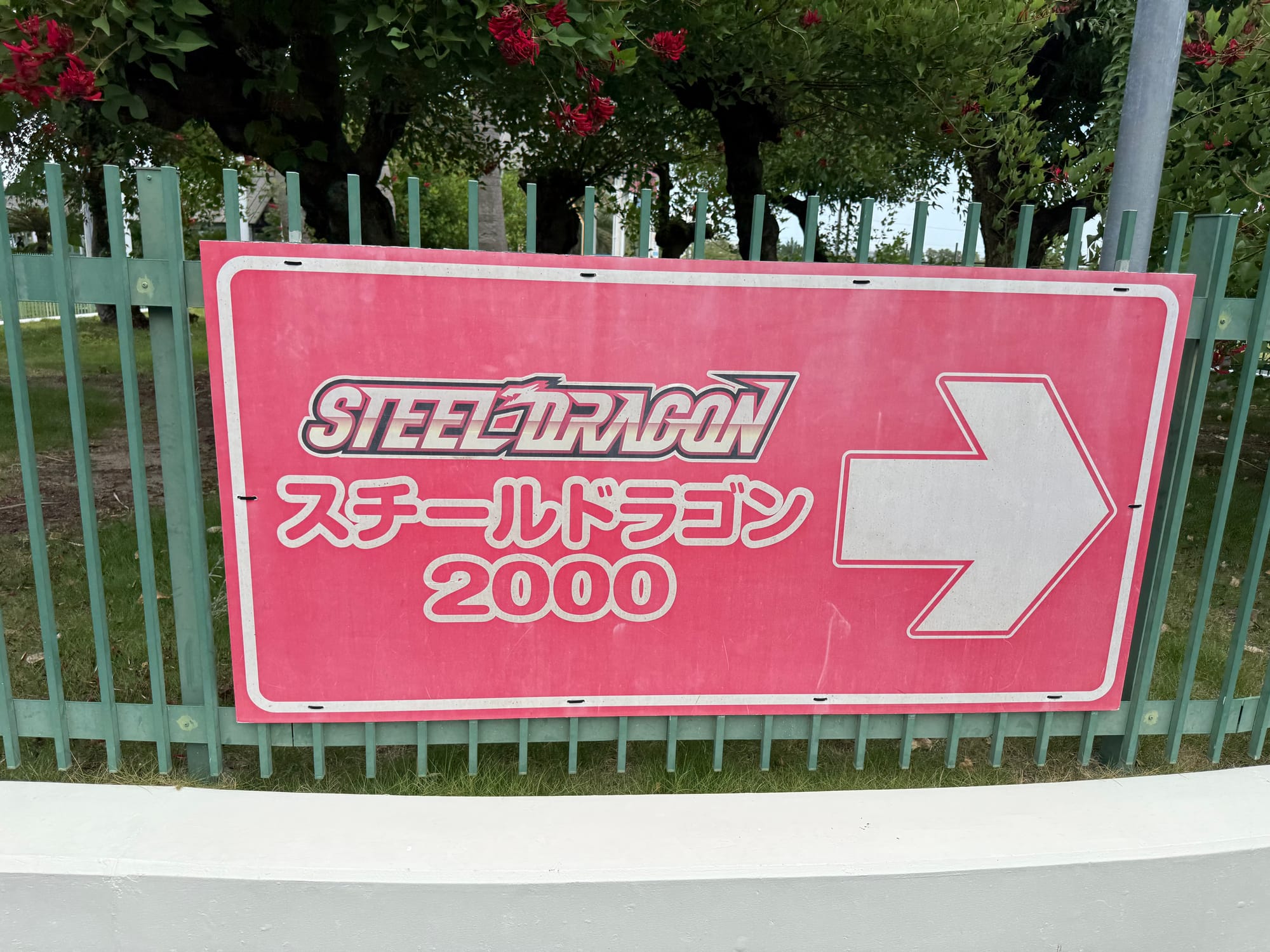
A sign points the way to Steel Dragon 2000, Nagashima Spa Land's flagship roller coaster and one of the world's longest steel roller coasters.A train reaches the summit of Steel Dragon 2000 before plunging down the first drop, showcasing one of the world's longest and most iconic roller coasters at Nagashima Spa Land.
Weridest Ride
The weirdest ride had to be….
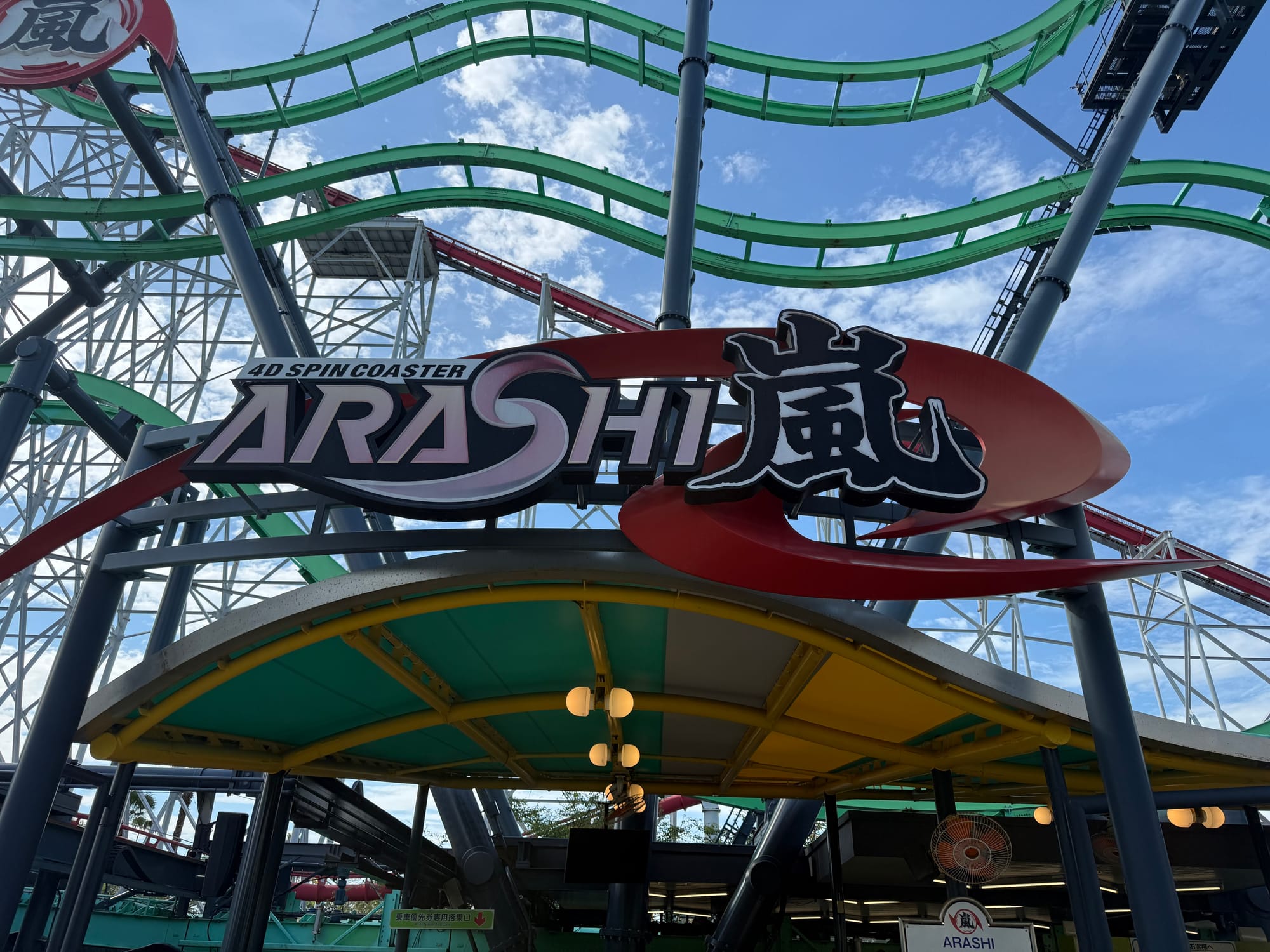
Arashi. This ride was fun, but also weird, it is known as a 4D free spin coaster, so as you give over the drops and stuff, your seat, which is on the outside of the roller coaster, spins freely. This was really weird, but also quite fun. Wouldn’t recommend though if you consider from travel sickness.
The entrance to Arashi, Nagashima Spa Land's 4D Spin Coaster, combines spinning seats and free-rotating motion with a twisting track to create one of the park's most intense ride experiences.
The Ride That is Supposed to be Scary But Isn't
The ride that was supposed to be scary, but wasn‘t is……
The Ghost house…. Well I was expecting something that was actually going to be scary, but it was all more Macabre horror, with some jump scares, which was weird and boring to be honest, sorry, I don’t scare the easiest when I kinda know what to expect.
The Haunted House at Nagashima Spa Land combines traditional Japanese horror themes with atmospheric architecture, offering one of the park's classic indoor attractions.
The Most Relaxing Ride
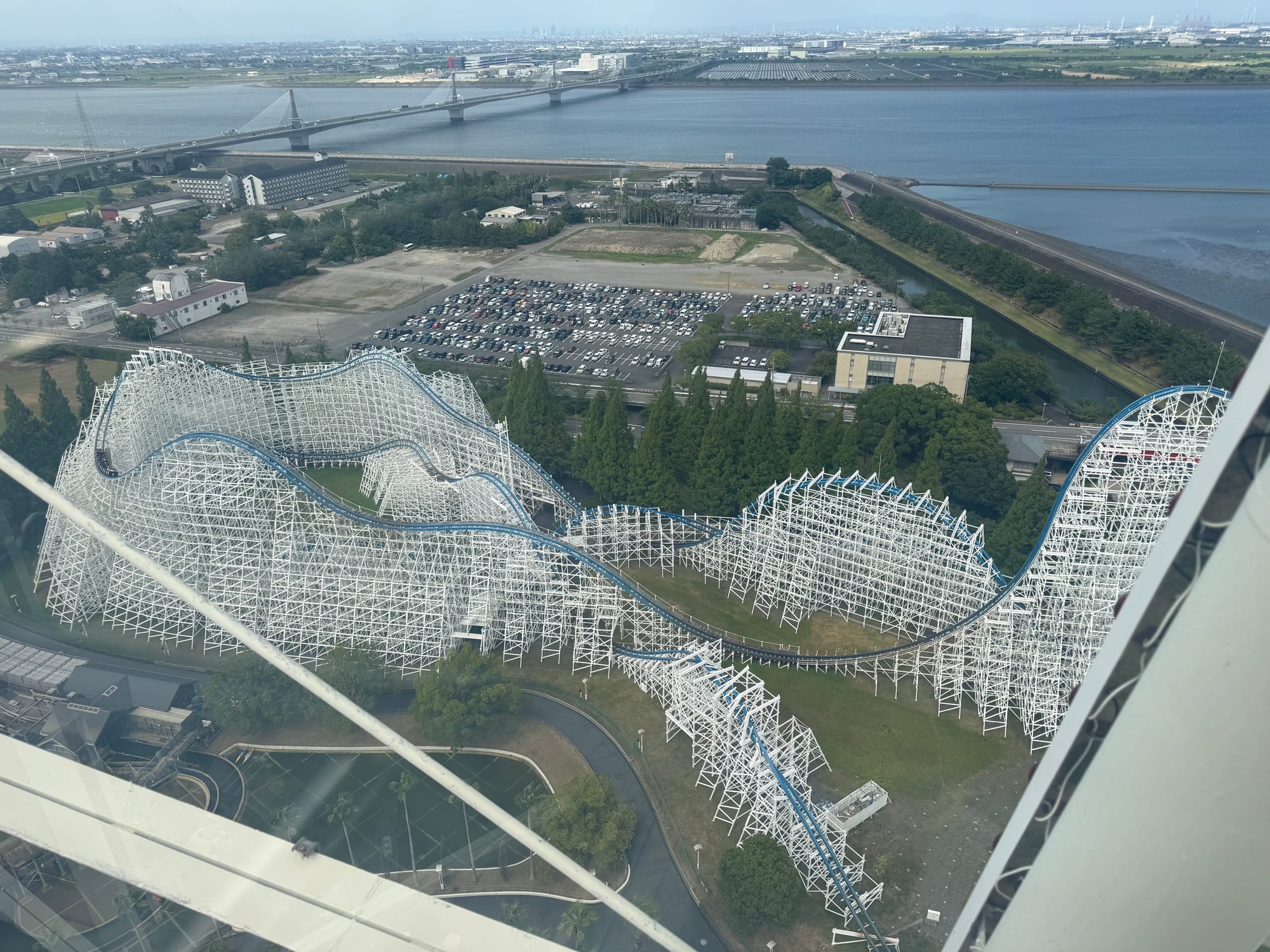
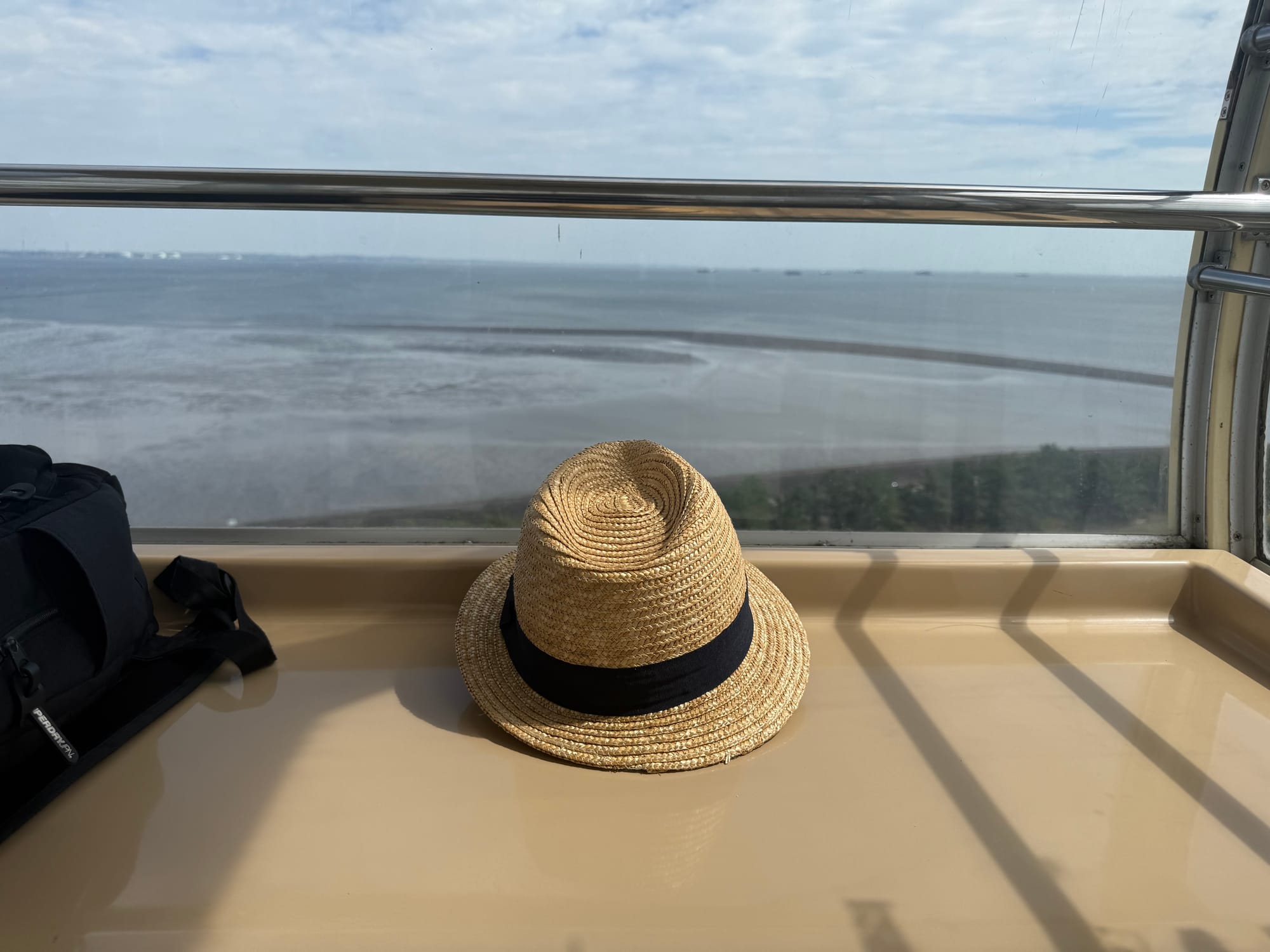
The most relaxing ride was the Ferris wheel and to be honest, it also had really good views as well, not only for me, but for Mr Hat as well. Plus it was air conditioned, which was good in the 39c heat. 🫠
Looking down on White Cyclone from the Ferris wheel at Nagashima Spa Land, showcasing the enormous wooden coaster and its impressive layout beside the waterways of Mie Prefecture.Mr Hat takes in the view from the Ferris wheel at Nagashima Spa Land, enjoying panoramic views across the waterways and coastline of Ise Bay from high above the resort.
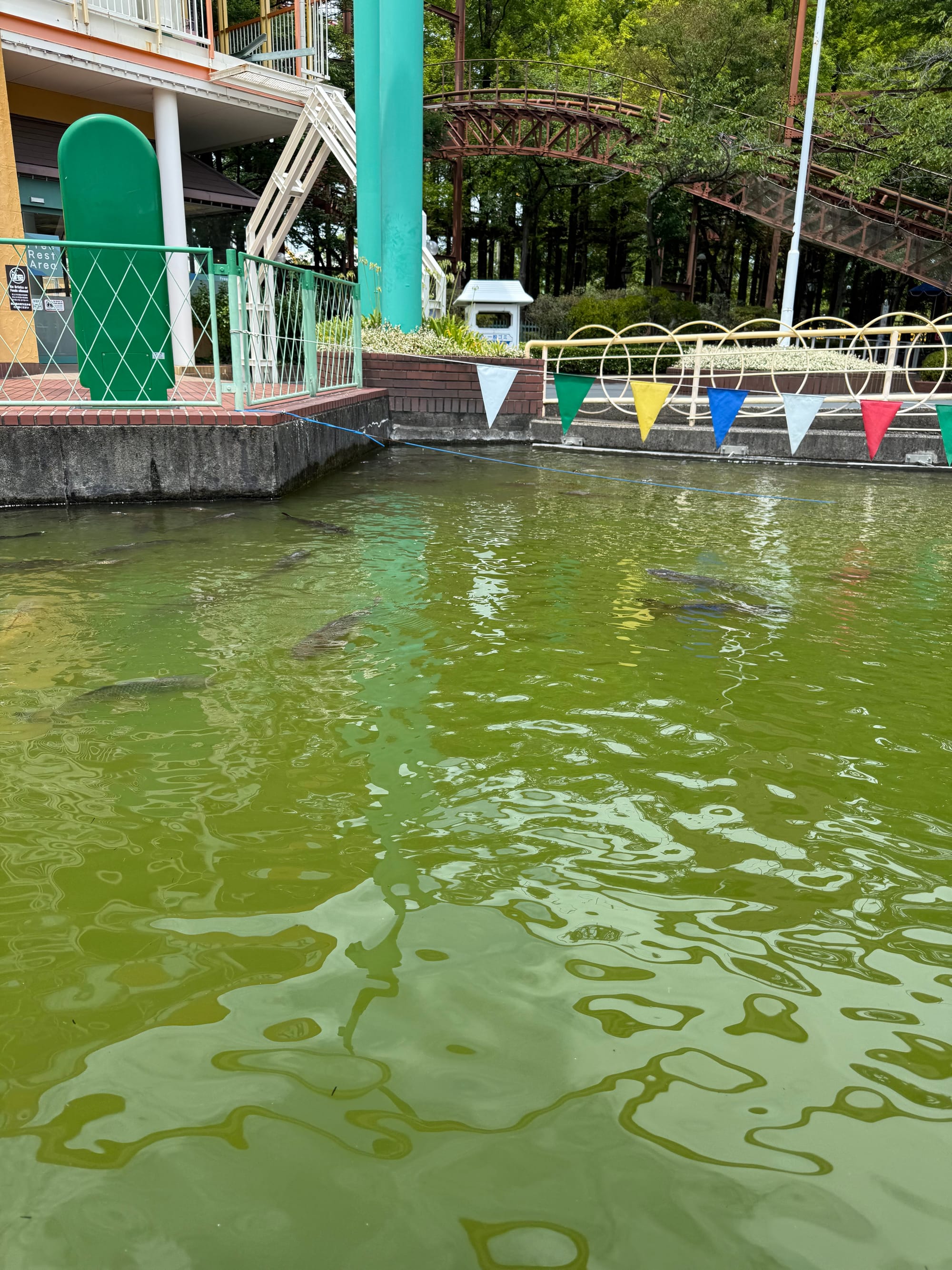
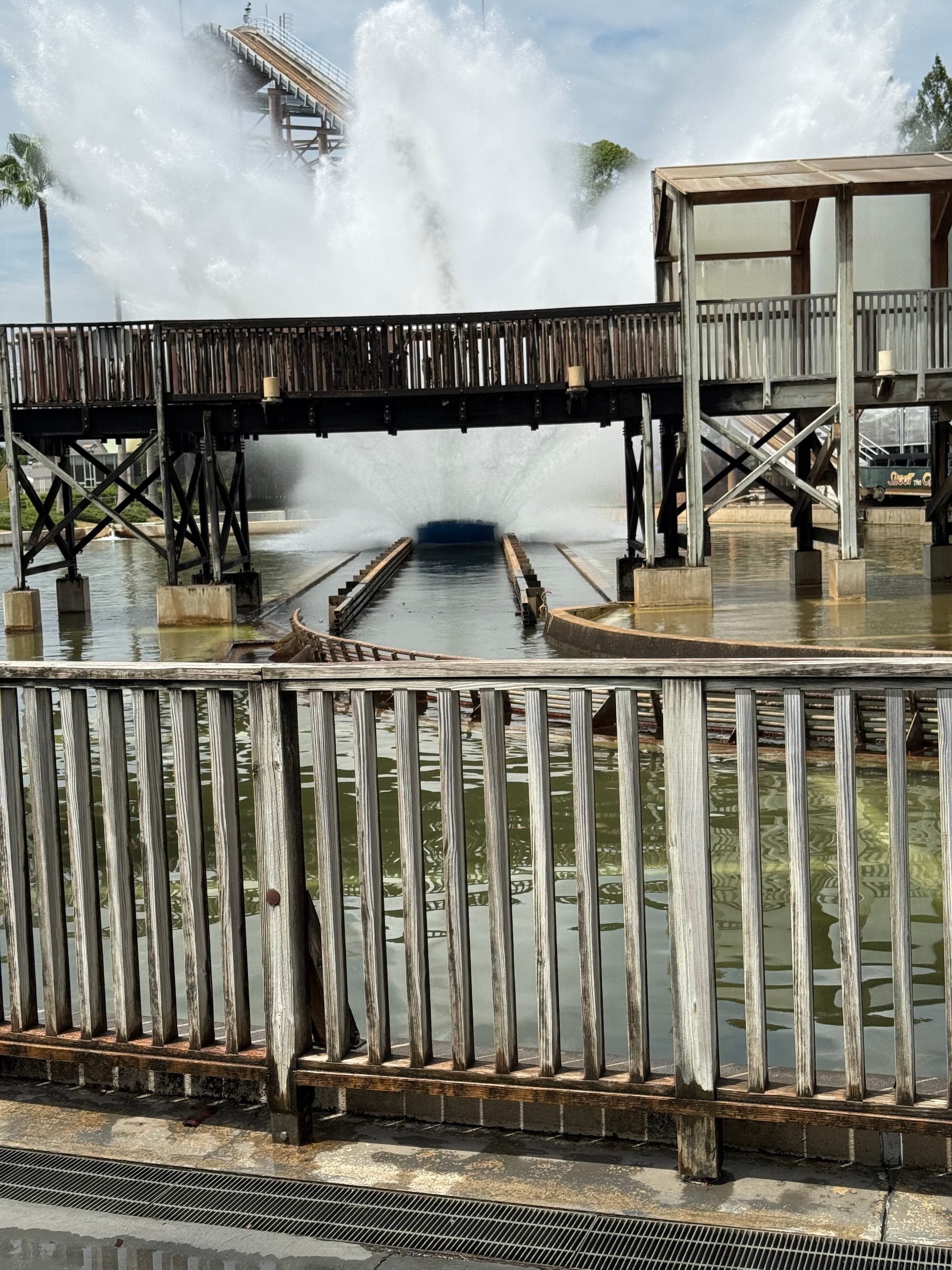
There were also quite a few other rides that I went on, including a lot flume, which got me soaked for a whole 10 mins, then I was dry again in the heat. There was also the ultra twister and the Koi pond boat ride.
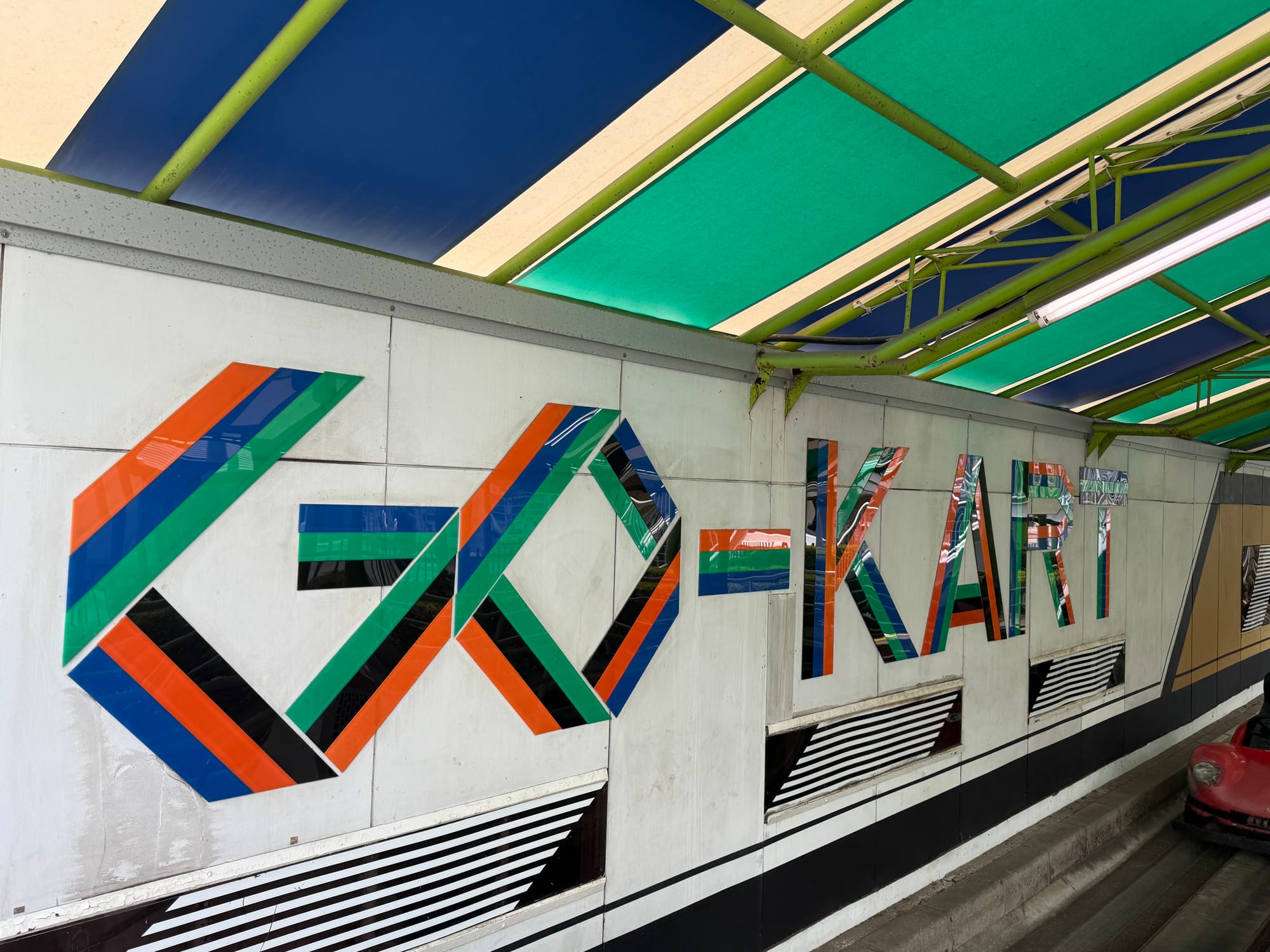
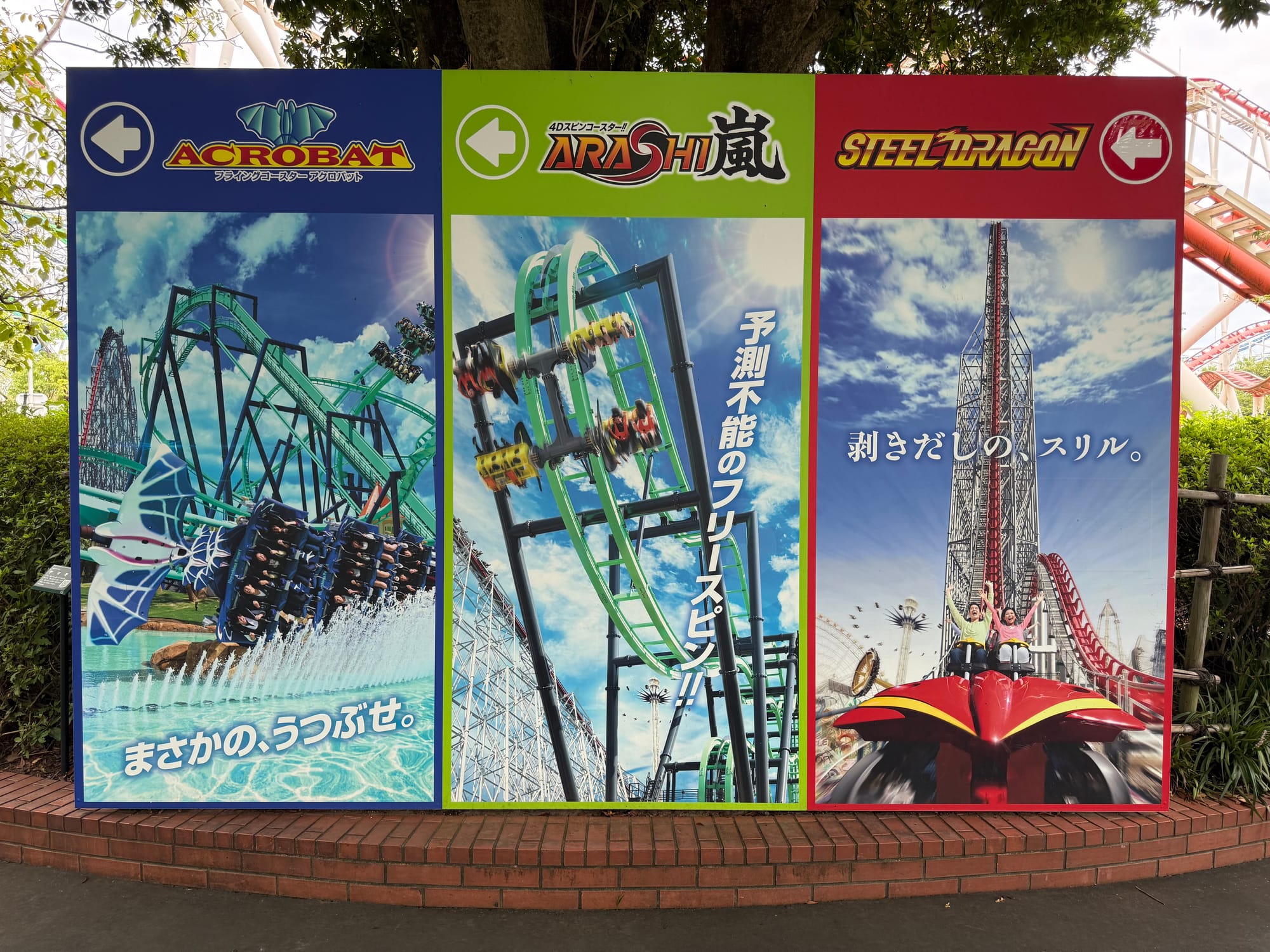
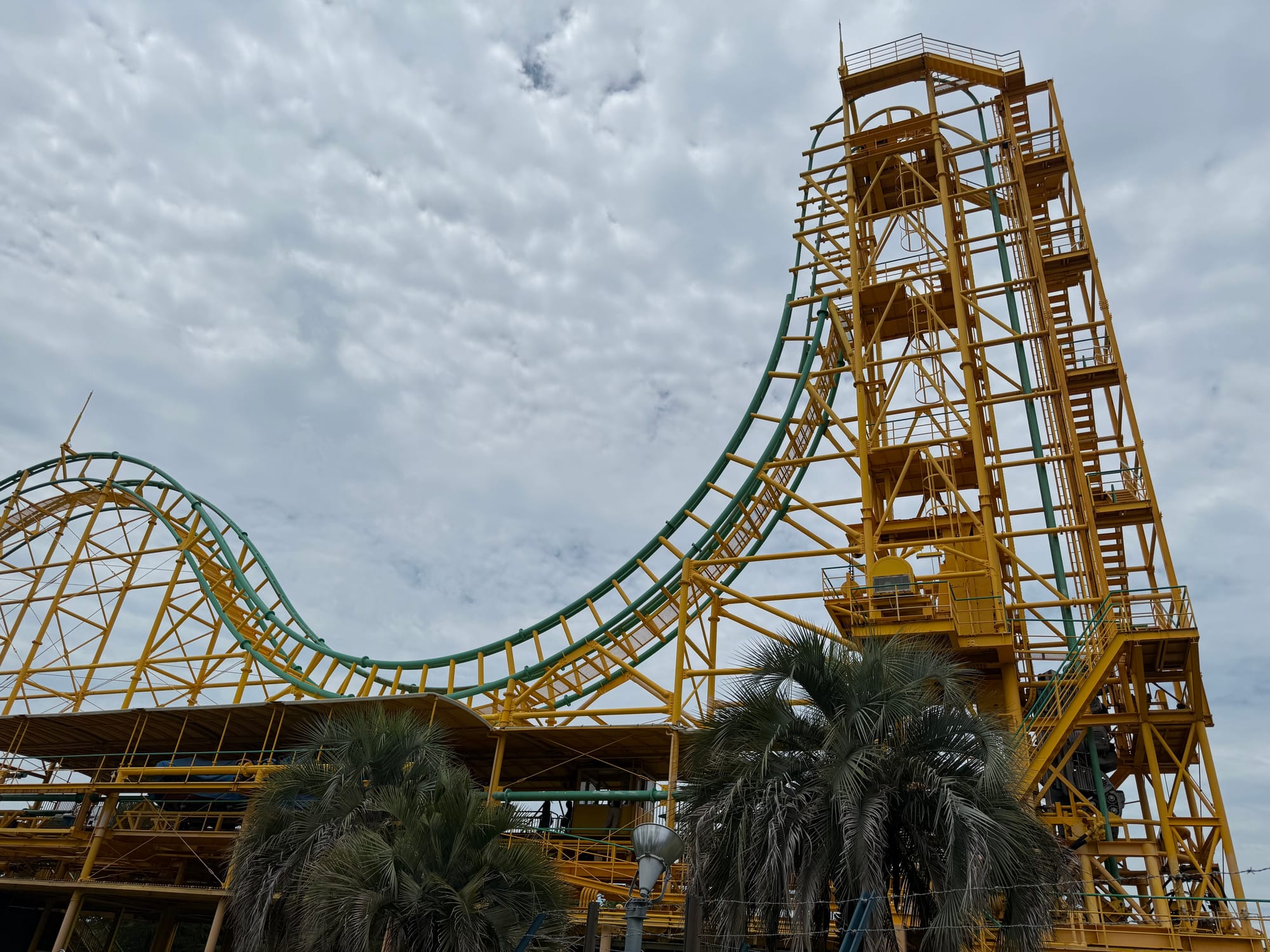
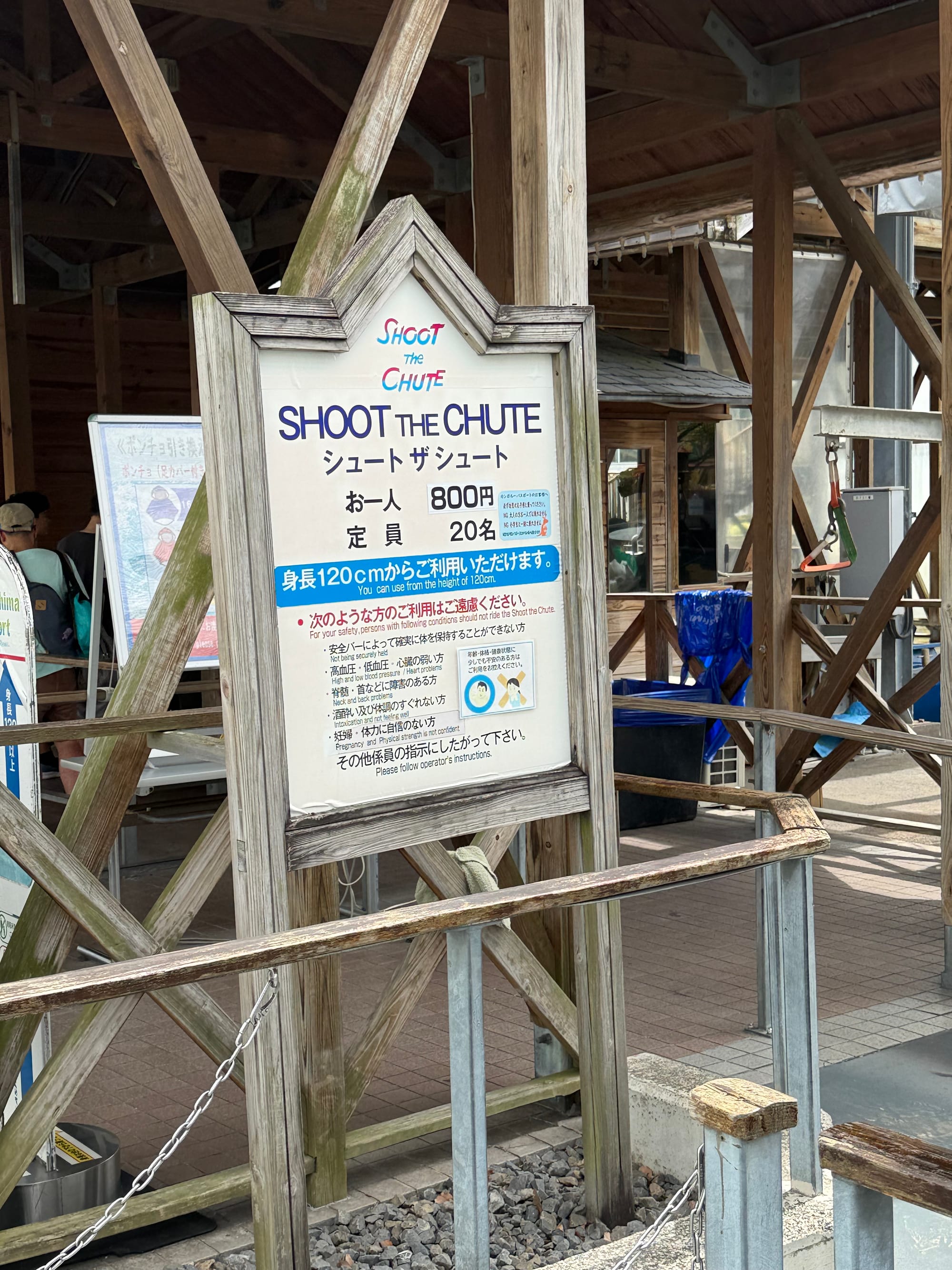
Large fish swim in a pond within Nagashima Spa Land, where landscaped water features sit alongside the park's roller coasters and attractions.The Go-Kart attraction at Nagashima Spa Land lets visitors take to the track for some friendly racing, adding a classic amusement park experience alongside the resort's famous roller coasters.A signpost display highlights three of Nagashima Spa Land's headline roller coasters: Acrobat, Arashi and the record-breaking Steel Dragon 2000, helping visitors navigate the park's major attractions.Ultra Twister stands out at Nagashima Spa Land with its unique vertical lift and heartline roll, making it one of the park's most distinctive and unusual roller coasters.The entrance sign for Shoot the Chute, Nagashima Spa Land's classic splash ride, where boats plunge down a steep drop to create a dramatic spray over the water below.A dramatic splashdown on Shoot the Chute at Nagashima Spa Land, as the boat hits the water at speed and sends a towering plume of spray into the air.
That is it for now, so please join me next time for Nagoya part 2 as I am not finished with this city yet!