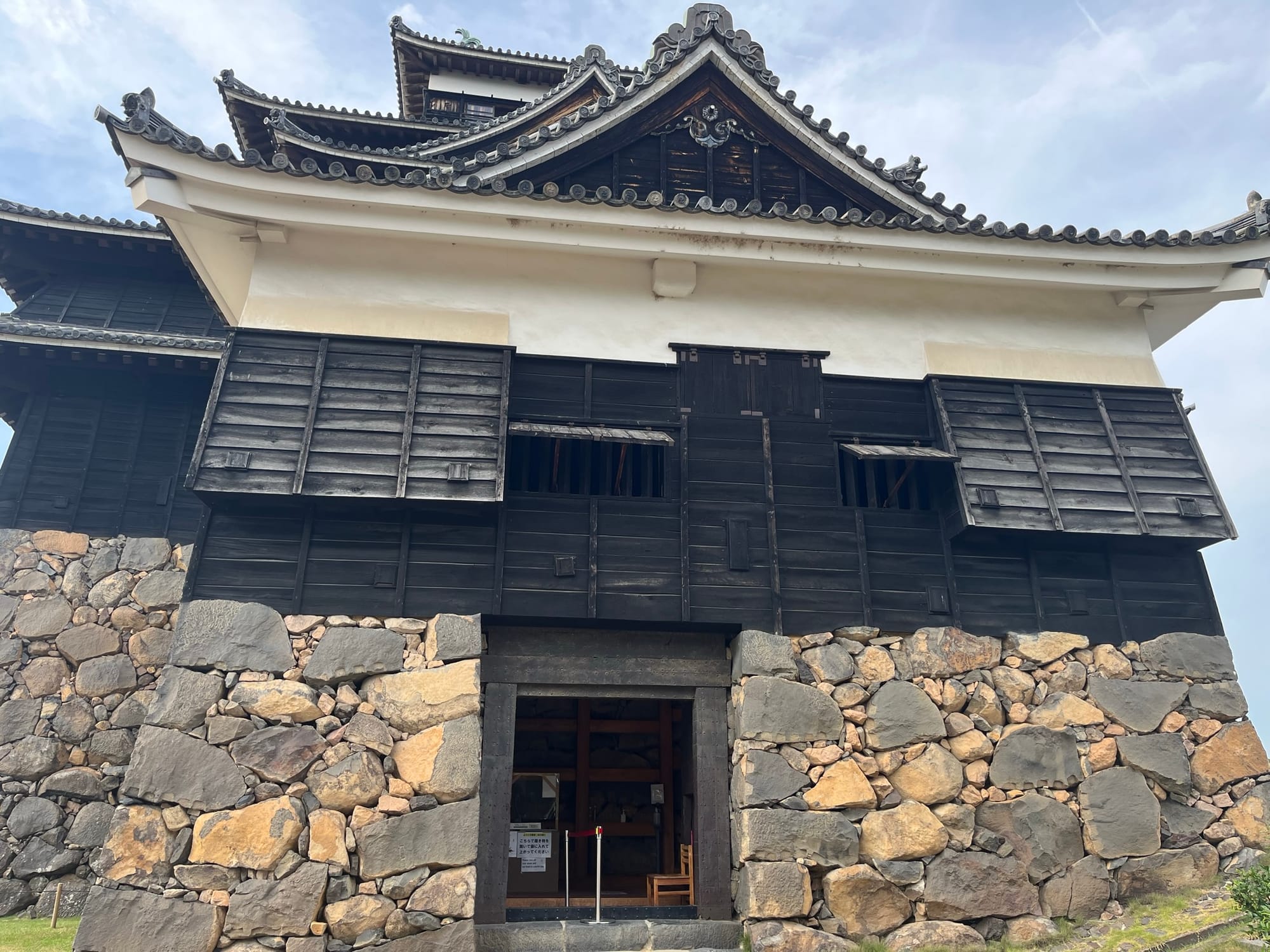
Exploring the grounds of Matsue Castle, with the imposing black timber walls, stone foundations and defensive features highlighting why it remains one of Japan's few surviving original feudal castles.
I am sorry that this one has taken so long to get out. Due to an unstable internet connection meaning that I lost about half of this post and an incoming typhoon meaning I have had to change some plans around and move my schedule up too. I am also doing this for the third time due to some corrupted files in the original. Ahhhhhhhhhh!!!!!!!
Moving Day Again!
7th August
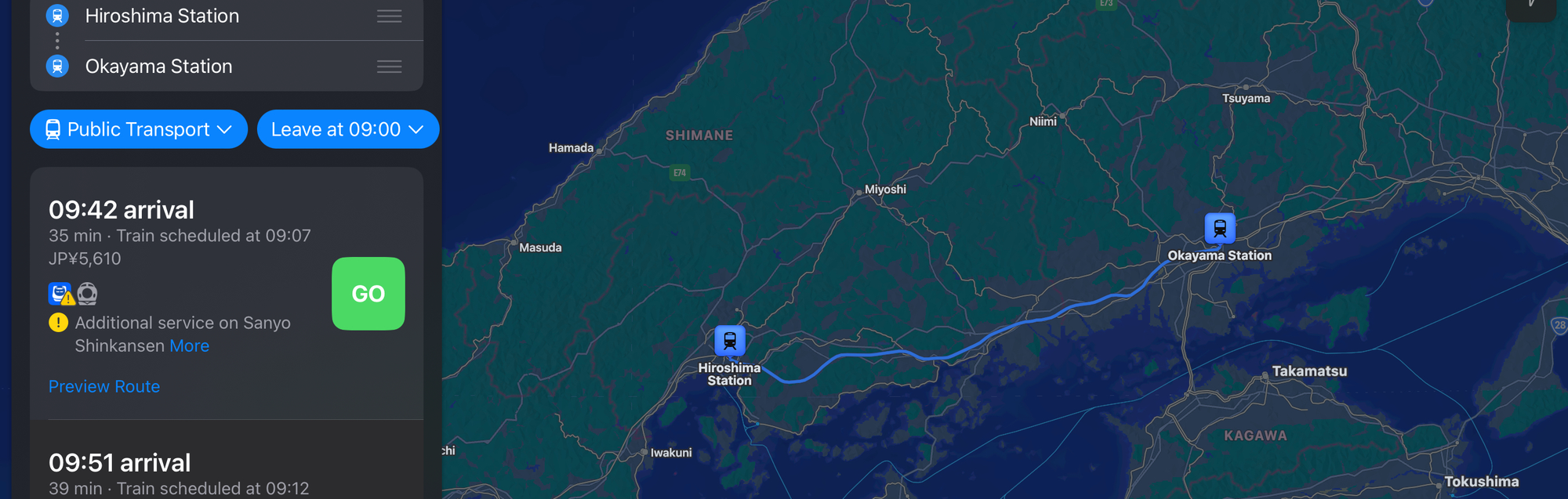
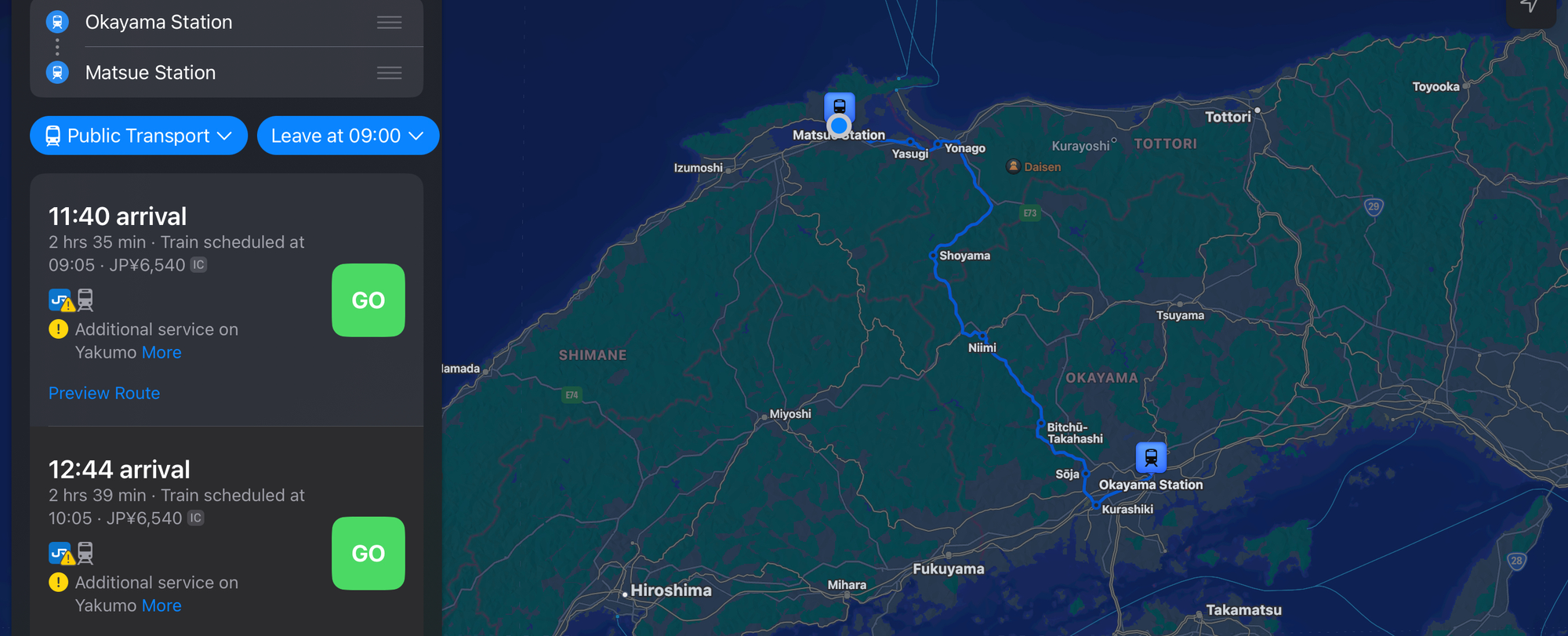
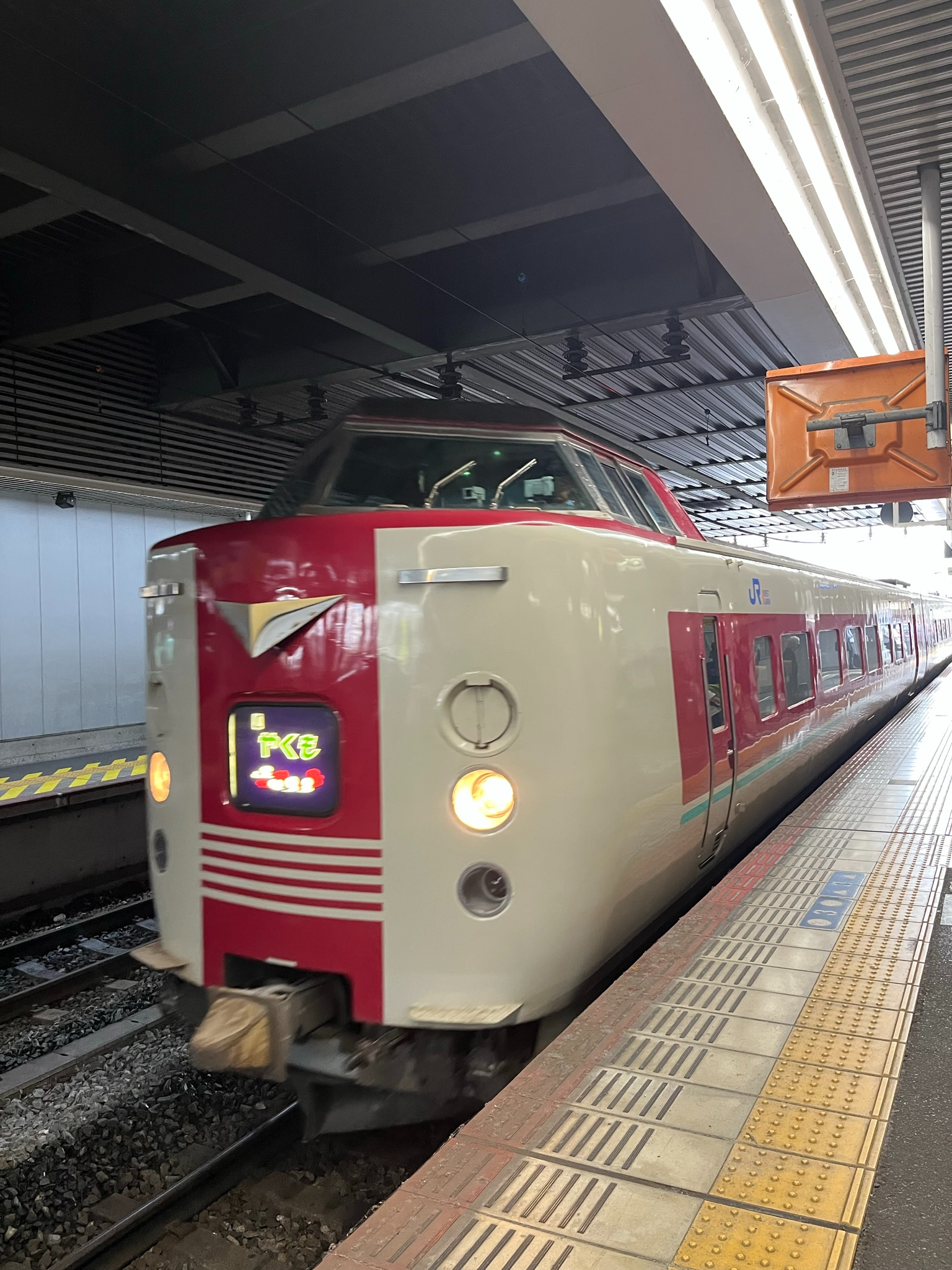
So, this time with moving from Hiroshima to Matsue I had to take a 40 min Shinkansen (bullet train) and then an almost 2 hour and 40 mins limited express train which took me through the heart of Japan (literally from coast to coast).
Planning the next stage of the journey by Shinkansen, with a quick route check between Hiroshima and Okayama helping to make the most of Japan's fast, efficient and incredibly convenient rail network.Planning the journey from Okayama to Matsue, with the Limited Express Yakumo providing a scenic route through the mountains of western Japan and connecting the San'in region with the country's high-speed rail network.
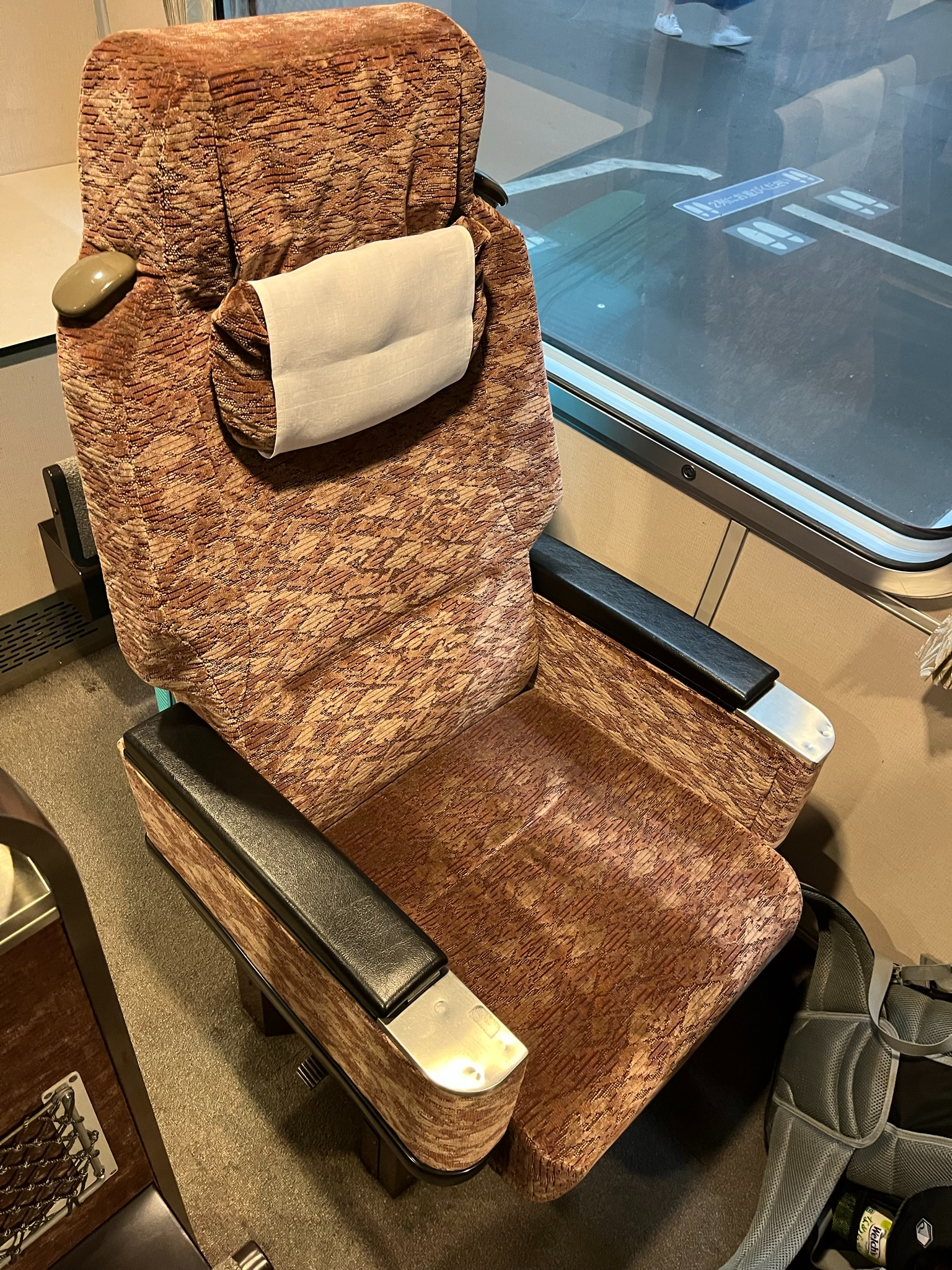
The train was quite long and had a very peculiar driver’s cab. I am glad though that I paid the extra money for a green car pass as the seating is much nicer.
Travelling through western Japan aboard the Limited Express Yakumo, with the iconic cream and red train providing a scenic journey between Okayama and Matsue through the mountains and countryside of the San'in region.
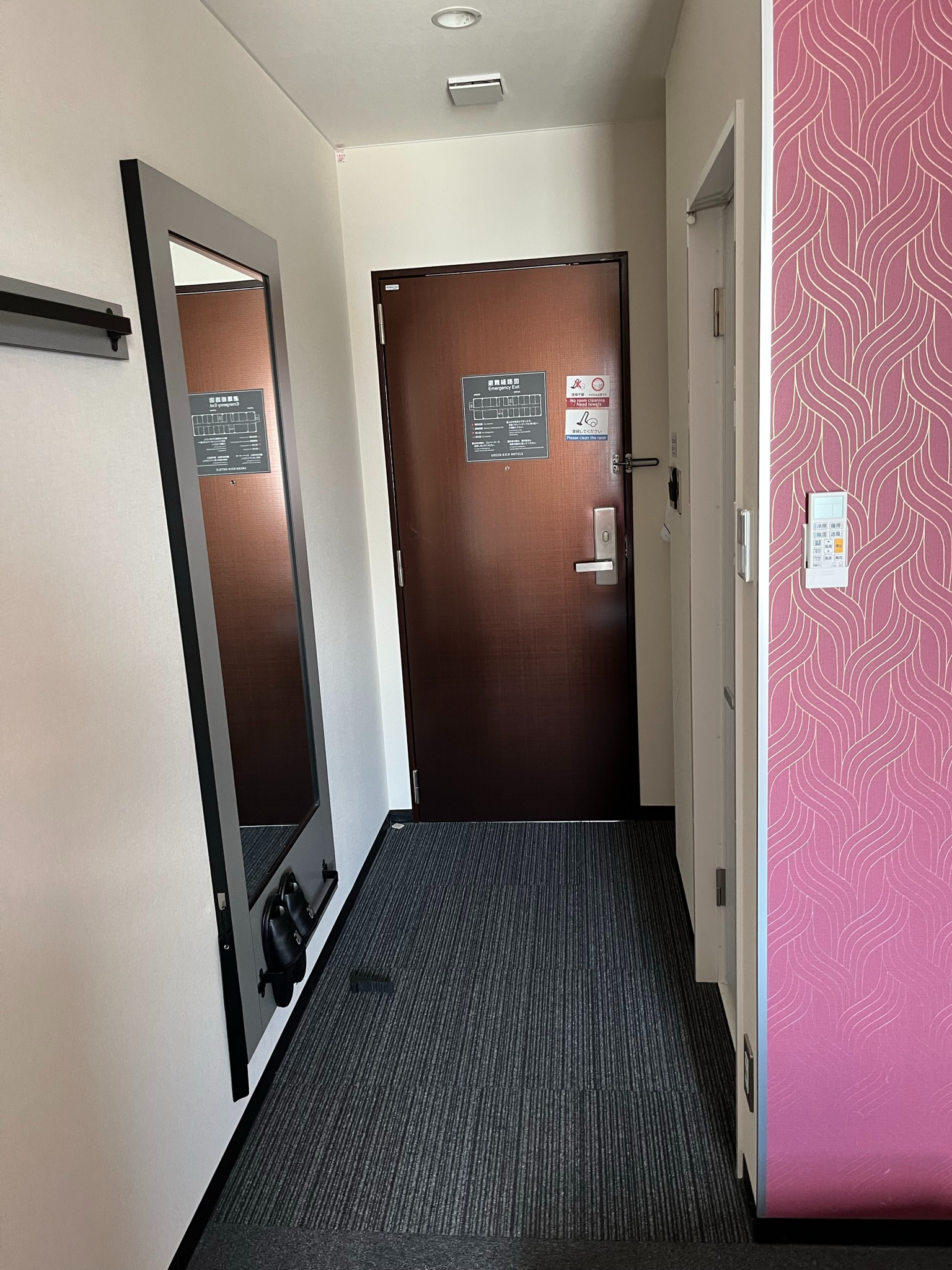
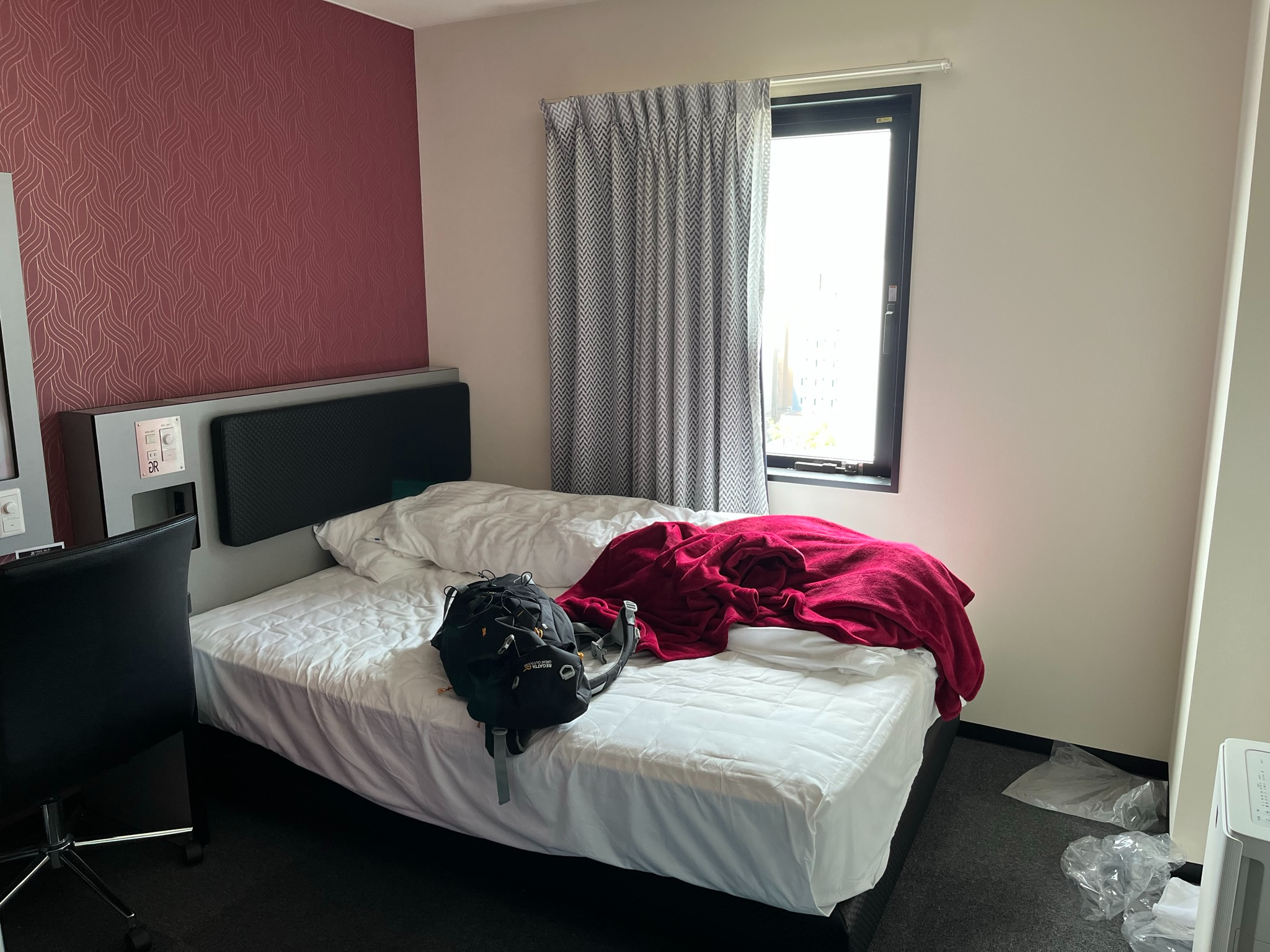
The hotel I am staying in is called the ‘Green Rich Hotel Matsue - Station Across’ and yes that is literally what it means, I am like 50 metres from the Matsue station entrance. It also has a onsen inside for hotel guests which I was happy about and have spent every night at. All in all, I spent about £150 for 3 nights at this hotel.
Checking into a hotel room in Matsue, with a comfortable base for exploring the city's historic castle, scenic waterways and lakeside surroundings before setting out for another day of discovery in western Japan.Returning to the hotel after a day of exploring Matsue, with a comfortable room providing a welcome place to rest, unpack and reflect on the experiences of discovering one of Japan's most historic castle towns.Relaxing in the hotel room after a day of exploring Matsue, with a quiet evening spent planning the next adventures and recharging before continuing the journey through western Japan.
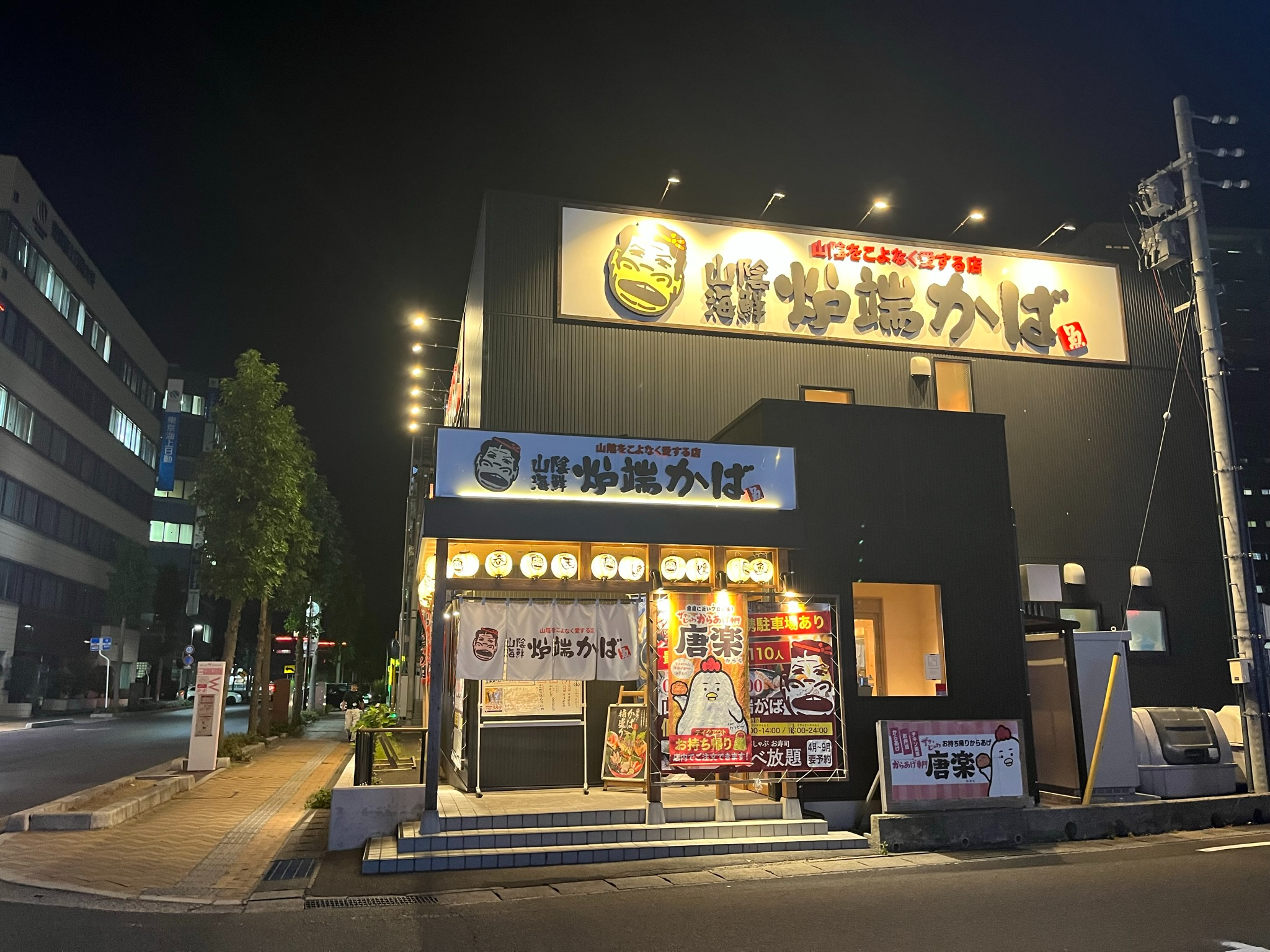
As it was getting late, I was wondering where to go to get something to eat so I was looking at a Bistro about 20 mins from the hotel, but instead I happened to come across this place.
Heading out for dinner in Matsue, with a visit to a local izakaya providing the chance to sample regional dishes and experience the relaxed evening atmosphere of one of Japan's historic castle towns.
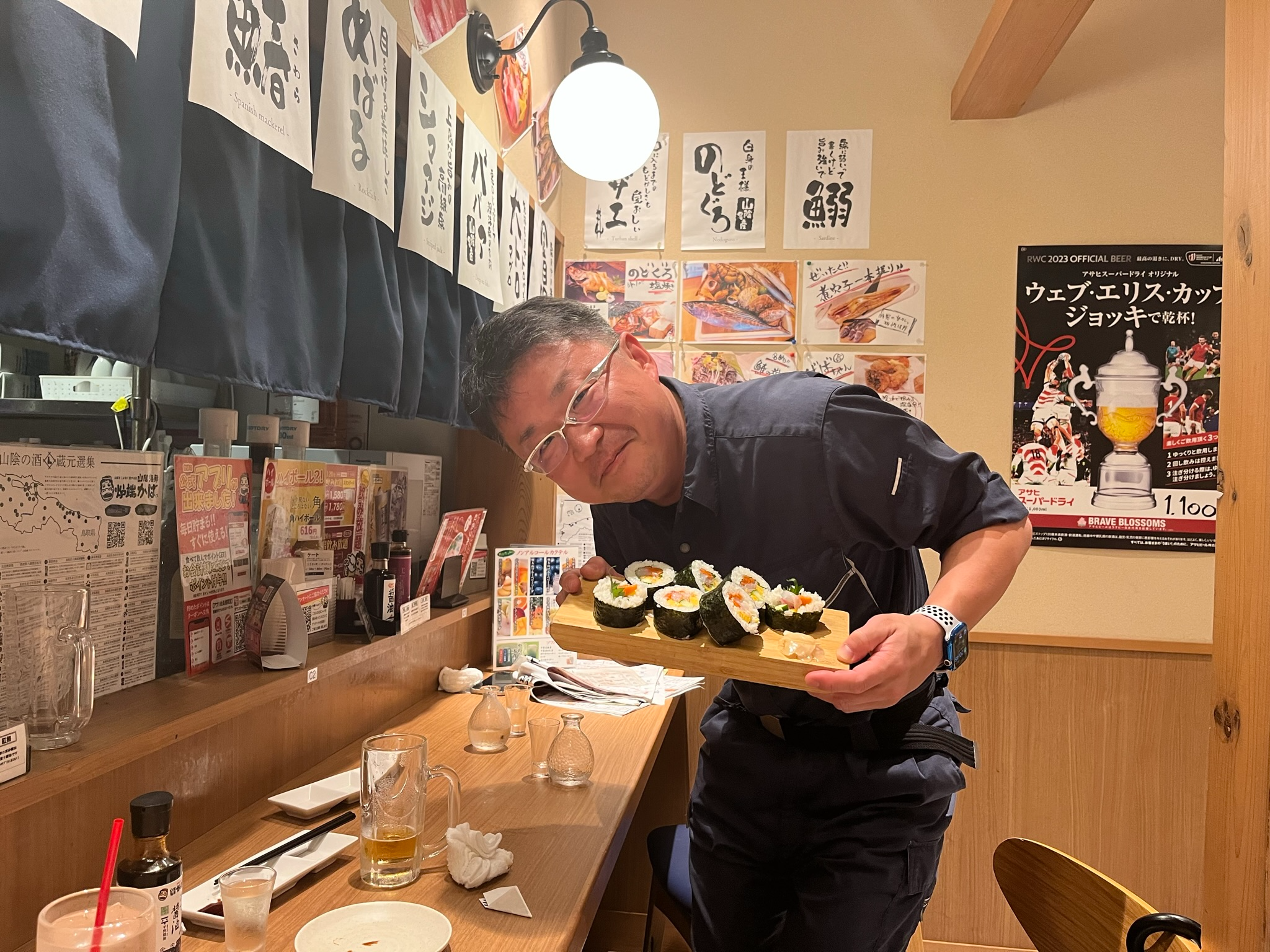
This place is an Izakaya which the best way I can describe it that it is a Japanese pub. When inside this izakaya there are booths that you can go into if you are a party of people, so you get some privacy, but if you are alone like me then you tend to get seated at the front near the kitchen.
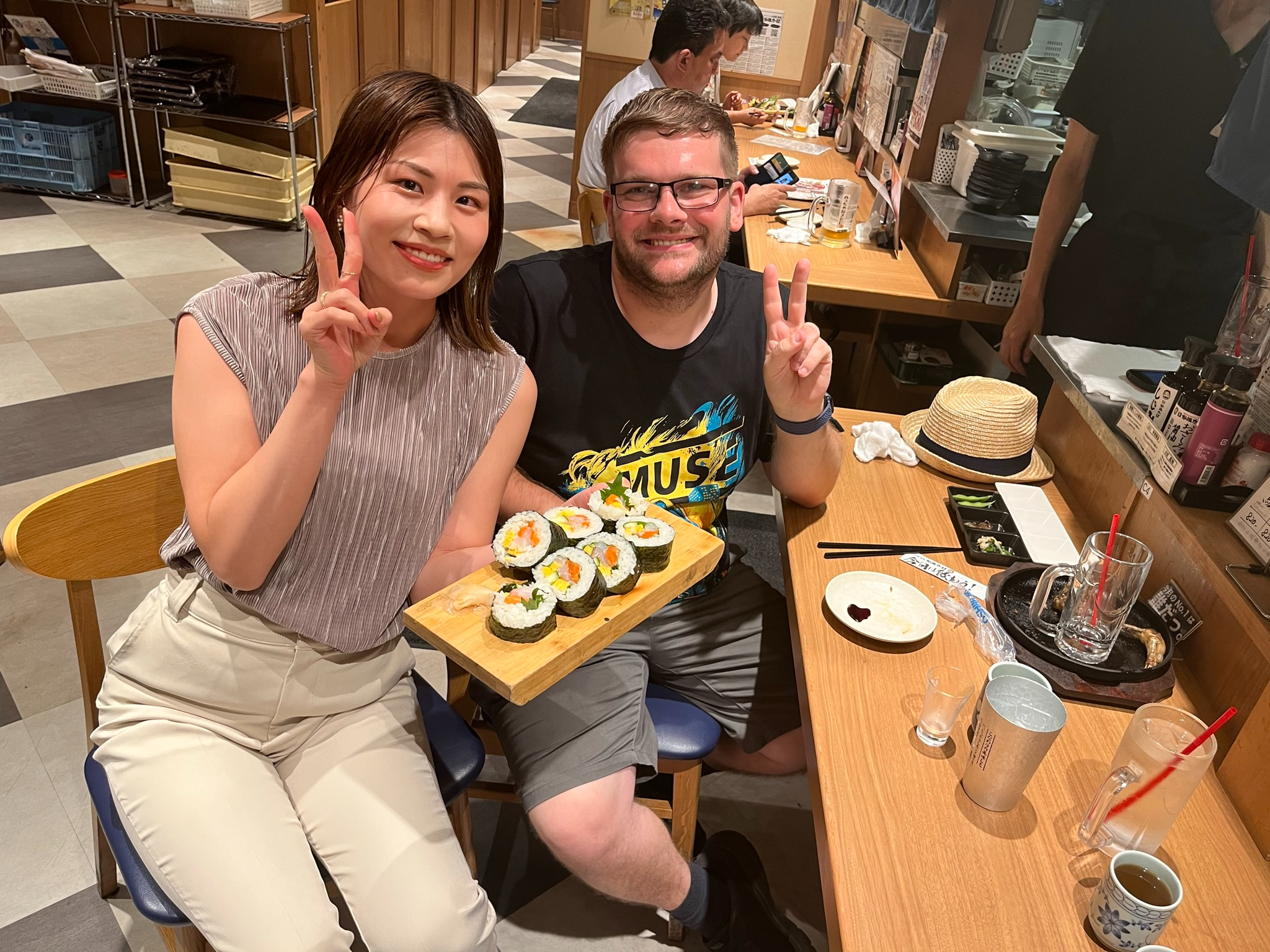
When I first got seated and started using my chopsticks there was this older guy sat 2 seats from me starting to laugh, including when I was using my phone to translate the menu. Unfortunately, I am bad with names so I can’t remember his name (sorry), but after a little while we got talking to each other using both a little bit of Japanese, English and google translate. After a while a lovely woman came in and joined us and all 3 of us started talking and got to know each other. We even brought each other some food and drinks (yes, I did try some cold sake and yes, I do much prefer it warm). Instead of getting some food and drink from 6:30PM till about 7-7:30PM, I ended up staying in there till about 9PM.
Sharing dinner and conversation with a fellow diner in Matsue, with an unexpected meeting over local food becoming one of those memorable travel moments that highlighted the friendliness and hospitality encountered throughout Japan.Making a new friend over dinner in Matsue, with an unexpected conversation at a local izakaya leading to shared food, cultural exchange and one of the most memorable encounters of the journey through Japan.
I won’t bore you with the detail too much, but I also meet someone for Hiroshima the next night who wants to travel the world.
Matsue Castle
8th August
Today was the day I am going to my first proper castle that dates all the way back to the 16th century and is one of only 12 castles dating back all that way that are still standing.
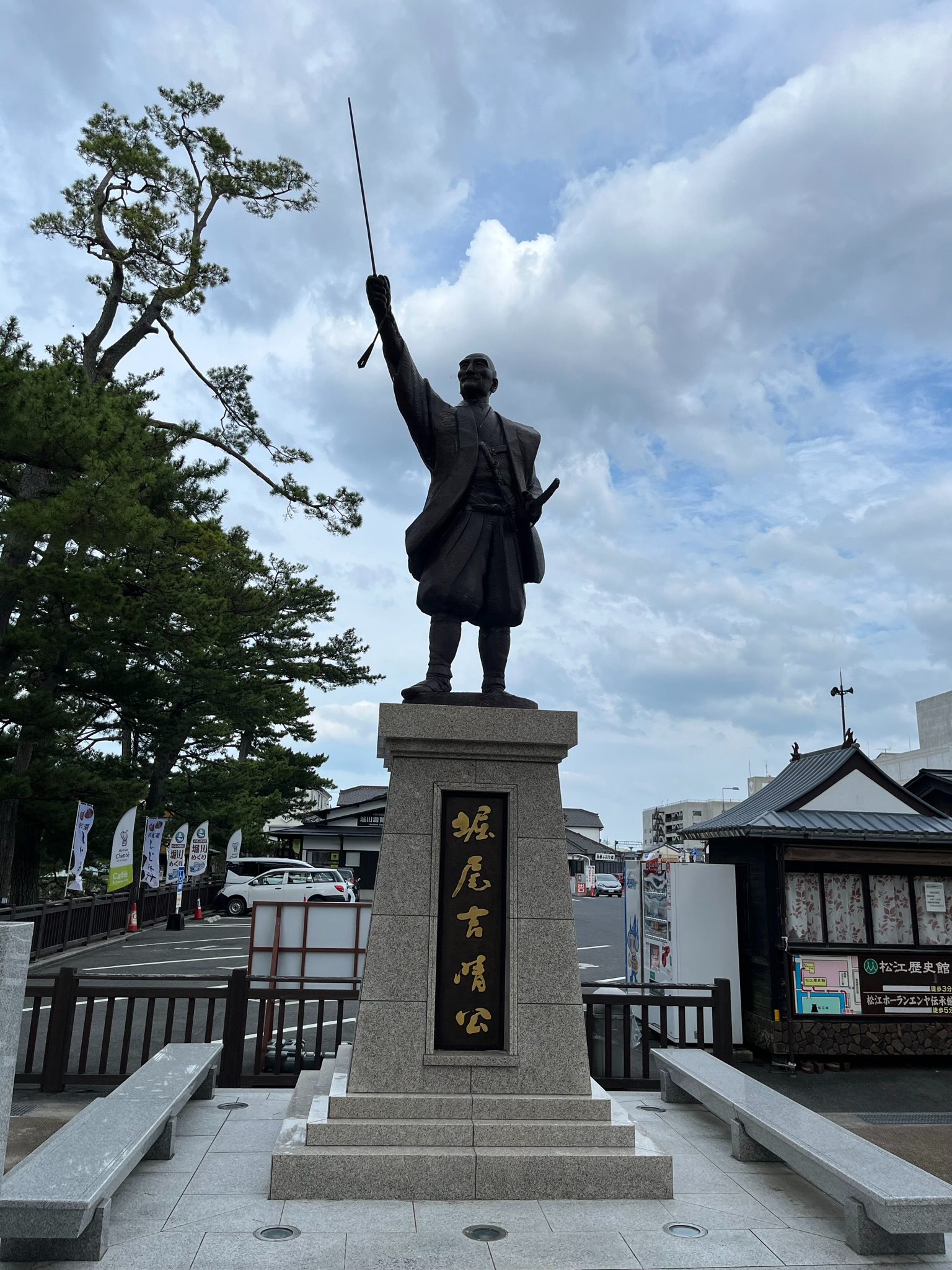
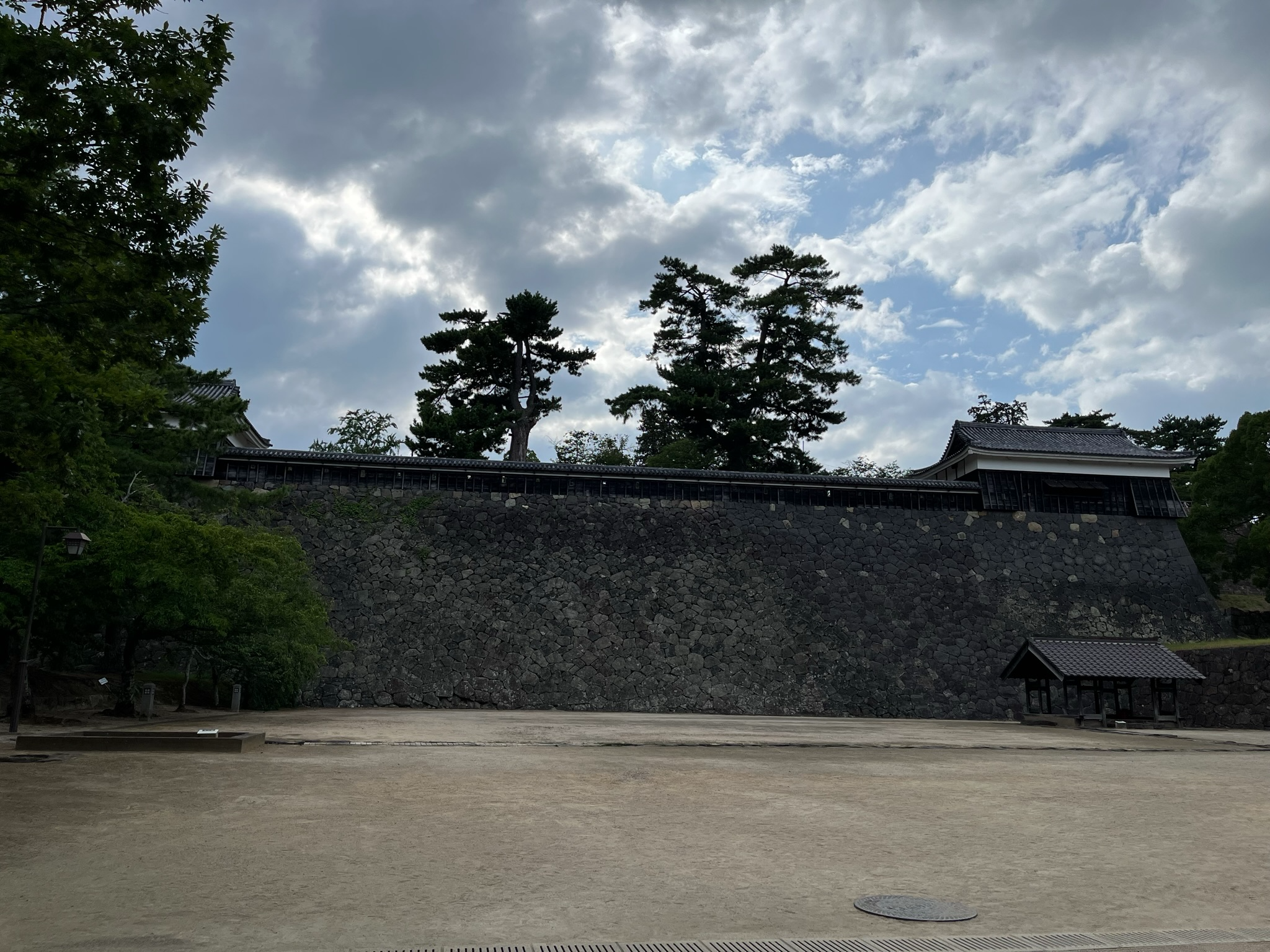
Exploring the area around Matsue Castle, with a stop at the statue of Matsudaira Harusato (Lord Fumai), the influential daimyo remembered for shaping the castle town and promoting the tea culture for which Matsue remains famous today.Walking beneath the towering stone ramparts of Matsue Castle, with the impressive defensive walls and original fortifications offering a glimpse into the strength and strategic importance of one of Japan's few surviving feudal castles.
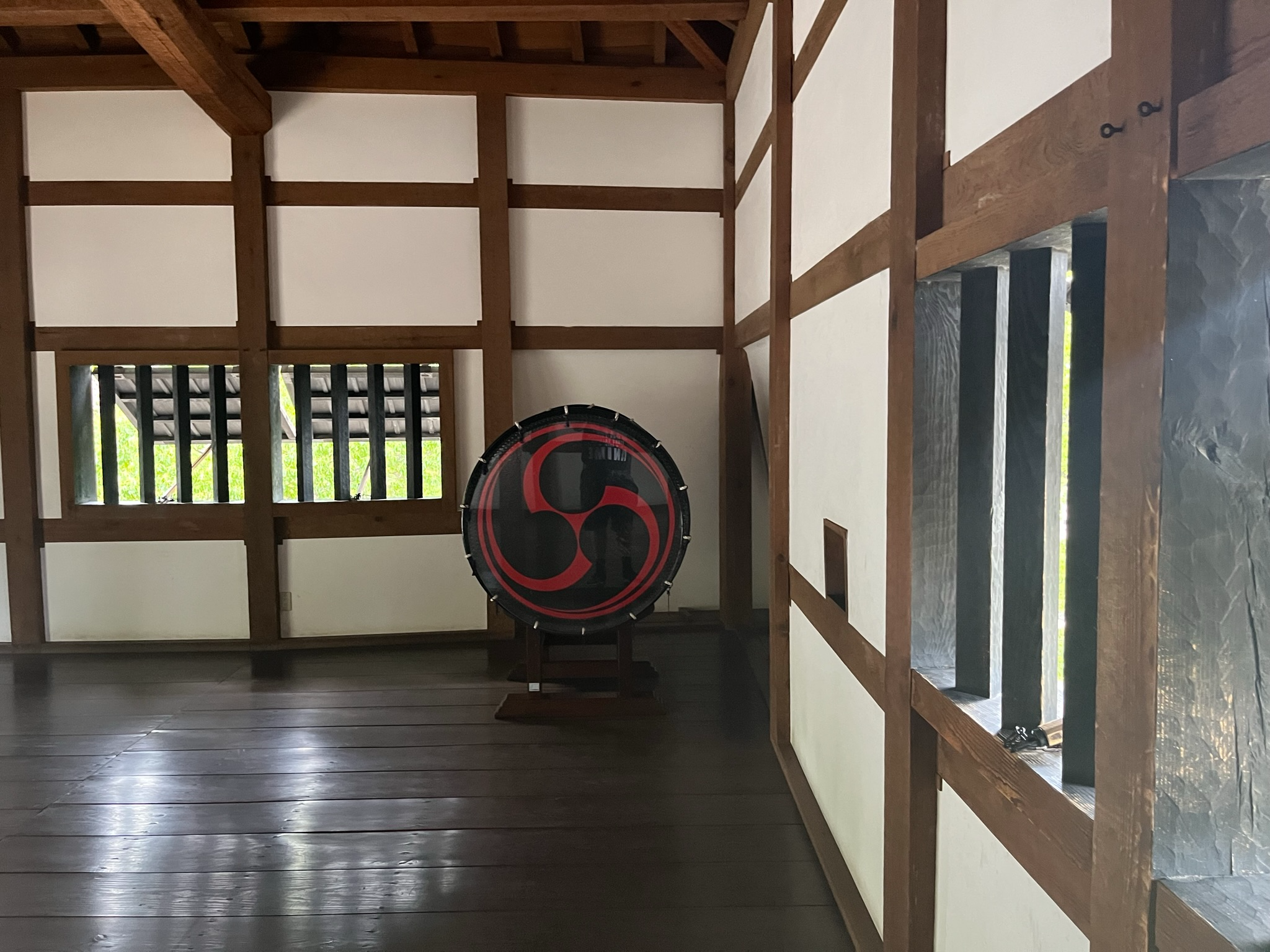
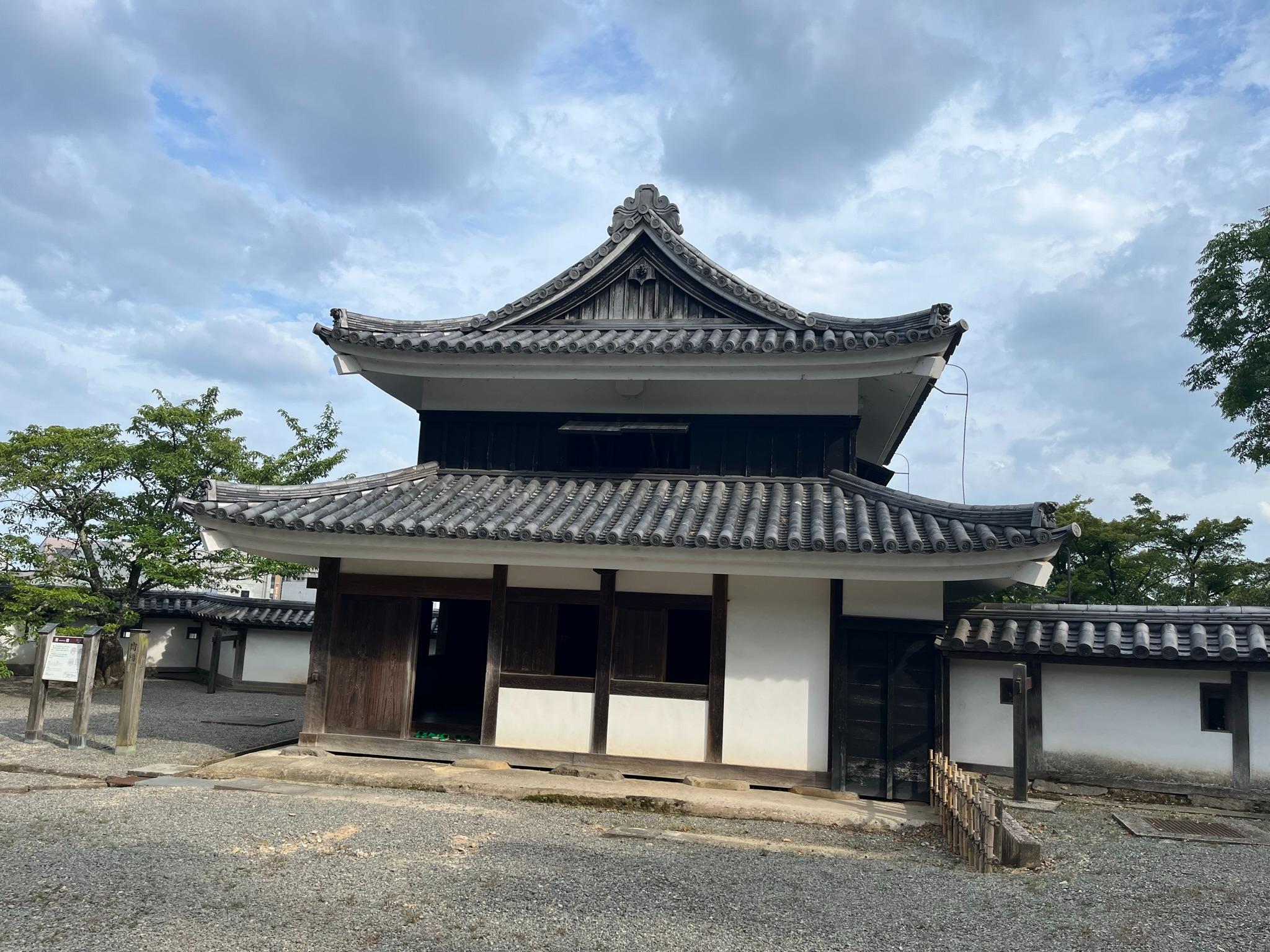
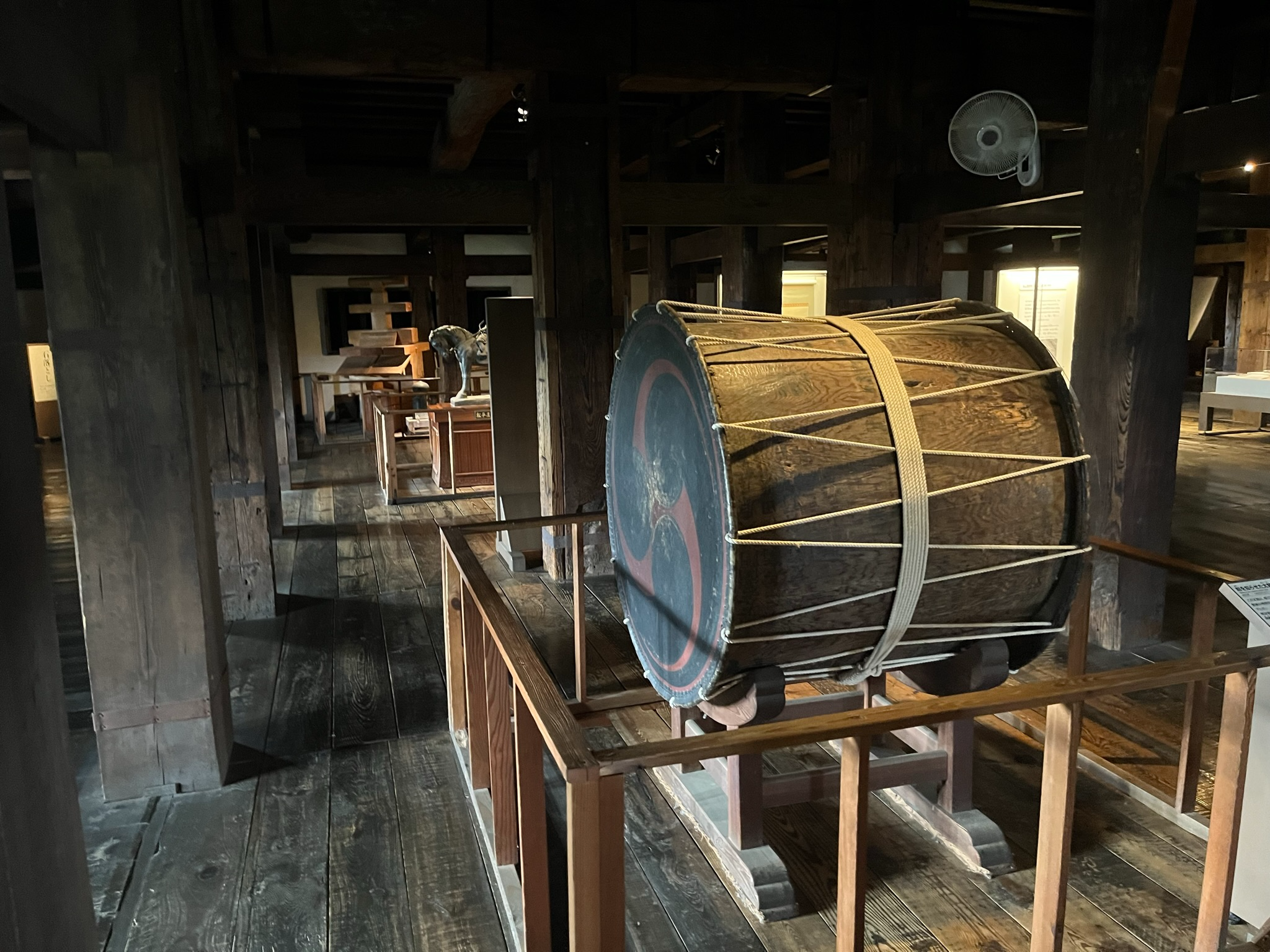
Firstly, I had a look around the castle grounds before making my way the keep. First stop was the south lookout tower which also has a drum in it which was used to sound the alarm and was used to issue commands.
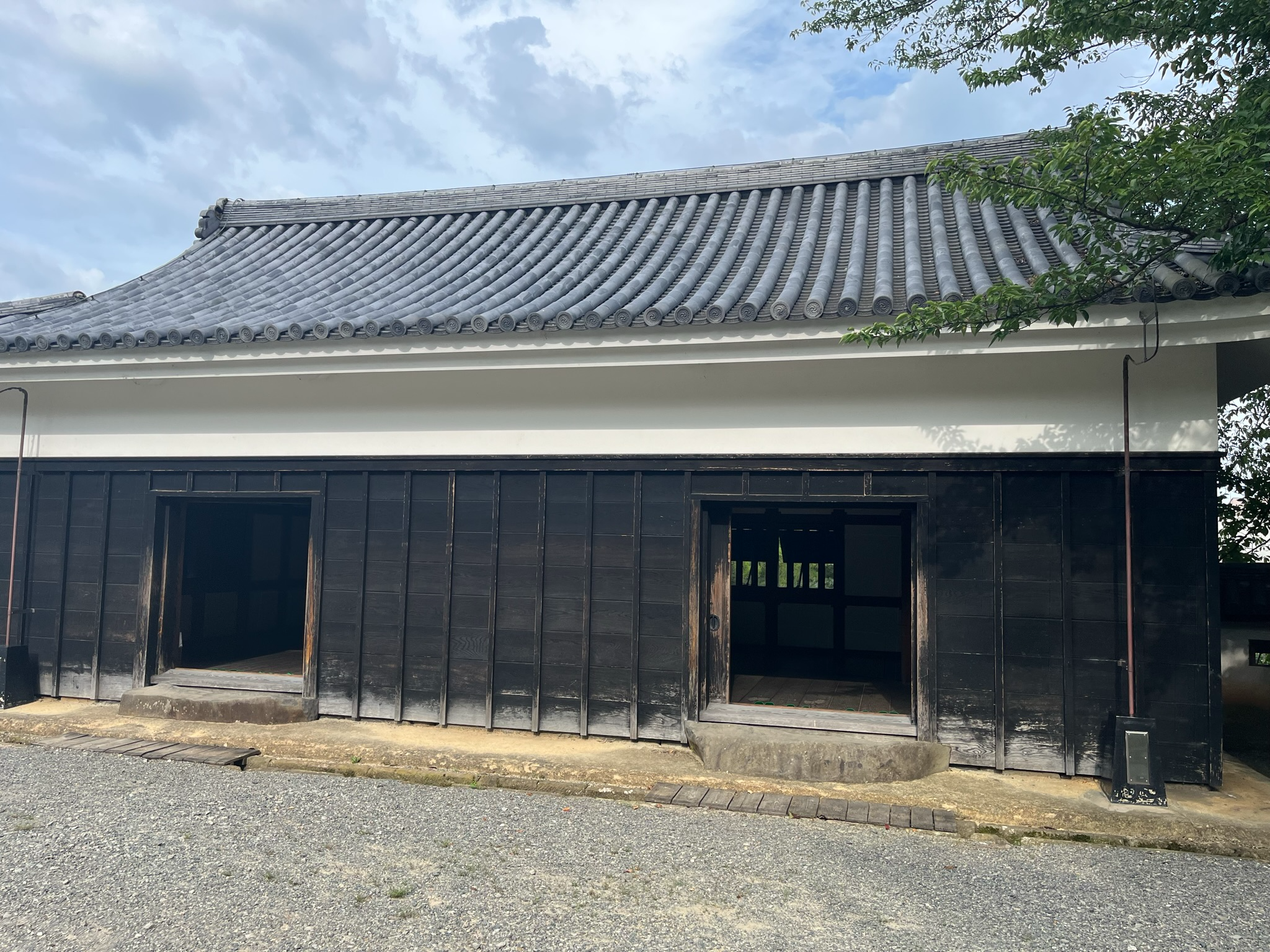
Exploring the grounds of Matsue Castle, with one of the original castle storehouses providing a glimpse into daily life within the fortress and highlighting the practical buildings that supported one of Japan's few surviving feudal castles.Exploring the interior of Matsue Castle, with original timber beams, defensive windows and historic clan symbols offering a fascinating glimpse into the architecture and military design of one of Japan's few surviving original castles.
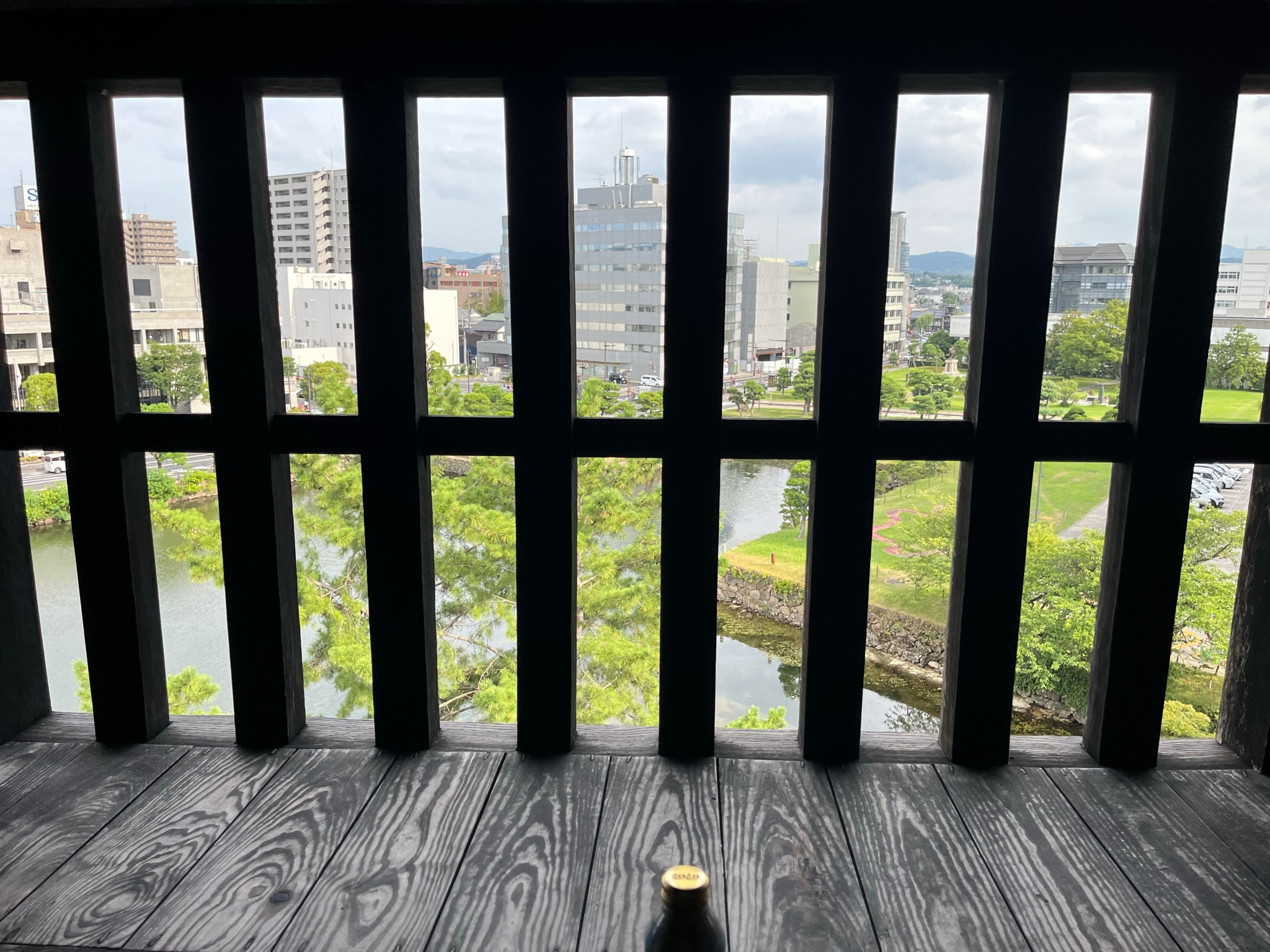
Next was the Central tower which was apparent used for weapon storage and was also used to overlook part of the town to see if there were any invaders coming.
Exploring another historic structure within the grounds of Matsue Castle, with the elegant gatehouse and traditional architecture offering a glimpse into the design, defences and daily life of one of Japan's few surviving original castles.Looking out across Matsue from inside the castle keep, with the narrow defensive windows framing views of the moat, castle grounds and modern city beyond while offering a glimpse into how the fortress once overlooked its surrounding domain.
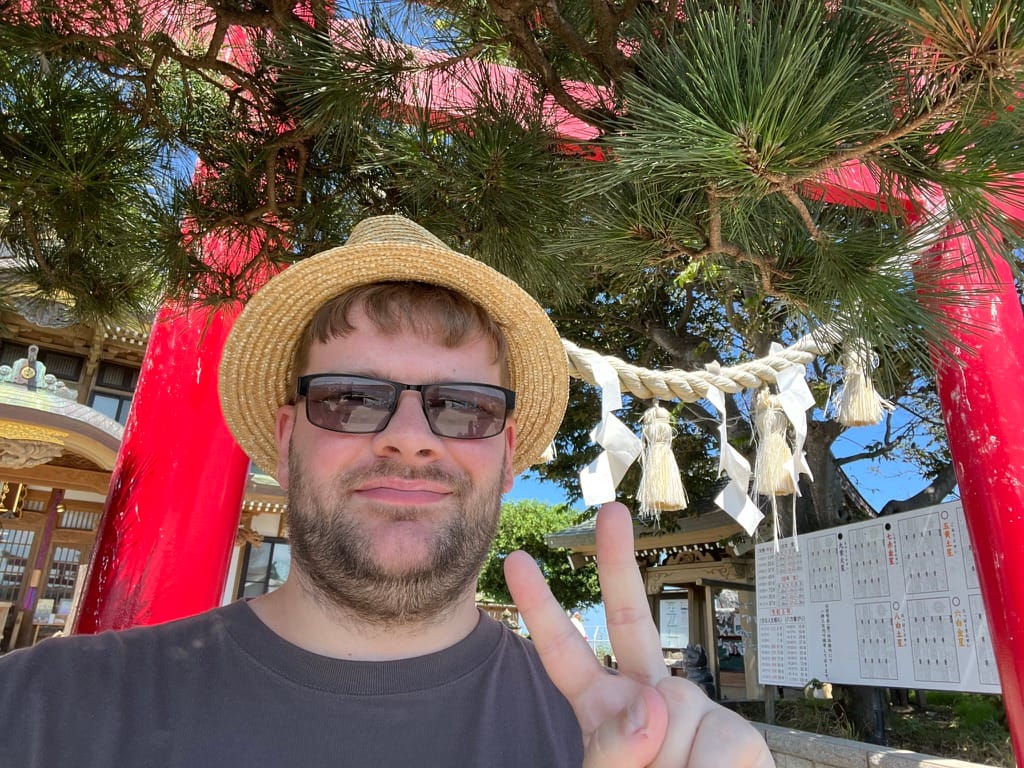
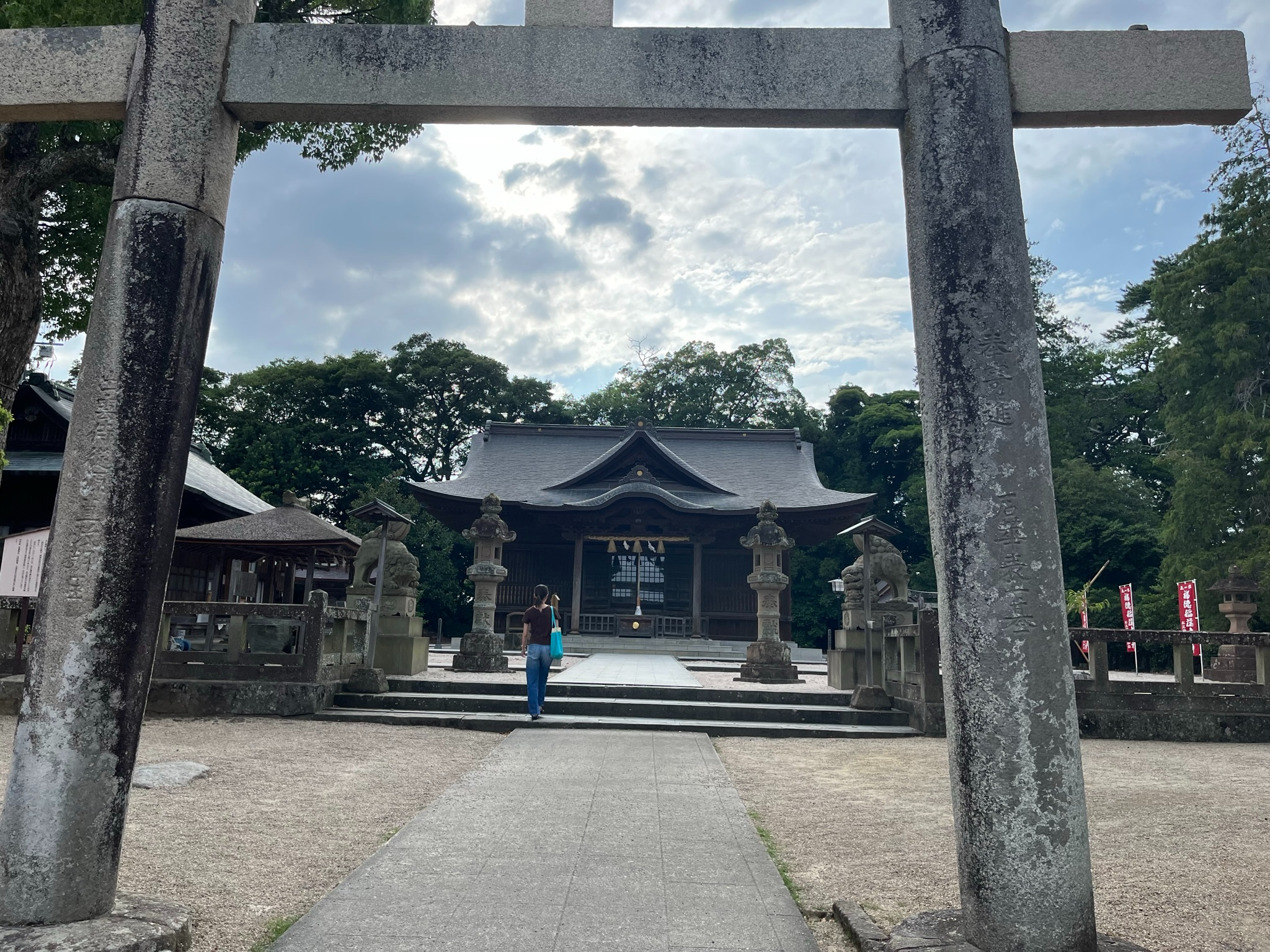
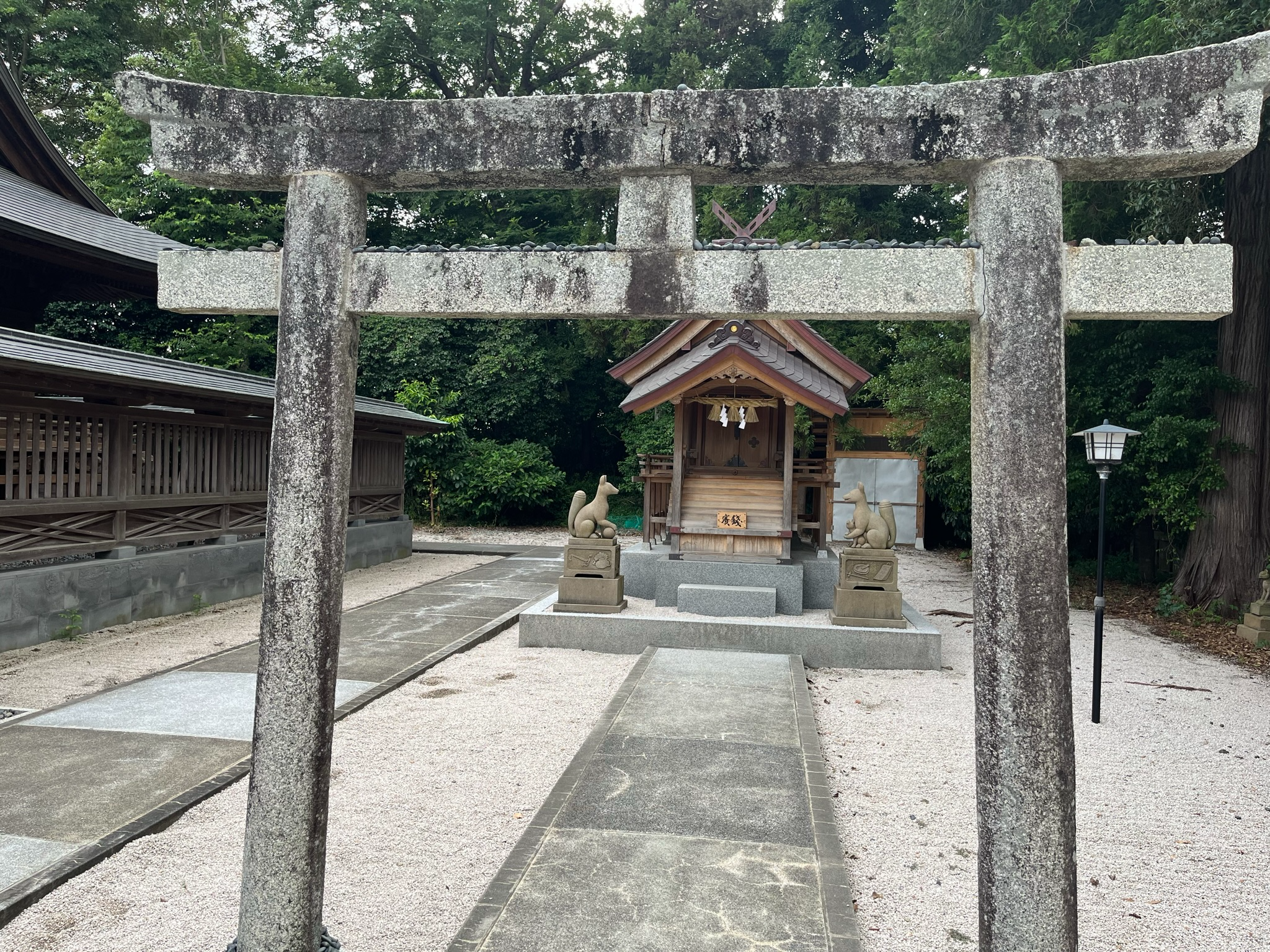
On the way up to the castle there was a Shinto shrine which wasn’t uncommon for this kind of structure and there was also a small shrine next to it as well. The small shrine is dedicated to Inari the Japanese kami of Foxes, fertility, rice, tea, sake, agriculture, general prosperity and in the earlier days was the kami of swordsmiths as well. Inari has foxes that act as messengers which you can see in the picture below as guardians of the shrine.
Visiting one of Matsue's historic Shinto shrines, with the stone torii gate framing the approach to the main hall and providing a peaceful contrast to the nearby castle grounds and city streets.Exploring a smaller shrine within the grounds of Matsue's historic shrine complex, with a weathered stone torii gate, fox guardian statues and peaceful surroundings offering a quiet moment away from the city's busier attractions.
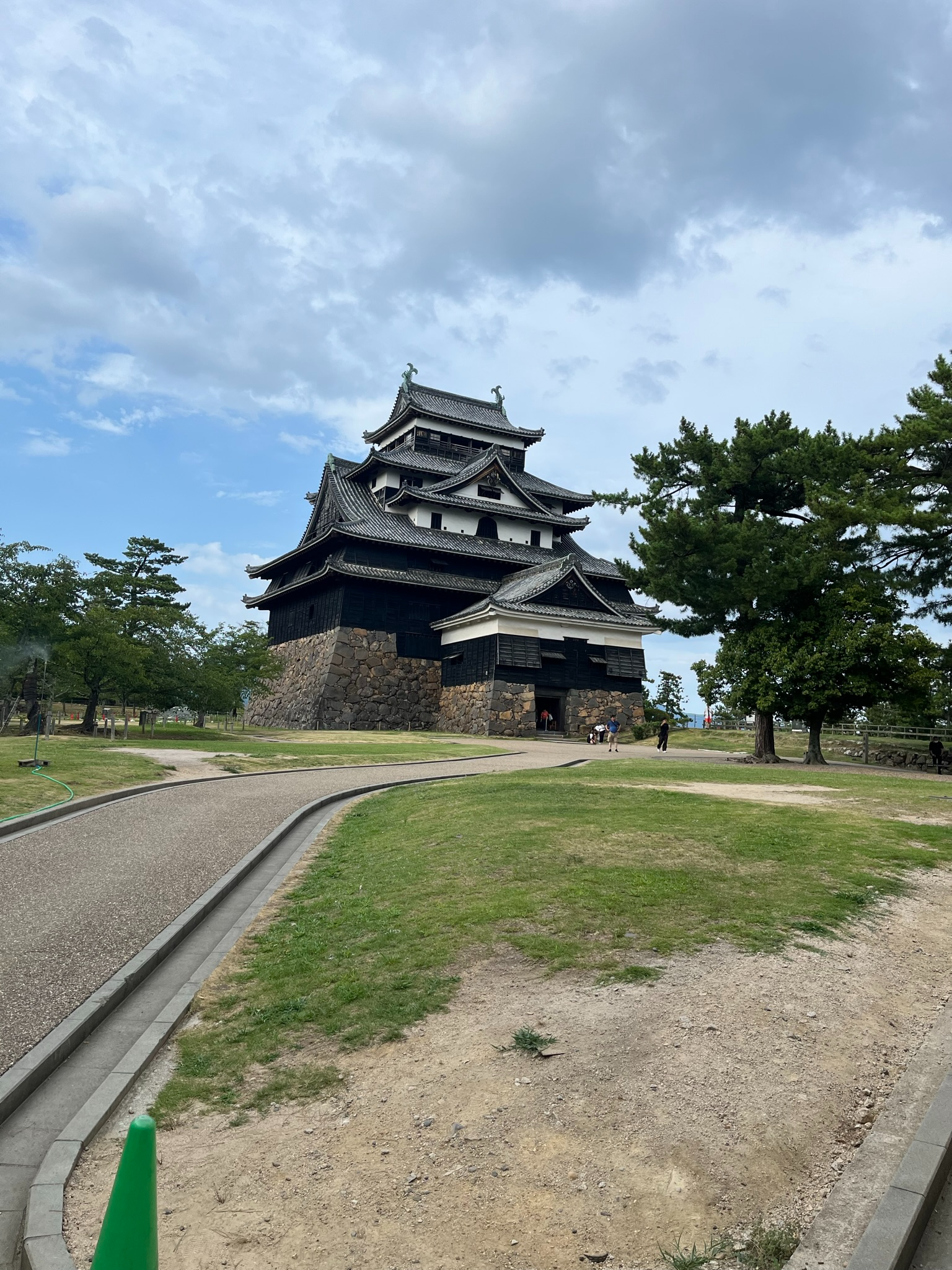
Next, I started to head up to the castle which cost 500 yen. This castle has a good structure and has a stone wall part way up it and then wooded structure and it served many a lord. This castle at one point fell into a state of disrepair as it was so old and the wooden structure of the building wasn’t doing so well after a good long while so in the 1950’s it was underwent a major restoration project that got it to where it is now.
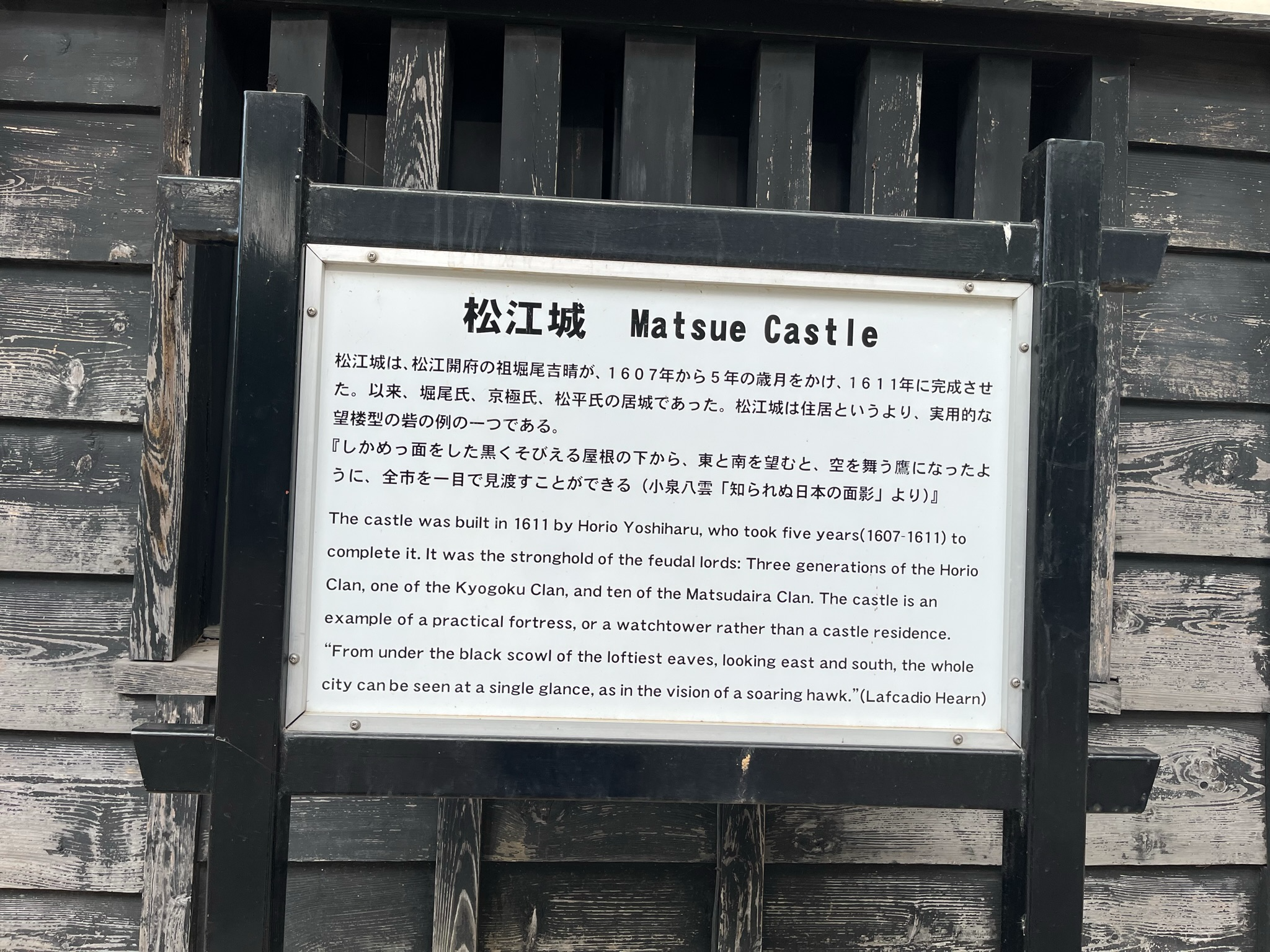
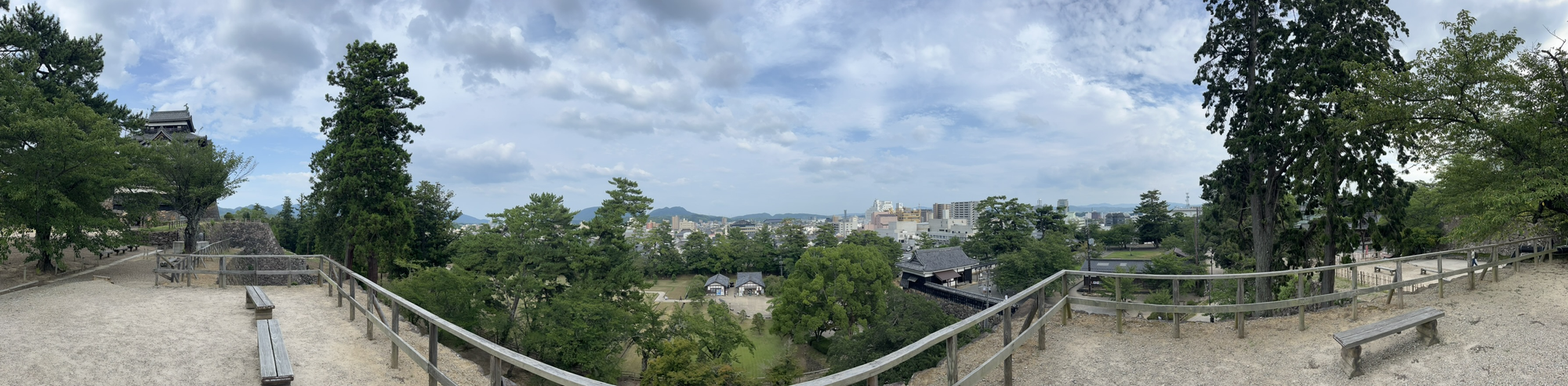
Learning more about the history of Matsue Castle, with information displays highlighting the castle's construction in the early seventeenth century and explaining why it remains one of Japan's few surviving original feudal castles.Taking in one of the finest views of Matsue Castle, with the imposing black-and-white keep rising above its stone foundations and showcasing why this original castle remains one of the most treasured historic landmarks in western Japan.Taking in panoramic views across Matsue Castle and the surrounding city, with elevated walkways providing a wonderful perspective over the castle grounds, historic buildings and the modern skyline beyond one of Japan's few surviving original castle keeps.
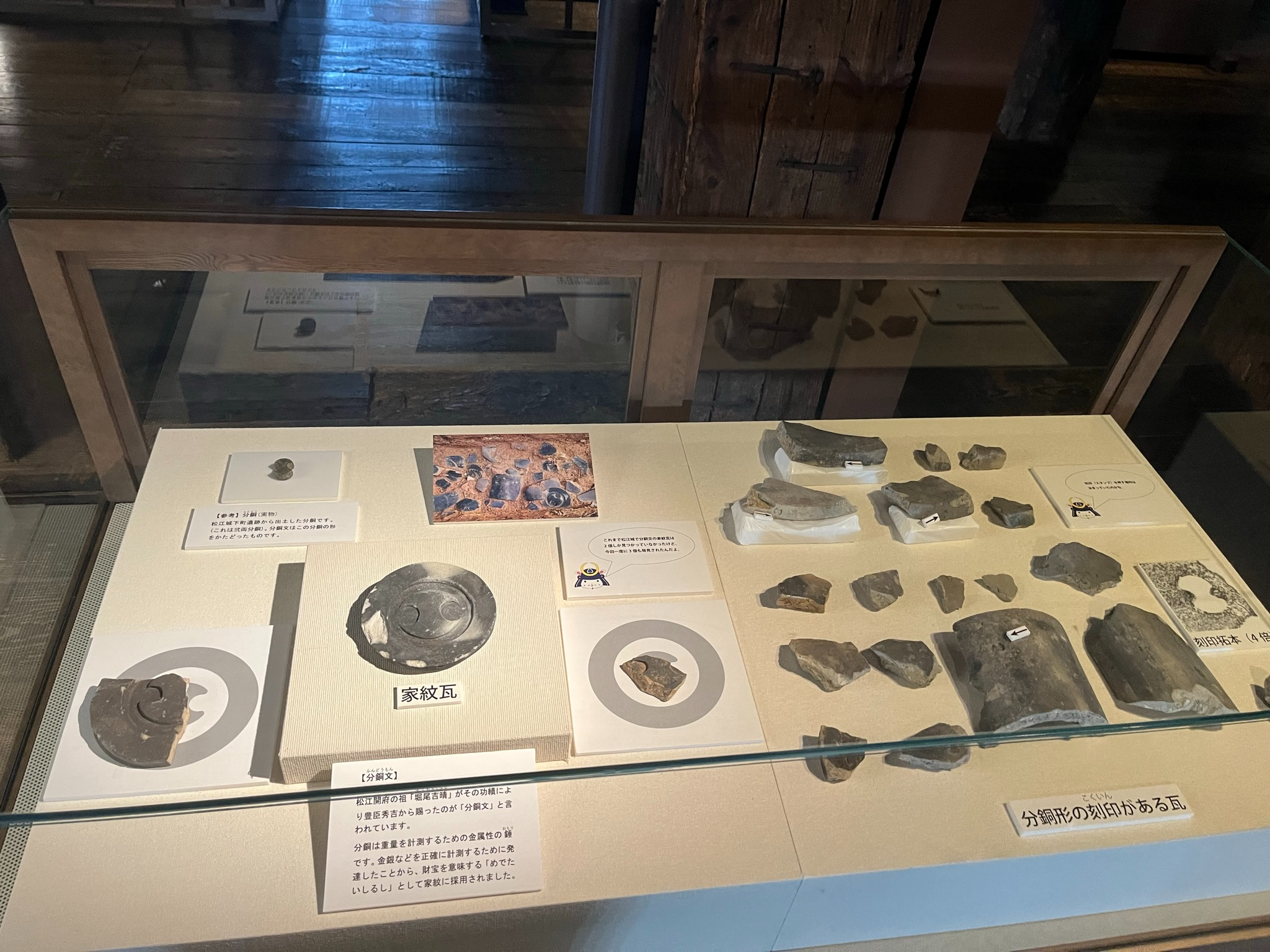
The inside of the castle is now a museum which gives a lot of information off about the history of it, what each floor was used for and where each of the defenses are inside the structure (stone throwing doors, arrow slits and gun slits).
Learning more about the history and construction of Matsue Castle, with archaeological artefacts and roof tiles on display providing fascinating insights into the castle's past and the centuries of preservation that have helped it survive to the present day.Exploring the preserved interior of Matsue Castle, with historic military artefacts and a large drum bearing the Matsudaira clan crest offering insight into the daily operations and defensive role of one of Japan's few surviving original castle keeps.
Now the structure has 5 floors and a basement which are all connected and held up by massive wooden beams, but there beams don’t hold all the floors in place, so the basement beam would go up to the 2nd floor and beams from the 2nd floor would go up to the 4th and 3rd to 5th and so on and so forth. This made the structure quite strong and meant that they could make each of the floors different to each other.
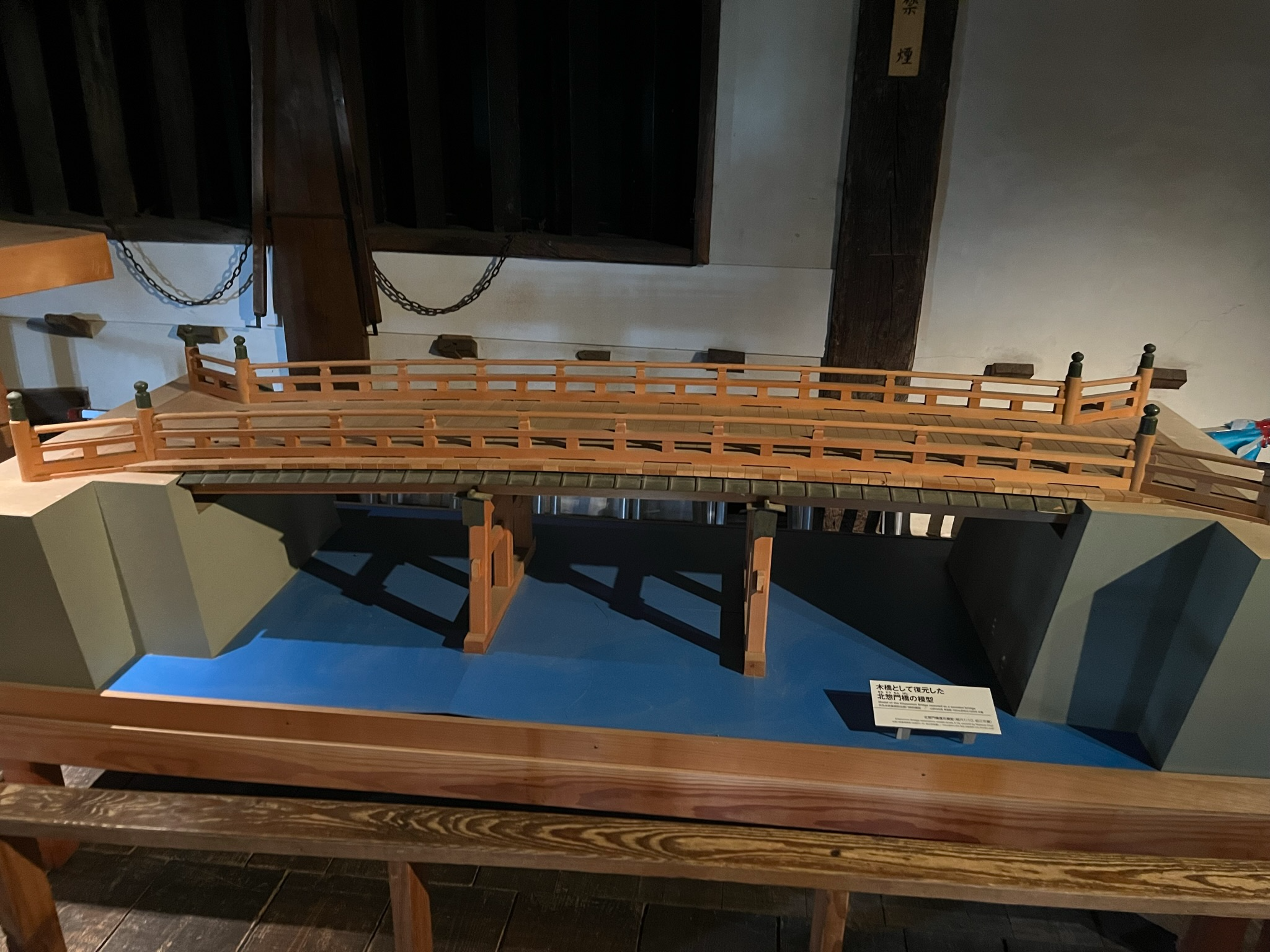
Learning more about the engineering of Matsue Castle, with a scale model of one of the castle's historic bridges helping to illustrate the infrastructure and defensive design that supported life within this remarkably preserved feudal fortress.
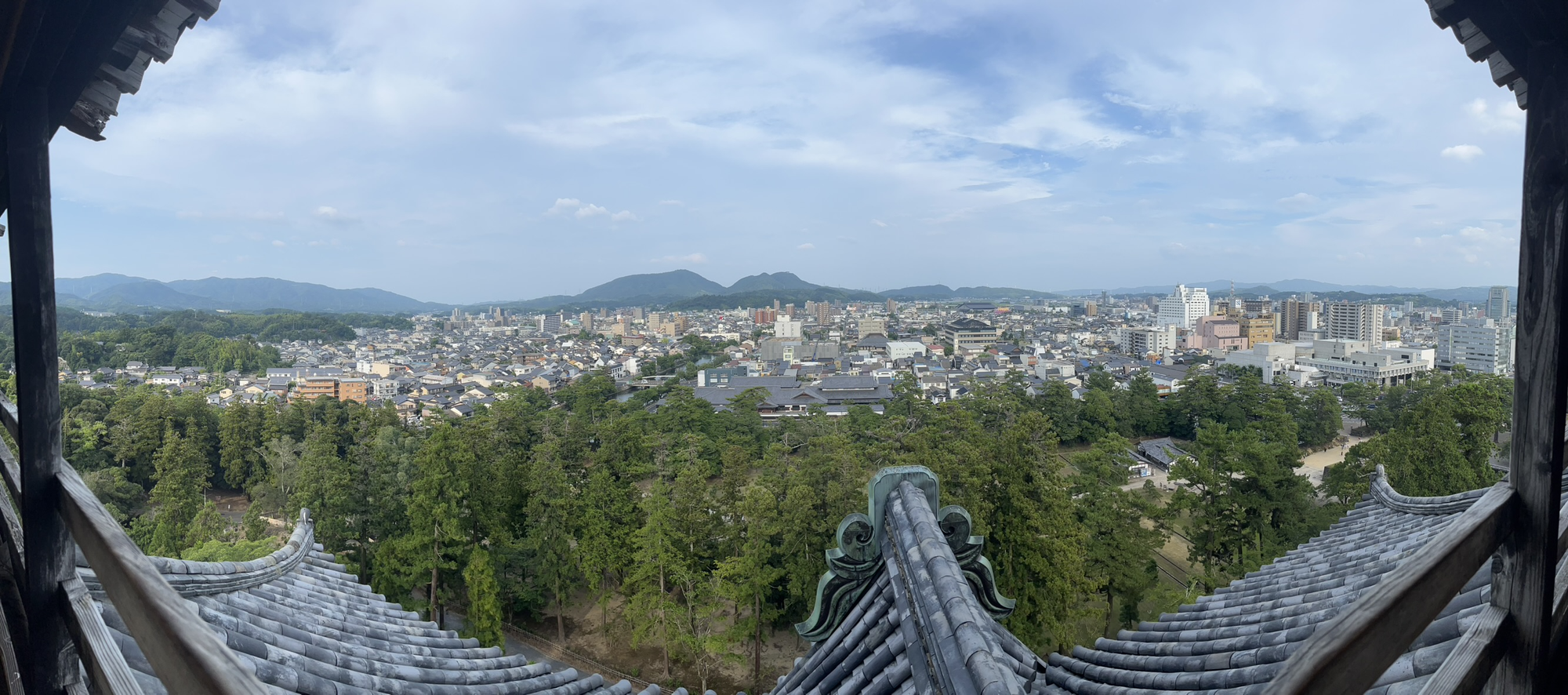
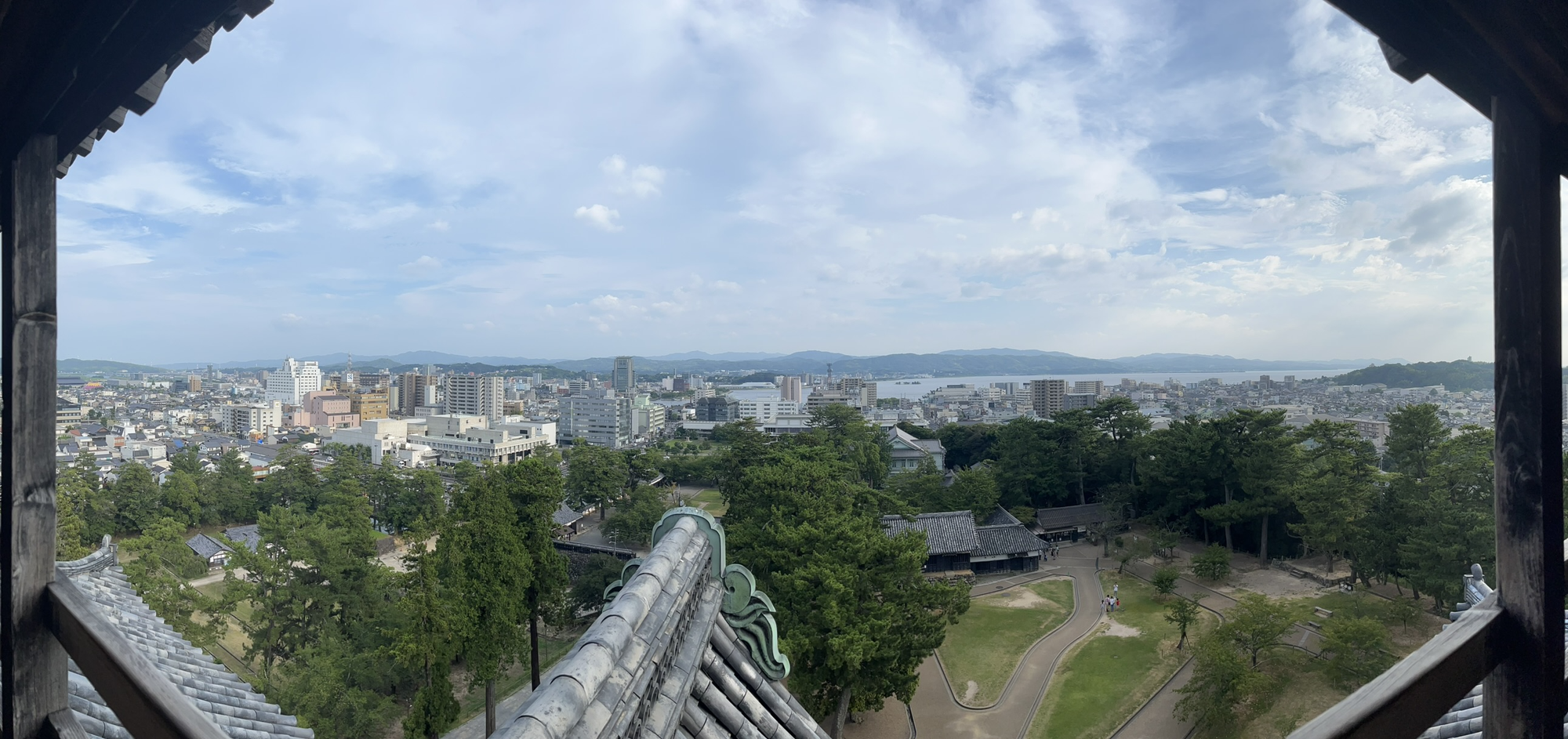
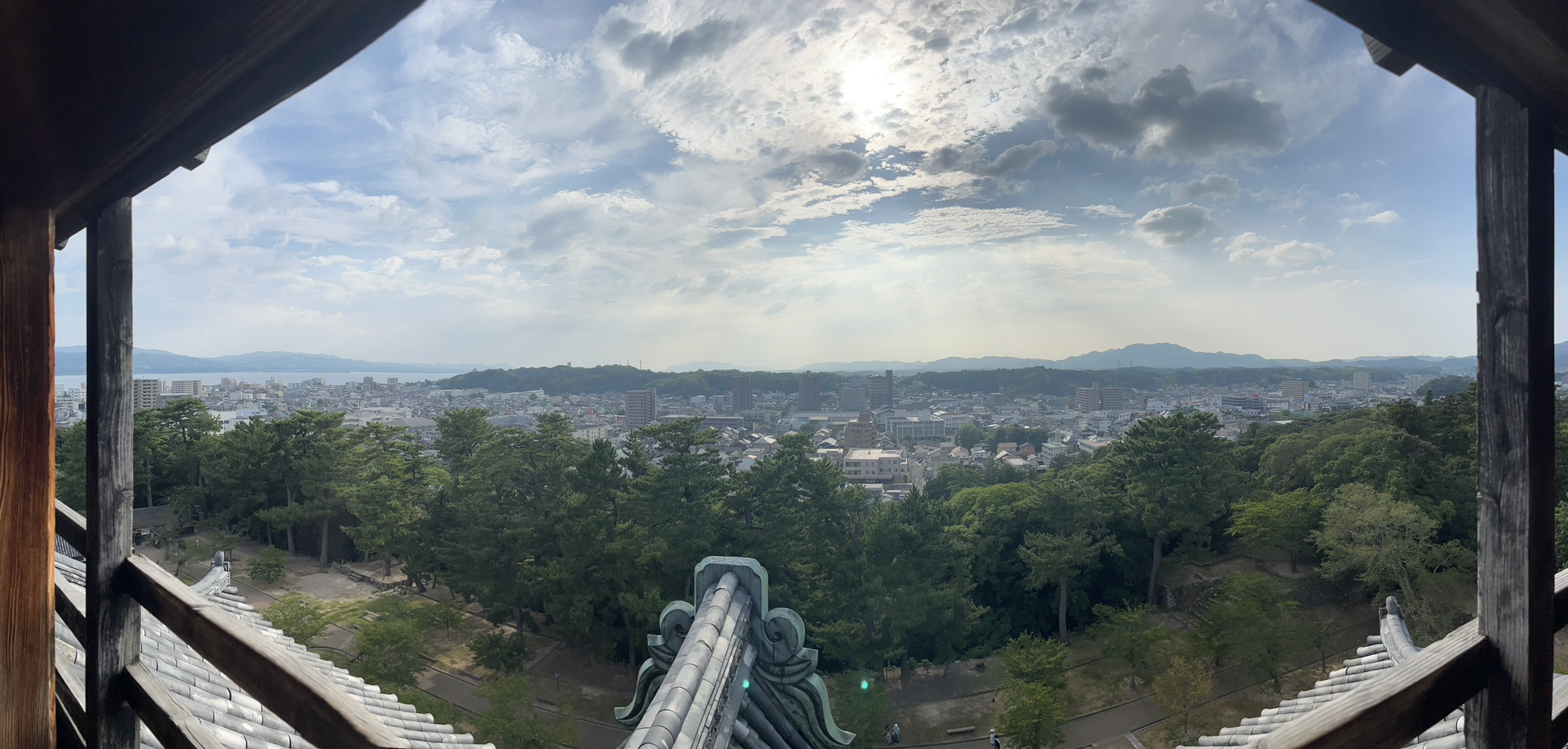
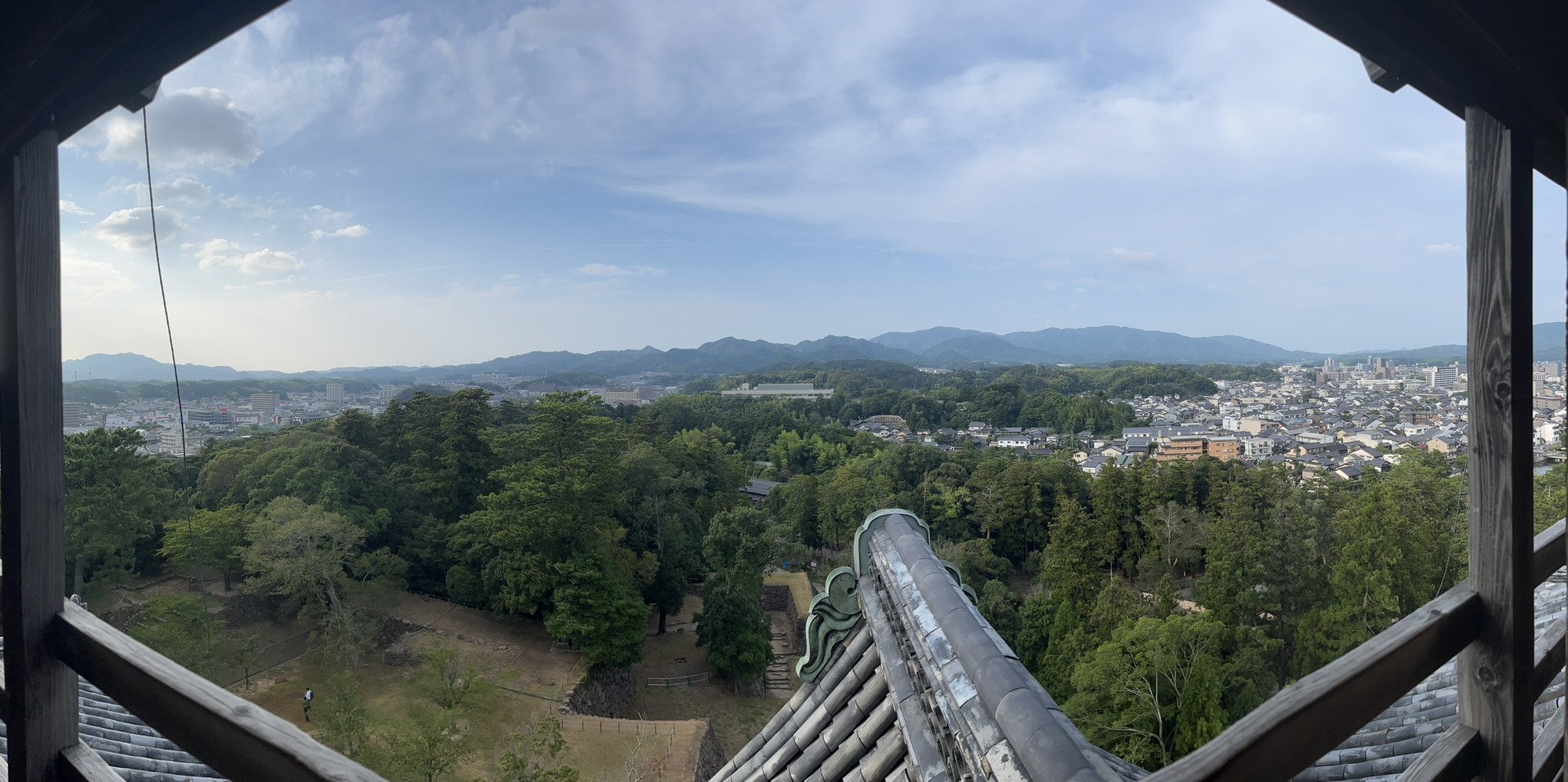
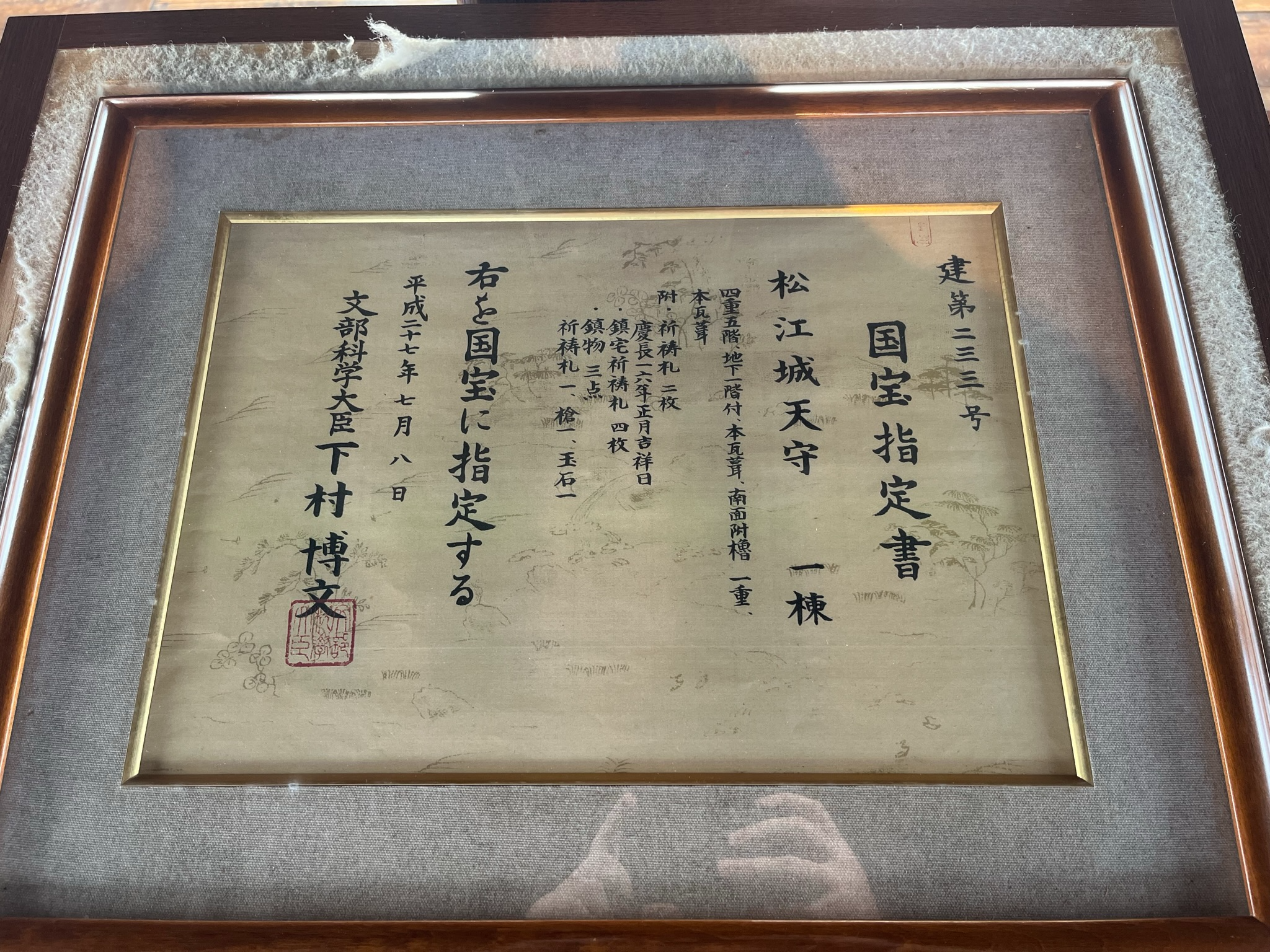
The top floor of the castle has an amazing view all over Matsue and I was able to get some good panoramic photos from all around. There is also a document on the top floor stating that Matsue castle is a national treasure.
Taking in the view from the top of Matsue Castle, with sweeping panoramas across the castle grounds, the city skyline and the surrounding mountains highlighting why the keep served as both a defensive stronghold and an important observation point over the domain.Admiring the view from the top of Matsue Castle, with the castle grounds, city centre and the waters of Lake Shinji stretching into the distance beneath wide summer skies and offering one of the best panoramas in Shimane Prefecture.Taking in another spectacular view from the top of Matsue Castle, with late afternoon sunlight breaking through the clouds to illuminate the city, surrounding forests and the distant waters of Lake Shinji beyond the castle grounds.Taking in the panoramic views from the top of Matsue Castle, with forested castle grounds, the city skyline and the mountains of eastern Shimane stretching across the horizon beneath clear summer skies.Discovering one of the artefacts that highlights Matsue Castle's importance in Japanese history, with the official certificate recognising the castle keep as a National Treasure and affirming its status as one of the country's few surviving original feudal castles.
Sakaiminato
9th August
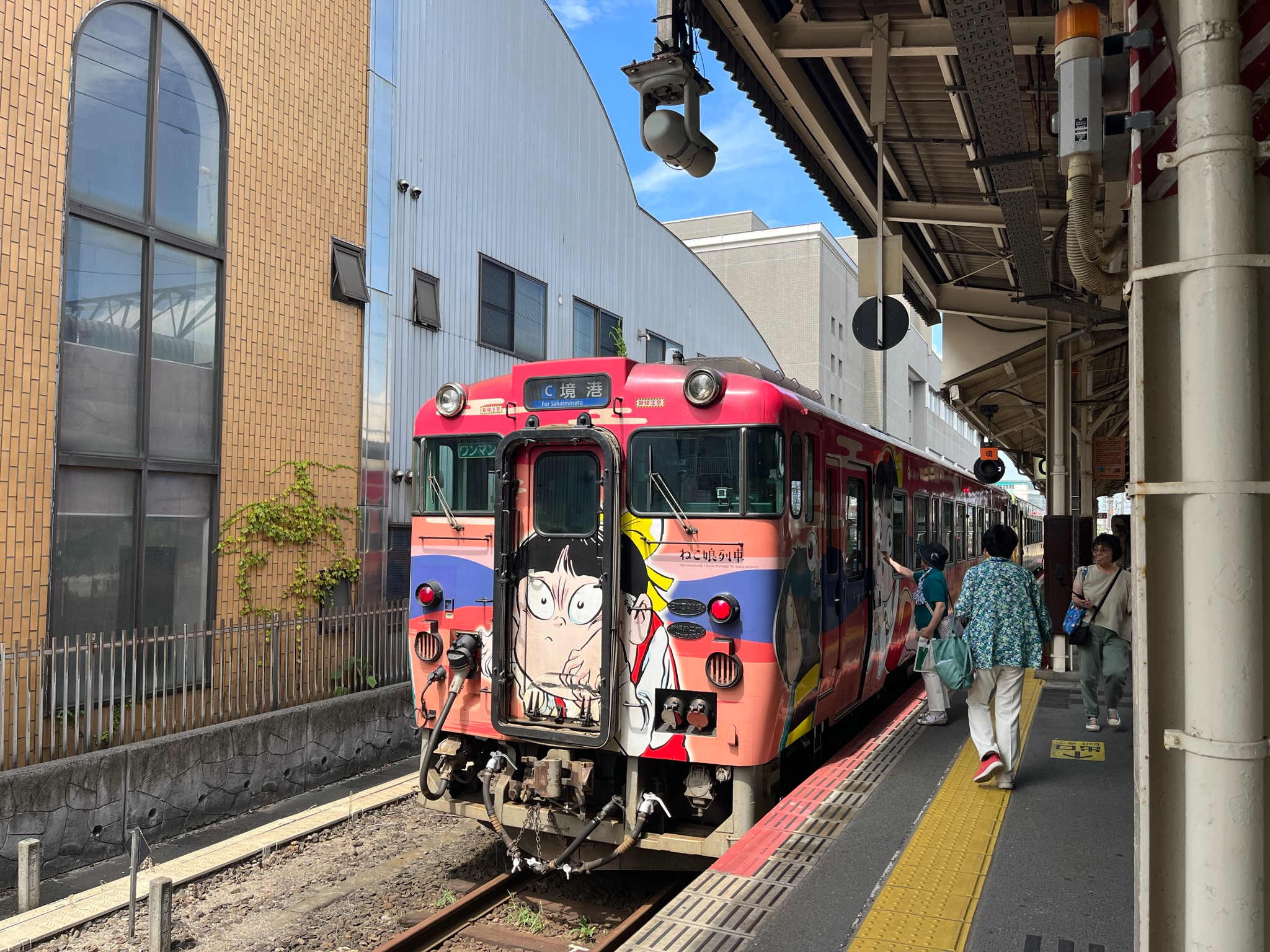
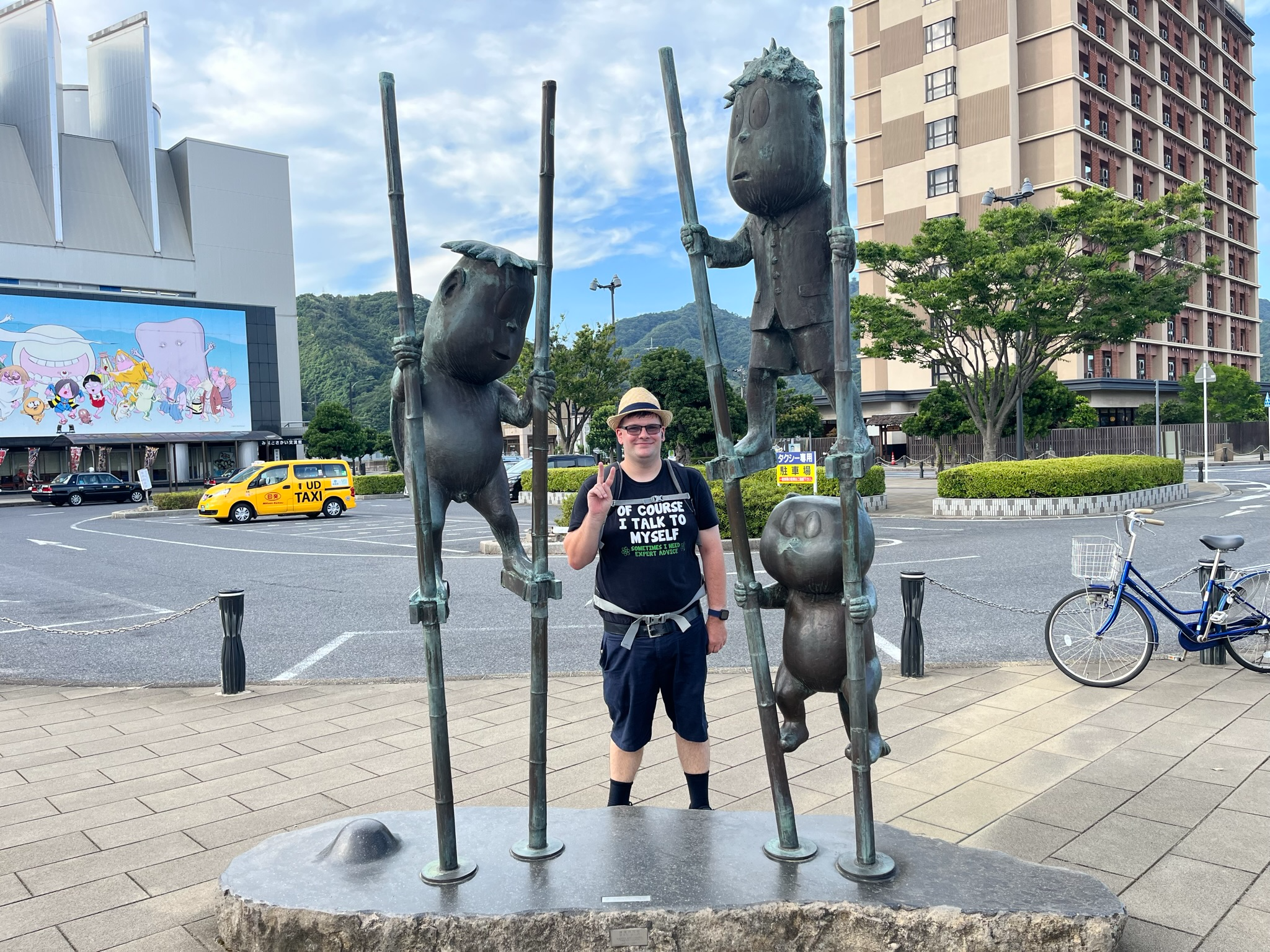
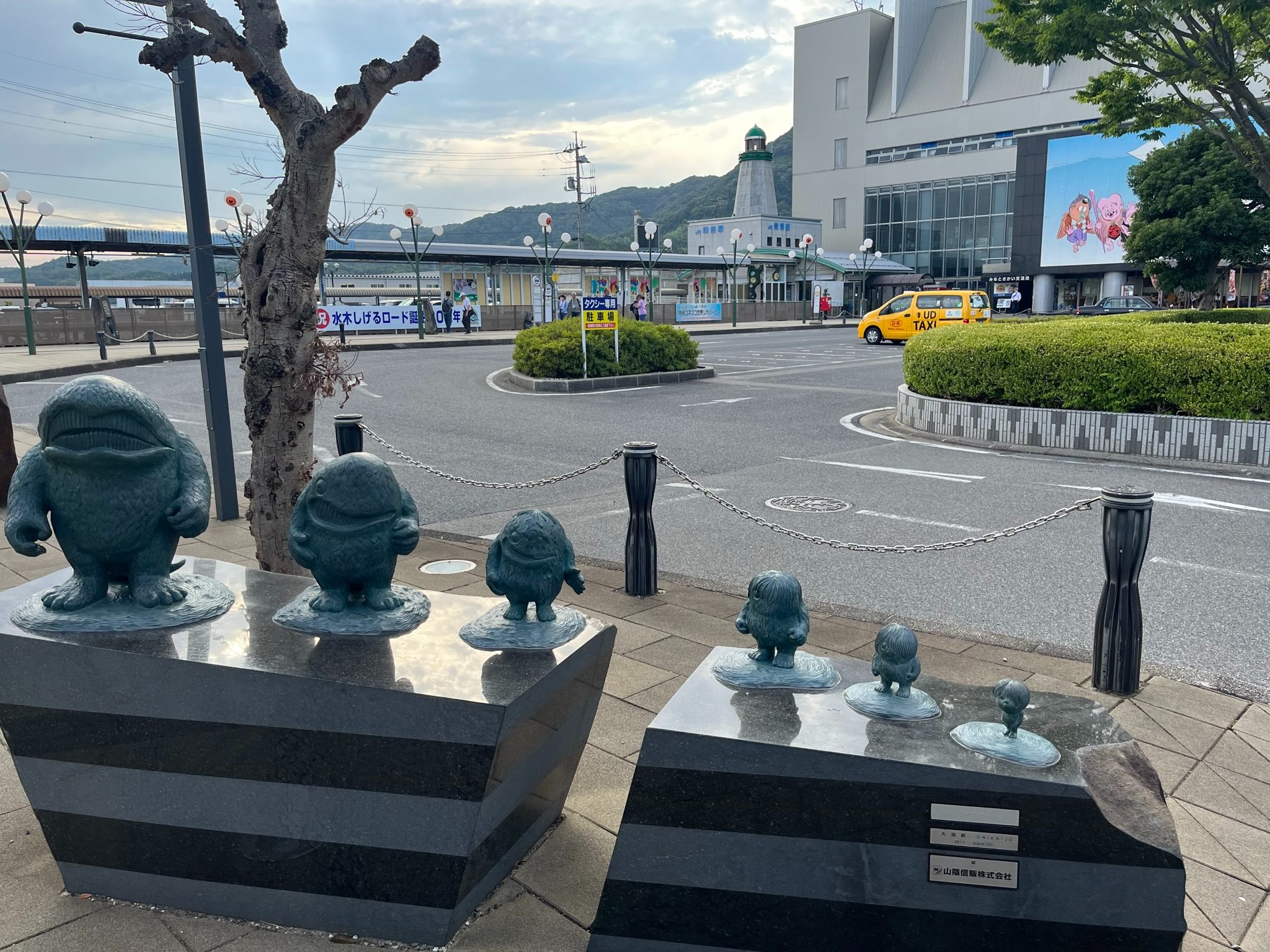
Now this is one of the days where I got up late, mainly with the amount of stuff I am doing it is absolutely knackering me out, so it was a nice easy day, but that didn’t stop me from catching the 1 hour and 30 mins train journey from Matsue to Sakaiminato. Sakaiminato is famous in Japan for the creator (Mizuki Shigeru) of a famous anime called ‘GeGeGe no Kitaro’. He even has a road named after him and along the road are about 177 statues of different Yokai (spiritual monsters) and the hero of the anime (Kitaro) as well.
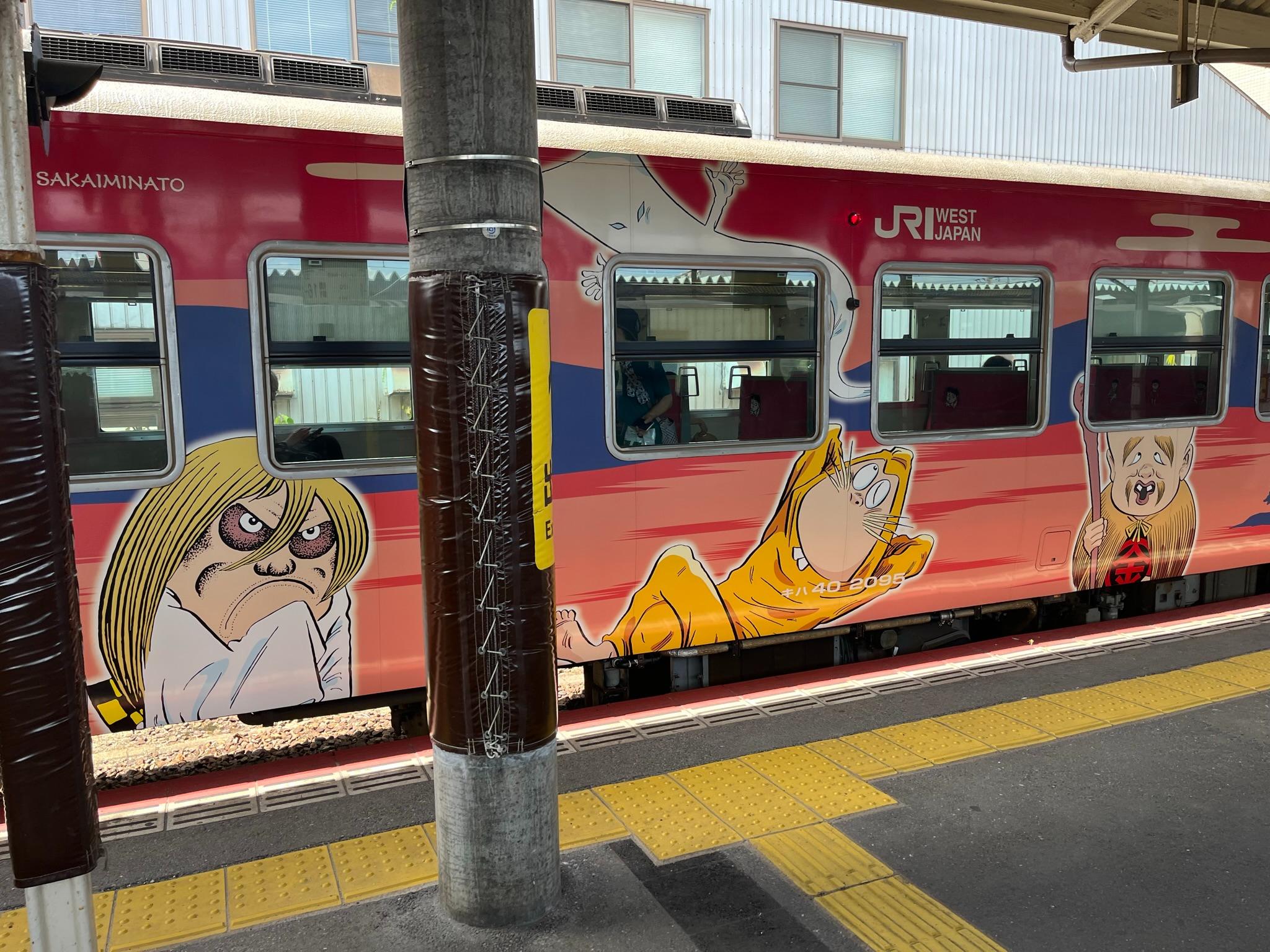
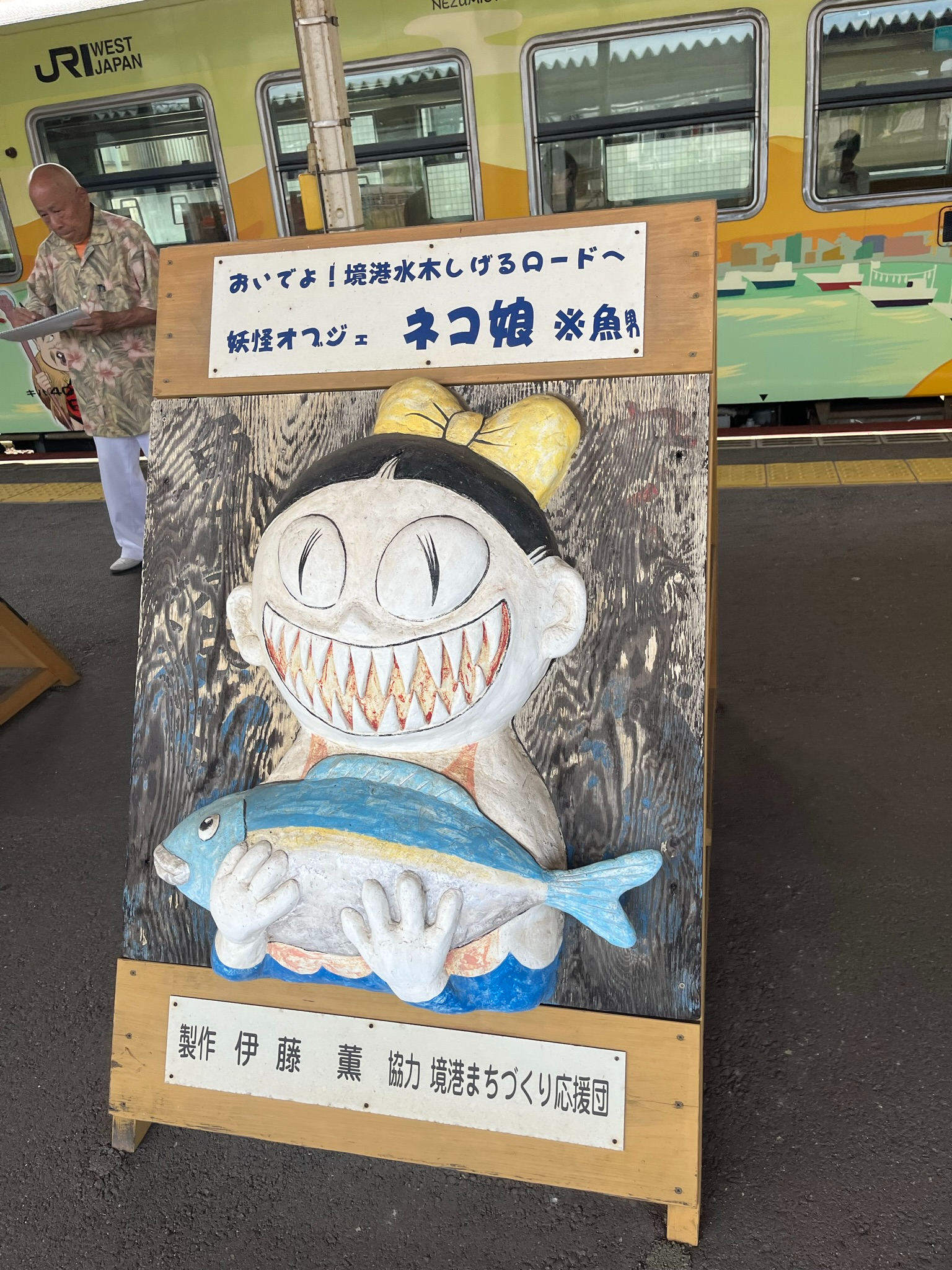
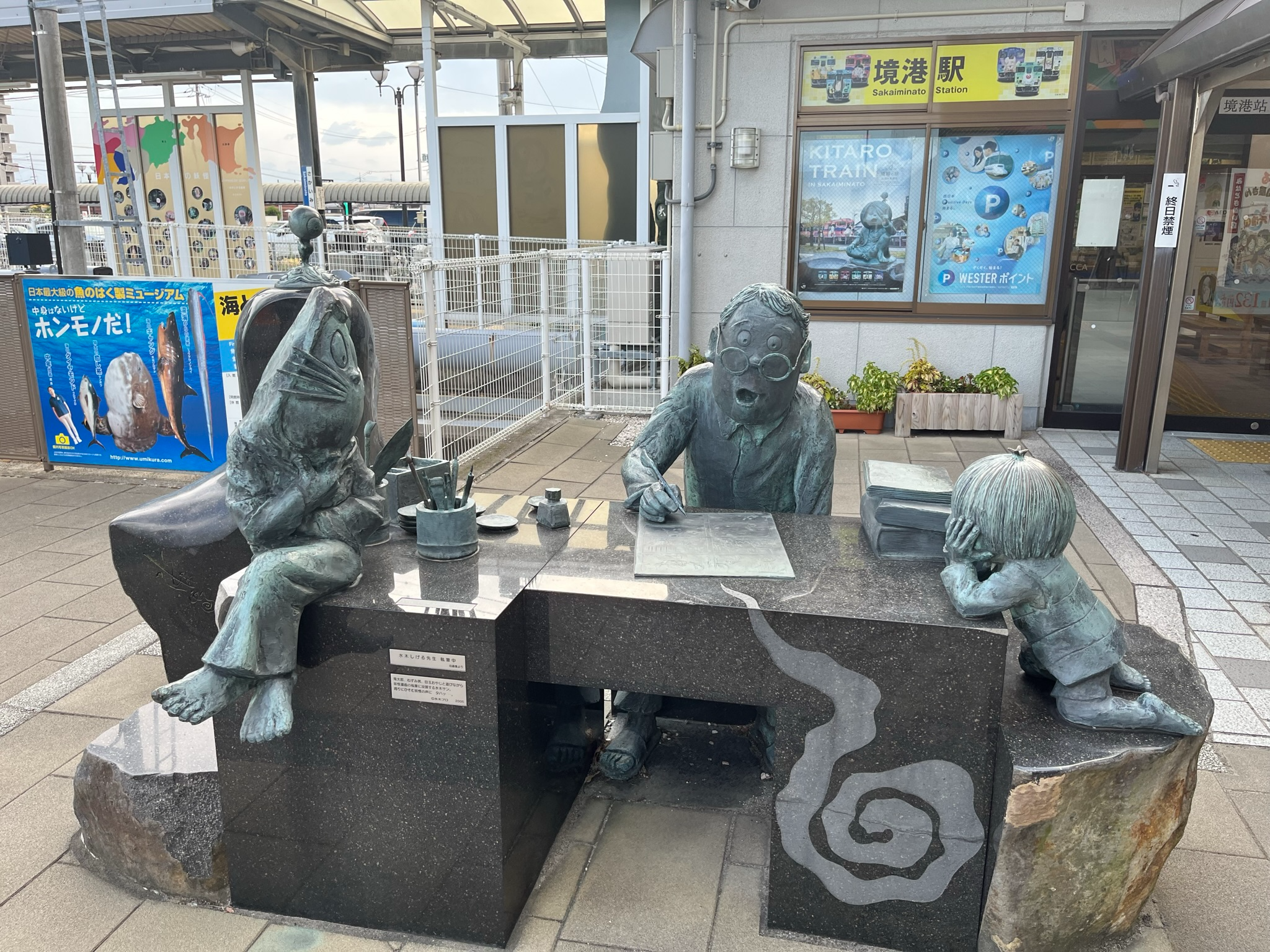
Travelling along the scenic Sakaiminato Line, with the colourful GeGeGe no Kitarō-themed train adding a playful touch to the journey and celebrating the manga heritage for which the region is famous.Travelling along the Sakaiminato Line aboard a GeGeGe no Kitarō-themed train, with colourful artwork featuring some of the series' best-known characters turning an ordinary rail journey into a fun celebration of the region's manga heritage.Arriving in Sakaiminato and discovering the region's connection to GeGeGe no Kitarō, with character displays at the station providing a fun introduction to the famous yōkai-themed attractions that line Mizuki Shigeru Road.Exploring Sakaiminato's famous Mizuki Shigeru Road, with a stop beside one of the many GeGeGe no Kitarō character statues that celebrate the legacy of the manga artist and bring the world of Japanese yōkai folklore to life throughout the city.Walking along Mizuki Shigeru Road in Sakaiminato, with bronze statues of beloved GeGeGe no Kitarō characters welcoming visitors to one of Japan's most unique streets dedicated to manga, folklore and yōkai culture.A visit to Mizuki Shigeru Road in Sakaiminato, with a bronze statue depicting manga artist Shigeru Mizuki at work alongside GeGeGe no Kitarō characters celebrating the creator whose stories transformed the city into a destination for yōkai folklore fans.
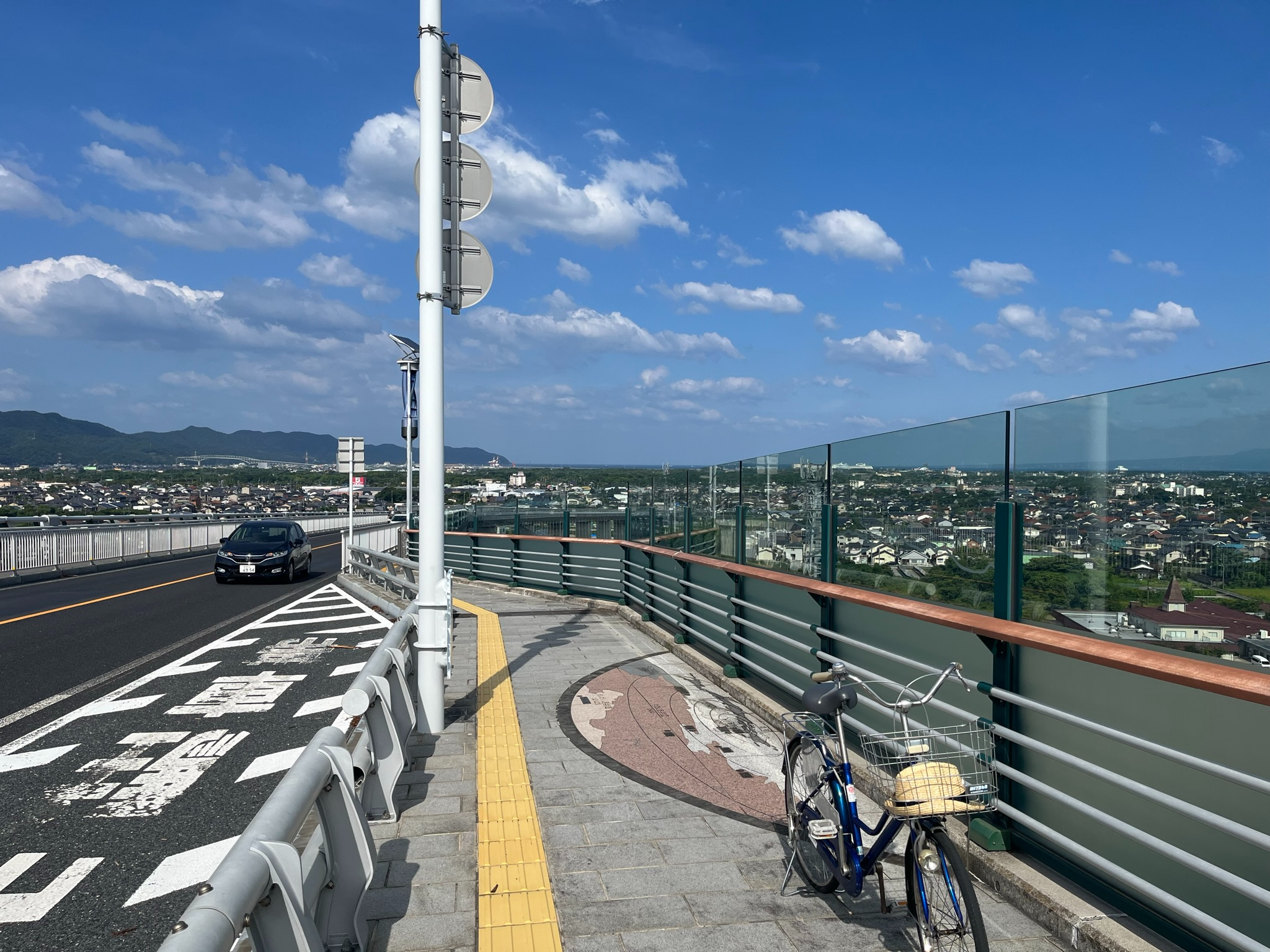
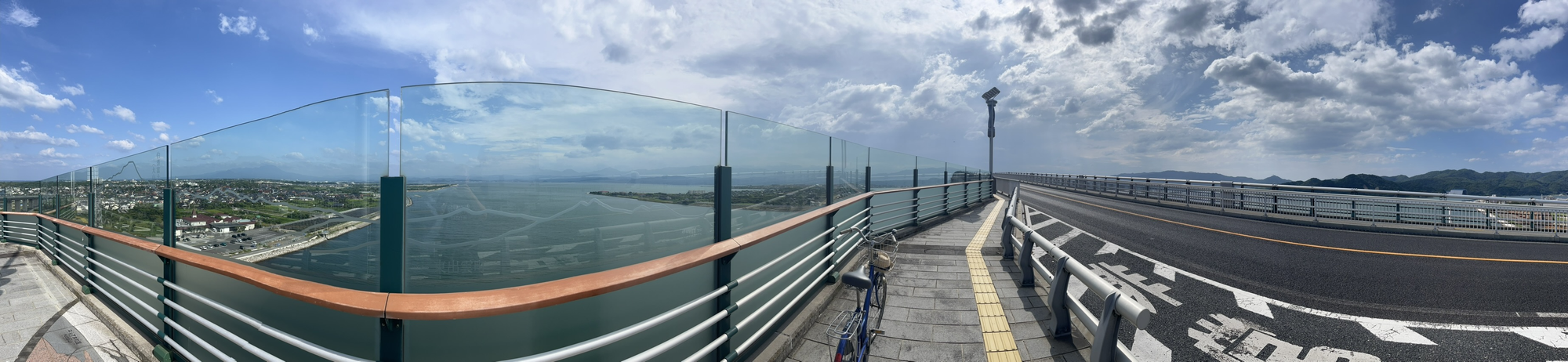
After this I decided it would be a good idea to rent out a bicycle and then go to the famous bridge connecting Sakaiminato and Matsue together. This is the infamous Eshima Ohashi Bridge which is classed as one of the scariest bridges in Japan. Why is it supposedly scary you might ask, well it is because of how steep it is and the fact that it is not a straight bridge either. The bridge was also featured in an Automotive advert (which you can see in one of my previous posts) about not needing to floor it up the bridge in that car because of how steep it is. I can confirm that as the cars was whizzing past me with rev counters high as I was walking up one side of the bridge with the bike.
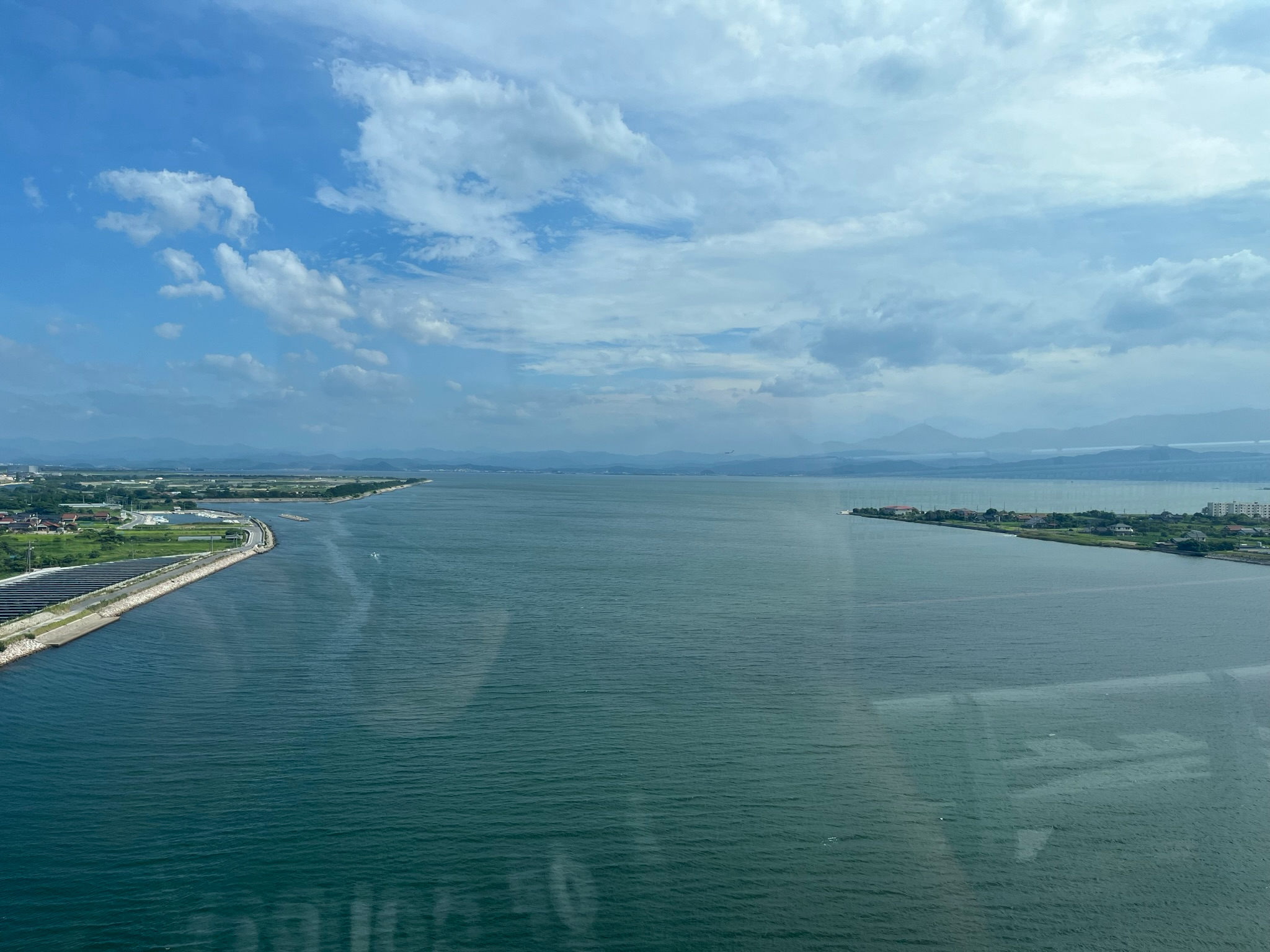
Taking in the view from Eshima Ohashi Bridge, with the waters of Nakaumi stretching towards the horizon while dramatic summer clouds gather above the distant mountains of Shimane and Tottori Prefectures.Stopping at the summit viewpoint on Eshima Ohashi Bridge, with sweeping views across the surrounding city, Nakaumi Lagoon and distant mountains revealing why this dramatic bridge has become one of the region's most recognisable landmarks.
The bridge is 45 meters tall at the highest point so ships can go under it as it connected Miho Bay to Lake Nakaumi.
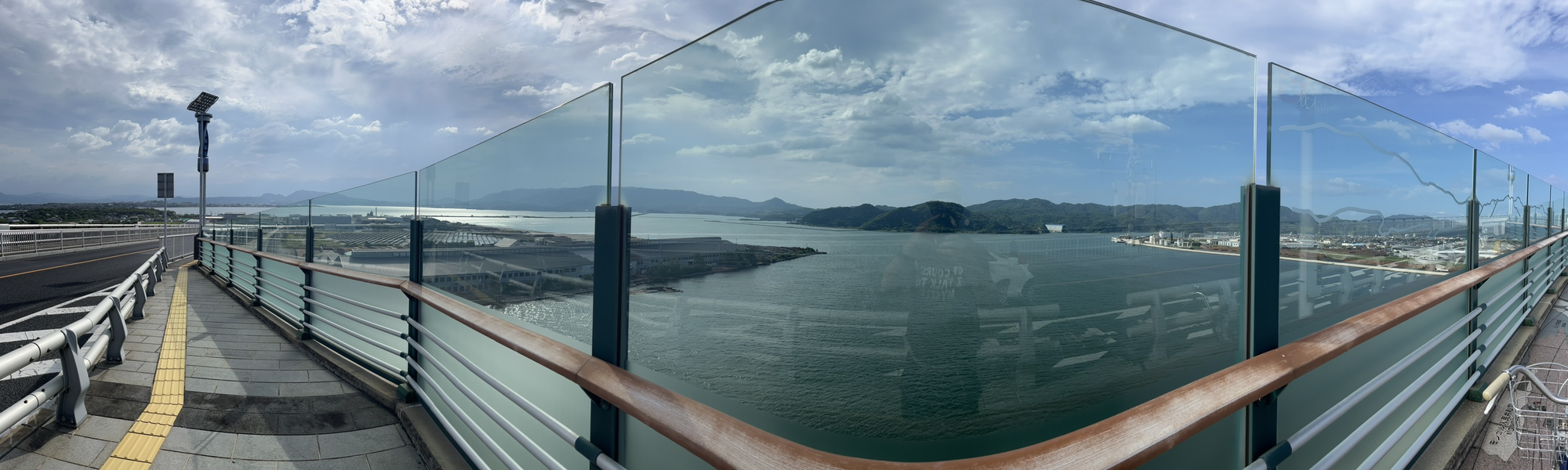
Stopping at the summit viewpoint of Eshima Ohashi Bridge, with panoramic views across Nakaumi Lagoon, distant mountains and the surrounding coastline showcasing the dramatic scenery that can be enjoyed from one of Japan's most famous bridges.Stopping at the summit viewpoint of Eshima Ohashi Bridge, with sweeping panoramic views across Nakaumi Lagoon, surrounding shoreline communities and distant mountains revealing the dramatic landscape between Shimane and Tottori Prefectures beneath striking summer skies.
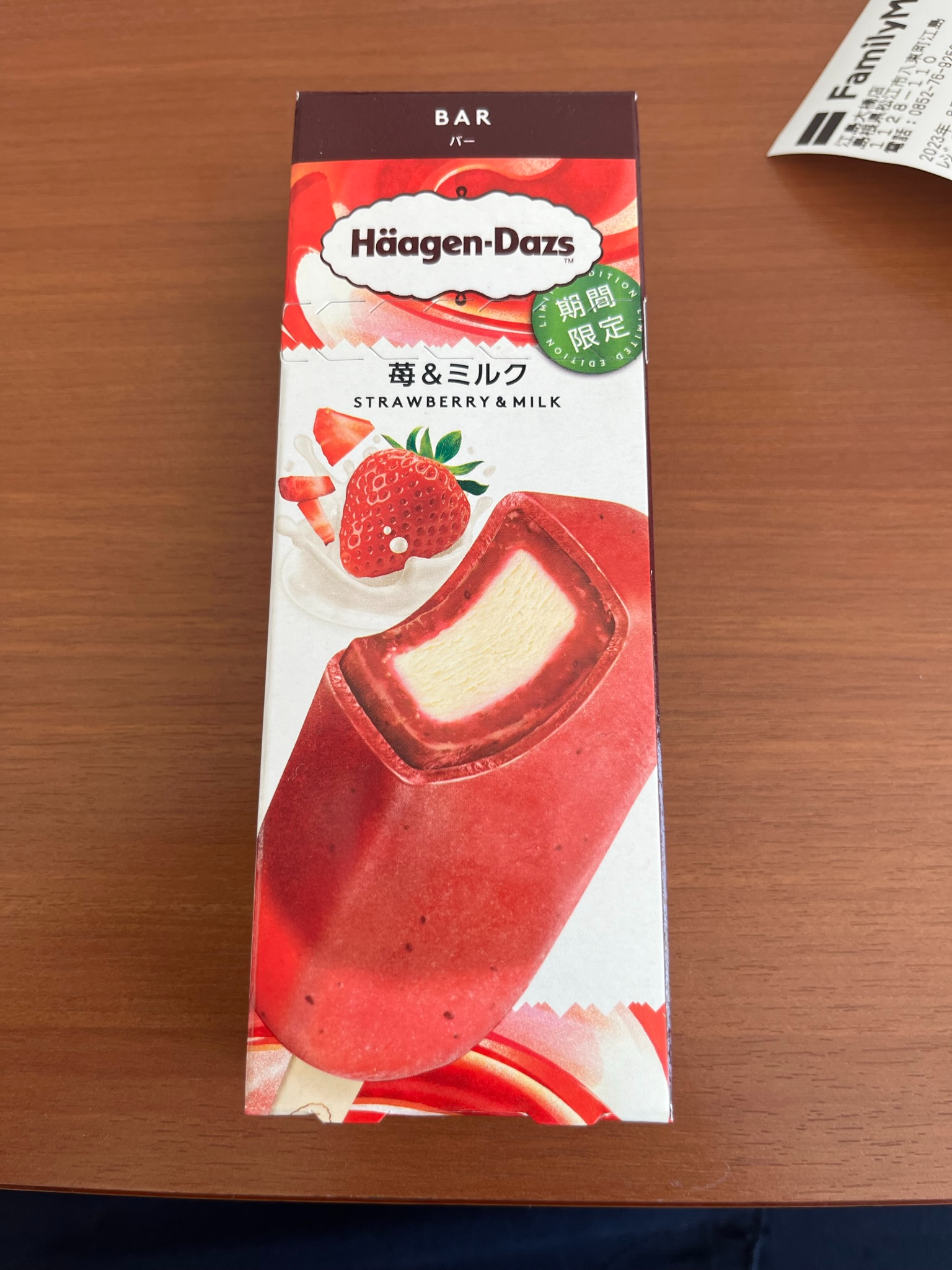
Once I got down the other side with the help of gravity. I decided it would be a good time to stop and have a well-deserved break at a local convenience store, especially as it was hot out.
Cooling down with a limited-edition Häagen-Dazs strawberry and milk ice cream bar, with a stop at FamilyMart providing the perfect sweet treat during a warm summer day of exploring western Japan.
After this it was starting to get late so it was time to start looking at making my way back to the station to drop the bike off and get on the long train journey back to Matsue as tomorrow I would be moving to Osaka.