Krakow Jewish Quarter

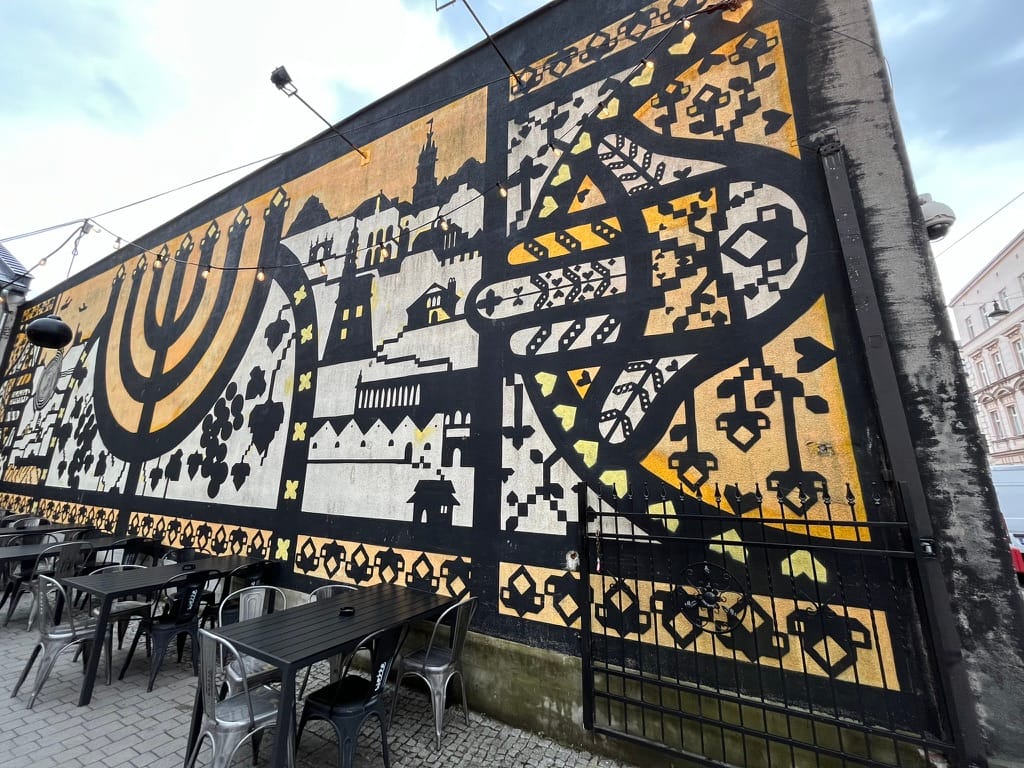
Large black, white and gold mural at the Galicia Jewish Museum in Kraków, featuring a menorah, city landmarks and geometric patterns above an outdoor seating area.
A striking mural at the Galicia Jewish Museum in Kraków combines Jewish heritage symbols with stylised depictions of the city's historic landmarks.

Originally, my plan was to visit Auschwitz-Birkenau, but unfortunately by the time I came to book the free tour, it was fully booked up. I did say this trip wasn’t as well planned as Japan, right?

Krakow Jewish Quarter

5th August

I decided the next day to get a tram in to Krakow and go to the Jewish quarter, but because hadn't really planned anything and got up later in the day, I didn't have loads of time, so I went to the Galicia Museum, where to be honest I didn't take many photo's cause of the disturbing scenes as it shows a lot of the Jewish history in Krakow, including stuff during WW2.
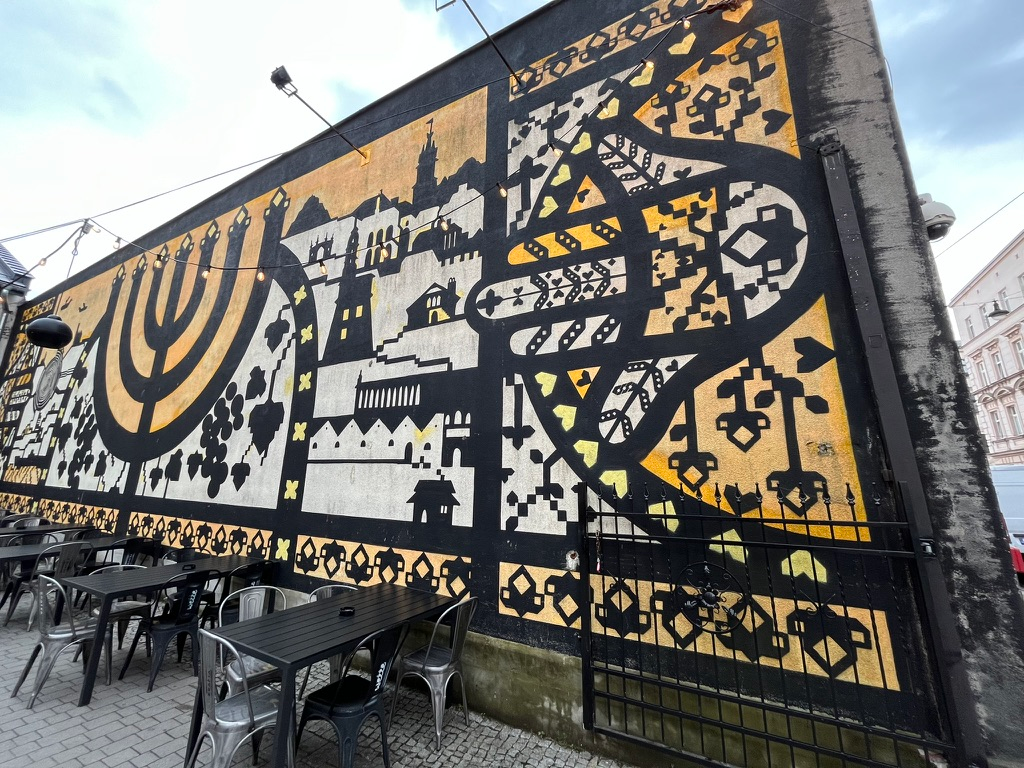
Large black, white, and gold mural at the Galicia Jewish Museum in Kraków, featuring a menorah, city skyline silhouettes, and intricate geometric patterns above an outdoor seating area.
A striking mural at the Galicia Jewish Museum in Kraków blends Jewish heritage symbols with stylised depictions of the city's historic landmarks.
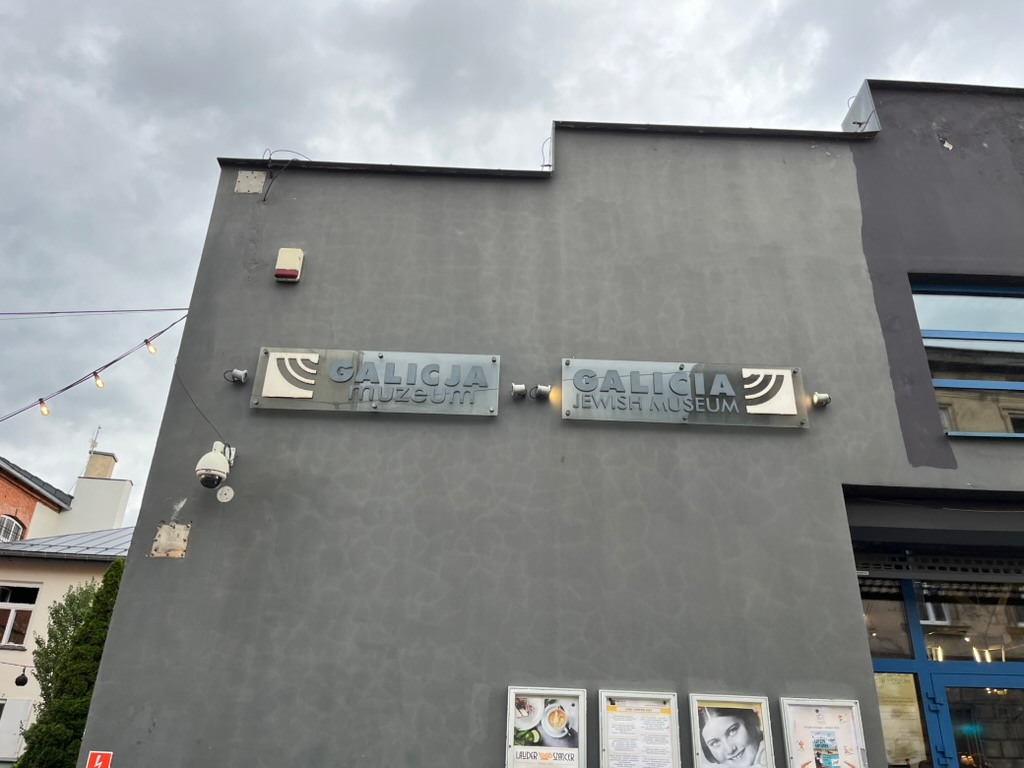
Exterior wall of the Galicia Jewish Museum in Kraków, featuring bilingual museum signs on a grey building beneath an overcast sky.
The entrance to the Galicia Jewish Museum in Kraków, dedicated to preserving and presenting the history and culture of Jewish Galicia.

The museum was founded by a British photographer called Chris Schwarz, who came to Poland to photograph traces of Jewish heritage. He was also photographing there during the solidarity movement again communism.
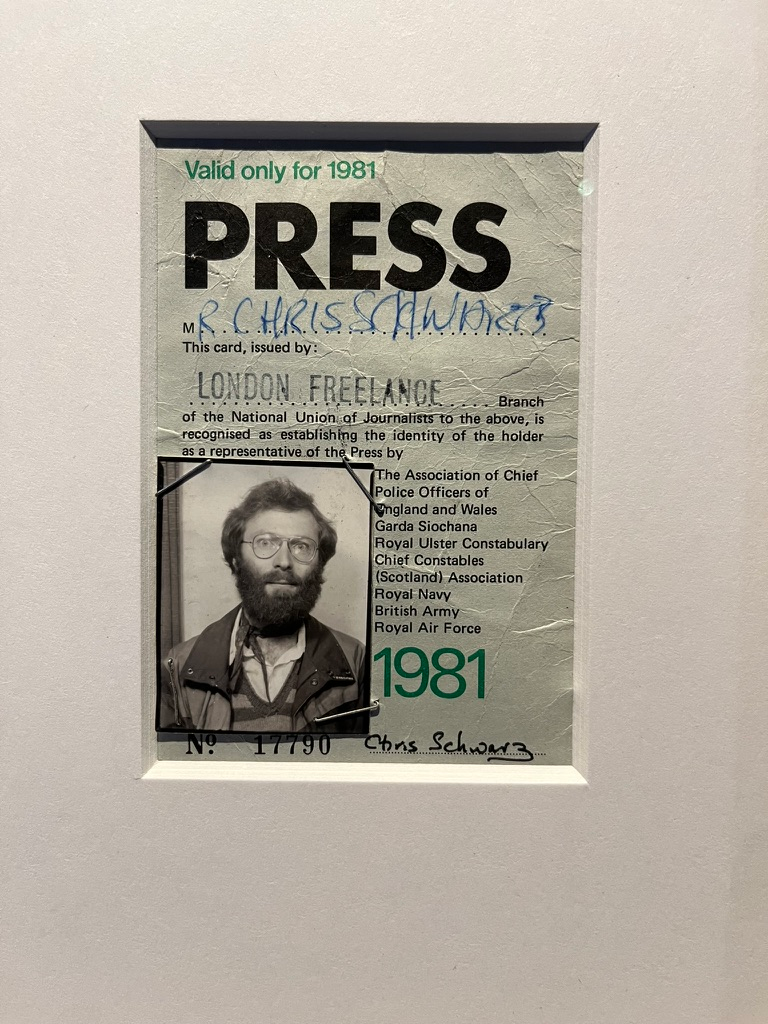
Framed 1981 press card issued by the London Freelance branch of the National Union of Journalists, featuring a black-and-white portrait photograph and handwritten details.
A 1981 National Union of Journalists press card on display, belonging to photographer Chris Schwarz and reflecting the era's press credentials.

One piece of photography that stunned me the most, still makes me really sad and bring a tear to my eyes, is the one of the gas chamber from the main Auschwitz camp with a quote below it saying "Mummy, when they kill us will it hurt?", "No, my dearest, it will not hurt. It will only take a minute".
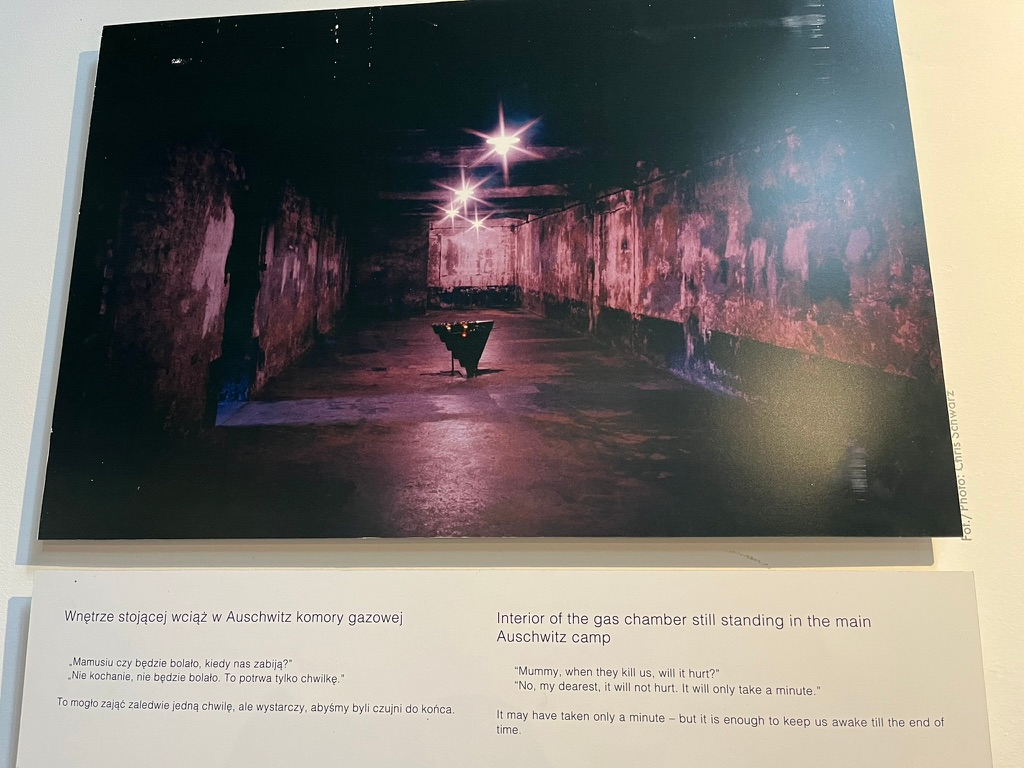
Exhibit at the Galicia Jewish Museum featuring a photograph of the gas chamber at Auschwitz, accompanied by testimony reflecting on the experiences of Holocaust victims.
Photograph on display at the Galicia Jewish Museum showing the interior of a gas chamber at Auschwitz, with a dimly lit concrete room and a memorial candle stand in the centre.

The Auschwitz camp leader Karl Fritzsch used to say to new arrivals "if there are some Jews among you, you may stay here for two weeks, priests three weeks, the rest, two months".

Just what kind of monster do you have to be to justify killing people like that and after going to Japan and going to where both atomic bombs hit as well, it really hits home. It honestly makes me sad to think about how much pain and suffering was brought to people because of the Third Reich.

Afterwards it was off to the Jewish Ghetto Memorial, which to any passerby looks like just 70 bronze chairs in a square, but they all represent the lives lost in the liquidation of the Jewish Ghetto in 1943.
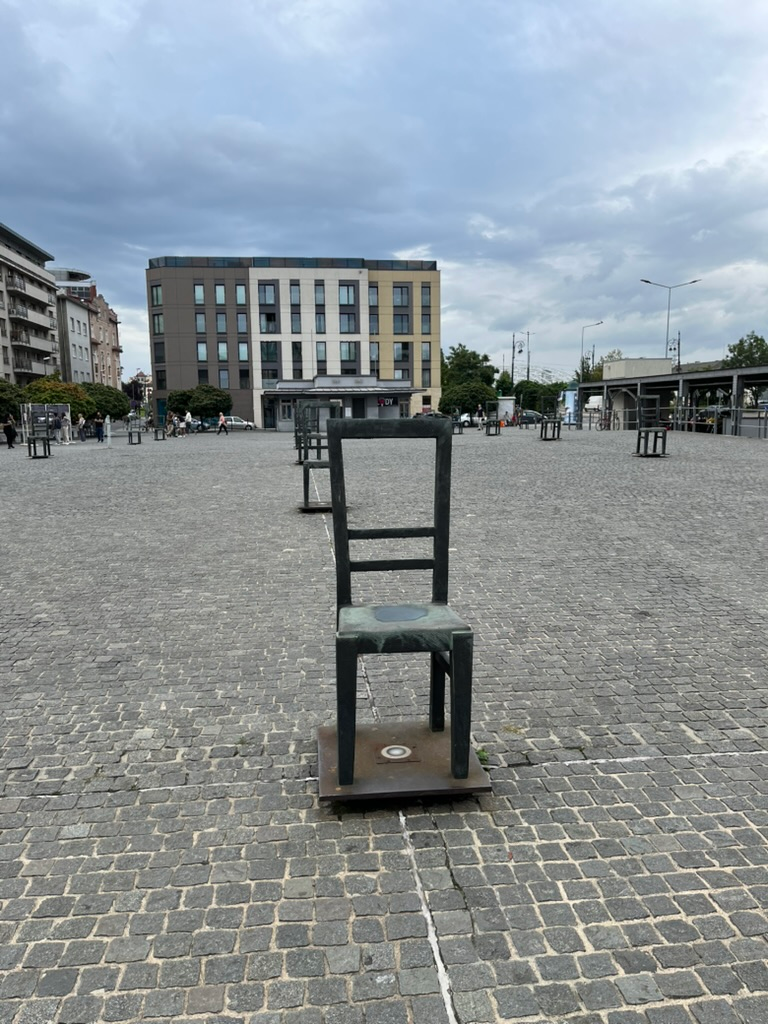
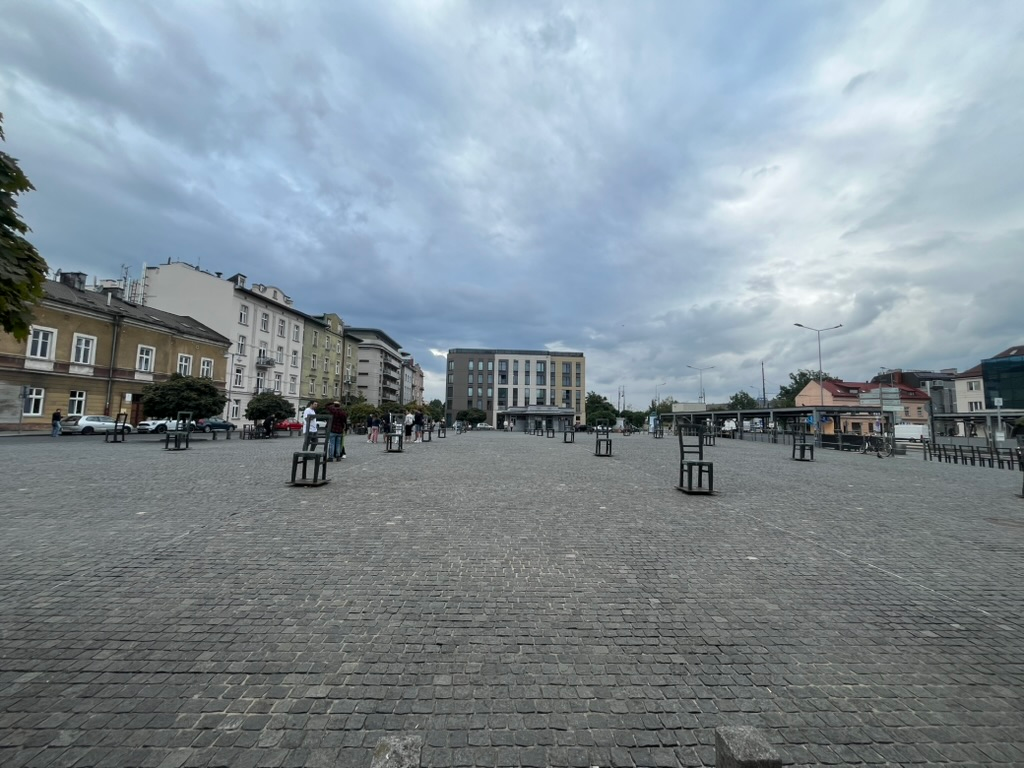
Metal chair sculptures arranged across a large cobbled square in Kraków, with modern buildings and a cloudy sky in the background.
The Ghetto Heroes Square memorial in Kraków, where rows of metal chairs commemorate the Jewish residents displaced from the Kraków Ghetto during the Second World War.
Wide view of Ghetto Heroes Square in Kraków, with rows of metal chair memorials spread across a large cobbled plaza beneath a dramatic cloudy sky.
The chair memorials of Ghetto Heroes Square in Kraków commemorate the Jewish residents of the Kraków Ghetto who were deported during the Second World War.

Afterwards I went to a restaurant called Awiw, where there was live music, and they server a mix of both Jewish and Polish food. For starters I got a Jewish dish called Cabbage Roll "holishkes", which is ground meat wrapped in cabbage with a tomato sauce
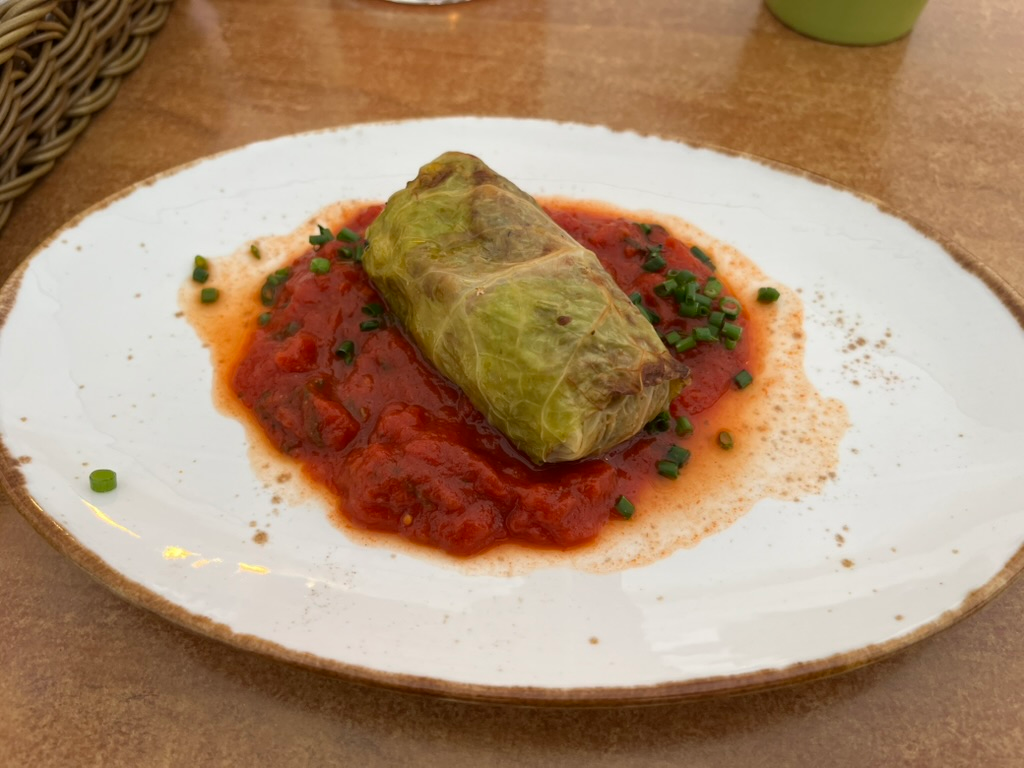
Jewish-style cabbage roll (holishkes) served on a white plate with rich tomato sauce and sprinkled chives.
Traditional Jewish holishkes – a stuffed cabbage roll filled with savoury meat and rice, served in a sweet-and-sour tomato sauce.

For my main, I got Bigos, which is a Polish hunters stew with venison, sausages, cabbage sauerkraut and mushrooms in it, and it came in an edible bread bowl, which made it even more tasty.
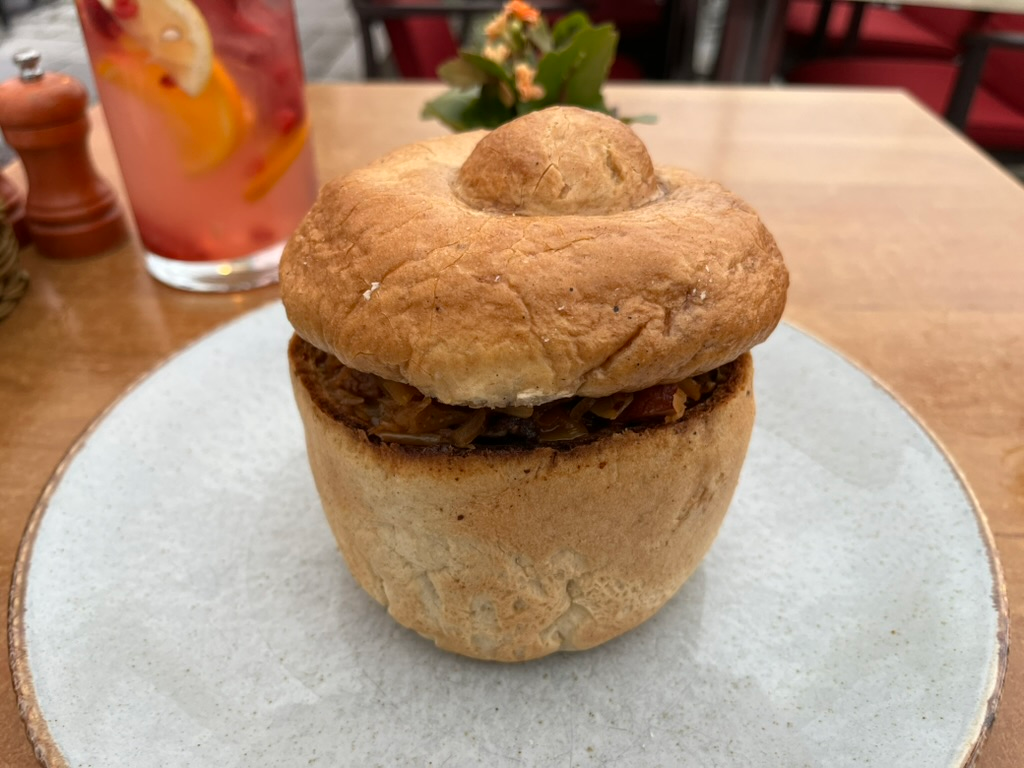
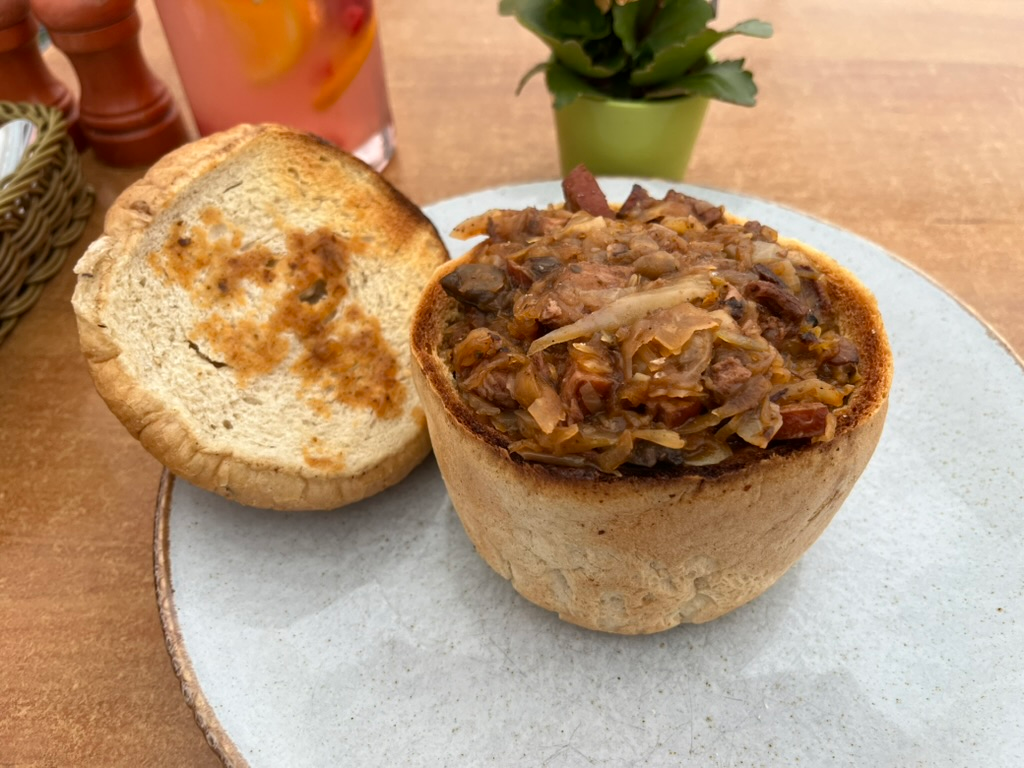
Traditional Polish bigos served in a hollowed bread bowl with a bread lid, presented on a ceramic plate.
A hearty serving of Polish bigos – a hunter's stew of sauerkraut, cabbage and meat – served in an edible bread bowl.
Open bread bowl filled with traditional Polish bigos, a hearty stew of sauerkraut, cabbage and mixed meats, served on a ceramic plate with the bread lid alongside.
Polish bigos served in an edible bread bowl, showcasing the rich blend of sauerkraut, cabbage and slow-cooked meats that make up this classic dish.

Join me next time on my adventure in Poland!!!