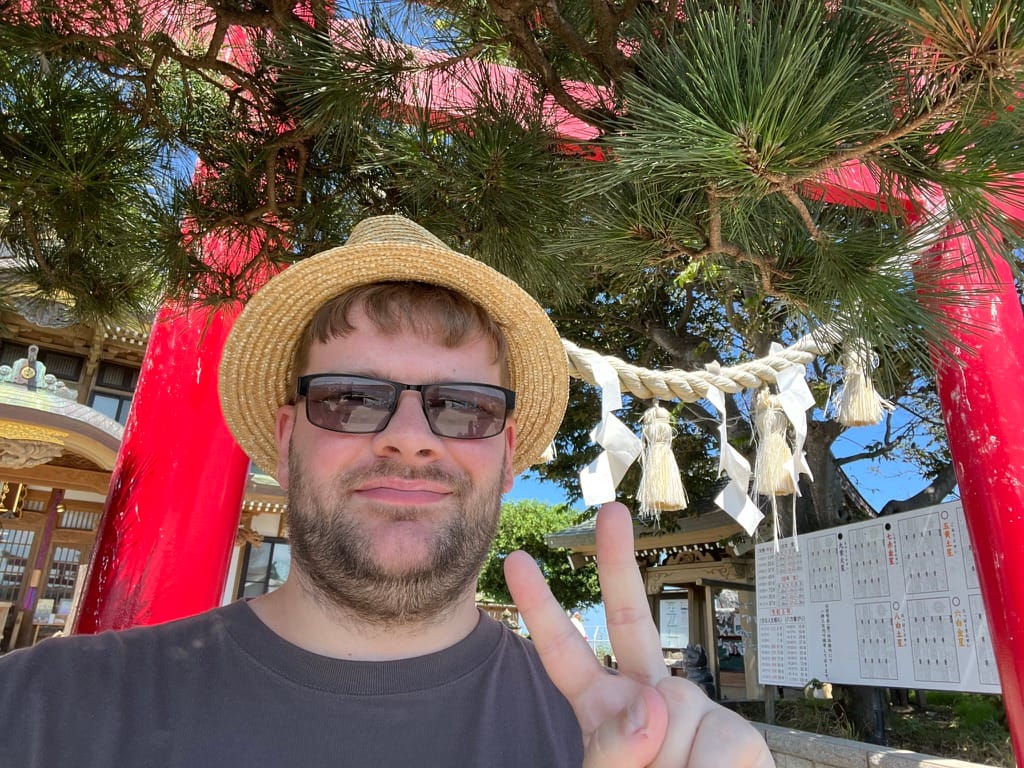
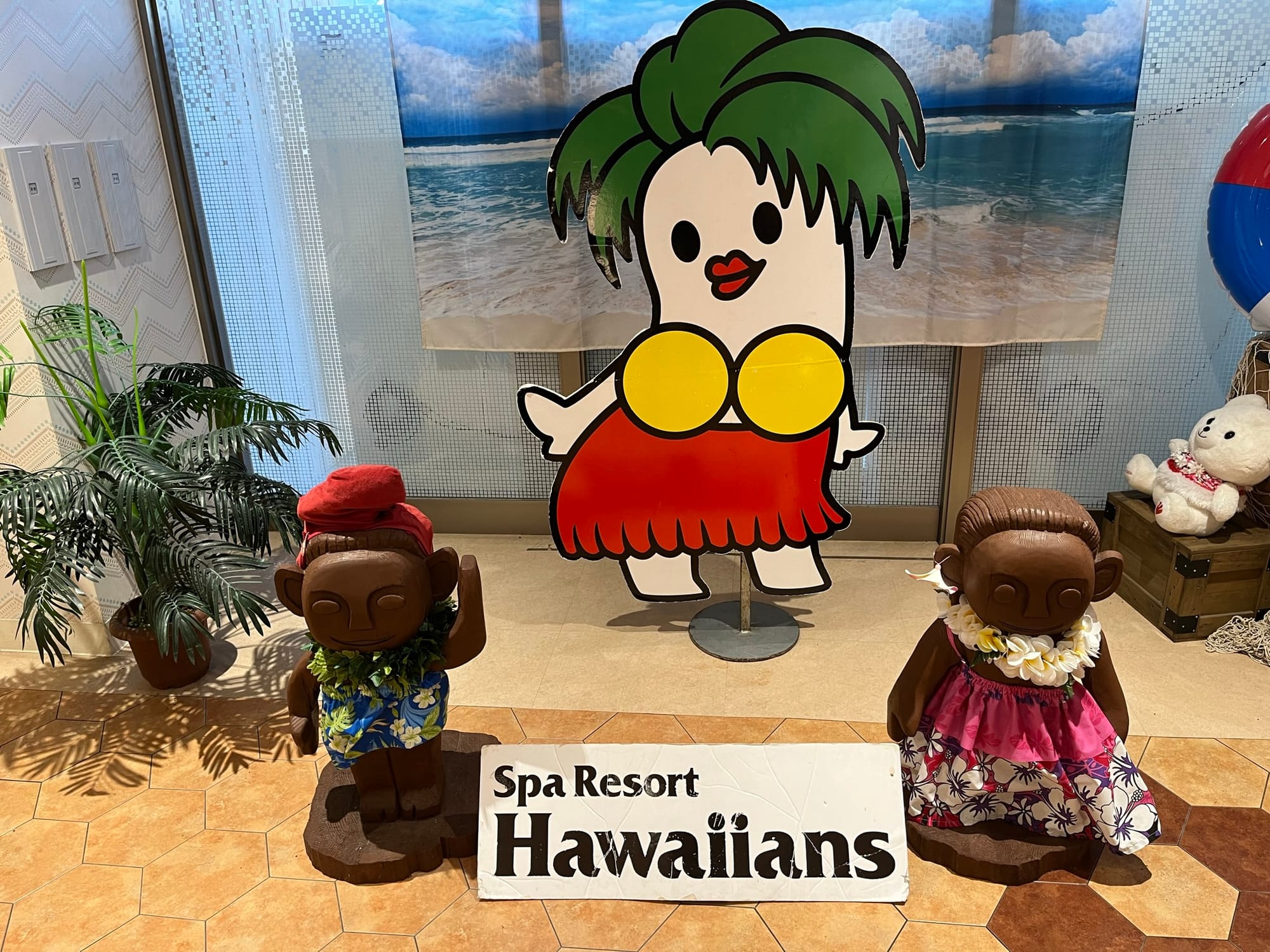
Stopping by Spa Resort Hawaiians in Iwaki, with colourful Hawaiian-themed displays and the resort's cheerful mascot helping to create a tropical atmosphere at one of Fukushima Prefecture's most unique and popular attractions.
Time to go to Iwaki
17th August
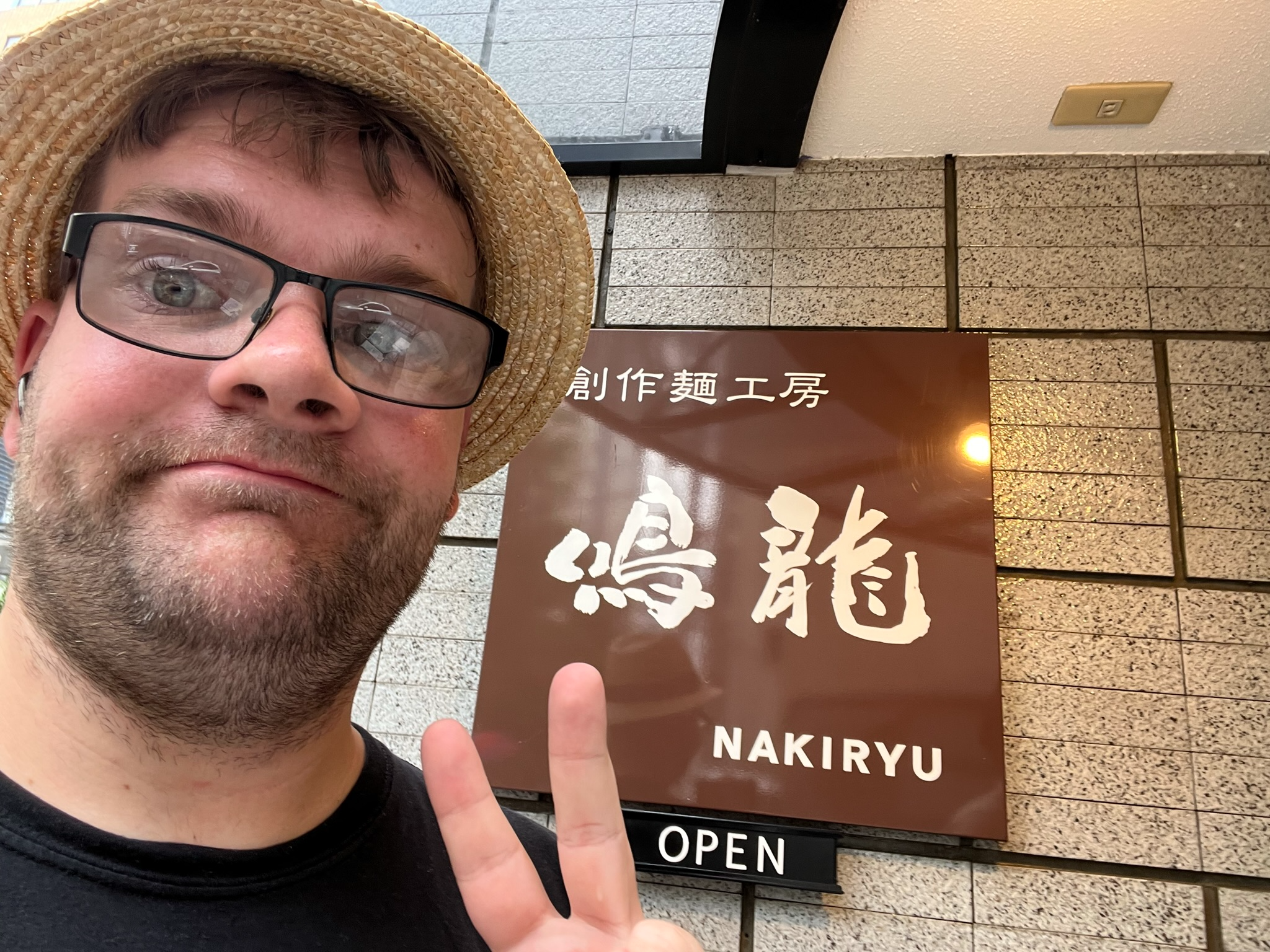
Today it was time to move on from Tokyo to Iwaki in Fukushima Prefecture. Iwaki is about 30 miles south of the Fukushima Daiichi Power Plant where the disaster happened back in 2011 with the Tohoku Earthquake (9.0-9.1 magnitude) which lasted approximately 6 minutes. Before I moved on to Iwaki it was time to go back to the Michelin Star ramen restaurant called Nakiryu.
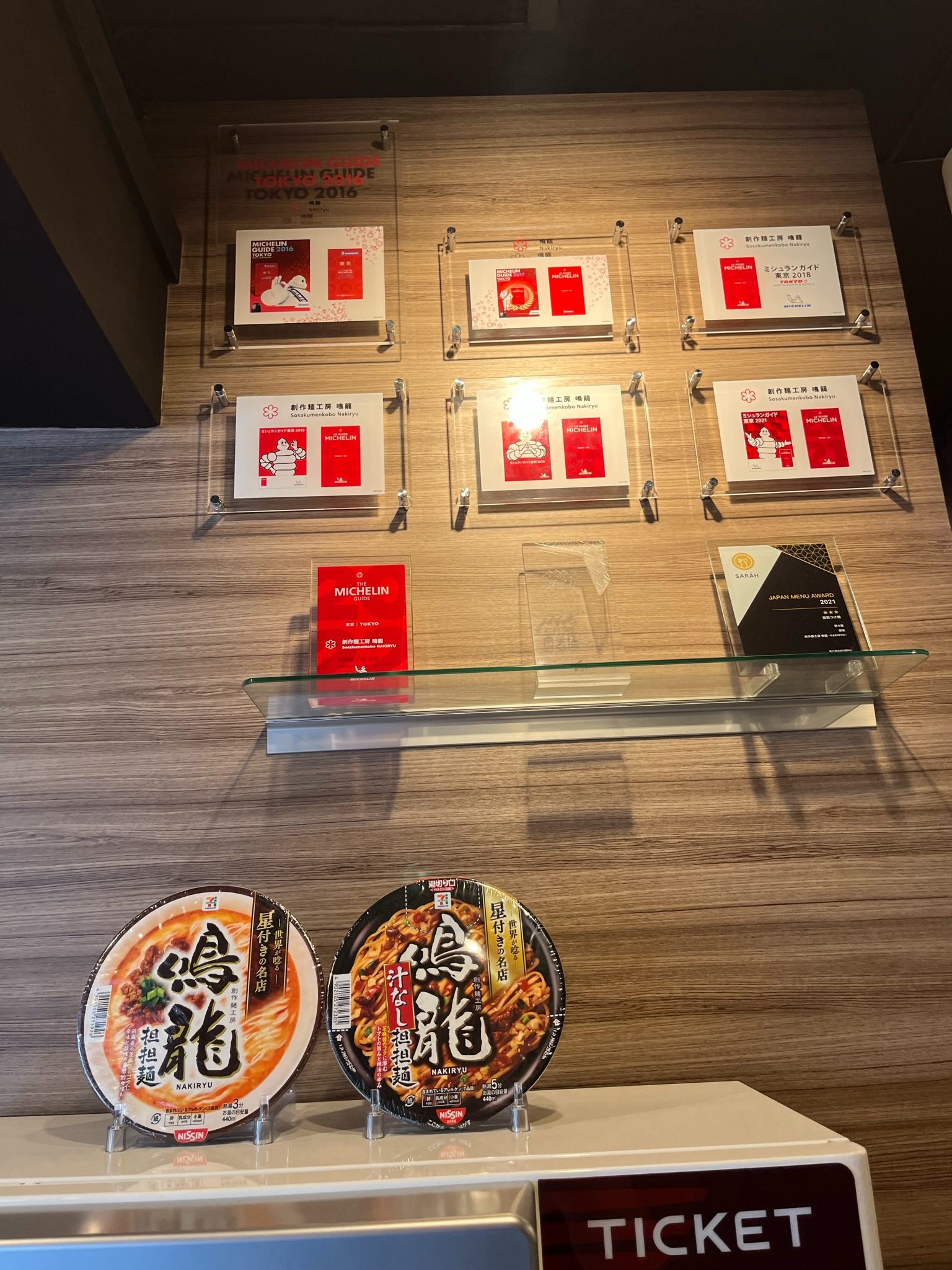
Visiting Nakiryu in Tokyo, with a stop outside the Michelin-recognised ramen restaurant marking the chance to experience one of Japan's most highly regarded bowls of noodles during a journey across the country.Seeing the recognition earned by Nakiryu while waiting for a meal, with Michelin Guide awards and industry accolades highlighting why this Tokyo ramen restaurant has become one of the most respected noodle destinations in Japan.
It is only a small restaurant with 12 spaces from what I could count, and they used a vending machine for people to order which I find kinda odd, but useful as well as there is only 3 members of staff in the shop.
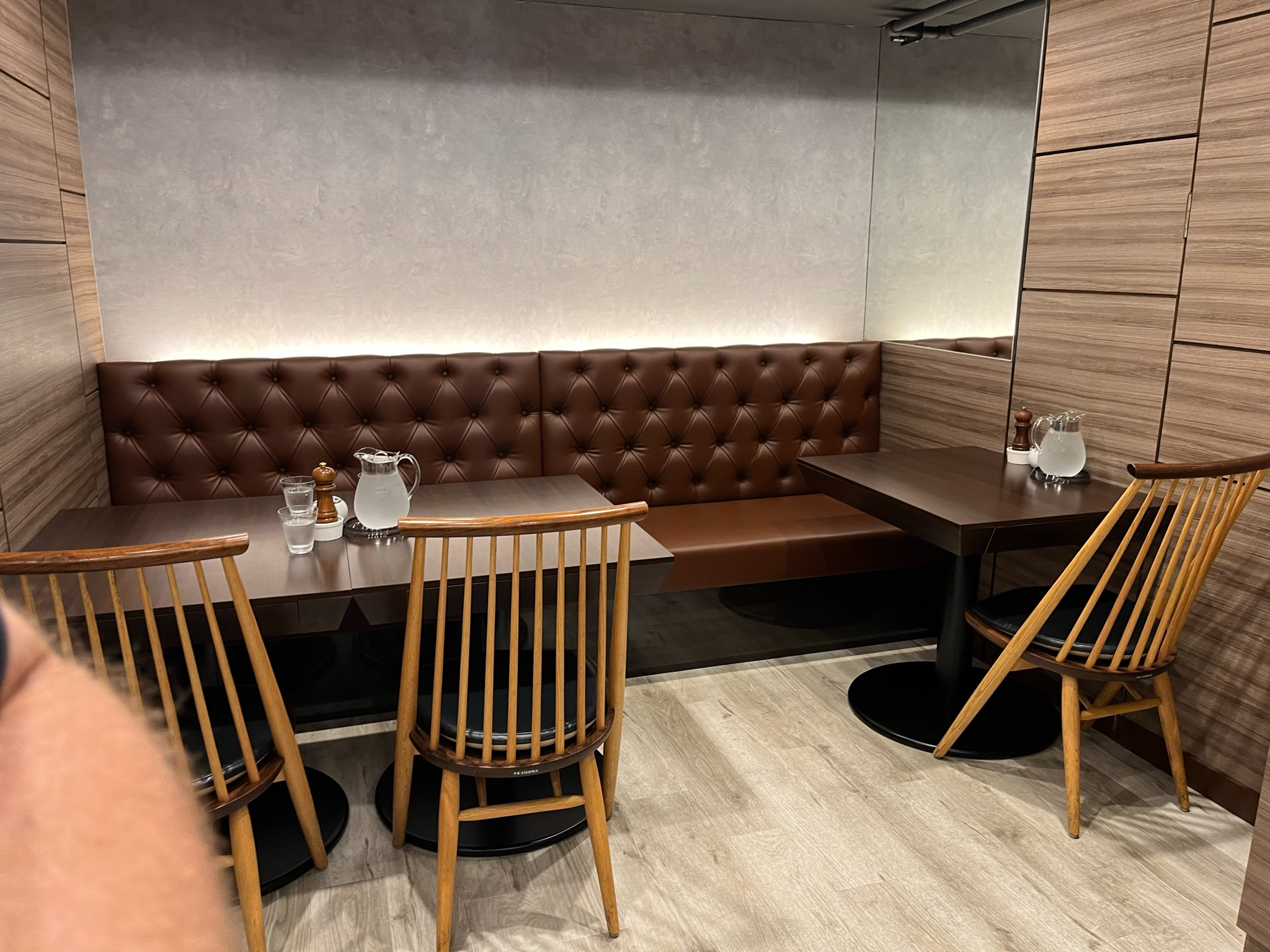
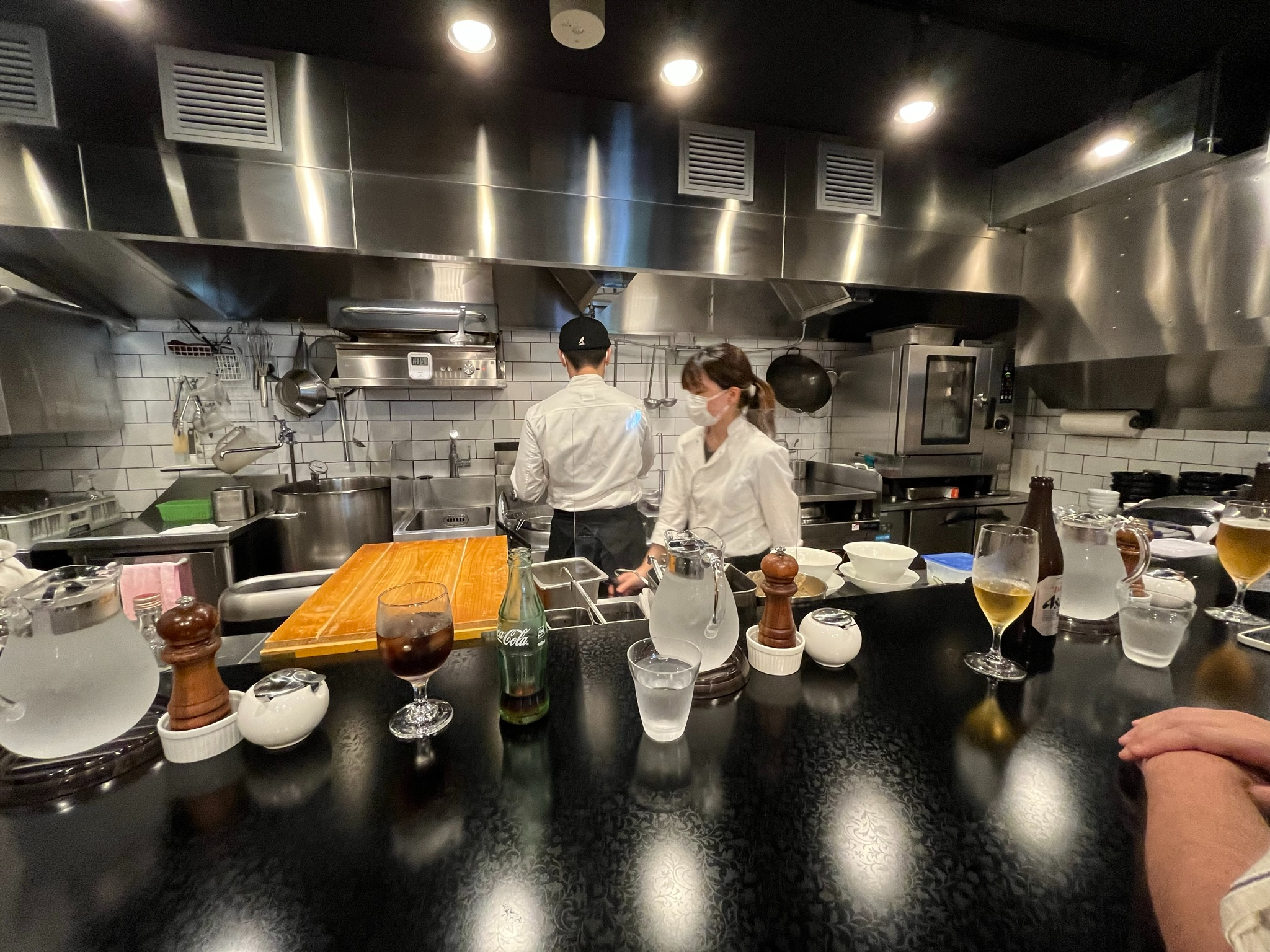
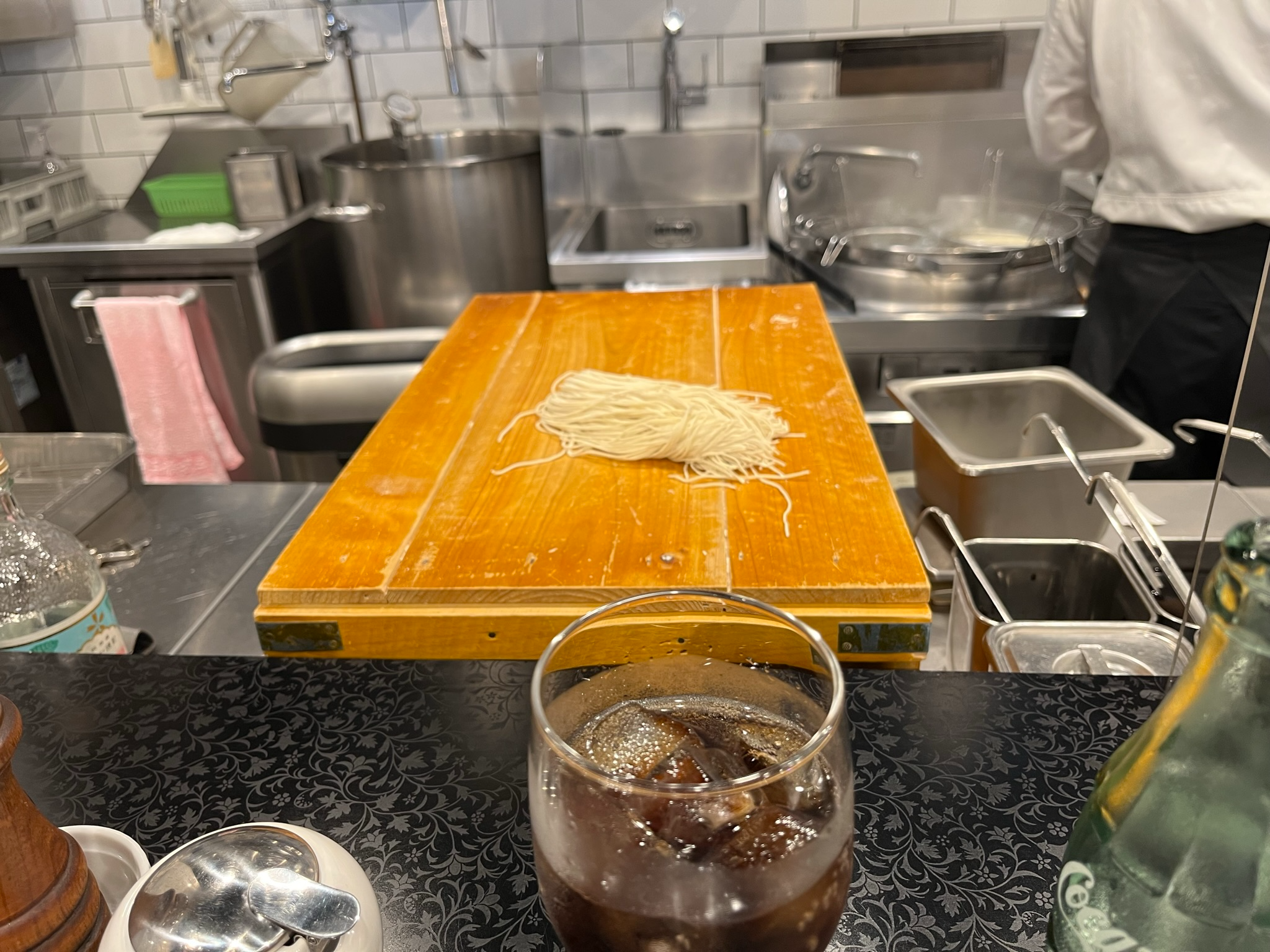
Taking a seat inside Nakiryu before enjoying one of Tokyo's most celebrated bowls of ramen, with the restaurant's stylish interior providing a calm setting for a meal at the Michelin-recognised noodle specialist.Taking a seat at the counter in Nakiryu and watching the kitchen team at work, with the open preparation area offering a fascinating glimpse into the skill, precision and attention to detail behind one of Tokyo's most celebrated ramen restaurants.Watching the preparation of Nakiryu's handmade noodles from a seat at the counter, with the open kitchen providing a fascinating glimpse into the craftsmanship and attention to detail behind one of Tokyo's most acclaimed ramen experiences.
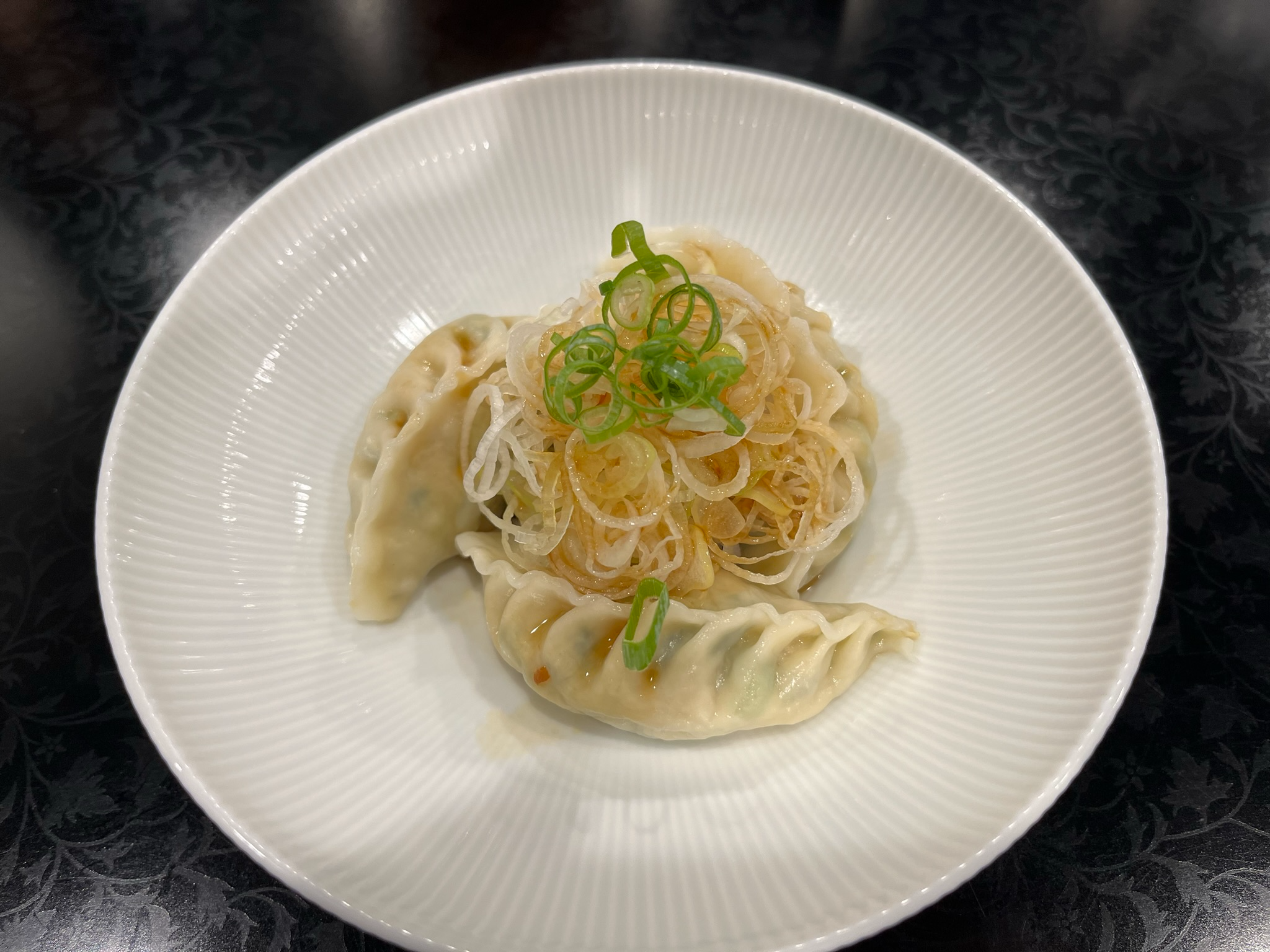
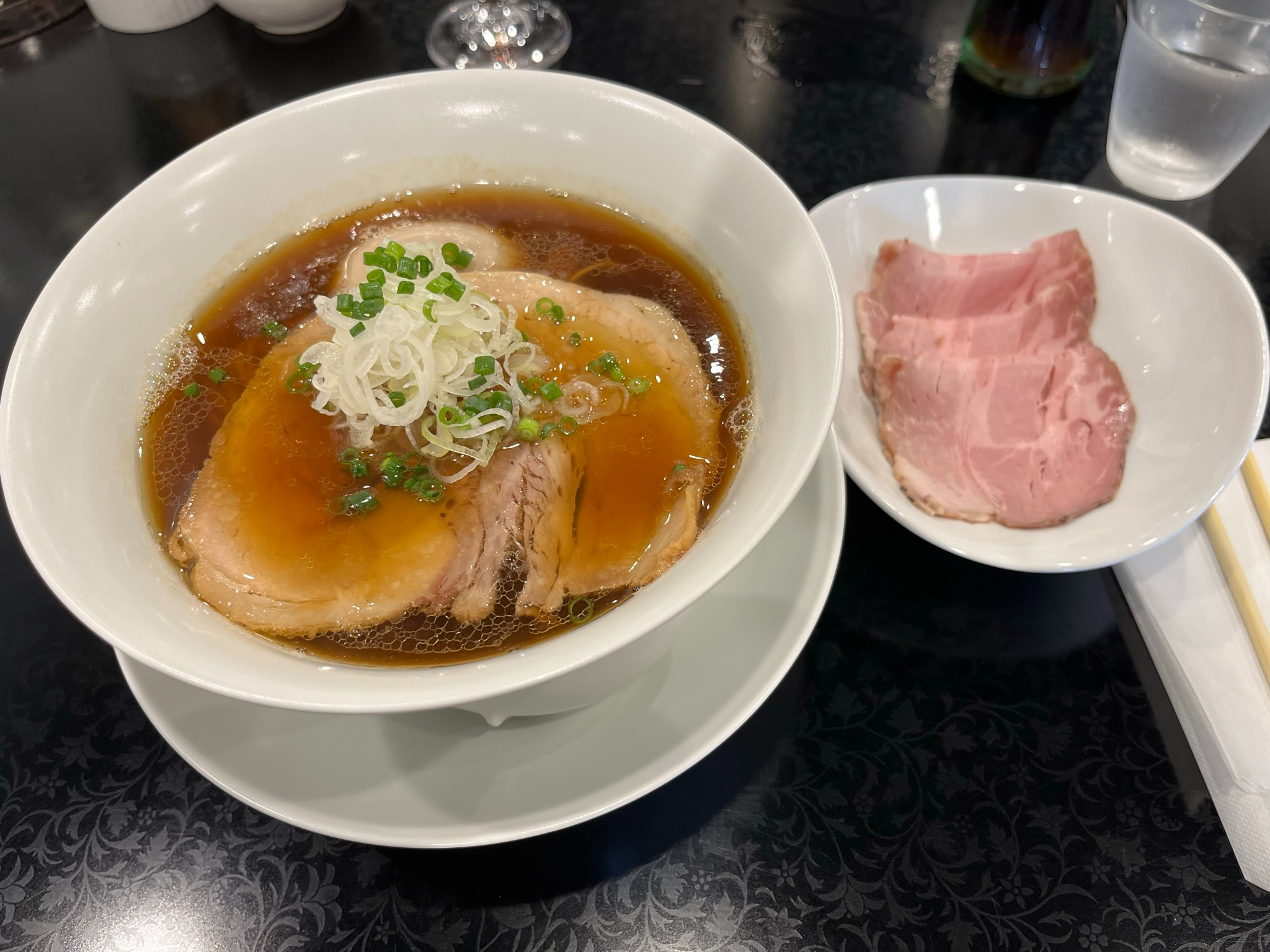
The meal that I ordered this time was like my first time there, but instead of getting a spicy ramen broth, I got a soy-based ramen broth with some gyoza and extra pork slices. I tell you what it was absolutely gorgeous!!!!!. The pork just falls apart as you are trying to pick it up and melts in the mouth as well.
Starting the meal at Nakiryu with a plate of handmade dumplings, with delicate wrappers, savoury filling and crisp fried shallots providing the perfect introduction to one of Tokyo's most celebrated dining experiences.Finally enjoying a bowl of Nakiryu's acclaimed ramen, with rich broth, handmade noodles and generous slices of chashu pork showcasing why this Michelin-recognised restaurant has become one of Tokyo's most sought-after noodle destinations.
After going there, I went back to the train station to collect my baggage from the coin locker and then catch the train to Iwaki.
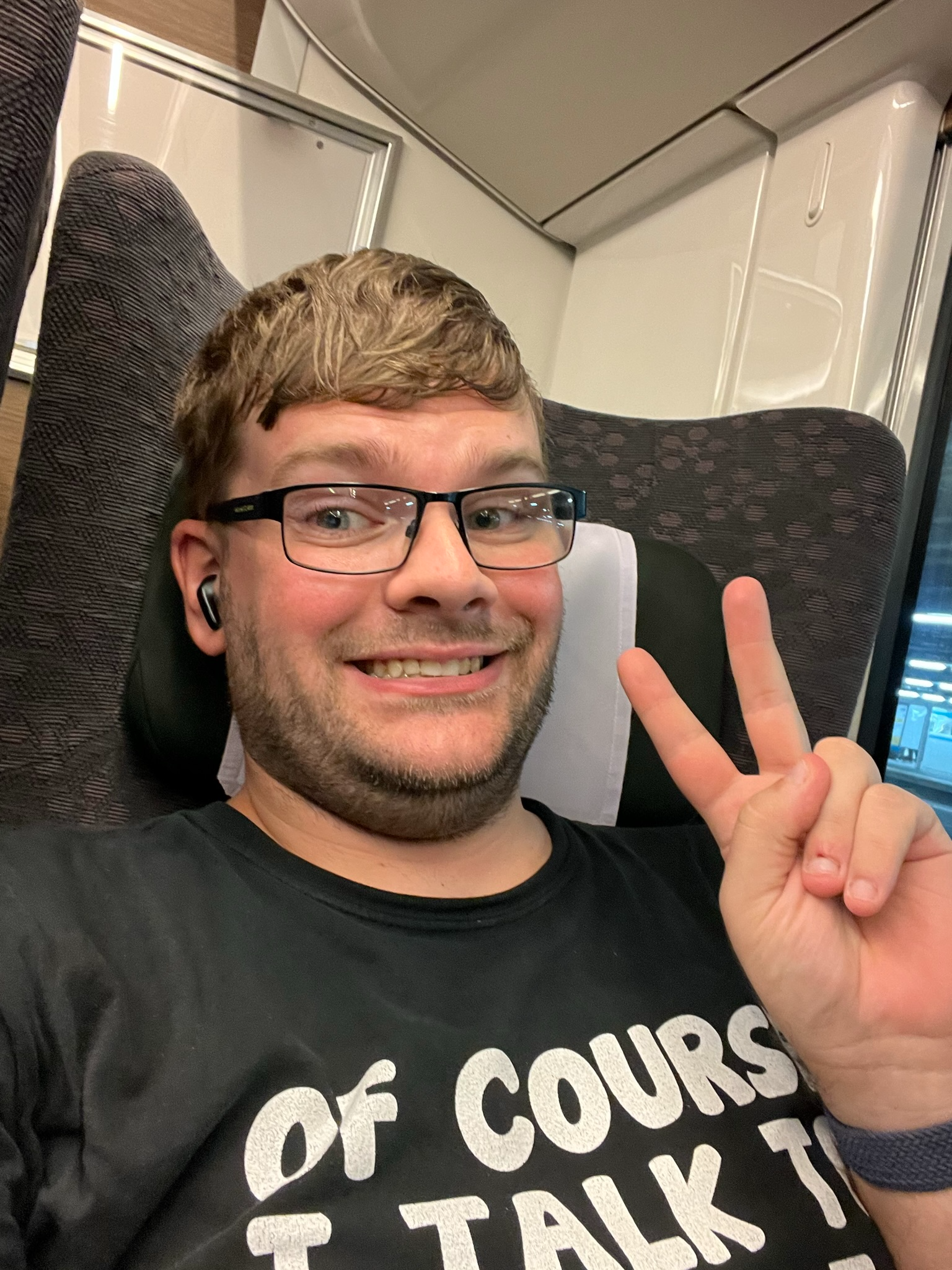
Relaxing aboard a Japanese train after another day of exploring, with a comfortable window seat, familiar peace sign and time to reflect on the experiences, friendships and unforgettable moments that made the journey so memorable.
It took about 2-3 hours to get to Iwaki from Tokyo, but it was a nice relaxing train to get and some of the views of the countryside was amazing (sorry no pictures this time as I forgot).
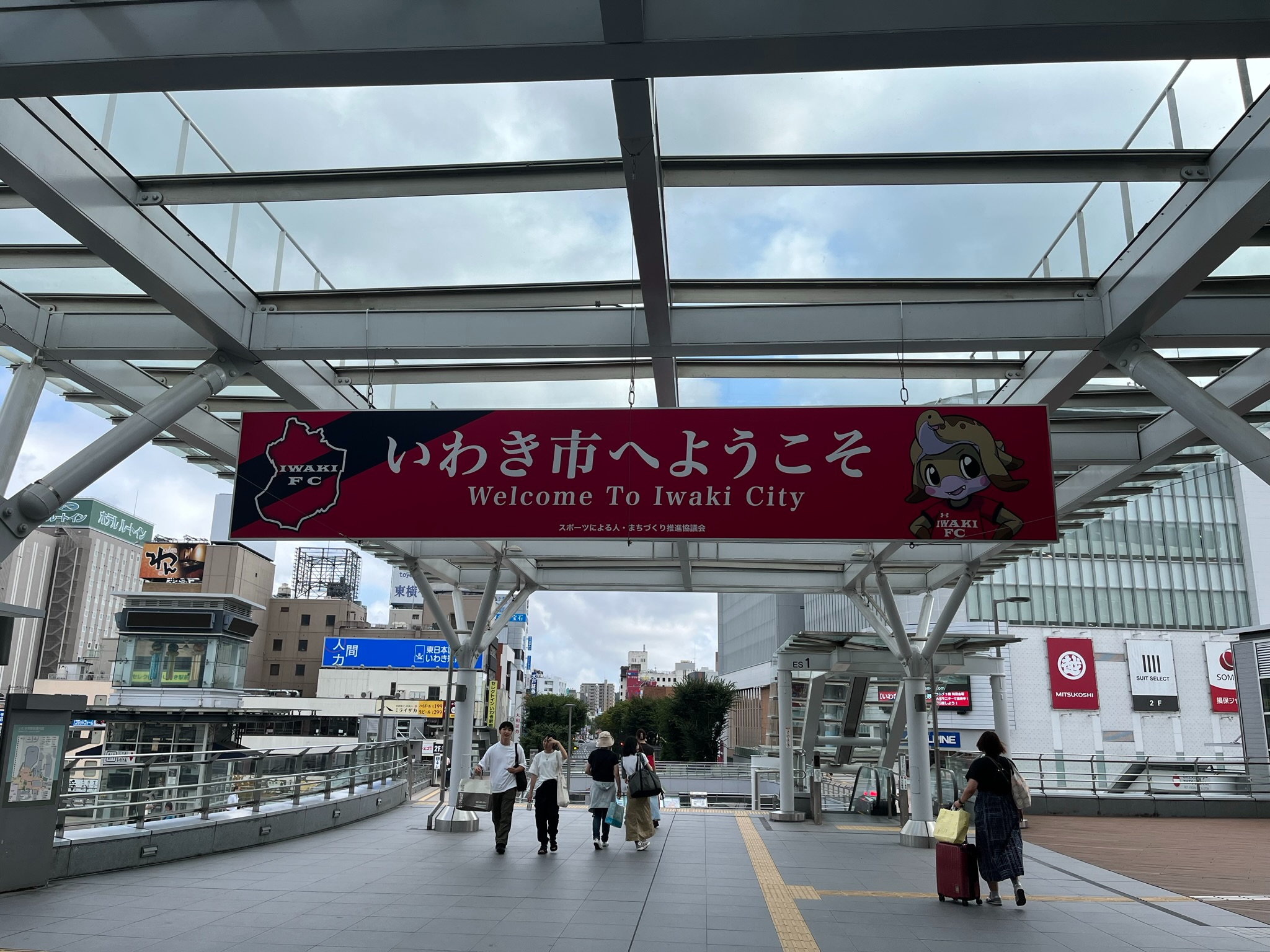
Arriving in Iwaki and beginning an exploration of Fukushima Prefecture, with the welcome sign outside the station marking the start of a visit to a city known for its coastal scenery, hot springs and recovery story following the events of 2011.
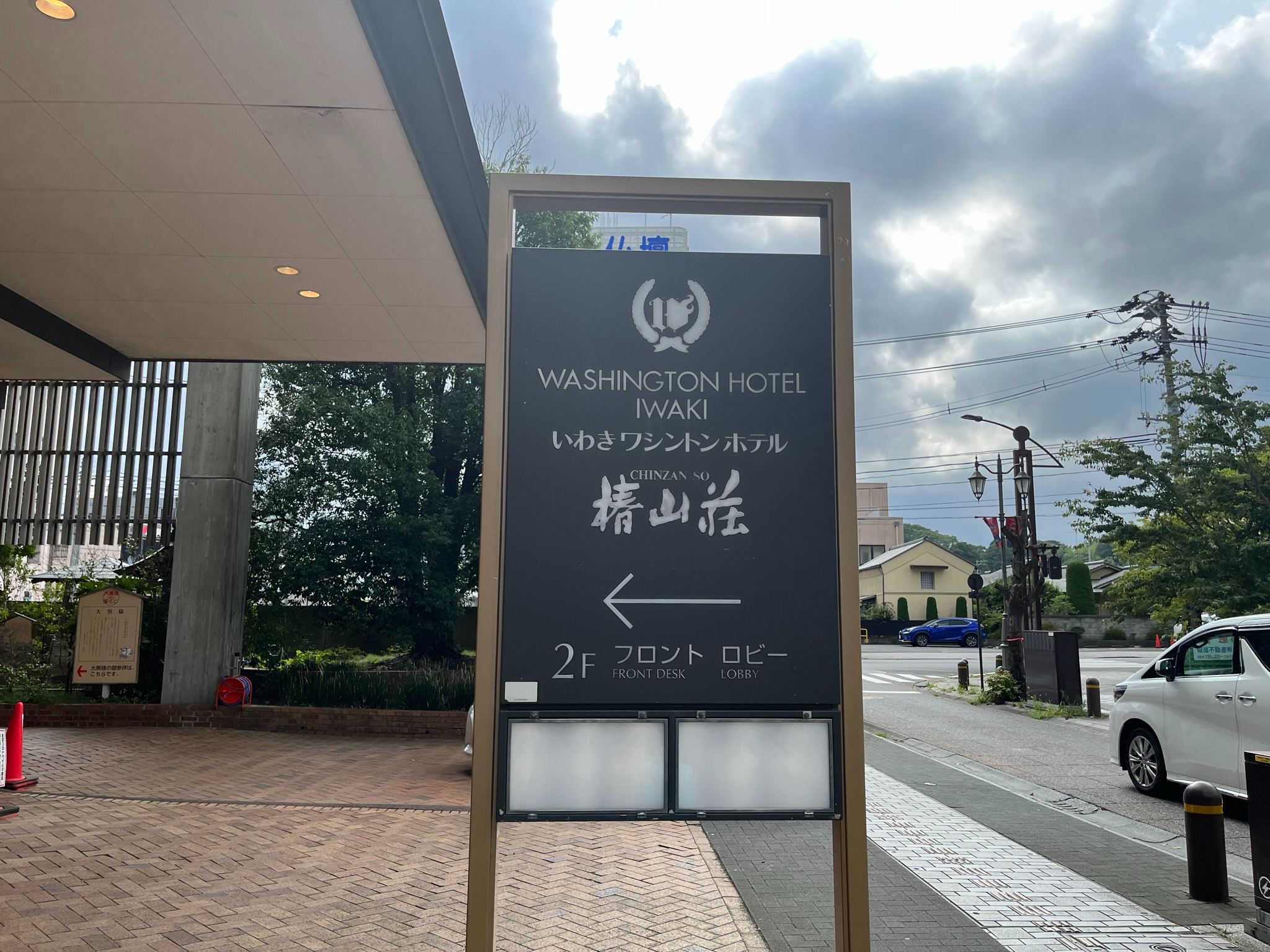
When in Iwaki it was only about 10 mins to get from the station to my hotel which wasn’t too bad a little trek and I was finally in Washington (bet you didn’t know Washington had moved to Japan). It is called the Washington Hotel Iwaki and is a nice enough hotel although I was disappointed by it having no onsen.
Checking into the Washington Hotel Iwaki after arriving in Fukushima Prefecture, with the conveniently located hotel providing a comfortable base for exploring Iwaki's coastal attractions, local culture and surrounding region.
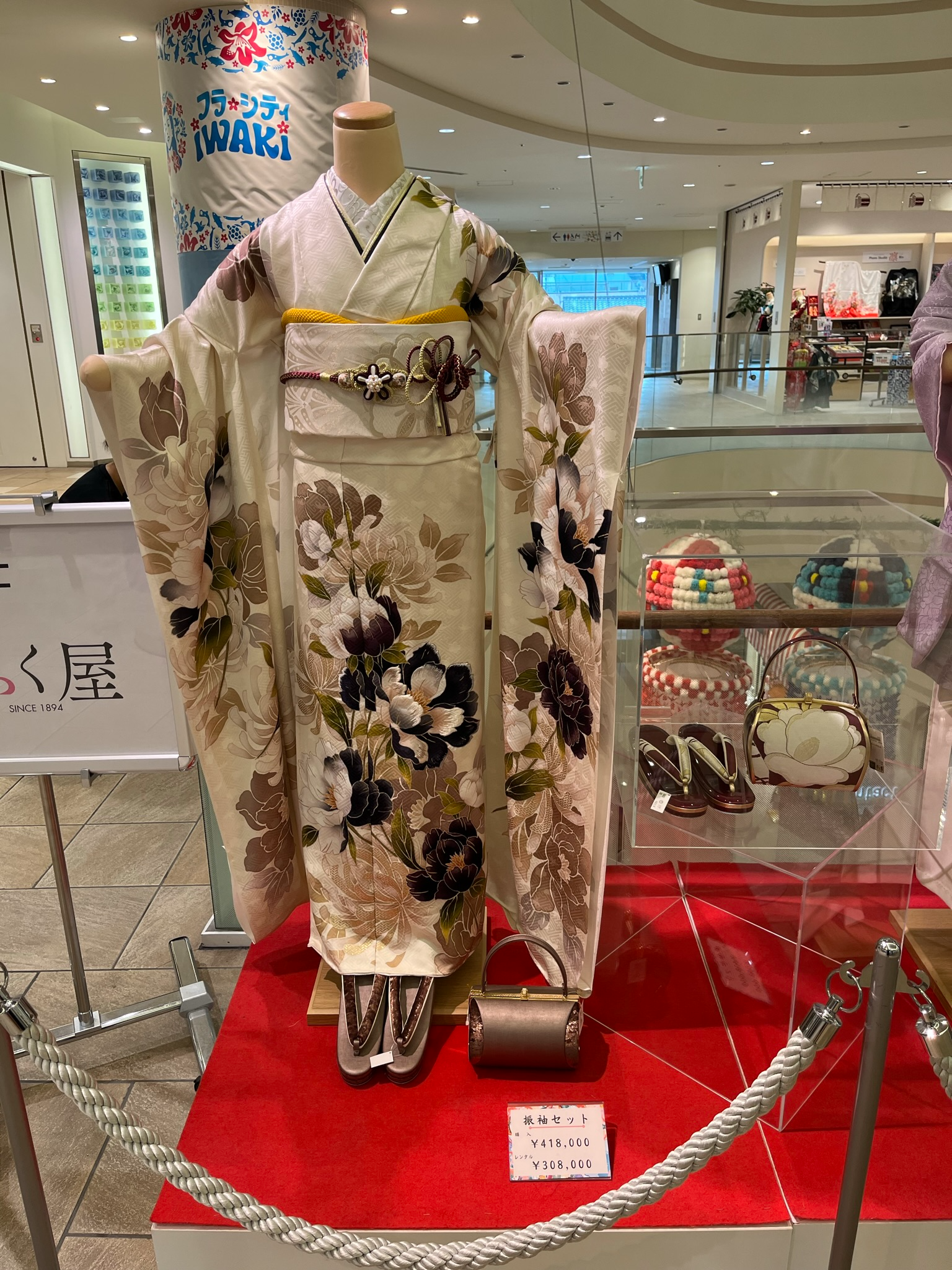
I stated to have a little look around including the Mall, which was close to hotel, had a look around for somewhere to get food later and I also saw some Women’s Yukata’s which were amazing to look at, but there was one in particular that was very expensive. 418,000 yen is about £2090 at the time or writing.
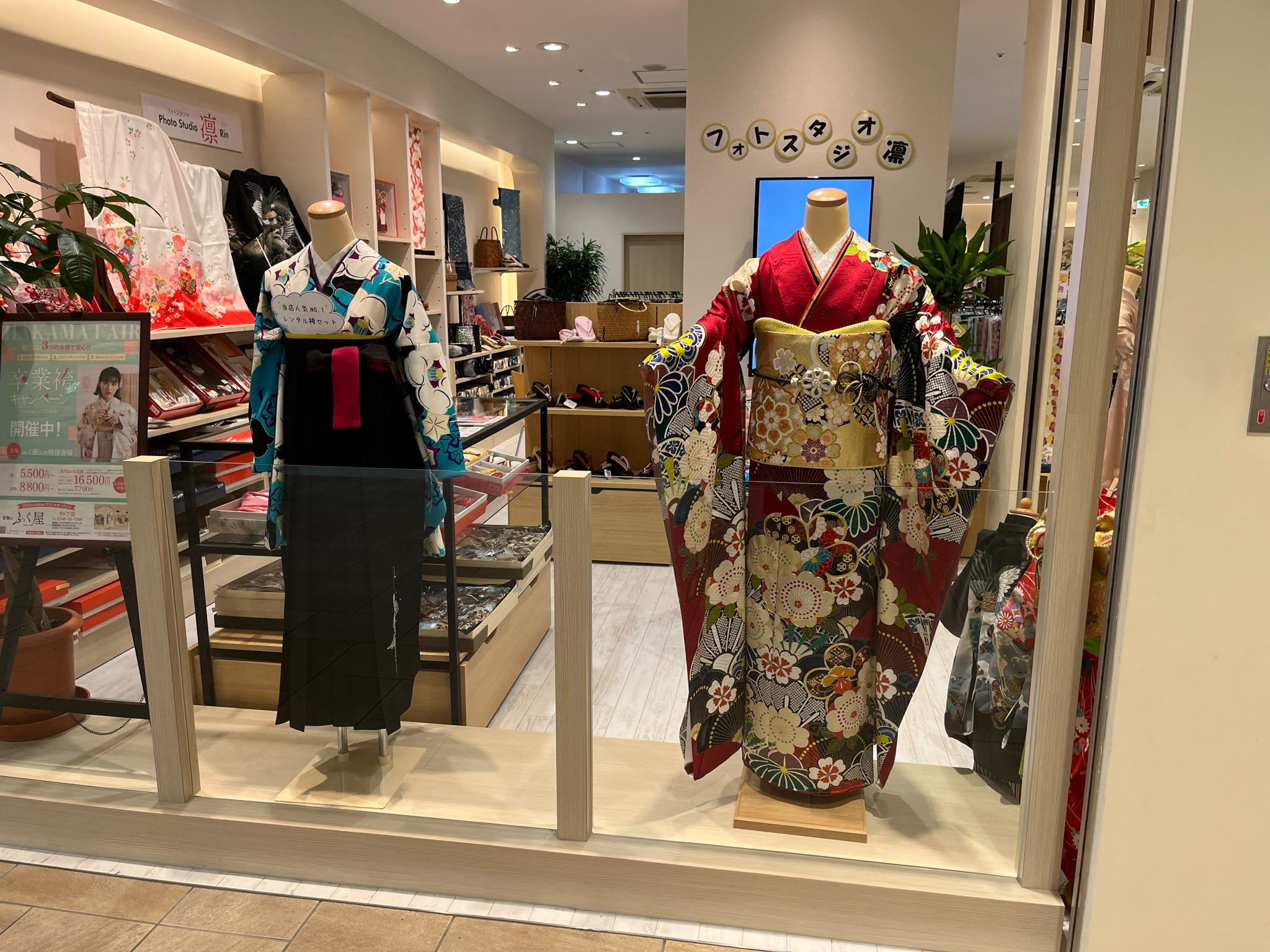
Browsing a kimono and hakama shop while exploring Iwaki, with beautifully crafted garments on display showcasing the colours, patterns and traditional craftsmanship that continue to play an important role in Japanese culture and special celebrations.Browsing a display of formal furisode kimono while exploring Iwaki, with intricate floral patterns, elegant accessories and traditional craftsmanship highlighting the enduring beauty of Japanese ceremonial dress.
Hawaiians Spa Resort Time!!!!
18th August
Today it was time to go to Hawaii, Aloha!!!!!!
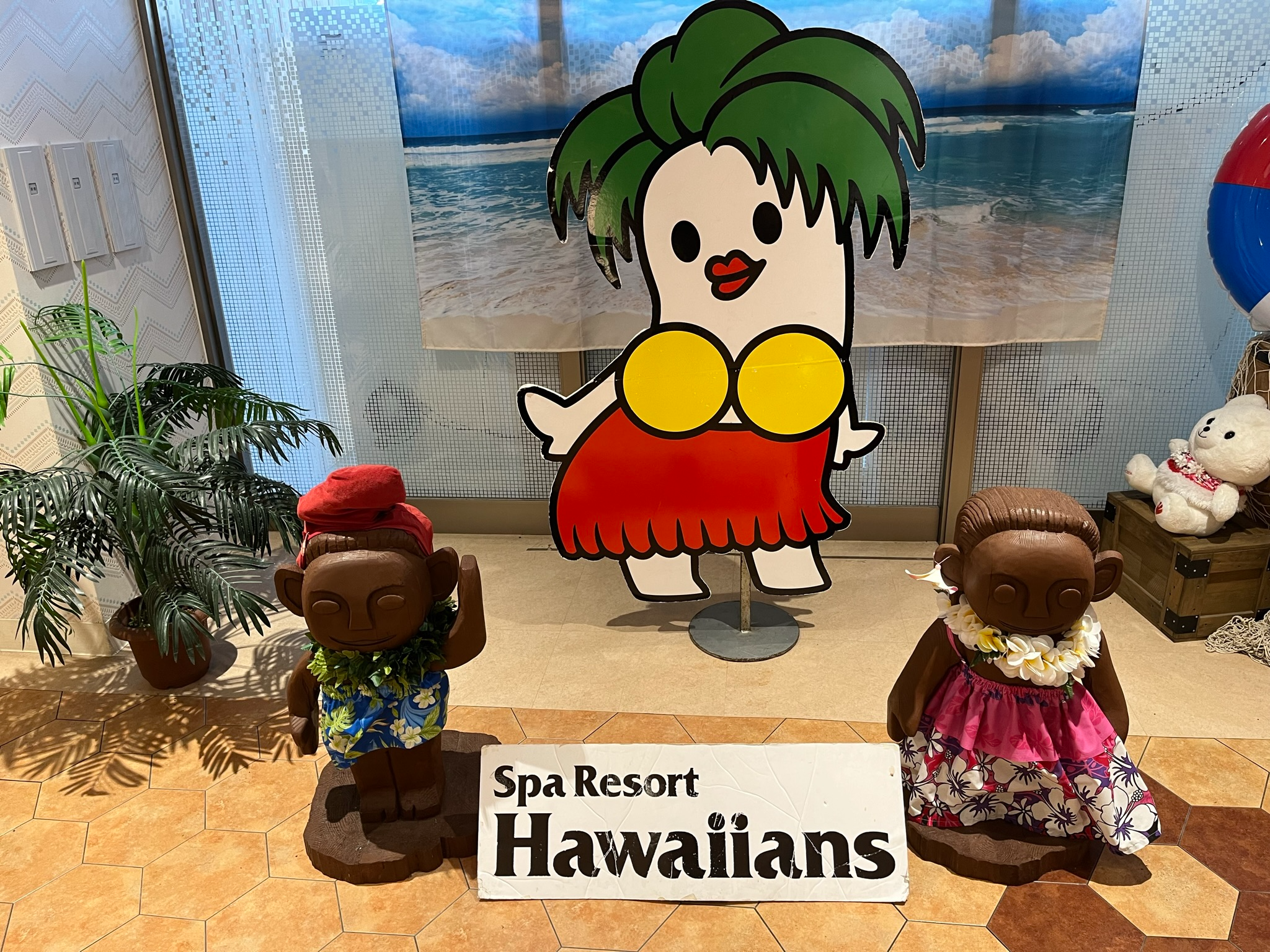
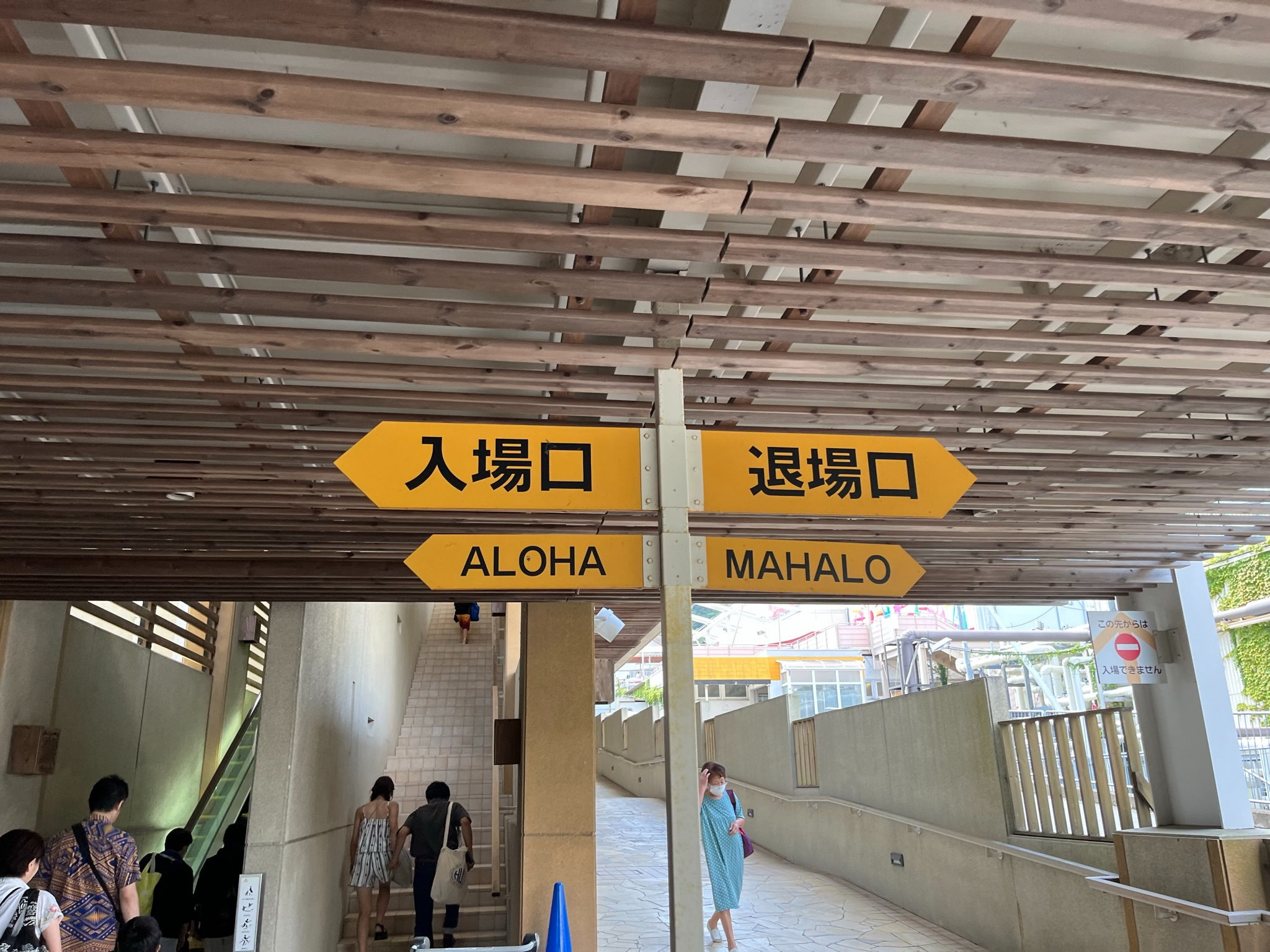
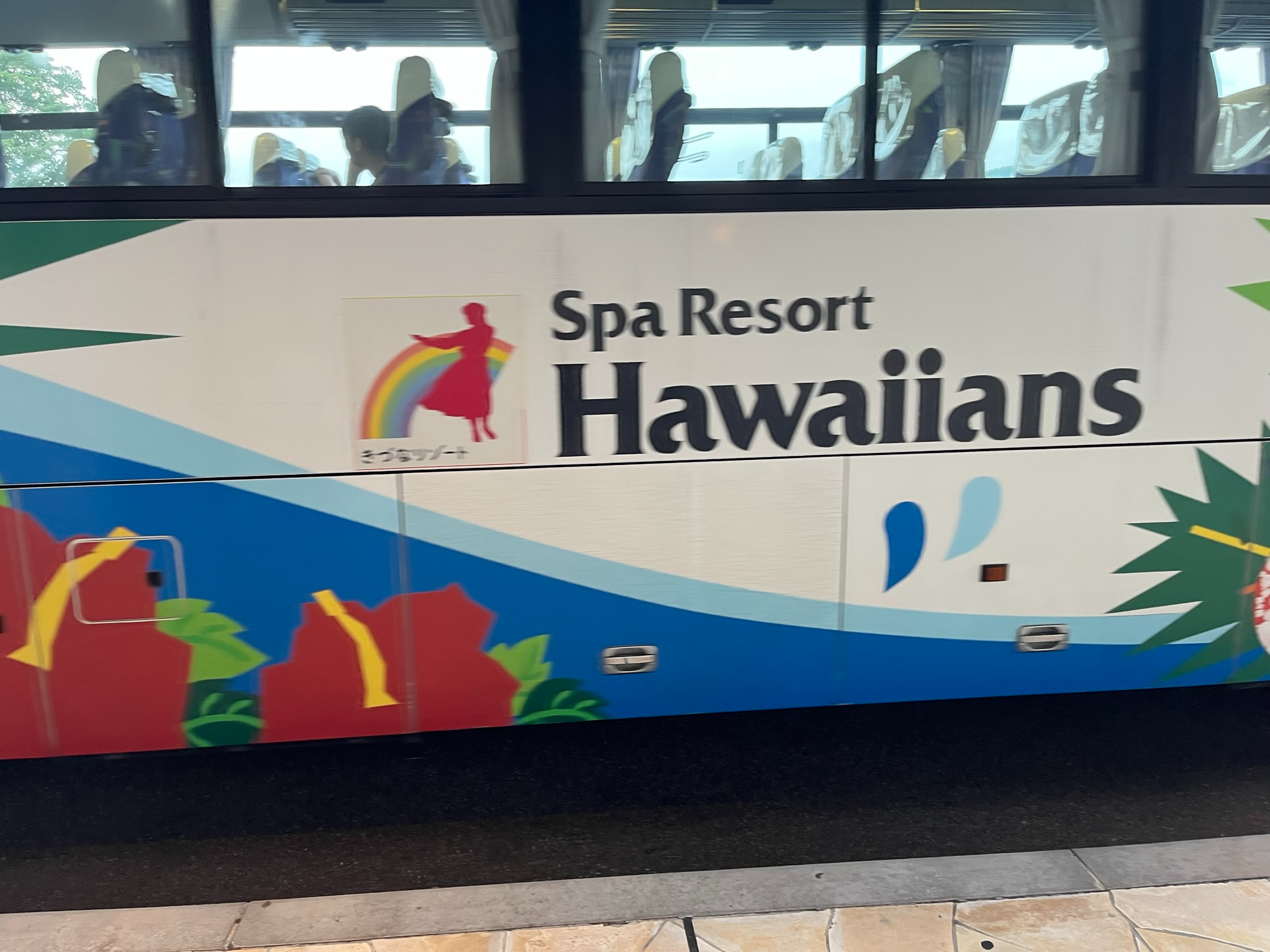
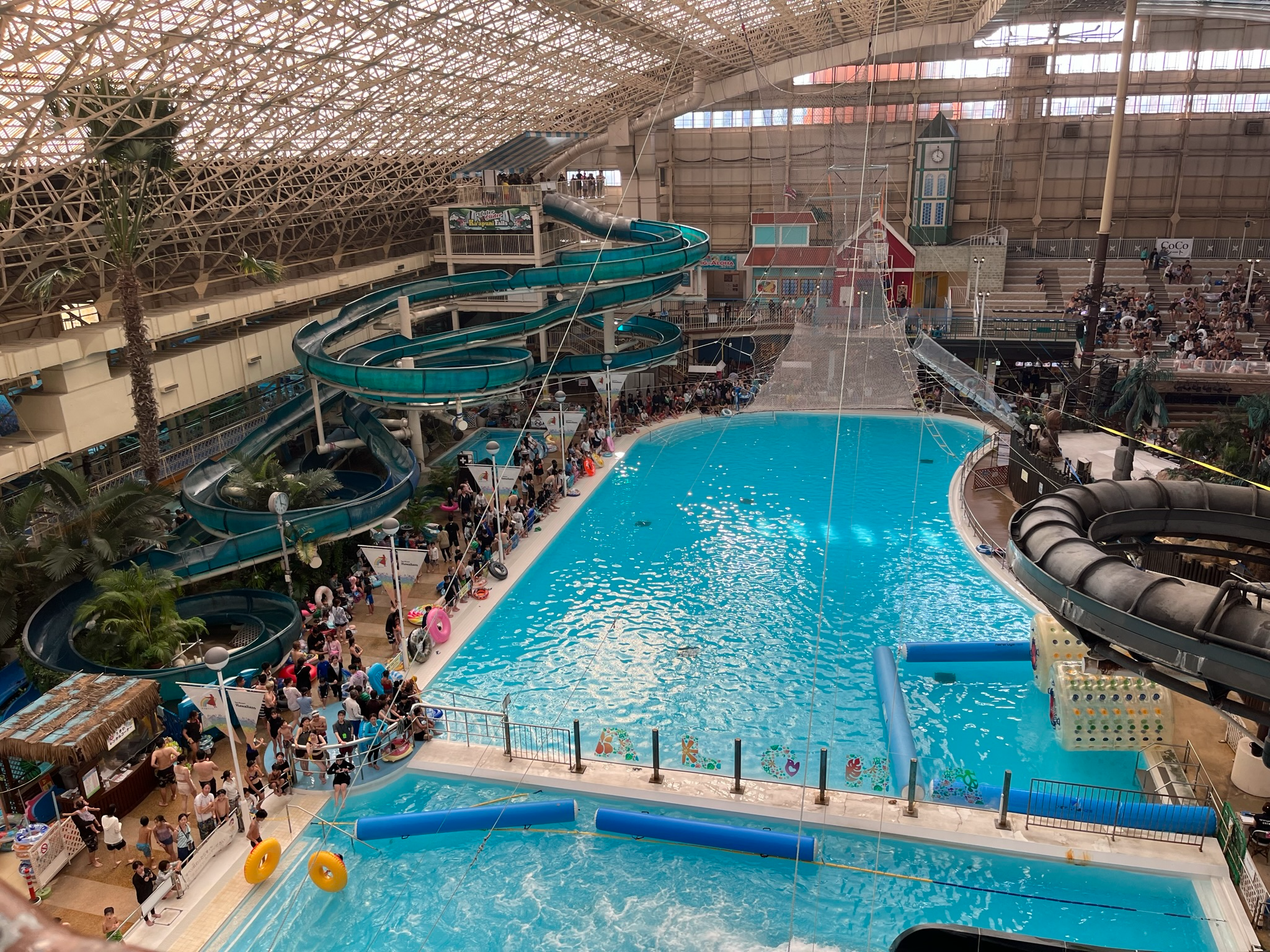
Stopping by Spa Resort Hawaiians in Iwaki, with colourful Hawaiian-themed displays and the resort's cheerful mascot helping to create a tropical atmosphere at one of Fukushima Prefecture's most unique and popular attractions.Finding plenty of Hawaiian influence at Spa Resort Hawaiians, with directional signs using "Aloha" and "Mahalo" adding to the tropical atmosphere that makes this unique Fukushima attraction unlike anywhere else in Japan.Travelling to Spa Resort Hawaiians aboard the resort shuttle bus, with colourful tropical branding building anticipation for a visit to one of Fukushima Prefecture's most unique attractions and its famous Hawaiian-themed resorts, pools and performances.
The resort was fairly big and had many different things in it, it even boasts the largest outdoor hot spring in Japan as well (which can only be accessed if you are a hotel guest), but more than anything I was there for the slides and just to relax. Once I got started going round, I saw people had their phones around their necks attached to a strap and in a small waterproof case. They are quite neat so much so that I decided to get one as well. It allowed me to be able to take my phone into the main area’s and carry some cash on me as well without fear of it getting wet and I didn’t have to travel 4 miles back to the lockers to get any money either, ok that might have been a slight exaggeration.
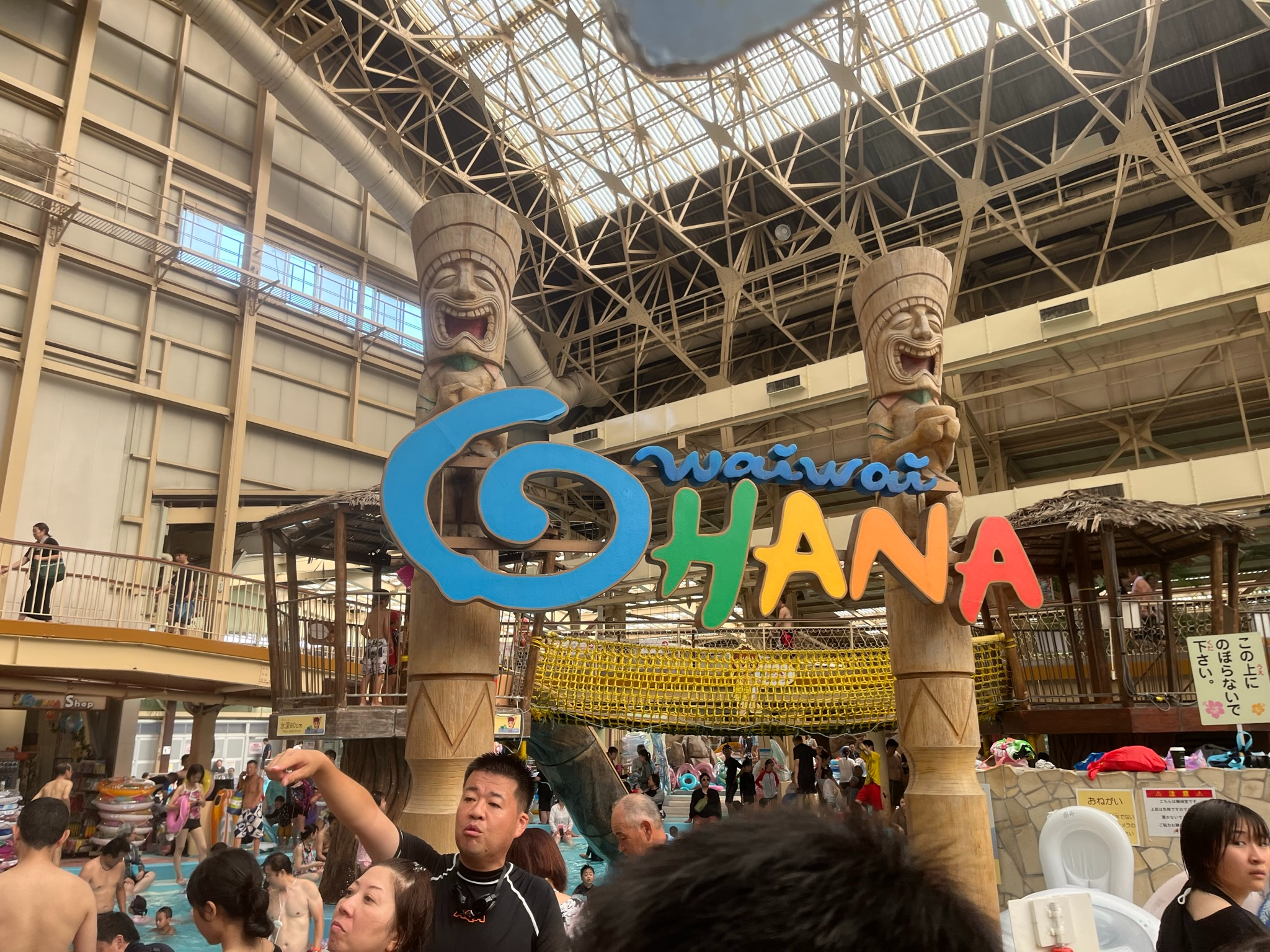
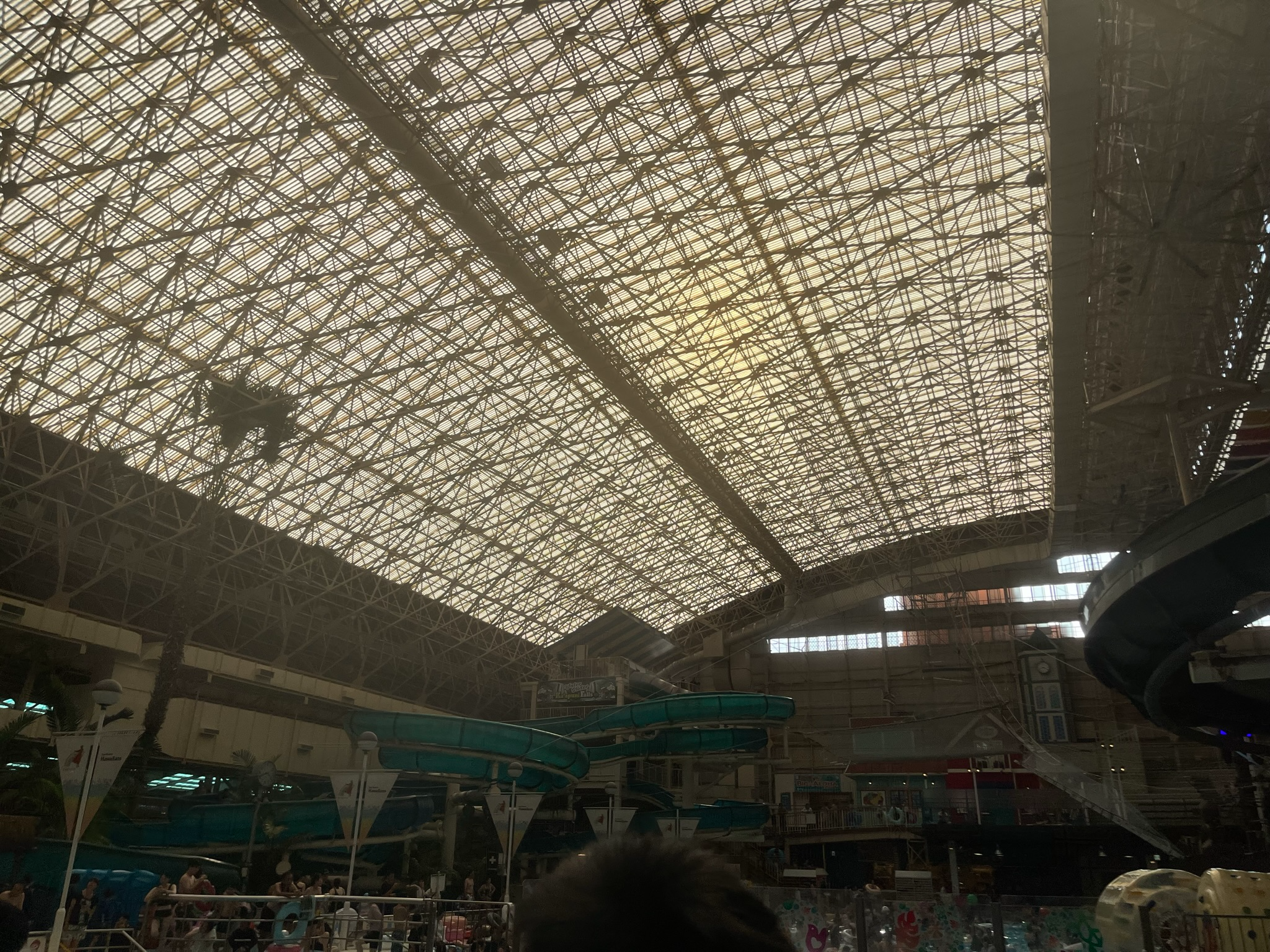
Stepping into the Water Park at Spa Resort Hawaiians, with the lively Waikiki-inspired pool area offering tropical surroundings, water attractions and a taste of Hawaii in the heart of Fukushima Prefecture.Taking a break from the water slides and pools at Spa Resort Hawaiians, with the vast tropical-themed indoor complex providing a fun escape and a chance to experience a little Hawaii in the heart of Fukushima Prefecture.Taking a closer look at the immense indoor water park at Spa Resort Hawaiians, with towering water slides, tropical-themed attractions and a vast glass roof creating a year-round resort atmosphere in the heart of Fukushima Prefecture.
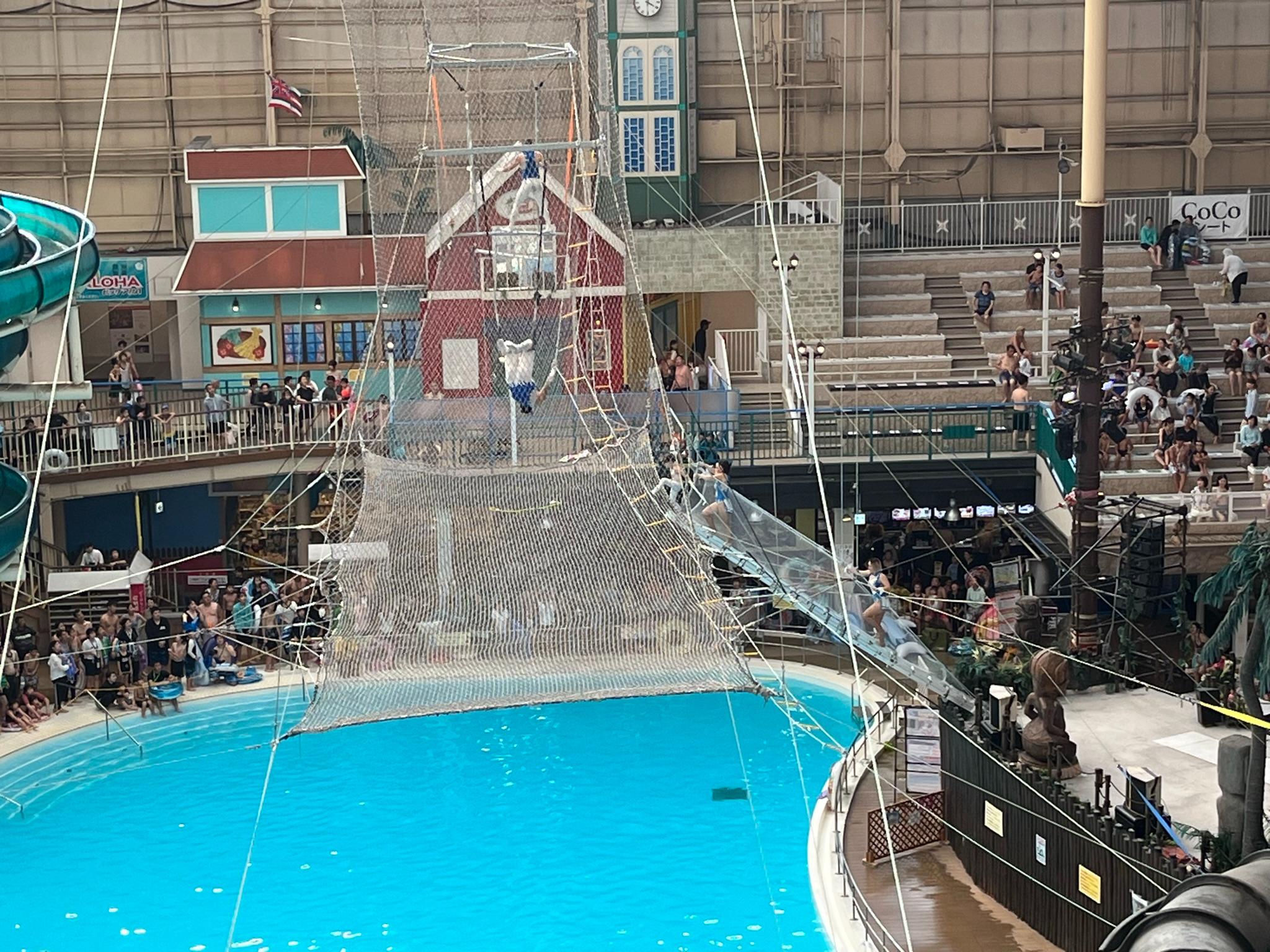
There was also a show going on in the corner that I couldn’t really see until there was an acrobatic net above the main pool.
Taking in the scale of Spa Resort Hawaiians from above, with twisting water slides, tropical-themed pools and live entertainment areas combining to create one of Japan's largest and most distinctive indoor water park experiences.Watching one of the live performances at Spa Resort Hawaiians, with the poolside stage, aerial rigging and tropical surroundings creating an energetic atmosphere that combines water attractions with entertainment inspired by the Hawaiian Islands.
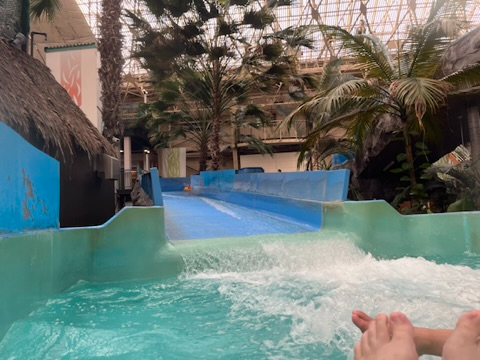
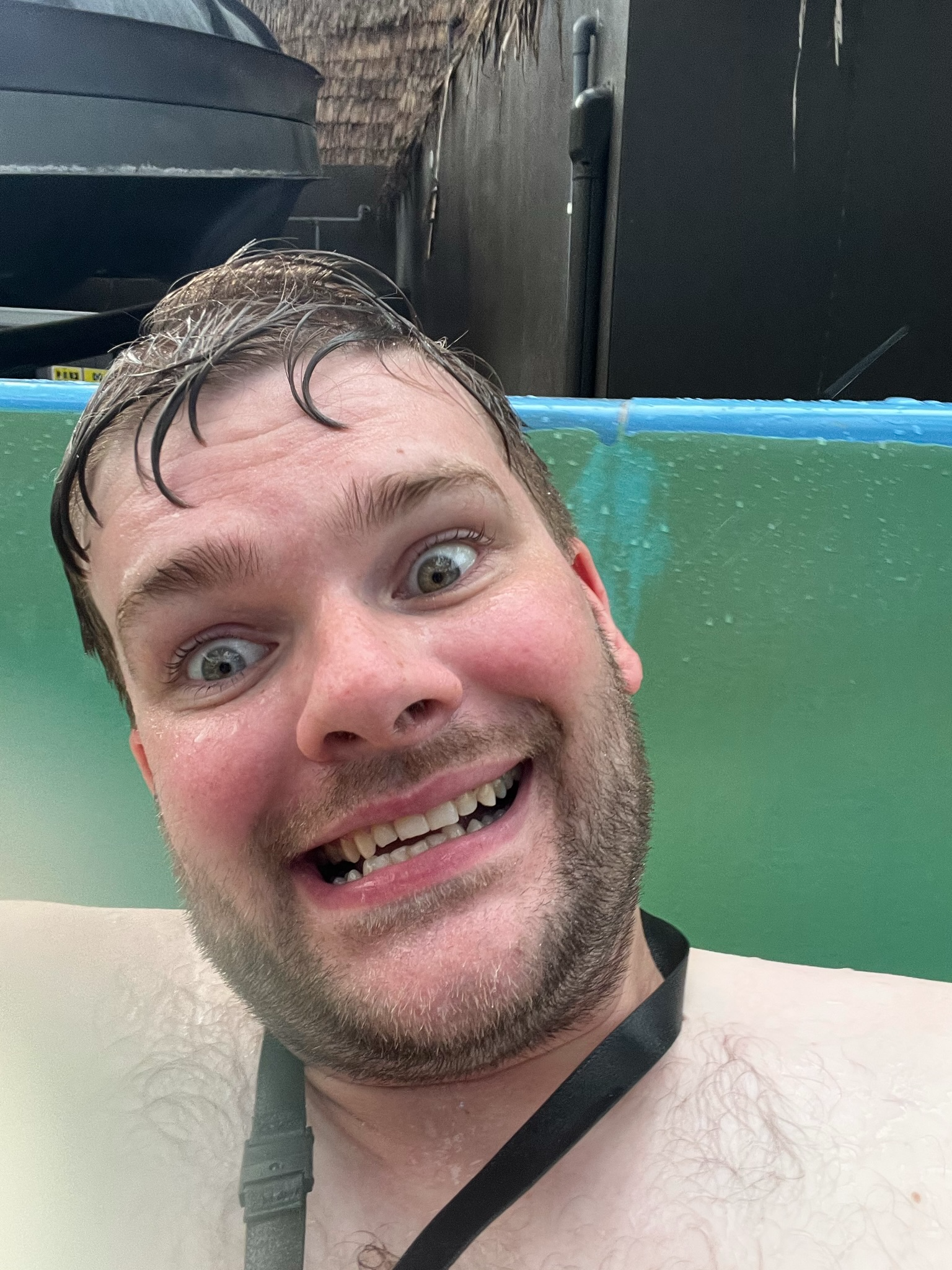
One of the rides was a lazy river that had 4 levels and then went into a pool at the bottom, it was really good apart from the final level before the pool as I got stuck in a current and was doomed to go towards the exit and then back towards to the start again (where more people was coming from). I ended up doing this about 3-4 times before I finally broke free.
Taking on one of the water rides at Spa Resort Hawaiians, with tropical surroundings, rushing water and indoor slides creating a fun-filled experience at one of Fukushima Prefecture's most popular leisure destinations.Having fun on one of the water attractions at Spa Resort Hawaiians, with the tropical-themed rides, warm indoor climate and endless pools helping create one of the most enjoyable and light-hearted days of the trip.
After a fun day out, I headed back from Yonago (where the resort is) on the train to Iwaki. I stopped off in the mall again and found some where to eat, now my eyes might have been bigger than my stomach at this point because I wasn’t expecting the meal to be this big.
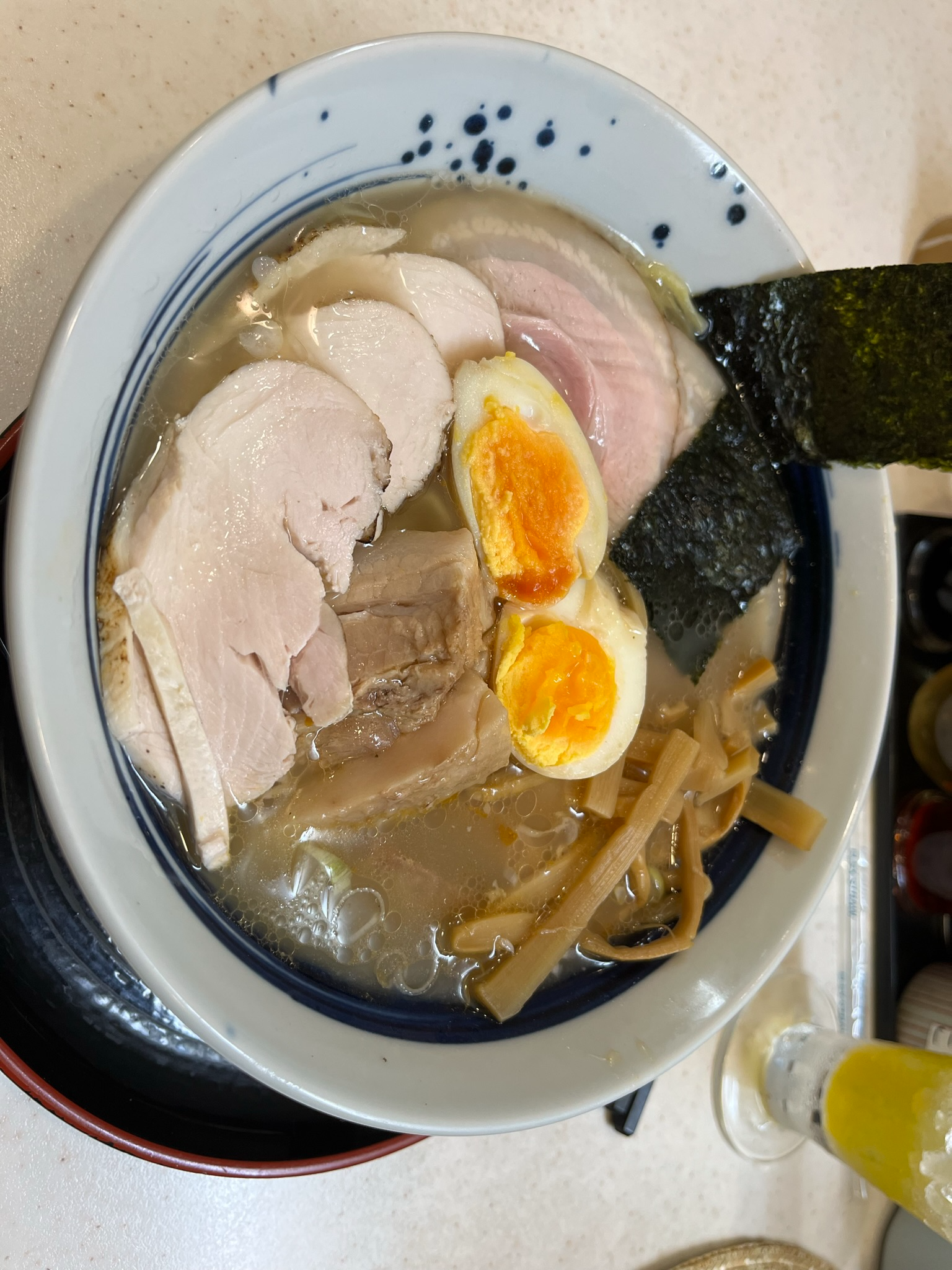
Refuelling after a fun-filled day at Spa Resort Hawaiians, with a hearty bowl of ramen providing the perfect way to relax and recharge between the resort's pools, slides and live entertainment.
It was a meat lovers ramen with 4-5 types of pork (can’t remember exact number).
Going to Sendai and then Going to Hakodate
19th August
It was moving day again, but this time it was a big of a weird one, originally the plan was to go to Sendai and stay in a capsule hotel, but closer I got to Sendai the more I didn’t actually want to stay in one due to being in a capsule surrounded by others (so you can hear people snore and get up and down from the capsules) and it was kinda starting to set my anxiety off as well. So instead, I booked a hotel for the night up in Hakodate just on the southern bit of the North island of Hokkaido.
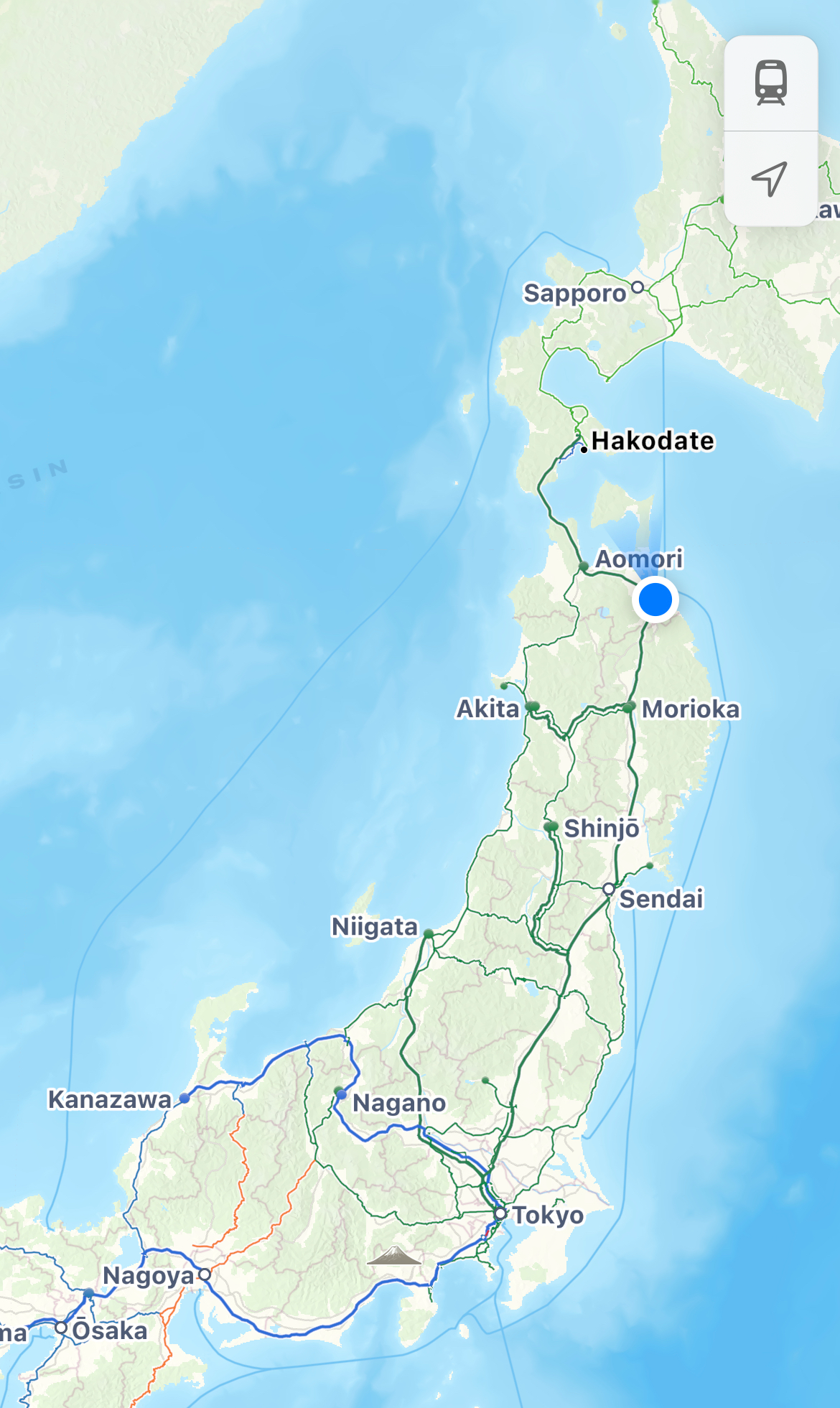
Tracking progress across Japan during the journey, with a map showing just how far the adventure had travelled from Tokyo through central Honshu and into the northern reaches of Tohoku near Aomori.
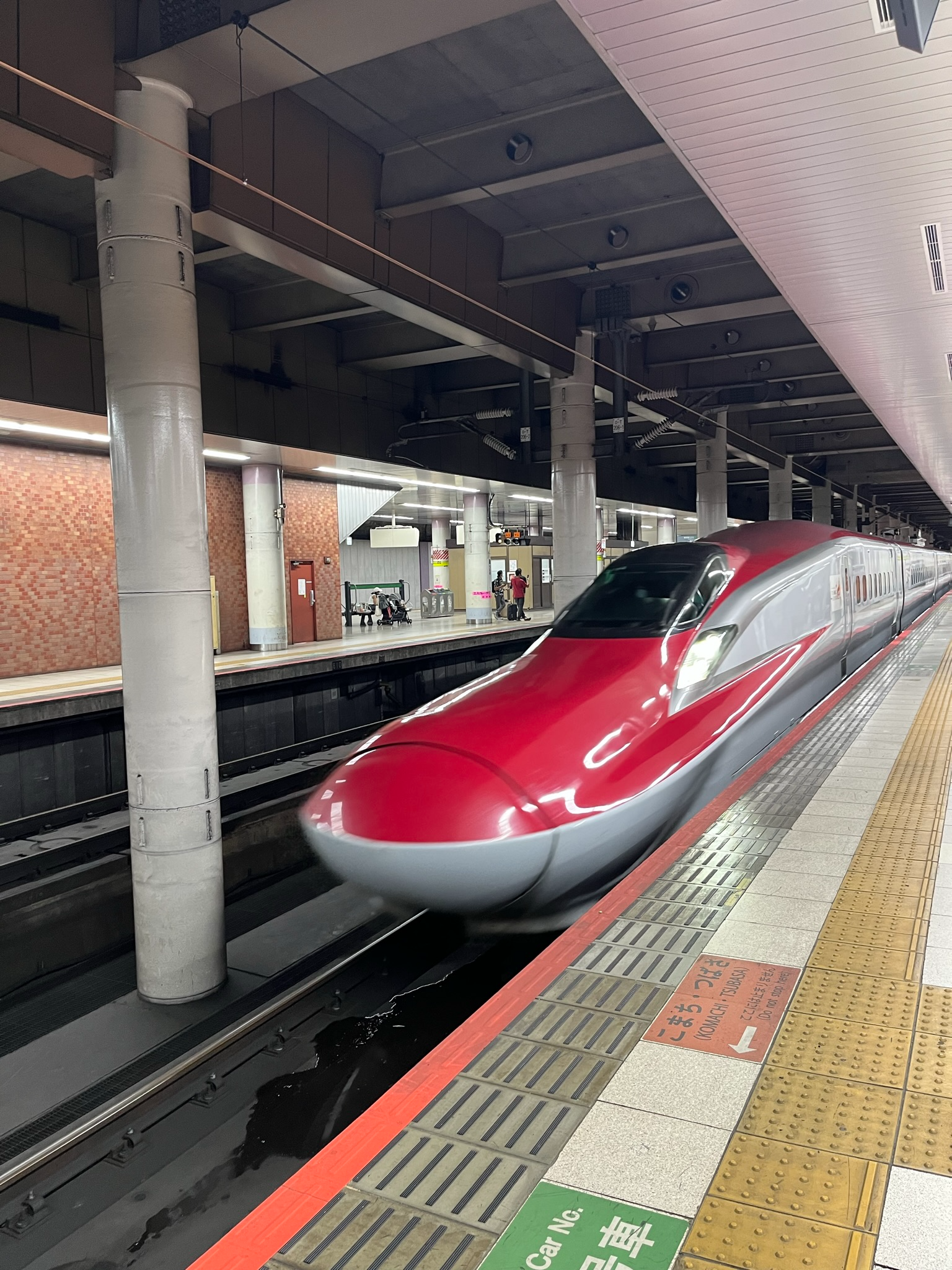
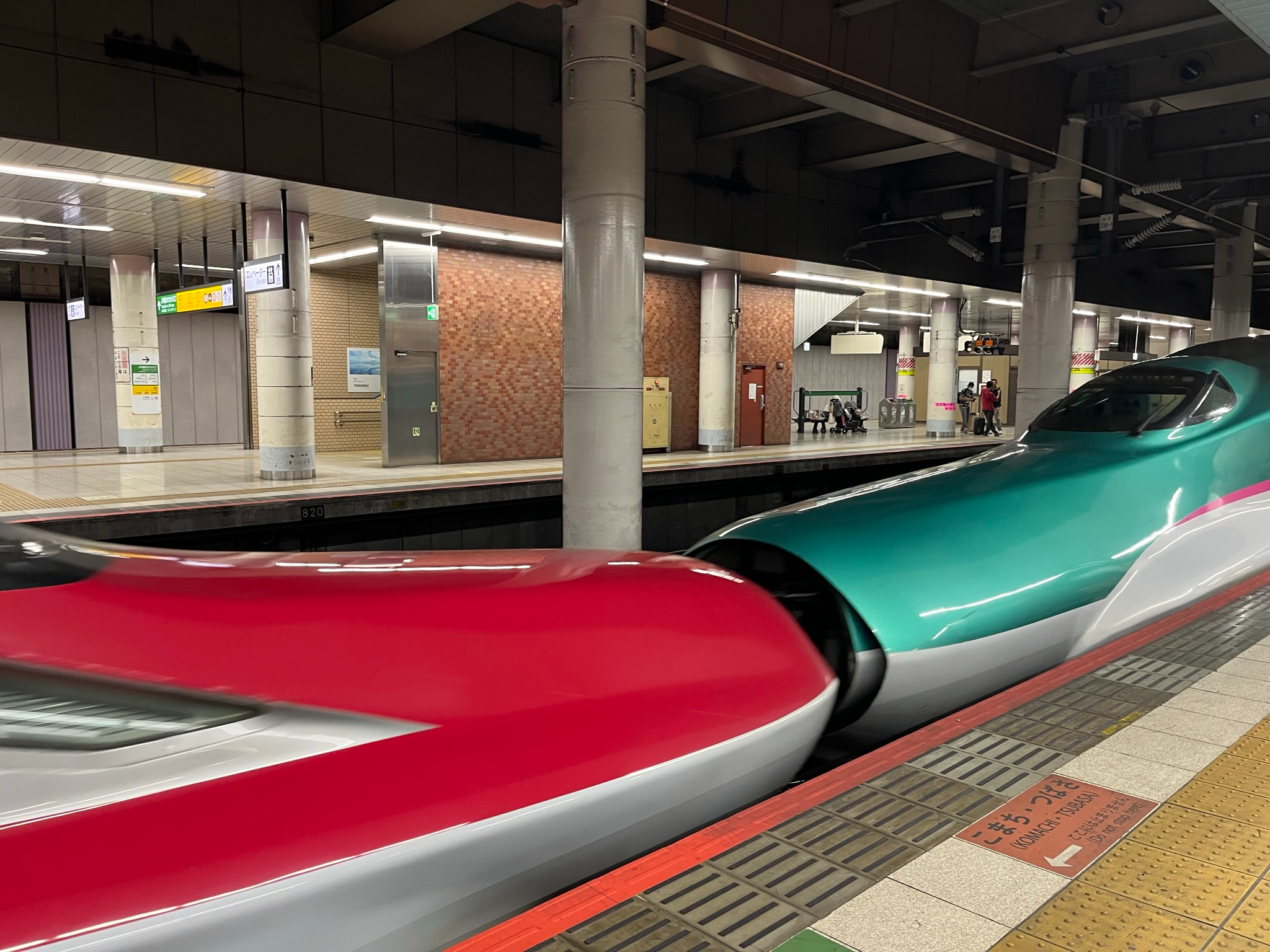
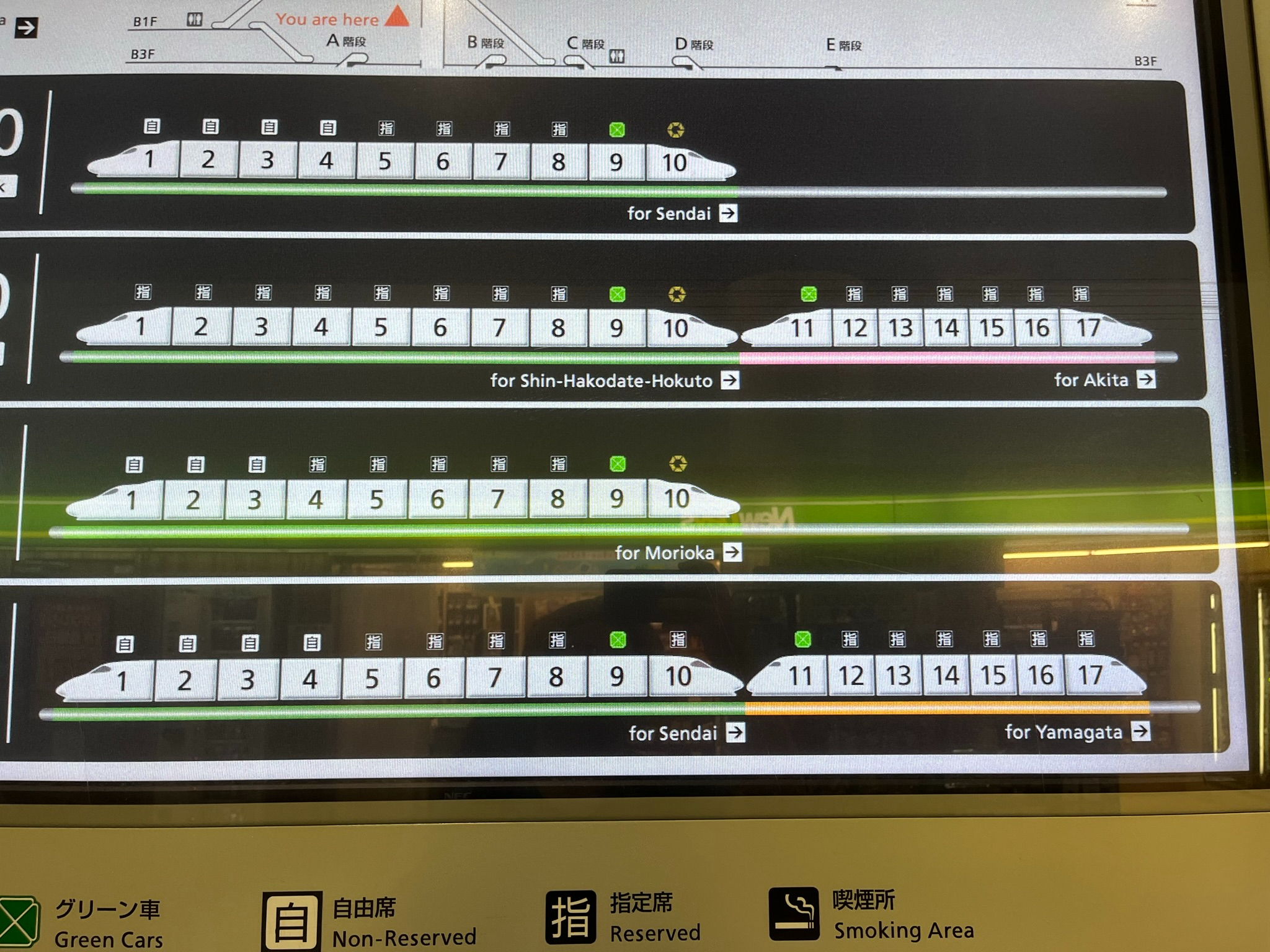
Now the Tohoku Shinkansen that goes up north in Japan and it run by JR East is quite unique and it is also one of the fastest Shinkansen in Japan. The bullet train I got on has 2 different trains connected together which later on down the line split up to go separate ways.
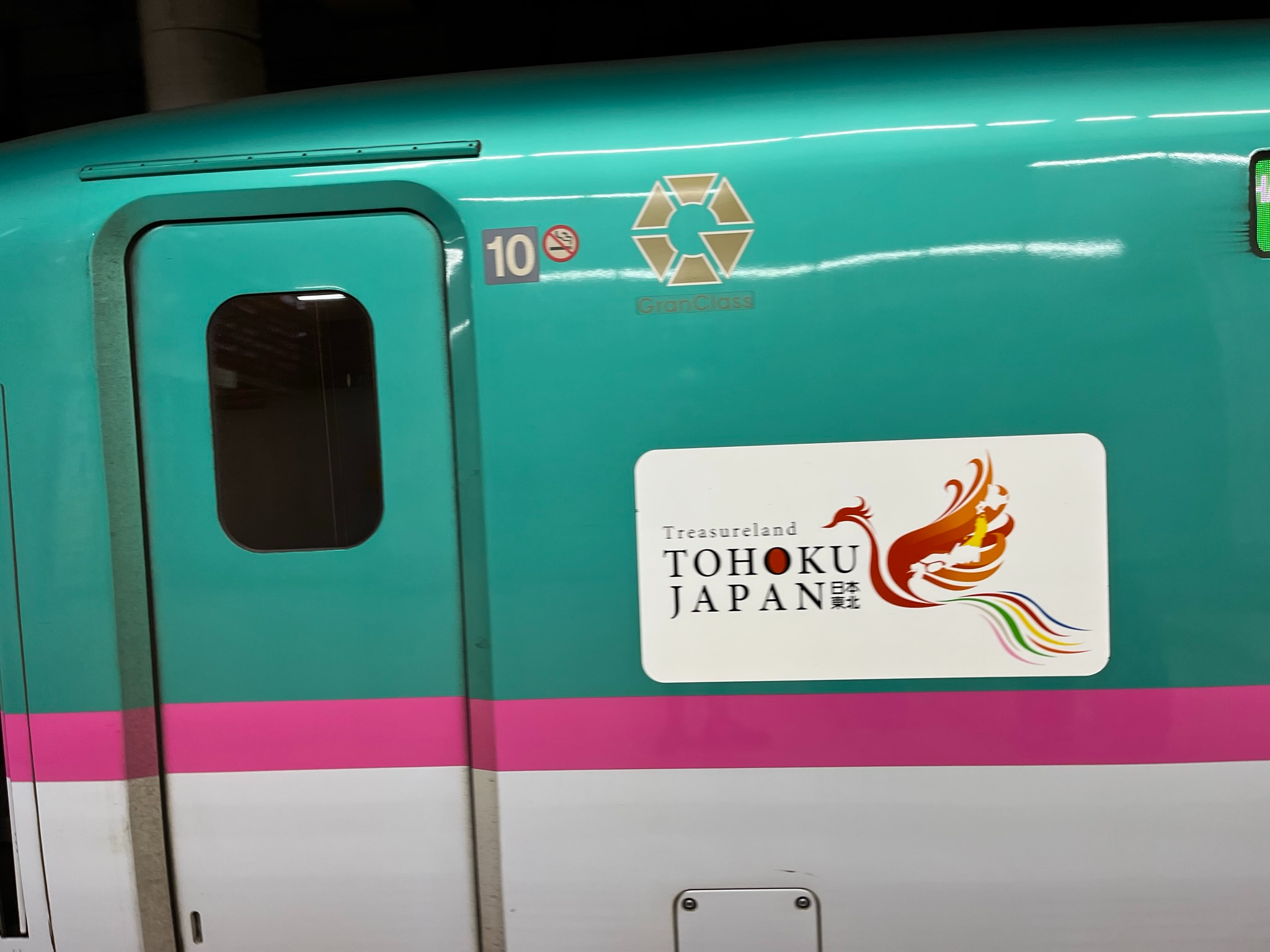
Watching an E6 Series Shinkansen arrive in northern Japan, with the striking red-and-silver train showcasing the speed, comfort and engineering excellence that make Japan's high-speed rail network one of the most admired in the world.Watching two Shinkansen sets seperate before departure, with the striking red E6 Series and green E5 Series forming one of the most distinctive sights on Japan's high-speed rail network as they continue their journey through Tohoku.Travelling through Tohoku aboard the E5 Series Shinkansen, with the distinctive Treasureland TOHOKU JAPAN branding celebrating the culture, landscapes and attractions of one of Japan's most rewarding regions to explore by rail.
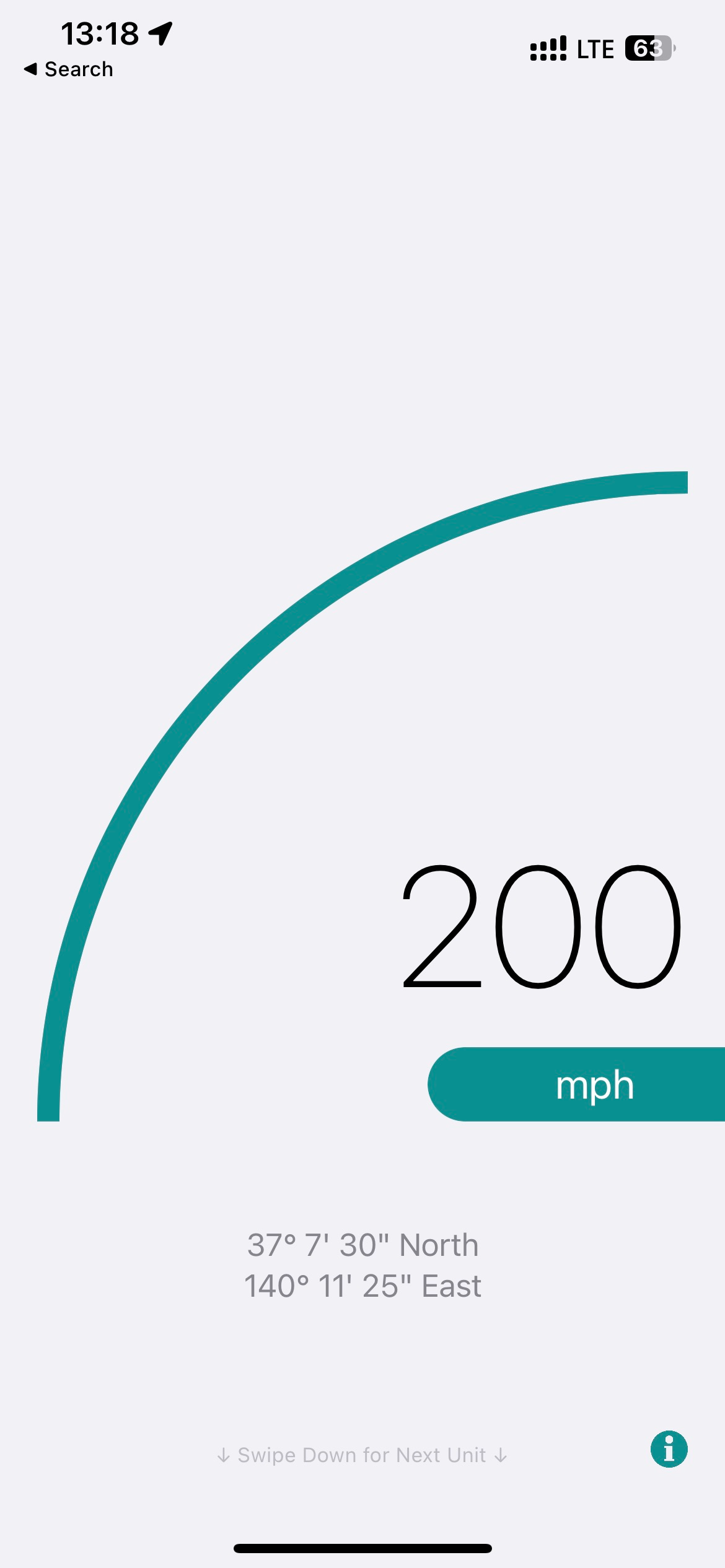
I got on the green Shinkansen which is bound for Shin-Hakodate (red is for Akita and splits off at Morioka Station) and the train goes up to 200MPH on certain bits of the track which is insane and is the max operating speed at the moment. JR East is trying to make this quicker and boost the speed to 220MPH operating speed, but this is proving quite a challenge, and it isn’t due to the trains or the track, it is due to noise. Yes, that is right noise does affect how fast the trains can go as well. There is an experimental train out called Alpha-x which they are running to also look at different aspects on how to speed the train up as they want to be able to compete with air travel in the future.
Navigating a Shinkansen transfer in northern Japan, with the platform information display showing how E5 and E6 Series trains split and combine en route, highlighting one of the many impressive features of Japan's high-speed rail network.Monitoring the speed of a Shinkansen journey through northern Japan, with the train reaching 200 mph and demonstrating the remarkable efficiency and performance that make Japan's high-speed rail network famous around the world.
0:00
/1:09
A video showing the speed of the Shinkansen going along at 200mph
In the video above, to put it into perspective how fast we are going as well, the poles for the overhead electrics are about 50 meters apart from each other.
With Hakodate being on the Northern Island of Hokkaido it meant that I had to go through the Seikan Tunnel under the Ocean. It is very weird for me as I have only every gone on the euro train through the channel tunnel twice (once there and once back), but that wasn’t through seismically active earth. The Seikan Tunnel connecting Honshu and Hokkaido is a duel rail gauge tunnel (for both Shinkansen and normal trains) it is 33.4 miles long compared to the 31.3 miles for the channel tunnel, is the second longest tunnel in the world and because of the fact that it has 2 types of train going through it most of the time (Shinkansen and freight trains) it is a logistical nightmare as if the Shinkansen goes too quickly the pressure waves can knock over or derail the train coming the other way. I would be lying if I said I didn’t have the song ‘Under the Sea’ from the little mermaid stuck in my head while going through the tunnel.
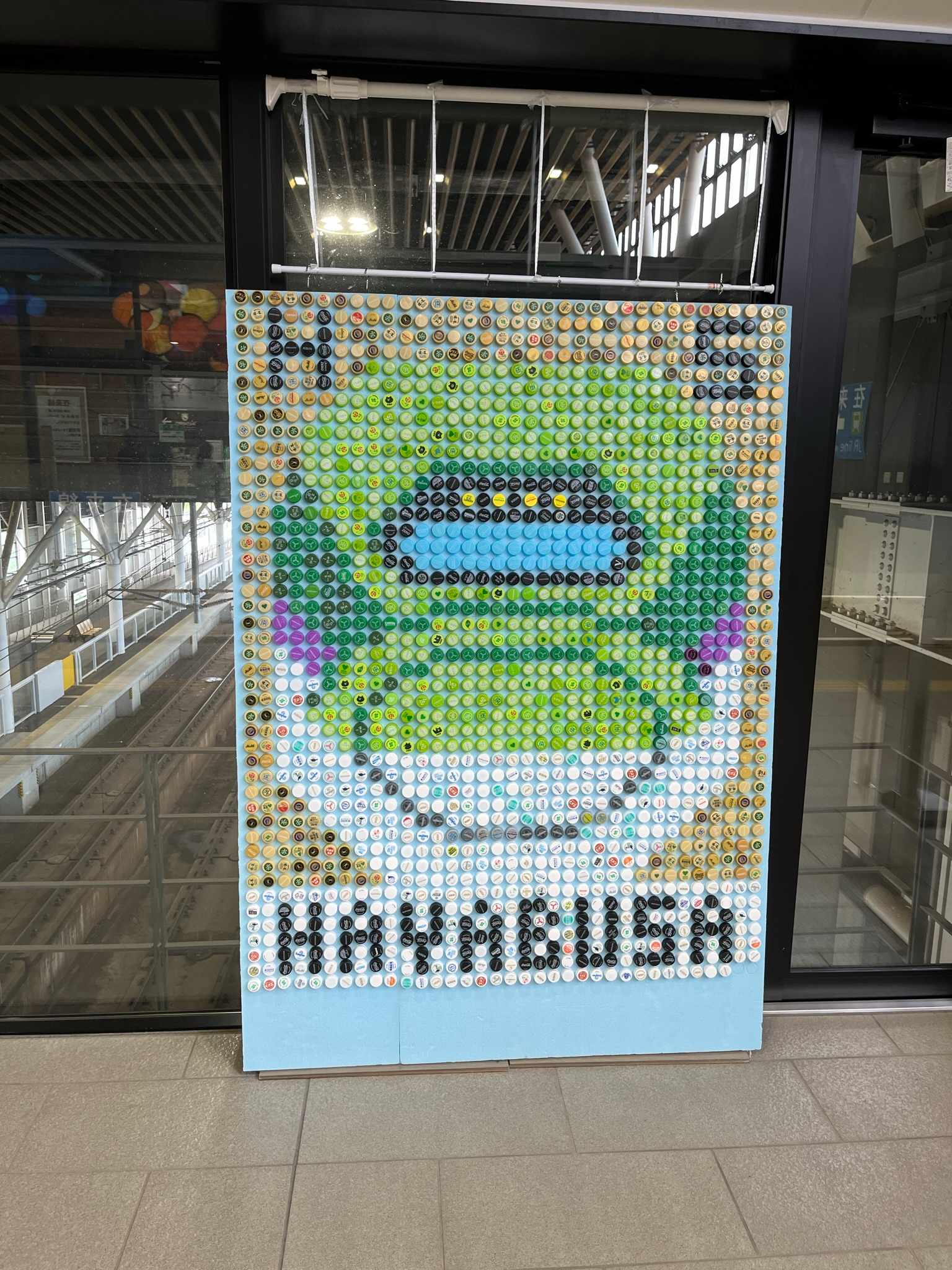
Arriving at Shin-Hakodate-Hokuto Station and being welcomed by a colourful Nebuta-inspired display, highlighting the cultural connections between Tohoku and Hokkaido as the journey continued into Japan's northernmost island.
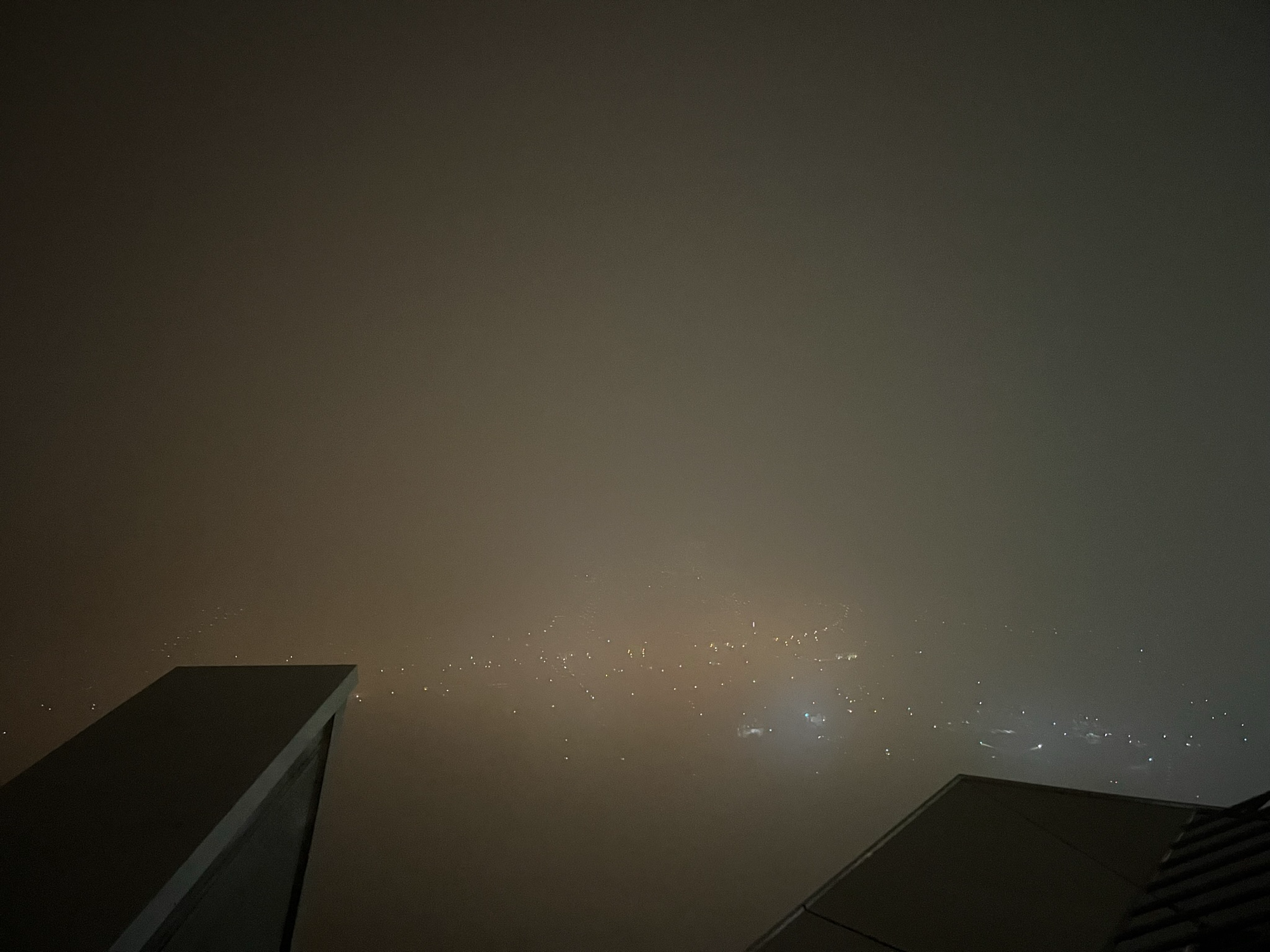
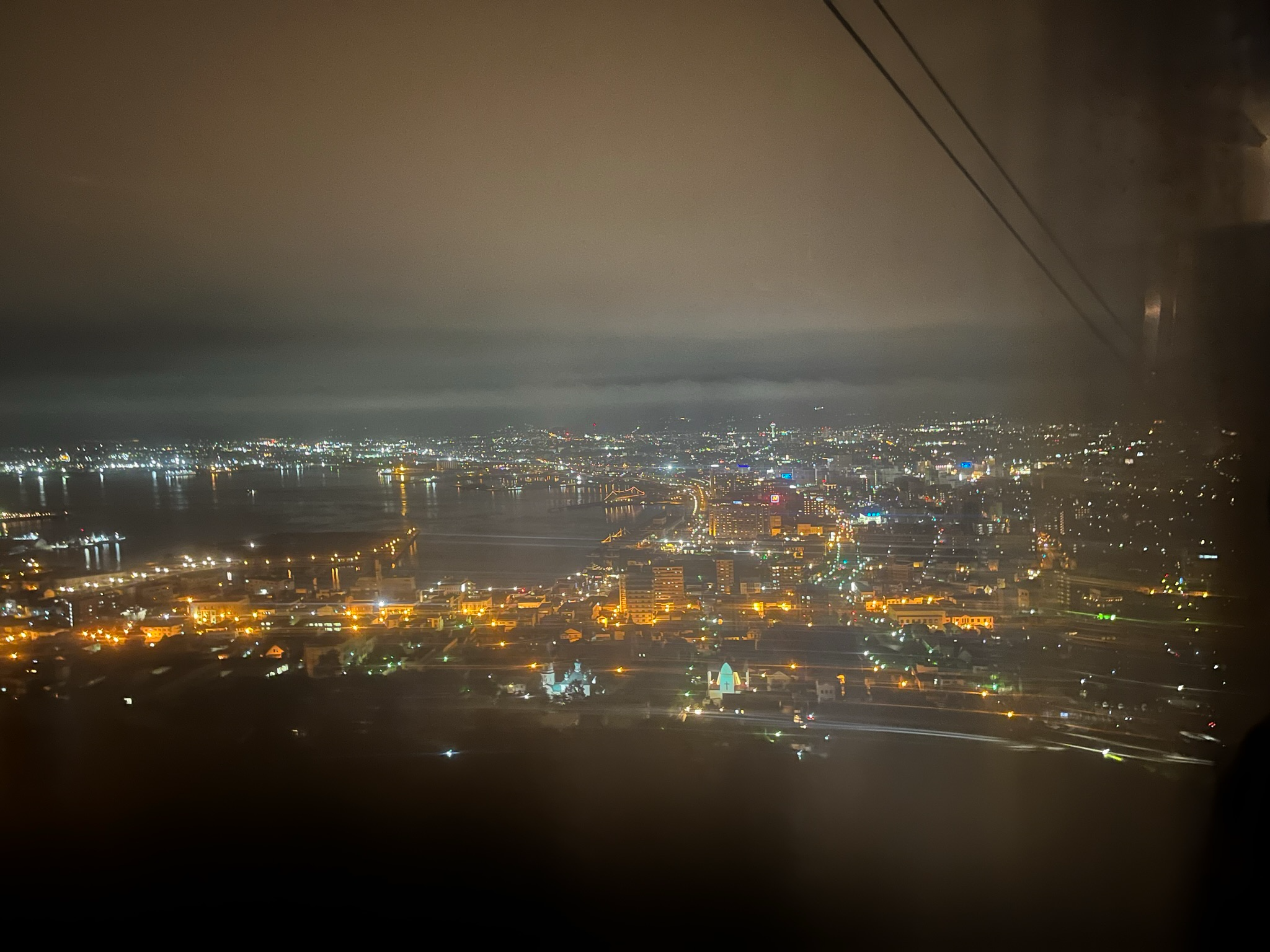
Unfortunately, it was about 6pm when I got there and it was only for the night. So, I had a quick look at things to do and found that there is a Mt. Hakodate with an observation platform at the top so decided that it would be a good idea to walk to it and go up. With Hakodate being surrounded by the sea it and it being quite far north (almost on level with the top of North Korea, it was very cool 25C at 7pm and there was a nice breeze as well. All this was heavenly especially as Japan has been quite warm so far. Unfortunately, the view from the top of Mt. Hakodate wasn’t very good as there was some cloud about, but it was still fun to go up and there were some good views from the gondola as well.
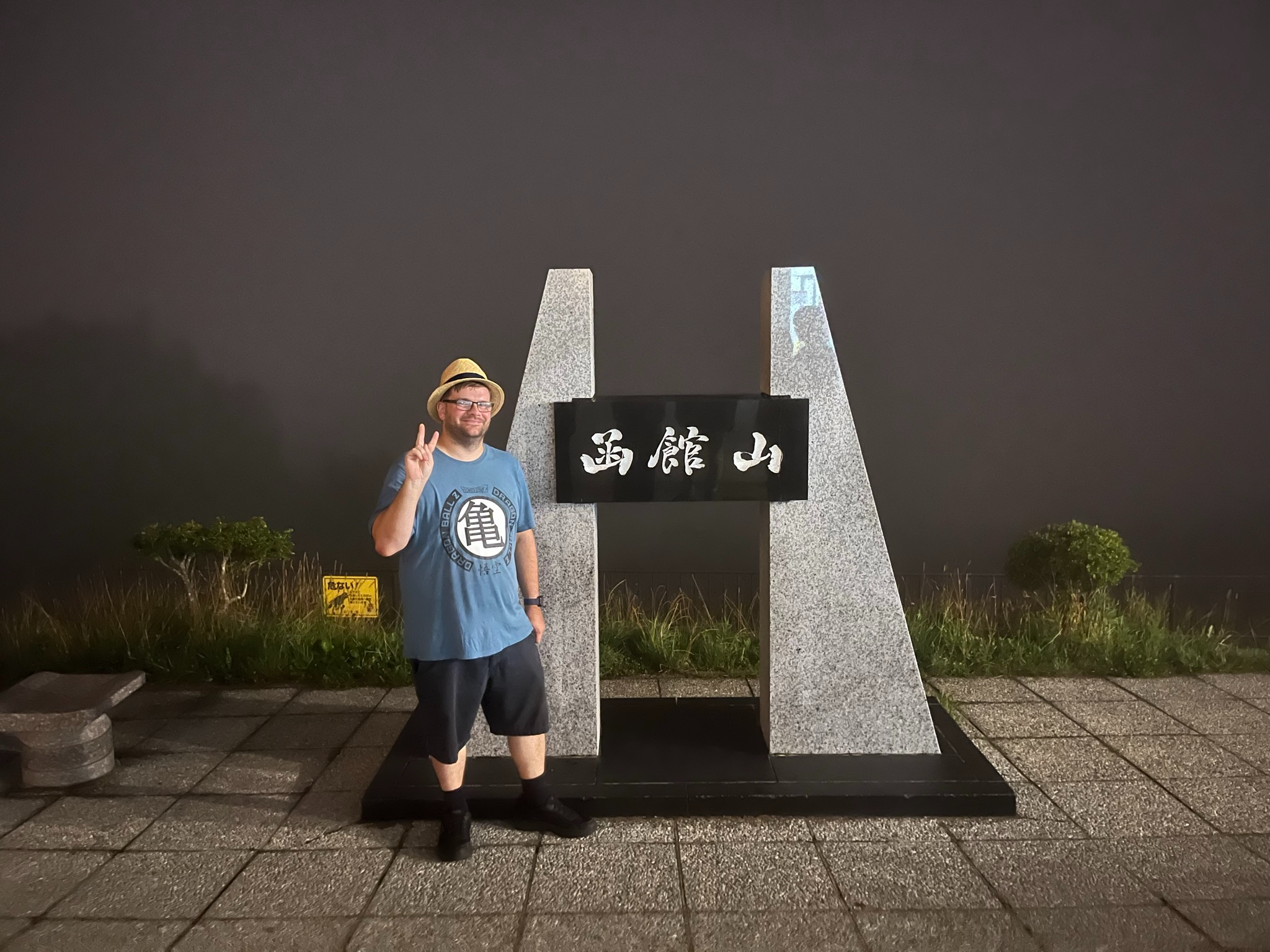
Reaching the summit of Mount Hakodate after dark, with a stop beside the mountain's landmark sign marking the experience of visiting one of Japan's most celebrated viewpoints before taking in the famous night views over Hakodate.Taking a moment to document a visit to Mount Hakodate, with low cloud and evening mist surrounding the summit while one of Hokkaido's most famous viewpoints provided a memorable stop during the journey through northern Japan.Experiencing the unpredictable weather at Mount Hakodate, with thick fog rolling across the summit and only faint glimpses of the city lights below, turning a visit to one of Japan's most famous viewpoints into a memorable and atmospheric evening.Mount Hakodate after the fog finally lifted, with the city's famous night view stretching across the harbour and peninsula, revealing why this panorama is considered one of Japan's most celebrated urban vistas.
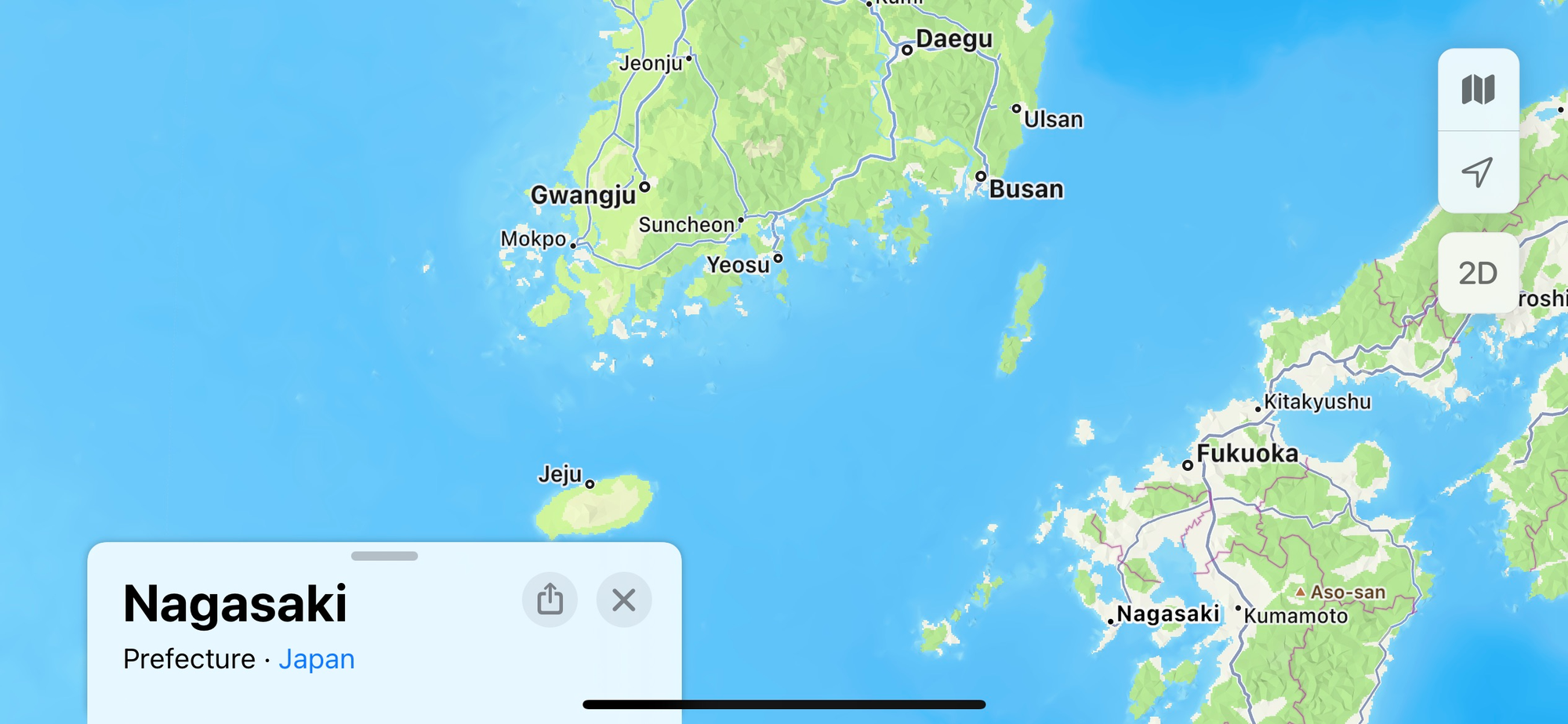
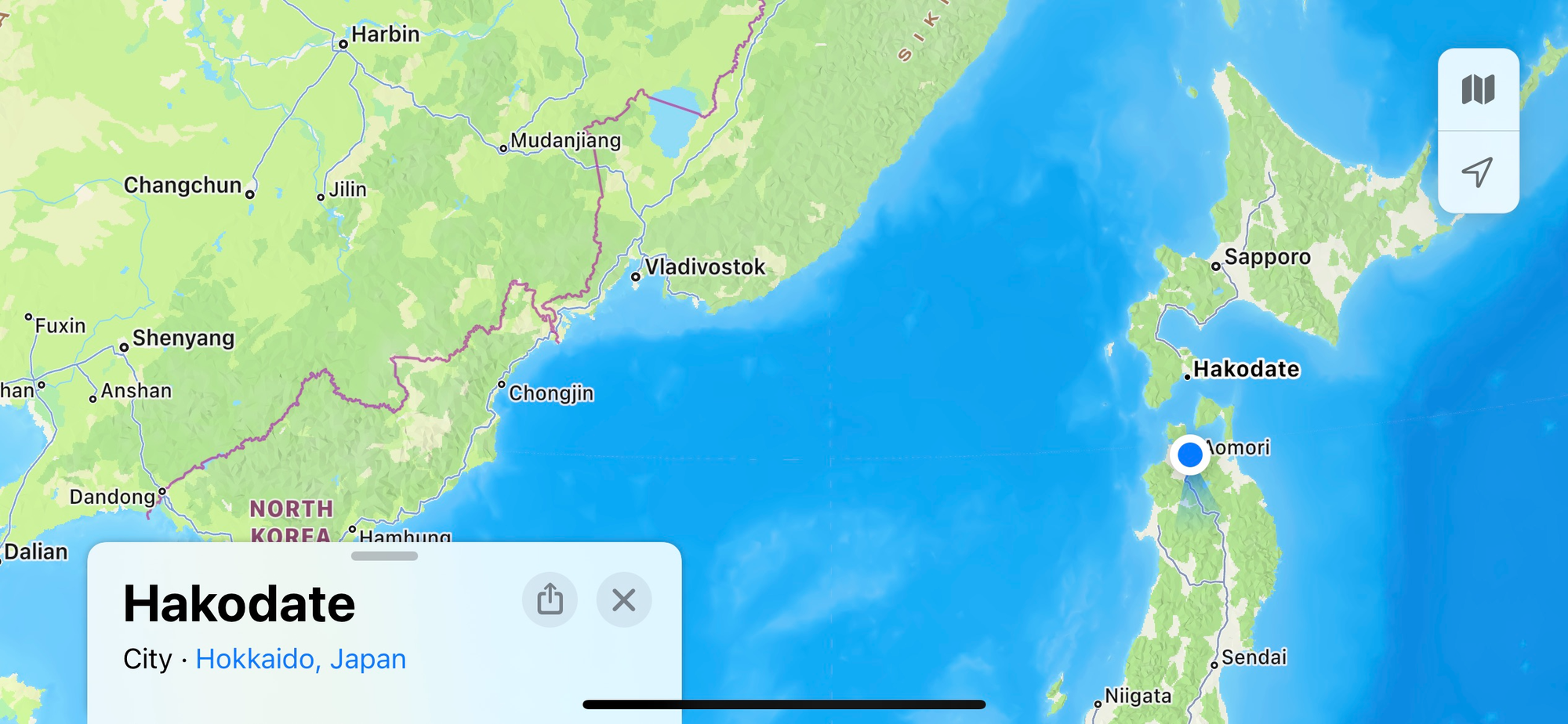
Looking on a map, Nagasaki which is where I went after Tokyo is below South Korea and Hakodate is just near the top of North Korea. That is quite a distance to go within the space of 21 days.
Tracking the journey across Japan on a digital map, with Nagasaki highlighted as one of the trip's most memorable destinations and a reminder of the thousands of kilometres travelled between the country's historic cities, coastlines and cultural landmarks.Tracking the journey into Hokkaido on a digital map, with Hakodate marking the first stop on Japan's northernmost island and highlighting just how far the adventure had travelled from the southern regions of the country.
Join me next time from when I am switching my rails for 4 wheels and drive up to Lake Towada in the Towada-Hachimantai National Park.